How the Marine Corps Found Its Symbol
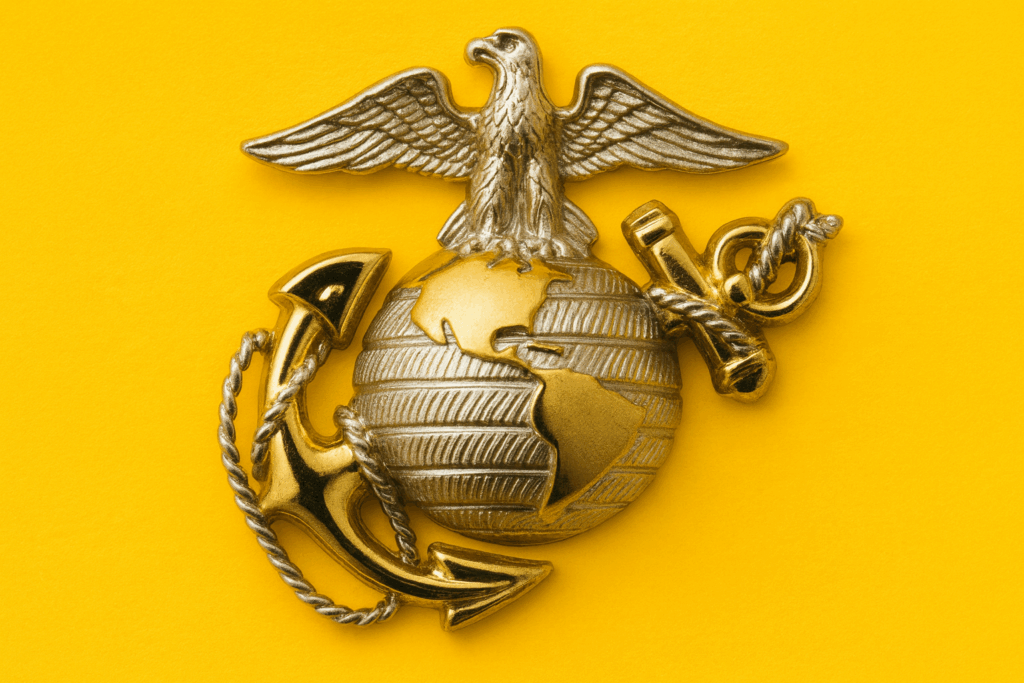
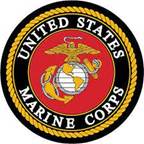
Few military emblems carry as much history and pride as the Marine Corps’ Eagle, Globe, and Anchor, better known as the EGA or simply as the emblem. New recruits and officer candidates work intensely to earn the right to wear this symbol. It is a source of immense pride for every Marine who achieves that distinction.
When entering the Corps, I encountered World War II veterans who affectionately called the EGA the “Birdie on the Ball.” But only Marines can take such liberties—outsiders risk offense if they use the term.
The emblem is instantly recognizable, yet few realize its deep historical roots or appreciate the transformations it has undergone to become the symbol every Marine wears today.
From Anchors to Eagles: The Early Years (1776–1868)
At its inception in 1776, the Continental Marines lacked any formal insignia. Some Marines, predominantly officers, adopted maritime icons such as the fouled anchor—an anchor entwined with rope—often emblazoned on buttons or hat plates. This design echoed the British Royal Navy and underscored their naval identity, but it was never standardized.
Uniform innovations began in the early 1800s. By 1804, Marines were using brass eagles mounted on square plates. During the War of 1812, octagonal plates appeared, embossed with eagles, anchors, drums, shields, and flags. Later designs were simplified to feature metal letters “U.S.M.” (United States Marines), reflecting the shift towards a national identity.
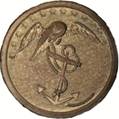
The example below is an officer’s coat button circa 1805-1820.
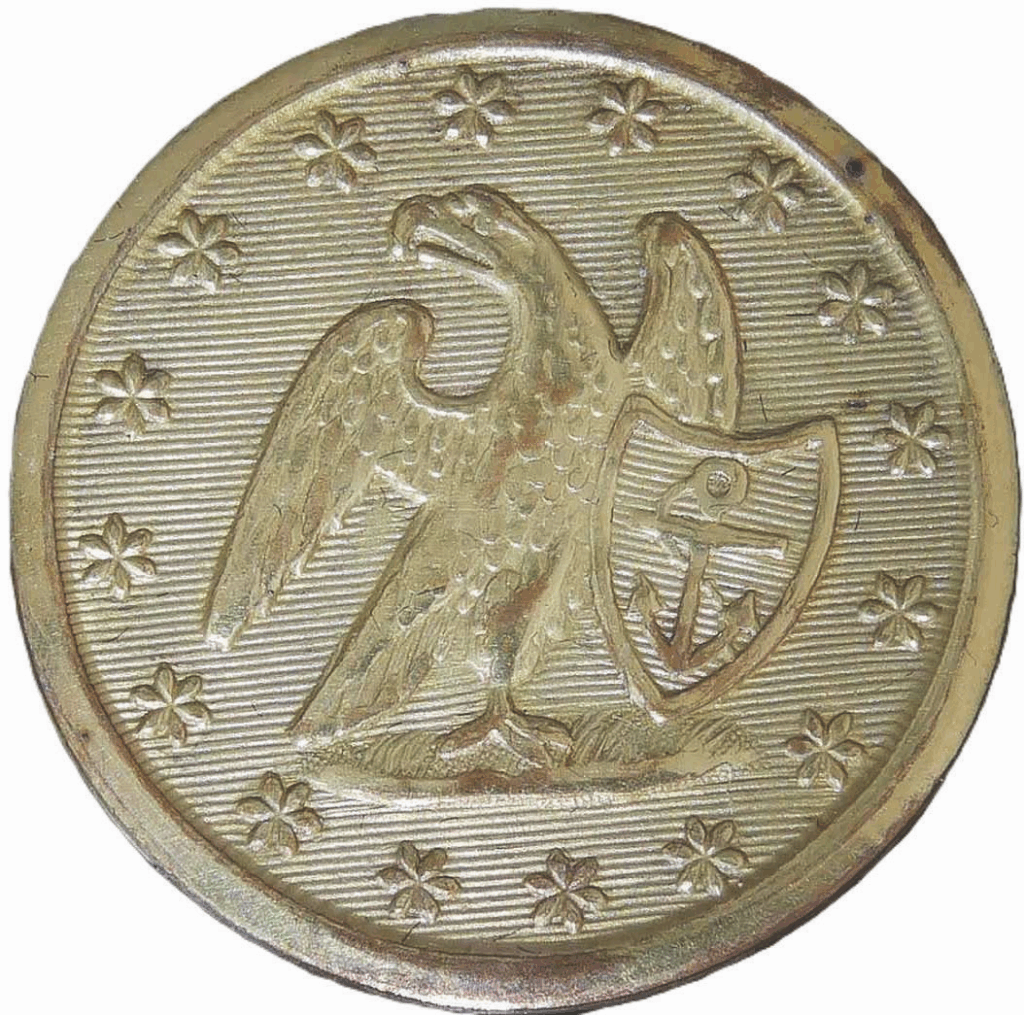
A more distinctive step came in 1821: the Corps adopted an eagle perched on a fouled anchor encircled by 13 stars, a motif featured on buttons for nearly four decades. However, similar symbols were also used by the Army and Navy, making it less than unique.
Following the Civil War, Marine Corps leadership under Brigadier General Jacob Zeilin, the seventh Commandant, sought a truly unique insignia for the service.
The Zeilin Board and the Birth of the Modern EGA (1868)
On November 12, 1868, Zeilin established a board of officers “To decide and report upon the various devices of cap ornaments of the Marine Corps.” They wasted no time: by November 19, the Secretary of the Navy, Gideon Welles, had approved the new emblem.
The board drew inspiration from the British Royal Marines’ “Globe and Laurel” emblem.
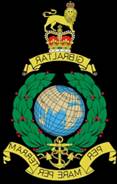
The American version added a few important touches:
- Globe showing the Western Hemisphere: Representing the Corps’ defense of the Americas and a global presence.
- Fouled anchor: Honoring the Corps’ naval origins.
- Eagle: Symbolizing national service and pride.
Zeilin described the new emblem as representing the Corps’ “readiness to serve anywhere, by sea or land.”
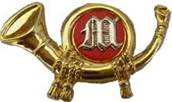
At the same time, a distinct emblem was also created for Marine Corps musicians, still seen today on the formal red and gold uniforms of the U.S. Marine Band—“The President’s Own”.
The Motto and Later Refinements
The Latin motto, Semper Fidelis (“Always Faithful”), was introduced in 1883 under Commandant Charles McCawley, replacing previous mottoes such as Fortitudine (“With Fortitude”). Semper Fidelis became central to the Marine Corps’ ethos.
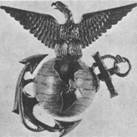
The emblem saw many variations over the decades. Initial designs featured a crested eagle—borrowed from European heraldry. Semper Fidelis appeared on a scroll held in the eagle’s beak on some versions of the emblem.
Only in 1954, with President Dwight D. Eisenhower’s Executive Order 10538, did the American bald eagle with a scroll officially become part of the emblem. This finalized the design used today.
Officer and Enlisted Differences
Since 1868, design distinctions have marked officer and enlisted EGA emblems. Officers’ original emblems were elaborate—frosted silver hemispheres with gold-plated Americas, crowned by a solid silver eagle. Enlisted emblems were brass, emphasizing practicality.
Modern officers wear a multi-piece, high-relief insignia with fine rope detailing, while enlisted Marines use a one-piece emblem. Notably, officers’ globes omit Cuba to strengthen the emblem structurally. A running joke among enlisted personnel is that officers couldn’t find Cuba on a map.
Before WWII, officers often purchased insignia from jewelers like Bailey, Banks & Biddle, resulting in stylistic inconsistency. One museum curator quipped, “World War I eagles looked like fat turkeys.” Eventually, standardization brought the crisp, clean look seen today.
A Legacy That Endures
From 18th-century anchors to the refined Eagle, Globe, and Anchor of today, the emblem tracks the Corps’ evolution from shipboard security to a global expeditionary force. Over centuries, its form has varied—engraved by jewelers, stamped for wartime, and cast in silver for dress blues—but its meaning remains constant.
Every Marine who earns the EGA joins a tradition stretching back 250 years, defined by courage, loyalty, and the enduring promise to remain Always Faithful.