
Have you ever wondered how the tradition of sending Christmas cards got started? It’s a story that combines busy social calendars, a new postal system, and one clever solution that became a worldwide phenomenon.
Before Christmas Cards: The Early Messengers
Long before anyone thought to mass-produce holiday greetings, people were already experimenting with seasonal messages. In fifteenth-century Germany, the “Andachtsbilder” appeared—proto-greeting cards with religious imagery, usually depicting baby Jesus, accompanied by the inscription “Ein gut selig jar” (A good and radiant year) that were presented as gifts during the Christmas season. Additionally, handwritten letters wishing “Merry Christmas” date from as early as 1534.These weren’t Christmas cards as we know them, but they laid the groundwork.

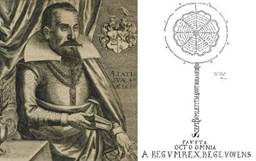
The first known Christmas card was sent in 1611 by Michael Maier, a German physician, to King James I of England and his son, with an elaborate greeting celebrating “the birthday of the Sacred King”. This, however, was an ornate document rather than a mass-produced card. The true breakthrough came much later.
In late 1700s, British schoolchildren were creating their own versions. They would take large sheets of decorated writing paper and pen messages like “Love to Dearest Mummy at the Christmas Season” to show their parents how much their handwriting had improved over the year. It was part homework assignment, part holiday greeting—definitely more practical than sentimental!
Also during the latter part of the 18th century wealthy British families adopted a more personal variant: handwritten holiday letters. These were carefully composed greetings expressing seasonal good will and family updates, often decorated with small flourishes or illustrations. A forerunner of the much maligned Christmas letter. In Victorian England—where social correspondence was almost an art form—sending letters for Christmas and New Year became fashionable among the middle class. The combination of widespread literacy and improvements in the postal system laid the groundwork for something new: a printed, affordable Christmas greeting.
The Birth of the Modern Christmas Card
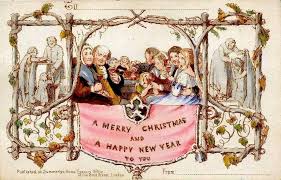
The real game-changer came in 1843, thanks to a social problem that sounds remarkably modern: too many people to keep in touch with and not enough time. Henry Cole, a prominent civil servant, helped establish the Penny Post postal system—named after the cost of posting a letter. He found himself with unanswered mail piling up during the busy Christmas season. His solution? Why not create one design that could be sent to everyone?
Cole commissioned his friend, artist John Callcott Horsley, to design what would become the world’s first commercial Christmas card. The design featured three generations of the Cole family raising a toast in celebration, surrounded by scenes depicting acts of charity. The message was simple: “A Merry Christmas and a Happy New Year to You.”
About 2,050 cards were printed in two versions—a black and white version for sixpence and a hand-colored version for one shilling. Interestingly, the card caused some controversy. The image showed young children enjoying glasses of wine with their family, which upset the Victorian temperance movement.
The Penny Post, introduced in 1840, made mailing affordable and accessible. What started as Cole’s time-saving solution quickly caught on among his friends and acquaintances, though it took a few decades for the tradition to really explode in popularity.
Crossing the Atlantic
Christmas cards made their way to America in the late 1840s, but they were expensive luxuries at first. In 1875, Louis Prang, a German-born printer who had worked on early cards in England, began mass-producing cards in America. He made them affordable for average families. His first cards featured flowers, plants, and children. By the 1880s, Prang was producing over five million cards annually.
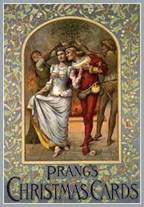
Christmas cards spread rapidly with improvements in both postal systems and printing. Victorian cards often featured sentimental, elaborate images—sometimes anthropomorphic animals or unexpected motifs. The Hall Brothers Company (later Hallmark) shifted the format to folded cards in envelopes rather than postcards, allowing for more personal written messages—setting the standard still seen today.
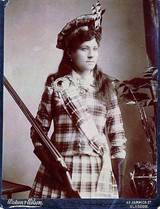
The 20th century brought both industrialization and personalization to the Christmas card. Advances in color printing, photography, and mass marketing meant that cards became cheaper and more varied. In the 1920s and 1930s, families began sending cards featuring their own photographs, a tradition that gained momentum after World War II with the rise of suburban life and inexpensive cameras. By the 1950s and 1960s, Christmas cards had become a fixture of middle-class life. Designs reflected changing tastes—from sentimental Victorian nostalgia to sleek mid-century modernism. Surprisingly, the first known Christmas card with a personal photo was sent by Annie Oakley in 1891using a photo taken during a visit to Scotland.
Christmas Cards Around the World Today
Fast forward to today, and Christmas card traditions vary wildly depending on where you are. In Great Britian and US, sending cards remains a major tradition. British people send around 55 cards per year on average, with Christmas cards accounting for almost half of all greeting card sales
But the tradition looks quite different in other parts of the world. In Japan, where only about 1.5% of the population is Christian, Christmas is celebrated as a secular, romantic holiday rather than a religious one. Christmas Eve is treated similarly to Valentine’s Day, with couples exchanging gifts. While many people observe the Western custom of sending cards, these are nengajo—New Year’s cards—sent to friends, family, and business associates, expressing wishes for a happy and prosperous year.

In the Philippines, one of Asia’s most Christian nations, Christmas is celebrated with incredible enthusiasm starting as early as September, with the season officially beginning with nine days of dawn masses on December 16. Cards are part of the celebration, but they’re just one element of an extended, community-focused holiday.
In Australia, the tradition of sending handwritten Christmas cards remains popular despite the summer heat. Australian cards often feature unique imagery—Santa in shorts and sandals, or kangaroos instead of reindeer, adapting the tradition to local culture.

The Digital Shift
Today, while e-cards and social media posts have certainly cut into traditional card sales, many people still cherish the ritual of sending and receiving physical cards. There’s something irreplaceable about finding a thoughtful card in your mailbox among the bills and advertisements.
What started as Henry Cole’s practical solution to a busy social calendar has evolved into a diverse global tradition, adapted and reimagined by different cultures worldwide. Whether you’re mailing elaborate family photo cards, sending quick e-greetings, or exchanging romantic messages in Tokyo, you’re participating in a tradition that’s over 200 years old.