
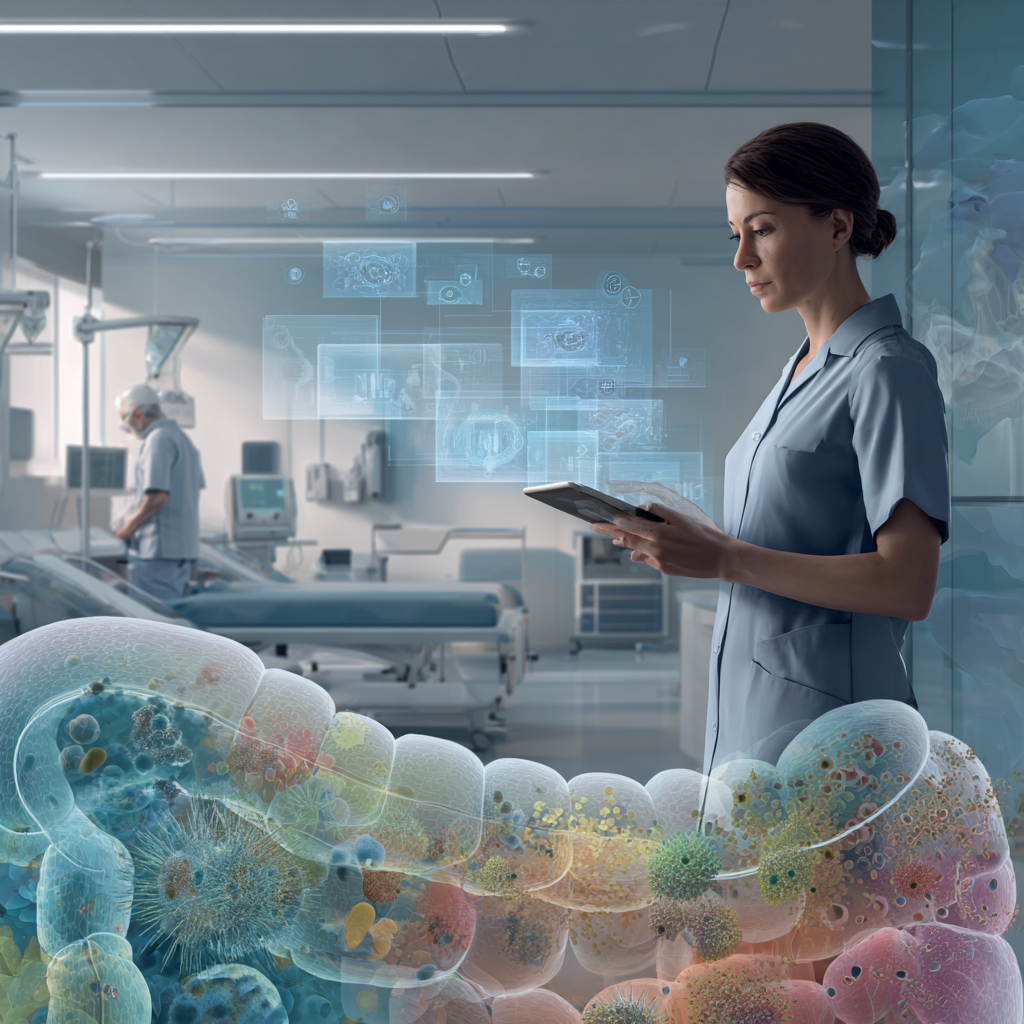
Today I’m going to talk about something that may sound unbelievable and maybe even a little gross—fecal transplant. Yes, it’s exactly what it sounds like. Getting a transplant of someone else’s poop.
The human gut contains trillions of microorganisms—bacteria, viruses, fungi—living in a complex ecosystem that influences everything from digestion to immune function. This is called the microbiome. When this ecosystem gets disrupted, the consequences can range from uncomfortable to life-threatening. Enter one of medicine’s most counterintuitive treatments: fecal microbiota transplantation, or FMT, where stool from a healthy donor is transferred to a patient to restore a healthy community of gut microbes.
What Is FMT
The basic idea is simple: if someone’s microbiome has been badly disrupted (most commonly by repeated antibiotic exposure), replacing it with a balanced microbial ecosystem can help the gut recover. At its core, FMT is taking fecal matter from a healthy donor and introducing it into a patient’s gastrointestinal tract. But it’s not the solid waste itself that matters; it’s the billions of beneficial bacteria and other microorganisms living in that material. Think of it as a probiotic treatment on steroids, delivering an entire functioning ecosystem rather than just a few select bacterial strains.
The gut microbiome plays crucial roles in digestion, vitamin production, immune system regulation, and even protection against harmful pathogens. When antibiotics, illness, or other factors devastate this ecosystem, dangerous bacteria like Clostridioides difficile (C. diff) can take over, causing severe diarrhea, inflammation, and potentially fatal infections.
The Clinical Track Record
While it may sound like “weird science”, FMT has been around for centuries. It was used in ancient Chinese medicine in a formulation called “yellow soup“ to treat food poisoning and intractable diarrhea. It was used as early as the 16th century in Europe to treat sick farm animals, particularly sheep and cattle.
FMT’s most dramatic success story involves C. diff infections, particularly the recurrent cases that don’t respond to antibiotics. Multiple randomized controlled trials have shown FMT to be remarkably effective—with cure rates often exceeding 80-90% for recurrent C. diff infections, compared to roughly 25-30% for continued antibiotic therapy. A landmark 2013 study reported in the New England Journal of Medicine was stopped early because FMT was so dramatically superior to standard treatment that continuing to withhold it from the control group seemed unethical.
Beyond C. diff, researchers are investigating FMT for inflammatory bowel diseases like ulcerative colitis and Crohn’s disease, with mixed but occasionally promising results. Some studies have shown potential for ulcerative colitis, with remission rates around 24-27%. The research into Crohn’s disease, irritable bowel syndrome, metabolic disorders, and even neurological conditions is ongoing but less conclusive. The FDA currently considers FMT an investigational treatment for most conditions except recurrent C. diff, where it’s become a recognized therapeutic option.
How It Works
The actual process of FMT can use several routes. The most common approaches involve colonoscopy, where the donated material is delivered directly to the colon, or through nasogastric or nasoduodenal tubes that thread through the nose down to the small intestine. More recently, oral capsules containing frozen, encapsulated donor stool have become available, offering a less invasive alternative that patients often prefer.
Before the transplant, the donated stool is carefully processed. It’s typically mixed with a saline solution and filtered to remove large particles while preserving the microbial communities. The resulting liquid suspension is what gets delivered to the patient. For frozen preparations, this material is mixed with a cryoprotectant, frozen at extremely cold temperatures, and can be stored for months before use.
The preparation isn’t just about the donor material—patients often undergo their own preparation. Many protocols include antibiotics to reduce the overgrowth of harmful bacteria before the transplant, followed by bowel cleansing similar to what you’d do before a colonoscopy. The idea is to create a relatively clean slate where the new microbial ecosystem can establish itself.
Sources of Donor Material
This brings us to one of the most critical aspects: donor selection and screening. Not just anyone can donate stool for medical use. The screening process is extensive and rigorous, rivaling or exceeding the scrutiny applied to blood donation.
Donors undergo detailed health questionnaires covering everything from recent travel and antibiotic use to gastrointestinal symptoms and risk factors for infectious diseases. They provide blood and stool samples that are tested for a long list of potential pathogens: C. diff, Helicobacter pylori, parasites, hepatitis A, B, and C, HIV, syphilis, and various other bacteria and viruses. The FDA issued guidance requiring additional testing for multi-drug resistant organisms after several patients contracted serious infections from FMT.
Donors generally fall into two categories: directed donors and universal donors. Directed donors are typically family members or friends who undergo screening and provide stool specifically for one patient. Universal donors go through the same rigorous screening but provide samples that can be used for multiple patients. These universal donors often work with stool banks—specialized facilities that collect, process, screen, and distribute donor material to healthcare providers.
The largest stool bank in the United States, OpenBiome, was founded in 2012 and has processed material from thousands of donors for tens of thousands of treatments. They report that only about 2-3% of volunteer donors successfully make it through the screening process, highlighting just how selective the criteria are. These banks have made FMT more widely available, eliminating the need for individual healthcare facilities to find and screen their own donors.
The Balance of Promise and Caution
While FMT represents a genuine breakthrough for recurrent C. diff infections, the medical community remains appropriately cautious about expanding its use. The FDA regulates FMT and has expressed concerns about potential risks, particularly after cases where patients developed serious infections from inadequately screened donors. There questions about the long-term effects of introducing another person’s microbiome, and there are theoretical concerns about transmitting conditions or predispositions we don’t fully understand.
The research into FMT for conditions beyond C. diff continues, but many trials have shown modest or inconsistent results. The microbiome’s role in health and disease is incredibly complex, and what works dramatically for one condition may not translate to others. Still, the fundamental insight—that our gut microbiome profoundly influences our health and that we can therapeutically manipulate it—has opened potential new avenues in medicine.
Sources
1. van Nood, E., et al. (2013). “Duodenal Infusion of Donor Feces for Recurrent Clostridium difficile.” New England Journal of Medicine, 368(5), 407-415. https://www.nejm.org/doi/full/10.1056/NEJMoa1205037
2. U.S. Food and Drug Administration. “Fecal Microbiota for Transplantation: Safety Information.” https://www.fda.gov/vaccines-blood-biologics/safety-availability-biologics/fecal-microbiota-transplantation-safety-information
3. Cammarota, G., et al. (2017). “European consensus conference on faecal microbiota transplantation in clinical practice.” Gut, 66(4), 569-580. https://gut.bmj.com/content/66/4/569
4. Moayyedi, P., et al. (2015). “Fecal Microbiota Transplantation Induces Remission in Patients With Active Ulcerative Colitis in a Randomized Controlled Trial.” Gastroenterology, 149(1), 102-109. https://www.gastrojournal.org/article/S0016-5085(15)00381-5/fulltext
5. Kelly, C.R., et al. (2016). “Update on Fecal Microbiota Transplantation 2015: Indications, Methodologies, Mechanisms, and Outlook.” Gastroenterology, 150(1), 276-290. https://www.gastrojournal.org/article/S0016-5085(15)01626-7/fulltext
6. OpenBiome. “Our Process: Screening.” https://www.openbiome.org/safety
7. Quraishi, M.N., et al. (2017). “Systematic review with meta-analysis: the efficacy of faecal microbiota transplantation for the treatment of recurrent and refractory Clostridium difficile infection.” Alimentary Pharmacology & Therapeutics, 46(5), 479-493. https://onlinelibrary.wiley.com/doi/full/10.1111/apt.14201
Illustration generated by author using Midjourney