Grumpy opinions about everything.

Category: Commentary Page 5 of 15

This is the home of grumpy opinions.

From Breaker Boys to Burger Flippers: The Resurgence of Child Labor in America

What West Virginia’s new child labor law tells us about a growing trend and a forgotten history.

📜 Introduction
In April 2025, West Virginia passed a law eliminating work permit requirements for 14- and 15-year-olds and opening hazardous occupations to older teens. It’s a policy shift that echoes a much darker chapter of American history—one most of us thought was long behind us.

As I read the news, I couldn’t help but recall Lewis Hine’s haunting photos of the “Breaker Boys”—children as young as eight sorting coal in dangerous conditions. Their faces were the face of American industry at its most exploitative. Their plight helped spark the labor reforms we now take for granted.

But are those reforms at risk of unraveling?


🕰 A Brief History of Child Labor in America
At the turn of the 20th century, over two million American children worked long hours in factories, coal mines, and fields. Some were as young as five. The wages were low, the conditions dangerous, and the toll—educational, emotional, and physical—immeasurable.

Most of these children came from poor or immigrant families. Factory and mine owners favored child labor because it was cheap, compliant, and expendable.


⚖️ Early Reforms and Legal Battles
The reform movement gained traction in the early 1900s thanks to activists, labor unions, and journalists. The National Child Labor Committee, founded in 1904, worked with photographers like Lewis Hine to expose the brutality of child labor to the American public.

Attempts to legislate federally met fierce resistance. The Keating-Owen Act (1916) was struck down by the Supreme Court in Hammer v. Dagenhart (1918), and a second effort was defeated in 1923. It wasn’t until the Fair Labor Standards Act (FLSA) of 1938 that the federal government established real guardrails:

  • Prohibited employment under 16 in manufacturing/mining
  • Banned hazardous work under 18
  • Limited working hours for minors
  • Authorized federal inspections

The FLSA marked the beginning of consistent national protections for working children.


🎓 Child Labor and Education: A Damaging Tradeoff
There’s a well-documented tradeoff between child labor and education:

  • Working children attend school less, perform worse, and are more likely to drop out.
  • Child labor perpetuates intergenerational poverty.
  • Education access is key to breaking this cycle—but only if children aren’t too exhausted or endangered to learn.

Even today, agricultural labor laws allow children as young as 12 to work long hours, especially among migrant families. These children have some of the country’s highest school dropout rates.


📉 Modern Rollbacks: A Disturbing Trend
Since 2021, over a dozen U.S. states have proposed or passed laws rolling back child labor protections, often citing labor shortages or “career readiness”:

  • Arkansas (2023): Removed permit and parental consent requirements for 14- and 15-year-olds.
  • Iowa: Now allows minors in meatpacking and industrial work, with waivers.
  • Kentucky: Loosened hour limits during the school year.
  • Other states: Missouri, New Jersey, New Hampshire, and others are following suit.

Critics warn that these laws open the door to exploitation, especially in lower-income communities.


🧠 Why It Matters
The repeal of child labor protections isn’t just a policy dispute—it’s a moral referendum. If child labor laws are weakened, the most vulnerable children will bear the cost, just as they did a century ago.

The lesson from history is simple: when economic hardship or political expediency trumps child welfare, it’s children who are put at risk.


📣 Final Thoughts
Public memory is short. But the bodies of exhausted child laborers buried in unknown graves and the broken educational paths of working teens are silent witnesses to the past—and a warning for the future.

If we claim to value children’s futures, our policies must reflect that—not just in schools, but in the workplace.


🔗 Sources and Suggested Further Reading

  • U.S. Department of Labor: Child Labor Provisions
  • National Child Labor Committee Archives
  • Keating-Owen Act Summary – OurDocuments.gov

“America at 250: A Revolution Remembered… or Forgotten?”

I’m old enough to remember the 200th anniversary of the American Revolution. Bicentennial symbols were everywhere. Liberty Bells, eagles, and the ubiquitous Bicentennial logo of the red, white and blue stylized five-point star. They could be found on hats, T-shirts, socks, soft drink cups, beer cans, and even a special “Spirit of ‘76” edition of the Ford Mustang II. Commemorative events and celebrations were being planned everywhere and people had “bicentennial fever”.

But the 250th anniversary is not attracting that same kind of attention or interest. I wonder why that is. Perhaps it’s that the name for a 250th anniversary, Semiquincentennial, doesn’t seem to roll off the tongue the way Bicentennial does. But I suspect it’s far more than just a tongue twisting name.

The Bicentennial came after a decade of national trauma.  The Vietnam War, Watergate, and the civil rights struggles had all roiled the country.  By 1976, most Americans wanted to feel good about the country again. It became a giant, colorful celebration of “American resilience.”

While the 250th anniversary of the American Revolution is being marked by numerous events, commemorations, and official proclamations, most are local, and it has not yet captured widespread public attention or generated the scale of national excitement seen during previous milestone anniversaries.

The anniversary arrives at a time of deep political polarization, which has complicated celebration plans.  There is an ongoing debate within the group tasked with planning the celebration, the U.S. Semiquincentennial Commission, about how to present American history. Some members advocate for a traditional, celebratory approach focusing on the Founding Fathers and patriotic themes. Others push for a more inclusive narrative that acknowledges the complexities of American history, including the experiences of women, enslaved people, Indigenous communities, and other marginalized groups

Beyond the commission itself, some historians note that the “history wars”—ongoing disputes throughout society over how U.S. history should be taught and remembered—have made it harder to generate broad, enthusiastic buy-in for the anniversary among the general public. 

Commemorations in places like Lexington and Concord have seen anti-Trump protesters carrying signs such as “Resist Like It’s 1775” and “No Kings,” explicitly drawing parallels between opposition to King George III and contemporary resistance to what they perceive as autocratic tendencies in current leadership. At the reenactment of Patrick Henry’s “Give Me Liberty or Give Me Death” speech, Virginia Governor Glenn Youngkin was met with boos and protest chants, highlighting how the Revolution’s legacy is being invoked in current political struggles.

While some organizers and historians hope the anniversary can serve as a unifying moment—emphasizing that “patriotism should not be a partisan issue”—the reality is that commemorations have often become forums for expressing contemporary political grievances and anxieties. The presence of both celebratory and dissenting voices at these events reflects the enduring debate over what it means to be American and who gets to define that identity.  The complexity and messiness of American history, combined with current societal tensions, may dampen the celebratory mood and make it harder for people to connect emotionally with the anniversary.

Even the 250th logo has become a source of dispute, although it is one of the few areas of disagreement that is nonpartisan and tends to be about stylistic and artistic merits of the logo. Proponents of the new logo appreciate its modern and inclusive design emphasizing that the flowing ribbon represents “unity, cooperation, and harmony,” and reflects the nation’s aspirations as it commemorates this milestone.  Detractors are concerned about the legibility of the “250” and the lack of traditional American symbols, such as stars, which could have reinforced its patriotic theme.

Surveys by history related organizations suggest that most Americans are not yet thinking about the 250th anniversary.  The run-up to 2026 may see increased attention, but as of now, the anniversary has not broken through as a major topic of national conversation.  If the anniversary continues to be viewed as a contentious partisan undertaking, it may never gain widespread popularity, and the general public may choose to stay away.

A friend who is a member of the West Virginia 250th committee told me that they had an initial meeting at which nothing was accomplished, and they have had no meeting since. It seems to me, this is up to us, the citizens, to ensure that the 250th anniversary of the American Revolution is appropriately remembered. We don’t have to live in an area where a Revolutionary War event occurred for us to recognize its events. Here in West Virginia, in October of 2024 we commemorated the 250th anniversary of the battle of Point Pleasant which many consider a precursor to the American Revolution.  This event was not organized by any state or national group. It was the result of efforts on the part of the City of Point Pleasant and the West Virginia Sons of the American Revolution.

We do not need to depend on the government; we the people can hold local commemorations of revolutionary events that occurred in other areas. We can hold commemorations of the Battle of Bunker Hill, the signing of the Declaration of Independence, the Battle of Saratoga and many other events. It will take the initiative of local people to organize these events.

It will be our great shame if we allow this the commemoration of an event so significant in both American and world history to be turned into something that divides us rather unites us and strengthens our common bond.

Thought For Today

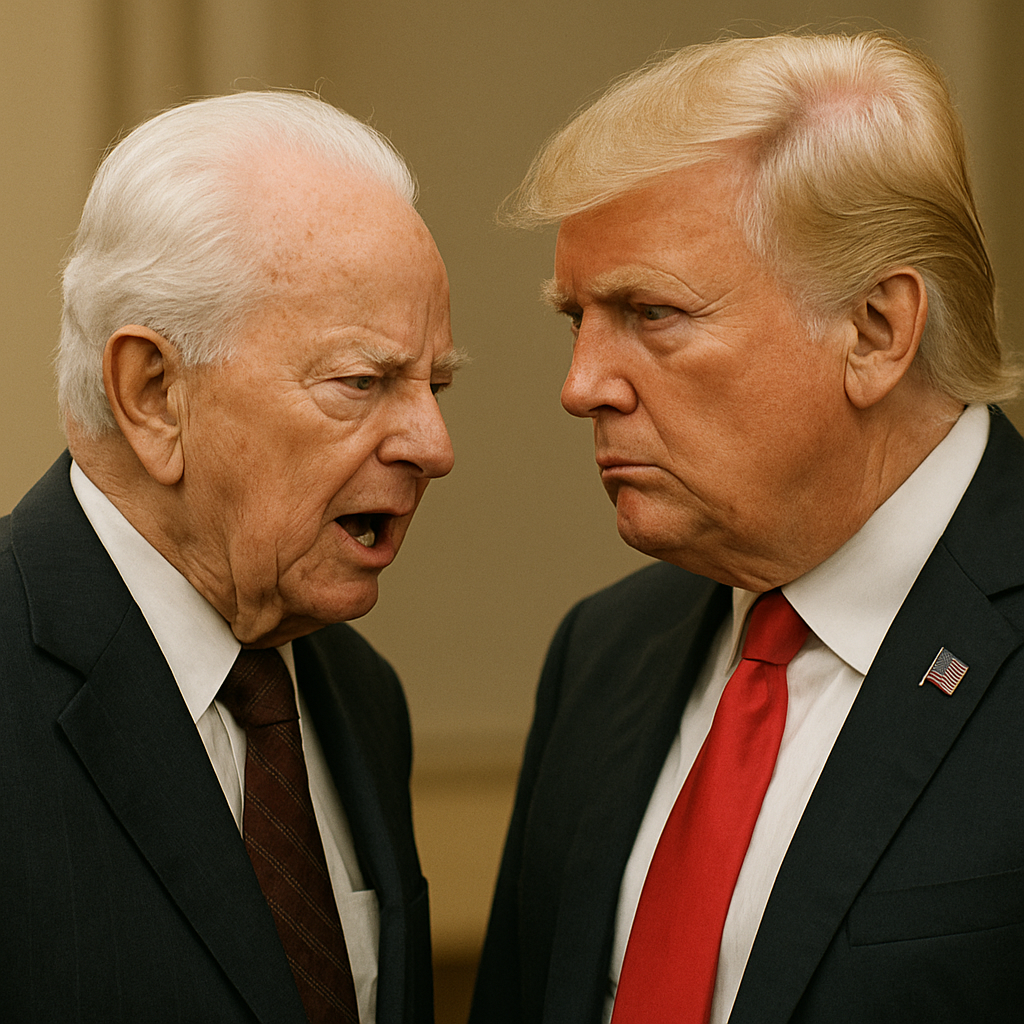
Robert C. Byrd and Donald Trump

A Clash of Constitutional Visions

Senator Robert C. Byrd was a West Virginia icon and it’s always risky to speculate on what a historic figure may have thought. However, many of Senator Byrd’s beliefs are well documented and I believe I can make reasonable assumptions about what he may have thought about our current political situation.  Having served in the U.S. Senate over 51 years, from 1959 until his death in 2010— he would likely have viewed Donald Trump with deep concern, particularly in light of Byrd’s reverence for constitutional process, institutional norms, and congressional authority.  He was known for his deep knowledge of Senate rules, fierce defense of the institution, and commitment to constitutional processes.

Here is my reasoned assessment of what Robert Byrd might have thought of Donald Trump, based on his record, writings, and public statements.

Byrd was a passionate constitutionalist and institutionalist. He always carried a pocket Constitution, lectured on its principles, and wrote extensively about the importance of maintaining the Senate’s independence as a check on executive power. He frequently warned against presidential overreach, even when it came from presidents in his own party.

I believe Byrd would probably have seen Trump’s frequent challenges to the separation of powers—such as ignoring congressional subpoenas, attempting to overturn the 2020 election, and asserting sweeping executive privilege—as a threat to the constitutional order.

Byrd idealized Senate decorum and was known for his formal oratory. He disliked crassness, impulsiveness, and public vulgarity. He once rebuked his colleagues for casual dress on the Senate floor.

Trump’s coarse rhetoric, personal insults, and use of Twitter to attack opponents would likely have appalled Byrd. He believed public office carried with it a solemn responsibility to elevate public discourse.  In 1999, Byrd criticized President Clinton not just for the Monica Lewinsky scandal, but for diminishing the dignity of the office.

Though Byrd was a master of local politics and brought billions in federal dollars to West Virginia, he also warned against demagoguery. He valued political rhetoric grounded in principle, not spectacle.  While Byrd might have appreciated Trump’s appeal to working-class Americans, he would likely have distrusted his populism as it comes at the expense of facts, reason, or institutional integrity.

Byrd’s own history on race is complicated. A former member of the KKK in the 1940s, he spent the latter decades of his career renouncing that association and supporting civil rights legislation. He called his early beliefs a great shame. Byrd’s political journey included dramatic personal change: from early segregationist and KKK member to a vocal supporter of civil rights and of the first Black presidential nominee, Barack Obama.  Byrd likely would have been disturbed by Trump’s equivocations after Charlottesville and by rhetoric seen as racially divisive. Byrd worked hard to overcome his past and likely would have seen such behavior as regression rather than progress.

Byrd was one of the Senate’s strongest voices against the Iraq War, citing constitutional concerns over unchecked executive power in foreign affairs. He believed Congress must assert itself in matters of war and peace.  Trump’s erratic foreign policy decisions—such as wavering defense commitments, transactional diplomacy, and overtures to authoritarian leaders—would likely have seemed reckless and unilateral to Byrd.

Senator Robert Byrd, though an institutional conservative in many ways, would likely have seen Donald Trump as a figure undermining the very traditions, checks, and civic virtues Byrd spent his career defending. His critique wouldn’t have been partisan—it would have been constitutional.

“The Constitution is not a pliable instrument to be molded and twisted at the whim of the President. It is our compass. It is our anchor.” — Robert C. Byrd

Blockchain

The Origins, Evolution, and Future of a Decentralized Revolution

Introduction

While trying to understand cryptocurrency, I came across blockchain. I found that I understood even less about blockchain than I did about cryptocurrency. The following article is my attempt to explain blockchain to myself.  If you have not read my earlier post The Rise of Cryptocurrency, doing so may be helpful for understanding this post.

Blockchain technology was once a niche topic among cryptographers and libertarians who hoped to be shielded from government scrutiny. It has since evolved into a global force reshaping how we think about data, transactions, and trust. Born in the wake of the 2008 financial crisis, blockchain offers a radical transparent alternative to traditional financial institutions.

Today, it underpins not only cryptocurrencies but also supply chains, voting systems, healthcare, and intellectual property. This article explores the history, mechanics, current applications, and future potential of blockchain technology.

1. Origins of Blockchain

  • Who Created It?  The modern concept of blockchain was introduced in 2008 by a pseudonymous developer (or group) known as Satoshi Nakamoto, in a white paper titled Bitcoin: A Peer-to-Peer Electronic Cash System. While Nakamoto’s identity remains unknown, the paper built on earlier work by cryptographers such as David Chaum (digital cash, 1980s) and Nick Szabo (“bit gold”).
  • Why Was It Developed?  Blockchain emerged in response to a global crisis of trust. The 2008 financial meltdown exposed the dangers of opaque, centralized financial systems. Nakamoto’s vision was a decentralized system that did not rely on trust and was an alternative where users wouldn’t need banks or governments to verify transactions.
  • First Use Case: The original application of blockchain was Bitcoin—the first decentralized digital currency. Many people believe that Bitcoin evolved from blockchain, but in fact, blockchain was created to make Bitcoin feasible.  Bitcoin’s blockchain acts as a transparent, time-stamped public ledger to prevent double-spending and centralized tampering.
  • Key Innovation: The Chain of Blocks, at its core, blockchain is a distributed ledger where transactions are grouped into blocks. Each block is cryptographically linked to the one before it, forming a secure, tamper-resistant chain that is spread across many computer networks.

2. How Blockchain Works

Blockchain operates on several core principles:

  • Decentralization: Data is stored across a network of nodes (think computers for simplicity) rather than a single server.
  • Immutability: Once added, a block cannot be altered without changing all subsequent blocks.
  • Consensus Mechanisms: Agreement is achieved through protocols like Proof of Work or Proof of Stake (explained below).
  • Transparency with Pseudonymity: Transactions are visible to all but are tied to encrypted addresses—not personal identities.

3. Why Blockchain Is Secure

  • Cryptographic Hashing: Each block contains a cryptographic hash (repeat) of the previous block’s data.  A cryptographic hash is a mathematical function that takes an input (or “message”) and returns a fixed-size string of characters, which appears random.  A discussion of it is well beyond the scope of this article (and my understanding as well).  Even a tiny change in the data drastically changes the hash.  Any tampering becomes immediately obvious, breaking the chain’s integrity.
  • Decentralization: Every node on the network has a full copy of the blockchain.  If a single node is altered, the change is rejected by the others.  This makes coordinated attacks extremely difficult, especially on large networks.
  • Consensus Mechanisms: Blockchain uses mathematical consensus to validate new blocks:
  • Proof of Work (PoW): Used by Bitcoin; involves solving complex mathematical puzzles. A 51% attack (controlling most of the computing power) is prohibitively expensive and would cost far more than could be realized through manipulation of the blockchain.
  • Proof of Stake (PoS): Used by Ethereum 2.0 and others; validators stake tokens, risking loss if they act dishonestly.  This might be thought of as posting a bond.
  • Immutability: Once a block is added and validated, it’s nearly impossible to alter.  Changing one block would require rewriting all subsequent ones and redoing the work—an impractical task on any meaningful scale.
  • Public and Private Key Cryptography: Each user has a private key (used to sign transactions) and a public key (used to verify them).  This ensures only the rightful owner can authorize a transaction.
  • Auditability: Most public blockchains are fully transparent.  Anyone can audit the ledger, view transaction history, and verify balances—without relying on centralized authorities.

4. Current Uses of Blockchain

Blockchain’s applications now stretch across numerous industries:

  • Finance Beyond Bitcoin:
  • Ethereum introduced smart contracts and decentralized apps (dApps).  Think of a smart contract as a digital vending machine. You put in a specific input (e.g., cryptocurrency), and the contract automatically performs a pre-programmed action (e.g., transfer of ownership, release of funds). No lawyer, banker, or notary is needed to oversee or verify the transaction.dApps are software programs that run on a blockchain or peer-to-peer network, rather than being hosted on centralized servers.
  • Decentralized Finance (DeFi) enables peer-to-peer lending, borrowing, and trading without traditional intermediaries.
  • Stablecoins (e.g., USDC, Tether) offer price stability by pegging cryptocurrencies to government backed currencies.
  • Cross-border payments are cheaper and faster using blockchain.
  • Supply Chain Transparency, companies like Walmart, IBM, and Maersk use blockchain for traceability.  Example: Lettuce traced from farm to shelf helps speed up food recalls.
  • Healthcare uses blockchain to secure medical records and track pharmaceuticals.  Estonia integrates blockchain into its national health system.
  • Voting and Governance is supported by trials, like West Virginia’s 2018 blockchain voting pilot, that aim to improve election transparency.  Concerns remain about digital vote integrity and security.
  • Digital Identity & Intellectual Property utilizesblockchaintoallowartists to use Non Fungible Tokens (NFT) to register digital ownership of art. An NFT is a unique digital asset that represents ownership or proof of authenticity of a specific item, such as artwork, music, video clips, virtual real estate, or even tweets, and it’s stored on a blockchain—a decentralized digital ledger.  It is used for assets that have no physical existence.  Think of it as owning the rights to a computer program.
  • Self-sovereign identity systems are being developed by companies like Microsoft for developing user-controlled credentials.

5. Criticisms and Challenges

Despite its promise, blockchain faces significant obstacles:

  • Scalability: Networks like Bitcoin can become slow and costly at high volumes.
  • Energy Consumption: PoW systems have been criticized for their high carbon footprint.  They make high demands on electrical grids and on water systems.
  • Regulatory Uncertainty: Governments differ widely on how to regulate blockchain and crypto.  International agreements will be necessary for advanced implementation but have not yet been established and in most cases have not even begun.
  • Fraud & Hype: Scams and speculative investments have eroded public trust in some blockchain projects.  Because of their decentralized structure, there’s no central authority to guarantee their security.  Given that the philosophy behind blockchain is to avoid government oversight, this may always be a problem.

6. The Future of Blockchain

  • Greener Alternatives: such asProof of Stake (e.g., Ethereum 2.0) significantly reduce energy use and improve scalability.
  • Central Bank Digital Currencies (CBDCs):  Countries like the U.S., China, and Sweden are considering, or in some cases piloting, digital currencies backed by governments and built on blockchain-like infrastructure.
  • Tokenization of Real Assets allows real estate, art, and even wine to be digitally fractionalized, allowing more people to invest in historically exclusive markets.
  • Interoperability of block chain means future systems will allow cross-blockchain communication, improving flexibility and usability across networks.
  • Decentralized Autonomous Organizations (DAOs) can operate through smart contracts and community voting—no CEOs or managers required. Potential applications include governance, philanthropy, and startup funding.

Conclusion

So, do I now fully understand blockchain?  Not hardly.  But it is important to be aware of it and know that it will have a significant impact on our lives.

Blockchain is more than an esoteric new technology—it’s a reimagining of how trust, authority, and ownership work in a digital society. From its roots in cyber-activism to its integration into governments and corporations, blockchain is reshaping the way we do business.

Its future will depend on whether we manage its risks and harness its power responsibly. Done right, blockchain could form a core part of tomorrow’s digital infrastructure. Done poorly, it could become another overhyped fad that imposes additional burdens on society.


🔑 Key Takeaways

  • Blockchain is a decentralized ledger that enhances transparency and trust.
  • It started with Bitcoin but now spans many industries.
  • Key strengths include immutability, transparency, and security.
  • Major challenges include scalability, energy use, and regulatory ambiguity.
  • The future could bring CBDCs, DAOs, interoperability, and asset tokenization.

The Rise of Cryptocurrency

What Is It, How It Does It Work, and Who’s Using It?

I’ve never really understood cryptocurrency and as a result I haven’t paid much attention to it. Recently Donald Trump signed his Executive Order “Strengthening American Leadership in Digital Financial Technology.  The Executive Order established the “Presidential Working Group On Digital Asset Markets”, to explore the creation of a national digital asset (cryptocurrency) stockpile.

 That’s when I decided it was time to find out more about it.  And, being a guy, my first thought was to just go and buy some. It turned out to be a little more complicated than walking into your local bank and asking to buy a Bitcoin.

To begin with, the current value of a Bitcoin is in excess of $83,000. Most cryptocurrency exchanges allow fractional purchases, some as low as $10. The transaction fee will run about 20% of a small purchase, so it may not be a particularly good investment at that level. The fee is a lower percentage for larger purchases.

You can purchase cryptocurrency such as Bitcoin through cryptocurrency exchanges. There are at least three reputable platforms available in the United States. Bitcoin can also be purchased in small amounts through PayPal and Venmo.

Once you’ve made your purchase, you’ll have to have a Bitcoin wallet, where you will store your Bitcoins. A digital wallet is like a bank account for Bitcoins but with highly sophisticated security. There are two primary types. The custodial wallet is managed by a third-party service and is easy to use, but you don’t control the privacy keys—a serious consideration if you are making a large purchase. There are the non-custodial wallets where you have full control over your privacy key. The most common of these is the Bitcoin.com wallet. It’s user friendly and mobile according to its website.

One thing to consider.  Bitcoin purchases for the most part require full identification including Social Security number. This is based on money laundering regulations. The only exception to this is the Bitcoin ATMs (vending machines) that usually only require a driver’s license number and a cell phone number. However, only very small purchases are available through these ATM’s.

Cryptocurrency may seem like a recent invention, but the ideas behind it go back several years. Today, it’s more than a buzzword, it’s a financial tool, an investment asset, and for some, even a national currency. In this post, we’ll explore where crypto came from, how it gets its value, how it’s used in the real world, and which governments (if any) treat it like real money.

Where It All Began: The Origin of Cryptocurrency

Cryptocurrency’s origin begins with a previously unknown person—or possibly a group—known only as Satoshi Nakamoto. In 2008, Nakamoto published a white paper titled “Bitcoin: A Peer-to-Peer Electronic Cash System.” A few months later, in January 2009, the Bitcoin network was officially launched with the mining of the first block, called the Genesis Block. This marked the birth of the world’s first viable cryptocurrency, Bitcoin.

The purpose was to create a form of money that could operate without the control of governments or financial institutions. Bitcoin was designed to be decentralized, transparent, and secure—made possible by blockchain technology. The blockchain is a digital ledger, distributed across thousands of computers, that records every transaction made in the network. Once data is entered, it’s nearly impossible to change—giving it an edge over traditional banking records when it comes to fraud prevention.  Earlier attempts to develop a digital currency like eCash and b-money failed because they couldn’t solve the problem of security: protecting their crypto from unauthorized duplication.

By 2011 Nakamoto vanished, leaving a final message that they had moved on to other things. Nakamoto is believed to have mined about 1,000,000 bitcoins which are still sitting untouched in a known wallet address.   At today’s prices Nakamoto’s Bitcoins are worth billions. Why did Nakamoto do it? No one knows.

What Gives Crypto Its Value?

One of the most common questions about cryptocurrency is: “What gives it value?”

Unlike the U.S. dollar, which is backed by the full faith and credit of the government (called a fiat currency in modern financial jargon), most cryptocurrencies are not backed by a either a physical commodity or government guarantee. Instead, their value comes from a mix of:

  • Scarcity: Most cryptocurrencies have a cap on how many coins can exist. For example, Bitcoin is limited to 21 million coins. That built-in scarcity is one reason why people compare it to gold.
  • Utility: A coin that can be used for more than just speculation—such as transferring money quickly or executing smart contracts—tends to be more valuable.
  • Network Adoption: The more people who use or invest in a cryptocurrency, the more valuable it tends to become. This is often called the “network effect.”
  • Speculation: Let’s be honest, a lot of crypto value is driven by people buying low and hoping to sell high. That makes crypto prices volatile, which is both a risk and a reward depending on your timing.

Cryptos like Bitcoin and its major competitor Ethereum gain and lose billions in value in a single day, driven by news, regulation, and even tweets.

Bitcoins are generated through dedicated blockchain technology which ensures their safety and prevents them from being duplicated. As a result, many people view them as a store of value (digital gold). They can also be used as a medium of exchange although that is less common due to volatility and high transaction fees.

There’s another type of cryptocurrency called the meme coin. They often start as jokes or are done by some people as a source of revenue. They have little or no real-world use. They rely on community hype and social media to generate popularity and value. They don’t have their own blockchain, instead they’re built on top of existing platforms. They’re usually created quickly with minimal technical barriers and their security and functionality vary widely.

The best-known meme coin is the $TRUMP coin. It was released just before Donald Trump’s inauguration.  A $TRUMP coin reached a high of $75.35 on January 19th, 2025, but it quickly lost almost all value. A $TRUMP coin is currently worth about 27 cents. The Trump family and their associates made millions on transaction fees while investors lost massively in the market. I would not consider meme coins as a real invetment. If you purchase one, consider it as a hobby.

A new advancement in the cryptocurrency scene is the Stablecoin. This type of cryptocurrency is designed to maintain a stable value. It is usually pegged to a traditional asset like the US dollar, the Euro or perhaps gold. The goal is to offer the benefits of cryptocurrency, like fast digital transactions and decentralized access, without the wild price swings seen with other coins like Bitcoin.

Most Stablecoins are backed in one of three ways:

  • Fiat backed (most common): for example, for every Stablecoin issued a dollar (or equivalent) is held in reserve. This could be considered a digital version of cash held in a bank account.
  • Crypto backed: Each Stablecoin is backed by other crypto currencies but is usually over collateralized to guard against volatility. For example, $150.00 worth of a regular cryptocurrency is held to issue $100 worth of Stablecoin.
  • Algorithmic: Stablecoin uses software and smart contracts to control the coin supply and keep the price stable with no actual reserve assets. The most famous example of this was TerraUSD which had a spectacular collapse in 2022.

Stablecoins are designed to a hedge against volatility in the standard crypto markets. They provide the same fast cheap international payments as other cryptocurrency and can provide dollar like stability in countries with unstable currencies. Fiat based coins are generally seen as more reliable because they are frequently audited and are regulated more closely. Others, especially algorithmic ones, have greater risk.

How Is Cryptocurrency Used?

People use cryptocurrency in several different ways, and the list is growing:

1. Digital Payments

Crypto was originally created to be a medium of exchange. Some online and brick-and-mortar retailers accept Bitcoin, Ethereum, or other coins. Services like PayPal and Cash App also allow crypto transactions. However, due to high transaction fees and slow processing times (especially for Bitcoin), it’s not exactly the most convenient way to buy your morning coffee.

2. Investment and Speculation

Most people today use crypto as an investment. Others trade coins daily to make quick profits, a practice known as day trading. Like with the stock market, day trading is a risky business—crypto prices can swing wildly based on rumors or regulatory changes.

3. DeFi (Decentralized Finance)

DeFi is a rapidly growing branch of the crypto world. It allows people to borrow, lend, and earn interest on crypto without going through banks. Platforms like Uniswap and Aave are examples of DeFi services that operate on Ethereum’s blockchain.

4. NFTs and Digital Ownership

 A non-fungible token (NFT) is a unique digital asset that represents ownership or proof of authenticity of a specific virtual item, such as artwork, music, video clips, virtual real estate, or even tweets, that is stored on a blockchain—a decentralized digital ledger.  Its uniqueness is encoded in metadata and tracked on the blockchain, allowing anyone to verify who owns a particular NFT and ensuring that it can’t be duplicated or counterfeited. (It is beyond me why anyone would spend real money for virtual ownership.)

5. Remittances

Crypto can be a low fee way to send money across borders, especially to countries where banking systems are weak or expensive. Some developing nations have embraced this use enthusiastically.

Is Any Government Using It as Legal Tender?

Yes—but just one (so far): El Salvador.

In September 2021, El Salvador became the first country in the world to adopt Bitcoin as legal tender. That means businesses must accept it alongside the U.S. dollar (which is also legal tender there). The country launched a national crypto wallet called “Chivo,” gave citizens a $30 bonus in Bitcoin to download it, and is even planning “Bitcoin City,” powered by geothermal energy from a volcano.

The move has been controversial. Critics argue Bitcoin’s volatility makes it a poor substitute for cash. Citizens have complained about wallet bugs and transaction errors. On the other hand, the government sees it as a way to attract foreign investment and reduce dependence on traditional banks.

Despite rumors to the contrary, there is no evidence that the US is using Bitcoin to pay El Salvadore to imprison US deportees.

More recently, the Central African Republic is in the process of declaring Bitcoin legal tender, but with far less fanfare and infrastructure than El Salvador. Other countries, like Ukraine, have legalized the use of crypto for payments but stop short of declaring it legal tender. Most other nations take a cautious or skeptical approach.

Is It Real Money?

That depends on how you define money.

Cryptocurrency satisfies some of the classic definitions: it’s a medium ofexchange, a store of value, and (sometimes) a unit of account. But most governments still don’t recognize it as “money” in the legal sense. In the U.S., the IRS treats crypto as property for tax purposes, not as currency. That means every time you buy a coffee with Bitcoin, you technically owe capital gains tax if it’s gone up in value since you bought it.

The Federal Reserve and other central banks are exploring Central Bank Digital Currencies (CBDCs) as an official alternative. These would be government-backed digital dollars, unlike Bitcoin, which is decentralized. Think of it as crypto with guardrails.

Final Thoughts

Cryptocurrency is still in its Wild West phase. It’s a fascinating mix of finance, technology, and ideology. While it’s unlikely to replace national currencies anytime soon, it’s already reshaping how people think about money, investing, and even trust in future assets.

Will more countries follow El Salvador’s lead? Will governments roll out their own digital currencies? Or will crypto remain a fringe asset class for techies and risk-takers? That’s still up in the air—but one thing’s for sure: crypto is no longer just a financial experiment.  But I must wonder how good an investment it is if you can buy crypto from a vending machine in a convenience store.

Am I ready to jump into the crypto market?  I don’t think so — at least not yet.  Well, maybe a few dollars just for fun.

What Is Fascism Anyway?

Fascist! The very word conjures up images of totalitarianism, militarism, suppression of dissent and brutality. Unfortunately, it’s become a ubiquitous portion of our political discourse. Each side, at one time or another, has accused the other of being fascist. But what do they really mean by fascist? Do they understand the definition and the reality of fascism? Or do they simply mean: “I disagree with you, and I really want to make you sound evil.”

I decided I needed to know more about fascism, so I’ve done some research, and I’d like to share the results with you. As I frequently do, I’ll start with the dictionary definition.  According to Merriam-Webster fascism is a political philosophy, movement, or regime that exalts nation and often race above the individual and that stands for a centralized autocratic government headed by a dictatorial leader, severe economic and social regimentation, and forcible suppression of opposition

As with many dictionary definitions, it gives us the 50,000-foot view without any real detail. What I’d like to do is cover the origins of fascism, its basic principles and how it rose to prominence in the middle of the 20th century. I also want to compare fascism to communism—another ideology that shaped much of the 20th century—and to provide insights into the differences and similarities between these two systems.

The Origins of Fascism

Fascism emerged in the early 20th century, primarily in Italy, as a reaction to the perceived failures of liberal democracy and socialism. The term itself comes from the Italian word “fascio,” meaning a bundle or group, symbolizing unity and collective strength. It also references fasces, a bundle of rods tied around an ax symbolizing authority in the Roman Republic.  It was appropriated as a symbol by Italian fascists in an attempt to identify with Roman history, much as American patriotic symbols are being appropriated by the radical right in the U.S. today.

Benito Mussolini, an Italian political leader, is often credited as the founder of fascism.   He established the groundwork for first fascist regime in Italy beginning in 1922 after he was appointed Prime Minister.  Fascism arose in a period of social and economic turmoil following the First World War. Many people in Europe were disillusioned with the existing political systems, which they believed had failed to prevent the war and its devastating consequences. The post-war economic instability, along with fears of communist revolutions like the one in Russia, provided fertile ground for the rise of fascist movements.

Moussolini, together with Italian philosopher Giovanni Gentile, published “The Doctrine of Fascism” (La Dottrina del Fascismo) in 1932, after he had consolidated political power in his hands.  It lays out the guiding principles and theoretical foundations of fascism, stressing nationalism, anti-communism, the glorification of the state, the belief in a strong centralized leadership, and the rejection of liberal democracy.   

The Philosophical Basis of Fascism

Fascism is rooted in several key philosophical ideas:

  • Nationalism and Militarism: Fascism places the nation or race at the center of its ideology, often elevating it to a quasi-religious status. The state is seen as a living entity that must be protected and expanded through internal police action and external military strength.
  • Authoritarianism: Fascists reject democratic institutions, believing that a strong, centralized authority is necessary to maintain order and achieve national greatness. Individual freedoms are subordinated to the needs of the state.
  • Anti-Communism and Anti-Liberalism: Fascism is explicitly opposed to both communism and liberal democracy. It views communism as a threat to national unity and social order, while liberal democracy is seen as weak and indecisive.
  • Social Darwinism: Fascists often believe in the idea of the survival of the fittest, applying this concept to nations and races. They argue that conflict and struggle are natural and necessary for the advancement of the state.

Implementation and Practice of Fascism

Fascism has been implemented in various forms, with Italy under Mussolini and Nazi Germany under Adolf Hitler being the most prominent examples. In practice, fascist regimes are characterized by:

  • Centralized Power: Fascist governments concentrate power in the hands of a single leader or party, often through the use of propaganda, censorship, political repression, and mass imprisonment and execution of opponents.
  • State Control of the Economy: While fascists generally allow for private ownership, they maintain strict control over the economy, directing resources toward the state’s goals, particularly militarization.
  • Suppression of Dissent: Fascist regimes are intolerant of opposition, often using violence, imprisonment, and even assassination to eliminate political rivals and suppress dissent.
  • Cult of Personality: Fascist leaders often create a cult of personality, presenting themselves as the embodiment of the nation and its destiny.

Comparing Fascism and Communism

While both fascism and communism reject liberal democracy, they differ significantly in their goals and methods.

  • Philosophical Differences:
    • Fascism: As mentioned earlier, fascism emphasizes nationalism, authoritarianism, and social hierarchy. It seeks to create a strong, unified state that can compete with other nations on the global stage.
    • Communism: Communism, based on the ideas of Karl Marx, advocates for a classless society where the means of production are owned collectively. It seeks to eliminate private property and achieve equality among all citizens.
  • Economic Systems:
    • Fascism: Fascists allow for private ownership but maintain state control over key industries and direct economic activity to serve the state’s interests.
    • Communism: Communism advocates for the abolition of private property, with all means of production owned and controlled by the state (or the people in theory). The economy is centrally planned and managed.
  • Political Structures:
    • Fascism: Fascist regimes are typically one-party states with a strong leader at the top. Political pluralism is non-existent, and the government exercises strict control over all aspects of life.
    • Communism: Communist states are also typically one-party systems, but they claim to represent the working class. In practice, these regimes often become highly centralized and authoritarian or totalitarian, similar to fascist states.

Comparative Examples

  • Italy and Nazi Germany (Fascism): Both Mussolini’s Italy and Hitler’s Germany exemplify fascist regimes. They were characterized by aggressive nationalism, military expansionism, and the suppression of political opposition. Hitler’s regime, however, took these ideas to their most extreme and horrifying conclusion with the Holocaust, a genocide driven by racist ideology.
  • Soviet Union (Communism): The Soviet Union under Joseph Stalin provides a clear example of a totalitarian communist state. The government abolished private property, collectivized agriculture, and implemented central planning. Political repression was severe, with millions of people imprisoned, starved to death or executed during Stalin’s purges.  It is important to recognize that Stalinist communism differed significantly from the theoretical communism of Karl Marx.

Conclusion

Fascism and communism, despite their profound differences, share certain similarities in practice, particularly in their authoritarianism and intolerance of dissent. However, their philosophical foundations and goals are fundamentally different: fascism seeks to elevate the nation above all else, while communism theoretically aims to create a classless society. Understanding these ideologies and their historical manifestations is crucial for anyone interested in the political history of the 20th century and its lasting impact on the world today. 

We can use our understanding of fascism and its comparison to democracy to ask important questions. What kind of government do we want?  Are there any possible crossovers or compromises between the two? And, importantly, should there be?

Postscript

Many of the ideas in this post were inspired by two excellent books on the subject, “The Origins of Totalitarianism” by Hannah Arendt and “Fascism: A Warning” by Madeleine Albright.

Choosing Not to Know

Why We Avoid Truths That Make Us Uncomfortable

One afternoon during the COVID lockdown I was scrolling through online news sites looking for something to read.  I realized I was intentionally bypassing sites I knew I would disagree with.  This surprised me because I have always been a proponent of critical thinking.  Here I was practicing its antithesis— willful ignorance—intentionally avoiding evidence that contradicts my beliefs or preferences.

This behavior may seem irrational, yet it persists across all aspects of life, from personal relationships to religious beliefs to political ideologies. Understanding why we cling to falsehoods, what value we derive from this behavior, and how we can counter it is essential for fostering open-mindedness and informed decision-making.

We often assume that willful ignorance is something that affects “them”—the people with whom we disagree. Anyone can fall victim to willful ignorance, even you and me.

 When we encounter evidence that contradicts our beliefs, we experience cognitive dissonance—a state of mental discomfort caused by holding two conflicting ideas simultaneously. To resolve this discomfort, we often reject new evidence rather than altering our existing worldview.

We tend to seek out and interpret information in ways that confirm our pre-existing beliefs while ignoring or dismissing evidence to the contrary. This  conformation bias reinforces our opinions and shields us from uncomfortable truths.

 Our beliefs are often tied to our social identity. Having our beliefs challenged can feel like an attack on our sense of self or on our group affiliations. Maintaining allegiance to a shared belief—whether religious, political, or cultural—can feel more important than factual accuracy.

Contradictory evidence can create fear and uncertainty, especially if it undermines our understanding of the world. Clinging to familiar falsehoods can provide us a sense of security and predictability.

We invest time, energy, and emotions into our beliefs. Admitting we were wrong may feel like a personal failure or a waste of effort, making it easier to reject new information than to reconsider long-held positions.

Despite its drawbacks, willful ignorance offers psychological and social benefits that make it appealing.  Ignoring uncomfortable truths can protect us against guilt, shame, or fear, while providing a sense of inner peace and emotional comfort.  We may attempt to maintain our sense of self and group identification by avoiding information that threatens our worldview. Engaging with complex or contradictory information requires mental effort. Ignoring it simplifies decision-making, reducing cognitive load.  Aligning with a group’s shared beliefs—regardless of their accuracy—fosters social cohesion and acceptance.

While anyone can fall into willful ignorance, certain factors may make some groups more prone to it.  Studies show that individuals across the political spectrum exhibit willful ignorance, though the issues they ignore vary. For example, conservatives may deny climate change, while progressives may overlook the economic costs of policies they favor.  Groups that emphasize doctrinal adherence may be more resistant to evidence that challenges theological teachings.  Older adults may resist evidence that challenges long-held beliefs. However, younger individuals can also exhibit willful ignorance, particularly in social media echo chambers.

We are more likely to reconsider our beliefs in an environment where we feel we have been heard and understood rather than attacked and ridiculed. Constructive dialogue, rather than confrontation, opens the door to change.  Facts alone often fail to persuade. Framing evidence within emotionally resonant stories can make it more effective.  Presenting new information in small, digestible portions helps reduce cognitive dissonance and makes new ideas less threatening.  We are more likely to accept information from sources we trust, particularly those who share our cultural or ideological background.

Convincing someone that their beliefs are counterproductive requires tact and patience.  But, before trying to change others, we must first examine our own beliefs to ensure we are not guilty of the same behavior.  Self-examination is the first step in addressing willful ignorance.

Willful ignorance thrives in environments of fear, division, and mistrust. Countering it requires empathy, compassion, and truth. If we engage with others in a spirit of understanding rather than confrontation, we have a better chance of bridging divides and creating meaningful change.

The journey is challenging, but the rewards—for both individuals and society—will be worth the effort.

Don’t Forget Climate Change

It Affects Us All

Climate change, one of the most critical challenges facing humanity in the 21st century, seems to be forgotten in all the controversy surrounding DOGE. Regardless of everything else going on, we can’t ignore climate change because it affects global temperatures, weather patterns, ecosystems, and economies. The overwhelming scientific consensus is that human activities—primarily the burning of fossil fuels—are driving climate change.

The existence of climate change and the impact of human activity, like any other field of science, includes areas of disagreement among researchers. One of the principal areas of disagreement is about the sensitivity of the climate to the increase in CO2 production and the rate at which global warming will occur. There’s also discussion about how effective climate models may be with some arguing that the models may either overestimate or underestimate certain effects. A significant area of disagreement is over what is known as the “tipping points”. This is a debate about when or if certain events such as ice sheet collapse, permafrost thaw or ocean circulation changes might occur. Some argue these events could trigger rapid self-reinforcing climate shifts while others believe changes will be more gradual. Even with this disagreement there is broad acceptance that climate change has increased the frequency and intensity of heat waves, heavy rain and extreme weather.

As intense as some of these scientific debates maybe, they pale in significance beside the political debates being generated around climate change.

When the possibility of climate change was first recognized in the 1970s and 1980s there was bipartisan support to address possible remediation of long-term impacts. Republican President Richard Nixon signed landmark environmental laws including the Clean Air Act.

During the 1990s climate change became more polarized. President George H. W. Bush begin to frame climate change policy as an economic threat. George W. Bush rejected the Kyoto Protocol to avoid “economic hindrance”.

By 2008 the partisan divide had significantly increased. Republicans increasingly dismissed climate risks while Democrats amplified the urgency of taking action. By 2023, 78% of Democrats prioritized climate policy, but only 21% of Republicans viewed climate action as urgent despite increasing climate risks in some  GOP dominated states such as Florida and Texas.

The partisan gap expanded as conservative science skeptics continued to raise issues about rates of change, economic impacts and potential solutions. These conservatives tend to view climate policies as government overreach, while progressives hold the position that the government led initiatives are essential to combat environmental threats.

As they have in many other issues, the media have lined up into conservative and progressive camps. The conservative leaning media downplays climate risks while the liberal leaning media emphasizes the danger and need for urgent action. As with many other things this leads to a “echo chamber” effect simply reinforcing political beliefs without adding anything new of significance to the debate.

The Trump administration has signaled its desire to undo many of the climate change initiatives put in place by Democratic administrations. On January 20, 2025, President Trump signed Executive Order 14162 directing the immediate withdrawal of the United States from the Paris Climate Agreements and related international climate commitments. He has declared a “National Energy Emergency” to accelerate fossil fuel development and ease restrictions on the construction of new oil and gas projects. As part of this effort, he has weakened environmental reviews. This is expected to significantly increase fossil fuel consumption and associated greenhouse gas emissions. The Trump administration has begun the rollback of environmental regulations. Lobbyists for the oil, gas and chemical industries have been appointed to the Environmental Protection Agency to reverse climate regulations and pollution controls.

The administration is withdrawing funding for clean energy initiatives including those aimed at reducing carbon emissions and promoting renewable energy resources. The administration has initiated a review of the “legality and continued applicability” of the EPA’s endangerment finding which is the basis of most federal regulations on greenhouse gas.  The administration rolled back regulations limiting methane emissions from oil and gas operations. The definition of “waters of the United States” under the Clean Water Act was narrowed, potentially allowing increased pollution in streams and wetlands.

We can expect increases in severe weather because of Trump’s environmental policies.  These policy decisions collectively hinder efforts to mitigate climate change, potentially leading to increased greenhouse emissions and global warming. Reduction in funding for climate change research and the rollback of environmental regulations will have long term adverse effects on both domestic and global environmental health.

Significant budget cuts and layoffs within agencies like the National Oceanic and Atmospheric Administration (NOAA) could impair the ability to forecast and respond to severe weather events. For instance, the reduction of meteorologists and environmental scientists may hinder critical forecasting services, affecting public safety during events like hurricanes, tornados and floods.

The U.S. withdrawal from international climate initiatives, such as the Loss and Damage Fund, reduces financial support for developing countries dealing with climate-induced disasters. This could lead to inadequate infrastructure and preparedness in vulnerable regions, potentially increasing the severity of weather-related impacts.

While it is challenging to attribute specific future weather events to current policy changes directly, the administration’s environmental policies will likely contribute to conditions that favor more frequent and intense extreme weather events. The combination of increased greenhouse gas emissions together with weakened environmental regulations, reduced climate research capabilities, and diminished global climate cooperation collectively enhance the likelihood and impact of severe weather phenomena. This damage to our environment needs to be prevented!  Once it occurs it will be difficult to ever reverse and our children and grandchildren will suffer as a result.

Page 5 of 15

Powered by WordPress & Theme by Anders Norén