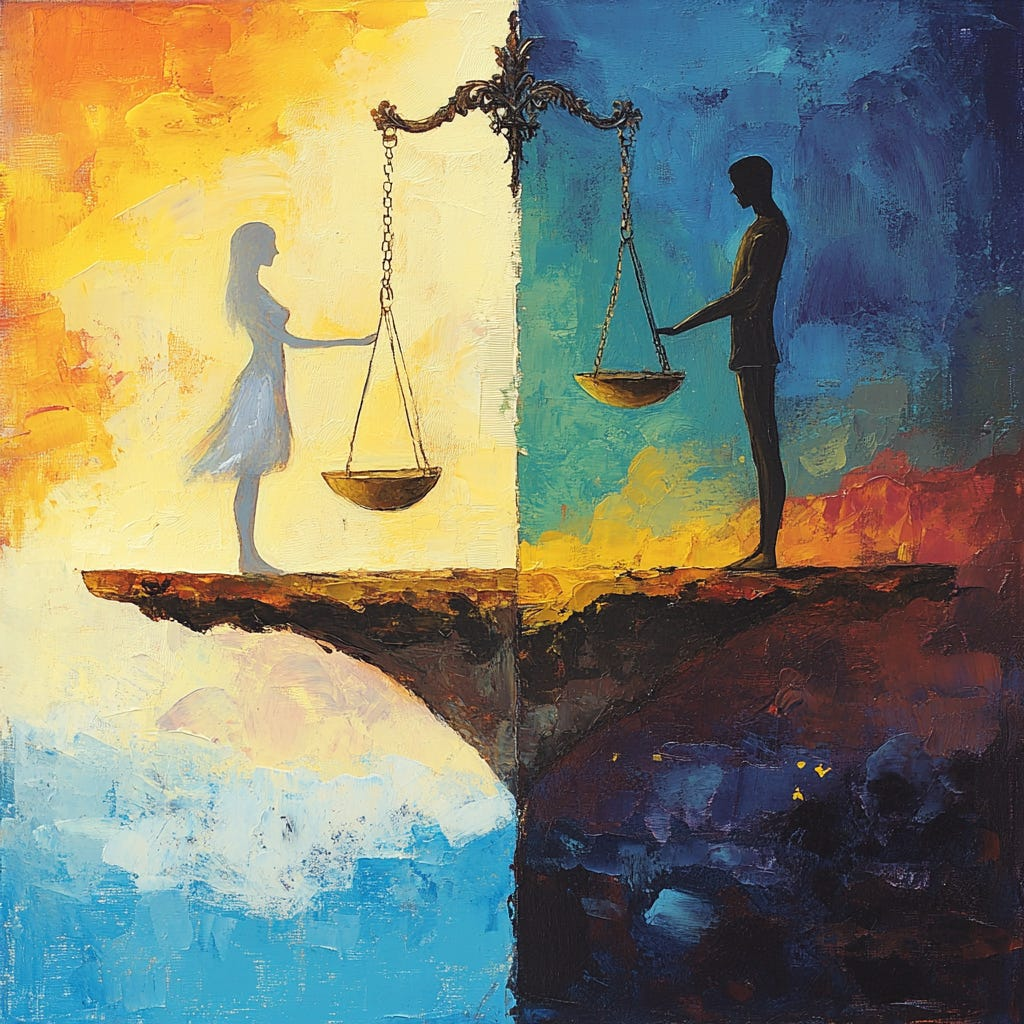
We live in a culture obsessed with “fairness.” If something doesn’t go our way, we brand it “unfair.” If it does, we call it “fair.” But fairness is inherently subjective: what’s fair to you may feel wildly unfair to me.
When Fairness First Mattered
I first noticed this in my kids. Whenever I told them “No,” they’d cry, “That’s not fair!”— but could only shrug when I asked why. Most of us can’t define fairness any better than a six-year-old: it’s simply a catch-all for “I don’t like this.”
Lately, “unfair” has become a socially acceptable way to say “I disagree.” It even carries moral weight—as if fairness were an absolute like good or evil. But these concepts aren’t easy to pin down.
Is it fair that some people are born with musical talent, while others struggle to clap on beat? Is it fair that some are naturally athletic, while others can’t run a mile without seeing stars? (If it were up to me, I’d call it unfair, since I have neither musical nor athletic ability.)
The Real Inequities
Life is rife with natural inequalities. Those born with an advantage deem it “fair” they benefit; those born without cry “unfair” and demand special considerations. And while I sympathize, everyone roots for the underdog, handouts aren’t the same as opportunity.
The Grumpy Doc’s Take
Here’s what I tell my kids (and myself): There is no absolute fairness. You can’t craft a definition that pleases everyone. Things simply are the way they are:
- Don’t like it? Roll up your sleeves and change it.
- Like it? Work to preserve it.
To me, fairness is best understood as this: Everyone should have an equal opportunity to work for what they want. That doesn’t mean we all start in the same place. It does mean we should try to ensure that those who’ve been historically disadvantaged get an even chance—one that accounts for past inequities. And to those who insist you’ve never enjoyed special treatment: what’s your golf handicap?
Embrace the Inequalities
Do I know how to guarantee equal opportunity? No. Others who are far smarter than me will have to figure that out. Am I upset that they’re smarter than me? Not at all. If I were the smartest person around, we’d all be in trouble.
In the end, fairness isn’t a universal yardstick. It’s an invitation to participate: to work, compete, and strive. Because if life were perfectly fair, we’d never need to improve it.
AC
Well said Grumpy Doc!
leigh shepherd
but daaad