When we think about what makes cities possible, agriculture usually gets top billing. Without a steady food surplus, people could not have stopped foraging long enough to become artisans, priests, merchants, or kings. But once people clustered into towns and cities, another, less glamorous need quickly emerged: what to do with all the waste. While no one likes to think about it, without effective methods for sewage disposal cities would quickly become uninhabitable.
When you consider the foundations of modern civilization, sewers probably don’t make your top ten list. But these underground networks deserve way more credit than they get. It is no exaggeration to say that sewage systems—whether open drains in the street or vast subterranean tunnels—were one of the most important technologies that made large cities livable. The story of sewers is really the story of how humans figured out how to live together in large numbers without, well, dying from our own waste.
The Ancient World Gets Creative
The earliest cities faced a pretty basic problem: what do you do with human and animal waste when you’ve got thousands of people living close together? The ancient Indus Valley civilization (around 2600-1900 BCE) came up with one of the first solutions. Archaeological evidence from Harappa and Mohenjo-daro shows they built covered drains and even had individual house connections—pretty impressive for 4,000 years ago.
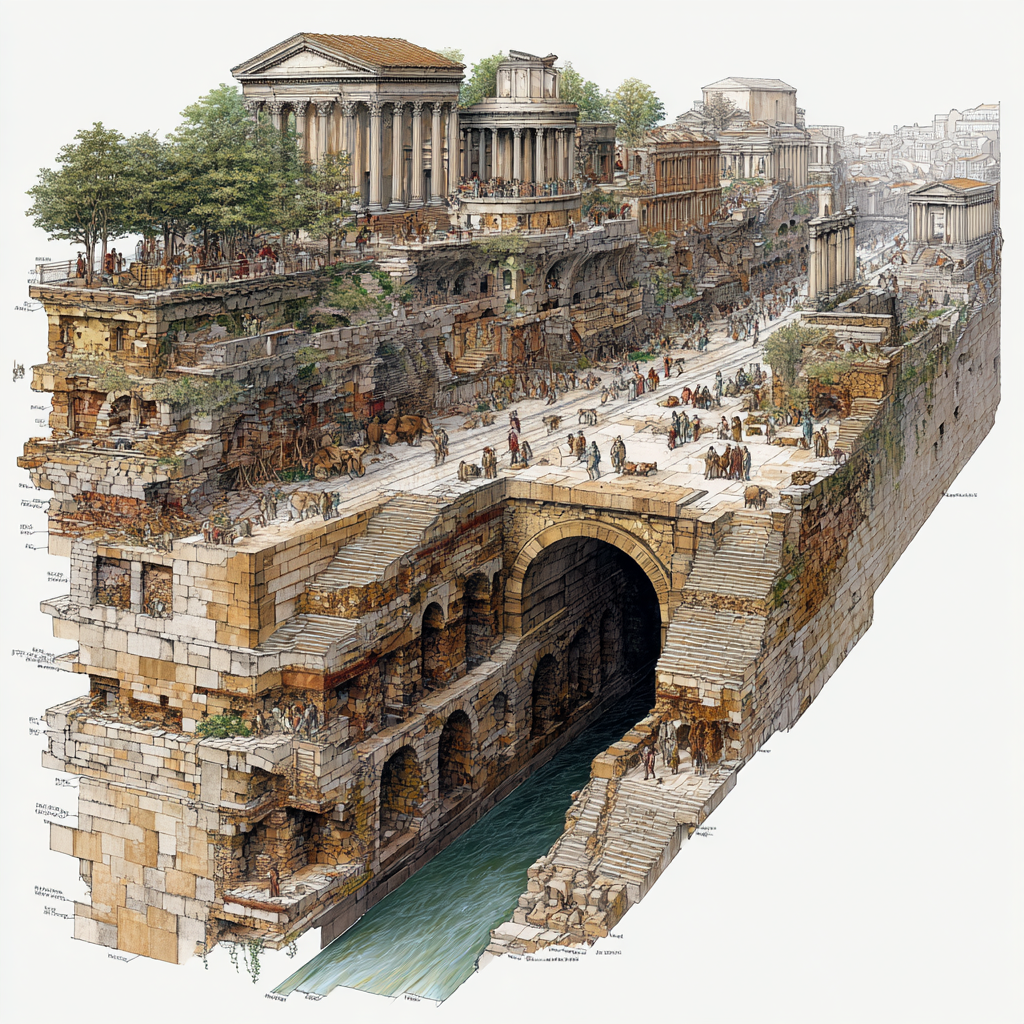
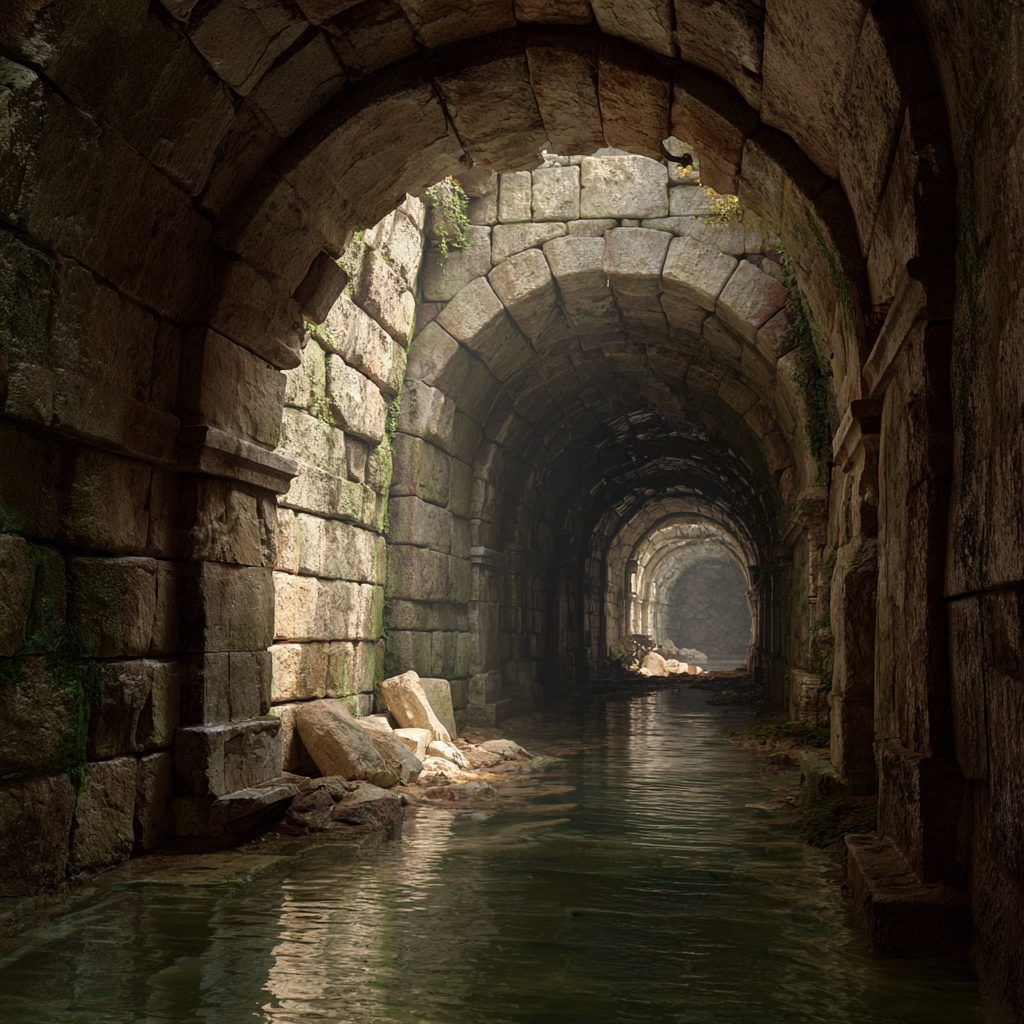
The Romans, being Romans, took this concept and ran with it. The Cloaca Maxima, built around 600 BCE, started as an open drainage canal but eventually became Rome’s main sewer system. What made Roman sewers special wasn’t just their size, but how they integrated with aqueducts to create a flow-through system that actually worked.
Speculation alert: While we know the Romans understood the practical benefits of sewers, they probably didn’t fully grasp the disease prevention aspect in the way we do today.
The Medieval Mess
After Rome fell, European cities pretty much forgot how to manage waste properly. Medieval cities relied on a charming system where people just dumped waste into the streets, hoping rain would wash it away. Some cities built latrines that emptied into rivers, but most urban waste management was… let’s call it “informal.”
This wasn’t just gross—it was deadly. Cities regularly faced outbreaks of cholera, dysentery, and typhoid, though people didn’t yet understand the connection between contaminated water and disease.
London’s Wake-Up Call
The turning point came in 19th-century London. By the 1850s, the Thames had become essentially an open sewer, and the city’s water supply was contaminated. The “Great Stink” of 1858 made the problem impossible to ignore. The smell from the Thames was so bad that Parliament couldn’t meet. When something smells worse than politics you know that’s bad.
Enter Joseph Bazalgette, chief engineer of London’s Metropolitan Board of Works. His solution was ambitious: build a comprehensive sewer network that would intercept waste before it reached the Thames and carry it downstream to treatment facilities. The system, completed in the 1870s, used gravity and the natural slope of the land to move waste through a network of tunnels—some large enough to drive a carriage through.
Who wouldn’t love the idea that a man named Thomas Crapper invented the flush toilet. But that’s not quite true. Variations of the flush toilet have been around for over 2000 years. In 1775, a man named Alexander Cummings invented the S-trap—a curved pipe that prevented sewer gases from backing up into the home—making toilets finally tolerable for indoor use. While Mr. Crapper did not invent the toilet, he did make it functional enough to be routinely installed in homes by creating a workable ballcock mechanism to allow reliable flushing. He also marketed a toilet of his own design, leading to the now familiar nickname of “the crapper.”
Reversing A River
Chicago’s development of a sewer system was a landmark feat of engineering and urban planning in the 19th century. Faced with flat, swampy terrain and rapid population growth, the city recruited engineer Ellis S. Chesbrough in 1855 to design the first comprehensive underground sewer system in the United States. Because the landscape offered little natural drainage, the entire city center had to be physically raised by several feet—an ambitious task that involved elevating streets and even entire buildings above their original grade to allow for gravity-based drainage into the Chicago River.
Apparently, no one realized this would pollute Lake Michigan, the city’s main drinking water source, a classic example of unintended consequences. This led to further innovation, including the construction of a tunnel extending two miles under the lake to bring in cleaner water (completed in 1866) and, ultimately, the monumental reversal of the Chicago River’s flow in 1900. This project diverted wastewater away from the lake and toward the Mississippi basin, following the time-tested political solution of sending your problems downstream.
The Science Behind the Solution
What made modern sewer systems revolutionary wasn’t just engineering—it was the growing understanding of how disease spreads. Dr. John Snow’s work during London’s 1854 cholera outbreak proved that contaminated water, not “bad air,” was spreading the disease. This discovery gave city planners the scientific backing they needed to invest heavily in sewer infrastructure.
Modern sewer systems work on relatively simple principles: gravity moves waste through sloped pipes to treatment facilities, where biological and chemical processes break down harmful materials before releasing treated water back into the environment. The key innovation was creating separate systems for stormwater and sewage, preventing overflow during heavy rains.
Cities Transform
The impact was immediate and dramatic. Cities with comprehensive sewer systems saw massive drops in waterborne diseases. Life expectancy increased, child mortality plummeted, and for the first time in human history, really large cities became livable spaces rather than death traps.
Sewers enabled urban growth on an unprecedented scale. Without sewers, cities like New York, Chicago, and London couldn’t support populations in the millions. The investment in underground infrastructure became the foundation for everything else—commerce, industry, culture—that makes cities economic powerhouses.
Modern Challenges
Today’s sewer systems face new challenges. Climate change brings more intense storms that can overwhelm older systems. Growing populations strain infrastructure that was built decades ago. Many cities are dealing with the expensive reality that sewer systems, built to last 50-100 years have outlived their life expectancy and need major upgrades or replacement.
Prediction: Cities will likely need to invest heavily in “smart” sewer systems over the next few decades—networks that use sensors and data to manage flow more efficiently and prevent overflows.
The Bottom Line
Sewers represent one of humanity’s most important but least appreciated innovations. They made modern urban life possible by solving the fundamental problem of waste management on a large scale. Without this underground network, our cities and the economic and cultural benefits they provide simply couldn’t exist.
The next time you turn on a tap or use indoor plumbing, remember you’re benefiting from centuries of engineering innovation that literally built the foundation of modern civilization, one pipe at a time.
Sometimes when I’m researching articles, I find myself going down a rabbit hole. This time I went down the drain.