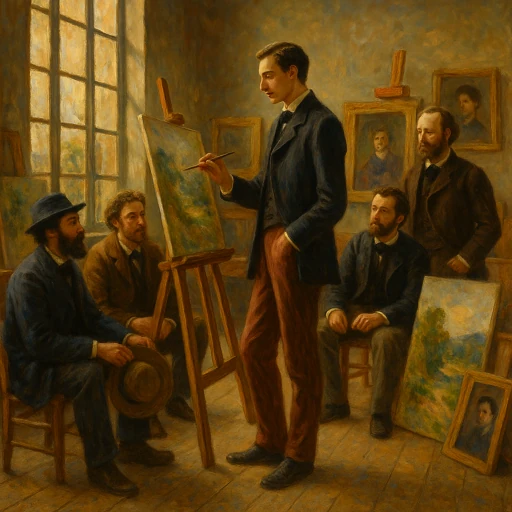
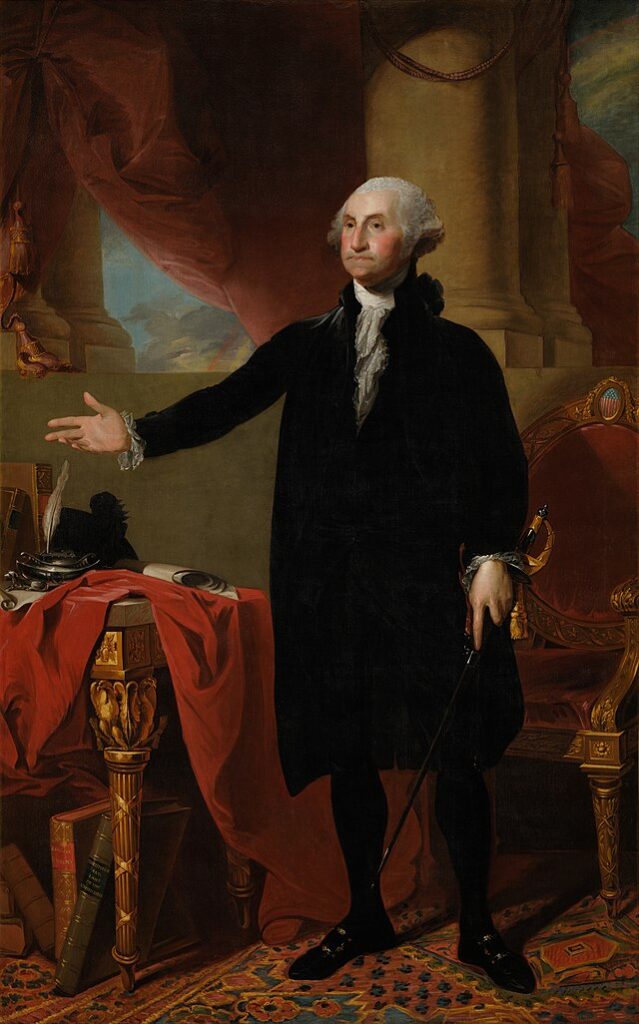
I spend a lot of time studying the period of American history from the late 18th century to the early 19th century, particularly the events and the people surrounding the American Revolution. One of the things I like to do is study portraits of the main characters to try to get a sense of what they may have been like. When you examine portraits from that period, you’ll notice something peculiar: people are constantly pointing at things. I couldn’t help but wonder: “What’s that all about? “
English aristocrats extend their fingers toward their estates, American founding fathers gesture toward constitutional documents, and wealthy merchants direct our attention to symbols of their success. This wasn’t accidental theatrical posing—it was a sophisticated visual language where hand gestures functioned as a kind of shorthand, acting as indicators of the subject’s station, qualities and character.
The pointing gesture had become such a convention by the late 18th century that it almost seemed compulsory. But unlike today’s selfie poses, these carefully orchestrated hand positions required subjects to hold them for hours while painters worked. So why would anyone endure such discomfort just to point at seemingly empty space or distant objects?
Where They Were Pointing—And Why It Mattered
The objects of these pointing gestures reveal what late 18th-century society considered worth advertising. In Gainsborough’s painting of Mr. and Mrs. Robert Andrews, the landscape performs a much more important role than mere background—it depicts the Andrews’ estate and is intended to represent their wealth and status. Mr. Andrews doesn’t just stand near his property; he actively directs the viewer’s attention to it, essentially saying “Look at what I own.”
This was particularly important in England, where portraits became public records of status and position during the 18th century, and images of opulently attired figures were a means to affirm the authority of important individuals. Property ownership defined social standing in ways modern Americans might find difficult to fully appreciate. Your land wasn’t just where you lived—it was your identity, your political power, and your legacy rolled into one.
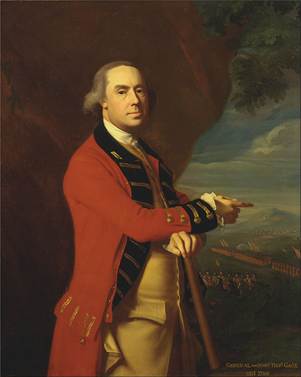
Sometimes the gesture proved unintentionally ironic. In his 1768 portrait, General Thomas Gage points to imagined military success—an outcome history would later deny him.
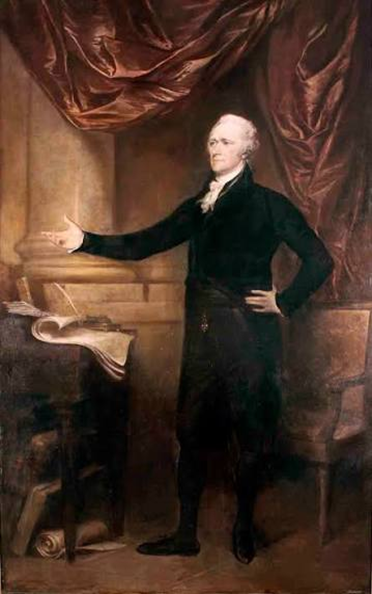
American portraiture developed its own flavor of pointing symbolism, though it borrowed heavily from English conventions. After the Revolution, the United States looked for a new identity and history, a capacity for visual communication aimed at all citizens. American subjects often pointed toward documents, books, or symbols of their professional achievements rather than ancestral estates they didn’t possess. A lawyer might gesture toward law books, a scientist toward instruments, a founding father toward constitutional documents. The gesture said, “This is what I’ve accomplished” rather than “This is what I inherited.”
The Multiple Meanings of a Pointed Finger
The act of pointing served several simultaneous purposes in these portraits, which made it remarkably efficient for painters and patrons working within the constraints of canvas and paint. First, it created visual movement and prevented the deadly sin of portrait painting: making your subject look like a corpse propped up in fancy clothes. Long fingers were a sign of elegance and beauty, which signified culture, and hence intelligence, wealth and benevolence in the convention of these pictures.
Second, the gesture connected the subject to their accomplishments and possessions without requiring them all to fit within the frame. A merchant pointing toward a distant ship implied maritime trade; a landowner gesturing toward rolling fields suggested vast holdings beyond what any canvas could contain. The pointed finger became a visual ellipsis, suggesting “and more besides.”
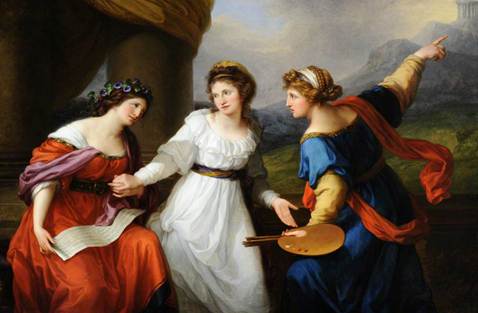
Third, pointing engaged viewers in a way static poses couldn’t. When Thomas Gainsborough’s subjects point at their estates, or when artist Angelica Kauffman depicts herself with art personified pointing the way forward, they’re creating a relationship with anyone looking at the painting. The gesture says, “Let me show you something,” turning passive viewing into a guided tour.
The Curious Case of Pointing at Nothing
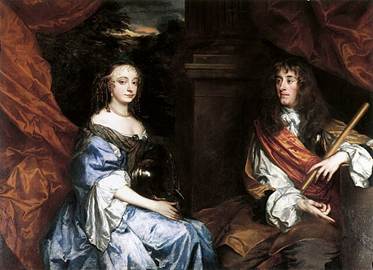
Here’s where things get genuinely weird: many portrait subjects from this period appear to be pointing at absolutely nothing of consequence. There’s an abundance of important people pointing at nothing, which most likely has meaning, but it’s impossible to know what. King James II appears in multiple portraits pointing off-canvas at no identifiable object. English courtesans and French aristocrats extend elegant fingers toward empty space. What gives?
Several theories attempt to explain this phenomenon. Some art historians argue these portraits once formed diptychs or larger compositions where the pointing made sense in context. Others suggest the gesture had become so conventionalized that it persisted even without specific referents—it simply meant “I am important enough to be painted pointing at things.” Perhaps the ambiguity was intentional. It invited the viewer to imagine: the future, moral principles, destiny, or duty. This wasn’t symbolism in the modern sense—it was rhetorical suggestion.
Still others propose that the elegant display of hands was itself the point. During the Renaissance and into the 18th century, hands were as important a focus of attention as the face was, because they were the only other visible area of the body, and representation of the position of the hands became a decorative element that was almost as important as the face. Showing refined, aristocratic hands in graceful poses demonstrated genteel breeding regardless of where they pointed.
The Anglo-American Divergence
American portraits, by contrast, celebrated individual achievement in a republic supposedly free from hereditary privilege. In the New World, portraits were created by the people, the ordinary settlers and citizens of the developing countries, and portraits began to make a move from a false pretense to almost exact likeness in the 1730s. John Singleton Copley’s American subjects pointed toward symbols of their professions, their intellectual pursuits, or occasionally toward landscapes that represented American natural abundance rather than private ownership.
This difference wasn’t just aesthetic—it reflected fundamentally different answers to the question “What makes someone worth painting?” In England, the answer remained largely “birth and property.” In America, it was increasingly “accomplishment and character,” even if wealthy Americans proved just as eager to commission portraits displaying their property as any English lord.
The Practical and the Symbolic
There were also wonderfully mundane reasons for the pointing convention. With the invention of photography, the pose continued but may have had an additional purpose in preventing blurring by maintaining the sitter’s hand in a single place. Even in painted portraits, giving subjects something to “do” with their hands solved the age-old problem of what to do with idle limbs during hours of sitting still. The pointing gesture was energetic enough to look dynamic but simple enough to hold for extended periods.
Artists also recognized that pointing could subtly advertise their own skills. German artist Albrecht Dürer’s earliest self-portrait, drawn when he was only thirteen, depicts him pointing with his finger, suggesting that even at that age he knew that a pointing finger was an important symbol. The gesture reminded viewers that what they saw was created by an artist’s hand, a commentary woven into the composition itself.
Those pointing fingers weren’t quirks or affectations. They were a shared visual grammar that told viewers how to understand power, intellect, and legitimacy in an Enlightenment world that cared deeply about appearing rational, purposeful, and morally grounded.
Once you see it, you can’t unsee it—and you’ll start noticing how modern leaders use subtler versions of the same visual cues today.
Image Sources
Gilbert Stuart – George Washington – Google Art Project.jpg Copy, via Wikimedia Commons, public domain
John Singleton Copley – General Thomas Gage – Google Art Project.jpg Copy, via Wikimedia Commons, public domain
Angelica Kauffmann – Self Portrait of the Artist Hesitating between the Arts of Music and Painting; National Trust, Nostell Priory, via Wikimedia Commons, public domain
Sir Peter Lely – James II and Anne Hyde, Copy, National Trust, via Wikimedia Commons, public domain
John Trumbull – Alexander Hamilton, full-length portrait, standing, facing left, left hand on hip, right arm extended outward, books and papers beside him LCCN89706847.jpg Copy, via Wikimedia Commons, public domain
Text Sources
· Baetjer, Katharine. “Portrait Painting in England, 1600–1800.” Metropolitan Museum of Art. https://www.metmuseum.org/toah/hd/bpor/hd_bpor.htm
· Gustlin, Katherine and Gustlin, Mark. “Portraits (18th Century).” A World Perspective of Art Appreciation. Humanities LibreTexts. https://human.libretexts.org/Courses/Evergreen_Valley_College/A_World_Perspective_of_Art_Appreciation_(Gustlin_and_Gustlin)/10:_The_New_World_Grows_(1700_CE__1800_CE)/10.2:_Portraits_(18th_Century)
· Lazzeri, D., Nicoli, F., Zhang, Y.X. “Secret hand gestures in paintings.” Acta Biomedica 2019; Vol. 90, N. 4: 526-532. https://www.researchgate.net/publication/338457261_Secret_hand_gestures_in_paintings
· “Pointing and Touch.” Every Painter Paints Himself. https://www.everypainterpaintshimself.com/theme/pointing_and_touch
· “Pointing in portraits.” History Forum. https://historum.com/t/pointing-in-portraits.83092/
· “Portrait painting.” Wikipedia. https://en.wikipedia.org/wiki/Portrait_painting
· “Portraits in the Landscape.” Photo-graph. https://photo-graph.org/2013/01/09/portraits-in-the-landscape/