
Grumpy opinions about everything.

Tag: Declaration of Independance

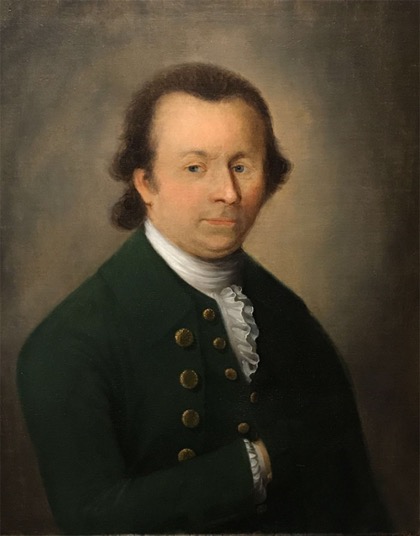
Button Gwinnett

An Almost Forgotten Signer of the Declaration of Independence

History is full of people both little known and unknown who were present at important events. They may have participated, or they may simply have been observers. Understanding them, their lives and their involvement can help us to understand the human aspect of historical events. This is what I love most about history, the stories of average people.

Not long ago, I was looking at a copy of a broadside of the Declaration of Independence when I noticed an intriguing signature — Button Gwinnett. He is one of the lesser-known signers of the Declaration of Independence, yet he played a significant role in the early political landscape of Georgia. His life was a blend of ambition and political maneuvering. His dramatic rise and fall remain intriguing to historians. Even though Gwinnett is little remembered today, his story offers a glimpse into the turbulent period of America’s founding.

Early Life and Migration to America

Button Gwinnett was born in 1735 in Down Hatherley, Gloucestershire, England. He was the son of an Anglican vicar and was named after his mother’s cousin Barbara Button who was also his godmother.

While details about his early education are scarce, it is believed that he received a basic education typical of the English gentry. Gwinnett’s early adulthood was marked by modest success as a merchant. In the 1760s, facing limited opportunities in England and the promise of economic prosperity in the American colonies, Gwinnett and his wife, Ann, emigrated to the New World.

Initially, Gwinnett settled in Charleston, South Carolina, where he engaged in trade. However, he struggled financially, and by 1765, he had relocated to Savannah, Georgia. This move marked not only the beginning of his political career, but also a period of fluctuating fortune. Gwinnett purchased St. Catherine’s Island off the coast of Georgia, hoping to become a successful plantation owner. Unfortunately, he overextended himself financially, and his attempts to establish a profitable business met with failure. Despite his financial setbacks, Gwinnett’s status as a landowner and merchant allowed him to enter the local political scene.

Rise in Politics and Revolutionary Activity

Gwinnett’s involvement in politics grew as tensions between the American colonies and Britain escalated. By the early 1770s, he had become aligned with the growing revolutionary sentiment. In 1775, he was elected to Georgia’s Provincial Congress, where he quickly rose to prominence due to his vocal support for independence from British rule. Although Georgia had initially shown less enthusiasm for independence than colonies like Massachusetts or Virginia, a growing faction of Georgia patriots, including Gwinnett, began advocating for stronger opposition to British rule. By 1776, Gwinnett had become a delegate to the Second Continental Congress.

Continental Congress and the Declaration

On January 20, 1776, Gwinnett left Georgia for Philadelphia to represent the colony in Congress. This appointment marked the pinnacle of his political career and placed him at the center of the deliberations for American independence. His journey to Philadelphia came at a crucial moment when the Continental Congress was moving toward a formal declaration of independence.

Gwinnett voted for independence on July 2, voted to approve the declaration on July 4, and signed his name to the parchment of the Declaration of Independence on August 2. Out of the 56 delegates who signed the Declaration, Button was one of only 8 who were born in Britain. His British birth added a unique perspective to his role as a Founding Father, representing the immigrant experience that was central to colonial American society.

His signing of the Declaration of Independence would later make his signature one of the most valuable autographs in American history. Gwinnett is known chiefly because his autographs are extremely rare and collectors have paid dearly to obtain one. (In 2001 one of his 36 known autographs sold at public auction for $110,000. Since then, several others have been documented.)

Conflict and Power Struggles in Georgia

Back in Georgia, Gwinnett became embroiled in a power struggle with General Lachlan McIntosh, a prominent figure in the colony’s revolutionary army. The conflict between Gwinnett and McIntosh was fueled by political rivalry and personal animosity. Gwinnett aspired to leadership positions within Georgia’s government and military, and in March 1777, he became acting president of Georgia’s Revolutionary Council after the sudden death of Governor Archibald Bulloch.

During his brief tenure as acting council president, Gwinnett’s leadership was controversial. He proposed a bold military expedition against British-controlled East Florida, intending to bolster his political standing and secure Georgia’s borders. However, the campaign was poorly executed, and it ended in failure. This debacle intensified the feud between Gwinnett and McIntosh, with each blaming the other for the military defeat.

Gwinnett’s promising political career was cut short by an ongoing personal conflict that became intertwined with the honor culture of the American South. The rivalry between Gwinnett and McIntosh reached its climax in May 1777. After a series of public insults—McIntosh called Gwinnett a “scoundrel and lying rascal,” Gwinnett responded by challenging him to a duel. Dueling, though technically illegal, was still a common way to resolve disputes among gentlemen of the period. On May 16, 1777, the two men faced each other with pistols in a pasture near Savannah. Both were wounded, but only Gwinnett’s injuries proved fatal. He died three days later, at age 42, and was buried in Savannah’s Colonial Park Cemetery, though the exact location of his grave is still unknown.

Legacy and Historical Significance

Gwinnett’s legacy is visible in his namesake Gwinnett County, one of Georgia’s most populous counties, a tribute to his contributions to the state’s early political history.

In recent decades, historians have taken a renewed interest in Button Gwinnett, examining his role beyond the narrow context of his duel and signature. While he lacked the fame of other founding fathers, Gwinnett’s political maneuvering and his role during the revolutionary period highlight the complexities of early American politics. His rivalry with McIntosh reflects the deep divisions and regional conflicts that existed even among those who supported independence.

Gwinnett’s life also underscores the risks faced by those who ventured into the revolutionary cause. Unlike many of his contemporaries who enjoyed long, celebrated careers, Gwinnett’s story is one of a meteoric rise and abrupt fall. His legacy, while overshadowed by more prominent figures, is a reminder of the many lesser-known men and women who played vital roles in America’s fight for independence.

Button Gwinnett’s life was marked by ambition, conflict, and an untimely death that left him as one of the more obscure figures of the American Revolution. His contributions to the independence movement in Georgia were significant, even if his political career was cut short. Today, Gwinnett’s name lives on in Georgia’s geography, and his autograph serves as a rare artifact of a fleeting yet impactful moment in history.

Sources:

·      National Archives: Declaration of Independence Signers – https://www.archives.gov/founding-docs/signers

·      The Georgia Historical Society: Biography of Button Gwinnett – https://georgiahistory.com

·      Smithsonian Magazine: The Rare Autograph of Button Gwinnett – https://www.smithsonianmag.com

·      Library of Congress: Early American Biographies – https://www.loc.gov
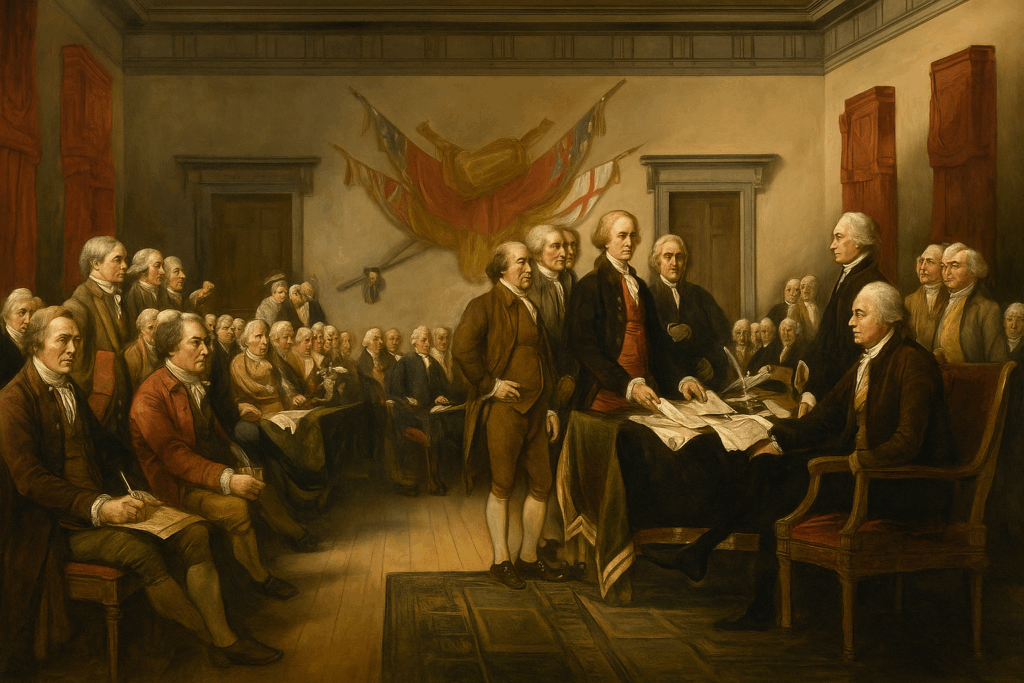
Declaring Independence: The Origin of America’s Founding Document

When Americans celebrate the Fourth of July, we imagine fireworks, flags, and a dramatic reading of the Declaration of Independence. We think we know the story—The Continental Congress selected Thomas Jefferson to write the declaration. He labored alone to produce this famous document. Congress then approved it unanimously and it was signed on the 4th of July.

 But the truth is far different and more complex. The story behind this iconic document—the how, who, and why of its creation—is just as explosive and illuminating as the day it represents. Far from a spontaneous outburst of rebellion, the Declaration was the product of political strategy, collaborative writing, and a shared sense of urgency among men who knew their words would change the course of history.

Setting the Stage: Why a Declaration?

By the spring of 1776, the American colonies were deep in conflict with Great Britain. Battles at Lexington and Concord had already been fought. George Washington was attempting to transform the Continental Army into a professional fighting force. Thomas Paine’s Common Sense had ignited widespread public support for full separation from the British Crown. The Continental Congress had been meeting in Philadelphia, debating how far they were willing to go. By June, the mood had shifted from reconciliation to revolution.

On June 7, 1776, Richard Henry Lee of Virginia introduced a resolution to the Continental Congress declaring “that these United Colonies are, and of right ought to be, free and independent States.” The motion was controversial—some delegates wanted more time to consult their colonies. But most in Congress knew that if independence was going to happen, it needed to be explained and justified to the world, so they created a committee to draft a formal declaration.

The Committee of Five

On June 11, 1776, the Continental Congress appointed a “Committee of Five” to write the declaration. The members were:

  • Thomas Jefferson of Virginia
  • John Adams of Massachusetts
  • Benjamin Franklin of Pennsylvania
  • Roger Sherman of Connecticut
  • Robert R. Livingston of New York

This was not a random selection. Each man represented a different region of the colonies and had earned the trust of fellow delegates. Jefferson was relatively young but already known for his eloquence. Adams was an outspoken advocate of independence. Franklin brought wisdom, wit, diplomatic experience, and international prestige. Sherman brought New England theological perspectives and legislative experience, while Livingston represented the more moderate New York delegation and brought keen legal insight.

Jefferson Takes the Pen

Although it was a group project on paper, the heavy lifting fell to Thomas Jefferson. The committee chose him to draft the initial version. Why Jefferson? According to John Adams, Jefferson was chosen for three reasons: he was from Virginia (the most influential colony), he was popular, and, Adams admitted, “you can write ten times better than I can.”

Jefferson wrote the draft in a rented room at 700 Market Street in Philadelphia. He leaned heavily on Enlightenment ideas, especially those of John Locke, emphasizing natural rights and the notion that government derives its power from the consent of the governed. He also borrowed phrasing from earlier colonial declarations, including his own A Summary View of the Rights of British America and borrowed extensively from George Mason’s Virginia Declaration of Rights.

The Editing Process: Group Work Gets Messy

After Jefferson completed the initial draft (likely by June 28), he shared it with Adams and Franklin. Both men suggested revisions. Franklin, ever the editor, softened some of Jefferson’s sharpest attacks and corrected language for flow and diplomacy. His most famous contribution was changing Jefferson’s phrase “We hold these truths to be sacred and undeniable” to the more secular and philosophically precise “We hold these truths to be self-evident.”  

Adams contributed to structural suggestions and to tone. He also contributed to the strategic presentation of grievances against King George III, understanding that the declaration needed to justify revolution in terms that would be acceptable to both colonial readers and potential European allies.

Sherman and Livingston played more limited but still meaningful roles. Sherman, with his theological background, helped ensure the document’s religious references would appeal to Puritan New England, while Livingston’s legal expertise helped refine the constitutional arguments against British rule.  Otherwise, their involvement in the actual content of the declaration was likely minimal.

The revised draft was presented to the full Continental Congress on June 28, 1776. What followed was a few days of intense debate and revision by the entire body.

Congress Takes the Red Pen

From July 1 to July 4, the Continental Congress debated the resolution for independence and edited the Declaration. Jefferson watched as more than two dozen changes were made to his prose. The Congress cut about a quarter of the original text, including a lengthy passage condemning King George III for perpetuating the transatlantic slave trade that would have sparked deep division among the delegates, especially those from Southern colonies.

Other modifications included strengthening the religious language, toning down some of the more inflammatory rhetoric, and making the grievances more specific and legally grounded.  Congress made 86 edits, removing about a quarter of Jefferson’s original content. Jefferson was reportedly frustrated by the changes, calling them “mutilations,” but he recognized that compromise was the cost of consensus

Approval and Promulgation

Despite the extensive revisions, the core of Jefferson’s vision remained intact and on July 2, 1776, the Continental Congress voted in favor of Lee’s resolution for independence. That’s the actual date the colonies officially broke from Britain. John Adams even predicted in a letter to his wife that July 2 would be celebrated forever as America’s Independence Day. He was close—but the official adoption of the Declaration came two days later.

On July 4, 1776, Congress formally approved the final version of the Declaration of Independence. Contrary to popular belief, most of the signers did not sign it on that day. Only John Hancock, as president of Congress, and Charles Thomson, as secretary, signed then.   The famous handwritten version, now in the National Archives, wasn’t signed until August 2. But the document approved on July 4 was immediately printed by John Dunlap, the official printer to Congress.

These first copies, known as Dunlap Broadsides, were distributed throughout the colonies and sent to military leaders, state assemblies, and even King George III. George Washington had it read aloud to the Continental Army.  This rapid dissemination was crucial to its impact, as it was needed to rally public support for the revolutionary cause and explain the colonies’ actions to the world.

Legacy and Impact

The Declaration wasn’t just a break-up letter to the British Crown—it was a manifesto for a new kind of political order. Its assertion that “all men are created equal” would echo through centuries of American history, invoked by abolitionists, suffragists, civil rights leaders, and more.

The creation of the Declaration of Independence demonstrates that even the most iconic documents in American history emerged from collaborative processes involving compromise, revision, and collective wisdom. While Jefferson deserves primary credit for the document’s eloquent expression of revolutionary ideals, the contributions of his committee colleagues and the broader Continental Congress were essential to creating a text that could unite thirteen diverse colonies in common cause.

This collaborative origin reflects the democratic principles the declaration itself proclaimed, showing that American independence was achieved not through the vision of a single individual, but through the collective efforts of representatives working together to articulate their shared commitment to liberty, equality, and self-governance. The process that created the Declaration of Independence thus embodied the very democratic ideals it proclaimed to the world.

Today, the Declaration of Independence is enshrined as one of the foundational texts of American democracy. But it’s worth remembering that it was created under immense pressure, forged by committee, and edited by compromise. Its authors knew they were taking a dangerous step. As Franklin quipped at the signing, “We must all hang together, or most assuredly we shall all hang separately.”

Powered by WordPress & Theme by Anders Norén