Grumpy opinions about everything.

Category: Politics Page 1 of 6

The Accidental Footnote: Heel Spurs, the Vietnam Draft, and American Inequality

If you’ve ever winced taking your first steps out of bed in the morning, you may have already made an involuntary acquaintance with heel spurs — or more precisely, with the condition that often travels with them. The term itself sounds alarming, and for a brief but colorful stretch of American political history, it became something far more charged than a footnote to podiatry. But before we get to the politics, it’s worth understanding what a heel spur actually is, because the medical reality is both more mundane and more complicated than the caricature.


What Exactly Is a Heel Spur?
A heel spur is a small bony outgrowth — technically called a calcaneal spur — that extends from the underside of the heel bone (the calcaneus). It forms at the spot where the plantar fascia — the thick ligament running the length of your foot from heel to toe — attaches to the heel bone. The spur is not, despite what the name implies, a sharp spike. It is typically smooth and rounded, though it can still cause irritation if it presses into surrounding soft tissue.


The image depicts a comparison between a healthy foot and one with a prominent foot ulcer, highlighting the condition's visible effects.

AI-generated content may be incorrect.
 
Heel spurs affect about 10% of the population, making them one of the more common foot conditions around, though most people who have one don’t know it. The spur develops gradually — usually over months or even years — as the body deposits calcium in response to chronic stress at that heel attachment point. Think of it less as damage and more as your skeleton’s attempt at reinforcement.

What Causes Them?
The underlying driver is repetitive mechanical stress on the foot. Heel spurs are particularly associated with strains on foot muscles and ligaments, stretching of the plantar fascia, and repeated small tears in the membrane covering the heel bone. Athletes who do a lot of running and jumping are especially prone.

But you don’t need to be an elite runner to develop one. Walking gait problems — particularly overpronation, where the foot rolls inward — place uneven stress on the heel with each step. Worn-out or poorly fitted shoes, which fail to absorb shock or support the arch, compound the problem. Obesity increases the mechanical load on the heel. Occupations that require prolonged standing or walking on hard surfaces put the plantar fascia under constant tension. And as people age, tendons and ligaments lose their elasticity, making the tissues more vulnerable to micro-tears and the subsequent bony repair response.

Heel spurs are also closely connected to a condition most people have heard of: plantar fasciitis. The two are related a but not identical. Plantar fasciitis is inflammation of the plantar fascia itself, usually from overuse. A heel spur can develop as a downstream consequence of that inflammation — the body lays down extra bone in response to the ongoing stress at the fascia’s attachment point.

Symptoms — or the Lack Thereof
Here’s the part that surprises most people: the majority of heel spurs cause no symptoms at all, and many are discovered incidentally on X-rays taken for other reasons. Only about 5% of heel spurs are estimated to be symptomatic.

When a heel spur does produce symptoms, the experience is heavily intertwined with plantar fasciitis. The classic description is a sharp, stabbing pain on the bottom of the foot first thing in the morning, or after any prolonged rest. Many people compare it to stepping on a tack. Paradoxically, this pain often eases somewhat after walking around for a few minutes, only to return after extended time on the feet or after another rest. It’s that “worse in the morning” quality that tends to be the giveaway.

Other symptoms, when present, can include localized swelling, warmth, and tenderness along the front of the heel, as well as increased sensitivity on the underside of the foot. It’s worth noting that the pain associated with a heel spur is not generally thought to come from the bony spur itself, but from the irritation it causes in the surrounding soft tissue — tendons, ligaments, and bursae.

How Is It Diagnosed?
Diagnosis typically begins with a physical exam. Your doctor or podiatrist will ask about when the pain started, what activities preceded it, and what makes it better or worse. They’ll examine your foot for tenderness at specific points, assess your range of motion, and check foot alignment and press on key areas to locate the source of pain.

Imaging confirms the picture. An X-ray can clearly show the bony spur and is the most commonly used test. That said, the size of the spur on an X-ray doesn’t necessarily correspond to how much pain a patient is experiencing — a small spur can be quite painful while a large one may cause no trouble at all. In more complex cases, an MRI may be ordered to assess the soft tissues more closely and evaluate whether plantar fasciitis or another condition is also in play.

Treatment Options
The reassuring news is that the vast majority of cases resolve without surgery. More than 90% of patients improve with nonsurgical treatment. The catch is that conservative management requires patience — improvement typically takes weeks, and more stubborn cases can take months.

The cornerstone of treatment is rest and reducing the activities that provoke pain. This doesn’t necessarily mean completely stopping exercise; low-impact alternatives like swimming, cycling, or rowing allow you to stay active while giving the heel a break from impact. Icing the bottom of the foot after activity helps manage inflammation. Over-the-counter anti-inflammatory medications like ibuprofen or naproxen can provide relief, though they’re intended for short-term use.

Footwear matters enormously. Supportive shoes with good arch support, cushioning, and a slight heel rise reduce the strain on the plantar fascia. Custom orthotics with molded insoles designed to redistribute pressure across the foot are often recommended, particularly for people with gait abnormalities or flat feet. Physical therapy can be part of the treatment plan, focusing on stretching the calf muscles and plantar fascia, strengthening the foot’s intrinsic muscles, and correcting biomechanical issues.

For cases that don’t respond to these initial measures, the next tier of treatment includes corticosteroid injections to reduce inflammation at the spur site, and extracorporeal shockwave therapy — a non-invasive procedure that uses sound waves to stimulate healing in chronically inflamed tissue. Surgery is reserved for the minority of cases where conservative treatment fails after nine to twelve months. Possible complications include nerve pain, infection, scarring, and — with plantar fascia release — the risk of foot instability or stress fracture. Most orthopedic surgeons regard surgery as a last resort.

Are Heel Spurs Debilitating?
For most people, the honest answer is: no.  Heel spurs are a common condition with a favorable prognosis, especially with early diagnosis and appropriate management. Many people live with heel spurs for years without ever knowing it, and even those who develop pain typically find substantial relief with conservative treatment within four to eight weeks.
That said, the pain at its worst — particularly in conjunction with plantar fasciitis — can be genuinely disruptive to daily life. Athletes may find their training significantly limited. People who spend long hours on their feet at work may struggle with sustained discomfort. And a small percentage of patients do end up with prolonged, treatment-resistant pain that affects mobility. So, the more accurate framing might be: heel spurs have the potential to be significantly uncomfortable and functionally limiting during flare-ups, but with proper treatment most people recover well and return to normal activity.

Heel Spurs and the Vietnam-Era Draft
Which brings us to an improbable chapter in heel spur history. During the Vietnam War era, heel spurs became — for at least one famous case — a ticket out of military service. Understanding how that worked requires a brief detour into the draft system of the 1960s and 1970s, and what it meant to receive a medical deferment.
According to the National Archives, of the roughly 27 million American men eligible for military service between 1964 and 1973, about 15 million were granted deferments — mostly for education, and some for mental or physical problems — while only 2,215,000 were actually drafted into service—another eight million volunteered. Some of those who later served had previously had deferments. The system was sprawling, complex, and — as was widely acknowledged even at the time — deeply unequal.
Roughly 60% of draft-eligible American men took some sort of action to avoid military conscription. There were many routes: college deferments, fatherhood, conscientious objector status (170,000 men received those alone), National Guard enlistment, and medical exemptions. Medical deferments covered a wide range of conditions — from serious chronic illness to conditions that, in a different context, most people would consider minor. Flat feet, poor eyesight, asthma, and yes, bone spurs all appeared on the list of potentially disqualifying ailments.
The system was known to favor men with access to money, education, and well-connected physicians. American forces in Vietnam were 55% working-class and 25% poor — reflecting those who didn’t have the means to navigate the deferment labyrinth. A working-class kid from rural West Virginia was far more likely to end up in the Mekong Delta than the son of a New York real estate developer.

The Most Famous Heel Spur in American History
Which leads, inevitably, to Donald Trump. As confirmed by Selective Service records obtained and reported by multiple news outlets, Trump received five Vietnam-era draft deferments — four for college attendance at Fordham and the Wharton School, and a fifth in 1968, recorded as a medical deferment for bone spurs in his heels. The medical classification left him disqualified for military service.

The circumstances surrounding the diagnosis have been contested ever since. Reporting by the New York Times included accounts from the daughters of a Queens podiatrist named Larry Braunstein, who alleged that their father had provided or vouched for the diagnosis as a professional favor to Trump’s father, Fred Trump — a landlord to whom Braunstein reportedly owed a debt of gratitude. Trump’s former lawyer Michael Cohen also testified that Trump had admitted to fabricating the injury. Trump himself has maintained that the diagnosis was legitimate, stating that a doctor “gave me a letter — a very strong letter — on the heels.” The underlying medical records that would resolve the dispute are, conveniently, not publicly available; most individual Selective Service medical records from that era were subsequently destroyed.

It’s worth noting that Trump’s pattern — using legal channels, including a medical deferment of questionable validity, to avoid Vietnam service — was not unique to him. Historians have pointed out that numerous prominent figures on both sides of the political aisle received deferments of various kinds, including Joe Biden (asthma), Dick Cheney (student deferments), Bill Clinton (navigated the ROTC system), and George W. Bush (National Guard). The heel spur episode became politically charged in part because of Trump’s later hawkish rhetoric and his outspokenness in questioning the military service of others — most notably Senator John McCain, who spent years as a prisoner of war in North Vietnam.

How Many People Got Heel Spur Deferments?
This is where the historical record hits a hard wall. No reliable statistics exist specifically for heel spur deferments. The Selective Service tracked broad categories — student deferments, hardship deferments, conscientious objector status, medical disqualifications — but it did not publish a breakdown by specific diagnosis, and most individual medical records from that era no longer exist.

What we can say is that bone spurs were a recognized medical disqualifier under Selective Service regulations, that medical deferments broadly were a commonly used — and commonly abused — avenue for avoiding service, and that the process was heavily influenced by access to sympathetic physicians. A man with means, connections, and a cooperative podiatrist had options that a man without those resources did not.

The honest answer, then, is that we don’t know how many men received deferments citing heel spurs specifically, and we almost certainly never will. The data either wasn’t tracked at that level of granularity or was long since destroyed. What we do know is that the condition became, for a time, a lens through which Americans examined something much larger: who serves, who doesn’t, and whether the systems meant to govern those decisions are applied fairly.

For most people, a heel spur is a manageable, if annoying, footnote in the story of their health. For at least one person, it became a footnote in the history of American politics.
 
Personal Note: I have heel spurs; I wish I’d known about them in 1967.
 
Images generated by author using AI.

Medical Sources
Cleveland Clinic — Heel Spurs overview
https://my.clevelandclinic.org/health/diseases/21965-heel-spurs
WebMD — Heel Spur Causes, Symptoms, Treatments, and Surgery
https://www.webmd.com/pain-management/heel-spurs-pain-causes-symptoms-treatments
Hackensack Meridian Health — Bone Spurs in the Heel: Symptoms and Recovery
https://www.hackensackmeridianhealth.org/en/healthier-you/2024/01/02/bone-spurs-in-the-heel-symptoms-and-recovery
OrthoArkansas — Heel Spurs
https://www.orthoarkansas.com/heel-spurs-orthoarkansas/
EmergeOrtho — Heel Bone Spurs: Causes, Symptoms, Treatment
https://emergeortho.com/news/heel-bone-spurs/
American Academy of Orthopaedic Surgeons — Plantar Fasciitis and Bone Spurs
https://orthoinfo.aaos.org/en/diseases–conditions/plantar-fasciitis-and-bone-spurs/
Vietnam Draft & Military Service Sources
History.com — 7 Ways Americans Avoided the Draft During the Vietnam War
https://www.history.com/articles/vietnam-war-draft-avoiding
Wikipedia — Draft Evasion in the Vietnam War
https://en.wikipedia.org/wiki/Draft_evasion_in_the_Vietnam_War
Wikipedia — Conscription in the United States
https://en.wikipedia.org/wiki/Conscription_in_the_United_States
Students of History — The Draft and the Vietnam War
https://www.studentsofhistory.com/vietnam-war-draft
University of Michigan — The Military Draft During the Vietnam War
https://michiganintheworld.history.lsa.umich.edu/antivietnamwar/exhibits/show/exhibit/draft_protests/the-military-draft-during-the-
Vietnam Veterans of America Chapter 310 — Vietnam War Statistics
https://www.vva310.org/vietnam-war-statistics
Vietnam Veterans of Foreign Wars — Fact vs. Fiction: The Vietnam Veteran
https://www.vvof.org/factsvnv.htm
New York City Vietnam Veterans Plaza — Interesting Facts About Vietnam
https://www.vietnamveteransplaza.com/interesting-facts-about-vietnam/
 
 
Medical Disclaimer
The information provided in this article is intended for general educational and informational purposes only and does not constitute medical advice. It should not be used as a substitute for professional medical advice, diagnosis, or treatment.
Always seek the guidance of a qualified healthcare provider with any questions you may have regarding a medical condition or treatment. Never disregard professional medical advice or delay seeking it because of something you have read here.
If you are experiencing a medical emergency, call 911 or your local emergency number immediately.
The author of this article is a licensed physician, but the views expressed here are solely those of the author and do not represent the official position of any hospital, health system, or medical organization with which the author may be affiliated.
 

Lady Liberty: The Statue We Think We Know

Collection of the author

Ask most Americans what the Statue of Liberty means and they’ll say the same thing: she welcomes immigrants. She is the “Mother of Exiles,” keeper of the golden door. That image is so deeply woven into the national identity that it has been quoted, protested, and debated for more than a century. The only problem is that it wasn’t what her creators originally intended.

The story begins in 1865, just weeks after the Civil War ended, at a dinner party near Versailles. The host was Édouard de Laboulaye, a French historian and president of the French Anti-Slavery Society. Laboulaye was one of France’s most passionate admirers of American democracy and was deeply moved by both Lincoln’s assassination and the abolition of slavery. He proposed that France present the United States with a colossal monument — one that would celebrate two things at once: the centennial of American independence and the end of slavery.

Sculptor Frédéric-Auguste Bartholdi was at that dinner and took the idea and ran with it. Early models from around 1870 show Lady Liberty with her right arm raised — familiar enough — but in her left hand she holds broken shackles, not a tablet. The anti-slavery message was unmistakable.

That symbolism didn’t entirely disappear from the final design — it just got moved. According to the National Park Service, Bartholdi placed a broken chain and shackle at the statue’s feet, hidden beneath the copper drapery. Most visitors never notice it. The left hand now holds a tablet inscribed with the date of the Declaration of Independence.

Why the change? NYU historian Edward Berenson points to the political climate of the 1880s. By the time the statue was dedicated in October 1886 — more than 20 years after Laboulaye’s dinner — Reconstruction had collapsed, Jim Crow was spreading, and the country was trying to paper over sectional wounds by quietly forgetting the war’s racial roots. Nobody at the dedication mentioned slavery. The abolitionist origins were simply buried.

The statue was formally named Liberty Enlightening the World and the message broadened toward Franco-American friendship and American liberty in general rather than emancipation specifically.

Then came Emma Lazarus, and the second transformation. In 1883, a fundraiser struggling to pay for the statue’s pedestal asked prominent writers to donate works for an auction. Lazarus, a Jewish-American poet, initially declined as she was then deeply involved in aiding Jewish refugees fleeing wide-spread and organized violence in Russia. A friend persuaded her that the statue, sitting at the entrance to New York Harbor, would inevitably be seen as a beacon by arriving immigrants. She wrote “The New Colossus” — fourteen lines that reimagined Lady Liberty entirely, as a “Mother of Exiles” beckoning the world’s tired and poor to America’s golden door.

Not like the brazen giant of Greek fame,
With conquering limbs astride from land to land;
Here at our sea-washed, sunset gates shall stand
A mighty woman with a torch, whose flame
Is the imprisoned lightning, and her name
Mother of Exiles. From her beacon-hand
Glows world-wide welcome; her mild eyes command
The air-bridged harbor that twin cities frame.
“Keep, ancient lands, your storied pomp!” cries she
With silent lips. “Give me your tired, your poor,
Your huddled masses yearning to breathe free,
The wretched refuse of your teeming shore.
Send these, the homeless, tempest-tost to me,
I lift my lamp beside the golden door!”

Strangely, the poem then vanished. It played no role at the statue’s 1886 dedication. Lazarus died in 1887, before Ellis Island even opened. It wasn’t until 1903 that a friend had the entire poem cast onto a bronze plaque that was mounted inside the pedestal——not engraved on the outside as many believe. By then, millions of immigrants had already sailed past the statue on their way to Ellis Island, and the association with immigration had taken hold in the public imagination.

The immigration meaning deepened through the early 20th century as the government used the statue’s image in campaigns to assimilate immigrant children, many of whom lived in ethnic enclaves in large eastern cities. Meanwhile, the abolitionist symbolism that had inspired the project in the first place faded almost entirely from public memory.

The broken shackles are still there, tucked under her robe, mostly invisible. Lady Liberty has been continuously reinterpreted for 160 years — by abolitionists, by a poet responding to a refugee crisis, by politicians, and by millions of people who looked up at that torch from the deck of a ship. Will Lady Liberty and her words continue to offer welcome and hope and be a source of national pride or is her meaning once again being rewritten as a symbol of American identity, dominance, and, perhaps, exclusion?

The Statue’s shackles and feet. National Park Service, Statue of Liberty NM, Public Domain

Sources

National Park Service – Statue of Liberty history: https://www.nps.gov/stli/learn/historyculture/statue-of-liberty.htm Library of Congress – Dedication and speeches: https://www.loc.gov/item/ihas.200197394/ Cleveland, Grover. Dedication Address (1886): https://www.nps.gov/stli/learn/historyculture/cleveland.htm Smithsonian Magazine – History of the Statue of Liberty: https://www.smithsonianmag.com/history/statue-liberty-180970340/

The Art of Rigging Democracy: A Close Look At Gerrymandering

Wikimedia Commons: Elkanah Tisdale (1771-1835) (often falsely attributed to Gilbert Stuart), public domain


Picture this: It’s 1812 in Massachusetts, and Governor Elbridge Gerry has just approved a redistricting plan that creates such a bizarrely shaped legislative district that when a local newspaper editor saw it on a map, he thought it looked like a salamander. The editor sketched wings and claws onto the district, and someone quipped that it looked more like a “Gerry-mander” than a salamander. The term stuck, and more than two centuries later, we’re still dealing with the same problem that inspired that joke.
What Gerrymandering Actually Means
At its core, gerrymandering is the practice of drawing electoral district boundaries to give one political party or group an unfair advantage over its opponents. It’s a form of political manipulation that allows those in power to essentially choose their voters, rather than letting voters choose their representatives. Think of it as a sophisticated form of gaming the system—perfectly legal in many cases, but profoundly anti-democratic in spirit.
The mechanics are surprisingly straightforward. There are two main techniques: “cracking” and “packing.” Cracking involves splitting up concentrations of opposing voters across multiple districts so they can’t form a majority anywhere. Packing does the opposite—cramming as many opposing voters as possible into a few districts so they waste their votes winning by huge margins in just a couple of places, leaving the rest of the districts safely in your column. These techniques can be deployed together to engineer a decisive partisan advantage.
A History of Creative Mapmaking
The practice didn’t start with Gerry, of course. The Founding Fathers—for all their lofty rhetoric about representative democracy—weren’t above putting their thumbs on the electoral scales. But gerrymandering really came into its own in the 20th century as advances in census data, and statistics combined with the addition of newly available computing power made it possible to draw districts with surgical precision.
The 2010 redistricting cycle marked a watershed moment. Single-party control of the redistricting process gave partisan line drawers free rein to craft some of the most extreme gerrymanders in American history often down to the level of individual city blocks. Republicans, having won control of many state legislatures in the 2010 midterms, used sophisticated computer modeling to create maps that locked in their advantages for a decade. Democrats did the same where they had the power, though Republicans controlled more state legislatures and thus wielded greater gerrymandering capability overall.
The 2024-2025 Gerrymandering Wars
Here’s where things get really interesting—and deeply concerning. The situation has exploded into what some are calling “gerrymandering wars” following the 2020 census and a critical Supreme Court decision in 2019. In Rucho v. Common Cause, the Supreme Court ruled that partisan gerrymandering constitutes a non-justiciable “political question” where federal court intervention is unsuitable. Translation: The federal courts won’t stop partisan gerrymandering because they claim there’s no objective standard to measure it.
This opened the floodgates. The Brennan Center estimates that gerrymandering gave Republicans an advantage of around 16 House seats in the 2024 race to control Congress compared to fair maps. But here’s the kicker: we’re not even done with this decade’s redistricting.
In an unprecedented move, President Donald Trump has pushed Republican state lawmakers to further gerrymander their states’ congressional maps, prompting Democratic state lawmakers to respond in kind. In August 2025, during a special session, Texas’s legislature passed a redistricting plan that weakens electoral opportunities for Black and Hispanic voters.  California has threatened to respond with its own gerrymander, creating a tit-for-tat dynamic that could spiral out of control.
North Carolina provides perhaps the most dramatic example. After the state supreme court reversed its position on policing partisan gerrymandering, the Republican-controlled legislature redrew the map, and after the 2024 election, three Democratic districts flipped to Republicans—enough to give control of the U.S. House to the GOP by a slim margin.
The situation has gotten so extreme that both parties are now openly engaging in mid-decade redistricting—something that traditionally only happened after each ten-year census. California, Missouri, North Carolina, Ohio, Texas and Utah have all adopted new congressional maps in 2025, with new maps also appearing possible in Florida, Maryland and Virginia.
The Racial Dimension
It’s crucial to note that gerrymandering comes in two flavors: partisan and racial. While partisan gerrymandering is currently legal thanks to the Supreme Court, racial gerrymandering—drawing districts specifically to dilute the voting power of racial minorities—violates the Voting Rights Act of 1965. The line between the two can get blurry, though, since partisan voting patterns often correlate with race.
In May 2025, a federal court ruled that Alabama’s 2023 congressional map not only violates Section 2 of the Voting Rights Act but was enacted by the Alabama Legislature with racially discriminatory intent. Similar battles are playing out in Louisiana, Mississippi, and other states. The legal landscape here is complex, with courts sometimes walking a tightrope between ensuring fair representation for communities of color and avoiding the creation of what could be challenged as racial gerrymanders.
What Can Be Done About It?
The most popular reform proposal is the creation of independent redistricting commissions—bodies of citizens (not politicians) who draw district maps according to neutral criteria.  Currently, several states including Colorado, Michigan, Ohio and Virginia use redistricting commissions to draw congressional and state legislative maps, ranging from political commissions with elected officials to completely independent commissions that bar all elected officials from serving as commissioners.
Do they work? The evidence is mixed but generally positive. According to a Redistricting Report Card published with the Princeton Gerrymandering Project, the states that had some form of commission drew “B+” maps on average, while states where partisans controlled the process drew “D+” maps.  California’s independent commission is often held up as the gold standard, though it’s not perfect—even fairly drawn maps can produce lopsided results due to how voters cluster geographically.
Another proposal focuses on clear, enforceable criteria: compactness, contiguity, respect for existing political boundaries, and transparency in the mapping process. Advances in statistical analysis also make it possible to compare proposed maps against thousands of neutral alternatives to detect extreme outliers, a method increasingly discussed in academic and legal circles.
Federal legislation has been proposed repeatedly. The Redistricting Reform Act of 2025 would prohibit states from mid-decade redistricting and would require every state to adopt nonpartisan, independent redistricting commissions. Similar provisions were included in the “For the People Act” that Democrats passed in the House in 2021, but it died in the Senate. Getting such legislation through Congress would require bipartisan cooperation, which seems unlikely given that both parties see gerrymandering as a political weapon and they believe they can’t afford to unilaterally disarm.
Some reformers advocate for more radical solutions. Proportional representation systems, where the share of votes equals the share of seats, would end boundary-drawing battles altogether and make democracy more representative. Under such a system, if Democrats win 60% of the vote in a state, they’d get roughly 60% of that state’s congressional seats. It’s intuitive and fair, but it would require a fundamental restructuring of American electoral systems—something that’s probably not politically feasible in the near term.
State courts have emerged as a potential backstop. At least 10 state supreme courts have found that state courts can decide cases involving allegations of partisan gerrymandering, even though federal courts won’t touch them.  This means that state constitutional provisions against gerrymandering could provide meaningful protection—though as North Carolina demonstrated, state court compositions can change, and with them, their willingness to police gerrymandering.
The Bottom Line
Gerrymandering represents a fundamental tension in American democracy: How do we draw districts fairly when the people drawing them have every incentive to rig the game in their favor? The problem has ancient roots but ultra-modern manifestations, powered by big data and sophisticated computer modeling that would make Elbridge Gerry’s head spin.
The current moment feels particularly precarious. With Republicans’ razor-thin majority in the House and midterm elections traditionally being unfavorable for the party in power, the Republicans’ action amounts to a preemptive move to retain control of Congress. The Democrats threatened response could trigger an escalating cycle of partisan map manipulation that further entrenches our political divisions and makes elections less responsive to actual voter preferences.
Independent commissions offer a promising path forward, but they’re not a silver bullet. They work better than partisan control, but they can’t eliminate all the inherent challenges of translating votes into seats through geographic districts. More ambitious reforms like proportional representation could solve the problem more completely, but they face enormous political and practical obstacles.
For now, gerrymandering remains what that newspaper editor saw in 1812: a monstrous distortion of democratic principles, hiding in plain sight on our electoral maps. The question is whether we have the political will to slay the beast, or whether we’ll keep feeding it for another two centuries.
 
Sources:
Brennan Center for Justice – Gerrymandering Explained
https://www.brennancenter.org/our-work/research-reports/gerrymandering-explained
 
Brennan Center for Justice – How Gerrymandering Tilts the 2024 Race for the House
https://www.brennancenter.org/our-work/research-reports/how-gerrymandering-tilts-2024-race-house
 
American Constitution Society – America’s Gerrymandering Crisis
https://www.acslaw.org/expertforum/americas-gerrymandering-crisis-time-for-a-constructive-redistricting-framework/
 
ACLU – Court Cases on Gerrymandering
https://www.aclu.org/court-cases?issue=gerrymandering
 
Stateline – State Courts and Gerrymandering
https://stateline.org/2025/12/22/as-supreme-court-pulls-back-on-gerrymandering-state-courts-may-decide-fate-of-maps/
 
Campaign Legal Center – Do Independent Redistricting Commissions Work?
https://campaignlegal.org/update/do-independent-redistricting-commissions-really-prevent-gerrymandering-yes-they-do
 
RepresentUs – End Partisan Gerrymandering
https://represent.us/policy-platform/ending-partisan-gerrymandering/
 
Senator Alex Padilla – Redistricting Reform Act of 2025
https://www.padilla.senate.gov/newsroom/press-releases/watch-padilla-lofgren-introduce-legislation-to-establish-independent-redistricting-commissions-end-mid-decade-redistricting-nationwide/
 
Protect Democracy – How to End Gerrymandering
https://protectdemocracy.org/work/how-to-end-gerrymandering/

The Marble Statue Problem: Why Half the Story Is No Story at All

A Commentary on Selective American History

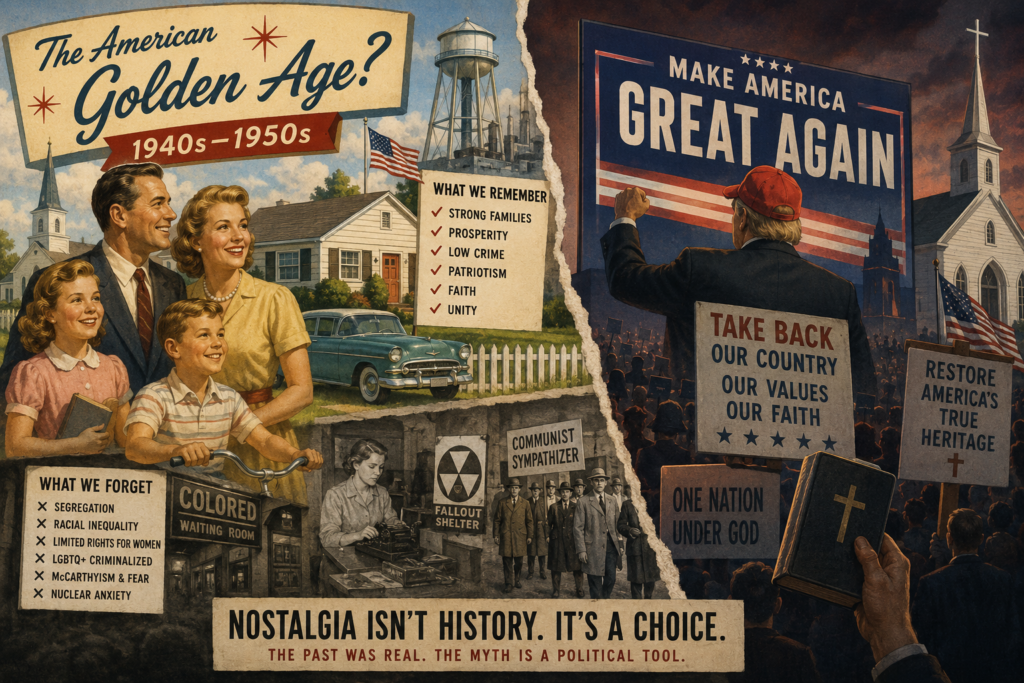
There is a version of American history that looks spectacular. Founding Fathers on horseback, industrialists building steel empires from nothing, pioneers pushing west into open lands. It is the kind of history that gets carved into marble, hoisted onto pedestals, and taught as national mythology. Clean. Inspiring. Incomplete. And right now, there is a visible push by some politicians, curriculum reformers, and commentators to make that marble-statue version the only version — to scrub away what one American Historical Association report called the “inconvenient” truths that complicate the picture. What we lose in that scrubbing is not just accuracy. We lose the full human story of this country, and with it, the lessons that might be useful today.

The selective telling is not new, but its current form has new energy. In recent years, legislation has been introduced across multiple states to restrict how teachers discuss slavery, Indigenous displacement, immigration history, and the treatment of women and the poor. The argument is usually dressed up as national unity and pride. But the practical effect is something else: a history curriculum where triumph and innovation are permissible but suffering and exploitation are edited out.

Historians surveying American teachers in 2024 found this impulse reflected in the classroom as well — students arriving with what teachers described as a “marble statues” version of history absorbed from earlier grades, one that freezes the Founders and other heroes in idealized civic memory, stripped of contradiction. The pitch is usually framed as morale: kids need pride and self esteem, not “division.” But the practical effect is a kind of historical editing that turns real people—enslaved Americans, Native communities, women, immigrants, and the poor—into background scenery rather than participants with agency, suffering, and claims on the national memory. 

You can see the argument playing out in education policy and curriculum fights. The “patriotic education” push associated with the federal 1776 Commission is a clear example: it cast some approaches to teaching slavery and racism as inherently “anti-American,” and it encouraged a narrative that stresses national ideals while softening the lived realities that contradicted those ideals. 

Historians’ organizations have answered back that this kind of narrowing doesn’t create unity so much as it creates amnesia.  At the state level, controversies over how to describe or contextualize slavery—down to euphemisms and selective framing—keep resurfacing, because controlling the vocabulary controls the moral takeaway.  Florida’s education standards went so far as to compare slavery with job training.

The tension between celebratory and critical history also appears in how we interpret national symbols. The Statue of Liberty, now widely read as a welcoming beacon for immigrants, was originally conceived in significant part as a commemoration of the end of slavery in the United States and of the nation’s centennial. Over time, its antislavery meaning was overshadowed by a more comfortable story about voluntary immigration and opportunity as official imagery and public campaigns recast the statue to fit new national needs. This shift did not merely “add” an interpretation; it obscured the connection between American liberty and Black emancipation, pushing aside the reality that millions arrived in chains rather than by choice.

The deeper problem isn’t that Americans disagree about the past—healthy societies argue about meaning all the time. The problem is when disagreement becomes a one-way ratchet: complexity gets labeled “bias,” and only a feel-good storyline qualifies as “neutral.” That’s not neutral. That’s a choice to privilege certain experiences as representative and treat others as “inconvenient.”

Nowhere does this distortion show up more clearly than in how Americans tend to celebrate the industrialists of the late 19th and early 20th centuries — the Gilded Age titans who built railroads, steel mills, and oil empires. Andrew Carnegie, John D. Rockefeller, J.P. Morgan, Cornelius Vanderbilt: these men are frequently held up as models of American ambition and ingenuity, visionaries who transformed a post-Civil War nation into the world’s dominant industrial power. And they did do that. But the marble-statue version stops there, and stopping there is where the dishonesty begins.

Look at what powered that industrial machine: coal. And look at who powered coal. The men — and children — who went underground every day to dig it out of the earth under conditions that were, by any modern standard, a form of institutionalized violence. Between 1880 and 1923, more than 70,000 coal miners died on the job in the United States. That is not a rounding error; it is a small city’s worth of human lives, consumed by an industry that knew the dangers and chose profits over protection. Cave-ins, gas explosions, machinery accidents, and the slow suffocation of black lung took miners in ones and twos on ordinary days, and in mass casualties during what miners grimly called “explosion season” — when dry winter air made methane and coal dust especially volatile. Three major mine disasters in the first decade of the 1900s killed 201, 362, and 239 miners respectively, the latter two occurring within two weeks of each other.

And those were the adults. In the anthracite coal fields of Pennsylvania alone, an estimated 20,000 boys were working as “breaker boys” in 1880 — children as young as eight years old, perched above chutes and conveyor belts for ten hours a day, six days a week, picking slate and impurities out of rushing coal with bare hands. The coal dust was so thick at times it obscured their view. Photographer Lewis Hine documented these children in the early 1900s specifically because he understood that seeing them — their coal-blackened faces, their missing fingers, their flat eyes — was the only way to make comfortable Americans confront the total cost of the industrial miracle. Pennsylvania passed a law in 1885 banning children under twelve from working in coal breakers. The law was routinely ignored; employers forged age documents and desperate families went along with it because the wages, however meager, kept families from starving.

Coal mining is a representative case study because the work was both essential and punishing, and because the labor conflicts were not metaphorical—they were sometimes literally armed. In the coalfields, many miners lived in company towns where the company controlled the housing and the local economy. Some workers were paid in “scrip” redeemable only at the company store, a system that locked families into dependency and debt.  When union organizing surged, the backlash could be violent. West Virginia’s Mine Wars culminated in the Battle of Blair Mountain in 1921—widely described as the largest labor uprising in U.S. history—where thousands of miners confronted company-aligned forces and state power.  The mine owners deployed heavy machine guns and hired private pilots to drop arial bombs on the miners.

If you zoom out, this pattern wasn’t limited to coal. The Triangle Shirtwaist Factory fire in 1911 became infamous partly because locked doors and poor safety practices trapped workers—mostly young immigrant women—leading to 146 deaths in minutes. 

When workers tried to organize for better pay and safer conditions, the response from the industrialists and their allies was not negotiation. It was force. Henry Clay Frick, chairman at Carnegie Steel, cut worker wages in half while increasing shifts to twelve hours, then hired the Pinkerton Detective Agency — effectively a private army — to break the strike that followed at Homestead, PA in 1892. During the Great Railroad Strike of 1877, when workers walked off the job across the country, state militias were called in. In Maryland, militia fired into a crowd of strikers, killing eleven. In Pittsburgh, twenty more were killed with bayonets and rifle fire. A railroad executive of the era, asked about hungry striking workers, reportedly suggested they be given “a rifle diet for a few days” to see how they liked it. Throughout this period the federal government largely sided with capital against labor.

This is the part of the story that the marble-statue version leaves out — and not because it is marginal. The labor movement that emerged from these battles shaped virtually every protection American workers have today: the eight-hour workday, child labor laws, workplace safety regulations, the right to organize. These were not gifts handed down by generous industrialists. They were won through strikes, suffering, and in some cases, death. Ignoring that history does not honor the industrialists. It dishonors the workers.

The same pattern runs through every thread of American history that is currently under pressure. The story of westward expansion is incomplete without the story of Native displacement and the deliberate destruction of Indigenous cultures. The story of American agriculture is incomplete without the story of enslaved labor and the systems of racial control that followed emancipation. The story of American prosperity is incomplete without the story of immigrant communities channeled into the most dangerous, lowest-paid work and then told to be grateful for the opportunity. Women’s history, for most of American history, was not considered history at all. In each case, leaving out the difficult chapter does not produce a cleaner story. It produces a false one.

The argument for the marble-statue version is usually that complexity is demoralizing — that children need heroes, that citizens need pride, that a nation cannot function if it is constantly relitigating its worst moments. There is something in that concern worth taking seriously. History taught purely as a catalog of grievances is not good history either. But the answer to that problem is not to swap one distortion for another. Good history holds both: the genuine achievement and the genuine cost. Mark Twain understood this when he coined “The Gilded Age” — a title that means literally covered in a thin layer of gold over something much cheaper underneath. That phrase has been in the American vocabulary for 150 years because it captures something true about how surfaces can deceive.

A country that cannot look honestly at its own history is a country that will keep repeating the parts it refuses to examine. The enslaved deserve to be in the story. Indigenous people deserve to be in the story. Women deserve to be in the story. The breaker boys deserve to be in the story. The miners killed by the thousands deserve to be in the story. The workers shot by militias while asking for a living wage deserve to be in the story. Not because the story should only be about suffering, but because they were there — and because understanding what they faced, and what they fought for, and what they eventually changed, is how the story makes sense.

Illustration generated by author using ChatGPT.

Sources

American Historical Association. “American Lesson Plan: Curricular Content.” 2024.
https://www.historians.org/teaching-learning/k-12-education/american-lesson-plan/curricular-content/

Brewminate. “Replaceable Lives and Labor Abuse in the Gilded Age: Labor Exploitation and the Human Cost in America’s Gilded Age.” 2026.
https://brewminate.com/replaceable-lives-and-labor-abuse-in-the-gilded-age/

Bureau of Labor Statistics. “History of Child Labor in the United States, Part 1.” 2017.
https://www.bls.gov/opub/mlr/2017/article/history-of-child-labor-in-the-united-states-part-1.htm

Energy History Project, Yale University. “Coal Mining and Labor Conflict.”
https://energyhistory.yale.edu/coal-mining-and-labor-conflict/

Hannah-Jones, Nikole, et al. “A Brief History of Slavery That You Didn’t Learn in School.” New York Times Magazine. 2019.
https://www.nytimes.com/interactive/2019/08/14/magazine/slavery-capitalism.html

Investopedia. “The Gilded Age Explained: An Era of Wealth and Inequality.” 2025.
https://www.investopedia.com/terms/g/gilded-age.asp

MLPP Pressbooks. “Gilded Age Labor Conflict.”
https://mlpp.pressbooks.pub/ushistory2/chapter/chapter-1/

Princeton School of Public and International Affairs. “Princeton SPIA Faculty Reflect on America’s Past as 250th Anniversary Approaches.” 2026.
https://spia.princeton.edu/

USA Today. “Millions of Native People Were Enslaved in the Americas. Their Story Is Rarely Told.” 2025.
https://www.usatoday.com/

Wikipedia. “Breaker Boy.”
https://en.wikipedia.org/wiki/Breaker_boy

Wikipedia. “Robber Baron (Industrialist).”
https://en.wikipedia.org/wiki/Robber_baron_(industrialist)

America250 (U.S. Semiquincentennial Commission). “America250: The United States Semiquincentennial.”
https://www.america250.org/

Bunk History (citing Washington Post reporting). “The Statue of Liberty Was Created to Celebrate Freed Slaves, Not Immigrants.”
https://www.bunkhistory.org/

Upworthy. “The Statue of Liberty Is a Symbol of Welcoming Immigrants. That’s Not What She Was Originally Meant to Be.” 2026.
https://www.upworthy.com/

Understanding Critical Race Theory: What It Is—and Why It Divides America

When I first started hearing debates about Critical Race Theory, I thought these people can’t possibly be talking about the same thing. There seemed to be no common ground—even the words they were using seemed to have different meanings.

Critical Race Theory (CRT) has become one of the most contested intellectual concepts in contemporary American culture. Originally developed in law schools during the 1970s and 1980s, CRT has evolved into a broad analytical method of examining how race and racism operate in society. Understanding its origins, core principles, and the political debates surrounding it requires examining both its academic foundations and its journey into public consciousness.

Origins and Early Development

Legal scholars who were dissatisfied with the slow pace of racial progress following the Civil Rights Movement laid the groundwork for CRT. The early figures included Derrick Bell, often considered the father of CRT, along with Alan Freeman, Richard Delgado, Kimberlé Crenshaw, and Cheryl Harris. These scholars were frustrated that despite landmark legislation like the Civil Rights Act of 1964 and the Voting Rights Act of 1965, racial inequality persisted across American institutions.

The intellectual roots of CRT can be traced to Critical Legal Studies, a movement that challenged traditional legal scholarship’s claims of objectivity and neutrality. However, CRT scholars felt that Critical Legal Studies failed to adequately address race and racism. They drew inspiration from various sources, including the work of civil rights lawyers like Charles Hamilton Houston, sociological insights about institutional racism, and postmodern critiques of knowledge and power.

Derrick Bell’s groundbreaking work in the 1970s laid crucial foundation. His “interest convergence” theory, presented in his analysis of Brown v. Board of Education, argued that advances in civil rights occur only when they align with white interests. This insight became central to CRT’s understanding of how racial progress unfolds in American society.

Core Elements and Principles

Critical Race Theory encompasses several key tenets that distinguish it from other approaches to studying race and racism.

First, CRT posits that race is not biologically real; it’s a human invention to justify unequal treatment. It also holds that racism is not merely individual prejudice, but a systemic feature of American society embedded in legal, political, and social institutions. This “structural racism” perspective emphasizes how seemingly neutral policies and practices can perpetuate racial inequality.

Second, CRT challenges the traditional civil rights approach that emphasizes color-blindness and incremental reform. Instead, CRT scholars argue that color-blind approaches often mask and perpetuate racial inequities. They advocate for race-conscious policies and a more aggressive approach to dismantling systemic racism.

Third, CRT emphasizes the importance of lived experience in the form of storytelling and narrative. Scholars use personal narratives, historical accounts, and counter-stories to challenge dominant narratives about race and racism. This methodological approach reflects CRT’s belief that experiential knowledge from communities of color provides crucial insights often overlooked by traditional scholarship.

Fourth, CRT introduces the concept of intersectionality, a term coined by legal scholar Kimberlé Crenshaw. This framework examines how multiple forms of identity and oppression—including race, gender, class, and sexuality—intersect and compound each other’s effects.

Finally, CRT is explicitly activist-oriented with a goal of creating new norms of interracial interaction. Unlike purely descriptive academic theories, CRT aims to understand racism in order to eliminate it. This commitment to social transformation distinguishes CRT from more traditional academic approaches.

Evolution and Expansion

Since its origins in legal studies, CRT has expanded into numerous disciplines including education, sociology, political science, and ethnic studies. In education, scholars like Gloria Ladson-Billings and William Tate applied CRT frameworks to understand racial disparities in schooling. This educational application of CRT examines how school policies, curriculum, and practices contribute to achievement gaps and educational inequality.

Conservative Perspectives

Conservative critics of CRT raise several concerns about the theory and its applications. They argue that CRT’s emphasis on systemic racism is overly deterministic and fails to account for individual differences and the significant progress made in racial equality since the Civil Rights era. Many conservatives contend that CRT promotes a victim mentality that undermines personal responsibility and achievement.

From this perspective, CRT’s race-conscious approach is seen as divisive and potentially counterproductive. Critics argue that emphasizing racial differences rather than common humanity perpetuates division and resentment. They often prefer color-blind approaches that treat all individuals equally regardless of race.

Conservative critics also express concern about CRT’s application in educational settings, arguing that it introduces inappropriate political content into classrooms and may cause students to feel guilt or shame based on their racial identity. Some argue that CRT-influenced curricula amount to indoctrination rather than education.

Additionally, some conservatives view CRT as fundamentally un-American, arguing that its critique of American institutions and emphasis on systemic oppression undermines national unity and patriotism. They contend that CRT presents an overly negative view of American history and society.

Some conservatives go further, calling CRT a form of “anti-American radicalism.” They believe it rejects Enlightenment values—reason, objectivity, and universal rights—in favor of ideology and emotion. Others criticize CRT’s reliance on narrative and lived experience, arguing that it substitutes storytelling for empirical evidence.

Liberal Perspectives

Supporters of CRT argue that it provides essential tools for understanding persistent racial inequalities that other approaches fail to explain adequately. They contend that CRT’s focus on systemic racism accurately describes how racial disparities continue despite formal legal equality.

To them, CRT isn’t about blaming individuals; it’s about recognizing how systems work. Advocates say that color-blind policies often perpetuate inequality because they ignore how race has historically shaped opportunity. They see CRT as empowering marginalized communities to tell their stories and as pushing America closer to its own ideals of justice and equality.

Liberal and progressive thinkers see CRT as a reality check—a necessary tool for understanding and dismantling systemic racism. They argue that laws and policies that seem neutral can still produce racially unequal outcomes—for example disparities in school funding or redlining in housing. (Denying loans or insurance based on neighborhoods rather than individual qualifications.)

From this perspective, CRT’s race-conscious approach is necessary because color-blind policies have proven insufficient to address entrenched racial inequities. Supporters argue that acknowledging and directly confronting racism is more effective than pretending race doesn’t matter.

Liberal defenders of CRT emphasize its scholarly rigor and empirical grounding, arguing that criticism often mischaracterizes or oversimplifies the theory. They point out that CRT is primarily an analytical framework used by scholars and graduate students, not a curriculum taught to elementary school children, as some critics suggest. Progressive educators also note that much of what critics call “CRT in schools” is really teaching about historical facts—slavery, segregation, civil-rights struggles—not law-school theory. They argue that banning CRT is less about protecting students and more about suppressing uncomfortable conversations about race and history.

Supporters also argue that CRT’s emphasis on storytelling and lived experience provides valuable perspectives that have been historically marginalized in academic discourse. They see this as democratizing knowledge production rather than abandoning scholarly standards.

Furthermore, many on the left argue that attacks on CRT represent attempts to silence discussions of racism and maintain the status quo. They view criticism of CRT as part of a broader backlash against racial justice efforts.

Why It Matters

You don’t have to buy every part of CRT to see why it struck a nerve. It forces us to ask uncomfortable but important questions: Why do some inequalities persist even after laws change? How do institutions carry the weight of history?

Whether you agree or disagree with CRT, it’s hard to deny that it has shaped how Americans talk about race. The theory challenges us to look beyond personal prejudice and ask how systems distribute power and privilege. Its critics, in turn, remind us that any theory of justice must preserve individual rights and shared civic values.

The real challenge may be learning to hold both ideas at once: that racism can be systemic, and that individuals should still be treated as individuals. CRT’s greatest value—and its greatest controversy—comes from forcing that tension into the open.

Sources:

JSTOR Daily. “What Is Critical Race Theory?” https://daily.jstor.org/what-is-critical-race-theory/ (Accessed December 3, 2025)

Harvard Law Review Blog. “Derrick Bell’s Interest Convergence and the Permanence of Racism: A Reflection on Resistance.” https://harvardlawreview.org/blog/2020/08/derrick-bells-interest-convergence-and-the-permanence-of-racism-a-reflection-on-resistance/ (March 24, 2023)

Bell, Derrick A., Jr. “Brown v. Board of Education and the Interest-Convergence Dilemma.” Harvard Law Review, Vol. 93, No. 3 (January 1980), pp. 518-533.

Columbia Law School. “Kimberlé Crenshaw on Intersectionality, More than Two Decades Later.” https://www.law.columbia.edu/news/archive/kimberle-crenshaw-intersectionality-more-two-decades-later

Crenshaw, Kimberlé. “Demarginalizing the Intersection of Race and Sex: A Black Feminist Critique of Antidiscrimination Doctrine, Feminist Theory and Antiracist Politics.” 1989.

Britannica. “Richard Delgado | American legal scholar.” https://www.britannica.com/biography/Richard-Delgado

Wikipedia. “Critical Race Theory.” https://en.wikipedia.org/wiki/Critical_race_theory (Updated December 31, 2025)

MTSU First Amendment Encyclopedia. “Critical Race Theory.” https://www.mtsu.edu/first-amendment/article/1254/critical-race-theory (July 10, 2024)

Delgado, Richard and Jean Stefancic. “Critical Race Theory: An Introduction.” New York University Press, 2001 (2nd edition 2012, 3rd edition 2018).

Teachers College Press. “Critical Race Theory in Education.” https://www.tcpress.com/critical-race-theory-in-education-9780807765838

American Bar Association. “A Lesson on Critical Race Theory.” https://www.americanbar.org/groups/crsj/publications/human_rights_magazine_home/civil-rights-reimagining-policing/a-lesson-on-critical-race-theory/

NAACP Legal Defense and Educational Fund. “What is Critical Race Theory, Anyway? | FAQs.” https://www.naacpldf.org/critical-race-theory-faq/ (May 6, 2025)

The illustration was generated by the author using Midjourney.

Who Will Cover City Hall Now? Democracy in the Age of News Deserts

Were it left to me to decide whether we should have a government without newspapers, or newspapers without a government, I should not hesitate a moment to prefer the latter. But I should mean that every man should receive those papers and be capable of reading them. —Thomas Jefferson


I originally posted this article about a year and a half ago. I was concerned about the future of newspapers then and I’m even more concerned now. I’ve updated my original post to reflect recent losses of newspapers.
When I was growing up in Charleston WV in the 1950s and early 1960s, we had two daily newspapers. The Gazette was delivered in the morning and the Daily Mail was delivered in the afternoon. One of my first jobs as a boy was delivering The Gazette. It worked out to be about 50 cents an hour, but I was glad to have the job. (It was good money at the time.)
Ostensibly, the Gazette was a Democratic newspaper, and the Daily Mail was a Republican one. However, given the politics of the day there was not a significant difference between the two, and most people subscribed to both.
There weren’t a lot of options for news at the time. Of course, there were no 24-hour news channels. National news on the three networks was about 30 minutes an evening with local news at about 15 minutes. By the late 1960s national news had increased to 60 minutes and most local news to about 30 minutes. Although, given the limitations of time on the local stations, most of the broadcast was taken up with weather, sports, and human interest stories with little time left to expand on hard news stories.
We depended on our newspapers for news of our cities, counties, and states. And the newspapers delivered the news we needed. Almost everyone subscribed to and read the local papers. They kept us informed about our local politicians and government and provided local insight on national events. They were also our source for information about births, deaths, marriages, high school graduations and everything we wanted to know about our community.
In the 21st century there are many more supposed news options. There are 24-hour news networks as I’ve talked about in a previous post.  And of course, there are Instagram, Facebook, X and the other online entities that claim to provide news.
There has been one positive development in television news. Local news, at least in Charleston, has expanded to two hours most evenings. There is some repetition between the first and second hour and it is still heavily weighted to sports, weather, and human interest, but there is some increased coverage of local hard news. However, this is somewhat akin to reading the headlines and the first paragraph in a newspaper story. It doesn’t provide in-depth coverage, but it is improved over what otherwise is available to those who don’t watch a dedicated news show. Hopefully, it motivates people to find out more about events that concern them.
The situation has become dire in recent months. The crisis that was building when I first wrote about newspapers has now reached catastrophic proportions. On December 31, 2025, the Atlanta Journal-Constitution published its last print edition after 157 years, making Atlanta the largest U.S. metro area without a printed daily newspaper. Think about that—a major American city, home to over six million people in its metro area, now has no physical newspaper you can hold in your hands.
Just weeks ago in February 2025, the Newark Star-Ledger, New Jersey’s largest newspaper, stopped printing after nearly 200 years. The Jersey Journal, which had served Hudson County for 157 years, closed entirely. These weren’t small-town weeklies—these were major metropolitan dailies that once served millions of readers. The Pittsburgh Post Gazette, founded in 1786, has announced that it will cease publication effective May 3, 2026.
Even more alarming is what just happened at the Washington Post. Just days ago, in early February 2026, owner Jeff Bezos ordered the elimination of roughly one-third of the newspaper’s workforce—approximately 300 journalists. The Post closed its entire sports section, shuttered its books department, gutted its foreign bureaus and metro desk, and canceled its flagship daily podcast. This is the same newspaper that brought down a presidency with its Watergate coverage and has won dozens of Pulitzer Prizes. The Post’s metro desk, which once had 40 reporters covering the nation’s capital, now has just a dozen. All the paper’s photojournalists were laid off. The entire Middle East team was eliminated.
Former Washington Post executive editor Martin Baron, who led the paper from 2013 to 2021, called the cuts devastating and blamed poor management decisions, including Bezos’s decision to spike the newspaper’s presidential endorsement in 2024, which led to the cancellation of hundreds of thousands of subscriptions. The Post lost an estimated $100 million in 2024.
The numbers tell a grim story. Since 2005, more than 3,200 newspapers have closed in the United States—that’s over one-third of all the newspapers that existed just twenty years ago. Newspapers continue to disappear at a rate of more than two per week. In the past year alone, 136 newspapers shut their doors.
Fewer than 5,600 newspapers now remain in America, and less than 1,000 of those are dailies. Even among those “dailies,” more than 80 percent print fewer than seven days a week. We now have 213 counties that are complete “news deserts”—places with no local news source at all. Another 1,524 counties have only one remaining news source, usually a struggling weekly newspaper. Taken together, about 50 million Americans now have limited or no access to local news.
Will TV news be able to provide the details about our community? The format of the newspaper allows for more detailed presentations and for a larger variety of stories. The reader can pick which stories to read, when to read them and how much of each to read. The very nature of broadcast news doesn’t allow these options.
I beg everyone to please subscribe to your local newspapers if you still have one. Though I still prefer the hands-on, physical newspaper, I understand many people want to keep up with the digital age. If you do, please subscribe to the digital editions of your local newspaper and don’t pretend that the other online sources, such as social media, will provide you with local news. More likely, you’ll just get gossip, or worse.
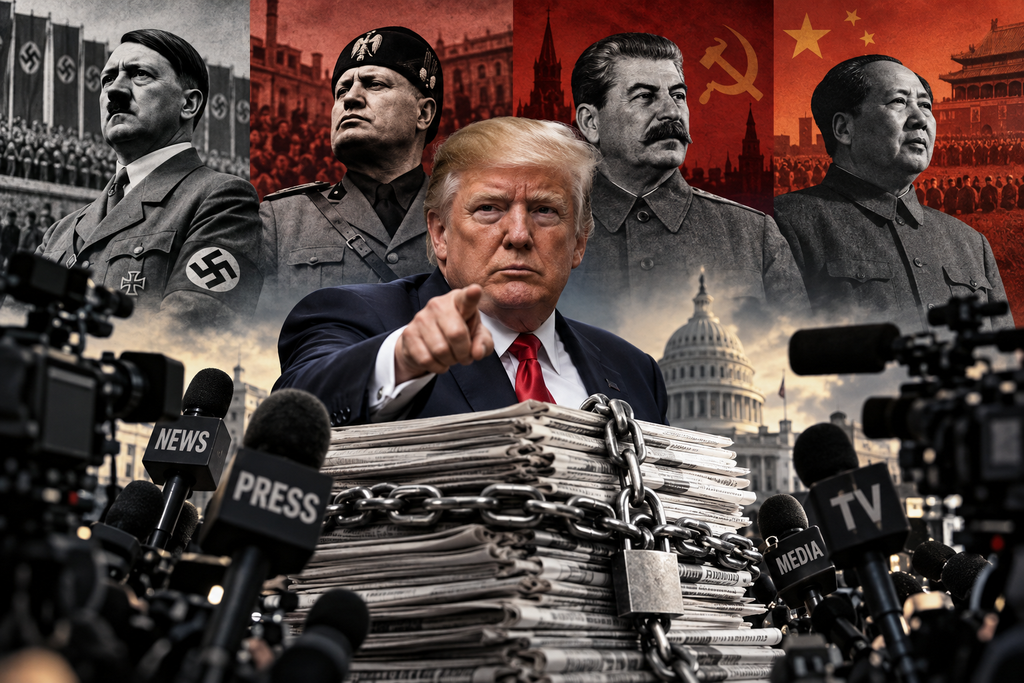
If we lose our local news, we are in danger of losing our freedom of information and if we lose that, we’re in danger of losing our country. For those of you who think I’m fear mongering, countries that have succumbed to dictatorship have first lost their free press.
I believe that broadcast news will never be the free press that print journalism is. The broadcast is an ethereal thing. You hear it and it’s gone. Of course, it is always possible to record it and play it back, but most people don’t. If you have a newspaper, you can read it, think about it, and read it again. There are times when on my second or third reading of an editorial or an op-ed article, I’ve changed my opinion about either the subject or the writer of the piece. I don’t think a news broadcast lends itself to this type of reflection. In fact, when listening to the broadcast news I often find my mind wandering as something that the broadcaster said sends me in a different direction.
In my opinion, broadcast news is controlled by advertising dollars and viewer ratings. News seems to be treated like any entertainment program, catering to what generates ratings rather than facts. I recognize that this can be the case with newspapers as well, but it seems to me that it’s much easier to detect bias in the written word than in the spoken word. Too often we can get caught up in the emotions of the presenter or in the graphics that accompany the story.
With that in mind, I recommend that if you want unbiased journalism, please support your local newspapers before we lose them. Once they are gone, we will never get them back and we will all be much the poorer as a result.
I will leave you with one last quote.
A free press is the unsleeping guardian of every other right that free men prize; it is the most dangerous foe of tyranny. —Winston Churchill
The only way to preserve freedom is to preserve the free press. Do your part! Subscribe!
And you can quote The Grumpy Doc on that!!!!

Sources
Fortune (August 29, 2025): “Atlanta becomes largest U.S. metro without a printed daily newspaper as Journal-Constitution goes digital”
https://fortune.com/2025/08/29/atlanta-largest-metro-without-printed-newpsaper-digital-journal-constitution/
 
Northwestern University Medill School (2025): “News deserts hit new high and 50 million have limited access to local news, study finds”
https://www.medill.northwestern.edu/news/2025/news-deserts-hit-new-high-and-50-million-have-limited-access-to-local-news-study-finds.html
 
NBC News (February 2026): “Washington Post lays off one-third of its newsroom”
https://www.nbcnews.com/business/media/washington-post-layoffs-sports-rcna257354
 
CNN Business (February 4, 2026): “Jeff Bezos-owned Washington Post conducts widespread layoffs, gutting a third of its staff”
https://www.cnn.com/2026/02/04/media/washington-post-layoffs
 
Northwestern University Medill Local News Initiative (2024): “The State of Local News Report 2024”
https://localnewsinitiative.northwestern.edu/projects/state-of-local-news/2024/report/
 
Northwestern University Medill School (2025): “News deserts hit new high and 50 million have limited access to local news, study finds”
https://www.medill.northwestern.edu/news/2025/news-deserts-hit-new-high-and-50-million-have-limited-access-to-local-news-study-finds.htm

Russel Vought and the War on the Environment

Recently, there’s been a a lot of attention given to RFK Jr. and his war on vaccines. More potentially devastating than that is Russel Vought and his war on environmental science.
Russell Vought hasn’t exactly been working in the shadows. As the director of the Office of Management and Budget since February 2025, he’s been methodically implementing what he outlined years earlier in Project 2025—a blueprint that treats climate science not as settled fact, but as what he calls “climate fanaticism.” The result is undeniably the most aggressive dismantling of environmental protections in American history.
The Man Behind the Plan
Vought’s resume tells you everything you need to know about his approach. He served as OMB director during Trump’s first term, wrote a key chapter of Project 2025 focusing on consolidating presidential power, and has openly stated his goal is to make federal bureaucrats feel “traumatized” when they come to work. His philosophy on climate policy specifically? He’s called climate change a side effect of building the modern world—something to manage through deregulation rather than prevention.
Attacking the Foundation: The Endangerment Finding
The centerpiece of Vought’s climate strategy targets what EPA Administrator Lee Zeldin has called “the holy grail of the climate change religion”—the 2009 Endangerment Finding. This Obama-era scientific determination concluded that six greenhouse gases (carbon dioxide, methane, nitrous oxide, hydrofluorocarbons, perfluorocarbons, and sulfur hexafluoride) endanger public health and welfare. It sounds technical, but it’s the legal foundation for virtually every federal climate regulation enacted over the past fifteen years.
 Just last week EPA Administrator Zeldin announced that the Trump administration has repealed this finding. This action strips EPA’s authority to regulate greenhouse gas emissions under the Clean Air Act—meaning no more federal limits on power plant emissions, no vehicle fuel economy standards tied to climate concerns, and no requirement for industries to measure or report their emissions.  White House press secretary Karoline Leavitt said this action “will be the largest deregulatory action in American history.”
More than 1,000 scientists warned Zeldin not to take this step, and the Environmental Protection Network cautioned last year that repealing the finding would cause “tens of thousands of additional premature deaths due to pollution exposure” and would spark “accelerated climate destabilization.”  Abigail Dillen president of the nonprofit law firm Earthjustice said “there is no way to reconcile EPA’s decision with the law, the science and the reality of the disasters that are hitting us harder every year.” She further said they expect to see the Trump administration in court.  Obviously, the science is less important to Trump, Zeldin and Vought than the politics.
The Thirty-One Targets
In March 2025, Zeldin announced what he proudly called “the greatest day of deregulation in American history”—a plan to roll back or reconsider 31 key environmental rules covering everything from clean air to water quality. The list reads like a regulatory hit parade, including vehicle emission standards (designed to encourage electric vehicles), power plant pollution limits, methane regulations for oil and gas operations, and even particulate matter standards that protect against respiratory disease.
The vehicle standards are particularly revealing. The transportation sector is America’s largest source of greenhouse gas emissions, and the Biden-era rules were crafted to nudge automakers toward producing more electric vehicles. At Vought’s direction, the EPA is now reconsidering these, with Zeldin arguing they “regulate out of existence” segments of the economy and cost Americans “a lot of money.”
Gutting the Science Infrastructure
Vought’s agenda extends beyond specific regulations to the institutions that produce climate science itself. In Project 2025, he proposed abolishing the Office of Domestic Climate Policy and suggested the president should refuse to accept federal scientific research like the U.S. National Climate Assessment (NCA). The NCA, published every few years, involves hundreds of scientists examining how climate change is transforming the United States—research that informs everything from building codes to insurance policies.
According to reporting from E&E News in January, Vought wants the White House to exert tighter control over the next NCA, potentially elevating perspectives from climate deniers and industry representatives while excluding contributions made during the Biden administration.  This is a plan that has been in the works for years. Vought reportedly participated in a White House meeting during Trump’s first term where officials discussed firing the scientists working on the assessment.
The National Oceanic and Atmospheric Administration (NOAA) has also been targeted. In February 2025, about 800 NOAA employees—responsible for weather forecasting, climate monitoring, fisheries management, and marine research were fired. Project 2025 had proposed breaking up NOAA entirely, and concerned staff members have already begun a scramble to preserve massive amounts of climate data in case the agency is dismantled.
Budget Cuts as Policy
Vought’s Center for Renewing America has proposed eliminating the Department of Energy’s Office of Energy Efficiency and Renewable Energy, the EPA’s environmental justice fund, and the Low Income Home Energy Assistance Program. During the first Trump administration, Vought oversaw budgets proposing EPA cuts as steep as 31%—reducing the agency to funding levels not seen in decades. In a 2023 speech, he explained the logic bluntly: “We want their funding to be shut down so that the EPA can’t do all of the rules against our energy industry because they have no bandwidth financially to do so.”
This isn’t just about climate, it is also about fairness and the recognition that environmental policies have had a predominately negative effect on low income areas. EPA has cancelled 400 environmental justice grants, closed environmental justice offices at all 10 regional offices, and put the director of the $27 billion Greenhouse Gas Reduction Fund on administrative leave. The fund had been financing local economic development projects aimed at lowering energy prices and reducing emissions.
Eliminating Climate Considerations from Government
Perhaps more insidious than the high-profile rollbacks are the procedural changes that make climate considerations disappear from federal decision-making. In February, Jeffrey Clark—acting administrator of the Office of Information and Regulatory Affairs (OIRA) under Vought’s OMB—directed federal agencies to stop using the “social cost of carbon” in their analyses. This metric calculates the dollar value of damage caused by one ton of carbon pollution, allowing agencies to accurately assess whether regulations produce net benefits or defects for society.
Vought has also directed agencies to establish sunset dates for environmental regulations—essentially automatic expiration dates after which rules stop being enforced unless renewed. For existing regulations, the sunset comes after one year; for new ones, within five years. The stated goal is forcing agencies to continuously justify their rules, but the practical effect is creating a perpetual cycle of regulatory uncertainty.
The Real-World Stakes
The timing of these rollbacks offers a grim irony. As Vought was pushing to weaken the National Climate Assessment in January 2025, the Eaton and Palisades fires were devastating Los Angeles—exactly the type of climate-intensified disaster the assessment is designed to help communities prepare for. The administration’s response? Energy Secretary Chris Wright described climate change as “a side effect of building the modern world” at an industry conference.
An analysis by Energy Innovation, a nonpartisan think tank, found that Project 2025’s proposals to gut federal policies encouraging renewable electricity and electric vehicles would increase U.S. household spending on fuel and utilities by about $240 per year over the next five years. That’s before accounting for the health costs of increased air pollution or the economic damage from unmitigated climate change.
Environmental groups have vowed to challenge these changes in court, and the legal battles will likely stretch on for years. The D.C. Circuit Court of Appeals will hear many cases initially, though the Supreme Court will probably issue final decisions. Legal experts note that while Trump’s EPA moved with unprecedented speed on proposals in 2025, finalizing these rules through the required regulatory process will take much longer. As of December, none of the major climate rule repeals had been submitted to OMB for final review, partly due to what EPA called a 43-day government shutdown (which EPA blamed on Democrats, though the characterization is widely disputed).
What Makes This Different
Previous administrations have certainly rolled back environmental regulations, but Vought’s approach differs in both scope and philosophy. Rather than tweaking specific rules or relaxing enforcement, he’s systematically attacking the scientific and legal foundations that make climate regulation possible. It’s the difference between turning down the thermostat and ripping out the entire heating system.
The Environmental Defense Fund, which rarely comments on political appointees, strongly opposed Vought’s confirmation, with Executive Director Amanda Leland stating: “Russ Vought has made clear his contempt for the people working every day to ensure their fellow Americans have clean air, clean water and a safer climate.”
Looking Forward
Whether Vought’s vision becomes permanent depends largely on how courts rule on these changes. The 2007 Supreme Court decision in Massachusetts v. EPA established that the agency has authority to regulate greenhouse gases as air pollutants under the Clean Air Act—the very authority Vought is now trying to eliminate. Overturning established precedent is difficult, though the current Supreme Court’s composition makes the outcome possible, if not likely.
What we’re witnessing is essentially a test of whether one administration can permanently disable the federal government’s capacity to address climate change, or if these changes represent a temporary setback that future administrations can reverse. The stakes couldn’t be higher: atmospheric CO2 concentrations continue rising, global temperatures are breaking records, and climate-related disasters are becoming more frequent and severe. Nothing less than the future of our way of life is at stake. We must take action now.
 
Full disclosure: my undergraduate degree is in meteorology, but I would never call myself a meteorologist since I have never worked in the field. But I still maintain an interest, from both a meteorological and a medical perspective. The Grump Doc is never lacking in opinions.
 
Illustration generated by author using Midjourney.
 
Sources:
Lisa Friedman and Maxine Joselow, “Trump Allies Near ‘Total Victory’ in Wiping Out U.S. Climate Regulation,” New York Times, Feb. 9, 2026.[nytimes +1]
Lisa Friedman, “The Conservative Activists Behind One of Trump’s Biggest Climate Moves,” New York Times, Feb. 10, 2026.[nytimes +1]
Bob Sussman, “The Anti-Climate Fanaticism of the Second Trump Term (Part 1: The Purge of Climate from All Federal Programs),” Environmental Law Institute, May 7, 2025.[eli]
U.S. Environmental Protection Agency, “Trump EPA Kicks Off Formal Reconsideration of Endangerment Finding,” EPA News Release, Mar. 13, 2025.[epa]
Trump’s Climate and Clean Energy Rollback Tracker, Act On Climate/NRDC coalition, updated Jan. 11, 2026.[actonclimate]
“Trump to Repeal Landmark Climate Finding in Huge Regulatory Rollback,” Wall Street Journal, Feb. 9, 2026.[wsj]
Valerie Volcovici, “Trump Set to Repeal Landmark Climate Finding in Huge Regulatory Rollback,” Reuters, Feb. 9, 2026.[reuters]
Alex Guillén, “Trump EPA to Take Its Biggest Swing Yet Against Climate Change Rules,” Politico, Feb. 10, 2026.[politico]
“EPA Urges White House to Strike Down Landmark Climate Finding,” Washington Post, Feb. 26, 2025.[washingtonpost]
“Trump Allies Near ‘Total Victory’ in Wiping Out U.S. Climate Regulation,” Seattle Times reprint, Feb. 10, 2026.[seattletimes]
“Trump Wants to Dismantle Key Climate Research Hub in Colorado,” Earth.org, Dec. 17, 2025.[earth]
“Vought Says National Science Foundation to Break Up Federal Climate Research Center,” The Hill, Dec. 17, 2025.[thehill]
Rachel Cleetus, “One Year of the Trump Administration’s All-Out Assault on Climate and Clean Energy,” Union of Concerned Scientists, Jan. 13, 2026.[ucs]
Environmental Protection Network, “Environmental Protection Network Speaks Out Against Vought Cabinet Consideration,” Nov. 20, 2024.[environmentalprotectionnetwork]
“From Disavowal to Delivery: The Trump Administration’s Rapid Implementation of Project 2025 on Public Lands,” Center for Western Priorities, Jan. 28, 2026.[westernpriorities]
“Russ Vought Nominated for Office of Management and Budget Director,” Environmental Defense Fund statement, Mar. 6, 2025.[edf]
“Project 2025,” Heritage Foundation/Project 2025 backgrounder (as summarized in the Project 2025 Wikipedia entry).[wikipedia]
“EPA to repeal finding that serves as basis for climate change,” The Associated Press, Matthew Daly
https://vitalsigns.edf.org/story/trump-nominee-and-project-2025-architect-russell-vought-has-drastic-plans-reshape-america
https://en.wikipedia.org/wiki/Russell_Vought
https://www.commondreams.org/news/warnings-of-permanent-damage-to-people-and-planet-as-trump-epa-set-to-repeal-key-climate-rule
https://www.eenews.net/articles/trump-team-takes-aim-at-crown-jewel-of-us-climate-research/
https://www.epa.gov/newsreleases/epa-launches-biggest-deregulatory-action-us-history
https://www.pbs.org/newshour/nation/trump-administration-moves-to-repeal-epa-rule-that-allows-climate-regulation
https://www.scientificamerican.com/article/trump-epa-unveils-aggressive-plans-to-dismantle-climate-regulation/
https://www.bloomberg.com/news/articles/2026-02-10/trump-s-epa-to-scrap-landmark-emissions-policy-in-major-rollback​​​​​​​​​​​​​​​​


When They Knew: How the Fossil Fuel Industry Buried Its Own Climate Science

The story begins not with climate deniers casting doubt on new science, but with something far more troubling: companies conducting rigorous research, understanding exactly what their products would do to the planet, and then spending decades lying to the public. They treated science as an internal planning tool and then deployed public relations, front groups, and “manufactured doubt” to delay regulation and protect profits.

The Oil Industry’s Own Scientists Saw It Coming

In 1977, a scientist named James Black stood before Exxon’s management committee with an uncomfortable message. According to internal documents later uncovered by investigative journalists, Black told executives that burning fossil fuels was increasing atmospheric carbon dioxide, and that continually rising CO2 levels would increase global temperatures by two to three degrees—a projection that is still consistent with today’s scientific consensus. He warned that we had a window of just five to ten years before “hard decisions regarding changes in energy strategies might become critical”.

What happened next is remarkable for its precision. Throughout the late 1970s and 1980s, Exxon assembled what one scientist called “a credible scientific team” to investigate the climate question. They launched ambitious projects, including outfitting a supertanker with custom instruments to measure how oceans absorbed CO2—one of the most pressing scientific questions of the era. A 2023 Harvard study analyzing Exxon’s internal climate projections from 1977 to 2003 found they predicted global warming with what researchers called “shocking skill and accuracy.” Specifically, the company projected 0.20 degrees Centigrade of warming per decade, with a margin of error of just 0.04 degrees—a forecast that has proven largely correct.

Exxon wasn’t alone. Shell produced a confidential 1988 report titled “The Greenhouse Effect” that warned of climate changes “larger than any that have occurred over the last 12,000 years,” including destructive floods and mass migrations. The report revealed Shell had been running an internal climate science program since 1981. In one striking document from 1986, Shell predicted that fossil fuel emissions would cause changes “the greatest in recorded history”.

Even industry groups understood what was coming. In 1980, the American Petroleum Institute (API) invited Stanford scientist John Laurmann to brief oil company representatives at its secret “CO2 and Climate Task Force”. His presentation, now public, warned that continued fossil fuel use would be “barely noticeable” by 2005 but by the 2060s would have “globally catastrophic effects.” That same year, the API called on governments to triple coal production worldwide, publicly insisting there would be no negative consequences.

The Coal Industry Knew Even Earlier

If anything, the coal industry understood the problem first. A 1966 article in the trade publication Mining Congress Journal by James Garvey, president of Bituminous Coal Research Inc., explicitly discussed how continued coal consumption would increase atmospheric temperatures and cause “vast changes in the climates of the earth.” A combustion engineer from Peabody Coal, now the world’s largest coal company, acknowledged in the same publication that the industry was “buying time” before air pollution regulations would force action.

This 1966 evidence is particularly damning because it predates widespread public awareness by decades. The coal industry didn’t stumble into climate denial—they entered it with full knowledge of what they were obscuring.

Major coal interests also had early awareness that carbon emissions posed regulatory and market risks, particularly for coal‑fired electricity, and they participated in joint industry research and strategy discussions about climate change in the 1980s and 1990s. At the same time, coal associations helped create public campaigns such as the Information Council for the Environment (ICE—even then a disturbing acronym), whose internal planning documents explicitly set an objective to “reposition global warming as theory (not fact)” and to target specific demographic groups with tailored doubt‑based messages.

According to a report from the Union of Concerned Scientists, these efforts often relied on “grassroots” fronts, advertising, and even forged constituent letters to legislators to undermine support for climate policy and to counter the conclusions of mainstream climate science, which even the companies’ own experts did not refute.

What They Said Publicly

The contrast between private knowledge and public statements is stark. While Exxon scientists were building sophisticated climate models internally, the company’s public messaging emphasized uncertainty. In a 1997 speech, Exxon CEO Lee Raymond told an audience at the World Petroleum Conference: “Let’s agree there’s a lot we really don’t know about how climate change will change in the 21st century and beyond”.  They spread messaging that emphasized uncertainty, framed global warming as just a “theory,” and highlighted supposed flaws in climate models, even as their own scientists were using those models to make precise projections. The company and allied trade associations supported think tanks and advocacy groups such as Citizens For Sound Science, that questioned if human activity was responsible for warming and opposed binding limits on emissions, producing a stark discrepancy between internal scientific knowledge and external communication.

In 1989, Exxon helped create the Global Climate Coalition—despite its environmental sounding name, the organization worked to cast doubt on climate science and block clean energy legislation throughout the 1990s. Electric utilities and coal‑linked organizations joined this coalition to systematically attack climate scientists and lobby to weaken or stall international agreements like the Kyoto Protocol, despite internal recognition that greenhouse gases were driving warming.

Internal API documents from a 1998 meeting reveal an explicit strategy to “ensure that a majority of the American public… recognizes that significant uncertainties exist in climate science”.

In 1991, Shell produced a film, “Climate of Concern,” which stated that human driven—as opposed to greenhouse gas driven—climate change was happening “at a rate faster than at any time since the end of the ice age” and warned of extreme weather, flooding, famine, and climate refugees.  They understood the science but tried to shift the blame.

According to a 2013 Drexel University study, between 2003 and 2010 alone, approximately $558 million was distributed to about 100 climate change denial organizations. Greenpeace reports that Exxon alone spent more than $30 million on think tanks promoting climate denial.

The Tobacco Playbook

The parallels to Big Tobacco’s strategy are not coincidental—they’re intentional. Research by the Center for International Environmental Law uncovered more than 100 documents from the Tobacco Industry Archives showing that oil and tobacco companies not only used the same PR firms and research institutes, but often the same individual researchers. The connection goes back to at least the 1950s.  A report published in Scientific American suggests the oil and tobacco industries both hired the PR firm Hill & Knowlton Inc. as early as 1956.

A 1969 internal memo from R.J. Reynolds Tobacco Company stated plainly: “Doubt is our product since it is the best means of competing with the ‘body of fact’ that exists in the mind of the general public”. This became the template. Create uncertainty. Emphasize what isn’t known rather than what is. Fund research that casts doubt. Attack the credibility of independent scientists. They formed organizations with scientific-sounding names that existed primarily to muddy the waters.

In one particularly brazen example, a 2015 presentation by Cloud Peak Energy executive Richard Reavey titled “Survival Is Victory: Lessons From the Tobacco Wars,” explicitly coached coal executives on how to apply tobacco industry tactics.

What makes the fossil fuel case particularly egregious is the temporal dimension. These weren’t companies caught off-guard by emerging science. They funded the research. They understood the findings. Their own scientists urged action. A 1978 Exxon memo noted this could be “the kind of opportunity we are looking for to have Exxon technology, management and leadership resources put into the context of a project aimed at benefitting mankind”.

Instead, when oil prices collapsed in the mid-1980s, Exxon pivoted from conducting climate research to funding climate denial. By the late 1980s, according to reporting by InsideClimate News, Exxon “curtailed its carbon dioxide research” and “worked instead at the forefront of climate denial”.

Where We Stand Now

Across the oil, gas, and coal industries, there is not a genuine scientific dispute inside companies but a divergence between what in‑house experts knew and what corporate leaders chose to communicate to the public and policymakers. This divergence mirrors the tobacco industry’s long‑running use of organized doubt. In both arenas, industry actors treated early recognition of harm as a legal and political threat and responded by investing in campaigns to confuse, delay, and reframe the science rather than addressing the risks their own research had identified.

The evidence trail has led to legal action. More than 20 cities, counties, and states have filed lawsuits against fossil fuel companies for damages caused by climate change, arguing the industry knowingly deceived the public. The European Parliament held hearings in 2019 on climate denial by ExxonMobil and other actors. The hashtags #ExxonKnew, #ShellKnew, and #TotalKnew have become rallying cries for accountability.

Senator Sheldon Whitehouse has explicitly compared the fossil fuel industry’s actions to the tobacco racketeering case that ultimately held cigarette makers accountable. As he noted in a Senate speech, the elements of a civil racketeering case are straightforward: defendants conducted an enterprise with a pattern of racketeering activity.

The difference between the tobacco and fossil fuel cases may be one of scale. As researchers Naomi Oreskes and Erik Conway documented in their book Merchants of Doubt, both industries worked to obscure truth for profit. But while tobacco kills individuals, climate change threatens entire ecosystems and future generations.  The time to act is now.

Sources:

Scientific American – “Exxon Knew about Climate Change Almost 40 Years Ago”
https://www.scientificamerican.com/article/exxon-knew-about-climate-change-almost-40-years-ago/
 
Harvard Gazette – Harvard-led analysis finds ExxonMobil internal research accurately predicted climate change
https://news.harvard.edu/gazette/story/2023/01/harvard-led-analysis-finds-exxonmobil-internal-research-accurately-predicted-climate-change/
 
InsideClimate News – Exxon’s Own Research Confirmed Fossil Fuels’ Role in Global Warming Decades Ago
https://insideclimatenews.org/news/02052024/from-the-archive-exxon-research-global-warming/
 
PBS Frontline – Investigation Finds Exxon Ignored Its Own Early Climate Change Warnings
https://www.pbs.org/wgbh/frontline/article/investigation-finds-exxon-ignored-its-own-early-climate-change-warnings/
 
NPR – Exxon climate predictions were accurate decades ago. Still it sowed doubt
https://www.npr.org/2023/01/12/1148376084/exxon-climate-predictions-were-accurate-decades-ago-still-it-sowed-doubt
 
Science (journal) – Assessing ExxonMobil’s global warming projections
https://www.science.org/doi/10.1126/science.abk0063
 
Climate Investigations Center – Shell Climate Documents
https://climateinvestigations.org/shell-oil-climate-documents/
 
The Conversation – What Big Oil knew about climate change, in its own words
https://theconversation.com/what-big-oil-knew-about-climate-change-in-its-own-words-170642
 
ScienceAlert – The Coal Industry Was Well Aware of Climate Change Predictions Over 50 Years Ago
https://www.sciencealert.com/coal-industry-knew-about-climate-change-in-the-60s-damning-revelations-show
 
The Intercept – A Major Coal Company Went Bust. Its Bankruptcy Filing Shows That It Was Funding Climate Change Denialism
https://theintercept.com/2019/05/16/coal-industry-climate-change-denial-cloud-peak-energy/
 
Center for International Environmental Law – Big Oil Denial Playbook Revealed by New Documents
https://www.ciel.org/news/oil-tobacco-denial-playbook/
 
Wikipedia – Tobacco industry playbook
https://en.wikipedia.org/wiki/Tobacco_industry_playbook
 
Scientific American – Tobacco and Oil Industries Used Same Researchers to Sway Public
https://www.scientificamerican.com/article/tobacco-and-oil-industries-used-same-researchers-to-sway-public1/
 
Environmental Health (journal) – The science of spin: targeted strategies to manufacture doubt with detrimental effects on environmental and public health
https://link.springer.com/article/10.1186/s12940-021-00723-0
 
Senator Sheldon Whitehouse – Time to Wake Up: Climate Denial Recalls Tobacco Racketeering
https://www.whitehouse.senate.gov/news/speeches/time-to-wake-up-climate-denial-recalls-tobacco-racketeering/
 
VICE News – Meet the ‘Merchants of Doubt’ Who Sow Confusion about Tobacco Smoke and Climate Change
https://www.vice.com/en/article/meet-the-merchants-of-doubt-who-sow-confusion-about-tobacco-smoke-and-climate-change/
 
Union of Concerned Scientists – The Climate Deception Dossiers
https://www.ucs.org/sites/default/files/attach/2015/07/The-Climate-Deception-Dossiers.pdf
 
 
Illustration generated by author using ChatGPT.


The Founding Feuds: When America’s Heroes Couldn’t Stand Each Other

The mythology of the founding fathers often portrays them as a harmonious band of brothers united in noble purpose. The reality was far messier—these brilliant, ambitious men engaged in bitter personal feuds that sometimes threatened the very republic they were creating.  In some ways, the American revolution was as much of a battle of egos as it was a war between King and colonists.

The Revolutionary War Years: Hancock, Adams, and Washington’s Critics

The tensions began even before independence was declared. John Hancock and Samuel Adams, both Massachusetts firebrands, developed a rivalry that simmered throughout the Revolution. Adams, the older political strategist, had been the dominant figure in Boston’s resistance movement. When Hancock—wealthy, vain, and eager for glory—was elected president of the Continental Congress in 1775, the austere Adams felt his protégé had grown too big for his britches. Hancock’s request for a leave of absence from the presidency of Congress in 1777 coupled with his desire for an honorific military escort home, struck Adams as a relapse into vanity. Adams even opposed a resolution of thanks for Hancock’s service, signaling open estrangement. Their relationship continued to deteriorate to the point where they barely spoke, with Adams privately mocking Hancock’s pretensions and Hancock using his position to undercut Adams politically.

The choice of Washington as commander sparked its own controversies. John Adams had nominated Washington, partly to unite the colonies by giving Virginia the top military role. Washington’s command was anything but universally admired and as the war dragged on with mixed results many critics emerged.

After the victory at Saratoga in 1777, General Horatio Gates became the focal point of what’s known as the Conway Cabal—a loose conspiracy aimed at having Gates replace Washington as commander-in-chief. General Thomas Conway wrote disparaging letters about Washington’s military abilities. Some members of Congress, including Samuel Adams, Thomas Mifflin, and Richard Henry Lee, questioned whether Washington’s defensive strategy was too cautious and if his battlefield performance was lacking. Gates himself played a duplicitous game, publicly supporting Washington while privately positioning himself as an alternative.

When Washington discovered the intrigue, his response was characteristically measured but firm.  Rather than lobbying Congress or forming a counter-faction, Washington leaned heavily on reputation and restraint. He continued to communicate respectfully with Congress, emphasizing the army’s needs rather than defending his own position.  Washington did not respond with denunciations or public accusations. Instead, he handled the situation largely behind the scenes. When he learned that Conway had written a critical letter praising Gates, Washington calmly informed him that he was aware of the letter—quoting it verbatim.

The conspiracy collapsed, in part because Washington’s personal reputation with the rank and file and with key political figures proved more resilient than his critics had anticipated. But the episode exposed deep fractures over strategy, leadership, and regional loyalties within the revolutionary coalition.

The Ideological Split: Hamilton vs. Jefferson and Madison

Perhaps the most consequential feud emerged in the 1790s between Alexander Hamilton and Thomas Jefferson, with James Madison eventually siding with Jefferson. This wasn’t just personal animosity—it represented a fundamental disagreement about America’s future.

Hamilton, Washington’s Treasury Secretary, envisioned an industrialized commercial nation with a strong central government, a national bank, and close ties to Britain. Jefferson, the Secretary of State, championed an agrarian republic of small farmers with minimal federal power and friendship with Revolutionary France. Their cabinet meetings became so contentious that Washington had to mediate. Hamilton accused Jefferson of being a dangerous radical who would destroy public credit. Jefferson called Hamilton a monarchist who wanted to recreate British aristocracy in America.

The conflict got personal. Hamilton leaked damaging information about Jefferson to friendly newspapers. Jefferson secretly funded a journalist, James Callender, to attack Hamilton in print. When Hamilton’s extramarital affair with Maria Reynolds became public in 1797, Jefferson’s allies savored every detail. The feud split the nation into the first political parties: Hamilton’s Federalists and Jefferson’s Democratic-Republicans. Madison, once Hamilton’s ally in promoting the Constitution, switched sides completely, becoming Jefferson’s closest political partner and Hamilton’s implacable foe.

The Adams-Jefferson Friendship, Rivalry, and Reconciliation

John Adams and Thomas Jefferson experienced one of history’s most remarkable personal relationships. They were close friends during the Revolution, working together in Congress and on the committee to draft the Declaration of Independence (though Jefferson did the actual writing). Both served diplomatic posts in Europe and developed deep mutual respect.

But the election of 1796 turned them into rivals. Adams won the presidency with Jefferson finishing second, making Jefferson vice president under the original constitutional system—imagine your closest competitor becoming your deputy. By the 1800 election, they were bitter enemies. The campaign was vicious, with Jefferson’s supporters calling Adams a “hideous hermaphroditical character” and Adams’s allies claiming Jefferson was an atheist who would destroy Christianity.

Jefferson won in 1800, and the two men didn’t speak for over a decade. Their relationship was so bitter that Adams left Washington early in the morning, before Jefferson’s inauguration. What makes their story extraordinary is the reconciliation. In 1812, mutual friends convinced them to resume correspondence. Their letters over the next fourteen years—158 of them—became one of the great intellectual exchanges in American history, discussing philosophy, politics, and their memories of the Revolution. Both men died on July 4, 1826, the fiftieth anniversary of the Declaration of Independence, with Adams’s last words reportedly being “Thomas Jefferson survives” (though Jefferson had actually died hours earlier).

Franklin vs. Adams: A Clash of Styles

In Paris, the relationship between Benjamin Franklin and John Adams was a tense blend of grudging professional reliance and deep personal irritation, rooted in radically different diplomatic styles and temperaments. Franklin, already a celebrated figure at Versailles, cultivated French support through charm, sociability, and patient maneuvering in salons and at court, a method that infuriated Adams. He equated such “nuances” with evasiveness and preferred direct argument, formal memorandums, and hard‑edged ultimatums. Sharing lodgings outside Paris only intensified Adams’s resentment as he watched Franklin rise late, receive endless visitors, and seemingly mix pleasure with business, leading Adams to complain that nothing would ever get done unless he did it himself, while Franklin privately judged Adams “always an honest man, often a wise one, but sometimes and in some things, absolutely out of his senses.” Their French ally, Foreign Minister Vergennes, reinforced the imbalance by insisting on dealing primarily with Franklin and effectively sidelining Adams in formal diplomacy. This deepened Adams’s sense that Franklin was both overindulged by the French and insufficiently assertive on America’s behalf. Yet despite their mutual loss of respect, the two ultimately cooperated—often uneasily—in the peace negotiations with Britain, and both signatures appear on the 1783 Treaty of Paris, a testament to the way personal feud and shared national purpose coexisted within the American diplomatic mission.

Hamilton and Burr: From Political Rivalry to Fatal Duel

The Hamilton-Burr feud ended in the most dramatic way possible: a duel at Weehawken, New Jersey, on July 11, 1804, where Hamilton was mortally wounded and Burr destroyed his own political career.

Their rivalry had been building for years. Both were New York lawyers and politicians, but Hamilton consistently blocked Burr’s ambitions. When Burr ran for governor of New York in 1804, Hamilton campaigned against him with particular venom, calling Burr dangerous and untrustworthy at a dinner party. When Burr read accounts of Hamilton’s remarks in a newspaper, he demanded an apology. Hamilton refused to apologize or deny the comments, leading to the duel challenge.

What made this especially tragic was that Hamilton’s oldest son, Philip, had been killed in a duel three years earlier defending his father’s honor. Hamilton reportedly planned to withhold his fire, but he either intentionally shot into the air or missed. Burr’s shot struck Hamilton in the abdomen, and he died the next day. Burr was charged with murder in both New York and New Jersey and fled to the South.  Though he later returned to complete his term as vice president, his political career was finished.

Adams vs. Hamilton: The Federalist Crack-Up

One of the most destructive feuds happened within the same party. John Adams and Alexander Hamilton were both Federalists, but their relationship became poisonous during Adams’s presidency (1797-1801).

Hamilton, though not in government, tried to control Adams’s cabinet from behind the scenes. When Adams pursued peace negotiations with France (the “Quasi-War” with France was raging), Hamilton wanted war. Adams discovered that several of his cabinet members were more loyal to Hamilton than to him and fired them. In the 1800 election, Hamilton wrote a fifty-four-page pamphlet attacking Adams’s character and fitness for office—extraordinary since they were in the same party. The pamphlet was meant for limited circulation among Federalist leaders, but Jefferson’s allies got hold of it and published it widely, devastating both Adams’s re-election chances and Hamilton’s reputation. The feud helped Jefferson win and essentially destroyed the Federalist Party.

Washington and Jefferson: The Unacknowledged Tension

While Washington and Jefferson never had an open feud, their relationship cooled significantly during Washington’s presidency. Jefferson, as Secretary of State, increasingly opposed the administration’s policies, particularly Hamilton’s financial program. When Washington supported the Jay Treaty with Britain in 1795—which Jefferson saw as a betrayal of France and Republican principles—Jefferson became convinced Washington had fallen under Hamilton’s spell.

Jefferson resigned from the cabinet in 1793, partly from policy disagreements but also from discomfort with what he saw as Washington’s monarchical tendencies (the formal receptions and the ceremonial aspects of the presidency). Washington, in turn, came to view Jefferson as disloyal, especially when he learned Jefferson had been secretly funding attacks on the administration in opposition newspapers and had even put a leading critic on the federal payroll. By the time Washington delivered his Farewell Address in 1796, warning against political parties and foreign entanglements, many saw it as a rebuke of Jefferson’s philosophy. They maintained outward courtesy, but their warm relationship never recovered.

Why These Feuds Mattered

These weren’t just personal squabbles—they shaped American democracy in profound ways. The Hamilton-Jefferson rivalry created our two-party system (despite Washington’s warnings). The Adams-Hamilton split showed that parties could fracture from within. The Adams-Jefferson reconciliation demonstrated that political enemies could find common ground after leaving power.

The founding fathers were human, with all the ambition, pride, jealousy, and pettiness that entails. They fought over power, principles, and personal slights. What’s remarkable isn’t that they agreed on everything—they clearly didn’t—but that despite their bitter divisions, they created a system robust enough to survive their feuds. The Constitution itself, with its checks and balances, almost seems designed to accommodate such disagreements, ensuring that no single person or faction could dominate.

SOURCES

  1. National Archives – Founders Online

https://founders.archives.gov

2.   Massachusetts Historical Society – Adams-Jefferson Letters

https://www.masshist.org/publications/adams-jefferson

       3.    Founders Online – Hamilton’s Letter Concerning John Adams

https://founders.archives.gov/documents/Hamilton/01-25-02-0110

       4.    Gilder Lehrman Institute – Hamilton and Jefferson

https://www.gilderlehrman.org/history-resources/spotlight-primary-source/alexander-hamilton-and-thomas-jefferson

       5.    National Park Service – The Conway Cabal

https://www.nps.gov/articles/000/the-conway-cabal.htm

       6.    American Battlefield Trust – Hamilton-Burr Duel

https://www.battlefields.org/learn/articles/hamilton-burr-duel

        7.   Mount Vernon – Thomas Jefferson

https://www.mountvernon.org/library/digitalhistory/digital-encyclopedia/article/thomas-jefferson

        8.   Monticello – Thomas Jefferson Encyclopedia

https://www.monticello.org/research-education/thomas-jefferson-encyclopedia

        9.   Library of Congress – John Adams Papers

https://www.loc.gov/collections/john-adams-papers

10. Joseph Ellis – “Founding Brothers: The Revolutionary Generation”

https://www.pulitzer.org/winners/joseph-j-ellis

Illustration generated by author using ChatGPT.

The Price Tag Mystery: Why Nobody Really Knows What Healthcare Costs in America

Imagine walking into a store where nothing has a price tag. When you get to the register, the cashier scans your items and tells you the total—but that total is different for every customer. Your neighbor might pay $50 for the same items that cost you $200. The store won’t tell you why, and you won’t find out until after you’ve already “bought” everything.

Welcome to American healthcare, where the simple question “how much does this cost?” has no simple answer.

You might think I’m exaggerating, but the evidence suggests otherwise. Research published in late 2023 by PatientRightsAdvocate.org found that prices for the same medical procedure can vary by more than 10 times within a single hospital depending on which insurance plan you have, and by as much as 33 times across different hospitals. A knee replacement that costs around $23,170 in Baltimore might run $58,193 in New York. An emergency department visit that one facility charges $486 for might cost $3,549 at another hospital for the identical service.

The fundamental problem is that hospitals and doctors don’t have one price for their services. They have dozens, sometimes hundreds, of different prices for the exact same procedure depending on who’s paying. This bizarre system evolved because most healthcare in America isn’t a simple transaction between patient and provider—there’s a third party in the middle called an insurance company, and that changes everything.

The Fiction of Chargemaster Prices

A hospital chargemaster is essentially the hospital’s internal price list—a massive catalog that assigns a dollar amount to every service, supply, test, medication, and procedure the hospital can bill for, from an aspirin to a complex surgery. These listed prices are usually very high and are not what most patients actually pay; instead, the chargemaster functions as a starting point for negotiations with insurers and government programs like Medicare and Medicaid, which typically pay much lower, pre-set rates. What an individual patient ultimately pays depends on several factors layered on top of the chargemaster price. Think of them like the manufacturer’s suggested retail price on a car: technically real, but nobody pays them.

A hospital might list an MRI at $3,000 or a blood test at $500. But then insurance companies come in. They represent thousands or millions of potential patients, which gives them serious bargaining power. They negotiate with hospitals along these lines: “We’ll send you lots of patients, but only if you give us a discount.” So, the hospital agrees to accept much less—maybe they’ll take $1,200 for that $3,000 MRI or $150 for the blood test. This discounted amount is called the “negotiated rate,” and it’s what the insurance company will really pay.

Here’s where it gets messy: every insurance company negotiates its own rates with every hospital. Blue Cross might negotiate one price, Aetna a different price, UnitedHealthcare yet another. The same exact MRI at the same hospital might be $1,200 for one insurer’s customers and $1,800 for another’s. And these negotiated rates have traditionally been kept secret—treated like confidential business information that gives each party a competitive advantage.

The Write-Off Game

What happens to that difference between the chargemaster price and the negotiated rate? The hospital “writes it off.” That’s accounting language for “we accept that we’re not getting paid this money, and we’re taking it off the books.” If the hospital charged $3,000 but agreed to accept $1,200, they write off $1,800. This isn’t lost money in the normal sense—they never expected to collect it in the first place. The chargemaster prices are inflated specifically because everyone knows discounts are coming. Some hospitals now post “discounted cash prices” that are often far below chargemaster and sometimes even below some negotiated rates. These are sometimes, though not always, offered to uninsured patients, generally referred to as self-pay. There can be a catch—some hospitals require lump-sum payment of the total bill to qualify for the lower price.

According to the American Hospital Association, U.S. hospitals collectively plan to write off approximately $760 billion in billed charges in 2025 across all categories of write-offs. That’s not a typo—$760 billion. These write-offs happen in several different situations. The most common are contractual write-offs, where the provider has agreed to accept less than their list price from insurance companies.

Hospitals have far more write-offs than just contractual.  They also write off money for charity care—treating patients who can’t afford to pay anything, and they write off bad debt when patients could pay but don’t. They write off small balances that aren’t worth the administrative cost of collection, and they write off amounts related to various billing errors, denied claims, and coverage disputes. Healthcare providers typically adjust about 10 to 12 percent of their gross revenue due to these various write-offs and claim adjustments.

Why Such Wild Variation?

Even with all these negotiated discounts built into the system, the prices still vary enormously. A 2024 study from the Baker Institute found that for emergency department visits, the price charged by hospitals in the top 10% can be three to seven times higher than the hospitals in the bottom 10% for the identical procedure. Research published in Health Affairs Scholar in early 2025 found that even after adjusting for differences between insurers and procedures, the top 25% of prices across all states is 48 percent higher than the bottom 25% of prices for inpatient services.

Several factors drive this variation. Hospitals in areas with less competition can charge more because insurers have fewer alternatives for negotiation. Prestigious hospitals can demand higher rates because insurers want them in their networks to attract customers. Some insurance companies have more bargaining power than others based on their market share. There’s no central authority setting prices—it’s all private negotiations, hospital by hospital, insurer by insurer, procedure by procedure.

For patients, this creates a nightmare scenario. Even if you have insurance, you usually have no idea what you’ll pay until after you’ve received care. Your out-of-pocket costs depend on your deductible (the amount you pay before insurance kicks in), your copay or coinsurance (your share after insurance starts paying), and whether the negotiated rate between your specific insurance and that specific hospital is high or low. Two people with different insurance plans getting the same procedure at the same hospital on the same day can end up with drastically different bills.

Research using new transparency data confirms this isn’t just anecdotal. A study from early 2025 found that for something as routine as a common office visit, mean prices ranged from $82 with Aetna to $115 with UnitedHealth. Within individual insurance companies, the price of the top 25% of office visits was 20 to 50 percent higher than the bottom 25%, meaning even within one insurer’s network, where you go or where you live makes a huge difference.

The Government Steps In

The federal government finally said “enough” and started requiring transparency. Since 2021, hospitals must post their prices online, including what they’ve negotiated with each insurance company. The Centers for Medicare and Medicaid Services (CMS) strengthened these requirements in 2024, mandating standardized formats and increasing enforcement. Health insurance plans face similar requirements to disclose their negotiated rates.

The theory was straightforward: if patients could see prices ahead of time, they could shop around, which would force prices down through competition. CMS estimated this could save as much as $80 billion by 2025. The idea seemed sound—transparency works in other markets, so why not healthcare?

In practice, it’s been messy. A Government Accountability Office (GAO) report from October 2024 found that while hospitals are posting data, stakeholders like health plans and employers have raised serious concerns about data quality. They’ve encountered inconsistent file formats, extremely complex pricing structures, and data that appears to be incomplete or possibly inaccurate. Even when hospitals post the required information, it’s often so convoluted that comparing prices across facilities becomes nearly impossible for average consumers.

An Office of Inspector General report from November 2024 found that not all selected hospitals were complying with the transparency requirements in the first place. And CMS still doesn’t have robust mechanisms to verify whether the data being posted is accurate and complete. The GAO recommended that CMS assess whether hospital pricing data are sufficiently complete and accurate to be usable, and to assess if additional enforcement if needed.

Imagine trying to comparison shop when one store lists prices in dollars, another in euros, and a third uses a proprietary currency they invented. That’s roughly where we are with healthcare price data—technically available, but practically unusable for most people trying to make informed decisions.

The Trump administration in 2025 signed a new executive order aimed at strengthening enforcement of price transparency rules and directing agencies to standardize and make hospital and insurer pricing information more accessible; this action built on rather than reduced the earlier requirements.  Hopefully this will improve the ability of patients to access real costs, but it is my opinion that the industry will continue to resist full and open compliance.

The Limits of Shopping for Healthcare

There’s also a deeper philosophical problem: for healthcare to work like a normal market where price transparency drives competition, patients would need to be able to shop around based on price. That could work for scheduled procedures like knee replacements, colonoscopies, or elective surgeries. You have time to research, compare, and choose.

But it doesn’t work at all when you’re having a heart attack, or your child breaks their arm. You go to the nearest hospital, period. You’re not calling around asking about prices while someone’s having a medical emergency. Even for non-emergencies, choosing based on price assumes equal quality across providers, which isn’t always true and is even harder to assess than price itself.

A study on price transparency tools found mixed results on whether they truly reduce spending. Some research shows modest savings when people use price comparison tools for shoppable services like imaging and lab work. But utilization of these tools remains low, and for many healthcare encounters, price shopping simply isn’t practical or appropriate.

Who Really Knows?

So, who truly understands what things cost in this system? Hospital administrators know what different insurers pay them for specific procedures, but that knowledge is limited to their facility. They don’t necessarily know what other hospitals charge. Insurance company executives know what they’ve negotiated with various hospitals in their network, but they haven’t historically shared meaningful price information with their customers in advance. And they don’t know what their competitors have negotiated.

Patients, caught in the middle, often find out their costs only when they receive a bill weeks after treatment. By that point, the care has been delivered, and the financial damage is done. Recent surveys suggest that surprise medical bills remain a significant problem, with many patients receiving unexpected charges from out-of-network providers they didn’t choose or even know were involved in their care.

The people who are starting to get a comprehensive view are researchers and policymakers analyzing the newly available transparency data. Studies published in 2024 and 2025 using these data have given us unprecedented visibility into pricing patterns and variation. But this is aggregate, statistical knowledge—it helps us understand the system but doesn’t necessarily help individual patients figure out what they’ll pay for a specific procedure.

Where We Stand

The transparency regulations represent a genuine attempt to inject some market discipline into healthcare pricing. Making negotiated rates public breaks down the information asymmetry that has allowed prices to vary so wildly. In theory, if patients and employers can see that Hospital A charges twice what Hospital B does for the same procedure, competitive pressure should push prices toward the lower end.

There’s some early evidence this might be working. A study of children’s hospitals found that price variation for common imaging procedures decreased by about 19 percent between 2023 and 2024, though overall prices continued rising. Whether this trend will continue and expand to other types of facilities remains to be seen.  I am concerned that rather than lowering overall prices it may cause hospitals at the lower end to raise their prices closer to those at the higher end.

Significant obstacles remain. The data quality issues need resolution before the information becomes truly usable. Many patients lack either the time, expertise, or practical ability to shop based on price. And the fundamental structure of American healthcare—with its complex interplay of providers, insurers, pharmacy benefit managers, and government programs—means that even perfect price transparency won’t create a simple, straightforward market.

So, to return to the original question: does anyone truly know the cost of medical care in the United States? In an aggregate sense, researchers and policymakers are starting to understand the patterns thanks to transparency requirements. The data are revealing just how variable and opaque pricing has been. But as a practical matter for individual patients trying to figure out what they’ll pay for needed care, not really. The information is becoming available but remains largely inaccessible or incomprehensible for ordinary people trying to make informed healthcare decisions.

The $760 billion in annual write-offs tells you everything you need to know: the posted prices are largely fictional, the negotiated prices vary wildly, and the system has evolved to be so complex that even the people operating within it struggle to understand the full picture. We’re making progress toward transparency, but we’re a long way from a healthcare system where patients can confidently get the answer to the simple question: “How much will this cost?”

A closing thought: All of this could be solved by development of a single-payer healthcare system such as I proposed in my previous post America’s Healthcare Paradox: Why We Pay Double and Get Less.

Page 1 of 6

Powered by WordPress & Theme by Anders Norén