
Tag: Marine Corps
When most people think of the American Revolution, they picture Continental soldiers marching across snowy battlefields or patriot militias defending their homes. But there’s another group that played a crucial role in securing American independence: the Continental Marines. These amphibious warriors served in America’s nascent naval force and proved their worth on both land and sea during the eight-year struggle for independence.
The Continental Marines, established in 1775, served as America’s first organized marine force during the Revolutionary War before being disbanded in 1783, laying the foundation for what would eventually become the modern U.S. Marine Corps. Though short-lived, the original Marine Corps played a significant role in America’s fight for independence, setting precedents that the modern Marine Corps still honors today.
The Legislative Foundation
By the fall of 1775, the American colonies were no longer engaged in mere protest—they were in open rebellion against the British Empire. Battles had already been fought at Lexington, Concord, and Bunker Hill. The Continental Congress, led by figures like John Adams, had begun to organize a Continental Army under George Washington’s command. But many in the Congress, especially Adams, believed a navy was also essential to challenge British power at sea and disrupt its supply lines.
With a navy, it was reasoned, must come Marines—soldiers trained to serve aboard ships, conduct landings, enforce discipline, and fight in close quarters during boarding actions. This model was based on the British Royal Marines, a corps with a long and respected tradition.
The Continental Marines came into existence through a resolution passed by the Second Continental Congress on November 10, 1775. This date, which Marines still celebrate today as their birthday, marked a pivotal moment in American military history.
The Continental Marine Act of 1775 decreed: “That two battalions of Marines be raised consisting of one Colonel, two lieutenant-colonels, two majors and other officers, as usual in other regiments; that they consist of an equal number of privates as with other battalions, that particular care be taken that no persons be appointed to offices, or enlisted into said battalions, but such as are good seamen, or so acquainted with maritime affairs as to be able to serve for and during the present war with Great Britain and the Colonies.”
The legislation was part of Congress’s broader effort to create a Continental Navy capable of challenging British naval supremacy. The resolution was drafted by future U.S. president John Adams and adopted in Philadelphia. This wasn’t just about creating another military unit—Congress recognized that naval warfare required specialized troops who could fight effectively both on ships and on shore. The concept wasn’t entirely new—European navies had long employed marines for similar purposes—but the Continental Marines represented America’s first organized attempt to create a professional amphibious force, though the term amphibious didn’t come into use in a military setting until the 1930s—they would likely have been informally referred to as a naval landing force.
Recruitment: From Taverns to the Fleet
The recruitment of the Continental Marines has become the stuff of legend, particularly the story of their traditional birthplace at Tun Tavern in Philadelphia. Though legend places its first recruiting post at Tun Tavern, historian Edwin Simmons surmises that it may as likely have been the Conestoga Waggon [sic], a tavern owned by the Nicholas family. Regardless of which tavern served as the primary recruiting station, the Marines can claim the unique distinction of being the only military branch “born in a bar”.
The first Commandant of the Marine Corps was Captain Samuel Nicholas, and his first Captain and recruiter was Robert Mullan, the owner of Tun Tavern. Samuel Nicholas, a Quaker-born Philadelphia native and experience mariner, was commissioned on November 28, 1775, becoming the Continental Marines’ senior officer and only commandant throughout their existence. While his background as a Philadelphia tavern keeper may seem unusual for a military leader, his connections in the maritime community proved invaluable for recruiting. The requirement for maritime experience shaped the character of the force from its inception.
The Marines faced immediate recruitment challenges. Originally, Congress envisioned using the Marines for a planned invasion of Nova Scotia. They expected the Marines to draw personnel from George Washington’s Continental Army. However, Washington was reluctant to part with his soldiers, forcing the Marines to recruit independently, primarily from the maritime communities of Philadelphia and New York.
By December 1775, Nicholas had raised a battalion of approximately 300 men, organized into five companies, though this fell short of the original plan for two full battalions. Robert Mullan, helped to assemble the fledgling fighting force. Plans to form the second battalion were suspended indefinitely after several British regiments-of-foot and cavalry landed in Nova Scotia, making the planned naval assault impossible.
Organization for Dual Service
The Continental Marines were organized as a flexible force capable of serving both aboard ships and on land. For shipboard service, Marines were organized into small detachments that could be distributed across the Continental Navy’s vessels. Their organization reflected their multi-purpose mission: they served as security forces protecting ship officers, repelling boarders and joining boarding parties during naval engagements, and as assault troops for amphibious operations. Marksmanship received particular emphasis—a tradition that continues to this day—as Marines often served as sharpshooters in naval engagements, targeting enemy officers and sailors from the rigging and fighting tops of ships.
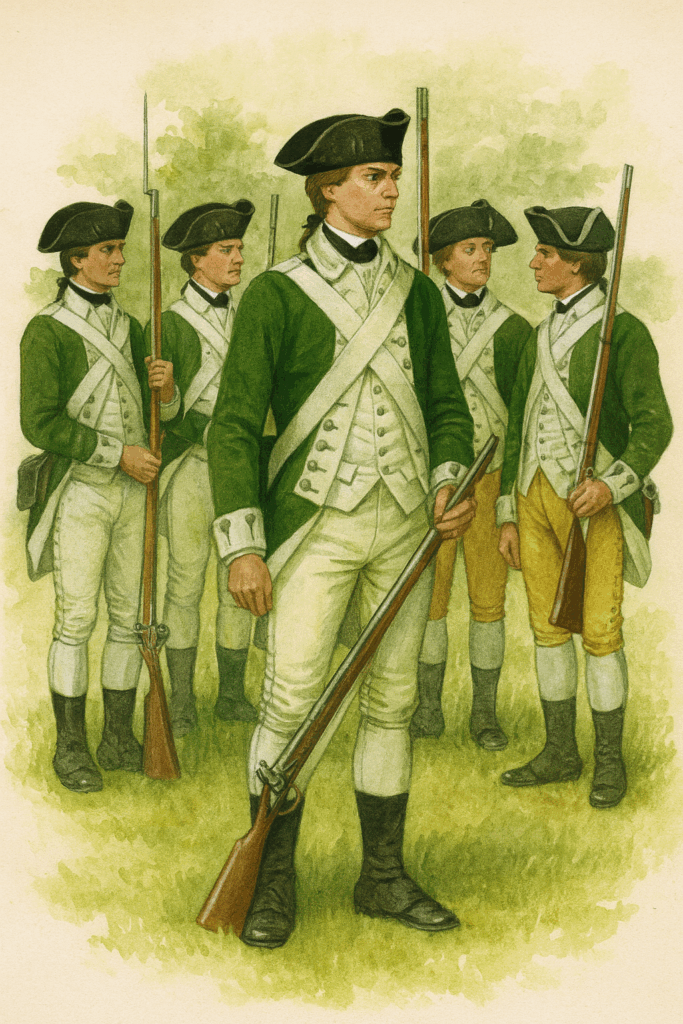
During the Revolutionary War, the Continental Marines uniform directives specified a green jacket with white facings and cuffs. However, when the first sets of uniforms were actually ordered and delivered, red facings were substituted for white. The likely reason was supply availability: red cloth was easier to obtain from Continental or captured British stores. The most authoritative description comes from Captain Samuel Nicholas, who wrote from Philadelphia in 1776 that Marines were outfitted in “green coats faced with red, and lined with white”
The uniform also included a high leather collar, or stock, to ostensibly protect the neck against sword slashes, although there is some evidence that may actually have been intended to improve posture. This distinctive uniform item helped establish their identity as an elite force and eventually lead to their treasured nickname “leathernecks”.
Shipboard Service and Naval Operations
The Continental Marines’ role aboard ship was multifaceted and crucial to naval operations. Their most important duty was to serve as onboard security forces, protecting the captain of a ship and his officers. During naval engagements, in addition to manning the cannons along with the crew of the ship, Marine sharp shooters were stationed in the fighting tops of a ship’s masts specifically to shoot the opponent’s officers and crew. These duties reflected centuries of naval tradition and drew on the example of the British Marines.
The Marines’ first major naval operation came in early 1776 when five companies joined Commodore Esek Hopkins’ Continental Navy squadron, on its first cruise in the Caribbean. This deployment demonstrated their value as both shipboard security and assault troops, setting the pattern for their service throughout the war.
Major Land-Based Actions
Despite their naval origins, the Continental Marines proved equally effective in land combat. Their most famous early action was the landing at Nassau on the Island of New Providence in the Bahamas in March 1776. The landing was the first by Marines on a hostile shore. It was led by Captain Nicholas and consisted of 250 marines and sailors. After 13 Days the Marines had captured two forts, the Government House, occupied Nassau and captured cannons and large stores of supplies. While they missed capturing the gunpowder stores (which had been evacuated before their arrival), the raid demonstrated American capability to strike British positions anywhere.
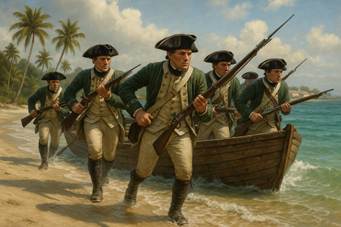
Though modest in scale, this operation had a major symbolic weight and established the Marines as America’s premier amphibious force. The operation did not decisively alter the balance of the war, but it foreshadowed the Marines’ enduring identity as a seafaring, expeditionary force. Today, the Battle of Nassau is remembered less for the supplies seized than for what it represented: the moment the Continental Marines stepped onto the world stage.
Other notable operations included raids on British soil itself. In April of 1778, Marines under the command of John Paul Jones made two daring raids, one at the port of Whitehaven, in northwest England, and the second later that day at St. Mary’s Isle. These operations brought the war directly to British territory, demonstrating American reach and resolve. While the battles had no strategic impact on the outcome of the war, they were a great moral booster when reports, though largely exaggerated, reached the rebellious colonies
Official Marine Corps history also acknowledges Marine participation in the Battle of Princeton, though it wasn’t a major Marine engagement. Marines from Captain William Shippen’s company, who had been serving aboard Continental Navy ships, participated in this battle as a part of Cadwalader’s Brigade on Washington’s flank. Some Marines were detached to augment the artillery, with a few eventually transferring to the army. However, the Marines’ role was relatively minor compared to their more significant naval actions during this period.
The Gradual Decline
As the Revolutionary War progressed, the Continental Marines faced increasing challenges. Financial constraints plagued the Continental forces throughout the war, and the Marines were no exception. The Continental Congress struggled to fund and supply all military branches, and the relatively small Marine force often found itself at a disadvantage competing for resources with the larger Continental Army and Navy.
Recruitment became increasingly difficult as the war dragged on. After the early campaigns, Nicholas’s four-company battalion discontinued independent service, and remaining Marines were reassigned to shipboard detachments. Their number had been reduced by transfers, desertion, and the loss of eighty Marines through disease.
The Continental Navy also faced severe challenges that directly impacted the Marines. Many ships were captured, destroyed, or sold, leaving Marines without their primary operational platform. As the naval war shifted toward privateering and smaller-scale operations, the need for organized Marine units diminished.
Beginning in February 1777 two companies of Marines either transferred to Morristown to assume the roles in the Continental artillery batteries or left the service altogether. This transfer of Marines to army artillery units reflected the practical reality that their specialized skills were needed elsewhere as the Continental forces adapted to changing circumstances.
Disbanded at War’s End
The end of the Revolutionary War marked the end of the Continental Marines as an organized force. Both the Continental Navy and Marines were disbanded in April 1783. Although a few individual Marines briefly stayed on to provide security for the remaining U.S. Navy vessels, the last Continental Marine was discharged in September 1783.
The last official act of the Continental Marines was escorting a stash of French Silver Crowns (coins) from Boston to Philadelphia—a loan from Louis XVI to establish of the Bank of North America. This final mission, conducted in 1781, symbolically linked the Marines to the new nation’s financial foundations even as their military role ended.
The disbanding reflected broader American attitudes toward standing military forces. Having won their independence, Americans were skeptical of maintaining large military establishments that might threaten republican government. The Continental Congress, facing financial pressures and political opposition to permanent military forces, chose to disband both the Navy and Marines.
Legacy
The Continental Marines’ contribution to American independence was significant despite their small numbers. In all, over the course of 7 years of battle, the Continental Marines had only 49 men killed and just 70 more wounded, out of a total force of roughly 130 Marine Officers and 2,000 enlisted. These relatively low casualty figures reflected both their effectiveness and the limited size of the force.
Rising tensions with Revolutionary France in the late 1790s led to the Quasi-War, prompting Congress to reestablish the Navy in 1798. On July 11 of that year, President John Adams signed legislation formally creating the United States Marine Corps as a permanent branch of the military, under the jurisdiction of the Department of the Navy. This new Marine Corps inherited the traditions, mission, and esprit de corps of its Revolutionary War predecessors. Despite the gap between the disbanding of the Continental Marines and the establishment of the new United States Marine Corps, Marines honor November 10, 1775, as the official founding date of their Corps.
The Continental Marines established precedents that would shape American military doctrine for more than two centuries. The Revolutionary War not only led to the founding of the United States (Continental) Marine Corps but also highlighted for the first time the versatility for which Marines have come to be known. They fought on land, they fought at sea on ships, and they performed amphibious assaults.
The Continental Marines represented a crucial innovation in American military organization. Born from congressional resolution and tavern recruitment, these maritime warriors proved their worth in battles from the Caribbean to the British Isles. Though disbanded with the war’s end, their legacy lives on in the traditions and spirit of the modern Marine Corps. While their numbers were small and their existence brief, their impact on American military tradition proved lasting and significant.
How the Marine Corps Found Its Symbol
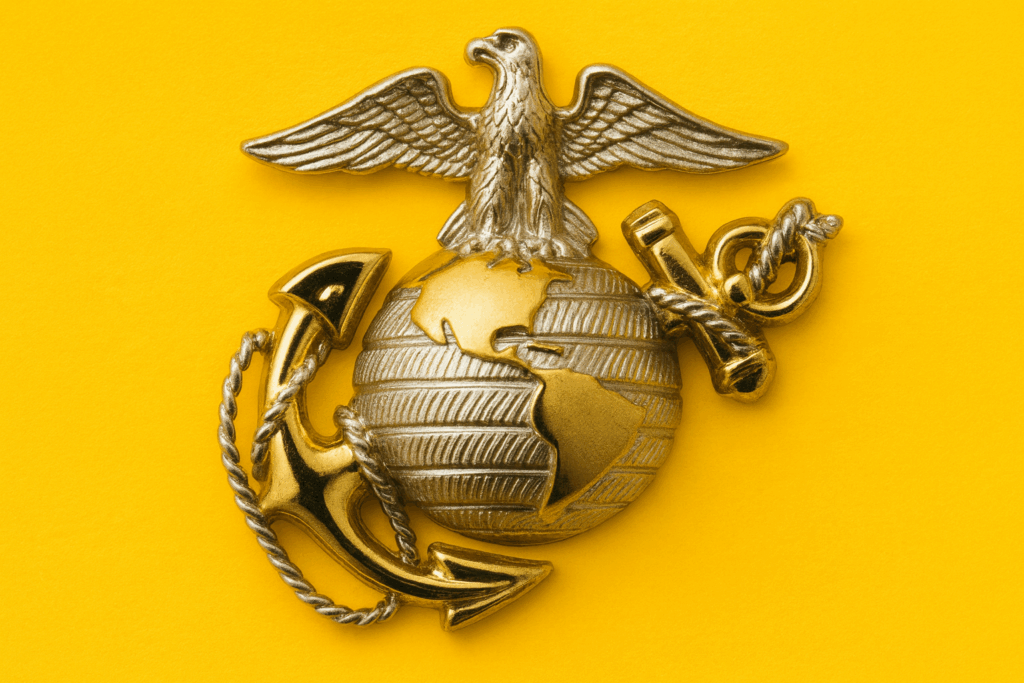
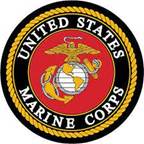
Few military emblems carry as much history and pride as the Marine Corps’ Eagle, Globe, and Anchor, better known as the EGA or simply as the emblem. New recruits and officer candidates work intensely to earn the right to wear this symbol. It is a source of immense pride for every Marine who achieves that distinction.
When entering the Corps, I encountered World War II veterans who affectionately called the EGA the “Birdie on the Ball.” But only Marines can take such liberties—outsiders risk offense if they use the term.
The emblem is instantly recognizable, yet few realize its deep historical roots or appreciate the transformations it has undergone to become the symbol every Marine wears today.
From Anchors to Eagles: The Early Years (1776–1868)
At its inception in 1776, the Continental Marines lacked any formal insignia. Some Marines, predominantly officers, adopted maritime icons such as the fouled anchor—an anchor entwined with rope—often emblazoned on buttons or hat plates. This design echoed the British Royal Navy and underscored their naval identity, but it was never standardized.
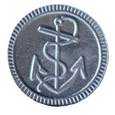
Uniform innovations began in the early 1800s. By 1804, Marines were using brass eagles mounted on square plates. During the War of 1812, octagonal plates appeared, embossed with eagles, anchors, drums, shields, and flags. Later designs were simplified to feature metal letters “U.S.M.” (United States Marines), reflecting the shift towards a national identity.
The example below is an officer’s coat button circa 1805-1820.
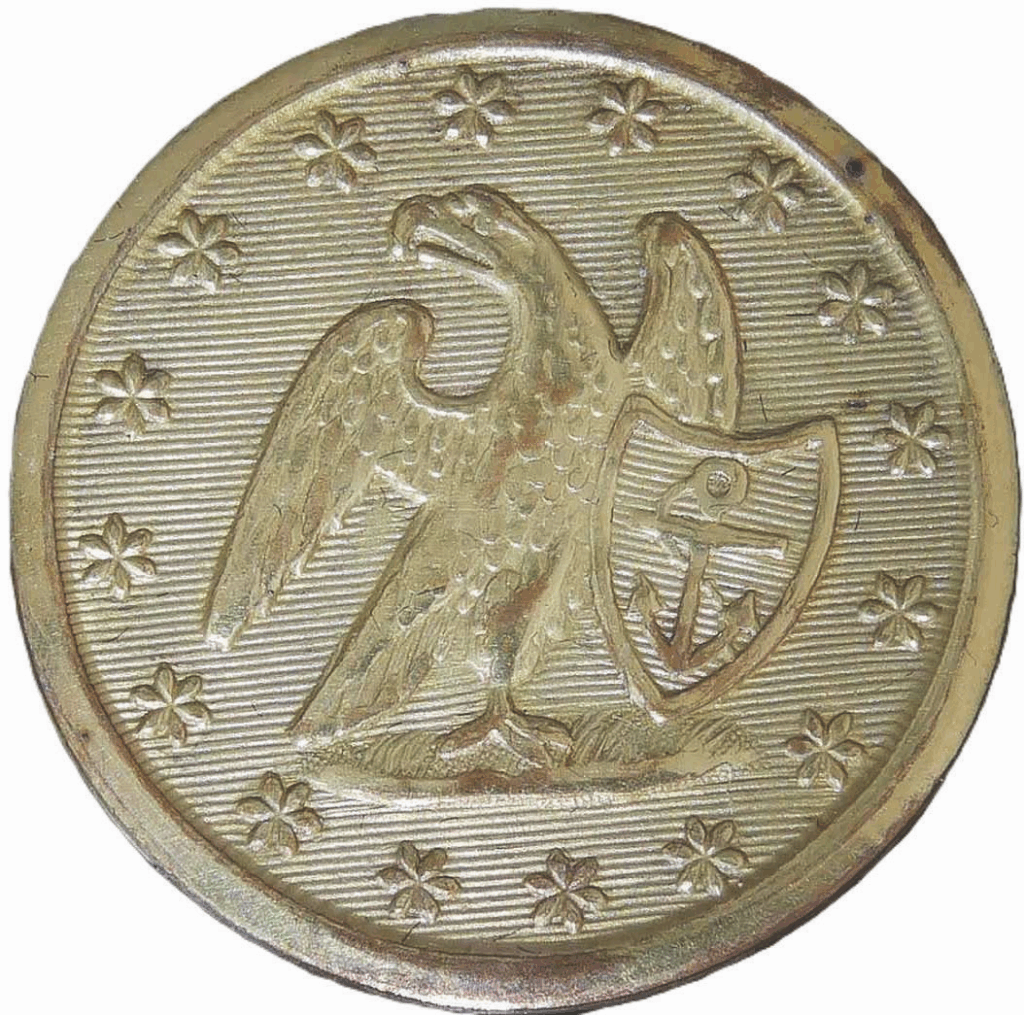
A more distinctive step came in 1821: the Corps adopted an eagle perched on a fouled anchor encircled by 13 stars, a motif featured on buttons for nearly four decades. However, similar symbols were also used by the Army and Navy, making it less than unique.
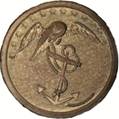
Following the Civil War, Marine Corps leadership under Brigadier General Jacob Zeilin, the seventh Commandant, sought a truly unique insignia for the service.
The Zeilin Board and the Birth of the Modern EGA (1868)
On November 12, 1868, Zeilin established a board of officers “To decide and report upon the various devices of cap ornaments of the Marine Corps.” They wasted no time: by November 19, the Secretary of the Navy, Gideon Welles, had approved the new emblem.
The board drew inspiration from the British Royal Marines’ “Globe and Laurel” emblem.
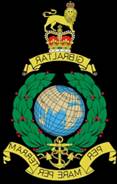
The American version added a few important touches:
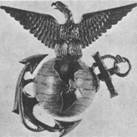
- Globe showing the Western Hemisphere: Representing the Corps’ defense of the Americas and a global presence.
- Fouled anchor: Honoring the Corps’ naval origins.
- Eagle: Symbolizing national service and pride.
Zeilin described the new emblem as representing the Corps’ “readiness to serve anywhere, by sea or land.”
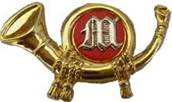
At the same time, a distinct emblem was also created for Marine Corps musicians, still seen today on the formal red and gold uniforms of the U.S. Marine Band—“The President’s Own”.
The Motto and Later Refinements
The Latin motto, Semper Fidelis (“Always Faithful”), was introduced in 1883 under Commandant Charles McCawley, replacing previous mottoes such as Fortitudine (“With Fortitude”). Semper Fidelis became central to the Marine Corps’ ethos.
The emblem saw many variations over the decades. Initial designs featured a crested eagle—borrowed from European heraldry. Semper Fidelis appeared on a scroll held in the eagle’s beak on some versions of the emblem.
Only in 1954, with President Dwight D. Eisenhower’s Executive Order 10538, did the American bald eagle with a scroll officially become part of the emblem. This finalized the design used today.
Officer and Enlisted Differences
Since 1868, design distinctions have marked officer and enlisted EGA emblems. Officers’ original emblems were elaborate—frosted silver hemispheres with gold-plated Americas, crowned by a solid silver eagle. Enlisted emblems were brass, emphasizing practicality.
Modern officers wear a multi-piece, high-relief insignia with fine rope detailing, while enlisted Marines use a one-piece emblem. Notably, officers’ globes omit Cuba to strengthen the emblem structurally. A running joke among enlisted personnel is that officers couldn’t find Cuba on a map.
Before WWII, officers often purchased insignia from jewelers like Bailey, Banks & Biddle, resulting in stylistic inconsistency. One museum curator quipped, “World War I eagles looked like fat turkeys.” Eventually, standardization brought the crisp, clean look seen today.
A Legacy That Endures
From 18th-century anchors to the refined Eagle, Globe, and Anchor of today, the emblem tracks the Corps’ evolution from shipboard security to a global expeditionary force. Over centuries, its form has varied—engraved by jewelers, stamped for wartime, and cast in silver for dress blues—but its meaning remains constant.
Every Marine who earns the EGA joins a tradition stretching back 250 years, defined by courage, loyalty, and the enduring promise to remain Always Faithful.

When I started training as a Marine more than 50 years ago one of the first things we were taught was the call and response “Semper Fi” followed quickly by “Do or Die”. But to Marines, Semper Fi, Semper Fidelis—Always Faithful—is more than just a motto. It becomes a personal belief system, a statement of individual integrity and a way of life. Faithful to country, faithful to the Corps, faithful to fellow Marines, faithful to duty. It reflects your faith in the Marine Corps and your fellow Marines.
How did Marines come to adopt this distinctly non martial motto? Other more military sounding mottos and nicknames come to mind: “Devil Dogs”, “First to Fight”, and “Leathernecks”. But Semper Fidelis has become the way Marines see themselves, so much so that their greeting to one another is “Semper Fi”. The same ethos is embodied in an unofficial Marine Corps motto, “No Man Left Behind”.
But what is the origin of this motto that seems to sum up the entire philosophy of the Marine Corps?
The United States Marine Corps is known for its discipline, dedication, and fierce loyalty, qualities that are symbolized by Semper Fidelis. Translated from Latin, the phrase means “Always Faithful.” But like many traditions within the military, the motto is rooted in a rich history that stretches back hundreds of years.
The Marine Corps was established in 1775 as the Continental Marines, but the famous motto did not appear until more than a century later. By the early 19th century, several mottos had been associated with the Marines, including “Fortitudine” (With Fortitude) and “By Sea and by Land.” While these phrases captured elements of the Marines’ mission, they lacked the enduring emotional impact that would ultimately come with Semper Fidelis.
It was in 1883 that the motto was formally adopted under the leadership of the 8th Commandant, Colonel Charles McCawley. Colonel McCawley likely chose that motto because it embodies the values of loyalty, faithfulness and dedication that he believed should define every Marine. Unfortunately, we will never know his exact reason for choosing this specific motto because he did not leave any documentation about his thought process. Regardless, from that point on, the motto became inseparable from the identity of the Corps.
The phrase “Semper Fidelis” has much older origins than its Marine Corps adoption. It’s believed to have originated from phrases used by senators in ancient Rome, with the earliest recorded use as a motto dating back to the French town of Abbeville in 1369. The phrase has been used by various European families since the 16th century, and possibly as early as the 13th century.
The earliest recorded military use was by the Duke of Beaufort’s Regiment of Foot, raised in southwestern England in 1685. The motto also has connections to Irish, Scottish, and English nobility, as well as 17th-century European military units, some of whose members may have emigrated to American colonies in the 1690s
The choice of the Latin phrase by Colonel McCawley was likely deliberate. Latin carries with it a sense of permanence and tradition, and its concise wording communicated volumes in only two words. “Always Faithful” perfectly captured the bond that must exist between Marines and the responsibilities they shoulder. Marines are expected to remain faithful to the mission, to their comrades in arms, and to the United States, regardless of the personal cost. It is this idea of unshakable fidelity that has come to define what it means to wear the Eagle, Globe, and Anchor.
Since its adoption, Semper Fidelis has carried Marines through every conflict the United States has faced. From the battlefields of World War I, where Marines earned the name “Devil Dogs,” to the grueling island campaigns of the Pacific in World War II, to the frozen battle fields of Korea, to the steaming jungles of Vietnam, Marines have demonstrated again and again what it means to be “Always Faithful.” In modern times, whether in Iraq, Afghanistan, or in humanitarian missions across the globe, this motto continues to serve as a reminder of the Corps’ unwavering commitment.
The phrase has also influenced the broader culture of the Marines, inspiring the title of the official Marine Corps march, “Semper Fidelis,” composed by John Philip Sousa in 1888, which remains a powerful symbol of pride and esprit de corps.
The motto’s meaning extends beyond active service. Marines pride themselves on being “once a Marine, always a Marine,” and Semper Fidelis reflects that lifelong bond. Even after leaving the uniform behind, Marines carry that sense of loyalty into civilian life, honoring the values and traditions of their service. For many, it becomes a central guiding principle throughout their lives. Marine veterans always say “I was a Marine”.
In the end, the motto “Semper Fidelis” is far more than a catchy phrase. It is both a promise and a challenge—a pledge of unwavering loyalty and a challenge to live up to the highest standards of duty, honor, and fidelity. When Marines declare “Semper Fi,” they acknowledge not only their devotion to the Marine Corps, but also the unbreakable loyalty that binds them together as brothers and sisters in arms.
The celebration of the 250th anniversary of the signing of the Declaration of Independence is coming up next year on July 4th. But what about the events leading up to this? What about the men and women who helped make this happen? There are events coming up to commemorate the 250th anniversary of the founding of the Continental Navy and the Continental Marines in 1775. We will be holding commemorative celebrations here in West Virginia and there will be a national event in Philadelphia in October of this year.
The Continental Marines at Nassau
When the Second Continental Congress authorized the creation of the Continental Marines on November 10, 1775, few could foresee their pivotal role in orchestrating North America’s first amphibious assault less than four months later. The operation against Nassau, on New Providence Island in the Bahamas, was born of necessity, marked by improvisation, and ultimately set the tone for Marine Corps operations—an audacious legacy that endures to this day.
Origins: Gunpowder Desperation and Strategic Vision
The American Revolution’s early years were marked by chronic shortages, especially of gunpowder. After the British seized stores destined for the Patriot cause, intelligence uncovered that significant quantities were stockpiled at Nassau. The Continental Congress approached this challenge with typical Revolutionary War creativity—they would use their brand-new Navy and even newer Marines to solve an Army problem. The Congress’ official instructions to Commodore Esek Hopkins focused on patrolling the Virginia and Carolina coasts, but “secret orders” directed attention to the Bahamas, setting in motion a bold plan to directly address the fledgling army’s supply crisis.
Organization: The Making of an Amphibious Battalion
With barely three months’ existence, the Continental Marines had hastily raised five companies of around 300 men. Captain Samuel Nicholas, tasked as the first Marine officer, oversaw their training and organization in Philadelphia. Their equipment was uneven—many wore civilian garb rather than uniforms and carried whatever muskets and bayonets were available. The uniform regulations specifying the now famous green coats with white facings were not promulgated until several months after the raid was over.
The Voyage South: Challenges and Preparation
Hopkins’ fleet consisted of the ships Alfred, Hornet, Wasp, Fly, Andrew Doria, Cabot, Providence, and Columbus. In addition to ships’ crews, the fleet carried more than 200 Continental Marines under the command of Captain Nicholas. The expedition began inauspiciously on January 4, 1776, when the fleet attempted to leave Philadelphia but became trapped by ice in the Delaware River for six weeks.
When they finally reached the Atlantic on February 17, 1776, the small fleet faced additional challenges. Disease found its way onboard most of the ships. Smallpox was a huge concern and was reported on at least four ships.
The fleet’s journey to the Caribbean took nearly two weeks of sailing through challenging winter conditions. Despite the hardships, Hopkins maintained the element of surprise—British intelligence had detected American naval preparations but assumed the fleet was bound for New York or Boston, not the distant Bahamas.
Implementation: Amphibious Innovation at Nassau
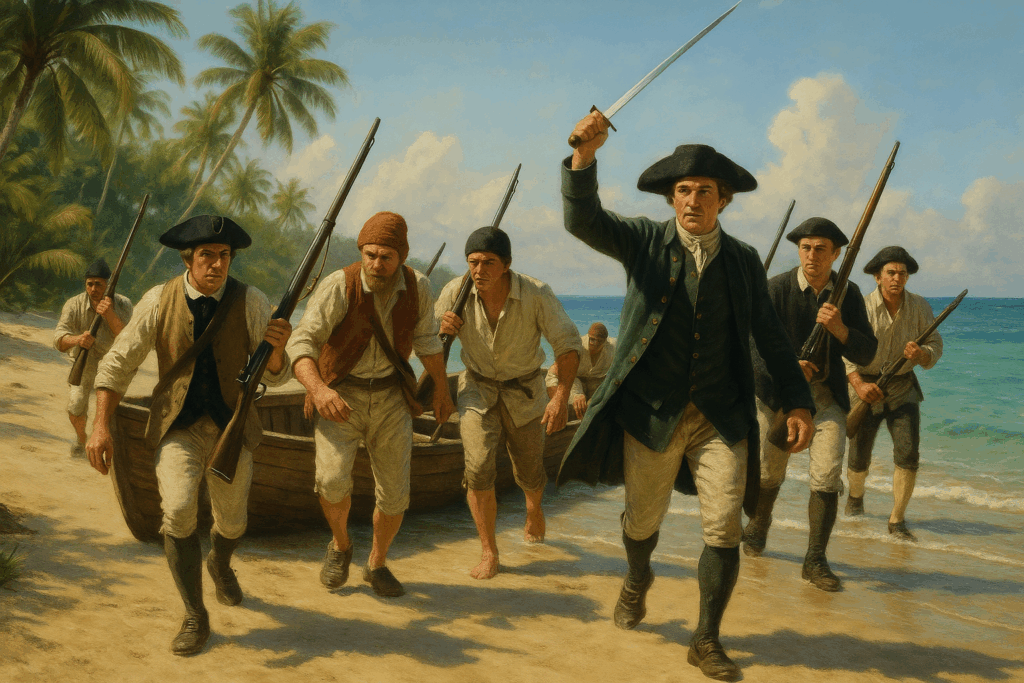
The element of surprise was initially lost when the fleet’s approach triggered alarm at Nassau. Plans to storm the stronger Fort Nassau dissolved, and Hopkins convened a council to identify a new landing point. A revised strategy saw about 230 Marines and 50 sailors, led by Captain Nicholas, land from longboats two miles east of the weaker Fort Montagu on March 3, 1776. They wore a patchwork of civilian clothes and white breeches—some men had managed to find green shirts as a form of identification. They set out marching toward the fort armed with muskets and bayonets, looking perhaps more like pirates than soldiers.
Their advance was met with only token resistance. Outnumbered and ill-prepared, local militia withdrew as Nicholas’s men captured Fort Montagu in what historian Edwin Simmons called a “battle as bemused as it was bloodless.”
Nicholas decided to wait until morning to advance on the town. His decision was tactically sound given the circumstances—he’d lost surprise, did not know the enemy’s strength, was operating in unknown terrain, night was falling, and he lacked naval support. However, this prudent military decision allowed Governor Browne to escape with over 80% of Nassau’s gunpowder stores, turning what could have been a complete strategic victory into a partial success. This incident highlights the tension between tactical prudence and strategic urgency that was destined to become a recurring theme in amphibious warfare.
The next day the Americans took Fort Nassau and arrested the Governor, Montfort Browne. Browne had already sent most of the coveted gunpowder on to St. Augustine, Florida, the night before. Despite this, American forces seized cannons, shells, and other military stores before occupying Nassau for nearly two weeks.
Marine discipline and flexibility were evident, as they pivoted from their surprise landing, conducted operations deep inland, and created their evolving amphibious reputation. The fleet departed on March 17, not before stripping Nassau and its forts of anything militarily useful.

Aftermath: Growing Pains and Enduring Lessons
Though the mission failed in its primary objective of securing a cache of gunpowder, its operational successes far outweighed the losses. The Marines returned with large quantities of artillery, munitions, and several recaptured vessels. On the return leg, they faced and fought (though did not defeat) HMS Glasgow; the squadron returned to New England by April 8, with several casualties including the first Marine officer killed in action, Lt. John Fitzpatrick.
Controversy followed—Hopkins was censured for failing to engage British forces as directed in his official orders. Nicholas was promoted to major and tasked with raising additional Marine companies for new frigates then under construction. These developments reflected both the lessons learned and the growing recognition of the value of the Marine force in expeditionary operations ashore.
A second raid on Nassau by Continental Marines occurred from January 27–30, 1778, under Captain John Peck Rathbun. Marines and seamen landed covertly at midnight, quickly seizing Fort Nassau and liberating American prisoners held by the British. The raiders proceeded to capture five anchored vessels, dismantled Fort Montagu, spiked the guns, and loaded 1,600 lbs of captured gunpowder before departing. This bold operation marked the first time the Stars and Stripes flew over a foreign fort and showcased the resourcefulness of American forces, who managed to strike a valuable blow against British power in the Caribbean without suffering casualties.
Long-Term Implications for the United States Marine Corps
The Nassau operation set powerful precedents:
- Amphibious Warfare Doctrine: This was the Marines’ first organized amphibious landing, shaping the Corps’ future focus on rapid deployment from sea to shore, a hallmark that continues in modern doctrine. This was likely referred to at the time as a Naval landing, as the word amphibious did not come into use in this context until the 1930s.
- Adaptability Under Fire: The improvisational tactics used at Nassau foreshadowed the Corps’ reputation for flexibility and mission focus.
- Naval Integration: Joint operations with the Navy not only succeeded tactically, but helped institutionalize the Marine-Navy partnership, with Marines serving as shipboard security, landing parties, and naval infantry.
- Legacy of Boldness: This first operation established a “first-in” ethos and a culture embracing challenge and audacity, foundational principles in Marine culture.
After the war, the Continental Marines disbanded, only to be re-established in 1798. Yet the legacy of Nassau endured. “Semper Fidelis”—always faithful—has its roots in that March 1776 assault, when the odds seemed long and the stakes critical.
Today’s United States Marine Corps draws a direct lineage from that small, ragtag battalion of Marines scrambling ashore at Nassau, forever entwining its identity with the promise, risk, and legacy of that first storied mission. Every modern Marine, stepping from ship to shore, walks in the footprints of Captain Samuel Nicholas and his men—soldiers of the sea whose boldness, improvisation, and teamwork have echoed across the centuries.

The Evolution of the Marine Corps Hymn
The opening line of the Marine Corps Hymn, “From the halls of Montezuma to the shores of Tripoli,” stands as one of the most recognizable phrases in American military tradition. But what are The Halls of Montezuma? Where are the Shores of Tripoli? Why are they important to Marines?
Few realize that this iconic song has undergone subtle but significant changes throughout its history, reflecting the Marine Corps’ evolution from a small naval force into a modern, multi-domain fighting organization.
The Original Battles
The hymn’s opening line commemorates two pivotal early battles that established the Marine Corps’ reputation for courage and effectiveness. “The Halls of Montezuma” refers to the Battle of Chapultepec during the Mexican American War in September 1847. Chapultepec Castle, perched on a hill overlooking Mexico City, was built on the site where Aztec Emperor Montezuma II once maintained his palaces and gardens. The fortress housed the Mexican military academy and served as a key defensive position protecting the capital. The term “Montezuma” evokes the grandeur of ancient Mexico, even though Montezuma himself had no connection to the castle. It was a bit of poetic license—common in martial songs—to evoke the exotic location and historic weight of the conquest.
During the assault on Chapultepec, Marines fought alongside Army units in a fierce battle against heavily fortified positions. The Marines’ performance in this engagement helped secure American victory and opened the path to Mexico City, effectively ending the war. This battle demonstrated that Marines could excel not just in naval operations but also in major land campaigns.
The “blood stripe”—the red stripe on Marine dress blue trousers—is traditionally said to honor the Marines who fell at Chapultepec, although this is more legend than documented fact.
The second half of the line, “to the shores of Tripoli,” reaches back even further to the First Barbary War (1801-1805). In this conflict, a small force of Marines participated in the capture of Derna, a fortified city on the Libyan coast. Led by Lieutenant Presley O’Bannon, the Marines marched across the desert with a motley force of mercenaries and Arab allies to attack the Barbary pirates’ stronghold. The success at Derna marked the first time the American flag was raised over a fortress in the Old World and established the Marines’ reputation for discipline, effectiveness, and fighting in exotic, far-flung locations.
Marine Corps officers still carry a Mameluke Sword based on the sword presented to Lt. O’Bannon by Ottoman Viceroy Prince Hamet in recognition of his valor.
The Hymn’s Origins
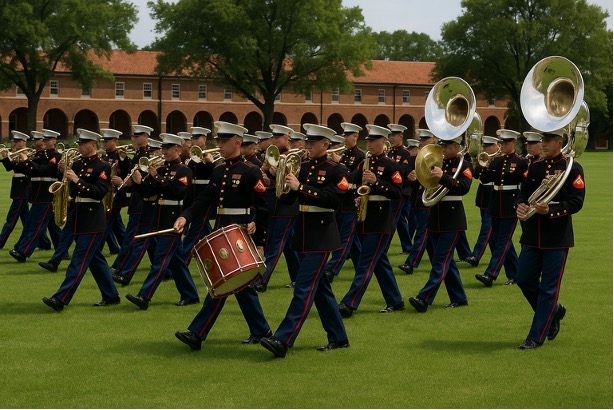
The Marine Corps Hymn emerged sometime in the 1840s or 1850s, shortly after the Mexican-American War. It was not officially adopted until 1929 when Commandant of the Marine Corps, Major General John A. Lejeune issued an order making it the official song of the Corps. Several variations of the lyrics were in use prior to that, and the words were standardized in the adoption order.
Unlike many military songs that were composed by established musicians, the hymn’s authorship remains uncertain. The melody was borrowed from a comic opera by Jacques Offenbach, but the words appear to have been written by Marines themselves, possibly at the Marine Barracks in Washington, D.C.
The original version celebrated these early victories with straightforward language: “From the halls of Montezuma to the shores of Tripoli, we fight our country’s battles on the land as on the sea.” This phrasing reflected the Marine Corps’ dual nature as both a naval force and an expeditionary force capable of fighting anywhere American interests were threatened.
The Aviation Revolution
For nearly a century, the hymn remained largely unchanged. However, as the Marine Corps expanded its capabilities during the early 20th century, the traditional wording began to seem incomplete. The establishment of a Marine Aviation Company in 1915 and its expansion during World War I marked a significant evolution of the Corps’ mission and capabilities.
By World War II, Marine aviation had become a crucial component of the Corps’ fighting power. Marine pilots flew close air support missions, fought in aerial combat, and provided reconnaissance for ground forces. The Pacific theater, where Marines conducted their most famous campaigns, showcased the integration of air, land, and sea operations in ways that the original hymn could not capture.
The Historic Change
Recognition of this evolution came on November 21, 1942, when Commandant of the Marine Corps authorized an official change to the hymn’s first verse. The modification was originally proposed by Gunnery Sergeant H.L. Tallman, who recognized that the traditional phrasing no longer adequately described the Marines’ expanding role.
The fourth line of the first verse was changed from “on the land as on the sea” to “in the air, on land and sea.” This seemingly small addition carried profound significance. It acknowledged that Marines now operated in three environments rather than two, reflecting the Corps’ transformation into a modern, combined-arms force.
The timing of this change was crucial. Coming just as the United States was fully engaged in World War II, the revision recognized the vital role Marine aviation was playing in Pacific operations. From the skies over Guadalcanal to the beaches of Iwo Jima, Marine pilots were proving that air power was no longer a supporting element but an integral part of Marine Corps operations.
Legacy and Meaning
The evolution of the Marine Corps Hymn’s opening stanza reflects a broader story about military adaptation and institutional identity. The original battles at Montezuma and Tripoli established the Marines’ reputation for fighting in distant, challenging environments. The addition of “air” recognized that this tradition continued but now extended into new realms of warfare.
Today, when Marines sing “From the halls of Montezuma to the shores of Tripoli,” they honor not just those early victories but the entire span of Corps history. The hymn connects modern Marines with their predecessors while acknowledging how the institution has grown and changed. The simple addition of one word in 1942 ensured that the Marine Corps Hymn would remain relevant for generations of Marines who would fight not just on land and sea, but in the air as well: preserving the past while embracing the future.
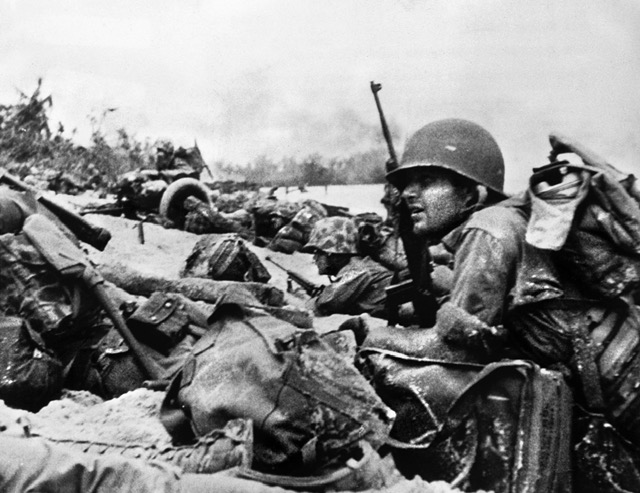
Anyone with even a passing familiarity of the history of World War II knows about the major island campaigns in the Pacific: Guadalcanal, Tarawa, Iwo Jima and Okinawa. But unless you are a student of military history or perhaps a former Marine, you’ve probably never heard of the Battle of Peleliu
The Battle of Peleliu, fought from September 15 to November 27, 1944, stands as one of the most controversial and costly operations in the Pacific Theater. This assault on the small coral island in the Palau chain reveals much about the complexities of strategic decision-making during wartime.
Objectives and Strategic Rationale
The primary objective was to capture Peleliu’s airfield to prevent Japanese aircraft from interfering with General MacArthur’s upcoming invasion of the Philippines. American planners believed that Japanese forces based on Peleliu could attack the right flank of the Philippine invasion force. Additionally, the island was seen as a potential base for supporting further operations against Japan in the western Pacific.
Military planners, especially Admiral Chester Nimitz and his staff, believed neutralizing Japanese air power on Peleliu was critical to protecting the Philippineinvasion. The airfield on the island, if left in Japanese hands, could theoretically pose a threat to operations in the southern Philippines or even to the fleet.
However, this concern was based on a misreading of Japan’s actual capacity to project power from the island. By late 1944, Japan’s air forces were significantly degraded, and their capacity to use the Peleliu airfield was minimal, if it existed at all.
The operation was planned as part of a broader strategy to neutralize Japanese strongholds and establish forward bases for the final push toward Japan. Admiral Nimitz initially supported the invasion, viewing it as necessary to protect MacArthur’s Philippine campaign and to continue the island-hopping strategy that had proven successful elsewhere in the Pacific.
Admiral William Halsey argued the operation was unnecessary, as American bombardment had already isolated Japanese forces and rendered the airfield unusable. However, Admiral Nimitz approved the invasion, believing cancellation logistically impractical because preparations were too far advanced. Marine commanders initially predicted a swift victory, with Major General William Rupertus claiming the island would fall in four days.
The Strategic Reality
In retrospect, Peleliu’s strategic value was far more limited than initially assessed. The island’s airfield, while operationally useful, was not critical to the success of the Philippine invasion. The Japanese garrison of approximately 11,000 troops under Colonel Kunio Nakagawa had transformed the island into a fortress, utilizing the coral caves and ridges to create an intricate defensive system that would exact a terrible price from the attackers.
The 1st Marine Division, supported by the 81st Infantry Division, ultimately secured the island, but at enormous cost. American casualties totaled over 9,000, with nearly 1,800 killed in action. Japanese losses were almost total, with fewer than 200 prisoners taken from the original garrison.
Post-Battle Assessment
After the battle’s conclusion, many military leaders questioned whether the operation had been worth its tremendous cost in human lives. The strategic benefits gained were minimal compared to the losses sustained. The airfield was not essential to subsequent operations, and the island’s location proved less critical than originally believed.
Military historians increasingly view Peleliu as an example of how the initial strategic and tactical assessments proved flawed when planners failed to recognize the evolution of Japanese defensive tactics, which emphasized fighting from prepared positions rather than the banzai charges that had characterized earlier encounters.
Historical Significance
Peleliu is overshadowed in World War II histories by larger, more decisive battles like Iwo Jima and Okinawa. However, it served as a crucial learning experience for American forces, providing insights into Japanese defensive innovations that would prove valuable in later operations. The battle highlighted the importance of accurate intelligence and realistic strategic assessment.
The intense fighting on Peleliu also demonstrated the resilience and adaptability of American forces under extremely challenging conditions. The prolonged nature of the battle, lasting over two months instead of the predicted few days, tested logistics, medical support, and command structures in ways that informed future operations.
The Aftermath
While the immediate strategic gains from Peleliu were limited, the battle did provide several important advantages. It eliminated a potential threat to Allied shipping lanes in the region and provided valuable experience in assaulting heavily fortified positions. The lessons learned about Japanese defensive tactics, the importance of coordinated air and ground support, and the challenges of fighting in coral terrain all contributed to improved performance in subsequent operations.
Perhaps most significantly, Peleliu demonstrated the need for more careful strategic evaluation of objectives relative to costs. This lesson influenced planning for later operations and contributed to discussions about alternative strategies for ending the war in the Pacific. In specific, the battle demonstrated Japan’s willingness to fight to the death and perhaps may have indirectly influenced the decision to use atomic bombs to avoid similar carnage in a main island invasion.
The Battle of Peleliu remains a sobering reminder of the complexities of wartime strategy and the human cost of military operations. While its immediate strategic value was questionable, its role in the broader context of Pacific War operations and its lessons for military planning ensured its place in the historical record of World War II.
Travels of a West Virginia Boy Part I, Hong Kong
By John Turley
On February 20, 2023
In Commentary, Travel
The first time I left the United States I was 21 years old and on my way to Vietnam. In one of those little ironies of life, I would visit Hong Kong three times before I ever made it to New York City. Growing up in West Virginia, my family thought a trip to Myrtle Beach was the height of travel. It’s still the destination of choice for many West Virginians and I still love the South Carolina low country and fried sea food.
My first trip to Hong Kong was in the spring of 1970. I was serving on the USS Sanctuary in the coastal waters of Vietnam. I had my R&R (Rest & Recreation) trip planned to Australia later in the summer. However, I received orders ending my tour early because I was to report for a training school in San Diego in early June. This meant if I wanted to go on R&R it would have to be soon. The only R&R destination available in my time frame was Hong Kong. I knew next to nothing about Hong Kong. The closest I had come to Chinese culture was chop suey at the New China Restaurant in Charleston.
R&R was basically a five-day vacation that the military gave you when you were serving in the Vietnam area. It was something you looked forward to for the first part of your tour and then you would dream about it for the remainder.
Even flying into Hong Kong was an exciting experience. The old Hong Kong airport was almost in the middle of the city. The flight path carried you down between the buildings. I remember looking out the window of the plane and into the window of an apartment building. There didn’t seem to be enough room for the wings in between the buildings, but somehow the plane landed without incident. That initial look out the window may have been one of the most surprising things that I have experienced.
When we first arrived, we were given the typical military orientation lecture that included warnings about venereal disease with a large map that showed us the areas of Hong Kong we should avoid. Of course, for many of us that meant those were the areas we were going to head to first. They also gave us a list of hotels we could afford without spending all our R&R money.
Hong Kong was like nothing I had ever seen before. I spent the first day wandering around the crowded streets watching the people and trying to sort out the multitude of sights and smells. There was an odd combination of delicious, exotic and downright strange. Street food was everywhere and so were street vendors. The first day I was determined to sample as many different foods as possible. They varied from delicious to inedible. I’m sure that was just me, because the Chinese people seemed to most enjoy the food I couldn’t eat.
I also looked in a lot of shops trying to decide what I should buy. The shop people were friendly and spent a long time answering my often rambling questions. I had been advised to be very careful about negotiating prices. A Chief Petty Officer who was familiar with Hong Kong (his wife was Chinese) told us, “The Chinese people are basically honest. They won’t steal from you, but if you’re a bad negotiator, they are glad to let you pay three times what it’s worth.” In Hong Kong you even bargained over the price of a pack of gum, a skill I never really developed.
I eventually decided I would have a suit made because I had never had a tailor-made suit. I also had some shoes made. I’m sure that because of my poor negotiating skills I paid more than I needed to, but I was happy with the price and that was all that mattered to me. I thought I was pretty fashionable, but looking back I probably could have done better in my selection of material. The shiny shark skin material that looked so cool on Frank Sinatra didn’t do anything for me. The shoes were nice though. I wore a size 14 narrow, and it was nice to have a pair that actually fit.
The second night in Hong Kong as I was leaving the hotel, I ran into an Australian sailor who had been to there many times before. He said he’d show me the “real action” in Hong Kong. As we walked along, he turned down a narrow and dark side street and then into a basement level bar that had a big neon sign that said “Club Red Lips” with a big pair of neon lips underneath it. The place was dark and crowded with a lot of Australian sailors and Chinese women. It smelled of stale beer, cigarettes and sweat. After two beers my new friend turned to me and suggested getting out of there and going someplace where there would be some better action.
We started down the street and as he was ready to turn in to an even darker and narrower alley, I suddenly remembered I had someplace else to be. The “real action” was starting to seem a little too risky to me.
I begged off and headed back to a better lit part of town to have dinner and drinks with other American sailors. I suppose it was something he was accustomed to, but it was a little too much for a West Virginia boy to deal with. It turned out I was not as rowdy as I thought.
Most of the rest of my R&R was spent doing the typical tourist things and riding tourist buses. I didn’t venture down any more dark and narrow side streets. But I really did have a good time.
My next trip to Hong Kong was in May of 1975. By this time, I was in the Marine Corps and was an infantry officer. I was part of a Marine Amphibious Force that was embarked on Navy ships. We had recently completed support of the evacuations of Saigon and Phnom Penh and the recovery of the merchant ship SS Mayaguez. Our ships anchored in the harbor in Hong Kong for liberty call for the sailors and the embarked Marines.
Since I was one of the few officers in our battalion who had been to Hong Kong, I was tasked with briefing the troops on the things they could do there. I spent quite a while going through the ship’s library to find a few things about Hong Kong and then doing my best to remember some of the things that I had done during my previous visit. Of course, there was no internet to check.
I was happy that I had come up with a quite detailed list of sights to see and places to go. I gave my briefing. I told them where they could catch buses and where they could catch the ferry and where there were good places to shop and where there were good places to eat. When I finished, I ask for questions and the first question was, “Is it true that there’s a Kentucky Fried Chicken in Hong Kong?” Yes, it was true.
While I didn’t have any fried chicken in Hong Kong my friend Walt and I decided to be a little adventurous. We went to a “non-tourist” restaurant. Walt ordered pigeon, thinking it would probably be Cornish Game Hen and I ordered beef with bitter melon thinking how bitter can it really be, after all it is melon. Well, Walt’s pigeon was pigeon, and it came complete with head, beak, eyes, and feet. My melon was so bitter I couldn’t eat any of it.
Our stay in Hong Kong lasted four days and then we were back onboard ship to return to our home base in Okinawa. I knew I would be returning to Hong Kong in a few months when Margie joined me for Christmas leave.