
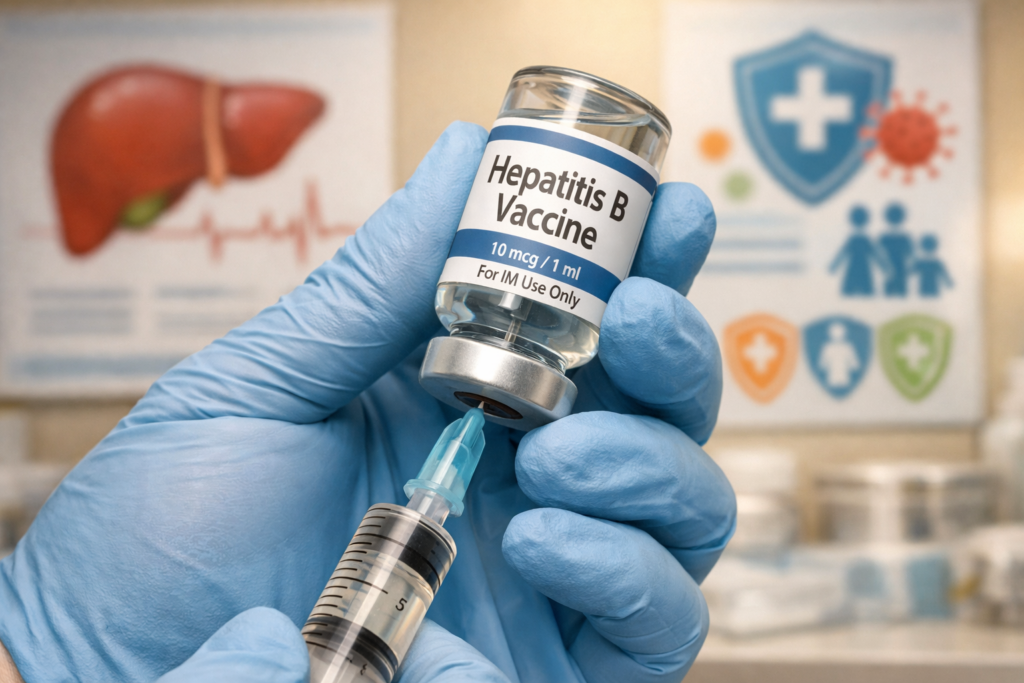
If you’re trying to figure out whether you need a hepatitis B vaccine or wondering if the one you got years ago is still protecting you, you’re not alone. The hepatitis B vaccine is one of those medical interventions that raises straightforward questions: How many shots do you need? And does it really last forever? I thought I should follow up last week’s general discussion of hepatitis with some specifics on this vaccine.
The Shot Schedule
The traditional hepatitis B vaccine series requires three shots spaced over six months. You get the first dose, then return for a second shot one to two months later and finally complete the series with a third dose at the six-month mark. There is also a combination hepatitis A and B vaccine that follows the same schedule. This schedule has been the standard for decades and works well for both children and adults.
But here’s something newer: In 2017, the FDA approved a two-dose hepatitis B vaccine called Heplisav-B for adults 18 and older. With this option, you only need two shots spaced one month apart. For parents of young children, there is Pediarix, a combination vaccine that bundles hepatitis B protection with vaccines for other diseases, streamlining the infant immunization schedule.
Does It Really Last a Lifetime?
This is where the science gets interesting. The short answer is yes, for most people the protection appears to be lifelong. But the mechanism behind this is more nuanced than you might expect.
After you complete the vaccine series, your body produces antibodies against hepatitis B. Over time—sometimes after just a few years—the level of these antibodies in your blood can decline to the point where they’re barely detectable or even undetectable. On the surface, that sounds concerning. But here’s the key: your immune system has memory.
Even when antibody levels drop, your body retains specialized immune cells that “remember” hepatitis B. If you encounter the virus years or decades later, these memory cells spring into action, rapidly producing new antibodies to fight off the infection before it can establish itself. Researchers have followed vaccinated individuals for more than 30 years and found that this immune memory remains protective even when blood tests show low antibody levels.
Who Might Need a Booster?
For most people with healthy immune systems, the CDC doesn’t recommend booster shots. Once you’ve completed the series and your body has responded appropriately, you’re considered protected. However, there are exceptions. People with compromised immune systems—such as those undergoing dialysis, living with HIV, or taking immunosuppressive medications—may need periodic booster doses. These individuals should work with their healthcare providers to monitor their antibody levels and determine if additional shots are necessary.
The Bottom Line
The hepatitis B vaccine is a three-shot series (or two shots with the newer formulation) that provides protection that researchers believe lasts a lifetime for most people. While your antibody levels might decline over the years, your immune system’s memory keeps you safe. It’s one of those rare cases where you can check something off your health to-do list and genuinely move on.
Sources:
- CDC Hepatitis B Vaccination: https://www.cdc.gov/hepatitis/hbv/vaccineadults.htm
- FDA Vaccines Information: https://www.fda.gov/vaccines-blood-biologics/vaccines/heplisav-b
Leave a Reply