
Grumpy opinions about everything.

Category: Uncategorized

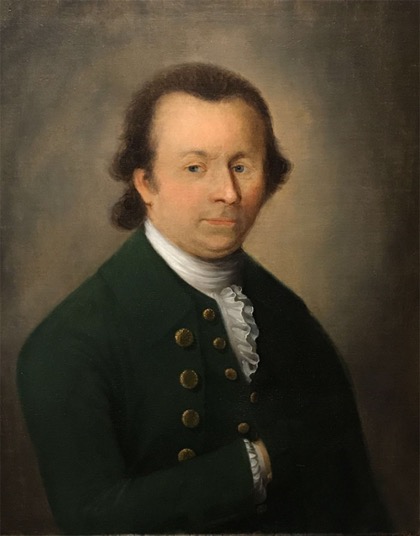
Button Gwinnett

An Almost Forgotten Signer of the Declaration of Independence

History is full of people both little known and unknown who were present at important events. They may have participated, or they may simply have been observers. Understanding them, their lives and their involvement can help us to understand the human aspect of historical events. This is what I love most about history, the stories of average people.

Not long ago, I was looking at a copy of a broadside of the Declaration of Independence when I noticed an intriguing signature — Button Gwinnett. He is one of the lesser-known signers of the Declaration of Independence, yet he played a significant role in the early political landscape of Georgia. His life was a blend of ambition and political maneuvering. His dramatic rise and fall remain intriguing to historians. Even though Gwinnett is little remembered today, his story offers a glimpse into the turbulent period of America’s founding.

Early Life and Migration to America

Button Gwinnett was born in 1735 in Down Hatherley, Gloucestershire, England. He was the son of an Anglican vicar and was named after his mother’s cousin Barbara Button who was also his godmother.

While details about his early education are scarce, it is believed that he received a basic education typical of the English gentry. Gwinnett’s early adulthood was marked by modest success as a merchant. In the 1760s, facing limited opportunities in England and the promise of economic prosperity in the American colonies, Gwinnett and his wife, Ann, emigrated to the New World.

Initially, Gwinnett settled in Charleston, South Carolina, where he engaged in trade. However, he struggled financially, and by 1765, he had relocated to Savannah, Georgia. This move marked not only the beginning of his political career, but also a period of fluctuating fortune. Gwinnett purchased St. Catherine’s Island off the coast of Georgia, hoping to become a successful plantation owner. Unfortunately, he overextended himself financially, and his attempts to establish a profitable business met with failure. Despite his financial setbacks, Gwinnett’s status as a landowner and merchant allowed him to enter the local political scene.

Rise in Politics and Revolutionary Activity

Gwinnett’s involvement in politics grew as tensions between the American colonies and Britain escalated. By the early 1770s, he had become aligned with the growing revolutionary sentiment. In 1775, he was elected to Georgia’s Provincial Congress, where he quickly rose to prominence due to his vocal support for independence from British rule. Although Georgia had initially shown less enthusiasm for independence than colonies like Massachusetts or Virginia, a growing faction of Georgia patriots, including Gwinnett, began advocating for stronger opposition to British rule. By 1776, Gwinnett had become a delegate to the Second Continental Congress.

Continental Congress and the Declaration

On January 20, 1776, Gwinnett left Georgia for Philadelphia to represent the colony in Congress. This appointment marked the pinnacle of his political career and placed him at the center of the deliberations for American independence. His journey to Philadelphia came at a crucial moment when the Continental Congress was moving toward a formal declaration of independence.

Gwinnett voted for independence on July 2, voted to approve the declaration on July 4, and signed his name to the parchment of the Declaration of Independence on August 2. Out of the 56 delegates who signed the Declaration, Button was one of only 8 who were born in Britain. His British birth added a unique perspective to his role as a Founding Father, representing the immigrant experience that was central to colonial American society.

His signing of the Declaration of Independence would later make his signature one of the most valuable autographs in American history. Gwinnett is known chiefly because his autographs are extremely rare and collectors have paid dearly to obtain one. (In 2001 one of his 36 known autographs sold at public auction for $110,000. Since then, several others have been documented.)

Conflict and Power Struggles in Georgia

Back in Georgia, Gwinnett became embroiled in a power struggle with General Lachlan McIntosh, a prominent figure in the colony’s revolutionary army. The conflict between Gwinnett and McIntosh was fueled by political rivalry and personal animosity. Gwinnett aspired to leadership positions within Georgia’s government and military, and in March 1777, he became acting president of Georgia’s Revolutionary Council after the sudden death of Governor Archibald Bulloch.

During his brief tenure as acting council president, Gwinnett’s leadership was controversial. He proposed a bold military expedition against British-controlled East Florida, intending to bolster his political standing and secure Georgia’s borders. However, the campaign was poorly executed, and it ended in failure. This debacle intensified the feud between Gwinnett and McIntosh, with each blaming the other for the military defeat.

Gwinnett’s promising political career was cut short by an ongoing personal conflict that became intertwined with the honor culture of the American South. The rivalry between Gwinnett and McIntosh reached its climax in May 1777. After a series of public insults—McIntosh called Gwinnett a “scoundrel and lying rascal,” Gwinnett responded by challenging him to a duel. Dueling, though technically illegal, was still a common way to resolve disputes among gentlemen of the period. On May 16, 1777, the two men faced each other with pistols in a pasture near Savannah. Both were wounded, but only Gwinnett’s injuries proved fatal. He died three days later, at age 42, and was buried in Savannah’s Colonial Park Cemetery, though the exact location of his grave is still unknown.

Legacy and Historical Significance

Gwinnett’s legacy is visible in his namesake Gwinnett County, one of Georgia’s most populous counties, a tribute to his contributions to the state’s early political history.

In recent decades, historians have taken a renewed interest in Button Gwinnett, examining his role beyond the narrow context of his duel and signature. While he lacked the fame of other founding fathers, Gwinnett’s political maneuvering and his role during the revolutionary period highlight the complexities of early American politics. His rivalry with McIntosh reflects the deep divisions and regional conflicts that existed even among those who supported independence.

Gwinnett’s life also underscores the risks faced by those who ventured into the revolutionary cause. Unlike many of his contemporaries who enjoyed long, celebrated careers, Gwinnett’s story is one of a meteoric rise and abrupt fall. His legacy, while overshadowed by more prominent figures, is a reminder of the many lesser-known men and women who played vital roles in America’s fight for independence.

Button Gwinnett’s life was marked by ambition, conflict, and an untimely death that left him as one of the more obscure figures of the American Revolution. His contributions to the independence movement in Georgia were significant, even if his political career was cut short. Today, Gwinnett’s name lives on in Georgia’s geography, and his autograph serves as a rare artifact of a fleeting yet impactful moment in history.

Sources:

·      National Archives: Declaration of Independence Signers – https://www.archives.gov/founding-docs/signers

·      The Georgia Historical Society: Biography of Button Gwinnett – https://georgiahistory.com

·      Smithsonian Magazine: The Rare Autograph of Button Gwinnett – https://www.smithsonianmag.com

·      Library of Congress: Early American Biographies – https://www.loc.gov

Oppression in Politics: Totalitarian and Authoritarian Systems

Since January 20th there has been extensive use of the terms authoritarian and totalitarian to refer to the actions of the current administration.  While totalitarian and authoritarian are often used interchangeably, they represent similar but distinct forms of governance with critical differences. If we’re going to hold rational discussions about these theories, we should be using the same terminology.

A totalitarian government seeks to control every aspect of public and private life, including political, economic, social, and cultural domains. The government uses a specific ideology to unify and dominate society. The government strives to regulate all aspects of life, leaving no room for personal freedoms or independent thought.  A guiding ideology is central, often enforced by propaganda, indoctrination, and censorship.  The government frequently relies on widespread surveillance, police state tactics, and brutal suppression of dissent.  All institutions, media, education, economy, and religion are state-controlled.

Examples include Nazi Germany, unified under an ideology of racial purity and Stalin’s Soviet Union, ostensibly organized under a Marxist ideology.  Both governments maintained control of their population through propaganda, brutal police actions, terror and murder.

 An authoritarian government is characterized by strong central power with limited political freedoms, but it does not seek to control all aspects of life.  Unlike totalitarian regimes, authoritarian states often allow some degree of personal freedom in areas like culture, business, or religion, as long as these do not challenge political authority.  Typically, these regimes are pragmatic and focused on maintaining power, not enforcing an all-encompassing ideology.  They are more likely to be organized around the personality of the dictatorial leader.  While repression is common, it is often less pervasive and targeted primarily at political opponents.

Franco’s Spain had limited political freedoms but allowed religious and cultural autonomy.  Putin’s Russia allows limited economic freedom for members of the Russian oligarchy.

The main distinction lies in the scope of control.  Totalitarian regimes seek to control all aspects of life and demand ideological conformity.  Authoritarian regimes primarily focus on political power and allow some personal autonomy as long as it does not threaten the regime.

In summary, all totalitarian governments are authoritarian, but not all authoritarian governments are totalitarian.

A Path to Recovery

Part II

Introduction

In Part 1 of a Path to Recovery I recommended that the Democrats return to the grassroots level. I believe that they should focus on state and local races and refine a message that appeals to the general population. They’ve been unsuccessful in their top-down approach.  Let’s take a look at where they could go from there.

 Acknowledge the Need for Change

The first step toward recovery is an honest assessment of what went wrong. Ignoring electoral losses or solely blaming external factors without self-reflection is a common pitfall. I already see some of this finger pointing and blame deflection going on as I read about various Democrats’ responses to the election. For example, Sheila Nix, Vice President Kamala Harris’ chief of staff, stated during a summit at Harvard University that Harris ran a “pretty flawless campaign”.  If it had been flawless, she would have won.

After their 2012 election loss, the Republican Party conducted a comprehensive analysis, resulting in the “Growth and Opportunity Project” report. This internal review highlighted areas for improvement, including outreach to minority communities and the need for a clearer economic message.

For Democrats, a similar post-mortem analysis could prove invaluable. By examining voter data, exit polls, and demographic shifts, the party can identify why key groups, such as working-class voters, Latinos, young men, and suburbanites, may have turned away. Addressing these issues directly and transparently can rebuild trust and demonstrate the party’s seriousness about listening to voters’ concerns.

Beyond incremental reforms, Democrats must embrace bold, transformative policies that resonate with voters who feel left behind by the current system. The party needs to develop a compelling identity focused on concrete, tangible improvements in people’s lives rather than abstract ideals.

 Reevaluate Economic Messaging and Focus on the Working Class

Economic anxiety remains a powerful driver of voter behavior. While Democrats have traditionally been seen as the party of the working class, recent elections reveal erosion in this support, particularly among white, non-college-educated voters. In 2024, exit polls indicated that economic issues, such as inflation and job security, were top concerns for many voters.

To reconnect, Democrats need to sharpen their economic message. A strong focus on job creation, wage growth, and small business support can resonate with those alienated by a perceived focus on identity politics. Franklin D. Roosevelt’s New Deal is a historical example of pivoting toward a broad, economically focused coalition. A modern equivalent could involve targeted investments in infrastructure, clean energy jobs, family farm support, and small business relief.

Bridge the Urban-Rural Divide

One significant challenge for Democrats is the growing urban-rural divide. While the party finds success in urban areas, it struggles to maintain support in rural and suburban communities. In states like Ohio and Pennsylvania, losses in rural counties often outweigh gains in urban centers, tipping closely contested races.

Reaching rural voters requires more than policy proposals; it demands a cultural shift in communication. Democrats could emphasize issues directly impacting these communities, such as healthcare access, rural broadband expansion, job protection and development, and agricultural support. Joe Biden’s modest gains among rural voters in 2020 suggest that sustained effort could lead to further inroads.

Rebuild the Coalition and Energize Young and Minority Voters

The Democratic Party’s success has historically hinged on its ability to build a diverse coalition of young voters, minorities, women, and progressives. However, recent trends indicate waning enthusiasm among these groups, particularly younger voters disillusioned with incremental policy changes and the slow pace of progress on climate change and student debt relief.  There is also significant concern about job availability and long-term financial stability among young voters.

Mobilizing less-engaged voters, especially in non-presidential election years, is crucial. Grassroots organizing, like Barack Obama’s 2008 campaign strategy, could prove effective. Meeting voters where they are, both online and in their communities, and addressing their key concerns can reinvigorate this coalition.  In the recent presidential election, the Republicans made a focused effort on less-engaged voters. This was particularly effective in Arizona where it may have made the difference in shifting the state to Donald Trump.

Simplify the Policy Agenda and Focus on Clear, Unifying Issues

A common criticism of Democratic campaigns is that their platform can appear fragmented, with overwhelming attention to niche issues. Democrats should consider rallying around a few key issues with broad appeal, such as healthcare reform, economic fairness, job creation, and climate action.

Bill Clinton’s 1992 campaign slogan, “It’s the economy, stupid,” streamlined messaging and maintained focus on voters’ primary concerns. This year the Republicans were successful with a variation of this message.

 Democrats today might focus on reducing prescription drug costs, enhancing mental health services, and promoting job-centered climate policy to unite progressive and moderate wings.

Invest in Digital Strategy and Combat Misinformation

The shift to digital campaigning has fundamentally changed electoral dynamics. While Democrats historically led in digital strategy, Republicans have closed the gap, excelling in targeted ads and social media engagement.  In fact, during the last election the Republicans generally ignored traditional media going directly to social media where they could spread their message without critical evaluation or fact-checking.

To regain their edge, Democrats need to invest in data analytics, targeted outreach, and robust real time fact-checking to combat misinformation. They must have a group dedicated to continuously monitor and respond to social media campaigns. A strong digital presence can engage younger, tech-savvy voters with clear messaging that rapidly counters disinformation.

Conclusion: A Resilient Path Forward

Recovering from electoral defeat requires adapting, evolving, and embracing change. Continuing to attempt to respond to every special interest group will continue to alienate a majority of voters. This is not something many progressive Democrats want to consider.  However, by focusing on economic issues, bridging cultural divides, re-energizing their traditional coalition, and investing in grassroots and state-level efforts, Democrats can lay the groundwork for future success.

History shows that political parties rebound when they listen to voters and refine their strategies. The road ahead will be challenging; the Democratic Party has been trapped in an echo chamber of progressive demands. 

By developing a clear vision and a commitment to addressing a diverse electorate’s needs, the Democratic Party can reposition itself as a champion of the people. The key will be finding a balance between the aspirations of its current base and the practical concerns of everyday Americans who once were its base.

An Observation

Never underestimate the power of stupid people in large groups.

-George Carlin

Of Echo Chambers And Filter Bubbles

The time has come, the Walrus said,
To talk of many things:
Of shoes – and ships – and sealing-wax –
Of cabbages and kings –
Louis Carroll
“The Walrus and the Carpenter”

Introduction

Recently, I have been researching the role of social media and the spread of modern propaganda. One of the things that surprised me, although it probably shouldn’t have, is how rapidly misinformation spreads over the internet as compared to verifiable fact-based information. I choose to use the term verified or verifiable rather than true or truth. It seems to me that we have entered an age where each person decides on their own version of truth. Truth has become relative. It’s based not on verifiable and reproducible facts but rather on who said it, where you read it, or if you agree with it.  If it doesn’t fit with your preconceived notions, it can’t possibly be true.

A study by three MIT researchers found that false news spreads more rapidly on the social network Twitter (now X), by a substantial margin, than does factual news. “We found that falsehood diffuses significantly farther, faster, deeper, and more broadly than the truth, in all categories of information, and in many cases by an order of magnitude,” reported Sinan Aral, a professor at the MIT Sloan School of Management.

They found the spread of false information is not due primarily to bots programmed to disseminate inaccurate stories but rather due to people intentionally retweeting inaccurate news items more widely than factual statements.*

To better understand how social media impacts propaganda, it is important to understand how this phenomenon occurs. This leads to two related concepts, Echo Chambers and Filter Bubbles.

Echo Chambers

An echo chamber is a social structure in which individuals intentionally surrounded themselves only with those who share similar views and opinions. Within these chambers, dissenting opinions are either absent or actively suppressed, leading to the reinforcement of existing beliefs. On social media, echo chambers are created by users themselves, as they choose to follow, like, and share content that aligns with their views while ignoring or blocking contrary perspectives.  This self-selection creates a feedback loop where individuals only hear what they already believe, which further entrenches their views.

Filter Bubbles

While echo chambers are largely the result of individual choices, filter bubbles are often shaped by algorithms. Social media platforms and search engines use algorithms to curate content for users based on their past behavior, what they click on, like, or share. The stated intention behind these algorithms is to provide users with content that is most relevant to them. But we shouldn’t overlook that it is also a method to make users more receptive to focused advertising and other forms of influence. The net result is a significant narrowing of the variety of opinions presented.

Individual Choice

Both echo chambers and filter bubbles limit the diversity of information by consistently show users content that aligns with their established interests and beliefs, isolating them from conflicting viewpoints and leading to a narrow and sometimes distorted understanding of the world. Over time, this can result in a skewed perception of reality, where the individual believes that their perspective is universally accepted or unquestionably correct.

While echo chambers and filter bubbles are often discussed in terms of algorithms and platform design, it is crucial to recognize the role of individual decisions in their creation and perpetuation. Each time we choose to follow a particular account, share a piece of content, or engage in a discussion, we are making decisions that shape our information environment.

The choices we make, whether to engage with diverse perspectives or retreat into familiar territory, have a profound impact on the information we encounter and share. When we choose to engage only with like-minded individuals and content, we contribute to the formation of echo chambers. Similarly, when we rely on algorithms to curate our content without seeking out alternative viewpoints, we become trapped in filter bubbles.

Echo chambers and filter bubbles are not exclusive to any political affiliation, religion, ethnicity, or social class.  They are found across society.  The willing acceptance of echo chambers and filter bubbles is the antithesis of critical thinking. When we fail to recognize that we are not considering alternative views, regardless of our political orientation, we are succumbing to indoctrination rather than education.  We become unthinking automatons rather than critical thinking individuals who decide what is best for ourselves. Failure to actively engage with the information that we receive, to ensure that we receive multiple viewpoints (even those with which we disagree) and then failing to critically evaluate everything presented is a sure recipe for a loss of freedom.

*The paper, “The Spread of True and False News Online,” was published in Science, 9 March 2018

Something To Make You Smile

50 Years And Counting

Margie and I have just returned from a trip to celebrate the 50th anniversary of the most important day in my life. The day we were married.

I give thanks every day that I found Margie and she agreed to be my wife. Everything that I am or ever will be or could ever want to be is thanks to her.

She is the guiding light of my life and fills it with joy. I give thanks to God for the 50 wonderful years that we have had together and for every day that continues.

Our 50th anniversary is not just a day. For us, it’s a year-long celebration of our love. Every day we are thankful for our family and our friends who have made it all so special to us.  You’ll never know how much you mean to us.

May God bless you all.

John

Page 2 of 2

Powered by WordPress & Theme by Anders Norén