
How Coffee Conquered the World
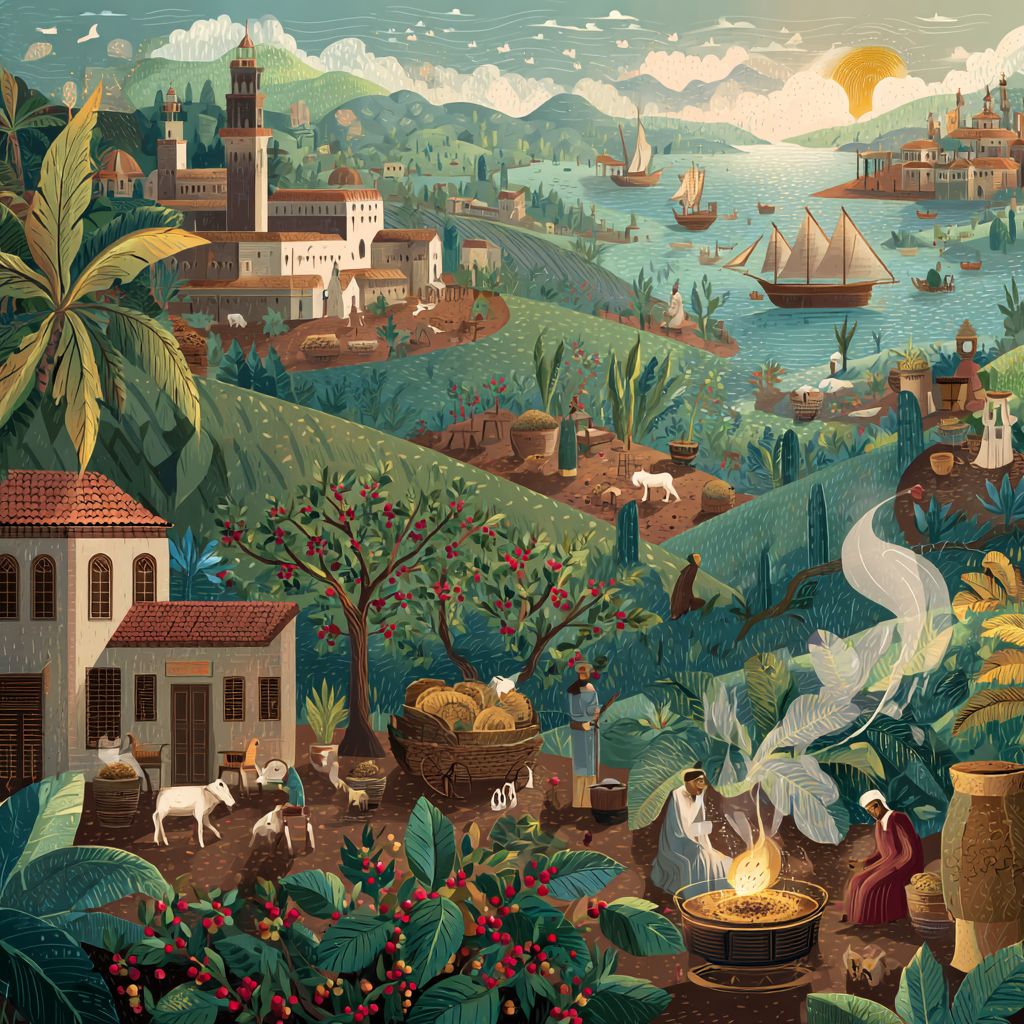
I don’t know about you, but I can’t get moving in the morning without a cup of coffee—or, if I’m honest, about three. Coffee has been a faithful companion through late nights and early mornings for most of my adult life.
I’ve written about it before, but there’s one story I’ve never shared—the time coffee actually sent me to the hospital.
A Pain in the Chest (and a Lesson Learned)
It happened not long before I turned forty. Back then, forty felt ancient. I started getting chest pains bad enough to send me to a cardiologist. After a battery of expensive tests, he said, “I don’t know what’s causing your pain, but it’s not your heart. Go see your family doctor.”
Problem was, I didn’t have one. (This was before I thought seriously about medical school.) So, I found a doctor, went in for a full workup, and after all the poking and prodding he casually asked, “How much coffee do you drink?”
“About eight cups a day,” I told him.
He raised an eyebrow. “You need to stop that.”
I asked if he really thought that was the problem. He didn’t hesitate—“Absolutely.”
This was before anyone talked much about reflux, at least not the way we do now. But I quit coffee cold turkey, and just like that, the chest pain disappeared.
These days I’ve learned my limit: three cups in the morning, and that’s it. Any more and the reflux reminds me who’s in charge.
It’s funny how something so simple can be both a comfort and a curse. Still, for all its quirks, I wouldn’t trade that first morning cup for anything.
From Goats to Global Obsession
My little coffee story fits neatly into a much older one. For centuries, coffee has stirred passion and controversy in equal measures. Its history is full of smuggling, religion, politics—and even the occasional threat of beheading.
The story begins in the Ethiopian highlands, in a region called Kaffa—possibly the origin of the word coffee. Wild Coffea arabica plants grew there long before anyone thought to roast their seeds.
According to legend, around 850 CE a goat herder named Kaldi noticed his goats acting wildly energetic after eating the red berries. We will never know if Kaldi was real or just a great marketing story.
By the 1400s Yemeni traders brought coffee plants from Ethiopia across the Red Sea to Yemen. The first recorded coffee drinker was Sheikh Jamal-al-Din al-Dhabhani of Aden, around 1454. He and other Sufi mystics used the brew to stay alert during long nights of prayer—a kind of early spiritual espresso shot.
Coffee and the Muslim World
By 1514, coffee had reached Mecca and through the early 1500s it spread across Egypt and North Africa, beginning in the Yemeni port of Mocha (yes, that Mocha). Coffeehouses—qahveh khaneh—sprang up everywhere. They were the original social networks: lively centers for news, politics, debate, and gossip, often called “Schools of the Wise.”
Coffee also had its critics. Some Muslim scholars debated whether it was halal, arguing that its stimulating effect made it suspiciously close to an intoxicant.
The governor of Mecca banned coffee altogether, calling coffeehouses hotbeds of sedition. Thirteen years later the Ottoman sultan lifted the ban, recognizing that you can’t outlaw people’s favorite drink. Similar bans came and went—including one by Sultan Murad IV in the 1600s, who reportedly made drinking coffee a capital crime. It didn’t work. Coffee had already conquered the Middle East.
Europe’s Complicated Love Affair
When coffee reached Europe—most likely through Venetian traders—it faced new suspicion. To many Europeans, coffee was “the drink of the infidel,” something foreign and threatening.
Some Catholic priests went so far as to call it “the bitter invention of Satan” or “the wine of Araby”. The issue was both secular and theology—wine played a central role in Christian ritual and Muslims, forbidden to drink wine, had elevated coffee to their own social centerpiece.
Then around 1600 Pope Clement VIII joined the debate. Instead of banning coffee, he decided to try it first. The story goes that he found it so delicious he “baptized” it, declaring it too good to leave to the infidels.
True or not, coffee won papal approval—and from there, Europe was hooked. Coffeehouses spread like wildfire.
In England, they were called “penny universities” because for the price of a penny (the cost of a cup), you could join conversations on politics, science, and philosophy. Coffeehouses became the fuel of the Enlightenment—an alternative to taverns and alehouses. King Charles II tried to ban them in 1675, fearing they encouraged sedition, but public outrage forced him to back down.
The Global Takeover
For a long time, Yemen held a monopoly on coffee exports, carefully boiling or roasting beans to prevent anyone from planting them elsewhere. But where there’s money there’s smuggling.
The Dutch managed to steal a few live plants and in 1616 and began to grow them in Ceylon and Java—hence the nickname “java.” The French followed suit, planting coffee across the Caribbean. One French officer famously smuggled a single seedling to Martinique in 1723; within fifty years, it had produced over 18 million trees.
Brazil entered the scene in 1727 when Francisco de Melo Palheta snuck seeds out of French Guiana. Brazil’s climate proved perfect, and before long, it became the world’s coffee superpower.
The Bitter Truth
Coffee’s global spread had a dark side. Its plantations across the Caribbean and Latin America were built on enslaved labor. The beverage that fueled Enlightenment discussion in Europe was produced through brutality and exploitation in the colonies.
That’s the paradox of coffee—it has always been both a social leveler and a symbol of inequality.
Why It Still Matters
From Ethiopia’s wild forests to Ottoman coffeehouses, from Parisian salons to Brazilian plantations, coffee’s story mirrors the forces that shaped our modern world—trade, religion, colonization, and globalization.
That cup you’re sipping this morning connects you to centuries of human ingenuity, faith, conflict, and resilience.
Your latte isn’t just caffeine—it’s history in a cup.
Leave a Reply