I joined the Navy when I was 19 and I’ve been fascinated with ships ever since, ships of all kinds from square rigged clippers to super tankers. One type of ship that has always held a particular fascination for me is the Chinese junk. Perhaps, it’s because it seems so exotic and it gives hints of adventure. I can remember the first time I saw a junk under full sail. It was 1970 when I visited Hong Kong. I had just got off the Star Ferry, and I caught sight of it sailing across the harbor. I just stood there, watching it until it disappeared from sight and wishing I hadn’t left my camera in the hotel.
The Chinese junk isn’t a single ship design. It’s a family of crafts design to sail in China’s rivers and estuaries, along the coast, and on the open sea. It’s an example of practical shipbuilding, designed to be adaptable to multiple environments.
The word junk isn’t even a Chinese one. It was most likely coined by English traders. The Chinese referred junks by the general name chuan, which means simply “ship” or ‘boat’. Junk may have been derived from the Javanese word jong or the Malay word ajong, both of which refer to a large ship.
We don’t know exactly when the junk was first developed but it may extend all the way back to the Han dynasty, roughly 220 BCE. The earliest versions were likely made of wood, bamboo or reeds and those materials rarely survive for later examination. Early versions of the junk have been documented as operating in the Yangtze River and coastal waters and estuaries and even venturing into maritime trade throughout East Asia.
The most distinctive feature of the junk is its flat or shallow bottom hull, rather than the deep keel vessels associated with European design. The design makes it susceptible to being pushed sideways by the wind while under sail. But the Chinese shipbuilders outfitted it with leeboards, center boards and large adjustable rudders which could extend it into the water to prevent sideways drift and to help maintain course, much like a keel on European ships. Unlike European ships, these elements could be retracted to allow it to enter shallow water and even to be beached to load or unload supplies or make repairs.
The broad beam of the ship and its flat bottom also gave it the ability to handle a large volume of cargo. This was an advantage for traders carrying bulky commodities such as rice, ceramics, textiles or salt. The design also provided a military advantage because it could carry larger numbers of troops and horses than could be carried on a European style ship.
The most significant innovation in the Chinese junk may have been the development of watertight bulkheads. The bulkhead is a wall that separates portions of the ship to prevent flooding should any portion of the hull develop a leak. That way the integrity of the entire ship would not be compromised by a hole in a single area. The bulkheads also strengthened the hull of the ship allowing it to endure greater stress from violent waves and wind. It also increased the capability to carry larger cargo. This is probably the major contribution that the Chinese made to the greater science of shipbuilding and naval technology. Western shipbuilders later adapted this same principle for their ship construction.
The junk sails are both innovative and distinctive. The sails are often fan shaped and are divided into sections separated by horizontal battens usually made of bamboo or wood. These distribute the stress across the fabric and help the sail retain its shape. The early sails were mostly made from woven matts or grasses while later examples were made from more durable cloth. The battens make it easier to raise and lower the sails without requiring sailors to climb up into the riggings to furl or unfurl canvas. Sails can be more quickly and easily adjusted to the weather conditions, allowing the ships to operate with smaller crews. The sails also feature another innovation that was not common among European ships. They can be easily rotated, giving the junk additional maneuverability in harbors and narrow rivers.
Depending on the size of the ship, they may have anywhere from one reportedly up to as many as nine masts on the largest of the naval vessels. The greater number of masts spread the sail area across the ship to adapt to varying wind conditions, allowing the ship to continue under sail in heavy weather, even if a mast or a sail was damaged or completely lost.
Junks have an extremely high stern area. This is useful both as a living and a working space. It can accommodate crew’s quarters, storage, cargo, and historically provided a defensive position in case of attack. Most junks are steered by a tiller operated rudder, and the high stern provides additional leverage to operate the rudder.
The junks aren’t simply limited to the local Chinese area. During the Ming dynasty between 1405 and 1433 CE Chinese fleets operated throughout Southeast Asia, across the Indian Ocean, into the Persian Gulf, and the ports of Arabia and East Africa. They carried political envoys, trade goods, supplies, and tribute. They conducted trade with Buddhist, Muslim, Hindu, and Christian communities and facilitated some of the earliest interactions between these groups.
Junks are best known to western historians from a voyage that occurred in the early 15th century. Admiral Zheng He commanded what became known as “treasure voyages” for the Ming dynasty. His fleets reportedly included massive junks up to 400 feet in length with as many 9 masts, although many historians doubt they were this large. Regardless of the actual size, they were far superior to any European ships of the same era both in size and technology.
Today, we think of the junk most often as a quaint and picturesque tourist symbol usually associated with Hong Kong. But the junk isn’t merely an attractive photo op. It is a sophisticated design that met the demands of a seafaring community. It has an innovative hull with an adjustable steering system, compartmental construction, and battened sails that set the standard for centuries before the advent of steam propulsion. It carried more than cargo. It carried knowledge, technology, and civilization across the waters of Asia and eventually across the waters of the world.
If you’re a history buff like me, you’ve probably run across fascinating but obscure characters who played a large role in a small region in distant history. I recently came across one of those people who was only referenced on a single page of a book I was reading. But the description of her was enough to get me interested in finding out more.
History has a habit of forgetting women who shaped it, especially women from Africa. But Amanirenas, the warrior queen of the ancient empire of Meroë, pulled off something that almost no one else in the ancient world ever managed. She fought Rome to a standstill and walked away with her kingdom’s independence intact. That alone makes her story remarkable.
A Kingdom You Have Never Heard Of
To understand Amanirenas, you first need to understand Meroë, and most western history classes have completely skipped it. Meroë was the capital of the Kingdom of Kush in what is now northern Sudan. It was a sophisticated, wealthy empire and was a major power in northeastern Africa for over 1000 years. The Egyptians called it Nubia “Ta-Seti”, the Land of Bows, as a tribute to the extraordinary skill of Kushite archers.
Meroë was one of the most important trading hubs of the ancient world. It sat at a natural crossroads between the Mediterranean world and sub-Saharan Africa. Ivory, gold, iron, grains, and livestock all flowed through the city. The Egyptians depended heavily on this trade, giving Meroë’s rulers extraordinary power.
Unlike much of the ancient world, Kush had a long tradition of powerful female leaders known as the kandakes. They commanded armies, negotiated treaties, and governed with the same authority as a male king.
Amanirenas was one of these kandakes. Her full title in the Meroitic language was “Amanirenas qore li kdwe li” meaning she held both the “qore” (king) and “kandake” (queen) titles simultaneously. It was a clear signal that she was the sole independent ruler of Kush.
Rome Moves In
Kush had profited handsomely from trade with Ptolemaic Egypt for generations. Around 30 BCE, Augustus Caesar defeated Cleopatra and Mark Antony and folded Egypt into the Roman Empire. Rome was a different kind of neighbor; it was hungrier, more aggressive, and believed in its divine right to expand. Roman tax collectors and administrators moved into lower Nubia, imposing heavy levies on the people of Meroë. Rome wasn’t interested in just trading; it was extracting tribute.
Amanirenas ruled alongside her husband, King Teriteqas, until he died in battle around 27 BCE, leaving her in sole command of the Kingdom and its army. She was a widow, a queen, and increasingly, a general, and she faced the most powerful military machine in the world.
The One-Eyed Queen Strikes First
Amanirenas grew tired of being exploited by Rome. When Roman forces were pulled back for a campaign in Arabia, she acted quickly. Around 24 BCE, she led her army of some 30,000 soldiers into Roman occupied territory. Her forces captured three major Roman held cities, Syene (modern Aswan), Philae, and Elephantine. They enslaved Roman citizens and plundered the cities. In a particularly pointed act of defiance, her warriors tore down statues of Caesar Augustus throughout the captured territory.
The severed bronze head of Augustus was carried back to Meroë as a trophy. Amanirenas had it buried under the steps of a temple dedicated the victory, so that her people could walk over the face of the Roman emperor every day. This artifact, now known as the Meroë head, was rediscovered by archaeologists in the early 20th century and is on display at the British Museum.
The Greek historian Strabo, writing around 21 BCE, described Amanirenas as “a masculine sort of woman, and blind in one eye.” Strabo clearly did not mean this as a compliment and today it stands as grudging acknowledgment that this was not a queen to be taken lightly.
Rome Pushes Back and Meets Its Match
Rome predictably was not going to accept this without responding. Augustus dispatched his prefect Petronius with a veteran Roman army. The ensuing campaign pushed Kushite forces back, recapturing the occupied cities and pressing deep into Kush. Petronius sacked Napta, a city sacred to the Kushites.
But Rome found it couldn’t hold the territory it was taking. Logistics were brutal. The harsh desert environment, the long supply lines from Egypt, and Amanirenas’ aggressive guerrilla tactics all wore down Rome’s ability to sustain its army.
Amanirenas counter attacked repeatedly, keeping Roman forces off balance. Historical accounts mention her using war elephants, a weapon that would have been unnerving to even experienced Roman soldiers. The war ground on for years. Eventually, Petronius recognized he could not achieve a decisive victory and urged negotiations.
When Amanirenas’ envoys finally met with Augustus at Samos, they acted formally, not as a defeated foe. According to historian Dr. Robert Stephen Bianchi, this is believed to be the first recorded instance of Black African diplomats traveling to Europe to negotiate a peace treaty on behalf of an independent African ruler. Amanirenas sent representatives rather than going herself as a deliberate signal that she considered herself Rome’s equal, not a supplicant.
A Peace Deal That Rewrote The Map
The resulting Treaty of Samos, signed around 20 or 21 BCE, was an extraordinary diplomatic victory for Kush. Rome agreed to exempt Kush from all tribute payments, withdrawal from disputed territories and recognized Kushite sovereignty in lower Nubia. Rome’s southern border in Africa was essentially fixed, and Meroë remained fully independent. The treaty held for nearly 300 years.
Amanirenas then turned her attention to rebuilding her kingdom. The last decade of her reign, from around 21 to 10 BCE, is described as one of the most prosperous periods in Kushite history. It was the golden age of monument building, culture, and trade. The peace with Rome opened new commercial opportunities and increased the wealth of Kush.
Amanirenas never remarried. She died around 10 BCE and was buried at Jabel Barkal in Sudan. A wall painting in a pyramid chapel at Meroë commemorates her legacy, depicting her holding a bow, arrows and a spear, with seven Roman captives tethered at her feet.
Why Her Story Matters
Amanirenas checks almost every box that typically earns someone a place in the mainstream history books: military genius, savvy diplomat, resilient under fire, and a Kingdom that flourished under her leadership. Yet most people have never heard her name. Part of that is a legacy of colonial era scholarship which systematically undervalued African history. Part of it is the Meroitic language problem. Because the language still is largely undeciphered the story is told mostly through Roman and Greek eyes, with all the bias that implies.
What is clear, even from those biased sources, is that she did something extraordinary. She took on Rome, the same Rome that crushed Carthage, absorbed Egypt, and eventually swallowed up most of the known world, and she proved herself their equal. She proved that the Roman Empire had limits and she did it as a one-eyed widow, commanding an army in the field, in a desert, against the most formidable military force of the ancient world.
History, as it turns out, has a lot of catching up to do.
Image generated by the author using ChatGPT.
References
1. Wikipedia — Amanirenas: https://en.wikipedia.org/wiki/Amanirenas
2. HISTORY.com — The Nubian Queen Who Fought Back Caesar’s Army: https://www.history.com/articles/nubian-queen-amanirenas-roman-army
3. Narratively — The One-Eyed African Queen Who Defeated the Roman Empire: https://www.narratively.com/p/the-one-eyed-african-queen-who-defeated-the-roman-empire
4. Ancient Origins — The One-Eyed African Queen Who Defeated the Roman Empire: Amanirenas: https://www.ancient-origins.net/history-famous-people/queen-amanirenas-0018872
5. African History Extra — The Meroitic Empire, Queen Amanirenas and the Candaces of Kush: https://www.africanhistoryextra.com/p/the-meroitic-empire-queen-amanirenas
6. History Is Now Magazine — The Kingdom of Kush & the 27-22 BC War with Rome: http://www.historyisnowmagazine.com/blog/2023/9/18/the-kingdom-of-kush-amp-the-27-22-bc-war-with-rome
7. All That’s Interesting — The Shocking Story of Queen Amanirenas: https://allthatsinteresting.com/amanirenas
8. History Heroines — Amanirenas: One-Eyed Warrior Queen: http://historyheroines.com/2020/02/28/amanirenas/
9. Rejected Princesses — Amanirenas: The One-Eyed Queen Who Fought Rome Tooth and Nail: https://www.rejectedprincesses.com/princesses/amanirenas
10. Google Arts & Culture — Queen Amanirenas: The Story of the White Nile Nubi Archeress: https://artsandculture.google.com/story/queen-amanirenas-the-story-of-the-white-nile-nubi-archeress/bALSN3WTK_YEJA
Not long ago I was reading a history of early English kings. It struck me how the work of a single person may represent all that we know about a period of history. Such a person was The Venerable Bede.
Imagine a world without a reliable calendar, without a coherent narrative of your own people’s past, and without any agreed-upon system for numbering the years. Now imagine a single monk, living out his entire life within the walls of a remote Northumbrian monastery, quietly fixing all three problems while also rewriting the intellectual map of early medieval Europe. That was Bede — a man whose influence was so vast and enduring that the Catholic Church eventually declared him a saint and a Doctor of the Church, and scholars still call him the Father of English History nearly thirteen centuries after his death.
Origins and Family
Bede was born around 672 or 673 AD in the Kingdom of Northumbria, most likely near the mouth of the River Wear in what is now Tyne and Wear in northeast England. While the precise location is disputed, Monkton in Durham is the traditional candidate. But what is clear is that he came into the world on or very near the land that would later become the twin monastery of Wearmouth-Jarrow. His family appears to have been Saxon and, by the modest standards of the day, reasonably prosperous. Beyond that, we know almost nothing about them. Bede himself provided the only substantive autobiographical sketch in the closing pages of his masterwork, the Ecclesiastical History of the English People, and he said nothing at all about his parents or siblings. They are, for history, invisible.
What we do know is that at the age of seven, an age that strikes us as astonishingly young, Bede was entrusted by his family to the care of Abbot Benedict Biscop at the newly founded monastery of St. Peter at Wearmouth. Whether this was driven by economic necessity, genuine piety, or both is impossible to say. In the early medieval world, placing a child in a monastic school was both a religious act and a pragmatic one. It offered the child the best available education and freed the family from one mouth to feed. Whatever the motive, the decision launched one of the most consequential scholarly careers in Western history.
Entering the Church
A year or two after his arrival at Wearmouth, around 681 or 682, the young Bede was transferred to the newly founded companion monastery of St. Paul at Jarrow, under Abbot Ceolfrith. He would remain there for the rest of his life. In 686, not long after his arrival, a devastating plague swept through Jarrow and killed most of the community. According to Ceolfrith’s anonymous biographer, only two monks survived with the full capacity to sing the liturgical offices, Ceolfrith himself and a young boy. That boy was almost certainly Bede, then about fourteen years old. The two of them maintained the full round of daily worship until the monastery could be rebuilt around them.
Bede was ordained a deacon around 691 or 692, in his nineteenth year, and was ordained a priest around 702 or 703, at the age of thirty, both times by Bishop John of Beverley. He later recalled that following his admission to the priesthood, he devoted every year to scriptural study and commentary. His own words, written near the end of his life, are striking in their simplicity: “It has been ever my delight to learn or teach or write.” For a man of towering intellect, that is a remarkably modest mission statement and he kept it faithfully for over four decades.
Impact During His Lifetime
Bede’s monastery at Jarrow was not an intellectual backwater. Northumbria in the late seventh century was a kingdom where Christianization and the consolidation of royal power went hand in hand. Monastic houses such as Wearmouth–Jarrow were founded and endowed by noble patrons like Benedict Biscop, a Northumbrian aristocrat who had traveled to Rome multiple times and brought back books, relics, and ideas that served as the raw material for a new Christian intellectual culture. Thanks to the energetic collecting of Abbot Biscop, St. Paul’s boasted a library of roughly 700 volumes. It was an extraordinary resource by the standards of 7th- and 8th-century Europe. Bede put this collection to relentless use, producing somewhere around forty works across his lifetime spanning theology, natural science, poetry, biography, and history.
Bede received a broad education for the time, including Latin and some Greek, biblical exegesis, theology, grammar, poetry, computus (the calculation of the date of Easter), and even elements of what would be called natural philosophy (science) and astronomy.
During his lifetime, Bede’s reputation rested more on his scriptural commentaries and didactic treatises than on the historical work for which he is best known today.
His earliest writings were practical aids for students: treatises on spelling, verse composition, and figures of speech. He then turned to chronology, producing De Temporibus (On Times) in 703 and its much more substantial successor, De Temporum Ratione (On the Reckoning of Time), in 725. These works addressed one of the most contentious practical problems in the early medieval church, how to calculate the date of Easter, which changes each year according to a complex lunar formula. The controversy over the correct method of calculation had split the English church for generations, with Celtic Christians and Roman Christians using different systems. Bede’s meticulous analysis helped consolidate the Roman method and contributed to a lasting resolution.
He also pioneered what is now the standard system for numbering years in the Western world. Although the anno Domini (AD) convention had been invented by the monk Dionysius Exiguus in the sixth century, it was through Bede’s Ecclesiastical History that it entered general use across Europe. Before Bede made the system widely accessible, dates were typically reckoned from the regnal years of various kings, a system that was chaotic at best and impenetrable at worst. The AD framework Bede popularized gave Europe a shared chronological language it still uses today.
His most celebrated achievement was the Ecclesiastical History of the English People, completed in 731, just four years before his death. Divided into five books, it traced the history of Britain from Julius Caesar’s raids through to the early eighth century, with special emphasis on the conversion of the Anglo-Saxon kingdoms to Christianity. Bede was a careful historian by the standards of any era: he named his sources, often quoted them directly, sought written testimony from across Britain and even from the papal archives in Rome, and distinguished between what he knew firsthand and what he was reporting at second hand. He was not infallible, he sometimes accepted miraculous accounts uncritically and he misread some historical processes as single events, but his commitment to sourcing and accuracy was genuinely unusual for his age.
During his lifetime, Bede’s scriptural commentaries were even more widely read than his historical work. Copies circulated to monastic libraries across western Europe, spreading his reputation well beyond the British Isles. He corresponded with bishops and abbots, was known to the Archbishop of York, and dedicated his masterwork to King Ceolwulf of Northumbria. He never traveled to Rome or met a pope, but he was, by any measure, one of the most connected intellectuals in early medieval Europe.
Legacy and Lasting Influence
Bede died on May 25, 735, still dictating a translation of the Gospel of John to his scribes. Within a generation, he had acquired the honorific “Venerable”, the same title used later for his tomb’s Latin inscription at Durham Cathedral: Hic sunt in fossa Bedae Venerabilis ossa (“Here are buried the bones of the Venerable Bede”). His bones were brought to Durham in 1022 and eventually moved to the Galilee Chapel of Durham Cathedral, where they remain.
The intellectual debt owed to Bede is difficult to overstate. Alfred the Great, the ninth-century king who did more than anyone to preserve English learning during the Viking Age, had Bede’s Ecclesiastical History translated into Old English so that it could reach readers beyond the monastery walls. The scholars Alcuin and Boniface promoted Bede’s work on the European continent, ensuring that his reputation stretched from Ireland to the court of Charlemagne. The nineteenth-century historian Thomas Carlyle called him “the greatest historical writer since Herodotus”, a comparison that places Bede in remarkably elite company across the full span of Western civilization.
In 1899, Pope Leo XIII officially declared Bede a saint and a Doctor of the Church, one of only 37 individuals in Catholic history to receive that dual distinction, which requires both recognized holiness and a body of teaching that has profoundly enriched the faith. He is the only Englishman ever to hold that title. His feast day is celebrated on May 25 in the Catholic Church and May 26 in the Church of England.
Bede’s influence extends in more practical directions as well. His framework for the AD dating system underpins every secular and religious calendar in use across the Western world today. His Ecclesiastical History remains an indispensable primary source for early Anglo-Saxon history. Without it, enormous stretches of English history from roughly 400 to 730 AD would be lost to near-total darkness. The annual Jarrow Lecture, held at St. Paul’s Church in Jarrow since 1958, continues to honor his legacy, and the Jarrow Hall museum (formerly known as Bede’s World) preserves the site where he lived and worked.
A Life Well Spent
What makes Bede’s story compelling beyond the resume is the character behind it. By all accounts he was modest, genuinely curious, and deeply rooted in the rhythms of monastic life — prayer, study, teaching, writing. He seems to have had no particular ambition beyond doing his work well. He never sought a bishop’s throne or a place at court. He spent his entire adult life within the walls of a single monastery in the northeast of England, and from that narrow geographic perch he somehow managed to reshape how all of Western civilization thinks about time, history, and the English past. There is something almost improbable about that. And yet the bones of the Venerable Bede still rest in Durham Cathedral, and the calendar on your phone still counts the years the way he taught the world to count them.
Illustration generated by the author using ChatGPT.
Nobody plans for a myth. The Lost Cause grew out of a very specific and very human problem: how do you explain to a grieving, ruined society that the cause it sacrificed everything for was not just defeated but morally indefensible? Roughly eighteen percent of white Southern men of military age died fighting for the Confederacy, an almost unfathomable toll for any society to absorb. For the widows, mothers, and veterans left behind, the idea that all of that loss had been in service of preserving slavery was, as one historian has put it, simply unthinkable.
Former Confederates faced the psychological and political task of explaining catastrophic loss, human devastation, and the failure of a slaveholding social order they had claimed was divinely sanctioned and constitutionally sound. So, a different story took shape, and it took shape fast. Even before the war had formally ended, Confederate leaders were already laying the rhetorical groundwork. In his farewell address to the Army of Northern Virginia the day after Appomattox, Robert E. Lee thanked his men for four years of “unsurpassed courage and fortitude,” framing the surrender as a matter of being overwhelmed by superior numbers and resources rather than a defeat on the merits of the cause itself.
The term “Lost Cause” itself entered print in 1866, when the Richmond journalist Edward Pollard published a book titled The Lost Cause: A New Southern History of the War of the Confederates. Pollard’s argument was strategic rather than sentimental. Having lost the war on the battlefield, he wrote, the South still had a “war of ideas” left to fight, and that war could still be won.
At its core, The Lost Cause is less a historical interpretation than a civil religion and propaganda project, designed to preserve white Southern honor and racial hierarchy under new conditions. It is hard to overstate how much that single phrase came to shape the next century and a half of American memory.
Pillars of a Comforting Fiction
Historians who study the Lost Cause generally point to a recognizable cluster of claims that, taken together, formed its core. Secession and the war, in this telling, had little or nothing to do with slavery and everything to do with defending states’ rights against federal overreach. The antebellum South was recast as a place of benevolent enslavers and a contented, loyal enslaved population. Confederate soldiers were honorable men fighting a defensive war, not traitors who took up arms against their own government. Military defeat was attributed almost entirely to the Union’s overwhelming advantage in manpower and industrial capacity, never to any failure of Confederate leadership or to the moral weakness of the cause. Robert E. Lee, in particular, was elevated into something close to secular sainthood. African Americans were described as “faithful slaves,” loyal to their masters and the Confederate cause and supposedly unprepared for freedom. Reconstruction was portrayed as a vindictive, corrupt imposition on a prostrate South, justifying the violent reassertion of white political control that followed. Finally, the myth insisted that though the Confederacy had fallen politically, the “spirit” of the South survived and might “rise again” if white Southerners preserved their distinctive culture, honor, and racial order. In this way, the Lost Cause provided continuity between antebellum slavery, wartime rebellion, and postwar white supremacist politics.
Every one of these claims runs directly against the documented record. The secession declarations of South Carolina, Mississippi, Georgia, Texas, and other states say plainly and repeatedly that the preservation of slavery was the cause, not an incidental issue among many. But factual accuracy was never really the point of the Lost Cause. Its purpose was psychological and political: to let the white South live with its defeat, and, just as importantly, to lay the moral groundwork for restoring the racial order that the war had supposedly settled.
Spreading the Story: Memorial Societies, Veterans, and the Pen of Jubal Early
The earliest carriers of the Lost Cause were not generals but grieving women. Ladies’ Memorial Associations formed across the South almost immediately after the war, organizing the reburial of Confederate dead and the upkeep of cemeteries. Their work was tender and local at first, but it built the emotional infrastructure — the rituals, the orations, the sanctified ground — on which a much larger ideological project would later be built.
Among former Confederate officers, the most consequential figure in shaping the Lost Cause as formal history was General Jubal Early. Early devoted much of his postwar life to defending Lee’s reputation and to attacking the record of Lee’s subordinate James Longstreet, whom Early and his allies scapegoated for the defeat at Gettysburg, protecting Lee from any share of the blame. Through groups like the Southern Historical Society, Early and like-minded veterans worked to control the historical record of the war, vetting books and articles to make sure they conformed to the approved narrative.
But the organization that did more than any other to plant the Lost Cause permanently in American culture was the United Daughters of the Confederacy, founded in 1894. The UDC’s reach extended into nearly every institution that shapes how a society remembers itself: cemeteries, churches, civic ceremonies, street names, and above all, public school textbooks. Led by figures such as Mildred Lewis Rutherford, the UDC reviewed and effectively censored history textbooks used across the South, blacklisting books that strayed from the Lost Cause storyline and rewarding those that conformed to it.
The UDC’s other great instrument was the monument. Beginning in earnest around the turn of the twentieth century and continuing well into the Jim Crow era, the organization raised money for hundreds of Confederate statues and memorials across the South and beyond. Surprisingly, at least 14 confederate monuments were established in West Virginia, a state that itself seceded from the Confederacy.
The timing of the monument wave is revealing: most went up not in the immediate aftermath of the war but decades later, in the 1890s through the 1920s, precisely as Jim Crow segregation laws were being written into state codes. Confederate iconography was being erected at the same time Black political and civil rights were being systematically stripped away. In 1904 the UDC even campaigned for so-called “faithful slave” monuments, intended to memorialize the fiction of contented, loyal enslaved people.
Churches also played a central role, effectively transforming the Lost Cause into a “culture religion” that blended Christianity with Confederate civil mythology. Clergymen like J. William Jones, sometimes called the “Evangelist of the Lost Cause,” framed Confederate soldiers as Christian martyrs and linked fidelity to Southern memory with fidelity to the faith, sanctifying the cause and its leaders. Rituals such as Confederate Memorial Day, graveside decoration, and monument dedication ceremonies functioned as recurring liturgies that reinforced the myth, with symbols like “Dixie,” the battle flag, and the gray uniform serving as quasi-sacred emblems
These organizations presented themselves as guardians of memory, but in practice they curated a highly selective recollection that emphasized honor, sacrifice, and white unity, while erasing slavery, Black agency, and Confederate internal dissent.
Popular culture did its own work alongside the formal organizations. D.W. Griffith’s 1915 film The Birth of a Nation, a massive commercial and cultural success, was adapted from a novel sympathetic to the Ku Klux Klan. It presented Reconstruction as a period of Black misrule rescued by Klan heroism. Margaret Mitchell’s 1936 novel Gone with the Wind and its 1939 film adaptation did similar work in a softer key, romanticizing the antebellum plantation South for a national, as well as Southern, audience.
A Useful Story for the Whole Country, Not Just the South
It would be a mistake to treat the Lost Cause as a purely Southern phenomenon that was merely tolerated by the rest of the country. Northern white Americans had their own reasons to embrace a version of the war that didn’t dwell too long on slavery or its aftermath. As the decades passed and the Gilded Age’s industrial culture left many white Americans disillusioned, a sentimental story of Northern and Southern soldiers as equally brave men fighting on opposite sides of a tragic but honorable conflict offered a tidy path to national reconciliation. Popular fiction of the era often symbolized this reunion literally, pairing a wealthy Northern man with an impoverished but spiritually superior Southern woman as a stand-in for the reunited nation.
That impulse for reconciliation came at a steep price and the price was paid almost entirely by Black Americans, whose claims to full citizenship and civil rights were quietly set aside so that the white North and the white South could embrace one another over Confederate graves. The historian David Blight argued that this national reunion was built directly on top of the abandonment of Reconstruction’s promises.
From Veterans’ Memory to Civil Rights Backlash
The Lost Cause did not simply persist after its turn-of-the-century peak; it surged again whenever white supremacy felt politically threatened. Its second major resurgence came during the civil rights movement of the 1950s and 1960s, when Confederate flags, monuments, and rhetoric were deployed by segregationists as symbols of resistance to federal civil rights enforcement and to the broader push for racial equality. The display of Confederate iconography on state capitol grounds and on state flags during this period was viewed by many as a calculated act of contemporary political defiance dressed up as heritage and not a simple continuation of nineteenth-century commemoration.
Politically, the Lost Cause served the interests of Southern Democratic elites and white supremacist movements seeking to roll back Reconstruction and to legitimize Jim Crow segregation. By re-framing the war as a righteous defense of self-government and by portraying Reconstruction as illegitimate “Northern rule,” the myth provided a moral vocabulary for resisting Black voting, officeholding, and civil equality. Supporters of the Lost Cause were not simply being nostalgic; they were engaging in active political work, using historical distortion to shape contemporary policy.
By the mid-twentieth century, professional historians had begun dismantling the Lost Cause’s factual claims in earnest. Scholars such as Eric Foner, Barbara Fields, David Blight, and others reoriented Civil War and Reconstruction history around the documentary evidence: the secession declarations, the wartime speeches, the Confederate constitution’s explicit protections for slavery. Among professional historians today, the Lost Cause is treated not as a contested interpretation but as a settled case of historical negation — a comforting story constructed and maintained for reasons that had little to do with what actually happened.
How the Lost Cause Shows Up Today
The most visible modern flashpoint has been the fight over Confederate monuments. The removal of statues in cities such as New Orleans and Charlottesville in the 2010s, and the surge of removals following the 2020 protests over the killing of George Floyd, were not really arguments about bronze and granite. They were arguments about which story of the war and which set of values a public square should honor.
The Lost Cause also survives in quieter, more subtle ways. Many people still describe the Civil War as a conflict over “states’ rights.” They often leave out the specific right Southern states were determined to protect: slavery. Family heritage organizations, such as the Sons of Confederate Veterans, continue much of the commemorative work begun by the United Daughters of the Confederacy. Some textbooks and museum exhibits are still being revised to remove decades of Lost Cause interpretation, though this action is currently coming under attack. Popular culture also continues to romanticize the antebellum South as gracious and orderly, while overlooking that its economy depended on enslaved labor.
For many Americans, this version of history became the story they learned as children. Ideas learned early are often the hardest to change. Understanding the Lost Cause as a myth rather than a mere mistaken interpretation is crucial, because it underscores that this narrative was consciously constructed to serve specific social and political ends. It helped white Southerners cope with defeat, but it also justified the continued subordination of African Americans and shaped national memory in ways that obscured the realities of slavery and racial violence. Its persistence into the present suggests that struggles over the historical narrative are inseparable from struggles over power: how Americans remember the Civil War is bound up with how they understand inequality, citizenship, and the responsibilities of the modern state.
Why the Story Still Matters
The Lost Cause endures, I think, because it solves a problem every defeated society faces: what do you do with the dead, and with the cause they died for, when that cause turns out to have been wrong? The honest answer — that hundreds of thousands of men died defending a system built on human bondage — is almost unbearable to sit with, and the Lost Cause offered, and still offers, an alternative that lets descendants feel pride instead of horror. That emotional utility is precisely what has made it so durable, and precisely why dismantling it has taken historians the better part of a century and is, by most accounts, still unfinished work that may never be complete.
I’m old enough to remember the 200th anniversary of the American Revolution. Bicentennial symbols were everywhere — Liberty Bells, eagles, and that ubiquitous red, white, and blue stylized five-point star logo slapped on hats, T-shirts, socks, soft drink cups, beer cans, and even a special “Spirit of ’76” edition of the Ford Mustang II. Commemorative events were springing up everywhere, and people had full-blown bicentennial fever.
The 250th anniversary is a different animal entirely. Even the official name — Semiquincentennial — sounds like something you’d need a medical degree to pronounce. But the tongue-twisting label is the least of its problems.
The bicentennial came after a decade of national trauma: Vietnam, Watergate, and the civil rights struggles had left the country battered. By 1976, most Americans were ready to feel good about themselves again, and the bicentennial became a giant, colorful celebration of “American resilience.” The 250th arrives in a different kind of trauma — one that is arguably more confusing because it comes dressed as patriotism.
A Celebration Gets Complicated
While the 250th is being marked by numerous events, commemorations, and official proclamations, it has not yet captured the national imagination the way 1976 did. The official nonpartisan U.S. Semiquincentennial Commission, established by Congress in 2016 and supported by both George W. Bush and Barack Obama as Honorary Co-Chairs, has been working toward what it calls the “largest and most inclusive” anniversary celebration in American history. But its efforts have increasingly been overshadowed — and, critics argue, undermined — by a parallel White House effort with a very different philosophy about what American history should look like.
Shortly after taking office in January 2025, President Trump signed an executive order titled “Celebrating America’s 250th Birthday,” creating his own body — Task Force 250 — to coordinate anniversary plans and promising “a grand celebration worthy of the momentous occasion.” A full year of festivities was planned, beginning on Memorial Day 2025 and running through July 4, 2026. On paper, more attention on the anniversary sounds like good news. In practice, the story is more complicated.
When “Restoring History” Means Removing It
Two months after launching his anniversary task force, Trump signed a second executive order — this one titled “Restoring Truth and Sanity to American History” — directing Vice President Vance to eliminate what the order calls “divisive race-centered ideology” from Smithsonian museums, educational and research centers, and the National Zoo (the Zoo??). The Smithsonian, one of the world’s great repositories of American history, was accused by the president of having come “under the influence of a divisive, race-centered ideology” that portrayed “American and Western values as inherently harmful and oppressive.”
That executive order set off a chain of events that has complicated the 250th anniversary in ways the founding fathers would have found darkly ironic, given that the Revolution was, at its core, a fight against the arbitrary exercise of executive power.
At Philadelphia’s Independence National Historical Park — one of the most historically significant sites in the country — National Park Service employees abruptly removed exhibits about the nine people George Washington held in slavery while Philadelphia served as the nation’s capital. Passersby reportedly heard an employee repeating, “I’m just following orders” as the displays came down. The city of Philadelphia promptly sued the federal government, arguing that the removal violated a cooperative agreement for the site’s development.
This wasn’t an isolated incident. According to reporting from Poynter and PEN America, National Park Service employees were ordered to survey all signage and interpretive materials across the nation’s 400-plus parks and monuments, flagging anything “negative about either past or living Americans.” Exhibits about slavery, Indigenous history, women’s rights, and climate change were all swept into the review. At Fort Sumter in South Carolina — where the Civil War began — even a sign explaining the risks the site faces from rising sea levels was removed.
The Interior Department issued a November 2025 memo ordering National Park Service gift shops to remove items promoting DEI or “gender expression.” Free admission days that had previously honored Martin Luther King Jr. Day and Juneteenth were dropped; June 14 — Flag Day and President Trump’s birthday (does anyone thinks that’s a coincidence?) — was added instead.
Meanwhile, a proposed commemorative dollar coin design featured President Trump on the obverse and the words “Fight! Fight! Fight!” on the reverse — evoking the imagery from the July 2024 assassination attempt. The Commission of Fine Arts, whose members Trump dismissed in October 2025 and replaced with his own appointees, subsequently recommended the design.
The Money Problem
The nonpartisan America250 Commission hasn’t just faced ideological headwinds. It has also faced financial ones. By early 2026, the Commission had received only $25 million of its congressionally appropriated $150 million, with the remainder at risk of being redirected to Trump-aligned Freedom 250’s “Freedom Trucks” — six state-of-the-art mobile museums traveling the country telling a version of American history that aligns with the administration’s vision. Representative Bonnie Watson Coleman raised concerns about the funding diversion, though the Commission stated it had enough to continue its core programming.
What Actually Happened at Lexington and Concord
Against this backdrop, the 250th anniversary of the Battles of Lexington and Concord on April 19, 2025, became a preview of what the full anniversary might look like. The battle reenactments drew large crowds, along with protesters carrying signs reading “No Kings” and “Resist Like It’s 1775,” explicitly drawing parallels between opposition to King George III and what they saw as autocratic tendencies in current leadership.
Historians have noted that the Revolution itself was messier and more ambiguous than either side of today’s debate wants to acknowledge. As University of South Carolina professor Woody Holton observed, most colonists in April 1775 weren’t seeking independence — they wanted better treatment within the British Empire and a return to pre-1763 arrangements. The revolution was improvised, contentious, and full of people who disagreed about its meaning even while it was happening. Sound familiar?
The Founding Fathers Were Not a Monolith
Here is what is genuinely troubling about selectively sanitizing Revolutionary history: the founders themselves would not have recognized the sanitized version. George Washington, the hero of the Revolution, held people in slavery, including at the presidential residence in Philadelphia — the very site where exhibits were just torn down. Benjamin Franklin, who helped draft the Declaration of Independence, owned enslaved people and only became an abolitionist late in his life. Thomas Jefferson wrote “all men are created equal” while holding more than 600 people in bondage over his lifetime.
Removing this history doesn’t honor the founders. It patronizes them by pretending their contradictions didn’t exist — and it patronizes us by suggesting we can’t handle the full truth. Even they recognized the contradictions. The founders were brilliant, flawed, and human. That’s what makes the Revolution worth studying.
Resistance in the Courts and in the Institutions
It’s worth noting that the administration’s efforts have met significant resistance. Federal courts have blocked some removals. Scholars, activists, and historians have pushed back forcefully. A coalition of groups filed suit in February 2026 arguing that the Interior Department’s mandate to strip historical information from national parks violated the Administrative Procedure Act. Philadelphia’s lawsuit over the Washington slavery exhibit is ongoing.
Northwestern University historian Leslie M. Harris, author of five books on American slavery, has said that no previous presidential administration has interfered with historic sites in this way, and warned of a potential long-term consequence: public distrust of government-maintained historical sites, or outright avoidance of them.
What We Can Do
I wrote earlier about a friend on the West Virginia 250th committee who told me their initial meeting accomplished nothing and, almost two years later, they’ve had not had a further meeting. They have only just in the past few weeks announced their plans for America 250. That’s disappointing, but in some ways, it underscores the larger point: the commemoration of this anniversary is going to be shaped by whoever shows up.
Here in West Virginia, we showed what’s possible when citizens take the lead. In October 2024, without any state or national organizational or financial help, the City of Point Pleasant and the West Virginia Sons of the American Revolution organized a commemoration of the 250th anniversary of the Battle of Point Pleasant — a battle many consider a precursor to the Revolution. It worked. People came. History was honored.
We can do more of that. We don’t need to live in Massachusetts to commemorate Lexington and Concord. We don’t need federal approval to mark the signing of the Declaration of Independence, the Battle of Saratoga, or the crossing of the Delaware. We don’t need the government’s permission to tell complete history — including the parts about who was left out and who fought to be included anyway.
All across the country, individuals and small groups are working to recognize the revolution. In West Virginia, we’ve organized commemorations of the Boston Tea Party, the 250th anniversary of the founding of the Continental Navy and the Continental Marines, George Washington’s Birthday, and a special America 250 Memorial Day service at the West Virginia Veterans Memorial, all without any governmental support or funding. There have been presentations at local libraries and civic groups about the lives of average people during the time of the revolution, the origin of the American flag and even demonstrations of cooking and foods from the time of the revolution. If we had waited for state or national support these activities never would have happened. Just because your event may be small doesn’t mean it’s unimportant.
The Revolution, after all, was not a government program. It was a citizen uprising.
The Stakes
The American Revolution matters to world history precisely because it planted ideas — self-governance, the rule of law, the consent of the governed, the equality of all people before the law — that were genuinely radical ideas in 1776 and remain contested in much of the world today. Those ideas were aspirational when they were written. They remain aspirational now. The gap between the ideal and the reality is not a reason to hide the history; it is the history.
If the 250th anniversary is remembered primarily as a moment when the federal government selectively curated which parts of the founding era the public was allowed to encounter, that will itself become a significant historical footnote — and not a flattering one.
It will be our great shame if we allow the commemoration of an event so significant in both American and world history to be used — by anyone, of any political stripe — to divide us rather than to strengthen our common bond. The Revolution was imperfect, contentious, and incomplete. So is the republic it created. That is not a cause for despair. It is a call to engagement and improvement.
Here’s a story that most Americans never learned in school and it’s one worth knowing.
When we think about Memorial Day, we typically picture a date set by Congress, a general’s order, or some official act of government. What we don’t picture is a group of newly freed Black Americans in post-Civil War Charleston, South Carolina, quietly reburying the dead and making sure they weren’t forgotten. But that’s exactly what happened — and it may be the closest thing we have to the true origin of Memorial Day.
A Racetrack Turned Prison Turned Cemetery
Before the Civil War, the Washington Race Course and Jockey Club in Charleston was the kind of place where the Southern planter class went to be seen — horse racing, socializing, a symbol of antebellum wealth. By the war’s final year, the Confederate Army had repurposed it into something far grimmer: an open-air prison for captured Union soldiers.
The conditions were brutal. More than 257 Union prisoners of war died there from disease and exposure, and when the Confederates abandoned Charleston in early 1865, they left the bodies in a hastily dug mass grave in the infield. It was an ugly end for men who had fought to hold the country together.
What Happened Next Was Extraordinary
Less than a month after the Confederacy surrendered, a group of roughly two dozen Black volunteers did something remarkable. They went to that racetrack, exhumed the bodies one by one, and gave each man a proper individual burial. Then they built a ten-foot white fence around the entire site. Above the entrance, they hung a hand-painted sign that read: “Martyrs of the Race Course.”
They didn’t stop there. Together with Black schoolchildren, mutual aid societies, Union troops, Black ministers, and white northern missionaries, the community organized a formal ceremony for May 1, 1865. Nearly ten thousand people showed up — mostly freedmen — and most of them brought flowers.
The New York Tribune was there to cover it, describing the scene as “a procession of friends and mourners as South Carolina and the United States never saw before,” with gravesites that looked like “one mass of flowers.”
Why It Matters
Historian David W. Blight, who uncovered this story in a Harvard archive in the late 1990s, framed the significance of that day in striking terms: “What you have there is Black Americans recently freed from slavery announcing to the world with their flowers, their feet, and their songs what the war had been about. What they basically were creating was the Independence Day of a Second American Revolution.”
That’s not a small claim. And yet it’s grounded in documented newspaper accounts, archival records, and careful historical research. Blight laid it all out in his 2001 book Race and Reunion: The Civil War in American Memory — a work that brought this story back from near-total obscurity.
The moment that perhaps best captures the weight of this rediscovery came after Blight gave a talk at the Smithsonian. An older Black woman approached him afterward. “You mean that story is true?” she asked. “I grew up in Charleston, and my granddaddy used to tell us this story of a parade at the old racetrack, and we never knew whether to believe him or not.”
How the Story Got Buried
The Charleston ceremony didn’t disappear by accident. During the post-Reconstruction era, groups like the United Daughters of the Confederacy worked systematically to reshape public memory of the Civil War. Books were rewritten, narratives were shifted, and the Black-led origins of what would become Memorial Day were quietly erased from the historical record. White organizers were credited in their place.
This wasn’t unusual. It fits a much broader pattern in American history in which Black contributions to the nation’s military and civic life — from the Revolutionary War through both World Wars — were minimized or simply left out of the story that got told in schools and textbooks.
A Note on Competing Claims
It’s worth being fair about the history here: towns like Waterloo, New York, and Columbus, Georgia also claim early Memorial Day commemorations, and historians continue to debate which event was truly “the first.” Waterloo, in fact, holds the official congressional designation as the birthplace of Memorial Day.
But the Charleston ceremony of May 1, 1865, stands as one of the most thoroughly documented early observances — and arguably the most meaningful in its context. What makes the Charleston ceremony especially significant is that it linked remembrance of the war dead directly to emancipation and Black citizenship. To the participants, honoring fallen Union soldiers also meant honoring the destruction of slavery itself. It was organized by people who had the most personal stake in honoring those deaths: the men and women who had been enslaved, and who understood better than anyone what those Union soldiers had given their lives for.
The Bottom Line
Memorial Day didn’t begin with an act of Congress. One of its earliest and most powerful expressions came from a community of recently freed Black Americans in Charleston, South Carolina, who spent two weeks exhuming the dead, burying them properly, and organizing a ceremony that ten thousand people attended.
They did it with flowers, hymns, and their presence — and then history buried the story much as the Confederates had buried the soldiers. It took a box of old newspaper clippings in a Harvard archive to bring it back.
Wikimedia Commons: Elkanah Tisdale (1771-1835) (often falsely attributed to Gilbert Stuart), public domain
Picture this: It’s 1812 in Massachusetts, and Governor Elbridge Gerry has just approved a redistricting plan that creates such a bizarrely shaped legislative district that when a local newspaper editor saw it on a map, he thought it looked like a salamander. The editor sketched wings and claws onto the district, and someone quipped that it looked more like a “Gerry-mander” than a salamander. The term stuck, and more than two centuries later, we’re still dealing with the same problem that inspired that joke. What Gerrymandering Actually Means At its core, gerrymandering is the practice of drawing electoral district boundaries to give one political party or group an unfair advantage over its opponents. It’s a form of political manipulation that allows those in power to essentially choose their voters, rather than letting voters choose their representatives. Think of it as a sophisticated form of gaming the system—perfectly legal in many cases, but profoundly anti-democratic in spirit. The mechanics are surprisingly straightforward. There are two main techniques: “cracking” and “packing.” Cracking involves splitting up concentrations of opposing voters across multiple districts so they can’t form a majority anywhere. Packing does the opposite—cramming as many opposing voters as possible into a few districts so they waste their votes winning by huge margins in just a couple of places, leaving the rest of the districts safely in your column. These techniques can be deployed together to engineer a decisive partisan advantage. A History of Creative Mapmaking The practice didn’t start with Gerry, of course. The Founding Fathers—for all their lofty rhetoric about representative democracy—weren’t above putting their thumbs on the electoral scales. But gerrymandering really came into its own in the 20th century as advances in census data, and statistics combined with the addition of newly available computing power made it possible to draw districts with surgical precision. The 2010 redistricting cycle marked a watershed moment. Single-party control of the redistricting process gave partisan line drawers free rein to craft some of the most extreme gerrymanders in American history often down to the level of individual city blocks. Republicans, having won control of many state legislatures in the 2010 midterms, used sophisticated computer modeling to create maps that locked in their advantages for a decade. Democrats did the same where they had the power, though Republicans controlled more state legislatures and thus wielded greater gerrymandering capability overall. The 2024-2025 Gerrymandering Wars Here’s where things get really interesting—and deeply concerning. The situation has exploded into what some are calling “gerrymandering wars” following the 2020 census and a critical Supreme Court decision in 2019. In Rucho v. Common Cause, the Supreme Court ruled that partisan gerrymandering constitutes a non-justiciable “political question” where federal court intervention is unsuitable. Translation: The federal courts won’t stop partisan gerrymandering because they claim there’s no objective standard to measure it. This opened the floodgates. The Brennan Center estimates that gerrymandering gave Republicans an advantage of around 16 House seats in the 2024 race to control Congress compared to fair maps. But here’s the kicker: we’re not even done with this decade’s redistricting. In an unprecedented move, President Donald Trump has pushed Republican state lawmakers to further gerrymander their states’ congressional maps, prompting Democratic state lawmakers to respond in kind. In August 2025, during a special session, Texas’s legislature passed a redistricting plan that weakens electoral opportunities for Black and Hispanic voters. California has threatened to respond with its own gerrymander, creating a tit-for-tat dynamic that could spiral out of control. North Carolina provides perhaps the most dramatic example. After the state supreme court reversed its position on policing partisan gerrymandering, the Republican-controlled legislature redrew the map, and after the 2024 election, three Democratic districts flipped to Republicans—enough to give control of the U.S. House to the GOP by a slim margin. The situation has gotten so extreme that both parties are now openly engaging in mid-decade redistricting—something that traditionally only happened after each ten-year census. California, Missouri, North Carolina, Ohio, Texas and Utah have all adopted new congressional maps in 2025, with new maps also appearing possible in Florida, Maryland and Virginia. The Racial Dimension It’s crucial to note that gerrymandering comes in two flavors: partisan and racial. While partisan gerrymandering is currently legal thanks to the Supreme Court, racial gerrymandering—drawing districts specifically to dilute the voting power of racial minorities—violates the Voting Rights Act of 1965. The line between the two can get blurry, though, since partisan voting patterns often correlate with race. In May 2025, a federal court ruled that Alabama’s 2023 congressional map not only violates Section 2 of the Voting Rights Act but was enacted by the Alabama Legislature with racially discriminatory intent. Similar battles are playing out in Louisiana, Mississippi, and other states. The legal landscape here is complex, with courts sometimes walking a tightrope between ensuring fair representation for communities of color and avoiding the creation of what could be challenged as racial gerrymanders. What Can Be Done About It? The most popular reform proposal is the creation of independent redistricting commissions—bodies of citizens (not politicians) who draw district maps according to neutral criteria. Currently, several states including Colorado, Michigan, Ohio and Virginia use redistricting commissions to draw congressional and state legislative maps, ranging from political commissions with elected officials to completely independent commissions that bar all elected officials from serving as commissioners. Do they work? The evidence is mixed but generally positive. According to a Redistricting Report Card published with the Princeton Gerrymandering Project, the states that had some form of commission drew “B+” maps on average, while states where partisans controlled the process drew “D+” maps. California’s independent commission is often held up as the gold standard, though it’s not perfect—even fairly drawn maps can produce lopsided results due to how voters cluster geographically. Another proposal focuses on clear, enforceable criteria: compactness, contiguity, respect for existing political boundaries, and transparency in the mapping process. Advances in statistical analysis also make it possible to compare proposed maps against thousands of neutral alternatives to detect extreme outliers, a method increasingly discussed in academic and legal circles. Federal legislation has been proposed repeatedly. The Redistricting Reform Act of 2025 would prohibit states from mid-decade redistricting and would require every state to adopt nonpartisan, independent redistricting commissions. Similar provisions were included in the “For the People Act” that Democrats passed in the House in 2021, but it died in the Senate. Getting such legislation through Congress would require bipartisan cooperation, which seems unlikely given that both parties see gerrymandering as a political weapon and they believe they can’t afford to unilaterally disarm. Some reformers advocate for more radical solutions. Proportional representation systems, where the share of votes equals the share of seats, would end boundary-drawing battles altogether and make democracy more representative. Under such a system, if Democrats win 60% of the vote in a state, they’d get roughly 60% of that state’s congressional seats. It’s intuitive and fair, but it would require a fundamental restructuring of American electoral systems—something that’s probably not politically feasible in the near term. State courts have emerged as a potential backstop. At least 10 state supreme courts have found that state courts can decide cases involving allegations of partisan gerrymandering, even though federal courts won’t touch them. This means that state constitutional provisions against gerrymandering could provide meaningful protection—though as North Carolina demonstrated, state court compositions can change, and with them, their willingness to police gerrymandering. The Bottom Line Gerrymandering represents a fundamental tension in American democracy: How do we draw districts fairly when the people drawing them have every incentive to rig the game in their favor? The problem has ancient roots but ultra-modern manifestations, powered by big data and sophisticated computer modeling that would make Elbridge Gerry’s head spin. The current moment feels particularly precarious. With Republicans’ razor-thin majority in the House and midterm elections traditionally being unfavorable for the party in power, the Republicans’ action amounts to a preemptive move to retain control of Congress. The Democrats threatened response could trigger an escalating cycle of partisan map manipulation that further entrenches our political divisions and makes elections less responsive to actual voter preferences. Independent commissions offer a promising path forward, but they’re not a silver bullet. They work better than partisan control, but they can’t eliminate all the inherent challenges of translating votes into seats through geographic districts. More ambitious reforms like proportional representation could solve the problem more completely, but they face enormous political and practical obstacles. For now, gerrymandering remains what that newspaper editor saw in 1812: a monstrous distortion of democratic principles, hiding in plain sight on our electoral maps. The question is whether we have the political will to slay the beast, or whether we’ll keep feeding it for another two centuries.
American Constitution Society – America’s Gerrymandering Crisis https://www.acslaw.org/expertforum/americas-gerrymandering-crisis-time-for-a-constructive-redistricting-framework/
ACLU – Court Cases on Gerrymandering https://www.aclu.org/court-cases?issue=gerrymandering
Stateline – State Courts and Gerrymandering https://stateline.org/2025/12/22/as-supreme-court-pulls-back-on-gerrymandering-state-courts-may-decide-fate-of-maps/
Campaign Legal Center – Do Independent Redistricting Commissions Work? https://campaignlegal.org/update/do-independent-redistricting-commissions-really-prevent-gerrymandering-yes-they-do
RepresentUs – End Partisan Gerrymandering https://represent.us/policy-platform/ending-partisan-gerrymandering/
Senator Alex Padilla – Redistricting Reform Act of 2025 https://www.padilla.senate.gov/newsroom/press-releases/watch-padilla-lofgren-introduce-legislation-to-establish-independent-redistricting-commissions-end-mid-decade-redistricting-nationwide/
English is a beautifully messy language—shameless in its borrowing and relentless in its evolution. It resists the tidy logic that might make a grammarian’s life easier, and that resistance is part of what makes its history so compelling. The English we speak today is the product of centuries of invasion, migration, cultural collision, and literary ambition—a language built in layers, like geological strata laid down over time.
To see how English grew from an obscure Germanic dialect into a global lingua franca, it helps to trace three broad phases: Old English, Middle English, and Modern English. Each stage was shaped by different historical forces, from Germanic migration and Viking settlement to the Norman Conquest, the Renaissance, the printing press, and ultimately the worldwide reach of the British Empire and the United States.
Anglo-Saxon Foundations
The story begins on the European mainland. When Roman authority collapsed in Britain in the early fifth century, Germanic-speaking peoples from what is now northern Germany, Denmark, and the Netherlands moved into the island. The Angles, Saxons, and Jutes arrived in waves, bringing closely related West Germanic dialects that gradually developed into Old English, often called Anglo-Saxon.
Old English was thoroughly Germanic in both grammar and vocabulary. It was a highly inflected language: case endings marked whether a noun was subject, object, or possessive, and nouns had grammatical gender. Verbs were conjugated with a complexity that feels foreign to most modern English speakers. Much of the core vocabulary of modern English—words such as water, house, bread, child, earth, life, and death—dates back to this early period and still carries that Germanic stamp.
The language of Beowulf, composed between the eighth and early eleventh centuries, is virtually unreadable today without specialized training. Its famous opening line, “Hwæt! We Gardena in geardagum,” is technically English, but it feels closer to a foreign language. Old English used letters such as þ (thorn) and ð (eth) and relied on grammatical structures that later disappeared.
Nor was Old English a single uniform tongue. It existed as a cluster of regional dialects including Northumbrian, Mercian, Kentish, and West Saxon. Under King Alfred the Great in the late ninth century, Wessex became the leading political power in England and a center of learning. Alfred sponsored translations of important Latin works into Old English, most often in the West Saxon dialect. As a result, most surviving Old English texts come from that dialect, giving us only a partial view of the linguistic diversity of early England.
Latin and Celtic Influences
Even before the Anglo-Saxons arrived in Britain, Latin had begun to influence their speech through contact with the Roman world. Early Latin loanwords include street (from strata), wall (from vallum), and wine (from vinum).
A second wave of Latin influence arrived with the Christianization of England beginning in 597, when Augustine of Canterbury established a mission in Kent. Christianity introduced vocabulary connected with religion, learning, and administration—words such as church, bishop, monk, school, altar, and verse.
By contrast, the Celtic languages spoken by the native Britons left a surprisingly small mark on English vocabulary. Their influence survives most clearly in place names—for example Thames, Avon, and Dover—and in landscape terms such as combe (valley) and tor (rocky hill). Why Celtic languages left relatively few everyday words in English remains one of the lingering puzzles of linguistic history.
Vikings and the Norse Contribution
Beginning in the late eighth century, Scandinavian raiders and settlers—collectively known as Vikings—began attacking and eventually settling parts of England. By the ninth century much of northern and eastern England had become part of the Danelaw, where Old English speakers lived alongside speakers of Old Norse.
Because Old Norse and Old English were closely related Germanic languages, speakers could often roughly understand each other. Over time, however, sustained contact produced deep linguistic blending. English absorbed many Norse-derived words that now feel completely native, including sky, skin, skill, skirt, egg, leg, window, husband, call, take, give, get, want, and die.
Perhaps the most striking Norse contribution lies in the pronouns they, them, and their, which replaced earlier Old English forms. When a language adopts core pronouns from another language, it signals unusually intense and prolonged contact.
Many linguists also believe that contact with Norse speakers helped accelerate the simplification of English grammar. In bilingual communities, speakers often reduce complex inflectional endings that make communication difficult. As a result, English gradually moved away from the elaborate grammatical endings of Old English and toward a system that relied more heavily on word order.
The Norman Transformation
The Norman Conquest of 1066 transformed English more dramatically than any other single event in its history. When William of Normandy defeated King Harold at the Battle of Hastings and became king of England, he brought with him a French-speaking aristocracy.
For several centuries after the conquest, French dominated the language of power—the court, the law, the church hierarchy, and much of government administration. English remained the everyday language of the population but lost prestige in elite circles.
French vocabulary poured into English in areas associated with authority and culture. Law gained terms such as justice, court, judge, jury, prison, crime, and verdict. Government absorbed parliament, sovereign, minister, authority, tax, and treasury. Military language adopted army, navy, soldier, captain, defense, and siege.
Even the language of food reflects this social divide. The animals in the field kept their Old English names—cow, sheep, pig, and deer—while the meat served at noble tables took French names: beef, mutton, pork, and venison.
The Rise of Middle English
Over time, French dominance gradually weakened. The loss of Normandy in 1204 encouraged English nobles to identify more strongly with England itself. Later, the Black Death (1348–1350) reshaped English society by elevating the economic importance of English-speaking laborers and craftsmen.
During the fourteenth century, English returned as the language of all social classes. The language that emerged—Middle English—looked very different from Old English. Most grammatical endings disappeared, grammatical gender vanished, and sentence structure shifted toward the familiar subject-verb-object order.
At the same time, English vocabulary became a rich mixture of Germanic and Romance elements. This layering produced sets of near-synonyms with different levels of formality: ask (Germanic), question (French), and interrogate (Latin).
The most famous literary figure of this period was Geoffrey Chaucer, whose Canterbury Tales demonstrated that English could rival French and Latin as a vehicle for sophisticated literature. Chaucer wrote in the London dialect, which was gaining prominence due to the city’s political and commercial importance. Though not yet standardized, London English gradually became the foundation of later written English.
Printing and the Great Vowel Shift
William Caxton established England’s first printing press in 1476, and this technological revolution had far-reaching consequences for the language. Printing created a need for standardized spelling and grammar, since texts would now be distributed widely rather than copied by hand in local scriptoria. Caxton himself struggled with the problem of dialect variation, complaining about the difficulty of choosing forms that all English readers could understand. Over time, the conventions adopted by London printers became the de facto standard. Additionally, the need to create type for the printing press led to the dropping of the letters þ (thorn) and ð (eth) that were difficult to replicate in lead.
At the same time, English pronunciation underwent a dramatic change known as the Great Vowel Shift, which occurred roughly between 1400 and 1700. Long vowel sounds moved upward in the mouth, transforming the pronunciation of many common words. For example, “name” once sounded closer to nah-muh, while “mouse” sounded more like moose.
The causes of the Great Vowel Shift remain debated—theories range from the social upheaval following the Black Death to the influence of French-accented English—but its effects were enormous. The spellings had been largely fixed by printing before the vowel shift was complete, so that the written words reflected pronunciations that no longer existed such as knife and through.
Renaissance Expansion
The English Renaissance of the sixteenth and seventeenth centuries unleashed another flood of new vocabulary, much of it borrowed from Latin and Greek. Scholars and writers introduced thousands of words connected to science, philosophy, and literature, including democracy, encyclopedia, atmosphere, thermometer, criticism, and educate.
Critics derided the new coinages as “inkhorn terms”—pretentious, unnecessary words invented by scholars dipping their quills in inkhorns. Some of these attacked words, like “perpetrate” and “contemplate,” survived, others, like “ingent” (enormous), did not.
Two towering cultural works further shaped English during this era: Shakespeare’s plays and the King James Bible (1611). Shakespeare popularized countless words and expressions—among them assassination, lonely, eventful, and phrases like “break the ice” and “wild goose chase.” The King James Bible, widely read for centuries, left deep marks on English rhythm and idiom.
Dictionaries and Standardization
By the eighteenth century, many writers wanted to standardize and regulate English. The most influential effort was Samuel Johnson’s Dictionary of the English Language (1755), which became the dominant reference work of its era.
In the United States, Noah Webster’s American Dictionary of the English Language (1828) promoted simplified spellings such as color instead of colour and center instead of centre. Webster viewed spelling reform as part of America’s broader cultural independence from Britain.
English Goes Global
From the seventeenth through the early twentieth centuries, the British Empire spread English across the globe. Along the way, the language absorbed vocabulary from many other languages. Hindi contributed words such as jungle and shampoo, Arabic added algebra and alcohol, and Malay gave English bamboo and ketchup.
As English took root in different regions, new varieties emerged—American, Australian, Canadian, Indian, Nigerian, Singaporean, and many others. Linguists today increasingly recognize these as legitimate forms of English rather than deviations from a single standard.
English in the Digital Age
In the twentieth and twenty-first centuries, mass media and digital communication have accelerated linguistic change. Radio, film, television, and the internet spread slang, accents, and new expressions around the world with unprecedented speed.
English continues to absorb new words from science, technology, business, and online culture. Brand names become verbs; internet slang becomes everyday speech. Today more than a billion people speak English as a first or second language, making it the most widely used language in human history.
A Language Still Evolving
The history of English reminds us that language is not a fixed monument but a living system shaped by human interaction. Its vocabulary is like an archaeological site, where almost every common word carries traces of earlier eras.
English has never been “pure,” and attempts to purify it have always failed. Its strength lies in its openness—its ability to borrow, adapt, and reinvent itself. From the heroic poetry of Beowulf to Shakespeare’s theater, from the King James Bible to the language of the internet, English continues to grow through the voices of those who use it.
And if history is any guide, the English spoken a few centuries from now will sound just as surprising to us as Chaucer’s language once did.
Illustration generated by author using ChatGPT.
Sources
Baugh, Albert C. and Thomas Cable. A History of the English Language (6th edition). Routledge, 2012. This remains the standard academic textbook on the subject and covers every period and influence discussed above.
Crystal, David. The Cambridge Encyclopedia of the English Language (3rd edition). Cambridge University Press, 2019. An accessible and richly illustrated reference covering the structure and history of English.
McCrum, Robert, Robert MacNeil, and William Cran. The Story of English (3rd revised edition). Penguin, 2003. A popular history that accompanied the PBS television series, excellent for general readers.
Mugglestone, Lynda (ed.). The Oxford History of English (2nd edition). Oxford University Press, 2012. A collection of essays by specialists covering English from its earliest origins to the present day.
Bede, The Venerable. Ecclesiastical History of the English People. Penguin Classics, 1990 (translated by Leo Sherley-Price). The primary early source on the Anglo-Saxon migrations.
Townend, Matthew. “Contacts and Conflicts: Latin, Norse, and French.” In The Oxford History of English, edited by Lynda Mugglestone, 2012. A detailed treatment of the major external influences on English.
Online resource: The British Library’s “Evolving English” exhibit materials are available at https://www.bl.uk/learning/langlit/evolvingenglish/
Online resource: Durkin, Philip. “Borrowed Words: A History of Loanwords in English.” Oxford University Press, 2014. Summary and excerpts available at https://global.oup.com/academic/product/borrowed-words-9780199574995
How a German hare hopped its way into American Easter tradition
Every Easter morning, children across America hunt for eggs left by a rabbit. It’s a charming ritual—and a deeply strange one, when you stop to think about it. Rabbits don’t lay eggs. They don’t carry baskets. Yet here we are, every spring, maintaining the fiction with great enthusiasm. Where did this tradition come from? The answer turns out to be a lot more interesting than you might expect.
The story starts in Germany. The earliest documented reference to an Easter Hare—called the “Osterhase” in German—appears in 1678, in a medical text by the physician Georg Franck von Franckenau. In the German tradition, the Osterhase was specifically a hare, not a rabbit, and its job was straightforward: deliver colored eggs to well-behaved children. Naughty children got nothing. This moral dimension—gift delivery tied to good behavior—should sound familiar. The Easter Bunny was, in a sense, an early version of Santa Claus.
The tradition crossed the Atlantic in the 1700s, carried by German Protestant immigrants who settled in Pennsylvania. Their children knew the Osterhase (sometimes rendered as “Oschter Haws” in Pennsylvania Dutch dialect) and kept up the custom of leaving out nests—made from caps and bonnets—for the hare to fill with eggs. Over time, the nests became baskets, the simple colored eggs became candy and chocolate, and the moral judgment quietly dropped away. By the 20th century, the Easter Bunny had transformed from selective gift-giver into universal children’s benefactor.
But why eggs at all? Eggs entered the Easter story long before Germany. For ancient Romans, they symbolized new life and fertility, and the custom of giving dyed eggs as spring gifts predates Christianity. The Christian tradition added another layer: during the Lenten fasting period eggs were a forbidden food. By Easter Sunday, the people were ready to use the accumulated eggs and were ready to celebrate. They cooked, decorated, and shared them. The emergence from the shell became a visual metaphor for resurrection, and the symbolism stuck.
Rabbits and hares had their own long history as symbols of fertility and springtime. Some writers have linked the Easter Bunny to an ancient Anglo-Saxon goddess named Eostre—from whose name we may get the word “Easter”—and they claim the hare was her sacred animal. It’s a compelling story. It’s also largely unsupported by evidence. The Oxford Dictionary of English Folklore notes that the only historical source mentioning Eostre is the medieval scholar Bede, and Bede says nothing about hares. The goddess-and-hare connection appears to be modern folklore dressed up as ancient tradition.
What is better documented is that hares held symbolic significance across many early cultures. Neolithic burial sites in Europe include hares interred alongside humans, suggesting ritual importance. Hares are conspicuous breeders—they produce multiple litters each year and nest above ground, making their reproductive activity visible in a way that rabbits’ underground burrows do not. For pre-modern peoples marking the return of spring, the hare was a living advertisement for new life.
The combination of egg symbolism and hare symbolism wasn’t a deliberate design decision by any single culture or institution. It was a gradual collision—two powerful images of renewal fusing together over centuries of seasonal celebration. The church absorbed local spring customs rather than eliminating them, allowing pagan associations with fertility and rebirth to persist beneath a Christian overlay. The result is the hybrid tradition we have today.
Today’s Easter Bunny is genuinely a global figure, though not always a rabbit. In Australia, the role is played by the Easter Bilby, an endangered marsupial that conservationists have promoted as a local alternative since the 1990s. Switzerland has an Easter Cuckoo. Parts of Germany have an Easter Fox. Each region adapted the basic concept of a spring gift-bringer to fit its own wildlife and folklore.
The commercial Easter Bunny we know—the chocolate molded figure, the pastel basket, the branded plush toy—is largely a product of the late 19th and 20th centuries, shaped by the same forces that turned Saint Nicholas into Santa Claus. Candy manufacturers, greeting card companies, and department stores found in Easter a spring counterpart to the Christmas retail season, and the Easter Bunny was the obvious mascot.
None of that diminishes what the tradition actually does. The Easter Bunny survived precisely because its meaning kept evolving. It began as a moral enforcer in 17th-century Germany, became a community ritual for immigrant families in Pennsylvania, and eventually became a child’s-eye-view celebration of spring available to secular and religious families alike. The rabbit never needed to make logical sense. It only needed to mark the moment the world turns green again—and every civilization, it seems, finds a way to celebrate that.
Illustration generated by author using ChatGPT.
Sources:
Bede, De Temporum Ratione (8th century) https://sourcebooks.fordham.edu/basis/bede-reckoning.asp
There is a version of American history that looks spectacular. Founding Fathers on horseback, industrialists building steel empires from nothing, pioneers pushing west into open lands. It is the kind of history that gets carved into marble, hoisted onto pedestals, and taught as national mythology. Clean. Inspiring. Incomplete. And right now, there is a visible push by some politicians, curriculum reformers, and commentators to make that marble-statue version the only version — to scrub away what one American Historical Association report called the “inconvenient” truths that complicate the picture. What we lose in that scrubbing is not just accuracy. We lose the full human story of this country, and with it, the lessons that might be useful today.
The selective telling is not new, but its current form has new energy. In recent years, legislation has been introduced across multiple states to restrict how teachers discuss slavery, Indigenous displacement, immigration history, and the treatment of women and the poor. The argument is usually dressed up as national unity and pride. But the practical effect is something else: a history curriculum where triumph and innovation are permissible but suffering and exploitation are edited out.
Historians surveying American teachers in 2024 found this impulse reflected in the classroom as well — students arriving with what teachers described as a “marble statues” version of history absorbed from earlier grades, one that freezes the Founders and other heroes in idealized civic memory, stripped of contradiction. The pitch is usually framed as morale: kids need pride and self esteem, not “division.” But the practical effect is a kind of historical editing that turns real people—enslaved Americans, Native communities, women, immigrants, and the poor—into background scenery rather than participants with agency, suffering, and claims on the national memory.
You can see the argument playing out in education policy and curriculum fights. The “patriotic education” push associated with the federal 1776 Commission is a clear example: it cast some approaches to teaching slavery and racism as inherently “anti-American,” and it encouraged a narrative that stresses national ideals while softening the lived realities that contradicted those ideals.
Historians’ organizations have answered back that this kind of narrowing doesn’t create unity so much as it creates amnesia. At the state level, controversies over how to describe or contextualize slavery—down to euphemisms and selective framing—keep resurfacing, because controlling the vocabulary controls the moral takeaway. Florida’s education standards went so far as to compare slavery with job training.
The tension between celebratory and critical history also appears in how we interpret national symbols. The Statue of Liberty, now widely read as a welcoming beacon for immigrants, was originally conceived in significant part as a commemoration of the end of slavery in the United States and of the nation’s centennial. Over time, its antislavery meaning was overshadowed by a more comfortable story about voluntary immigration and opportunity as official imagery and public campaigns recast the statue to fit new national needs. This shift did not merely “add” an interpretation; it obscured the connection between American liberty and Black emancipation, pushing aside the reality that millions arrived in chains rather than by choice.
The deeper problem isn’t that Americans disagree about the past—healthy societies argue about meaning all the time. The problem is when disagreement becomes a one-way ratchet: complexity gets labeled “bias,” and only a feel-good storyline qualifies as “neutral.” That’s not neutral. That’s a choice to privilege certain experiences as representative and treat others as “inconvenient.”
Nowhere does this distortion show up more clearly than in how Americans tend to celebrate the industrialists of the late 19th and early 20th centuries — the Gilded Age titans who built railroads, steel mills, and oil empires. Andrew Carnegie, John D. Rockefeller, J.P. Morgan, Cornelius Vanderbilt: these men are frequently held up as models of American ambition and ingenuity, visionaries who transformed a post-Civil War nation into the world’s dominant industrial power. And they did do that. But the marble-statue version stops there, and stopping there is where the dishonesty begins.
Look at what powered that industrial machine: coal. And look at who powered coal. The men — and children — who went underground every day to dig it out of the earth under conditions that were, by any modern standard, a form of institutionalized violence. Between 1880 and 1923, more than 70,000 coal miners died on the job in the United States. That is not a rounding error; it is a small city’s worth of human lives, consumed by an industry that knew the dangers and chose profits over protection. Cave-ins, gas explosions, machinery accidents, and the slow suffocation of black lung took miners in ones and twos on ordinary days, and in mass casualties during what miners grimly called “explosion season” — when dry winter air made methane and coal dust especially volatile. Three major mine disasters in the first decade of the 1900s killed 201, 362, and 239 miners respectively, the latter two occurring within two weeks of each other.
And those were the adults. In the anthracite coal fields of Pennsylvania alone, an estimated 20,000 boys were working as “breaker boys” in 1880 — children as young as eight years old, perched above chutes and conveyor belts for ten hours a day, six days a week, picking slate and impurities out of rushing coal with bare hands. The coal dust was so thick at times it obscured their view. Photographer Lewis Hine documented these children in the early 1900s specifically because he understood that seeing them — their coal-blackened faces, their missing fingers, their flat eyes — was the only way to make comfortable Americans confront the total cost of the industrial miracle. Pennsylvania passed a law in 1885 banning children under twelve from working in coal breakers. The law was routinely ignored; employers forged age documents and desperate families went along with it because the wages, however meager, kept families from starving.
Coal mining is a representative case study because the work was both essential and punishing, and because the labor conflicts were not metaphorical—they were sometimes literally armed. In the coalfields, many miners lived in company towns where the company controlled the housing and the local economy. Some workers were paid in “scrip” redeemable only at the company store, a system that locked families into dependency and debt. When union organizing surged, the backlash could be violent. West Virginia’s Mine Wars culminated in the Battle of Blair Mountain in 1921—widely described as the largest labor uprising in U.S. history—where thousands of miners confronted company-aligned forces and state power. The mine owners deployed heavy machine guns and hired private pilots to drop arial bombs on the miners.
If you zoom out, this pattern wasn’t limited to coal. The Triangle Shirtwaist Factory fire in 1911 became infamous partly because locked doors and poor safety practices trapped workers—mostly young immigrant women—leading to 146 deaths in minutes.
When workers tried to organize for better pay and safer conditions, the response from the industrialists and their allies was not negotiation. It was force. Henry Clay Frick, chairman at Carnegie Steel, cut worker wages in half while increasing shifts to twelve hours, then hired the Pinkerton Detective Agency — effectively a private army — to break the strike that followed at Homestead, PA in 1892. During the Great Railroad Strike of 1877, when workers walked off the job across the country, state militias were called in. In Maryland, militia fired into a crowd of strikers, killing eleven. In Pittsburgh, twenty more were killed with bayonets and rifle fire. A railroad executive of the era, asked about hungry striking workers, reportedly suggested they be given “a rifle diet for a few days” to see how they liked it. Throughout this period the federal government largely sided with capital against labor.
This is the part of the story that the marble-statue version leaves out — and not because it is marginal. The labor movement that emerged from these battles shaped virtually every protection American workers have today: the eight-hour workday, child labor laws, workplace safety regulations, the right to organize. These were not gifts handed down by generous industrialists. They were won through strikes, suffering, and in some cases, death. Ignoring that history does not honor the industrialists. It dishonors the workers.
The same pattern runs through every thread of American history that is currently under pressure. The story of westward expansion is incomplete without the story of Native displacement and the deliberate destruction of Indigenous cultures. The story of American agriculture is incomplete without the story of enslaved labor and the systems of racial control that followed emancipation. The story of American prosperity is incomplete without the story of immigrant communities channeled into the most dangerous, lowest-paid work and then told to be grateful for the opportunity. Women’s history, for most of American history, was not considered history at all. In each case, leaving out the difficult chapter does not produce a cleaner story. It produces a false one.
The argument for the marble-statue version is usually that complexity is demoralizing — that children need heroes, that citizens need pride, that a nation cannot function if it is constantly relitigating its worst moments. There is something in that concern worth taking seriously. History taught purely as a catalog of grievances is not good history either. But the answer to that problem is not to swap one distortion for another. Good history holds both: the genuine achievement and the genuine cost. Mark Twain understood this when he coined “The Gilded Age” — a title that means literally covered in a thin layer of gold over something much cheaper underneath. That phrase has been in the American vocabulary for 150 years because it captures something true about how surfaces can deceive.
A country that cannot look honestly at its own history is a country that will keep repeating the parts it refuses to examine. The enslaved deserve to be in the story. Indigenous people deserve to be in the story. Women deserve to be in the story. The breaker boys deserve to be in the story. The miners killed by the thousands deserve to be in the story. The workers shot by militias while asking for a living wage deserve to be in the story. Not because the story should only be about suffering, but because they were there — and because understanding what they faced, and what they fought for, and what they eventually changed, is how the story makes sense.
Brewminate. “Replaceable Lives and Labor Abuse in the Gilded Age: Labor Exploitation and the Human Cost in America’s Gilded Age.” 2026. https://brewminate.com/replaceable-lives-and-labor-abuse-in-the-gilded-age/
Hannah-Jones, Nikole, et al. “A Brief History of Slavery That You Didn’t Learn in School.” New York Times Magazine. 2019. https://www.nytimes.com/interactive/2019/08/14/magazine/slavery-capitalism.html
Investopedia. “The Gilded Age Explained: An Era of Wealth and Inequality.” 2025. https://www.investopedia.com/terms/g/gilded-age.asp
Princeton School of Public and International Affairs. “Princeton SPIA Faculty Reflect on America’s Past as 250th Anniversary Approaches.” 2026. https://spia.princeton.edu/
USA Today. “Millions of Native People Were Enslaved in the Americas. Their Story Is Rarely Told.” 2025. https://www.usatoday.com/
America250 (U.S. Semiquincentennial Commission). “America250: The United States Semiquincentennial.” https://www.america250.org/
Bunk History (citing Washington Post reporting). “The Statue of Liberty Was Created to Celebrate Freed Slaves, Not Immigrants.” https://www.bunkhistory.org/
Upworthy. “The Statue of Liberty Is a Symbol of Welcoming Immigrants. That’s Not What She Was Originally Meant to Be.” 2026. https://www.upworthy.com/



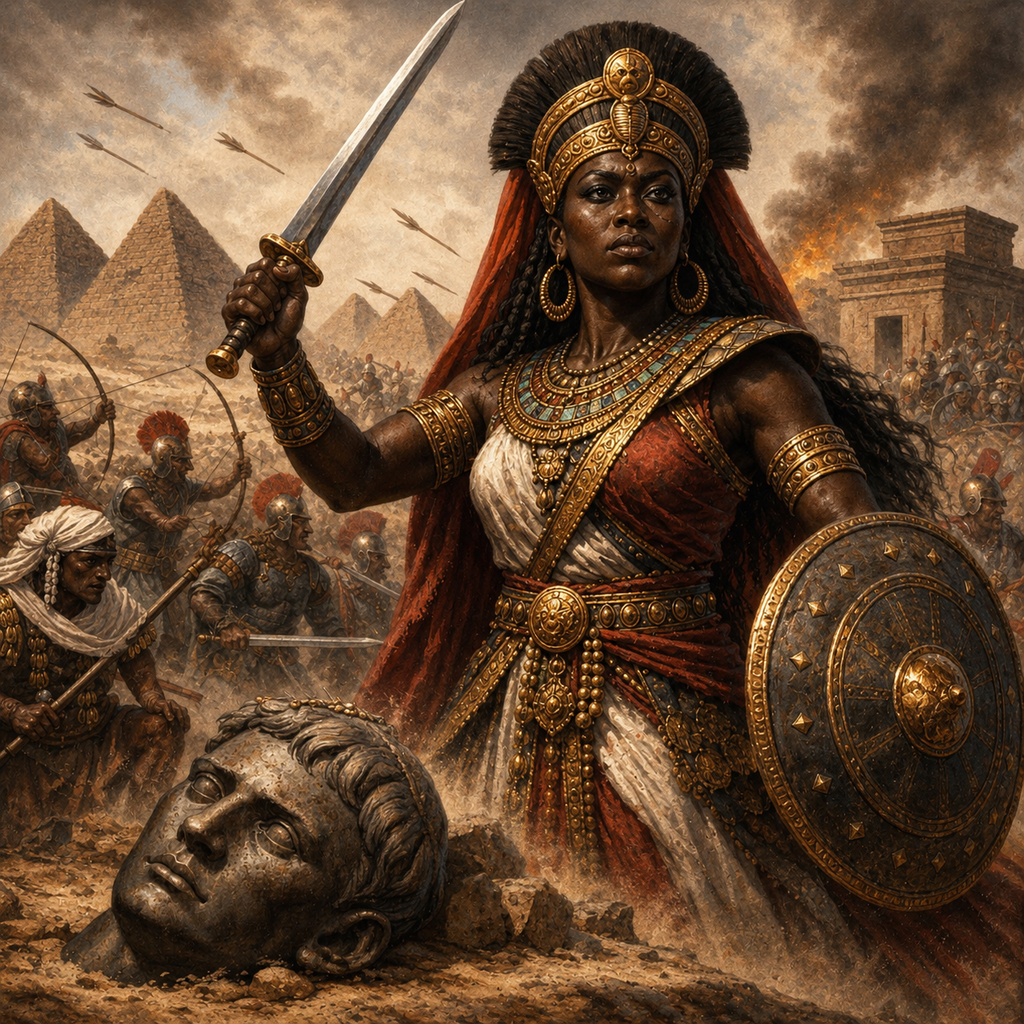

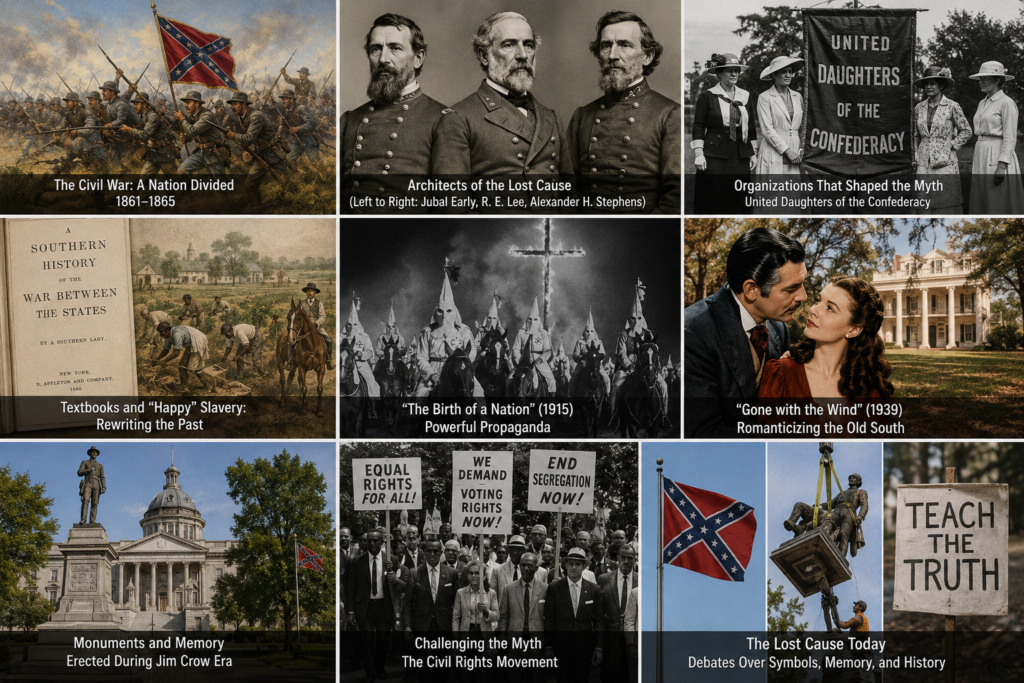
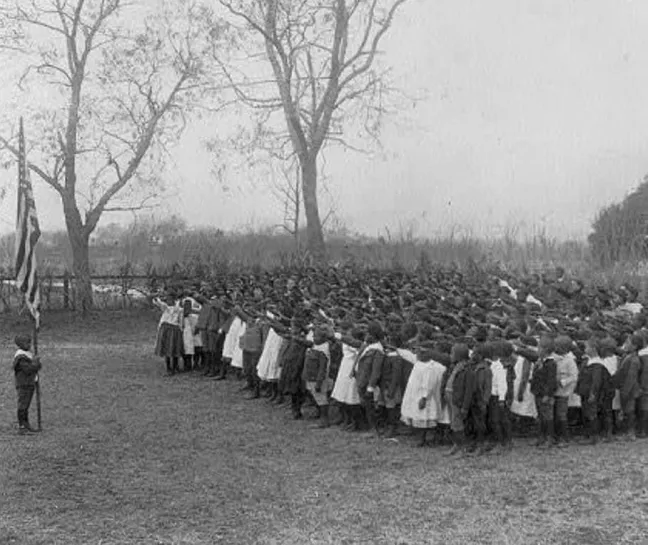
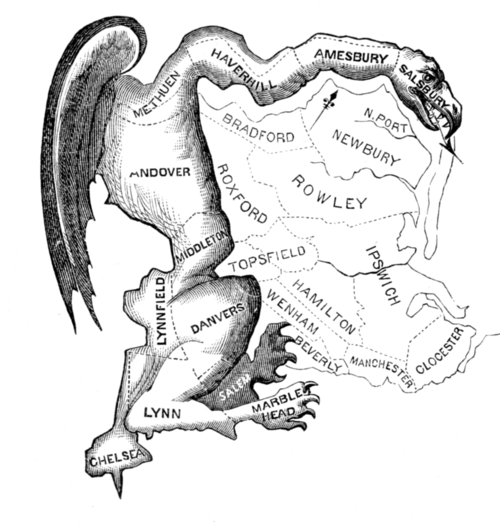
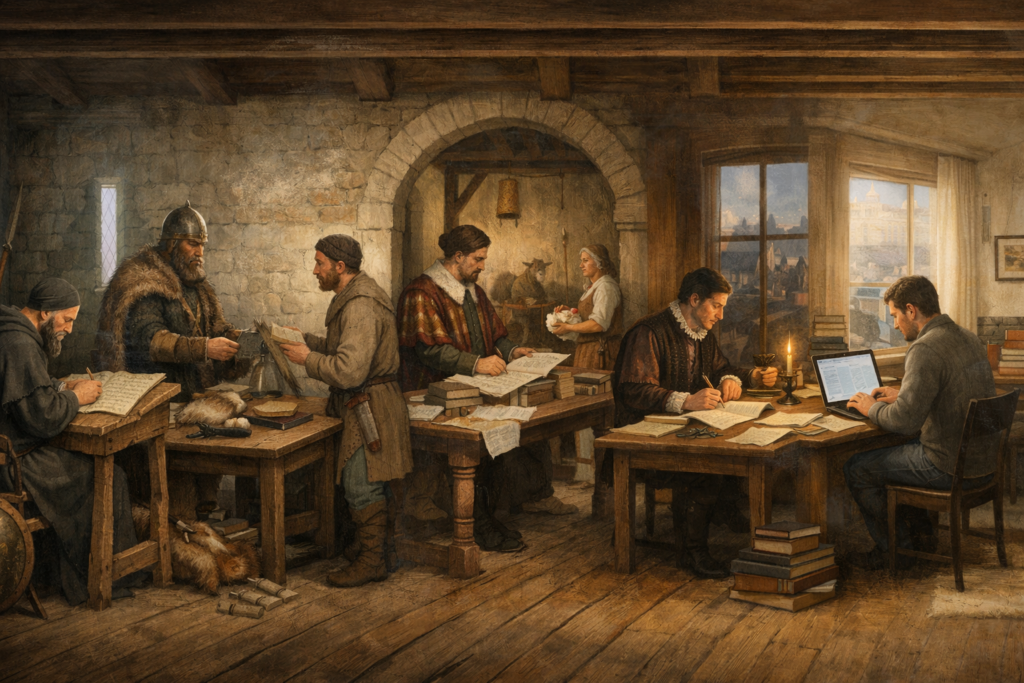


America at 250: A Revolution Remembered, Forgotten — or Rewritten?
By John Turley
On June 1, 2026
In Commentary, History
I’m old enough to remember the 200th anniversary of the American Revolution. Bicentennial symbols were everywhere — Liberty Bells, eagles, and that ubiquitous red, white, and blue stylized five-point star logo slapped on hats, T-shirts, socks, soft drink cups, beer cans, and even a special “Spirit of ’76” edition of the Ford Mustang II. Commemorative events were springing up everywhere, and people had full-blown bicentennial fever.
The 250th anniversary is a different animal entirely. Even the official name — Semiquincentennial — sounds like something you’d need a medical degree to pronounce. But the tongue-twisting label is the least of its problems.
The bicentennial came after a decade of national trauma: Vietnam, Watergate, and the civil rights struggles had left the country battered. By 1976, most Americans were ready to feel good about themselves again, and the bicentennial became a giant, colorful celebration of “American resilience.” The 250th arrives in a different kind of trauma — one that is arguably more confusing because it comes dressed as patriotism.
A Celebration Gets Complicated
While the 250th is being marked by numerous events, commemorations, and official proclamations, it has not yet captured the national imagination the way 1976 did. The official nonpartisan U.S. Semiquincentennial Commission, established by Congress in 2016 and supported by both George W. Bush and Barack Obama as Honorary Co-Chairs, has been working toward what it calls the “largest and most inclusive” anniversary celebration in American history. But its efforts have increasingly been overshadowed — and, critics argue, undermined — by a parallel White House effort with a very different philosophy about what American history should look like.
Shortly after taking office in January 2025, President Trump signed an executive order titled “Celebrating America’s 250th Birthday,” creating his own body — Task Force 250 — to coordinate anniversary plans and promising “a grand celebration worthy of the momentous occasion.” A full year of festivities was planned, beginning on Memorial Day 2025 and running through July 4, 2026. On paper, more attention on the anniversary sounds like good news. In practice, the story is more complicated.
When “Restoring History” Means Removing It
Two months after launching his anniversary task force, Trump signed a second executive order — this one titled “Restoring Truth and Sanity to American History” — directing Vice President Vance to eliminate what the order calls “divisive race-centered ideology” from Smithsonian museums, educational and research centers, and the National Zoo (the Zoo??). The Smithsonian, one of the world’s great repositories of American history, was accused by the president of having come “under the influence of a divisive, race-centered ideology” that portrayed “American and Western values as inherently harmful and oppressive.”
That executive order set off a chain of events that has complicated the 250th anniversary in ways the founding fathers would have found darkly ironic, given that the Revolution was, at its core, a fight against the arbitrary exercise of executive power.
At Philadelphia’s Independence National Historical Park — one of the most historically significant sites in the country — National Park Service employees abruptly removed exhibits about the nine people George Washington held in slavery while Philadelphia served as the nation’s capital. Passersby reportedly heard an employee repeating, “I’m just following orders” as the displays came down. The city of Philadelphia promptly sued the federal government, arguing that the removal violated a cooperative agreement for the site’s development.
This wasn’t an isolated incident. According to reporting from Poynter and PEN America, National Park Service employees were ordered to survey all signage and interpretive materials across the nation’s 400-plus parks and monuments, flagging anything “negative about either past or living Americans.” Exhibits about slavery, Indigenous history, women’s rights, and climate change were all swept into the review. At Fort Sumter in South Carolina — where the Civil War began — even a sign explaining the risks the site faces from rising sea levels was removed.
The Interior Department issued a November 2025 memo ordering National Park Service gift shops to remove items promoting DEI or “gender expression.” Free admission days that had previously honored Martin Luther King Jr. Day and Juneteenth were dropped; June 14 — Flag Day and President Trump’s birthday (does anyone thinks that’s a coincidence?) — was added instead.
Meanwhile, a proposed commemorative dollar coin design featured President Trump on the obverse and the words “Fight! Fight! Fight!” on the reverse — evoking the imagery from the July 2024 assassination attempt. The Commission of Fine Arts, whose members Trump dismissed in October 2025 and replaced with his own appointees, subsequently recommended the design.
The Money Problem
The nonpartisan America250 Commission hasn’t just faced ideological headwinds. It has also faced financial ones. By early 2026, the Commission had received only $25 million of its congressionally appropriated $150 million, with the remainder at risk of being redirected to Trump-aligned Freedom 250’s “Freedom Trucks” — six state-of-the-art mobile museums traveling the country telling a version of American history that aligns with the administration’s vision. Representative Bonnie Watson Coleman raised concerns about the funding diversion, though the Commission stated it had enough to continue its core programming.
What Actually Happened at Lexington and Concord
Against this backdrop, the 250th anniversary of the Battles of Lexington and Concord on April 19, 2025, became a preview of what the full anniversary might look like. The battle reenactments drew large crowds, along with protesters carrying signs reading “No Kings” and “Resist Like It’s 1775,” explicitly drawing parallels between opposition to King George III and what they saw as autocratic tendencies in current leadership.
Massachusetts Governor Maura Healey told the crowd at the North Bridge ceremony that “we see things that would be familiar to our Revolutionary predecessors — the silencing of critics, the disappearing people from our streets, demands for unquestioned fealty.” Whether one agrees with that characterization or not, the spectacle of Americans invoking the Revolution to oppose their own government at a Revolution commemoration is at minimum historically interesting — and arguably points to the enduring vitality of Revolutionary ideals.
Historians have noted that the Revolution itself was messier and more ambiguous than either side of today’s debate wants to acknowledge. As University of South Carolina professor Woody Holton observed, most colonists in April 1775 weren’t seeking independence — they wanted better treatment within the British Empire and a return to pre-1763 arrangements. The revolution was improvised, contentious, and full of people who disagreed about its meaning even while it was happening. Sound familiar?
The Founding Fathers Were Not a Monolith
Here is what is genuinely troubling about selectively sanitizing Revolutionary history: the founders themselves would not have recognized the sanitized version. George Washington, the hero of the Revolution, held people in slavery, including at the presidential residence in Philadelphia — the very site where exhibits were just torn down. Benjamin Franklin, who helped draft the Declaration of Independence, owned enslaved people and only became an abolitionist late in his life. Thomas Jefferson wrote “all men are created equal” while holding more than 600 people in bondage over his lifetime.
Removing this history doesn’t honor the founders. It patronizes them by pretending their contradictions didn’t exist — and it patronizes us by suggesting we can’t handle the full truth. Even they recognized the contradictions. The founders were brilliant, flawed, and human. That’s what makes the Revolution worth studying.
Resistance in the Courts and in the Institutions
It’s worth noting that the administration’s efforts have met significant resistance. Federal courts have blocked some removals. Scholars, activists, and historians have pushed back forcefully. A coalition of groups filed suit in February 2026 arguing that the Interior Department’s mandate to strip historical information from national parks violated the Administrative Procedure Act. Philadelphia’s lawsuit over the Washington slavery exhibit is ongoing.
Northwestern University historian Leslie M. Harris, author of five books on American slavery, has said that no previous presidential administration has interfered with historic sites in this way, and warned of a potential long-term consequence: public distrust of government-maintained historical sites, or outright avoidance of them.
What We Can Do
I wrote earlier about a friend on the West Virginia 250th committee who told me their initial meeting accomplished nothing and, almost two years later, they’ve had not had a further meeting. They have only just in the past few weeks announced their plans for America 250. That’s disappointing, but in some ways, it underscores the larger point: the commemoration of this anniversary is going to be shaped by whoever shows up.
Here in West Virginia, we showed what’s possible when citizens take the lead. In October 2024, without any state or national organizational or financial help, the City of Point Pleasant and the West Virginia Sons of the American Revolution organized a commemoration of the 250th anniversary of the Battle of Point Pleasant — a battle many consider a precursor to the Revolution. It worked. People came. History was honored.
We can do more of that. We don’t need to live in Massachusetts to commemorate Lexington and Concord. We don’t need federal approval to mark the signing of the Declaration of Independence, the Battle of Saratoga, or the crossing of the Delaware. We don’t need the government’s permission to tell complete history — including the parts about who was left out and who fought to be included anyway.
All across the country, individuals and small groups are working to recognize the revolution. In West Virginia, we’ve organized commemorations of the Boston Tea Party, the 250th anniversary of the founding of the Continental Navy and the Continental Marines, George Washington’s Birthday, and a special America 250 Memorial Day service at the West Virginia Veterans Memorial, all without any governmental support or funding. There have been presentations at local libraries and civic groups about the lives of average people during the time of the revolution, the origin of the American flag and even demonstrations of cooking and foods from the time of the revolution. If we had waited for state or national support these activities never would have happened. Just because your event may be small doesn’t mean it’s unimportant.
The Revolution, after all, was not a government program. It was a citizen uprising.
The Stakes
The American Revolution matters to world history precisely because it planted ideas — self-governance, the rule of law, the consent of the governed, the equality of all people before the law — that were genuinely radical ideas in 1776 and remain contested in much of the world today. Those ideas were aspirational when they were written. They remain aspirational now. The gap between the ideal and the reality is not a reason to hide the history; it is the history.
If the 250th anniversary is remembered primarily as a moment when the federal government selectively curated which parts of the founding era the public was allowed to encounter, that will itself become a significant historical footnote — and not a flattering one.
It will be our great shame if we allow the commemoration of an event so significant in both American and world history to be used — by anyone, of any political stripe — to divide us rather than to strengthen our common bond. The Revolution was imperfect, contentious, and incomplete. So is the republic it created. That is not a cause for despair. It is a call to engagement and improvement.
We the people. Still the operative phrase.
Illustration generated by author using ChatGPT.
—
Sources