
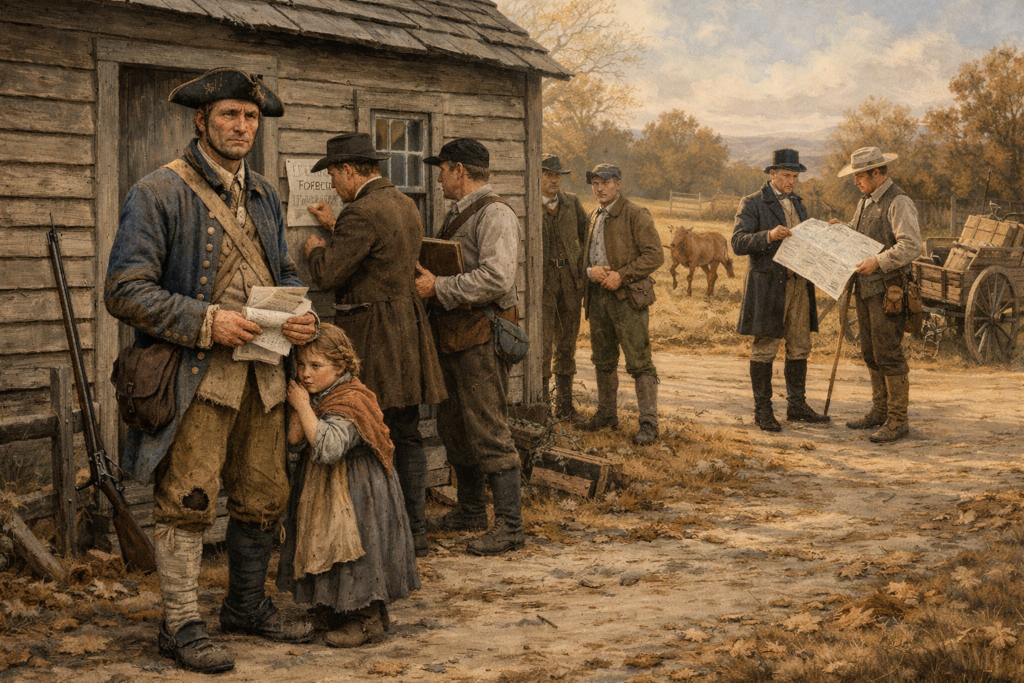
Last week I looked at how poorly revolutionary war veterans were treated in general. This week I’d like to take a look at a specific example —the contrast between how generals like Henry Knox and common soldiers like Joseph Plumb Martin fared after the Revolutionary War. It perfectly illustrates the class divide I discussed in my previous post. These two men served in the same army, helped win the same independence, and endured similar hardships—although Martin endured far greater hardship. Their post-war experiences couldn’t have been more different—and in a bitter twist, Knox’s prosperity came partly at Martin’s expense.
Knox’s Golden Parachute
Henry Knox entered the war as a Boston bookseller of modest means whose military knowledge was gained from reading rather than formal training. He rose to become Washington’s chief of artillery and a major general. When the war ended, Knox received benefits that set him up for life—or should have.
As an officer who served until the war’s end, Knox received the 1783 commutation payment: five years’ full pay in the form of government securities bearing six percent annual interest. This came after Knox himself helped lead the officer corps in pressuring Congress for payment during the near-mutiny known as the Newburgh Conspiracy in early 1783. In total, 2,480 officers received these commutation certificates
But Knox’s real windfall came from his marriage and his government connections. His wife Lucy came from a wealthy Loyalist family—her grandfather was Brigadier General Samuel Waldo, who’d gained control of a massive land patent in Maine in the 1730’s. When Lucy’s family fled to England, she became the sole heir to approximately 576,000 acres known as the Waldo Patent.
Knox used his position as the first Secretary of War (earning $3,000 annually in 1793) and his wartime connections to expand his land holdings and business ventures. He was able to ensure that his wife’s family lands were passed to her, rather than being seized by the government, as the holding of many loyalists were. Knox was firmly positioned on the creditor side of the equation, and his political connections helped shield him from the harsh economic reality faced by common soldiers.
He also acquired additional property in the Ohio Valley and engaged in extensive land speculation. He ran multiple businesses: timber operations, shipbuilding, brick-making, quarrying, and extensive real estate development.
After retiring from government in 1795, he built Montpelier, a magnificent three-story mansion in Thomaston, Maine, described as having “beauty, symmetry and magnificence” unequaled in Massachusetts. (My wife and I visited a reconstruction of his mansion this past summer and I can personally testify as to how elaborate a home it was.)
Martin’s Broken Promises
Joseph Plumb Martin’s story is the experience of the roughly 80,000-90,000 common soldiers who did most of the fighting. Martin enlisted at age 15 in 1776 and served seven years—fighting at Brooklyn, White Plains, Monmouth, surviving Valley Forge, and digging trenches at Yorktown. He rose from private to sergeant.
When Martin mustered out, he received certificates of indebtedness instead of actual pay—IOUs that depreciated rapidly. Unlike Knox, enlisted men received no pension, no commutation payment, nothing beyond those nearly worthless certificates. Martin, like many veterans, sold his certificates to speculators at a fraction of their face value just to survive.
After teaching briefly in New York, Martin settled in Maine in the early 1790s. Based on the promise of a land bounty from Massachusetts, Martin and other “Liberty Men” each claimed 100 acres in Maine, assuming that Loyalist lands would be confiscated and sold cheaply to the current occupants or, perhaps, even treated as vacant lands they could secure by clearing and improving.
Martin married Lucy Clewley in 1794 and started farming. He’d fought for independence and now just wanted to build a modest life in the belief that the country he had fought for would stand by its promises.
When Former Comrades Became Adversaries
Here’s where the story takes a dark turn. In 1794, Henry Knox—Martin’s former commanding general—asserted legal ownership of Martin’s 100-acre farm. Knox claimed the land was part of the Waldo Patent. Martin and other settlers argued they had the right to farm the land they’d improved, especially as it should be payment for their Revolutionary service.
The dispute dragged on for years, with some veterans even forming a guerrilla group called the “White Indians” who attacked Knox’s surveyors. But Knox had wealth, lawyers, and political connections. In 1797, the legal system upheld Knox’s claim. Martin’s farm was appraised at $170—payable over six years in installments.
To put that in perspective, when Martin finally received a pension in 1818—twenty-one years later—it paid only $96 per year. And to get even that meager pension, Martin had to prove he was destitute. The $170 Knox demanded represented nearly two years of the pension Martin wouldn’t receive for another two decades.
Martin begged Knox to let him keep the land. There’s no evidence Knox even acknowledged his letters. By 1811, Martin had lost more than half his farm. By 1818, when he appeared before the Massachusetts General Court with other veterans seeking their long-promised pensions, he owned nothing.
The Irony of “Fair Treatment”
Knox claimed he treated settlers on his Maine lands fairly, though he used intermediaries to evict those who couldn’t pay rent or whom he considered to be squatters. The settlers disagreed so strenuously that they once threatened to burn Montpelier to the ground
The situation’s bitter irony is hard to overstate. Knox had been one of the officers who organized the Society of the Cincinnati in 1783, ostensibly to support widows and orphans of Revolutionary War officers. He’d helped lead the push for officer commutation payments by threatening Congress during the Newburgh affair. Yet when common soldiers like Martin—men who’d literally dug the trenches that won the siege at Yorktown—needed help, Knox showed no mercy.
The Numbers Tell the Story
Let’s compare their situations side by side:
Henry Knox:
∙ Officer commutation: Five years’ full pay in securities with 6% interest
∙ Secretary of War salary: $3,000 per year (1793)
∙ Land holdings: 576,000+ acres in Maine, plus Ohio Valley properties
∙ Housing: Three-story mansion with extensive outbuildings
∙ Businesses: Multiple ventures in timber, ships, bricks, quarrying, real estate
∙ Death: 1806, in debt from failed business ventures but having lived in luxury
Joseph Plumb Martin:
∙ Enlisted pay: Mostly unpaid certificates sold at a loss to speculators
∙ Pension: None until 1818, then $96 per year (had to be destitute to qualify)
∙ Land holdings: Started with 100 acres, lost all most all of it to Knox by 1818
∙ Housing: Small farmhouse, struggling to farm 8 of his original 100 acres
∙ Income: Subsistence farming, served as town clerk for modest pay
∙ Death: 1850 at age 89, having struggled financially his entire post-war life
A Memoir Born of Frustration
In 1830, at age 70, Martin published his memoir anonymously. The full title captured his experience: “A Narrative of Some of the Adventures, Dangers, and Sufferings of a Revolutionary Soldier.” He published it partly to support other veterans fighting for their promised benefits and possibly hoping to earn some money from sales.
The book didn’t sell. It essentially disappeared until a first edition was rediscovered in the 1950s and republished in 1962. Today it’s considered one of the most valuable primary sources we have for understanding what common soldiers experienced during the Revolution. Historians praise it precisely because it’s not written by someone like Washington, Knox, or Greene—it’s the voice of a regular soldier
When Martin died in 1850, a passing platoon of U.S. Light Infantry stopped at his house and fired a salute to honor the Revolutionary War hero. But that gesture of respect came long after the country should have helped Martin when he needed it.
The Broader Pattern
Knox wasn’t unusual among officers, nor was Martin unusual among enlisted men. This was the pattern: officers with education, connections, and capital leveraged their wartime service into political positions, land grants, and business opportunities. Common soldiers received promises, waited decades for minimal pensions, and often lost what little property they had to the very elites who’d commanded them.
It’s worth noting that Knox’s business ventures eventually failed. He died in debt in 1806, having borrowed extensively to fund his speculations. His widow Lucy had to gradually sell off land to survive. But Knox still lived eleven years in a mansion, engaged in enterprises of his choosing, and died surrounded by family on his comfortable estate. Martin outlived him by forty-four years, spending most of them in poverty.
The story of Knox and Martin isn’t one of villainy versus heroism. Knox was a capable general who genuinely contributed to winning independence. Martin was a dedicated soldier who did the same. But the system they operated within distributed the benefits of that shared victory in profoundly unequal ways, and Knox—whether intentionally or not—used that system to take what little they had from soldiers who’d fought under his command. This was not corruption in the modern sense; it was the predictable outcome of a system that rewarded status, education, and proximity to power. Knox’s experience illustrates a broader truth of the post-Revolutionary period: independence redistributed political sovereignty, but economic security flowed upward, not downward.
When we talk about how Continental Army veterans were treated, this is what it looked like on the ground: the officer who led the charge for officer pensions living in a mansion on 600,000 acres, while the sergeant who dug the trenches at Yorktown lost his 100-acre farm and had to prove he was destitute to get $96 a year, decades too late to matter. This will always be a black mark on American history.
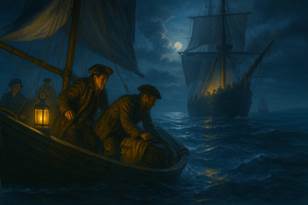
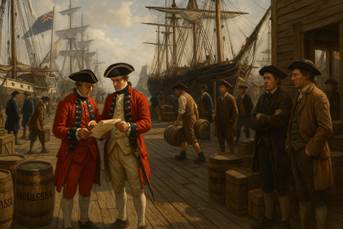
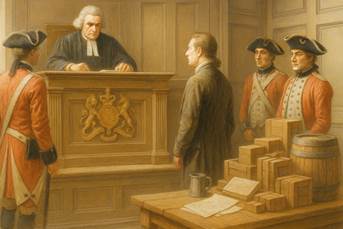
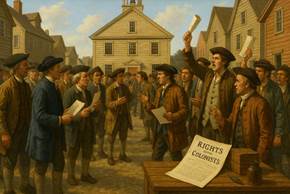
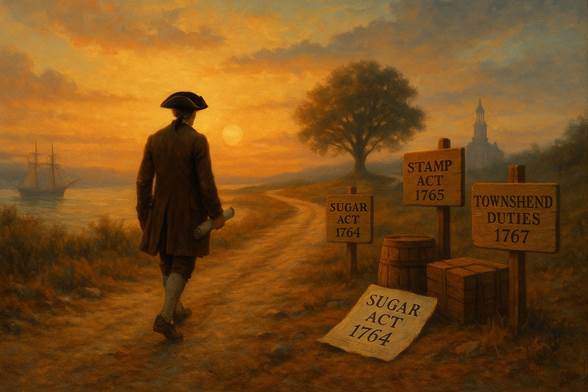
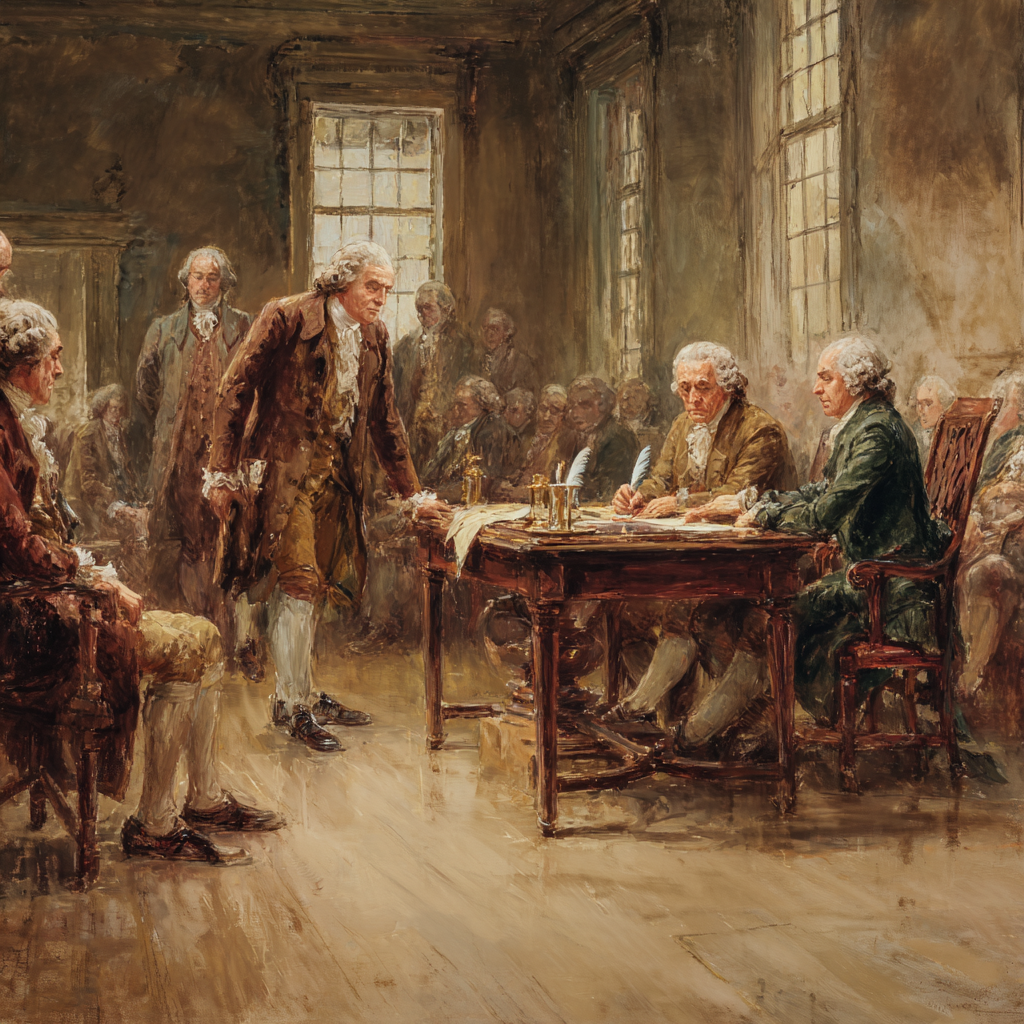
Illustrations generated by author using ChatGPT.
Personal note: I spent 12 years on active duty, both as an officer and an enlisted man. I’m proud of my service and I’m proud of the people who have served our country. I do not write this in order to condemn our history. I write it in order to make us aware that we need to always support the common people who contribute vitally to our national success and are seldom recognized.
Sources
Martin, Joseph Plumb. “A Narrative of a Revolutionary Soldier: Some of the Adventures, Dangers and Sufferings of Joseph Plumb Martin”
Originally published anonymously in 1830 at Hallowell, Maine as “A narrative of some of the adventures, dangers, and sufferings of a Revolutionary soldier, interspersed with anecdotes of incidents that occurred within his own observation.” The memoir fell into obscurity until a first edition copy was discovered in the 1950s and donated to Morristown National Historical Park. Republished by Little, Brown in 1962 under the title “Private Yankee Doodle” (edited by George F. Scheer). Current edition published 2001. This firsthand account by a Continental Army private who served seven years provides invaluable insight into the common soldier’s experience during the war and the struggles veterans faced afterward, including Martin’s own land dispute with Henry Knox. I highly recommend this book to anyone with an interest in ordinary people and their role in history.
American Battlefield Trust – The Newburgh Conspiracy
https://www.battlefields.org/learn/articles/newburgh-conspiracy
Maine Memory Network – Henry Knox: Land Dealings
https://thomaston.mainememory.net/page/735/display.html
World History Encyclopedia – Henry Knox
https://www.worldhistory.org/Henry_Knox/
Maine: An Encyclopedia – Knox, Henry
https://maineanencyclopedia.com/knox-henry/
American Battlefield Trust – Joseph Plumb Martin: Voice of the Common American Soldier
https://www.battlefields.org/learn/articles/joseph-plumb-martin
Wikipedia – Joseph Plumb Martin
https://en.wikipedia.org/wiki/Joseph_Plumb_Martin
Note on Additional Context: While these were the primary sources directly used in this article, the discussion also drew on information from my earlier Revolutionary War veterans article about the general treatment of enlisted soldiers, pension systems, and the class disparities in how benefits were distributed after the war.




The Founding Feuds: When America’s Heroes Couldn’t Stand Each Other
By John Turley
On February 6, 2026
In Commentary, History, Politics
The mythology of the founding fathers often portrays them as a harmonious band of brothers united in noble purpose. The reality was far messier—these brilliant, ambitious men engaged in bitter personal feuds that sometimes threatened the very republic they were creating. In some ways, the American revolution was as much of a battle of egos as it was a war between King and colonists.
The Revolutionary War Years: Hancock, Adams, and Washington’s Critics
The tensions began even before independence was declared. John Hancock and Samuel Adams, both Massachusetts firebrands, developed a rivalry that simmered throughout the Revolution. Adams, the older political strategist, had been the dominant figure in Boston’s resistance movement. When Hancock—wealthy, vain, and eager for glory—was elected president of the Continental Congress in 1775, the austere Adams felt his protégé had grown too big for his britches. Hancock’s request for a leave of absence from the presidency of Congress in 1777 coupled with his desire for an honorific military escort home, struck Adams as a relapse into vanity. Adams even opposed a resolution of thanks for Hancock’s service, signaling open estrangement. Their relationship continued to deteriorate to the point where they barely spoke, with Adams privately mocking Hancock’s pretensions and Hancock using his position to undercut Adams politically.
The choice of Washington as commander sparked its own controversies. John Adams had nominated Washington, partly to unite the colonies by giving Virginia the top military role. Washington’s command was anything but universally admired and as the war dragged on with mixed results many critics emerged.
After the victory at Saratoga in 1777, General Horatio Gates became the focal point of what’s known as the Conway Cabal—a loose conspiracy aimed at having Gates replace Washington as commander-in-chief. General Thomas Conway wrote disparaging letters about Washington’s military abilities. Some members of Congress, including Samuel Adams, Thomas Mifflin, and Richard Henry Lee, questioned whether Washington’s defensive strategy was too cautious and if his battlefield performance was lacking. Gates himself played a duplicitous game, publicly supporting Washington while privately positioning himself as an alternative.
When Washington discovered the intrigue, his response was characteristically measured but firm. Rather than lobbying Congress or forming a counter-faction, Washington leaned heavily on reputation and restraint. He continued to communicate respectfully with Congress, emphasizing the army’s needs rather than defending his own position. Washington did not respond with denunciations or public accusations. Instead, he handled the situation largely behind the scenes. When he learned that Conway had written a critical letter praising Gates, Washington calmly informed him that he was aware of the letter—quoting it verbatim.
The conspiracy collapsed, in part because Washington’s personal reputation with the rank and file and with key political figures proved more resilient than his critics had anticipated. But the episode exposed deep fractures over strategy, leadership, and regional loyalties within the revolutionary coalition.
The Ideological Split: Hamilton vs. Jefferson and Madison
Perhaps the most consequential feud emerged in the 1790s between Alexander Hamilton and Thomas Jefferson, with James Madison eventually siding with Jefferson. This wasn’t just personal animosity—it represented a fundamental disagreement about America’s future.
Hamilton, Washington’s Treasury Secretary, envisioned an industrialized commercial nation with a strong central government, a national bank, and close ties to Britain. Jefferson, the Secretary of State, championed an agrarian republic of small farmers with minimal federal power and friendship with Revolutionary France. Their cabinet meetings became so contentious that Washington had to mediate. Hamilton accused Jefferson of being a dangerous radical who would destroy public credit. Jefferson called Hamilton a monarchist who wanted to recreate British aristocracy in America.
The conflict got personal. Hamilton leaked damaging information about Jefferson to friendly newspapers. Jefferson secretly funded a journalist, James Callender, to attack Hamilton in print. When Hamilton’s extramarital affair with Maria Reynolds became public in 1797, Jefferson’s allies savored every detail. The feud split the nation into the first political parties: Hamilton’s Federalists and Jefferson’s Democratic-Republicans. Madison, once Hamilton’s ally in promoting the Constitution, switched sides completely, becoming Jefferson’s closest political partner and Hamilton’s implacable foe.
The Adams-Jefferson Friendship, Rivalry, and Reconciliation
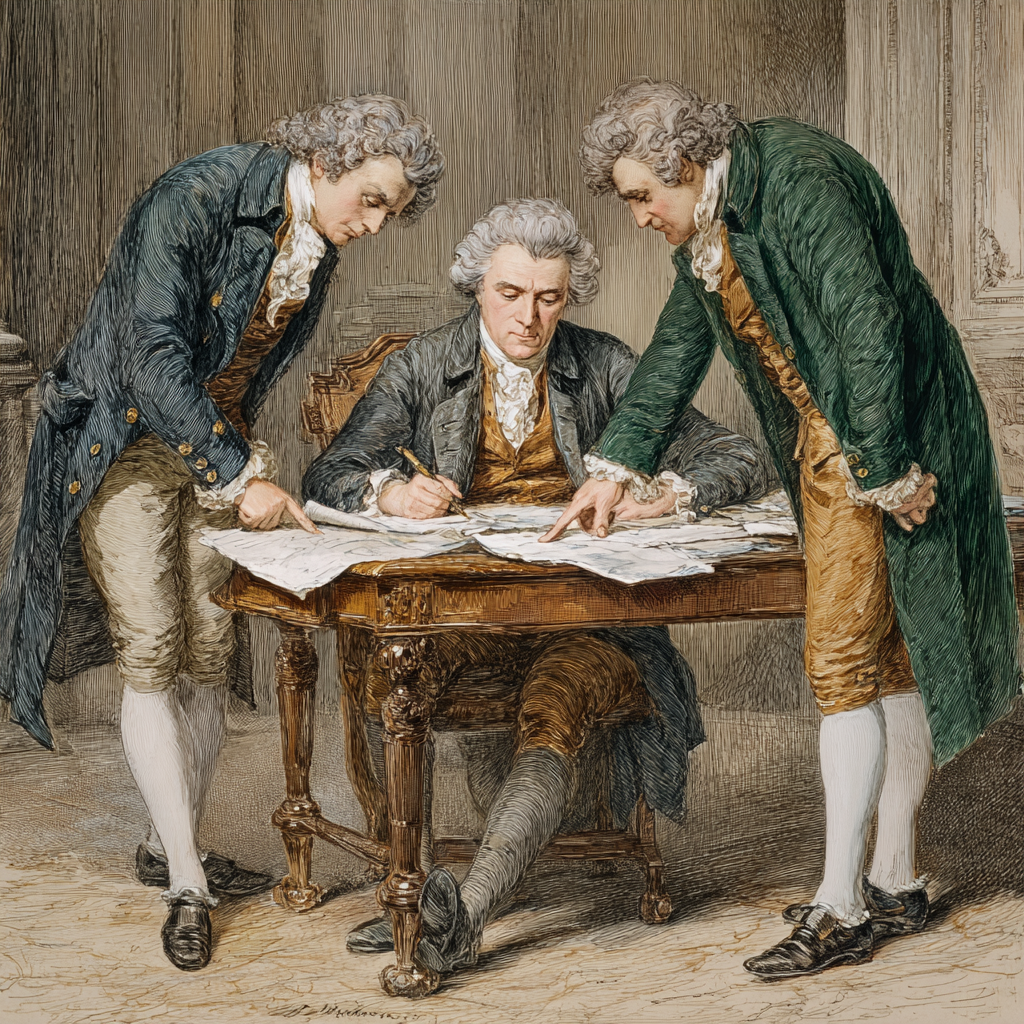
John Adams and Thomas Jefferson experienced one of history’s most remarkable personal relationships. They were close friends during the Revolution, working together in Congress and on the committee to draft the Declaration of Independence (though Jefferson did the actual writing). Both served diplomatic posts in Europe and developed deep mutual respect.
But the election of 1796 turned them into rivals. Adams won the presidency with Jefferson finishing second, making Jefferson vice president under the original constitutional system—imagine your closest competitor becoming your deputy. By the 1800 election, they were bitter enemies. The campaign was vicious, with Jefferson’s supporters calling Adams a “hideous hermaphroditical character” and Adams’s allies claiming Jefferson was an atheist who would destroy Christianity.
Jefferson won in 1800, and the two men didn’t speak for over a decade. Their relationship was so bitter that Adams left Washington early in the morning, before Jefferson’s inauguration. What makes their story extraordinary is the reconciliation. In 1812, mutual friends convinced them to resume correspondence. Their letters over the next fourteen years—158 of them—became one of the great intellectual exchanges in American history, discussing philosophy, politics, and their memories of the Revolution. Both men died on July 4, 1826, the fiftieth anniversary of the Declaration of Independence, with Adams’s last words reportedly being “Thomas Jefferson survives” (though Jefferson had actually died hours earlier).
Franklin vs. Adams: A Clash of Styles
In Paris, the relationship between Benjamin Franklin and John Adams was a tense blend of grudging professional reliance and deep personal irritation, rooted in radically different diplomatic styles and temperaments. Franklin, already a celebrated figure at Versailles, cultivated French support through charm, sociability, and patient maneuvering in salons and at court, a method that infuriated Adams. He equated such “nuances” with evasiveness and preferred direct argument, formal memorandums, and hard‑edged ultimatums. Sharing lodgings outside Paris only intensified Adams’s resentment as he watched Franklin rise late, receive endless visitors, and seemingly mix pleasure with business, leading Adams to complain that nothing would ever get done unless he did it himself, while Franklin privately judged Adams “always an honest man, often a wise one, but sometimes and in some things, absolutely out of his senses.” Their French ally, Foreign Minister Vergennes, reinforced the imbalance by insisting on dealing primarily with Franklin and effectively sidelining Adams in formal diplomacy. This deepened Adams’s sense that Franklin was both overindulged by the French and insufficiently assertive on America’s behalf. Yet despite their mutual loss of respect, the two ultimately cooperated—often uneasily—in the peace negotiations with Britain, and both signatures appear on the 1783 Treaty of Paris, a testament to the way personal feud and shared national purpose coexisted within the American diplomatic mission.
Hamilton and Burr: From Political Rivalry to Fatal Duel
The Hamilton-Burr feud ended in the most dramatic way possible: a duel at Weehawken, New Jersey, on July 11, 1804, where Hamilton was mortally wounded and Burr destroyed his own political career.
Their rivalry had been building for years. Both were New York lawyers and politicians, but Hamilton consistently blocked Burr’s ambitions. When Burr ran for governor of New York in 1804, Hamilton campaigned against him with particular venom, calling Burr dangerous and untrustworthy at a dinner party. When Burr read accounts of Hamilton’s remarks in a newspaper, he demanded an apology. Hamilton refused to apologize or deny the comments, leading to the duel challenge.
What made this especially tragic was that Hamilton’s oldest son, Philip, had been killed in a duel three years earlier defending his father’s honor. Hamilton reportedly planned to withhold his fire, but he either intentionally shot into the air or missed. Burr’s shot struck Hamilton in the abdomen, and he died the next day. Burr was charged with murder in both New York and New Jersey and fled to the South. Though he later returned to complete his term as vice president, his political career was finished.
Adams vs. Hamilton: The Federalist Crack-Up
One of the most destructive feuds happened within the same party. John Adams and Alexander Hamilton were both Federalists, but their relationship became poisonous during Adams’s presidency (1797-1801).
Hamilton, though not in government, tried to control Adams’s cabinet from behind the scenes. When Adams pursued peace negotiations with France (the “Quasi-War” with France was raging), Hamilton wanted war. Adams discovered that several of his cabinet members were more loyal to Hamilton than to him and fired them. In the 1800 election, Hamilton wrote a fifty-four-page pamphlet attacking Adams’s character and fitness for office—extraordinary since they were in the same party. The pamphlet was meant for limited circulation among Federalist leaders, but Jefferson’s allies got hold of it and published it widely, devastating both Adams’s re-election chances and Hamilton’s reputation. The feud helped Jefferson win and essentially destroyed the Federalist Party.
Washington and Jefferson: The Unacknowledged Tension
While Washington and Jefferson never had an open feud, their relationship cooled significantly during Washington’s presidency. Jefferson, as Secretary of State, increasingly opposed the administration’s policies, particularly Hamilton’s financial program. When Washington supported the Jay Treaty with Britain in 1795—which Jefferson saw as a betrayal of France and Republican principles—Jefferson became convinced Washington had fallen under Hamilton’s spell.
Jefferson resigned from the cabinet in 1793, partly from policy disagreements but also from discomfort with what he saw as Washington’s monarchical tendencies (the formal receptions and the ceremonial aspects of the presidency). Washington, in turn, came to view Jefferson as disloyal, especially when he learned Jefferson had been secretly funding attacks on the administration in opposition newspapers and had even put a leading critic on the federal payroll. By the time Washington delivered his Farewell Address in 1796, warning against political parties and foreign entanglements, many saw it as a rebuke of Jefferson’s philosophy. They maintained outward courtesy, but their warm relationship never recovered.
Why These Feuds Mattered
These weren’t just personal squabbles—they shaped American democracy in profound ways. The Hamilton-Jefferson rivalry created our two-party system (despite Washington’s warnings). The Adams-Hamilton split showed that parties could fracture from within. The Adams-Jefferson reconciliation demonstrated that political enemies could find common ground after leaving power.
The founding fathers were human, with all the ambition, pride, jealousy, and pettiness that entails. They fought over power, principles, and personal slights. What’s remarkable isn’t that they agreed on everything—they clearly didn’t—but that despite their bitter divisions, they created a system robust enough to survive their feuds. The Constitution itself, with its checks and balances, almost seems designed to accommodate such disagreements, ensuring that no single person or faction could dominate.
SOURCES
https://founders.archives.gov
2. Massachusetts Historical Society – Adams-Jefferson Letters
https://www.masshist.org/publications/adams-jefferson
3. Founders Online – Hamilton’s Letter Concerning John Adams
https://founders.archives.gov/documents/Hamilton/01-25-02-0110
4. Gilder Lehrman Institute – Hamilton and Jefferson
https://www.gilderlehrman.org/history-resources/spotlight-primary-source/alexander-hamilton-and-thomas-jefferson
5. National Park Service – The Conway Cabal
https://www.nps.gov/articles/000/the-conway-cabal.htm
6. American Battlefield Trust – Hamilton-Burr Duel
https://www.battlefields.org/learn/articles/hamilton-burr-duel
7. Mount Vernon – Thomas Jefferson
https://www.mountvernon.org/library/digitalhistory/digital-encyclopedia/article/thomas-jefferson
8. Monticello – Thomas Jefferson Encyclopedia
https://www.monticello.org/research-education/thomas-jefferson-encyclopedia
9. Library of Congress – John Adams Papers
https://www.loc.gov/collections/john-adams-papers
10. Joseph Ellis – “Founding Brothers: The Revolutionary Generation”
https://www.pulitzer.org/winners/joseph-j-ellis
Illustration generated by author using ChatGPT.