
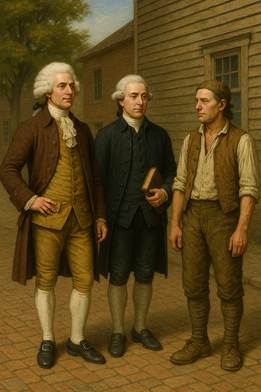
I’ve been spending a lot of time recently researching and writing about the 250th Anniversary of the American Revolution and I keep asking myself, “What’s up with the wigs?” Have you ever wondered why the Founding Fathers look so impossibly fancy in their portraits? Well, you can thank a French king and a syphilis epidemic. The elaborate wigs worn by early American leaders weren’t just fashion statements—they were complex social symbols that said everything about who you were, what you could afford, and how seriously you wanted to be taken.
Where It All Started
The wig craze didn’t begin in America. It started across the Atlantic when France’s King Louis XIII went bald prematurely in the 1600s and decided to cover it up with a wig. But it was his son, Louis XIV, who really kicked things into high gear. When the Sun King started losing his hair, he commissioned elaborate wigs that became the epitome of aristocratic style. European nobility, desperate to emulate French sophistication, quickly followed suit.
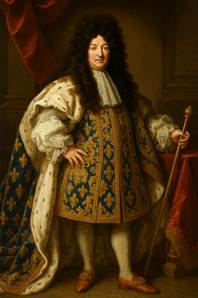
The practice also had a less glamorous origin story. Syphilis was rampant in 17th-century Europe, and one of its unfortunate side effects was hair loss. Wigs conveniently covered up this telltale symptom while also hiding the sores and blemishes that came with the disease.
Europe in the 1600s and 1700s also had frequent outbreaks of lice and other parasites. Shaving one’s natural hair short and wearing a wig—which could be cleaned, boiled, or deloused more easily—became a practical solution. Powdering helped keep wigs fresh and masked odors.
By the time the fashion crossed the ocean to colonial America in the early 1700s, wigs had become standard attire for anyone with social pretensions.
Status on Your Head
In colonial America, your wig announced your place in society before you even opened your mouth. The most expensive and elaborate wigs featured long, flowing curls that cascaded past the shoulders—these full-bottomed wigs could cost the equivalent of several months’ wages for an average worker. Wealthy merchants, successful plantation owners, and colonial officials wore these statement pieces to project authority and refinement.
Professional men like doctors, lawyers, and clergy typically wore more modest styles. The “tie wig” gathered hair at the back with a ribbon, while the “bob wig” featured shorter hair that ended around the neck. These styles were practical enough for men who actually had to work, but still formal enough to command respect. Even the style of curl mattered—tight curls suggested conservatism and tradition, while looser waves indicated a more progressive outlook.
Working-class men generally couldn’t afford real wigs. Some wore simple caps or went bareheaded, while others might invest in a cheap wig made from horsehair or goat hair for special occasions. The quality difference was obvious—human hair wigs, especially those made from blonde or white hair, were luxury items that only the wealthy could obtain.
Many men who did not wear wigs but still wanted the fashionable look would grow their own hair long, pull it into a queue (pony tail), and powder it. George Washington is a good example — portraits show his natural hair powdered white, not a wig.
The Daily Reality of Wig Life
Maintaining these hairpieces was no joke. Owners had to powder their wigs regularly with starch powder, often scented with lavender or orange, to achieve that distinctive white or gray color that signaled refinement. The powder got everywhere, which is why men often wore special dressing gowns during the powdering process.
Wigs required regular cleaning and restyling by professionals called peruke makers or wigmakers. These craftsmen commanded good money in colonial cities, advertising their services alongside other luxury trades. The hot, humid summers in places like Virginia and South Carolina made wig-wearing particularly miserable, but fashion demanded sacrifice.
The Revolutionary Shift
By the time of the American Revolution, attitudes toward wigs were already changing. The shift happened for several interconnected reasons, and it reflected broader transformations in American society.
First, the Revolutionary War itself promoted practical thinking. Military officers found elaborate wigs impractical in the field, and the democratic ideals of the Revolution made aristocratic European fashions seem pretentious. Many younger revolutionaries, including Thomas Jefferson, stopped wearing wigs as a political statement against Old World affectation.
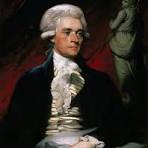
A young Jefferson with a wig
Second, France—the original source of wig fashion—underwent its own revolution in 1789. As French revolutionaries literally beheaded the aristocracy, powdered wigs became associated with the despised nobility. What had once symbolized sophistication now suggested tyranny and excess.
In Great Britain, Parliament introduced a tax on hair powder as part of Prime Minister William Pitt the Younger’s revenue-raising measures. The law required anyone who used hair powder to purchase an annual certificate costing one guinea (a little over $200 in today’s money). This contributed to the growing sense that wigs were an unnecessary extravagance. Meanwhile, changing ideals of masculinity emphasized natural simplicity over artificial ornamentation.
By the early 1800s, the wig had largely disappeared from everyday American life. A new generation of leaders, including Andrew Jackson, proudly displayed their natural hair. The transition happened remarkably quickly—within a single generation, wigs went from essential to absurd. By the 1820s, anyone still wearing a powdered wig looked hopelessly outdated, clinging to a world that no longer existed.
The Legacy
Today, elaborate wigs survive primarily in British courtrooms, where some judges still wear them in formal proceedings—a deliberate echo of legal tradition. The powdered wigs of the Founding Fathers remain iconic, instantly recognizable symbols of early American history, even though the men who wore them were already abandoning the fashion by the time they built the new nation.
Leave a Reply