In July 2025 when Trump descended that famous escalator to announce his candidacy for the Republican presidential nomination, I thought he was just a fading reality TV star trying to increase his brand. I never suspected he would be a serious candidate, but I hoped that he would bring some entertainment to what appeared to be a large but otherwise boring field of Republican candidates. I just hoped he wouldn’t drop out too soon. I never expected nor could even have imagined that this would be the beginning of more than a decade of turmoil, the least of which is Trump‘s relationship to the media.
Interestingly, Trump’s love-hate relationship with the media didn’t begin with his presidential campaign. In the 1970s and 80s when he was a real estate developer, he began courting the press. Like most things in his life, it was transactional. He would trade gossip and insider information about the real estate business in return for favorable publicity about himself and his businesses. He was even known to call reporters using a fake name to praise himself and try to curry more favorable coverage.
Even then he was not above criticizing the press, laying the early groundwork for his much later claims of “fake news “. If a news article listed his net worth as being less than what he claimed or would criticize a real estate project, he would respond with unfailing criticism. He filed a $500 million lawsuit against the Chicago Tribune after an article criticized his 150-story Manhattan skyscraper project as being “one of the silliest things anyone could inflict on New York “. He also filed a $5 billion lawsuit against journalist Timothy O’Brien for his 2005 book Trump Nation which estimated his net worth in between $150 million and $250 million, far below the billions that Trump had claimed. Both of these lawsuits were dismissed. This may have set the stage for Trump’s litigative interaction with the news media. He didn’t have to win to get the attention he was seeking. Later, as president he would have the additional leverage to almost force settlement by the news media who needed his approval for their larger projects.
Trump’s relationship with the media changed with the premiere of The Apprentice in 2004. The show presented Trump as an exceptionally successful and decisive businessman. Since it wasn’t journalism, but was instead entertainment, it was given a factual pass. The Apprentice left him accustomed to mostly favorable coverage, making the media response to his campaign that much more surprising to him.
Back to the escalator.
At first, most of the media treated him as a curiosity, and an entertaining one as well. He could be counted on for a colorful quote or a timely soundbite. Some thought it was a publicity stunt designed to increase his reality TV brand. But early in his campaign for the nomination, his tone turned dark, attacking immigrants, liberals, and his opponents for the nomination. He no longer seemed as amusing.
As reporters began to dig into his finances and business practices and to question the credibility of many of his claims, Trump went on the attack.
He quickly learned that he could dominate a news cycle with provocative statements, outrageous claims, and personal insults. While the coverage was not always positive, it always satisfied his need for attention. He was beginning to refine his persecution narrative that would become a central theme in his personal political brand.
Trump’s first use of his now iconic phrase “fake news” was on December 10th, 2016, in a tweet about a month after he won election. In a January 11th, 2017, news conference Trump refused to answer a question from CNN correspondent Jim Acosta saying, “You are fake news.” He rapidly incorporated that phrase for anything that was critical or with which he disagreed. He went so far as to call much of the media “enemies of the American people”. He was attempting to claim the news outlet critical to him were in fact hostile to the country.
Trump claimed to have invented the term “fake news,” but like many other things associated with him it did not stand up to scrutiny. The Oxford English Dictionary identifies the earliest use of the term as a story in the Milwaukee Daily Journal in 1890. The term “fake news” appeared in numerous newspapers throughout the 1890s and early 1900s. Even earlier, newspapers had used a term “false news” for stories they felt were obviously untrue. This usage was limited to stories that were believed to have been fabricated. Trump morphed it into a criticism of anything he didn’t like.
Trump’s battle with Jim Acosta continued until November 2018 when he revoked Acosta’s White House press credentials. This is the first time that a president’s press office has ever cancelled a reporter’s credentials for anything other than a security or conduct issue.
His battle with the press continued in his second term. He developed a new strategy and began to file defamation and related lawsuits against major news outlets. He filed multiple lawsuits, both against broadcast organizations and the print media, including CBS News, ABC News, the Wall Street Journal, the New York Times, and BBC.
Despite the fact that most legal observers found the suits to be baseless, ABC News and Paramount, the parent company of CBS, settled with Trump almost exclusively on his terms. Many observers thought that this was largely because of his threats, both direct and implied, to their broadcast licenses.
The battle with the media reached its high point in September of 2026 when he announced that CNN, Politico, and MS NOW would be barred from the White House press pool and their reporters’ credentials were cancelled. Those organizations filed suit alleging the administration had violated their 1st and 5th Amendment rights.
Because of the limited space available in the White House pressroom, news organizations have typically rotated to cover news conferences forming a “pool” that will then share information with the other news agencies. News networks, including Fox News, canceled pool television coverage of some events. The New York Times and the Washington Post temporarily stopped photographing White House events.
This dispute is ongoing. All three organizations have regained access to the White House grounds but still find themselves limited in coverage of presidential events.
To be fair, not all of Trump’s complaints were without basis. During his first campaign and subsequent presidential term some stories were based on anonymous sources that later proved incorrect or overstated. Investigation into Russian election interference in 2016 was often based on speculation and political commentary was not always kept separate from news reporting.
Trump has a more cordial relationship with the conservative media, particularly Fox News. Although it is not without its rough patches. When Fox News announced on election night in 2020 that Joe Biden had won in Arizona, Trump reacted angrily. He encouraged his supporters to turn to Newsmax, and One America News Network because they supported him unconditionally and and were willing to accept his unfounded claim of election fraud. Trump often failed to distinguish between Fox’s conventional news operations and its openly partisan opinion programming, believing that any criticism of him, even factual, was fake news.
Even during his battles with mainstream media organizations Trump had an advantage that no other president previously had. He understood social media like no one else before him. Other candidates had assumed that social media was a way just to reach younger voters. Trump realized it could be used to reach across all ages, social and economic classes, and political affiliations. He used social media, particularly Twitter, to attack his enemies, make outrageous statements, and to fire up his supporters.
Trump’s Twitter account was suspended on January 8, 2021, because the company believed his posts posed a “risk of further excitement of violence“ following the January 6 attack on the capital. Twitter said the post violated its policy against glorifying violence. Facebook, Instagram, YouTube, and Snapchat quickly followed suit.
Following his suspension from Twitter, Trump was instrumental in forming his own social media outlet, Truth Social. Even though Trump’s Twitter, now X, account was restored in November 2022, Truth Social remains his principle social media outlet.
Trump turned increasingly to social media as he discovered it freed him from editors, publishers, and most importantly, fact checkers. He began to release policy statements, discuss pending legislation and even fire administration officials via social media. Many of his posts were made obviously without review by advisors, administration officials or attorneys. At times, such as tweets about tariff rates, transgender military personnel, Obama wiretapping Trump Tower, and the now infamous memes, the White House found itself having to give elaborate, sometimes convoluted, explanations of what Trump really meant.
Trump was far from the first president to have difficulties or complaints about the press. George Washington was frequently angered by newspaper attacks. John Adams signed the sedition act of 1798 and used it to prosecute journalists critical of him and the federal government. Abraham Lincoln’s administration put restrictions on some newspapers during the civil war. John Kennedy was publicly friendly with the press but was known to exert backchannel pressure to suppress stories of which he disapproved. Prior to Trump, no president had as hostile a relationship with the press as did Richard Nixon. He maintained an enemy’s list and used Vice President Spiro Agnew as a proxy to attack newspapers and television journalists.
Trump is part of a long history of presidents who were unhappy about their news coverage. What makes him different is his constant personal attacks, direct communication through social media, litigation against news organizations and attempts to directly control access to White House news events. His actions are not merely in response to controversial policies or bad coverage, they are part of his governing philosophy, reinforce the message that established news outlets cannot be trusted and that only he will provide the truth. Unfortunately, it seems to be working.
Image generated by author using ChatGPT.
Sources
1. History Hit, “Fake News, Donald Trump’s Relationship With It and Its Chilling Effects Explained” (background on the 2017–2018 Acosta press conferences and the rise of the term “fake news”): https://www.historyhit.com/fake-news-donald-trump/
13. History News Network, review of Harold Holzer, “The Presidents vs. the Press” (historical comparisons involving Adams, Lincoln, T. Roosevelt, Wilson, and Nixon): https://hnn.us/article/177037
Americans have been arguing about the place of religion and government since before the constitution was written. Is this a Christian nation, or did the founders deliberately create a government that was not Christian? The question has never really gone away it has resurfaced in a 224-page draft report from President Trump’s Religious Liberty Commission.
The Founding Generation
The Declaration of Independence unquestionably assumes a divine source for human rights. But that is not the same thing as declaring that the United States is a Christian nation, particularly if “Christian nation” means a country whose government was founded upon Christianity, biblical law, or Christian doctrine.
We would be equally mistaken to portray the Declaration as an atheistic or thoroughly secular document. God is clearly present in its philosophical framework.
The more difficult question is: What kind of God? The Declaration never mentions Jesus Christ, Christianity, the Bible, salvation, the Trinity, the Church, the Gospel, or Christian revelation. Instead, its terminology, “Nature’s God,” “Creator,” “Supreme Judge,” and “divine Providence,” is broad enough to encompass traditional Christians, more rationalistic Christians, and people influenced by the Enlightenment and natural religion.
That appears intentional. The Declaration was a political statement intended to speak for thirteen colonies containing Anglicans, Congregationalists, Presbyterians, Quakers, Baptists, Catholics, and others. The National Archives describes its preamble as deliberately “universal in tone and scope.”
The phrase most often cited as evidence of a Christian founding, that all men are “created equal” and “endowed by their Creator” with unalienable rights, comes from the Declaration of Independence. It is a document Thomas Jefferson drafted in language borrowed heavily from Enlightenment natural rights philosophy, particularly John Locke’s.
The word Creator was compatible with the rational religious language favored by Jefferson and other enlightened thinkers, but it was hardly exclusive. An orthodox Christian could embrace the same language. What is significant is that the declaration does not identify the Creator specifically with Christianity or Christian doctrine.
Jefferson himself held famously unorthodox religious views and has been referred to by some as a deist. He later produced his own edited version of the Bible that removed its miracles. Benjamin Franklin’s religious views were also unorthodox by conventional Christian standards. Labeling individual founders simply as deist can obscure how complicated their beliefs actually were.
That is not to say Christianity was irrelevant to the founding generation. Many signers were devout, and Christian moral vocabulary saturated their writing. But the founders were not of one mind on religion, and they did not create a sectarian Christian statement.
The political argument was straightforward. Rights did not originate with government. Government existed to protect them, and a government that persistently violated them undermined its own claims of legitimate authority.
The Constitution Says Nothing About God
Whatever we may make of the Declaration’s phrasing, we should remember that it did not create the American government. The Constitution did, thirteen years later. The Constitution is conspicuously silent on the subject of God or Christianity.
Article VI bars any religious test for holding federal office, and the First Amendment forbids Congress from establishing a religion.
Nineteenth-century efforts to amend the Constitution to explicitly acknowledge God failed to gain traction. If the founding generation intended to build an officially Christian government, it’s odd they would leave it out of the document that established that government.
This doesn’t make the founding generation hostile to religion. Rather, it shows a constitutional design in which religious belief could flourish voluntarily but would not be the condition of citizenship, officeholding, or federal legal authority.
The Treaty
One of the most frequently cited founding-era statements comes from the 1797 Treaty of Tripoli. The English version submitted to the Senate declared that “the government of the United States of America is not in any sense founded on the Christian Religion.” The Senate approved the treaty and President John Adams signed it.
There is, however, an important complication. That famous sentence has no counterpart in the surviving Arabic text. How the English version came to contain the statement remains unexplained.
Even so, the fact that a Senate full of men who had lived through the founding felt no need to qualify or debate that sentence before ratifying it indicates they didn’t object to the wording.
The Same Argument, Two Hundred and Fifty Years Later
This argument resurfaced in 2026 around the report of the Religious Liberty Commission. The White House describes its membership as representing many religious and professional backgrounds. PBS has characterized the Commission as composed almost entirely of conservative Christians along with one orthodox rabbi.
According to reporting from PBS and NBC News, the commission’s draft report argues for replacing the traditional “wall of separation” framing of church and state with the idea of religious liberty as a “bridge” connecting the two. It leans on the premise that the country was founded on Judeo-Christian or Christian principles.
Historical record is messier than either side of the modern controversy acknowledges. Religious ideas unquestionably influenced many of the founders. At the same time the constitution they produced did not establish Christianity as the basis of federal authority. Americans have been arguing about the significance of those two facts ever since.
Indeed, one of the remarkable achievements of the nation’s founding was that people whose religious beliefs differed substantially could agree upon the proposition that human beings possess rights that government did not give them and therefore government cannot legitimately take away.
That was Jefferson’s political point. For the purposes of the declaration, it is the source of those rights that matters. Defining the precise theology of the Creator does not.
Jim Justice is one of West Virginia’s most recognizable public figures. He built his political identity on the language of business success, hometown loyalty, and plain common sense. As a coal operator, the longtime owner of the historic Greenbrier Resort, a two-term governor, and now a United States senator, he has cultivated a reputation as a successful entrepreneur and a folksy political leader.
For more than a decade, though, his business empire has also generated a striking number of lawsuits, tax liens, collection actions, environmental penalties, and disputes over unpaid bills. In August 2026, that long financial story reached what may be its most consequential chapter yet. Facing the threat of a court-ordered takeover, the Justice family agreed to hand majority ownership of The Greenbrier to an outside investment firm as part of a refinancing deal reported at figures ranging from roughly $380 million to $500 million, depending on which court filing or press account you read.
None of this is really in dispute anymore. The debts, the liens, and the lawsuits are documented in court records and government filings, not rumor. The more interesting question is why Jim Justice and his companies have so often been given additional time to make things right, while many ordinary citizens facing comparable debts experience much faster and harsher consequences.
It is worth saying up front that Justice’s financial troubles are one single debt. He and his family control dozens of separately incorporated businesses, so what looks from a distance like “Jim Justice’s debt” is really a long list of obligations owed by different companies to different creditors. Over the years these have included unpaid federal and state taxes, mine safety penalties, environmental fines, delinquent property taxes, unpaid vendor bills, employee health benefit contributions, workers’ compensation premiums, and very large commercial loans. Justice has typically responded by disputing how serious the debts really are, suggesting political motives behind the collection efforts, or arguing that the trouble was temporary and would eventually work itself out. Court filings and lien records, however, show a consistent pattern: creditors sue or file liens, and the amounts owed grow because of interest, penalties, and delay.
A Personal Tax Bill
One of the more personal episodes involved Justice and his wife directly. In late 2025, the U.S. Department of Justice sued the couple for roughly $5.2 million in unpaid federal income taxes, penalties, and interest tracing back to their 2009 return. The government’s complaint said that despite notice and demand, the Justices had not paid in full. On the very day the suit was filed, their attorney signed a consent judgment agreeing to pay the amount, and Chief U.S. District Judge Frank Volk approved it.
Justice has linked the dispute to an IRS audit that began under the Obama administration, describing it as politically motivated and tying it back to the complicated 2009 sale of Bluestone Coal to the Russian firm Mechel for roughly $436 million. Whatever the origin of the disagreement, it ended not with a courtroom fight over whether the money was owed, but with a signed agreement to pay it.
The Greenbrier’s Reckoning
By 2026, the biggest financial fight by far involved The Greenbrier itself. The Justice family bought the historic resort in 2009 and, for years, told the story of its rescue as one of the family’s signature achievements. That story came under real strain in 2026, when the resort became the focus of a legal and financial battle involving hundreds of millions of dollars.
The trouble came to public attention when White Sulphur Springs Holdings, an affiliate of Omni Hotels & Resorts’ parent company, TRT Holdings, acquired roughly $300 million in Greenbrier-related loan debt previously held by Carter Bank & Trust. That debt was secured by The Greenbrier and related properties. When the Justice family fell behind, the Omni affiliate went to federal court seeking a receiver — essentially, court-appointed control of the resort — arguing that the Justice companies had defaulted and had already failed to meet the terms of earlier forbearance agreements. The Justice family sharply disputed that characterization, accusing the Omni-linked company of trying to seize The Greenbrier outright rather than simply collect what it was owed.
The stakes could hardly have been higher. A receivership could have effectively ended the family’s control of the resort altogether. Once again, though, the Justices were given more time. Judge Volk paused the case for nearly two months in the spring of 2026 while the family worked to arrange new financing, and he later extended that deadline more than once as negotiations dragged on.
The proposed deal was with Kennedy Lewis Investment Management, a New York-based private credit firm founded in 2017 that manages more than $30 billion in assets and specializes in lending to companies working through financial disruption. The transaction, reported to be as high as $500 million, was meant to pay off the Greenbrier’s secured debt, address other liens, and fund capital improvements at the aging resort.
The closing date slipped repeatedly. An initial mid-July deadline came and went, with attorneys for the Omni-affiliated creditor telling the court they remained skeptical a deal would ever close. Judge Volk then granted the family until August 7 to finish the job, warning that the underlying takeover litigation would resume in full if they missed it again. As that deadline approached, the situation looked precarious enough that the family told the court it might have to temporarily shut down the resort’s casino (more on that below).
Then, on August 14, the deal finally closed.
Majority Control Changes Hands
What closed was not a simple refinancing. Under the structure described to West Virginia gaming regulators, Kennedy Lewis formed a new company that holds 51 percent ownership of The Greenbrier and controls three of five board seats. In practical terms, Kennedy Lewis becomes the majority controlling owner of the resort, while the Justice family keeps a meaningful minority stake and a voice on the board, but not the final word.
That distinction matters. The Justice family did not lose The Greenbrier to foreclosure or a court-appointed receiver, but it also did not emerge from the crisis with the same control it had exercised since buying the resort in 2009. Kennedy Lewis named veteran gaming and hospitality executive Lloyd Nathan as chairman of the new board, and the firm has said it plans long-term investment in the property.
Jill Justice, who previously ran day-to-day operations at the resort, publicly framed the arrangement as bringing in financial strength and expertise to protect the property’s future. Governor Patrick Morrisey — a Republican and a political rival of Justice’s — was quick to note on social media that Kennedy Lewis now holds majority ownership and controlling interest.
The closing also ended the receivership lawsuit brought by White Sulphur Springs Holdings, which was dismissed once the transaction went through. The Greenbrier stayed open throughout the transition, and existing reservations, conferences, weddings, and other events continued as scheduled.
More Tax Liens Piled Up Along the Way
The refinancing saga unfolded against a backdrop of still more tax trouble. In June 2026, the West Virginia State Tax Division disclosed roughly $4.4 million in state tax liens against Greenbrier Hotel Corporation, made up of about $3.9 million in consumer sales and use taxes and roughly $455,000 in state payroll-related taxes.
Federal liens followed close behind. In July, the IRS filed liens totaling about $3.5 million against Greenbrier-related properties, roughly $3.3 million tied to the hotel itself and another $290,000 tied to the Greenbrier Clinic. Attorneys for the Justice businesses said at the time that these liabilities would be resolved through the anticipated financing deal.
Then, on August 10, just days before the deal closed, the IRS recorded additional liens of more than $8 million against Greenbrier Hotel Corporation, plus roughly $827,000 against the Greenbrier Clinic. These were payroll tax liens — covering federal income tax withholding along with Social Security and Medicare taxes tied to employee paychecks. They are worth pausing on, because payroll taxes are not an ordinary corporate debt. This is money withheld from workers’ paychecks and owed to the government on their behalf. The hotel-related liens broke down to roughly $4.92 million for the tax period ending December 31, 2025, and another $3.08 million for the period ending March 31, 2026.
The Justice organization said the new Kennedy Lewis financing would provide the money to clear these obligations. As of the most recent public reporting available for this article, however, the closing of the deal should not be read, by itself, as proof that every one of these federal and state liens has actually been released. That will require separate confirmation from the taxing authorities once the paperwork catches up. This is a distinction that matters for anyone trying to track whether the debts are truly resolved or simply announced as satisfied.
The Casino That Almost Closed
The refinancing produced one more, oddly dramatic subplot, a last-minute fight over The Greenbrier’s casino. Because Kennedy Lewis was taking a controlling interest in the resort, West Virginia gaming regulators had to review the change in ownership before it could take effect. As the August 7 deadline bore down, attorneys for the Greenbrier told the court the family was prepared to temporarily close the casino rather than delay the total transaction any further. They cited daily carrying costs they put at roughly $145,000. Court filings indicated that a shutdown could have meant layoffs for around 90 casino employees.
That outcome was ultimately avoided. The West Virginia Lottery Commission determined the casino could keep operating while its review continued, so long as safeguards kept incoming board members walled off from casino operations. The casino stayed open, and the anticipated layoffs did not happen. Still, the episode is a useful reminder of how close The Greenbrier’s financial troubles came to producing real, immediate consequences for ordinary employees who had nothing to do with the underlying debts.
Debts Tied to Workers’ Benefits
Some of the more consequential unpaid bills across the entire Justice business empire have involved insurance meant to protect workers and retirees, rather than conventional taxes and government fines. Back in 2017, an insurer won an $850,000 default judgment in New York against Justice’s Southern Coal Corporation over unpaid workers’ compensation and liability premiums.
When federal marshals later went looking for company assets in West Virginia to satisfy the judgement, they reportedly found bank accounts that were empty or had been closed. A separate ProPublica investigation documented retired coal miners who said health coverage promised by Justice-linked companies lapsed after premiums went unpaid, with some retirees describing delayed medical care as a result.
More recently, an insurer sued in 2021 over roughly $166,000 in unpaid deductibles under a workers’ compensation policy, and in January 2026 a federal judge ordered Justice-controlled coal and coke companies to pay just over $1 million to a Liberty Mutual affiliate for unpaid workers’ compensation and employers’ liability premiums covering 2020 through 2022.
Greenbrier-related employee benefits have had their own troubles, too. In 2024, union officials reported that Greenbrier-related companies were roughly $2.4 million behind on payments to an employee health insurance fund. Because the Justice business empire is spread across so many separate corporations, there is no single public accounting that confirms every one of these employment-related obligations is now fully current.
A Long Mine Safety Record
The mine safety side of the story follows a similar arc. Between 2014 and 2019, federal inspectors issued thousands of citations to Justice-controlled coal operations, and a 2019 Department of Justice lawsuit followed after reporting showed the companies carried some of the largest delinquent mine-safety penalty balances in the country. A federal court approved a roughly $5 million settlement in 2020, to be paid through an initial installment followed by monthly payments. Court records then showed repeated missed deadlines, prompting government notices and further enforcement action. In August 2024, federal attorneys asked a court to hold the Justice coal companies in contempt for continuing to owe money under that settlement, and a 2025 agreement set new payment deadlines with the threat of daily contempt penalties if they were missed again.
This history matters because it shows the Greenbrier dispute is not an isolated event. It fits a pattern already visible across other parts of the Justice business empire.
Payment, Eventually — Usually Under Pressure
To be fair, it would be wrong to say Jim Justice or his companies simply never pay what they owe. They do, mostly. Tax liens have been satisfied. Creditors have been paid. Settlements have been reached. Regulatory penalties have eventually been resolved. It’s important to note that many of these debts have been negotiated to a much lower amount than the Justice companies initially owed.
Perhaps the fairer criticism is not that Justice never pays, but that his business history shows a recurring cycle: large obligations build up, litigation follows, deadlines get extended, new agreements get negotiated, those deadlines sometimes get missed too, and actual payment or restructuring tends to happen only after real legal pressure. The Greenbrier saga fits that pattern about as neatly as one could imagine.
Why Do Courts Keep Granting More Time?
This is the question that has trailed Justice’s financial disputes for years. Why do judges keep giving him and his companies additional chances? The answer has less to do with Justice personally than with how American civil litigation generally works. Judges tend to prefer repayment over economically destructive liquidation. When a debtor owns an operating business that employs hundreds of people, seizing or shutting it down immediately can destroy jobs, reduce the value of the underlying assets, and ultimately leave creditors with less money than they would get through an orderly refinancing or restructuring. Courts routinely give parties time to negotiate, refinance, and restructure when there is a realistic chance of being paid.
That principle played out clearly in the Greenbrier case. Judge Volk allowed the family additional time in part because the proposed Kennedy Lewis transaction looked concrete enough to justify waiting before reaching for the drastic remedy of receivership. The eventual closing arguably validated that call. The main creditor was satisfied without ever forcing The Greenbrier into court-ordered receivership. These legal principles, in theory, apply to everyone regardless of wealth or political standing. Whether access to them works out equally in practice is a separate question.
The Advantage That Wealth and Influence Buy
The sheer frequency with which Justice and his companies have secured additional opportunities has understandably generated public skepticism. Ordinary taxpayers who fall behind can quickly face tax liens, wage garnishment, bank levies, and foreclosure. Small businesses that miss tax or benefit payments often run into aggressive collection efforts. Homeowners who miss mortgage payments do not typically have access to teams of lawyers capable of negotiating a half-billion-dollar restructuring on their behalf.
Large corporations and wealthy individuals simply have options that most debtors do not: specialized attorneys, accountants, investment bankers, tax advisers, and restructuring experts who can challenge assessments, negotiate forbearance agreements, refinance assets, appeal judgments, and line up financing. The Greenbrier transaction clearly illustrates the point.
Facing the possibility of losing the resort to a receiver, the Justice family negotiated a deal approaching half a billion dollars with a major private investment firm — a deal that preserved a piece of the family’s ownership, kept the resort operating, protected hundreds of jobs, and apparently satisfied its principal secured creditor. That is a legitimate business solution. It is also one that would be entirely out of reach for most Americans facing unpaid debts of their own.
Is This Unequal Justice?
It is worth being careful here. There is no public evidence that judges improperly favored Jim Justice because of his wealth or political standing. Each extension can generally be explained under ordinary principles of civil procedure and commercial law, and the Greenbrier refinancing arguably shows why judges grant such extensions in the first place. Had the court moved immediately to receivership, the financing deal that ultimately kept the resort operating as a going concern might never have happened.
Even so, the cumulative pattern remains. When a debtor repeatedly misses deadlines and yet keeps getting fresh chances to refinance, restructure, settle, or renegotiate, it is reasonable for citizens to wonder whether the legal system functions differently for people with enormous financial and political resources than it does for the rest of us. The difference may not lie in the law itself so much as in who has the practical ability to use it. For the average West Virginian watching this play out, that may be the more important distinction. A sitting senator who represents ordinary taxpayers, while his businesses repeatedly face tax liens, unpaid employee-related obligations, regulatory penalties, and collection lawsuits, is bound to raise questions about fairness and accountability. Questions that a single successful refinancing does not resolve.
The August 2026 Greenbrier transaction does not erase that longer history. If anything, it offers an unusually revealing conclusion to one chapter of it. After months of litigation, a threatened receivership, millions of dollars in fresh tax liens, repeated court extensions, missed financing deadlines, and even the brief prospect of a shuttered casino, the Justice family avoided the forced loss of The Greenbrier. But keeping the resort required giving up something significant in return: majority control of perhaps the most prominent business asset carrying the Justice name.
Whether that outcome represents another example of a wealthy debtor enjoying opportunities unavailable to ordinary citizens, or simply the commercial legal system working as it is designed to, is a matter of interpretation, and reasonable people can land in different places. What is not really open to interpretation is the documented sequence of events. Debts accumulated, creditors went to court, deadlines were extended again and again, new liens kept appearing even as the refinancing was being negotiated, and a major restructuring eventually became unavoidable.
For many West Virginians, the lasting question about Jim Justice may be less about whether any particular debt eventually got paid, and more about whether a legal system that supposedly treats everyone alike hands out very different practical options to those with extraordinary wealth, valuable assets, political prominence, and access to sophisticated advisers. The Greenbrier survived its latest financial crisis, and the Justice family kept a stake in it — but for the first time since the family rescued the resort in 2009, someone else is now the one in control.
Illustration generated by author using ChatGPT.
References
Mike Tony, West Virginia GazetteMail. The articles by Mike Tony concerning Jim Justice’s multiple tax and financial difficulties are too numerous to individually list. His work has been both a source and an inspiration for this article.
Associated Press. “U.S. Sen. Jim Justice of West Virginia agrees to pay nearly $5.2 million in overdue personal taxes.” November 25, 2025. (AP News)
Associated Press. “Debt problems that dogged Sen. Jim Justice as West Virginia’s governor continue to nip at his heels.” 2025. (AP News)
West Virginia Public Broadcasting. “U.S. Sen. Jim Justice Agrees To Pay Nearly $5.2M In Overdue Personal Taxes.” November 25, 2025. (West Virginia Public Broadcasting)
West Virginia MetroNews. “IRS files $3.5 million in liens on Greenbrier properties.” July 3, 2026. (WV MetroNews)
West Virginia Press Association. “Greenbrier Hotel and Clinic struggles mount with IRS filing.” July 7, 2026. (West Virginia Press Association)
West Virginia Watch. “Late and unpaid bills are nothing new for Justice and his family businesses.” August 27, 2024. (West Virginia Watch)
For much of the late twentieth century, “socialism” was almost a forbidden word in American politics. Republicans used it as an accusation, Democrats generally avoided it, and politicians who actually described themselves as socialists occupied a small place on the political fringe.
Things have changed dramatically. Today, politicians on both the right and the left talk about socialism—although they usually mean entirely different things.
On the right, “socialism” has become a broad warning label applied to proposals ranging from universal health insurance to government regulation and higher taxes. On the left, a growing number of politicians and activists have reclaimed the word, associating it with economic equality, stronger labor rights, universal public services, and restraints on corporate power.
The interesting question may be less whether America is becoming socialist than why Americans are suddenly arguing about the meaning of socialism.
Socialism Originally Meant Something Specific
Historically, socialism was not simply another word for government spending. It developed during the nineteenth century largely in response to industrial capitalism. Although socialist thinkers disagreed considerably among themselves, they generally believed that the production resources of society—factories, mines, transportation systems, land, and eventually large corporations—should be owned collectively or controlled by workers rather than by private investors.
Karl Marx advocated a transformation by revolution. Other socialists eventually pursued democratic and parliamentary approaches.
That distinction matters because many policies routinely described as “socialist” in American political debate do not meet the traditional definition at all. A government can tax corporations, regulate banks, provide health insurance, and maintain a generous welfare system while leaving most businesses privately owned. Economists would normally describe such a country as a mixed capitalist economy or social democracy, rather than a socialist economy.
What the American Right Means by Socialism
For many conservatives, socialism has acquired a much broader meaning. The term is frequently applied to policies that increase government involvement in the economy such as progressive taxation, environmental regulation, student-debt relief, subsidized health care, expanded welfare benefits, government-supported child care, or other programs that redistribute income or provide services collectively.
In this usage, socialism is less a precise economic system than a direction of travel. Conservatives argue that as government assumes greater responsibility for allocating resources and providing benefits, individual choice and private markets become less important.
There is a legitimate philosophical argument here. There has always been a debate over where the boundary should lie between private markets and collective responsibility.
But calling every government economic intervention “socialism” stretches the word almost beyond recognition. By that definition, nearly every modern industrial democracy—including the United States—has been partly socialist for generations.
The political usefulness of the word helps explain its persistence. For Americans who remember the Cold War, “socialism” may evoke the Soviet Union, communist Eastern Europe, Cuba, or more recently Venezuela. Calling an opponent socialist therefore does more than criticize a particular tax or health-care proposal. It associates that proposal with an entire political system many Americans regard as oppressive and economically unsuccessful.
Polling illustrates how powerful that association remains. Pew Research Center found in 2022 that only 14 percent of Republicans and Republican-leaning independents had a positive impression of socialism. Republicans were also much more likely than Democrats to associate socialism with restrictions on individual freedom.
What the American Left Means by Socialism
The situation on the left is considerably more complicated because there is no single left-wing definition of socialism.
Many Americans who describe themselves favorably toward “socialism” appear to mean something closer to social democracy: a basically capitalist economy combined with universal health care, stronger unions, affordable higher education, progressive taxation, extensive social insurance, and stronger regulation of corporations.
Their preferred models are often Scandinavian countries such as Denmark and Finland. Yet those countries retain private businesses, private property, financial markets, entrepreneurship, and international corporations. They are heavily regulated capitalist welfare states, not classical socialist economies.
Pew’s research demonstrates this ambiguity. When Americans favorable toward socialism were asked what they liked about it, many emphasized fairness, meeting basic needs, and combining elements of capitalism and socialism rather than eliminating capitalism altogether.
Other people on the American left mean something more substantial when they use the term. The Democratic Socialists of America, for example, explicitly says democratic socialism should go beyond merely regulating capitalism. The organization advocates greater democratic control of workplaces and collective ownership of important parts of the economy, including areas such as energy and transportation. That position is much closer to the traditional meaning of socialism.
Consequently, it is misleading to assume that a liberal Democrat supporting Medicare expansion and a democratic socialist advocating worker control of corporations necessarily have the same economic philosophy.
They may support some of the same immediate policies while disagreeing profoundly about the ultimate economic system they want.
Why Has Socialism Suddenly Returned?
First was the financial crisis of 2008. Younger Americans watched banks and financial institutions receive extraordinary government assistance while millions of ordinary Americans lost jobs, savings, and homes. That experience weakened the assumption that an essentially unregulated market produces fair outcomes.
Then came decades of concern about wage stagnation, college debt, housing affordability, medical expenses, and growing concentrations of wealth. For some younger Americans, “capitalism” increasingly came to mean not neighborhood businesses and entrepreneurship but enormous corporations, billionaires and now trillionaires, expensive housing, and economic insecurity.
Bernie Sanders accelerated the transformation during his presidential campaigns in 2016 and 2020. By openly calling himself a democratic socialist while attracting millions of votes, Sanders helped remove some of the Cold War stigma surrounding the word.
Generational change matters as well. Younger Americans did not experience the Cold War in the same way their parents and grandparents did. Pew found striking age differences in its 2022 survey. Americans under 30 were roughly as likely to have an exclusively positive view of socialism as an exclusively positive view of capitalism. Older Americans remained considerably more favorable toward capitalism.
The political right has responded by emphasizing the word even more strongly. That makes strategic sense. If progressive Democrats increasingly accept the socialist label—or propose policies Republicans can associate with it—Republicans have an incentive to connect those policies with a word that remains deeply unpopular among conservative and many older voters.
The result is a feedback loop: the left talks more about socialism because the word has become less frightening to some voters, while the right talks more about socialism precisely because it hopes to make the word frightening again.
Is America Already Partly Socialist?
The answer depends almost entirely upon our definition.
Under the traditional definition—collective ownership of the means of production—the United States is overwhelmingly capitalist. Most farms, factories, banks, hospitals, restaurants, stores, technology companies, media companies, and other productive enterprises are privately owned.
But America has never operated as a completely laissez-faire capitalist economy either.
The federal government operates Social Security, for example, which the Social Security Administration itself describes as a social insurance program. Workers and employers contribute through payroll taxes, and benefits provide partial income replacement after retirement, disability, or death. About 96 percent of American jobs are covered.
Medicare and Medicaid place government deeply into health-care financing while most hospitals, physician practices, pharmaceutical manufacturers, and medical suppliers remain private.
The government also insures private bank deposits through the FDIC. Deposits at insured banks are generally protected up to $250,000 per depositor, per bank, per ownership category, backed by the federal government.
Public schools, public universities, highways, libraries, police departments, fire departments, water systems, parks, and numerous municipal utilities provide goods and services collectively rather than through ordinary private markets.
The United States even owns or operates certain enterprises directly. The Postal Service, for example, is an independent establishment within the executive branch that provides a nationwide public service while simultaneously operating in a competitive marketplace.
These arrangements contain elements of collective provision, social insurance, public ownership, or economic regulation, but calling all of them “socialism” creates more confusion than clarity.
A public fire department is not evidence that America has adopted a socialist economic system any more than a privately owned grocery store proves that government has no role in the economy.
America Has a Mixed Economy—and Always Has
Perhaps the greatest problem with the current socialism debate is the assumption that capitalism and socialism exist as two completely separate boxes and that a country must choose one or the other. Modern economies rarely work that way.
The United States relies primarily on private ownership, competition, investment, and markets to produce goods and services. At the same time, Americans have repeatedly decided that certain risks and services should be handled collectively.
Even organized labor introduces an element of collective economic power into a capitalist system, although union membership has declined substantially. In 2025, 10 percent of American wage and salary workers belonged to unions, compared with 20.1 percent in 1983.
The real political disagreement is rarely capitalism versus socialism in their pure theoretical forms. It is about where to draw the line between the market and the community.
Should health insurance operate primarily as a commercial product or a public service? Should housing be left largely to market forces or should government intervene to make it more affordable? Should corporations answer primarily to shareholders, or should workers have greater influence over corporate decisions? How progressive should taxation be? Which industries, if any, should be publicly owned? How much inequality should society tolerate in exchange for the incentives created by private enterprise?
A surprising twist is that some of the loudest recent “socialism” accusations are coming from conservatives — aimed at their own president. Since returning to office, the Trump administration has taken direct equity stakes in Intel, secured a “golden share” in U.S. Steel, arranged profit-sharing with Nvidia and AMD on chip sales to China, imposed sweeping tariffs, and directed the Pentagon to prioritize coal — an unprecedented degree of direct federal involvement in private enterprise for a Republican administration. Commentators across the spectrum — from the Council on Foreign Relations to the Wall Street Journal — have reached for terms like “state capitalism” or “state capitalism with American characteristics,” an explicit echo of the Chinese Communist Party’s own “socialism with Chinese characteristics”. One economist with more than three decades of market-watching called it plainly “the most economically interventionist government of my lifetime”.
Those are legitimate political questions. Calling one side “capitalist” and the other “socialist” obscures more than it explains.
The Word May Matter Less Than the Argument
There is one particularly revealing finding in the polling. Americans do not necessarily treat capitalism and socialism as opposites. Pew found people who expressed favorable opinions of both, suggesting that many Americans interpret capitalism as representing markets and opportunity while interpreting socialism as representing economic security and fairness.
That may tell us something important about the current debate. It appears that Americans want the vitality of capitalism tempered by the compassion of socialism.
The renewed interest in socialism doesn’t indicate that millions of Americans suddenly want the government to seize factories and abolish private enterprise. Instead, it reflects dissatisfaction with how the existing economic system distributes opportunity, security, wealth, and political power.
Conservative warnings about socialism often reflect a genuine concern that expanding government responsibility can gradually reduce economic freedom, increase taxation, and shift decisions from individuals and markets toward political institutions.
Those are fundamentally different concerns—and both become difficult to discuss when the same word means entirely different things to the people using it.
The question is not whether America should become “socialist,” it is what kind of capitalism we want.
That argument has been with us throughout American history. Only the vocabulary has changed.
For an additional discussion of the elements of socialism, see my post Three Shades of Left, published on November 10th 2025.
I’ve been a member of the Sons of the American Revolution for quite some time now. At the beginning of April, I started looking around for a Memorial Day event that we could join. I had assumed that my hometown of Charleston WV, being the state capital, would surely have an event since it is the 250th anniversary of the Declaration of Independence. I was surprised to find that none was planned.
I believed that it was especially important that a Memorial Day service be held here because West Virginia has, since World War II, one of the highest per capita rates of military service and combat casualties in the country. So, another SAR member and I got together, and we planned our own event and arranged for it to be held on the state capitol grounds. At the end of our service, I looked out at the group that was gathered: there was no right or left, there was no red or blue, there was no conservative or liberal. There were only proud Americans who had come together to honor our country, its veterans and its history.
Americans disagree about almost everything these days. Politics, religion, education, history, and even the meaning of patriotism have all become subjects of bitter debate. Too often, we define ourselves more by the groups we oppose than by the country we share.
Yet there are still opportunities to remember that before we were Republicans or Democrats, conservatives or progressives, we were Americans. The ongoing 250th Anniversary of the Revolutionary Era offers one of those rare opportunities to express what we share, not how we differ.
The semiquincentennial should be far more than fireworks, parades, and historical reenactments. It should be an invitation to rediscover the remarkable story we all inherited. The American Revolution was not perfect. The nation it created was imperfect from the beginning, carrying the stain of slavery, denying women equal rights, and often failing to live up to its own ideals. Those shortcomings do not erase the extraordinary achievement of creating a republic founded on the revolutionary belief that legitimate government derives its authority from the consent of the governed.
The founders left us more than a nation. They left us a challenge. Every generation has been asked to move the country a little closer to the principles expressed in the Declaration of Independence—that all people are created equal and possess inherent rights that no government should take away. Those words have inspired abolitionists, suffragists, civil rights leaders, immigrants seeking freedom, and millions of ordinary citizens who believed America could become better than it was.
That is a heritage worth celebrating together.
Organizations devoted to civic life have an important role to play in that celebration. Groups such as the Sons of the American Revolution, the Daughters of the American Revolution, the American Legion, Rotary clubs, Civitan clubs, veterans’ organizations, scouting groups, historical societies, libraries, museums, churches, and countless other local groups have spent decades preserving history, encouraging volunteerism, supporting education, and strengthening their communities. While each has its own mission and traditions, they all remind us that citizenship is more than voting every few years. It is an ongoing commitment to serving neighbors and improving the places where we live.
These organizations also offer something increasingly rare in modern America: opportunities for people with different political views to work side by side on practical goals. A community service project, a scholarship program, a veterans’ memorial, a food drive, or a history program rarely asks participants how they voted. It asks only if they are willing to help.
That is a lesson our country desperately needs. Social media and cable television often reward outrage. Algorithms profit by convincing us that our fellow Americans are enemies rather than neighbors. It becomes easy to believe that our differences outweigh everything we have in common.
History tells a different story. Americans have survived fierce political battles before. We have argued over the Constitution, endured civil war, struggled through economic depression and assassinations, fought world wars, and confronted profound disagreements about civil rights and social change. Our history has never been one of perfect unity. Instead, it has been a continuing effort to find common purpose despite deep disagreements.
The Revolution itself offers an example. The thirteen colonies differed enormously in religion, economy, geography, and culture. New England merchants, Virginia planters, Pennsylvania farmers, and South Carolina traders often had conflicting interests. Yet they discovered that some principles were more important than their differences. Their unity was never complete, but it was sufficient to build a nation. We face no less important a challenge today.
The 250th anniversary should encourage every community to host public readings of the Declaration of Independence, historical lectures, concerts, service projects, naturalization ceremonies, veterans’ recognitions, student essay contests, and volunteer events that welcome everyone. These occasions should not become platforms for partisan speeches. They should remind us that our history belongs to all Americans.
Celebrating our shared heritage does not require us to ignore the darker chapters of our past. Mature patriotism is honest enough to acknowledge failures while remaining grateful for the ideals that allowed those failures to be challenged and corrected. A confident nation can tell its whole story without either whitewashing its mistakes or denying its accomplishments.
Perhaps that is the greatest gift the 250th anniversary can offer is reminding us that America has always been a work in progress. Each generation inherits both the nation’s achievements and its unfinished work. If we can gather to honor the courage, sacrifice, and aspirations of those who came before us, perhaps we can rediscover something that has become increasingly scarce — the ability to see one another first as fellow citizens.
Our common heritage cannot solve every political disagreement. It will not erase ideological differences or end heated debates about the country’s future. Nor should it. Democracy depends upon vigorous debate. But it also depends upon something deeper — a shared commitment to our republic and our active participation as citizens. We need to become informed participants in our society and we need to vote and encourage others to vote.
As we celebrate America’s 250th birthday, the greatest act of patriotism is not winning another political argument. It is remembering that despite our many differences, we remain participants in the same remarkable American experiment. If civic organizations, veterans’ groups, historical societies, schools, churches, and local communities can help us rediscover that simple truth, they will have performed one of the greatest public services imaginable.
The founders gave us a republic, and they challenged each generation to preserve it and to improve it. Two hundred and fifty years later, that responsibility belongs to all of us. We must not fail.
Every vaccine the United States has ever rolled out has arrived with a shadow twin: a countermovement insisting the shot poses more danger than the disease it prevents, or that no government has the right to demand it. That pattern predates the country itself, and it has recurred with almost eerie consistency across three centuries — from the smallpox pustules of colonial Boston to the mRNA vials of 2021.
Colonial Boston and Smallpox
The story usually begins in Boston in 1721, during the sixth smallpox epidemic to strike the city since its founding. A ship called the Seahorse arrived from the Caribbean that April carrying a sailor with active smallpox, and within weeks the disease was moving through a city of roughly 11,000 people. By the time the epidemic burned out the following year, more than 6,000 Bostonians had been infected and about 850 had died.
The remedy that split the town in two was not vaccination in the modern sense but variolation, or inoculation — deliberately introducing live smallpox matter into a small cut in the skin, on the theory that a controlled, minor case would produce immunity without the risk of the full-blown disease. The technique had circulated for generations across West Africa, the Ottoman Empire, and Asia, and it reached Boston through the injustice of slavery. The Puritan minister Cotton Mather learned of it from Onesimus, a man he held in bondage, who described having undergone the procedure himself in Africa. Mather corroborated the account with other enslaved Africans in Boston and read reports out of Constantinople before becoming inoculation’s loudest champion.
Physician Zabdiel Boylston put the idea into practice, inoculating his own son and two enslaved members of his household first, then expanding the program despite fierce opposition. The city’s medical establishment largely revolted. Dr. William Douglass, one of the few Bostonians who actually held a medical degree, led the case against inoculation on grounds that ranged from the religious objection, that deliberately spreading disease usurped divine providence, to a reasonable-for-the-time scientific worry that the practice itself was seeding new outbreaks. The argument did not stay academic. Someone threw a lit grenade through Mather’s window that November, with a note attached reading, in essence, that he could inoculate himself with the bomb. It failed to detonate.
The case against inoculation was never purely religious or clinical; it was tangled up with its origin. Opposition writers repeatedly invoked its African and Ottoman source as grounds for distrust, treating its foreign, non-Christian lineage as evidence of danger apart from any medical argument. One Boston pamphleteer asked why residents should “cherish the cruel Blood of Africa or Asia” in their bodies, and a London critic writing a decade later dismissed inoculation as a “barbarous and dangerous Invention” imported from Turkey that had wrought “Havock and Slaughter” once it took hold. Because the technique reached Boston through Onesimus, the racial dimension of the debate was impossible to separate from the medical one — critics were rejecting a treatment in part because of who had brought it, not because of what it did.
What makes 1721 more than a historical curiosity is that Boylston and his allies did something close to a clinical study. They tallied outcomes among the inoculated against outcomes among those who caught smallpox naturally, and the inoculated group fared markedly better. That comparison helped slowly tip opinion in inoculation’s favor over the following decades. By the time George Washington ordered mandatory inoculation of the Continental Army in 1777, the practice — though still controversial — had become an accepted tool of public health.
The Gilded Age Leagues: Liberty, Quackery, and the Courts
Edward Jenner’s cowpox vaccine, introduced in 1796, eventually replaced variolation as the standard smallpox prevention. As vaccination spread across the Atlantic world through the nineteenth century, so did organized resistance. Britain passed an 1853 law making infant vaccination compulsory, and an 1867 act extended the mandate to age fourteen with real penalties attached for refusal. Britons who objected on religious, medical, or libertarian grounds organized the Anti-Vaccination League and, in 1867, the Anti-Compulsory Vaccination League, and within a few years it claimed over a hundred branches and roughly 10,000 members.
The British campaigner William Tebb carried that movement across the Atlantic. Following Tebb’s visit, Americans opposed to compulsory vaccination founded the Anti-Vaccination Society of America in 1879, and the New England Anti-Compulsory Vaccination League followed in 1882. These organizations drew on a mix of motives that will sound familiar to a modern reader: a libertarian objection to state intrusion into personal and parental decisions, religious conviction that disease and its prevention were matters for providence, and — more cynically — the financial interests of the era’s patent-medicine sellers and homeopaths, whose loosely regulated business model was directly threatened by a state-endorsed, evidence-based alternative.
The movement’s grievances were not entirely invented. In 1901, contaminated diphtheria antitoxin killed thirteen children in St. Louis, and contaminated smallpox vaccine killed several more in Camden, New Jersey, in the same year. Congress responded with the Biologics Control Act of 1902, the first federal law requiring licensure and safety standards for vaccine manufacturers — an early ancestor of the FDA’s modern oversight role. Those tragedies, however, did not settle the legal question of whether a state could force the issue. That came in 1905, when the Supreme Court decided Jacobson v. Massachusetts, upholding a Cambridge ordinance that fined residents who refused smallpox vaccination during an outbreak. The Court held that individual liberty was not absolute and could yield to a state’s power to protect public health — the first Supreme Court ruling on the subject, and one still cited today in disputes over compulsory vaccination and other public health mandates.
The ruling galvanized rather than pacified the opposition. Three years later, in 1908, opponents founded the Anti-Vaccination League of America in Philadelphia, built on the principle — in the League’s own words — that health was nature’s greatest safeguard against disease and that no state had the right to demand its impairment. It had the stated goal of abolishing what it called oppressive medical laws. Charles Higgins, one of the League’s most prolific pamphleteers, published tracts like his 1912 broadside “Open Your Eyes Wide!” arguing that vaccination was both dangerous and a violation of fundamental freedom. When Texas tried to require vaccination for public school attendance, the League’s arguments resurfaced in Zucht v. King, a 1922 case in which the Supreme Court again sided with the state.
Polio and The Vaccine Disasters of the 20th Century
By the mid-twentieth century, American vaccine skepticism had a new source of fuel, manufacturing failures serious enough to validate the movement’s oldest fear, that the shot itself might cause the disease. On April 12, 1955, officials announced that Jonas Salk’s inactivated polio vaccine, tested in a trial of 1.8 million children, was safe and effective, and the federal government licensed five manufacturers within days to begin mass production. One of them, Cutter Laboratories of Berkeley, California, shipped batches in which the virus-inactivation process had failed, leaving live, virulent polio virus in vaccine given to roughly 200,000 children across five states. An estimated 40,000 developed abortive polio, 200 were left with some degree of paralysis, and at least ten died. The program was suspended within weeks, federal oversight of vaccine manufacturing was overhauled, and vaccination resumed that fall under tighter controls.
The Cutter Incident became a formative episode in the history of American vaccine regulation and it had a lasting effect: a generation of parents who had watched the worst-case scenario for the trustworthiness of vaccines play out on the evening news, and that memory did not fade quickly.
Two decades later, a different kind of failure struck the flu vaccine. In early 1976, an Army recruit at Fort Dix, New Jersey, died of an influenza strain resembling the one responsible for the catastrophic 1918 pandemic. Fearing a repeat, the Ford administration pushed Congress to fund a crash national vaccination campaign, and nearly 43 million Americans were vaccinated within about ten weeks — an extraordinary logistical feat. The anticipated pandemic never arrived. Worse, as vaccinations proceeded, epidemiologists began detecting a modest but real increase in Guillain-Barré syndrome, a rare autoimmune paralytic condition, among recipients — roughly one additional case per 100,000 doses by later estimates. The program was suspended in December 1976, the CDC director was fired on live television, and the New York Times dubbed the whole affair a “fiasco,” a label that stuck for decades.
The Flu Shot’s Persistent Image Problem
Unlike smallpox or polio vaccination, the annual flu shot has never fully shaken a reputation for being optional, unpleasant, and only modestly effective in any given year. This is largely because the vaccine’s composition is re-engineered annually against strains predicted months in advance. That combination of a recurring injections, a variable and sometimes underwhelming efficacy rate, and the folk memory of 1976 has kept flu vaccination rates well below public health targets in most seasons, hovering in recent years around half of American adults, with substantial swings by age, region, and political affiliation. There is still the belief among some groups that the vaccine itself can cause flu even though flu vaccines do not contain live virus and cannot cause the disease.
COVID-19: An Old Argument at Unprecedented Speed
The COVID-19 pandemic compressed a century of vaccine controversy into about eighteen months. The mRNA vaccines developed by Pfizer-BioNTech and Moderna, along with a viral-vector vaccine from Johnson & Johnson, received emergency authorization by early 2021 after a development timeline that was, by historical standards, astonishingly fast. It was a point public health officials framed as a triumph of scientific investment and one that vaccine skeptics framed as a reason for caution. By September 2021, about 62 percent of Americans age twelve and older had received at least one dose, but demand had already begun slowing well before the country approached anything like universal coverage.
What followed diverged from earlier vaccine controversies in one important respect, hesitancy did not fade as more safety data accumulated, and in some respects it hardened. One national longitudinal study found that COVID-19 vaccine refusal actually rose from about 41 percent of adults in 2021 to nearly 45 percent in 2022. Even as overall vaccination coverage climbed, belief in the vaccine’s broader social benefit fell sharply, from roughly 48 percent to 25 percent. Parental hesitancy about vaccinating children against COVID-19 rose by nearly 16 percentage points in just nine months of 2021 and 2022, notably concentrated among white and rural parents, a pattern that cut against the demographic profile of vaccine resistance in earlier eras of American history. By the 2025–26 respiratory virus season, CDC surveillance found that only about 16 percent of American adults had received that season’s COVID-19 vaccine, with somewhat higher uptake — about 31 percent — among adults sixty-five and older, who face the greatest risk from the disease.
COVID-19 did not create vaccine skepticism, but it sharply politicized and enlarged the anti-vaccine movement by tying vaccination to partisan identity, distrust of government and public-health institutions, and debates over mandates, individual liberty, and pandemic restrictions. Political leaders, partisan media, and online networks often framed vaccination less as a medical decision grounded in evidence than as a symbol of cultural allegiance or resistance to perceived government overreach. Anti-vaccine activists used that environment to spread misinformation and reach audiences far beyond earlier disputes over childhood immunizations. The result was a more organized “health freedom” politics in which skepticism about COVID-19 vaccines could spill over into opposition to other routine vaccines, making public health a continuing front in America’s broader political polarization.
The pandemic-era pattern echoes several of its historical predecessors at once: distrust of a fast-moving federal program (echoing 1976), suspicion of a technology many found unfamiliar and difficult to evaluate (echoing the original inoculation debates of 1721), and a fusion of libertarian and religious objection to government mandates (echoing the Anti-Vaccination League of America a century earlier).
A Recurring American Argument
Over the last 50 years, advocacy groups have questioned the growing number of childhood vaccines and raised concerns about vaccine ingredients, scheduling, and possible long-term effects. The movement gained momentum after publication in 1998 of a now-retracted paper by Andrew Wakefield that falsely suggested a link between the measles-mumps-rubella (MMR) vaccine and autism. Numerous large studies subsequently found no evidence supporting such a connection, and investigations revealed ethical violations and scientific misconduct in Wakefield’s work, but the damage was done and the foundation was laid for the modern anti vaccination movement.
Read across three centuries, American vaccine resistance is not one continuous movement so much as the same underlying argument recurring in new costumes. It is a tension between collective protection and individual or parental autonomy, sharpened at each turn by episodes — some tragic and real, like Cutter and the 1976 swine flu campaign, some largely fabricated, like William Tebb’s invented nineteenth-century casualty statistics — that gave skeptics evidence, or the appearance of it, to point to. The debate has never been resolved so much as relitigated, generation after generation, against whatever the era’s most feared disease happens to be.
Disclaimer: The author writes independently. The views expressed here are his own and are not made on behalf of, and should not be attributed to, any hospital, university, or other institution with which he is affiliated. This article is a work of historical journalism, not medical advice.
Donald Trump has never been shy about asking for money, but the scale and personal involvement of his second-term fundraising is genuinely new. According to reporting from the Wall Street Journal published in late July 2026, Trump has raised more than $800 million from corporate donors and wealthy individuals since returning to office in January 2025. Donations have been spread across the White House ballroom, a planned presidential library, a super PAC, and various political committees. What makes the operation unusual is not just the total raised, but how hands-on Trump has been. The Journal describes him calling his lead fundraiser, Meredith O’Rourke, from the White House on a near-nightly basis to review a running tally of who has paid and who hasn’t, sometimes pushing her to ask specific donors for far more than she’d planned to request.
Where the Money Is Going
Four distinct pots have absorbed most of this money, and it’s worth keeping them separate because the ethical and legal questions differ for each.
The White House ballroom
Trump’s roughly $300 million ballroom project, which required demolishing the White House’s East Wing, is funded through the Trust for the National Mall, a nonprofit that normally partners with the National Park Service on Mall upkeep. Corporate donors named publicly or in congressional correspondence include Apple (reported around $25 million), Microsoft (about $10 million), Amazon (about $5 million), along with Altria, Caterpillar, NextEra Energy, Palantir, Lockheed Martin, Booz Allen Hamilton, Comcast, Reynolds American, and Carrier, which donated an air-conditioning system in kind. Alphabet’s Google contributed $22 million to the ballroom fund as part of a settlement over Trump’s YouTube suspension. The Trust itself could collect as much as $10 million in fees for managing the fund, according to Senate Democrats who have pressed the organization for more transparency.
The presidential library
Trump’s future library has become the default destination for money tied to legal settlements. SoftBank reportedly pledged $50 million. Disney’s ABC and Paramount’s CBS each paid $16 million to settle lawsuits Trump filed over news coverage, with most of each sum earmarked for the library. Meta paid $25 million and X’s owner, Elon Musk, $10 million, to resolve similar suits over his removal from their platforms. Trump has also said he intends to redirect leftover inaugural committee funds toward the library once his term ends.
The super PAC and political committees
MAGA Inc., the main pro-Trump super PAC, entered 2026 with close to $300 million on hand after raising about $102 million in the second half of 2025. Recent large checks include $25 million from OpenAI co-founder Greg Brockman, $20 million from Foris DAX (the parent of Crypto.com), and $11 million from private equity investor Konstantin Sokolov. Meta separately gave $10 million to a Trump-aligned political committee, on top of its ballroom and library contributions. A separate nonprofit, Securing American Greatness, is also raising money but does not have to disclose its donors.
Legal settlements framed as donations
This is the category that has drawn the sharpest criticism. Because Paramount, Disney, Meta, and X all resolved lawsuits Trump filed against them by directing money toward his library rather than his personal accounts, the payments read simultaneously as litigation settlements and as political tribute. Several First Amendment lawyers and members of Congress, including Senators Elizabeth Warren, Bernie Sanders, and Ron Wyden, have argued that at least the Paramount and Disney settlements function as disguised payments for favorable regulatory treatment, since both companies had matters pending before agencies Trump oversees, including Paramount’s merger review at the FCC.
A Separate Stream: Trump’s Own Businesses
Everything described so far involves money flowing to entities Trump controls politically but does not personally own. A different and arguably more direct channel runs straight into Trump’s personal finances, primarily his family’s cryptocurrency ventures. It deserves separate treatment because the money there isn’t a donation to a cause; it’s revenue to a business he and his sons own.
World Liberty Financial, launched in 2024 by Trump’s sons Eric and Donald Jr. along with several partners, issues a stablecoin called USD1 and a separate token called WLFI, and takes a majority share of net revenue from token sales. Trump’s own financial disclosures show he personally earned more than $57 million from the venture in its first several months, and by mid-2026 CBS News reported his total crypto-related income, including proceeds from a separate TRUMP meme coin, had passed $1 billion for the year, the largest single component of his roughly $2.2 billion in disclosed 2025 income. Forbes has separately estimated his stake in World Liberty at around $240 million and his share of WLFI tokens at roughly $175 million, with his sons’ individual stakes each estimated near $133 million.
Two transactions illustrate how this business has intersected with people who also have legal exposure to Trump’s federal government. In May 2025, an Abu Dhabi state-owned investment fund used $2 billion in USD1 stablecoins to take a stake in Binance, the world’s largest crypto exchange. Binance also holds the large majority of all USD1 in circulation. Binance’s founder, Changpeng Zhao, had pleaded guilty in 2023 to a money-laundering-related charge and served a four-month sentence. In October 2025, Trump pardoned him. When asked about the connection, Trump told CBS News he didn’t know who Zhao was. World Liberty’s lawyers have said the company played no role in the pardon and had no contact with the president about it, while acknowledging Binance provided the venture with free technical assistance.
Separately, the crypto entrepreneur Justin Sun invested $75 million in WLFI tokens and another $100 million in the TRUMP meme coin in 2025. This made him World Liberty’s largest outside holder and a featured guest at a Trump dinner for top meme coin buyers. At the time, Sun was fighting a 2023 Securities and Exchange Commission fraud lawsuit alleging he manipulated trading volume in his own Tron-based tokens. That case was paused within months of his investment and formally settled for $10 million in March 2026, without an admission of wrongdoing. The current SEC chairman has wound down crypto enforcement actions brought by the previous administration. Sun and World Liberty later fell into a bitter and still-unresolved legal dispute after the company froze his tokens, which is a separate matter from the SEC case but worth noting because it shows the relationship soured even as the earlier regulatory question was being resolved in Sun’s favor.
In a more recent example, Truth Social, controlled by Trump, has established a paid tier for early access to Trump’s posts. Subscribers will receive notice of the content of Trump’s posts prior to them being made available to the general public. The fee is $100,000 a month. Since his posts routinely send stock markets soaring or plunging depending on his announcements, this could be considered insider trading by those willing to pay the price to beat the market.
Pardons, Donors, and Business Partners
The crypto pardon is not an isolated data point. NPR identified at least fifteen former officials convicted or charged with public-corruption offenses who received Trump pardons or commutations after he returned to office, including former Illinois Governor Rod Blagojevich, former Nevada official Michele Fiore, and former Congressman Michael Grimm. Beyond that corruption-specific list, several pardons have gone to significant Trump donors whose giving preceded or closely followed their clemency. Nikola founder Trevor Milton, convicted of securities and wire fraud, had donated close to $2 million to Trump’s 2024 campaign before receiving a pardon. Former Republican Congressman George Santos, expelled from the House after a fraud conviction, was pardoned after having donated to and supported Trump. And in July 2026, Republican megadonor Adam Kidan, convicted in 2006 in the Jack Abramoff fraud and lobbying scandal, received a pardon just three days after donating to the leadership PAC of a Pennsylvania congressman Trump had campaigned alongside days earlier. This is a sequence Democratic critics called corruption in plain sight, though the congressman’s office said he had no role in the pardon decision.
In May 2026, congressional Democrats sent letters to seventeen pardon recipients asking whether their clemency involved any pay-to-play arrangement, estimating that the group had given Trump-aligned committees roughly $250,000 combined.
It’s worth noting a structural point raised by Justice Sonia Sotomayor in her dissent from the Supreme Court’s 2024 immunity ruling Because the Court held that a president cannot be criminally prosecuted for official acts, including the pardon power, a pardon exchanged for a bribe would, on her reading, be effectively unreviewable by the criminal justice system even if the exchange were provable. Whether that reading will be tested in a real case is itself uncertain, since the ruling is relatively new and no prosecutor within this administration would be likely to bring such a case.
Enthusiastic Donors, Reluctant Donors, and the Ones Who Said No
The donor pool is not uniform, and the differences are informative. Some money looks genuinely enthusiastic: Musk was already the largest Republican donor of the 2024 cycle before adding a further settlement payment, and newer entrants like Crypto.com, which had made almost no prior political donations, gave $10 million to MAGA Inc. with no apparent reluctance. Cryptocurrency and artificial intelligence firms in general, an industry seeking friendly regulatory treatment on digital assets, have been some of the most eager givers.
Other donations look more like compliance than enthusiasm. Microsoft told congressional investigators it was approached by a fundraiser working on the ballroom project and simply followed the instructions it was given on how to contribute, a description that reads as accommodating rather than eager. Comcast, by contrast, stated explicitly that its donation carried no conditions and was not intended to secure anything in return, a formulation that looks like an attempt to draw a clean legal line around the gift. Meta and Nvidia, when directly asked by lawmakers whether their donations were connected to a quid pro quo, notably declined to deny it, which is its own kind of data point.
At least one major institution appears to have refused outright. JPMorgan Chase chief executive Jamie Dimon said publicly that his bank had not donated to the ballroom fund because of the risk to its reputation of anything that could look like buying favors. That is a useful data point: it shows that at least one important financial institution judged the risk of giving to outweigh whatever access it might buy.
Fundraising, Bribery, Extortion, or Tribute? A Speculative Look
Here I want to be explicit that I am speculating, not reporting settled fact, because the honest answer is that these categories overlap and the law hasn’t caught up with the phenomenon.
Ordinary fundraising describes money given voluntarily to support a cause or campaign the donor genuinely favors without expectation of a specific official act in return. Some of this money likely fits that description, particularly gifts from ideologically aligned donors like Musk or crypto-industry executives who would probably give even without pending business before the administration.
Bribery, in the legal sense, requires something that a voluntary donation doesn’t, an explicit link between a payment and a specific official act, sometimes called a quid pro quo. That’s a high bar, and it’s exactly the bar that federal prosecutors would need to clear, and that the current Department of Justice, led by Trump appointees, is unlikely to pursue. Legal scholars quoted in outlets like NPR have used the word bribery to describe the corporate legal settlements, but no bribery charge has been filed, and it is difficult to imagine one being filed by this Justice Department against this president. I’d rate the likelihood of a legal bribery label being applied here as low, not because the underlying facts are unclear, but because the label depends on intent and that is something we cannot observe from outside.
Extortion is the word used most often by critics of the media settlements specifically, on the theory that Trump filed lawsuits many legal experts considered weak, then used the threat of protracted litigation and regulatory friction, such as a pending merger review, to extract payment. That framing has real support—multiple press-freedom organizations and legal commentators have used the word extortion to describe the CBS and ABC settlements in particular, and the underlying pattern, filing suit and then collecting money tied to a business approval the target needs, matches the ordinary meaning of the word reasonably well. It fits for the media settlements specifically, but less so for donations that were solicited without any accompanying lawsuit or investigation. Although it is possible there may have been sub rosa threats.
Tribute is the least legally precise of the four words but may be the most descriptive for a meaningful slice of the ballroom and library money: recurring, expected payments from parties who depend on the goodwill of a powerful figure, offered less because of any single transaction than to maintain an ongoing relationship. The nightly tally, the personalized dollar targets, and the pattern of companies giving again shortly after a prior gift all resemble tribute more than either standard fundraising or a one-time bribe. This is my own interpretation rather than a term used by reporters or lawmakers and is offered as one plausible view rather than a conclusion.
My overall speculation is that all four are in play, unevenly distributed across roughly $800 million in payments. A portion is conventional political fundraising from true believers. A portion, concentrated in the media settlements, looks close to what most people would call extortion even if it never meets the criminal-law bar. A portion resembles tribute from companies managing an ongoing relationship with a powerful regulator. And very little of it will likely ever be provable as bribery in the narrow legal sense, whatever the appearance.
The crypto and pardon pattern arguably adds a fifth category that doesn’t fit neatly into fundraising, bribery, extortion, or tribute at all, because the money in that channel isn’t going to a political cause or a public-facing project; it’s going directly into a business that Trump’s family owns. Calling Sun’s $175 million in World Liberty and meme coin purchases, or Zhao’s earlier assistance to the venture, a donation understates what’s happening. It may look like ordinary commerce between a business and its customers, except that one side of the transaction also happens to control pardons and regulatory enforcement. I’d describe this as closer to direct personal enrichment than to any of the four original categories, and I’d flag it as the pattern most analogous to classic bribery in structure, a private benefit flowing to the officeholder personally rather than to a cause or nonprofit. I do need to admit, again, no bribery charge has been filed, and Trump and his family have denied any connection between the business dealings and the pardons.
Is It Transactional? Does Trump Require Donations for Policy Decisions?
This is the most speculative question I’ll address, and I want to flag it clearly as speculation rather than something I can document. The circumstantial case for a transactional relationship is strong. Multiple donors with active antitrust, merger, or enforcement matters before the administration have given large sums with some companies winning federal contracts after donating. Trump’s own team has reportedly offered donors special access as an incentive to give. The Washington Post reported in June 2026 that a group of ballroom donors collectively won roughly $50 billion in federal contracts after their gifts, though a correlation of that kind does not by itself prove the contracts were awarded because of the donations rather than for unrelated reasons.
What I cannot responsibly claim, because no reporting I’ve found demonstrates it, is that Trump has made a specific, identifiable policy decision that would not otherwise have been made, in direct exchange for a specific payment. That kind of explicit linkage is exactly what would be needed to prove a transactional arrangement rather than merely an environment in which donors reasonably believe giving improves their odds. My honest opinion is that the relationship is transactional in a soft, ambient sense, donors give in part because they believe it helps, and the administration’s fundraisers have sometimes implied as much, without there necessarily being an explicit ledger where a specific check buys a specific ruling. That is a meaningfully different claim from the harder allegation being made by some of Trump’s critics.
The pardon cases and the crypto business narrow that gap somewhat, because the timing there is tighter and easier to observe than in the corporate donation cases: a pardon three days after a donation, an SEC settlement a few months after a $75 million investment, a pardon of a business partner’s founder shortly after that partner’s exchange helped anchor a Trump family stablecoin. Timing alone still isn’t proof of illegal, or even unethical activity and in each case the administration or the family business has offered a nonfinancial justification, that a prosecution was political, that a settlement reflected the merits, that a business relationship was coincidental to a legal one. I believe it likely that the pardon pattern reflects some degree of donor and business partner favoritism, based on the sheer number of cases and their consistent direction. At the same time, I recognize that in any single case establishing a quid pro quo is unlikely, since proving intent behind one discretionary pardon or one enforcement decision is difficult even with favorable timing.
Donald Trump did not invent a new American bigotry. He did something more subtle—and perhaps more consequential. He transformed long-standing resentments into a political identity and gave many people permission to express views they had previously kept private.
The central question surrounding the Make America Great Again movement is: has it created a new ethical worldview, or has it simply exposed attitudes that have long existed beneath the surface of American society? The answer is probably: both.
The resentments themselves are not new. Long before Trump entered politics, historians and political scientists documented the enduring influence of racial resentment, nativism, religious nationalism, and cultural anxiety. Many Americans believed their country was changing too quickly and that immigration, globalization, and shifting social norms threatened a way of life they once took for granted.
American history offers countless examples. Anti-immigrant movements flourished in the nineteenth century. Segregation and white supremacy were embedded in law for generations. George Wallace’s “law and order” campaigns, Pat Buchanan’s culture-war speeches, and the Tea Party’s reaction to Barack Obama’s presidency all reflected recurring fears that “real America” was slipping away.
Obama’s election encouraged hopes that the nation had entered a post-racial era, yet research continued to show that racial and cultural anxieties remained powerful undercurrents. Trump did not create those sentiments. He recognized them, embraced them, and gave them a simple narrative.
“Make America Great Again” is more than a campaign slogan. It tells a story of loss, restoration, and retribution. It suggests that something valuable has been taken away and that reclaiming it is both necessary and morally justified. For many supporters, it became less about policy than identity.
Trump’s most significant innovation was not ideological but cultural. Previous politicians often relied on coded language while preserving at least the appearance of restraint. Trump discarded those conventions. He mocked opponents, encouraged inflammatory chants, proposed banning Muslims from entering the country, and described immigrants as “poisoning the blood” of America. Many supporters interpreted this not as recklessness but as authenticity—a rejection of what they viewed as the constraints of political correctness.
That shift changed more than political rhetoric. It altered the boundaries of acceptable public behavior. Conduct once viewed as disqualifying became, for many supporters, evidence of courage and honesty. Loyalty increasingly outweighed character. Offending critics became proof that one was willing to stand up to elite opinion.
Political scientists describe this process as norm erosion. Laws remain the same, but the unwritten rules governing public life gradually weaken. Loyalty becomes more important than truth, institutions are trusted only when they favor one’s own side, and democratic restraints come to be seen as obstacles rather than safeguards.
Trump did not invent this dynamic. Populist movements throughout history have divided society into virtuous insiders and corrupt outsiders. His contribution was to make that style of politics a daily spectacle. Political conflict became a struggle between patriots and traitors, real Americans and dangerous enemies. Once politics is framed in existential terms, compromise becomes betrayal and restraint begins to look like weakness.
It would be inaccurate to say Trump created prejudice from nothing. A more persuasive argument is that he reduced the social cost of expressing it. Social norms matter because they define the boundaries of acceptable conduct. When prominent public figures use inflammatory language or repeat conspiracy theories without losing support from their followers, those boundaries inevitably shift.
Supporters who might once have hesitated can now dismiss criticism as media bias or political correctness. The line between prejudice and plain speaking becomes increasingly blurred.
This may prove to be Trump’s most enduring legacy. Even if his personal political influence fades, the standards governing public discourse may not return to where they once were. Future politicians can imitate the style—its confrontation, norm-breaking, and appeals to grievance—even if they reject parts of Trump’s agenda.
That is why the distinction between creating prejudice and legitimizing it matters. If Trump merely invented these impulses, defeating one political leader might solve the problem. But if he tapped into deeper currents already present in American society, then the challenge extends far beyond one election.
Trump is best understood as both symptom and accelerant. He gave shape to existing resentments, transformed them into a powerful political identity, and lowered the barriers against openly expressing them. The prejudices themselves were not new. The confidence with which they could be publicly displayed—and sometimes celebrated—was.
Whether that change proves temporary or enduring may become one of the defining questions facing American democracy.
How the Myth of 1950s America Is Being Weaponized by the Modern Right
Not long ago, I was sitting in a waiting room waiting to get an X-ray done. They had MeTV on the television and Leave It To Beaver was playing. You know, the classic 1950s television show where dad went to work, mom stayed at home and did housework while wearing pearls, a dress and heels, and the kids were well behaved even though they may occasionally have been “scamps”. Few ideas exert a stronger pull on the American imagination than the belief that there was once a lost golden age—a time when the nation was more prosperous, more moral, more unified, and more secure than it is today.
Ask most Americans when the country was at its best and there’s a decent chance you’ll hear something like: ” the ’50s.” Clean neighborhoods. Stable families. Everyone going to church on Sunday. One income paying the bills. It’s a seductive image and it’s one that right-wing politicians and evangelical leaders have been selling hard for decades. The only problem is that it was never the whole truth. In 2025, the effort to resurrect that selective memory began the move from campaign rhetoric into actual governance.
Let’s take a close look at the mythology of postwar America and examine what the 1940s and 1950s actually looked like for the millions of Americans excluded from the postcard image and explore how modern conservative politicians and religious leaders are drawing on that mythology to reshape the country today.
The Legend: America’s Postwar Paradise
It’s easy to understand the emotional pull. After the trauma of World War II and the deprivation of the Great Depression, the late 1940s and 1950s did, for a particular slice of America, offer something genuinely new: suburban homes, new cars, television sets, and a sense of safety and prosperity that earlier generations couldn’t have imagined. For white, middle-class families in the northern and midwestern United States, the GI Bill opened the door to homeownership and college education. Real wages rose. Life expectancy improved. The birth rate climbed.
Televisions went from being owned by 12 percent of households in 1950 to over 90 percent by the end of the decade and beamed idealized domestic life straight into living rooms across the country. Programs like Father Knows Best and, of course, Leave It to Beaver were essentially aspirational advertising. Nobody was poor. Nobody was Black. Nobody was gay. Nobody was confused. Everyone’s lawn was neatly trimmed and their problems resolved in 22 minutes.
It is worth acknowledging that aspects of this nostalgia reflect real experience for a limited few. The cultural stability and sense of community that many Americans remember from the era were genuine features of daily life for some people in some places. Writer Alan Ehrenhalt, who wrote extensively about 1950s Chicago neighborhoods, documented the authentic bonds people formed and the coherent community life that anchored their lives. The nostalgia is not entirely manufactured. But the question is: whose nostalgia counts, and who pays the price for making it policy?
The Reality Check: Who Got Left Out
Here is what the postcard left out: the United States of the 1950s was a country of legally enforced racial segregation, economic exclusion, and profound gender inequality. It was, in many respects, a country operating an unofficial domestic system of apartheid.
Jim Crow laws governed daily life for Black Americans from the post-Reconstruction era through the mid-1960s. Schools, workplaces, public transportation, medical facilities, and parks were racially segregated across the South and informally segregated in much of the North. Poll taxes and literacy tests suppressed Black voting. Vagrancy laws effectively criminalized unemployment among Black men. Physical terror, including lynching and the threat of violence, was used as a tool of social control.
Black Americans in the 1950s faced a starkly different economic reality than white Americans. Discriminatory lending practices, including the federally sanctioned “redlining” that denied mortgages to Black families in certain zip codes, locked millions out of the very suburban prosperity that defines the nostalgic image of the era. The GI Bill, widely celebrated as the engine of postwar middle-class expansion, was administered locally and largely excluded Black veterans in the South through discriminatory implementation.
Women fared little better by today’s standards. The idealization of the 1950s housewife conceals the coercive nature of women’s domestic confinement in that era. Women were largely excluded from professional careers, could not obtain credit cards in their own names until 1974, and faced deeply limited legal recourse against workplace discrimination or domestic violence. The image of the contented housewife was, for many women, less a personal choice than the only option available to them.
The economy itself was more volatile than the mythology suggests. The United States suffered four recessions between 1949 and 1960. Average GDP growth during the Eisenhower years ran at about 2.5 percent — respectable, but hardly the sustained boom of legend. And when measured by real GDP per capita in today’s dollars, the average American is roughly 3.7 times better off financially now than in 1955, which complicates the argument that things were economically superior back then.
The period was also marked by intense Cold War anxiety. Americans conducted nuclear attack drills in schools and lived with the constant fear of atomic war. I can remember the “duck and cover” drills that we had in school, as if hiding under our desk would protect us from a nuclear blast. The era also witnessed the rise of McCarthyism, during which accusations of communist sympathies, most without proof, damaged careers and chilled political dissent.
In this version of history, America was once united, moral, prosperous, and respected. Something then went wrong—often identified as secularization, feminism, immigration, globalization, civil rights activism, cultural liberalism, or government expansion. The nation’s challenges are therefore attributed not to complex economic and social forces but to a departure from traditional values.
Building the Myth: The Role of Religion and Cold War Politics
One of the most significant and least understood aspects of 1950s nostalgia is how deliberately constructed it was at the time. The “Christian America” that modern evangelical conservatives point to as a foundational model was, in large part, a Cold War invention.
Historian Kevin Kruse, in his book “One Nation Under God,” documents in detail how business, political, and religious leaders worked during the 1940s and 1950s to fuse Christianity with American national identity in an explicit effort to distinguish the United States from “godless communism.” The phrase “under God” was inserted into the Pledge of Allegiance in 1954 following a lobbying campaign by the Knights of Columbus. “In God We Trust” was adopted as the national motto in 1956, replacing the unofficial but far more pluralistic “E Pluribus Unum” — “Out of Many, One.” Both initiatives had the explicit goal of defining American identity through religious contrast with the Soviet Union, not of recovering some ancient tradition.
President Eisenhower was the central political figure in this fusion of piety and patriotism. Though he had little religious affiliation for most of his life, in 1953 he was baptized in the Presbyterian Church and became active in what historians called the “religious revival” of 1950s America. He signed the National Association of Evangelicals’ “Statement of Seven Divine Freedoms” in 1953 and became what many regarded as a symbolic pastor-in-chief. The Advertising Council ran a nationwide “Religion in American Life” campaign encouraging church attendance. Corporate America joined in: Walt Disney incorporated explicitly patriotic and religious themes into his Anaheim park. The annual National Prayer Breakfast was institutionalized. Presidential speeches began ending with “God bless America” as a matter of course.
Kruse is careful to note that this represented something genuinely new, not the recovery of something original. The “Christian founding” narrative so beloved by modern evangelical conservatives is, in his assessment, more myth than history. What the 1950s actually produced was a strategic civil religion built for Cold War propaganda — a useful fiction that has since been mistaken for ancient truth.
For many voters, such appeals are less about historical accuracy than emotional reassurance. They promise stability amid rapid change and offer a sense of continuity in a world that often feels uncertain.
The Political Machinery: From Reagan to MAGA
“Make America Great Again” is not, as many people assume, a phrase that originated with Donald Trump. Ronald Reagan used it extensively during his 1980 presidential campaign. Its emotional logic — that there was a better time, that it was taken from us, that we can return to it — has been a structural feature of American right-wing politics for at least four decades.
What Trump did was amplify it and make the temporal reference more explicit. When pressed, Trump has pointed to the late 1940s and 1950s as the era he has in mind as a model of national greatness. And his supporters appear to share that view. A 2024 survey by the Public Religion Research Institute (PRRI) found that approximately 70 percent of Republicans believe that America’s culture and way of life has changed for the worse since the 1950s.
That survey finding is worth thinking about. Seven in ten members of one of the nation’s two major political parties believe the country was better when segregation was legal, women couldn’t get a credit card, and McCarthyism was destroying careers on the basis of rumor and suspicion. The longing is, of course, more selective than that, most of those respondents are thinking of the community, stability, and cultural coherence of the era, not its injustices. But the political machinery that exploits that nostalgia does not make those fine distinctions.
Project 2025, the 900-page policy blueprint produced by the Heritage Foundation and dozens of allied conservative organizations, is perhaps the most systematic expression of this restorationist project. Its stated goals include restoring “the family as the centerpiece of American life,” reducing federal government size, centralizing executive power, and returning to what it calls “foundational values.” The document explicitly frames the current moment as a crisis requiring urgent corrective action to restore something that has been lost: a rhetorical structure that assumes the loss of a golden past as its premise.
The Evangelical Revival: Reclaiming a Nation That Never Quite Was
For evangelical Christians in the MAGA coalition, the 1950s hold special significance because of the Eisenhower-era fusion of Christianity and national identity. The addition of “under God” to the Pledge and “In God We Trust” to the currency are treated as evidence of a deep historical tradition — proof that America has “always” been a Christian nation. As one analysis published in Mere Orthodoxy noted, among proponents of Christian nationalism, there is broad agreement that “the cultural Christianity of the Eisenhower era presents a model to which we should aspire.”
The political ambitions of this movement are not subtle. During the first year of Trump’s second term, a series of executive orders moved explicitly toward institutionalizing evangelical Christian priorities within the federal government. One established a task force to “eradicate Christian bias” from government. Another created a White House Faith Office. A third established a Religious Liberty Commission. The rhetorical framing was consistently restorative — “bringing back” religion, returning to foundational truths, recovering what was lost.
What this narrative omits, as historians of religion have carefully documented, is that the “Christian America” of the 1950s was itself a political construction, not an inherited tradition. The founders were, at best, a religiously mixed group whose Enlightenment-influenced constitutional framework was deliberately secular. As Americans United for Separation of Church and State ha noted, the Cold War-era religious symbols that Christian nationalists now treat as bedrock tradition would have been unfamiliar and to the actual founders.
The 1950s that evangelicals and Christian nationalists embrace as a Christian model was also the decade that ended with Supreme Court rulings in 1962 and 1963 prohibiting sponsored prayer and Bible reading in public schools. From the Christian nationalist perspective, those rulings mark the beginning of America’s moral decline. Which means the golden age they want to restore existed for, at most, a few years before it was, by their own account, already being dismantled.
Nostalgia as a Political Tool: The Psychology Behind the Appeal
None of this is to say that nostalgia is inherently dishonest or manipulative. Research in psychology consistently shows that people misremember the past by emphasizing positive personal experiences and filtering out context that complicates the picture. This is normal human cognition, not bad faith. For working-class white Americans who experienced the 1950s as a period of genuine stability and upward mobility, the memory is not false. The problem arises when personal memory is converted into universal history and then into policy prescription.
Political movements have always understood the emotional power of a remembered golden age. The appeal to restoration allows politicians to diagnose the present as fallen and to promise recovery without having to specify precisely what they’re recovering. It is a rhetorically flexible tool: it can mean lower taxes, stronger churches, tougher borders, whiter neighborhoods, or simply the vague sense that things made more sense once and someone took them away from you. The ambiguity is a feature, not a bug. It allows a coalition of people with different specific grievances to unite around a shared emotional posture.
What makes the current moment distinctive is the ambition and specificity of the institutional project. Earlier iterations of “Make America Great Again” were largely rhetorical. Project 2025, Christian nationalism’s White House offices, and the executive order campaign of Trump’s second term represent an attempt to translate nostalgic sentiment into durable structural change. The mythology is no longer just a campaign slogan. It is becoming, or attempting to become, a governing framework.
What Gets Left Out When We Go Back
The practical consequences of any serious attempt to restore something like 1950s governance deserve direct examination. The America of that era did not inadvertently exclude Black citizens, women, LGBTQ+ Americans, and religious minorities from full participation in public life. It excluded them by law and by deliberate institutional design. Any genuine “return” to the social order of that era would require actively undoing the legal and social progress of the intervening seven decades.
Some elements of the contemporary right’s agenda move explicitly in that direction: challenges to voting rights provisions, rollbacks of civil rights protections for LGBTQ+ Americans, attacks on DEI programs, restrictions on reproductive autonomy, and pressure on the constitutional separation of church and state. Whether these specific policies will achieve their stated goals is a matter of legitimate political debate. But the historical record of the 1950s for the Americans who were not white, male, heterosexual, and Protestant is not ambiguous. For them it was not a golden age, not even close.
Perhaps the most honest thing one can say about the 1950s is what the historical record shows: it was a complex, contradictory decade. For some Americans, it genuinely offered stability, community, and opportunity. For others, it was a system of legal oppression maintained by violence and economic exclusion. Both things are true. A serious engagement with the era requires recognizing that contradiction. A political mythology that acknowledges only one of those truths is not history. It is propaganda.
A Final Thought
The golden age of America is a powerful story. It has the great advantage of being partly true — enough to feel authentic to those who experienced it, enough to resonate with people who wish the present were simpler and more coherent. But it is a partial truth that has been shaped, amplified, and in some cases invented to serve political ends. The religious symbolism of the Eisenhower era was a Cold War construction, not an ancient tradition. The prosperity of the postwar years was real for some but radically unequal. The community stability that people remember was purchased, in part, through the enforced subordination of millions of Americans.
Understanding all of this doesn’t require abandoning the genuine good things of that era — community, stability, the importance of family and neighborhood. It requires being honest about the terms on which those good things were available and for whom. And it requires asking whether the politicians and religious leaders invoking that era’s memory are interested in what made it work for many Americans and extending those benefits to everyone, or whether they are more interested in what made it work specifically for white, Christian, heterosexual men.
History does not go backward. But it can be selectively remembered in ways that carry serious consequences for the present. That is worth thinking carefully about.
Sources
1. Petit, K. (2025). “The Myth of the American Golden Age.” Medium
2. Cochrane, J. H. (2026). “The 1950s: A Not-So-Golden Age.” Coolidge Review
3. Kabaservice, G. (2025). “Populism and Working-Class Nostalgia for the 1950s.” Niskanen Center
4. Americans United for Separation of Church and State. (2020). “Trapped in a Time Warp: Christian Nationalists Pine for the 1950s.” au.org
5. Fea, J. (2015). “One Nation Under God.” Review of Kruse, K., “One Nation Under God: How Corporate America Invented Christian America.” Christianity Today
6. Americans United for Separation of Church and State. (2025). “In God We Trust: Don’t Blame It on the Founders.” au.org
7. Baptist News Global. (2023). “Christian Nationalism: How Evangelical Christianity Became a Political Religion.” baptistnews.com
8. Homeaddict.io. (2025). “19 Myths About the 1950s.” homeaddict.io
The word “cult” is often tossed around in American politics as little more than an insult. But dismissing it outright may obscure something real. When political scientists and psychologists begin applying the term with specificity—pointing to identifiable patterns of behavior and belief—it deserves more than a reflexive eye roll. The question is not whether “cult” is too strong a word for the MAGA movement. The question is whether the label, used carefully, helps explain what we are actually seeing.
Start with the basics. Psychiatrist Robert Jay Lifton’s early work on cults emphasized three elements: a charismatic leader, mechanisms for sustaining loyalty, and a degree of devotion that overrides independent judgment. More recently, Steven Hassan’s “BITE” model—Behavior, Information, Thought, and Emotional control—has attempted to map how high-control groups shape members’ reality. Critics are right to note that these frameworks can be stretched too far. Not every cohesive political movement is a cult. But when multiple criteria begin to align, the comparison becomes harder to dismiss.
Consider first the role of Donald Trump. Charismatic leadership, as Max Weber described it, is not mere popularity. It is authority rooted in personal magnetism so strong that followers treat the leader as a primary source of truth. Trump’s political durability rests precisely on this dynamic. His supporters routinely absorb claims—about elections, public health, or crime—that have been widely discredited, not by rejecting evidence outright but by reinterpreting his statements as strategic, symbolic, or justified. When factual accuracy becomes secondary to loyalty, something deeper than conventional partisanship is at work.
Equally telling is how dissent is handled. Political movements always enforce boundaries, but MAGA does so with unusual speed and severity. Figures once central to Trump’s orbit can be recast as enemies almost overnight for the crime of deviation. This is not simply hardball politics; it is a system of social discipline that rewards conformity and punishes independence. The effect is to narrow the range of acceptable thought until disagreement itself becomes suspect.
The movement’s identity reinforces this dynamic. Its symbols—hats, flags, slogans—and its tightly aligned media ecosystem create a sense of belonging that goes well beyond policy preferences. Again, that is not unique. But what is unusual is how consistently that identity orbits a single individual rather than a consistent set of ideas. Positions that were once staples of conservative ideology—on trade, foreign policy, even the role of government—have shifted as Trump’s own positions have shifted. That kind of ideological fluidity is less characteristic of a political program than of a personality-centered movement.
None of this settles the question definitively. There are good reasons many scholars resist the “cult” label. MAGA is not a secluded sect cut off from society; it is a mass political force with institutional power and millions of participants who live ordinary lives. Applying the term too loosely risks draining it of meaning. But rejecting it entirely risks ignoring the extent to which loyalty to an individual has, at times, eclipsed loyalty to institutions, principles, or even observable reality.
What is harder to dispute is the movement’s psychological core. MAGA is not primarily a policy agenda; it is an emotional alignment organized around grievance, distrust, and a sense of cultural dispossession that is channeled through a single dominant figure. Whether one calls that a cult or an extreme form of political tribalism may be, in the end, a matter of vocabulary. The underlying structure is what matters.
That brings us to the more consequential question: what happens when the figure at the center is gone. History offers three broad paths for movements built on charismatic authority: succession, fragmentation, or decline. Durable movements typically have two things MAGA lacks—a clear heir and a body of doctrine that can survive the founder. Trump has cultivated neither. His dominance depends on being singular.
There is, however, another possibility. After death, leaders of personality-driven movements often grow more powerful as symbols than they ever were as individuals. Freed from the constraints of real-time controversy, they become vessels for projection. In that sense, Trumpism could outlast Trump even if no successor can replicate his particular hold on the electorate.
The safest conclusion is also the least comforting. MAGA is not an aberration but a familiar pattern in American political life. From McCarthyism to the John Birch Society to the Tea Party, waves of populist, personality-driven politics have risen before, each fueled by similar currents of anxiety and resentment. They recede, but they do not disappear.
So the debate over whether MAGA is a “cult” risks missing the larger point. Labels matter less than patterns. And the pattern here is clear: a movement defined less by ideas than by allegiance, less by persuasion than by identity, and less by institutions than by one man. That combination is unlikely to vanish when Trump does. It will adapt, rebrand, and return. The only real uncertainty is in what form and how prepared we will be to recognize it.

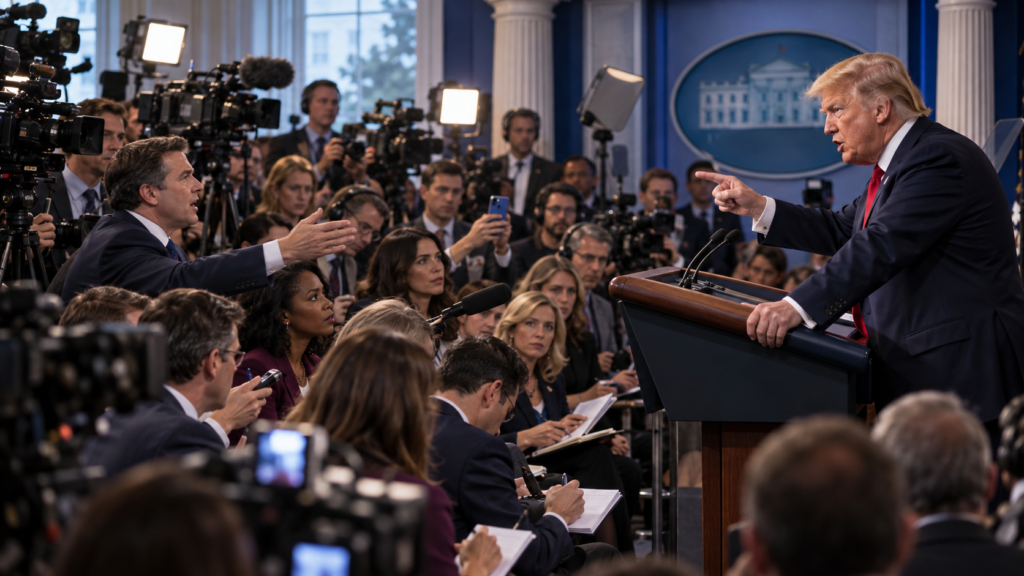
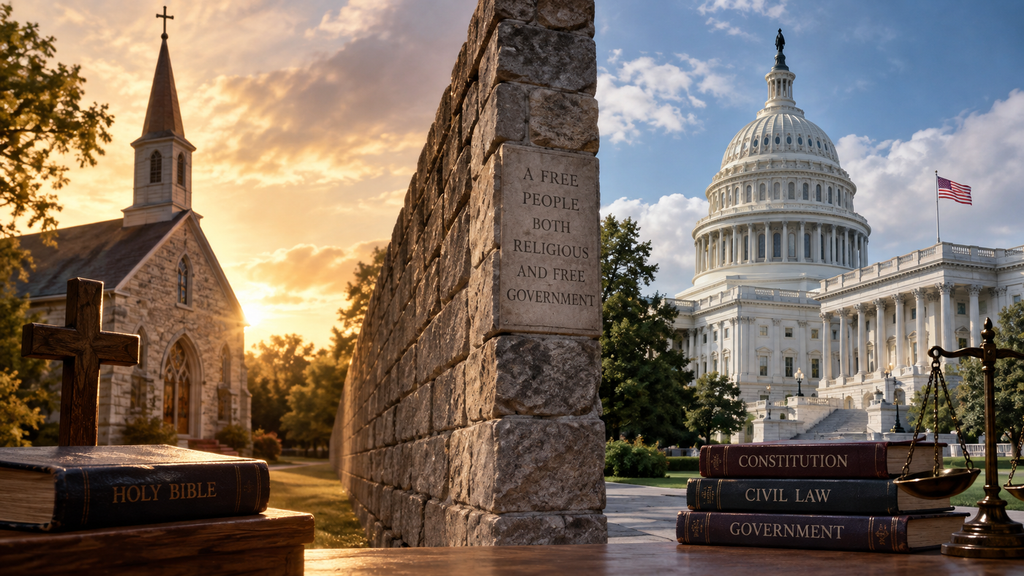
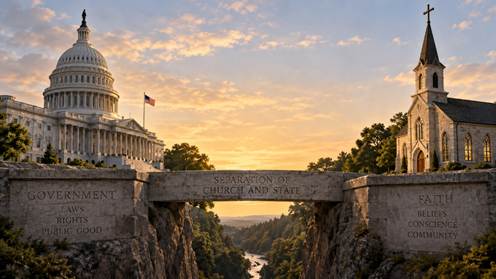
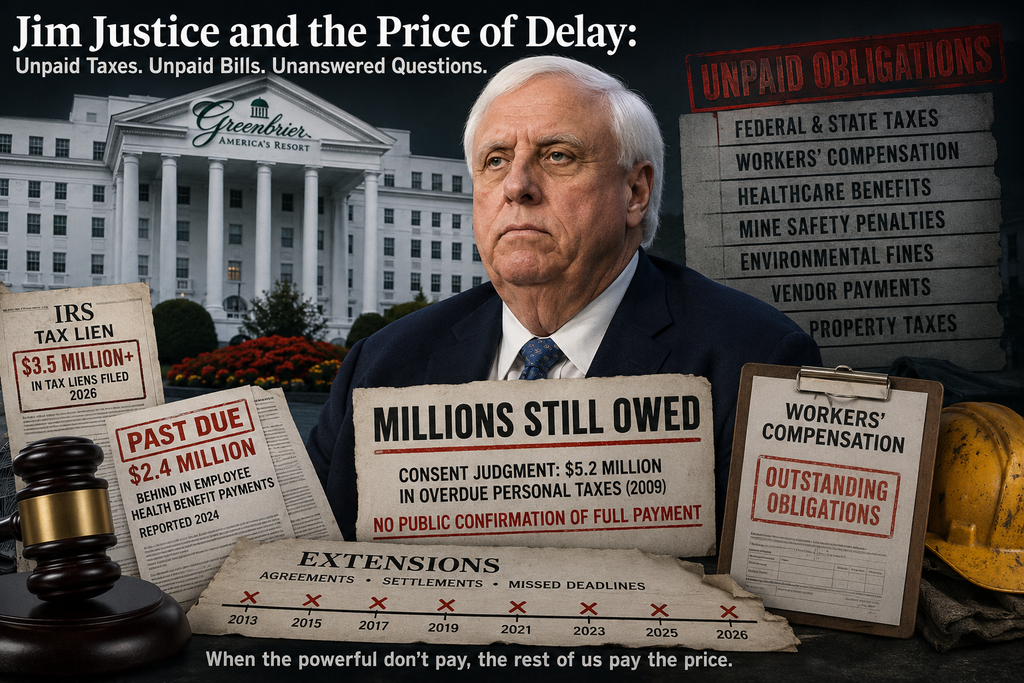


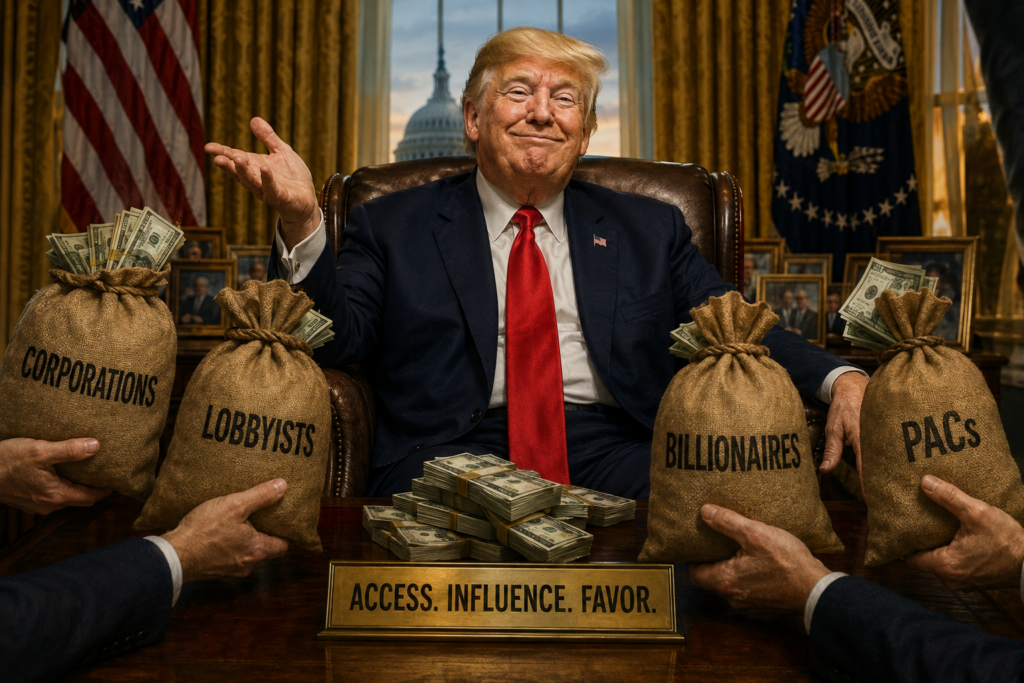
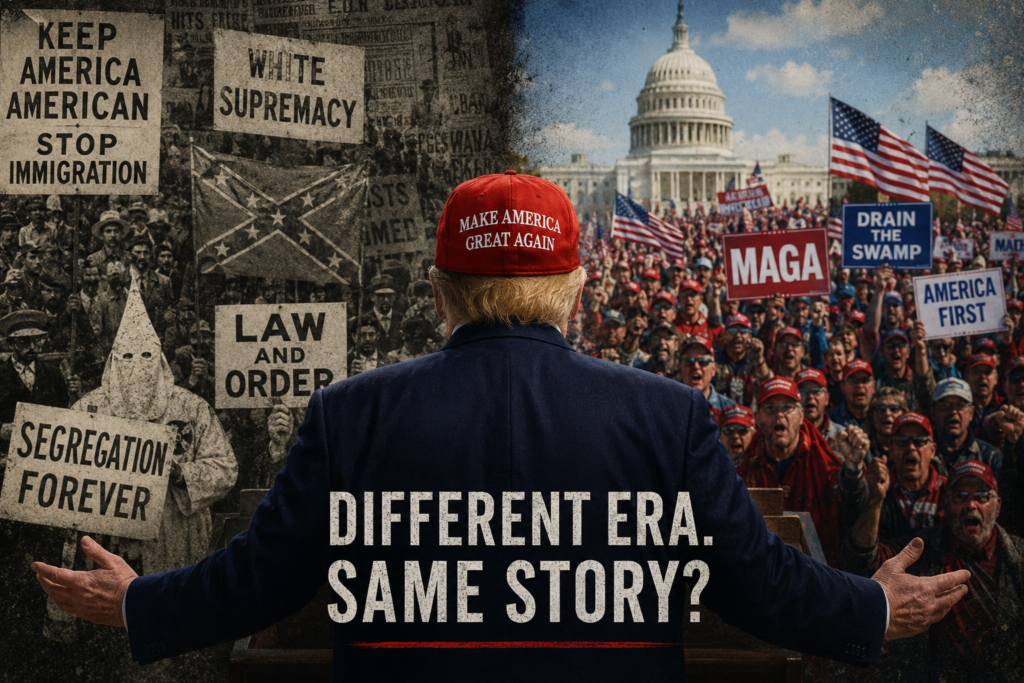

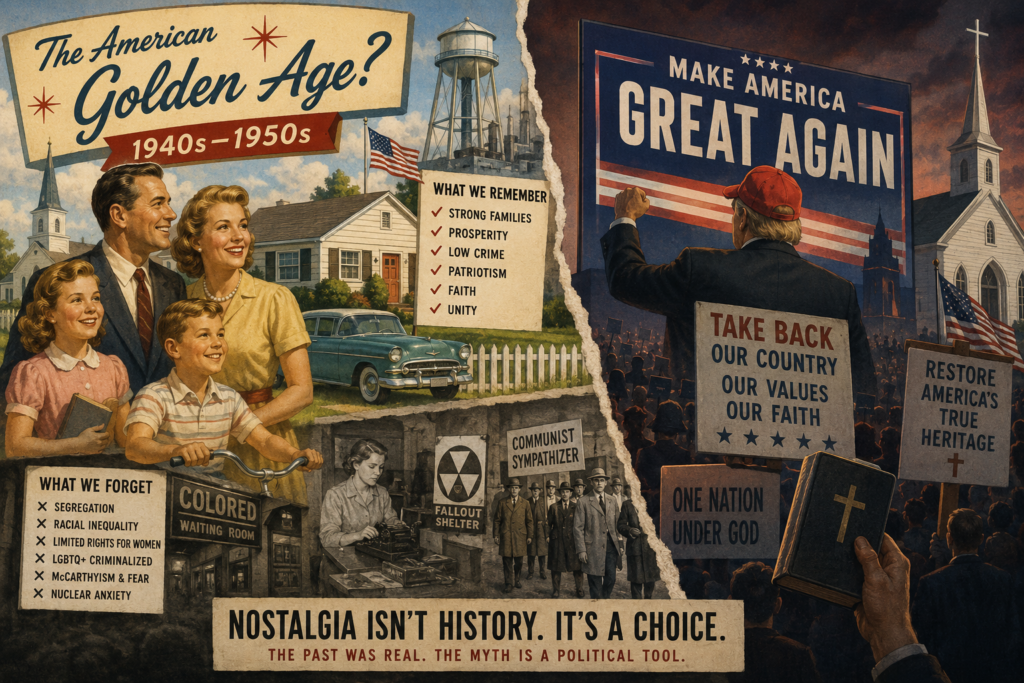
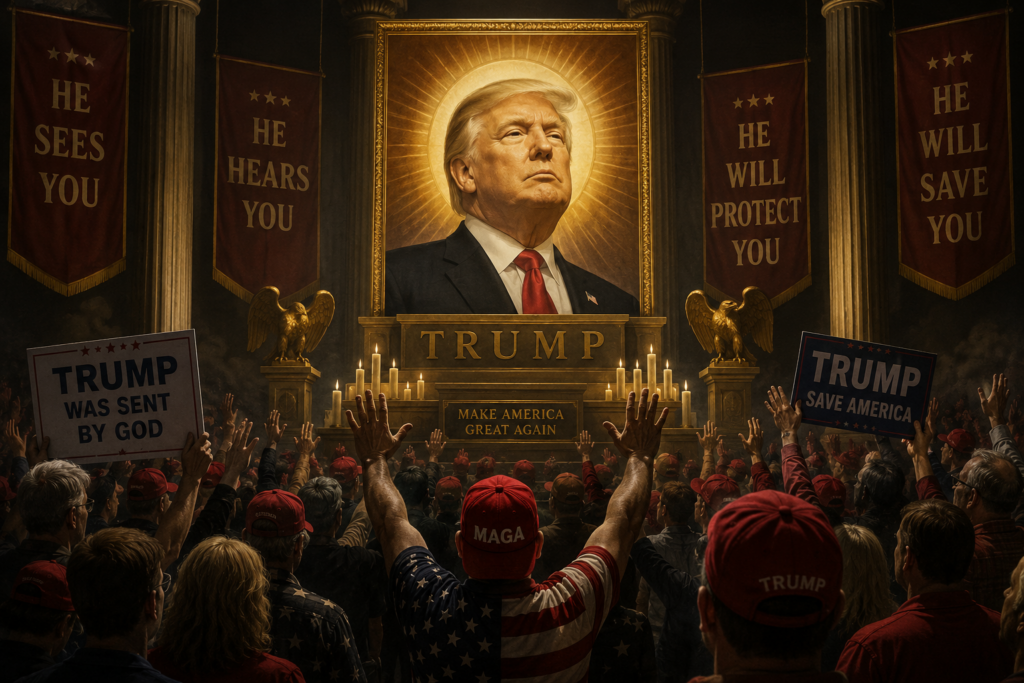
Why Is Everyone Talking About Socialism Again?
By John Turley
On August 22, 2026
In Commentary, Politics
For much of the late twentieth century, “socialism” was almost a forbidden word in American politics. Republicans used it as an accusation, Democrats generally avoided it, and politicians who actually described themselves as socialists occupied a small place on the political fringe.
Things have changed dramatically. Today, politicians on both the right and the left talk about socialism—although they usually mean entirely different things.
On the right, “socialism” has become a broad warning label applied to proposals ranging from universal health insurance to government regulation and higher taxes. On the left, a growing number of politicians and activists have reclaimed the word, associating it with economic equality, stronger labor rights, universal public services, and restraints on corporate power.
The interesting question may be less whether America is becoming socialist than why Americans are suddenly arguing about the meaning of socialism.
Socialism Originally Meant Something Specific
Historically, socialism was not simply another word for government spending. It developed during the nineteenth century largely in response to industrial capitalism. Although socialist thinkers disagreed considerably among themselves, they generally believed that the production resources of society—factories, mines, transportation systems, land, and eventually large corporations—should be owned collectively or controlled by workers rather than by private investors.
Karl Marx advocated a transformation by revolution. Other socialists eventually pursued democratic and parliamentary approaches.
That distinction matters because many policies routinely described as “socialist” in American political debate do not meet the traditional definition at all. A government can tax corporations, regulate banks, provide health insurance, and maintain a generous welfare system while leaving most businesses privately owned. Economists would normally describe such a country as a mixed capitalist economy or social democracy, rather than a socialist economy.
What the American Right Means by Socialism
For many conservatives, socialism has acquired a much broader meaning. The term is frequently applied to policies that increase government involvement in the economy such as progressive taxation, environmental regulation, student-debt relief, subsidized health care, expanded welfare benefits, government-supported child care, or other programs that redistribute income or provide services collectively.
In this usage, socialism is less a precise economic system than a direction of travel. Conservatives argue that as government assumes greater responsibility for allocating resources and providing benefits, individual choice and private markets become less important.
There is a legitimate philosophical argument here. There has always been a debate over where the boundary should lie between private markets and collective responsibility.
But calling every government economic intervention “socialism” stretches the word almost beyond recognition. By that definition, nearly every modern industrial democracy—including the United States—has been partly socialist for generations.
The political usefulness of the word helps explain its persistence. For Americans who remember the Cold War, “socialism” may evoke the Soviet Union, communist Eastern Europe, Cuba, or more recently Venezuela. Calling an opponent socialist therefore does more than criticize a particular tax or health-care proposal. It associates that proposal with an entire political system many Americans regard as oppressive and economically unsuccessful.
Polling illustrates how powerful that association remains. Pew Research Center found in 2022 that only 14 percent of Republicans and Republican-leaning independents had a positive impression of socialism. Republicans were also much more likely than Democrats to associate socialism with restrictions on individual freedom.
What the American Left Means by Socialism
The situation on the left is considerably more complicated because there is no single left-wing definition of socialism.
Many Americans who describe themselves favorably toward “socialism” appear to mean something closer to social democracy: a basically capitalist economy combined with universal health care, stronger unions, affordable higher education, progressive taxation, extensive social insurance, and stronger regulation of corporations.
Their preferred models are often Scandinavian countries such as Denmark and Finland. Yet those countries retain private businesses, private property, financial markets, entrepreneurship, and international corporations. They are heavily regulated capitalist welfare states, not classical socialist economies.
Pew’s research demonstrates this ambiguity. When Americans favorable toward socialism were asked what they liked about it, many emphasized fairness, meeting basic needs, and combining elements of capitalism and socialism rather than eliminating capitalism altogether.
Other people on the American left mean something more substantial when they use the term. The Democratic Socialists of America, for example, explicitly says democratic socialism should go beyond merely regulating capitalism. The organization advocates greater democratic control of workplaces and collective ownership of important parts of the economy, including areas such as energy and transportation. That position is much closer to the traditional meaning of socialism.
Consequently, it is misleading to assume that a liberal Democrat supporting Medicare expansion and a democratic socialist advocating worker control of corporations necessarily have the same economic philosophy.
They may support some of the same immediate policies while disagreeing profoundly about the ultimate economic system they want.
Why Has Socialism Suddenly Returned?
First was the financial crisis of 2008. Younger Americans watched banks and financial institutions receive extraordinary government assistance while millions of ordinary Americans lost jobs, savings, and homes. That experience weakened the assumption that an essentially unregulated market produces fair outcomes.
Then came decades of concern about wage stagnation, college debt, housing affordability, medical expenses, and growing concentrations of wealth. For some younger Americans, “capitalism” increasingly came to mean not neighborhood businesses and entrepreneurship but enormous corporations, billionaires and now trillionaires, expensive housing, and economic insecurity.
Bernie Sanders accelerated the transformation during his presidential campaigns in 2016 and 2020. By openly calling himself a democratic socialist while attracting millions of votes, Sanders helped remove some of the Cold War stigma surrounding the word.
Generational change matters as well. Younger Americans did not experience the Cold War in the same way their parents and grandparents did. Pew found striking age differences in its 2022 survey. Americans under 30 were roughly as likely to have an exclusively positive view of socialism as an exclusively positive view of capitalism. Older Americans remained considerably more favorable toward capitalism.
The political right has responded by emphasizing the word even more strongly. That makes strategic sense. If progressive Democrats increasingly accept the socialist label—or propose policies Republicans can associate with it—Republicans have an incentive to connect those policies with a word that remains deeply unpopular among conservative and many older voters.
The result is a feedback loop: the left talks more about socialism because the word has become less frightening to some voters, while the right talks more about socialism precisely because it hopes to make the word frightening again.
Is America Already Partly Socialist?
The answer depends almost entirely upon our definition.
Under the traditional definition—collective ownership of the means of production—the United States is overwhelmingly capitalist. Most farms, factories, banks, hospitals, restaurants, stores, technology companies, media companies, and other productive enterprises are privately owned.
But America has never operated as a completely laissez-faire capitalist economy either.
The federal government operates Social Security, for example, which the Social Security Administration itself describes as a social insurance program. Workers and employers contribute through payroll taxes, and benefits provide partial income replacement after retirement, disability, or death. About 96 percent of American jobs are covered.
Medicare and Medicaid place government deeply into health-care financing while most hospitals, physician practices, pharmaceutical manufacturers, and medical suppliers remain private.
The government also insures private bank deposits through the FDIC. Deposits at insured banks are generally protected up to $250,000 per depositor, per bank, per ownership category, backed by the federal government.
Public schools, public universities, highways, libraries, police departments, fire departments, water systems, parks, and numerous municipal utilities provide goods and services collectively rather than through ordinary private markets.
The United States even owns or operates certain enterprises directly. The Postal Service, for example, is an independent establishment within the executive branch that provides a nationwide public service while simultaneously operating in a competitive marketplace.
These arrangements contain elements of collective provision, social insurance, public ownership, or economic regulation, but calling all of them “socialism” creates more confusion than clarity.
A public fire department is not evidence that America has adopted a socialist economic system any more than a privately owned grocery store proves that government has no role in the economy.
America Has a Mixed Economy—and Always Has
Perhaps the greatest problem with the current socialism debate is the assumption that capitalism and socialism exist as two completely separate boxes and that a country must choose one or the other. Modern economies rarely work that way.
The United States relies primarily on private ownership, competition, investment, and markets to produce goods and services. At the same time, Americans have repeatedly decided that certain risks and services should be handled collectively.
Even organized labor introduces an element of collective economic power into a capitalist system, although union membership has declined substantially. In 2025, 10 percent of American wage and salary workers belonged to unions, compared with 20.1 percent in 1983.
The real political disagreement is rarely capitalism versus socialism in their pure theoretical forms. It is about where to draw the line between the market and the community.
Should health insurance operate primarily as a commercial product or a public service? Should housing be left largely to market forces or should government intervene to make it more affordable? Should corporations answer primarily to shareholders, or should workers have greater influence over corporate decisions? How progressive should taxation be? Which industries, if any, should be publicly owned? How much inequality should society tolerate in exchange for the incentives created by private enterprise?
A surprising twist is that some of the loudest recent “socialism” accusations are coming from conservatives — aimed at their own president. Since returning to office, the Trump administration has taken direct equity stakes in Intel, secured a “golden share” in U.S. Steel, arranged profit-sharing with Nvidia and AMD on chip sales to China, imposed sweeping tariffs, and directed the Pentagon to prioritize coal — an unprecedented degree of direct federal involvement in private enterprise for a Republican administration. Commentators across the spectrum — from the Council on Foreign Relations to the Wall Street Journal — have reached for terms like “state capitalism” or “state capitalism with American characteristics,” an explicit echo of the Chinese Communist Party’s own “socialism with Chinese characteristics”. One economist with more than three decades of market-watching called it plainly “the most economically interventionist government of my lifetime”.
Those are legitimate political questions. Calling one side “capitalist” and the other “socialist” obscures more than it explains.
The Word May Matter Less Than the Argument
There is one particularly revealing finding in the polling. Americans do not necessarily treat capitalism and socialism as opposites. Pew found people who expressed favorable opinions of both, suggesting that many Americans interpret capitalism as representing markets and opportunity while interpreting socialism as representing economic security and fairness.
That may tell us something important about the current debate. It appears that Americans want the vitality of capitalism tempered by the compassion of socialism.
The renewed interest in socialism doesn’t indicate that millions of Americans suddenly want the government to seize factories and abolish private enterprise. Instead, it reflects dissatisfaction with how the existing economic system distributes opportunity, security, wealth, and political power.
Conservative warnings about socialism often reflect a genuine concern that expanding government responsibility can gradually reduce economic freedom, increase taxation, and shift decisions from individuals and markets toward political institutions.
Those are fundamentally different concerns—and both become difficult to discuss when the same word means entirely different things to the people using it.
The question is not whether America should become “socialist,” it is what kind of capitalism we want.
That argument has been with us throughout American history. Only the vocabulary has changed.
For an additional discussion of the elements of socialism, see my post Three Shades of Left, published on November 10th 2025.
Image generated by author using ChatGPT.
Sources