Grumpy opinions about everything.

Tag: American Politics

Slavery and the Constitutional Convention: The Compromise That Shaped a Nation

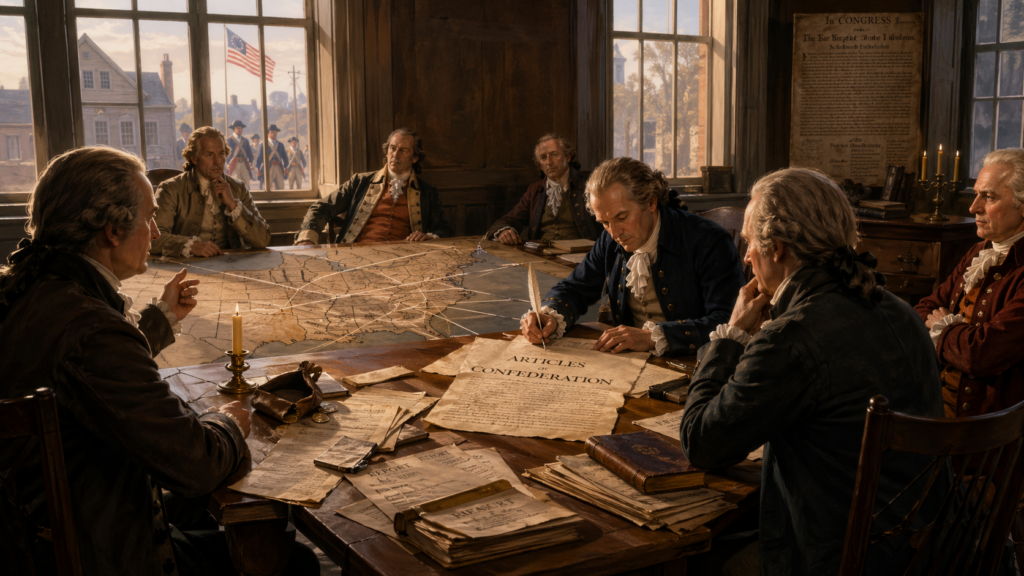
When fifty-five delegates gathered in Philadelphia during the sweltering summer of 1787, they faced a challenge that would haunt American politics for the next eight decades. The question wasn’t whether slavery was morally right—many delegates privately acknowledged its evil—but whether a unified nation could exist with slavery as a part of it. That summer, the institution of slavery nearly killed the Constitution before it was born.

The Battle Lines

The convention revealed a stark divide. On one side stood delegates who spoke forcefully against slavery, though they represented a minority voice. Gouverneur Morris of Pennsylvania delivered some of the most scathing condemnations, calling slavery a “nefarious institution” and “the curse of heaven on the states where it prevailed.” According to James Madison’s notes, Morris argued passionately that counting enslaved people for representation would mean that someone “who goes to the Coast of Africa, and in defiance of the most sacred laws of humanity tears away his fellow creatures from their dearest connections & damns them to the most cruel bondages, shall have more votes in a Government instituted for protection of the rights of mankind.”

Luther Martin of Maryland, himself a slaveholder, joined Morris in opposition. He declared the slave trade “inconsistent with the principles of the revolution and dishonorable to the American character.”.  Even George Mason of Virginia, who owned over 200 enslaved people, denounced slavery at the convention, warning that “every master of slaves is born a petty tyrant” and that it would bring “the judgment of heaven on a country.”

The Southern Coalition

Facing these critics stood delegates from the Deep South—primarily South Carolina and Georgia—who made it abundantly clear that protecting slavery was non-negotiable. The South Carolina delegation was particularly unified and aggressive in defending the institution. All four of their delegates—John Rutledge, Charles Pinckney, Charles Cotesworth Pinckney, and Pierce Butler—owned slaves, and they spoke with one voice.

Charles Cotesworth Pinckney stated bluntly: “South Carolina and Georgia cannot do without slaves.” John Rutledge framed it even more starkly: “The true question at present is, whether the Southern States shall or shall not be parties to the Union.” The message was unmistakable—attempt to restrict slavery, and there would be no Constitution and perhaps no United States.

The Southern states didn’t just defend slavery; they threatened to walk out repeatedly. When debates over the slave trade heated up on August 22, delegates from North Carolina, South Carolina, and Georgia stated they would “never be such fools as to give up” their right to import enslaved Africans.  These weren’t idle threats—they were credible enough to force compromise.

The Three-Fifths Compromise

The central flashpoint came over representation in Congress. The new Constitution would base representation on population, but should enslaved people count? Southern states wanted every enslaved person counted fully, which would dramatically increase their congressional power. Northern states argued that enslaved people—who had no rights and couldn’t vote—shouldn’t count at all.

The three-fifths ratio had actually been debated before. Back in 1783, Congress had considered using it to calculate state tax obligations under the Articles of Confederation, though that proposal failed. James Wilson of Pennsylvania resurrected the idea at the Constitutional Convention, suggesting that representation be based on the free population plus three-fifths of “all other persons”—the euphemism they used to avoid writing the word “slave” in the Constitution.

The compromise passed eight states to two. New Jersey and Delaware are generally identified as the states voting against the compromise, New Hampshire is not listed as taking part in the vote. Rhode Island did not send a delegation to the convention and by the time of the vote New York no longer had a functioning delegation.

Though the South ultimately accepted the compromise, it wasn’t what they wanted. Southern delegates had pushed to count enslaved people equally with free persons—but otherwise ignored on all issues of human rights. The three-fifths ratio was a reduction from their demands—a limitation on slave state power, though it still gave them substantial advantage. With about 93% of the nation’s enslaved population concentrated in just five southern states, this compromise increased the South’s congressional delegation by 42%.

James Madison later recognized the compromise’s significance. He wrote after the convention: “It seems now to be pretty well understood that the real difference of interests lies not between the large and small but between the northern and southern states. The institution of slavery and its consequences form the line of discrimination.”

Could the Constitution Have Happened Without It?

Here’s where I need to speculate, but I’m fairly confident in this assessment: no, the Constitution would not have been ratified without the three-fifths compromise and related concessions on slavery.

The evidence is overwhelming. South Carolina and Georgia delegates stated explicitly and repeatedly that they would not join any union that restricted slavery. Alexander Hamilton himself later acknowledged that “no union could possibly have been formed” without the three-fifths compromise. Even delegates who despised slavery, like Roger Sherman of Connecticut, argued it was “better to let the Southern States import slaves than to part with them.”

The convention negotiated three major slavery compromises, all linked. Beyond the three-fifths clause, they agreed Congress couldn’t ban the international slave trade until 1808, and they included the Fugitive Slave Clause requiring the return of escaped enslaved people even from free states. These deals were struck together on August 29, 1787, in what Madison’s notes reveal was a package negotiation between northern and southern delegates.

Without these compromises, the convention would likely have collapsed. The alternative wouldn’t have been a better Constitution—it would have been no Constitution at all, potentially leaving the thirteen states as separate nations or weak confederations. Whether that would have been preferable is a profound counterfactual question that historians still debate.

The Impact on Early American Politics

The three-fifths compromise didn’t just affect one document—it shaped American politics for decades. Its effects were immediate and substantial.

The most famous early example came in the presidential election of 1800. Thomas Jefferson defeated John Adams in what’s often called the “Revolution of 1800″—the first peaceful transfer of power between opposing political parties. But Jefferson’s victory owed directly to the three-fifths compromise. Virginia’s enslaved population gave the state extra electoral votes that proved decisive. Historian Garry Wills has speculated that without these additional slave-state votes, Jefferson would have lost. Pennsylvania had a free population 10% larger than Virginia’s, yet received 20% fewer electoral votes because Virginia’s numbers were inflated by the compromise.

The impact extended far beyond that single election. Research shows the three-fifths clause changed the outcome of over 55% of legislative votes in the Sixth Congress (1799-1801). (The additional southern representatives—about 18 more than their free population warranted—gave the South what became known as the “Slave Power” in Congress.

This power influenced major legislation throughout the antebellum period. The Indian Removal Act of 1830, which forcibly relocated Native Americans to open land for plantation agriculture, passed because of margins provided by these extra southern representatives. The Missouri Compromise, the Kansas-Nebraska Act, and numerous other slavery-related measures bore the fingerprints of this constitutional imbalance.

The compromise also affected Supreme Court appointments and federal patronage. Southern-dominated Congresses ensured pro-slavery justices and policies that protected the institution. The sectional tensions it created led directly to later compromises—the Missouri Compromise of 1820, the Compromise of 1850—each one a temporary bandage on a wound that wouldn’t heal.

By the 1850s, the artificial political power granted to slave states had become intolerable to many northerners. When Abraham Lincoln won the presidency in 1860 without carrying a single southern state, southern political leaders recognized they had lost control of the federal government. Senator Louis Wigfall of Texas complained that non-slaveholding states now controlled Congress and the Electoral College. Ten southern states seceded in large part because they believed the three-fifths compromise no longer protected their interests.

The Bitter Legacy

The framers consciously avoided using the words “slave” or “slavery” in the Constitution, recognizing it would “sully the document.” But the euphemisms fooled no one. They had built slavery into the structure of American government, trading moral principles for political union.

The Civil War finally resolved what the Constitutional Convention had delayed. The Thirteenth Amendment abolished slavery in 1865, but not until 1868 did the Fourteenth Amendment finally strike the three-fifths clause from the Constitution, requiring that representation be based on counting the “whole number of persons” in each state.

Was it worth it? That’s ultimately a question of values. The Constitution created a stronger national government that eventually abolished slavery, but it took 78 years and a war that killed over 600,000 Americans. As Thurgood Marshall noted on the Constitution’s bicentennial, the framers “consented to a document which laid a foundation for the tragic events which were to follow.”

The convention delegates knew what they were doing. They chose union over justice, pragmatism over principle. Whether that choice was necessary, wise, or moral remains one of the most contested questions in American history.

____________________________________________________

Sources

  1. https://www.battlefields.org/learn/articles/slavery-and-constitution
  2. https://en.wikipedia.org/wiki/Luther_Martin
  3. https://schistorynewsletter.substack.com/p/7-october-2024
  4. https://www.americanacorner.com/blog/constitutional-convention-slavery
  5. https://www.nps.gov/articles/000/constitutionalconvention-august22.htm
  6. https://en.wikipedia.org/wiki/Three-fifths_Compromise
  7. https://www.brennancenter.org/our-work/analysis-opinion/electoral-colleges-racist-origins
  8. https://www.gilderlehrman.org/history-resources/teaching-resource/historical-context-constitution-and-slavery
  9. https://www.nps.gov/articles/000/constitutionalconvention-august29.htm
  10. https://www.lwv.org/blog/three-fifths-compromise-and-electoral-college
  11. https://www.aaihs.org/a-compact-for-the-good-of-america-slavery-and-the-three-fifths-compromise-part-ii/

Thomas Jefferson: The Philosopher Who Played Hardball

Here’s the thing about Thomas Jefferson that doesn’t always make it into the history textbooks: the guy who wrote those soaring words about liberty and limited government? He was also one of early America’s most skilled—and sometimes underhanded—political operators.

It’s surprising when you think about it. Jefferson genuinely believed in transparency, virtue in public life, and keeping government small. He wrote beautifully about these ideals. But when it came to actual politics? He played the game as hard as anyone, often using tactics that directly contradicted what he preached.

Jefferson’s public philosophy was straightforward. He thought America should be a nation of independent farmers—regular people who owned their own land and weren’t dependent on anyone else. He worried constantly about concentrated power, whether in government or in the hands of wealthy financiers or merchants. He believed people should be informed and engaged, and that government worked best when it stayed out of people’s lives.

His Declaration of Independence wasn’t just pretty rhetoric—it laid out a genuinely revolutionary idea: governments only have power because people agree to give it to them, and when governments stop serving the people, those people have the right to change things.

The Reality: How Jefferson Actually Operated

Here’s where it gets interesting. While Jefferson was writing about virtue and transparency, he was simultaneously running what today we’d recognize as opposition research, planting stories in the press, and organizing political operations—sometimes against people he was supposed to be working with.

The Freneau Setup: Paying for Attacks

The most blatant example happened in 1791. Jefferson was serving as Secretary of State under George Washington, which meant he was part of the administration. At the same time, he arranged for a guy named Philip Freneau to get a government job—technically as a translator. The real purpose? To give Freneau money to run a newspaper that would relentlessly attack Alexander Hamilton and other Federalists.

Think about that for a second. Jefferson was using his government position to fund media attacks on his own colleagues. When people called him out on it, he basically said, “Who, me? I have nothing to do with what Freneau publishes.” But the evidence shows Jefferson was actively encouraging and directing these attacks.

John Beckley: The Original Campaign Fixer

Jefferson also worked closely with John Beckley, who was essentially America’s first professional political operative. Beckley coordinated messaging, spread information (and sometimes misinformation) about opponents, and helped build the grassroots organization that would eventually become the Democratic-Republican Party.

This wasn’t a gentlemanly debate about ideas. This was organized political warfare—pamphlets, coordinated newspaper campaigns, and opposition research. Jefferson and Jame Madison quietly funded much of this work while maintaining public images as above-the-fray philosophers. We can’t know exactly what Jefferson said in every private conversation with Beckley, but the circumstantial evidence of coordination is convincing.

The Hamilton Rivalry: Ideological War

Jefferson’s conflict with Hamilton was both philosophical and deeply personal. Hamilton wanted a strong federal government, a national bank, and close ties with Britain. Jefferson saw all of this as a betrayal of the Revolution—a step toward creating the same kind of corrupt, elite-dominated system they’d just fought to escape.

But rather than just making his arguments publicly, Jefferson worked behind the scenes to undermine Hamilton’s policies. He encouraged Madison to lead opposition in Congress. He fed stories to friendly newspapers. He coordinated with Republican representatives to block Federalist initiatives.

The philosophical disagreement was real, but Jefferson’s methods were pure political calculation.

Turning on Washington: The Ultimate Betrayal?

Maybe the most damaging thing Jefferson did was secretly working against George Washington while still serving in his cabinet. By Washington’s second term, Jefferson had convinced himself that Washington was being manipulated by Hamilton and moving the country toward monarchy.

 Jefferson stayed in the cabinet, maintaining cordial relations with Washington in person, while privately organizing resistance to administration policies. He encouraged attacks on Washington in the press. He coordinated with opposition leaders. And he did all of this while Washington trusted him as a loyal advisor.

When Washington found out, he was devastated. The betrayal broke their relationship permanently.

The Burr Situation: Using People

Jefferson’s handling of Aaron Burr shows just how pragmatic he could be. Jefferson never really trusted Burr—thought he was too ambitious and unprincipled. But in 1800, when Jefferson needed to win the presidency, Burr was useful for delivering New York’s votes.

After winning, Jefferson kept Burr as vice president but froze him out of any real power. Once Burr’s usefulness ended (especially after he killed Hamilton in that duel), Jefferson completely abandoned him, eventually supporting an unsuccessful prosecution for treason.

Deceiving Congress

Another example of Jefferson’s political manipulation was the Louisiana Purchase. This was a massive land acquisition that doubled the size of the United States. Jefferson knew that under the constitution he had no clear authority to acquire territory for the United States.  He was able to secure the purchase by keeping it secret from both congress and his political opponents until after it was finalized. This allowed him to avoid a debate that could have derailed the deal.  Does this sound familiar?

So, What Do We Make of This?

Here’s the uncomfortable question: Was Jefferson a hypocrite, or was he just being realistic about how politics actually works?  Jefferson’s political manipulation was not always ethical, but it was effective. He was able to use his skills to achieve many of his political goals.

You could argue he was doing what he thought necessary to prevent Hamilton’s vision from taking over—that the ends justified the means. You could also argue that by using underhanded tactics, he corrupted the very democratic processes he claimed to be protecting.

My speculation: I think Jefferson was aware of the contradiction and wrestled with it. His private letters show moments of self-justification and lingering doubt. But ultimately, he kept doing it because he believed his vision for America was too important to lose by playing nice.

The Bottom Line

Thomas Jefferson remains one of our most brilliant political thinkers. But he was also willing to play dirty when he thought the stakes were high enough. That duality—beautiful ideals combined with hardball tactics—might actually make him more relevant today than ever. Because let’s be honest, that tension between principles and pragmatism hasn’t gone away in American politics.

Understanding both sides of Jefferson helps us see that even the founders we most revere weren’t simple heroes. They were complicated people operating in a messy political reality, trying to build something new while fighting over what that something should be.

The evidence for Jefferson’s political maneuvering is extensive and well-established by historians. Some interpretations of his motivations involve educated speculation, but the actions themselves are documented in letters, newspaper archives, and contemporary accounts.​​​​​​​​​​​​​​​​

Reference List

Primary Sources

Founders Online – National Archives https://founders.archives.gov/

  • Digital collection of correspondence and papers from George Washington, Thomas Jefferson, Alexander Hamilton, Benjamin Franklin, John Adams, and James Madison. Essential for Jefferson’s own words and contemporaneous accounts of his political activities.

Library of Congress – Thomas Jefferson Exhibition https://www.loc.gov/exhibits/jefferson/

  • Comprehensive digital exhibition covering Jefferson’s life, philosophy, and political career with original documents and interpretive essays.

Thomas Jefferson Encyclopedia – Monticello https://www.monticello.org/site/research-and-collections/

  • Scholarly resource maintained by the Thomas Jefferson Foundation, covering specific topics including Jefferson’s relationships with Aaron Burr and other political figures.

Secondary Sources – Books

Chernow, Ron. Alexander Hamilton. New York: Penguin Press, 2004.

  • Pulitzer Prize-winning biography that extensively covers the Jefferson-Hamilton rivalry and Jefferson’s behind-the-scenes political maneuvering, including the Freneau affair. Particularly strong on the 1790s conflicts within Washington’s cabinet.

Chernow, Ron. Washington: A Life. New York: Penguin Press, 2010.

  • Provides Washington’s perspective on Jefferson’s activities within his administration and the betrayal Washington felt when learning of Jefferson’s covert opposition.

Ellis, Joseph J. American Sphinx: The Character of Thomas Jefferson. New York: Alfred A. Knopf, 1996.

  • National Book Award winner that explores Jefferson’s contradictions and complexities, particularly the gap between his philosophical writings and political practices.

Ferling, John. Jefferson and Hamilton: The Rivalry That Forged a Nation. New York: Bloomsbury Press, 2013.

  • Detailed examination of the ideological and personal conflict between Jefferson and Hamilton, showing how their struggle shaped early American politics and party formation.

Isenberg, Nancy. Fallen Founder: The Life of Aaron Burr. New York: Penguin Books, 2007.

  • Comprehensive biography of Burr that includes extensive coverage of his complex relationship with Jefferson, from their 1800 alliance through Jefferson’s eventual abandonment of his vice president.

Pasley, Jeffrey L. The Tyranny of Printers: Newspaper Politics in the Early American Republic. Charlottesville: University of Virginia Press, 2001.

  • Scholarly examination of how newspapers and partisan press became political weapons in the 1790s, with detailed coverage of Jefferson’s relationship with Philip Freneau and the National Gazette.

Secondary Sources – Journal Articles and Academic Papers

Sharp, James Roger. “The Journalist as Partisan: The National Gazette and the Origins of the First Party System.” The Virginia Magazine of History and Biography 97, no. 4 (1989): 391-420.

  • Academic analysis of Freneau’s National Gazette and its role in forming political opposition, including Jefferson’s involvement in funding and directing the publication.

Cunningham, Noble E., Jr. “John Beckley: An Early American Party Manager.” The William and Mary Quarterly 13, no. 1 (1956): 40-52.

  • Scholarly examination of Beckley’s role as America’s first professional political operative and his work organizing Jefferson’s political machine.

Historiographical Note

The interpretation of Jefferson’s political behavior has evolved over time. Earlier biographies (pre-1960s) tended to minimize or excuse his behind-the-scenes maneuvering, while more recent scholarship has been willing to examine the contradictions between his philosophy and practice more critically. The works cited above represent current historical consensus based on documentary evidence, though historians continue to debate Jefferson’s motivations and whether his tactics were justified given the political stakes he perceived.

From Reagan Conservative to Social Democrat: A Political Evolution

Political beliefs rarely change overnight. Mine certainly didn’t. My journey from Reagan-era conservatism to social democracy unfolded slowly, shaped less by ideology than by lived experience and an accumulating body of evidence about what actually works.

Morning in America

Like many Americans of my generation, my political awakening came during the Reagan years. The message was optimistic and reassuring: limited government, free markets, individual responsibility, and a strong national defense would restore American greatness. Reagan’s charisma made complex economic ideas feel like common sense. Lower taxes would spur growth. Deregulation would unleash innovation. Markets would reward effort and discipline.

That worldview was personally affirming. Success was earned. Failure reflected poor choices. Government’s role should be narrow—defense, public order, and little else. Social programs, we were told, fostered dependency rather than opportunity. It was a coherent framework, and for a time, it seemed to fit the facts.

Cracks in the Foundation

By the 1990s, inconsistencies began to surface. Economic growth continued, but inequality widened. Entire industrial communities collapsed despite residents working hard and playing by the rules. The benefits of “trickle-down” economics were not trickling very far.

Personal experiences made the abstractions impossible to ignore. Families lost health insurance because of pre-existing conditions. Medical bills pushed insured households into bankruptcy. These outcomes weren’t failures of character; they were failures of systems.

The 2008 financial crisis shattered whatever illusions remained. Financial institutions that preached personal responsibility engaged in reckless speculation, then received massive government bailouts, while homeowners were left to face foreclosure. Like millions of others, I lost nearly half of my retirement savings. The contradiction was glaring: socialism for the wealthy, harsh market discipline for everyone else. Individual responsibility meant little when systemic risk brought down the entire economy.

A Turning Point

Job loss during the Great Recession completed the lesson. Despite qualifications and work history, employment opportunities vanished. Unemployment benefits—once easy to dismiss in theory as handouts—became essential in practice. The bootstrap mythology doesn’t hold up when the floor is pulled away.

This period also exposed the fragility of employer-based healthcare and retirement systems. COBRA coverage was unaffordable. 401(k)s evaporated. The safety net that once seemed excessive suddenly looked inadequate. Meanwhile, countries with stronger social protections weathered the recession better than the United States.

Seeing Other Models

Travel and research broadened my perspective further. Nations like Germany, Denmark, France, and Sweden paired market economies with robust social programs—and consistently outperformed the U.S. on measures of health, social mobility, and life satisfaction.

These were not stagnant, overregulated societies. They were thriving capitalist democracies that simply made different choices about public investment and risk-sharing.

Writers like Joseph Stiglitz and Thomas Piketty documented how concentrated wealth undermines both democracy and long-term growth. Historical evidence showed that America’s most prosperous era—the post-World War II boom—coincided with high marginal tax rates, strong unions, and major public investment.

Healthcare Changed Everything

Healthcare ultimately crystallized my shift. The U.S. spends far more per capita than any other nation yet produces worse outcomes on many basic measures.

As a physician, I watched patients struggle with insurance denials, opaque pricing, and medical debt. Healthcare markets don’t function like normal markets. You can’t comparison shop during a heart attack. When insurers profit by denying care, the system aligns against patients. Medical bankruptcy is virtually unknown in countries with universal coverage—for a reason. We have a system where the major goal of health insurance companies is making a profit for their investors—not providing affordable healthcare to their subscribers. 

Climate and Collective Action

Climate change further exposed the limits of market fundamentalism. Individualism and laissez-faire policies have failed to account for shared environmental costs and long-term consequences. Markets alone cannot price long-term environmental harm or coordinate collective action at the necessary scale. Addressing climate risk requires regulation, public investment, and democratic planning.

What Social Democracy Is—and Isn’t

Social democracy is not the rejection of capitalism. It is regulated capitalism with guardrails—markets where they work well, public systems where markets fail. Healthcare, education, infrastructure, and basic income security perform better with strong public involvement.

This differs from democratic socialism, a distinction I’ve explored elsewhere. Social democracy embraces entrepreneurship and competition while preventing monopoly power, protecting workers, and taxing fairly to fund shared prosperity.

As sociologist Lane Kenworthy notes, the U.S. already has elements of social democracy—Social Security, Medicare, public education—we simply underfund them compared to European nations.

A Pragmatic Conclusion

My evolution wasn’t ideological betrayal; it was pragmatic learning. I adjusted my beliefs based on outcomes, not slogans. Countries with strong social democracies routinely outperform the U.S. on health, mobility, education, and even business competitiveness.

True prosperity requires both entrepreneurial freedom and collective investment. The choice isn’t markets or government—it’s how to balance them intelligently. This lesson took me decades to learn, but the evidence now feels hard to ignore.

References

  1. Federal Reserve History – The Great Recession
    Overview of causes, systemic failures, and economic consequences of the 2007–2009 financial crisis.
    https://www.federalreservehistory.org/essays/great-recession
  2. OECD – Social Protection and Economic Resilience
    Comparative data on how countries with stronger social safety nets performed during economic downturns.
    https://www.oecd.org/economy
  3. World Happiness Report (United Nations / Oxford)
    Cross-national comparisons of well-being, social trust, and economic security.
    https://worldhappiness.report
  4. Joseph Stiglitz – Inequality and Economic Growth (IMF Finance & Development)
    Analysis of how income concentration undermines long-term economic performance and democracy.
    https://www.imf.org/en/Publications/fandd/issues/2019/09/inequality-and-economic-growth-stiglitz
  5. Thomas Piketty – Capital in the Twenty-First Century (Data Companion & Summaries)
    Historical evidence on wealth concentration and taxation in advanced economies.
    https://wid.world
  6. Tax Policy Center – Historical Top Marginal Income Tax Rates
    U.S. tax rate history showing high marginal rates during the post-war economic boom.
    https://www.taxpolicycenter.org/statistics/historical-highest-marginal-income-tax-rates
  7. The Commonwealth Fund – U.S. Health Care from a Global Perspective
    Comparative analysis of health spending, outcomes, and access across developed nations.
    https://www.commonwealthfund.org/publications/issue-briefs/2023/jan/us-health-care-global-perspective-2022
  8. OECD Health Statistics
    International comparisons of healthcare costs, outcomes, and system performance.
    https://www.oecd.org/health/health-data.htm
  9. IPCC Sixth Assessment Report – Synthesis Report
    Scientific consensus on climate change risks and the need for coordinated public action.
    https://www.ipcc.ch/report/ar6/syr
  10. Lane Kenworthy – Social Democratic Capitalism
    Comparative research on social democracy, public investment, and economic performance.
    https://lanekenworthy.net

Military Purges and Democratic Stability: Why History Still Matters

When political power is on the line, history shows that the military often becomes the make-or-break institution. Authoritarian leaders—from Hitler to Erdogan—have long understood that a professional military answers to the state, not to any one person. That independence can be inconvenient for leaders who want fewer limits to their power. So, the classic move is simple: replace seasoned, independent officers with people whose primary loyalty is personal rather than constitutional.

This isn’t speculation; it’s a familiar historical pattern.

How Authoritarians Reshape Militaries

Professional militaries promote based on experience, training, and merit. They’re built to resist illegal orders and to stay out of domestic politics. For an authoritarian-leaning leader, military professionalism is a potential obstacle. Purges serve a purpose: clear out officers who take institutional norms seriously, and elevate those who won’t push back.

Two cases illustrate how this works.

Hitler and the German Army

After consolidating political power, Hitler moved aggressively to dominate the military. In 1934, the army was pressured to swear a personal oath of loyalty to him—not to the state or constitution.

By 1938 he removed two top commanders, Werner von Blomberg and Werner von Fritsch, through trumped-up scandals after they questioned his rush toward war. Dozens of senior generals were pushed out soon after.

The goal was not efficiency—it was control.

Turkey After the 2016 Coup Attempt

Following the failed coup, President Erdogan launched the largest purge in modern Turkish history. Tens of thousands across the military, police, and judiciary were arrested or fired, including nearly half of Turkey’s generals.

Later reporting showed that many dismissed officers had no link to the coup at all; they were targeted for being politically unreliable or pro-Western.

These cases differ in scale and context, but the pattern is strikingly similar: the professional military is reshaped to serve the leader.

What Healthy Civil–Military Relations Look Like

In stable democracies, civilian leaders set policy, but the military retains professional autonomy. Officers swear loyalty to the constitution. Promotions are merit-based. And there’s a bright line between national service and political allegiance.

One important safeguard: every member of the U.S. military is obligated to refuse unlawful orders and swears an oath to do so. It’s not optional—it’s core to American military ethics.

Research consistently shows that professional, apolitical militaries strengthen democracies, while politically entangled militaries make coups and repression more likely.

The Current U.S. Debate

Since early 2025, Defense Secretary Pete Hegseth’s removal or sidelining of more than two dozen generals and admirals has raised alarms within the military and among lawmakers. It includes the unprecedented firing of a sitting Chairman of the Joint Chiefs of Staff and significant cuts to senior officer billets.

Hegseth has framed these moves as reforms—streamlining, eliminating “woke politicization,” and aligning leadership with the administration’s national-security priorities.

Many inside the services describe the environment as unpredictable and politically charged. Officers report confusion about why certain leaders are removed and others promoted, and some say the secretary’s rhetoric has alienated the very institution he’s trying to lead. Public reporting describes an “atmosphere of uncertainty and fear” inside the officer corps.

Similarities and Differences to Classic Purges

Where patterns overlap

  • Large-scale personnel changes in a short time
  • Emphasis on loyalty to a person rather than institutional norms
  • Limited transparency in the selection and removal process
  • Signals that dissent or disagreement are disqualifying

Where the U.S. still differs

  • Congress can investigate and slow actions
  • Courts remain independent (for now)
  • Officers swear loyalty to the Constitution, not the president
  • No arrests, detentions, or manufactured scandals
  • The press is free to report and criticize

Why This Matters

Institutional Readiness

Purges can weaken the military by removing seasoned leaders and creating gaps in institutional memory.

Professionalism

If officers think advancement depends on political alignment instead of performance, the talent pipeline changes. Some of the best people simply leave.

Civil–Military Trust

The relationship between elected leaders and the military rests on mutual respect. Reports of intimidation or political litmus tests damage that trust.

Democratic Stability

Democracies depend on militaries that stay out of politics. History shows that once political loyalty becomes the main metric for advancement, the slope toward politicization—and eventually erosion of democratic norms—gets much steeper.

The Real Question

It’s not whether current events equal Turkey in 2016 or Germany in 1938. They don’t.

The real question is much simpler:

Will we maintain a military that is professional, apolitical, and loyal to the Constitution—or move toward a military where career survival depends on political loyalty?

That direction matters far more than any single personnel decision.

Bottom Line

History shows that authoritarianism doesn’t arrive all at once; it arrives incrementally. One of the clearest patterns is reshaping the military to reward personal loyalty over constitutional loyalty.

The United States still has strong guardrails: congressional oversight, rule of law, open media, and a military culture steeped in constitutional commitment. But those guardrails only work if they’re maintained—by political leaders, by officers, and by citizens paying attention.  Many are concerned that the deployment of military forces in American cities and their use to destroy purported drug traffickers is a way to acclimate senior officers to following questionable orders.

Watching these trends isn’t alarmist. It’s simply responsible.  It’s our duty as citizens

Three Shades of Left

Understanding Classical Socialism, Democratic Socialism, and Social Democracy in Today’s America

If you’ve ever wondered what politicians really mean when they throw around words like “socialism” or “social democracy,” you’re not alone. These ideas used to live mostly in political theory textbooks. Now they show up in campaign speeches and social media debates. With figures like Bernie Sanders and groups like the Democratic Socialists of America bringing these ideas into the mainstream, it’s worth sorting out what each actually means.

Even though classical socialism, democratic socialism, and social democracy all claim to focus on fairness and reducing inequality, they take very different routes to get there. Understanding those differences helps make sense of what’s really being argued about in American politics today.

Classical Socialism: The Original Blueprint

Classical socialism came out of the 19th century, when industrial capitalism was grinding workers down and a couple of guys named Karl Marx and Friedrich Engels thought they had the fix. Their idea: workers should collectively own and control the means of production — factories, land, and major industries.

This wasn’t just about taxing the rich. It was about redesigning the whole system from the ground up, through violent revolution if necessary. In theory, private property creates exploitation; collective ownership ends it. In practice, that often means top-down control by the state, with economies planned from above — as seen in the Soviet Union or Maoist China.

The central ideas of classical socialism are collective ownership of big industries and central or cooperative planning instead of market competition.  Production is aimed at meeting needs, not profits with the eventual goal of a classless, stateless society. Classical socialism accepts that revolution will most likely be necessary for implementation.

In theory, classical socialism wipes out worker exploitation and wealth extremes. Its central tenant is that production serves human needs, not corporate profit.  In practice, it often leads to authoritarian governments, clumsy economic planning, and little room for innovation or dissent.

Would it work in America?
Probably not. The U.S. has deep cultural roots in individualism and private enterprise. Replacing markets with centralized planning would clash hard with both our Constitution and national temperament.

The Siblings of Socialism

In the real world, classical socialism has produced two offsprings, the confusingly named democratic socialism and social democracy. While they share many similarities, the major difference is that democratic socialism aims to replace capitalism while social democracy has the objective of reforming capitalism and making it more humane.

Democratic socialism

Democratic socialism shares many of classical socialism’s goals but emphasizes getting there through elections — not revolution. It aims to establish central control of key parts of the economy while protecting some political freedom and most civil rights.

The vision of Democratic Socialism is collective (public) ownership of major industries like energy, transportation, manufacturing, and communications. The economy would be directed and managed by the government, but the government would be elected and it would not be an authoritarian state.  It proposes that within individual industries there would be worker self-management and workplace democracy. It also proposes that there would be private sector businesses allowed on a small scale—think Mom and Pop retail. It supposes gradual reform, not a violent upheaval, while maintaining democracy and civil liberties.

There are several major drawbacks to democratic socialism. Progress can be slow, easily reversed, and still subject to bureaucratic inefficiencies. Competing globally with capitalist economies might also prove tough. To me the major drawback is how major corporations, financial institutions, and wealthy businesspeople can be convinced to peacefully hand over control of major portions of the economy to a “people’s collective”.

How it fits in the U.S.:
Democratic Socialism has grown in popularity, especially among younger voters; although, it seems that many younger people seem to believe that this means making things more fair rather than supporting the reality of Democratic Socialism.

Bernie Sanders and Alexandria Ocasio-Cortez wear the label proudly. Still, the idea of government control of a significant portion of the economy faces serious resistance here. Realistically, it’s more a movement that nudges policy leftward than a model ready for prime time.

Social Democracy: Capitalism with Guardrails

Social democracy takes a different track. It doesn’t want to abolish capitalism — it wants to civilize it. Think Scandinavia: private ownership, strong markets, but also universal healthcare, paid leave, and free college.

The central elements of Social Democracy are a mixed economy with both public and private sector control. In some models, there is direct government management of such public services as healthcare, energy and transportation. In other models, there remains private control of these services with a strong regulation on the part of the government.

Regardless of the chosen model, a Social Democracy is a strong welfare state with universal benefits. The definition of welfare in this context is a way of providing earned support for hard working citizens  Perhaps it should be called an earned benefits state as the term welfare has a pejorative implication for some.

There is strong market regulation to prevent unfair competition, price gouging, and monopolies that are detrimental to public good. There is a progressive tax program designed to reward productivity while heavily taxing passive or nonproductive income. These taxes are used to fund generous public services.

The government remains elective and responsive to the public. It’s proven to work. Nordic countries show that capitalism can coexist with equality and innovation.  While it is expensive, and high taxes can be a political lightning rod, it leaves capitalism’s basic structure intact.   There is a constant risk that inequality can creep back if protection weaken.

In the U.S. context:
Social democracy may be the most realistic option. As social scientist Lane Kenworthy puts it, America already is a social democracy — just not a particularly generous one. We’ve got Medicare, Social Security, public education — we just underfund them compared to our European cousins.  The reality is that income lost to increased taxation is regained through decreases in insurance premiums, healthcare costs, education expenses and retirement expenses. 

With Elon Musk on the cusp of becoming the world’s first trillionaire we have to ask: “How much is enough before they accept their social responsibility to the working people that made their wealth possible?”  The bottom line is that when the ultra-wealthy are required to pay their fair share of taxes, public services become affordable. We should be supporting people, not yachts.

What’s Realistically Possible Here?

Culturally, Americans value freedom, competition, and property rights. Yet polls show younger voters are warming up to “socialism,” even if most don’t seem to be clear about the specifics. Institutionally, the U.S. political system makes sweeping change tough. Our winner-take-all elections favor a two-party system that leaves little room for socialist parties to grow independently.

Democratic Socialism may continue to shape the conversation, but full socialism — especially the classic Marxist kind — is not likely to take hold here.  From my perspective, the most realistic option, Social Democracy is too often overlooked in these discussions.

Given that, the path of least resistance looks like expanded Social Democracy: things like a revised and equitable tax code, universal healthcare, free or subsidized higher education, paid family leave, stronger labor laws, and public investment in infrastructure and green energy.

Social Democracy looks like the most attainable path — not a revolution, but an evolution toward a fairer society.  Only time will tell.

The Republic of Indian Stream: America’s Forgotten Frontier Nation

Did you know that there once an independent republic in the farthest reaches of northern New Hampshire, where the dense forests blend into the Canadian wilderness?  Neither did I until I came across it in a fascinating book titled A Brief History of the World in 47 Boarders by John Elledge.

It was a short-lived but remarkable experiment in self-government. For three years in the 1830s, the settlers of a disputed border region declared themselves citizens of an independent republic—complete with their own constitution, legislature, and militia. They called it the Republic of Indian Stream, a name that today sounds almost mythical, yet it was a genuine, functioning democracy. Their story blends frontier improvisation, international diplomacy, and Yankee self-reliance—and it leaves us with a curious artifact: a constitution written not by statesmen in Philadelphia, but by farmers, loggers, and merchants caught between two competing nations.

A Territory in Limbo

The roots of the Indian Stream story go back to the Treaty of Paris (1783), which ended the American Revolution. The treaty defined the U.S.–Canada border but used vague geographic language—particularly the phrase “the northwesternmost head of the Connecticut River.” No one could agree which of several small tributaries the treaty meant.

The ambiguity created a slice of wilderness—about 200 square miles—claimed by both the United States and British Lower Canada (now Quebec). For decades, the region existed in a gray zone. Both countries sent tax collectors and law officers, both demanded military service, and neither provided clear legal protection. Residents couldn’t vote, hold secure property titles, or rely on either government’s courts. To make matters worse, they were sometimes forced to pay taxes twice—once to New Hampshire and once to Canada.

Origins of the Republic

By the late 1820s, frustration had reached a boiling point. Attempts to resolve the border dispute were unsuccessful—including arbitration by the King of the Netherlands in 1827 that failed when the United States rejected his decision that favored Great Britain.

With both sides still pressing their claims, the settlers decided they’d had enough of outside interference. On July 9, 1832, they convened a local meeting and declared independence, forming the Republic of Indian Stream. Their constitution—modeled on American state constitutions—began with a simple premise: authority rested with “the citizens inhabiting the territory.”

This wasn’t an act of rebellion but one of survival. The settlers wanted peace, order, and local control. Their goal was to withdrawal from ambiguous regulation and to create a government that could function until the border question was finally settled.

The Constitution of Indian Stream

The constitution of the Republic, adopted the same day they declared sovereignty, was an impressively crafted document for a community of barely 300 people. It reflected the settlers’ familiarity with republican ideals and their determination to govern themselves fairly.

Key features included:

  • Democratic foundation: All authority stemmed from the citizens.
  • Annual elections: A single House of Representatives made the laws, and a magistrate acted as both executive and judge.
  • Judicial simplicity: Local justices of the peace handled disputes—there were no elaborate court hierarchies.
  • Individual rights: Residents enjoyed protections derived from U.S. constitutions—trial by jury, due process, and freedom from arbitrary arrest.
  • Defense and civic duty: Citizens pledged to defend their independence and assist one another in emergencies.

Despite its modest scale, the system worked. The republic passed laws, issued warrants, collected taxes, and even mustered a small militia to maintain order.

Life on the Frontier

Life in Indian Stream resembled that of many frontier communities: logging, farming, hunting, and trading. The land was rough, winters long, and access to distant markets limited. Yet the people thrived through cooperation and self-reliance. Trade with both Canadian and New Hampshire merchants continued—proof that practicality often trumped politics on the frontier.

The republic’s remote location provided a degree of safety from interference, but not immunity. Both British and American agents continued to assert claims, and occasional arrests or skirmishes kept tensions high.

The End of the Republic

The experiment in independence lasted only three years. In 1835, a dispute between an Indian Stream constable and a Canadian deputy sheriff triggered a diplomatic crisis. Canada sent troops to assert control, prompting New Hampshire’s governor to respond in kind.

Realizing they were caught between two competing governments, the citizens voted in April 1836 to accept New Hampshire’s jurisdiction. Indian Stream became part of the town of Pittsburg, and peace was restored.

The larger boundary issue wasn’t fully settled until the Webster–Ashburton Treaty of 1842, which formally placed Indian Stream within the United States.

Legacy of a Lost Republic

Today, little remains of the Republic of Indian Stream except New Hampshire Historical Marker #1 and a scattering of homesteads near the Connecticut Lakes.

Yet its legacy is profound.  It may have lasted only three years, but its story reflects the broader American frontier experience: independence, inventive, and determination to live free from arbitrary rule. In an era defined by rigid borders and powerful states, the memory of Indian Stream reminds us that freedom once depended, not on lines on a map, but on the courage of people willing to draw their own lines.

The story also illustrates the complexities of nation-building in the early American period when borders remained fluid and communities sometimes had to forge their own path toward self-governance. While the republic was short lived, it stands as a testament to the ingenuity and determination of America’s frontier settlers, who refused to accept statelessness and instead chose to create their own nation in the wilderness.

The Indian Stream constitution reminds us that political order is not always imposed from above; sometimes, out of necessity, it is created from below. The settlers were neither revolutionaries nor idealists—they simply wanted clear rules, fair courts, and predictable taxes. Ordinary citizens, faced with legal chaos and neglect, designed a functioning democracy grounded in fairness and mutual responsibility.

That such a tiny community would craft its own constitution speaks to the enduring appeal of constitutional government in the early 19th century. Even on the edge of two empires, far from capitals and legislatures, these settlers turned to a familiar American solution: write it down, elect your leaders, and hold them accountable every year.  Hopefully we will be able to keep their spirit and live up to the example of Indian Stream.

Powdered Wigs and Politics: The Rise and Fall of America’s Most Distinguished Hair Trend

I’ve been spending a lot of time recently researching and writing about the 250th Anniversary of the American Revolution and I keep asking myself, “What’s up with the wigs?”   Have you ever wondered why the Founding Fathers look so impossibly fancy in their portraits?  Well, you can thank a French king and a syphilis epidemic. The elaborate wigs worn by early American leaders weren’t just fashion statements—they were complex social symbols that said everything about who you were, what you could afford, and how seriously you wanted to be taken.

Where It All Started

The wig craze didn’t begin in America. It started across the Atlantic when France’s King Louis XIII went bald prematurely in the 1600s and decided to cover it up with a wig. But it was his son, Louis XIV, who really kicked things into high gear. When the Sun King started losing his hair, he commissioned elaborate wigs that became the epitome of aristocratic style. European nobility, desperate to emulate French sophistication, quickly followed suit.

The practice also had a less glamorous origin story. Syphilis was rampant in 17th-century Europe, and one of its unfortunate side effects was hair loss. Wigs conveniently covered up this telltale symptom while also hiding the sores and blemishes that came with the disease.

Europe in the 1600s and 1700s also had frequent outbreaks of lice and other parasites. Shaving one’s natural hair short and wearing a wig—which could be cleaned, boiled, or deloused more easily—became a practical solution. Powdering helped keep wigs fresh and masked odors.

By the time the fashion crossed the ocean to colonial America in the early 1700s, wigs had become standard attire for anyone with social pretensions.

Status on Your Head

In colonial America, your wig announced your place in society before you even opened your mouth. The most expensive and elaborate wigs featured long, flowing curls that cascaded past the shoulders—these full-bottomed wigs could cost the equivalent of several months’ wages for an average worker. Wealthy merchants, successful plantation owners, and colonial officials wore these statement pieces to project authority and refinement.

Professional men like doctors, lawyers, and clergy typically wore more modest styles. The “tie wig” gathered hair at the back with a ribbon, while the “bob wig” featured shorter hair that ended around the neck. These styles were practical enough for men who actually had to work, but still formal enough to command respect. Even the style of curl mattered—tight curls suggested conservatism and tradition, while looser waves indicated a more progressive outlook.

Working-class men generally couldn’t afford real wigs. Some wore simple caps or went bareheaded, while others might invest in a cheap wig made from horsehair or goat hair for special occasions. The quality difference was obvious—human hair wigs, especially those made from blonde or white hair, were luxury items that only the wealthy could obtain.

Many men who did not wear wigs but still wanted the fashionable look would grow their own hair long, pull it into a queue (pony tail), and powder it. George Washington is a good example — portraits show his natural hair powdered white, not a wig.

The Daily Reality of Wig Life

Maintaining these hairpieces was no joke. Owners had to powder their wigs regularly with starch powder, often scented with lavender or orange, to achieve that distinctive white or gray color that signaled refinement. The powder got everywhere, which is why men often wore special dressing gowns during the powdering process.

Wigs required regular cleaning and restyling by professionals called peruke makers or wigmakers. These craftsmen commanded good money in colonial cities, advertising their services alongside other luxury trades. The hot, humid summers in places like Virginia and South Carolina made wig-wearing particularly miserable, but fashion demanded sacrifice.

The Revolutionary Shift

By the time of the American Revolution, attitudes toward wigs were already changing. The shift happened for several interconnected reasons, and it reflected broader transformations in American society.

First, the Revolutionary War itself promoted practical thinking. Military officers found elaborate wigs impractical in the field, and the democratic ideals of the Revolution made aristocratic European fashions seem pretentious. Many younger revolutionaries, including Thomas Jefferson, stopped wearing wigs as a political statement against Old World affectation.

A young Jefferson with a wig

Second, France—the original source of wig fashion—underwent its own revolution in 1789. As French revolutionaries literally beheaded the aristocracy, powdered wigs became associated with the despised nobility. What had once symbolized sophistication now suggested tyranny and excess.

In Great Britain, Parliament introduced a tax on hair powder as part of Prime Minister William Pitt the Younger’s revenue-raising measures.  The law required anyone who used hair powder to purchase an annual certificate costing one guinea (a little over $200 in today’s money).  This contributed to the growing sense that wigs were an unnecessary extravagance. Meanwhile, changing ideals of masculinity emphasized natural simplicity over artificial ornamentation.

By the early 1800s, the wig had largely disappeared from everyday American life. A new generation of leaders, including Andrew Jackson, proudly displayed their natural hair. The transition happened remarkably quickly—within a single generation, wigs went from essential to absurd. By the 1820s, anyone still wearing a powdered wig looked hopelessly outdated, clinging to a world that no longer existed.

The Legacy

Today, elaborate wigs survive primarily in British courtrooms, where some judges still wear them in formal proceedings—a deliberate echo of legal tradition. The powdered wigs of the Founding Fathers remain iconic, instantly recognizable symbols of early American history, even though the men who wore them were already abandoning the fashion by the time they built the new nation.

Page 2 of 2

Powered by WordPress & Theme by Anders Norén