
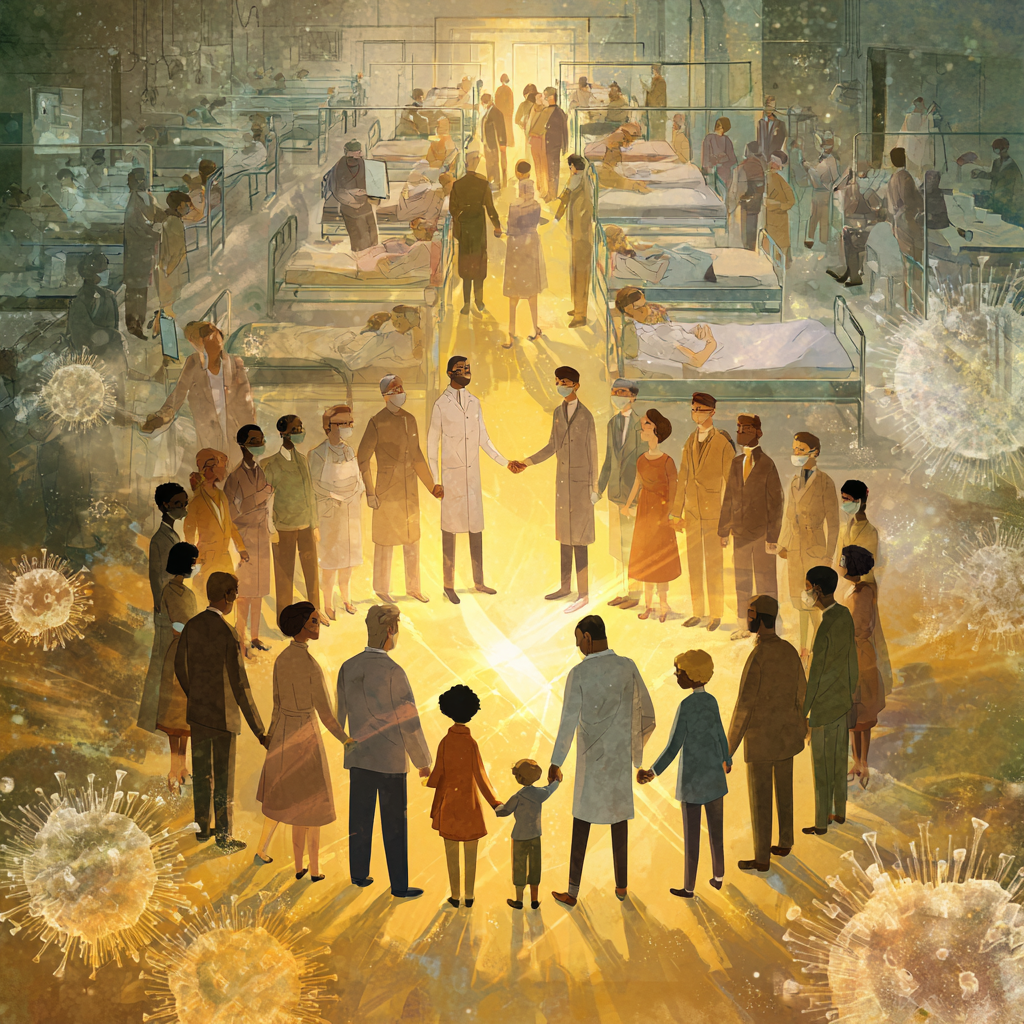
Your Community’s Shield Against Disease
Picture your community as a fortress. The stronger the walls and the more guards on duty, the harder it becomes for invaders to breach the defenses. Herd immunity works similarly—it’s your community’s invisible shield against infectious diseases, and vaccination is the primary way we build and maintain that protection.
Initial observations of herd immunity arose from livestock studies in the early twentieth century. Farmers noticed that once most animals in a herd recovered from a disease, future outbreaks diminished or disappeared altogether. Public health scientists later confirmed that this same principle applies to humans.
What Is Herd Immunity?
Herd immunity means that enough people in a group or area have achieved immunity against a virus or other infectious agent so that it becomes very difficult for the infection to spread. When a critical proportion of the population becomes immune, called the herd immunity threshold, the disease may no longer persist in the population, ceasing to be endemic.
Think of it like a firebreak in a forest. If enough trees have already been burned (past infection) or treated with flame retardant (vaccination), the fire has a harder time jumping from tree to tree. Similarly, with herd immunity, the chain of transmission is disrupted.
Individuals who are immune to a specific disease act as a barrier to the spread of disease, slowing or preventing the transmission of disease to others. This protection can come from two main sources: surviving a natural infection or receiving vaccines. However, vaccination is by far the safer and more reliable path to immunity.
The Math Behind Community Protection
The magic number for herd immunity isn’t the same for every disease—it depends on how contagious the illness is. Scientists use something called the basic reproduction number (R₀) to figure this out. For measles, one of the most contagious diseases, (R₀=15), this means 1 – (1/15) = 1 – 0.067 = 0.933. Measles herd immunity requires 93% of the population to be immune, while polio—less contagious—requires 80%.
For COVID-19, the target has been a moving one. At the start of the pandemic, researchers thought that having 60% to 70% of the people in the world immunized through vaccination or infection would equal the level of herd immunity needed for COVID-19. However, the contagiousness of the delta and omicron variants has made researchers rethink that number. Now that number could be as high as 85%.
Protecting the Most Vulnerable
Here’s where herd immunity becomes truly meaningful: it’s not just about personal protection—it’s about creating a safety net for those who need it most. Herd immunity gives protection to vulnerable people such as newborn babies, elderly people and those who are too sick to be vaccinated. In every community, you will find individuals in these categories, making herd immunity that much more important.
Consider these community members who depend on herd immunity:
– Newborns who are too young to receive certain vaccines
– People undergoing cancer treatment whose immune systems are compromised
– Elderly individuals whose immune responses may be weaker
– Those with autoimmune diseases who cannot safely receive live vaccines
– People with severe allergies to vaccine components
These people then depend on others getting vaccinated to be indirectly protected by them. When vaccination rates drop in a community, these vulnerable populations face the greatest risk.
Vaccination: The Cornerstone of Herd Immunity
While natural infection can provide immunity, vaccination is the only viable path to herd immunity for most diseases. The alternative—letting diseases spread naturally—comes with devastating costs. Achieving herd immunity, the ‘natural’ way would mean that many people would die and many others get ill and some seriously ill.
Vaccines have transformed herd immunity from a risky process—one that relied on dangerous natural infection—into a safe and reliable public health strategy. When people are vaccinated, they receive a controlled stimulus that trains their immune systems to recognize and fight particular pathogens, without causing the disease itself. Widespread vaccination reduces the pool of susceptible hosts, “starving” the disease of opportunities to spread.
Real-world examples demonstrate vaccination’s power. In 2000, measles was declared defeated in the U.S. However, in 2019, a surge of new cases was recorded. This occurred as a result of the declining vaccination rates, showing the importance of vaccinations and their impact on herd immunity.
The success stories of vaccination are impressive: Global vaccination campaigns have eradicated smallpox from the planet, and they have eliminated polio from almost all countries in the world.
A Historical Speculation: What If We Had Vaccines in the past?
*Note: The following section involves speculation based on historical analysis.
The 1918 influenza pandemic, often called the Spanish flu, killed an estimated 50 million people worldwide—more than World War I. The H1N1 influenza pandemic that swept across the world from 1918 to 1919, sometimes called “the mother of all pandemics”, involved a particularly virulent new strain of the influenza A virus. The 1918 pandemic is estimated to have infected 500 million people worldwide.
Had a vaccine been available—and administered on a global scale—herd immunity might have dramatically altered the pandemic’s trajectory. Even 50–60% coverage could have slowed transmission enough to flatten the curve, sparing millions of lives. Hospitals, already overwhelmed, might have had more capacity to care for the sick.
Another instructive example is smallpox, which killed an estimated 300 million people in the 20th century alone. Historically, populations never exposed to smallpox—such as indigenous communities in the New World—suffered catastrophic losses, sometimes as high as 90% when the virus first arrived. European societies, by contrast, had some community immunity from years of prior exposure, but still suffered mortality rates as high as 25%.
Once the smallpox vaccine became widely used, herd immunity did its work so effectively that the disease was eradicated in 1980—the only human disease to be eliminated globally. This success story underscores the potential power herd immunity might have had against earlier plagues.
In the 1940s and 1950s, polio terrified parents across the United States. Summer outbreaks paralyzed thousands of children each year. Once the Salk and Sabin vaccines became available, vaccination campaigns rapidly built herd immunity. Within a few decades, polio was virtually eliminated in the U.S. and reduced worldwide by over 99%. Without herd immunity, the virus would still be circulating widely today.
The Reality Check: Why Herd Immunity Isn’t Always Achievable
Modern societies are paradoxically both more capable and more vulnerable when it comes to herd immunity. Global travel means diseases can spread between continents in hours. Vaccine hesitancy, fueled by misinformation, creates gaps in immunity. At the same time, scientific advances allow us to develop vaccines faster than ever—COVID-19 vaccines were available within a year of the virus’s emergence.
The COVID-19 pandemic also revealed the complexity of herd immunity. High transmission rates, evolving variants, and waning immunity made it nearly impossible to reach a stable herd immunity threshold. Instead, vaccines reduced severity and death, while natural infections layered additional immunity in populations. The lesson: herd immunity isn’t always permanent or perfect, but even partial protection can save countless lives.
This doesn’t mean vaccination is pointless—far from it. Even when herd immunity isn’t achievable, vaccination still provides crucial individual protection and reduces the overall burden of disease in communities.
Your Role in Community Protection
Herd immunity is one of our best tools for the prevention of infectious diseases, but it is a tool that must be continuously sharpened.
Understanding herd immunity helps us see vaccination not just as a personal choice, but as a community responsibility. Every person who gets vaccinated contributes to the collective shield that protects the most vulnerable members of our communities. It is a story about interdependence.
While the concept can seem abstract, its effects are concrete and measurable. When vaccination rates remain high, diseases that once terrorized communities become rare memories. When they drop, we see the return of preventable illnesses and, tragically, preventable deaths.
The next time you roll up your sleeve for a vaccination, remember you’re not just protecting yourself—you’re helping to maintain your community’s invisible fortress against disease.
This post reflects current scientific understanding of herd immunity and vaccination. For specific medical advice, always consult with a healthcare professional.
The U.S. Public Health Service: Guardians of America’s Health
By John Turley
On July 3, 2025
In Commentary, History, Medicine
The United States Public Health Service (USPHS) has quietly served as the backbone of the nation’s public health infrastructure for over two centuries. From its beginnings as a maritime medical service to its current role as a comprehensive public health organization, the USPHS has evolved to meet the changing medical challenges facing Americans and to protect and promote the health of the nation.
Origins and Early History
The U.S. Public Health Service traces back to 1798, when President John Adams signed “An Act for the Relief of Sick and Disabled Seamen.” This legislation established the Marine Hospital Service and created a network of hospitals to care for the merchant sailors who served America’s growing maritime commerce. The act represented one of the first examples of federally mandated health insurance, as ship owners were required to pay 20 cents per month per sailor to fund medical care.
The Marine Hospital Service initially operated a series of hospitals in major port cities including Boston, New York, Philadelphia, and Charleston. These facilities served not only sick and injured sailors but also played a crucial role in preventing the spread of infectious diseases that could arrive on ships from foreign ports. This dual function of treatment and prevention would become a defining characteristic of the USPHS mission.
The transformation from the Marine Hospital Service to the modern Public Health Service began in the late 19th century. In 1889, the organization was restructured and placed under the supervision of Dr. John Maynard Woodworth as Supervising Surgeon—later Surgeon General—marking the beginning of its evolution into a more comprehensive public health agency. The name was officially changed to the Public Health and Marine Hospital Service in 1902, and finally to the U.S. Public Health Service in 1912, reflecting its expanded mandate beyond maritime health.
Evolution and Expansion
The early 20th century brought significant expansion to the USPHS mission. The 1906 Pure Food and Drug Act gave the service regulatory responsibilities, leading to the creation of what would eventually become the Food and Drug Administration. During World War I, the USPHS took on additional responsibilities for military health and epidemic control, establishing its role as a rapid response organization for national health emergencies.
The Great Depression and World War II further expanded the service’s scope. The Social Security Act of 1935 created new public health programs administered by the USPHS, while wartime demands led to increased focus on occupational health, environmental health hazards, and the health needs of defense workers. The post-war period saw the establishment of the National Institutes of Health—originally called the Laboratory of Hygiene—as part of the USPHS, cementing its role in medical research.
Major Functions and Modern Roles
Today’s U.S. Public Health Service operates as part of the Department of Health and Human Services and supports major agencies and functions. The service’s mission centers on protecting, promoting, and advancing the health and safety of the American people through several key areas.
Disease Prevention and Health Promotion are the core of USPHS activities. It works with the Centers for Disease Control and Prevention (CDC), to lead national efforts in the prevention and control of infectious and chronic diseases. From tracking disease outbreaks to promoting vaccination programs, the USPHS a part of America’s first line of defense against health threats.
Regulatory and Safety Functions represent other crucial areas. The USPHS coordinates with the Food and Drug Administration (FDA) to ensure the safety and efficacy of medications, medical devices, and food products. It works with the Agency for Toxic Substances and Disease Registry monitoring environmental health hazards. Other USPHS components are involved in regulating everything from clinical laboratories to health insurance portability.
Emergency Response and Preparedness has become increasingly important in recent decades. The USPHS maintains rapid response capabilities for natural disasters, disease outbreaks, and public health emergencies. This includes the deployment of Commissioned Corps officers to disaster zones and the maintenance of strategic national stockpiles of medical supplies.
Health Services for Underserved Populations continues the service’s historic mission of providing care where it’s most needed. The Health Resources and Services Administration oversees community health centers, rural health programs, and initiatives to address health disparities among vulnerable populations. The Indian Health Service is an important part of the USPHS, providing healthcare to often isolated communities.
The Commissioned Corps
One of the most distinctive features of the USPHS is its Commissioned Corps, a uniformed service of over 6,000 public health professionals. Established in 1889, the Corps operates as one of the eight uniformed services of the United States, alongside the armed forces, NOAA Corps, and Coast Guard. Officers hold military-style ranks and wear uniforms, but their mission focuses entirely on public health rather than defense.
The Commissioned Corps provides a ready reserve of highly trained health professionals who can be rapidly deployed to address public health emergencies. From hurricane and disaster relief to pandemic assessment and treatment, Corps officers have served on the front lines of America’s health challenges, providing everything from direct patient care to epidemiological investigation and public health program management.
Contemporary Challenges and Future Directions
The U.S. Public Health Service continues to evolve in response to emerging health challenges. Climate change, antimicrobial resistance, mental health crises, and health equity concerns represent current priorities. The COVID-19 pandemic demonstrated both the critical importance of robust public health infrastructure and the challenges of maintaining public trust in health authorities.
As America faces an increasingly complex health landscape, the USPHS mission of protecting and promoting the nation’s health remains as relevant as ever. From its origins serving sailors in port cities to its current role addressing global health threats, the U.S. Public Health Service continues its quiet but essential work of safeguarding American health, adapting its methods while maintaining its core commitment to serving the public good.
The service’s history shows that effective public health requires not just scientific expertise, but also the institutional ability to respond rapidly to emerging threats, the authority to implement necessary interventions, and the public trust to lead national health initiatives. As new challenges appear, the USPHS continues to build on its more than two-century legacy of service to the American people.