Grumpy opinions about everything.

Tag: Senior Health Page 1 of 2

When the Sun Bites Back

A guide to sun injuries — what they are, how they happen, and how to protect yourself. 

This is a long article; I recommend you scan through it and read the sections of most interest to you rather than trying to read through it in a single sitting.

The sun is arguably the most powerful force in our daily lives. It warms the planet, drives our seasons, and has shaped human biology for hundreds of thousands of years. A little sunlight genuinely is good for you — it triggers vitamin D production and helps regulate your sleep cycle. But the same energy that sustains life can also cause real, sometimes lasting harm when you get too much. We’re not just talking about a red nose after a day at the beach. Sun injuries span a wide spectrum, from the minor annoyance of a mild sunburn to life-threatening heat stroke to decades-long processes that end in skin cancer.

Let’s walk through the main categories of sun-related injury: what they are, the biology behind them, who’s most at risk, how to prevent them, and what to do when prevention comes too late.

The Sun’s Invisible Weapons: UV Radiation and Heat

Before we get into specific injuries, it helps to know what we’re dealing with. The sun delivers energy to Earth in three main forms: visible light (what you see), infrared radiation (what you feel as warmth), and ultraviolet (UV) radiation, which you can neither see nor feel. UV is the primary culprit behind most sun injuries to the skin and eyes.

UV radiation comes in three wavelength ranges. UVC is almost completely absorbed by the Earth’s atmosphere and generally doesn’t reach us from the sun. UVA and UVB are the ones that matter for your health. UVA rays make up the lion’s share of what reaches the Earth’s surface. They penetrate deep into the skin, cause aging effects, and suppress the immune system. UVB rays are shorter and more energetic — they’re the primary drivers of sunburn, and also the rays most directly linked to DNA damage and skin cancer. Surprisingly, even on a cloudy day a significant amount of UV radiation still reaches you.

Heat from the sun adds a second, separate threat. While UV damages cells at a molecular level, heat overwhelms the body’s ability to regulate its own temperature — a completely different mechanism leading to a different family of injuries.

The Types of Sun Injury

Sunburn

Sunburn is the most common sun injury, and most people have had at least one, some of us many more than one. It’s an acute inflammatory response triggered when UV radiation, primarily UVB, directly damages the DNA in skin cells. When that damage exceeds the ability of the cell’s repair machinery, the cell initiates a self-destruct process (called apoptosis) to prevent potentially cancerous mutations from propagating. The redness, pain, heat, and swelling of a sunburn are the skin’s inflammatory response to that mass cellular die-off.

Sunburn develops in a spectrum of severity. A mild burn produces redness and tenderness over exposed skin. A moderate burn adds blistering and significant pain. Severe sunburns are equivalent to a second-degree thermal burn and can involve extensive blistering, swelling, fever, chills, and nausea. In rare cases, especially in young children, severe sunburns can require hospitalization.

One thing worth knowing: even though we casually call sunburn a ‘first-degree burn,’ it’s technically not the same as a heat burn of the same grade. UV radiation penetrates to deeper layers of the skin than heat does, causing a different pattern of cellular injury.

Skin Cancer

This is where sunburn’s long tail becomes dangerous. Skin cancer is the most common cancer in the United States, with over 5 million cases diagnosed annually. The connection to UV exposure is not subtle — roughly 90 percent of non-melanoma skin cancers are directly associated with UV radiation from the sun.

There are three main types. Basal cell carcinoma (BCC) is the most common, with an estimated 3.6 million U.S. diagnoses each year. It tends to grow slowly and rarely spreads to other organs, but it can cause significant local destruction if ignored. Squamous cell carcinoma (SCC) is second in frequency, at about 1.8 million cases per year. It carries a somewhat higher risk of spreading than BCC. Melanoma is the least common but by far the most dangerous, accounting for most skin cancer deaths. It arises from the pigment-producing cells (melanocytes) and can spread rapidly to other organs.

The underlying mechanism in all three is UV-induced DNA damage. When UV radiation hits skin cells repeatedly over time, it scrambles the DNA segments that normally suppress tumor growth. Intermittent intense exposure — like a child getting several serious sunburns — appears particularly risky for melanoma. Cumulative lifetime exposure is more associated with BCC and SCC. Either way, the damage is slow and progressive and adds up invisibly for decades before a cancer appears.

Photokeratitis — Sunburn of the Eye

Most people have never heard of photokeratitis, but anyone who’s spent time on the water, in the snow, or at high altitude without sunglasses has been at risk. Photokeratitis is essentially a sunburn of the cornea, the clear front surface of the eye It is caused by intense or prolonged exposure to UVB radiation. It’s sometimes called ‘snow blindness’ in its most severe form, and ‘arc eye’ or ‘welder’s flash’ when caused by industrial UV sources.

At the cellular level, UV radiation interacts with cells in the cornea and conjunctiva (the membrane covering the eye), generating reactive oxygen species — unstable molecules that cause oxidative damage to cell membranes, proteins, and DNA. The inflammatory response that follows is what produces the characteristic symptoms: intense pain, a gritty sensation as though there’s sand in the eye, extreme sensitivity to light, tearing, and redness. These symptoms typically appear several hours after exposure, which is part of what makes photokeratitis so sneaky — you may not notice a problem until you’re back indoors for the evening.

The good news is that photokeratitis is almost always temporary. The cornea has a remarkable ability to regenerate its surface cells, and most cases resolve within 24 to 48 hours without any permanent damage to vision. Snow blindness occurs at high altitude where UV intensity is dramatically increased and fresh snow reflects up to 80 percent of incoming UV and is a more severe version that can temporarily blind a person, though new cells typically restore vision within a few days.

Long-term or repeated UV exposure to the eyes raises a different set of concerns. Cataracts, macular degeneration, and pterygium (a fleshy overgrowth on the eye surface) are all associated with lifetime cumulative UV exposure.

Heat-Related Illnesses

UV radiation isn’t the only player. The sun’s infrared energy — heat — creates a separate family of injuries when it overwhelms your body’s cooling mechanisms. These range from relatively mild to life-threatening.

Heat Cramps

Heat cramps are the mildest heat-related illness and present as painful muscle spasms that occur when you sweat heavily during strenuous activity in the heat.  Sweating depletes both fluid and electrolytes (particularly sodium). They most often show up in the legs, arms, or abdomen. Treatment is straightforward: rest, move to a cooler spot, and slowly replace fluids and electrolytes.

Heat Exhaustion

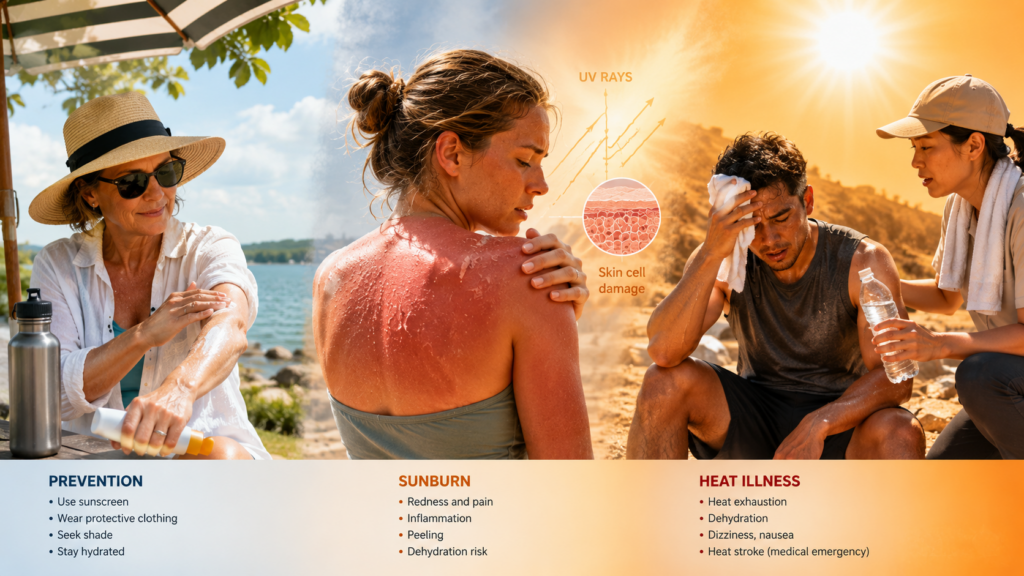
Heat exhaustion is a more serious heat illness. It occurs when the body struggles to cool itself after prolonged heat exposure, often compounded by dehydration. Your core body temperature climbs, typically to between 100°F and 104°F. Symptoms include heavy sweating, headache, dizziness, nausea, rapid but weak pulse, and muscle cramps. The skin usually feels cool and moist. Without treatment, heat exhaustion can escalate into heat stroke.

Heat Stroke

Heat stroke is a medical emergency and the most severe heat illness. It occurs when the body’s temperature regulation fails entirely — the sweating mechanism breaks down, and the core body temperature can rise to 106°F or higher within 10 to 15 minutes. This is organ-threatening territory. Brain cells begin dying at sustained high temperatures, and heat stroke can cause permanent disability or death without rapid emergency treatment.

There are two clinical patterns. Classic heat stroke tends to affect the elderly, very young children, and people with chronic illness and occurs during prolonged heat waves. Exertional heat stroke hits otherwise healthy, physically active people — athletes, soldiers, outdoor workers — during intense physical activity in hot conditions. Both are emergencies, but exertional heat stroke can develop faster and with less warning.

Key warning signs that distinguish heat stroke from heat exhaustion: an extremely high body temperature (above 104°F), confusion or slurred speech, hot and dry skin (though not always), and loss of consciousness or seizures. If you suspect heat stroke, call 911immediately — this is not a wait-and-see situation.

Photosensitivity and Drug Reactions

A less-discussed but fairly common category of sun injury involves the interaction between UV radiation and certain medications or chemicals. Phototoxic reactions happen when a substance in or on the skin absorbs UV radiation and generates a chemical reaction that damages tissue — essentially a chemical sunburn. Photoallergic reactions are immune-mediated: the UV-altered substance triggers an immune response, producing a rash that can spread even to sun-unexposed areas.

Medications commonly associated with photosensitivity include certain antibiotics (especially tetracyclines and fluoroquinolones, cipro being the most common), diuretics, some blood pressure medications, nonsteroidal anti-inflammatory drugs (NSAIDs), and some antidepressants. If you’ve started a new medication and notice unusual sun sensitivity, it’s worth having a conversation with your prescriber.

Who’s Most Vulnerable?

While the sun doesn’t discriminate, some people are more vulnerable to sun injury than others.

Skin tone matters enormously for UV-related injury. People with lighter skin have less melanin — the pigment that absorbs UV and dissipates it as heat, protecting underlying cells. Fair-skinned people sunburn faster and face a higher lifetime risk of skin cancer. That said, darker-skinned individuals are absolutely not immune: skin cancers in Black, Asian, and Hispanic patients tend to be diagnosed at later, more dangerous stages, partly because they’re less expected. Melanoma in particular has a much lower five-year survival rate in Black patients (around 70 percent) compared to white patients (around 95 percent).

Children deserve special attention. Their developing skin and eyes are more sensitive to UV damage, and the evidence is strong that severe sunburns during childhood and adolescence significantly increase the lifetime risk of melanoma.  Generally, a disproportionate amount of a person’s lifetime UV exposure is accumulated before age 18.

For heat illness, the calculus shifts. The elderly and very young children are most vulnerable because their thermoregulatory systems are less efficient. People with chronic illnesses such as heart disease, kidney disease, diabetes, obesity, face elevated risk. So do people taking medications that interfere with sweating or fluid balance.  Outdoor workers and athletes are at occupational risk, particularly when they haven’t had time to acclimatize to heat.

Prevention: The Real Work Happens Before You Go Outside

Sunscreen — But Use It Right

The evidence that sunscreen prevents skin cancer is solid overall, though the picture is more nuanced than the marketing suggests. High-quality evidence shows that regular daily use of a broad-spectrum SPF 15 sunscreen reduces the risk of developing squamous cell carcinoma by about 40 percent and reduces melanoma risk by roughly 50 percent. The catch is application. Under real-world conditions, people typically apply far less sunscreen than the amount used in lab testing which can cut the effective SPF roughly in half. Sunscreen also needs to be reapplied every two hours and after swimming or heavy sweating; most people don’t do this.

The American Academy of Dermatology recommends a broad-spectrum sunscreen (meaning it covers both UVA and UVB) with an SPF of at least 30 for everyday use, and SPF 50 for extended outdoor activity. ‘Broad spectrum’ is key — pure UVB filters leave you unprotected from UVA, which drives skin aging and contributes to skin cancer.

On the regulatory front, there’s encouraging news. In late 2025, Congress passed the SAFE Sunscreen Standards Act, which allows the FDA to accept safety data from other countries when evaluating new sunscreen ingredients. The U.S. has long lagged behind Europe and Asia in available sunscreen chemistry, so this could eventually broaden consumer options significantly.

Clothing and Shade

Arguably the most underrated sun protection strategy is also the simplest: cover up and get out of direct sun. Tightly-woven, loose-fitting clothing provides a meaningful physical barrier to UV. Clothing with a labeled UPF (ultraviolet protection factor) rating offers quantified protection. A wide-brimmed hat protects the face, ears, and neck — areas that accumulate a lot of UV exposure and are common sites for skin cancer.

Seek shade during peak UV hours, which run from about 10 a.m. to 4 p.m. Keep in mind that trees, umbrellas, and canopies reduce but don’t eliminate UV exposure — surfaces like sand, water, and snow reflect UV back at you from below, partially defeating the shade above you.

Eye Protection

Sunglasses that block 99 to 100 percent of UVA and UVB are very important and are not just a fashion accessory. Wraparound styles provide better coverage than narrow frames, since UV can reach the eye from the sides. For winter sports or high-altitude activities, glacier glasses or goggles with side shields are the appropriate choice — fresh snow can reflect up to 80 percent of UV radiation, and the UV intensity at altitude is substantially higher than at sea level.

Managing Heat Risk

Preventing heat illness comes down to a few fundamentals: stay hydrated before and during outdoor activity and don’t neglect to continue to hydrate after you have finished. Schedule strenuous work or exercise in the early morning or evening, wear lightweight and light-colored clothing, take breaks in shaded or air-conditioned spaces.  Be sure to allow your body time to acclimatize when moving to a hotter climate — and that includes vacations.

Hydration specifics matter. The general guidance for outdoor exercise is to drink about 24 ounces of fluid two hours before activity, and about 8 ounces every 20 minutes during exertion — even if you don’t feel thirsty. When I was in the Marines and serving in a tropical environment, we were advised to “drink until you slosh”.  In extreme heat, an electrolyte-containing sports drink can be more appropriate than plain water, since heavy sweating depletes sodium and other minerals that plain water doesn’t replace.

Never leave children, the elderly, or pets in a parked car on a warm day. Car interiors can reach dangerous temperatures remarkably quickly, and dark dashboards and seats can hit temperatures above 180°F.

Treatment: When the Sun Has Already Won

Treating Sunburn

There is no treatment that reverses UV damage once it’s occurred, so sunburn management is fundamentally about reducing inflammation and discomfort while the skin heals. Cool (not ice cold) baths or compresses help with pain and inflammation. Over-the-counter NSAIDs like ibuprofen or aspirin reduce inflammation systemically. Aloe vera gel and fragrance-free moisturizers help with the dryness and peeling that follow. Hydration is important, since burned skin loses water faster than intact skin.

Avoid applying petroleum jelly, butter, or any product that traps heat in the skin — these are folk remedies that can worsen the burn. Avoid further sun exposure until the burn has healed. Blistered burns should be left intact; breaking blisters increases infection risk. A severely blistered sunburn, or one accompanied by high fever, severe pain, confusion, or extensive skin involvement, warrants medical attention.

Treating Photokeratitis

Eye sunburn is treated with rest, darkness, and time. Remove contact lenses immediately. Cool compresses over closed eyes can ease the pain. Over-the-counter lubricating eye drops help with the irritation, and oral pain relievers can help with the deeper ache. Avoid rubbing the eyes. Most cases resolve within 24 to 48 hours. If pain or vision disturbance persists beyond 48 hours, or if vision changes occur, see an eye care professional promptly.

Treating Heat Exhaustion

Act quickly. Move the person to a cool or shaded area, loosen or remove excess clothing, and have them lie down with legs slightly elevated to improve circulation. Use any available means to cool the body: wet towels, fans, cool mist. Slowly give cool water or a sports drink. Call for medical assistance, since heat exhaustion can tip into heat stroke without warning.

Treating Heat Stroke

Heat stroke is a 911 emergency. While waiting for emergency services, move the person to a cool environment, remove outer clothing, and cool them by any means available — cool water applied to the skin, fanning, ice packs to the groin and armpits (where large blood vessels run close to the surface). Crucially: do NOT give fluids to someone who may have heat stroke, since confusion or impaired consciousness creates a choking risk. Hospital treatment typically involves intravenous fluids and active cooling measures. Every minute of delay increases the risk of permanent brain damage or death.

Long-Term Management: Skin Cancer

Skin cancer detected early is highly treatable. The American Academy of Dermatology recommends annual skin checks by a dermatologist for adults with significant sun exposure history, a personal or family history of skin cancer, or a large number of moles. Know the ABCDE warning signs: Asymmetry, irregular Border, uneven Color (especially multiple colors in one lesion), Diameter greater than a pencil eraser, and Evolution (any change in size, shape, or color over time). A new growth or a sore that doesn’t heal also warrants prompt evaluation.

A Final Thought

The sun isn’t going anywhere, and we wouldn’t want it to. But the injuries it causes — from the trivial to the fatal — are almost entirely preventable with a combination of awareness and habit. The frustrating reality is that the damage we’re preventing today won’t make itself known for years or decades. Nobody feels their melanoma forming at 35 or while they’re sitting on the beach at 22. That temporal gap is why sun safety behaviors are so psychologically difficult to maintain — the consequences feel abstract right up until they’re not.

The good news is that sunscreen, shade, adequate hydration, and protective clothing are not especially burdensome interventions. The return on that modest investment, measured in avoided skin cancers, avoided heat emergencies, and preserved eyesight, is substantial. Your future self will thank your present self for making it a habit.

Image generated by author using ChatGPT

Sources

Sunburn pathophysiology — PMC / ePlasty (2024) — https://pmc.ncbi.nlm.nih.gov/articles/PMC11374383/

UV radiation and human health — WHO Q&A — https://www.who.int/news-room/questions-and-answers/item/radiation-the-known-health-effects-of-ultraviolet-radiation

UV radiation and health effects — UNDRR — https://www.undrr.org/understanding-disaster-risk/terminology/hips/et0202

UV radiation and sun exposure — U.S. EPA — https://www.epa.gov/radtown/ultraviolet-uv-radiation-and-sun-exposure

Photokeratitis: causes, symptoms, treatment — All About Vision — https://www.allaboutvision.com/conditions/keratitis/photokeratitis/

Heat exhaustion — Cleveland Clinic — https://my.clevelandclinic.org/health/diseases/21480-heat-exhaustion

Heat stroke symptoms and treatment — WebMD — https://www.webmd.com/a-to-z-guides/heat-stroke-symptoms-and-treatment

Heat-related illnesses — CDC/NIOSH — https://www.cdc.gov/niosh/heat-stress/about/illnesses.html

Dehydration and heat stroke — Johns Hopkins Medicine — https://www.hopkinsmedicine.org/health/conditions-and-diseases/dehydration-and-heat-stroke

Heat illness — NOAA — https://www.noaa.gov/stories/heat-exhaustion-or-heat-stroke-know-signs-of-heat-illness

Skin cancer facts and statistics — Skin Cancer Foundation — https://www.skincancer.org/skin-cancer-information/skin-cancer-facts/

Skin cancer statistics — American Academy of Dermatology — https://www.aad.org/media/stats-skin-cancer

Sunscreen efficacy and skin cancer prevention — CMAJ (2020) — https://www.cmaj.ca/content/192/50/E1802

Modernizing U.S. sunscreen regulations — PMC (2025) — https://pmc.ncbi.nlm.nih.gov/articles/PMC12332967/

New sunscreen laws — Health Central (2026) — https://www.healthcentral.com/condition/skin-cancer/new-sunscreen-formulas-are-on-the-way

Sunscreen and melanoma risk — ASCO Journal of Clinical Oncology — https://ascopubs.org/doi/10.1200/JCO.2016.69.5874

Medical Disclaimer

The information provided in this article is intended for general educational and informational purposes only and does not constitute medical advice. It should not be used as a substitute for professional medical advice, diagnosis, or treatment.

Always seek the guidance of a qualified healthcare provider with any questions you may have regarding a medical condition or treatment. Never disregard professional medical advice or delay seeking it because of something you have read here.

If you are experiencing a medical emergency, call 911 or your local emergency number immediately.

The author of this article is a licensed physician, but the views expressed here are solely those of the author and do not represent the official position of any hospital, health system, or medical organization with which the author may be affiliated.

The Gummy Revolution: Sweet Convenience or Health Trade-Off?

A plain-language look at gummy vitamins and medications — the good, the bad, and the sticky

Not Your Grandma’s Vitamin

Walk down the supplement aisle of any pharmacy or big-box store and you’ll find row after row of brightly colored bottles filled with gummy bears, worms, and rings that smell vaguely of fruit punch. Decades ago, vitamins came in white tablets that tasted like chalk and left you feeling vaguely like you’d swallowed a piece of sidewalk. Today, a not-insignificant share of the American supplement market looks and tastes a whole lot like candy. That shift didn’t happen by accident, and understanding what’s driving it — and what it costs — is worth your time.

Gummy formulations now cover everything from vitamin C and melatonin to prenatal multivitamins and, increasingly, actual prescription-adjacent medications. The format has clear appeal, especially for children who resist pills and adults who find swallowing large tablets unpleasant or outright difficult. But behind that chewy exterior lies a more complicated picture involving sugar, unreliable dosing, dental damage, and real safety risks that most consumers never think about.

The Appeal Is Real

Let’s give credit where it’s due: the biggest genuine advantage of gummy vitamins isn’t nutritional — it’s behavioral. According to University Hospitals, the primary benefit of gummies over traditional supplements is people will take them more consistently. A vitamin sitting in your cabinet because you hate the taste is worthless. A gummy you look forward to, however modest its nutritional profile, at least does something. That’s not a trivial point.

For parents of young children, this is often a decisive factor. Getting a five-year-old to swallow a pill can feel like an Olympic sport. Gummies sidestep the fight entirely. And for elderly patients managing complex medication regimens, or anyone with a swallowing disorder (called dysphagia), gummies and chewables offer a useful alternative to pills and capsules.

There’s also a psychological dimension. Taking a gummy feels like a small reward rather than a medical obligation, and that association can make adherence to a supplement routine more sustainable. That may sound trivial, but in the real world of patient behavior, it matters.

 Gummies may be gentler on the stomach than some traditional tablets because they lack certain binding agents and can sometimes be taken without food or large volumes of water, reducing nausea for sensitive users.

The popularity of gummy medications reflects a broader shift in medicine toward consumer-friendly products. Yet the fact that a medication tastes like candy does not make it harmless.

What’s in the Gummy?

Here’s where things start to get complicated. A standard gummy vitamin isn’t just vitamins. Its base is a blend of gelatin or pectin, corn starch, water, and — almost always — sugar or some form of sweetener. UCLA Health reports that most gummy vitamins contain between 2 and 8 grams of sugar per serving. The American Heart Association recommends no more than 25 grams of added sugar per day for women and 36 grams for men. That is a meaningful slice of a daily sugar budget, especially for someone taking multiple gummies.

The presence of all those filler ingredients — coloring, flavoring, gelling agents — creates a real-world engineering problem for manufacturers: there’s only so much space in a gummy bear. That means there is less room for actual vitamins and minerals.

Many gummy multivitamins leave out key minerals such as iron or zinc, or include them only in small amounts, because certain minerals affect taste or texture or are harder to formulate in a palatable gummy. As a result, relying solely on gummies may leave gaps compared with a well‑formulated tablet or capsule. As Cleveland Clinic notes, gummy vitamins typically contain fewer vitamins and minerals than regular vitamins, and it can be difficult to determine exactly how much nutrition you’re getting.

Sugar-free versions aren’t automatically off the hook either. Many use sugar alcohols like sorbitol or maltitol, which can cause bloating, gas, and diarrhea when consumed in any significant quantity. Others rely on high-sugar fruit juice concentrates that, while technically “no added sugar,” still deliver a meaningful glycemic hit.

The Sugar Problem — Beyond Calories

Your Teeth Are Paying the Price

The sugar content of gummy vitamins isn’t just a caloric issue — it’s a dental one, and it may be more damaging than eating equivalent sugar in another form. The reason comes down to the gelatin matrix. Dental researchers at Tufts University School of Dental Medicine explain that gummies carry roughly the same cavity risk as candy because sticky substances with sugar create oral health problems by lingering against tooth enamel far longer than liquids or even hard candies do.

When you eat ordinary sugary food, your saliva, tongue, and cheeks gradually help clear it away. Gelatin disrupts that process. It’s adhesive by design, that’s what makes gummies chewy rather than crumbly and it holds sugar against tooth surfaces far longer than normal. Bacteria in the mouth metabolize sugar and produce acids, which attack enamel in a process called demineralization. The result: an elevated risk of cavities that many  never see coming because they’re thinking of these as health products, not candy.

Most gummy vitamins also contain citric acid, added for flavor. Citric acid softens enamel directly, creating a one-two punch: first the acid weakens the enamel, then the bacteria exploit the weakened surface. Brushing too soon after eating gummies can make things worse, since brushing acid-softened enamel can mechanically remove tooth structure. Dentists recommend rinsing with water immediately after chewing a gummy and waiting at least 30 minutes before brushing.

This is not a hypothetical concern. Pediatric dentists report seeing increased cavity rates in children whose parents switched to gummy vitamins as a supposedly healthier treat alternative. The irony — giving a child a health supplement that damages their teeth — is both real and under appreciated.

Diabetics, Diabetic-Adjacent, and Anyone Watching Sugar

For patients managing type 2 diabetes, pre-diabetes, metabolic syndrome, or insulin resistance, the sugar content of gummy vitamins isn’t just a dental annoyance — it’s a medication management issue. Taking multiple gummies daily, across different supplement categories (vitamin D, omega-3, calcium, melatonin, a multivitamin), can add up to a meaningful daily sugar load that was never accounted for in a dietary plan. Most people don’t track gummy sugar content the way they track the sugar in a soda, but they should.

The Dosing Problem Is Bigger Than You Think

What the Label Says vs What’s in the Bottle

Here’s a fact that should give anyone pause: gummy vitamins have a shorter shelf life than traditional pills and tablets, and the vitamins inside them degrade over time. To compensate, manufacturers sometimes overfill gummies at the time of production, meaning a freshly manufactured product may contain significantly more of a given vitamin than the label states, while an older product approaching its expiration date may contain considerably less.

The label on a gummy vitamin is, at best, a rough approximation. You might be getting 150% of what’s stated, or 60% of what’s stated, depending on when the product was manufactured and how long it sat on the shelf or in your cabinet. For most vitamins, this imprecision is inconvenient but not dangerous. For fat-soluble vitamins — specifically A, D, E, and K — it can become a genuine safety concern.

Unlike water-soluble vitamins such as C or the B vitamins, fat-soluble vitamins accumulate in the body’s fat tissue and liver rather than being excreted in urine. Consuming significantly more than your body needs over time can lead to toxicity. Vitamin A toxicity (hypervitaminosis A) can cause liver damage, bone loss, and a range of neurological symptoms. Vitamin D toxicity, while less common, can cause dangerously elevated calcium levels. The gummy format’s inherent dosing imprecision is most concerning precisely for the vitamins where precision matters most.

The Candy Problem and Accidental Overdose

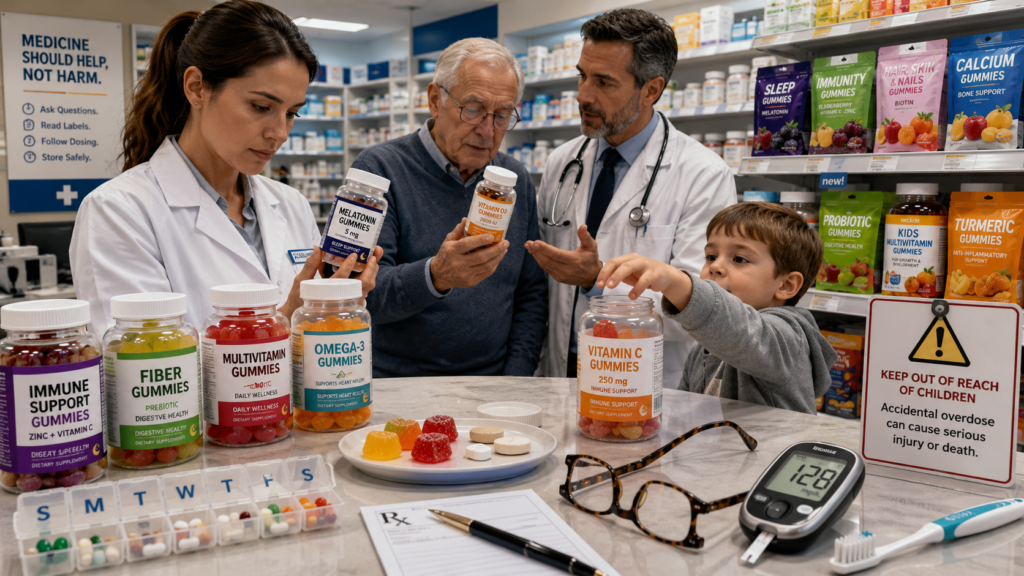
Gummy vitamins taste like candy. They look like candy. Children cannot reliably distinguish them from candy, and the packaging is often designed with cartoon characters and bright colors that actively appeal to children. The predictable result: accidental ingestion. Poison control centers in the U.S. receive reports of over 60,000 vitamin toxicity events every year, and children under six account for the majority of those.

The FDA has taken notice. In late 2023, the agency convened a meeting of experts specifically to discuss the risks of candy-like nonprescription drug products, including gummy vitamins and OTC sleep aids. Among the concerns raised: packaging that uses cartoon characters and gummy worm shapes that blur the line between supplement and treat. Historically, a documented 500% spike in pediatric overdoses occurred in the late 1940s and early 1950s when drug companies began marketing kid-friendly aspirin and that was a less appealing format than gummies. History, it seems, may be repeating.

For households with young children, the safety implication is straightforward: gummy vitamins — regardless of how benign they may seem — should be stored exactly as any medication would be, in child-resistant containers and out of reach. The pleasant taste is precisely what makes them dangerous when a toddler finds them.

Regulatory Gaps and Quality Control

Supplements Aren’t Drugs

Let’s be clear about the regulatory landscape, because it matters more than most people realize. The FDA classifies dietary supplements — including gummy vitamins — as food items, not drugs. That means manufacturers don’t have to demonstrate safety and efficacy before bringing a product to market the way pharmaceutical companies do. The burden of proof is essentially reversed: the FDA must demonstrate that a product is unsafe before it can be pulled from shelves.

The practical consequences are significant. A gummy vitamin that claims to support immune health doesn’t have to prove that it does. A study analyzing supplements marketed for brain health and cognitive performance found that 83% contained compounds not listed on the label. Some contained prescription drug compounds. Heavy metals including lead, arsenic, cadmium, and mercury have been detected in dietary supplement products. Third-party testing exists (look for seals from NSF International, USP, or ConsumerLab), but it’s voluntary, and most products on the market haven’t been independently verified.

This isn’t an argument against supplements across the board — it’s an argument for educated consumption. If you or your physician have identified a specific nutritional deficiency, a targeted, independently verified supplement in a traditional tablet or capsule form will almost always deliver more reliable dosing than its gummy equivalent.

What about Prescription Gummies?

A growing number of prescription medications are being formulated as gummies or gummy-like chewables. The pharmaceutical industry sees significant potential in these products for pediatric and geriatric populations. However, prescription medications introduce additional challenges because many drugs require extremely precise dosing and predictable absorption characteristics. Compounded prescription gummies prepared by specialty pharmacies are already being marketed for conditions such as erectile dysfunction, sleep disorders, hormonal therapy, and hair loss. These require very specific prescriptions and many of these are not FDA-approved as finished pharmaceutical products, even though the active ingredients themselves may be FDA-approved.

Consumers should be cautious about products marketed online as “prescription gummies,” especially for weight loss, sexual enhancement, bodybuilding, or “natural” performance enhancement.  The FDA has found hidden prescription drugs inside some supposedly “herbal” gummies. Several products sold as sexual-enhancement gummies were found to contain non- documented tadalafil, the active ingredient in Cialis.  This can be dangerous, especially in patients taking nitrates or cardiac medications.

A Balanced Bottom Line

Gummy vitamins occupy a genuine and useful niche. For children who won’t take pills, for adults with swallowing difficulties, for patients who simply need a behavioral nudge to take something they’d otherwise skip — the gummy format serves a real purpose. Compliance is a legitimate medical outcome, and if the gummy gets someone to take their vitamin D consistently when they otherwise wouldn’t, that has value.

But gummies should be approached with clear eyes. They contain sugar — often more than people realize — and that sugar can damage teeth, complicate blood sugar management, and add up when multiple supplements are taken daily. Their dosing is inherently less precise than traditional formulations, a problem that grows more serious with fat-soluble vitamins that can accumulate to toxic levels. They pose a real accidental overdose risk in homes with children. And they exist in a regulatory environment that places the burden of quality assurance squarely on the consumer.

If you’re going to use gummies, the practical advice is consistent across medical sources: choose brands that have been independently third-party tested, keep them locked away from children, rinse your mouth with water after taking them, don’t substitute them for a meaningful medical intervention without your doctor’s input, and be especially cautious with fat-soluble vitamin gummies where dosing precision matters most. And if you’re taking them alongside prescription medications, tell your doctor — interactions and supplement contamination are real, if underappreciated, risks.

The gummy revolution isn’t going anywhere. The market is too large and the convenience too appealing. But the best version of that revolution is one where consumers understand what they’re actually putting in their mouths.

Image generated by author using ChatGPT.

Sources

1. WebMD — Gummy Vitamins: What to Know. https://www.webmd.com/vitamins-and-supplements/what-to-know-about-gummy-vitamins

2. UCLA Health — Should You Take Gummy Vitamins? https://www.uclahealth.org/news/article/should-you-take-gummy-vitamins

3. University Hospitals — Are Gummy Vitamins as Good as the Real Thing? https://www.uhhospitals.org/blog/articles/2026/01/are-gummy-vitamins-as-good-as-the-real-thing

4. Cleveland Clinic — Do Gummy Vitamins Work as Well as Traditional Vitamins? https://health.clevelandclinic.org/do-gummy-vitamins-work-as-well-as-traditional-vitamins

5. Ochsner Health — Are Gummy Vitamins Effective or Just a Sweet Treat? https://blog.ochsner.org/articles/are-gummy-vitamins-healthy/

6. Scripps Health — Do Gummy Vitamins Really Work? https://www.scripps.org/news_items/7270-do-gummy-vitamins-really-work

7. Healthline — Are Gummy Vitamins Good or Bad? https://www.healthline.com/nutrition/gummy-vitamins

8. MedShadow Foundation — Dangers of Gummy, Patch, and Powder Vitamin Supplements. https://medshadow.org/integrative-health/non-drug-supplements/dangers-of-gummy-patch-and-powder-vitamin-supplements/

9. STAT News — The FDA Weighs the Risks of Candy-Like Nonprescription Drugs. https://www.statnews.com/2023/10/30/candy-like-drugs-gummies-fda-halloween-eve/

10. FDA — Dietary Supplements: Questions and Answers. https://www.fda.gov/consumers/consumer-updates/fda-101-dietary-supplements

11. Tufts University School of Dental Medicine — Something to Chew On Before You Sink Your Teeth into Those Gummy Vitamins. https://now.tufts.edu/2024/07/25/something-chew-you-sink-your-teeth-those-gummy-vitamins

12. SingleCare — What Happens If You Eat Too Many Gummy Vitamins? https://www.singlecare.com/blog/too-many-gummy-vitamins/

13. GoodRx — Can You Overdose on Vitamins? https://www.goodrx.com/well-being/supplements-herbs/overdose-on-vitamins

Medical Disclaimer

The information provided in this article is intended for general educational and informational purposes only and does not constitute medical advice. It should not be used as a substitute for professional medical advice, diagnosis, or treatment.

Always seek the guidance of a qualified healthcare provider with any questions you may have regarding a medical condition or treatment. Never disregard professional medical advice or delay seeking it because of something you have read here.

If you are experiencing a medical emergency, call 911 or your local emergency number immediately.

The author of this article is a licensed physician, but the views expressed here are solely those of the author and do not represent the official position of any hospital, health system, or medical organization with which the author may be affiliated.

Keeping Things Moving: Bowel Health for Seniors

.

Introduction

Let’s talk about something that affects nearly a third of all older adults but rarely makes it into polite dinner conversation: bowel movements. Specifically, how often should you be having them, what happens when you don’t, and what can you do about it. This isn’t exactly cocktail party material, but it matters, a lot, for your comfort, your health, and your overall quality of life.

Constipation is extraordinarily common in people over 60. Some estimates put the rate of chronic constipation as high as 30% in community-dwelling older adults, and it climbs up to 50% among nursing home residents. Yet it remains under-discussed, under-treated, and frequently dismissed as just a normal part of getting older. Spoiler alert: it isn’t.

What Is a “Normal” Bowel Movement Schedule for Seniors?

Here’s a liberating fact: there is no single right answer to how often you should go. The notion that everyone should have a bowel movement every day is a myth. The accepted medical range for normal stool frequency is anywhere from three times a day to three times a week. If you’re comfortable, there’s no straining, and nothing has dramatically changed from your usual pattern, you’re probably fine.

For most seniors, having a bowel movement once a day to three times a week falls within the typical range. The key phrase here is “typical for you.” What matters clinically is consistency and comfort, not hitting some magic daily number.

A large National Health Interview Survey of over 42,000 participants found something that surprises many people: infrequent bowel movements don’t automatically increase with age the way conventional wisdom has long assumed. As the researchers noted in the Annals of Internal Medicine, a decline in bowel movement frequency is “not an invariable concomitant of aging.”

So what does change with age? The colon can slow its transit time — the speed at which food waste travels from one end to the other. Muscle tone in the abdomen and pelvic floor may decrease. Nerve sensitivity in the rectum can diminish, meaning you may not feel the urge to go as acutely as you once did. Add reduced physical activity, inadequate fluid intake, and a roster of medications, and you have a recipe for sluggishness down below.

Harvard Health recommends paying attention to any dramatic departure from what’s normal for you. If you typically go once a day and suddenly you’re going once a week without an obvious explanation like a change in diet or travel, that’s worth discussing with your doctor. Especially if it comes with fatigue, pain, unintentional weight loss, blood in the stool, or a change in consistency.

The Downside of Infrequent Bowel Movements

Constipation might seem like just an inconvenience, but when it becomes chronic or severe, the consequences can be surprisingly serious. Here’s a rundown of what can go wrong.

Fecal Impaction

The most dangerous complication of untreated chronic constipation is fecal impaction — when hardened stool becomes lodged in the colon or rectum and simply cannot pass. This is a genuine medical emergency. In the UK, fecal impaction has been identified in about 40% of hospitalized older patients. What makes it particularly tricky is that it can masquerade as diarrhea: liquid stool from above the blockage leaks around the impaction, creating what’s called overflow incontinence. If left untreated, impaction can cause intestinal obstruction, ulceration of the bowel wall, and even perforation and these can be life-threatening.

Hemorrhoids and Anal Fissures

Chronic straining on the toilet puts enormous pressure on the veins around the rectum, which can produce hemorrhoids — swollen, painful, and sometimes bleeding. Hard stools can also cause small tears called anal fissures, which are painful and can bleed with each bowel movement. These aren’t just uncomfortable; they can signal that something needs to change.

Quality of Life

Don’t underestimate how much chronic constipation chips away at daily life. Studies using validated quality-of-life instruments have consistently found that constipated older adults score lower on measures of physical functioning, mental health, general health perception, and management of bodily pain. Some studies even found improvements in mood and depression once constipation was successfully treated. This is not a trivial problem.

Confusion and Cognitive Effects

In older adults, particularly those with dementia, unresolved constipation can contribute to confusion, agitation, and behavioral changes. Clinicians who work in geriatrics are trained to consider constipation when an older patient with cognitive impairment suddenly becomes more agitated or confused. It’s one of those connections that surprises non-clinicians but is well recognized in eldercare.

A Note on Red Flags

It bears repeating, new, unexplained constipation, especially in an older adult who hasn’t had it before, deserves medical evaluation. Colon cancer, among other serious conditions, can present as a change in bowel habits. Blood in the stool, unexplained weight loss, iron-deficiency anemia, or a family history of colorectal cancer are all signals to see your doctor promptly rather than reaching for a laxative.

Non-Pharmacological Approaches

Good news: there’s a lot you can do before opening the medicine cabinet. Lifestyle measures are always considered first-line therapy, and for many people, they’re enough.

Fiber Intake

Dietary fiber is the single most important nutritional factor in maintaining regular bowel movements. Fiber adds bulk to stool and helps it move through the colon more efficiently. Whole grains, fresh fruits, vegetables, legumes, dried fruits like prunes, figs, and apricots are all solid choices. Prune juice, in particular, contains sorbitol, a natural sugar that acts as a mild laxative (but I have to admit, it’s not my favorite). Some healthcare providers recommend a simple homemade mixture of equal parts prune juice, chopped prunes, applesauce, and wheat bran, starting with one tablespoon a day and working up to four (again, not my go-to breakfast).

One caution: add fiber gradually. Ramping up too fast can cause bloating and gas, which discourages people from sticking with it. Slow and steady works better here.

Hydration

Without adequate fluid, stool dries out and becomes harder to pass. Mayo Clinic recommends 8 to 10 eight-ounce glasses of non-caffeinated fluids daily. This is especially important if you’re taking a fiber supplement, which needs water to do its job properly. Admittedly, this can be a real challenge for some people.

Physical Activity

Exercise stimulates the gut. Even light walking helps move things along, and the CDC recommends that seniors aim for about 30 minutes of cardiovascular exercise on most days, with a mix of muscle and bone-strengthening activities. The Nurses’ Health Study, which followed over 62,000 women, found that physical activity two to six times per week was associated with a 35% lower risk of constipation.

Scheduled Toileting

Taking advantage of the body’s natural gastrocolic reflex — the wave of colonic contractions triggered by eating — is a simple but effective strategy. Sitting on the toilet 15 to 30 minutes after a meal, particularly breakfast, can help train the bowel to move on a regular schedule. This is one of the most underutilized, zero-cost interventions in geriatric care.

Toilet Positioning

A simple footstool placed under the feet while on the toilet can make a meaningful difference. Raising the knees above hip level — mimicking a squatting position — straightens the angle between the rectum and the anus, making stool easier to pass. Some patients find this makes a real difference in comfort and completeness of evacuation.

Privacy and Routine

This one sounds almost too simple, but it matters: many older adults, particularly those in assisted living or with mobility limitations, feel rushed, embarrassed, or lack adequate privacy when trying to have a bowel movement. Stress and anxiety directly suppress gut motility. Ensuring that someone has enough time, privacy, and a comfortable setting is a legitimate therapeutic intervention, especially in care facility settings.

Biofeedback Therapy

For seniors whose constipation stems from difficulty coordinating the pelvic floor muscles — a condition called dyssynergic defecation — biofeedback therapy can be a game-changer. It uses electronic sensors and visual or auditory feedback to help patients learn to relax the correct muscles during a bowel movement. It’s non-invasive, has no side effects, and is particularly well-suited for people whose constipation hasn’t responded to diet and laxatives.

Pharmacological Approaches

When lifestyle changes aren’t enough and sometimes, they’re not, a range of medications are available, from gentle over-the-counter options to prescription treatments for stubborn cases. Here’s how they generally stack up, from mildest to strongest.

Fiber Supplements (Bulk-Forming Agents)

Products like psyllium (Metamucil), methylcellulose (Citrucel), and polycarbophil (FiberCon) work by absorbing water and adding bulk to stool, making it easier to pass. They’re generally safe for long-term use and are typically the first pharmaceutical step. The key is taking them with plenty of water; without adequate fluid, they can worsen constipation.

Stool Softeners

Docusate sodium (Colace) works by allowing water and fats to penetrate the stool, making it softer and easier to pass. It’s commonly used in post-surgical patients or anyone who needs to avoid straining — for example, after a heart attack or hemorrhoid surgery. It’s gentle and generally well tolerated, though evidence for its effectiveness as a standalone constipation treatment is modest.

Osmotic Laxatives

Polyethylene glycol — sold as MiraLAX — is widely considered the preferred osmotic laxative for older adults. It works by drawing water into the colon, softening the stool and stimulating movement. It’s tasteless, mixes easily into beverages, and has a favorable safety profile compared to alternatives like lactulose (which can cause bloating and gas) or magnesium-based products (which should be used cautiously in people with kidney disease). Daily use of PEG is considered safe and is quite common in geriatric practice. This is my personal option.

Milk of Magnesia (magnesium hydroxide) is another osmotic option that works well for many people, but should be used cautiously in anyone with impaired kidney function, as magnesium can accumulate and cause toxicity.

Stimulant Laxatives

Bisacodyl (Dulcolax) and senna (Senokot) work by stimulating nerve endings in the colon wall, triggering muscle contractions that push stool along. They’re effective but generally recommended for short-term use rather than daily reliance, due to concerns about dependency and potential effects on colon muscle function over time — though evidence on long-term harm is less alarming than once believed.

Suppositories and Enemas

For more immediate relief — or when oral treatments haven’t worked — glycerin or bisacodyl suppositories can sometimes trigger a bowel movement within minutes. Warm water or mineral oil enemas are typically reserved for fecal impaction. These are short-term rescue measures rather than ongoing management tools and should only be used with medical supervision.

Prescription Medications

For seniors with chronic constipation that doesn’t respond to over-the-counter options, several prescription medications have been approved. Linaclotide (Linzess) increases intestinal fluid secretion and gut motility; studies have included patients up to age 86 and demonstrated increased bowel movement frequency. Lubiprostone (Amitiza) works similarly. For patients on opioid pain medications whose constipation is directly caused by those drugs, a class of medications called peripherally acting mu-opioid antagonists — including methylnaltrexone (Relistor) and naloxegol (Movantik) — can counteract the constipating effects of opioids without reducing their pain-relieving benefits.

A Note on Medications That Cause Constipation

It’s worth pausing here to note that many medications commonly prescribed to older adults are themselves a major cause of constipation. Opioid pain medications are the biggest culprits, but the list also includes calcium channel blockers (used for blood pressure and heart conditions), certain antidepressants, antipsychotics, antihistamines, iron supplements, and some antihypertensives. If constipation is a new or worsening problem, a medication review with your doctor is one of the most productive first steps.

The Bottom Line (Sorry about the pun)

Bowel health in older adults is more nuanced than many people realize. “Normal” varies from person to person, and the goal isn’t to hit a daily number on a checklist — it’s to maintain whatever is comfortable and consistent for you, without pain or straining. When that starts to slip, you should take it seriously rather than dismissing it as just part of getting older.

The hierarchy of treatment is straightforward: start with lifestyle — fiber, fluids, exercise, and toileting routine. If that’s not enough, move to gentle over-the-counter options like fiber supplements and MiraLAX. If those don’t work, a physician can guide more targeted approaches, including prescription medications or biofeedback therapy.

And always, always tell your doctor about changes in your bowel habits — especially if they come with blood, pain, or weight loss. Your gut has a lot to say, and it’s worth listening.

Illustration generated by author using ChatGPT.

Sources

·  PubMed / Annals of Internal Medicine — Bowel habit in relation to age and gender (National Health Interview Survey, 42,375 subjects) https://pubmed.ncbi.nlm.nih.gov/8572842/

·  Mayo Clinic Community Health — Bowel habits as you age https://communityhealth.mayoclinic.org/featured-stories/bowel-habits-aging

·  Harvard Health — Staying Regular https://www.health.harvard.edu/healthy-aging-and-longevity/staying-regular

·  National Institute on Aging (NIH) — Concerned About Constipation? https://www.nia.nih.gov/health/constipation/concerned-about-constipation

·  PubMed Central — Chronic Constipation in the Elderly Patient: Updates in Evaluation and Management https://pmc.ncbi.nlm.nih.gov/articles/PMC7272371/

·  PubMed Central — Update on the Management of Constipation in the Elderly: New Treatment Options https://pmc.ncbi.nlm.nih.gov/articles/PMC2920196/

·  PubMed Central — Constipation in Older Adults: Stepwise Approach to Keep Things Moving https://pmc.ncbi.nlm.nih.gov/articles/PMC4325863/

·  HealthInAging.org — Caregiver Guide: Constipation Problems https://www.healthinaging.org/tools-and-tips/caregiver-guide-constipation-problems

·  American Academy of Family Physicians (AAFP) — Management of Constipation in Older Adults (2015) https://www.aafp.org/pubs/afp/issues/2015/0915/p500.html

·  American Academy of Family Physicians (AAFP) — Treatment of Constipation in Older Adults (2005) https://www.aafp.org/pubs/afp/issues/2005/1201/p2277.html

·  Better Health While Aging — Constipation Treatment & Best Laxatives in Aging https://betterhealthwhileaging.net/how-to-prevent-and-treat-constipation-aging/

·  Medical Daily — Chronic Constipation in Seniors: Complete Guide to Causes, Risks, and Safe Treatment Options https://www.medicaldaily.com/chronic-constipation-seniors-complete-guide-causes-risks-safe-treatment-options-474499

Illustration generated by author using ChatGPT


Medical Disclaimer

The information provided in this article is intended for general educational and informational purposes only and does not constitute medical advice. It should not be used as a substitute for professional medical advice, diagnosis, or treatment.

Always seek the guidance of a qualified healthcare provider with any questions you may have regarding a medical condition or treatment. Never disregard professional medical advice or delay seeking it because of something you have read here.

If you are experiencing a medical emergency, call 911 or your local emergency number immediately.

The author of this article is a licensed physician, but the views expressed here are solely those of the author and do not represent the official position of any hospital, health system, or medical organization with which the author may be affiliated.

Cold Plunging: Real Physiology, Real Risks, and a Whole Lot of Hype

Cold plunge tubs are popping up everywhere — gyms, spas, suburban backyards, and increasingly in high-end wellness retreats. Influencers post videos of themselves lowering into icy water with overly dramatic grimaces. Podcasters talk enthusiastically about dopamine surges and mental clarity. Biohackers track immersion times with the seriousness of laboratory researchers.

I have always been skeptical of what I call “fad medicine,” but cold plunging has become so widespread that it warrants a closer, more careful look. The question most people want answered is a simple one: is any of this real, is it at least minimally beneficial,  or is it just expensive discomfort dressed up in scientific language?

The most honest answer is that it is a mix of all three. Some of the claims are grounded in solid physiology. Some are intriguing but still preliminary. And some have clearly outpaced the available evidence.

Cold-water immersion, often abbreviated as CWI, does have some legitimate scientific literature behind it. That said, the body of research is smaller, more recent, and less definitive than popular wellness culture would suggest. What follows is an attempt to separate what is known from what is plausible, what remains largely speculative, and what may be downright dangerous.

Long before cold plunging became a modern wellness trend, it existed as a long-standing human practice. References to cold water therapy appear in Egyptian medical texts dating back several thousand years. The Greek physician Hippocrates recommended cold water for pain relief and fatigue. Even Thomas Jefferson was said to have soaked his feet in cold water every morning for decades, believing it contributed to his health. The practice itself is not new but the attempt to study it systematically is.

For much of modern medical history, research on cold exposure focused primarily on its dangers—hypothermia, cardiac stress, and survival in extreme environments. Only in recent years has attention shifted toward possible benefits, driven largely by the explosion of public interest and researchers have acknowledged that the science is still catching up.

When it comes to physical effects, the strongest evidence relates to muscle recovery. Cold-water immersion has been shown to reduce soreness following intense exercise. The mechanism is relatively well understood. Exposure to cold causes blood vessels to constrict, which limits swelling and reduces inflammatory signaling. When normal circulation returns, metabolic byproducts are cleared more efficiently from muscle tissue. This is why athletes have relied on ice baths for decades.

However, this benefit comes with an important caveat. The same processes that reduce inflammation may also interfere with the body’s ability to adapt to strength training. Some studies suggest that regular cold exposure immediately after resistance exercise can blunt the molecular signals responsible for muscle growth. In practical terms, what helps you feel better in the short term may limit gains over the long term. For endurance athletes, this effect appears less pronounced, but for individuals focused on building strength and muscle mass, it is a meaningful consideration.

Cold exposure also has immediate and dramatic effects on the cardiovascular system. Immersion in cold water triggers what is often referred to as the “cold shock” response. Heart rate increases rapidly, blood pressure rises, and blood vessels in the skin constrict sharply, redirecting blood toward the body’s core. This is a powerful physiological stressor. Interestingly, once the body begins to recover, there is often a shift toward increased parasympathetic activity — the branch of the nervous system associated with rest and recovery. This shift is sometimes reflected in improved heart rate variability, a marker that correlates with cardiovascular resilience.

Observational studies of habitual cold-water swimmers suggest improvements in certain cardiovascular risk markers, including lipid profiles and oxidative stress. At the same time, it is important to recognize that even in well-adapted individuals, cold immersion still increases cardiac workload. The potential benefits and risks are not separate; they occur simultaneously. Whether long-term adaptation outweighs repeated short-term stress is still an open question.

Another frequently discussed area involves metabolism, particularly the activation of brown adipose tissue, or “brown fat.” Unlike white fat, which stores energy, brown fat burns energy to generate heat. Cold exposure stimulates this process, and some studies suggest it may improve insulin sensitivity and metabolic efficiency. A 2024 review published in GeroScience highlighted the possibility that cold exposure could reduce cardiometabolic risk. However, most of these studies are small and conducted under controlled conditions that may not reflect real-world behavior. While the findings are promising, they are not yet strong enough to support broad clinical recommendations.

More recently, researchers have begun exploring cellular-level effects. A 2025 study from the University of Ottawa found that repeated cold exposure influenced processes such as autophagy and apoptosis, which are involved in cellular repair and turnover. These mechanisms are often associated with aging and longevity. While the findings are intriguing, they were observed in a limited population and over a short time frame. At this stage, they represent an interesting possibility rather than a definitive conclusion.

The mental and emotional effects of cold plunging are perhaps the most widely discussed and the least clearly understood. Cold exposure triggers a surge in neurotransmitters, particularly norepinephrine and dopamine. These chemicals are associated with alertness, focus, and the experience of reward. Many individuals report feeling energized, clear-headed, and even euphoric after a cold plunge.

The key question, however, is whether these short-term effects translate into lasting improvements in mental health. Current evidence suggests that while immediate mood elevation is real, long-term benefits are less certain. Systematic reviews have found that the evidence for sustained reductions in anxiety or depression is inconclusive. It is also worth noting that some of the perceived benefit may reflect a placebo effect, which, while real, complicates interpretation.

There is somewhat stronger evidence supporting short-term stress reduction. Cold exposure acts as a controlled stressor, forcing the body to adapt. This concept, known as hormesis, suggests that small, manageable stressors can enhance resilience over time. Some studies have found that cold-water immersion is associated with reduced stress levels, improved sleep, and enhanced subjective well-being for several hours following exposure. However, these effects appear to be time-limited, and it is not yet clear whether they accumulate in a meaningful way over longer periods.

Claims regarding immune function are among the most popular and the least substantiated. A frequently cited study reported that individuals who took cold showers experienced fewer sick days. However, cold showers are not the same as full immersion, and reduced absenteeism is not a direct measure of immune performance. Studies examining cold-water immersion have produced inconsistent results. Some show changes in immune markers, while others do not. Most focus on laboratory measurements rather than actual illness outcomes. At present, the evidence for immune enhancement remains inconclusive.

For older adults, the picture becomes more complex. Aging affects the body’s ability to regulate temperature. The capacity to generate heat declines, sensitivity to cold may be reduced, and chronic conditions or medications can further impair thermoregulation. What might be an invigorating experience for a younger individual can pose a genuine risk for someone in their later decades.

This does not mean cold exposure is entirely off the table, but it does mean the approach must be modified. Milder temperatures, shorter durations, and greater caution are essential.  The margin for error is smaller, and symptoms such as dizziness, confusion, or irregular heartbeat may be delayed. The risk-benefit balance shifts noticeably with age.

There are also groups for whom cold plunging is best avoided altogether. Individuals with cardiovascular disease, particularly those with arrhythmias or a history of heart attack, face increased risk due to the sudden cardiovascular stress. People with peripheral vascular disease or Raynaud’s phenomenon may experience harmful levels of vasoconstriction. Those with diabetes and neuropathy may have impaired sensation and circulation, increasing the risk of injury. Individuals with respiratory conditions such as severe asthma may be vulnerable to cold-induced bronchospasm. Additional caution applies to those with rare conditions such as cold urticaria or cryoglobulinemia, as well as anyone recovering from recent surgery.

It is important to acknowledge what the evidence does not support. Claims that cold plunging significantly slows aging are not backed by clinical data. The idea that it produces long-term immune enhancement remains unproven. Even the metabolic benefits, while biologically plausible, appear modest and context-dependent.

Another challenge is the lack of standardization in the research itself. Studies vary widely in water temperature, duration of exposure, frequency, and participant characteristics. This makes it difficult to compare results or draw firm conclusions. In many cases, researchers are effectively studying different interventions under the same label.

The bottom line is that cold plunging is neither a miracle cure nor pure nonsense. It produces real physiological effects, some of which are beneficial, particularly in the context of athletic recovery. For healthy individuals, it may offer short-term improvements in mood, stress, and perceived well-being. At the same time, its long-term benefits remain uncertain, and its risks are not trivial for certain populations.

For those who are curious and in good health, a gradual and cautious approach may be reasonable. Starting with cool water and progressing slowly allows the body to adapt while minimizing risk. A visit with a physician is still advised before starting any new regimen.

 For individuals with underlying medical conditions, particularly cardiovascular disease, the prudent course is to consult a physician before attempting any cold water immersion.

Cold plunging clearly does something. The challenge is that we are still in the early stages of understanding exactly what that “something” is, how durable it may be, and for whom it is most appropriate. In medicine, that places it in a familiar category—an intervention that is interesting, potentially useful, possibly harmful in some cases, but not yet fully defined.

Illustration generated by author using ChatGPT.

Sources

1. Effects of cold-water immersion on health and wellbeing: A systematic review and meta-analysis — PLOS One (2025)

2. Cold-water plunging health benefits — Mayo Clinic Health System (2024)

3. Cold plunges: Healthy or harmful for your heart? — Harvard Health (2025)

4. The untapped potential of cold water therapy for healthy aging — PMC / GeroScience (2024)

5. Health effects of voluntary exposure to cold water — PMC / Int J Circumpolar Health (2022)

6. Cold plunges actually change your cells — ScienceDaily / University of Ottawa (2025)

7. The health benefits (and risks) of cold plunges — Advisory Board (2025)

8. What are the health benefits of a cold plunge? Scientists vet the claims — NPR (2023)

9. The benefits of cold-water immersion therapy — UF Health Jacksonville (2024)

10. Cold and longevity: Can cold exposure counteract aging? — ScienceDirect (2025)

11. Ice bath for seniors: Safety and age-appropriate cold therapy — PlungeChill (2025)

12. What seniors should know before trying a cold plunge — SilverSneakers (2025)

13. Ice baths over 50, according to a geriatrician — Parade (2023)

14. Ice baths and saunas: Are the latest health trends bad for your lungs? — American Lung Association

15. Sauna and cold plunge for seniors 60+: Safe protocols guide 2026 — Calore Health

16. Cold plunge benefits, risks, and who should avoid — Dr. Axe (2024)

Medical Disclaimer

The information provided in this article is intended for general educational and informational purposes only and does not constitute medical advice. It should not be used as a substitute for professional medical advice, diagnosis, or treatment.

Always seek the guidance of a qualified healthcare provider with any questions you may have regarding a medical condition or treatment. Never disregard professional medical advice or delay seeking it because of something you have read here.

If you are experiencing a medical emergency, call 911 or your local emergency number immediately.

The author of this article is a licensed physician, but the views expressed here are solely those of the author and do not represent the official position of any hospital, health system, or medical organization with which the author may be affiliated.

Supplement Smarts: What Seniors Should Know Before Reaching for That Bottle

Walk through the supplement aisle of any pharmacy and you’ll find shelf after shelf of promises — stronger bones, sharper memory, less joint pain, better sleep. Americans spend roughly $60 billion a year on dietary supplements, and seniors are among the most enthusiastic buyers. But which of these products actually deliver, which are harmless but ineffective, and which could do real damage? The answers are more nuanced than the marketing suggests.

Older adults are often drawn to supplements because aging changes appetite, digestion, medication use, and nutrient absorption. But the general rule is simple: supplements work best when they fill a documented gap, and they are least useful when they are taken as a broad “insurance policy” by otherwise well-nourished people. Let’s take a closer look.

First, a ground rule that applies to everything in this article: dietary supplements are not FDA-approved drugs. The FDA treats them more like foods, meaning manufacturers don’t have to prove effectiveness before selling them. Quality control also varies widely — what’s on the label may not always match what’s in the bottle. As a result, the scientific evidence behind many supplements is limited or inconsistent. When shopping, look for products with a USP (United States Pharmacopeia) verified mark, which indicates independent testing for identity, purity, and potency.

The Genuinely Helpful Ones

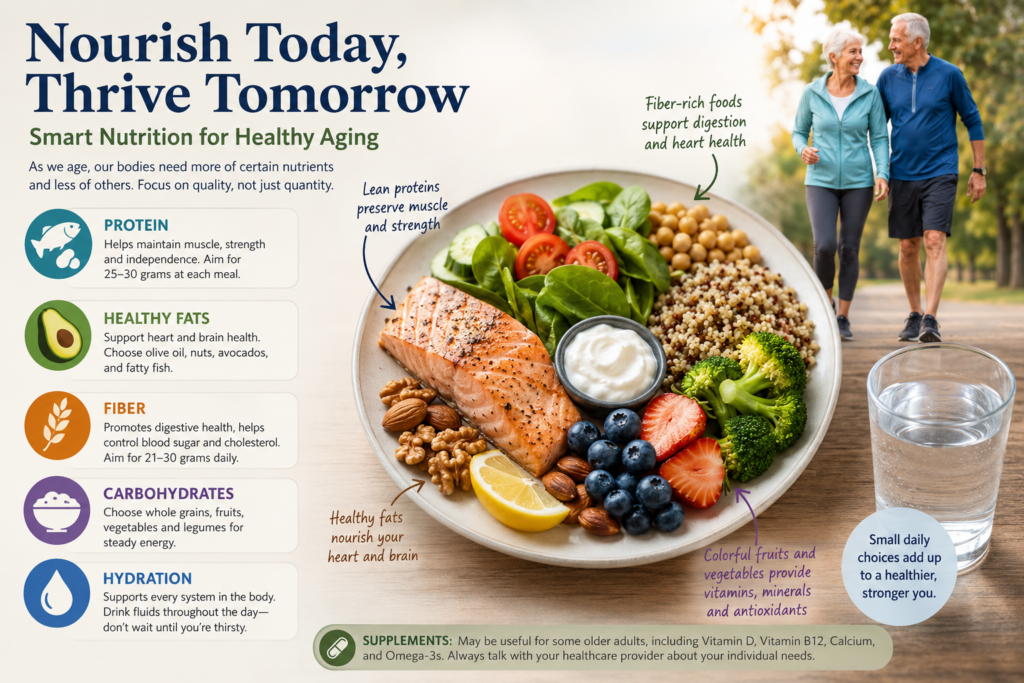
Vitamin D and Calcium are probably the most well-supported supplements for older adults. Bone loss accelerates with age, and these two nutrients work as a team — calcium provides the raw material for bone, while vitamin D helps the body absorb it. The National Institute on Aging recommends 600 IU of vitamin D daily for adults aged 51–70, and 800 IU for those over 70. Most seniors don’t get enough from diet or sun exposure alone, making supplementation genuinely sensible for many people. This is especially true for prople with documented deficiency or osteoporosis risk.  One important caveat: don’t go overboard. Too much vitamin D can cause calcium to build up in the blood, potentially harming the kidneys and blood vessels.

Vitamin B12 is another legitimate priority; Up to 15 percent of older adults may bedeficient.. Older adults are prone to B12 deficiency not because they eat less of it, but because the stomach produces less acid with age, and stomach acid is needed to release B12 from food. Those taking acid-blocking medications are at even higher risk. Deficiency can cause nerve damage and anemia. The good news is that the form of B12 in supplements is absorbed without needing stomach acid, making supplements effective where food sources may fall short.

Omega-3 fatty acids, found in fish oil, have earned a solid reputation for lowering triglycerides — a type of blood fat linked to heart disease. A large study of over 400,000 people found associations between fish oil use and improved cholesterol profiles. However, the picture is more complicated for other claimed benefits. Evidence for omega-3s preventing dementia is mixed, and some research suggests fish oil can actually raise LDL (“bad”) cholesterol in certain people, so monitoring is wise. For those who can’t eat fatty fish regularly, fish oil is a reasonable backup — just don’t expect miracles beyond the triglyceride benefit.

Melatonin has moderate scientific support for improving sleep, which is a chronic issue for many older adults. It’s particularly helpful for resetting disrupted sleep cycles. The key is using it at low doses — often 0.5 to 3 mg is sufficient, though most over-the-counter products contain far more. It’s generally well tolerated but should not replace evaluation of underlying sleep disorders.

Creatine and protein supplements may sound like something only gym rats need, but research increasingly supports their role in combating sarcopenia — the age-related loss of muscle mass that can lead to falls and loss of independence. A 2024 Stanford review found that creatine supplementation, combined with resistance training, can meaningfully preserve muscle in adults over 65. Branched-chain amino acids (BCAAs) can play a supporting role in certain situations, particularly when protein intake from food is inadequate. Vegans should pay particular attention to protein intake.

The Ambiguous Middle Ground

Glucosamine and chondroitin are among the most popular supplements for joint pain, and the scientific debate around them has been going on for decades. These are naturally occurring compounds in cartilage, and the theory is that supplementing them may slow joint deterioration in osteoarthritis. A 2024 systematic review of 146 studies found that over 90% of the studies reported positive outcomes — impressive on its face. But the landmark NIH-funded GAIT trial told a more sobering story: glucosamine and chondroitin, alone or together, were no more effective than a placebo for most people with knee osteoarthritis. The exception was a subgroup with moderate-to-severe pain, who did show moderate improvement. Safety is generally good, but those on blood thinners like warfarin should be careful, as glucosamine may affect clotting.

Turmeric and curcumin have generated enormous popular interest, and there’s at least a plausible scientific basis for the excitement. Curcumin, the active compound in turmeric, is a potent anti-inflammatory and antioxidant. Multiple clinical trials support some benefit for knee pain, and some research suggests potential benefits for cognitive health. However, curcumin is poorly absorbed on its own, which is why many products add black pepper (piperine) or use enhanced delivery formulations. The overall evidence, while promising, is still described as “mixed or low quality” by most reviewers. If you do try it, look for a formulation with enhanced bioavailability and give it at least 4–8 weeks and be aware that it may cause gastrointestinal symptoms.

Saw palmetto is widely used by older men for symptoms of benign prostatic hyperplasia (BPH) — the enlarged prostate that causes frequent urination. A 2024 updated Cochrane review found some evidence of limited benefit for urinary symptoms for some men, though the results are inconsistent and most mainstream urology guidelines do not formally recommend it. It’s generally well tolerated. Men using it should still get their prostate checked regularly and not assume saw palmetto rules out other conditions.

Magnesium has had a social media moment, with enthusiastic claims about better sleep, improved mood, and reduced muscle cramps. The actual science is more cautious — there’s limited evidence for magnesium supplements providing any of these benefits in people who aren’t already deficient. That said, deficiency is relatively common in older adults, and correction of a true deficiency can absolutely help. A blood test can tell you if you actually need it.

Multivitamins present a genuine paradox. They’re the most commonly taken supplement category, often recommended by physicians as a nutritional safety net. And for seniors with reduced appetite or limited dietary variety, that logic holds. But large, well-designed studies have found limited evidence that multivitamins improve longevity or prevent major diseases in otherwise healthy older adults. A newer 2024 analysis from the COSMOS trial suggests some modest benefit for cognitive function. Senior-specific multivitamins are preferred — they typically contain more vitamin D and B12 and less or no iron, which reflects the actual needs of older adults.

The Ones That Raise Red Flags

Iron supplements deserve special caution in older men and post-menopausal women. Unless there’s a documented deficiency confirmed by blood testing, taking iron supplements can be harmful. In men, iron overload is a genuine risk, and about twice as many men carry the gene for hereditary hemochromatosis (a condition where the body absorbs too much iron) as carry the gene for iron deficiency. Excess iron has been linked to liver damage and may raise cancer risk. Senior-specific multivitamins wisely contain little or no iron for exactly this reason.

High-dose Vitamin A is another potential problem. The liver’s ability to clear vitamin A decreases with age, and older adults absorb more of it. Doses above recommended daily values can accumulate to toxic levels, potentially harming the liver. This is specifically the retinol form of vitamin A.  Beta-carotene from plant sources is much safer. Check your multivitamin label carefully.

High dose Vitamin B6 can cause nerve damage, balance problems, and sensory neuropathy when taken over long periods but is safe at recommended levels.

Many supplements claim to improve memory or prevent dementia. Unfortunately, the evidence is generally weak. Fish oil, ginkgo biloba, and other popular products have not demonstrated clear benefits for preventing cognitive decline in controlled studies.   Some research suggests that long-term supplementation with B vitamins might slow certain aspects of cognitive decline in specific populations, but results remain inconsistent.

St. John’s Wort is widely used for mild depression, but it comes with a serious warning: it interacts with a long list of medications, including antidepressants, blood thinners, heart medications, and antiretroviral drugs. For seniors managing multiple conditions with multiple prescriptions, this herb is particularly risky. Ginkgo biloba carries similar drug interaction concerns, especially around bleeding risk when combined with blood thinners or aspirin.

High-dose antioxidants — vitamins A, C, and E taken in large amounts — have largely failed to deliver on their promise of preventing heart disease and cancer. The US Preventive Services Task Force does not recommend these for prevention. In some cases, large antioxidant supplements may actually interfere with the body’s natural disease-fighting mechanisms.

The Bottom Line

Given the mixed evidence, a sensible approach to supplements includes several principles:

  1. Food first. A balanced diet usually provides most necessary nutrients.
  2. Test before supplementing. Blood tests can identify deficiencies such as B12 or Vitamin D.
  3. Avoid megadoses. Excessive intake of vitamins can cause toxicity.
  4. Check medication interactions. Many supplements interact with common drugs, including blood thinners.
  5. Treat supplements like medications. They should have a clear purpose and measurable benefit.

Supplements that address documented deficiencies or fill genuine dietary gaps — vitamin D, B12, calcium, omega-3s — offer the best evidence for benefit in seniors. Joint supplements like glucosamine and turmeric may help some people, though the evidence is mixed enough that a try-and-see approach (with a 2–3 month window to assess benefit) is reasonable. And several common supplements, particularly iron in unsupervised use, high-dose vitamin A, and certain herbals in combination with medications, carry risks that are easy to overlook because they’re sold without a prescription.

I always advised my patients to bring all their supplement bottles to at least one visit each year and to bring any medicines prescribed by specialists. Physicians can spot dangerous overlaps, flag interactions with your prescriptions, and tell you if what you’re taking makes sense for you. Many seniors never hear a list of side effects for supplements the way they do for prescription drugs — and they often assume that means there aren’t any. That assumption, unfortunately, can be costly.

Illustration generated by author using ChatGPT.

Sources

Kaufman MW et al. Nutritional Supplements for Healthy Aging: A Critical Analysis Review. American Journal of Lifestyle Medicine, 2024.

National Institute on Aging. Dietary Supplements for Older Adults.

National Institute on Aging. Vitamins and Minerals for Older Adults.

Linus Pauling Institute, Oregon State University. Older Adults — Micronutrient Information Center.

Baden KER et al. The Safety and Efficacy of Glucosamine and/or Chondroitin in Humans: A Systematic Review. Nutrients, 2025.

National Center for Health Research. Glucosamine Supplements: Do They Work and Are They Safe?

BodySpec. Supplements for Joint Health: 2025 Evidence-Based Guide.

UCHealth Today. Dietary Supplements: Are These 14 Common Vitamins and Supplements Beneficial or a Waste of Money?

Cleveland Clinic. Dietary Supplements Compound Health Issues for Older Adults.

FDA. Mixing Medications and Dietary Supplements Can Endanger Your Health.

NIH Office of Dietary Supplements. Iron — Health Professional Fact Sheet.

NIH Office of Dietary Supplements. Multivitamin/Mineral Supplements — Health Professional Fact Sheet.

Foods (MDPI). Food Supplements and Their Use in Elderly Subjects — Challenges and Risks. 2024.

PMC. Improving Cognitive Function with Nutritional Supplements in Aging: A Comprehensive Narrative Review. 2023.

Memorial Healthcare System. Herbal Supplements and Prescription Drugs: Know the Risks. 2024.

WebMD. Saw Palmetto: Overview, Uses, Side Effects, Precautions.

________________________________________________

Medical Disclaimer

The information provided in this article is intended for general educational and informational purposes only and does not constitute medical advice. It should not be used as a substitute for professional medical advice, diagnosis, or treatment.

Always seek the guidance of a qualified healthcare provider with any questions you may have regarding a medical condition or treatment. Never disregard professional medical advice or delay seeking it because of something you have read here.

If you are experiencing a medical emergency, call 911 or your local emergency number immediately.

The author of this article is a licensed physician, but the views expressed here are solely those of the author and do not represent the official position of any hospital, health system, or medical organization with which the author may be affiliated.

Hay Fever: The Allergy That Has Nothing to Do with Hay

Let’s get one thing out of the way up front: hay fever has almost nothing to do with hay, and it doesn’t cause a fever. The name stuck after a popular 19th-century theory that the smell of summer hay was making people sick. Turns out, the culprit is invisible and far more pervasive — tiny airborne particles that your immune system, for reasons we can’t entirely explain, decides to treat like the enemy. The official medical term is allergic rhinitis, but most of us just call it hay fever, seasonal allergies, or, in the depths of pollen season, I call it a personal nightmare.

If you’ve ever spent a spring morning sneezing your way through a box of tissues or rubbed your eyes until they looked like you’d been crying all night, you already know what this feels like. What you might not know is why it happens, what exactly sets it off, and — most importantly — what you can do about it. Let’s dig in.

What Is Hay Fever, Exactly?

Hay fever is, at its core, an overreaction by your immune system. When you breathe in certain particles — pollen, dust, animal dander — your body may misidentify them as a threat. In response, it releases a chemical called histamine, which is supposed to help fight off invaders but instead triggers a cascade of miserable symptoms: sneezing, congestion, a runny nose, itchy eyes, and general stuffiness. None of this is actually doing anything useful. Your immune system is essentially deploying the cavalry against a dandelion.

According to the Cleveland Clinic, roughly 20% of Americans have allergic rhinitis, and a 2021 study found that more than 81 million people reported seasonal allergy symptoms that year alone. So, if you’re one of us, you are not alone.

Hay fever comes in two main varieties. Seasonal allergic rhinitis is what most people picture — the spring sneezing, the summer eye-rubbing, the early fall misery. Perennial allergic rhinitis, on the other hand, is the year-round version, driven by indoor allergens that don’t take the winter off. Either way, the underlying mechanism is the same: your immune system picking a fight with something that poses no real danger.

What Triggers It?

The list of potential triggers is longer than you might expect, but they fall into a few main categories.

Pollen is the classic offender and the one most associated with the “hay fever” label. But not all pollen is created equal. According to the American College of Allergy, Asthma and Immunology (ACAAI), seasonal hay fever is most commonly triggered by wind-carried pollen from trees, grasses, and weeds. Crucially, it’s not flower pollen — those heavy, colorful grains are carried by insects and never make it into your airway.   The sneaky offenders are the plain-looking plants whose lightweight pollen drifts for miles. Tree pollens tend to peak in spring, grasses in early summer, and ragweed in late summer through early fall.

Hot, dry, and windy days are the worst for pollen exposure. A cool, rainy day provides some relief — rain washes pollen out of the air, at least temporarily. As noted by MedlinePlus (National Library of Medicine), pollen counts are highest during those breezy, sunny mornings when everything is blooming.

Beyond pollen, a range of indoor allergens can trigger perennial symptoms year-round. Dust mites — microscopic creatures that live in bedding, carpets, and upholstered furniture — are among the most common. Pet dander (the tiny flecks of skin that cats, dogs, and other animals shed) is another major culprit. Mold spores, which thrive in damp environments, can trigger symptoms both indoors and outdoors. And unpleasantly, cockroach droppings and saliva are also recognized as allergens. The ACAAI notes that perennial symptoms tend to worsen in winter, when people spend more time indoors with windows closed and allergens concentrated.

You may also notice that some non‑allergic irritants make things worse, such as cigarette smoke, strong perfumes, cleaning sprays or exhaust fumes. They do not cause hay fever on their own, but they can irritate already sensitive noses and eyes.

There’s also a lesser-known category: occupational rhinitis. If your symptoms are worse at work and better on weekends, you might be reacting to something in your workplace environment — cleaning chemicals, dust, fumes, or other irritants. This is worth discussing with a doctor if you notice a pattern.

The so-called “hygiene hypothesis” suggests that overly clean environments may predispose the immune system to overreact when you do come in contact with a trigger. This point remains debatable, but it’s widely discussed in immunology literature.

How Does It Feel?

The symptoms of hay fever overlap enough with the common cold that it can be genuinely hard to tell the two apart at first. The key difference is that hay fever is not contagious, doesn’t come with a true fever, and tends to linger as long as you’re exposed to the trigger rather than resolving in a week or two like a cold.

Typical symptoms include sneezing (sometimes in rapid-fire bursts), a runny or stuffed-up nose, itchy and watery eyes, an itchy throat or roof of the mouth, and post-nasal drip. More severe cases can cause fatigue, reduced concentration, and disrupted sleep. According to Harvard Health Publishing, the congestion can also lead to secondary complications like sinus infections or ear infections, since swelling can block the passages that normally drain those areas.

For people with asthma, hay fever can be an especially unwelcome companion. The same inflammation that irritates the nasal passages can travel through the airways and worsen breathing problems. The NCBI/InformedHealth.org notes that hay fever symptoms can sometimes “move down” into the lungs and develop into allergic asthma over time — one more reason to take persistent symptoms seriously.

What Can You Do About It?

The good news is that hay fever is manageable, even if it isn’t curable. Treatment generally falls into three strategies: avoidance, medication, and — for more serious cases — immunotherapy.

Avoidance sounds obvious but is easier said than done and takes some planning. Staying indoors on high-pollen days (especially in the morning when counts peak), keeping windows closed, using air conditioning instead of window fans, and showering after being outside can all reduce your exposure. For dust mite allergies, encasing pillows and mattresses in allergen-blocking covers and washing bedding in hot water regularly can make a noticeable difference. The ACAAI also suggests wearing wraparound sunglasses outdoors to limit the amount of pollen that reaches your eyes.

Medications are the backbone of hay fever treatment for most people. Antihistamines work by blocking the histamine response — they’re widely available over the counter and work well for mild-to-moderate symptoms. Older antihistamines (like diphenhydramine, the active ingredient in Benadryl) can cause drowsiness; newer ones like cetirizine (Zyrtec) and loratadine (Claritin) are much less sedating for most people.  These make life tolerable for me in the fall and spring.  When I was younger, there were days when I wouldn’t venture outside because of the unpleasant symptoms.

Nasal corticosteroid sprays are considered the most effective single treatment for allergic rhinitis by most clinical guidelines. According to MedlinePlus, they work best when used consistently rather than just on symptom days, and many brands — including fluticasone (Flonase) and budesonide (Rhinocort) — are now available without a prescription. Harvard Health advises starting these sprays a week or two before your expected allergy season begins for maximum effectiveness.

Decongestants can help with nasal stuffiness, but nasal spray decongestants (like oxymetazoline) should not be used for more than three days in a row, as they can cause a rebound effect that makes congestion worse. Oral decongestants don’t carry that risk but can raise blood pressure and heart rate, so they’re not appropriate for everyone.

Leukotriene inhibitors — most commonly montelukast (Singulair) — offer another option. These prescription medications work differently from antihistamines and steroids, blocking a different arm of the allergic response. They’re less effective than corticosteroid sprays on their own but can be useful in combination. Antihistamine eye drops are also available for people whose main complaint is itchy, watery eyes.

For people with persistent or severe symptoms that don’t respond well to medications, allergen immunotherapy may be the answer. This is the long game: regular, gradually increasing doses of the allergen itself, either through allergy shots (subcutaneous immunotherapy) or sublingual tablets and drops placed under the tongue. According to the Australasian Society of Clinical Immunology and Allergy (ASCIA), treatment typically runs three to five years and should be overseen by an allergy specialist. It doesn’t cure the allergy, but it can meaningfully reduce the severity of symptoms and lower your dependence on daily medications.

Finally, simple saline nasal rinses are worth mentioning. They’re not glamorous, but rinsing the nasal passages with saltwater (using a neti pot or squeeze bottle) can physically flush out allergens and thin mucus. They’re safe, inexpensive, and effective enough that clinical guidelines recommend them as a complementary strategy.  Personally, I’ve found them unpleasant to use though many of my patients swear by them.

A Final Word

Hay fever is one of those conditions that can feel like a minor inconvenience until it’s not — until it’s disrupting your sleep, tanking your productivity, and making you dread the most beautiful days of the year. The encouraging news is that modern medicine has a pretty good toolkit for managing it. If over-the-counter antihistamines and nasal sprays aren’t cutting it, that’s worth a conversation with your doctor. Allergy testing can pinpoint your specific triggers, and from there, a targeted treatment plan can make a real difference.

There’s something ironic about hay fever: the very environments we associate with health—fresh air, blooming trees, green landscapes—can provoke the body into a defensive overreaction. Understanding that paradox is the first step toward managing it effectively.

In the meantime, maybe check the pollen count before you plan that picnic.

As always, this article is for information only. Consult your health care provider regarding your individual care.

Illustration generated by the author using ChatGPT.

Sources

Cleveland Clinic: Allergic Rhinitis (Hay Fever) — https://my.clevelandclinic.org/health/diseases/8622-allergic-rhinitis-hay-fever

American College of Allergy, Asthma & Immunology (ACAAI): Hay Fever — https://acaai.org/allergies/allergic-conditions/hay-fever/

MedlinePlus (National Library of Medicine): Allergic Rhinitis — https://medlineplus.gov/ency/article/000813.htm

Harvard Health Publishing: Hay Fever (Allergic Rhinitis) — https://www.health.harvard.edu/a_to_z/hay-fever-allergic-rhinitis-a-to-z

NCBI / InformedHealth.org: Overview of Hay Fever — https://www.ncbi.nlm.nih.gov/books/NBK279488/

Australasian Society of Clinical Immunology and Allergy (ASCIA): Allergic Rhinitis — https://www.allergy.org.au/patients/allergic-rhinitis-hay-fever-and-sinusitis/allergic-rhinitis-or-hay-fever

A Clearer Look at the Chemistry of Health and Aging

A Clearer Look at the Chemistry of Health and Aging

Introduction: The Invisible Chemistry Inside Your Body

At this very moment, a quiet chemical battle is taking place inside every cell of your body. On one side are free radicals—unstable molecules that react aggressively with nearby cells. On the other side are antioxidants, compounds that neutralize those unstable molecules before they cause damage.

When these two forces stay in balance, the body functions normally. But when free radicals outnumber the body’s defenses, the result is oxidative stress. Scientists increasingly believe oxidative stress contributes to aging and many chronic diseases.

Understanding this process does not require a chemistry degree. But knowing the basics can help explain why lifestyle choices such as diet, smoking, sun exposure, and exercise affect long-term health.

What Are Free Radicals?

Free radicals are simply unstable molecules. They are unstable because they contain an unpaired electron, which makes them highly reactive.

To stabilize themselves, free radicals attempt to steal electrons from nearby molecules. When they do this, they may damage the structure of cells, proteins, or DNA.

The most common free radicals in the body are forms of oxygen and nitrogen known as reactiveoxygen species (ROS) and reactive nitrogen species (RNS). Examples include superoxide, hydrogen peroxide, and hydroxyl radicals. Although these names sound intimidating, the basic idea is straightforward: they are oxygen-based molecules that react easily with other parts of the cell.

According to the National Cancer Institute, free radicals form when atoms or molecules gain or lose electrons during normal metabolic processes.

How Free Radicals Are Produced

Free radicals arise from both normal body processes and environmental exposures.

Internal Sources

The most important source is the body’s energy production system. Cells convert food into energy inside tiny structures called mitochondria. During this process, small numbers of free radicals are produced as natural by-products.

In addition, the immune system intentionally generates free radicals when fighting infections. Certain white blood cells release bursts of reactive oxygen molecules that help destroy bacteria and viruses.

Free radical production can also increase during inflammation, psychological stress, and intense physical exertion. In short, some degree of free radical production is unavoidable because it is a normal part of life’s chemistry.

External Sources

Environmental exposures can significantly increase free radical production. Cigarette smoke is one of the most powerful sources of oxidative chemicals. Air pollution, alcohol consumption, and excessive exposure to sunlight—particularly ultraviolet radiation—can also generate large numbers of reactive molecules. In addition, exposure to pesticides, industrial chemicals, and certain types of radiation may contribute to oxidative reactions inside the body.

These exposures can push free radical production beyond what the body’s natural defenses can easily manage.

The Surprisingly Useful Side of Free Radicals

Free radicals are often portrayed as purely harmful, but that description is incomplete. In moderate amounts they serve several useful functions.

One of the immune system’s most effective weapons is the oxidative burst. When immune cells encounter bacteria, they release a wave of free radicals that chemically attack and destroy the invading organisms. Without this response, the body would have far greater difficulty controlling infections.

Small amounts of reactive molecules also function as cellular signaling agents, helping regulate processes such as cell growth, repair, and programmed cell death. Programmed cell death is especially important because it allows the body to remove damaged or potentially dangerous cells.

Nitric oxide provides another example. Although it technically qualifies as a free radical, it plays an important role in controlling blood vessel relaxation and maintaining healthy blood pressure.

Exercise also temporarily increases free radical production. Surprisingly, this mild oxidative stress appears to stimulate beneficial adaptations. The body responds by strengthening its natural antioxidant defenses, which may partly explain why regular physical activity improves long-term health. Some researchers have suggested that very large doses of antioxidant supplements taken around workouts could reduce some of these benefits, although this remains an area of ongoing research.

When Free Radicals Cause Damage

Problems begin when free radical production exceeds the body’s ability to neutralize them.

Because free radicals steal electrons from other molecules, they can trigger chain reactions that damage important cellular structures.

One major target is the cell membrane. Cell membranes are composed largely of fats, and free radicals can attack these fats in a process called lipid peroxidation. When this happens, the membrane becomes weaker and less able to control what enters or leaves the cell.

Proteins are another common target. Proteins carry out much of the body’s work, including thousands of chemical reactions controlled by enzymes. When free radicals alter the structure of proteins, those proteins may lose their normal function.

Perhaps the most concerning effect involves DNA damage. Free radicals can alter the genetic material inside cells, creating mutations. If the body’s repair systems cannot correct these changes, the mutations may contribute to the development of cancer.

The body does possess repair mechanisms that fix much of this damage. However, these systems can be overwhelmed when oxidative stress persists for long periods.

Free Radicals and Chronic Disease

Researchers have found a strong association between oxidative stress and chronic diseases. Although the exact relationships are still being studied, the evidence suggests that oxidative damage contributes to several major health conditions.

Cardiovascular disease provides one of the clearest examples. Oxidative stress appears to play an important role in atherosclerosis, the process that leads to heart attacks and strokes. Free radicals can chemically modify LDL cholesterol, making it more likely to accumulate in artery walls and trigger plaque formation.

Cancer is also linked to oxidative DNA damage. When free radicals alter genetic material, they may activate genes that promote uncontrolled cell growth or disable genes that normally suppress tumors.

Interestingly, cancer cells themselves often produce large amounts of free radicals because of their rapid metabolism. Some cancer therapies take advantage of this by pushing tumor cells beyond their ability to tolerate oxidative stress.

Neurodegenerative diseases such as Alzheimer’s disease and Parkinson’s disease are also associated with oxidative damage. The brain may be particularly vulnerable because it consumes large amounts of oxygen and contains fats that are easily oxidized.

Other conditions linked to oxidative stress include diabetes, cataracts, rheumatoid arthritis, chronic kidney disease, and inflammatory bowel disease. Aging itself may partly reflect the gradual accumulation of oxidative damage over time, a concept sometimes referred to as the free radical theory of aging.

Antioxidants: The Body’s Defense System

The body is not defenseless against free radicals. It maintains an extensive network of protective molecules known as antioxidants.  They stabilize free radicals by donating an electron without becoming unstable themselves. This process stops the damaging chain reaction.  The body relies on both internally produced antioxidants and antioxidants obtained from food.

Antioxidants Produced by the Body

Several powerful antioxidant enzyme systems operate inside cells. They work together to convert highly reactive molecules into less harmful substances, eventually producing water or oxygen.

A key molecule is glutathione, sometimes described as the body’s “master antioxidant.” Produced largely in the liver, glutathione plays an important role in neutralizing free radicals and assisting in detoxification processes.

However, the body’s ability to produce some antioxidants may decline with age, which could partly explain increased vulnerability to oxidative damage later in life.

Antioxidants from Food

Diet provides a wide variety of antioxidant compounds that support the body’s defenses.

Vitamin C is a water-soluble antioxidant commonly found in citrus fruits, strawberries, bell peppers, and broccoli. Vitamin E, a fat-soluble antioxidant that helps protect cell membranes, is abundant in nuts, seeds, and vegetable oils.

Plant pigments known as carotenoids also have antioxidant activity. Beta-carotene in carrots and sweet potatoes, lycopene in tomatoes, and lutein in leafy green vegetables are well-known examples. Plants also produce thousands of protective compounds called polyphenols. These substances occur in foods such as berries, tea, apples, onions, dark chocolate, and olive oil.

Because different plant foods contain different protective chemicals, nutrition scientists often recommend eating a variety of colorful fruits and vegetables.

The Antioxidant Supplement Puzzle

For many years, antioxidant supplements were promoted as a simple way to prevent disease. However, large clinical studies have produced mixed results. Several major trials found that high-dose antioxidant supplements did not provide the expected benefits. In some cases they were even associated with harm. For example, studies showed that high dose beta-carotene supplements increased lung cancer risk in smokers.

One possible explanation is that antioxidants behave differently when taken in very large doses. Under certain conditions they may act as pro-oxidants, potentially increasing oxidative reactions instead of preventing them.

Another concern involves cancer treatment. Some therapies work by generating oxidative damage that destroys cancer cells. High doses of antioxidant supplements might interfere with this mechanism.

Because of these uncertainties, many experts recommend obtaining antioxidants primarily from whole foods rather than supplements.

Oxidative Stress: When the Balance Is Lost

Oxidative stress occurs when free radical production exceeds the body’s ability to neutralize them.  At the cellular level, oxidative stress can weaken membranes, disrupt protein function, and damage DNA. At the tissue level, it can trigger chronic inflammation, which in turn generates additional free radicals and perpetuates the cycle of damage.

Because free radicals exist only briefly, scientists usually measure oxidative stress indirectly by detecting chemical by-products that remain after oxidative reactions occur.


Lifestyle Factors That Influence Oxidative Stress

Many everyday habits influence the balance between free radicals and antioxidants.

Smoking, heavy alcohol consumption, air pollution exposure, chronic psychological stress, diets high in processed foods, obesity, and poorly controlled diabetes all increase oxidative stress.

In contrast, regular moderate exercise, diets rich in fruits and vegetables, maintaining a healthy weight, avoiding smoking, and managing stress help maintain a healthier balance between free radicals and antioxidants.


Conclusion: Balance Is Everything

The story of free radicals, antioxidants, and oxidative stress is ultimately about balance.

Free radicals are not simply destructive molecules. In appropriate amounts they help the immune system fight infection, regulate cellular communication, and assist the body in adapting to exercise. The damage occurs when these reactive molecules accumulate faster than the body can control them.

Antioxidants are an important part of the defense system, but they are not magic solutions. The best strategy appears to be supporting the body’s natural balance through healthy lifestyle choices. A diet rich in plant foods, regular physical activity, avoiding smoking, and minimizing harmful exposures all help maintain that balance.

Despite decades of marketing by the supplement industry, scientific evidence continues to suggest that the complex chemistry of whole foods works better than isolated antioxidant pills.

In many ways, modern science has simply confirmed an old piece of advice: eat plenty of fruits and vegetables, stay active, and take care of your body.


Sources:

Cleveland Clinic – Oxidative Stress

PMC – Free Radicals, Antioxidants in Disease and Health (2013)

Nature Cell Death Discovery – Free Radicals and Their Impact on Health (2025)

Frontiers in Chemistry – Oxidative Stress and Antioxidants (2023)

PMC – Oxidative Stress Crosstalk in Human Diseases (2023)

PMC – Free Radicals, Antioxidants and Functional Foods

MD Anderson Cancer Center – What Are Free Radicals?

Medical News Today – Free Radicals: How Do They Affect the Body?

Cleveland Clinic Health – What Are Free Radicals?

Top of Form

Bottom of Form

Fitness for Seniors: A Practical Guide to Getting Started and Staying Active

Here’s a sobering statistic to kick things off: fewer   than 15% of people ages 65 and older meet the federal Physical Activity Guidelines.  That’s despite the mountain of evidence showing that regular movement is one of the most powerful tools we have for aging well. Physical activity helps prevent and manage chronic diseases like heart disease, diabetes, and obesity, and for older adults specifically, it reduces the risk of falling, supports more years of independent living, and improves brain health.

The good news? It’s never too late to start, and even modest improvements make a real difference. This guide breaks down what exercise should look like at different stages of older adulthood — beginning with a starter plan for newcomers and building into a long-term maintenance approach.

The Foundation: What Every Senior Needs

Before diving into age-specific details, it helps to understand the three pillars of senior fitness. To get substantial health benefits, older adults need three types of activity each week: moderate- or vigorous-intensity aerobic exercise, muscle-strengthening activities, and balance training.

The target, according to both the WHO and CDC, is 150 minutes of moderate-intensity aerobic activity combined with 2–3 days of strength training per week, along with balance and flexibility exercises.

That said, these numbers aren’t a cliff — they’re a destination. For someone who hasn’t exercised in years, starting with 10 minutes of walking three times a week is a legitimate and meaningful beginning.

The Beginning Plan: Weeks 1–12

The biggest mistake new exercisers make at any age is doing too much too soon. For seniors, that’s not just discouraging — it can lead to injury. The goal of the first three months is to build a habit and establish a safe baseline, not to hit peak performance.

Week 1–4: Getting Moving

Start with walking. It’s free, low-impact, and one of the most studied forms of exercise in older adults. Aim for 10–15 minutes of brisk walking (meaning you can talk but not sing) on three days per week. Pair this with two days of very light strength work — seated leg raises, wall push-ups, and chair-assisted squats are all good options. On the same days as strength work, spend 5–10 minutes on gentle stretching and simple balance exercises like standing on one foot while holding a chair. This isn’t glamorous, but it works.

Week 5–8: Building Consistency

Extend walking sessions to 20–25 minutes and add a fourth day if possible. For strength training, begin using light resistance bands or small hand weights. Aim for 8 to 12 repetitions per exercise, which counts as one set, and try to do at least one set of muscle-strengthening activities — working up to two or three sets for more benefit.  Continue balance work daily if possible, even if just 5 minutes of standing on one foot near a wall.

Week 9–12: Progressing Toward the Target

By the end of this phase, the goal is to be walking 30 minutes on most days, doing strength training twice a week, and building some basic balance confidence. Many people find water aerobics or a beginner yoga class fits well here — these are what researchers call “multicomponent” activities that hit aerobic fitness, strength, and balance simultaneously.

The Maintenance Plan

Once the habit is established, the goal shifts to consistency and gradual improvement. The maintenance plan is simply a sustainable version of the full guidelines, adapted to fit daily life.

A solid maintenance week might look like: three to four days of 30-minute brisk walks or light cycling, two days of resistance training targeting the major muscle groups (legs, back, core, and arms), and daily balance work woven into ordinary activities — standing on one foot while brushing teeth, walking heel-to-toe down a hallway. If you take a break due to illness or travel, start again at a lower level and slowly work back up.

Age 65: The “Just Starting” Window

At 65, most people are either newly retired or approaching it. Energy levels are generally still high, and the body is still reasonably responsive to new exercise demands.

The primary goals at 65 are cardiovascular health, maintaining muscle mass, and establishing the exercise habit before age-related decline accelerates. Strength training is especially important here because muscle loss (called sarcopenia) begins in earnest in the 60s. Weight-bearing activities like walking and resistance training also help preserve bone density.

At 65, most people can follow the full beginning plan above without major modification. Joint pain, if present, is best addressed by switching to low-impact options (pool walking, cycling, elliptical) rather than skipping exercise altogether. This is also an excellent time to get a checkup and mention your exercise plans to a doctor, particularly if you have any chronic conditions.

Age 70: Prioritizing Balance and Flexibility

By 70, the picture shifts somewhat. Muscle and bone loss continue, and reaction time begins to slow — which is why fall prevention becomes a central focus. One-third of older adults aged 65 and over fall each year, and 50% of those fall repeatedly.  The risk rises significantly with each passing decade.

The research is clear on this point: balance training works. Balance measures in intervention studies showed improvements between 16% and 42% compared to baseline assessments.  Activities like Tai Chi are particularly effective — Tai Chi interventions were associated with approximately 31–58% reductions in falls, the Otago Exercise Program with 23–40% reductions, and multimodal strength-balance training with 20–45% reductions.

At 70, the aerobic goal remains 150 minutes per week, but it’s smart to reduce session intensity slightly if needed and focus more time on balance and flexibility work. Yoga, Tai Chi, and water fitness classes are excellent choices. Strength training should continue, but with a greater emphasis on functional movements — exercises that mimic everyday activities like getting up from a chair or reaching overhead.

Age 75: Adapting Without Stopping

At 75, the conversation shifts from maximizing performance to protecting function and independence. The goal isn’t to work out like a 50-year-old — it’s to maintain the ability to live on your own terms.

Research suggests that neuromuscular impairments tend to worsen progressively with age, particularly in adults over 70, as natural age-related declines accelerate deterioration in reaction time, proprioception, and coordination.  This makes structured balance training non-negotiable at this age.

Aerobic exercise may need to shift toward lower-impact formats: water aerobics, recumbent cycling, or simply slower, more deliberate walking. Strength training should continue at least twice a week, using lighter resistance with higher repetitions if heavy weights cause joint discomfort. Chair-based exercise programs are a reasonable option for those with limited mobility. Recovery time between sessions also gets longer with age, so spacing workouts out more evenly through the week becomes important.

One addition that becomes more relevant at 75: flexibility and mobility work. Spending 10–15 minutes on gentle stretching after every workout helps maintain the range of motion needed for daily activities like dressing, driving, and navigating stairs.

Age 80 and Above: Function First

At 80 and beyond, the fitness calculus is almost entirely about maintaining the ability to perform daily tasks safely and independently. That means the exercises themselves may look very different from what a 65-year-old does — and that’s perfectly appropriate.

The core principles don’t change: move every day, do some resistance work, and train your balance. But intensity drops, rest increases, and safety becomes the top priority. Chair-based strength exercises — seated leg lifts, ankle rotations, seated marching, resistance band pulls — are highly effective and much lower-risk than standing exercises for many people at this stage.

Balance work at 80+ should be done near a sturdy support surface. Even holding a chair while practicing a small weight shift from foot to foot provides meaningful benefit. Interventions with a total weekly dose of three or more hours that included balance and functional exercises were particularly effective, with a 42% reduction in the rate of falls compared to control.

Walking remains the single best aerobic exercise for this age group if mobility allows, even if sessions are shorter — 10 to 15 minutes, a few times a day, can accumulate to meaningful totals. Water-based exercise is especially valuable because buoyancy reduces joint stress while still providing resistance.

It’s worth noting that the emotional and social aspects of exercise become increasingly important at 80+. Group classes — whether at a senior center, community pool, or gym — provide motivation, accountability, and social connection alongside the physical benefits.

A Note on Medical Clearance

This guide is based on well-established public health guidelines, but individual health conditions vary enormously. Before starting any new exercise program, especially after 70, a conversation with a doctor or physical therapist is strongly recommended. That’s especially true if you’re managing heart disease, diabetes, severe arthritis, osteoporosis, or recent surgery.

Illustration generated by author using ChatGPT

Sources:

CDC Physical Activity for Older Adults: https://www.cdc.gov/physical-activity-basics/guidelines/older-adults.html

CDC: What Counts as Physical Activity for Older Adults: https://www.cdc.gov/physical-activity-basics/adding-older-adults/what-counts.html

ACSM Physical Activity Guidelines: https://acsm.org/education-resources/trending-topics-resources/physical-activity-guidelines/

Fall Prevention Exercise Effectiveness (PMC): https://pmc.ncbi.nlm.nih.gov/articles/PMC10435089/

Falls Prevention Systematic Review (MDPI): https://www.mdpi.com/2075-1729/16/1/41

WHO-informed Falls Evidence (IJBNPA): https://ijbnpa.biomedcentral.com/articles/10.1186/s12966-020-01041-3

Physical Activity in Older Adults (PMC): https://pmc.ncbi.nlm.nih.gov/articles/PMC11562269/

Balance and Physical Activity Programs (PMC): https://pmc.ncbi.nlm.nih.gov/articles/PMC6635278/​​​​​​​​​​​​​​​​

Strengthening Your Defenses: Understanding and Improving Immune Health in Your Golden Years

Getting older comes with plenty of perks—wisdom, perspective, maybe even a better appreciation for a quiet Sunday morning. But one thing that doesn’t improve with age is your immune system. If you’ve noticed that colds seem to hang on longer than they used to, or that recovering from illness takes more time, you’re not imagining things. The aging immune system undergoes real, measurable changes that can affect your health in significant ways.

Understanding Your Immune System

Think of your immune system as an incredibly sophisticated security network spread throughout your entire body. Unlike your heart or lungs, it’s not located in one place—according to the Mayo Clinic, your immune system is essentially a giant collection of cells that travel through your blood and tissues, constantly patrolling for anything that doesn’t belong.

Your immune defense operates on two levels. The first responders are part of what’s called the innate immune system. It begins with the skin and mucous membranes that act as a barrier.  They are backed up by specialized cells—including macrophages, neutrophils, and natural killer cells that act like scouts, surveying your body for foreign particles like bacteria, viruses, or damaged cells. When they detect something foreign, they sound an alarm and start an immune response triggering inflammation, your body’s response to attack which causes swelling, redness, and heat at infection sites.

This is the signal for your second line of defense—your adaptive immune system—to begin a more specialized and sophisticated attack against the invaders. This system includes T cells that attack and kill infected cells and B cells that make antibodies.  They learn to recognize specific pathogens and once they encounter a particular germ, they remember it. In the future, if you’re exposed to the same germ, your adaptive immune system will mount a more effective and swifter response. This is why you only get chickenpox once, and it’s the principle behind vaccination.

What Happens When the System Ages

Starting around your sixties, your immune system begins what scientists call immunosenescence—a gradual but significant decline in immune function. This isn’t just one simple change, but rather a cascade of alterations affecting both your innate and adaptive immune systems.

One of the most significant changes happens in your thymus, a small organ behind your breastbone that produces T cells. The process of involution involves significant structural thymic changes, including a reduction in size, a decrease in functional thymic tissue, and fatty replacement of the thymic parenchyma.   As a result, you produce fewer fresh T cells to respond to new threats.

At the same time, something paradoxical happens: while your immune system becomes less effective at fighting infections, it also becomes more inflammatory. This chronic inflamed state contributes to biological aging and the development of age-related pathologies. Scientists call this “inflammaging”—chronic low-grade inflammation that persists throughout the body.

The practical consequences are significant. The immune system becomes slower to respond, which increases your risk of getting sick; it also means flu shots or other vaccines may not work as well or protect you for as long as expected. You’re also at higher risk for autoimmune disorders where your immune system mistakenly attacks healthy tissue. Wounds will heal more slowly.

Why Immune Function Declines

Multiple factors contribute to immune aging beyond just the passage of time. Chronic viral infections play a surprising role. Latent and chronic viral infections such as human cytomegalovirus (HCMV) and Epstein-Barr virus (EBV) affect the immune system and contribute to immunosenescence . These viruses lie dormant for years and when your immune system begins to age it is no longer able to effectively suppress them. They become active, and your immune system is put on perpetual alert, expressed as chronic inflammation, gradually wearing it down even further.

Your cells also undergo changes at the molecular level. With each cell division, the protective caps on your chromosomes called telomeres get shorter. Eventually, this limits your immune cells’ ability to divide and respond to threats. The shift in immune cell populations is dramatic—you have fewer naive cells ready to respond to new infections and more memory cells dedicated to past threats, which means you’re well-protected against diseases you’ve already had but vulnerable to new ones. Your immune army is continuing to prepare for the last war.

Chronic health conditions that become more common with age—diabetes, heart disease, kidney disease, chronic lung conditions—all accelerate immune aging. Even lifestyle factors like chronic stress, poor sleep, smoking, and excessive alcohol consumption take a heavier toll on your immune system as you age. 

Strengthening Your Immune Defenses

The good news is that lifestyle interventions can meaningfully improve immune function in older adults. The evidence is particularly strong for several key strategies.

Physical Activity Makes a Real Difference

Exercise isn’t just about staying fit—it’s one of the most powerful immune boosters available. Regular exercise mitigates the aging processes of both the innate and adaptive immune system, particularly being associated with improved natural killer cell functioning. Studies comparing physically active older adults to sedentary ones consistently show better immune cell function in the active group.

The type and amount of exercise matters. Mayo Clinic recommends two strength training sessions and 150 minutes of moderate cardiovascular exercise weekly. But you don’t need to become a marathon runner—walking, swimming, cycling, yoga, and tai chi all provide significant benefits. Research shows that influenza vaccine responses are improved in active elderly populations, as demonstrated by higher antibody titers following 10 months of aerobic physical exercise.

The key is consistency and not overdoing it. Moderate, regular exercise strengthens your immune system, while extreme exercise can temporarily suppress it.

Nutrition: Fueling Your Immune Defense

What you eat directly impacts how well your immune system functions. The evidence supports focusing on whole, minimally processed foods rather than any specific “superfood” or restrictive diet. A balanced nutritious diet incorporating a variety of fruits and vegetables, whole grains, proteins, and probiotics positively impacts the immune system.  

Several specific nutrients deserve attention. Protein becomes increasingly important with age because tryptophan, an essential amino acid found in protein-based foods including eggs, fish, dairy products, legumes, and meat, plays important roles in immune function. Omega-3 fatty acids from fish have anti-inflammatory properties that may help counter inflammaging.

The gut-immune connection is particularly important. Your gut contains roughly 70% of your immune system, and the bacteria living there directly influence immune function. Probiotic-rich foods like yogurt, sour cream and cottage cheese, some aged cheeses, and fermented vegetables (sauerkraut, some pickles) help maintain a healthy gut microbiome, which in turn supports immune health.

Certain vitamins and minerals play outsized roles in immune function. Vitamin D is crucial—it mediates immune function and regulation, strengthening of epithelial barriers and antioxidant defense. Unfortunately, it’s estimated that 95% of Americans don’t receive enough vitamin D from their diet alone, and nearly one-third have a vitamin D deficiency.

Zinc is another critical nutrient. Zinc exerts direct anti-viral effects and serves as a cofactor of dozens of proteins important for immune function and antioxidative defense, yet 15% of Americans are not meeting zinc needs from food alone and 30% of the world’s elderly population have a zinc deficiency.

Selenium, while needed in smaller amounts, is equally important. Selenium plays a role in anti-inflammatory, antiviral, and immune-cell activity and is useful in both innate and adaptive immunity through selenoproteins that partly reduce oxidative stress generated by viral pathogens.

Sleep: Your Immune System’s Recovery Time

Sleep isn’t just rest—it’s when your immune system does critical maintenance work. While you sleep, your body produces cytokines, a protein that helps regulate immune responses and fight off infections, and when you lack proper sleep, this decreases the amount of cytokines your body produces. The recommendation is clear: aim for seven to eight hours of quality, uninterrupted sleep per night.

Sleep quality matters as much as quantity. If you’re experiencing insomnia or sleep disruptions, addressing them should be a priority because poor sleep is linked not just to reduced immune function but also to increased risk of chronic diseases.

Stress Management and Social Connection

Chronic stress suppresses immune function in measurable ways. Finding effective stress management techniques—whether meditation, deep breathing, enjoyable hobbies, or time in nature—isn’t just about feeling better emotionally. These practices have real physiological effects on immune function.

Social connection matters more than you might think. Social isolation and loneliness are associated with increased inflammation and reduced immune function. Maintaining meaningful social connections, whether through family, friends, community groups, or religious organizations, appear to have genuine immune benefits.

Vaccination: Working With Your Immune System

Vaccines remain highly effective and are crucial for older adults. Vaccines introduce your immune system to viruses in a controlled manner, helping the adaptive immune system spot and neutralize germs more quickly. Staying current with recommended vaccines—including annual flu shots, pneumonia vaccines, RSV vaccines, shingles vaccines, and COVID-19 boosters—is one of the most effective ways to prevent serious illness.

The Supplement Question

While a balanced diet should be the foundation, supplements can fill genuine gaps, especially for nutrients like vitamin D that are difficult to obtain adequately from food alone. However, researchers still don’t know all the effects of lifestyle on the immune system, and there are no scientifically proven direct links between specific supplements and enhanced immune function in all contexts.

That said, if you’re deficient in specific nutrients, supplementation can help. Supplementation of higher dosages of vitamins D, C, and zinc may have positive effects during viral infections in deficient individuals. The key is working with your doctor to identify any actual deficiencies before starting supplements, because more isn’t always better, and some supplements can interact with medications.

Other Practical Steps

Some immune boosters are refreshingly simple. Hand washing remains one of the most effective ways to prevent infections. Staying hydrated helps your body flush out toxins and keeps immune cells functioning optimally. Not smoking—or quitting if you do—significantly improves immune function because smoking directly damages immune cells and increases inflammation.  Excessive alcohol use also increases inflammation and is a significant source of free radicals.

Getting moderate sun exposure provides natural vitamin D while also offering stress-reduction benefits. Even 15-30 minutes of outdoor time daily can make a difference, though you need to balance sun exposure with skin cancer prevention.

Weight management can help prevent or reverse insulin resistance and metabolic syndrome reducing inflammation and slowing immunosenescence.

The Bottom Line

The aging immune system faces real challenges, but it’s far from helpless. While lifestyle changes don’t guarantee perfect immunity, every part of your body, including your immune system, functions better when protected from environmental assaults and bolstered by healthy-living strategies.

The most effective approach to an improved immune system combines multiple strategies: regular moderate exercise, a varied diet rich in whole foods with adequate protein and micronutrients, quality sleep, stress management, social connection, staying current with vaccinations, and addressing specific nutritional deficiencies through supplementation when needed. None of these interventions will turn back the clock, but together they can meaningfully improve immune resilience and your ability to fight off infections and recover from illness.


Illustration generated by author using Midjourney

Sources

  1. National Center for Biotechnology Information – “Aging of the Immune System: Mechanisms and Therapeutic Targets”
    https://pmc.ncbi.nlm.nih.gov/articles/PMC5291468/
  2. MDPI Vaccines – “Immunosenescence: Aging and Immune System Decline”
    https://www.mdpi.com/2076-393X/12/12/1314
  3. Frontiers in Aging – “The 3 I’s of immunity and aging: immunosenescence, inflammaging, and immune resilience”
    https://www.frontiersin.org/journals/aging/articles/10.3389/fragi.2024.1490302/full
  4. Frontiers in Aging – “Immune Senescence, Immunosenescence and Aging”
    https://www.frontiersin.org/journals/aging/articles/10.3389/fragi.2022.900028/full
  5. National Center for Biotechnology Information – “Physical Activity and Diet Shape the Immune System during Aging”
    https://pmc.ncbi.nlm.nih.gov/articles/PMC7146449/
  6. National Center for Biotechnology Information – “Aging and the Immune System: the Impact of Immunosenescence on Viral Infection”
    https://pmc.ncbi.nlm.nih.gov/articles/PMC6943173/
  7. National Center for Biotechnology Information – “Physical Activity and Nutritional Influence on Immune Function”
    https://pmc.ncbi.nlm.nih.gov/articles/PMC8531728/
  8. National Center for Biotechnology Information – “Immune-boosting role of vitamins D, C, E, zinc, selenium and omega-3 fatty acids”
    https://pmc.ncbi.nlm.nih.gov/articles/PMC7415215/
  9. National Center for Biotechnology Information – “Nutritional risk of vitamin D, vitamin C, zinc, and selenium deficiency on COVID-19”
    https://pmc.ncbi.nlm.nih.gov/articles/PMC8571905/
  1. MedlinePlus Medical Encyclopedia – “Aging changes in immunity”
    https://medlineplus.gov/ency/article/004008.htm
  2. Mayo Clinic Press – “Aging and the immune system: Strengthening your body’s defenses”
    https://mcpress.mayoclinic.org/healthy-aging/aging-and-the-immune-system/
  3. Harvard Health Publishing – “How to boost your immune system”
    https://www.health.harvard.edu/staying-healthy/how-to-boost-your-immune-system
  4. Greater Good Health – “Understanding How Seniors Can Boost Their Immune Systems”
    https://greatergoodhealth.com/patients/how-can-seniors-boost-their-immune-systems/
  5. Nature Made – “Super D Immune Complex” (Nutritional information on vitamin D, zinc, and selenium)
    https://www.naturemade.com/products/super-d-immune-complex

VO₂ Max Explained: The Fitness Metric That Predicts Health and Longevity

If you’ve ever wondered what separates elite endurance athletes from weekend warriors—or why your friend can cruise up hills while you’re gasping for air—the answer often comes down to a vital sign you’ve probably never heard of — VO2 max. Think of it as your cardiovascular system’s horsepower rating, a number that tells you how efficiently your body can use oxygen during intense exercise.

What VO2 Max Actually Means

VO2 max stands for maximal oxygen consumption; it measures the maximum amount of oxygen your body can take in, transport, and use during exercise. Scientists express it in milliliters of oxygen per kilogram of body weight per minute (ml/kg/min). When you’re working out at your absolute limit—say, sprinting up a hill until you simply can’t go any faster—your muscles are burning through oxygen to produce energy. VO2 max represents the ceiling of that process, the point where your body has maxed out its oxygen delivery system and can’t use any more oxygen even if you try to push harder.

An average sedentary man might have a VO2 max around 30-40 ml/kg/min, while an average woman might measure 25-30 ml/kg/min. Elite endurance athletes, however, occupy an entirely different universe. Cross-country skiers and distance runners can reach values of 70-85 ml/kg/min or even higher. The legendary Norwegian cyclist Oskar Svendsen reportedly recorded a VO2 max of 97.5 ml/kg/min, which is probably the upper reaches of human cardiovascular capacity.

 The rest of us are also affected by VO2 Max.  In later life, it is closely tied to our everyday activities. There’s a minimum aerobic capacity required for independent living—walking briskly, climbing stairs, carrying groceries. As VO2 max declines to that functional threshold, small losses can translate into disproportionate declines in independence. Conversely, modest improvements can produce meaningful gains in stamina, balance, and confidence.

The Gold Standard of Measurement

The most accurate way to measure VO2 max involves what’s called a graded exercise test, typically performed in a lab or clinical setting. You’ll hop on a treadmill or stationary bike while wearing a mask connected to a metabolic cart—essentially a sophisticated machine that analyzes every breath you take. The test starts easy but gets progressively harder every few minutes. The technician increases either the speed, incline, or resistance while the equipment measures exactly how much oxygen you’re consuming and how much carbon dioxide you’re producing.

You keep going until you reach exhaustion—the point where you literally cannot continue despite maximum effort. The highest oxygen consumption rate recorded during this test is your VO2 max. It’s not a particularly pleasant experience, but it’s incredibly accurate. The test also provides valuable data about your anaerobic threshold, the point where your body starts relying more heavily on systems that don’t require oxygen and where lactic acid begins accumulating in your muscles.

For those of us without access to exercise labs, there are several field tests we can use to estimate VO2 max reasonably well. The Cooper test, developed by Dr. Kenneth Cooper in the 1960s, involves running as far as you can in 12 minutes on a track (that wouldn’t be too far for me). The distance you cover correlates with your VO2 max through established formulas [VO2max: (distance covered in meters – 504.9) / 44.73 =  VO2 max in ml/kg/min].  Age and gender normed values can be found on a number of fitness websites. Many fitness watches and apps now offer VO2 max estimates based on heart rate data during runs, though these are less precise than laboratory testing.

Why This Number Matters

VO2 max serves as one of our strongest predictors of cardiovascular health and longevity. Research published in major medical journals has consistently shown that higher VO2 max values correlate with lower risks of heart disease, diabetes, and all-cause mortality. A 2018 study in the Journal of the American Medical Association (JAMA) that followed over 122,000 patients found that cardiorespiratory fitness (measured by VO2 max) was a better predictor of mortality than traditional risk factors like hypertension, diabetes, or even smoking.

The relationship is striking, for every 3.5 ml/kg/min increase in VO2 max, mortality risk drops by about 13 percent. People in the lowest fitness category (those with the poorest VO2 max scores) have death rates two to three times higher than those in the highest fitness category, even when controlling for other health factors.

Beyond mortality statistics, VO2 max influences your daily quality of life. A higher VO2 max means your heart doesn’t have to work as hard during routine activities. Climbing stairs, carrying groceries, playing with kids or grandkids—all these activities demand less relative effort when your cardiovascular system operates efficiently. Your body becomes better at delivering oxygen-rich blood to working muscles and clearing away metabolic waste products, which means you fatigue less easily and recover more quickly.

The Path to Improvement

The encouraging news is that VO2 max responds remarkably well to training, especially if you’re starting from a sedentary baseline. You can’t completely escape genetics—some people are simply born with larger hearts, more efficient lungs, or a higher percentage of slow-twitch muscle fibers—but training can typically improve VO2 max by 15-30 percent in previously untrained people.

The most effective approach combines several training methods. High-intensity interval training (HIIT) has emerged as particularly powerful tool for boosting VO2 max. These workouts involve short bursts of near-maximal effort followed by recovery periods. A classic protocol might involve running hard for four minutes at about 90-95 percent of your maximum heart rate, then recovering with light jogging for three minutes, repeated four or five times. Studies show that just two or three HIIT sessions per week can produce significant improvements in VO2 max within eight to twelve weeks.

Longer, steady-state aerobic exercise also plays a crucial role. These sessions—think longer runs at a conversational pace—improve your cardiovascular system’s efficiency and build the capillary networks that deliver oxygen to muscles. The optimal training program typically includes both high-intensity intervals and longer moderate-intensity sessions, along with adequate recovery time.

Interestingly, resistance training can indirectly support VO2 max improvements as well. While lifting weights won’t directly boost your oxygen consumption capacity the way running does, it helps maintain lean muscle mass, improves movement efficiency, and can enhance your ability to perform high-intensity cardiovascular work.

This high intensity training is all well and good for young, relatively healthy people. But what about older folks, particularly those with underlying medical problems?

The encouraging news: VO2 max responds to training well into our 70s, 80s, and beyond.  Key approaches involve the same elements but tailored to age and medical history.

Moderate-intensity aerobic exercise (brisk walking, cycling, swimming) performed most days of the week is the primary element. Individually adjusted interval training, including carefully supervised higher intensity intervals, have shown impressive VO2 max gains even in older populations.  Strength training is beneficial for older folks as well, and as an added benefit, it helps maintain and even improve bone density. A personal trainer can help design your fitness program to maximize improvement while minimizing the likelihood of injury.  

Stop any exercise immediately if you experience chest pain, dizziness, or extreme shortness of breath. Remember consistency matters more than intensity alone and, most importantly, never start any exercise program without checking with your doctor first. 

The Inevitable Decline

Here’s the less cheerful part: VO2 max naturally declines with age, typically dropping about 10 percent per decade after age 30 in sedentary people. This decline accelerates after age 70. However—and this is crucial—regular exercise dramatically slows this process. Senior athletes who maintain consistent training can preserve VO2 max values that rival or exceed those of sedentary people decades younger. A fit 60-year-old can easily have a higher VO2 max than an inactive 40-year-old.

The decline happens for several reasons: maximum heart rate decreases, cardiac output drops, muscle mass decreases, and the body becomes less efficient at extracting oxygen from blood. But none of these changes are inevitable consequences of aging alone—they’re heavily influenced by activity levels.

Putting It in Perspective

While VO2 max provides valuable information about cardiovascular fitness, it’s worth remembering that it’s just one metric among many. You don’t need the VO2 max of an Olympic athlete to be healthy and enjoy an active life (thankfully). A moderate VO2 max maintained consistently into your later years will serve you far better than a high value in your twenties followed by decades of inactivity.

The real value of understanding VO2 max lies in what it represents: your body’s fundamental capacity to generate energy and support movement. When you work to improve this capacity through regular cardiovascular exercise, you’re investing in both your current quality of life and your long-term health prospects.  Every little bit helps—so put down the remote, get up off the couch and start walking.  You’ll be glad you did.

​​​​

Sources:

  • American College of Sports Medicine on VO2 max testing: https://www.acsm.org/
  • Mayo Clinic on cardiorespiratory fitness: https://www.mayoclinic.org/
  • National Institutes of Health research on fitness and mortality: https://www.nih.gov/
  • JAMA Network 2018 study on cardiorespiratory fitness and mortality: https://jamanetwork.com/journals/jamanetworkopen/fullarticle/2707428

Image generated by author using ChatGPT

Page 1 of 2

Powered by WordPress & Theme by Anders Norén