
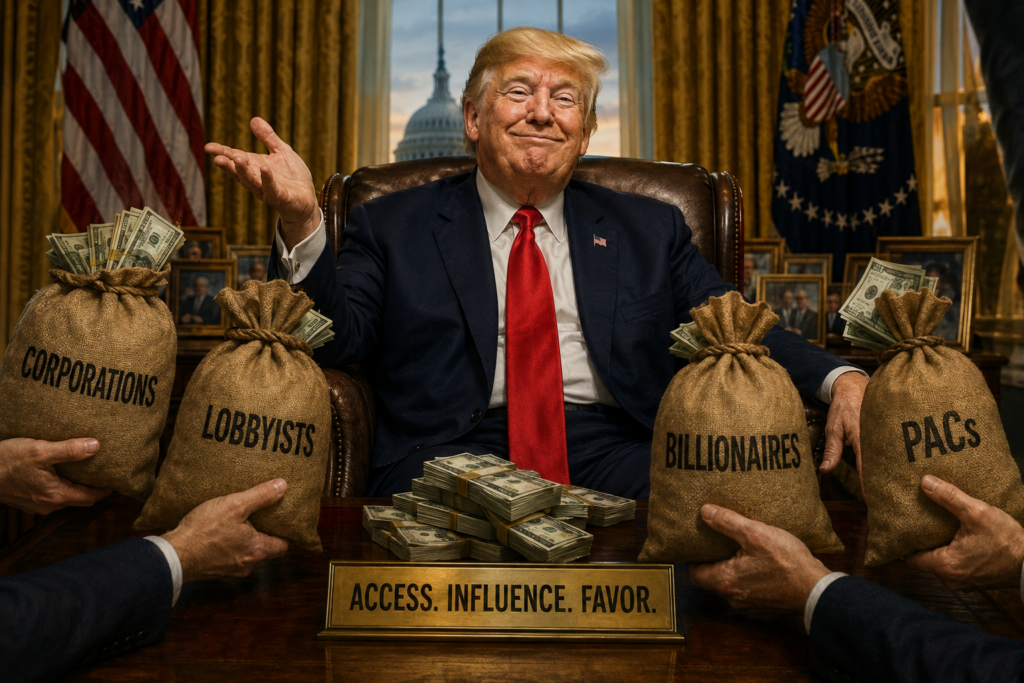
Donald Trump has never been shy about asking for money, but the scale and personal involvement of his second-term fundraising is genuinely new. According to reporting from the Wall Street Journal published in late July 2026, Trump has raised more than $800 million from corporate donors and wealthy individuals since returning to office in January 2025. Donations have been spread across the White House ballroom, a planned presidential library, a super PAC, and various political committees. What makes the operation unusual is not just the total raised, but how hands-on Trump has been. The Journal describes him calling his lead fundraiser, Meredith O’Rourke, from the White House on a near-nightly basis to review a running tally of who has paid and who hasn’t, sometimes pushing her to ask specific donors for far more than she’d planned to request.
Where the Money Is Going
Four distinct pots have absorbed most of this money, and it’s worth keeping them separate because the ethical and legal questions differ for each.
The White House ballroom
Trump’s roughly $300 million ballroom project, which required demolishing the White House’s East Wing, is funded through the Trust for the National Mall, a nonprofit that normally partners with the National Park Service on Mall upkeep. Corporate donors named publicly or in congressional correspondence include Apple (reported around $25 million), Microsoft (about $10 million), Amazon (about $5 million), along with Altria, Caterpillar, NextEra Energy, Palantir, Lockheed Martin, Booz Allen Hamilton, Comcast, Reynolds American, and Carrier, which donated an air-conditioning system in kind. Alphabet’s Google contributed $22 million to the ballroom fund as part of a settlement over Trump’s YouTube suspension. The Trust itself could collect as much as $10 million in fees for managing the fund, according to Senate Democrats who have pressed the organization for more transparency.
The presidential library
Trump’s future library has become the default destination for money tied to legal settlements. SoftBank reportedly pledged $50 million. Disney’s ABC and Paramount’s CBS each paid $16 million to settle lawsuits Trump filed over news coverage, with most of each sum earmarked for the library. Meta paid $25 million and X’s owner, Elon Musk, $10 million, to resolve similar suits over his removal from their platforms. Trump has also said he intends to redirect leftover inaugural committee funds toward the library once his term ends.
The super PAC and political committees
MAGA Inc., the main pro-Trump super PAC, entered 2026 with close to $300 million on hand after raising about $102 million in the second half of 2025. Recent large checks include $25 million from OpenAI co-founder Greg Brockman, $20 million from Foris DAX (the parent of Crypto.com), and $11 million from private equity investor Konstantin Sokolov. Meta separately gave $10 million to a Trump-aligned political committee, on top of its ballroom and library contributions. A separate nonprofit, Securing American Greatness, is also raising money but does not have to disclose its donors.
Legal settlements framed as donations
This is the category that has drawn the sharpest criticism. Because Paramount, Disney, Meta, and X all resolved lawsuits Trump filed against them by directing money toward his library rather than his personal accounts, the payments read simultaneously as litigation settlements and as political tribute. Several First Amendment lawyers and members of Congress, including Senators Elizabeth Warren, Bernie Sanders, and Ron Wyden, have argued that at least the Paramount and Disney settlements function as disguised payments for favorable regulatory treatment, since both companies had matters pending before agencies Trump oversees, including Paramount’s merger review at the FCC.
A Separate Stream: Trump’s Own Businesses
Everything described so far involves money flowing to entities Trump controls politically but does not personally own. A different and arguably more direct channel runs straight into Trump’s personal finances, primarily his family’s cryptocurrency ventures. It deserves separate treatment because the money there isn’t a donation to a cause; it’s revenue to a business he and his sons own.
World Liberty Financial, launched in 2024 by Trump’s sons Eric and Donald Jr. along with several partners, issues a stablecoin called USD1 and a separate token called WLFI, and takes a majority share of net revenue from token sales. Trump’s own financial disclosures show he personally earned more than $57 million from the venture in its first several months, and by mid-2026 CBS News reported his total crypto-related income, including proceeds from a separate TRUMP meme coin, had passed $1 billion for the year, the largest single component of his roughly $2.2 billion in disclosed 2025 income. Forbes has separately estimated his stake in World Liberty at around $240 million and his share of WLFI tokens at roughly $175 million, with his sons’ individual stakes each estimated near $133 million.
Two transactions illustrate how this business has intersected with people who also have legal exposure to Trump’s federal government. In May 2025, an Abu Dhabi state-owned investment fund used $2 billion in USD1 stablecoins to take a stake in Binance, the world’s largest crypto exchange. Binance also holds the large majority of all USD1 in circulation. Binance’s founder, Changpeng Zhao, had pleaded guilty in 2023 to a money-laundering-related charge and served a four-month sentence. In October 2025, Trump pardoned him. When asked about the connection, Trump told CBS News he didn’t know who Zhao was. World Liberty’s lawyers have said the company played no role in the pardon and had no contact with the president about it, while acknowledging Binance provided the venture with free technical assistance.
Separately, the crypto entrepreneur Justin Sun invested $75 million in WLFI tokens and another $100 million in the TRUMP meme coin in 2025. This made him World Liberty’s largest outside holder and a featured guest at a Trump dinner for top meme coin buyers. At the time, Sun was fighting a 2023 Securities and Exchange Commission fraud lawsuit alleging he manipulated trading volume in his own Tron-based tokens. That case was paused within months of his investment and formally settled for $10 million in March 2026, without an admission of wrongdoing. The current SEC chairman has wound down crypto enforcement actions brought by the previous administration. Sun and World Liberty later fell into a bitter and still-unresolved legal dispute after the company froze his tokens, which is a separate matter from the SEC case but worth noting because it shows the relationship soured even as the earlier regulatory question was being resolved in Sun’s favor.
In a more recent example, Truth Social, controlled by Trump, has established a paid tier for early access to Trump’s posts. Subscribers will receive notice of the content of Trump’s posts prior to them being made available to the general public. The fee is $100,000 a month. Since his posts routinely send stock markets soaring or plunging depending on his announcements, this could be considered insider trading by those willing to pay the price to beat the market.
Pardons, Donors, and Business Partners
The crypto pardon is not an isolated data point. NPR identified at least fifteen former officials convicted or charged with public-corruption offenses who received Trump pardons or commutations after he returned to office, including former Illinois Governor Rod Blagojevich, former Nevada official Michele Fiore, and former Congressman Michael Grimm. Beyond that corruption-specific list, several pardons have gone to significant Trump donors whose giving preceded or closely followed their clemency. Nikola founder Trevor Milton, convicted of securities and wire fraud, had donated close to $2 million to Trump’s 2024 campaign before receiving a pardon. Former Republican Congressman George Santos, expelled from the House after a fraud conviction, was pardoned after having donated to and supported Trump. And in July 2026, Republican megadonor Adam Kidan, convicted in 2006 in the Jack Abramoff fraud and lobbying scandal, received a pardon just three days after donating to the leadership PAC of a Pennsylvania congressman Trump had campaigned alongside days earlier. This is a sequence Democratic critics called corruption in plain sight, though the congressman’s office said he had no role in the pardon decision.
In May 2026, congressional Democrats sent letters to seventeen pardon recipients asking whether their clemency involved any pay-to-play arrangement, estimating that the group had given Trump-aligned committees roughly $250,000 combined.
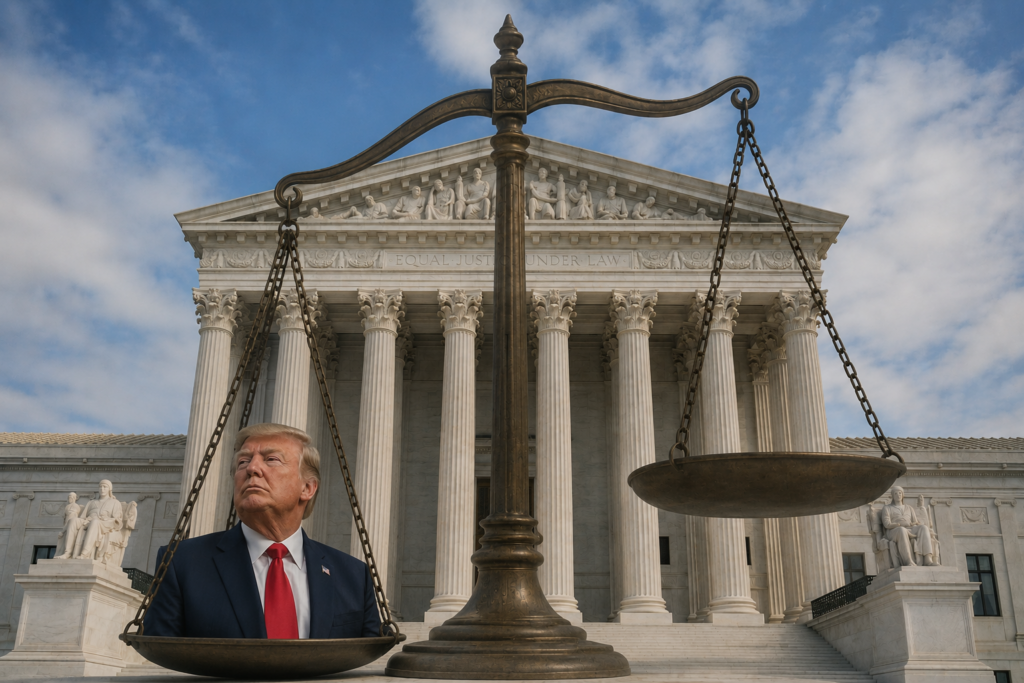
It’s worth noting a structural point raised by Justice Sonia Sotomayor in her dissent from the Supreme Court’s 2024 immunity ruling Because the Court held that a president cannot be criminally prosecuted for official acts, including the pardon power, a pardon exchanged for a bribe would, on her reading, be effectively unreviewable by the criminal justice system even if the exchange were provable. Whether that reading will be tested in a real case is itself uncertain, since the ruling is relatively new and no prosecutor within this administration would be likely to bring such a case.
Enthusiastic Donors, Reluctant Donors, and the Ones Who Said No
The donor pool is not uniform, and the differences are informative. Some money looks genuinely enthusiastic: Musk was already the largest Republican donor of the 2024 cycle before adding a further settlement payment, and newer entrants like Crypto.com, which had made almost no prior political donations, gave $10 million to MAGA Inc. with no apparent reluctance. Cryptocurrency and artificial intelligence firms in general, an industry seeking friendly regulatory treatment on digital assets, have been some of the most eager givers.
Other donations look more like compliance than enthusiasm. Microsoft told congressional investigators it was approached by a fundraiser working on the ballroom project and simply followed the instructions it was given on how to contribute, a description that reads as accommodating rather than eager. Comcast, by contrast, stated explicitly that its donation carried no conditions and was not intended to secure anything in return, a formulation that looks like an attempt to draw a clean legal line around the gift. Meta and Nvidia, when directly asked by lawmakers whether their donations were connected to a quid pro quo, notably declined to deny it, which is its own kind of data point.
At least one major institution appears to have refused outright. JPMorgan Chase chief executive Jamie Dimon said publicly that his bank had not donated to the ballroom fund because of the risk to its reputation of anything that could look like buying favors. That is a useful data point: it shows that at least one important financial institution judged the risk of giving to outweigh whatever access it might buy.
Fundraising, Bribery, Extortion, or Tribute? A Speculative Look
Here I want to be explicit that I am speculating, not reporting settled fact, because the honest answer is that these categories overlap and the law hasn’t caught up with the phenomenon.
Ordinary fundraising describes money given voluntarily to support a cause or campaign the donor genuinely favors without expectation of a specific official act in return. Some of this money likely fits that description, particularly gifts from ideologically aligned donors like Musk or crypto-industry executives who would probably give even without pending business before the administration.
Bribery, in the legal sense, requires something that a voluntary donation doesn’t, an explicit link between a payment and a specific official act, sometimes called a quid pro quo. That’s a high bar, and it’s exactly the bar that federal prosecutors would need to clear, and that the current Department of Justice, led by Trump appointees, is unlikely to pursue. Legal scholars quoted in outlets like NPR have used the word bribery to describe the corporate legal settlements, but no bribery charge has been filed, and it is difficult to imagine one being filed by this Justice Department against this president. I’d rate the likelihood of a legal bribery label being applied here as low, not because the underlying facts are unclear, but because the label depends on intent and that is something we cannot observe from outside.
Extortion is the word used most often by critics of the media settlements specifically, on the theory that Trump filed lawsuits many legal experts considered weak, then used the threat of protracted litigation and regulatory friction, such as a pending merger review, to extract payment. That framing has real support—multiple press-freedom organizations and legal commentators have used the word extortion to describe the CBS and ABC settlements in particular, and the underlying pattern, filing suit and then collecting money tied to a business approval the target needs, matches the ordinary meaning of the word reasonably well. It fits for the media settlements specifically, but less so for donations that were solicited without any accompanying lawsuit or investigation. Although it is possible there may have been sub rosa threats.
Tribute is the least legally precise of the four words but may be the most descriptive for a meaningful slice of the ballroom and library money: recurring, expected payments from parties who depend on the goodwill of a powerful figure, offered less because of any single transaction than to maintain an ongoing relationship. The nightly tally, the personalized dollar targets, and the pattern of companies giving again shortly after a prior gift all resemble tribute more than either standard fundraising or a one-time bribe. This is my own interpretation rather than a term used by reporters or lawmakers and is offered as one plausible view rather than a conclusion.
My overall speculation is that all four are in play, unevenly distributed across roughly $800 million in payments. A portion is conventional political fundraising from true believers. A portion, concentrated in the media settlements, looks close to what most people would call extortion even if it never meets the criminal-law bar. A portion resembles tribute from companies managing an ongoing relationship with a powerful regulator. And very little of it will likely ever be provable as bribery in the narrow legal sense, whatever the appearance.
The crypto and pardon pattern arguably adds a fifth category that doesn’t fit neatly into fundraising, bribery, extortion, or tribute at all, because the money in that channel isn’t going to a political cause or a public-facing project; it’s going directly into a business that Trump’s family owns. Calling Sun’s $175 million in World Liberty and meme coin purchases, or Zhao’s earlier assistance to the venture, a donation understates what’s happening. It may look like ordinary commerce between a business and its customers, except that one side of the transaction also happens to control pardons and regulatory enforcement. I’d describe this as closer to direct personal enrichment than to any of the four original categories, and I’d flag it as the pattern most analogous to classic bribery in structure, a private benefit flowing to the officeholder personally rather than to a cause or nonprofit. I do need to admit, again, no bribery charge has been filed, and Trump and his family have denied any connection between the business dealings and the pardons.
Is It Transactional? Does Trump Require Donations for Policy Decisions?
This is the most speculative question I’ll address, and I want to flag it clearly as speculation rather than something I can document. The circumstantial case for a transactional relationship is strong. Multiple donors with active antitrust, merger, or enforcement matters before the administration have given large sums with some companies winning federal contracts after donating. Trump’s own team has reportedly offered donors special access as an incentive to give. The Washington Post reported in June 2026 that a group of ballroom donors collectively won roughly $50 billion in federal contracts after their gifts, though a correlation of that kind does not by itself prove the contracts were awarded because of the donations rather than for unrelated reasons.
What I cannot responsibly claim, because no reporting I’ve found demonstrates it, is that Trump has made a specific, identifiable policy decision that would not otherwise have been made, in direct exchange for a specific payment. That kind of explicit linkage is exactly what would be needed to prove a transactional arrangement rather than merely an environment in which donors reasonably believe giving improves their odds. My honest opinion is that the relationship is transactional in a soft, ambient sense, donors give in part because they believe it helps, and the administration’s fundraisers have sometimes implied as much, without there necessarily being an explicit ledger where a specific check buys a specific ruling. That is a meaningfully different claim from the harder allegation being made by some of Trump’s critics.
The pardon cases and the crypto business narrow that gap somewhat, because the timing there is tighter and easier to observe than in the corporate donation cases: a pardon three days after a donation, an SEC settlement a few months after a $75 million investment, a pardon of a business partner’s founder shortly after that partner’s exchange helped anchor a Trump family stablecoin. Timing alone still isn’t proof of illegal, or even unethical activity and in each case the administration or the family business has offered a nonfinancial justification, that a prosecution was political, that a settlement reflected the merits, that a business relationship was coincidental to a legal one. I believe it likely that the pardon pattern reflects some degree of donor and business partner favoritism, based on the sheer number of cases and their consistent direction. At the same time, I recognize that in any single case establishing a quid pro quo is unlikely, since proving intent behind one discretionary pardon or one enforcement decision is difficult even with favorable timing.
Image generated by author using ChatGPT
Sources
1. Wall Street Journal reporting summarized in Politico’s Political Wire, “Inside Trump’s Unprecedented Fundraising Operation,” July 30, 2026 — https://politicalwire.com/2026/07/30/inside-trumps-unprecedented-fundraising-operation/
2. Mediaite, “Trump Reportedly Demanding Companies and Donors Pay Up,” July 30, 2026 — https://www.mediaite.com/media/news/the-boss-wants-this-money-trump-has-reportedly-been-demanding-companies-and-donors-pay-up/
3. Common Dreams, “‘Keep Bribing Him Forever’: Critics Appalled at New Details of Trump’s Corporate Shakedowns” — https://www.commondreams.org/news/trump-corruption-corporate-shakedowns
4. Election Law Blog, summary of WSJ “The Boss Wants This Money” report — https://electionlawblog.org/?p=157699
5. Sen. Elizabeth Warren and Rep. Dave Min, joint release on corporate ballroom donation responses, January 12, 2026 — https://www.warren.senate.gov/newsroom/press-releases/warren-min-release-new-details-on-trump-ballroom-donations-by-giant-corporations-with-business-in-front-of-trump-admin/
6. Sen. Ron Wyden and colleagues, letter on the Trust for the National Mall and ballroom fundraising — https://www.wyden.senate.gov/news/press-releases/wyden-colleagues-trumps-ballroom-is-a-political-fundraiser-for-big-corporations-to-earn-backroom-favors
7. Sen. Elizabeth Warren et al., October 24, 2025 letter on East Wing demolition and ballroom fundraising — https://www.warren.senate.gov/newsroom/press-releases/warren-blumenthal-wyden-van-hollen-markey-slam-trump-ballroom-vehicle-for-politicized-fundraising-influence-peddling-and-donor-access
8. HuffPost/AOL, “All The Donors Financing Trump’s Ballroom As He Demolishes The White House” — https://www.aol.com/articles/donors-financing-trump-ballroom-demolishes-211705192.html
9. Washington Post, “Donors won $50B in contracts after giving to Trump ballroom project, report says,” June 4, 2026 — https://www.washingtonpost.com/politics/2026/06/04/donors-won-50b-contracts-after-giving-trump-ballroom-project-report-says/
10. MSNBC/MS NOW, “Trump’s unprecedented fundraising highlights what’s different in his second term” — https://www.ms.now/rachel-maddow-show/maddowblog/trump-unprecedented-fundraising-operation-corruption
11. Reuters via AOL, “Trump-aligned MAGA Inc super PAC enters 2026 with $300 million stockpile,” January 2, 2026 — https://www.aol.com/articles/trump-aligned-maga-inc-super-031233625.html
12. Brennan Center for Justice, “Unprecedented Big Money Surge for Super PAC Tied to Trump” — https://www.brennancenter.org/our-work/analysis-opinion/unprecedented-big-money-surge-super-pac-tied-trump
13. Axios, “Paramount agrees to settle Trump lawsuit for $16 million over ’60 Minutes’ interview,” July 2, 2025 — https://www.axios.com/2025/07/02/trump-paramount-cbs-harris-interview-lawsuit-settlement
14. CNN Business, “Paramount settles Trump’s ’60 Minutes’ lawsuit with $16 million payout and no apology,” July 2, 2025 — https://www.cnn.com/2025/07/02/media/cbs-trump-60-minutes-paramount-settlement
15. NPR, “CBS bends to Trump’s power with $16 million settlement,” July 2, 2025 — https://www.npr.org/2025/07/02/nx-s1-5454790/cbs-settlement-trump-60-minutes-harris-interview-analysis
16. The Dispatch, “The Paramount Settlement Is Plain Extortion,” by Robert Corn-Revere, July 4, 2025 — https://thedispatch.com/article/paramount-settlement-trump-60-minutes-extortion/
17. Deadline, “Elizabeth Warren Says Paramount’s Trump Lawsuit Settlement ‘Could Be Bribery In Plain Sight'” (via Yahoo) — https://www.yahoo.com/news/elizabeth-warren-says-paramount-trump-155245906.html
18. Variety via AOL, “Democrats to Intro ‘Presidential Library Anti-Corruption’ Bill After Paramount, Disney Lawsuit Settlements With Trump” — https://www.aol.com/entertainment/democrats-intro-presidential-library-anti-153000822.html
19. IBTimes UK, “Amazon, Apple and Meta Donated Millions to Trump’s Ballroom Before Their Federal Investigations Were Quietly Dropped,” June 5, 2026 — https://www.ibtimes.co.uk/corporate-donors-trump-ballroom-federal-contracts-1800963
20. Rep. Dave Min, “Min, Warren, Lawmakers Question Giant Corporations On Trump Ballroom Donations,” December 2025 (includes Jamie Dimon quote) — https://min.house.gov/media/press-releases/min-warren-lawmakers-question-giant-corporations-trump-ballroom-donations
21. Fox News, “Warren-led inquiry draws new details on Trump ballroom donations from major corporations,” January 13, 2026 — https://www.foxnews.com/politics/warren-led-inquiry-draws-new-details-trump-ballroom-donations-from-major-corporations
22. Sen. Elizabeth Warren’s office, “Trump’s fundraisers asked Microsoft for its White House ballroom donation” — https://www.warren.senate.gov/newsroom/news-coverage/trumps-fundraisers-asked-microsoft-for-its-white-house-ballroom-donation
23. Quartz, “Nvidia, other tech giants grilled over money for Trump’s ballroom,” December 2025 — https://qz.com/trump-ballroom-nvidia-meta-apple-microsoft-amazon
24. TIME, “Who Is Paying for Trump’s $250 Million Ballroom—and Why,” October 23, 2025 — https://time.com/7327752/trump-white-house-ballroom-funding-donors/
25. Yahoo News, “Major corporate interests and megadonors gave $239 million to fund Trump’s inauguration” — https://www.yahoo.com/news/major-corporate-interests-megadonors-gave-160337585.html
26. CBS News, “Trump made over $1 billion on crypto ventures last year, financial disclosure shows,” July 2, 2026 — https://www.cbsnews.com/news/trump-over-1-billion-on-crypto-ventures-financial-disclosures/
27. Forbes, “Trump’s Stablecoin USD1: Binance Holds 87% After Founder’s Pardon,” February 9, 2026 — https://www.forbes.com/sites/zacheverson/2026/02/09/trump-stablecoin-usd1-binance-holds-87-percent/
28. Public Citizen, “Conflict Coin: How the Trumps’ Billion-Dollar Crypto Stake Depends on a Company That Helped Iran Evade Sanctions,” May 1, 2026 — https://www.citizen.org/article/trump-crypto-world-liberty-financial-binance-iran-sanctions/
29. CBS News, “Trump on Binance cryptocurrency tycoon he pardoned: ‘I don’t know who he is'” — https://www.cbsnews.com/news/trump-binance-cryptocurrency-tycoon-he-pardoned-dont-know-who-he-is/
30. CBS News/60 Minutes transcript, “Trump pardon of crypto billionaire sparks concerns over his use of the pardon power” — https://www.cbsnews.com/news/trump-pardon-of-crypto-billionaire-sparks-concerns-over-use-of-pardon-power-60-minutes-transcript/
31. PBS NewsHour/AP, “Trump pardons Binance founder Changpeng Zhao” — https://www.pbs.org/newshour/amp/politics/trump-pardons-binance-founder-changpeng-zhao
32. Forbes, “Billionaire Justin Sun Sues Trump-Linked World Liberty Financial After He Invested $45 Million,” April 22, 2026 — https://www.forbes.com/sites/siladityaray/2026/04/22/crypto-billionaire-justin-sun-sues-trumps-world-liberty-financial-after-investing-45-million/
33. CBS News, “Crypto billionaire Justin Sun sues Trump family’s World Liberty Financial, alleging fraud,” April 22, 2026 — https://www.cbsnews.com/news/justin-sun-sues-trump-world-liberty-crypto-tokens/
34. Fortune, “Trump’s World Liberty Financial countersues crypto billionaire Justin Sun for defamation,” May 4, 2026 — https://fortune.com/2026/05/04/trump-world-liberty-financial-countersuit-justin-sun-defamation-allegations-of-fraud/
35. Finviz/Benzinga, “SEC Drops Charges Against Tron’s Justin Sun For $10 Million Civil Penalty” — https://finviz.com/news/332048/sec-drops-charges-against-trons-justin-sun-for-10-million-civil-penalty
36. Sen. Elizabeth Warren, “Warren Statement on the SEC Dropping Its Case Against Justin Sun,” March 5, 2026 — https://www.banking.senate.gov/newsroom/minority/warren-statement-on-the-sec-dropping-its-case-against-justin-sun
37. GovTrack Insider, “Corruption Concerns: A recap of official White House actions raising red flags in 2025,” January 16, 2026 — https://substack.govtrack.us/p/corruption-concerns-a-recap-of-official
38. IBTimes UK, “‘Corruption in Plain Sight’: Trump Pardons Convicted Fraudster Three Days After Campaign Donation,” July 30, 2026 — https://www.ibtimes.co.uk/corruption-plain-sight-trump-pardons-convicted-fraudster-three-days-after-campaign-donation-1811532
39. NOTUS, “Megadonor Received Trump Pardon Three Days After Donation to Pennsylvania Congressman,” July 29, 2026 — https://www.notus.org/pennsylvania/donald-trump-pardon-adam-kidan-ryan-mackenzie
40. NPR, “Trump pardons, DOJ moves hurt fight against public corruption,” May 13, 2026 — https://www.npr.org/2026/05/13/g-s1-121485/trump-pardons-public-corruption-justice
41. Forbes, “Democrats Investigate Whether Trump’s Pardons Were Pay-to-Play — Here Are the Big-Time Donors and Business Allies He’s Sprung Free,” May 7, 2026 — https://www.forbes.com/sites/alisondurkee/2026/05/07/democrats-investigate-whether-trumps-pardons-were-pay-to-play-here-are-the-big-time-donors-and-business-allies-hes-sprung-free/
42. Yahoo News/The New Republic, “Trump’s Pardons Since Jan 6 Spree Show an Infuriatingly Corrupt Trend” — https://www.yahoo.com/news/trump-pardons-show-infuriatingly-corrupt-162134383.html

Trump, MAGA, and the Politics of Permission
By John Turley
On July 18, 2026
In Commentary, Politics
Donald Trump did not invent a new American bigotry. He did something more subtle—and perhaps more consequential. He transformed long-standing resentments into a political identity and gave many people permission to express views they had previously kept private.
The central question surrounding the Make America Great Again movement is: has it created a new ethical worldview, or has it simply exposed attitudes that have long existed beneath the surface of American society? The answer is probably: both.
The resentments themselves are not new. Long before Trump entered politics, historians and political scientists documented the enduring influence of racial resentment, nativism, religious nationalism, and cultural anxiety. Many Americans believed their country was changing too quickly and that immigration, globalization, and shifting social norms threatened a way of life they once took for granted.
American history offers countless examples. Anti-immigrant movements flourished in the nineteenth century. Segregation and white supremacy were embedded in law for generations. George Wallace’s “law and order” campaigns, Pat Buchanan’s culture-war speeches, and the Tea Party’s reaction to Barack Obama’s presidency all reflected recurring fears that “real America” was slipping away.
Obama’s election encouraged hopes that the nation had entered a post-racial era, yet research continued to show that racial and cultural anxieties remained powerful undercurrents. Trump did not create those sentiments. He recognized them, embraced them, and gave them a simple narrative.
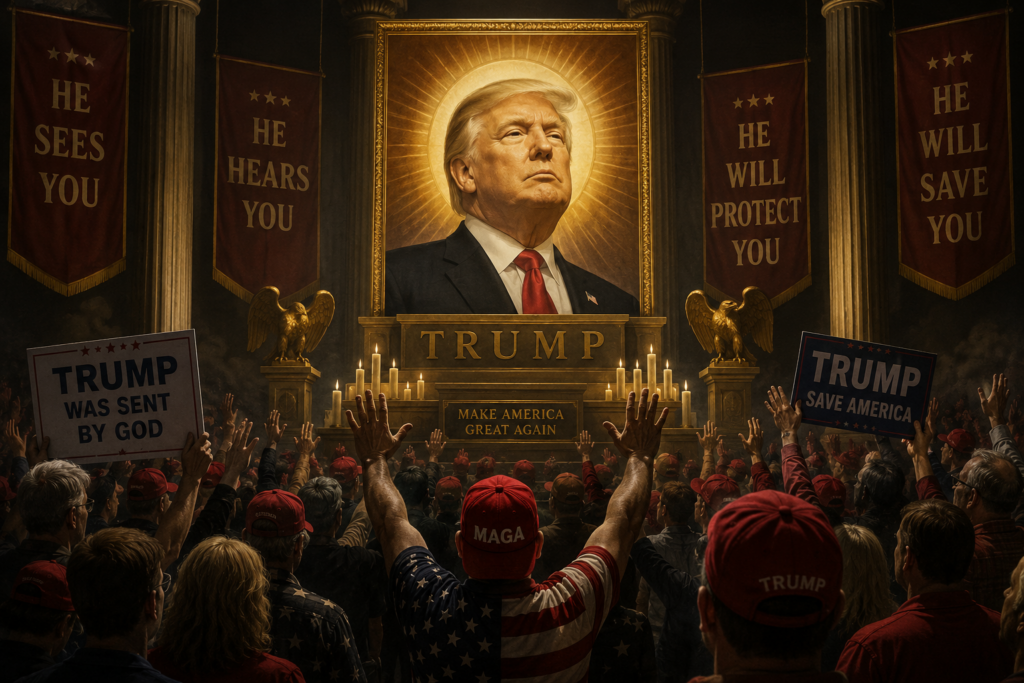
“Make America Great Again” is more than a campaign slogan. It tells a story of loss, restoration, and retribution. It suggests that something valuable has been taken away and that reclaiming it is both necessary and morally justified. For many supporters, it became less about policy than identity.
Trump’s most significant innovation was not ideological but cultural. Previous politicians often relied on coded language while preserving at least the appearance of restraint. Trump discarded those conventions. He mocked opponents, encouraged inflammatory chants, proposed banning Muslims from entering the country, and described immigrants as “poisoning the blood” of America. Many supporters interpreted this not as recklessness but as authenticity—a rejection of what they viewed as the constraints of political correctness.
That shift changed more than political rhetoric. It altered the boundaries of acceptable public behavior. Conduct once viewed as disqualifying became, for many supporters, evidence of courage and honesty. Loyalty increasingly outweighed character. Offending critics became proof that one was willing to stand up to elite opinion.
Political scientists describe this process as norm erosion. Laws remain the same, but the unwritten rules governing public life gradually weaken. Loyalty becomes more important than truth, institutions are trusted only when they favor one’s own side, and democratic restraints come to be seen as obstacles rather than safeguards.
Trump did not invent this dynamic. Populist movements throughout history have divided society into virtuous insiders and corrupt outsiders. His contribution was to make that style of politics a daily spectacle. Political conflict became a struggle between patriots and traitors, real Americans and dangerous enemies. Once politics is framed in existential terms, compromise becomes betrayal and restraint begins to look like weakness.
It would be inaccurate to say Trump created prejudice from nothing. A more persuasive argument is that he reduced the social cost of expressing it. Social norms matter because they define the boundaries of acceptable conduct. When prominent public figures use inflammatory language or repeat conspiracy theories without losing support from their followers, those boundaries inevitably shift.
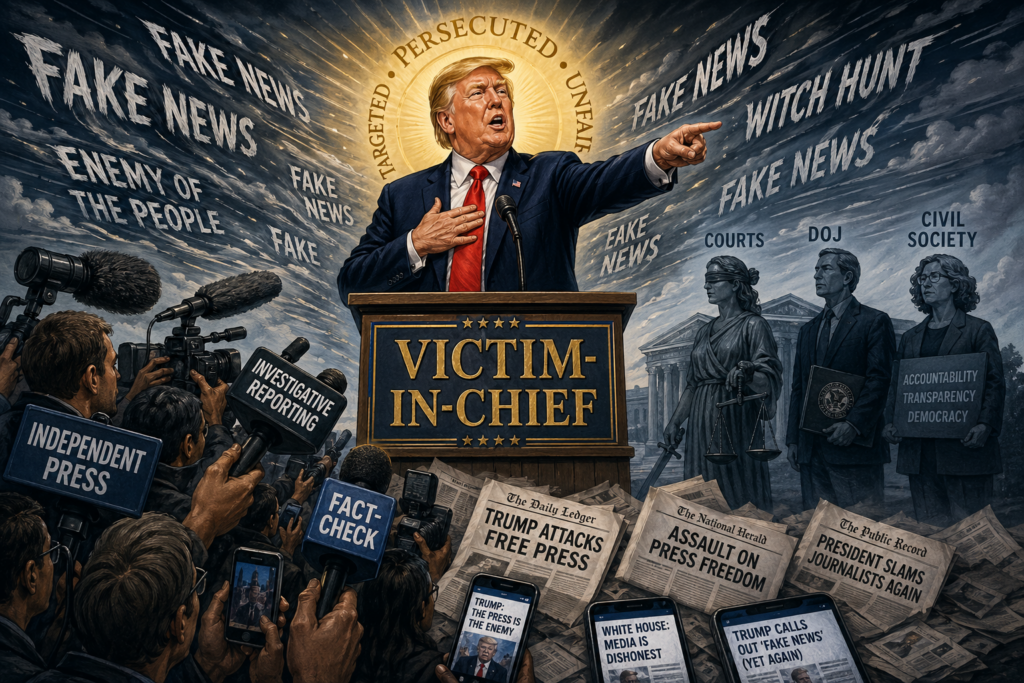
Supporters who might once have hesitated can now dismiss criticism as media bias or political correctness. The line between prejudice and plain speaking becomes increasingly blurred.
This may prove to be Trump’s most enduring legacy. Even if his personal political influence fades, the standards governing public discourse may not return to where they once were. Future politicians can imitate the style—its confrontation, norm-breaking, and appeals to grievance—even if they reject parts of Trump’s agenda.
That is why the distinction between creating prejudice and legitimizing it matters. If Trump merely invented these impulses, defeating one political leader might solve the problem. But if he tapped into deeper currents already present in American society, then the challenge extends far beyond one election.
Trump is best understood as both symptom and accelerant. He gave shape to existing resentments, transformed them into a powerful political identity, and lowered the barriers against openly expressing them. The prejudices themselves were not new. The confidence with which they could be publicly displayed—and sometimes celebrated—was.
Whether that change proves temporary or enduring may become one of the defining questions facing American democracy.