
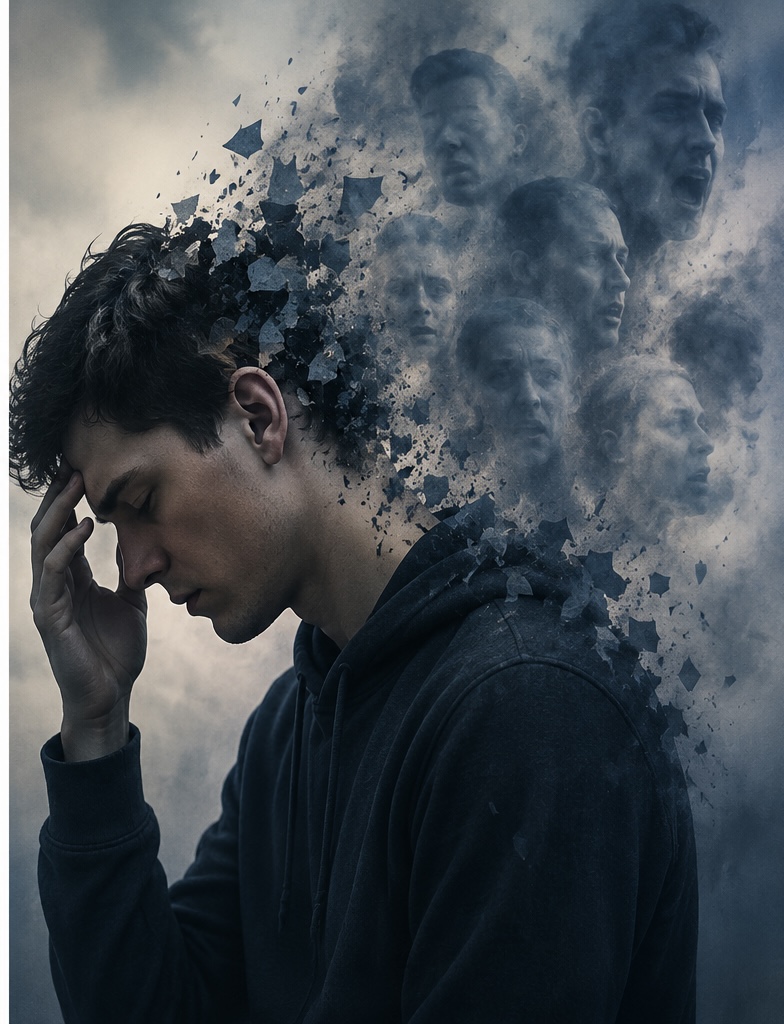
Few psychiatric illnesses carry as much misunderstanding and stigma as schizophrenia. The word itself sometimes conjures images of unpredictable or dangerous behavior, and it is still occasionally confused with having a “split personality.” Neither picture accurately describes the disease.
Schizophrenia is a serious mental illness that affects the way a person thinks, perceives reality, expresses emotions and relates to other people. It can be profoundly disabling, but it is also treatable. With appropriate medication and social support, some people with schizophrenia attend school, work, maintain relationships and live independently.
A Disease That Usually Begins in Youth
Schizophrenia rarely arrives out of nowhere. Most people who develop it pass through a prodromal phase, a stretch of weeks, months, or even a couple of years before the first clear psychotic episode. During this phase, subtle changes in thinking, mood, and social behavior begin to show up. Someone might withdraw from friends, lose interest in things they used to enjoy, struggle to concentrate, or seem “off” in a way that is hard to pin down and easy to mistake for depression, anxiety, or ordinary teenage moodiness.
The disorder most often declares itself in late adolescence and early adulthood, though the timing differs somewhat between men and women. Men typically experience their first symptoms in their late teens to mid-twenties, while women tend to develop symptoms somewhat later, often in their late twenties to mid-thirties, with a second, smaller peak of onset around menopause. The leading explanation for this gap involves estrogen, which appears to have a protective effect on dopamine signaling in the brain, an effect that fades after menopause, explaining why some women may see this second, later window of vulnerability. Onset in childhood or after age 40 is uncommon and, when it does occur, doctors generally look harder for other explanations before settling on a schizophrenia diagnosis.
The first obvious event may be an episode of psychosis, an impairment of the ability to distinguish what is real from what is not. But the illness most likely was developing quietly for months or even years.
A young adult who had previously been doing well may gradually withdraw from friends, lose interest in school or work, neglect personal hygiene or become unusually suspicious. Concentration may deteriorate and conversation may become increasingly difficult to follow. Families frequently recognize that something is wrong long before they recognize it as mental illness and denial is frequent.
Eventually, more recognizable symptoms emerge. A person may begin hearing voices that nobody else hears. These hallucinations can seem every bit as real to the patient as an actual conversation. Others develop delusions, firmly held beliefs that are inconsistent with reality. Someone might become convinced that neighbors are spying on him, that television personalities are communicating directly with her, or that another person is secretly controlling his thoughts. Thinking itself can become disorganized, making conversation difficult to follow.
But these dramatic symptoms are only part of schizophrenia. Some of its most disabling features are less obvious. A person may lose motivation, withdraw socially, speak very little or show little outward emotion. Psychiatrists call these “negative symptoms” because normal abilities have diminished rather than something unusual being added.
There may also be problems with memory, concentration, planning and decision-making. These cognitive symptoms can make holding a job or living independently difficult even after hallucinations and delusions have improved.
What Causes Schizophrenia?
We don’t know exactly.
There is clearly a genetic component. Schizophrenia occurs more frequently in some families, but there is no single schizophrenia gene. Instead, many genetic variations probably contribute to vulnerability.
Researchers have also found differences in brain development, brain circuitry and chemical signaling. Dopamine has an important role, but the once-popular explanation that schizophrenia simply results from “too much dopamine” is far too simplistic.
The best current explanation is that schizophrenia develops through an interaction among genetic susceptibility, brain development and environmental influences.
Certain environmental exposures may increase risk in susceptible individuals. Prenatal complications such as infections, severe stress and maternal substance use, including alcohol and tobacco, have all been investigated. Cannabis deserves particular attention because frequent use, especially of high-potency products, has been associated with an increased risk of psychosis. The presence of one or more of these factors does not necessarily mean that an individual will develop schizophrenia.
How Do Doctors Diagnose It?
There is no blood test or brain scan that says, “This patient has schizophrenia.” Diagnosis depends upon the patient’s history, symptoms, behavior and psychiatric examination, often supplemented by observations from family members.
Just as important is determining what the illness is not. Bipolar disorder, severe depression, medication side effects, recreational drugs and neurological or medical diseases can all produce psychotic symptoms. Laboratory studies, drug screening or brain imaging may be necessary, not to prove schizophrenia, but to exclude other causes. This becomes especially important later in life.
Treatment Has Improved
The cornerstone of treatment remains antipsychotic medication. These drugs are particularly useful for reducing hallucinations, delusions and severe thought disturbance. Newer, “atypical” antipsychotics, including risperidone, olanzapine, quetiapine, aripiprazole, and clozapine, are not dramatically more effective than older drugs, but they do offer a sometimes significantly different side effect protocol. Individual response varies enough that psychiatrists often try more than one medication before finding the right fit. These newer medications carry their own tradeoffs, most notably a higher risk of metabolic side effects such as weight gain, diabetes, and unfavorable cholesterol changes, which is why patients on these drugs need regular medical monitoring. Long-acting injectable medications are available for patients who have difficulty taking pills consistently.
Medication alone is rarely the entire answer. Psychotherapy, family education, rehabilitation, social-skills training, assistance with employment and stable housing can make enormous differences. Programs for people experiencing their first episode of psychosis increasingly combine these approaches through coordinated specialty care. Early treatment is important because a prolonged period of untreated psychosis is associated with poorer outcomes.
What Is the Prognosis?
There is no simple answer. Schizophrenia is considered a chronic illness and its course varies remarkably from one person to another.
Some people experience one or several episodes followed by substantial recovery. Others have repeated periods of psychosis separated by relatively normal functioning. Still others develop persistent symptoms requiring lifelong treatment and assistance.
The World Health Organization notes that at least one in three people with schizophrenia can fully recover. Modern treatment emphasizes recovery and function, rather than simply eliminating hallucinations. The goal is to return the patient to as normal a life as is possible.
Without treatment, the outlook is considerably worse. Persistent psychosis can destroy educational and employment opportunities, relationships and the ability to maintain stable housing. Substance-use disorders can complicate the disease. Untreated schizophrenia is associated with a higher risk of suicidal thinking, progressive decline in cognitive functioning, and increased risk of cardiovascular disease, driven partly by lifestyle factors and partly by the physiological toll of chronic untreated illness. One widely cited estimate suggests that roughly two out of three people experiencing psychosis worldwide never receive adequate care, whether due to stigma, lack of insight into their own illness (a symptom in itself for some patients), cost, or limited access to services. This is why early identification and consistent care, imperfect as current treatments may be, make such a measurable difference in how the illness unfolds over a lifetime.
Schizophrenia in Older Adults
Schizophrenia presents an interesting problem as the patient ages. Many people who developed schizophrenia at 20 or 25 are now living into their seventies and eighties. Their psychiatric illness must be treated alongside the problems of aging, including cardiovascular disease, diabetes, cognitive decline and multiple medications.
Antipsychotic drugs also require particular caution in elderly patients because they may contribute to sedation, falls, orthostatic hypotension (blood pressure drop), abnormal movements and medication interactions.
But there is an even more important rule when dealing with an older person. New psychosis should not automatically be called schizophrenia, particularly in a hospitalized patient. Delirium associated with hospitalization, formerly called hospital psychosis, is not a psychiatric disorder. It will frequently resolve after treating underlying medical issues and discharging the patient from the hospital.
Imagine a previously mentally healthy 78-year-old who suddenly becomes convinced that strangers are entering his house or begins seeing people who aren’t there. Schizophrenia is possible, but it would not be the first assumption.
Delirium, dementia, Parkinson’s disease, stroke, infection, metabolic abnormalities, medications, alcohol and other drugs can all produce hallucinations, paranoia or confusion. Alzheimer’s disease and related dementias can also produce psychosis. An acute urinary track infection should always be high on the differential diagnosis of any older patient with a new mental status change.
A new onset of hallucinations or delusions in an elderly patient deserves a careful medical, neurological and medication evaluation.
True late-onset schizophrenia does occur, but is rare and schizophrenia beginning in young adulthood is much more typical.
A Disease, Not a Character Flaw
Perhaps the most important change in our understanding of schizophrenia is recognizing what it is not. It is not a failure of willpower. It is not caused by bad parenting. It does not mean someone has multiple personalities. A diagnosis of schizophrenia does not automatically make a person dangerous. It is a complex disorder of brain function whose ultimate cause remains incompletely understood.
We cannot yet cure schizophrenia in the conventional sense, nor can we predict with certainty which young person experiencing a first psychotic episode will eventually develop the disease. But we can treat it far more effectively than was possible just several years ago.
That makes early recognition particularly important.
When a young person gradually withdraws from the world, begins thinking or speaking strangely, or starts hearing voices or developing bizarre beliefs, the appropriate response is neither ridicule nor fear. It is medical evaluation.
For an elderly person who suddenly develops the same symptoms, the message is slightly different but equally important: don’t assume schizophrenia. Look carefully for the cause.
In both situations, psychosis is a symptom that deserves immediate attention and schizophrenia is an illness that deserves treatment rather than stigma.
Medical Disclaimer
The information provided in this article is intended for general educational and informational purposes only and does not constitute medical advice. It should not be used as a substitute for professional medical advice, diagnosis, or treatment.
Always seek the guidance of a qualified healthcare provider with any questions you may have regarding a medical condition or treatment. Never disregard professional medical advice or delay seeking it because of something you have read here.
If you are experiencing a medical emergency, call 911 or your local emergency number immediately.
The author of this article is a licensed physician, but the views expressed here are solely those of the author and do not represent the official position of any hospital, health system, or medical organization with which the author may be affiliated.
Image generated by author using ChatGPT
Sources
National Institute of Mental Health — Schizophrenia
National Institute of Mental Health — Understanding Psychosis