We have become a society consumed by the concept of fairness. Things of which we disapprove or perceive to be to our disadvantage are unfair. Things we perceive as being to our advantage or of which we approve are fair. What is fair to me may be unfair to you and vice versa. I’ve given a lot of thought to this whole concept of fairness and in many ways have struggled with an answer that satisfies me.
The first time I really started thinking about it was when my children were young. They frequently declared that things were unfair. Of course, these were generally things they didn’t like, such as dad telling them they couldn’t go certain places or do certain things. They could never explain what they meant by not fair other than they didn’t like it. But in their defense no one else seems to be able to adequately describe it either.
Denouncing something as unfair has become a socially acceptable way of saying “I don’t like it.” It seems to say that fairness has some intrinsic value like good or evil. These are two other concepts which also are difficult to explain but have a more intuitive meaning than fairness. Is it fair that one person works harder than another and so makes more money? Is it fair that one person was born with musical ability? Is it fair that another person is born with natural athletic talents? (If it were up to me, I’d say it is unfair since I have neither musical nor athletic ability.)
For many, the natural inequities of life create a perceived issue of fairness or unfairness. The beneficiaries of natural gifts will of course consider it fair that they are able to benefit from those gifts. Those who perceive themselves without such gifts will deem it unfair and ask for special considerations to allow them to be equal with those they consider more advantaged.
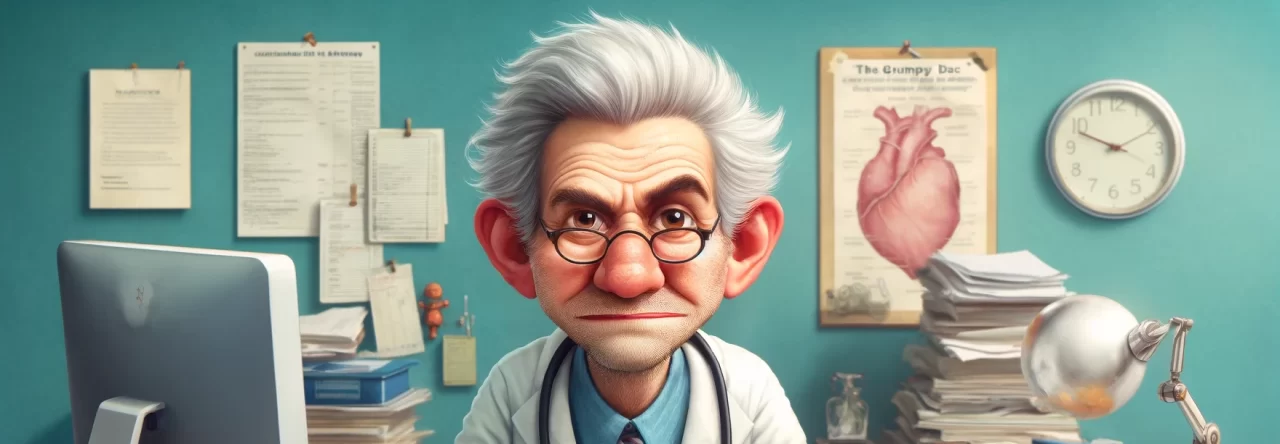
So, what is The Grumpy Doc’s opinion about fairness. Well, I’ll tell you what I told my kids. There is no absolute fairness. You cannot define fairness to the satisfaction of all people. Things are the way they are. If you don’t like them, work hard to change them. If you do like things, work hard to keep them the same.
If there is any fairness, it is that we should all have an equal opportunity to work for the things that we want. That doesn’t mean we all start from the same place and those who have been disadvantaged by society in the past must be give equal opportunity with consideration of past inequalities. To those who say they have never benefitted from special consideration: “What’s your golf handicap?”
Do I know how to achieve these things? Sadly, no. That is for people smarter than me. Do I consider it unfair that there are people smarter than me? No, I’m glad. If The Grumpy Doc were the smartest guy around, we would all be in trouble.



Fake News
By John Turley
On July 24, 2021
In Commentary
Fake News
Recently I started reading a series of articles from The Associated Press entitled Not Real News: A Look At What Didn’t Happen This Week. There was a time when purveyors of “creative news” were never taken seriously. Tabloids such as The National Enquirer were read for humor and entertainment not for serious news. I fondly remember the “Bat Boy Found In West Virginia Cave” published with genuine drawings (who can dispute that?).
With the advent of the Internet all of that has changed. We no longer seem to be able to differentiate between real news, satire, humor, and just plain bull shit. It has become necessary for reputable news organizations to attempt to debunk the more outrageous claims that circulate under the guise of news.
Everyone is familiar with the now common place phrase “fake news”. It is generally used in an attempt to discredit a news story. But do we ask ourselves, is the story is factually incorrect or is it just something with which we disagree?
Rather than causing a reflex response, either in agreement or disagreement, the label should get us thinking. What makes it fake? What are the facts behind the story? Do we trust the reporting, or the person making the claim and how have we arrived at that conclusion? We should use this as an opportunity to think critically about the news and the people involved.
Numerous studies have shown the Internet to be a vast reservoir of misinformation, incomplete data, and downright fabrication. This would not be a problem if the same studies did not also show the more outrageous or unlikely the claims on the Internet, the more likely they are to be shared.
Why is this? Studies have been done about how and why people share Internet data. The most common reason is that they think that their friends would find them to be interesting, fun or just plain crazy. One problem with this is people are more likely to give credence to information on websites shared by friends.
So, what this means is: I read something on a website that I think is just outrageous and I sent it to you because I think you will get a laugh. Because you think that I’m a reasonable person and respect my opinion, you believe that I accept it as true. Therefore, you are more likely to accept it as true. This leads to a cascade a false information entering common perception.
A large part of this is due to the breakdown of critical thinking in our society as a whole. So just what is critical thinking? According to a commonly accepted definition:
“Critical thinking is the intellectually disciplined process of actively and skillfully conceptualizing, applying, analyzing, synthesizing, and/or evaluating information gathered from, or generated by, observation, experience, reflection, reasoning, or communication, as a guide to belief and action.”
OK, this is a long-winded way of saying think for yourself. Before you forward any outrageous, funny or just plain crazy website or email to friends be sure and let them know your opinion about it. If you’re forwarding it just because you think it’s crazy, tell them that. They’ll be less likely to accept it as your opinion and less likely to adopt it as their own. We all need to be responsible for what we do or don’t accept. Unfortunately, we also must accept responsibility for passing on false information to friends who may accept it based on what they think is our recommendation.
Is it true or is it false? You need to decide that for yourself. But don’t fall into the trap of just accepting everything that shows up in your inbox as being truthful. Make the effort and take the time to look for the truth behind the headline. And that includes this post as well.
The most reliable method is to evaluate the source. Is it an acknowledged expert or organization? If it relates to scientific information, does it contain verifiable data or reference to published, peer reviewed studies? If it is opinion, is it clearly labeled as such?
One final piece of advice for evaluating Internet information; be very suspicious of anything from an anonymous source or from a site attributed to a group with a vague name such as The Institute for the Advancement of My Opinion. It is likely that the institute is located in his parents’ basement. Finally, always be suspicious about anything that begins: “The Truth About….”. You’re unlikely to find much truth there.
So, to end this post, The Grumpy Doc says think for yourself, know what you believe, and you won’t go wrong. (Unless, of course, you disagree with The Grumpy Doc.)