Grumpy opinions about everything.

Category: Commentary Page 15 of 16

This is the home of grumpy opinions.

Anchors Away

A couple of friends recently reminded me that I hadn’t posted to The Grumpy Doc for quite some time. They were wondering if perhaps I decided to abandon the project. I wasn’t sure whether they were asking because they were glad they didn’t have to read it anymore or because they actually enjoyed reading it. I’m going to assume the latter so I’m heading back to the keyboard.

The easiest thing when you’re trying to turn out an article on short notice is to just indulge in some reminiscence. You don’t have to do any research and hopefully your memory hasn’t started to fail yet. Although, I’m not so sure about the last part.

Going back to 1967, I just finished my first year in college as a political science major at the University of Kentucky. I was restless and bored. I didn’t really know what I wanted to do with my life, but I was sure it didn’t have anything to do with political science. I was also having a lot of doubt about my plan to go to law school.

I spent the summer working construction, basically, as an unskilled laborer, hauling, carrying, and digging. I also spent the summer closely watching the Vietnam War. While there were some protests, the true nature of the war really hadn’t dawned on most of us. I’ve always been and still am very patriotic. I thought perhaps it not only would be my civic duty but also a great adventure to enlist. One night at dinner I told my father I had decided to drop out of college and join the Marines. I was expecting quite a bit of resistance, but he just looked at me and then finished his dinner.

The next night I came home for dinner and my father’s first cousin George was having dinner with us. I would occasionally see George around town. He spent a lot of time in the Navy, and I was pretty sure he was still in the Navy. What I didn’t know was that he was our local Navy recruiter and by the time dinner was over I was enlisted in the Navy. I guess my father decided better not to argue with a stubborn guy like me but just to take action.

I went to Great Lakes Naval Base for basic training or boot camp as we called it. It seemed that the main purpose of boot camp was to indoctrinate you in the military way of life and to get you used to being a member of a group rather than an individual. They also wanted to teach you how to follow orders and complete all your jobs as directed. As an aside, they also spent a lot of time teaching us the proper “Navy way” to fold clothes. Anyone who was ever in the Navy will understand when I say I still fold my underwear the Navy way.

I won’t bore you with a lot of detail about the myriad wonders of boot camp. However, I want to share one experience that pretty much sums it all up for me. It also should have taught me a lesson to remember throughout my life. Unfortunately, I’ve always been too hardheaded to listen to that inner voice that offers caution.

We were at water survival training. This is where they taught us how to abandon ship in combat situations. Not only would a sinking ship drag you down to the bottom with it, but very likely there was burning oil floating on the water everywhere waiting to burn you alive. Knowing how to get safely off the ship and away from it quickly could mean the difference between life and death.

Our instructor was a grizzled old salt. His skin was leathery and wrinkled, most likely the result of years of wind, salt spray and sun with liberal doses of cigarettes and alcohol thrown in. He looked to be at least 60 but he was probably barely 40. He was the kind of man who dedicated his life to the Navy and who made the Navy work. I didn’t know it at the time, but I would come to respect those men far more than I could ever know.

He stood on the edge of the pool with a 15-foot tower behind him. We were all sitting on the deck in a rough semicircle around him facing the pool. He began explaining how to abandon ship. The first thing he said was, “Always abandon ship feet first. There will be a lot of floating debris in the water.” Only he pronounced it deb-er-us. Being the oh so smart college boy, I said “It’s pronounced debris.” I thought I had said it too low for anyone other than me to hear, but I was so wrong. He zeroed in on me like a bloodhound. He pointed his finger at me, curled it in a come here motion and said, “Get up here wise ass, you’re going to be my demonstrator.” It was just about that time that I remembered my father’s parting advice as I left for boot camp. He looked at me and said, “Keep your head down and your mouth shut.” He was a Navy veteran of World War II and knew what he was talking about.

I spent the rest of the day in a variety of uniforms and heavy equipment repeatedly jumping off that 15-foot tower to show the proper way to abandon ship. I still wonder if our instructor didn’t mispronounce that word on purpose to try to catch a smart young fool like me and to show who was really the smart one.

Vaccinate! Vaccinate!

I’m going to climb on my soap box to thank those of you who are either fully vaccinated against COVID or who are in the process of becoming so.  The only chance we have of putting this virus behind us is to reduce the population of non-immune, so that the possibility of new variants is limited.  Hopefully, we can accomplish this by increasing the immune population through vaccination rather than decreasing the non-immune population through COVID related deaths. 

The vaccine is safe. Yes, there have been reports of serious events and even death among people who were vaccinated.  However, these events are approximately equal to their occurrence in the general population and with very few exceptions the vaccination could not be attributed to their death.  Additionally, risk factors for adverse reactions, which can happen with any medication, have been identified and those people likely to have a reaction are not being vaccinated until further studies can be done. 

  The number going around on the internet is that 14,000 people died from the COVID vaccination.  This is a blatant misstatement of the facts.  Fourteen thousand people who had been vaccinated died during the study period.  After careful review of each case, it was determined that the vast majority of deaths were attributed to other causes and for many of the others a proximal cause of death could not be identified.  This is out of the more than six million who had been vaccinated at the time the number was first reported.   

The bottom line is this:  there have been over 800,000 COVID deaths in the US and over 5,000,000 deaths worldwide.  This disease will continue its rampage until everyone does their part to stop the spread. 

I find the argument about personal freedom to be disingenuous.  We all give up some degree of personal freedom to live in a civil society.  We get a drivers license. We stop at red lights.  We don’t steal.  We don’t go shopping in our underwear (except possibly at Walmart, but that’s a topic for another day).  

I have to ask, “Do you consider your concept of personal freedom so important that you are willing to put the lives of others at risk?”  If you do, then this is not about freedom, it’s about selfishness.   

This is more important than politics.  This is life and death.  Please, get vaccinated. 

Sayings That Make No Sense

When you come to a fork in the road, take it.

-Yogi Berra                                                                                                            

One of the things that we’ve all done during COVID is to develop new pastimes that we pursue at home while maintaining social distance. One of the things that I did was to start maintaining bird feeders. At last count I have three seed feeders and two suet feeders. At one time I had two window mounted feeders attached with suction cups. However, squirrels continuously jumped at the window feeders, knocking them off and scratching the windows in the process. They were soon retired.

Of course, it was a short trip from bird feeding to bird watching. I have become quite interested in the different types of birds and often sit on the deck with my binoculars, spotting scope and bird books (and of course a martini or glass of wine). One day while watching the birds swarming the feeders, fighting each other for perch space and eating everything in sight, Margie and I were talking about a friend who just picks at their food. I commented that the person “eats like a bird”. Suddenly, watching how the birds really eat I got to thinking it made no sense to compare a picky eater to a bird, because birds seem to eat continuously and eat everything you put out.

Well, this got me thinking about other such sayings. The first one that came to mind was “work like a dog.” I’ve had a lot of dogs in my lifetime and most of them spent about 18 hours a day asleep, so I don’t know when all this proverbial work was supposed to have taken place. And the animal sayings just get better. How about “happy as a clam”? Are clams really happy? Would we even know? Would it make you happy to be buried in mud in cold water? Consider “fine as frog hair”.  I mean really, how does that even begin to make sense?  And then there’s “ bee’s knees”.  Even if we assume that bees have knees, why would that represent something cool or hip?

And the animal sayings that make no sense go on from there: “wise as an owl”, “sly as a fox”, “memory like an elephant”.  I’m sure you have many more of these that you can add as well.

A saying that has always bewildered me is “the exception that proves the rule”.  If there’s an exception is there really a rule or is it more likely a suggestion. And, why would an exception actually prove it? It would seem to me it would disprove it.

A friend recently reminded me of another nonsensical saying that has always left me scratching my head. I’m sure you all know: “in a New York minute”. So, is time faster in New York? Are New Yorkers too busy for a 60 second minute and need a shorter one? Just how long is a New York minute anyway? What if we discover a New York minute really is longer?

I’m working on this post on Thanksgiving Day while Margie is making a pumpkin pie. And that of course leads to the inevitable recalling of that great nonsensical saying “easy as pie”.  While eating pie might be pretty easy, making pie is not. Particularly, if you’re making a homemade crust. I once tried to make a pie crust. It proved to be far more difficult I had expected. And it certainly was not “easy as pie”.

As long as we’re talking about cooking, “a watched pot never boils”.  Of course, it’s going to boil.  It just seems like it won’t if you’ve got nothing better to do than sit and stare at it.

And “pardon my French”.  Why did French become a euphemism for profanity?  Why not German or Italian or maybe “pardon my Norwegian“?

Now on the surface it would seem that “ugly as sin” makes sense.  But with further thought, it’s the result of sin that is ugly.  Sin itself has to be pretty attractive for us to be so drawn to it.

“Cold as hell”.  No further discussion needed.

I’m sure everyone has their own favorite nonsensical saying.  Please share them with us. 

And, if you can explain why a mess has to be hot, I will be very grateful.

Finally, why do people say grumpy like it’s a bad thing? That’s the ultimate nonsense.

What Happened to Bipartisanship?

There was a time when people were able to disagree without being disagreeable. There were no “lines in the sand”. People were able to reach accommodation and agreement for the common good. Ronald Reagan and Tip O’Neill were two vastly different politicians who were usually on opposite sides of issues. Somehow, they always found a way to work together for the benefit of the country.  As Reagan famously said, “We’re always friends after six o’clock.” What happened to that ability to cooperate?

Just think about traditional marriage. It’s become set in stone that marriage between a man and a woman is the foundation of American society while divorce rates continue to skyrocket. So, what is important, a traditional marriage or a stable relationship?  Any relationship that provides people with a loving and supportive home life should be recognized as valuable.  Your choice of relationship does not affect me and should not be my business or the business of law.

There are no longer any gray areas. Let’s look at abortion. In the political realm you are either for abortion on demand or you’re opposed to a woman’s right to choose.  Most people are not that dogmatic in their personal lives, yet our political parties have staked out the extreme positions.

Why can’t we have a middle ground in politics? Why can’t people believe that abortion in the case of incest or rape is appropriate but that abortion as a birth control choice is not.  But more importantly, why do these issues of personal belief have to be enforced by law?

 I should be able to hold personal beliefs that don’t infringe on other people and at the same time they should recognize my right to those beliefs.  Religious or moral beliefs are difficult to quantify and vary greatly among different groups.  They are a poor basis for governing a diverse society.   

One thing that has been of long-term concern to me is gun control. Most of you who know me, know I was a Marine. I have no problem with gun ownership. I am a gun owner.  If gun owners are responsible citizens, their rights should be respected. Having said that, I believe that the unstable or the criminal have no right to own weapons. I also believe hunters or people concerned with home protection have no need for automatic weapons or high-capacity magazines. These are weapons of war and have no place in a civil society.

The argument about the second amendment and the right to bear arms was appropriate in the 18th century when there was a well-regulated militia. In today’s world no one brings their own weapon when they join the military. But this is an issue where little accommodation is made. The diehard supporters of the Second Amendment believe they should have the right to any type of weapon they so choose. At the same time, the opponents of guns not only wish to control ownership, but to confiscate all weapons as well. To fail to recognize the middle ground is to fail as a society.

If we’re going to ever move forward on these or many other issues, we need to find a middle ground that will benefit society while causing the least impact on those involved.  We need to do away with the mindset that if you are for it, I must be against it. No single issue is all good or all bad yet that has become our way of addressing any controversial problem.  The question we must ask ourselves is this: “Why do I feel the need to control your behavior?”  Until we can answer this question in a reasoned and dispassionate manner, we are doomed to failure.

I’m sure I’ve made nobody happy, left or right.  That, to me, means I’m probably in the right spot.  And that is my grumpy opinion.

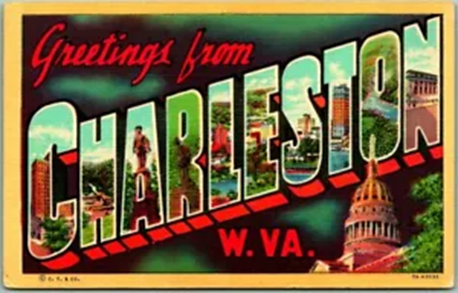
Old Charleston

One of the problems of getting older is that we frequently descend into bouts of nostalgia. I’ve recently been thinking about “Old Charleston”. For me, that means Charleston of the 1950s and early 1960s. A time before I entered my cynical teenage years.

There were a lot of really nice things about growing up in Charleston. It was a small town and a very safe place to live. In the summer, our mothers just turned us loose to “go outside and play”.  As long as we were back by lunch they really didn’t care where we were or what we were doing because they knew we would be safe.

One of my favorite memories is the old Virginian Theater. It was a very ornately designed movie house with painted walls and ceilings and plush velvet covered seats. It was one of the first places in town that was air conditioned. There were signs on their marquee that said “It’s Cool Inside” with icicles dripping from the letters. In the middle of summer who wouldn’t want to go there? I can still remember standing in line for what seemed to be hours to see Old Yeller, a Disney movie about a stray dog. We sat in the balcony, ate popcorn and raisinets and loved every minute of it.

I also spent a lot of Saturday mornings at Skateland, a large roller-skating rink on Charleston’s west side. We would spend hours skating around and around. Often, we would slingshot each other so we could build up speed; this usually occured right before we crashed into a wall or went sprawling down the floor. I can remember when we younger kids were forced to leave the rink so that the older kids could do a couples skate. At the time I couldn’t imagine anything more disgusting. I also remember the great fun we had doing the hokey pokey on roller skates.

My grandmother used to take me to the lunch counter at the Diamond Department Store. It was a grown-up experience for me because even though it was called a lunch counter, women still dressed up in those days. I got my very own hamburger and a large Coca Cola, something that I didn’t frequently get at home. And it was just fun going shopping with grandmother.

A lot of summer days were spent at Rock Lake pool. I still think it may be one of the largest swimming pools I have ever seen. It’s possible though that it may have grown in my memory. It had large slides that must have been at least two stories tall. It had trapezes that allowed you to swing out over the water at least 15 feet in the air before letting loose and landing with a large splash. It was great to go home smelling of chlorine, worn out and sunburned.

There is one thing though that I don’t remember in any of those places in “Old Charleston”. And that’s African Americans. Charleston at that time was still partially segregated. Kanawha County schools were only integrated in 1956 and a lot of other things were still far behind. You would not think this would be the case in a state that was born of the Civil War.

The Virginian Theater and the Diamond lunch counter didn’t integrate until late 1950s or early 1960s. Skateland and Rock Lake pool both chose to close rather than to integrate. It amazes me now as I look back how naïve I was to not even recognize that this type of discrimination was occurring. While we have made progress, we still need to recognize that there is so much more that must be done.  The “New Charleston” should be a place where everyone is welcome and feels at home.

Fake News

Fake News

Recently I started reading a series of articles from The Associated Press entitled Not Real News: A Look At What Didn’t Happen This Week.  There was a time when purveyors of “creative news” were never taken seriously.  Tabloids such as The National Enquirer were read for humor and entertainment not for serious news. I fondly remember the “Bat Boy Found In West Virginia Cave” published with genuine drawings (who can dispute that?). 

With the advent of the Internet all of that has changed. We no longer seem to be able to differentiate between real news, satire, humor, and just plain bull shit.  It has become necessary for reputable news organizations to attempt to debunk the more outrageous claims that circulate under the guise of news. 

Everyone is familiar with the now common place phrase “fake news”.  It is generally used in an attempt to discredit a news story.  But do we ask ourselves, is the story is factually incorrect or is it just something with which we disagree?

 Rather than causing a reflex response, either in agreement or disagreement, the label should get us thinking.  What makes it fake?  What are the facts behind the story?  Do we trust the reporting, or the person making the claim and how have we arrived at that conclusion?  We should use this as an opportunity to think critically about the news and the people involved.

 Numerous studies have shown the Internet to be a vast reservoir of misinformation, incomplete data, and downright fabrication.  This would not be a problem if the same studies did not also show the more outrageous or unlikely the claims on the Internet, the more likely they are to be shared.

Why is this?  Studies have been done about how and why people share Internet data. The most common reason is that they think that their friends would find them to be interesting, fun or just plain crazy. One problem with this is people are more likely to give credence to information on websites shared by friends.

So, what this means is: I read something on a website that I think is just outrageous and I sent it to you because I think you will get a laugh. Because you think that I’m a reasonable person and respect my opinion, you believe that I accept it as true. Therefore, you are more likely to accept it as true. This leads to a cascade a false information entering common perception.

A large part of this is due to the breakdown of critical thinking in our society as a whole. So just what is critical thinking? According to a commonly accepted definition:

“Critical thinking is the intellectually disciplined process of actively and skillfully conceptualizing, applying, analyzing, synthesizing, and/or evaluating information gathered from, or generated by, observation, experience, reflection, reasoning, or communication, as a guide to belief and action.”

OK, this is a long-winded way of saying think for yourself. Before you forward any outrageous, funny or just plain crazy website or email to friends be sure and let them know your opinion about it. If you’re forwarding it just because you think it’s crazy, tell them that. They’ll be less likely to accept it as your opinion and less likely to adopt it as their own. We all need to be responsible for what we do or don’t accept. Unfortunately, we also must accept responsibility for passing on false information to friends who may accept it based on what they think is our recommendation.

Is it true or is it false? You need to decide that for yourself. But don’t fall into the trap of just accepting everything that shows up in your inbox as being truthful. Make the effort and take the time to look for the truth behind the headline. And that includes this post as well. 

The most reliable method is to evaluate the source.  Is it an acknowledged expert or organization?  If it relates to scientific information, does it contain verifiable data or reference to published, peer reviewed studies?  If it is opinion, is it clearly labeled as such?

One final piece of advice for evaluating Internet information; be very suspicious of anything from an anonymous source or from a site attributed to a group with a vague name such as The Institute for the Advancement of My Opinion.  It is likely that the institute is located in his parents’ basement.  Finally, always be suspicious about anything that begins: “The Truth About….”.  You’re unlikely to find much truth there.

So, to end this post, The Grumpy Doc says think for yourself, know what you believe, and you won’t go wrong.  (Unless, of course, you disagree with The Grumpy Doc.)

That’s Not Fair

Balance Scale Clip Art N47 free image download

We have become a society consumed by the concept of fairness. Things of which we disapprove or perceive to be to our disadvantage are unfair. Things we perceive as being to our advantage or of which we approve are fair. What is fair to me may be unfair to you and vice versa. I’ve given a lot of thought to this whole concept of fairness and in many ways have struggled with an answer that satisfies me.

The first time I really started thinking about it was when my children were young.  They frequently declared that things were unfair.  Of course, these were generally things they didn’t like, such as dad telling them they couldn’t go certain places or do certain things. They could never explain what they meant by not fair other than they didn’t like it. But in their defense no one else seems to be able to adequately describe it either.

Denouncing something as unfair has become a socially acceptable way of saying “I don’t like it.”  It seems to say that fairness has some intrinsic value like good or evil. These are two other concepts which also are difficult to explain but have a more intuitive meaning than fairness. Is it fair that one person works harder than another and so makes more money? Is it fair that one person was born with musical ability? Is it fair that another person is born with natural athletic talents?  (If it were up to me, I’d say it is unfair since I have neither musical nor athletic ability.)

For many, the natural inequities of life create a perceived issue of fairness or unfairness. The beneficiaries of natural gifts will of course consider it fair that they are able to benefit from those gifts. Those who perceive themselves without such gifts will deem it unfair and ask for special considerations to allow them to be equal with those they consider more advantaged. 

So, what is The Grumpy Doc’s opinion about fairness. Well, I’ll tell you what I told my kids. There is no absolute fairness. You cannot define fairness to the satisfaction of all people. Things are the way they are. If you don’t like them, work hard to change them. If you do like things, work hard to keep them the same.

If there is any fairness, it is that we should all have an equal opportunity to work for the things that we want.  That doesn’t mean we all start from the same place and those who have been disadvantaged by society in the past must be give equal opportunity with consideration of past inequalities.  To those who say they have never benefitted from special consideration: “What’s your golf handicap?”

Do I know how to achieve these things?  Sadly, no.  That is for people smarter than me.  Do I consider it unfair that there are people smarter than me? No, I’m glad.  If The Grumpy Doc were the smartest guy around, we would all be in trouble. 

Brown Beans and Cornbread

Best Beans & Cornbread in Weest Virginia Winners (2019) | USA TODAY 10Best

I find it interesting that things take on more importance in retrospect than they had at the time. I grew up in West Virginia and I left the state when I was 19 and spent the next 21 years living in other parts of the country.

We moved back to West Virginia when I was accepted in medical school at Marshall. I found it interesting to discover that things I really didn’t remember as being part of the culture had somehow become iconic.

What most surprised me was brown beans and cornbread. Schools and churches had brown beans and cornbread suppers to raise funds. This was supposedly a West Virginia tradition. Unfortunately for me I really don’t remember it. 

I know we had cornbread and probably had brown beans.  I don’t remember them being linked together as the “classic” Appalachian dinner.  Although I must say it has become one of my favorite meals and I regret all those years I missed out on enjoying it.

This got me to thinking how many things that we consider traditional or “American” have only become so from the vantage point of looking backward.  Nostalgia minimizes faults and amplifies virtues.

Many things that were not so important at the time have become set in stone as an important part of our heritage. For example, collectors now pay a fortune for old toys that are considered to somehow represent a special bygone era. However, at the time, they were just toys. They were played with and discarded when the kids lost interest in them. Who has not said at one time or another, “I wish I still had my”, you fill in the blank here, be it the original Barbie doll, baseball cards or Star Trek toys. 

Speaking of Star Trek, let’s look at the series.  I’m sure this is where The Grumpy Doc may upset some people.

When you consider the entertainment dynasty that arose from the original Star Trek series it is hard to believe that it only lasted three seasons. It was initially cancelled after the second season and brought back for an additional season only after an aggressive letter writing campaign by fans.

If you look at the old shows, the stories were simplistic, the special effects were rudimentary, and the acting was over the top. Especially Captain Kirk, who could always find it within himself to over act in any scene. Yet somehow, after many movies and numerous spinoff series, we have come to regard this initial run as classic television. I will admit they made moral points on many episodes, but these were often heavy handed and  in-your-face moralizing.

 When we think of Great American literature one of the books we think of is The Great Gatsby by F. Scott Fitzgerald. At the time of its initial release, it sold poorly. When Fitzgerald died, he considered himself to be a failure as a writer. It wasn’t until World War II when The Great Gatsby was one of the books printed and distributed to the troops, that it became popular. He is now considered an American icon and rightly so.

The same thing happens to politicians. These are people that we know and revere as great Americans and who have been subjected to near deification. These are people literally carved in stone, George Washington, Thomas Jefferson, and Abraham Lincoln.  From the perspective of many years, we have come to believe that these men were universally loved, admired, and respected. However, during their lifetime they had many political and personal enemies who criticized them at great length and all three suffered through periods of declining popularity.

In future posts I’m going to discuss each of them in turn and look at how they were perceived during their lifetime as compared to how we perceive them now. Each deserves separate attention. Despite their flaws, each was vitally important to the America that we now know.

Equally as interesting are things that were once popular or considered important and are now almost completely unknown. I will be addressing those in a future post as well. 

One thing I will warn you about now, I have a great interest in historical trivia. The Grumpy Doc is really trying to understand how perceptions of previous generations have shaped current opinions about many aspects of society.  I will be sharing many of my thoughts on these issues. 

Memorial Day

Image result for American Flag Clipart. Size: 191 x 104. Source: clipartix.com

Memorial Day began to honor those who died in defense of our country.  Over time we also recognized the sacrifice of police and fire fighters.  Now, in the face of the latest threat to our nation, let us add to the list of honor those in health care, education, and other vital industries whose lives were lost providing for our safety and security.  May God bless them and their families.

Nine Out of Ten Doctors Recommend……

It’s interesting to think about how the popularity of things changes overtime Sometimes they go in and out of fashion as a matter of preference.  Other times it’s because we have learned that things done in the past were not beneficial or were perhaps even harmful. I’m going discuss a couple of those things and then try to wrap it all up with a guess about what may be popular in the future.

The first thing that comes to mind is cigarette smoking. There was a time during my younger days when cigarette smoking was not only acceptable, but it was almost mandatory if you were going to be sophisticated.

As illustrated by the advertisement above doctors were often employed as a vehicle to sell cigarettes. And in fact, I remember a friend telling me he was advised by his doctor to start smoking because it would “exercise his lungs”.  (I really hope he misheard that.)

Movie stars all smoked. Check out Turner Classic Movies and look at any film from the 1940s or 1950s. The stars constantly had a cigarette in their hand. I can’t recall a movie with Humphrey Bogart where he wasn’t lighting up.  The women were also lighting up.  Lauren Bacall looked pretty sexy with a cigarette.

It wasn’t just the movie stars who made us want to smoke.  President Franklin Roosevelt smoked, and he used a cigarette holder. He made it look elegant and made a lot of other people want to emulate him. Unfortunately for many who tried, very few could pull off the cigarette holder without looking foolish.

Smoking was also considered to be manly. President Eisenhower, when he was the Supreme Allied Commander in Europe during World War II, famously smoked 5 packs of cigarettes a day, all unfiltered. And we could only hope to have looked as cool as James Dean did in Rebel Without a Cause when he lit a cigarette in almost every scene.  We certainly can’t forget the Marlboro Man, the rugged cowboy who always had a cigarette in his hand.

When I was in high school, we couldn’t wait to start smoking. We were convinced it would make us look like grownups, and as soon as we were able, we started lighting up. For the most part our parents told us we shouldn’t smoke but since they were smokers themselves that really didn’t carry a lot of weight with us.

But it’s easy to understand why my cigarettes fell out of favor. Health warnings in the early 1960s helped to discourage people from smoking and the widely reported scientific studies linking it to cancer that occurred in the 1970s and 80s further lessened its popularity. Smoking is no longer looked upon as sophisticated or elegant.  It is looked upon as deadly.

The popularity of wine is also interesting. In the early 1900s wine was considered the province of the upper classes. It was served at white tie dinners by formally attired butlers.  It had an aura of aristocracy.   Average people seldom had wine at home.

Prohibition almost destroyed the wine industry in the United States with only a few wineries receiving an exemption for sacramental wine.  (It was good to be Catholic during prohibition.)  After prohibition, the wine business initially did not recover in the United States. It wasn’t until the 1970s when a few wineries from California started challenging the Europeans that wine started gaining any popularity. We only have to remember that for years the term that was used to refer to a “Skid Row drunk” was wineo.  The only people who use that term now are wine aficionados. We use it jokingly to refer to ourselves to try and offset the wine snob image.

Wine has reached an almost cult status now. It’s become not only popular but ubiquitous in any group that considers itself to be “with it”.  The craft beer phenomenon is a natural follow on using many of the same terms and rituals.  It has also created a new generation of beer snobs. 

So, what is next?  I wish I could predict.  I’d start investing now.  Using the principle that what was old will be new, I’m going to take a guess and say that vinyl records will make a comeback.  Or is that already happening?  Good thing us geezers never get rid of anything.

Page 15 of 16

Powered by WordPress & Theme by Anders Norén