

Since I’m easily amused, I’m still playing with the AI image generator DALL-E. I wanted to take some time to show you just how easy this is to use. All these images were generated on the requests shown below. The only ones I’ve modified or edited are the ones in the series to demonstrate an edit. You will usually get two versions with each request. You can save either one or both. You can generate up to 50 images a day. I’ve hit my limit more than once.
I generated the image above using the following command. In a cartoon style, generate images of a man dressed as an artist, wearing a beret and a smock, and holding an artist palette and brush. On the easel, have a computer screen with a picture of the same man.
It only takes a little bit of change to get a completely different feel to your pictures. I created the image below basically by saying in a realistic style as opposed to in a cartoon style.
Generate an image in a realistic style of a man dressed as an artist with a smock and beret, holding a palette and a paintbrush and standing in front of an easel with a computer screen in a messy studio.

Now, let your imagination soar and see what you can come up with. I’m going to make up a few commands now and see what develops.
In a surrealistic style generate images of a young boy with pale green skin and feathers on his arms soaring with fantastical eagles over a fantasy landscape of canyons and forests.

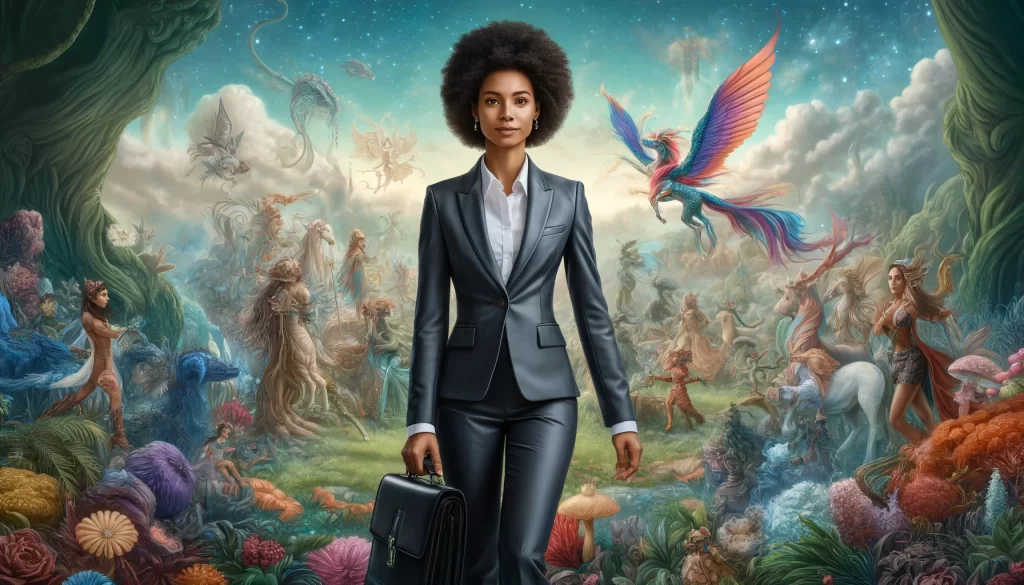
In a realistic style, generate images of an African American woman in a sophisticated business suit and carrying a briefcase. Place her in a whimsical background with fantasy creatures, such as elves, fairies, and unicorns.
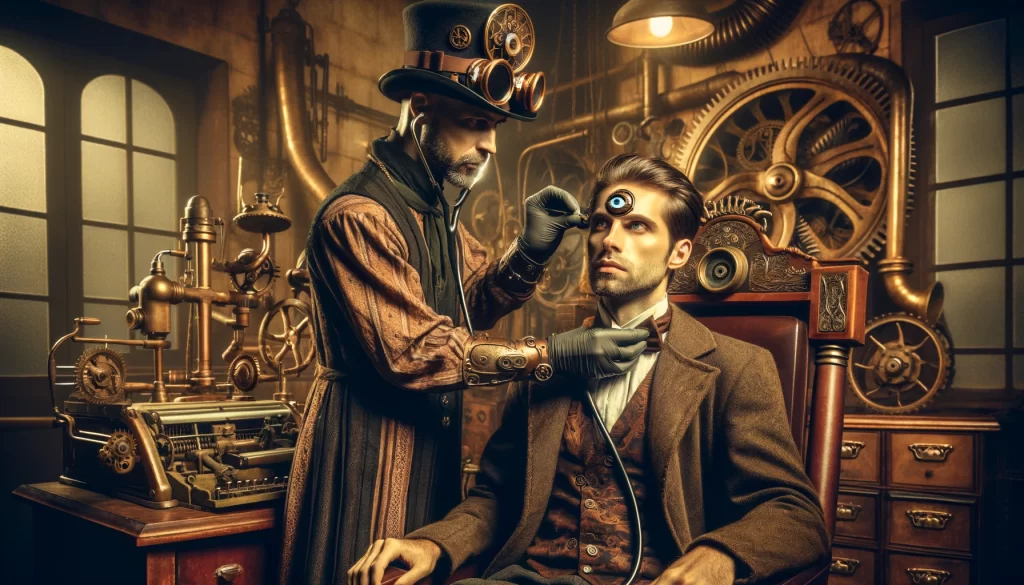
In a steampunk style, generate images of a doctor examining a patient with a stethoscope. Have the patient have a third eye in the middle of his forehead.
In an abstract style, generate images of a man and a woman sitting in chairs facing each other. Have the man smoking a cigar and have the woman with purple hair.

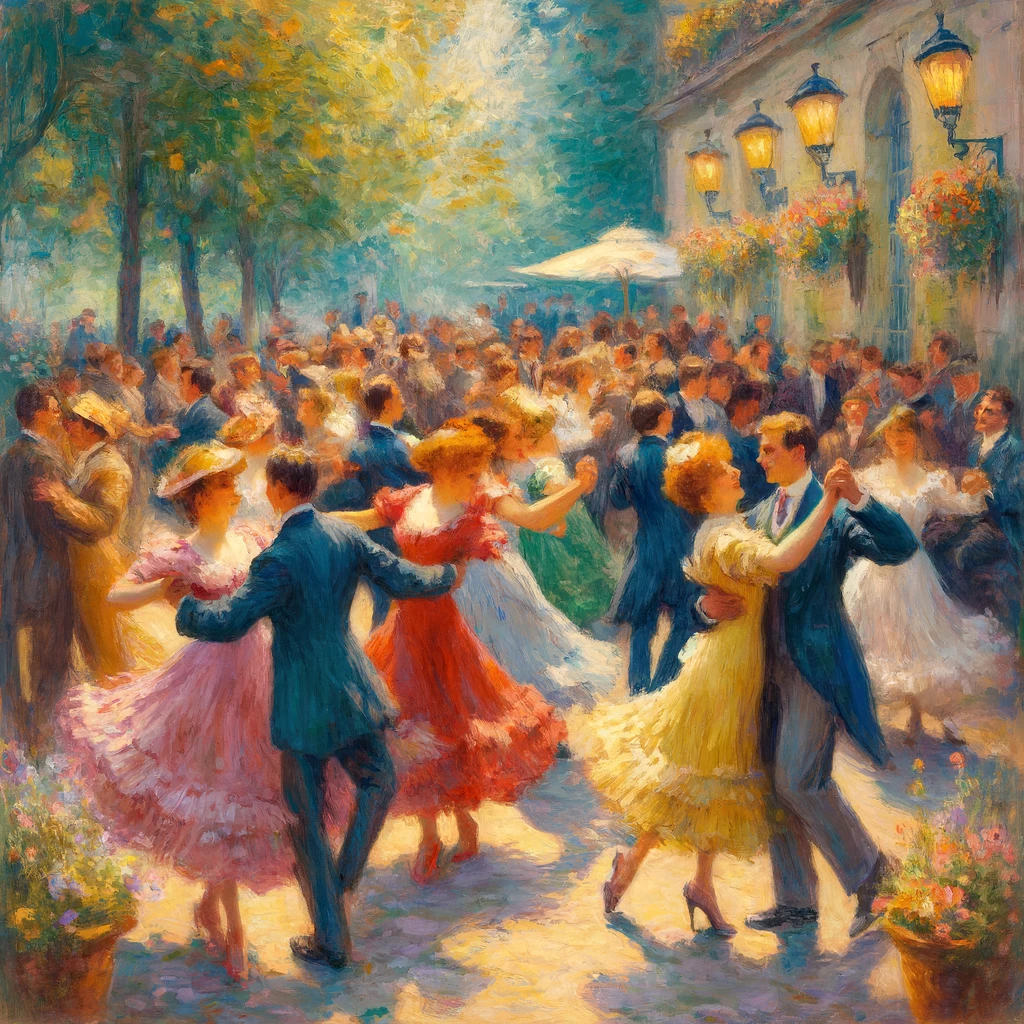
In a style reminiscent of the French impressionists, generate images of young people in colorful outfits, dancing on an outside patio.
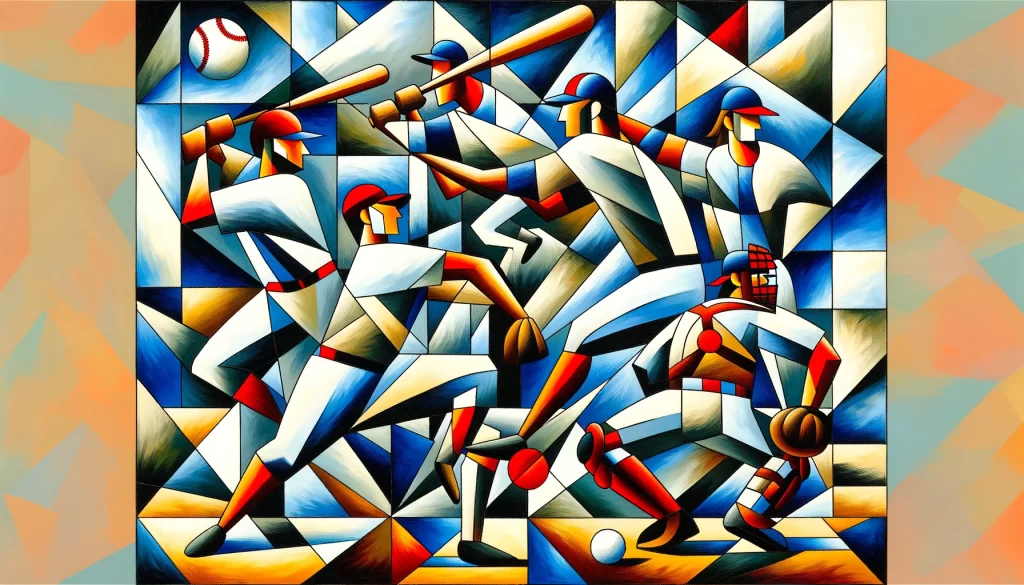
In a cubist style generate images of baseball players.
DALL-E offers the capability to edit your pictures. However, as you’ll see from the series below it actually generates new pictures with slight variations based on your requests for edit.
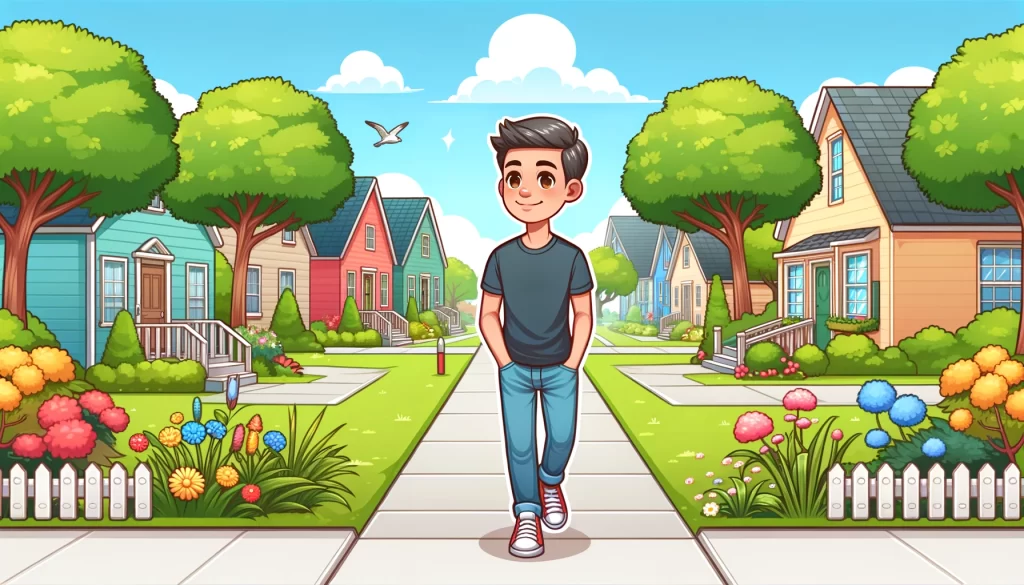
In a cartoon style generate images of a young man walking down a sidewalk on a sunny day. Have him in a suburban neighborhood with trees and flowers and well tended lawns and houses.
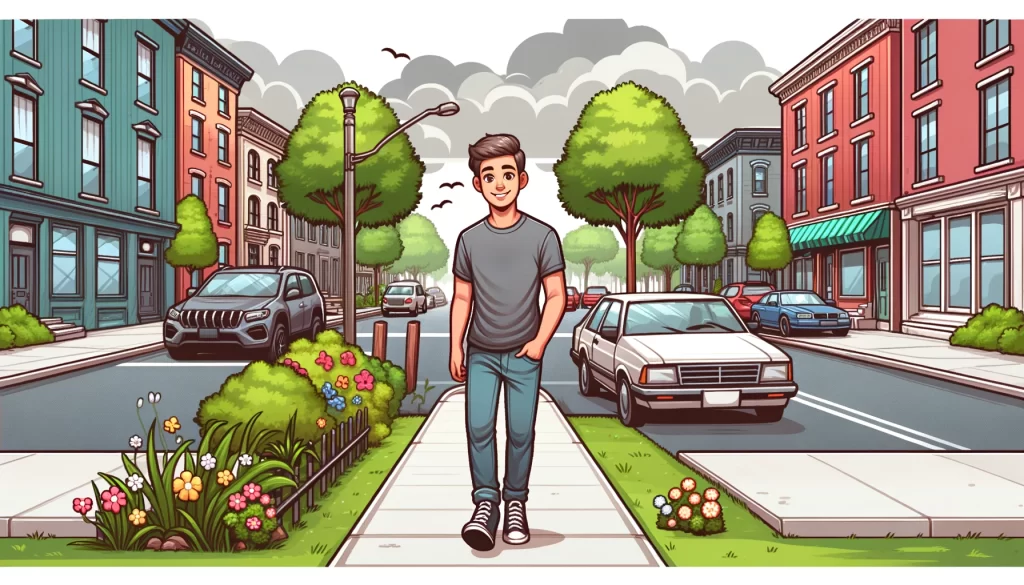
Change the neighborhood to urban with cars parked on the street and the sky overcast.
So far, the changes seem to be fairly consistent and go along with the general style we requested. Let’s make a couple of big changes and see what happens.
Have him look disheveled and scruffy. Make the neighborhood run down with trash in the streets. Have him carry a whiskey bottle and a cigarette.
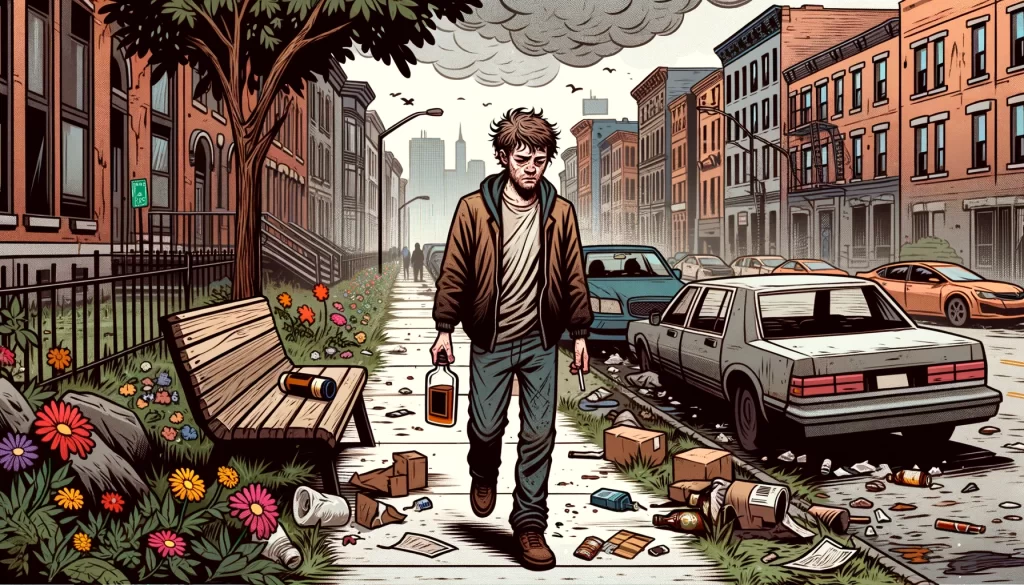
I think it’s right on with this one. It got the feel I was looking for.
Now for my last picture, I’m going to let my imagination run wild and try to come up with these strangest and most bizarre images I can imagine and see if DALL-E matches or exceeds my ideas.
In a dystopian style with a post-apocalyptic background, generate images of an emaciated Santa Claus jumping rope while talking to an Easter Bunny with vampire fangs and a leprechaun with claws. Add any other menacing characters you think may be appropriate.

I couldn’t decide which one I liked best, so I decided to use them both. I’m not sure what it says about me that I like these images.

I couldn’t resist trying one more edit. I asked DALL-E to generate the above image in cartoon style. It sent me this response: I encountered some issues while trying to generate the cartoon-style images. Please let me know if you would like to try a different request or if there’s anything else I can assist you with. Perhaps it thought cartoon style would attract children and the subject matter was a little too ghoulish for kids. After tweaking the prompt a couple of times, I got the following image:

Maybe they were right the first time.
Give it a try. I think you’ll have as much fun as I do.

Doctor’s orders!

























The Agony of Presidental Elections
By John Turley
On July 6, 2024
In Commentary, History, Politics
Over the past several months I have become increasingly discouraged as I watch the sad spectacle of the presidential election play out in the newspapers and on the electronic media. It seems the candidates are more interested in serving themselves than in serving the people. Each is convinced that he is the only one who can save the country. While one is obsessed with regaining the power of the president, the other is reluctant to relinquish it.
This has left me wondering if there’s not a better way to elect the president. As everyone knows we elect a president for four years and then they can be reelected for an additional four years. But this was not always the way our electoral process has been structured.
A brief history of presidential terms
Perhaps second only to slavery, the office of president was one of the most controversial subjects at the 1787 Constitutional Convention. There were extensive debates about the structure of the office, the power of the chief executive, and even if it should be a single person. There was a proposal put forward by Edmund Randolph of Virginia for a three-person executive committee to head the government.
There were proposals for a short-term presidency of one or two years, arguing that more frequent elections would ensure the chief executive was more responsible to the people. There were also proposals for longer terms such as 7 or even 15 years. The intent of longer terms was to provide the president with independence from the influence of special interests and provide for more stable government.
There is a popular misconception that Alexander Hamilton favored a president for life. While he advocated for a strong presidency with certain aspects of a monarch, he also recognized the importance of a fixed term and the provision for impeachment to safeguard the country against abuse of power.
After it became clear to most delegates that George Washington would become the first president, the convention decided on a four-year term for the president. The constitution as originally adopted did not explicitly state that the president can be reelected, nor did it prohibit reelection. Not all delegates were in favor of allowing the president to be reelected because they felt it would result in too much power being consolidated the hands of the single person. As often happens in politics, no decision was made, and the Constitution as adopted was silent on reelection.
The issue of term length did not end with the ratification of the constitution. The first proposed constitutional amendment to change the length of the presidential term was introduced in 1808. Since then, multiple amendments have been proposed to extend the term to five, six, seven or even eight years. By the early 1900s the single six-year term had become the dominant idea being proposed. Amendments to change the term of the presidential office were introduced as late as the 1990s. Although persistent in their reappearance, none have ever had any realistic chance of being approved.
George Washington set the precedent of serving only two terms by retiring to Mount Vernon at the end of eight years in office. This pattern was followed until Franklin Roosevelt ran for a third and then a fourth term. After Roosevelt’s death, the 22nd Amendment to the Constitution was passed by Congress in 1947, and ratified in 1951, limiting the president to two total terms in office.
Other countries have different patterns for their chief executive’s term of office. Parliamentary countries have no set term. Elections can be called, and the chief executive removed from office whenever confidence in the government has fallen, and the public demands a change. Other countries such as Mexico, the Philippines and Chile have a single six-year term for president.
If we were to consider a single six-year term for the US president how would that change things. Let’s look at a few of the pros and cons.
The arguments in favor of a single six-year term
The president would be relieved of the burden of an almost constant reelection campaign. With a single term, a president can focus on policy and governance without being distracted by the next election cycle. This may lead to bolder, more decisive leadership, unencumbered by the need to cater to special interest groups. Those groups may be less inclined to make large political contributions knowing that they hold no future sway over the actions of the president.
There may be potential for greater continuity in policymaking. Presidents could be more inclined to tackle unpopular long-term challenges head-on, rather than deferring them to a second term or even to their successor. The president may be more likely to engage in bipartisan programs knowing that there is no need to appease party radicals during a reelection process. The president could be more likely to engage in long term planning rather than worry about what will look good in the polls in the short term. This may result in fewer political decisions made just to improve reelection chances.
Not having to run for reelection would also give the president more time to work for the country and the citizens. The time and the effort put into planning campaigns, making speeches, and attending reelection events could be spent improving the government and the country. If the president has more time to work closely with Congress, then there could be less gridlock in Washington. In sum, the single six-year term may allow the president to be the statesman they all claim to be.
The arguments against a single six-year term
A single six-year term could diminish the accountability of the president to the electorate. In a traditional two-term system, presidents are incentivized to deliver on their promises and perform effectively to secure re-election. With only one term to serve, there may be less pressure for a president to maintain high levels of performance throughout their tenure. This could result in complacency or a lack of motivation to pursue ambitious reforms, knowing there won’t be a chance for the electorate to hold them accountable.
A single six-year term could disrupt the balance of power between the executive and legislative branches. With the absence of a potential second term, presidents may become more inclined to bypass Congress and govern through executive orders and unilateral actions. This could lead to increased polarization and gridlock, as Congress may resist executive overreach, exacerbating tensions between branches of government.
If the president proves to be inept or not acting in the best interests of the people and the nation, six years is a long time for that person to be in office. The only option would be impeachment and we know from recent experience that impeachment is a long and painful process frequently generating more ill will than good results.
And in conclusion…
So, would a single six-year presidential term be a good thing or a bad thing? Would it help us get out of our current political mess?
Perhaps it would have no impact at all. Perhaps it’s not the length of the presidential term, the number of terms the president serves, or even how we elect the president. Perhaps the real problem lies with us. It doesn’t matter how we elect our president if we don’t do a better job deciding who the candidates will be. It’s been said many times that people get the government they deserve. We all complain about it and yet we continue voting for the same type of people year after year.
Of all the people to blame for the current political situation, the one in the mirror is the one to whom we should look first. Because, after all, that’s the only person we can control.
And that is my grumpy opinion.