
Introduction
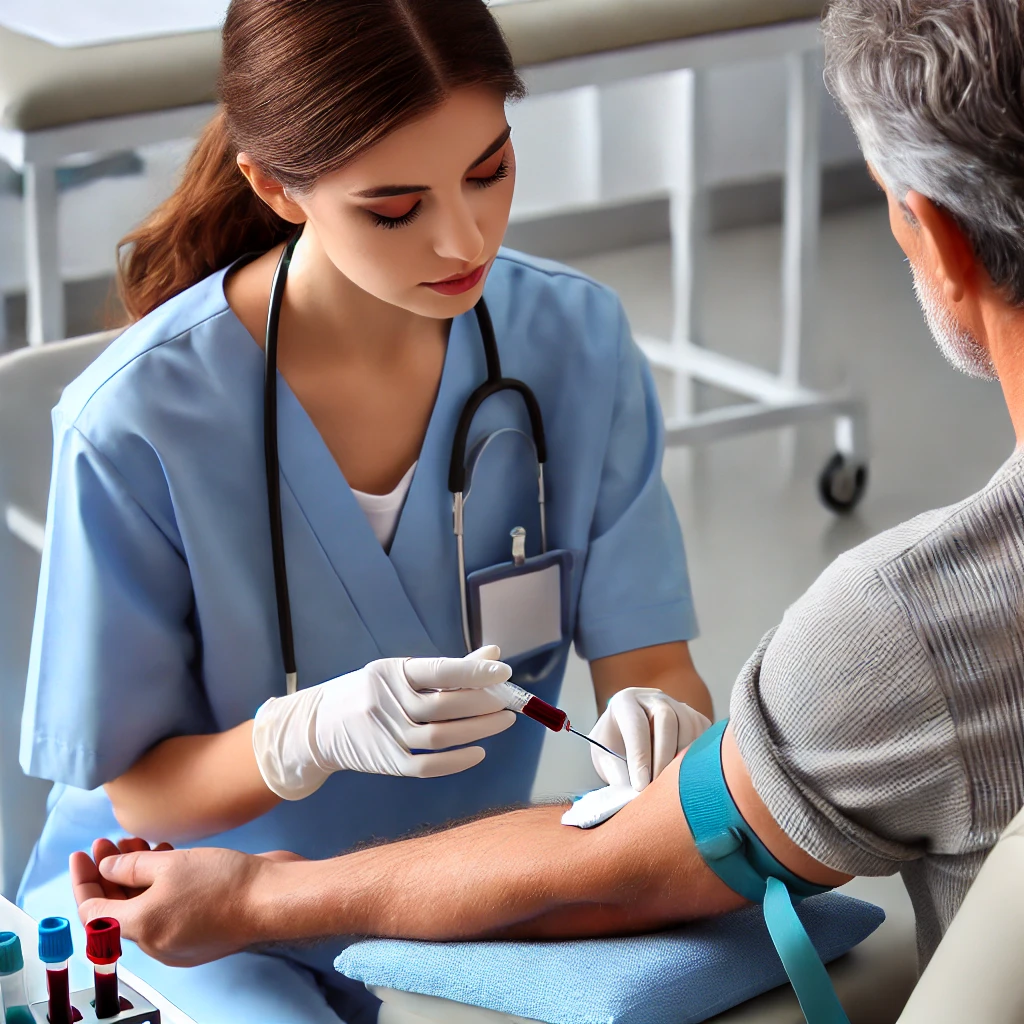
Blood tests are a common part of both health maintenance and diagnostic visits. Doctors order blood tests to assess and monitor various aspects of a patient’s health. Blood tests can help detect illnesses, confirm a diagnosis, or monitor ongoing health conditions. For example, a complete blood count (CBC) checks for conditions like anemia or infection, while a lipid panel measures cholesterol levels to aid in assessing heart disease risk. Blood tests can also monitor organ function, such as the liver and kidneys, ensuring they are working properly. They are used to track how well treatments, like medications, are working, or to detect side effects that might not be immediately apparent. Additionally, blood tests provide crucial information about electrolyte levels, hormone balances, and metabolic activity, helping doctors make informed treatment decisions. Overall, these tests give doctors a detailed look at the body’s internal functions, often identifying potential issues before they become more serious or even apparent.
Understanding Normal Ranges
Before discussing the individual tests, let’s look at how you should go about understanding the results that are being presented. Blood tests are reported quantitatively, that is the results are shown as numbers. Along with the value for your individual test you will find the reference range. This is the range of normal values from low to high established by the lab. It can vary slightly from lab to lab. Values from one lab are not always directly comparable to those of another. Individual labs may also change their reference range from time to time.
How are these normal ranges established? They are established through population studies that consider large samples of healthy individuals and look at factors like sex, age and ethnicity. The standard normal values are developed using a bell-shaped curve. “Normal” is usually defined as those test results that fall within two standard deviations of the mean, that includes about 95% of all results. This leaves about 5% of the normal healthy population with test results that will be slightly outside the normal range presented. That’s why it’s important to discuss your individual results with your doctor to get a better understanding of where you fit in the normal range and whether a minimally abnormal result is of true clinical significance.
Commonly ordered blood tests
1. Complete Blood Count (CBC)
A CBC measures the different components of your blood, which includes:
- Red Blood Cells (RBCs): These carry oxygen from your lungs to the rest of your body. Low levels could indicate anemia. There are also several conditions that can cause elevated levels.
- White Blood Cells (WBCs): These help fight infections. If they’re too high, it might mean an infection, inflammation, or other conditions such as leukemia.
- Hemoglobin: This is the protein in red blood cells that carries oxygen. Low hemoglobin often points to anemia which can be caused by several underlying problems.
- Hematocrit: This is the percentage of red blood cells in your blood. It helps to diagnose anemia or dehydration.
- Platelets: These help your blood clot. Abnormal levels can lead to excessive bleeding if levels are low or excessive clotting problems if levels are high.
Why it’s important: CBC is a key test to diagnose infections, anemia, or clotting issues.
2. Comprehensive Metabolic Panel (CMP)
A CMP checks the body’s metabolism and organ function. It includes:
- Electrolytes: Sodium, potassium, and chloride are vital for nerve and muscle function. Abnormalities can cause weakness or heart arrhythmias.
- Blood Urea Nitrogen (BUN) and Creatinine: These measure kidney function. High levels may indicate kidney disease.
- Glucose: Blood sugar levels; important for diagnosing diabetes.
- Liver Enzymes (ALT, AST): Elevated levels can indicate liver damage.
- Albumin: A protein made by the liver; low levels may be associated with liver or kidney disease or other metabolic disorders.
Why it’s important: The CMP gives a broad view of how your liver, kidneys, and metabolism are functioning.
3. Thyroid Panel
The thyroid panel includes:
- Thyroid-Stimulating Hormone (TSH): Signals the thyroid to produce hormones. High TSH often means low thyroid activity (hypothyroidism), while low TSH can indicate overactivity (hyperthyroidism).
- T3 and T4: These hormones regulate metabolism. Abnormal levels can affect energy, weight, and mood.
Why it’s important: Thyroid issues can cause fatigue, weight changes, and mood disturbances; this panel helps evaluate the cause of those conditions.
4. Hemoglobin A1C
This test measures your average blood sugar levels over the past 2-3 months. It’s used to:
- Diagnose diabetes: An A1C of 6.5% or higher from most reference labs indicates diabetes.
- Monitor diabetes: For people with diabetes, it helps gauge how well blood sugar is being controlled.
Why it’s important: A1C is crucial for diagnosing and managing diabetes, as it provides a long-term view of blood sugar control. A1C will be discussed in more detail in a future article on diabetes.
5. Vitamin D Levels
Vitamin D helps regulate calcium and phosphate, which are important for bone health. Low levels are common and can lead to:
- Bone weakness: This can cause conditions like osteoporosis.
- Fatigue and muscle pain.
Why it’s important: Many people are deficient in vitamin D, and low levels can increase the risk of bone fractures and other health issues.
6. Vitamin B12 Levels
Vitamin B12 is essential for nerve function and producing red blood cells. A deficiency can cause:
- Fatigue and weakness: Low B12 can lead to anemia.
- Nerve damage: Tingling, numbness, or memory problems may occur with long-term deficiency.
Why it’s important: Identifying B12 deficiency is key, especially in older adults, as it can prevent neurological and cognitive problems.
7. Prostate-Specific Antigen (PSA)
PSA is a protein produced by the prostate gland. High levels of PSA can indicate:
- Prostate cancer.
- Benign prostatic hyperplasia (BPH): An enlarged prostate, which is common as men age.
- Prostatitis: Inflammation or infection of the prostate.
Why it’s important: PSA is used primarily for early detection of prostate cancer, especially in men over 50. PSA will be discussed further in a future article on prostate cancer.
8. Cholesterol Panel (Lipid Panel)
This test measures fats in the blood, including:
- Total Cholesterol: High levels indicate increased risk of heart disease.
- Low-Density Lipoprotein (LDL): Often called “bad” cholesterol, high LDL can lead to plaque buildup in arteries.
- High-Density Lipoprotein (HDL): Known as “good” cholesterol, HDL helps remove LDL from the arteries.
- Triglycerides: Another type of fat that, when elevated, raises the risk of heart disease.
Why it’s important: Monitoring cholesterol is crucial for heart health, as high cholesterol is a major risk factor for heart disease and stroke.
Significance of Abnormal Results
Abnormal test results don’t always mean something immediately serious, but they can be early warning signs. For example:
- High glucose or A1C: Could indicate diabetes or prediabetes.
- Low red blood cells or hemoglobin: Suggests anemia, possibly from iron deficiency or chronic disease.
- High liver enzymes: May indicate liver inflammation or damage, possibly from alcohol use or infections like hepatitis or overuse of medications such as acetaminophen.
- High PSA: Could be a sign of prostate cancer, but it could also result from less serious conditions like an enlarged prostate or a prostate infection.
Review your blood tests with your doctor. The better you understand your individual results, the better you can participate in your own health management. This knowledge can be empowering when choosing the health care plan that is best for you.

The Grumpy Doc says see your doctor and ask questions. Your doctor should never be offended by questions; they will be glad you are taking an active interet in your health care. Take a written list of your concerns with you so you don’t forget what you wanted to ask. Even The Grumpy Doc occasionally forgets things (as difficult as that may be to believe).







The Pot Predicament
By John Turley
On September 13, 2024
In Commentary, Politics
Recently, the Charleston City Council passed a bill to reduce the penalties for the possession of marijuana for personal use. This started me thinking about marijuana and its long intertwining with my generation. I first became aware of marijuana in my early teenage years, more than sixty years ago. At that time, possession of marijuana for personal use was a crime, as it still is in much of the country now, and it remains a federal crime. Soon after I became conscious of the whole thing, marijuana was incorporated into President Nixon’s war on drugs.
This is a war which sadly we continue to lose. This doesn’t stop us from pouring resources into a part of that war that doesn’t need to be fought. For as long as I can remember, we have continued to prosecute and imprison people who possess marijuana for their own use. I’m not going to discuss possession of marijuana for distribution, that’s a separate problem, one I think will take care of itself if we properly address marijuana for personal use.
Laws against personal use of marijuana remind me much of the failed experiment of prohibition. If people want something enough, they will find it regardless of what the law says. Most of the people imprisoned for personal possession of marijuana represented little or no threat to society as a whole and no one benefited from their imprisonment.
I know the arguments for and against. The health arguments on the pro side say it relieves glaucoma, chronic pain and anxiety. On the con side, there are arguments saying that it is addictive, it can cause cognitive delay and accelerate the development of psychosis. There have been many arguments surrounding marijuana as a gateway drug. I haven’t seen any convincing evidence that restricting personal use of marijuana makes any difference in use of other drugs. The only exception may be those cases where people become hooked on fentanyl or heroin that has been used to lace their marijuana.
My argument against laws criminalizing personal use is that they don’t work. We have spent millions, perhaps billions, of dollars and hundreds of thousands of law enforcement hours to enforce laws that in the long run have no real benefit.
I think it would make better sense to legalize marijuana for personal use. That way, like the alcohol and tobacco industries, it can be regulated with inspections and oversight activities. Customers would know it had not been contaminated with other dangerous drugs. It could also be taxed and distributed through businesses that would benefit from legitimate sale. The tax revenue could be used to fund drug treatment plans for our serious opioid crisis. That is the one war on drugs that we must win but in which we continue to fall further behind. Redirecting funds from marijuana enforcement to opioid treatment and enforcement will help save lives.
If personal use of marijuana is legalized, criminal distribution will rapidly fall away as there will be no profit. The street corner pot dealer will become a historical footnote, much like the prohibition era bootlegger.
I know some of you are thinking I must be an old hippie sitting around my living room smoking a joint and listening to the Grateful Dead. Even though I came of age in the Age of Aquarius, I’ve never tried marijuana and have no plans to do so whether it’s legalized or not. I have no objection to it, it’s just that as a younger man I preferred beer, as I got older, I migrated to wine and martinis, and now I’m too old to change.
The bottom line is this: we live in an age of limited resources, and we need to decide how we are going to utilize those resources. I would like to see us take those financial and human resources and utilize them to address the opioid and methamphetamine crises. We are currently wasting too many of these precious resources trying to enforce unnecessary and ultimately unenforceable laws against personal possession and use of marijuana. If we legalize personal possession, we will reduce crime and all but eliminate the illegal trafficking in marijuana.
That is my grumpy opinion.