

Grumpy opinions about everything.

Month: November 2026

When Cold Becomes Dangerous: Understanding The Different Types Of Cold Injuries

Notice: After this article, I will no longer be using Constant Contact to announce new postings. If you wish to continue receiving notice of new posts, let me know at GrumpyDocWV@gmail.com

When most of us think of cold injuries, the first thing that comes to mind is frostbite. But frostbite is just one of a spectrum of cold related problems that range from inconvenient to lethal. They fall into three broad categories: the systemic heat loss associated with hypothermia, freezing injuries such as frostbite, and non-freezing injuries such as trench foot. Cold injury depends on more than just temperature. Wind, moisture, and duration of exposure all play an important role. Your overall general physical condition, level of exhaustion, nutritional fitness, and circulatory health all influence your vulnerability to cold injury.

Before looking at specific cold injuries, I’m going to describe how cold affects the body.

Cold and the human body

The human body works most effectively when its core body temperature is maintained between 97°F and 99°F.  The body attempts to maintain heat by narrowing blood vessels in the skin and the extremities and directing warm blood towards vital organs.

When these responses are no longer adequate to maintain body temperature and when tissue temperature falls far enough, ice can form in and around cells, leading to tissue damage and ultimately to tissue destruction.  When core body temperature falls far enough systemic damage can occur that interferes with brain function, heart rhythm and eventually with the function of every organ system. My recent post, When the Body’s Thermostat Fails: The Dangers of Extreme Heat and Cold, gives a more detailed description of the body’s response to extreme cold temperatures.

Hypothermia: a systemic threat to life

Hypothermia occurs when the body’s core temperature falls below 95°F. While it most commonly occurs in the winter it can develop in above freezing environmental temperatures when a person is wet, exposed to wind, or submerged in cold water.

Mild hypothermia occurs when the body temperature is between 90 and 95°F. It commonly presents with shivering, fatigue, clumsiness, and impaired judgment.

Moderate hypothermia occurs with the body temperature between 82 and 90°F. It can cause confusion, altered consciousness, and dangerous heart rhythms. Shivering may be diminished or may cease altogether with moderate hypothermia.

Severe hypothermia occurs when the core body temperature falls below 82°F. The victim is most commonly unconscious, has extremely slow breathing and pulse, and may go into cardiac arrest.

 Outside of a medical facility, it’s almost impossible to determine core body temperature so treatment of suspected hypothermia must be based on a clinical assessment. Even mild hypothermia is a medical emergency, and treatment should not be delayed while waiting for a body temperature to be taken.

Immediate treatment consists of stopping further heat loss and safely restoring warmth. The victim should be immediately moved into a sheltered place, and all wet clothing should be removed once the patient is protected from the environment.  The victim’s body must be immediately insulated to prevent any further heat loss. Unnecessary exertion should be minimized. Any type of safe warming device or warming blankets available should be applied to the trunk while avoiding any burns. Warm drinks may be used but only when the person is fully alert and can swallow safely. Alcohol should never be given.

Severe hypothermia requires immediate treatment in a hospital emergency department. External warming devices will be applied, and catheters and nasogastric tubes may be used for warm internal irrigation. Warm Intravenous fluids may also be used.

When there is evidence of cardiac arrest in the field and the core body temperature remains low, the patient should still be immediately transferred to an emergency department capable of cardiac resuscitation. Hypothermia can slow normal body metabolism to the point that it cannot be detected by means available in the field. When I was working in the emergency department there was an old saying “no one is dead until they’re warm and dead”.  I personally have treated patients who presented to the emergency department in cardiac arrest with hypothermia that have subsequently been resuscitated and able to return home.

The Freezing Injuries

Frost Nip Is the mildest form a freezing injury. It is usually caused by localized freezing related cold exposure primarily affecting the nose, cheeks, ears, fingers, and toes. It generally causes temporary changes in the skin without the permanent tissue damage caused by frostbite. Some older descriptions of frostnip referred to it as “superficial freezing” but modern clinical classifications describe it as not being a true tissue-freezing injury.

Skin may become pale or red with a tingling sensation or a numbness. Deep tissues remain viable and symptoms usually resolve after warming. Treatment involves moving to a warm environment and removing wet clothing. The affected area should be gently rearmed but the skin should never be vigorously rubbed or exposed to intense direct heat.

Frostnip generally resolves completely without permanent damage. Extra sensitivity to cold may persist for months afterwards. It is a warning sign that continued exposure may lead to frostbite.

Frostbite is when the skin actually freezes, causing direct tissue and cellular damage. Frostbite can cause numbness, redness and swelling. In some cases, the skin will appear pale or waxy. There may also be blisters filled with clear or milky appearing fluid. The skin may feel firm or even hard to the touch. Doctors have traditionally graded frostbite into four tiers, but for common use all suspected frostbite should be treated the same until a medical evaluation is done.

Initial treatment can sometimes seem counter intuitive. You should never make an effort to thaw frozen tissue if there’s a real chance that it will freeze again. Refreezing can cause tissue damage more extensive than the original freezing. The victim should also immediately be assessed and treated for any signs of hypothermia. Unless it is necessary for evacuation, the victim should never attempt to walk on frostbitten feet.

Once you have determined that the victim is safe from refreezing, wet clothing should be immediately removed and the affected skin covered to protect it from additional injury. Any tight or restrictive jewelry should be removed. The skin should not be rubbed and should never be massaged with snow. Blisters should not be punctured. Direct heat should never be applied to the skin.  

If the skin is intact and the patient is protected and safe from refreezing, you can begin field treatment using immersion in warm water that is between 99 and 102°F. You should not attempt this if you are unable to accurately measure the temperature of the water.  If unable to rewarm, cover the injury with a dry dressing, keep the victim warm and prepare for evacuation.  Rewarming can be accompanied by severe pain, and analgesia should be administered if available.

Superficial frostbite can heal with few or no long-term effects. Severe frostbite may lead to loss of digits or larger portions of extremities. Even if there’s no significant tissue loss, long term numbness, pain, and altered sensation may occur. Some patients will have a persistent cold sensitivity.

The Nonfreezing Injuries

Chilblains, also known as pernio, are inflammatory skin lesions caused by exposure to cold damp conditions.  They appear as red, swollen, painful, or itchy patches. The principal cause is an abnormal response of small blood vessels to cold temperatures. Prolonged narrowing of the vessels can lead to changes in circulation during warming causing the local inflammation. Young women and people with a very low body weight seem to be especially sensitive to chilblains.

Chilblains can occur in both exposed and unexposed skin almost always at temperatures above freezing. The lesions most commonly occur on the fingers and toes, although they can show up on the ears, nose, or other parts of the face.

Chilblains are frequently unrecognized as a cold injury because they often occur several hours after cold exposure has ended and the victims often suspect they’re having some type of allergic reaction. The most severe cases can lead to blisters or even ulceration, although deep tissue destruction generally doesn’t occur. Chilblains can be painful as the skin starts to warm.

The principal treatment is to avoid any further cold exposure and keep the affected skin comfortably warm and dry but not overheated. Topical corticosteroids may reduce some of the discomfort associated with chilblains.  Most uncomplicated chilblains will resolve within one to three weeks.

Cold urticaria can best be thought of as an allergic reaction to the cold. There is no tissue freezing and circulation remains unimpaired. Cold exposure triggers the release of histamines and other inflammatory substances from mast cells, just as in other allergic reactions. Symptoms can develop after exposure to cold air or cold water and even refrigerated beverages or handling cold food containers can trigger a reaction.  Swimming in cold water can be a significant trigger because of the large skin area that is simultaneously exposed.

Patients usually develop the typical raised and itchy welts that resemble ordinary hives. They can occur within minutes of exposure or may not occur until the skin begins to rewarm. It most often results in a localized skin reaction, but occasionally a general allergic reaction can occur. In the most severe cases it can lead to anaphylaxis causing airway swelling, breathing difficulty, and a fall in blood pressure.

Treatment includes moving to a warm environment and removing any sources of cold in contact with the body. Second generation antihistamines can be used to treat symptoms. As with any allergic reaction, you should be alert for systemic responses.

Trench foot, more properly known as immersion foot, occurs when feet remain in contact with cold wet socks or boots for days. It almost always occurs at temperatures above freezing but below about 59°F. The foot becomes pale, clammy, swollen, and numb. As the foot warms up it can become red and very painful. Blisters can form and become infected, and the skin may be extremely sensitive to light touch.

This injury first came to the public attention because of the widespread suffering of British troops in the trenches during World War I.  It is also a concern among construction workers and fishermen who have significant exposure to cold and wet conditions. More recently, trench foot has become a concern among unsheltered people who lack access to clean socks, dry shoes, or heated shelter.

The main element of treatment is gentle warming, drying, and cleaning of the foot. It should be kept elevated, dry, and warm. Patients should avoid smoking and other forms of nicotine which can impair circulation in the foot.  Because most cases of trench foot are found in military units, prognosis is hard to quantify. While mild cases may resolve in a few days to weeks, complete recovery of serious cases is thought to be fairly long, requiring often six months or more. Chronic pain and extensive cold sensitivity can remain long after it appears that the wounds have healed.

Raynaud Phenomenon isn’t technically a cold injury but is included in this list because cold exposure is its principal trigger. Most commonly occurs in the fingers or toes when the small arteries that supply them undergo an exaggerated constriction in response to a cold or emotional stress. Affected fingers may turn white as the blood flow decreases and then blue as oxygen levels fall. Patients may also experience numbness, tingling, pain or throbbing. The skin then turns red as circulation returns.

My wife, who suffers from this, calls it “death hands”. What is interesting about this is that it does not have to occur in cold weather. It can happen when the sufferer makes a transition from a warm to cold environment. My wife has had it occur in the summer when we go to the grocery store and she’s getting frozen or refrigerated food and the difference between her warm skin from outside and the cool environment in the grocery store will trigger an attack.

Primary Raynaud phenomenon occurs without any underlying disease and is usually relatively benign. Circulation returns quickly once warming occurs. It rarely causes any permanent tissue injury.

Secondary Raynaud phenomenon is related principally to autoimmune diseases or vascular disorders. It can occasionally produce digital ulcers, ischemia, or even gangrene. It is sometimes treated with calcium channel blockers to decreased symptoms.

Wrapping up

Cold injuries are more than just frostbite. It’s important to recognize how many types of cold injuries there are. The bottom line is that prevention is far more effective than treatment. Wearing the proper clothing including dry footwear, maintaining adequate shelter from severe weather, and early recognition of symptoms help to prevent most cold injuries.

Image generated by author using ChatGPT.

Medical Disclaimer

The information provided in this article is intended for general educational and informational purposes only and does not constitute medical advice. It should not be used as a substitute for professional medical advice, diagnosis, or treatment.

Always seek the guidance of a qualified healthcare provider with any questions you may have regarding a medical condition or treatment. Never disregard professional medical advice or delay seeking it because of something you have read here. 

If you are experiencing a medical emergency, call 911 or your local emergency number immediately.

The author of this article is a licensed physician, but the views expressed here are solely those of the author and do not represent the official position of any hospital, health system, or medical organization with which the author may be affiliated.

Sources

1.           Wilderness Medical Society Clinical Practice Guidelines for the Prevention and Treatment of Frostbite: 2024 Update (abstract), Wilderness & Environmental Medicine. https://pubmed.ncbi.nlm.nih.gov/38577729/

2.           White L. Understanding and Managing Frostbite, American Family Physician community blog, January 2026. https://www.aafp.org/pubs/afp/afp-community-blog/entry/understanding-and-managing-frostbite.html

3.           Frostbite: Recommendations for Prevention and Treatment from the Wilderness Medical Society, American Family Physician, 2020. https://www.aafp.org/pubs/afp/issues/2020/0401/p440.html

4.           Wilderness Medical Society Clinical Practice Guidelines for the Prevention and Treatment of Frostbite: 2024 Update (full text), SAGE. https://journals.sagepub.com/doi/10.1177/10806032231222359

5.           Frostbite, 5-Minute Clinical Consult (Wolters Kluwer). https://www.unboundmedicine.com/5minute/view/5-Minute-Clinical-Consult/816713/1.3.0/Frostbite

6.           Therapeutic recommendations for frostbite: a narrative overview (Health Problems of Civilization). https://www.journals.anstar.edu.pl/index.php/hppa/article/view/691

7.           WMS Frostbite Guidelines (summary), NAR Rescue Blog. https://www.narescue.com/nar-blog/wms-frostbite-guidelines.html

8.           Frostbite management and imaging overview, emDocs/eMottawa Blog. https://emottawablog.com/?p=11840

9.           The value of technetium 99 scintigraphy in the prognosis of amputation in severe frostbite injuries, Journal of Hand Surgery, 2000. https://www.qxmd.com/r/11040315

10.        FDA Approves First Medication to Treat Severe Frostbite, U.S. Food and Drug Administration. https://www.fda.gov/news-events/press-announcements/fda-approves-first-medication-treat-severe-frostbite

11.        FDA Approves Aurlumyn for Severe Frostbite, HealthDay, February 2024. https://www.healthday.com/healthpro-news/skin-health/fda-approves-aurlumyn-for-severe-frostbite

12.        Nonfreezing Tissue Injuries, MSD Manual (consumer version). https://msdmanuals.com/home/injuries-and-poisoning/cold-injuries/nonfreezing-tissue-injuries

13.        Nonfreezing Tissue Injuries, MSD Manual (professional version). https://msdmanuals.com/uk/professional/injuries-poisoning/cold-injury/nonfreezing-tissue-injuries

14.        Chilblains (Pernio), Patient Care Online. https://www.patientcareonline.com/view/chilblains-pernio

15.        Chronic non-freezing cold injury results in neuropathic pain due to a sensory neuropathy, Brain, 2017. https://www.ncbi.nlm.nih.gov/pmc/articles/PMC5841153/

16.        Case series of non-freezing cold injury: the modern clinical syndrome, BMJ Military Health. https://militaryhealth.bmj.com/content/166/5/324

17.        Trench Foot or Non-Freezing Cold Injury As a Painful Vaso-Neuropathy, Frontiers in Neurology, 2017. https://frontiersin.org/journals/neurology/articles/10.3389/fneur.2017.00514/full

18.        Independent Medical Expert Group, Report 1, Topic 3: Non Freezing Cold Injury (UK Ministry of Defence), 2011. https://assets.publishing.service.gov.uk/government/uploads/system/uploads/attachment_data/file/798488/IMEG_Report_1_and_Recommendations_on_Medical_Aspects_-_TOPIC_3_-_Non_Freezing_Cold_Injury__002_.pdf

19.        Accidental Hypothermia: Guidelines from the Wilderness Medical Society, American Family Physician, 2020. https://www.aafp.org/pubs/afp/issues/2020/1101/p571.html

20.        Classification and Staging of Accidental Hypothermia, MSD Manual (professional version). https://www.msdmanuals.com/professional/multimedia/table/classification-and-staging-of-accidental-hypothermia

21.        Use of the HOPE score to assess survival outcome of hypothermic cardiac arrest selected by ECLS rewarming. https://www.ncbi.nlm.nih.gov/pmc/articles/PMC12305985/

22.        Hypothermia outcome prediction after extracorporeal life support for hypothermic cardiac arrest patients: an external validation of the HOPE score, Resuscitation. https://boris.unibe.ch/130078

23.        Rewarming From Hypothermic Cardiac Arrest Applying Extracorporeal Life Support: A Systematic Review and Meta-Analysis. https://pmc.ncbi.nlm.nih.gov/articles/PMC8155640

24.        Hypothermia and Cold Weather Injuries, American Family Physician, 2019. https://www.aafp.org/afp/2019/1201/p680.pdf

25.        Protect yourself from cold weather: risks, symptoms, and prevention tips, Hennepin Healthcare. https://hennepinhealthcare.org/blog/protect-yourself-cold-weather-risks-symptoms-and-prevention-tips

26.        Frostbite prevention: risk factors, AARP. https://www.aarp.org/health/conditions-treatments/frostbite-prevention/

Important Notice

After November 30 I will no longer be using Constant Contact to send email notices of new posts. If you would like to continue receiving email notices, contact me at grumpydocwv@gmail.com and I will add you to The Grumpy Doc distrbution list. Thank you for being a reader.

John

The American Revolution and The Enlightenment: Putting Philosophy Into Action

If you’re like me, the last time you gave any serious consideration to The Enlightenment was when you were in college. Even then, it seemed to me that it was a bunch of old men in powdered wigs sitting around saying painfully obvious things like, “I think, therefore I am”.

The more I learn about the American Revolution, the more I’ve come to realize that The Enlightenment was not the irrelevant philosophical exercise that I thought it was. It is, in fact, the basis for most modern social, political, and economic thought.

OK, What Exactly Was The Enlightenment?

It was an intellectual movement that began principally in Europe during the 17th and 18th centuries. It emphasized reason, science, liberty, and skepticism of inherited authority.  Some of the smartest people in Europe reexamined everything they thought they knew. They questioned the nature of God, the foundations of knowledge, the rights of individuals and how they related to the purpose of government, and the relationships between the people with power and those without. Underneath it all was the core belief in the possibility of human progress.

Elements of the Enlightenment

There are several key elements that define The Enlightenment. Probably the most important was an almost religious devotion to the supremacy of reason. Prior to this, most Europeans accepted that the ultimate authorities in the world were the church and the monarchy. Enlightenment thinkers were the first to question those authorities.  They argued that a human mind with its ability for observation, logic, and evaluation of evidence could discover the truth without having it dictated by the church or the king. They didn’t necessarily reject religion, but they questioned superstition, intolerance, and blind obedience. They thought that reason gave people the power to understand the universe and improve the human condition.

Closely related to this was their belief in empiricism and the scientific method. The Enlightenment came soon after the Scientific Revolution and was influenced by figures such as Isaac Newton who demonstrated that nature operated according to principles that could be discovered and understood and that true understanding came from observable experience rather than from inherited doctrine. René Descartes, whom I quoted somewhat cavalierly in my opening paragraph, is sometimes recognized as the philosophical godfather of the Enlightenment. His landmark work Discourse on the Method, published in 1637, gave rise to the practice of rejecting any belief that couldn’t be verified by rigorous inquiry.

Another central element is the belief in the natural rights of humanity. They believed that all people possess certain rights bestowed by nature. These include life, liberty, property, and security and that all people possess these rights simply because they live. Central to this is the idea that no government had granted those rights and therefore no government can legitimately revoke them.   They viewed this as an implicit social contract between rulers and the people and not a gift of a sovereign. The key element of this idea is that the people could, at any time, withdraw their consent and reconstitute the government.

Other key elements of the Enlightenment included skepticism towards authority, and a questioning of the scripture as the final word on nature. They disputed the divine rights of kings. They also stressed religious toleration and proposed the conscience should not be coerced by the state. They had a strong belief in the ability of civilization to progress through education, science, and political reform. While all enlightenment thinkers did not have the exact same specific beliefs, they believed in the core element of the value of the improvement of humanity.

Who’s Who in The Enlightenment and the Revolution

There were many writers, scientists, and philosophers associated with The Enlightenment. They range from Adam Smith and his economic theories to Voltaire and his theories of tolerance and free thought. In an essay such as this it would be impossible for me to do justice to all these great thinkers. I’m going to focus on the two I believe had the greatest impact on the American Revolution: John Locke and Charles- Louise de Secondat, Baron de Montesquieu.

Locke was a physician, philosopher and political theorist and his works probably had a greater influence on revolutionary thought than those of anyone else. His central argument was that all individuals have a natural right to life, liberty and property and that those rights exist independent of any government and that no government possesses the right to violate them.

Montesquieu was a French judge and political philosopher whom many view as the architect of separation of powers. He wrote that tyranny is best prevented by dividing governmental authority among distinct branches—executive, legislative, and judicial—and that each will check the power of the other.

Likewise, almost every central player in the American Revolution was familiar with the works of The Enlightenment writers. I’m going to focus on the two whose work, I believe, most obviously reflects the thoughts of The Enlightenment, Thomas Jefferson and James Madison.

Jefferson, Locke, and the Declaration of Independence

Thomas Jefferson is, arguably, the member of the revolutionary generation most identified with the philosophy of John Locke. Other colonial writers such as George Mason in his June1776 Virginia Declaration of Rights and Samuel Adams in his 1772 The Rights of the Colonists, clearly reflected Lockean principles. In fact, Adams specifically mentioned Locke in his treatise. But it is Jefferson in his Declaration of Independence whose relationship to John Locke is most familiar to the American people.

Locke argued that all individuals possess natural rights that include life, liberty, and property and that governments exist solely to protect those rights. Jefferson incorporated Locke’s ideas almost in verbatim into the Declaration’s most famous passage excepting that he substituted “the pursuit of happiness” for Locke’s “property”.  Jefferson likely intended to broaden the appeal of his arguments beyond just protection of wealthy landowners to include more universal human rights. The Declaration also included other elements that reflected Locke’s thoughts such as a listing of violations by the British government that caused it to forfeit its legitimate authority.  Jefferson had turned Locke’s social contract theory into a statement of grievances against the British monarchy.

I think it’s also important to note that not all historians agree that John Locke was the sole or even principal influence on Jefferson’s thinking in the Declaration. Other enlightenment philosophers thought to have influenced Jefferson include Francis Hutchinson, Montesquieu, and Jean-Jacques Rousseau. Jefferson himself identified the ancient philosophers Aristotle and Cicero as being intellectual sources.

Some historians have proposed that the inclusion of Locke’s ideas in the Declaration of Independence was less the result of a deep philosophical study on the part of Jefferson then a recognition that Locke’s ideas had become widely accepted in the colonies by the 1770s. Jefferson himself later wrote that the declaration wasn’t meant to be a new philosophy but to reflect the “common sense of the subject”. Regardless of whether the influence was direct or indirect, I find it difficult not to see the ideas of John Locke throughout the Declaration of Independence.

James Madison, Montesquieu, and the Constitution

Montesquieu laid out his ideas for the separation of powers in his 1748 treatise The Spirit of the Laws. He was concerned that whoever holds power will tend to abuse it. He believed that the best protection for liberty is dividing governmental power among three co-equal groups: those who make the law (legislative), those who carry out the law (executive), and those who judge disputes (judicial). He further believed that if one of these groups held excessive power, freedom would be endangered because the same person could write laws to their own benefit, then enforce those laws as they saw fit and then render judgments in their own favor.

James Madison has often been called the “father of the Constitution”. I’ve never thought that was a very accurate description, mainly because I’m not sure what it means.  There was no single author of the Constitution, it was a group effort that was based on compromise, debate, bargaining, threats, and endless rewriting.

I would call Madison the architect of the Constitution. While he didn’t come up with the idea of the three branches of government, it had been in wide circulation in the colonies for several years, he showed up at the Constitutional Convention with a plan. As a result, the convention wound up debating his plan as the basis for a new constitution. Madison’s “Virginia Plan” underwent extensive revisions at the hands of the convention, but its basic structure of three coequal branches of government, reflecting Montesquieu’s ideas, remained intact.

The Legacy of the Enlightenment

The Enlightenment had a profound effect on both political and intellectual thought in the western world. It influenced not only the American Revolution but later the French Revolution. Though largely unrecognized by other revolutionaries at the time, its philosophy influenced democratic movements around the world.

The ideas of constitutional government with its principles of freedom of speech, religious liberty, and human rights all trace directly back to Enlightenment ideas.  The Enlightenment did have its own problems. Many of the thinkers, reflecting the social and political mores of the 17th and 18th  centuries, excluded women, enslaved Africans, indigenous people, and the lower social and economic classes from their ideas of political and social equality. Perhaps ironically, their emphasis on reason and human progress eventually began to bring these other groups into full membership in democratic society.

Unfortunately, many of the Enlightenment principles that underpin our system of government are currently under attack by politicians and oligarchs attempting to consolidate their own power and wealth.

Image generated by author using ChatGPT.

Sources

Britannica: The Enlightenment

Wikipedia: Enlightenment Philosophy

Wikipedia: Age of Enlightenment

World History Encyclopedia: 12 Key Enlightenment Philosophers

Britannica: Key Figures of the Enlightenment

Britannica: John Locke

Stanford Encyclopedia of Philosophy: Locke’s Political Philosophy

Internet Encyclopedia of Philosophy: John Locke

History Hit: Heroes of the Enlightenment

U.S. Army: Impact of the Enlightenment on the American Revolution

usconstitution.net: Enlightenment’s Impact on U.S. Democracy

Albert.io: The Enlightenment and the American Revolution

Vaia: Philosophy of the Declaration of Independence

UGA Press: Montesquieu and the American Constitution

Wikipedia: Influence of the American Revolution on the French Revolution

Accountability or Restoration? The Dilemma Facing Democrats

It is tempting to imagine Donald Trump, his sons, and the rest of his administration standing in the dock answering criminal charges. It would be satisfying, but a waste of time, considering the amount of work needed to repair the damage that he has done to this country.  I’m not saying that they shouldn’t be held responsible; I’m saying that repair and restoration should come before revenge.

I know some of you are thinking “It’s not revenge, it’s justice.”  I agree that justice needs to be done, but it should be deliberate, fact-based justice, not the weaponized justice of the Trump administration. More importantly, it should not detract from the important work of rebuilding public faith in our government and restoring important programs that have been destroyed.

The Democrats message should be first that they’re going to make the government work for the people again and that they will provide remedies where the law allows.  At the same time, they must assure the public that where there is credible evidence of wrongdoing there will be a proper and independent investigation. They must state that no one gets immunity because they are powerful or wealthy and likewise that no one loses their constitutional rights because they are unpopular. 

The guiding principle should be that they will not sacrifice justice for the appearance of reconciliation and will not sacrifice the public’s welfare for the satisfaction of punishment. They will repair injuries, establish responsibility in a fair manner, and make it harder for anyone else to abuse government powers.

We must also hold the members of the Trump administration accountable to send a message to future political leaders that such behavior is not tolerable. It is important to recognize the difference between illegal behavior and bad policy. The Congress should concentrate on repairing bad policy but should at the same time put in place the procedures for punishing crimes. Special prosecutors and revived inspectors general would be the most reasonable method of pursuing the legal avenues.

Convening impeachment hearings might be an appealing undertaking. but in the long run it will be unsuccessful in removing Donald Trump from office and will detract from the important work of reversing the damage he has done. Since there’s little likelihood a finding 67 senators who will vote for conviction, it would simply be a “feel good” activity.

It may seem simple to distinguish criminal conduct from bad policy decisions. But it’s not as straightforward as it seems. Illegal and harmful are not simply interchangeable ideas.

Bribery, obstruction of justice, and corruption obviously require criminal investigation.  It will not be possible to investigate everything at once. Congress should prioritize criminal investigations based on the seriousness of the harm done to the public not on what would make the biggest splash on the 6:00 news.

Abuses of government authority may violate constitutional or administrative law while not resulting in any individual criminal liability.  There are also actions that may be harmful, discriminatory, economically damaging, or contrary to traditional activity but still are not unlawful.  Pursuing a criminal indictment against behavior that is not clearly unlawful runs the risk of tainting the entire investigative process, ultimately accomplishing little, and emboldening future bad actors with the idea if they can “get away with it”.

It is important at the beginning to establish that officials who have violated criminal statutes cannot claim immunity from prosecution simply because they were pursuing political objectives or operating under the orders of government officials. We need to strongly invalidate the “I was only following orders” defense.

I won’t attempt to list the number of things that Congress needs to undertake to repair all the damage that’s been done to this country. Many of the political and institutional problems exposed during the Trump administration are not necessarily new.  There have been longstanding tensions between presidential authority over federal bureaucracy and immigration policy and the role of congressional oversight. We’ve also seen increasing politicization of judicial review and law enforcement.

But I believe one thing is important: we must not only repair the damage that’s been done but we must perform an analysis of how a single administration was able to undermine years of government procedure and policy so that we can ensure that safeguards are in place to prevent it from ever happening again.

Congress should pursue a two-track program running in unison to examine both personal accountability and systemic reform.  Congress needs to be careful not to make promises beyond their ability to deliver.  The Democrats do not have a veto proof majority and attempting to reach beyond what they can expect to accomplish may undermine their entire program.

This is not about one president or one administration, and it is not an either-or choice. We need to do both.  If done properly, we could emerge with an even stronger constitutional system with stronger checks and balances and a greater ability to serve the public.

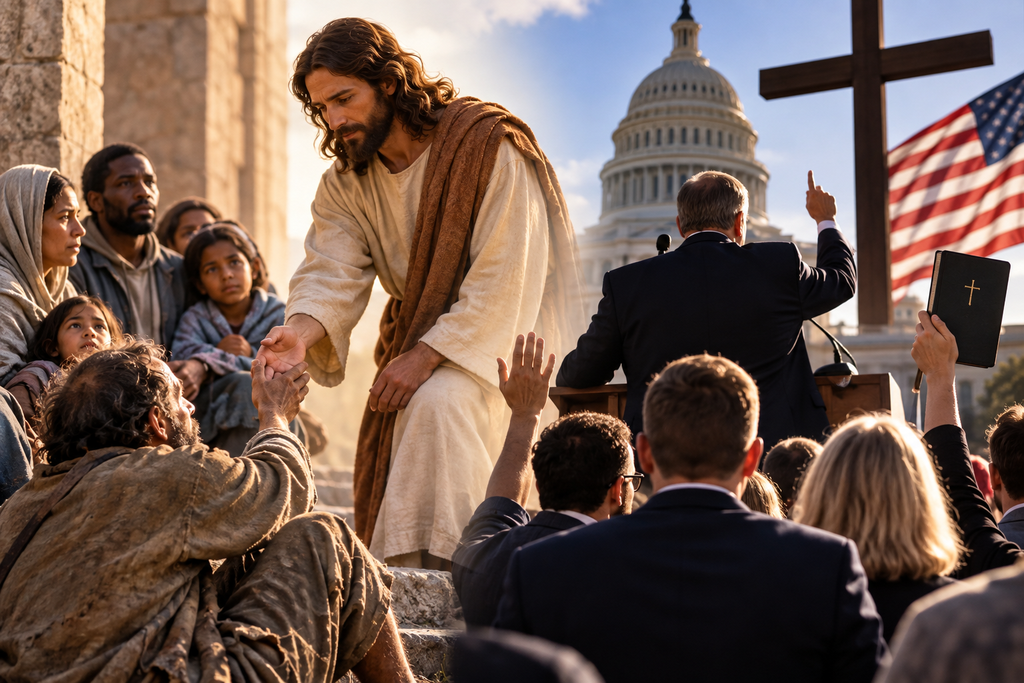
Would Jesus Recognize the Politics of the Modern Conservative Evangelical Church?

American conservative evangelical Christianity has become one of the most influential political forces in the United States. Over the past several decades, and particularly since the rise of Donald Trump, a large and highly visible portion of white evangelical Protestantism has aligned itself closely with the Republican Party. Its political agenda has emphasized opposition to abortion and LGBTQ rights, stricter immigration enforcement, gun rights, religious liberty, traditional gender roles, and, increasingly, the claim that the United States was founded as a Christian nation.

This raises an uncomfortable but legitimate question: How closely does this political movement resemble the teachings of Jesus as recorded in the Gospels?

The “conservative evangelical church” is not a single institution with a single political agenda. It encompasses Southern Baptists, nondenominational megachurches, Reformed Christians, Pentecostals, charismatics, and many independent congregations. Millions of people in evangelical congregations do not always agree with one another or even with their pastors on all political issues.

Polls usually focus on the segment most visible in American politics, white conservative evangelical Protestants. They make up a population of roughly twenty-five million adults whose voting behavior and political opinions have been extensively studied. This is the group I will focus on.

We shouldn’t assume they represent all evangelicals. Black and Latino evangelicals, for example, often share many of the same theological beliefs while differing substantially in their political opinions.

I’m not going to discuss if evangelicals are “hypocrites.” That accusation generates more heat than light. A more useful approach is to compare documented evangelical political positions with specific teachings attributed to Jesus and ask where the two fit comfortably and where they do not.

What Did Jesus Actually Teach?

Whatever you believe about the historical Jesus or the theological claims made about him, the Gospels present a recognizable and consistent ethical message.

The Sermon on the Mount praises the meek and merciful and commands followers to love their enemies and to pray for those who persecute them. The Good Samaritan makes a despised outsider the model of what it means to be a neighbor. People are judged according to whether they fed the hungry, clothed the needy, welcomed the stranger, and cared for the imprisoned.

Jesus also repeatedly warns about the love of wealth. In one case, he tells a rich man that his possessions are an obstacle to following him and declares that no one can serve both God and money. In another case he says, “Where your treasure is, there your heart will be also.” Jesus never says that money is evil, and he recognizes that it can be used to do good for the less fortunate. He warned against greed and accumulating wealth for its own sake.

These are not obscure theological interpretations. They are among the best-known passages in Christian scripture.

The difficulty comes when Christians try to translate the teachings of a first-century itinerant Jewish rabbi into the policies of a twenty-first-century nation-state. Jesus never developed a federal budget, immigration code, tax schedule, or health-care program.

Christians can agree that they should help the poor while disagreeing about whether it should be done by government or private charity. They can value compassion toward immigrants while also believing that nations have a legitimate right to control their borders.

Christians have struggled with this distinction between personal morality and governmental responsibility since the fourth century when Christianity began to expand their political power. We should be cautious about declaring that any particular modern policy is obviously “what Jesus would do.”

Where the Fit Is Closer Than Critics Admit

Several aspects of conservative evangelicalism deserve consideration before we look at the contradictions.

The first is opposition to abortion. Evangelicals generally understand their pro-life position to be protection of vulnerable human life. Whether you agree with their conclusions about when personhood begins, the argument itself is not difficult to connect with a Christian obligation to protect those who cannot protect themselves.

Second, evangelicals have a substantial tradition of charitable giving. Practicing evangelicals tend to donate generously to churches and charities. Evangelical organizations have played important roles in disaster relief, international development, food assistance, adoption services, and care for the poor. Charitable giving is an important part of evangelical religious practice and has an obvious connection with the Gospel emphasis on caring for people in need.

Immigration provides a third, more complicated example. Surveys suggest that many evangelicals hold positions more nuanced than their political reputation would suggest. Some support secure borders and enforcement of immigration laws while simultaneously opposing the separation of families and favoring some form of legal status or pathway to citizenship for undocumented immigrants already living in the United States.

This is not necessarily inconsistent. You can believe both that a nation requires secure borders and that immigrants should be treated humanely. The difficulty arises when enforcement becomes punitive.

Where the Fit Becomes Strained

White evangelicals have been unusually supportive of aggressive immigration enforcement, increased funding for Immigration and Customs Enforcement, detention of undocumented migrants, and mass-deportation proposals. They also tend to view ICE more favorably than other major religious groups.

The story of The Good Samaritan is instructive on many levels. On the surface this is a story of someone considered to be an outsider showing compassion and caring for an unfortunate person.  Samaritans were considered disreputable by Jews and the fact that a Samaritan would offer unequivocal love and concern for the less fortunate while Jews did not is significant on its own.

There’s another layer to this story. The “expert in the law” who questioned Jesus about whom he should see as his neighbor has long been considered to be a minor character who simply sets up the question so Jesus can provide a story. But a deeper reading reveals that the expert may be the object of the story. Rather than trying to understand who his neighbor is, he is attempting to set boundaries around those to whom he must show love.  Jesus doesn’t ridicule him or directly point out his errors. He merely allows him to conclude that everyone is his neighbor regardless of any preconceived notions about them. Whether this changes the expert or not we aren’t told. We can only hope that it does.

This passage doesn’t tell us how governments should regulate immigration, but it makes it difficult to argue that the suffering of foreigners should be morally irrelevant to Christians.

An even more striking controversy has developed within evangelicalism over empathy.

Some conservative Christian writers, including Pastor Doug Wilson and theologian Joe Rigney, have warned that empathy can become morally dangerous when it causes people to identify so completely with another person’s suffering that they abandon moral judgment. They distinguish empathy from sympathy or compassion and argue that Christians should resist the former when it undermines their political objectives.

Their evangelical critics regard this as a remarkable reversal of traditional Christian priorities. Compassion for people who suffer is hardly peripheral to the ministry of Jesus. He repeatedly responded to sickness, hunger, grief, exclusion, and poverty with compassion and empathy.

The significance of this debate is that the criticism is no longer simply coming from secular liberals attacking conservative Christianity. Evangelicals themselves are arguing about whether their political culture has made them suspicious of one of Christianity’s central virtues.

Wealth, Poverty, and Selective Morality

Jesus repeatedly describes love of wealth as spiritually dangerous. He warns against storing treasures on earth and says that people cannot serve both God and money.

Jesus did not propose an economic system. Nothing in the Gospels tells us whether the top marginal tax rate should be 25 percent or 50 percent. It is simplistic to claim that Christianity requires support for a particular welfare program or tax policy.

But it is equally difficult to reconcile the Gospels with a Christianity that celebrates wealth while treating poverty as evidence of personal failure.

This leads to a broader question of selective morality. Why do abortion and sexual orientation receive enormous political attention while greed, pride, dishonesty, cruelty, contempt for foreigners, and indifference toward the poor receive comparatively less? Jesus certainly discussed sexual morality, but he also spoke repeatedly about money, hypocrisy, mercy, forgiveness, pride, and care for society’s outcasts.

A political Christianity that concentrates heavily on some sins while overlooking others risks reshaping the Gospel around the priorities of a political coalition.

Romans 13 and the Power of Government

The tension is especially visible in the Trump administration’s family-separation policy of 2018. Attorney General Jeff Sessions invoked Romans 13, Paul’s admonition to submit to governing authorities, as defense of their enforcement of immigration law.

The argument cannot simply be dismissed as theological fabrication. But Romans 13 also carries historical baggage. Appeals to obey governmental authority have repeatedly been used to defend unjust political systems and even slavery. These arguments generally ignore the fact that the same chapter concludes by describing love of one’s neighbor as fulfillment of the law.

There is also an historic Christian theological tradition behind this argument. Martin Luther’s “Two Kingdoms” theology distinguished between the responsibilities of individual Christians and those of civil government. Individuals may be commanded to forgive enemies, while governments still require police, courts, prisons, and armies. A government cannot literally turn the other cheek when confronted with violent crime or invasion.

Christianity contains these two obligations and they are often in tension — respect for legitimate civil authority and resistance to injustice. Emphasizing only the first can turn obedience to government into a religious virtue regardless of what government does. It’s important to remember Jesus’ commandment to render under Caesar that which is Caesar’s and unto God that which is God’s. Unfortunately, many modern conservative evangelicals seem to confuse Caesar and God.

Trump, Cyrus, and the Question of Character

Some evangelical leaders have compared Trump with Cyrus, the Persian king described in Isaiah. Cyrus was not an Israelite and did not worship Israel’s God, but the biblical narrative presents him as an instrument through whom God carried out a larger purpose.

Applied to Trump, the argument is straightforward.  A political leader does not need to be personally virtuous to accomplish outcomes Christians consider desirable. Polling suggests that many white evangelicals make precisely this distinction. They express reservations about Trump’s personal behavior while strongly approving of his presidency and policies.

This is nothing new. Voters have routinely supported politicians they consider personally flawed because they prefer their policies to the alternative.

But for Christians, it creates another tension. The New Testament places considerable emphasis on honesty, fidelity, humility, self-control, and personal character. If those virtues matter when evaluating pastors, teachers, neighbors, and ordinary church members, Evangelical Christians need to explain why they are less important when evaluating political leaders.

Christian Nationalism

Perhaps the greatest departure from the teaching of Jesus comes with Christian nationalism. This is the idea that Christianity should enjoy a privileged relationship with the American state and that American law should explicitly reflect Christian identity.

The problem is not that Christians participate in politics. Christianity has influenced political movements ranging from the abolition of slavery and civil rights to temperance and opposition to abortion. Religious citizens have the same right as everyone else to bring their moral convictions into public debate.

The danger arises when Christianity becomes identified with a particular nation, party, or political leader and when Christian groups insist that the government must reflect only their religious convictions. 

Jesus consistently resisted attempts to transform his religious mission into conventional political power. When questioned by Pilate, he declared that his kingdom was “not of this world.” His followers may participate vigorously in earthly politics, but the Gospel does not easily support the proposition that any modern nation is itself God’s kingdom.

A church shaped by Jesus should be capable of criticizing every political party, including the one supported by most of its members. It should be suspicious when electoral victory is described as divine victory and equally suspicious when political opponents are treated as enemies of God.

A Church Arguing With Itself

American evangelicalism is already having this debate internally. Walter Kim, president of the National Association of Evangelicals, has warned that mass deportation could separate an enormous number of families and has urged evangelicals to approach immigration through a more explicitly Christian framework.

Ordinary evangelical Christians are more divided than either their harshest critics or their most politically vocal leaders like to acknowledge. The story is not simply one of a monolithic church abandoning the teachings of its founder. It is the story of a large and diverse religious movement struggling with an ancient problem.  How should a religion built around mercy, sacrifice, forgiveness, and love of neighbor fit within a political system built around power, law, coercion, and competing interests?

Evangelicals invoking Romans 13, and other teachings of Jesus, believe they are interpreting scripture faithfully. They may not be correct about every political conclusion, or any conclusion, but they have not invented the argument from nothing.

Perhaps the best test is not whether conservative evangelicals can find biblical passages supporting their positions; almost any political movement can do that. The important question is what receives the greatest emphasis.

If someone encountered American Christianity without ever having read the Gospels, what would they conclude Jesus cared about most? Abortion? Sexuality? Immigration enforcement? Religious control of government? Or would they recognize a teacher who spoke relentlessly about mercy, humility, forgiveness, hypocrisy, wealth, and care for outsiders and the poor?

That is a question worth asking not only of conservative evangelicals, but of every Christian movement that seeks political power.

Illustration generated by author using ChatGPT

Sources

1. Pew Research Center, “White evangelicals remain among Trump’s strongest supporters, but less so than a year ago” (Feb. 9, 2026). https://www.pewresearch.org/short-reads/2026/02/09/white-evangelicals-remain-among-trumps-strongest-supporters-but-theyre-less-supportive-than-a-year-ago/

2. Pew Research Center, “Americans’ Views of Religion’s Role in Government and Christian Nationalism” (May 14, 2026). https://www.pewresearch.org/religion/2026/05/14/how-americans-feel-about-religions-influence-in-government-and-public-life/

3. PRRI, “Immigration Enforcement, ICE, and Civil Liberties in the Second Trump Administration” (March 26, 2026). https://prri.org/research/americans-views-on-immigration-enforcement-ice-and-civil-liberties-in-the-second-trump-administration/

4. PRRI, “The New Immigration Crackdown: Where Americans Stand” (Dec. 9, 2025). https://prri.org/research/the-new-immigration-crackdown-where-americans-stand/

5. Lifeway Research / Evangelical Immigration Table, “Evangelicals Want Secure Borders and Citizenship Pathway for Immigrants” (2025 study). https://research.lifeway.com/2025/02/05/evangelicals-want-secure-borders-and-citizenship-pathway-for-immigrants/

6. Religion News Service / Word&Way, “Evangelical Groups Warn Trump’s Deportations Could Leave 1.3M ‘Torn Apart’ From Families” (May 5, 2026). https://wordandway.org/2026/05/05/evangelical-groups-warn-trumps-deportations-could-leave-1-3m-torn-apart-from-families/

7. The Banner, “U.S. Evangelicals Divided Over What Faith Demands as Immigration Tensions Deepen” (Feb. 6, 2026). https://www.thebanner.org/news/2026/02/us-evangelicals-divided-over-what-faith-demands-as-immigration-tensions-deepen

8. PBS News, “Is empathy a sin? Some conservative Christians argue it can be” (Aug. 21, 2025). https://www.pbs.org/newshour/politics/is-empathy-a-sin-some-conservative-christians-argue-it-can-be

9. The Gospel Coalition, “Navigating Empathy” (Themelios, Dec. 7, 2021). https://www.thegospelcoalition.org/themelios/article/navigating-empathy/

10. Texas Observer, “The Little-Known Theology Behind White Evangelical Support of Donald Trump” (April 20, 2019). https://www.texasobserver.org/the-little-known-theology-behind-white-evangelical-support-of-donald-trump/

11. HuffPost, “Evangelicals Keep Misusing The Same Bible Verses To Give Trump A Pass” (June 20, 2018). https://www.huffpost.com/entry/evangelicals-keep-misusing-the-same-bible-verses-to-give-trump-a-pass_n_5b297b7fe4b0a4dc9921e6e8

12. Commonweal Magazine, “Rationalizing Trump” (Feb. 24, 2025). https://www.commonwealmagazine.org/rationalizing-trump

13. Providence, “Romans 13 and ICE under the Trump Administration” (Feb. 24, 2026). https://providencemag.com/2026/03/romans-13-and-ice-under-the-trump-administration/

14. Grey Matter Research, “Giving Is Down among Evangelicals” (Sept. 10, 2024). https://greymatterresearch.com/the-giving-gap/

15. Lifeway Research, “What Sparks Evangelical Generosity? Discipleship” (Jan. 14, 2022). https://research.lifeway.com/2022/01/14/are-evangelicals-generous-enough/

16. MinistryWatch, “Christians are Most Charitable, Giving Drives Happiness” (Dec. 18, 2024). https://ministrywatch.com/christians-are-most-charitable-giving-drives-happiness/

Powered by WordPress & Theme by Anders Norén