

Sleep Part 2
Several different processes fall into the broad category of sleep disorder. But first, we should understand a few things about what constitutes a sleep disorder.
Not everyone requires the same amount of sleep; children and adolescents require more sleep than adults. Once we reach adulthood, our individual need for sleep usually becomes fairly consistent for the remainder of our lives. However, the amount of sleep needed varies from person to person.
A common misconception is that we require less sleep as we age. It is true that older adults frequently get less sleep but it’s not necessarily because we require less. Admittedly there is some controversy among sleep specialists, but we shouldn’t dismiss the concerns of older people because we don’t think they need as much sleep as they used to.
To diagnosed as a sleep disorder, it must be a relatively long-term process. An occasional night of sleeplessness does not constitute a sleep disorder; there must be some impact on the waking hours. For example, a person who only sleeps 5 to 6 hours a night but never has any daytime sleepiness, fatigue, difficulty concentrating, or completing tasks probably does not have a sleep disorder. Another person who gets 7 to 8 hours of sleep a night but feels drowsy, is unable to concentrate on tasks and drifts off to sleep midafternoon may have a sleep disorder.
A sleep disorder is never diagnosed by the time spent in bed. It is diagnosed based on how a lack of sleep impacts daily life and ability to function at the desired level. It’s very common for people to overestimate the amount of time they are awake at night. A sleep disorder is something that requires careful investigation. It is important to contact your doctor for a definitive diagnosis.
If there is another reason for sleeplessness, then a sleep disorder diagnosis should not be made. Common causes of sleep disturbance are pain and environmental factors such as noise, bright lights, and temperature extremes. Rotating shift work is another common cause.
It is important to determine if the person reporting sleep problems has adequate opportunity to sleep. Family demands or work requirements may often limit the ability to get sufficient sleep. Additionally, some older men make frequent trips to the bathroom during the night, but this doesn’t necessarily constitute a sleep disorder.
To diagnose a sleep disorder, the patient must have had the opportunity for adequate sleep but is still suffering from the symptoms of sleep deprivation. The first step in evaluating a sleep disturbance is to identify and eliminate as many external factors as possible.
Sleep Apnea
Sleep apnea is perhaps the best known sleep disorder. There are two types of sleep apnea, the fairly common obstructive sleep apnea (OSA) and central sleep apnea. Central sleep apnea is extremely rare and well beyond what we’re talking about here.
Most OSA patients complain of daytime sleepiness. A patient’s bed partner may report loud snoring, gasping, or snorting, or the patient seeming to stop breathing while asleep. Not everyone who snores has OSA. While about 80 to 90% of people who have OSA snore, fewer than 50% of snorers have OSA.
If you are concerned that you may have OSA, talk to your doctor. It’s not something that can be diagnosed by you at home. Diagnosis requires a formal assessment.
Sleep apnea is treatable with the infamous CPAP machine. It isn’t generally considered to be curable although some people who have lost a significant amount of weight have been able to wean themselves from the CPAP machine.
Insomnia
Insomnia is one of those catchall medical terms that covers a variety of clinical situations. The broad definition of insomnia is difficulty sleeping. But that includes many causes, both those understood and those not well understood.
During a sleep assessment, it’s important to determine if it is chronic insomnia. That is a pattern of difficulty falling asleep or staying asleep that occurs at least three nights a week and lasts for at least three months. But that’s only the beginning, there are many unrelated factors that can cause chronic insomnia and there are also different types of insomnia that may be unrelated to any other factors.
Onset insomnia is difficulty falling asleep. The patient may be awake for very long periods, but once they fall asleep, they’re usually able to sleep for several hours. Unfortunately, they are usually awakened by the alarm clock before they have experienced adequate restorative sleep.
The other broad category is maintenance insomnia, the difficulty staying asleep. These patients often wake up in the middle of the night and are unable to return to sleep for several hours. Frequently they report falling back asleep just before the alarm goes off.
Some people have mixed insomnia. Sometimes they will have difficulty falling asleep and at others, staying asleep. Occasionally, they will suffer from both types on the same night, making for a very long night indeed.
Both types of insomnia can have similar underlying causes. Some of them fit in the broad category of comorbid insomnia, whether it’s a medical, psychiatric, or other problem. This can include depression, anxiety, or somatic disorders such as restless leg or chronic pain. Medical disorders include pulmonary disease, diabetes, and congestive heart failure. Treatment of the underlying medical condition is the key to dealing with these types of sleep disorders.
In a self-fulfilling cycle, some people suffer from insomnia because they worry about their inability to sleep.
Another type of sleep disturbance frequently included in the category of insomnia is disruption of the circadian rhythm. The circadian rhythm is the body’s internal clock. It is generally a 24-hour cycle that follows the light-dark cycle of the day. Major circadian disruptions include jet lag and intermittent shift work. The use of LED screens such as televisions, computers, and E readers exposes us to a large amount of blue light which may confuse our body’s circadian rhythm into thinking it is a daylight period. The many effects of disrupting the circadian rhythm are beyond the scope of this post, but if your circadian rhythm is interrupted it can affect your sleep, at least in the short term.
In Part 3 we will look at those things that may help you sleep.
A quote to end this post:
“I’ve always envied people who sleep easily. Their brains must be cleaner, the floorboards of the skull well swept, all the little monsters closed up in a steamer trunk at the foot of the bed.” – David Benioff, author, and TV producer




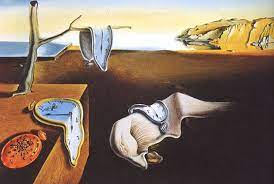








Statute of Limitations
By John Turley
On October 16, 2023
In Commentary
It seems these days that everything in the newspaper (Yes, I still read a newspaper) has to do with some kind of legal issue. It is either the ongoing political and legal difficulties of Donald Trump and Hunter Biden or it’s the lawsuits that our governor Jim Justice is facing as result of his questionable business dealings.
There also are various criminal stories in the paper. These range from the trials of the January 6th insurrectionists to local drug related shootings here in Charleston.
I think the fascination with legal stories is that happy news is inherently boring, and we all want to read about scandal or intrigue, particularly when well known people are involved.
Occasionally, in both civil and criminal cases I have run across the term “statute of limitations”. I’ve never paid a lot of attention to that. I always assumed it was just a get out of jail free card for people who could keep their crimes hidden long enough.
A recent article about a criminal case discussed when to start the clock on the statute of limitations. That got me thinking about exactly what is a statute of limitations and how does it relate to both criminal and civil cases.
Let’s start first with the definition. Miriam Webster defines statute of limitations as: A statute assigning a certain time after which rights cannot be enforced by legal action or offenses cannot be punished.
OK, that sounds a lot like the aforementioned get out of jail free card. Everyone knows about Monopoly and the get out of jail free card. I always thought of it as a way to avoid punishment for a crime you had obviously committed. But after spending some time looking into it, it’s a lot more complicated than that.
A Very Short History
We’ll start with a little bit of the history of the statute of limitations. Recognize, of course, there is no single statute of limitations; it varies from country to country and from local jurisdiction to local jurisdiction and from civil to criminal cases. Some countries have no statute of limitations at all.
Unlike what I initially thought, the statute of limitations is not a creation of the modern legal system. It has been around as long as there have been codes of law.
Hammurabi’s Code (circa 1754 BCE) in Babylon and the Twelve Tablets (449 BCE) in Rome included provisions that established time limits for bringing legal claims. Medieval Europe had statues of limitations that developed as part of customary law to ensure that legal actions were brought while evidence and memories were still fresh. Many of these same issues were incorporated into English common law and were codified in the Statute of Limitations Act of 1623 in England. This established limitations for various types of actions such as indebtedness and trespass. It generally did not cover criminal cases, particularly if it was an offense against the crown. Statutes of limitations in those early times were much shorter than what we have now.
Civil Actions
We will look first at the statute of limitations as it applies to civil actions. There are two main reasons for restricting time limits for civil suits. First, to ensure that legal action is brought while evidence is readily available. Second, to ensure that minor legal grievances are not raised years later as a means of harassing the defendant.
A major provision of most statutes is tolling. Tolling is a suspension or extension of the statute of limitations in exceptional circumstances. These include when the plaintiff was a minor at the time of the offence or has filed a bankruptcy petition. This extends the statute of limitations until that condition has been resolved.
It’s important to recognize that the statute of limitations does not begin when a fraudulent event occurs. It begins when the fraud or injury is discovered. At times it may begin when the plaintiff should have known. This prevents the plaintiff from fraudulently claiming to have been unaware of the injury.
There is an exception to the tolling rule. It does not apply to mass media such as newspapers and the internet. The statute of limitations begins at the date of publication. The general assumption is that the plaintiff knew or should have known on the date of publication that there may have been injury.
A judge may decide that the plaintiff has waited too long to request an extension of the statute of limitations in civil cases. This is intended to prevent never-ending litigation.
Criminal cases
The statute of limitations in criminal cases is far more controversial. These literally may be the get out of jail free card. However, there’s a long-standing precedent of statute of limitations in criminal cases. Even the US military in the Uniform Code of Military Justice states that all charges, except those facing court martial on a capital charge, have a five year statute of limitations. A capital charge being one that carries a death penalty.
It is important to note that in almost every jurisdiction with a statute of limitations on criminal cases there is a specific exclusion. That is when the defendant is in a fugitive state or has actively attempted to cover up their crime. In these cases, the statute of limitations begins when the defendant is apprehended or when the crime is discovered.
There has been much revision of statutes of limitation in criminal cases in recent years. For serious cases such as murder, kidnapping, rape, and child abuse they have either been considerably extended or eliminated altogether. They remain in effect for minor transgressions such as vandalism, trespassing, and marijuana possession.
The main argument for maintaining a statute of limitations for minor criminal cases is that it prevents prosecutors years later going after a person for a relatively minor crime and thus tying up the legal system at a time when witnesses and evidence may no longer be available. Although, some prosecutors argue that they require the ability to pursue relatively minor crimes in order to investigate or prosecute more serious crimes committed by the same person.
Putting it all together
After having done some research, I have a better understanding of the statute of limitations. I think it’s generally useful in civil cases to prevent new suits being filed years after the alleged event. Lawsuits are rampant in our court system today and we need to avoid clogging up the system with frivolous cases.
However, I’m undecided on criminal cases. While I recognize that keeping your crimes secret does not allow the statute of limitations to run, I still have some problem with people being able to defend themselves by saying “Sorry it’s been too long”.
If the statute of limitations is limited to such minor things as jaywalking, shoplifting, vandalism or marijuana possession for personal use, I think that helps to avoid backing up the legal system. Personally, I don’t believe there should be a statute of limitations for serious crimes. Of course, that leads to another discussion of what constitutes a serious crime.
All comments on the statute of limitations are welcome. You may even encourage me to share my grumpy opinions on more controversial aspects of this topic. The Grumpy Doc is just glad that the statute of limitations applies to the stupid things he did in high school.