
The Articles of Confederation: Birth, Failures, and Legacy

The United States Constitution, ratified in 1788 and implemented in 1789, is often treated as the nation’s true founding framework. Yet before it, there existed another governing document, one far less celebrated but no less essential to understanding the early republic. The Articles of Confederation and Perpetual Union served as America’s first constitution from their adoption by the Continental Congress in 1777 to their replacement just over a decade later. Imperfect, fragile, and ultimately unsustainable, the Articles nevertheless provided the institutional bridge between revolution and nationhood.
To understand why the Articles were structured as they were—and why they ultimately failed we need to step back into the mindset of the revolutionary generation. The men who drafted them were not political theorists operating in calm conditions; they were wartime leaders grappling with uncertainty, scarcity, and deep suspicion of centralized authority. They had just rebelled against British tyranny, and they were determined not to allow such power on American soil. The result was a system deliberately designed to restrain national authority, even at the cost of efficiency. The Articles represented both a solution to immediate wartime needs and a reflection of deeply held ideological fears. Their story is not merely one of failure, but of experimentation, adaptation, and political learning.
Revolutionary Context and the Need for Union
The intellectual origins of the Articles stretch back well before independence. Colonial leaders had long recognized the potential benefits of intercolonial cooperation. Benjamin Franklin’s Albany Plan of Union in 1754 proposed a centralized colonial government capable of coordinating defense and managing relations with Native nations. Though ultimately rejected by the colonies, the plan foreshadowed later efforts at union by raising the fundamental question of how semi-autonomous political entities might cooperate without surrendering their independence.
That question became urgent during the American Revolution. When the Second Continental Congress convened in 1775, it functioned as a provisional government, but its authority was ambiguous and largely dependent on voluntary compliance. As the war intensified, it became increasingly clear that thirteen separate colonies could not effectively wage a coordinated struggle against the British Empire without some formal political structure. Congress needed legitimacy—not merely as a gathering of delegates, but as a governing body with recognized authority over military, diplomatic, and financial matters.
On June 11, 1776, Congress appointed a committee to draft a plan of confederation, even as another committee worked on the Declaration of Independence. The parallel timing was no coincidence. Independence required not only separation from Britain but also the creation of a new political order. The Articles were intended to provide that order, a framework through which the states could act collectively while preserving their individual sovereignty.
Drafting Under Pressure
The drafting process unfolded under extraordinary circumstances. John Dickinson of Pennsylvania, a respected lawyer and political thinker, chaired the committee and produced the initial draft in July 1776. Debate over its provisions, however, proved slow and contentious. Congress was simultaneously managing a war, and immediate military concerns often took precedence over constitutional deliberation.
Disagreements over representation, taxation, and western land claims delayed progress for more than a year. It was not until November 15, 1777, while Congress was in exile in York, Pennsylvania, following the British capture of Philadelphia, that the Articles were finally approved. Even then, the document was widely understood as a compromise rather than an ideal solution.
Ratification presented an additional challenge. Because the Articles required unanimous consent, any single state could delay their implementation. The principal obstacle came from disputes over western lands. States with expansive territorial claims, such as Virginia, were reluctant to relinquish them, while smaller states like Maryland insisted that such lands should be held in common for the benefit of the union. Only after Virginia agreed to cede its claims did Maryland ratify the Articles on March 1, 1781, bringing them into full effect.
Structure and Principles
The Articles of Confederation established a national government that was intentionally limited in scope. At its core was a unicameral Congress in which each state, regardless of size or population, held a single vote. This arrangement reflected the primacy of state sovereignty: the union was conceived not as a single nation but as a “league of friendship” among independent states.
The national government possessed certain powers, including the authority to declare war, negotiate treaties, coin money, and manage relations with Native nations. However, these powers were constrained by critical limitations. Congress could not levy taxes directly, regulate interstate commerce, or enforce its decisions upon the states. Instead, it relied on requisitions, little more than requests for funds, which states frequently ignored or, at best, only partially fulfilled.
Equally significant was the absence of both an executive branch and a national judiciary. There was no president to enforce laws or coordinate policy, and no federal court system to interpret them. Administrative functions were handled by committees and departments accountable to Congress, resulting in a diffuse and often ineffective system of governance.
Amending the Articles required unanimous consent, a provision that made meaningful reform nearly impossible. While intended to protect state sovereignty, this requirement ensured that structural weaknesses could not be easily corrected.
Achievements Under the Articles
Despite their limitations, the Articles of Confederation were not without success. Most importantly, they provided a legal framework that enabled the colonies to prosecute and ultimately win the Revolutionary War. The Continental Congress, operating under the authority of the Articles, secured crucial alliances, most notably with France, and negotiated the Treaty of Paris in 1783, which formally ended the conflict and recognized American independence.
The Confederation government also achieved lasting success in western land policy. The Land Ordinances of 1784 and 1785, followed by the Northwest Ordinance of 1787, established a systematic process for surveying, selling, and governing western territories. These measures ensured that new states would enter the union on equal footing with the original thirteen and prohibited slavery in the Northwest Territory. This framework not only facilitated orderly expansion but also set important precedents for federal authority over territories.
The Articles also fostered a sense of national identity, however fragile. They affirmed the name “United States of America” and maintained a formal union during a period when regional differences might easily have led to fragmentation.
Structural Weaknesses and Growing Crisis
The weaknesses of the Articles, however, became increasingly apparent in the postwar period. Financial instability was among the most pressing issues. Without the power to tax, Congress struggled to pay war debts, fund the military, or support basic governmental functions. Inflation, currency devaluation, and economic dislocation further compounded these difficulties.
Interstate economic conflict added another layer of instability. In the absence of federal regulation, states imposed tariffs and trade barriers against one another, undermining economic cohesion. Competing currencies and inconsistent policies created an environment of uncertainty that hindered recovery and growth.
The lack of enforcement mechanisms proved equally problematic. Congress could pass laws and enter into treaties, but it had no means of compelling compliance. States frequently ignored national directives, and often violated provisions of the Treaty of Paris, particularly regarding the treatment of loyalists and British creditors. This inability to enforce national policy damaged American credibility abroad.
These structural deficiencies reflected the underlying philosophy of the Articles: a deep distrust of centralized power. By the mid-1780s, it was becoming clear that excessive decentralization carried its own dangers.
Shays’ Rebellion and the Turning Point
The crisis reached a breaking point with Shays’ Rebellion in 1786–1787. Economic hardship, particularly among farmers in western Massachusetts, led to widespread unrest. Burdened by debt and high taxes, many farmers faced foreclosure and imprisonment. When legal and political remedies failed, they turned to direct action, closing courts and attempting to seize the federal arsenal at Springfield.
The Confederation government was effectively powerless to respond. Lacking both funds and military authority, Congress could offer no assistance. The rebellion was ultimately suppressed by a state militia supported by private funds, underscoring the inability of the national government to maintain order.
The implications were profound. For many leaders, including George Washington and Alexander Hamilton, Shays’ Rebellion demonstrated that the existing system was untenable. A government that could not enforce laws or ensure domestic tranquility was doomed to collapse.
Toward a New Constitution
Efforts to address these problems began modestly. The Annapolis Convention of 1786, initially convened to discuss trade issues, concluded that broader reforms were necessary and called for a general convention in Philadelphia. In February 1787, Congress endorsed this proposal, though officially only to revise the Articles.
The Philadelphia Convention, however, quickly moved beyond revision. Delegates recognized that the Articles’ fundamental structure, particularly the reliance on voluntary state compliance, could not support an effective national government. The solution was to become an entirely new framework: the United States Constitution.
Ratified in 1788 and implemented the following year, the Constitution addressed the central weaknesses of the Articles by establishing a stronger federal government with the power to tax, regulate commerce, enforce laws, and operate through separate executive, legislative, and judicial branches.
Legacy and Historical Significance
It is tempting to view the Articles of Confederation solely as a failure, a flawed experiment quickly discarded in favor of a superior system. Such a perspective, however, overlooks their broader significance. The Articles represented a necessary first step in the creation of the American republic. They reflected the political realities and ideological commitments of their time, particularly the pervasive fear of centralized authority.
Their shortcomings provided invaluable lessons. The Constitution did not emerge in a vacuum; it was shaped directly by the experience of governing under the Articles. The framers understood, from hard experience, the dangers of both excessive centralization and excessive decentralization. The resulting system sought to balance these concerns, creating a government strong enough to function yet constrained enough to preserve liberty.
The Articles also demonstrated that political systems can evolve. They were not the final word on American governance, but an early chapter in an ongoing process of constitutional development. Their legacy lies not only in what they achieved, but in what they revealed about the challenges of building a nation.
In this sense, the Articles of Confederation were not a failure so much as an experiment, one conducted under extraordinary pressure, with limited precedent, and with stakes that could scarcely have been higher. They held the union together long enough for a more durable system to emerge. That alone secures their place in the story of American constitutional history.
Image generated by author using ChatGPT.
Sources
National Archives: Articles of Confederation (1777) — Primary Document
Library of Congress: Articles of Confederation — John Dickinson (1778)
HISTORY.com: Articles of Confederation — Weaknesses, Definition, Date
George Washington’s Mount Vernon: The Articles of Confederation
U.S. Department of State, Office of the Historian: Articles of Confederation, 1777–1781
Encyclopedia of Greater Philadelphia: Articles of Confederation
Encyclopaedia Britannica: John Dickinson
National Archives: John Dickinson Writings
University of Delaware Library: John Dickinson — Penman of the Revolution
EBSCO Research Starters: Analysis — Articles of Confederation
Wikipedia: Articles of Confederation
National Constitution Center: Summary of Shays’ Rebellion
“America at 250: A Revolution Remembered… or Forgotten?”
By John Turley
On May 10, 2025
In Commentary, History
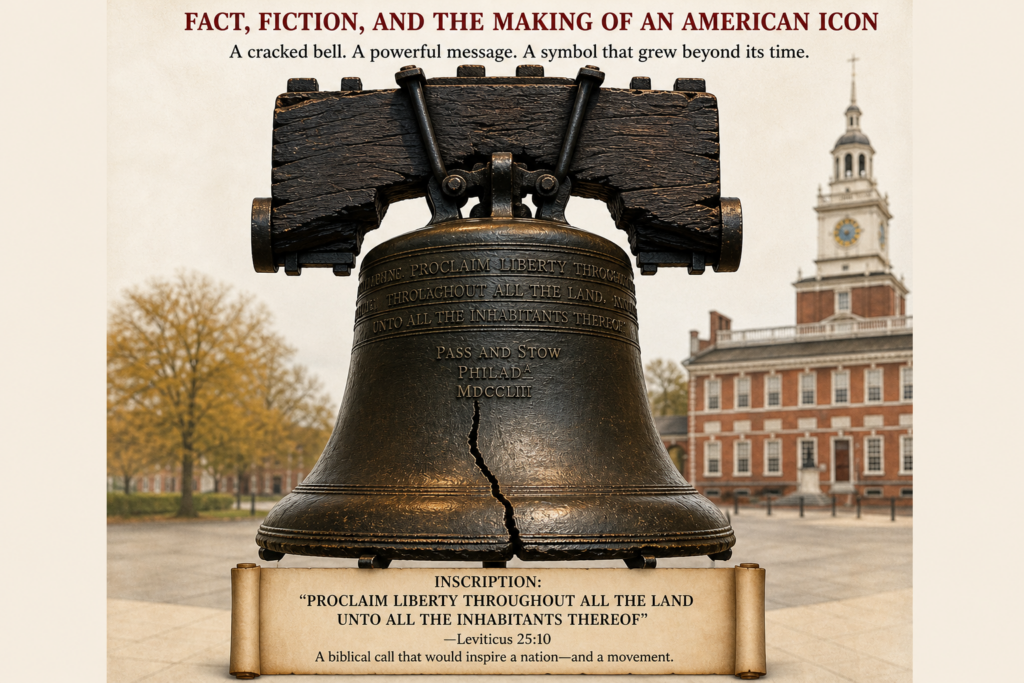
I’m old enough to remember the 200th anniversary of the American Revolution. Bicentennial symbols were everywhere. Liberty Bells, eagles, and the ubiquitous Bicentennial logo of the red, white and blue stylized five-point star. They could be found on hats, T-shirts, socks, soft drink cups, beer cans, and even a special “Spirit of ‘76” edition of the Ford Mustang II. Commemorative events and celebrations were being planned everywhere and people had “bicentennial fever”.
But the 250th anniversary is not attracting that same kind of attention or interest. I wonder why that is. Perhaps it’s that the name for a 250th anniversary, Semiquincentennial, doesn’t seem to roll off the tongue the way Bicentennial does. But I suspect it’s far more than just a tongue twisting name.
The Bicentennial came after a decade of national trauma. The Vietnam War, Watergate, and the civil rights struggles had all roiled the country. By 1976, most Americans wanted to feel good about the country again. It became a giant, colorful celebration of “American resilience.”
While the 250th anniversary of the American Revolution is being marked by numerous events, commemorations, and official proclamations, most are local, and it has not yet captured widespread public attention or generated the scale of national excitement seen during previous milestone anniversaries.
The anniversary arrives at a time of deep political polarization, which has complicated celebration plans. There is an ongoing debate within the group tasked with planning the celebration, the U.S. Semiquincentennial Commission, about how to present American history. Some members advocate for a traditional, celebratory approach focusing on the Founding Fathers and patriotic themes. Others push for a more inclusive narrative that acknowledges the complexities of American history, including the experiences of women, enslaved people, Indigenous communities, and other marginalized groups
Beyond the commission itself, some historians note that the “history wars”—ongoing disputes throughout society over how U.S. history should be taught and remembered—have made it harder to generate broad, enthusiastic buy-in for the anniversary among the general public.
Commemorations in places like Lexington and Concord have seen anti-Trump protesters carrying signs such as “Resist Like It’s 1775” and “No Kings,” explicitly drawing parallels between opposition to King George III and contemporary resistance to what they perceive as autocratic tendencies in current leadership. At the reenactment of Patrick Henry’s “Give Me Liberty or Give Me Death” speech, Virginia Governor Glenn Youngkin was met with boos and protest chants, highlighting how the Revolution’s legacy is being invoked in current political struggles.
While some organizers and historians hope the anniversary can serve as a unifying moment—emphasizing that “patriotism should not be a partisan issue”—the reality is that commemorations have often become forums for expressing contemporary political grievances and anxieties. The presence of both celebratory and dissenting voices at these events reflects the enduring debate over what it means to be American and who gets to define that identity. The complexity and messiness of American history, combined with current societal tensions, may dampen the celebratory mood and make it harder for people to connect emotionally with the anniversary.
Even the 250th logo has become a source of dispute, although it is one of the few areas of disagreement that is nonpartisan and tends to be about stylistic and artistic merits of the logo. Proponents of the new logo appreciate its modern and inclusive design emphasizing that the flowing ribbon represents “unity, cooperation, and harmony,” and reflects the nation’s aspirations as it commemorates this milestone. Detractors are concerned about the legibility of the “250” and the lack of traditional American symbols, such as stars, which could have reinforced its patriotic theme.
Surveys by history related organizations suggest that most Americans are not yet thinking about the 250th anniversary. The run-up to 2026 may see increased attention, but as of now, the anniversary has not broken through as a major topic of national conversation. If the anniversary continues to be viewed as a contentious partisan undertaking, it may never gain widespread popularity, and the general public may choose to stay away.
A friend who is a member of the West Virginia 250th committee told me that they had an initial meeting at which nothing was accomplished, and they have had no meeting since. It seems to me, this is up to us, the citizens, to ensure that the 250th anniversary of the American Revolution is appropriately remembered. We don’t have to live in an area where a Revolutionary War event occurred for us to recognize its events. Here in West Virginia, in October of 2024 we commemorated the 250th anniversary of the battle of Point Pleasant which many consider a precursor to the American Revolution. This event was not organized by any state or national group. It was the result of efforts on the part of the City of Point Pleasant and the West Virginia Sons of the American Revolution.
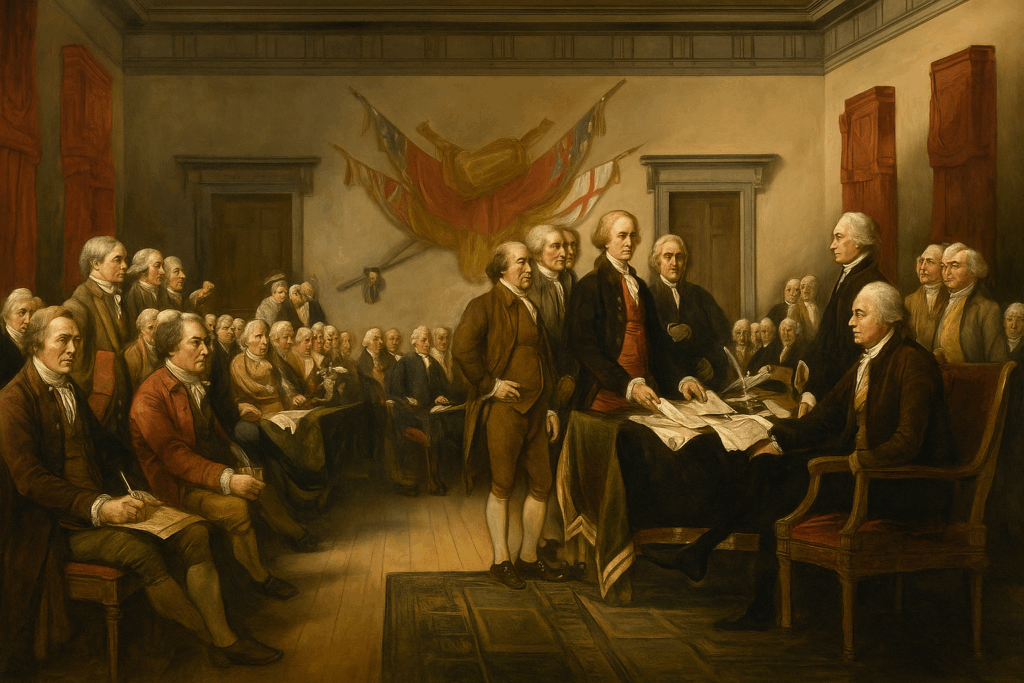
We do not need to depend on the government; we the people can hold local commemorations of revolutionary events that occurred in other areas. We can hold commemorations of the Battle of Bunker Hill, the signing of the Declaration of Independence, the Battle of Saratoga and many other events. It will take the initiative of local people to organize these events.
It will be our great shame if we allow this the commemoration of an event so significant in both American and world history to be turned into something that divides us rather unites us and strengthens our common bond.