Grumpy opinions about everything.

Tag: Cholesterol

Familial Hypertriglyceridemia

When Fat in the Blood Runs in the Family

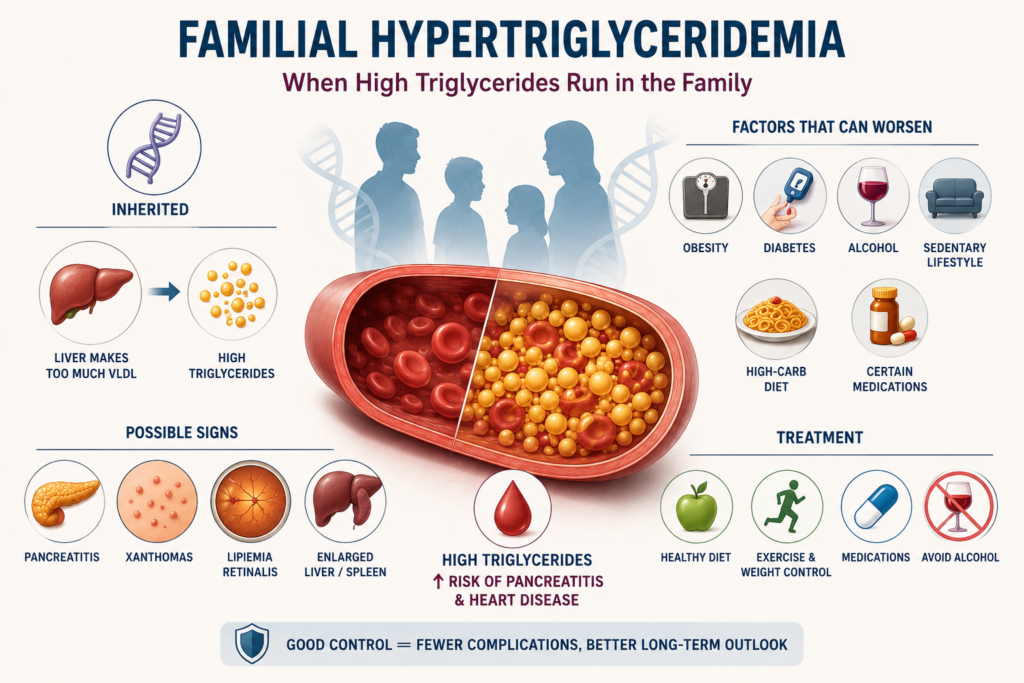
Most people know they should keep an eye on their cholesterol. But triglycerides — another type of fat circulating in the blood — often fly under the radar. For some families, though, high triglycerides aren’t just a lifestyle problem. They’re baked into the DNA. Familial hypertriglyceridemia (FHTG) is a hereditary condition in which the liver chronically overproduces fat-carrying particles, sending triglyceride levels well above what diet alone can fully explain. It’s more common than most people realize and is frequently under diagnosed.   If left unaddressed it can trigger serious complications including pancreatitis and heart disease.  

One of my earliest disappointments as a young physician was a patient with familial hypertriglyceridemia. He was in his late 20s and his triglycerides were running in the critical level. We tried multiple interventions and he was referred to multiple specialists.  Unfortunately, he wasn’t able to make the lifestyle changes he needed to make and progressively got worse and worse before passing away in his mid-30s. Fortunately, we have better treatments now, but this still is potentially a dangerous disease.

This article walks through FHTG, what it is, what causes it, how it presents, how it’s diagnosed, and what modern medicine can actually do about it.

What Is Familial Hypertriglyceridemia?

Triglycerides are the most common form of fat in the body. After you eat, calories that your body doesn’t immediately need are converted into triglycerides and stored in fat cells. Between meals, hormones release these fats for energy. When this system gets stuck in the “on” position — or when the body doesn’t clear triglycerides efficiently — blood levels climb.

FHTG, technically classified as Type IV familial dyslipidemia, is a genetic disorder in which the liver overproduces very low-density lipoprotein (VLDL) particles — essentially the trucks that carry triglycerides through the bloodstream. The result is persistently elevated triglyceride levels, typically in the moderate-to-severe range, sometimes severe enough to become medically dangerous.

Normal fasting triglycerides are generally below 150 mg/dL. Borderline high falls between 150 and 199. In FHTG, levels often run 200–500 mg/dL or higher, and some patients can exceed 1,000 mg/dL, a threshold at which the risk of acute pancreatitis rises sharply.

Etiology: The Genetic Story Is More Complicated Than Expected

For decades, FHTG was described in textbooks as a straightforward autosomal dominant disorder — meaning one copy of a faulty gene was enough to cause the condition, and each child of an affected parent had a 50% chance of inheriting it. That picture has been substantially revised by modern genetics.

It turns out that FHTG is primarily polygenic — driven not by a single dramatic mutation but by the cumulative effect of many small genetic variants.  Studies have now identified more than 300 independent genetic locations associated with plasma triglyceride levels. No single gene tells the whole story. Instead, a person inherits a kind of genetic “load” that creates susceptibility — and whether that susceptibility becomes clinically apparent often depends on environmental triggers.

The genes involved all play a role in how the body metabolizes fat-carrying particles. Heterozygous (single-copy) variants in these genes are common in most FHTG patients. The much rarer and more severe familial chylomicronemia syndrome (FCS) both copies are defective producing extreme triglyceride elevations and a very different clinical picture.

Environmental factors that worsen FHTG include obesity, poorly controlled diabetes, alcohol use, a diet heavy in refined carbohydrates and sugars, estrogen-containing medications, and certain drugs such as corticosteroids and beta-blockers. In many patients, the genetic predisposition only becomes clinically obvious when one or more of these environmental triggers is present — which explains why the condition often goes undetected until adulthood.

Symptoms: The Quiet Condition

One of FHTG’s most deceptive features is that it is often silent. Many people carry the condition for years without a single symptom, discovering it only through routine blood work or a family history investigation. This is why widespread lipid screening is so important — FHTG doesn’t announce itself with chest pain or obvious physical signs, at least not initially.

When symptoms first appear, they are often subtle and tend to reflect either the degree of triglyceride elevation or the presence of associated conditions. In cases of moderate elevation, patients might experience vague fatigue, weight gain, or features of metabolic syndrome — high blood pressure, elevated blood sugar, increased waist circumference.

At higher triglyceride levels, more distinctive signs can emerge. Xanthomas, yellowish, waxy deposits of fat under the skin, may appear, particularly around the eyelids (xanthelasmas) or over the elbows, knees, or tendons. The liver may enlarge (hepatomegaly), reflecting fat accumulation. An eye exam may show lipemia retinalis — a milky or salmon-pink discoloration of the retinal blood vessels — visible with an ophthalmoscope when triglycerides are extremely high.

The most dangerous symptom is severe abdominal pain signaling acute pancreatitis. When triglycerides exceed 1,000 mg/dL, the pancreas can become inflamed as it is overwhelmed by fat-rich particles. This is a medical emergency. Nausea, vomiting, and upper abdominal pain radiating to the back are warning signs that warrant immediate evaluation.

There is also an increased risk of early cardiovascular disease in FHTG patients, particularly when metabolic syndrome is present, though the relationship between triglycerides alone and heart disease risk is more nuanced than it is with LDL cholesterol.

Diagnosis: Getting the Full Picture

Diagnosis begins with a standard fasting lipid panel — a blood test that measures total cholesterol, LDL, HDL, and triglycerides. In FHTG, the hallmark findings are elevated triglycerides and VLDL, often accompanied by low HDL (the so-called “good” cholesterol). LDL levels may be normal or even low, which can sometimes falsely reassure both patients and physicians.

Because many things can raise triglycerides — including a meal eaten before the blood draw, excess alcohol, diabetes, hypothyroidism, kidney disease, and certain medications — the first step is ruling out secondary causes. A thorough personal and family history is essential. A clinician who asks about triglycerides in parents or siblings or even children is doing exactly what the guidelines recommend.

The “familial” part of the diagnosis is confirmed when multiple first-degree relatives are found to have elevated triglycerides, when the elevation persists despite controlling for secondary causes, and when the pattern fits what we’d expect from a heritable condition appearing across generations.

Genetic testing can identify specific variants in the related genes, but it is not required for a clinical diagnosis and is not routinely performed. Genetic testing may be ordered when the clinical picture is severe or ambiguous, or when distinguishing FHTG from the rarer familial chylomicronemia syndrome which has treatment implications such as the emerging targeted therapies.

Current guidelines also recommend evaluating for cardiovascular risk in patients with mild-to-moderate FHTG, and for pancreatitis risk in those with severe elevations.

Treatment: A Layered Approach

Lifestyle First

The cornerstone of FHTG management — at least for mild-to-moderate disease — is lifestyle modification, and it can be remarkably effective. Cutting refined carbohydrates and added sugars is particularly powerful. Saturated fat primarily raises LDL cholesterol, but it is carbohydrates that drive hepatic triglyceride production. Alcohol is another major player. Even moderate consumption can substantially raise triglycerides in susceptible individuals, and abstinence often produces dramatic improvements.

Weight loss, regular aerobic exercise, and tight blood sugar control in patients with diabetes or prediabetes round out the lifestyle toolkit. Estrogen-containing contraceptives or hormone replacement therapy should be reconsidered in women with FHTG, as estrogen directly stimulates hepatic VLDL production and can push levels dangerously high.

Pharmacologic Options

When lifestyle changes aren’t enough, several drug classes are available. Fibrates (such as fenofibrate and gemfibrozil) are the most established triglyceride-lowering medications and can reduce levels by 30–50%. They work primarily by activating receptors that enhance triglyceride clearance.

Omega-3 fatty acids at prescription doses (2–4 grams per day) provide another option. High dose eicosapentaenoic acid (EPA), specifically the formulation icosapent ethyl (Vascepa), has demonstrated cardiovascular benefit in a major clinical trial in high-risk patients with elevated triglycerides who are already on statin therapy.

Niacin (nicotinic acid) was once widely used but has fallen out of favor after clinical trials failed to show cardiovascular benefit on top of statin therapy, despite its triglyceride-lowering ability.  It is also poorly tolerated due to its side effect profile and patients frequently are noncompliant.

Statins are prescribed primarily to manage cardiovascular risk and LDL cholesterol rather than to lower triglycerides directly, though they have a modest effect on the latter.

Emerging Therapies

Perhaps the most exciting development in recent years is the arrival of RNA-based medications targeting apolipoprotein C-III (APOC3) — a protein that inhibits the clearance of triglyceride-rich particles. By silencing the gene that produces APOC3, these drugs can achieve dramatic reductions in triglyceride levels even in patients who don’t respond to conventional therapies.

Olezarsen received FDA approval in 2024 for patients with familial chylomicronemia syndrome. Its application in FHTG more broadly is an active area of clinical investigation. Similarly, drugs targeting angiopoietin-like proteins are under study, offering the prospect of precision medicine approaches to a condition that has long resisted fully effective treatment.

Prognosis: Manageable, But Not to Be Ignored

The prognosis for FHTG is generally favorable when the condition is identified and managed appropriately. Unlike some other inherited lipid disorders, FHTG is not automatically associated with dramatically elevated cardiovascular risk — particularly when LDL and HDL levels are otherwise reasonable. This distinguishes it from conditions like familial hypercholesterolemia, where premature heart disease is nearly inevitable without treatment.

That said, FHTG patients frequently carry additional cardiovascular risk factors as part of the metabolic syndrome package that must be addressed in its own right. The American Heart Association has noted that this clustering of risk factors likely elevates cardiovascular risk in FHTG patients beyond what triglycerides alone would predict.

The more immediate and measurable danger in FHTG is pancreatitis. When triglycerides are severely elevated, the risk of a potentially life-threatening inflammatory episode of the pancreas is real. Repeated bouts of pancreatitis can cause chronic damage, that impairs digestive function and increases the risk of pancreatic cancer. Preventing severe hypertriglyceridemia through consistent management — lifestyle, medication, or both — is not optional for high-risk patients.

With appropriate care, most patients with FHTG can expect to live a normal lifespan. The key predictors of outcome are compliance with dietary and lifestyle changes, appropriate use of medication when indicated, regular lipid monitoring, and attention to comorbidities like diabetes and hypertension. Family members of affected individuals also should be screened.  

Bottom Line

Familial hypertriglyceridemia is one of those conditions that rewards attention and penalizes neglect. It runs quietly in families, often masked by other lifestyle factors until a crisis — a pancreatitis episode, an unexpected cardiovascular event — brings it to light. Modern genetics has revealed it to be more complex than once thought, driven by a mosaic of variants rather than a single defective gene. Treatment has evolved accordingly: from basic dietary counseling to sophisticated RNA-based drugs that target the fat metabolism pathway at the molecular level.

If you have a family history of high triglycerides, early heart disease, or pancreatitis of unclear cause, it’s worth having a conversation with your doctor about a fasting lipid panel and a careful family history review. Knowing is the first step to managing.

Medical Disclaimer

The information provided in this article is intended for general educational and informational purposes only and does not constitute medical advice. It should not be used as a substitute for professional medical advice, diagnosis, or treatment.

Always seek the guidance of a qualified healthcare provider with any questions you may have regarding a medical condition or treatment. Never disregard professional medical advice or delay seeking it because of something you have read here. 

If you are experiencing a medical emergency, call 911 or your local emergency number immediately.

The author of this article is a licensed physician, but the views expressed here are solely those of the author and do not represent the official position of any hospital, health system, or medical organization with which the author may be affiliated.

Image generated by author using ChatGPT.

Sources

MedlinePlus – Familial Hypertriglyceridemia

NCBI StatPearls – Familial Hypertriglyceridemia (2024)

Wikipedia – Familial Hypertriglyceridemia

PMC – Genetics of Hypertriglyceridemia (Dron & Hegele, 2020)

PMC – Understanding Hypertriglyceridemia: Integrating Genetic Insights (2024)

PMC – Diagnosis and Treatment of Hypertriglyceridemia

PMC – Severe Hypertriglyceridemia and Chylomicronemia Syndrome

PMC – Pancreatic and Cardiometabolic Complications of Severe Hypertriglyceridemia (2024)

Springer – The Genetic Basis of Hypertriglyceridemia

Medscape – Hypertriglyceridemia: Background, Etiology, Pathophysiology

PMC – Olezarsen for Familial Chylomicronemia Syndrome (2024-2025)

Endocrine Society – Evaluation and Treatment of Hypertriglyceridemia (Clinical Practice Guideline)

Cleveland Clinic – Hypertriglyceridemia: Causes, Risk Factors & Treatment

Not All Fat Is the Enemy

A Plain-Language Guide to Dietary Fats, What They Do, and How to Make Better Choices

The Fat Myth That Stuck Around Too Long

For decades, the American food industry sold us a story: fat is bad, and less of it is better. By the 1980s and 1990s, supermarket shelves sagged under the weight of fat-free cookies, low-fat chips, and reduced-fat everything. The problem, of course, was that when food companies stripped out the fat, they often replaced it with sugar and refined carbohydrates to maintain flavor — and Americans got sicker anyway. Heart disease rates climbed. Obesity rates climbed. And gradually, the nutrition science world came to a more nuanced conclusion: what kind of fat you eat matters far more than how much.

Today, the scientific consensus is clear enough that even cautious institutions like the American Heart Association and Harvard’s School of Public Health distinguish sharply between fats that harm us and fats that we actually need to survive. This article walks through the main types of dietary fat — where they come from, what they do in the body, and how the average American can make smarter choices without turning every meal into a chemistry lesson.

The Chemistry, Simply Put

You don’t need a biochemistry degree to understand dietary fat, but a little structural context goes a long way. All fats are built from molecules called fatty acids — long chains of carbon atoms linked together, with hydrogen atoms attached. The difference between fat types comes down to how those hydrogen atoms are arranged.

Saturated Fats

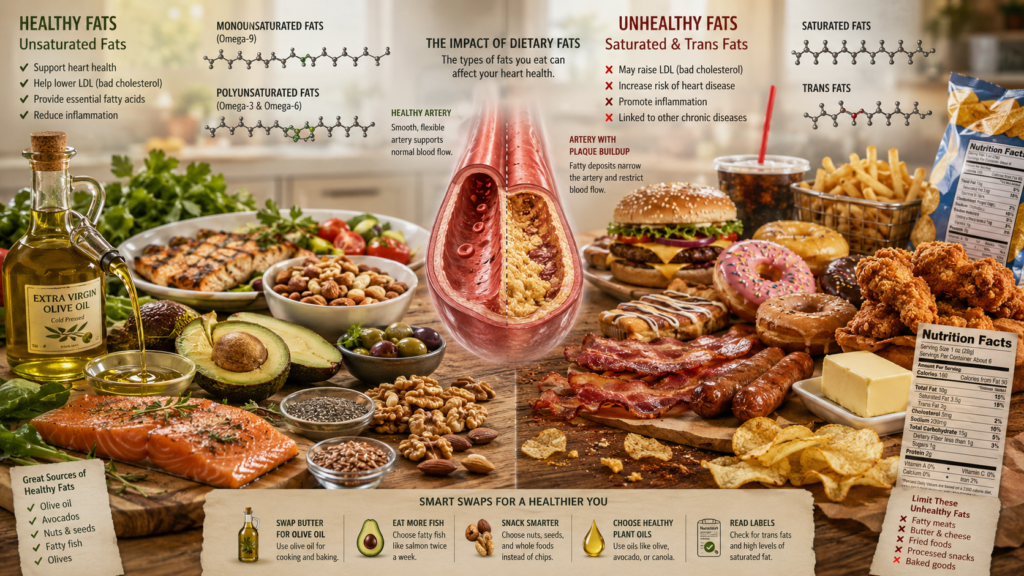
Saturated fats are “saturated” with hydrogen atoms — meaning every carbon in the chain is bonded to as many hydrogens as it can possibly hold. This gives them a rigid, tightly packed structure. The practical consequence? Most saturated fats are solid at room temperature — think of the white fat marbled through a raw steak, or a stick of butter sitting on a counter.

Unsaturated Fats

Unsaturated fats have at least one double bond between carbon atoms in the chain — which means they are missing some hydrogen atoms. That double bond creates a “kink” in the molecular chain, preventing the fat molecules from packing tightly together. The result is that Unsaturated Fats

Unsaturated fats have at least one double bond between carbon atoms in the chain — which means they are missing some hydrogen atoms. That double bond creates a “kink” in the molecular chain, preventing the fat molecules from packing tightly together. The result is that unsaturated fats are liquid at room temperature, olive oil being the most familiar example.

Within unsaturated fats, there are two important subtypes based on how many double bonds exist. Monounsaturated fats (MUFAs) have exactly one double bond. Polyunsaturated fats (PUFAs) have two or more. Both behave very differently in the body than saturated fats and generally, much more favorably.

Trans Fats: The Artificial Villain

Trans fats deserve their own brief mention because they are the one type of fat that virtually every credible nutrition authority agrees should be avoided as completely as possible. Most trans fats are artificially created through a process called partial hydrogenation — taking liquid vegetable oil and pumping hydrogen through it under high pressure to make it solid and shelf-stable. The result is partially hydrogenated oil, which was found in margarine, shortening, packaged cookies, and countless processed snacks for most of the twentieth century.

The FDA banned the addition of partially hydrogenated oils to U.S. food products based on overwhelming evidence that industrial trans fats raise “bad” LDL cholesterol, lower “good” HDL cholesterol, and significantly increase cardiovascular risk. Small amounts of naturally occurring trans fats are found in animal products like beef and dairy, and these appear to be metabolically distinct from industrial trans fats — less concerning but still something most experts recommend limiting.

Saturated Fats in Detail

Where They Come From

Saturated fats are found predominantly in animal products and a handful of tropical plant oils. The major food sources include fatty cuts of beef and pork, poultry skin, full-fat dairy products (butter, whole milk, cream, cheese), lard, and beef tallow. On the plant side, coconut oil and palm oil are notably high in saturated fat — which surprises many people who assume all plant-based oils are heart-healthy. Coconut oil in particular has been heavily marketed as a “superfood” in recent years, a claim that runs in conflict with the science.

What They Do in the Body

The relationship between saturated fat and cardiovascular health has been one of the most debated topics in nutrition science for the past two decades. The original view, dominant for most of the 20th century, was straightforward: eating saturated fat raises LDL (“bad”) cholesterol, and higher LDL raises the risk of heart disease and type 2 diabetes. That basic chain of reasoning is still supported by substantial evidence.

However, the picture has grown more complicated. Research over the past decade has raised legitimate questions about whether all saturated fats are equally problematic, and whether saturated fat in isolation — rather than as part of an overall dietary pattern — is the right thing to be measuring. A study cited by the National Institutes of Health found that replacing saturated fats with refined carbohydrates (which is what happened when Americans went fat-free in the 1980s) did not reduce cardiovascular risk. The key variable isn’t just removing saturated fat — it was what you replace it with.

The evidence clearly shows that replacing saturated fats with unsaturated fats reduces cardiovascular risk. Replacing them with sugar and white flour does not. That distinction has become the cornerstone of modern dietary fat guidance.

How Much Is Too Much?

Current guidance varies slightly between major health organizations, but the general range is consistent. The Dietary Guidelines for Americans recommends keeping saturated fat below 10% of total daily calories. The American Heart Association is more conservative, recommending below 6% — which for a 2,000-calorie diet works out to about 13 grams per day, roughly the amount in a single tablespoon of butter combined with a small handful of cheese.

Monounsaturated Fats (MUFAs)

Where They Come From

Monounsaturated fats are the dominant fat in olive oil, avocados, peanut oil, canola oil, and most nuts — including almonds, cashews, and hazelnuts. They are the nutritional backbone of the Mediterranean diet, which has been studied more extensively for cardiovascular benefit than perhaps any other dietary pattern in history.

Health Benefits

The evidence in favor of MUFAs is robust . Monounsaturated fats lower LDL cholesterol while maintaining levels of HDL (“good”) cholesterol when they replace saturated fat in the diet. A clinical trial called the OmniHeart study found that shifting to a diet rich in monounsaturated fats — compared to a carbohydrate-rich diet — lowered blood pressure, improved cholesterol profiles, and reduced estimated cardiovascular risk. Beyond the heart, research suggests that swapping saturated fats for MUFAs may also support modest weight and body fat reduction even without changing total calorie intake.

MUFAs are also notably stable at cooking temperatures, which makes olive oil a practical and healthy choice for most everyday cooking — sautéing vegetables, making salad dressings, or roasting proteins.

Polyunsaturated Fats (PUFAs) — The Essential Fats

Polyunsaturated fats are, in many ways, the most scientifically interesting category because they include the only two dietary fats that the human body genuinely cannot produce on its own and must obtain from food. These are called essential fatty acids, and they fall into two families: omega-3s and omega-6s.

Omega-3 Fatty Acids

What They Are and Where They Come From

Omega-3s are the fats most Americans have heard of in the context of fish oil supplements. The three main types are ALA (alpha-linolenic acid), EPA (eicosapentaenoic acid), and DHA (docosahexaenoic acid). ALA is found primarily in plant sources — walnuts, flaxseeds, chia seeds, and canola or soybean oil. EPA and DHA are found in fatty fish — salmon, sardines, mackerel, herring, and trout — as well as in algae-based oils, which is where fish get their omega-3s in the first place.

The body can convert ALA into EPA and DHA, but only very inefficiently. For practical purposes, regular fish consumption is the most reliable way to maintain adequate EPA and DHA levels. The American Heart Association recommends at least two servings of fatty fish per week for this reason.

Health Benefits

Omega-3 fatty acids are structural components of cell membranes throughout the body and serve as precursors to signaling molecules that regulate inflammation. Their most well-established benefits are cardiovascular: they reduce triglyceride levels, stabilize heart rhythms, and appear to lower the risk of sudden cardiac death. Beyond the heart, research suggests they play important roles in brain development (particularly during fetal development and infancy), may reduce the risk of certain neurodegenerative conditions, and have documented anti-inflammatory effects relevant to conditions like rheumatoid arthritis.

A recent review published in the journal Foods found that omega-3s may help delay the onset of neurodegenerative disorders such as Alzheimer’s and Parkinson’s disease, reduce depression, and contribute to cancer prevention, though the authors note that more research is needed to fully understand these relationships.

Omega-6 Fatty Acids

What They Are and Where They Come From

Omega-6 fatty acids are found in most vegetable oils — corn oil, soybean oil, sunflower oil, safflower oil — as well as in nuts, seeds, and poultry. Linoleic acid (LA) is the primary dietary omega-6 and is the only one classified as truly essential.

The Omega-6/Omega-3 Imbalance

Here is where things get complicated in a uniquely American way. The typical Western diet contains far more omega-6 fats than necessary and not nearly enough omega-3 fats. The ideal ratio of omega-6 to omega-3 in the diet is thought to be somewhere between 4:1 and 1:1. The actual ratio in the average American diet is estimated at anywhere from 15:1 to 20:1 — a dramatic imbalance driven by the ubiquity of processed foods and vegetable oils in the food supply.

This matters because omega-6 and omega-3 fatty acids compete for the same metabolic pathways in the body. While omega-6s in appropriate amounts are essential and beneficial, a chronically elevated omega-6 to omega-3 ratio is associated with increased inflammation and higher risk of coronary heart disease, hypertension, diabetes, rheumatoid arthritis, and some neurodegenerative conditions. The goal is not to eliminate omega-6s but to bring the ratio back into better balance — primarily by increasing omega-3 intake.

What a Healthy Fat Profile Actually Looks Like

Putting all of this together, what does a well-balanced dietary fat intake actually look like? The evidence points toward a few consistent principles.

In a typical healthy diet, 20–35% of total daily calories can come from fat. Within that total, the composition matters enormously. Unsaturated fats — both mono and polyunsaturated — should make up the bulk. Saturated fats should be limited to under 10% of daily calories by federal guidelines, or under 6% if you are following the American Heart Association’s more aggressive recommendation. Trans fats, the industrial kind, should be avoided as close to completely as possible.

The two truly essential fats — linoleic acid (omega-6) and alpha-linolenic acid (omega-3) — must come from the diet because the human body cannot synthesize them. Everything else the body can manufacture from raw materials, given enough of the right building blocks.

For omega-3s specifically, the WHO and EFSA recommend at least 250 mg per day of EPA + DHA. And recommend 1.6 grams of ALA per day for adult males and 1.1 grams for adult females. Most Americans fall well short of these targets.

Practical Ways to Shift Your Fat Intake

Dietary change works best when it’s specific and sustainable — not when it involves a complete pantry overhaul overnight. Here are evidence-based adjustments that can meaningfully improve the fat profile of a typical American diet.

Replace Saturated Fats With Unsaturated Fats at the Cooking Stage

Instead of frying or sautéing in butter, lard, or palm oil, switch to olive oil, avocado oil, or canola oil. This single substitution is one of the most consistently supported interventions in dietary fat research. For those who prefer a buttery flavor, using a small amount of butter blended with olive oil is a practical middle ground.

Eat Fatty Fish Twice a Week

Salmon, sardines, mackerel, herring, and trout are all excellent sources of EPA and DHA omega-3s. The American Heart Association’s recommendation of two fish servings per week is a well-established and achievable benchmark. Canned fish — particularly canned salmon and sardines — is inexpensive and just as nutritious as fresh. Tuna is an option but requires an larger serving.

Add Nuts, Seeds, and Avocados

A handful of walnuts (a particularly good plant source of ALA omega-3s), a tablespoon of ground flaxseed in yogurt or oatmeal, or half an avocado on toast are all straightforward ways to shift your fat intake in a healthier direction. Nuts and avocados are also rich in monounsaturated fats that support cholesterol health.

Choose Leaner Cuts of Meat

Selecting leaner cuts of beef and pork — those labeled “loin” or “round,” or ground meat that is 90–95% lean — can substantially reduce saturated fat intake without eliminating meat from the diet. Removing skin from poultry before cooking similarly reduces saturated fat in a simple and inexpensive way.

Read Labels for Trans Fats — Carefully

Food packaging can legally claim “0 grams of trans fat” if a product contains less than 0.5 grams per serving. If you eat multiple servings of such products, those fractions add up. The safeguard is to check the ingredient list for “partially hydrogenated oil” — if it appears anywhere, the product contains industrial trans fats., regardless of what the front label says.

Limit — Don’t Necessarily Eliminate — Saturated Fat

A realistic goal is not to strip all saturated fat from your diet but to keep it within the recommended range. Full-fat dairy in moderate amounts, an occasional burger, or butter used sparingly are unlikely to cause harm in the context of an otherwise balanced eating pattern. What matters most, as nutrition experts now emphasize, is the overall dietary pattern — not any single food or nutrient in isolation.

The Bottom Line

Fat is not a dietary villain. It is an essential macronutrient that the body depends on for energy, vitamin absorption, hormone production, brain function, and cell membrane integrity. The question has never really been whether to eat fat — it has always been which fats to prioritize.

The evidence points consistently in one direction: lean toward unsaturated fats (olive oil, nuts, avocados, fatty fish), keep saturated fat in check, avoid industrial trans fats entirely, and pay particular attention to getting enough omega-3 fatty acids, which most Americans chronically under-consume. These adjustments don’t require extreme dietary measures. They require informed choices made consistently — and that, ultimately, is the most sustainable kind of nutrition science.

Illustration generated by author using ChatGPT

Note: The core findings in this article — that unsaturated fats are preferable to saturated fats, that omega-3 and omega-6 fatty acids are essential, and that industrial trans fats are harmful — are supported by decades of research and endorsed by major health authorities including the American Heart Association, the NIH, and the 2025 Dietary Guidelines Advisory Committee. Some nuance remains in the saturated fat debate (particularly regarding specific saturated fatty acid subtypes and their varying cardiovascular effects), and the research on omega-3s and neurological disease is still evolving.

Medical Disclaimer

The information provided in this article is intended for general educational and informational purposes only and does not constitute medical advice. It should not be used as a substitute for professional medical advice, diagnosis, or treatment.

Always seek the guidance of a qualified healthcare provider with any questions you may have regarding a medical condition or treatment. Never disregard professional medical advice or delay seeking it because of something you have read here.

If you are experiencing a medical emergency, call 911 or your local emergency number immediately.

The author of this article is a licensed physician, but the views expressed here are solely those of the author and do not represent the official position of any hospital, health system, or medical organization with which the author may be affiliated.

Sources

Dietary Guidelines Advisory Committee — Food Sources of Saturated Fat (2025)

Harvard T.H. Chan School of Public Health — Types of Fat

American Heart Association — Saturated Fats

American Heart Association — Fats in Foods

Mayo Clinic — Dietary Fat: Know Which to Choose

Mayo Clinic — Trans Fat Is Double Trouble for Heart Health

Healthline — Saturated vs. Unsaturated Fat: Know the Facts

Healthline — Omega-3–6–9 Fatty Acids: A Complete Overview

NCBI/PMC — Monounsaturated Fat vs Saturated Fat: Effects on Cardio-Metabolic Health and Obesity

NCBI/PMC — The Role of Omega-3 and Omega-6 Polyunsaturated Fatty Acid Supplementation in Human Health (Foods, 2025)

Linus Pauling Institute — Essential Fatty Acids

NIH — Omega-3 Fatty Acids Health Professional Fact Sheet

OCL Journal — The Omega-6/Omega-3 Fatty Acid Ratio: Health Implications

VA Nutrition Services — Common Fats and Oils (2024)

UMass Medical — Tips on Reducing Saturated Fat

MedlinePlus — Facts About Trans Fats

Brown University Health — The Truth About Trans Fats

University of Nebraska Extension — Omega-3 and Omega-6 Fatty Acids

Powered by WordPress & Theme by Anders Norén