
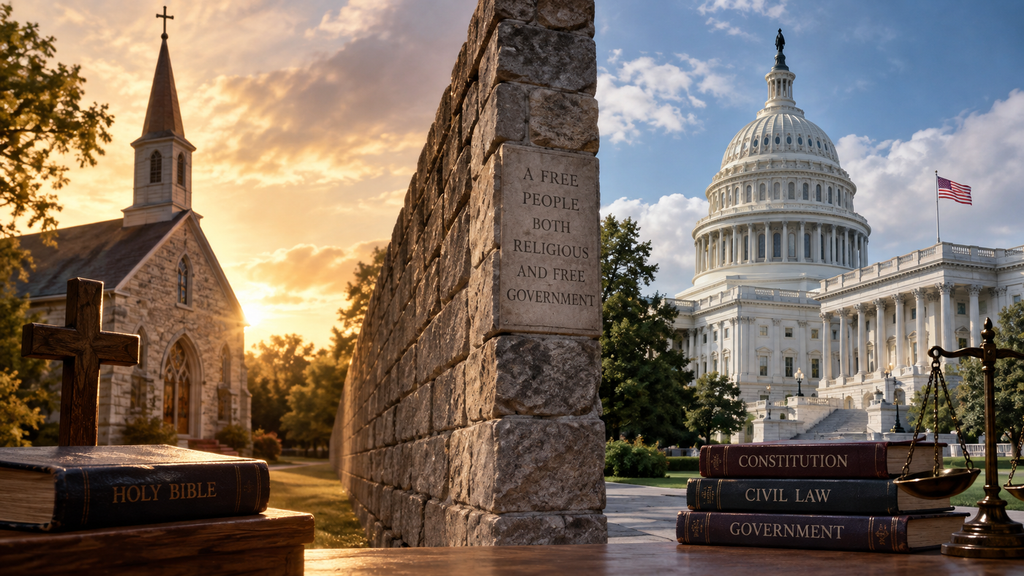
Americans have been arguing about the place of religion and government since before the constitution was written. Is this a Christian nation, or did the founders deliberately create a government that was not Christian? The question has never really gone away it has resurfaced in a 224-page draft report from President Trump’s Religious Liberty Commission.
The Founding Generation
The Declaration of Independence unquestionably assumes a divine source for human rights. But that is not the same thing as declaring that the United States is a Christian nation, particularly if “Christian nation” means a country whose government was founded upon Christianity, biblical law, or Christian doctrine.
We would be equally mistaken to portray the Declaration as an atheistic or thoroughly secular document. God is clearly present in its philosophical framework.
The more difficult question is: What kind of God? The Declaration never mentions Jesus Christ, Christianity, the Bible, salvation, the Trinity, the Church, the Gospel, or Christian revelation. Instead, its terminology, “Nature’s God,” “Creator,” “Supreme Judge,” and “divine Providence,” is broad enough to encompass traditional Christians, more rationalistic Christians, and people influenced by the Enlightenment and natural religion.
That appears intentional. The Declaration was a political statement intended to speak for thirteen colonies containing Anglicans, Congregationalists, Presbyterians, Quakers, Baptists, Catholics, and others. The National Archives describes its preamble as deliberately “universal in tone and scope.”
The phrase most often cited as evidence of a Christian founding, that all men are “created equal” and “endowed by their Creator” with unalienable rights, comes from the Declaration of Independence. It is a document Thomas Jefferson drafted in language borrowed heavily from Enlightenment natural rights philosophy, particularly John Locke’s.
The word Creator was compatible with the rational religious language favored by Jefferson and other enlightened thinkers, but it was hardly exclusive. An orthodox Christian could embrace the same language. What is significant is that the declaration does not identify the Creator specifically with Christianity or Christian doctrine.
Jefferson himself held famously unorthodox religious views and has been referred to by some as a deist. He later produced his own edited version of the Bible that removed its miracles. Benjamin Franklin’s religious views were also unorthodox by conventional Christian standards. Labeling individual founders simply as deist can obscure how complicated their beliefs actually were.
That is not to say Christianity was irrelevant to the founding generation. Many signers were devout, and Christian moral vocabulary saturated their writing. But the founders were not of one mind on religion, and they did not create a sectarian Christian statement.
The political argument was straightforward. Rights did not originate with government. Government existed to protect them, and a government that persistently violated them undermined its own claims of legitimate authority.
The Constitution Says Nothing About God
Whatever we may make of the Declaration’s phrasing, we should remember that it did not create the American government. The Constitution did, thirteen years later. The Constitution is conspicuously silent on the subject of God or Christianity.
Article VI bars any religious test for holding federal office, and the First Amendment forbids Congress from establishing a religion.
Nineteenth-century efforts to amend the Constitution to explicitly acknowledge God failed to gain traction. If the founding generation intended to build an officially Christian government, it’s odd they would leave it out of the document that established that government.
This doesn’t make the founding generation hostile to religion. Rather, it shows a constitutional design in which religious belief could flourish voluntarily but would not be the condition of citizenship, officeholding, or federal legal authority.
The Treaty
One of the most frequently cited founding-era statements comes from the 1797 Treaty of Tripoli. The English version submitted to the Senate declared that “the government of the United States of America is not in any sense founded on the Christian Religion.” The Senate approved the treaty and President John Adams signed it.
There is, however, an important complication. That famous sentence has no counterpart in the surviving Arabic text. How the English version came to contain the statement remains unexplained.
Even so, the fact that a Senate full of men who had lived through the founding felt no need to qualify or debate that sentence before ratifying it indicates they didn’t object to the wording.
The Same Argument, Two Hundred and Fifty Years Later
This argument resurfaced in 2026 around the report of the Religious Liberty Commission. The White House describes its membership as representing many religious and professional backgrounds. PBS has characterized the Commission as composed almost entirely of conservative Christians along with one orthodox rabbi.
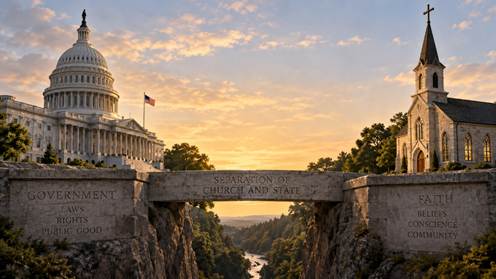
According to reporting from PBS and NBC News, the commission’s draft report argues for replacing the traditional “wall of separation” framing of church and state with the idea of religious liberty as a “bridge” connecting the two. It leans on the premise that the country was founded on Judeo-Christian or Christian principles.
Historical record is messier than either side of the modern controversy acknowledges. Religious ideas unquestionably influenced many of the founders. At the same time the constitution they produced did not establish Christianity as the basis of federal authority. Americans have been arguing about the significance of those two facts ever since.
Indeed, one of the remarkable achievements of the nation’s founding was that people whose religious beliefs differed substantially could agree upon the proposition that human beings possess rights that government did not give them and therefore government cannot legitimately take away.
That was Jefferson’s political point. For the purposes of the declaration, it is the source of those rights that matters. Defining the precise theology of the Creator does not.
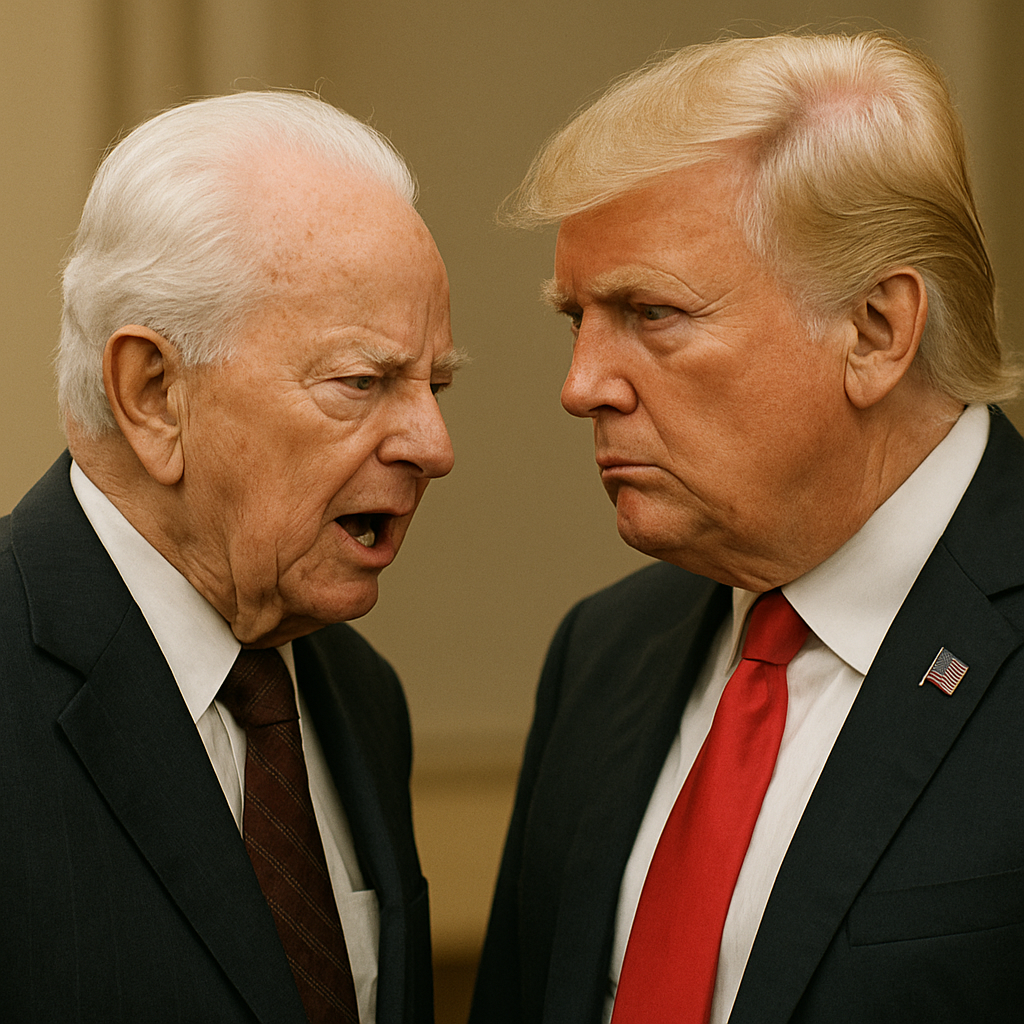
Illustrations generated by author using ChatGPT
Sources
1. National Archives, Declaration of Independence, transcript. https://www.archives.gov/founding-docs/declaration-transcript
2. National Archives, Constitution of the United States, transcript. https://www.archives.gov/founding-docs/constitution-transcript
3. Americans United for Separation of Church and State, “A Word From John Adams: A 224-Year-Old Treaty Says the U.S. Was Not Founded as a Christian Nation.” https://www.au.org/the-latest/church-and-state/articles/a-word-from-john-adams-a-224-year-old-treaty/
4. American Quarterly (Johns Hopkins University Press), “Reading American Secularism in the 1797 Treaty of Tripoli.” https://muse.jhu.edu/article/758950/summary
5. The White House, Fact Sheet: President Donald J. Trump Establishes the Religious Liberty Commission. https://www.whitehouse.gov/fact-sheets/2025/05/fact-sheet-president-donald-j-trump-establishes-the-religious-liberty-commission
6. PBS News, coverage of the Religious Liberty Commission’s draft report. https://www.pbs.org/newshour/politics/watch-trump-receives-report-from-religious-liberty-commission-in-the-oval-office
7. NBC News, coverage of the Religious Liberty Commission’s draft report. https://www.nbcnews.com/politics/trump-administration/religious-commission-urges-bridges-church-state-sweeping-draft-report-rcna352015
8. American Humanist Association, statement on the Religious Liberty Commission report. https://americanhumanist.org/featured/trump-religious-liberty-commission-report-provides-pathway-to-christian-nationalism/

The Electoral College: Should America Go Popular?
By John Turley
On September 1, 2025
In Commentary, History, Politics
Few topics in American politics generate as much perennial debate as the Electoral College. Every four years, calls to abolish it resurface—often with renewed vigor when the electoral vote winner loses the popular vote, as happened in 1824, 1876, 1888, 2000, and 2016. The proposal is to elect the president by a nationwide popular vote, just as we do governors and senators.
Why We Have an Electoral College
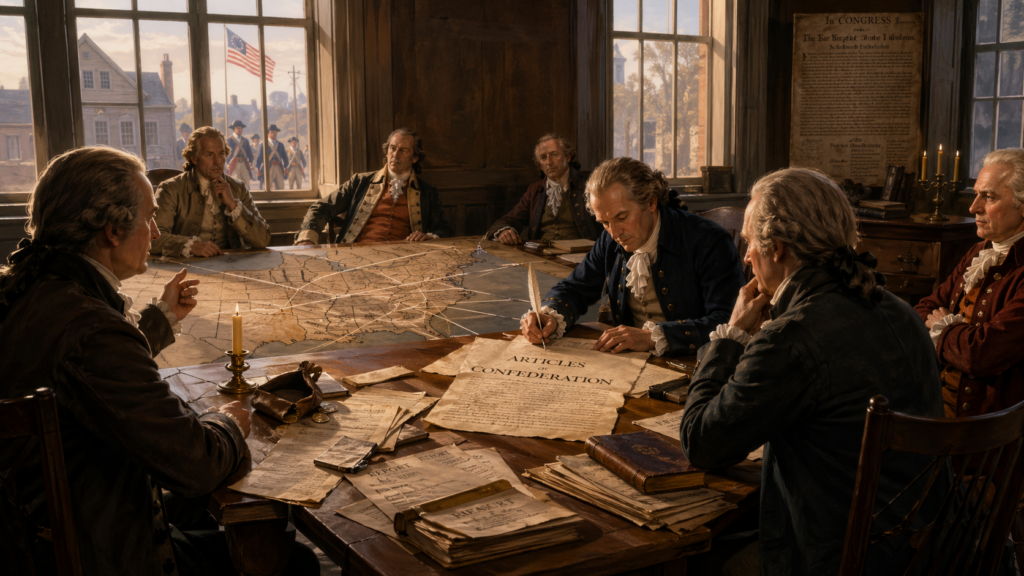
The Electoral College was a late-stage compromise at the Constitutional Convention of 1787. The framers were balancing multiple tensions:
Delegates feared that direct election by popular vote would favor populous states, allow urban centers to dominate rural areas, and encourage demagogues to campaign purely on popular passions. At the same time, they worried about giving Congress too much control over the executive branch.
The system for selecting the president—via the Electoral College—was partly designed to prevent direct popular influence. Its original intent, according to historians, was to empower electors (seen as more knowledgeable) and to ensure thoughtful deliberation in choosing the president, guarding against the masses being swayed by charm rather than substance.
Some delegates—like James Madison, James Wilson, and Gouverneur Morris—supported direct popular election of the president, while others, like Elbridge Gerry and Roger Sherman, explicitly voiced distrust in direct election of the president and believed ordinary voters lacked impartiality or sufficient knowledge.
Institutional and political bargaining ultimately shaped the final structure. Their solution: each state gets electors equal to its total number of representatives and senators. The addition of two electors for the senators ensures that the small states remain, on a population basis, overrepresented in the Electoral College.
State legislatures determine how electors are chosen (eventually, every state moved to popular election). Most states now award all their electoral votes to the statewide popular vote winner—“winner-take-all.”
The Electoral College thus emerged not as anyone’s ideal system, but as a possible, workable compromise that balanced competing regional interests, philosophical concerns about democracy, and the practical realities of governing a large, diverse republic in the 18th century.
Pros of Eliminating the Electoral College
Equal Weight for Every Vote
The most compelling argument for eliminating the Electoral College centers on democratic equality. Under the current electoral system, a vote in Wyoming carries roughly three times the weight of a vote in California when measured by electoral votes per capita. To put this in real numbers Wyoming has about 193,000 people per electoral vote while California has about 718,000. This mathematical reality means that some Americans’ voices count more than others in selecting their president, a principle that seems to contradict the foundational democratic ideal of “one person, one vote.”
A national popular vote would ensure that every American’s vote carries identical weight, regardless of geography. This approach would eliminate scenarios where candidates win the presidency while losing the popular vote. Such outcomes can undermine public confidence in democratic institutions and raise questions about the legitimacy of electoral results.
Reflects the Will of the Majority
In two of the last six elections (2000 and 2016), the candidate with fewer total popular votes became president. While the framers accepted the possibility of divergence between the popular and electoral results, many modern Americans view such outcomes as undermining democratic legitimacy.
Encourages Nationwide Campaigning
Because many states are firmly “red” or “blue,” campaigns focus their energy on a handful of battleground states that could go either way—like Pennsylvania, Wisconsin, and Arizona. Under a popular vote, candidates would have an incentive to compete everywhere, because every additional vote counts the same regardless of location.
Simplifies the Process
The Electoral College system confuses many Americans and can seem archaic in the 21st century. A direct popular vote is straightforward and immediately understandable: the candidate who receives the most votes wins. This simplicity could increase public trust and participation in the democratic process.
Eliminates “Faithless Electors”
Although rare, faithless electors—those who cast electoral votes against their state’s popular choice—are possible under the current system. A direct election would remove this constitutional quirk.
Cons of Eliminating the Electoral College
Federalism Concerns
The United States is a union of states as well as a single nation. The Electoral College reinforces the role of states in presidential elections, reflecting their status as sovereign entities in certain respects. Abolishing it could be seen as eroding federalism by further centralizing power.
Risk of Regional Dominance
Opponents argue that without the Electoral College, candidates could focus disproportionately on high-population regions—California, Texas, Florida, New York—while ignoring rural states and smaller communities. Whether this would happen in practice is debated, but the perception of neglect could deepen regional divides.
Potential for Narrow-Margin Crises
In a popular vote system, a razor-thin margin would require a nationwide recount. Under the Electoral College, disputes are typically contained within a state (e.g., Florida in 2000). A national recount would be a logistical and political nightmare.
Constitutional Hurdles
Abolishing the Electoral College requires a constitutional amendment—an extraordinarily high bar. That means approval by two-thirds of both houses of Congress and ratification by three-quarters of the states. Smaller states, which benefit from the Electoral College’s vote weighting, have little incentive to approve such a change.
Intermediate Options
Since abolishing the Electoral College outright is politically unlikely in the near term, reform advocates have proposed middle-ground solutions.
The National Popular Vote Interstate Compact (NPVIC)
The NPVIC is an agreement among states to award all their electoral votes to the national popular vote winner, but it only takes effect once states totaling at least 270 electoral votes join. As of 2025, 17 states plus D.C. (totaling 209 electoral votes) have joined. This approach sidesteps a constitutional amendment but relies on states’ willingness to cede control over their electoral votes. The compact could be implemented without amending the constitution and achieves the functional equivalent of a popular vote. However, it has not been legally tested and would likely face court challenges. To me, the greatest drawback is that states could withdraw at any time. I would envision that in a closely contested and contentious election states unhappy with the national outcome would likely withdraw from the compact.
Proportional Allocation of Electoral Votes
Instead of winner-take-all, states could allocate electoral votes proportionally to the share of the statewide vote. Maine and Nebraska already use a variation of this system, awarding some votes by congressional district. Theoretically, this would reduce the impact of battleground states and increase the representation for minority views within states. But it could also increase the likelihood of no candidate reaching 270 electoral votes thereby sending the election into the House of Representatives. It still preserves the over representation of smaller states because it retains the two electors for senators.
If electors are awarded proportionally based on statewide voting, the popular vote may not be distributed in a manner to allow awarding of whole delegates. There’s no constitutional provision for awarding partial electors. This would be especially significant in states with only one or two representatives in the house.
If electors were awarded to the winners of each Congressional District this would encourage even more gerrymandering than we are currently seeing. Extreme gerrymandering could undermine any progress towards reflecting the popular vote, simply continuing the current mismatch of popular and electoral votes.
Gerrymandering is a political practice that involves manipulating the boundaries of electoral districts to benefit a particular party or group. It is nothing new in American politics, originating in the early 19th century. The term “gerrymandering” was coined after an 1812 incident in Massachusetts, where Governor Elbridge Gerry signed a bill redrawing district lines to favor his party. One of the districts resembled a mythical salamander in shape, inspiring the portmanteau “Gerry-mander” in a satirical cartoon by Elkanah Tisdale that helped popularize the term. It’s interesting, that since gerrymandering favored the Democratic-Republican Party and the newspaper that published the cartoon supported the Federalist Party, it was made to look not like a cute salamander but more like an ominous dragon.
Bonus Electoral Votes for National Popular Vote Winner
A hybrid idea would keep the Electoral College but award a fixed number of bonus electors (say, 100) to the national popular vote winner. This would almost guarantee alignment between the popular and electoral results without abandoning the current structure. This option maintains a state-based system and reduces the chance of a split result. But it would also require a constitutional amendment and add complexity that many voters may find confusing.
Feasibility of Change
Reforming or abolishing the Electoral College faces three main obstacles:
Conclusion
The Electoral College is both a relic of 18th-century compromises and a living feature of America’s federal structure. Its defenders argue that it protects smaller states, contains electoral disputes, and reinforces the states’ role in national governance. Its critics counter that it violates the principle of “one person, one vote” and distorts campaign priorities.
Abolishing it in favor of a direct popular vote would likely make presidential elections more democratic in the literal sense, but it would also raise questions about federalism, campaign strategy, and the handling of close results. The Electoral College preserves federalism and geographic balance but can produce outcomes that seem to contradict majority will.
Intermediate options like the NPVIC or proportional allocation may offer ways to mitigate the College’s most controversial effects without uprooting the constitutional framework but also face significant hurdles for implementation.
Whether reform happens will depend not just on the merits of the arguments, but on the political incentives of the states and the parties. Until those incentives shift, the Electoral College is likely to remain—imperfect, contentious, and uniquely American.