

When most people think of Parkinson’s disease, they picture the characteristic tremor—that involuntary shaking that has become almost synonymous with the condition. But the reality is far more complex than just one visible symptom. Let’s dig into what’s actually happening in the brain, how doctors figure out what’s going on, and what living with this condition really looks like.
What Causes Parkinson’s Disease?
Here’s where things get frustrating for researchers: despite decades of study, scientists still don’t know exactly what causes the nerve cells in the brain to die. I’m going to apologize in advance because I’m going to be using a lot of “doctor talk”—no way around it.
What we do know is that nerve cells (neurons) in the substantia nigra portion of the basal ganglia—an area of the brain controlling movement—become impaired or die, and these neurons normally produce dopamine, an important brain chemical. When these cells stop working properly, dopamine levels drop, and that’s when movement problems begin showing up.
But dopamine isn’t the whole story. People with Parkinson’s also lose nerve endings that produce norepinephrine, the main chemical messenger of the sympathetic nervous system, which helps explain why the disease affects so much more than just movement—things like blood pressure, digestion, and energy levels all take a hit.
Most Parkinson’s cases are idiopathic, meaning the cause is unknown, though contributing factors have been identified. Current thinking suggests a complicated mix of genetic and environmental factors. About 5% to 10% of cases begin before age 50, and these early-onset forms are often, though not always, inherited.
Some risk factors have emerged from research: age is the most significant, with about 1% of those over 65 and around 4.3% of those over 85 affected. Traumatic brain injury significantly increases risk, especially if recent, and repeated head injuries from contact sports can cause what’s called post-traumatic parkinsonism. Muhammad Ali is a classic example of this.
Exposure to pesticides and industrial chemicals has also been identified as a risk factor. Interestingly, large epidemiologic studies consistently show that people who smoke have a lower risk of being diagnosed with Parkinson’s disease than never‑smokers, although smoking is still strongly discouraged because of its many harmful health risks. Large cohort studies in the U.S. and Europe generally find no direct association between alcohol consumption and Parkinson’s disease. A few observational studies show that moderate drinkers have slightly lower Parkinson’s rates. However, researchers believe this may be due to reverse causation (people in early or undiagnosed stages often reduce drinking because of GI or mood changes) and lifestyle confounders (moderate drinkers may differ in socioeconomic status, diet, or activity level). So, the “protective” effect is considered speculative, not causal.
The Symptoms: More Than Just Shaking
The hallmark movement symptoms—what doctors call “motor symptoms”—are what usually bring people to the doctor. Slowed movements, called bradykinesia, is required for a Parkinson’s diagnosis. People describe it as muscle weakness, though it’s really about control, not strength. The classic tremor, stiffness, and balance problems round out the main movement issues. Patients frequently show reduced arm swing, shuffling gait, difficulty initiating movement or turning, masked facial expression, decreased blinking, and soft or monotone speech.
But here’s what often surprises people: many individuals later diagnosed with Parkinson’s notice that prior to experiencing stiffness and tremor, they had sleep problems, constipation, loss of smell, and restless legs. These “prodromal symptoms” can show up years before the movement problems become obvious. Other early signs include mood disorders like anxiety and depression.
The cognitive side deserves attention too. Some people experience changes in cognitive function, including problems with memory, attention, and the ability to plan and accomplish tasks, though hard to pin down due to concurrence with age related memory problems, 20% at the time of diagnosis is a commonly cited number. More contested is how many develop Parkinson’s dementia, with estimates ranging from 20% all the way to 85%.
How Doctors Make the Diagnosis
Here’s something that might surprise you: there are currently no blood or laboratory tests to diagnose non-genetic cases of Parkinson’s. The standard diagnosis is clinical, meaning there’s no test that can give a conclusive result—certain physical symptoms need to be present.
Doctors typically diagnose Parkinson’s by taking a detailed medical history and performing a neurological examination. If symptoms improve after starting medication, that’s another indicator that the person has Parkinson’s.
There are some imaging tools available. The FDA approved an imaging scan called the DaTscan in 2011, which allows doctors to see detailed pictures of the brain’s dopamine system using a radioactive drug and SPECT scanner. But this scan can’t definitively diagnose Parkinson’s though it helps rule out conditions that mimic it. A hallmark of Parkinson’s is the buildup of misfolded alpha-synuclein proteins (Lewy bodies) inside neurons. Whether this is a cause, an effect, or both is still under study—this part of the science remains somewhat speculative.
Recently, researchers developed something more promising: the alpha-synuclein seeding amplification assay can detect abnormal alpha-synuclein in spinal fluid and may detect Parkinson’s in people who haven’t been diagnosed yet. The catch? It requires a spinal tap and isn’t widely available, though scientists are working on blood and saliva tests.
The early diagnostic challenge is real. Many disorders can cause similar symptoms, and people with Parkinson’s-like symptoms from other causes are sometimes said to have parkinsonism, which includes conditions like multiple system atrophy and Lewy body dementia that require different treatments.
What to Expect: The Prognosis
Let’s address the big question: how does Parkinson’s affect life expectancy? The news here is better than you might think. The average life expectancy of a person with Parkinson’s is generally the same as for someone without the disease.
More specifically, average life expectancy has increased by about 55% since 1967, rising to more than 14.5 years from diagnosis. Modern treatments have made a huge difference. Research indicates that those with Parkinson’s and normal cognitive function appear to have a largely normal life expectancy.
That said, timing matters. Research from 2020 suggests that people who receive a diagnosis before age 70 usually experience a greater reduction in life expectancy, and males with Parkinson’s may have a greater reduction in life expectancy than females.
The disease is progressive, meaning it gets worse over time, but symptoms and progression vary from person to person, and neither you nor your doctor can predict which symptoms you’ll get, when, or how severe they’ll be. The tremor-dominant type usually has a more favorable prognosis than the hypokinetic type.
What actually causes death in advanced Parkinson’s? Advanced symptoms can cause falls, pressure ulcers, swallowing difficulties and general frailty, all of which are linked to death. Aspiration pneumonia—when you inhale food or liquid into the lungs—is the leading cause of death for people with Parkinson’s.
Managing the Disease
Currently, there’s no cure for Parkinson’s, but medications or surgery can improve many of the movement symptoms.
The gold standard medication is levodopa (often combined with carbidopa as Sinemet). Healthcare providers use levodopa cautiously and they commonly combine it with other medications to keep your body from processing it before it enters your brain. This helps avoid side effects like nausea, vomiting, and low blood pressure when standing up. The tricky part? Over time, the way your body uses levodopa changes, and it can lose effectiveness.
Beyond levodopa, doctors use MAO-B inhibitors and dopamine agonists. As the disease progresses, these medications become less effective and may cause involuntary muscle movements. When drugs stop working well, there are surgical options to treat severe motor symptoms.
The main surgical treatment today is called deep brain stimulation (DBS). It is the most important therapeutic advancement since the development of levodopa, and it’s been FDA-approved since the late 1990s A surgeon places thin metal wires called electrodes into one or both sides of the brain, in specific areas that control movement. A second procedure implants an impulse generator battery under the collarbone or in the abdomen. It is similar to a heart pacemaker and about the size of a stopwatch, this device delivers electrical stimulation to those targeted brain areas.
A new treatment that is being used is focused ultrasound. Guided by MRI, high-intensity, inaudible sound waves are emitted into the brain, and where these waves cross, they create high energy that destroys a very specific area connected to tremor. It’s considered non-invasive and the FDA has approved it for Parkinson’s tremor that doesn’t respond to medications.
Don’t underestimate lifestyle interventions either. Physical therapy can improve balance and address muscle stiffness, and regular exercise improves strength, flexibility, and balance. Eating a balanced diet helps—drinking plenty of water and eating enough fiber reduces constipation, while omega-3 fats and magnesium may boost cognition and help with anxiety.
Parkinson’s disease sits at the intersection of aging, genetics, environment, and biology. Diagnosis is clinical, progression is gradual and variable, and treatment has become increasingly sophisticated. While it remains incurable, early diagnosis, personalized medication plans, targeted therapies like DBS, and consistent exercise allow many people to maintain meaningful independence for years.
The key message from specialists? Treatment makes a major difference in keeping symptoms from having worse effects, and adjustments to medications and dosages can hugely impact how Parkinson’s affects your life.






The U.S. Public Health Service: Guardians of America’s Health
By John Turley
On July 3, 2025
In Commentary, History, Medicine
The United States Public Health Service (USPHS) has quietly served as the backbone of the nation’s public health infrastructure for over two centuries. From its beginnings as a maritime medical service to its current role as a comprehensive public health organization, the USPHS has evolved to meet the changing medical challenges facing Americans and to protect and promote the health of the nation.
Origins and Early History
The U.S. Public Health Service traces back to 1798, when President John Adams signed “An Act for the Relief of Sick and Disabled Seamen.” This legislation established the Marine Hospital Service and created a network of hospitals to care for the merchant sailors who served America’s growing maritime commerce. The act represented one of the first examples of federally mandated health insurance, as ship owners were required to pay 20 cents per month per sailor to fund medical care.
The Marine Hospital Service initially operated a series of hospitals in major port cities including Boston, New York, Philadelphia, and Charleston. These facilities served not only sick and injured sailors but also played a crucial role in preventing the spread of infectious diseases that could arrive on ships from foreign ports. This dual function of treatment and prevention would become a defining characteristic of the USPHS mission.
The transformation from the Marine Hospital Service to the modern Public Health Service began in the late 19th century. In 1889, the organization was restructured and placed under the supervision of Dr. John Maynard Woodworth as Supervising Surgeon—later Surgeon General—marking the beginning of its evolution into a more comprehensive public health agency. The name was officially changed to the Public Health and Marine Hospital Service in 1902, and finally to the U.S. Public Health Service in 1912, reflecting its expanded mandate beyond maritime health.
Evolution and Expansion
The early 20th century brought significant expansion to the USPHS mission. The 1906 Pure Food and Drug Act gave the service regulatory responsibilities, leading to the creation of what would eventually become the Food and Drug Administration. During World War I, the USPHS took on additional responsibilities for military health and epidemic control, establishing its role as a rapid response organization for national health emergencies.
The Great Depression and World War II further expanded the service’s scope. The Social Security Act of 1935 created new public health programs administered by the USPHS, while wartime demands led to increased focus on occupational health, environmental health hazards, and the health needs of defense workers. The post-war period saw the establishment of the National Institutes of Health—originally called the Laboratory of Hygiene—as part of the USPHS, cementing its role in medical research.
Major Functions and Modern Roles
Today’s U.S. Public Health Service operates as part of the Department of Health and Human Services and supports major agencies and functions. The service’s mission centers on protecting, promoting, and advancing the health and safety of the American people through several key areas.
Disease Prevention and Health Promotion are the core of USPHS activities. It works with the Centers for Disease Control and Prevention (CDC), to lead national efforts in the prevention and control of infectious and chronic diseases. From tracking disease outbreaks to promoting vaccination programs, the USPHS a part of America’s first line of defense against health threats.
Regulatory and Safety Functions represent other crucial areas. The USPHS coordinates with the Food and Drug Administration (FDA) to ensure the safety and efficacy of medications, medical devices, and food products. It works with the Agency for Toxic Substances and Disease Registry monitoring environmental health hazards. Other USPHS components are involved in regulating everything from clinical laboratories to health insurance portability.
Emergency Response and Preparedness has become increasingly important in recent decades. The USPHS maintains rapid response capabilities for natural disasters, disease outbreaks, and public health emergencies. This includes the deployment of Commissioned Corps officers to disaster zones and the maintenance of strategic national stockpiles of medical supplies.
Health Services for Underserved Populations continues the service’s historic mission of providing care where it’s most needed. The Health Resources and Services Administration oversees community health centers, rural health programs, and initiatives to address health disparities among vulnerable populations. The Indian Health Service is an important part of the USPHS, providing healthcare to often isolated communities.
The Commissioned Corps
One of the most distinctive features of the USPHS is its Commissioned Corps, a uniformed service of over 6,000 public health professionals. Established in 1889, the Corps operates as one of the eight uniformed services of the United States, alongside the armed forces, NOAA Corps, and Coast Guard. Officers hold military-style ranks and wear uniforms, but their mission focuses entirely on public health rather than defense.
The Commissioned Corps provides a ready reserve of highly trained health professionals who can be rapidly deployed to address public health emergencies. From hurricane and disaster relief to pandemic assessment and treatment, Corps officers have served on the front lines of America’s health challenges, providing everything from direct patient care to epidemiological investigation and public health program management.
Contemporary Challenges and Future Directions
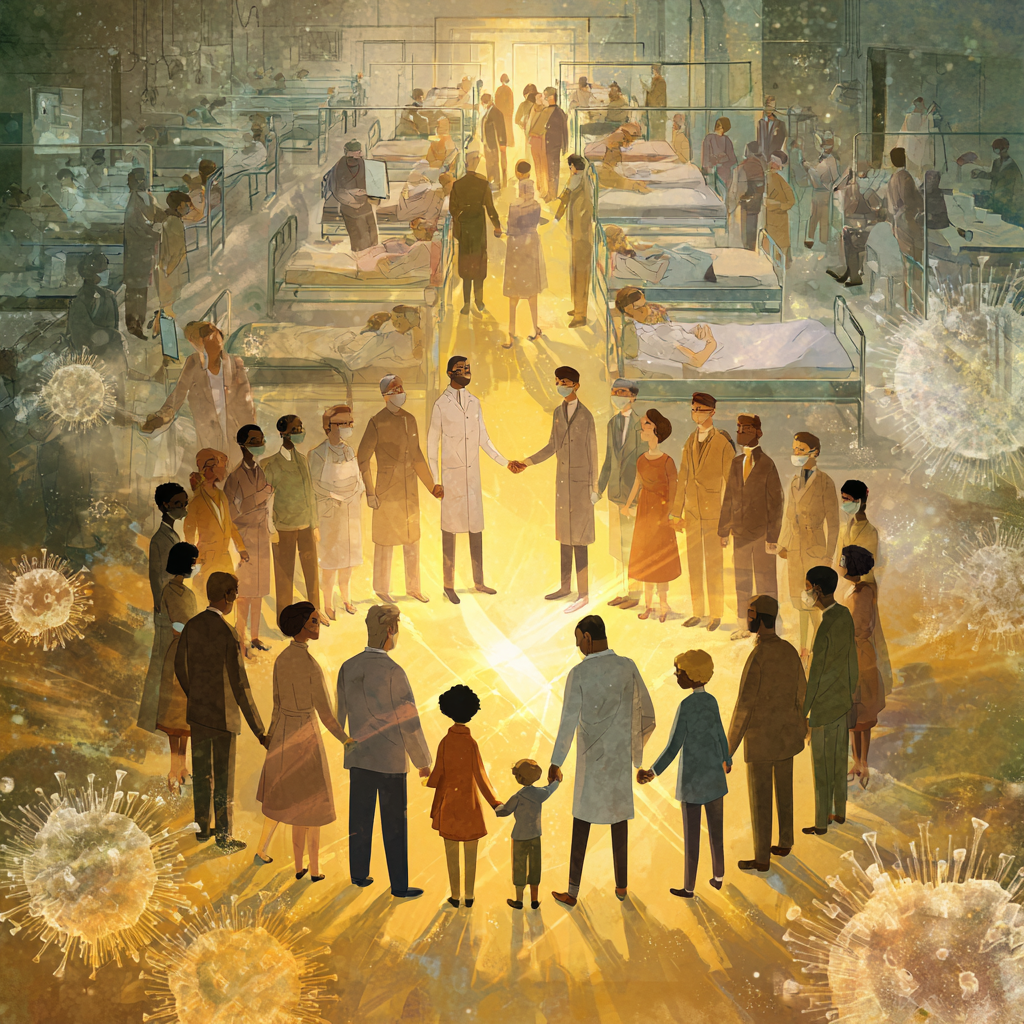
The U.S. Public Health Service continues to evolve in response to emerging health challenges. Climate change, antimicrobial resistance, mental health crises, and health equity concerns represent current priorities. The COVID-19 pandemic demonstrated both the critical importance of robust public health infrastructure and the challenges of maintaining public trust in health authorities.
As America faces an increasingly complex health landscape, the USPHS mission of protecting and promoting the nation’s health remains as relevant as ever. From its origins serving sailors in port cities to its current role addressing global health threats, the U.S. Public Health Service continues its quiet but essential work of safeguarding American health, adapting its methods while maintaining its core commitment to serving the public good.
The service’s history shows that effective public health requires not just scientific expertise, but also the institutional ability to respond rapidly to emerging threats, the authority to implement necessary interventions, and the public trust to lead national health initiatives. As new challenges appear, the USPHS continues to build on its more than two-century legacy of service to the American people.