Not long ago I was watching a news show and one of the panelists started talking about “a duel of words” that went on in a congressional hearing. I was intrigued by the use of the word duel and I thought I’d look into the history of this strange custom.
In the age before Twitter feuds, internet trolling, and legal settlements, honor was defended with pistols at dawn. The Code Duello, a set of rules governing dueling, offers a fascinating glimpse into how ideas of masculinity, reputation, and justice shaped public and private life in the Anglo-American world from the mid-18th century through the antebellum era.
The Code Duello emerged as one of the most distinctive and controversial aspects of genteel culture in the American colonies in the early United States. This elaborate system of honor-based combat, imported from European aristocratic traditions, would profoundly shape American society between 1750 and 1860, creating a culture where personal honor often trumped legal authority and where violence became a sanctioned means of dispute resolution among the elite.
European Origins
The Code Duello originated in Renaissance Italy and spread throughout European aristocratic circles as a means of settling disputes while maintaining social hierarchy. The practice reached the American colonies through British and Continental European settlers who brought with them deeply ingrained notions of honor, reputation, and gentlemanly conduct. Unlike random violence or brawling, dueling operated under strict protocols that emphasized courage, skill, and adherence to prescribed rituals.
The most influential codification was the Irish Code Duello of 1777, written by gentlemen of Tipperary and Galway. This twenty-six-rule system established procedures for issuing challenges, selecting weapons, determining conditions of combat, and defining acceptable outcomes. The code emphasized that dueling was a privilege of gentlemen, requiring both participants to be of equal social standing and ensuring that honor could only be satisfied through formal, regulated combat.
Colonial Implementation and Adaptation
The first recorded American duel occurred in 1621 in Plymouth, Massachusetts, between two servants, but the practice soon became the exclusive domain of elites as only “gentlemen” were considered to possess honor worth defending in this way.
The Irish Code Duello was widely adopted in America, though often with local variations. In 1838, South Carolina Governor John Lyde Wilson published an “Americanized” version, known as the Wilson Code, which further codified the practice for the southern states and attempted to increase negotiated settlements. These codes served as the de facto law of honor, even as formal legal systems struggled to suppress dueling.
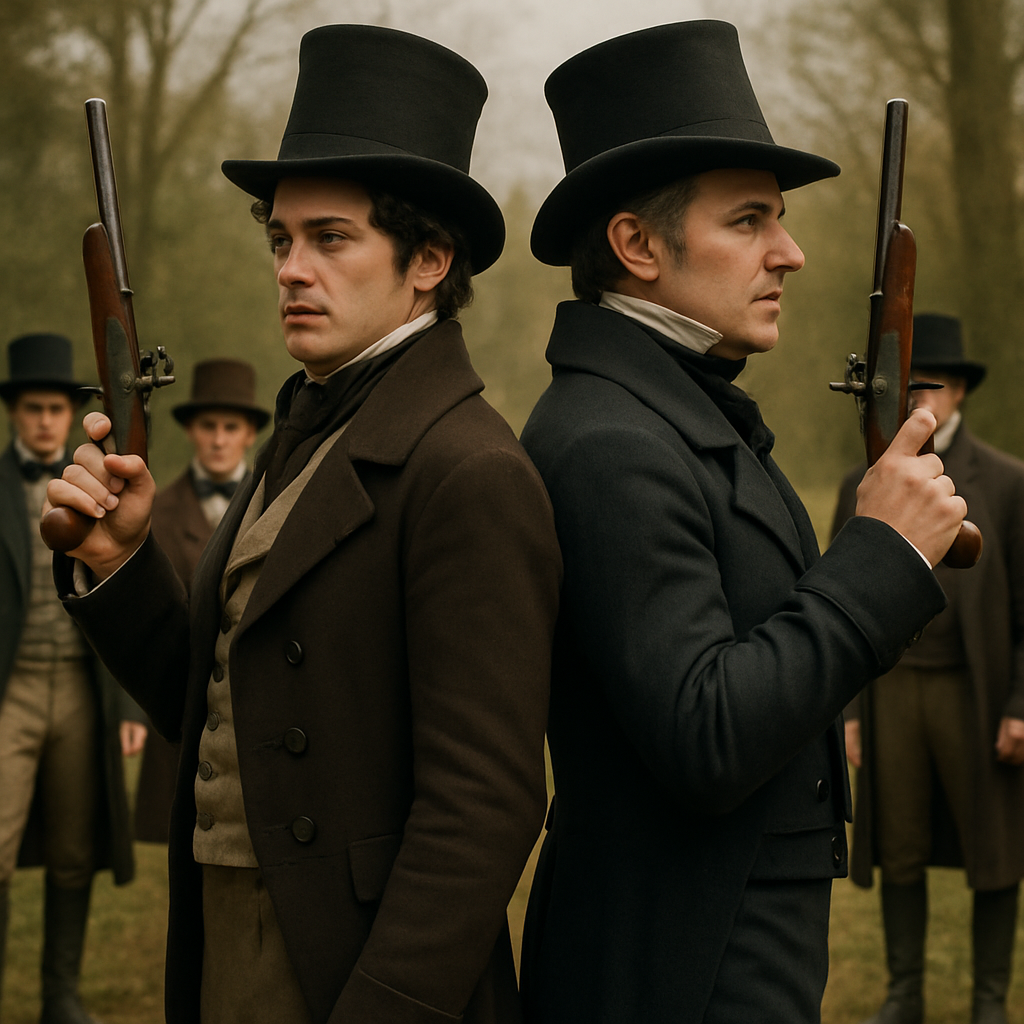
The practice gained prominence among the southern plantation society’s hierarchy as dueling fit well with its emphasis on personal honor. The ritual was highly formal: challenges were issued in writing, seconds (assistants to the duelists) attempted to mediate, the weapons chosen, and terms were carefully negotiated.
Colonial dueling adapted European practices to American circumstances. While European duels often involved swords, reflecting centuries of aristocratic martial tradition, American duelists increasingly favored pistols, which were more readily available and required less specialized training. This shift democratized dueling to some extent, as pistol proficiency was more easily acquired than swordsmanship, though the practice remained largely restricted to the upper classes.
The Revolutionary War significantly expanded dueling’s influence. Military service brought together men from different regions and social backgrounds, spreading dueling customs beyond their original geographic and social boundaries. Officers who had learned European military traditions during the conflict carried these practices into civilian life, establishing dueling as a marker of martial virtue and gentlemanly status.
The Early Republic
Following independence, dueling became increasingly institutionalized in American society. The young republic’s political culture, characterized by intense partisan conflict and personal attacks in newspapers, created numerous opportunities for perceived slights to honor that demanded satisfaction through combat.
The most famous American duel occurred in 1804 when Aaron Burr killed Alexander Hamilton at Weehawken, New Jersey. This encounter exemplified both the power and the contradictions of dueling culture. Hamilton, despite philosophical opposition to dueling, felt compelled to accept Burr’s challenge to maintain his political viability. The duel’s outcome effectively ended Burr’s political career and demonstrated how adherence to the code could destroy the very honor it purported to defend.
Prior to becoming president, Andrew Jackson took part in at least three duels, although he is rumored to have been in many more. In his most famous duel, Jackson shot and killed a man who had insulted his wife. Jackson was also wounded in the duel and carried the bullet in his chest for the rest of his life.
Political dueling reached epidemic proportions in the antebellum period. Congressional representatives, senators, and other public figures regularly challenged opponents to combat over policy disagreements or personal insults. The practice became so common that some politicians deliberately provoked duels to enhance their reputation for courage, while others saw dueling as essential to maintaining credibility in public life.
Regional Variations and Social Dynamics
Dueling culture varied significantly across regions. The South developed the most elaborate and persistent dueling traditions, where the practice became intimately connected with concepts of honor, masculinity, and social hierarchy that would later influence Confederate military culture. Southern dueling codes often emphasized elaborate rituals and multiple exchanges of fire, reflecting a culture that viewed honor as more important than life itself.
Northern attitudes toward dueling were more ambivalent. While many Northern elites participated in dueling, the practice faced stronger opposition from religious groups, legal authorities, and emerging middle-class values that emphasized commerce over honor. Anti-dueling societies formed in several Northern cities, and some states enacted specific anti-dueling legislation, though enforcement remained inconsistent. Laws against it were passed in several colonies as early as the mid-18th century, with harsh penalties including denial of Christian burial for duelists killed in combat. Clergy denounced it as un-Christian, and reformers sought to eradicate it, but the practice persisted, especially in regions where courts were weak or social hierarchies unstable. The South, with its less institutionalized markets and governance, saw dueling as a quicker, more reliable way to settle disputes.
Western frontier regions adapted dueling to their own circumstances, often emphasizing practical marksmanship over elaborate ceremony. Frontier dueling tended to be less formal than Eastern practices, but it served similar functions in establishing social hierarchies and resolving disputes in areas where legal institutions remained weak.
Decline and Legacy
By the 1850s, dueling faced increasing opposition from legal, religious, and social reform movements. The rise of professional journalism, which could destroy reputations without resort to violence, provided alternative means of defending honor. Changing economic conditions that emphasized commercial success over martial virtue gradually undermined dueling’s social foundations.
The Civil War marked dueling’s effective end as a significant social institution. The massive scale of organized violence made individual combat seem anachronistic, while post-war society increasingly emphasized industrial progress over aristocratic honor. Though isolated duels continued into the 1870s, the practice lost its central role in American elite culture.
The Code Duello’s legacy extended far beyond its formal practice. It established patterns of violence, honor, and masculine identity that would influence American culture for generations, contributing to regional differences in attitudes toward violence and honor that persist today. The code’s emphasis on individual resolution of disputes also reflected broader American skepticism toward institutional authority, helping shape a culture that often preferred private justice to public law.
How the Code Duello Shaped Western Gunfighting Culture
The Code Duello was a script for settling personal disputes through controlled violence. Its influence waned in the East by the mid-1800s, but many of its ideas persisted, especially among military veterans, Southern transplants, and frontiersmen. As the American frontier expanded, the ethic of “settling scores” through personal combat found fertile ground in the west. What changed was the style and setting.
From Pistols at Dawn to High Noon
In the Code Duello, challenges were typically issued in writing, often with formal language and designated seconds. A duel was planned, often days in advance, and fought with flintlock pistols or swords. By contrast, gunfights in the Old West were more spontaneous, often provoked by insults, cheating, or long-standing feuds. Still, both forms were ultimately about defending personal honor in public view.
Gunfighters like Wild Bill Hickok and Wyatt Earp became mythologized partly because they embodied an honor-based culture in an environment where the law was weak or slow. In many ways, the Western gunfight was an informal, democratized version of the Code Duello, stripped of its aristocratic pretenses but keeping its emotional and symbolic core.
Myth vs. Reality
Ironically, formal duels were relatively rare in the actual Old West, and many “gunfights” were closer to ambushes or drunken brawls than ritualized combat. But dime novels, Wild West shows, and later Hollywood films reimagined them using a Code Duello-like template: two men meet face to face, in broad daylight, to resolve a conflict through a test of nerve and skill. The image of the high-noon shootout—with a silent crowd, an agreed time and place, and an implied code of fairness—is the Code Duello in cowboy boots, but it likely never existed.
The Duel That Never Was
I will end the discussion of Code Duello with what may be one of the most unusual of all American dueling stories.
In 1842, Abraham Lincoln became embroiled in a public dispute with James Shields, the auditor of Illinois, largely over Illinois State banking policy and some satirical letters that mocked Shields. Shields took great offense to these attacks—particularly the ones written by Lincoln under the pseudonym “Rebecca”—and formally challenged Lincoln to a duel. According to the rules of dueling, Lincoln, as the one challenged, had the right to choose the weapons. He selected cavalry broadswords of the largest size to take advantage of his own height and reach over Shields.
The Duel’s Outcome
The duel was scheduled for September 22, 1842, on Bloody Island, a sandbar in the Mississippi River near Alton, Missouri—chosen because dueling was still legal there. On the day of the duel, before any blood was shed, Lincoln dramatically demonstrated his advantage by slicing off a high tree branch with his broadsword, showcasing his reach and physical prowess. After witnessing this and following subsequent negotiations by their seconds, Shields and Lincoln decided to call off the duel, resolving their differences without violence.
Legacy
Although the duel never resulted in violence, it became a notorious episode in Lincoln’s life, one he rarely spoke of later, even when asked about it. The event is commonly cited as a reflection of Lincoln’s quick wit, physical presence, and preference for peaceful resolution when possible. While Abraham Lincoln never actually fought a duel, he was briefly a participant in one of the more colorful near-duels of American political history.
A Final Thought
Perhaps the world would be a better place if we reinstitute some elements of Code Duello and instead of sending armies off to fight bloody battles, the national leaders settle disputes by individual combat. I suspect there would be many more negotiated settlements.


Bread and Circuses: From Ancient Rome to Modern America
By John Turley
On September 16, 2025
In Commentary, History, Politics
“Already long ago, from when we sold our vote to no man, the People have abdicated our duties; for the People who once upon a time handed out military command, high civil office, legions — everything, now restrains itself and anxiously desires for just two things: bread and circuses.”
Nearly 2,000 years ago, Roman satirist Juvenal penned one of history’s most enduring political observations: “Two things only the people anxiously desire — bread and circuses.” Writing around 100 CE in his Satire X, Juvenal wasn’t celebrating this phenomenon—he was lamenting it. The poet watched as Roman citizens traded their political engagement for free grain and spectacular entertainment, becoming passive spectators rather than active participants in their democracy. The phrase has endured for nearly two millennia as shorthand for a troubling political dynamic: entertainment and consumption replacing civic engagement and accountability.
The Roman Warning
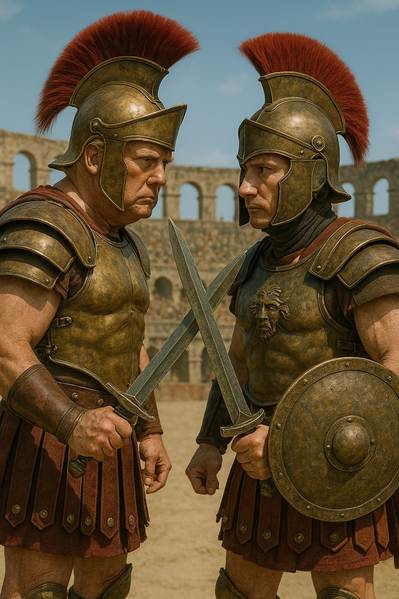
Juvenal’s critique came at a pivotal moment in Roman history. The republic had collapsed, and emperors like Augustus had systematically dismantled democratic institutions. Rather than revolt, Roman citizens seemed content as long as the government provided basic sustenance (the grain dole called annona) and elaborate spectacles at venues like the Colosseum. Political participation withered as people focused on immediate pleasures rather than long-term civic responsibilities.
The strategy worked brilliantly for Roman rulers. Keep the masses fed and entertained, and they won’t question your authority or demand meaningful representation. It was political control through distraction—a form of soft authoritarianism that maintained order without overt oppression. The policy was effective in the short term—peace in the streets and loyalty to the emperors—but disastrous over time. Rome’s population became disengaged from politics, while real power consolidated in the hands of a few.
Modern American Parallels
Fast-forward to contemporary America, and Juvenal’s observation feels uncomfortably relevant. While we don’t have gladiatorial games, we do have our own version of “circuses”—professional sports, reality TV, social media feeds, and celebrity culture that dominate public attention. These aren’t inherently problematic, but they become concerning when they crowd out civic engagement.
Our modern “bread” takes various forms: government assistance programs, subsidies, and economic policies designed to maintain consumer spending. We are saturated with cheap goods, instant delivery services, and mass consumerism. For many, economic struggles are temporarily softened by accessible consumption, from fast food to online shopping. Yet material comfort often masks deeper inequalities and systemic challenges—wage stagnation, healthcare costs, and mounting national debt. These programs often serve legitimate purposes, but they can also function as political tools to maintain public satisfaction and suppress dissent.
Consider how political campaigns increasingly focus on entertainment value rather than substantive policy debates. Politicians hire social media managers and appear on talk shows, understanding that capturing attention often matters more than presenting coherent governance plans. Meanwhile, voter turnout for local elections—where citizens have the most direct impact—remains dismally low.
The Distraction Economy
Perhaps most striking is how our information landscape mirrors Roman spectacles. We’re bombarded with sensational news, viral content, and manufactured controversies that generate strong emotional reactions but little productive action. Complex policy issues get reduced to soundbites and memes, making genuine democratic deliberation increasingly difficult.
Social media algorithms are specifically optimized for engagement, not enlightenment. They feed us content designed to provoke reactions—anger, outrage, schadenfreude—rather than encourage thoughtful consideration of difficult issues. This creates a population that feels politically engaged through constant consumption of political content while remaining largely passive in actual civic participation.
The danger of “bread and circuses” in modern America lies in apathy. When civic participation declines, voter turnout falls, and policy debates get reduced to simplistic slogans, elites face less scrutiny. The result is a weakened democracy, vulnerable to manipulation and short-term thinking.
Breaking the Cycle
Juvenal’s warning doesn’t mean we should abandon entertainment or social programs. Rather, it suggests we need intentional balance. Democratic societies thrive when citizens remain actively engaged in governance beyond just voting every few years.
This means staying informed about local issues, attending town halls, contacting representatives, and participating in community organizations. It means choosing substance over spectacle and long-term thinking over immediate gratification.
The Roman Republic fell partly because its citizens stopped paying attention to governance. Juvenal’s “bread and circuses” reminds us that democracy requires constant vigilance—and that comfortable distraction can be freedom’s most seductive enemy.