
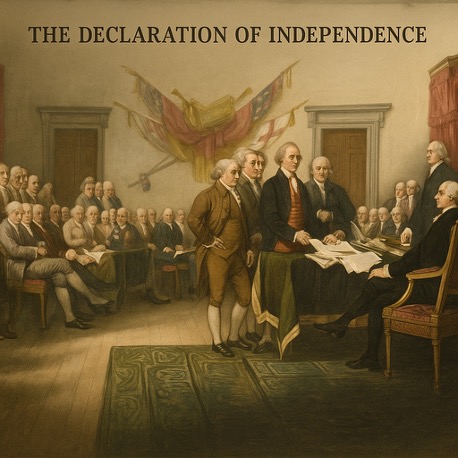
When Americans celebrate the Fourth of July, we imagine fireworks, flags, and a dramatic reading of the Declaration of Independence. We think we know the story—The Continental Congress selected Thomas Jefferson to write the declaration. He labored alone to produce this famous document. Congress then approved it unanimously and it was signed on the 4th of July.
But the truth is far different and more complex. The story behind this iconic document—the how, who, and why of its creation—is just as explosive and illuminating as the day it represents. Far from a spontaneous outburst of rebellion, the Declaration was the product of political strategy, collaborative writing, and a shared sense of urgency among men who knew their words would change the course of history.
Setting the Stage: Why a Declaration?
By the spring of 1776, the American colonies were deep in conflict with Great Britain. Battles at Lexington and Concord had already been fought. George Washington was attempting to transform the continental army into a professional fighting force. Thomas Paine’s Common Sense had ignited widespread public support for full separation from the British Crown. The Continental Congress had been meeting in Philadelphia, debating how far they were willing to go. By June, the mood had shifted from reconciliation to revolution.
On June 7, 1776, Richard Henry Lee of Virginia introduced a resolution to the Continental Congress declaring “that these United Colonies are, and of right ought to be, free and independent States.” The motion was controversial—some delegates wanted more time to consult their colonies. But most in Congress knew that if independence was going to happen, it needed to be explained and justified to the world, so they created a committee to draft a formal declaration.
The Committee of Five
On June 11, 1776, the Continental Congress appointed a “Committee of Five” to write the declaration. The members were:
- Thomas Jefferson of Virginia
- John Adams of Massachusetts
- Benjamin Franklin of Pennsylvania
- Roger Sherman of Connecticut
- Robert R. Livingston of New York
This was not a random selection. Each man represented a different region of the colonies and had earned the trust of fellow delegates. Jefferson was relatively young but already known for his eloquence. Adams was an outspoken advocate of independence. Franklin brought wisdom, wit, diplomatic experience, and international prestige. Sherman brought New England theological perspectives and legislative experience, while Livingston represented the more moderate New York delegation and brought keen legal insight.
Jefferson Takes the Pen
Although it was a group project on paper, the heavy lifting fell to Thomas Jefferson. The committee chose him to draft the initial version. Why Jefferson? According to John Adams, Jefferson was chosen for three reasons: he was from Virginia (the most influential colony), he was popular, and, Adams admitted, “you can write ten times better than I can.”
Jefferson wrote the draft in a rented room at 700 Market Street in Philadelphia. He leaned heavily on Enlightenment ideas, especially those of John Locke, emphasizing natural rights and the notion that government derives its power from the consent of the governed. He also borrowed phrasing from earlier colonial declarations, including his own A Summary View of the Rights of British America and borrowed extensively from George Mason’s Virginia Declaration of Rights.
The Editing Process: Group Work Gets Messy
After Jefferson completed the initial draft (likely by June 28), he shared it with Adams and Franklin. Both men suggested revisions. Franklin, ever the editor, softened some of Jefferson’s sharpest attacks and corrected language for flow and diplomacy. His most famous contribution was changing Jefferson’s phrase “We hold these truths to be sacred and undeniable” to the more secular and philosophically precise “We hold these truths to be self-evident.”
Adams contributed to structural suggestions and to tone. He also contributed to the strategic presentation of grievances against King George III, understanding that the declaration needed to justify revolution in terms that would be acceptable to both colonial readers and potential European allies.
Sherman and Livingston played more limited but still meaningful roles. Sherman, with his theological background, helped ensure the document’s religious references would appeal to Puritan New England, while Livingston’s legal expertise helped refine the constitutional arguments against British rule. Otherwise, their involvement in the actual content of the declaration was likely minimal.
The revised draft was presented to the full Continental Congress on June 28, 1776. What followed was a few days of intense debate and revision by the entire body.
Congress Takes the Red Pen
From July 1 to July 4, the Continental Congress debated the resolution for independence and edited the Declaration. Jefferson watched as more than two dozen changes were made to his prose. The Congress cut about a quarter of the original text, including a lengthy passage condemning King George III for perpetuating the transatlantic slave trade that would have sparked deep division among the delegates, especially those from Southern colonies.
Other modifications included strengthening the religious language, toning down some of the more inflammatory rhetoric, and making the grievances more specific and legally grounded. Congress made 86 edits, removing about a quarter of Jefferson’s original content. Jefferson was reportedly frustrated by the changes, calling them “mutilations,” but he recognized that compromise was the cost of consensus
Approval and Promulgation
Despite the extensive revisions, the core of Jefferson’s vision remained intact and on July 2, 1776, the Continental Congress voted in favor of Lee’s resolution for independence. That’s the actual date the colonies officially broke from Britain. John Adams even predicted in a letter to his wife that July 2 would be celebrated forever as America’s Independence Day. He was close—but the official adoption of the Declaration came two days later.
On July 4, 1776, Congress formally approved the final version of the Declaration of Independence. Contrary to popular belief, most of the signers did not sign it on that day. Only John Hancock, as president of Congress, and Charles Thomson, as secretary, signed then. The famous handwritten version, now in the National Archives, wasn’t signed until August 2. But the document approved on July 4 was immediately printed by John Dunlap, the official printer to Congress.
These first copies, known as Dunlap Broadsides, were distributed throughout the colonies and sent to military leaders, state assemblies, and even King George III. George Washington had it read aloud to the Continental Army. This rapid dissemination was crucial to its impact, as it was needed to rally public support for the revolutionary cause and explain the colonies’ actions to the world.
Legacy and Impact
The Declaration wasn’t just a break-up letter to the British Crown—it was a manifesto for a new kind of political order. Its assertion that “all men are created equal” would echo through centuries of American history, invoked by abolitionists, suffragists, civil rights leaders, and more.
The creation of the Declaration of Independence demonstrates that even the most iconic documents in American history emerged from collaborative processes involving compromise, revision, and collective wisdom. While Jefferson deserves primary credit for the document’s eloquent expression of revolutionary ideals, the contributions of his committee colleagues and the broader Continental Congress were essential to creating a text that could unite thirteen diverse colonies in common cause.
This collaborative origin reflects the democratic principles the declaration itself proclaimed, showing that American independence was achieved not through the vision of a single individual, but through the collective efforts of representatives working together to articulate their shared commitment to liberty, equality, and self-governance. The process that created the Declaration of Independence thus embodied the very democratic ideals it proclaimed to the world.
Today, the Declaration of Independence is enshrined as one of the foundational texts of American democracy. But it’s worth remembering that it was created under immense pressure, forged by committee, and edited by compromise. Its authors knew they were taking a dangerous step. As Franklin quipped at the signing, “We must all hang together, or most assuredly we shall all hang separately.”
America at 250: A Revolution Remembered, Forgotten — or Rewritten?
By John Turley
On June 1, 2026
In Commentary, History
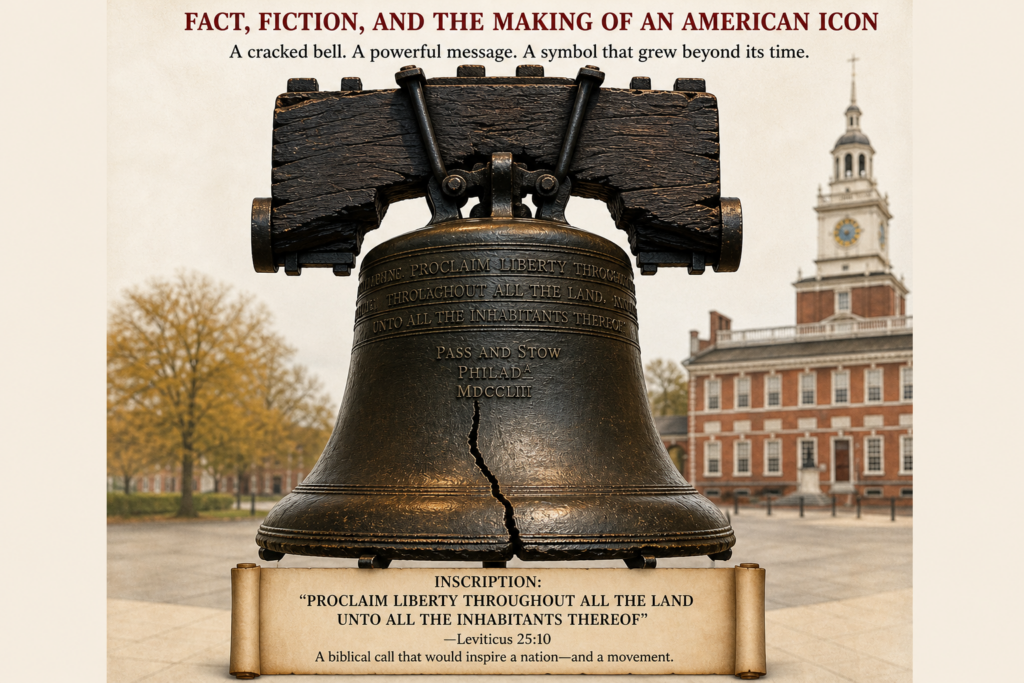
I’m old enough to remember the 200th anniversary of the American Revolution. Bicentennial symbols were everywhere — Liberty Bells, eagles, and that ubiquitous red, white, and blue stylized five-point star logo slapped on hats, T-shirts, socks, soft drink cups, beer cans, and even a special “Spirit of ’76” edition of the Ford Mustang II. Commemorative events were springing up everywhere, and people had full-blown bicentennial fever.
The 250th anniversary is a different animal entirely. Even the official name — Semiquincentennial — sounds like something you’d need a medical degree to pronounce. But the tongue-twisting label is the least of its problems.
The bicentennial came after a decade of national trauma: Vietnam, Watergate, and the civil rights struggles had left the country battered. By 1976, most Americans were ready to feel good about themselves again, and the bicentennial became a giant, colorful celebration of “American resilience.” The 250th arrives in a different kind of trauma — one that is arguably more confusing because it comes dressed as patriotism.
A Celebration Gets Complicated
While the 250th is being marked by numerous events, commemorations, and official proclamations, it has not yet captured the national imagination the way 1976 did. The official nonpartisan U.S. Semiquincentennial Commission, established by Congress in 2016 and supported by both George W. Bush and Barack Obama as Honorary Co-Chairs, has been working toward what it calls the “largest and most inclusive” anniversary celebration in American history. But its efforts have increasingly been overshadowed — and, critics argue, undermined — by a parallel White House effort with a very different philosophy about what American history should look like.
Shortly after taking office in January 2025, President Trump signed an executive order titled “Celebrating America’s 250th Birthday,” creating his own body — Task Force 250 — to coordinate anniversary plans and promising “a grand celebration worthy of the momentous occasion.” A full year of festivities was planned, beginning on Memorial Day 2025 and running through July 4, 2026. On paper, more attention on the anniversary sounds like good news. In practice, the story is more complicated.
When “Restoring History” Means Removing It
Two months after launching his anniversary task force, Trump signed a second executive order — this one titled “Restoring Truth and Sanity to American History” — directing Vice President Vance to eliminate what the order calls “divisive race-centered ideology” from Smithsonian museums, educational and research centers, and the National Zoo (the Zoo??). The Smithsonian, one of the world’s great repositories of American history, was accused by the president of having come “under the influence of a divisive, race-centered ideology” that portrayed “American and Western values as inherently harmful and oppressive.”
That executive order set off a chain of events that has complicated the 250th anniversary in ways the founding fathers would have found darkly ironic, given that the Revolution was, at its core, a fight against the arbitrary exercise of executive power.
At Philadelphia’s Independence National Historical Park — one of the most historically significant sites in the country — National Park Service employees abruptly removed exhibits about the nine people George Washington held in slavery while Philadelphia served as the nation’s capital. Passersby reportedly heard an employee repeating, “I’m just following orders” as the displays came down. The city of Philadelphia promptly sued the federal government, arguing that the removal violated a cooperative agreement for the site’s development.
This wasn’t an isolated incident. According to reporting from Poynter and PEN America, National Park Service employees were ordered to survey all signage and interpretive materials across the nation’s 400-plus parks and monuments, flagging anything “negative about either past or living Americans.” Exhibits about slavery, Indigenous history, women’s rights, and climate change were all swept into the review. At Fort Sumter in South Carolina — where the Civil War began — even a sign explaining the risks the site faces from rising sea levels was removed.
The Interior Department issued a November 2025 memo ordering National Park Service gift shops to remove items promoting DEI or “gender expression.” Free admission days that had previously honored Martin Luther King Jr. Day and Juneteenth were dropped; June 14 — Flag Day and President Trump’s birthday (does anyone thinks that’s a coincidence?) — was added instead.
Meanwhile, a proposed commemorative dollar coin design featured President Trump on the obverse and the words “Fight! Fight! Fight!” on the reverse — evoking the imagery from the July 2024 assassination attempt. The Commission of Fine Arts, whose members Trump dismissed in October 2025 and replaced with his own appointees, subsequently recommended the design.
The Money Problem
The nonpartisan America250 Commission hasn’t just faced ideological headwinds. It has also faced financial ones. By early 2026, the Commission had received only $25 million of its congressionally appropriated $150 million, with the remainder at risk of being redirected to Trump-aligned Freedom 250’s “Freedom Trucks” — six state-of-the-art mobile museums traveling the country telling a version of American history that aligns with the administration’s vision. Representative Bonnie Watson Coleman raised concerns about the funding diversion, though the Commission stated it had enough to continue its core programming.
What Actually Happened at Lexington and Concord
Against this backdrop, the 250th anniversary of the Battles of Lexington and Concord on April 19, 2025, became a preview of what the full anniversary might look like. The battle reenactments drew large crowds, along with protesters carrying signs reading “No Kings” and “Resist Like It’s 1775,” explicitly drawing parallels between opposition to King George III and what they saw as autocratic tendencies in current leadership.
Massachusetts Governor Maura Healey told the crowd at the North Bridge ceremony that “we see things that would be familiar to our Revolutionary predecessors — the silencing of critics, the disappearing people from our streets, demands for unquestioned fealty.” Whether one agrees with that characterization or not, the spectacle of Americans invoking the Revolution to oppose their own government at a Revolution commemoration is at minimum historically interesting — and arguably points to the enduring vitality of Revolutionary ideals.
Historians have noted that the Revolution itself was messier and more ambiguous than either side of today’s debate wants to acknowledge. As University of South Carolina professor Woody Holton observed, most colonists in April 1775 weren’t seeking independence — they wanted better treatment within the British Empire and a return to pre-1763 arrangements. The revolution was improvised, contentious, and full of people who disagreed about its meaning even while it was happening. Sound familiar?
The Founding Fathers Were Not a Monolith
Here is what is genuinely troubling about selectively sanitizing Revolutionary history: the founders themselves would not have recognized the sanitized version. George Washington, the hero of the Revolution, held people in slavery, including at the presidential residence in Philadelphia — the very site where exhibits were just torn down. Benjamin Franklin, who helped draft the Declaration of Independence, owned enslaved people and only became an abolitionist late in his life. Thomas Jefferson wrote “all men are created equal” while holding more than 600 people in bondage over his lifetime.
Removing this history doesn’t honor the founders. It patronizes them by pretending their contradictions didn’t exist — and it patronizes us by suggesting we can’t handle the full truth. Even they recognized the contradictions. The founders were brilliant, flawed, and human. That’s what makes the Revolution worth studying.
Resistance in the Courts and in the Institutions
It’s worth noting that the administration’s efforts have met significant resistance. Federal courts have blocked some removals. Scholars, activists, and historians have pushed back forcefully. A coalition of groups filed suit in February 2026 arguing that the Interior Department’s mandate to strip historical information from national parks violated the Administrative Procedure Act. Philadelphia’s lawsuit over the Washington slavery exhibit is ongoing.
Northwestern University historian Leslie M. Harris, author of five books on American slavery, has said that no previous presidential administration has interfered with historic sites in this way, and warned of a potential long-term consequence: public distrust of government-maintained historical sites, or outright avoidance of them.
What We Can Do
I wrote earlier about a friend on the West Virginia 250th committee who told me their initial meeting accomplished nothing and, almost two years later, they’ve had not had a further meeting. They have only just in the past few weeks announced their plans for America 250. That’s disappointing, but in some ways, it underscores the larger point: the commemoration of this anniversary is going to be shaped by whoever shows up.
Here in West Virginia, we showed what’s possible when citizens take the lead. In October 2024, without any state or national organizational or financial help, the City of Point Pleasant and the West Virginia Sons of the American Revolution organized a commemoration of the 250th anniversary of the Battle of Point Pleasant — a battle many consider a precursor to the Revolution. It worked. People came. History was honored.
We can do more of that. We don’t need to live in Massachusetts to commemorate Lexington and Concord. We don’t need federal approval to mark the signing of the Declaration of Independence, the Battle of Saratoga, or the crossing of the Delaware. We don’t need the government’s permission to tell complete history — including the parts about who was left out and who fought to be included anyway.
All across the country, individuals and small groups are working to recognize the revolution. In West Virginia, we’ve organized commemorations of the Boston Tea Party, the 250th anniversary of the founding of the Continental Navy and the Continental Marines, George Washington’s Birthday, and a special America 250 Memorial Day service at the West Virginia Veterans Memorial, all without any governmental support or funding. There have been presentations at local libraries and civic groups about the lives of average people during the time of the revolution, the origin of the American flag and even demonstrations of cooking and foods from the time of the revolution. If we had waited for state or national support these activities never would have happened. Just because your event may be small doesn’t mean it’s unimportant.
The Revolution, after all, was not a government program. It was a citizen uprising.
The Stakes
The American Revolution matters to world history precisely because it planted ideas — self-governance, the rule of law, the consent of the governed, the equality of all people before the law — that were genuinely radical ideas in 1776 and remain contested in much of the world today. Those ideas were aspirational when they were written. They remain aspirational now. The gap between the ideal and the reality is not a reason to hide the history; it is the history.
If the 250th anniversary is remembered primarily as a moment when the federal government selectively curated which parts of the founding era the public was allowed to encounter, that will itself become a significant historical footnote — and not a flattering one.
It will be our great shame if we allow the commemoration of an event so significant in both American and world history to be used — by anyone, of any political stripe — to divide us rather than to strengthen our common bond. The Revolution was imperfect, contentious, and incomplete. So is the republic it created. That is not a cause for despair. It is a call to engagement and improvement.
We the people. Still the operative phrase.
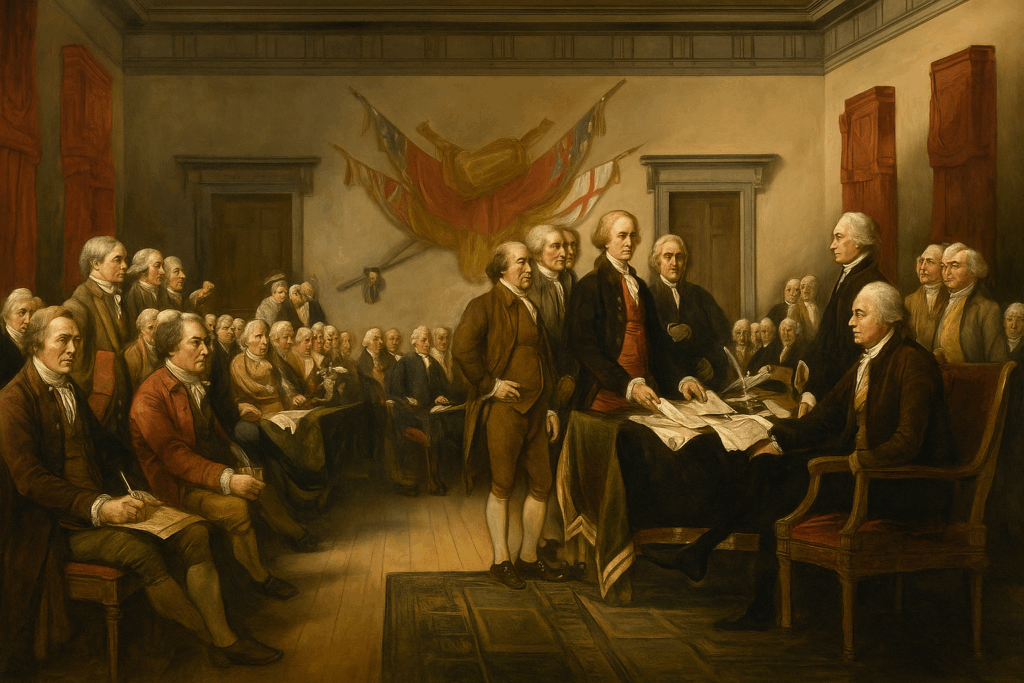
Illustration generated by author using ChatGPT.
—
Sources