Grumpy opinions about everything.

Tag: Military History

The Real Enemy of the Revolution: Disease

When you think about the American Revolution, you probably picture dramatic battles like Bunker Hill or the crossing of the Delaware. But here’s something that might surprise you: the biggest killer during the war wasn’t British muskets—it was disease. And it’s not even close.

The Numbers Tell a Grim Story

Let’s talk numbers for a second. On the American side, about 6,800 soldiers died from battlefield wounds. Sounds terrible, right? Well, disease killed an estimated 17,000 to 20,000. That’s roughly three times as many. The British and their Hessian allies faced similar odds: around 7,000 combat deaths versus 15,000 to 25,000 disease deaths.

Think about that for a moment. You were actually safer charging into battle than hanging around camp. In some regiments, disease wiped out more than a third of the troops before they even saw their first fight.

Why Was Disease So Deadly?

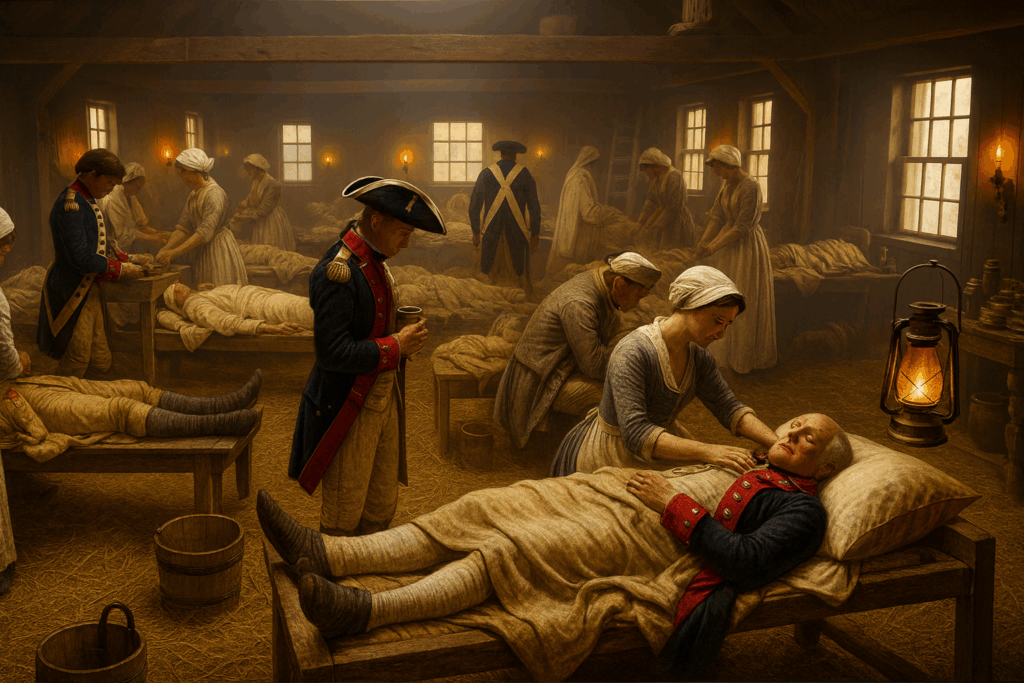
Picture yourself in a Revolutionary War military camp. Hundreds of men crammed together in makeshift shelters, no running water, primitive latrines dug too close to where everyone lives, and basically zero understanding of what we’d call “germ theory” today. It’s a perfect storm for infectious disease.

The big killers were:

Smallpox was the heavyweight champion of camp diseases. This virus killed about 30% of people it infected and spread like wildfire through packed military camps. Soldiers tried to protect themselves through a risky practice called inoculation—basically giving themselves a mild case of smallpox on purpose by rubbing infected pus into cuts on their skin. Without proper quarantine procedures, though, this sometimes made outbreaks worse instead of better.

Typhus (called “camp fever” back then) spread through lice and fleas. If you’ve ever been to a prolonged camping trip and felt gross after a few days, imagine that times a hundred. Soldiers lived in the same clothes for weeks, rarely bathed, and the parasites just had a field day. The fever, headaches, and diarrhea that came with typhus made it one of the most dreaded camp diseases.

Dysentery (charmingly nicknamed “bloody flux”) came from contaminated water and poor sanitation. When your latrine is 20 feet from your water source and you don’t understand how disease spreads, this becomes pretty much inevitable. The severe diarrhea weakened soldiers to the point where many couldn’t fight even if they wanted to and it made them even more susceptible to other diseases.

Malaria was especially important in the South, where mosquitoes thrived in the humid climate. This one actually played a fascinating role in how the war ended—but more on that in a bit.

When Disease Changed Everything

The 1776 invasion of Canada was a disaster largely because of smallpox. Out of 3,200 American soldiers in the Quebec campaign, 1,200 fell sick. You can’t mount much of an offensive when more than a third of your army is flat on their backs with fever. Similarly, during the siege of Boston, Washington couldn’t effectively engage the British because so many of his troops were sick with smallpox. These weren’t just setbacks—they were strategic catastrophes.

This is what pushed George Washington to make one of his boldest decisions in 1777: he ordered a mass inoculation of the Continental Army. This was controversial and dangerous at the time, but it worked. Washington had survived smallpox himself as a young man, so he understood both the risks and the benefits. The inoculation program probably saved the army from complete collapse.

Medical “Treatment” Was Often Worse Than Nothing

Here’s where things get really grim. Eighteenth-century medicine was basically medieval. Doctors believed in “balancing the humors” through bloodletting—literally draining blood from already weakened soldiers. They also gave powerful laxatives to people who were already suffering from diarrhea. Yeah, let that sink in.

Pain relief meant opium-based drinks or just straight alcohol. Some doctors used herbal remedies, but results were inconsistent at best. Quinine helped with malaria, though nobody really understood why. Mostly, if you got seriously sick, your survival came down to luck and a strong constitution.

Valley Forge: The Turning Point

Valley Forge is famous for being a brutal winter encampment, and disease was a huge part of why it was so terrible. Scabies left nearly half the troops unable to serve. Dysentery and camp fever killed somewhere between 1,700 and 2,000 soldiers during that single winter—and remember, these weren’t battle casualties. These men died from preventable diseases in what was supposed to be a safe encampment.

But Valley Forge taught the Continental Army a crucial lesson. After that nightmare winter, military leaders started taking sanitation seriously. They began focusing on camp hygiene, protecting water supplies, placing latrines away from living areas, and making sure soldiers could bathe and wash their clothes and bedding.

Baron von Steuben is famous for teaching the Continental Army how to march and drill, but he also deserves credit for implementing serious sanitation reforms. These changes helped prevent future disease outbreaks and kept the army functional for the rest of the war.

The Secret Weapon at Yorktown

Here’s one of my favorite historical details: mosquitoes may have helped win American independence. At Yorktown, roughly 30% of Cornwallis’s British army was knocked out by malaria and other diseases during the siege. The British commander was trying to hold off the American and French forces while also dealing with the fact that almost a third of his troops were too sick to fight.

Many American soldiers from the southern colonies had grown up with malaria and had some partial immunity. The British? Not so much. Some historians even think Cornwallis himself might have been suffering from malaria, which could have affected his decision-making. His second-in-command, Brigadier General Charles O’Hara, was definitely seriously ill during the siege. Fighting a war while you can barely stand is a pretty significant handicap.

The Bigger Picture

The American Revolution shows us something important: wars aren’t just won on battlefields. They’re won by the side that can keep its soldiers alive and healthy. Disease shaped strategic decisions, determined the outcomes of campaigns, and killed far more men than any British regiment ever did.

Washington’s decision to inoculate the army was genuinely revolutionary (pun intended). It showed a willingness to embrace controversial medical practices for the greater good. The sanitation reforms that came out of Valley Forge laid groundwork for modern military medicine and influenced public health policies in the new United States.

So next time someone mentions the American Revolution, remember: while we celebrate the military victories, one of the most important battles was fought against an enemy you couldn’t see—and for most of the war, nobody really knew how to fight it.

The casualty figures and major disease outbreaks are well-documented in historical records. The specific percentages and numbers are estimates based on historical research, as precise record-keeping was limited during this period. The overall narrative about disease being the primary cause of death is strongly supported by multiple historical sources.

Always Faithful: A Brief History of the Marine Corps Motto

When I started training as a Marine more than 50 years ago one of the first things we were taught was the call and response “Semper Fi” followed quickly by “Do or Die”.  But to Marines, Semper Fi, Semper Fidelis—Always Faithful—is more than just a motto. It becomes a personal belief system, a statement of individual integrity and a way of life.  Faithful to country, faithful to the Corps, faithful to fellow Marines, faithful to duty.  It reflects your faith in the Marine Corps and your fellow Marines.

How did Marines come to adopt this distinctly non martial motto?  Other more military sounding mottos and nicknames come to mind: “Devil Dogs”, “First to Fight”, and “Leathernecks”.  But Semper Fidelis has become the way Marines see themselves, so much so that their greeting to one another is “Semper Fi”.  The same ethos is embodied in an unofficial Marine Corps motto, “No Man Left Behind”.

But what is the origin of this motto that seems to sum up the entire philosophy of the Marine Corps?

The United States Marine Corps is known for its discipline, dedication, and fierce loyalty, qualities that are symbolized by Semper Fidelis. Translated from Latin, the phrase means “Always Faithful.” But like many traditions within the military, the motto is rooted in a rich history that stretches back hundreds of years.

The Marine Corps was established in 1775 as the Continental Marines, but the famous motto did not appear until more than a century later. By the early 19th century, several mottos had been associated with the Marines, including “Fortitudine” (With Fortitude) and “By Sea and by Land.” While these phrases captured elements of the Marines’ mission, they lacked the enduring emotional impact that would ultimately come with Semper Fidelis.

It was in 1883 that the motto was formally adopted under the leadership of the 8th Commandant, Colonel Charles McCawley. Colonel McCawley likely chose that motto because it embodies the values of loyalty, faithfulness and dedication that he believed should define every Marine.  Unfortunately, we will never know his exact reason for choosing this specific motto because he did not leave any documentation about his thought process.  Regardless, from that point on, the motto became inseparable from the identity of the Corps.

The phrase “Semper Fidelis” has much older origins than its Marine Corps adoption. It’s believed to have originated from phrases used by senators in ancient Rome, with the earliest recorded use as a motto dating back to the French town of Abbeville in 1369. The phrase has been used by various European families since the 16th century, and possibly as early as the 13th century.

The earliest recorded military use was by the Duke of Beaufort’s Regiment of Foot, raised in southwestern England in 1685. The motto also has connections to Irish, Scottish, and English nobility, as well as 17th-century European military units, some of whose members may have emigrated to American colonies in the 1690s

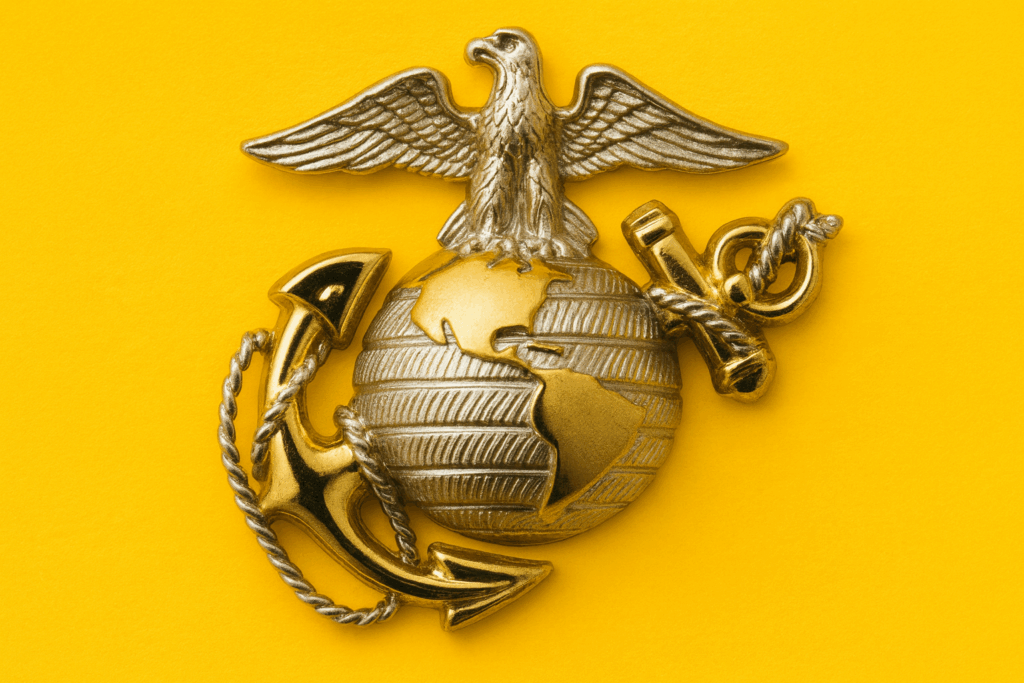
The choice of the Latin phrase by Colonel McCawley was likely deliberate. Latin carries with it a sense of permanence and tradition, and its concise wording communicated volumes in only two words. “Always Faithful” perfectly captured the bond that must exist between Marines and the responsibilities they shoulder. Marines are expected to remain faithful to the mission, to their comrades in arms, and to the United States, regardless of the personal cost. It is this idea of unshakable fidelity that has come to define what it means to wear the Eagle, Globe, and Anchor.

Since its adoption, Semper Fidelis has carried Marines through every conflict the United States has faced. From the battlefields of World War I, where Marines earned the name “Devil Dogs,” to the grueling island campaigns of the Pacific in World War II, to the frozen battle fields of Korea, to the steaming jungles of Vietnam, Marines have demonstrated again and again what it means to be “Always Faithful.” In modern times, whether in Iraq, Afghanistan, or in humanitarian missions across the globe, this motto continues to serve as a reminder of the Corps’ unwavering commitment.

The phrase has also influenced the broader culture of the Marines, inspiring the title of the official Marine Corps march, “Semper Fidelis,” composed by John Philip Sousa in 1888, which remains a powerful symbol of pride and esprit de corps.

The motto’s meaning extends beyond active service. Marines pride themselves on being “once a Marine, always a Marine,” and Semper Fidelis reflects that lifelong bond. Even after leaving the uniform behind, Marines carry that sense of loyalty into civilian life, honoring the values and traditions of their service. For many, it becomes a central guiding principle throughout their lives.  Marine veterans always say “I was a Marine”.

In the end, the motto “Semper Fidelis” is far more than a catchy phrase. It is both a promise and a challenge—a pledge of unwavering loyalty and a challenge to live up to the highest standards of duty, honor, and fidelity. When Marines declare “Semper Fi,” they acknowledge not only their devotion to the Marine Corps, but also the unbreakable loyalty that binds them together as brothers and sisters in arms.

The celebration of the 250th anniversary of the signing of the Declaration of Independence is coming up next year on July 4th. But what about the events leading up to this? What about the men and women who helped make this happen? There are events coming up to commemorate the 250th anniversary of the founding of the Continental Navy and the Continental Marines in 1775. We will be holding commemorative celebrations here in West Virginia and there will be a national event in Philadelphia in October of this year.

Page 2 of 2

Powered by WordPress & Theme by Anders Norén