Grumpy opinions about everything.

Month: February 2026 Page 1 of 2

The Broken Promises: How America Treated Its Revolutionary War Veterans

The story of how the Continental Army’s veterans were treated after winning independence reads like a betrayal. These men had endured Valley Forge, fought without pay — — often without food or clothing — risking everything for a revolution that promised liberty and opportunity. What many received instead was financial ruin, confiscated land, and a harsh lesson in how political power and economic class determined who really benefited from their shared sacrifice.

The Pay That Never Came

Let me start with the most basic broken promise — pay. Continental soldiers were supposed to receive regular wages, but the Continental Congress lacked the power to tax and relied on increasingly worthless paper money. By war’s end, many soldiers hadn’t been paid in months or even years. When they finally returned home, they carried IOUs called “certificates of indebtedness” rather than actual money.

The wealthy and well-connected quickly figured out how to profit from this situation. Speculators traveled through rural areas buying up these certificates from desperate veterans at pennies on the dollar. The soldiers, facing immediate debts and no income, often had no choice but to sell. When the federal government eventually redeemed these certificates at full value under Alexander Hamilton’s financial plan in the 1790s, it was the speculators who made fortunes, not the men who’d earned the money, suffered and won the revolution.

Pensions: Promised to Officers, Denied to Enlisted Men

The pension situation revealed the class divisions even more starkly. In 1780, Congress promised officers who served until the war’s end a pension of half-pay for life. Common soldiers received no such promise. When the officers’ pensions proved controversial and expensive, Congress “commuted” them in 1783 to a one-time payment of five years’ full pay — still nothing for the enlisted men who’d done most of the fighting and dying.

It wasn’t until 1818 that Congress finally created a pension for Continental Army privates, and even then, only for those in “reduced circumstances” — meaning you had to prove you were poor to get it. The maximum annual pension was $96, hardly generous compensation for years of service. Soldiers who had served in militia units were generally excluded. By contrast, officers had already received their commutations decades earlier and often held positions of economic and political power.

Land Bounties: Another Empty Promise

Land bounties represented another avenue where common soldiers got shortchanged. Various colonies and Congress promised land grants to encourage enlistment — typically 100 acres for privates, scaling up to 500+ acres for officers and thousands of acres for generals. But there were problems from the start.

First, much of the promised land was in frontier territories like the Ohio Country, which remained dangerous and largely unsurveyed for years after the war. Second, the process of claiming your land required navigating bureaucratic systems, paying surveying fees, and sometimes traveling hundreds of miles. Third, the land often turned out to be of poor quality or in disputed areas. The average veteran with little education, almost no money and absolutely no political influence was seldom ever able to take advantage of the land bounty.

Predictably, speculators moved in. They bought up land bounty warrants from soldiers who lacked the resources or knowledge to claim them directly. One study found that in Virginia, which promised the most generous bounties, speculators ultimately controlled vast tracts while many veterans received little or nothing.

The Tax Collector Cometh

Here’s where the story gets particularly cruel. While veterans struggled with unpaid wages and unredeemed promises, the new state governments faced their own financial crises. They’d accumulated massive war debts and needed revenue. Their solution? Property taxes.

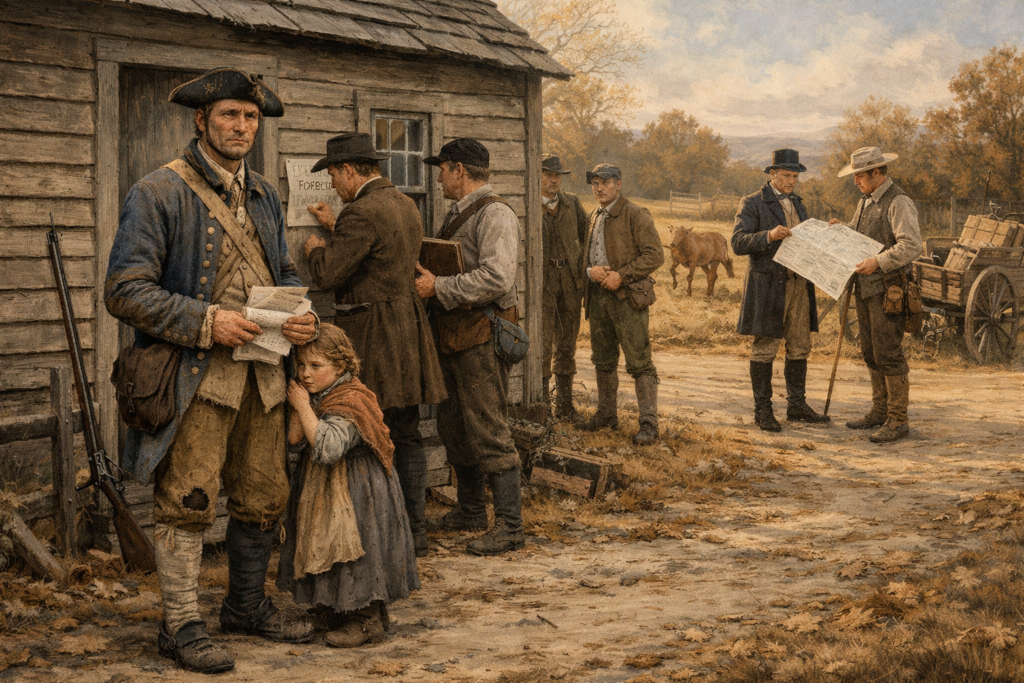
In Massachusetts, the legislature imposed heavy taxes payable in hard currency — gold or silver — which almost nobody in rural areas possessed. The same certificates of indebtedness that soldiers were given by the government weren’t accepted for tax payments, even though the state owed them that money. Veterans who’d sold their certificates for a fraction of their value to pay immediate debts now faced tax bills they couldn’t pay. These policies were not accidental side effects; they reflected the priorities of creditor classes concentrated in coastal towns, who preferred regressive property taxes over inflation or debt relief for veterans.

When farmers and veterans couldn’t pay these taxes, local sheriffs seized and auctioned their property. In many cases, the buyers at these auctions were the same merchant elites and speculators who’d bought up the certificates. This wasn’t accidental — it was a systematic transfer of wealth and property from those who’d fought the war to those who’d financed it, avoided personal risk and now controlled state governments. Elites did not overtly confiscate veterans’ land through direct political targeting; instead, they relied on neutral-looking fiscal policy — strict tax collection, aggressive debt enforcement, and courts unsympathetic to insolvency — to transfer property legally. The effect was unmistakable; veterans who fought for independence lost their farms to satisfy debts incurred during or immediately after their service, while wealthier investors accumulated land and made financial gains.

The Massachusetts situation became particularly egregious. Between 1784 and 1786, thousands of foreclosure proceedings were filed. Veterans who’d survived the war returned to find themselves losing their farms and, in some cases, being thrown into debtors’ prison.
Shays’ Rebellion: When Veterans Fought Back

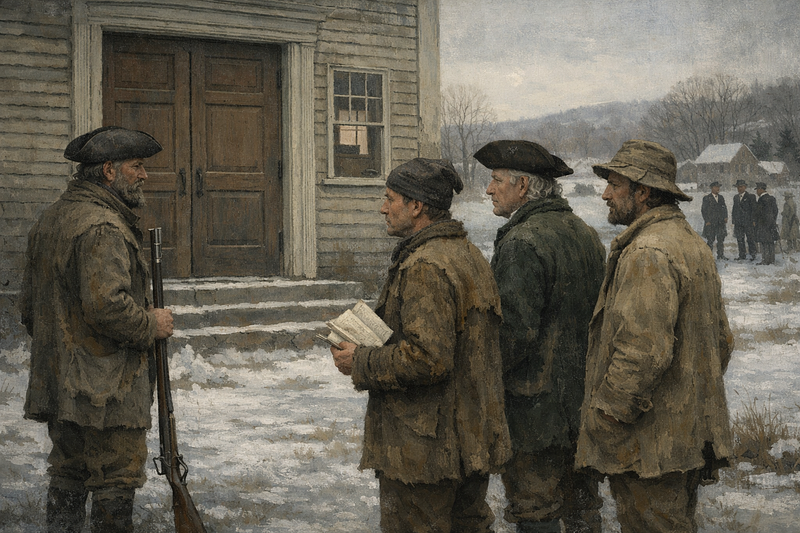
The breaking point came in 1786 with Shays’ Rebellion in Massachusetts. Daniel Shays, a former Continental Army captain, led hundreds of veterans and farmers in an armed uprising against foreclosures and debt courts. They physically prevented courts from sitting, trying to halt the cascade of farm seizures. They represented the soldiers who’d won independence and felt the new government had betrayed them.

The rebellion was suppressed by a militia funded by wealthy Boston merchants and creditors as the state treasury lacked ready cash to pay troops. This was a clear demonstration of how thoroughly economic power had concentrated among elites and sent shockwaves through the political establishment. To many rural farmers the suppression looked like creditors hiring an army to enforce unjust laws against impoverished veterans.

Interestingly, most of the rebels received pardons, and Massachusetts did eventually reduce some taxes and reform debtor laws. But the damage was done, and the pattern had been established.

The Class Divide in Revolutionary Benefits

The broader pattern is unmistakable. Officers, who were generally drawn from propertied classes, received pensions and larger land bounties, had the education and connections to navigate bureaucratic systems, and often held the political power to protect their interests. Common soldiers, usually farmers or laborers, received certificates they had to sell at a loss, faced tax collectors seizing their property, and had little political voice. They disproportionately bore the costs of the new fiscal order through unpaid or depreciated wages, lack of early pension support, and vulnerability to foreclosure, while many of the tangible financial benefits of their service migrated to wealthier elites.

Some historians argue this wasn’t conspiracy but circumstance — that the new nation genuinely lacked resources and that markets naturally concentrated certificates in wealthier hands. There’s some truth to this. The Continental Congress was genuinely broke, and state governments faced real fiscal crises.

But the specific policy choices — redeeming certificates from speculators at full value while rejecting them for tax payments, creating pensions for officers but not enlisted men, setting tax policies that required hard currency that poor farmers didn’t have — these weren’t inevitable, they were a choice. They reflected the interests of those who held power in state legislatures and the Continental Congress.

The Long Echo

The treatment of Continental Army veterans established patterns that would echo through American history: promises made during wartime, broken during peace; benefits flowing more generously to officers than enlisted men. Economic and political elites using legal mechanisms to transfer wealth from those who fought the revolution to those who financed it.

The first genuinely “service‑based” pension law that broadly covered surviving Continental soldiers — regardless of disability — did not arrive until 1818, three decades after the war, and it initially required proof of indigence, effectively screening out better‑off veterans and stigmatizing poorer ones. Not until the 1832 act did Congress move toward full pay for life for many surviving officers and enlisted men — including militia — based on length of service alone. But large numbers of veterans had already lost their farms, spent years in poverty, or died. The benefits came too late and too meagerly to undo decades of hardship. They were owed better.

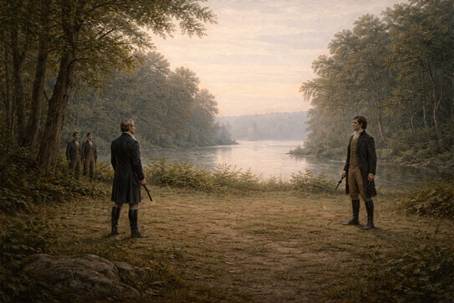
Illustrations generated by author using ChatGPT.

Sources:

Mount Vernon Digital Encyclopedia — Veterans of the Revolutionary War https://www.mountvernon.org/library/digitalhistory/digital-encyclopedia/article/veterans-of-the-revolutionary-war/

This George Washington Presidential Library resource provides an overview of how Continental Army veterans were treated, including details on certificate speculation, payment issues, and the general economic struggles veterans faced after the war.

National Archives — Revolutionary War Pension Files https://www.archives.gov/research/military/war-of-1812/pension-files

While this link references War of 1812 pensions, the National Archives maintains extensive documentation on Revolutionary War pensions as well. The site explains the evolution of pension systems and eligibility requirements, including the 1818 act that finally provided pensions to enlisted men who could prove poverty.

Encyclopedia Virginia — Military Bounty Lands https://www.encyclopediavirginia.org/entries/military-bounty-lands/

This scholarly resource details Virginia’s land bounty system, which was among the most extensive. It documents how these bounties were promised, the challenges veterans faced in claiming them, and how speculators ultimately acquired much of the promised land.

American Battlefield Trust — Shays’ Rebellion https://www.battlefields.org/learn/articles/shays-rebellion

This article provides context on the 1786–1787 uprising in Massachusetts, explaining the economic conditions that drove veterans to armed resistance, the foreclosure crisis, and the rebellion’s impact on constitutional debates.

Massachusetts Historical Society — Shays’ Rebellion https://www.masshist.org/features/shays/
Fitness for Seniors: A Practical Guide to Getting Started and Staying Active

Here’s a sobering statistic to kick things off: fewer   than 15% of people ages 65 and older meet the federal Physical Activity Guidelines.  That’s despite the mountain of evidence showing that regular movement is one of the most powerful tools we have for aging well. Physical activity helps prevent and manage chronic diseases like heart disease, diabetes, and obesity, and for older adults specifically, it reduces the risk of falling, supports more years of independent living, and improves brain health.

The good news? It’s never too late to start, and even modest improvements make a real difference. This guide breaks down what exercise should look like at different stages of older adulthood — beginning with a starter plan for newcomers and building into a long-term maintenance approach.

The Foundation: What Every Senior Needs

Before diving into age-specific details, it helps to understand the three pillars of senior fitness. To get substantial health benefits, older adults need three types of activity each week: moderate- or vigorous-intensity aerobic exercise, muscle-strengthening activities, and balance training.

The target, according to both the WHO and CDC, is 150 minutes of moderate-intensity aerobic activity combined with 2–3 days of strength training per week, along with balance and flexibility exercises.

That said, these numbers aren’t a cliff — they’re a destination. For someone who hasn’t exercised in years, starting with 10 minutes of walking three times a week is a legitimate and meaningful beginning.

The Beginning Plan: Weeks 1–12

The biggest mistake new exercisers make at any age is doing too much too soon. For seniors, that’s not just discouraging — it can lead to injury. The goal of the first three months is to build a habit and establish a safe baseline, not to hit peak performance.

Week 1–4: Getting Moving

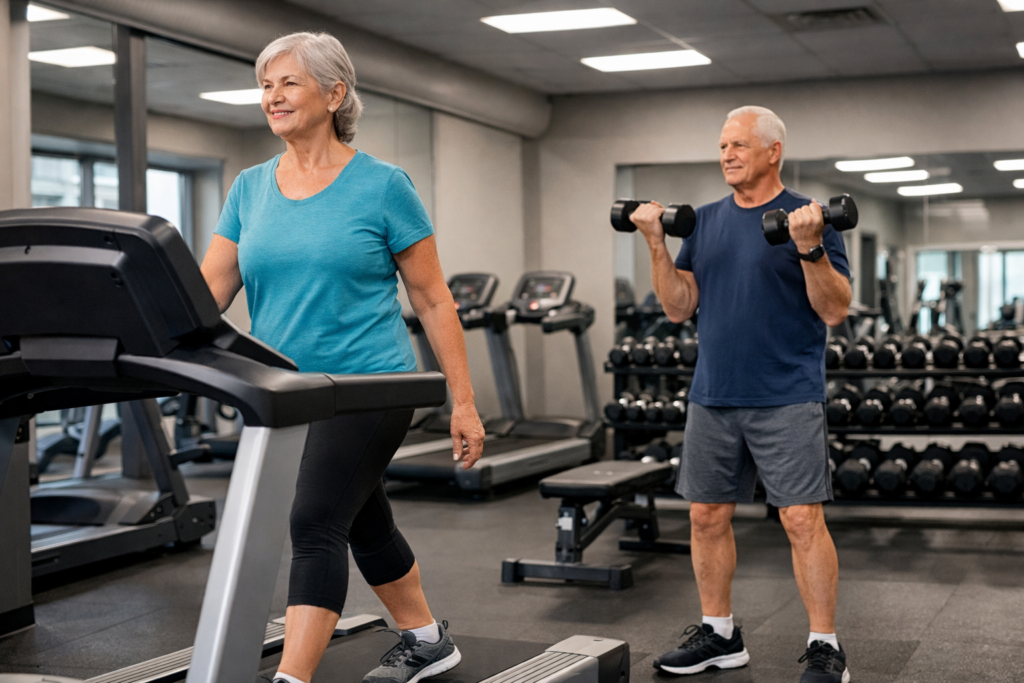
Start with walking. It’s free, low-impact, and one of the most studied forms of exercise in older adults. Aim for 10–15 minutes of brisk walking (meaning you can talk but not sing) on three days per week. Pair this with two days of very light strength work — seated leg raises, wall push-ups, and chair-assisted squats are all good options. On the same days as strength work, spend 5–10 minutes on gentle stretching and simple balance exercises like standing on one foot while holding a chair. This isn’t glamorous, but it works.

Week 5–8: Building Consistency

Extend walking sessions to 20–25 minutes and add a fourth day if possible. For strength training, begin using light resistance bands or small hand weights. Aim for 8 to 12 repetitions per exercise, which counts as one set, and try to do at least one set of muscle-strengthening activities — working up to two or three sets for more benefit.  Continue balance work daily if possible, even if just 5 minutes of standing on one foot near a wall.

Week 9–12: Progressing Toward the Target

By the end of this phase, the goal is to be walking 30 minutes on most days, doing strength training twice a week, and building some basic balance confidence. Many people find water aerobics or a beginner yoga class fits well here — these are what researchers call “multicomponent” activities that hit aerobic fitness, strength, and balance simultaneously.

The Maintenance Plan

Once the habit is established, the goal shifts to consistency and gradual improvement. The maintenance plan is simply a sustainable version of the full guidelines, adapted to fit daily life.

A solid maintenance week might look like: three to four days of 30-minute brisk walks or light cycling, two days of resistance training targeting the major muscle groups (legs, back, core, and arms), and daily balance work woven into ordinary activities — standing on one foot while brushing teeth, walking heel-to-toe down a hallway. If you take a break due to illness or travel, start again at a lower level and slowly work back up.

Age 65: The “Just Starting” Window

At 65, most people are either newly retired or approaching it. Energy levels are generally still high, and the body is still reasonably responsive to new exercise demands.

The primary goals at 65 are cardiovascular health, maintaining muscle mass, and establishing the exercise habit before age-related decline accelerates. Strength training is especially important here because muscle loss (called sarcopenia) begins in earnest in the 60s. Weight-bearing activities like walking and resistance training also help preserve bone density.

At 65, most people can follow the full beginning plan above without major modification. Joint pain, if present, is best addressed by switching to low-impact options (pool walking, cycling, elliptical) rather than skipping exercise altogether. This is also an excellent time to get a checkup and mention your exercise plans to a doctor, particularly if you have any chronic conditions.

Age 70: Prioritizing Balance and Flexibility

By 70, the picture shifts somewhat. Muscle and bone loss continue, and reaction time begins to slow — which is why fall prevention becomes a central focus. One-third of older adults aged 65 and over fall each year, and 50% of those fall repeatedly.  The risk rises significantly with each passing decade.

The research is clear on this point: balance training works. Balance measures in intervention studies showed improvements between 16% and 42% compared to baseline assessments.  Activities like Tai Chi are particularly effective — Tai Chi interventions were associated with approximately 31–58% reductions in falls, the Otago Exercise Program with 23–40% reductions, and multimodal strength-balance training with 20–45% reductions.

At 70, the aerobic goal remains 150 minutes per week, but it’s smart to reduce session intensity slightly if needed and focus more time on balance and flexibility work. Yoga, Tai Chi, and water fitness classes are excellent choices. Strength training should continue, but with a greater emphasis on functional movements — exercises that mimic everyday activities like getting up from a chair or reaching overhead.

Age 75: Adapting Without Stopping

At 75, the conversation shifts from maximizing performance to protecting function and independence. The goal isn’t to work out like a 50-year-old — it’s to maintain the ability to live on your own terms.

Research suggests that neuromuscular impairments tend to worsen progressively with age, particularly in adults over 70, as natural age-related declines accelerate deterioration in reaction time, proprioception, and coordination.  This makes structured balance training non-negotiable at this age.

Aerobic exercise may need to shift toward lower-impact formats: water aerobics, recumbent cycling, or simply slower, more deliberate walking. Strength training should continue at least twice a week, using lighter resistance with higher repetitions if heavy weights cause joint discomfort. Chair-based exercise programs are a reasonable option for those with limited mobility. Recovery time between sessions also gets longer with age, so spacing workouts out more evenly through the week becomes important.

One addition that becomes more relevant at 75: flexibility and mobility work. Spending 10–15 minutes on gentle stretching after every workout helps maintain the range of motion needed for daily activities like dressing, driving, and navigating stairs.

Age 80 and Above: Function First

At 80 and beyond, the fitness calculus is almost entirely about maintaining the ability to perform daily tasks safely and independently. That means the exercises themselves may look very different from what a 65-year-old does — and that’s perfectly appropriate.

The core principles don’t change: move every day, do some resistance work, and train your balance. But intensity drops, rest increases, and safety becomes the top priority. Chair-based strength exercises — seated leg lifts, ankle rotations, seated marching, resistance band pulls — are highly effective and much lower-risk than standing exercises for many people at this stage.

Balance work at 80+ should be done near a sturdy support surface. Even holding a chair while practicing a small weight shift from foot to foot provides meaningful benefit. Interventions with a total weekly dose of three or more hours that included balance and functional exercises were particularly effective, with a 42% reduction in the rate of falls compared to control.

Walking remains the single best aerobic exercise for this age group if mobility allows, even if sessions are shorter — 10 to 15 minutes, a few times a day, can accumulate to meaningful totals. Water-based exercise is especially valuable because buoyancy reduces joint stress while still providing resistance.

It’s worth noting that the emotional and social aspects of exercise become increasingly important at 80+. Group classes — whether at a senior center, community pool, or gym — provide motivation, accountability, and social connection alongside the physical benefits.

A Note on Medical Clearance

This guide is based on well-established public health guidelines, but individual health conditions vary enormously. Before starting any new exercise program, especially after 70, a conversation with a doctor or physical therapist is strongly recommended. That’s especially true if you’re managing heart disease, diabetes, severe arthritis, osteoporosis, or recent surgery.

Illustration generated by author using ChatGPT

Sources:

CDC Physical Activity for Older Adults: https://www.cdc.gov/physical-activity-basics/guidelines/older-adults.html

CDC: What Counts as Physical Activity for Older Adults: https://www.cdc.gov/physical-activity-basics/adding-older-adults/what-counts.html

ACSM Physical Activity Guidelines: https://acsm.org/education-resources/trending-topics-resources/physical-activity-guidelines/

Fall Prevention Exercise Effectiveness (PMC): https://pmc.ncbi.nlm.nih.gov/articles/PMC10435089/

Falls Prevention Systematic Review (MDPI): https://www.mdpi.com/2075-1729/16/1/41

WHO-informed Falls Evidence (IJBNPA): https://ijbnpa.biomedcentral.com/articles/10.1186/s12966-020-01041-3

Physical Activity in Older Adults (PMC): https://pmc.ncbi.nlm.nih.gov/articles/PMC11562269/

Balance and Physical Activity Programs (PMC): https://pmc.ncbi.nlm.nih.gov/articles/PMC6635278/​​​​​​​​​​​​​​​​

The Frozen Frontier: Understanding Cryonics and the Quest to Cheat Death

The Cold Hard Facts

So, you’ve probably heard about cryonics—the practice of freezing dead bodies in hopes of future revival—whether from sci-fi movies, an episode of Twilight Zone, or news stories about tech billionaires planning for immortality. But is there any legitimate science behind it, or is it all wishful thinking dressed up in lab coats? Let’s dig into this fascinating and controversial field.

Fair warning: this topic gets technical fast. I’ll do my best to keep things accessible, but some science-speak is unavoidable. I won’t pretend to offer an exhaustive examination of every element—that would take a textbook, not a blog post.

First, Let’s Get Our Terms Straight

Before we dive in, there’s an important distinction to make. Cryogenics refers broadly to the science of producing and studying very low temperatures—generally below −150°C (−238°F). This is a legitimate field with real-world applications to everything from rocket fuel to medical equipment to food preservation.

Cryonics, on the other hand, is specifically the practice of preserving a person who has died, with the hope of reviving them sometime in the future. This is where things get speculative—and controversial.

The Scientific Foundations: How Did We Get Here?

The ability to produce extremely cold temperatures emerged from a deepening understanding of thermodynamics—the science of heat, energy, and work. The key theoretical developments happened between 1842 and 1852 when a number of scientists published foundational works on the first and second laws of thermodynamics.

The practical breakthrough came in 1877, when oxygen was first cooled to the point where it became a liquid (−183°C). The term “cryogenics” itself was coined in 1894 by Kamerlingh Onnes of the University of Leiden to describe the science of producing very low temperatures.

There is a theoretical lower limit to how cold anything can get, known as absolute zero: −273.15°C or −459.67°F. At that point, molecular motion essentially stops, though reaching it is physically impossible because the energy required approaches infinity.

The logic behind biological cryopreservation flows naturally from this: if cold temperatures slow and eventually halt chemical processes, then extreme cold could theoretically preserve living tissue indefinitely. At liquid nitrogen temperatures (−196°C), the chemical and biological reactions in cells slow dramatically—and in theory, stop—which is the core premise of cryonics.

A key conceptual pillar of cryonics is that “death” is a process, not a single moment: cells and tissues undergo a continuum of injury after circulation stops, and some damage that is irreversible today might be repairable with future nanotechnology or regenerative medicine.  Technically, current procedures emphasize rapid cooling after legal death, cardiopulmonary support to circulate cold fluids, and perfusion of the vasculature with concentrated cryoprotectant solutions that aim to achieve vitrification (a glass‑like solid state with minimal ice).

The Ice Crystal Problem: Why Freezing Destroys Living Tissue

Here’s where things get complicated. While the physics of cold temperatures is well understood, the biology of what happens when you freeze living tissue is where cryonics runs into serious trouble.

Freezing is often catastrophic for cells. On the scale of organs, ice formation can cause mechanical damage through expansion and can literally shatter tissue. When ice forms inside a cell, that cell almost always dies. Wide scale freezing also disrupts capillaries and vessels so that even if the cells were intact, they could not be reperfused.

The brain presents particular challenges on top of all this. Neurons—the cells that form the biological basis of everything you are—are more intricate and vulnerable than any other cell type. They consume roughly a quarter of the body’s available energy just to keep themselves alive. And it’s not just the presence and number of neurons that supports consciousness and memory, but the extraordinarily precise way in which trillions of microscopic connections are arranged between them. Those connections are how your memories and identity are stored, and they are exactly the kind of delicate structures most vulnerable to freezing damage.

Vitrification: The Workaround

To sidestep the ice crystal problem, cryonicists developed a technique called vitrification—essentially turning the body into a glass-like solid without crystallization. The process involves replacing the body’s blood with a special solution of cryoprotectant chemicals. These compounds are believed to prevent ice crystal formation and reduce tissue damage. Bodies are then stored in specialized containers filled with liquid nitrogen at −196°C.

The idea is elegant: instead of freezing, you’re essentially turning biological tissue into an amorphous, glass-like state where nothing moves and nothing degrades. On paper, it sounds like a solution. In practice, it creates a whole new set of problems.

The Toxicity Problem: Cryoprotectants as a Double-Edged Sword

The chemicals that prevent ice formation are toxic to the cells they’re meant to protect, and that toxicity increases with concentration. You need high doses to stop ice from forming, but those same doses cause their own cellular damage.

Dimethyl sulfoxide (DMSO) is the most widely used cryoprotectant, and also the most problematic. It can trigger programmed cell death, induce unwanted cellular changes, create osmotic stress, and may be a potential neurotoxin. At higher concentrations, it may even promote tumor development.

Other cryoprotectants carry their own baggage. Glycerol, long used for preserving blood cells and sperm, simply doesn’t scale up for whole-organ preservation. Ethylene glycol—yes, the same compound found in automotive antifreeze—gets metabolized into glycolic acid, which can cause metabolic acidosis, destabilizes cell membranes and may disrupt protective water layers around critical biological molecules.

Researchers are actively pursuing alternatives, including antifreeze proteins, nanotechnology-based approaches and new cryoprotectants. Each target ice formation or membrane protection through mechanisms designed to reduce the toxicity trade-off that has plagued cryopreservation for decades, though none has yet solved the problem at the scale cryonics requires.

Can We Actually Revive Frozen Bodies?

Short answer: No. Not currently, and possibly not ever.

Dennis Kowalski, president of the Cryonics Institute, has acknowledged that cryonic reanimation is “100 percent not possible today.” Shannon Tessier, a cryobiologist with Harvard University and Massachusetts General Hospital, put it more bluntly: “…the harsh reality is that current cryonic methods give patients only false hope. As they are practiced, they are both unscientific and profoundly destructive, permanently damaging cells, tissues, and organs. For now, the dream of cryonics remains frozen.”

Even setting aside current limitations, revival would require solving an extraordinary stack of problems: repairing damage from oxygen deprivation prior to freezing, neutralizing cryoprotectant toxicity, addressing thermal fracturing that occurs during the cooling process, healing tissues that didn’t vitrify successfully, and then curing whatever originally caused death. In many cases, reversing aging would also be necessary. None of these are close to solvable today.

There’s also a deeply uncomfortable practical question embedded in all of this: even if future medicine could theoretically rebuild and restore neuronal connections, how would anyone know what connections belong where? While the scanning technology is advancing fast enough that reading a well-preserved brain’s connectome at molecular resolution looks plausible within the coming decades, whether that information would be sufficient to reconstruct a person — biologically or digitally — remains genuinely unknown. Unless a complete molecular-level brain scan is performed before freezing—and stored alongside the tissue—trying to reconstruct memories and personality would be like trying to rewrite a burned book by studying the ashes.

Nanotechnology and Recent Progress

Cryonicists often point to future nanotechnology as the solution to the repair problem. The central thesis is that nearly any structure consistent with the laws of chemistry and physics could theoretically be built at the molecular level. The idea is that tiny molecular machines could one day repair cellular damage caused by cryopreservation rapidly enough to make revival possible. This remains highly speculative, but it’s not impossible in theory.

There has been some genuine progress on the warming side of the equation. Scientists have developed methods for safely thawing frozen tissues using nanoparticles—specifically, silica-coated particles containing iron oxide. Tests on human skin cells, pig heart valve segments, and pig artery sections showed no signs of harm from the rewarming process, and the tissues preserved key physical properties like elasticity. Application at the whole organ level has yet to be demonstrated. 

What Actually Works Today

It’s worth noting what cryopreservation can accomplish now. Medical laboratories have long used the technique to preserve animal cells, human embryos, and simple tissues—eggs, sperm, bone marrow, stem cells, corneas, and skin—for periods of up to three decades, with successful thawing and transplantation. This is established, working medicine.

The leap from preserving a cell or an embryo to preserving a whole human body, however, is enormous. Large vitrified organs tend to develop fractures during cooling. No one has successfully preserved and revived a large mammal from a fully vitrified state.

What About The Wood Frog?

Invariably, in the discussion of cryonics someone will bring up the wood frog. In northern climates, the wood frog can seemingly freeze solid in the winter and then be hopping around with no obvious injuries in the spring. But there are several reasons why this isn’t applicable to the human science of cryonics.

First, and most obvious, the wood frog is cold-blooded, and we are not. The wood frog survives freezing at -3°C to -16°C, while cryonics stores bodies at -196°C—temperatures no frog could survive. Crucially, wood frogs, thanks to eons of evolutionary adaptation, prepare biologically before freezing—their liver actively flooding tissues with glucose cryoprotectant through a functioning circulatory system.  While most metabolic activity ceases, the frog’s cells remain alive throughout; cryonics begins with legally dead patients. Even Ken Storey, the leading wood frog researcher, is a prominent cryonics skeptic. The frog demonstrates cold-blooded animals can evolve freeze tolerance—not that dead mammals can be revived from liquid nitrogen temperatures.

The Bottom Line

Cryogenics as a branch of physics is legitimate, well-established science. Cryopreservation of cells, embryos, and simple tissues works and has real medical applications. Cryonics—preserving entire human bodies or brains for future revival—is built on legitimate scientific principles but requires technological capabilities that don’t exist and may never exist. The damage from freezing is extensive, cryoprotectants are toxic, and no proven method exists for repairing the accumulated harm, let alone reversing death itself.

One cryonicist summed it up honestly: “Most people do not think it’s going to work and they might be right.”

That said, given the remarkable arc of scientific progress over the past few centuries, it’s difficult to dismiss cryonics entirely. If the next few centuries bring comparable advances, arguing that tissue repair is inherently and forever impossible becomes harder to sustain.

For those who choose cryopreservation, it’s essentially a bet—a wager that future science will solve problems we can’t currently solve, using technologies we can’t currently imagine. Whether that’s a reasonable gamble or an expensive expression of unfounded technological faith is something each person has to decide for themselves.

There’s one practical question nobody seems to have a good answer for: if the technology to reanimate frozen bodies is ever developed, who pays for it? None of the current cryonics companies appear to have a clear idea of what future revival costs might look like, or what happens if the cost of maintaining storage outlives the payments made upfront. As it stands, collecting rent from the frozen is not a well-developed business model.

One last thought, more philosophical than technical.  Just because science may one day be able to reanimate a cryonically preserved human, should we?

Illustration generated by author using ChatGPT

Sources:

NIST Cryogenics: https://trc.nist.gov/cryogenics/aboutCryogenics.html

Britannica on Cryogenics: https://www.britannica.com/science/cryogenics

Britannica on Cryonics: https://www.britannica.com/science/cryonics

National Library of Medicine-PMC – Scientific Justification of Cryonics: https://pmc.ncbi.nlm.nih.gov/articles/PMC4733321/

National Library of Medicine-PMC – Spending Eternity in Liquid Nitrogen: https://pmc.ncbi.nlm.nih.gov/articles/PMC3328517/

National Library of Medicine-PMC – Ice Inhibition for Cryopreservation: https://pmc.ncbi.nlm.nih.gov/articles/PMC7967093/

National Library of Medicine-PMC – Cryoprotectant Toxicity: https://pmc.ncbi.nlm.nih.gov/articles/PMC4620521/

National Library of Medicine-PMC – Cryopreservation Overview: https://pmc.ncbi.nlm.nih.gov/articles/PMC7995302/

National Library of Medicine-PMC – Cryopreservation of Animals and Cryonics: https://pmc.ncbi.nlm.nih.gov/articles/PMC9219731/

BMC Biology – Winter is Coming: https://link.springer.com/article/10.1186/s12915-021-00976-8

Live Science on Nanowarming: https://www.livescience.com/58098-nanotech-may-revive-frozen-organs.html

MIT Technology Review on Cryonics: https://www.technologyreview.com/2022/10/14/1060951/cryonics-sci-fi-freezing-bodies/

The Conversation on Cryonics: https://theconversation.com/will-we-ever-be-able-to-bring-cryogenically-frozen-corpses-back-to-life-a-cryobiologist-explains-69500

Discover Magazine on Cryonics: https://www.discovermagazine.com/technology/will-cryonically-frozen-bodies-ever-be-brought-back-to-life

BBC Science Focus: https://www.sciencefocus.com/the-human-body/freezing-brain-back-to-life

PMC: “Cryoprotectants and Extreme Freeze Tolerance in a Subarctic Population of the Wood Frog”: https://pmc.ncbi.nlm.nih.gov/articles/PMC4331536/

ScienceDirect – Ice Crystal Formation: https://www.sciencedirect.com/science/article/abs/pii/S0011224010000222

Wood frog freeze tolerance research: https://www.nature.com/articles/s41598-021-98073-4

Black Soldiers on Both Sides: The Complex Story of African Americans in the Revolutionary War

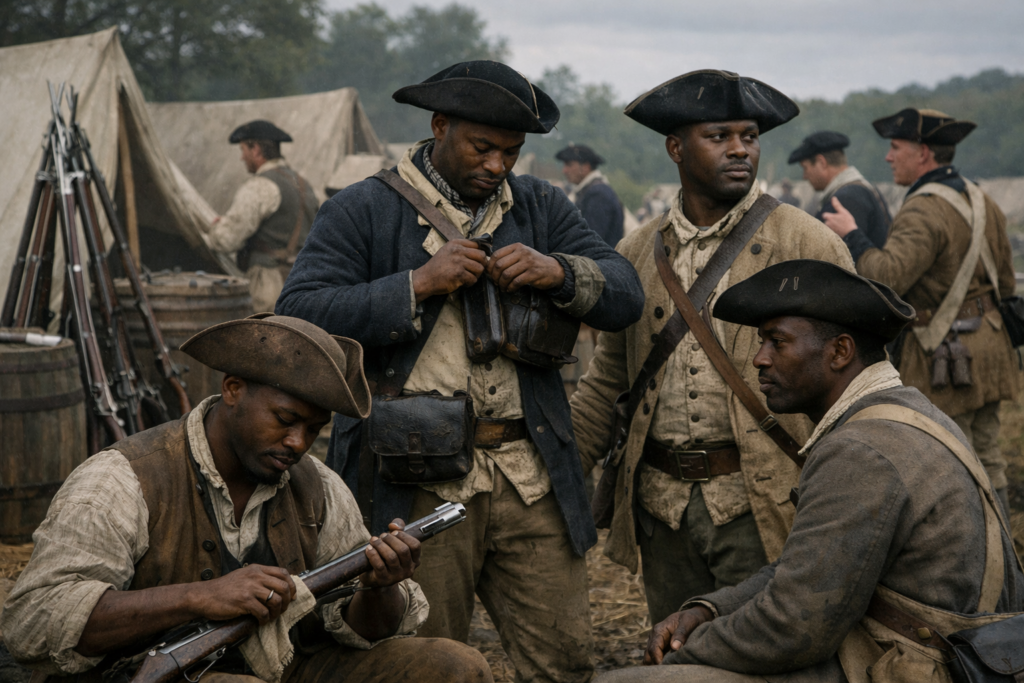
When we picture the American Revolution, we often imagine Continental soldiers in blue coats facing off against British redcoats—but this image leaves out thousands of crucial participants. Between 5,000 and 8,000 Black men fought for the Patriot cause, while an estimated 20,000 joined the British forces. Their stories reveal the war’s profound contradictions and the complex choices Black Americans faced when white colonists fought for “liberty” while holding hundreds of thousands of people in bondage. Their participation reflected the Revolution’s central paradox: a war waged in the name of liberty within a society deeply dependent on slavery.

The irony wasn’t lost on anyone at the time. As Abigail Adams wrote in 1774, “it always appeared a most iniquitous scheme to me to fight ourselves for what we are daily robbing and plundering from those who have as good a right to freedom as we have”.

For most Black participants, the key question was which side offered the clearest path out of bondage rather than abstract allegiance to King or Congress.  The tension between revolutionary rhetoric and the reality of slavery shaped every decision Black Americans made about which side to support.  This dynamic meant that enslaved people frequently escaped to British forces, while free Blacks (especially in New England) were more likely, though not exclusively, to enlist with the Patriots where they already had tenuous civic footholds

The British Offer: “Liberty to Slaves”

In November 1775, Virginia’s royal governor Lord Dunmore made a move that sent shockwaves through the colonies. With his military position deteriorating and losing men under his command, Dunmore issued a proclamation offering freedom to any enslaved person who abandoned their Patriot masters and joined British forces. The proclamation declared “all indented servants, Negroes, or others (appertaining to rebels) free, that are able and willing to bear arms”.

The response was immediate. Within a month, an estimated 300 Black men had enlisted in what Dunmore called the “Royal Ethiopian Regiment,” eventually growing to about 800 men.  Their uniforms were emblazoned with the provocative words “Liberty to Slaves.” The name “Ethiopian” wasn’t random—it referenced ancient associations of Ethiopia with wisdom and nobility. These soldiers saw action at the Battle of Kemp’s Landing, where—in a moment rich with symbolic meaning—one previously enslaved soldier captured his former master, militia colonel Joseph Hutchings.

Dunmore’s promise came with devastating costs. The regiment’s only other major battle was the disastrous British defeat at Great Bridge in December 1775. Far worse was the disease that ravaged the Black soldiers’ ranks. As the Virginia Gazette reported in March 1776, “the jail distemper rages with great violence on board Lord Dunmore’s fleet, particularly among the negro forces”. Disease ultimately killed more of Dunmore’s recruits than combat, as was common among all armies of the time. By 1776, Dunmore was forced to flee Virginia, taking only about 300 survivors with him.

The Patriot Response: Reluctant Acceptance

The Continental Army’s relationship with Black soldiers was complicated from the start. Black men fought at Lexington and Concord.  They also distinguished themselves at Bunker Hill, where Black patriot Salem Poor performed so heroically that fourteen officers petitioned the Massachusetts legislature to recognize his “brave and gallant” service.

But in November 1775, just days after Dunmore’s Proclamation, George Washington—himself a Virginia slaveholder—banned the recruitment of all Black men. The ban didn’t last long. The British continued recruiting Black soldiers, and Washington faced a simple reality: he desperately needed troops. By early 1778, after the brutal winter at Valley Forge had decimated his forces, Washington grudgingly allowed states to enlist Black soldiers. Rhode Island led the way with legislation that promised immediate freedom to any “able-bodied negro, mulatto, or Indian man slave” who enlisted, with the state compensating slaveholders for their “property”.

The result was the 1st Rhode Island Regiment, which became known as the “Black Regiment.” Of its roughly 225 soldiers, about 140 were Black or Native American men. The regiment fought at the Battle of Rhode Island in August 1778, where they held their position against repeated British and Hessian charges—a performance that earned them, according to Major General John Sullivan, “a proper share of the day’s honors”. They went on to fight at Yorktown, where they stood alongside southern militiamen whose peacetime job had been hunting runaway slaves.

Throughout the Continental Army, Black soldiers generally served in integrated units. One French officer estimated that a quarter of Washington’s army was Black—though historians believe 10 to 15 percent is more accurate. As one historian noted, “In the rest of the Army, the few blacks who served with each company were fully integrated: They fought, drilled, marched, ate and slept alongside their white counterparts.”

Naval service—on both sides—was often more racially integrated than the army. Black men served as sailors, gunners, and marines in the Royal Navy and the Continental Navy. Maritime labor traditions had long been more flexible on race, and skill mattered more than status.

Free Blacks in northern towns could enlist much like white common citizens, sometimes motivated by pay, local patriotism, and the hope that visible service would strengthen claims to equal rights after the war.  Enslaved men rarely chose independently; Patriot masters often enlisted them as substitutes to avoid service, while Loyalist masters sometimes allowed or forced them to join British units. In both cases emancipation promises were unevenly honored.

Some enslavers freed men in advance of service, others promised manumission afterward and reneged, while still others simply collected bounties or commutation while trying to retain control over Black veterans. On the British side, imperial policy also vacillated, with some officers fully supporting freedom for Black refugees tied to rebel masters, and others quietly returning runaways to Loyalist owners or exploiting them as unpaid labor.​

The Promise and the Betrayal

As the war ended, the gulf between British and American treatment of their Black allies became stark. In 1783, as British forces prepared to evacuate New York, General George Washington demanded the return of all formerly enslaved people as “property” under the Treaty of Paris. British commander Sir Guy Carleton refused. Instead, he created the “Book of Negroes”—a ledger documenting about 3,000 Black Loyalists who were granted certificates of freedom and evacuated to Nova Scotia, England, Germany, and British territories.

The Book provides glimpses of individual journeys. Boston King, who had escaped slavery in South Carolina to join the British, was evacuated with his wife Violet to Nova Scotia. Their entry simply notes Violet as a “stout wench”—a reminder that even their liberators viewed them through racist lenses. Harry Washington, who had escaped from George Washington’s Mount Vernon plantation, also reached Nova Scotia and later became a leader in the resettlement to Sierra Leone.

Nova Scotia proved no paradise. Black Loyalists received inferior land—rocky and infertile compared to what white Loyalists received. They faced discrimination, exploitation, and broken promises about land grants. By 1792, nearly 1,200 Black Loyalists—about half of those in Nova Scotia—accepted an offer to resettle in Sierra Leone, where they founded Freetown.

For Black Patriots, the outcome was often worse. While some white soldiers received up to 100 acres of land and military pensions from Congress, Black soldiers who had been promised freedom often received nothing beyond freedom—and some didn’t even get that. As one historian put it, they were “dumped back into civilian society”. In June 1784, thirteen veterans of the Rhode Island Regiment had to hire a lawyer just to petition for their back pay. The state responded with an act that classified them as “paupers, who heretofore were slaves” and ordered towns to provide charity.

Lieutenant Colonel Jeremiah Olney, who commanded the Rhode Island Regiment after Christopher Greene’s death, spent years advocating for his former soldiers—fighting attempts to re-enslave them and supporting their pension claims. Some soldiers, like Jack Sisson, finally received pensions decades later in 1818—forty years after they’d enlisted, and often too late. Many died before seeing any recognition.

Even more cruelly, many Black soldiers who had been promised freedom by their masters were returned to slavery after the war. Some remained enslaved for a few years until their owners honored their promises; others remained enslaved permanently, having fought for a freedom they would never experience.

It is plausible that the widespread participation of Black soldiers subtly accelerated Northern emancipation by making slavery harder to justify ideologically, even as Southern resistance hardened.

The Larger Meaning

The American Revolution was the last time the U.S. military would be significantly integrated until President Truman’s Executive Order 9981 in 1948. In 1792, Congress passed legislation limiting military service to “free, able-bodied, white male citizens”—a restriction that would last for generations.

Yet the Revolutionary War period saw more enslaved people gain their freedom than any other time before the Civil War. Historian Gary Nash estimates that between 80,000 and 100,000 enslaved people escaped throughout the thirteen colonies during the war—not all joined the military, but the war created opportunities for flight that many seized.

As historian Edward Countryman notes, the Revolution forced Americans to confront a question that Black Americans had been raising all along: “What does the revolutionary promise of freedom and democracy mean for African Americans?” The white founders failed to answer that question satisfactorily, but the thousands of Black soldiers who fought—on both sides—had already answered it with their lives. They understood that liberty was worth fighting for, even when the people promising it had no intention of extending it to everyone.

Image generated by author using ChatGPT.

Sources

  • “African Americans in the Revolutionary War,” Wikipedia.
  • Museum of the American Revolution, “Black Patriots and Loyalists” and “Black Founders: Black Soldiers and Sailors in the Revolutionary War.”​
  • Gilder Lehrman Institute, “African American Patriots in the Revolution.”​
  • National Archives blog, “African Americans and the American War for Independence.”​
  • Douglas R. Egerton, Death or Liberty: African Americans and Revolutionary America (individual stories on both Patriot and Loyalist sides).
  • Edward Countryman, The American Revolution.
  • Gary B. Nash, The Forgotten Fifth: African Americans in the Age of Revolution.
  • Alan Gilbert, Black Patriots and Loyalists: Fighting for Emancipation in the War for Independence.​
  • DAR, Forgotten Patriots – African American and American Indian Patriots in the Revolutionary War: A Guide to Service, Sources, and Studies).​
  • NYPL LibGuide, “Black Experience of the American Revolution”
  • American Battlefield Trust, “10 Facts: Black Patriots in the American Revolution.”​
  • Massachusetts Historical Society, “Revolutionary Participation: African Americans in the American Revolution.”
  • Fraunces Tavern Museum, “Enlistment of Freed and Enslaved Blacks in the Continental Army.”​
  • American Independence Museum, “African-American Soldiers’ Service During the Revolutionary War.”​
  • Encyclopedia Virginia, “Lord Dunmore’s Ethiopian Regiment.”​
  • Mount Vernon, “Dunmore’s Proclamation and Black Loyalists” and “The Ethiopian Regiment.”​
  • American Battlefield Trust, “Lord Dunmore’s Ethiopian Regiment”
  • Lord Dunmore’s Proclamation (1775), in transcription with context at Gilder Lehrman, Encyclopedia Virginia, and Mount Vernon.​
  • “Book of Negroes” (1783 evacuation ledger of Black Loyalists to Nova Scotia; digital copies and discussions via BlackPast and Dictionary of Canadian Biography).​
  • Boston King, “Memoirs of the Life of Boston King, a Black Preacher,” Methodist Magazine (1798)
  • NYPL “Black Experience of the American Revolution”
  • 1st Rhode Island Regiment, World History Encyclopedia

Strengthening Your Defenses: Understanding and Improving Immune Health in Your Golden Years

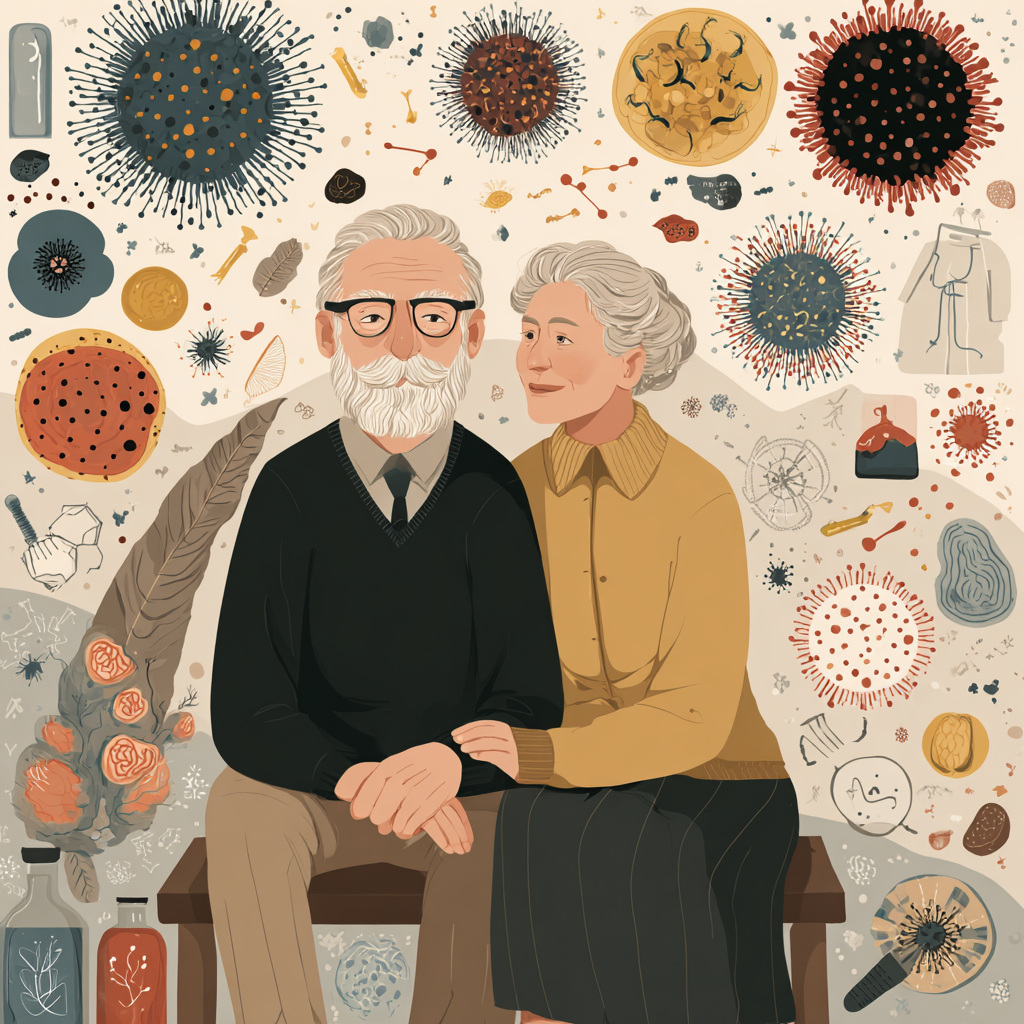
Getting older comes with plenty of perks—wisdom, perspective, maybe even a better appreciation for a quiet Sunday morning. But one thing that doesn’t improve with age is your immune system. If you’ve noticed that colds seem to hang on longer than they used to, or that recovering from illness takes more time, you’re not imagining things. The aging immune system undergoes real, measurable changes that can affect your health in significant ways.

Understanding Your Immune System

Think of your immune system as an incredibly sophisticated security network spread throughout your entire body. Unlike your heart or lungs, it’s not located in one place—according to the Mayo Clinic, your immune system is essentially a giant collection of cells that travel through your blood and tissues, constantly patrolling for anything that doesn’t belong.

Your immune defense operates on two levels. The first responders are part of what’s called the innate immune system. It begins with the skin and mucous membranes that act as a barrier.  They are backed up by specialized cells—including macrophages, neutrophils, and natural killer cells that act like scouts, surveying your body for foreign particles like bacteria, viruses, or damaged cells. When they detect something foreign, they sound an alarm and start an immune response triggering inflammation, your body’s response to attack which causes swelling, redness, and heat at infection sites.

This is the signal for your second line of defense—your adaptive immune system—to begin a more specialized and sophisticated attack against the invaders. This system includes T cells that attack and kill infected cells and B cells that make antibodies.  They learn to recognize specific pathogens and once they encounter a particular germ, they remember it. In the future, if you’re exposed to the same germ, your adaptive immune system will mount a more effective and swifter response. This is why you only get chickenpox once, and it’s the principle behind vaccination.

What Happens When the System Ages

Starting around your sixties, your immune system begins what scientists call immunosenescence—a gradual but significant decline in immune function. This isn’t just one simple change, but rather a cascade of alterations affecting both your innate and adaptive immune systems.

One of the most significant changes happens in your thymus, a small organ behind your breastbone that produces T cells. The process of involution involves significant structural thymic changes, including a reduction in size, a decrease in functional thymic tissue, and fatty replacement of the thymic parenchyma.   As a result, you produce fewer fresh T cells to respond to new threats.

At the same time, something paradoxical happens: while your immune system becomes less effective at fighting infections, it also becomes more inflammatory. This chronic inflamed state contributes to biological aging and the development of age-related pathologies. Scientists call this “inflammaging”—chronic low-grade inflammation that persists throughout the body.

The practical consequences are significant. The immune system becomes slower to respond, which increases your risk of getting sick; it also means flu shots or other vaccines may not work as well or protect you for as long as expected. You’re also at higher risk for autoimmune disorders where your immune system mistakenly attacks healthy tissue. Wounds will heal more slowly.

Why Immune Function Declines

Multiple factors contribute to immune aging beyond just the passage of time. Chronic viral infections play a surprising role. Latent and chronic viral infections such as human cytomegalovirus (HCMV) and Epstein-Barr virus (EBV) affect the immune system and contribute to immunosenescence . These viruses lie dormant for years and when your immune system begins to age it is no longer able to effectively suppress them. They become active, and your immune system is put on perpetual alert, expressed as chronic inflammation, gradually wearing it down even further.

Your cells also undergo changes at the molecular level. With each cell division, the protective caps on your chromosomes called telomeres get shorter. Eventually, this limits your immune cells’ ability to divide and respond to threats. The shift in immune cell populations is dramatic—you have fewer naive cells ready to respond to new infections and more memory cells dedicated to past threats, which means you’re well-protected against diseases you’ve already had but vulnerable to new ones. Your immune army is continuing to prepare for the last war.

Chronic health conditions that become more common with age—diabetes, heart disease, kidney disease, chronic lung conditions—all accelerate immune aging. Even lifestyle factors like chronic stress, poor sleep, smoking, and excessive alcohol consumption take a heavier toll on your immune system as you age. 

Strengthening Your Immune Defenses

The good news is that lifestyle interventions can meaningfully improve immune function in older adults. The evidence is particularly strong for several key strategies.

Physical Activity Makes a Real Difference

Exercise isn’t just about staying fit—it’s one of the most powerful immune boosters available. Regular exercise mitigates the aging processes of both the innate and adaptive immune system, particularly being associated with improved natural killer cell functioning. Studies comparing physically active older adults to sedentary ones consistently show better immune cell function in the active group.

The type and amount of exercise matters. Mayo Clinic recommends two strength training sessions and 150 minutes of moderate cardiovascular exercise weekly. But you don’t need to become a marathon runner—walking, swimming, cycling, yoga, and tai chi all provide significant benefits. Research shows that influenza vaccine responses are improved in active elderly populations, as demonstrated by higher antibody titers following 10 months of aerobic physical exercise.

The key is consistency and not overdoing it. Moderate, regular exercise strengthens your immune system, while extreme exercise can temporarily suppress it.

Nutrition: Fueling Your Immune Defense

What you eat directly impacts how well your immune system functions. The evidence supports focusing on whole, minimally processed foods rather than any specific “superfood” or restrictive diet. A balanced nutritious diet incorporating a variety of fruits and vegetables, whole grains, proteins, and probiotics positively impacts the immune system.  

Several specific nutrients deserve attention. Protein becomes increasingly important with age because tryptophan, an essential amino acid found in protein-based foods including eggs, fish, dairy products, legumes, and meat, plays important roles in immune function. Omega-3 fatty acids from fish have anti-inflammatory properties that may help counter inflammaging.

The gut-immune connection is particularly important. Your gut contains roughly 70% of your immune system, and the bacteria living there directly influence immune function. Probiotic-rich foods like yogurt, sour cream and cottage cheese, some aged cheeses, and fermented vegetables (sauerkraut, some pickles) help maintain a healthy gut microbiome, which in turn supports immune health.

Certain vitamins and minerals play outsized roles in immune function. Vitamin D is crucial—it mediates immune function and regulation, strengthening of epithelial barriers and antioxidant defense. Unfortunately, it’s estimated that 95% of Americans don’t receive enough vitamin D from their diet alone, and nearly one-third have a vitamin D deficiency.

Zinc is another critical nutrient. Zinc exerts direct anti-viral effects and serves as a cofactor of dozens of proteins important for immune function and antioxidative defense, yet 15% of Americans are not meeting zinc needs from food alone and 30% of the world’s elderly population have a zinc deficiency.

Selenium, while needed in smaller amounts, is equally important. Selenium plays a role in anti-inflammatory, antiviral, and immune-cell activity and is useful in both innate and adaptive immunity through selenoproteins that partly reduce oxidative stress generated by viral pathogens.

Sleep: Your Immune System’s Recovery Time

Sleep isn’t just rest—it’s when your immune system does critical maintenance work. While you sleep, your body produces cytokines, a protein that helps regulate immune responses and fight off infections, and when you lack proper sleep, this decreases the amount of cytokines your body produces. The recommendation is clear: aim for seven to eight hours of quality, uninterrupted sleep per night.

Sleep quality matters as much as quantity. If you’re experiencing insomnia or sleep disruptions, addressing them should be a priority because poor sleep is linked not just to reduced immune function but also to increased risk of chronic diseases.

Stress Management and Social Connection

Chronic stress suppresses immune function in measurable ways. Finding effective stress management techniques—whether meditation, deep breathing, enjoyable hobbies, or time in nature—isn’t just about feeling better emotionally. These practices have real physiological effects on immune function.

Social connection matters more than you might think. Social isolation and loneliness are associated with increased inflammation and reduced immune function. Maintaining meaningful social connections, whether through family, friends, community groups, or religious organizations, appear to have genuine immune benefits.

Vaccination: Working With Your Immune System

Vaccines remain highly effective and are crucial for older adults. Vaccines introduce your immune system to viruses in a controlled manner, helping the adaptive immune system spot and neutralize germs more quickly. Staying current with recommended vaccines—including annual flu shots, pneumonia vaccines, RSV vaccines, shingles vaccines, and COVID-19 boosters—is one of the most effective ways to prevent serious illness.

The Supplement Question

While a balanced diet should be the foundation, supplements can fill genuine gaps, especially for nutrients like vitamin D that are difficult to obtain adequately from food alone. However, researchers still don’t know all the effects of lifestyle on the immune system, and there are no scientifically proven direct links between specific supplements and enhanced immune function in all contexts.

That said, if you’re deficient in specific nutrients, supplementation can help. Supplementation of higher dosages of vitamins D, C, and zinc may have positive effects during viral infections in deficient individuals. The key is working with your doctor to identify any actual deficiencies before starting supplements, because more isn’t always better, and some supplements can interact with medications.

Other Practical Steps

Some immune boosters are refreshingly simple. Hand washing remains one of the most effective ways to prevent infections. Staying hydrated helps your body flush out toxins and keeps immune cells functioning optimally. Not smoking—or quitting if you do—significantly improves immune function because smoking directly damages immune cells and increases inflammation.  Excessive alcohol use also increases inflammation and is a significant source of free radicals.

Getting moderate sun exposure provides natural vitamin D while also offering stress-reduction benefits. Even 15-30 minutes of outdoor time daily can make a difference, though you need to balance sun exposure with skin cancer prevention.

Weight management can help prevent or reverse insulin resistance and metabolic syndrome reducing inflammation and slowing immunosenescence.

The Bottom Line

The aging immune system faces real challenges, but it’s far from helpless. While lifestyle changes don’t guarantee perfect immunity, every part of your body, including your immune system, functions better when protected from environmental assaults and bolstered by healthy-living strategies.

The most effective approach to an improved immune system combines multiple strategies: regular moderate exercise, a varied diet rich in whole foods with adequate protein and micronutrients, quality sleep, stress management, social connection, staying current with vaccinations, and addressing specific nutritional deficiencies through supplementation when needed. None of these interventions will turn back the clock, but together they can meaningfully improve immune resilience and your ability to fight off infections and recover from illness.


Illustration generated by author using Midjourney

Sources

  1. National Center for Biotechnology Information – “Aging of the Immune System: Mechanisms and Therapeutic Targets”
    https://pmc.ncbi.nlm.nih.gov/articles/PMC5291468/
  2. MDPI Vaccines – “Immunosenescence: Aging and Immune System Decline”
    https://www.mdpi.com/2076-393X/12/12/1314
  3. Frontiers in Aging – “The 3 I’s of immunity and aging: immunosenescence, inflammaging, and immune resilience”
    https://www.frontiersin.org/journals/aging/articles/10.3389/fragi.2024.1490302/full
  4. Frontiers in Aging – “Immune Senescence, Immunosenescence and Aging”
    https://www.frontiersin.org/journals/aging/articles/10.3389/fragi.2022.900028/full
  5. National Center for Biotechnology Information – “Physical Activity and Diet Shape the Immune System during Aging”
    https://pmc.ncbi.nlm.nih.gov/articles/PMC7146449/
  6. National Center for Biotechnology Information – “Aging and the Immune System: the Impact of Immunosenescence on Viral Infection”
    https://pmc.ncbi.nlm.nih.gov/articles/PMC6943173/
  7. National Center for Biotechnology Information – “Physical Activity and Nutritional Influence on Immune Function”
    https://pmc.ncbi.nlm.nih.gov/articles/PMC8531728/
  8. National Center for Biotechnology Information – “Immune-boosting role of vitamins D, C, E, zinc, selenium and omega-3 fatty acids”
    https://pmc.ncbi.nlm.nih.gov/articles/PMC7415215/
  9. National Center for Biotechnology Information – “Nutritional risk of vitamin D, vitamin C, zinc, and selenium deficiency on COVID-19”
    https://pmc.ncbi.nlm.nih.gov/articles/PMC8571905/
  1. MedlinePlus Medical Encyclopedia – “Aging changes in immunity”
    https://medlineplus.gov/ency/article/004008.htm
  2. Mayo Clinic Press – “Aging and the immune system: Strengthening your body’s defenses”
    https://mcpress.mayoclinic.org/healthy-aging/aging-and-the-immune-system/
  3. Harvard Health Publishing – “How to boost your immune system”
    https://www.health.harvard.edu/staying-healthy/how-to-boost-your-immune-system
  4. Greater Good Health – “Understanding How Seniors Can Boost Their Immune Systems”
    https://greatergoodhealth.com/patients/how-can-seniors-boost-their-immune-systems/
  5. Nature Made – “Super D Immune Complex” (Nutritional information on vitamin D, zinc, and selenium)
    https://www.naturemade.com/products/super-d-immune-complex

Who Will Cover City Hall Now? Democracy in the Age of News Deserts

Were it left to me to decide whether we should have a government without newspapers, or newspapers without a government, I should not hesitate a moment to prefer the latter. But I should mean that every man should receive those papers and be capable of reading them. —Thomas Jefferson


I originally posted this article about a year and a half ago. I was concerned about the future of newspapers then and I’m even more concerned now. I’ve updated my original post to reflect recent losses of newspapers.
When I was growing up in Charleston WV in the 1950s and early 1960s, we had two daily newspapers. The Gazette was delivered in the morning and the Daily Mail was delivered in the afternoon. One of my first jobs as a boy was delivering The Gazette. It worked out to be about 50 cents an hour, but I was glad to have the job. (It was good money at the time.)
Ostensibly, the Gazette was a Democratic newspaper, and the Daily Mail was a Republican one. However, given the politics of the day there was not a significant difference between the two, and most people subscribed to both.
There weren’t a lot of options for news at the time. Of course, there were no 24-hour news channels. National news on the three networks was about 30 minutes an evening with local news at about 15 minutes. By the late 1960s national news had increased to 60 minutes and most local news to about 30 minutes. Although, given the limitations of time on the local stations, most of the broadcast was taken up with weather, sports, and human interest stories with little time left to expand on hard news stories.
We depended on our newspapers for news of our cities, counties, and states. And the newspapers delivered the news we needed. Almost everyone subscribed to and read the local papers. They kept us informed about our local politicians and government and provided local insight on national events. They were also our source for information about births, deaths, marriages, high school graduations and everything we wanted to know about our community.
In the 21st century there are many more supposed news options. There are 24-hour news networks as I’ve talked about in a previous post.  And of course, there are Instagram, Facebook, X and the other online entities that claim to provide news.
There has been one positive development in television news. Local news, at least in Charleston, has expanded to two hours most evenings. There is some repetition between the first and second hour and it is still heavily weighted to sports, weather, and human interest, but there is some increased coverage of local hard news. However, this is somewhat akin to reading the headlines and the first paragraph in a newspaper story. It doesn’t provide in-depth coverage, but it is improved over what otherwise is available to those who don’t watch a dedicated news show. Hopefully, it motivates people to find out more about events that concern them.
The situation has become dire in recent months. The crisis that was building when I first wrote about newspapers has now reached catastrophic proportions. On December 31, 2025, the Atlanta Journal-Constitution published its last print edition after 157 years, making Atlanta the largest U.S. metro area without a printed daily newspaper. Think about that—a major American city, home to over six million people in its metro area, now has no physical newspaper you can hold in your hands.
Just weeks ago in February 2025, the Newark Star-Ledger, New Jersey’s largest newspaper, stopped printing after nearly 200 years. The Jersey Journal, which had served Hudson County for 157 years, closed entirely. These weren’t small-town weeklies—these were major metropolitan dailies that once served millions of readers. The Pittsburgh Post Gazette, founded in 1786, has announced that it will cease publication effective May 3, 2026.
Even more alarming is what just happened at the Washington Post. Just days ago, in early February 2026, owner Jeff Bezos ordered the elimination of roughly one-third of the newspaper’s workforce—approximately 300 journalists. The Post closed its entire sports section, shuttered its books department, gutted its foreign bureaus and metro desk, and canceled its flagship daily podcast. This is the same newspaper that brought down a presidency with its Watergate coverage and has won dozens of Pulitzer Prizes. The Post’s metro desk, which once had 40 reporters covering the nation’s capital, now has just a dozen. All the paper’s photojournalists were laid off. The entire Middle East team was eliminated.
Former Washington Post executive editor Martin Baron, who led the paper from 2013 to 2021, called the cuts devastating and blamed poor management decisions, including Bezos’s decision to spike the newspaper’s presidential endorsement in 2024, which led to the cancellation of hundreds of thousands of subscriptions. The Post lost an estimated $100 million in 2024.
The numbers tell a grim story. Since 2005, more than 3,200 newspapers have closed in the United States—that’s over one-third of all the newspapers that existed just twenty years ago. Newspapers continue to disappear at a rate of more than two per week. In the past year alone, 136 newspapers shut their doors.
Fewer than 5,600 newspapers now remain in America, and less than 1,000 of those are dailies. Even among those “dailies,” more than 80 percent print fewer than seven days a week. We now have 213 counties that are complete “news deserts”—places with no local news source at all. Another 1,524 counties have only one remaining news source, usually a struggling weekly newspaper. Taken together, about 50 million Americans now have limited or no access to local news.
Will TV news be able to provide the details about our community? The format of the newspaper allows for more detailed presentations and for a larger variety of stories. The reader can pick which stories to read, when to read them and how much of each to read. The very nature of broadcast news doesn’t allow these options.
I beg everyone to please subscribe to your local newspapers if you still have one. Though I still prefer the hands-on, physical newspaper, I understand many people want to keep up with the digital age. If you do, please subscribe to the digital editions of your local newspaper and don’t pretend that the other online sources, such as social media, will provide you with local news. More likely, you’ll just get gossip, or worse.
If we lose our local news, we are in danger of losing our freedom of information and if we lose that, we’re in danger of losing our country. For those of you who think I’m fear mongering, countries that have succumbed to dictatorship have first lost their free press.
I believe that broadcast news will never be the free press that print journalism is. The broadcast is an ethereal thing. You hear it and it’s gone. Of course, it is always possible to record it and play it back, but most people don’t. If you have a newspaper, you can read it, think about it, and read it again. There are times when on my second or third reading of an editorial or an op-ed article, I’ve changed my opinion about either the subject or the writer of the piece. I don’t think a news broadcast lends itself to this type of reflection. In fact, when listening to the broadcast news I often find my mind wandering as something that the broadcaster said sends me in a different direction.
In my opinion, broadcast news is controlled by advertising dollars and viewer ratings. News seems to be treated like any entertainment program, catering to what generates ratings rather than facts. I recognize that this can be the case with newspapers as well, but it seems to me that it’s much easier to detect bias in the written word than in the spoken word. Too often we can get caught up in the emotions of the presenter or in the graphics that accompany the story.
With that in mind, I recommend that if you want unbiased journalism, please support your local newspapers before we lose them. Once they are gone, we will never get them back and we will all be much the poorer as a result.
I will leave you with one last quote.
A free press is the unsleeping guardian of every other right that free men prize; it is the most dangerous foe of tyranny. —Winston Churchill
The only way to preserve freedom is to preserve the free press. Do your part! Subscribe!
And you can quote The Grumpy Doc on that!!!!

Sources
Fortune (August 29, 2025): “Atlanta becomes largest U.S. metro without a printed daily newspaper as Journal-Constitution goes digital”
https://fortune.com/2025/08/29/atlanta-largest-metro-without-printed-newpsaper-digital-journal-constitution/
 
Northwestern University Medill School (2025): “News deserts hit new high and 50 million have limited access to local news, study finds”
https://www.medill.northwestern.edu/news/2025/news-deserts-hit-new-high-and-50-million-have-limited-access-to-local-news-study-finds.html
 
NBC News (February 2026): “Washington Post lays off one-third of its newsroom”
https://www.nbcnews.com/business/media/washington-post-layoffs-sports-rcna257354
 
CNN Business (February 4, 2026): “Jeff Bezos-owned Washington Post conducts widespread layoffs, gutting a third of its staff”
https://www.cnn.com/2026/02/04/media/washington-post-layoffs
 
Northwestern University Medill Local News Initiative (2024): “The State of Local News Report 2024”
https://localnewsinitiative.northwestern.edu/projects/state-of-local-news/2024/report/
 
Northwestern University Medill School (2025): “News deserts hit new high and 50 million have limited access to local news, study finds”
https://www.medill.northwestern.edu/news/2025/news-deserts-hit-new-high-and-50-million-have-limited-access-to-local-news-study-finds.htm

Russel Vought and the War on the Environment

Recently, there’s been a a lot of attention given to RFK Jr. and his war on vaccines. More potentially devastating than that is Russel Vought and his war on environmental science.
Russell Vought hasn’t exactly been working in the shadows. As the director of the Office of Management and Budget since February 2025, he’s been methodically implementing what he outlined years earlier in Project 2025—a blueprint that treats climate science not as settled fact, but as what he calls “climate fanaticism.” The result is undeniably the most aggressive dismantling of environmental protections in American history.
The Man Behind the Plan
Vought’s resume tells you everything you need to know about his approach. He served as OMB director during Trump’s first term, wrote a key chapter of Project 2025 focusing on consolidating presidential power, and has openly stated his goal is to make federal bureaucrats feel “traumatized” when they come to work. His philosophy on climate policy specifically? He’s called climate change a side effect of building the modern world—something to manage through deregulation rather than prevention.
Attacking the Foundation: The Endangerment Finding
The centerpiece of Vought’s climate strategy targets what EPA Administrator Lee Zeldin has called “the holy grail of the climate change religion”—the 2009 Endangerment Finding. This Obama-era scientific determination concluded that six greenhouse gases (carbon dioxide, methane, nitrous oxide, hydrofluorocarbons, perfluorocarbons, and sulfur hexafluoride) endanger public health and welfare. It sounds technical, but it’s the legal foundation for virtually every federal climate regulation enacted over the past fifteen years.
 Just last week EPA Administrator Zeldin announced that the Trump administration has repealed this finding. This action strips EPA’s authority to regulate greenhouse gas emissions under the Clean Air Act—meaning no more federal limits on power plant emissions, no vehicle fuel economy standards tied to climate concerns, and no requirement for industries to measure or report their emissions.  White House press secretary Karoline Leavitt said this action “will be the largest deregulatory action in American history.”
More than 1,000 scientists warned Zeldin not to take this step, and the Environmental Protection Network cautioned last year that repealing the finding would cause “tens of thousands of additional premature deaths due to pollution exposure” and would spark “accelerated climate destabilization.”  Abigail Dillen president of the nonprofit law firm Earthjustice said “there is no way to reconcile EPA’s decision with the law, the science and the reality of the disasters that are hitting us harder every year.” She further said they expect to see the Trump administration in court.  Obviously, the science is less important to Trump, Zeldin and Vought than the politics.
The Thirty-One Targets
In March 2025, Zeldin announced what he proudly called “the greatest day of deregulation in American history”—a plan to roll back or reconsider 31 key environmental rules covering everything from clean air to water quality. The list reads like a regulatory hit parade, including vehicle emission standards (designed to encourage electric vehicles), power plant pollution limits, methane regulations for oil and gas operations, and even particulate matter standards that protect against respiratory disease.
The vehicle standards are particularly revealing. The transportation sector is America’s largest source of greenhouse gas emissions, and the Biden-era rules were crafted to nudge automakers toward producing more electric vehicles. At Vought’s direction, the EPA is now reconsidering these, with Zeldin arguing they “regulate out of existence” segments of the economy and cost Americans “a lot of money.”
Gutting the Science Infrastructure
Vought’s agenda extends beyond specific regulations to the institutions that produce climate science itself. In Project 2025, he proposed abolishing the Office of Domestic Climate Policy and suggested the president should refuse to accept federal scientific research like the U.S. National Climate Assessment (NCA). The NCA, published every few years, involves hundreds of scientists examining how climate change is transforming the United States—research that informs everything from building codes to insurance policies.
According to reporting from E&E News in January, Vought wants the White House to exert tighter control over the next NCA, potentially elevating perspectives from climate deniers and industry representatives while excluding contributions made during the Biden administration.  This is a plan that has been in the works for years. Vought reportedly participated in a White House meeting during Trump’s first term where officials discussed firing the scientists working on the assessment.
The National Oceanic and Atmospheric Administration (NOAA) has also been targeted. In February 2025, about 800 NOAA employees—responsible for weather forecasting, climate monitoring, fisheries management, and marine research were fired. Project 2025 had proposed breaking up NOAA entirely, and concerned staff members have already begun a scramble to preserve massive amounts of climate data in case the agency is dismantled.
Budget Cuts as Policy
Vought’s Center for Renewing America has proposed eliminating the Department of Energy’s Office of Energy Efficiency and Renewable Energy, the EPA’s environmental justice fund, and the Low Income Home Energy Assistance Program. During the first Trump administration, Vought oversaw budgets proposing EPA cuts as steep as 31%—reducing the agency to funding levels not seen in decades. In a 2023 speech, he explained the logic bluntly: “We want their funding to be shut down so that the EPA can’t do all of the rules against our energy industry because they have no bandwidth financially to do so.”
This isn’t just about climate, it is also about fairness and the recognition that environmental policies have had a predominately negative effect on low income areas. EPA has cancelled 400 environmental justice grants, closed environmental justice offices at all 10 regional offices, and put the director of the $27 billion Greenhouse Gas Reduction Fund on administrative leave. The fund had been financing local economic development projects aimed at lowering energy prices and reducing emissions.
Eliminating Climate Considerations from Government
Perhaps more insidious than the high-profile rollbacks are the procedural changes that make climate considerations disappear from federal decision-making. In February, Jeffrey Clark—acting administrator of the Office of Information and Regulatory Affairs (OIRA) under Vought’s OMB—directed federal agencies to stop using the “social cost of carbon” in their analyses. This metric calculates the dollar value of damage caused by one ton of carbon pollution, allowing agencies to accurately assess whether regulations produce net benefits or defects for society.
Vought has also directed agencies to establish sunset dates for environmental regulations—essentially automatic expiration dates after which rules stop being enforced unless renewed. For existing regulations, the sunset comes after one year; for new ones, within five years. The stated goal is forcing agencies to continuously justify their rules, but the practical effect is creating a perpetual cycle of regulatory uncertainty.
The Real-World Stakes
The timing of these rollbacks offers a grim irony. As Vought was pushing to weaken the National Climate Assessment in January 2025, the Eaton and Palisades fires were devastating Los Angeles—exactly the type of climate-intensified disaster the assessment is designed to help communities prepare for. The administration’s response? Energy Secretary Chris Wright described climate change as “a side effect of building the modern world” at an industry conference.
An analysis by Energy Innovation, a nonpartisan think tank, found that Project 2025’s proposals to gut federal policies encouraging renewable electricity and electric vehicles would increase U.S. household spending on fuel and utilities by about $240 per year over the next five years. That’s before accounting for the health costs of increased air pollution or the economic damage from unmitigated climate change.
Environmental groups have vowed to challenge these changes in court, and the legal battles will likely stretch on for years. The D.C. Circuit Court of Appeals will hear many cases initially, though the Supreme Court will probably issue final decisions. Legal experts note that while Trump’s EPA moved with unprecedented speed on proposals in 2025, finalizing these rules through the required regulatory process will take much longer. As of December, none of the major climate rule repeals had been submitted to OMB for final review, partly due to what EPA called a 43-day government shutdown (which EPA blamed on Democrats, though the characterization is widely disputed).
What Makes This Different
Previous administrations have certainly rolled back environmental regulations, but Vought’s approach differs in both scope and philosophy. Rather than tweaking specific rules or relaxing enforcement, he’s systematically attacking the scientific and legal foundations that make climate regulation possible. It’s the difference between turning down the thermostat and ripping out the entire heating system.
The Environmental Defense Fund, which rarely comments on political appointees, strongly opposed Vought’s confirmation, with Executive Director Amanda Leland stating: “Russ Vought has made clear his contempt for the people working every day to ensure their fellow Americans have clean air, clean water and a safer climate.”
Looking Forward
Whether Vought’s vision becomes permanent depends largely on how courts rule on these changes. The 2007 Supreme Court decision in Massachusetts v. EPA established that the agency has authority to regulate greenhouse gases as air pollutants under the Clean Air Act—the very authority Vought is now trying to eliminate. Overturning established precedent is difficult, though the current Supreme Court’s composition makes the outcome possible, if not likely.
What we’re witnessing is essentially a test of whether one administration can permanently disable the federal government’s capacity to address climate change, or if these changes represent a temporary setback that future administrations can reverse. The stakes couldn’t be higher: atmospheric CO2 concentrations continue rising, global temperatures are breaking records, and climate-related disasters are becoming more frequent and severe. Nothing less than the future of our way of life is at stake. We must take action now.
 
Full disclosure: my undergraduate degree is in meteorology, but I would never call myself a meteorologist since I have never worked in the field. But I still maintain an interest, from both a meteorological and a medical perspective. The Grump Doc is never lacking in opinions.
 
Illustration generated by author using Midjourney.
 
Sources:
Lisa Friedman and Maxine Joselow, “Trump Allies Near ‘Total Victory’ in Wiping Out U.S. Climate Regulation,” New York Times, Feb. 9, 2026.[nytimes +1]
Lisa Friedman, “The Conservative Activists Behind One of Trump’s Biggest Climate Moves,” New York Times, Feb. 10, 2026.[nytimes +1]
Bob Sussman, “The Anti-Climate Fanaticism of the Second Trump Term (Part 1: The Purge of Climate from All Federal Programs),” Environmental Law Institute, May 7, 2025.[eli]
U.S. Environmental Protection Agency, “Trump EPA Kicks Off Formal Reconsideration of Endangerment Finding,” EPA News Release, Mar. 13, 2025.[epa]
Trump’s Climate and Clean Energy Rollback Tracker, Act On Climate/NRDC coalition, updated Jan. 11, 2026.[actonclimate]
“Trump to Repeal Landmark Climate Finding in Huge Regulatory Rollback,” Wall Street Journal, Feb. 9, 2026.[wsj]
Valerie Volcovici, “Trump Set to Repeal Landmark Climate Finding in Huge Regulatory Rollback,” Reuters, Feb. 9, 2026.[reuters]
Alex Guillén, “Trump EPA to Take Its Biggest Swing Yet Against Climate Change Rules,” Politico, Feb. 10, 2026.[politico]
“EPA Urges White House to Strike Down Landmark Climate Finding,” Washington Post, Feb. 26, 2025.[washingtonpost]
“Trump Allies Near ‘Total Victory’ in Wiping Out U.S. Climate Regulation,” Seattle Times reprint, Feb. 10, 2026.[seattletimes]
“Trump Wants to Dismantle Key Climate Research Hub in Colorado,” Earth.org, Dec. 17, 2025.[earth]
“Vought Says National Science Foundation to Break Up Federal Climate Research Center,” The Hill, Dec. 17, 2025.[thehill]
Rachel Cleetus, “One Year of the Trump Administration’s All-Out Assault on Climate and Clean Energy,” Union of Concerned Scientists, Jan. 13, 2026.[ucs]
Environmental Protection Network, “Environmental Protection Network Speaks Out Against Vought Cabinet Consideration,” Nov. 20, 2024.[environmentalprotectionnetwork]
“From Disavowal to Delivery: The Trump Administration’s Rapid Implementation of Project 2025 on Public Lands,” Center for Western Priorities, Jan. 28, 2026.[westernpriorities]
“Russ Vought Nominated for Office of Management and Budget Director,” Environmental Defense Fund statement, Mar. 6, 2025.[edf]
“Project 2025,” Heritage Foundation/Project 2025 backgrounder (as summarized in the Project 2025 Wikipedia entry).[wikipedia]
“EPA to repeal finding that serves as basis for climate change,” The Associated Press, Matthew Daly
https://vitalsigns.edf.org/story/trump-nominee-and-project-2025-architect-russell-vought-has-drastic-plans-reshape-america
https://en.wikipedia.org/wiki/Russell_Vought
https://www.commondreams.org/news/warnings-of-permanent-damage-to-people-and-planet-as-trump-epa-set-to-repeal-key-climate-rule
https://www.eenews.net/articles/trump-team-takes-aim-at-crown-jewel-of-us-climate-research/
https://www.epa.gov/newsreleases/epa-launches-biggest-deregulatory-action-us-history
https://www.pbs.org/newshour/nation/trump-administration-moves-to-repeal-epa-rule-that-allows-climate-regulation
https://www.scientificamerican.com/article/trump-epa-unveils-aggressive-plans-to-dismantle-climate-regulation/
https://www.bloomberg.com/news/articles/2026-02-10/trump-s-epa-to-scrap-landmark-emissions-policy-in-major-rollback​​​​​​​​​​​​​​​​


What Is This Thing Called Love?

Every February 14th, we’re reminded that we’re supposed to understand love well enough to celebrate it with cards, chocolates, and carefully chosen gifts. Yet if you ask a hundred people to define love, you’ll get a hundred different answers—and most of them will involve a lot of hand-waving and phrases like “you just know.”

So, what is love? After thousands of years of poetry, philosophy, and now neuroscience, we still don’t have a tidy answer. But we do know more than we used to about how it works, why it matters, and what makes it one of the most powerful forces in human experience.

The Chemistry of Connection

Let’s start with the brain, because love—for all its mystery—has a biological basis we can measure. When you’re falling in love, your brain lights up like a Christmas tree in very specific ways. The caudate nucleus and ventral tegmental area, both parts of the brain’s reward system, show intense activity when people look at photos of their romantic partners. These are the same regions that activate when you’re anticipating a reward or experiencing pleasure. Your brain is essentially treating your beloved like the best possible prize.

The neurochemistry is equally dramatic. Dopamine floods your system, creating that giddy, can’t-eat, can’t-sleep sensation of new love. Norepinephrine heightens attention and memory—which is why you remember every detail of your early dates. Meanwhile, serotonin levels actually drop, which creates the obsessive thinking patterns familiar to anyone who’s ever fallen hard for someone. It’s not unlike the neurochemistry of obsessive-compulsive disorder, which explains why new love can feel so all-consuming.

But here’s where it gets interesting: long-term love shows different neural patterns than early infatuation. In established relationships, the brain’s attachment systems become more active, involving oxytocin and vasopressin—hormones that promote bonding and trust. The frenzy calms, but a different kind of connection deepens.

More Than Just Romance

Our cultural obsession with Valentine’s Day focuses almost exclusively on romantic love, but we experience love in multiple forms that are equally powerful. The ancient Greeks understood this—they had several words for different types of love.

There’s eros, the passionate romantic love we celebrate on Valentine’s Day. But there’s also philia, the deep friendship love that bonds us to chosen family and lifelong companions. Storge describes familial love, the affection between parents and children or siblings. Agape is selfless, universal love—the kind that drives people to help strangers or dedicate their lives to causes. And pragma is the mature, enduring love that develops in long partnerships built on compatibility and mutual respect.

Research on attachment theory, pioneered by psychologist John Bowlby, shows that our capacity for all these forms of love develops from our earliest relationships. The bonds we form with caregivers in infancy create templates that influence how we connect with others throughout life. Those early experiences shape whether we tend toward secure, anxious, or avoidant attachment patterns in adult relationships.

The Meaning We Make

So, what does love mean to us? The answer seems to be almost everything.

Love is fundamentally about connection in a species that evolved to be deeply social. We’re not built to survive alone. Anthropological evidence suggests that cooperation and bonding have been essential to human survival for hundreds of thousands of years. Love—in its various forms—is the emotional mechanism that makes us want to stay together, protect each other, and invest in relationships that extend beyond immediate self-interest.

Psychological research backs this up. Studies consistently show that strong social connections are among the most reliable predictors of happiness and wellbeing. A famous Harvard study that followed people for over 75 years found that close relationships—more than money, fame, or achievement—were what kept people happy throughout their lives. The quality of our relationships influences everything from our physical health to our resilience in facing life’s challenges.

Love also gives us a sense of meaning and purpose. Philosopher Martin Buber wrote about “I-Thou” relationships—moments when we genuinely see and are seen by another person, not as objects to be used but as complete beings. These connections, he argued, are where we find authentic existence. Whether or not you buy the full philosophical framework, there’s something to the idea that being truly known and still loved is profoundly meaningful to us

How We Describe the Indescribable

The challenge with love is that it’s simultaneously a biological process, a psychological state, a social bond, and a subjective experience. It’s a feeling, but also a choice. It involves chemistry but transcends chemistry. It’s universal, but manifests differently across cultures and individuals.

When people try to describe love, they often resort to metaphors: it’s a journey, a flame, a force of nature, a home. These metaphors capture something real—that love is dynamic (a journey), consuming (a flame), powerful beyond our control (a force), and provides security (a home). Each metaphor reveals an individual facet of love but is incomplete in itself.

Psychologists sometimes describe love through its components. Robert Sternberg’s triangular theory proposes that love involves intimacy (closeness and connection), passion (physical attraction and arousal), and commitment (the decision to maintain the relationship). Different combinations create different experiences: romance without commitment is infatuation; commitment without passion is companionship; all three together create what he calls “consummate love”.

But even these frameworks feel incomplete because love is also characterized by paradoxes. It makes us feel both euphoric and vulnerable. It’s intensely focused on one person yet can expand our capacity for compassion generally. It’s simultaneously selfish (wanting the beloved) and selfless (wanting their happiness above our own). It’s stable and changing, rational and irrational, simple and impossibly complex.

What We Know, and What We Don’t

Here’s my honest assessment of our understanding: We’re fairly confident about love’s neurological basis and its importance for human wellbeing. The research on attachment, bonding hormones, and the psychological benefit of connection is solid and replicated across many studies.

We’re less certain about the boundaries between types of love or whether our categories reflect universal realities or cultural constructs. The line between deep friendship and romantic love can be fuzzy. What Western culture calls romantic love may be experienced or expressed differently in cultures with arranged marriages or different social structures.

And we really don’t know how to explain why one person falls for this particular person and not that one, why some relationships endure while others fade, or how exactly the alchemy of genuine connection works. We can identify correlates and patterns, but the lived experience of love retains its mystery.

The Point of It All

Maybe the reason love resists simple definition is that it’s less like a thing and more like a capacity—the human ability to extend beyond our individual boundaries and form bonds that transcend pure self-interest. It’s what allows parents to sacrifice for children, friends to show up in crises, partners to build lives together, and strangers to feel compassion for people they’ll never meet.

Valentine’s Day, for all its commercial trappings, is trying to celebrate something genuinely important: our ability to connect, to care, to find meaning in each other. Whether you’re celebrating romantic love, friendship, family bonds, or simply the human capacity for affection, you’re acknowledging one of the most fundamental aspects of what makes us human.

Love might be indefinable, but that doesn’t make it any less real or necessary. It’s the force that pulls us out of isolation and reminds us we’re part of something larger than ourselves. And maybe that’s enough of a definition to work with.

Sources

Cole Porter – What’s This Thing Called Love? Lyrics, 1929

Scientific American – The Neuroscience of Love https://www.scientificamerican.com/article/the-neuroscience-of-love/

Greater Good Science Center, UC Berkeley – The New Science of Love https://greatergood.berkeley.edu/article/item/the_new_science_of_love

Simply Psychology – Bowlby’s Attachment Theory https://www.simplypsychology.org/bowlby.html

Harvard Gazette – Harvard Study on Adult Development https://news.harvard.edu/gazette/story/2017/04/over-nearly-80-years-harvard-study-has-been-showing-how-to-live-a-healthy-and-happy-life/

Verywell Mind – Sternberg’s Triangular Theory of Love https://www.verywellmind.com/triangular-theory-of-love-2795884

Illustration generated by author using ChatGPT.

The Fatal Meeting: When Hamilton and Burr Settled Fifteen Years of Rivalry with Pistols

The story of the Hamilton-Burr duel has all the elements of a Greek tragedy: brilliant men, political ambition, an unforgiving honor culture, and an ending that destroyed both victor and vanquished alike. When Aaron Burr shot Alexander Hamilton on the morning of July 11, 1804, he didn’t just kill one of America’s founding architects—he also ended his own political career and helped doom the entire Federalist Party to irrelevance. Let’s rewind the clock more than a decade to try and understand how these two gifted lawyers and Revolutionary War veterans ended up facing each other with loaded pistols.

The Long Road to Weehawken

Hamilton and Burr moved in the same elite New York political circles from the 1790s onward, but they had remarkably different temperaments and political beliefs. Hamilton was ideological, prolific, and combative—often too much so for his own good. Burr was pragmatic, opaque, self-serving, and famously hard to pin down on principle. They distrusted each other deeply.

Their rivalry stretched back to 1791, when Burr defeated Philip Schuyler for a U.S. Senate seat representing New York. This wasn’t just any political defeat for Hamilton—Schuyler was his father-in-law and a crucial Federalist ally on whom Hamilton had counted to support his ambitious financial programs. Hamilton, who was serving in George Washington’s cabinet as Treasury Secretary, never forgave Burr for this loss. In correspondence from June 1804, Hamilton himself referenced “a course of fifteen years competition” between the two men.  

Their philosophical differences ran deep. Hamilton was an ideological Federalist who dreamed of transforming the United States into a modern economic power rivaling European empires through strong central government, industrial development, and military strength. Burr, by contrast, approached politics more pragmatically—he saw it as a vehicle for advancing his own interests and those of his allies rather than as a way to implement sweeping political visions. As Burr himself allegedly said, politics were nothing more than “fun and honor and profit”. Hamilton viewed Burr as fundamentally dangerous due to his lack of fixed ideological principles. Hamilton wrote in 1792 that he considered it his “religious duty to keep this man from office”

The election of 1800 brought their animosity to a boiling point. Due to a quirk in the original Constitution’s electoral system, Thomas Jefferson and his running mate Aaron Burr tied in the Electoral College with 73 votes each, allowing the Federalists to briefly consider elevating Burr to the presidency.  The decision went to the House of Representatives, and Hamilton—despite despising Jefferson’s Democratic-Republican politics—campaigned hard to ensure Jefferson won the presidency rather than Burr. Hamilton argued that Jefferson, however wrong in policy, had convictions, whereas Burr had none.  In the end, Jefferson gained the presidency and Burr became Vice President, but their relationship was never collegial and Burr was excluded from any meaningful participation in Jefferson’s administration.

By 1804, it was clear Jefferson would not consider Burr for a second term as Vice President. Desperate to salvage his political career, Burr made a surprising move: he sought the Federalist nomination for governor of New York, switching from his Democratic-Republican affiliation. It was a strange gambit—essentially betting that his political enemies might support him if it served their interests. Hamilton, predictably, worked vigorously to block Burr’s ambitions yet again. Although Hamilton’s opposition wasn’t the only factor, Burr lost badly to Morgan Lewis, the Democratic-Republican candidate, in April 1804.

The Cooper Letter and the Challenge

The immediate trigger for the duel came from a relatively minor slight in the context of their long feud. In February 1804, Dr. Charles Cooper attended a dinner party where Hamilton spoke forcefully against Burr’s candidacy. Cooper later wrote to Philip Schuyler describing Hamilton’s comments, noting that Hamilton had called Burr “a dangerous man” and referenced an even “more despicable opinion” of him. This letter was published in the Albany Register in April, after Burr’s electoral defeat.

When the newspaper reached Burr, he was already politically ruined—still Vice President of the United States, but with no prospects for future office. He demanded that Hamilton acknowledge or deny the statements attributed to him. What followed was a formal exchange of letters between the two men and their representatives that lasted through June. Hamilton refused to give Burr the straightforward denial he sought, explaining that he couldn’t reasonably be expected to account for everything he might have said about a political opponent during fifteen years of competition. Burr, seeing his honor impugned and his options exhausted, invoked the code of honor and issued a formal challenge to duel.

Hamilton found himself in an impossible position. If he admitted to the insults, which were substantially true, he would lose his honor. If he refused to duel, the result would be the same—his political career would effectively end. Hamilton had personal and moral objections to dueling. His eldest son Philip had died in a duel just three years earlier, at the same Weehawken location where Hamilton and Burr would meet. Hamilton calculated that his ability to maintain his political influence required him to conform to the codes of honor that governed gentlemen’s behavior in early America.

Dawn at Weehawken

At 5:00 AM on the morning of July 11, 1804, the men departed Manhattan from separate docks. They were each rowed across the Hudson River to the Heights of Weehawken, New Jersey—a popular dueling ground where at least 18 known duels took place between 1700 and 1845. They chose New Jersey because while dueling had been outlawed in both New York and New Jersey, the New Jersey penalties were less severe.

Burr arrived first around 6:30 AM, with Hamilton landing about thirty minutes later. Each man was accompanied by his “second”—an assistant responsible for ensuring the duel followed proper protocols. Hamilton brought Nathaniel Pendleton, a Revolutionary War veteran and Georgia district court judge, while Burr’s second was William Van Ness, a New York federal judge. Hamilton also brought Dr. David Hosack, a Columbia College professor of medicine and botany, in case medical attention proved necessary.

Shortly after 7 a.m., the seconds measured out ten paces, loaded the .56‑caliber pistols, and explained the firing rules before Hamilton and Burr took their positions. What exactly happened next remains one of history’s enduring mysteries. The seconds gave conflicting accounts, and historians still debate the sequence and meaning of events.

In a written statement before the duel, Hamilton expressed religious and moral objections to dueling, worry for his family and creditors, and professed no personal hatred of Burr, yet concluded that honor and future public usefulness compelled him to accept. By some accounts, Hamilton had also written to confidants indicating his intention to “throw away my shot”—essentially to deliberately miss Burr, satisfying the requirements of honor without attempting to kill his opponent. Burr, by contrast, appears to have aimed directly at Hamilton.

Some accounts suggest Hamilton fired first, with his shot hitting a tree branch above and behind Burr’s head. Other versions claim Burr shot first. There’s even a theory that Hamilton’s pistol had a hair trigger that caused an accidental discharge after Burr wounded him.

What’s undisputed is the outcome: Burr’s shot struck Hamilton in the lower abdomen, with the bullet lodging near his spine. Hamilton fell, and Burr reportedly started toward his fallen opponent before Van Ness held him back, worried about the legal consequences of lingering at the scene. The two parties crossed back to Manhattan in their respective boats, with Hamilton taken to the home of William Bayard Jr. in what is now Greenwich Village.

Hamilton survived long enough to say goodbye to his wife Eliza and their children. He died at 2 PM on July 12, 1804, approximately 31 hours after being shot.

Political Aftershocks

The nation was outraged. While duels were relatively common in early America, they rarely resulted in death, and the killing of someone as prominent as Alexander Hamilton sparked widespread condemnation. The political consequences proved catastrophic for everyone involved—and reshaped American politics for the next two decades.

Hamilton’s death turned him into a Federalist martyr. Even many who had disliked his arrogance now praised his intellect, service, and sacrifice. His economic vision, already embedded in American institutions, gained a kind of posthumous authority.

For Aaron Burr, the duel destroyed him politically and socially. Murder charges were filed against him in both New York and New Jersey, though neither reached trial—a grand jury in Bergen County, New Jersey indicted him for murder in November 1804, but the New Jersey Supreme Court quashed the indictment. Nevertheless, Burr fled to St. Simons Island, Georgia, staying at the plantation of Pierce Butler, before returning to Washington to complete his term as Vice President.

Rather than restoring his reputation as he’d hoped, the duel made Burr a pariah. He would never hold elected office again. His subsequent attempt to regain power through what historians call the “Burr Conspiracy”—an alleged plan to create an independent nation along the Mississippi River by separating territories from the United States and Spain—led to a treason trial in 1807. Chief Justice John Marshall presided and Burr was ultimately acquitted, but the trial further cemented Burr’s reputation as a dangerous schemer. He spent his later years quietly practicing law in New York.

For the Federalist Party, Hamilton’s death proved even more devastating than Burr’s personal ruin. Hamilton had been the party’s intellectual architect and most effective leader. At the time of his death, the Federalists were attempting a comeback after their national defeat in the 1800 election. Without Hamilton’s energy, strategic thinking, and ability to articulate a compelling vision for the country, the Federalists lost direction. As one historian put it, “The Federalists would be unable to find another leader as forceful and energetic as Hamilton had been, and their movement would slowly suffocate before finally petering out in the early 1820s”. The party’s decline ended what historians consider the first round of partisan struggles in American history.

An interesting footnote: while many Federalists wanted to portray Hamilton as a political martyr, Federalist clergy broke with the party line to condemn dueling itself as a violation of the sixth commandment. These ministers used Hamilton’s death as an opportunity to wage a moral crusade against the practice of dueling, helping to accelerate its decline in American culture—particularly in the northern states where it was already losing favor.

The duel produced a triple tragedy: Hamilton dead at age 47 (or 49—his birth year remains disputed), Burr politically destroyed despite being acquitted of murder charges, and the Federalist Party fatally weakened at a critical moment in American political development.

The Hamilton–Burr duel sits at the intersection of politics, personality, and culture. It reminds us that the early republic was not a calm, rational experiment run by marble statues—but a volatile environment shaped by ego, fear, and ambition. Institutions were young, norms were fragile, and reputations were all important. What began as fifteen years of professional rivalry and personal enmity ended with two brilliant men eliminating each other from the political stage, neither achieving what they’d hoped for through their fatal meeting on the heights of Weehawken.

Sources

Encyclopedia Britannica “Burr-Hamilton duel | Summary, Background, & Facts” https://www.britannica.com/event/Burr-Hamilton-duel

History.com “Aaron Burr slays Alexander Hamilton in duel” https://www.history.com/this-day-in-history/july-11/burr-slays-hamilton-in-duel

Library of Congress “Today in History – July 11” https://www.loc.gov/item/today-in-history/july-11

National Constitution Center “The Burr vs. Hamilton duel happened on this day” https://constitutioncenter.org/blog/burr-vs-hamilton-behind-the-ultimate-political-feud

National Park Service “Hamilton-Burr Duel” https://www.nps.gov/articles/000/hamilton-burr-duel.htm

PBS American Experience “Alexander Hamilton and Aaron Burr’s Duel” https://www.pbs.org/wgbh/americanexperience/features/duel-alexander-hamilton-and-aaron-burrs-duel/

The Gospel Coalition “American Prophets: Federalist Clergy’s Response to the Hamilton–Burr Duel of 1804” https://www.thegospelcoalition.org/themelios/article/american-prophets-federalist-clergys-response-to-the-hamilton-burr-duel-of-1804/

Wikipedia “Burr–Hamilton duel” https://en.wikipedia.org/wiki/Burr–Hamilton_duel

World History Encyclopedia “Hamilton-Burr Duel” https://www.worldhistory.org/article/2548/hamilton-burr-duel/​​​​​​​​​​​​​​​​

For more information about the history of dueling in early America see my earlier post: Pistols at Dawn, The Rise and Fall of the Code Duello.

Images generated by author using ChatGPT.

VO₂ Max Explained: The Fitness Metric That Predicts Health and Longevity

If you’ve ever wondered what separates elite endurance athletes from weekend warriors—or why your friend can cruise up hills while you’re gasping for air—the answer often comes down to a vital sign you’ve probably never heard of — VO2 max. Think of it as your cardiovascular system’s horsepower rating, a number that tells you how efficiently your body can use oxygen during intense exercise.

What VO2 Max Actually Means

VO2 max stands for maximal oxygen consumption; it measures the maximum amount of oxygen your body can take in, transport, and use during exercise. Scientists express it in milliliters of oxygen per kilogram of body weight per minute (ml/kg/min). When you’re working out at your absolute limit—say, sprinting up a hill until you simply can’t go any faster—your muscles are burning through oxygen to produce energy. VO2 max represents the ceiling of that process, the point where your body has maxed out its oxygen delivery system and can’t use any more oxygen even if you try to push harder.

An average sedentary man might have a VO2 max around 30-40 ml/kg/min, while an average woman might measure 25-30 ml/kg/min. Elite endurance athletes, however, occupy an entirely different universe. Cross-country skiers and distance runners can reach values of 70-85 ml/kg/min or even higher. The legendary Norwegian cyclist Oskar Svendsen reportedly recorded a VO2 max of 97.5 ml/kg/min, which is probably the upper reaches of human cardiovascular capacity.

 The rest of us are also affected by VO2 Max.  In later life, it is closely tied to our everyday activities. There’s a minimum aerobic capacity required for independent living—walking briskly, climbing stairs, carrying groceries. As VO2 max declines to that functional threshold, small losses can translate into disproportionate declines in independence. Conversely, modest improvements can produce meaningful gains in stamina, balance, and confidence.

The Gold Standard of Measurement

The most accurate way to measure VO2 max involves what’s called a graded exercise test, typically performed in a lab or clinical setting. You’ll hop on a treadmill or stationary bike while wearing a mask connected to a metabolic cart—essentially a sophisticated machine that analyzes every breath you take. The test starts easy but gets progressively harder every few minutes. The technician increases either the speed, incline, or resistance while the equipment measures exactly how much oxygen you’re consuming and how much carbon dioxide you’re producing.

You keep going until you reach exhaustion—the point where you literally cannot continue despite maximum effort. The highest oxygen consumption rate recorded during this test is your VO2 max. It’s not a particularly pleasant experience, but it’s incredibly accurate. The test also provides valuable data about your anaerobic threshold, the point where your body starts relying more heavily on systems that don’t require oxygen and where lactic acid begins accumulating in your muscles.

For those of us without access to exercise labs, there are several field tests we can use to estimate VO2 max reasonably well. The Cooper test, developed by Dr. Kenneth Cooper in the 1960s, involves running as far as you can in 12 minutes on a track (that wouldn’t be too far for me). The distance you cover correlates with your VO2 max through established formulas [VO2max: (distance covered in meters – 504.9) / 44.73 =  VO2 max in ml/kg/min].  Age and gender normed values can be found on a number of fitness websites. Many fitness watches and apps now offer VO2 max estimates based on heart rate data during runs, though these are less precise than laboratory testing.

Why This Number Matters

VO2 max serves as one of our strongest predictors of cardiovascular health and longevity. Research published in major medical journals has consistently shown that higher VO2 max values correlate with lower risks of heart disease, diabetes, and all-cause mortality. A 2018 study in the Journal of the American Medical Association (JAMA) that followed over 122,000 patients found that cardiorespiratory fitness (measured by VO2 max) was a better predictor of mortality than traditional risk factors like hypertension, diabetes, or even smoking.

The relationship is striking, for every 3.5 ml/kg/min increase in VO2 max, mortality risk drops by about 13 percent. People in the lowest fitness category (those with the poorest VO2 max scores) have death rates two to three times higher than those in the highest fitness category, even when controlling for other health factors.

Beyond mortality statistics, VO2 max influences your daily quality of life. A higher VO2 max means your heart doesn’t have to work as hard during routine activities. Climbing stairs, carrying groceries, playing with kids or grandkids—all these activities demand less relative effort when your cardiovascular system operates efficiently. Your body becomes better at delivering oxygen-rich blood to working muscles and clearing away metabolic waste products, which means you fatigue less easily and recover more quickly.

The Path to Improvement

The encouraging news is that VO2 max responds remarkably well to training, especially if you’re starting from a sedentary baseline. You can’t completely escape genetics—some people are simply born with larger hearts, more efficient lungs, or a higher percentage of slow-twitch muscle fibers—but training can typically improve VO2 max by 15-30 percent in previously untrained people.

The most effective approach combines several training methods. High-intensity interval training (HIIT) has emerged as particularly powerful tool for boosting VO2 max. These workouts involve short bursts of near-maximal effort followed by recovery periods. A classic protocol might involve running hard for four minutes at about 90-95 percent of your maximum heart rate, then recovering with light jogging for three minutes, repeated four or five times. Studies show that just two or three HIIT sessions per week can produce significant improvements in VO2 max within eight to twelve weeks.

Longer, steady-state aerobic exercise also plays a crucial role. These sessions—think longer runs at a conversational pace—improve your cardiovascular system’s efficiency and build the capillary networks that deliver oxygen to muscles. The optimal training program typically includes both high-intensity intervals and longer moderate-intensity sessions, along with adequate recovery time.

Interestingly, resistance training can indirectly support VO2 max improvements as well. While lifting weights won’t directly boost your oxygen consumption capacity the way running does, it helps maintain lean muscle mass, improves movement efficiency, and can enhance your ability to perform high-intensity cardiovascular work.

This high intensity training is all well and good for young, relatively healthy people. But what about older folks, particularly those with underlying medical problems?

The encouraging news: VO2 max responds to training well into our 70s, 80s, and beyond.  Key approaches involve the same elements but tailored to age and medical history.

Moderate-intensity aerobic exercise (brisk walking, cycling, swimming) performed most days of the week is the primary element. Individually adjusted interval training, including carefully supervised higher intensity intervals, have shown impressive VO2 max gains even in older populations.  Strength training is beneficial for older folks as well, and as an added benefit, it helps maintain and even improve bone density. A personal trainer can help design your fitness program to maximize improvement while minimizing the likelihood of injury.  

Stop any exercise immediately if you experience chest pain, dizziness, or extreme shortness of breath. Remember consistency matters more than intensity alone and, most importantly, never start any exercise program without checking with your doctor first. 

The Inevitable Decline

Here’s the less cheerful part: VO2 max naturally declines with age, typically dropping about 10 percent per decade after age 30 in sedentary people. This decline accelerates after age 70. However—and this is crucial—regular exercise dramatically slows this process. Senior athletes who maintain consistent training can preserve VO2 max values that rival or exceed those of sedentary people decades younger. A fit 60-year-old can easily have a higher VO2 max than an inactive 40-year-old.

The decline happens for several reasons: maximum heart rate decreases, cardiac output drops, muscle mass decreases, and the body becomes less efficient at extracting oxygen from blood. But none of these changes are inevitable consequences of aging alone—they’re heavily influenced by activity levels.

Putting It in Perspective

While VO2 max provides valuable information about cardiovascular fitness, it’s worth remembering that it’s just one metric among many. You don’t need the VO2 max of an Olympic athlete to be healthy and enjoy an active life (thankfully). A moderate VO2 max maintained consistently into your later years will serve you far better than a high value in your twenties followed by decades of inactivity.

The real value of understanding VO2 max lies in what it represents: your body’s fundamental capacity to generate energy and support movement. When you work to improve this capacity through regular cardiovascular exercise, you’re investing in both your current quality of life and your long-term health prospects.  Every little bit helps—so put down the remote, get up off the couch and start walking.  You’ll be glad you did.

​​​​

Sources:

  • American College of Sports Medicine on VO2 max testing: https://www.acsm.org/
  • Mayo Clinic on cardiorespiratory fitness: https://www.mayoclinic.org/
  • National Institutes of Health research on fitness and mortality: https://www.nih.gov/
  • JAMA Network 2018 study on cardiorespiratory fitness and mortality: https://jamanetwork.com/journals/jamanetworkopen/fullarticle/2707428

Image generated by author using ChatGPT

Page 1 of 2

Powered by WordPress & Theme by Anders Norén