Grumpy opinions about everything.

Category: Commentary Page 13 of 16

This is the home of grumpy opinions.

The 24 Hour News Cycle: Too Much Time, Too Little News

And That’s The Way It Is.

Growing up I can remember anxiously awaiting the news. Either a newspaper arriving twice a day on our doorstep or a well-known news anchor at 6 o’clock on the television. Either way, we trusted we would receive a detailed and thoughtful analysis of current events to give us a basis for understanding what was going on.

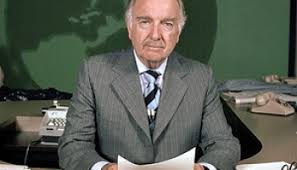
I would like to think that those journalists, both print and electronic, were careful about their facts, that they checked sources, that they double checked, that they confirmed wherever possible, and that they didn’t publish a story until they knew they had it right. Newspapers were known to hold back stories, sometimes for weeks, until they could verify all the sources before putting the story on the pages of the paper. They stood behind what they said and had to issue very few retractions. Editorial opinions remained on the editorial page and were seldom ever reflected in the news stories. Walter Cronkite always said when he reported a story “That’s the way it is”. It wasn’t the way it might be or the way he wanted it to be, but it was the way it was.

CNN launched the 24 hour news cycle when it went on the air in 1980. Fox News and MSNBC followed in 1996. They all seemed to present a fairly straight forward reporting of names, places and events, with the major difference being their approach to political stories. I remember during the 2000 political conventions, I enjoyed switching back and forth between CNN and Fox to get a simultaneous view from both sides of the political aisle. But they were the types of differences I expected from differing political parties.

With few exceptions, these were the networks I turned to for the latest update on breaking news like hurricanes, earthquakes, and airplane crashes. It didn’t matter which network I watched because there didn’t seem to be any editorializing of the stories. I usually watched the one that wasn’t showing a commercial when I turned it on.

It seems to me that this changed after 9-11. I had started to notice an increase in partisanship with the coverage of the controversy of the 2000 election, but I expected that would pass after the court cases were settled. However, post 9-11 coverage of the debates over weapons of mass destruction and the Iraq war seemed to increase the polarization, something that has continued to worsen.

With TV 24-hour news channels in constant competition, can reporters take time to check their sources and to verify their stories or must they rush to get on the air? Is it more important to be first than to be correct? Or, are the ratings, and more importantly, the advertising dollars just following the desires of the viewers? Have people come to care less about being informed than about having their preexisting opinions reinforced? Or, do they simply want to be entertained?

It seems to me the news networks now present stories the way they believe the viewers want the story to be, not what is actually true. The founder of a major news network recently admitted in court that his reporters selectively edited stories to create misleading conclusions and at times they reported stories they knew to be false.

Fortunately, there are still print journalists and local broadcast journalists who value integrity over notoriety. Unfortunately, judging by the diminishing number and size of daily newspapers, this option, limited though it is, may not be around much longer. To paraphrase Gresham’s Monetary Law that “Bad money drives out good”, we now have The Grumpy Doc’s Broadcast News Law, “Sensational news drives out accurate news.”

I don’t want to be entertained by the news; I want to be informed. I don’t want to be indoctrinated; I want to get the facts. I don’t want a news reporter to tell me what to think; I want them to give me information so I can make my own decisions.

I’m concerned about the future of news. Will the 24 hour news networks become little more than the province of those who yell first and yell the loudest without regard to the truth of their stories? If they do, where will we go to find out the way it is?

Walter Cronkite would be ashamed.

Ramps Redux

The advent of spring in Appalachia brings about another ramp season and with it all things ramp. I’ve decided to get lazy today and repost my blog from May 2021.

What Is It About Ramps?

Continuing my reminiscences about growing up in West Virginia I’m going to visit the subject of ramps. For those of you who haven’t been blessed to live in Appalachia, ramps are a type of wild leek in the onion family. They have a very pungent flavor that is like a highly garlicky, sulfureous onion.  They have a short season in the spring and are highly prized by those who enjoy them.

If you think politics can be contentious, you haven’t seen anything until you’ve seen the disagreements about ramps. You either hate ramps or you love ramps. There is no middle ground and almost no one is neutral on the subject.

Those unfamiliar with ramps might think, “If you don’t like them, just don’t eat them.”  Well, it’s just not that simple. If you think garlic or onions can give you bad breath, just standby.

Ramps may give you the harshest breath that you’ve ever experienced. But that’s not the worst part.  The odor of ramps will radiate from your body for several days.  Despite much folklore about the best ways to rid your body of the odor, the only thing that works is the passage of time.

I can remember many years ago when I was in school, kids who would eat too many ramps sometimes would be sent home because the odor was just too much to bear in a closed classroom. There were times when I thought eating ramps might be worth it if I got a day off school. Ultimately, I decided maybe school wasn’t so bad.

The spring of my senior year in high school a buddy and I decided to go to Richwood for the annual ramp festival.  Richwood sits in a river valley and as we started down the hill, we could see a haze hanging over the town.  As we got closer to the festival site I was almost driven back.  I grew up in a town with several chemical plants so I thought I was used to bad odors in the air, but was I ever wrong.  The only thing that kept us going was free beer.  We had both just turned 18 and could legally drink.

Even the federal government has declared ramps to be a public nuisance.  The editor of the Richwood weekly newspaper once mixed ramp juice with the ink for a special edition.  The smell was so bad the post office refused to deliver the paper and destroyed all the copies in its possession.

People who love ramps talk about the many ways to cook them. In the spring in West Virginia restaurants seem to continuously look for new ways to present ramps during the few weeks that they are available. They have ramp burgers, ramp pimento cheese, ramp jelly and ramp omelets. There has even been the misguided ramp infused wine.  It seems to me that most recipes involve ways to disguise the flavor of ramps.

It’s not just when they’re cooked that they put off this objectionable odor. Even raw they can be hard to deal with. I was out in the country with my brother and his wife when she decided to pick some ramps (leaves only, the bulb is left to grow next year’s crop). Let me say I was glad we drove out separately. He said it was at least three days before the smell of ramps was cleared from the car. He joked that while ramps may not be grounds for divorce, they certainly could be grounds for temporary separation.

If you love ramps, I hope you enjoy them. Just make sure everyone else has enough warning to avoid you during ramp season.  And that is The Grumpy Doc’s opinion about ramps.  Be sure and leave a comment with yours.

By Any Other Name: An Obsession with Titles

Titles are everywhere and they likely have existed since humans began forming groups larger than the individual family.  Almost all societies in every part of the world have evolved titles of one form or another. The Europeans, however, have raised titles to a whole new level. Kings, queens, princes, dukes, duchesses, lords, ladies, barons, viscounts, the list is endless.  It seems almost everyone in Europe has a title of one type or another.

The European fascination with titles followed the colonists to America. As an American elite arose, they too began to award themselves titles, from the political such as burgess to the religious such as deacon and to the title of master in the slavery system.  Some southern planters liked to refer to themselves as “a simple farmer,” though they were far from simple and I doubt that any of them dirtied their hands in the fields.  Also, they were also quite fond of the title squire.

Two of my favorite titles are from colonial New England.  Elite men were referred to as Worthy, as in Worthy Jones.  I wonder if common men were considered unworthy. Married women were referred as Goodwife, often shortened to Goodie.

From the beginning of the United States, we were involved in creating new titles. After the adoption of the constitution, titles, specifically a title for the new chief executive, took up a portion of the first meetings of Congress.

Vice President John Adams suggested the following titles: “His Elective Majesty”, “His Mightiness”, and even “His Highness, the President of the United States of America and the Protector of their Liberties”.

Adams, who might kindly be described as portly, was mockingly referred to as “His Rotundancy”. Fortunately for succeeding generations, Adams’s recommendations were ignored, and Mr. President became the accepted title.

The use of titles, real or imagined, seems to have become particularly widespread in the times of the Internet. We constantly receive emails that include the name of the sender followed by multiple titles, often in the form of abbreviations and strings of letters that we seldom understand.  These are meant to add an air of importance to the message.  Often, we are impressed without really understanding why.

Some titles are honorary such as those awarded by universities or other such honorary titles as Kentucky Colonel.  Others are just for fun such as the title I recently received, Admiral of the Cherry River Navy, the world’s only navy where every member is an admiral.

Please don’t think that I am mocking or dismissing the importance of titles. It’s their misuse and overuse that concerns me. Professional titles have an important place in professional situations. They help establish the expertise and credentials of people who will be working together but may not know each other. In this professional situation they can also help to establish educational accomplishments, political or social authority, or even honorary positions.

I’ve heard the argument’ “I’ve worked hard for that title and I’m going to use it.”  I have some sympathy for that position, particularly for someone newly graduated with an advanced degree.  But in general, use of professional titles in a nonprofessional setting strikes me as bragging.

Like everyone else, I have a title. However, unless you are seeing me in a professional situation or we are in a situation where all people are expected to use their professional titles, you won’t see an MD after my name.  Occasionally when I’m having my name listed in a program or on a group roster, I tell them not to add the title, and I’ll be asked why. My standard response is that it isn’t relevant to the group. 

Occasionally I’ll be working on a committee or other group with another professional and invariably they will list all their credentials in all our correspondence. For example, recently I was working with a group completely unrelated to medicine that also included another physician. We are well known to each other and know each other’s credentials. I signed all my emails with a simple John. In his emails, his full name was always followed by MD, MPH, FAAP.   I know all about the automatic signature block and use it in professional correspondence, but there is a time and a place for everything. Perhaps he thinks I forgotten who he is since we talked last week.

The Grumpy Doc, HSE, AKMU

For those who don’t recognize my newly self-awarded titles, they are His Serene Excellency, All Knowing Master of the Universe. I will expect appropriate deference from now on.

The Contradictory Life of Thomas Jefferson

Part I, Liberty and Slavery


We hold these truths to be self-evident, that all men are created equal, that they are endowed by their Creator with certain unalienable Rights, that among these are Life, Liberty and the pursuit of Happiness.

These stirring words that Thomas Jefferson used in the Declaration of Independence put forth a clear statement of his political philosophy. Unfortunately, the man behind the words is not nearly so self-evident. To borrow a phrase from Winston Churchill, he is a riddle wrapped in a mystery, wrapped in an enigma.  Biographer Joseph Ellis referred to him as The American Sphinx.

He was a man of the enlightenment, but he was also a man clearly bound to the brutal slave economy. He dreamed of a bucolic America peopled by hardworking yeoman farmers while he lived the life of a wealthy British aristocrat.  He abhorred the thought of banks and bankers but spent his entire life mired in debt. He wrote and spoke often of the need to avoid factionalism in politics but was a skillful practitioner of political intrigue. He constantly argued against expansion of governmental power but as President, without having the authority, he undertook to expand the United States to more than double its size.

So, how do we reconcile the words with the man? Perhaps we don’t. Perhaps the best we can do is try to understand the world in which he lived and the circumstances that led him to take such contradictory positions in his political and personal life.  Tens of thousands of pages have been written trying to understand and explain Thomas Jefferson. Now, I’m only going to look briefly at his relationship to slavery. In a later post I’ll be looking at Thomas Jefferson as the master of political manipulation.

Of the many contradictions in Thomas Jefferson’s life, his relationship to slavery is the most difficult to reconcile. One of his first cases after becoming a lawyer was to represent a slave seeking his freedom on the grounds that his grandmother was a mulatto which would require him to be in bondage only until age 31.  In an argument to the Virginia court Jefferson said, “Everyone comes into this world with the right to his own person, this is what is called personal liberty and is given them by the author of nature, under the law we are all born free.”  

Both the judge and the jury were outraged that Jefferson would propose freeing a slave. The judge refused to hear any further such talk and ruled against Jefferson’s client. According to historian Winston Groom the fact that Jefferson had such a position at that time (1770) is considered significant and was a milestone in the evolution of his thought.

About that same time Jefferson was elected to the House of Burgesses and he introduced an act that would allow masters to govern emancipation of their slaves rather than having to seek the permission of the courts and the royal officers. This was met with strong opposition and did not pass. It is significant that Jefferson did not pursue either the court case or the legislation.

As a member of the Continental Congress, Jefferson prepared an amendment to the Ordinance of 1784 (a precursor to the Northwest Ordinance) stipulating the freedom of all children born to slaves after a certain date but requiring that they be deported to either the Caribbean or Africa. This amendment failed by a single vote in Congress. Reflecting on the decision Jefferson wrote: “Thus we see the fate of millions unborn hanging on the tongue of one man and heaven was silent in that awful moment”.  But Jefferson was to remain silent as well!

To Jefferson it was unimaginable that free whites and free blacks could live together peaceably.  Even years later when writing about it he said that it was “inconceivable [then] that the public mind would bear this proposition, nor will it bear at this day”.  He also wrote “Yet the day is not distant when it must bear and adopt it or worse will follow, nothing is more surely written in the book of fate than that these people are to be free.”  According to Jefferson’s biographer Jon Meacham, he was never able to move public opinion on slavery and his powers failed him and they failed America.

As president, Jefferson signed a law making it a crime to import slaves. But at the same time, he believed that if slaves were set free, they must be deported to Africa or the Caribbean.  Most of his contemporaries agreed; they felt that American slavery was equivalent to “holding the ear of a tiger”, but they saw no way to let go.

So again, we return to the question of how to reconcile Jefferson the philosopher with Jefferson the enslaver.  Jefferson was a man who enjoyed luxury and the finer things in life. Today he is viewed as a wealthy planter. However, he was what we would now consider cash poor. All his wealth was tied up in property and his slaves were a large portion of that property. His land was heavily mortgaged, and his slaves were his collateral. Jefferson’s wife was the daughter of a wealthy man and when her father died Jefferson inherited his 135 slaves and his land, which was also heavily mortgaged. He also inherited his father-in-law’s other considerable debts. He worried constantly about his financial status, yet he could not control his lavish spending. Freeing his slaves would have lost him the collateral against which his many loans were guaranteed.

Jefferson recognized the evil of slavery but also benefited greatly from it.  He was unable to give up his comfortable life even while bemoaning the institution which made it possible.  His relationship with Sally Hemmings has been a subject of much debate and is beyond what I can address here but if you are familiar with her story, you know that this a singular example of Jefferson’s inability to subordinate his desires to his principles.  

During his lifetime he freed only two of his slaves and in his will, he freed only an additional three. This compares to some other founders who freed all their slaves in their wills. Perhaps he recognized that freeing his slaves would have resulted in an immediate foreclosure on his beloved Monticello.

It is long been axiomatic among historians that people should be judged by the time in which they lived. Jefferson was a man of his times, an exceptional man without doubt. However, his was a time that was consumed by one of the great evils of history. And that evil will always reflect on his memory. Each of us will have to make our own decision about Thomas Jefferson.

Further reading:

Thomas Jefferson the Art of Power, John Meacham

Jefferson and Hamilton the Rivalry That Forged a Nation, John Ferling

The Patriots, Winston Groom

Thomas Jefferson: An Intimate History, Fawn Brody

My Journey into Genealogy

My journey into genealogy began when I was in my early 60s, an age at which many people would already be calling me an ancestor. It’s not something I had ever been particularly interested in. I really had very little sense of my family history. At that time, I could name my grandparents and one of my great grandparents and the family name of some other great grandparents but little else. Of course, like everyone else, we all had our family lore such as the Cherokee Princess in the family but no real documentation of anything.

Margie’s first cousin Mary has been involved in the Daughters of the American Revolution for quite some time. She really encouraged Margie to become a member and in fact did her research and prepared her application. She asked me at the time if I had thought about joining the Sons of the American Revolution. I dismissed it as unlikely because another part of our family lore was that all our ancestors came over from Ireland during the potato famine of the mid-1800s. Like much family lore, this tended to have little basis in fact and the only ancestor I have been able to document as having arrived from Ireland in the mid-1800s was not a Turley but a Kanary, another name that I had never heard before I started my journey.

Margie’s other first cousin Barbie was also in the DAR and her husband Bob is in the SAR. Bob encouraged me to apply to the SAR, but I was convinced that there were no ancestors in my family who could trace back to the revolution. Bob said he would do the research for me if I wanted to join. My friend Dick also helped me start down this path.

Our mother had always said that she could have joined the DAR but never did. I always discounted this because she had several other family legends that she used to tell us. One of those legends was that we were related to Teddy Roosevelt. This was because her grandmother’s family name was Bullock and Teddy Roosevelt’s mother’s family name was Bulloch. I always felt this was highly unlikely for two reasons, first because the spelling was different but mostly because our Bullock ancestors were New Jersey Quaker farmers and Teddy’s ancestors were wealthy southern planters. However, despite the fact we weren’t related to Teddy, I was surprised to discover we had many ancestors who traced back to the revolutionary era on both sides of the family.

Bob did his research and found my ancestor with ties to the revolution. His name was Samuel Henry, yet another ancestor I had never been aware of. His support for the revolution came in the form of what is called patriotic public service. He served on a grand jury that was called into session by the revolutionary government of Virginia in defiance of the crown.

This got me interested in seeing if I had any other revolutionary ancestors. In specific, as a former Marine, I was looking for somebody with more manly service than a grand jury. I found my man, a Massachusetts farmer named Moses Nash who served in the Massachusetts militia as a Minuteman Lieutenant and my fourth great grandfather. Not one of the Lexington and Concord Minutemen, but a Minuteman, nonetheless. Well now I was on a roll. I thought if there are two, there must be more. My current count is eight ancestors whose service I have documented and another 19 who were living in the colonies during the revolution but for whom I have not yet documented service,

I had no idea that my family can be traced so far back into the United States. Specifically, I had no idea that a significant branch of my family has ties to colonial New England in Massachusetts, Vermont, and Connecticut. One branch of my family I have traced back to the 1620s in Massachusetts. It was fascinating to read the will of an ancestor who died in 1638. I’m now on the hunt for the Holy Grail of American genealogy, a Mayflower ancestor. Although it’s highly unlikely, it’s still an interesting search.

I did try to discover that Cherokee Princess. I found a handwritten family history that said my second great grandmother’s grandmother was a Cherokee. Why it was listed that way rather than naming her I’m not sure. I have done some research and I have not been able to document any Cherokees in her lineage unless they were named Adkins or Midkiff or Gillespie, none of which I believe are Indian names.

DNA testing has also failed to document any Native American heritage. Although after that many generations that is not completely exclusionary. The person in question is my fourth great grandmother and on average I have inherited only 1/64 of my DNA from her. It is possible that specific Native American markers were not included in that small segment of DNA I inherited. But when the lack of DNA evidence is added to the lack documentary evidence, I have to admit that I’m not descended from a Cherokee Princess. (By the way, I’ve always wondered why it’s never a Cherokee Prince.)

So how did those ancestors get from New England to West Virginia? Right after the revolution the new United States government was almost broke. Many revolutionary soldiers were paid with a land warrant giving them a grant on the western frontier. They moved from New England and the eastern seaboard states into Ohio, western Virginia, Kentucky, Indiana, Illinois, and Tennessee. Generally, the lower the rank of the soldier the further West and the smaller his land warrant. But for men with no opportunity to own their own farms in the crowded eastern colonies, this was an opportunity they could not resist.

I have discovered a lot of things commonly believed about genealogy that appear to largely be mythology. There’s the story that the family’s name was changed at Ellis Island. If the family’s name was changed, either they did it themselves to appear more American or it was done on board ship before they arrived. At Ellis Island, ship manifests were copied into the arrival journal and no additional individual information was taken from the immigrants beyond a health examination and identification of a sponsor who would be responsible for them. Occasionally names may have been inadvertently changed later by a census taker who misunderstood or couldn’t spell ethnic names.

There’s also the “three brothers” story. This is a story where three brothers arrived from Ireland, England, Germany, take your choice, and then went to three different areas and that’s why there is significant name distribution. In fact, almost always when family members immigrated together, they tended to stay together as they moved further into the United States. DNA studies have demonstrated that most of the widely distributed name clusters have little close relationship.

If you want to find a quick and easy source of information about your family history, go to any of the major genealogy websites and look at census records. Depending on the year of the census you can find where your ancestors were born, if they could read or write, where their parents were born and what occupations they followed. It’s also surprising how large the families were. If you look at surrounding families, you can see that there are many clusters of relatives in the rural areas. Once they’ve moved into the cities they tend to be less often grouped together.

My favorite website is ancestry.com, but any of the major websites will have fascinating information. Just don’t accept everything on those web sites as factual. I have found many of the relationships listed to actually be an unrelated person of the same name. For example, in the early 1800s there were four John Turley’s in the Kanawha County area. Middle names weren’t common then and it took some research to figure out which one was my third great grandfather.

If you’re interested in genealogy, just get in touch with The Grumpy Doc and I’ll be glad to help you on your journey. Who knows, maybe we’re cousins.

About the Beach


I’ve never been a big beach fan. I don’t enjoy laying on the beach and I’ve never seen the fascination with sunbathing. It might have something to do with the two severe sunburns that I had as a boy. My back and chest were covered with painful blisters, and I tried to sleep sitting up on a stool so I wouldn’t touch anything. I started using SPF 50 when it first was introduced and was as thick as grease. Every particle of sand I came in contact with stuck to me until I looked like a large sand monster. It had to be scrubbed off with a washcloth and I could still feel the residue. There have been improvements in sunscreen, but not enough to make me want to lay on the beach.


Even when we were stationed in Hawaii, I never spent much time on the beach. The beach was something you crossed so that you could boogie board in the waves or swim out to scuba dive. When we had friends come to visit from the mainland who wanted to go to the beach, I made sure to find the nearest shade and make a beeline for it.


As I get older though, I have found a new appreciation for the beach. I still don’t lay on the beach, and I still don’t like the hot sun. Now we tend to take our beach vacations in the winter when it’s cooler and the sun is not nearly as intense.


I enjoy walking on the beach now, just above the run up of the waves. I watch the water run in rivulets across the sand and try to avoid getting my shoes wet. In the winter the beach is less crowded and much cleaner, an altogether more pleasant environment.


I carry binoculars to watch the birds and hopefully see some dolphins offshore. But one of my real pleasures is being able to spot large ships on the horizon. I’ve always had a great fascination with ships and just enjoy watching them through the binoculars and trying to imagine where they might be going and what they might be carrying on board.


I enjoy watching the water in constant motion. It seems to me to possess both calmness and a loosely contained power waiting to break havoc on the shore. The very restlessness of the waves brings a peaceful sensation to me. It is a feeling matched only by a cascading mountain stream.


The ocean is an enigma. It is believed to be the original source of life. But, in an instant, it can turn deadly and destructive, destroying lives and property. It can transition from tranquility to fury and back to tranquility almost instantly leaving you to wonder how such devastation could occur in a few moments time.


Walking on the beach also gives me time to think about things I might want to write about and to organize them in my head before I sit down to put them on paper (actually, on the keyboard). When I’m walking on the beach, I don’t feel the call of the many other things I think I should be doing. It’s not a place for self-imposed schedules and deadlines. The lack of distraction does wonders for my concentration.


I’m sure everyone has their own place to find their zin. For me, it’s the beach in the winter.

Travels of a West Virginia Boy Part I, Hong Kong

   The first time I left the United States I was 21 years old and on my way to Vietnam. In one of those little ironies of life, I would visit Hong Kong three times before I ever made it to New York City. Growing up in West Virginia, my family thought a trip to Myrtle Beach was the height of travel. It’s still the destination of choice for many West Virginians and I still love the South Carolina low country and fried sea food.

   My first trip to Hong Kong was in the spring of 1970. I was serving on the USS Sanctuary in the coastal waters of Vietnam. I had my R&R (Rest & Recreation) trip planned to Australia later in the summer. However, I received orders ending my tour early because I was to report for a training school in San Diego in early June. This meant if I wanted to go on R&R it would have to be soon. The only R&R destination available in my time frame was Hong Kong. I knew next to nothing about Hong Kong. The closest I had come to Chinese culture was chop suey at the New China Restaurant in Charleston.

  R&R was basically a five-day vacation that the military gave you when you were serving in the Vietnam area. It was something you looked forward to for the first part of your tour and then you would dream about it for the remainder.

   Even flying into Hong Kong was an exciting experience. The old Hong Kong airport was almost in the middle of the city. The flight path carried you down between the buildings. I remember looking out the window of the plane and into the window of an apartment building. There didn’t seem to be enough room for the wings in between the buildings, but somehow the plane landed without incident. That initial look out the window may have been one of the most surprising things that I have experienced.

   When we first arrived, we were given the typical military orientation lecture that included warnings about venereal disease with a large map that showed us the areas of Hong Kong we should avoid. Of course, for many of us that meant those were the areas we were going to head to first.  They also gave us a list of hotels we could afford without spending all our R&R money.

   Hong Kong was like nothing I had ever seen before. I spent the first day wandering around the crowded streets watching the people and trying to sort out the multitude of sights and smells.  There was an odd combination of delicious, exotic and downright strange. Street food was everywhere and so were street vendors.  The first day I was determined to sample as many different foods as possible. They varied from delicious to inedible. I’m sure that was just me, because the Chinese people seemed to most enjoy the food I couldn’t eat.

   I also looked in a lot of shops trying to decide what I should buy.  The shop people were friendly and spent a long time answering my often rambling questions.  I had been advised to be very careful about negotiating prices.  A Chief Petty Officer who was familiar with Hong Kong (his wife was Chinese) told us, “The Chinese people are basically honest.  They won’t steal from you, but if you’re a bad negotiator, they are glad to let you pay three times what it’s worth.”  In Hong Kong you even bargained over the price of a pack of gum, a skill I never really developed.

    I eventually decided I would have a suit made because I had never had a tailor-made suit. I also had some shoes made.  I’m sure that because of my poor negotiating skills I paid more than I needed to, but I was happy with the price and that was all that mattered to me.   I thought I was pretty fashionable, but looking back I probably could have done better in my selection of material.  The shiny shark skin material that looked so cool on Frank Sinatra didn’t do anything for me.  The shoes were nice though.  I wore a size 14 narrow, and it was nice to have a pair that actually fit.

   The second night in Hong Kong as I was leaving the hotel, I ran into an Australian sailor who had been to there many times before. He said he’d show me the “real action” in Hong Kong.  As we walked along, he turned down a narrow and dark side street and then into a basement level bar that had a big neon sign that said “Club Red Lips” with a big pair of neon lips underneath it. The place was dark and crowded with a lot of Australian sailors and Chinese women. It smelled of stale beer, cigarettes and sweat. After two beers my new friend turned to me and suggested getting out of there and going someplace where there would be some better action.

We started down the street and as he was ready to turn in to an even darker and narrower alley, I suddenly remembered I had someplace else to be. The “real action” was starting to seem a little too risky to me.

 I begged off and headed back to a better lit part of town to have dinner and drinks with other American sailors. I suppose it was something he was accustomed to, but it was a little too much for a West Virginia boy to deal with.  It turned out I was not as rowdy as I thought.

   Most of the rest of my R&R was spent doing the typical tourist things and riding tourist buses. I didn’t venture down any more dark and narrow side streets. But I really did have a good time. 

   My next trip to Hong Kong was in May of 1975. By this time, I was in the Marine Corps and was an infantry officer. I was part of a Marine Amphibious Force that was embarked on Navy ships. We had recently completed support of the evacuations of Saigon and Phnom Penh and the recovery of the merchant ship SS Mayaguez.  Our ships anchored in the harbor in Hong Kong for liberty call for the sailors and the embarked Marines.

   Since I was one of the few officers in our battalion who had been to Hong Kong, I was tasked with briefing the troops on the things they could do there. I spent quite a while going through the ship’s library to find a few things about Hong Kong and then doing my best to remember some of the things that I had done during my previous visit. Of course, there was no internet to check.

   I was happy that I had come up with a quite detailed list of sights to see and places to go. I gave my briefing. I told them where they could catch buses and where they could catch the ferry and where there were good places to shop and where there were good places to eat. When I finished, I ask for questions and the first question was, “Is it true that there’s a Kentucky Fried Chicken in Hong Kong?”  Yes, it was true.

While I didn’t have any fried chicken in Hong Kong my friend Walt and I decided to be a little adventurous. We went to a “non-tourist” restaurant. Walt ordered pigeon, thinking it would probably be Cornish Game Hen and I ordered beef with bitter melon thinking how bitter can it really be, after all it is melon. Well, Walt’s pigeon was pigeon, and it came complete with head, beak, eyes, and feet. My melon was so bitter I couldn’t eat any of it.

Our stay in Hong Kong lasted four days and then we were back onboard ship to return to our home base in Okinawa.  I knew I would be returning to Hong Kong in a few months when Margie joined me for Christmas leave.

The Grumpy Doc Award

This was presented to me by my friend Jack in recognition of my contributions to world grumpiness. Thanks Jack! But it could have been bigger.

Critical Thinking


Recently I have been reading about the significant increase in childhood diseases that previously had been well controlled with vaccines. There are a number of factors at play here. One is the pandemic which has reduced doctor’s visits and with it some routine vaccinations. But the most significant factor is the resistance among the vaccine deniers not just the COVID vaccine, but vaccines in general.


This is especially troubling to me. These are people, many of whom are well educated, who have chosen not to vaccinate their children or themselves. The majority of these decisions are based on misinformation which has resulted in faulty decision making. I’ve addressed this in a previous post entitled Fake News. However, I would like to address some additional issues related to what is commonly called “critical thinking”. The ability to apply critical thinking would most likely have resulted in a far smaller vaccine denial movement and fewer deaths and disabilities.


Just to start, I’m going to repeat the definition of critical thinking I used in that post. “Critical thinking is the intellectually disciplined process of actively and skillfully conceptualizing, applying, analyzing, synthesizing, and/or evaluating information gathered from, or generated by, observation, experience, reflection, reasoning, or communication, as a guide to belief and action.”


That post was principally geared to critical thinking in adults. I wanted to discuss how to gather information, evaluate it and make a rational decision. I’ve come to realize, that by the time we are adults our method of thinking is very close to being set in stone. If we are to make a significant impact on the way our population evaluates data and makes decisions, it must start with the children.


I believe that the two pillars of early education should be reading and critical thinking. Admittedly, I am not an educator, but I believe if you can read you can teach yourself anything. But you also need the ability to decide what you should believe. The framework for being able to make these decisions is critical thinking.


In some ways critical thinking has been taught in the past, often as the Socratic method. Elements of it have been in specific courses such as philosophy, logic, and scientific investigation. These courses are usually designed for older, advanced students who most likely have already developed these skills or have a natural inclination to pursue such inquiry and evaluation.


For most students, if they haven’t learned how to gather information, evaluate competing ideas and draw coherent, fact based conclusions by the time they are in high school, it may be difficult for them to do so. Critical thinking must be a substantial part of education from the beginning. It cannot be a separate course. It must be integrated into the way every subject is taught. Students should not just be given rote information to be memorized. They should be taught how to think and evaluate and then they should be provided with all the information necessary to make their own informed decisions.


What does this mean? It means that all sides of a topic should be covered. There should be no forbidden subjects. There cannot be an effective analysis of competing information if only one side is presented. This needs to begin in the very first years of education. After all, as Americans we want education not indoctrination.

The ability to develop critical thinking and to make informed decisions requires the exposure to all varying ideas without any value judgment being attached by the teacher. The idea of an academic “safe space” where students are insulated from hurt feelings presupposes that they are unable to evaluate competing ideas and must be protected. This is the very essence of indoctrination and should be an anathema to education.


Children need to learn that the world is not a safe place. If they are not exposed to the competing ideas, how can they be expected to evaluate and recognize the harmful ones? If they are only exposed to one side, they will come to believe that side is the only true side regardless of its value.


I will use myself as an example. There were no efforts to teach critical thinking when I was a student. We were taught that everything presented in class was the right thing, and we were not to question it. Well, this might be true in math and many science classes, but it is not true anywhere else. It was not until well into my adult years that I recognized many of the things I had been taught were the result of societal prejudices and in some cases even ignorance. As a result, like many people, I tended to defend my long-held opinions even after I recognized their weakness.


I was very slow to adopt new ideas. Many of the opinions I now hold are far different from those with which I grew up. Critical thinking was not easy for me; challenging your core values never is. We don’t want our children and grandchildren to have to suffer through the same weakness of thought that we did.


Would the evaluation of competing information that is part of critical thinking have helped prevent the wide scale vaccine denial that we are currently experiencing? Many rumors are being spread about COVID and about the COVID vaccine, just as they have been about other vaccines in the past. There were many rumors that the disease did not exist and that the deaths were faked. These rumors are still on the Internet. They never had any verifiable source and anyone taking the effort to view the data would know that there was a significant death toll early in the pandemic.


The effectiveness of COVID vaccination can easily be checked on the Centers for Disease Control and Prevention website www.COVID.cdc.gov. A study in November 2022 shows unvaccinated Americans had a 16 times (not percent) higher rate of hospitalization compared to the fully vaccinated and a study from January 2022 shows the unvaccinated had a 12.7 times higher COVID related death rate.


There were many reports about side effects of the vaccine. Checking available medical sources, it is easy to discover that while there are some side effects, there are many misstatements or exaggerations about the COVID vaccines. The side effects are similar in frequency to other vaccines and medications in general. Vaccine side effects tend to diminish as the vaccine is improved in subsequent versions. A detailed review of COVID vaccine side effects can be found on www.cdc.gov/coronavirus/2019-ncov/vaccines21.


Social media were quick to jump on every alternative to vaccination. It took very little research to realize that none of these alternatives (think Clorox) had documented medical justification and had never been effectively studied. The supposed studies that were cited were either significantly flawed or could never be duplicated or even be found. Because they had no experiencing in critical thinking, many people accepted the unsupported statements that most satisfied their desires, either politically, socially or medically and adopted them as truth. Unfortunately, this failure in critical thinking resulted in hundreds of unnecessary deaths and severe illnesses.

Anchors Aweigh, Part III

When I left my duty station in Key West, the Navy handed me my orders and a check to cover my travel costs. As always, they left it up to me to figure out how to get there. I didn’t worry about that for the first two weeks. I was at home in Charleston, WV, and when I had a week left in my leave, I thought it was time to figure out how to get from Charleston to Norton Air Force Base, where I was supposed to get government transportation to take me to my new duty station, the hospital ship USS Sanctuary that was cruising off the coast of Vietnam.
I asked my father. He had never heard of Norton Air Force Base either and he suggested we contact a friend of his who was a travel agent. So, Dad gave him a call and two days later I went down to pick up the tickets. The agent handed me an airline ticket to Ontario International Airport. While I was trying to explain to him that I wasn’t going to Canada, that I was going to take my orders to Vietnam, he laughed and told me that Ontario was actually in California. It was the closest commercial airport to Norton Air Force Base.
While the Navy had given me money for transportation, it would only cover coach. In those days a coach seat was about the size a first-class seat is today. That flight took me to California where I got a bus to the Air Force base for the government chartered flight to Vietnam.
It was a long trip from California to Da Nang. We stopped in Hawaii to refuel. Unfortunately for us, they wouldn’t let us out of the airport. We were on that airliner long enough that they fed us three times, once on the way to Hawaii and twice between Hawaii and Da Nang. All three meals consisted of baked chicken, peas and carrots, and mashed potatoes. It wasn’t so bad for lunch and dinner but baked chicken for breakfast just wasn’t something I was up for. In typical government style we had three meals supplied by the lowest bidder.
I arrived in Da Nang to discover that the Sanctuary only came in port about every 6 to 8 weeks to resupply and wasn’t due back for three weeks. I got assigned to the transient barracks, where the Navy puts people awaiting further assignment. Sometimes at morning muster (roll call) they gave us jobs such as unloading trucks or doing basic lawn maintenance. Most of the time we were on our own to entertain ourselves.
The transient barracks was in Camp Tien Sha, a Sea Bee run support base. The most popular place on the base for enlisted men was the movie theater. It was open 24 hours a day and was free of charge. You could bring your own beer and they even allowed smoking in the theater. (Everyone smoked in the 60s.) They only had four movies which they ran in continuous rotation. But most importantly, it was the only place on base that an enlisted sailor could go that was air conditioned. Some guys even slept there.
While the camp was in one of the most secure parts of the Da Nang area, occasionally at night the alert sirens would sound. If any place in the surrounding area was attacked everyone got an alert. We would then go out to the bunkers and stand around outside to see if there were any rockets landing close to us. If there were, we would go inside the bunker. If not, we stood around outside smoking and trying to avoid the shore patrol who drove around to make sure we were in the bunkers. Occasionally we could see an explosion or the path of tracers in the air. Mostly we could just hear them. We were never quite sure where they were, but we were fairly confident they weren’t very close.
One of the most entertaining things was watching the TV news reporters. Camp Tien Sha had a weapons repair facility. If you were near it, you could hear machine guns and other weapons being test fired after having been repaired. You could also see tanks and other armored vehicles running up and down their test track. We got a big kick out of watching reporters put on a helmet and a flak jacket and stand in front of the camera while the tanks ran up and down behind them and the machine guns fired and them saying: “I’m reporting from the front lines in Vietnam. You can hear the battle raging behind me “. Occasionally, we would laugh so hard that one of the production people would come over and run us off. I know we ruined more than a few shots.
Eventually I got called to the personnel office and was told that the Sanctuary was due in port that afternoon. They handed me my orders and told me to report on board. I asked how to get to the dock and the personnel clerk just looked at me and shrugged. I eventually found my way to the motor pool and got a ride with a jeep that was heading down towards the docks.
There were several ships in the port at that time. However, the Sanctuary was hard to miss. Unlike other Navy ships that were painted gray, the Sanctuary was painted bright white and was emblazoned with big red crosses on the hull. I walked up the gangway, saluted and requested permission to board. In Anchors Aweigh Part IV I’ll talk more about life on the Sanctuary.

Page 13 of 16

Powered by WordPress & Theme by Anders Norén