As I get older, I find myself making more and more adaptations to changing physical and mental abilities. I sometimes deny that I’m making these changes because I’m getting older. I’m just developing new habits as a matter of convenience, or I’m no longer taking part in activities that I have convinced myself I no longer find interesting.
The easiest things to notice are balance changes. I know that this is a result of aging and is easier to accept because it is so common. I find myself using handrails more often and being more careful with steps. I am very particular about foot placement because I tend to drag my feet, making me more susceptible to tripping. This is a common finding among people in their 60s and older. (That’s the reason why your doctor asks you about falls.) Margie continually reminds me not to look at my phone while I’m walking.
I am also careful about how quickly I stand up. When I first get up in the morning I’ll sit on the side of the bed for a few seconds before standing and then stand for a few seconds before walking. Our body is designed so that heart rate and blood pressure change with body position to keep the brain perfused. As we get older, adaptations lag. You must give your body time to catch up to avoid the brief lightheadedness that can accompany postural change, particularly if you take blood pressure medicine. Not allowing time to adapt may cause stumbling or falling, especially during those middle-of-the-night bathroom trips.
Of course, I don’t have to tell anyone that a good night’s sleep now means I only get up twice to go to the bathroom. As long as I can go back to sleep, I’m happy.
I find that my fingers don’t always do what my brain tells them. I sometimes have trouble buttoning the cuffs on my shirt. I don’t know why that should be such a problem, but occasionally it can be difficult. Thankfully I seldom ever wear a tie anymore; collar buttons are a real challenge. Sometimes things work just fine, making it all the more frustrating when they don’t.
I find myself making lists and keeping a more detailed calendar. At first, I told myself this was just a minor concession to being busy. But I’ve always had a good memory and seldom had to write things down. Now, I know if I don’t write it down, I may not remember it. Sometimes I even forget that I’ve written it down.
I occasionally have trouble remembering things people tell me. At first, I chalked this up to hearing. However, I used to be able to recall detailed descriptions and directions almost verbatim. I now take detailed notes to ensure I keep things straight.
Memory was the first problem that concerned me. I could tell something was slipping and I wasn’t sure what to do about it. Fortunately, technology is a help. I put reminders on my phone which sounds an alert when I’m supposed to do something. Unfortunately, that doesn’t make it any less frustrating when I don’t remember having set the alert. The voice recognition app is a great way to take notes quickly and easily and they can be readilyconverted to text. An added benefit is that learning these new technologies helps keep the mind sharp.
I now recognize that the wisdom and understanding that come with many years of experience outweigh a quick memory. Sound judgement is more important than a rapid answer.
On the physical side, I gave up motorcycle riding and skiing about 12 or 15 years ago because of concerns about reaction time and balance. In large part, this was motivated by the fact that in the emergency room, I saw a disproportionate number of older men seriously injured in motorcycle accidents.
I’ve also given up using anything more than a small step ladder. The extension ladder is only a faint memory.
I’ve given up doing any type of heavy lifting such as furniture moving. Two years ago, Margie and I were helping our son move. I went to move the dryer and Margie said, “Don’t try to lift that, you’re going to give yourself a hernia.” Well, I went ahead and moved the dryer. Three weeks later I had hernia surgery. To her credit, Margie never said “I told you so”. She didn’t have to. As my friend Roy told me a while back, “The main reason old men get hurt is thinking they’re still young men.”
The bicycles pictured at the beginning of this post are yet another concession. Margie and I still enjoy riding, but stiff knees and hips make it increasingly difficult to get on and off a bicycle. Also, the normal forward-leaning riding position is hard on backs and necks. Margie’s cousin Mary recommended these bicycles. Now we can still enjoy our rides. The step-through design makes it easy to get on and off and the upright riding position makes it more comfortable. We are very happy with our “geezer cruisers”.
A couple of final comments and then I’ll wrap this up. I have started shopping for slip-on shoes with cushioned soles. As we get older, we lose much of the fat pad on the bottom of our feet, causing our older leather sole dress shoes to be less comfortable. While I am ready for slip-on shoes, I am not, I repeat not, ready for Velcro shoes. And I am certainly not ready to be called elderly. Old is a fact of life; elderly is a state of mind.
Today’s post is a guest column by my wife Margie. This first appeared in the January 2024 issue of the newsletter of the Daniel Boone Chapter of the Sons of the American Revolution.
One day I received an interesting text from my cousin, Mary. She had been accepted into the Huguenots Society and said that due to our lineage, I could be a member. So, with her help, I am now a member. The Huguenots were French Protestants who were active in the 16th and 17th centuries. They were forced to flee France due to religious and political persecution. The Huguenot Society of America was founded in 1883 to perpetuate the memory of Huguenot settlers in America. George Washington was the grandson of a Huguenot on his mother’s side. I am a descendant of Barbara de Barrette who was a Huguenot and lived in Valenciennes, France, around 1657. She married Garrett Van Swearingen and they settled in Maryland. Last October John and I enjoyed going to the 2023 Huguenot Society of America Conference in Macon, Georgia. We had never been to Macon and enjoyed meeting fellow members and visiting historic landmarks such as the Hay House and the Cannonball House and, of course, eating great southern cuisine. Check the internet to find out more about the Huguenots. It is very interesting reading and who knows, you, too, may qualify as a member!
If you would like to contribute a guest post, please contact me.The Grumpy Doc can always use a little help from his friends.
New Year’s resolutions aren’t as popular as they used to be, but this is the time of year when we start thinking about all the things we should do, all the things we want to do and all the things we probably won’t do. But wouldn’t it be nice if we could just enroll in a simple, study at home course to gain all those longed for skills?
With that in mind, I’m going to share with you the Adult Self Education Course Catalogue from the Institute for Advanced Self-Delusion. An earlier version was shared with me by my friends Jane and Leigh. Alas, the original author is unknown. I have taken that original and made additions, deletions, and revisions, all to meet my personal needs for self improvement.
Adult Self Education Institute for Advanced Self-DelusionCourse Catalogue
Self-Improvement SI 101 Creative Suffering SI 102 Overcoming Peace of Mind SI 103 Singing for the Tone Deaf SI 104 Guilt as a Lifestyle SI 105 The Primal Shrug SI 106 Ego Gratification Through Apathy SI 107 Molding Your Child’s Behavior Through Guilt and Fear SI 108 Dealing with Post Realization Depression SI 109 Whine Your Way to Alienation SI 110 How to Overcome Self-doubt Through Pretense and Ostentation SI 111 Finding Contentment Through Willful Ignorance
Business and Career BC 101 How I turned a $50,000 Investment into $100 Through Real Estate BC 102 Money Can Make You Rich BC 103 Financial Opportunities from Unsolicited Emails BC 104 Selling Your Unneeded Organs for Profit BC 105 Underachiever’s Guide to Very Small Business Opportunities BC 106 Tax Shelters for the Bankrupt BC 107 Panhandler’s Guide to American Cities BC 108 Flatulence for Fun and Profit
Arts and Crafts AC 101 Self-Actualization Through Macramé AC 102 Cuticle Crafts AC 103 Bonsai Your Pet AC 104 Cheap Gifts for the Ungrateful AC 105 Abstract Stick Figures for the Untalented AC 106 1001 Uses for Cat Hair
Home Economics HE 101 Convert Your Vacuum Cleaner into an Automatic Weapon HE 102 Convert Your Family Room into a Garage HE 103 Burglar Proof Your Home with Concrete HE 104 Convert Your Wheelchair into a Dune Buggy HE 105 How to Tell If Your Smart TV Is Spying on You HE 106 The Paranoid’s Guide to Alexa HE 107 Landscaping: An Expensive Way to Feed the Deer
Health and Fitness HF 101 Creative Tooth Decay HF 102 The Complete Guide to Sinus Drainage HF 103 Exorcism and Acne HF 104 Joys of Hypochondria HF 105 Living the High Fiber Life HF 106 Biofeedback and How to Stop HF 107 Skate Your Way to Regularity HF 108 Tap Dance Your Way to Social Ridicule HF 109 Optional Body Functions HF 110 Why Do Smart People Do Stupid Things and Can They Be Cured? HF 111 1001 Delicious Recipes for Kale (Never Mind, I Can’t Find Any)
In the United States today, we have a very expansive view of what constitutes Christmas celebrations. We don’t find it at all unusual to see an inflatable Santa Claus next to a manger scene. The wisemen are as likely to be following neon snowflakes as yonder star. This combination of religious and secular is something that we just accept without a whole lot of thought. But it wasn’t always the case. In colonial America Christmas was celebrated in a mostly religious fashion when it was celebrated at all.
Colonial New England
Colonial New England was settled in large part by Puritans. They even extended their influence to areas that they did not initially settle. They went so far as to banish, and in some cases even execute people who did not agree with them. They were determined to create a society dominated by Puritan beliefs.
The Puritans did not favor Christmas celebration; they believed there was no scriptural basis for acknowledging Christmas beyond doing so in prayer. In 1621 Governor William Bradford of Plymouth Colony criticized some of the settlers who chose to take the day off from work because as Puritans he felt that they could best serve God by being productive and orderly.
The celebration of Christmas was outlawed in most of New England. Calvinist Puritans and some other protestants abhorred the entire celebration and likened it to pagan rituals and “Popish” observances. In 1659, the General Court of Massachusetts forbade, under the fine of five shillings per offense, the observance “of any such day as Christmas or the like, either by forebearing of labour, feasting, or any such way.” The Assembly of Connecticut, in the same period, prohibited the reading of the Book of Common Prayer, the keeping of Christmas and saints’ days, the making of mince pies, the playing of cards, or performing on any musical instruments. These statutes remained in force until they were repealed early in the nineteenth century.
It is important to note that Puritan hostility to Christmas was not because they did not believe in the divinity of Jesus Christ. They objected to the way the holiday was being celebrated. They disliked the excesses of Yuletide festivities in England. Christmas had become a time for the working class to drink, gamble, and party. The Puritans would not tolerate any sign of disorder and believed that it was an affront to God.
They tried to protest Christmas revelries while still living in England but had little impact. Once they moved to the New World where they were able to exert control, they would not condone any form of excess. Except, perhaps, an excess of piety and self-righteousness.
Any form of Christmas observance that did occur took the shape of fasting, prayer, and religious service. Even the famous New England cleric Increase Mather loathed Christmas and believed the holiday was derived from the excesses of the pagan Roman holiday Saturnalia. We shouldn’t think that Mather was completely humorless; he once called alcohol. “a good creature of God “. Drinking wasn’t bad, but like all things it must be done in moderation with complete self-control. That’s probably good advice for everyone, whether they’re a Puritan or not.
Middle Atlantic Colonies
Many of the traditions that we now consider part of the American Christmas have their origins in the middle Atlantic colonies, most notably in Pennsylvania. Many of these were brought by settlers of German heritage as well as some traditions brought by the Scots and the Dutch.
In Pennsylvania there were two quite different Christmas traditions, one of the protestant groups and another of the Quakers. They differed considerably in their approach to Christmas.
Some colonists celebrated Christmas by importing English customs such as drinking, feasting, mumming and wassailing. Mumming involved wearing masks and costumes and going door-to-door singing carols or performing short plays in exchange for food or drink. Wassailing was a tradition where people would go from house to house singing carols and drinking toasts to the health of their neighbors. Some non-Puritan New Englanders also continued these traditions but kept them private to avoid attracting the attention of the Puritan officials.
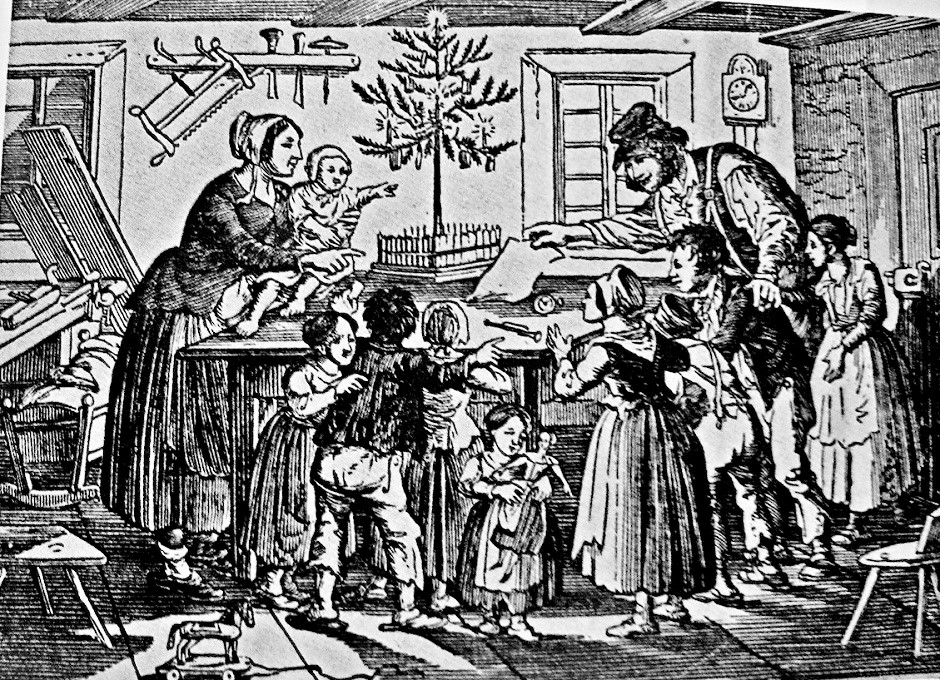
Many of the Christmas traditions that we think of as being a quintessentially American are derived from the settlers of German descent who were known as the Pennsylvania Dutch. These include celebration of the advent season, the decoration of the Christmas tree, singing of Christmas carols, the display of nativity scenes, and the exchange of gifts on Christmas Eve or Christmas morning. We can’t imagine Christmas without these things, but we seldom remember that it was our German American ancestors who gave us these wonderful traditions.
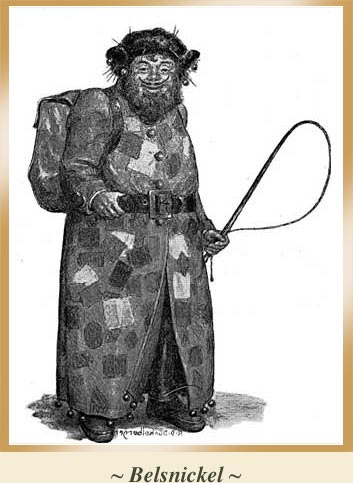
To me the most interesting and probably most significant tradition passed on by the Pennsylvania Dutch was what led to our current concept of Santa Claus. During the colonial period, they had the tradition of Beltznickle. He is depicted as a man wearing furs and a mask and having a long tongue. He’s usually shown as being very ragged and wearing dirty clothes. He had a pocketful of cakes, candies and nuts for good children, but he also carried a switch or a whip with which to beat naughty children. Beltznickle took the naughty and nice list very seriously.
He was a long way from Clement Clark Moore’s jolly old elf in ‘Twas the Night Before Christmas and the jovial Santa Claus that we know today from the original Coca-Cola ads of 1930.
Quakers had a much different approach to Christmas. They did not celebrate it at all. It is not that they were opposed to Christmas as were the Puritans. It’s just that they did not celebrate any holidays, Easter, birthdays or any other holidays. They had no set liturgical calendar, so they did not have an advent, or an Easter season or any other religious holiday. There is no central Quaker authority to set beliefs or doctrines. Each Quaker is free to decide how to observe religious traditions. They focus on spiritual reflection and social justice.
Non-Quakers did not always understand their religious beliefs or practices. Here is an example of how Quaker practices were seen by outsiders. Swedish naturalist Peter Kalm visited Philadelphia in 1747 and recorded the following observation in his diary: Christmas Day. . . .The Quakers did not regard this day any more remarkable than other days. Stores were open, and anyone might sell or purchase what he wanted. . . .There was no more baking of bread for the Christmas festival than for other days; and no Christmas porridge on Christmas Eve! One did not seem to know what it meant to wish anyone a merry Christmas. . . at first the Presbyterians did not care much for celebrating Christmas, but when they saw most of their members going to the English church on that day, they also started to have services. Apparently, Presbyterians were much quicker to adopt popular practices then were the Quakers.
Southern Colonies
Celebration of Christmas was similar throughout all of the southern colonies. We’ll consider Colonial Williamsburg as a proxy for the rest of the southern colonial region. This is largely because there is more information available about Williamsburg than other areas and because it represented what was the majority of practices at the time. The major religion of the southern colonies was Church of England and they followed those practices.
Religious services were a central part of their celebration. The majority of the religious observances were during the advent season, the four weeks leading up to Christmas which were a period of reflection on the significance of the coming of Christ. The southern colonies usually held Christmas Eve services although occasionally Christmas Day services were held. Christmas Day was considered a day of celebration and family feasting.
It should be noted that the Christmas celebration was only for the white population. If the enslaved people received a holiday for Christmas, it was only because the weather was too bad to work in the fields. And of course, the house slaves were expected to attend to all the needs of the Christmas celebration.
Margie and I decided to visit Colonial Williamsburg in December of 2019, the period we refer to as BC (before COVID). We’ve always had a special affinity for Williamsburg because that’s where we spent our honeymoon 52 years ago. I’m not sure exactly what I was expecting, perhaps a large inflatable George Washington holding a Christmas wreath. But it was much more understated than what I had anticipated.
According to our tour guide, even those low-key decorations were probably more than would have been evident in the colonial era. People typically decorated their homes on the day before Christmas and removed the decorations the day after Christmas. Decorations were usually limited to candles in the window and pine boughs on the tables and mantle pieces. Pine boughs were used to decorate the church in what was known as “sticking the church”.
At Colonial Williamsburg we saw many displays that included fresh fruits and pineapples. Our tour guide told us that those were too precious to actually have been used as decorations and might have been included as part of a table display to be consumed during the Christmas feast. Some people would even rent a pineapple to display on their table as a sign of their wealth.
The first Christmas tree did not make its appearance in Williamsburg until 1848.
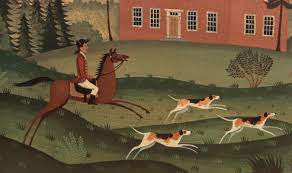
The southern colonists were very social people. They enjoyed wassailing as did the people of the mid Atlantic colonies. They also considered Christmas as a time for feasting, dancing, and celebrations. Men of the upper class celebrated Christmas with fox hunts and other outdoor activities. Men of the working classes frequently celebrated Christmas with shooting matches and drinking parties. Women, of course, were expected to stay at home and prepare the meals. Christmas Balls were a common practice among the upper class of the southern colonies. They were often elaborate and included large banquets with musicians, dancing and occasionally masquerades.
Present exchange was not standard practice in the southern colonies. However, it was common to give children small presents of nuts, fruit, candy, and small toys. Adults generally did not exchange presents.
Virginian Phillip Fithians writing in his journal in 1773 gave the following description of a gather just before Christmas: When it grew to dark to dance. . . . we conversed til half after six; Nothing is now to be heard of in conversation, but the Balls, the Fox-hunts, the fine entertainments, and the good fellowship, which are to be exhibited at the approaching Christmas.
Life in colonial America could be hard, but that did not stop them from having a joyous Christmas celebration.
Like many people, I was shocked and sickened by the recent slaughter in Gaza. The sight of Hamas terrorists streaming across the border and killing more than 1300 unarmed Israeli men, women and children was beyond understanding. Almost as shocking was the response on some American university and college campuses. The sight of student protesters supporting the Hamas murderers while condemning their victims was almost unbelievable.
The events now unfolding in Gaza are a part of the world-wide and millennia old wars for geographic control. A new term has been introduced recently to justify the killing of civilians. It is called “settler colonialism.”
Settler colonialists are identified as outsiders who have invaded foreign lands, forced the indigenous people from their homes and stolen their land. The settler colonialists are viewed as having no right to the land they occupy, regardless of how long they have been there.
Are the student protesters using this term saying Hamas is justified in murdering Israelis in order to free Palestine from the settler colonialists?
History is replete with examples of mass migration and warfare with one group defeating and expelling or subjugating another. In the modern era the settler colonialists have principally been identified as people from Western Europe, although this has occurred on all continents and among all ethnic groups. People who are current residents of a particular locale previously may have been the settler colonialists who displaced prior occupants. It is impossible to establish the original claim.
Hamas and its supporters view the Jews as the invading settler colonialists and the Palestinians as the rightful owners of the land. But does history support this position? Were the Palestinians, as represented by Hamas, really the original inhabitants of the land? More than 2000 years ago the area that is now Israel was a Jewish state. Many Jews were driven from their homes, largely by the Romans, but many others remained in the area that is now Israel and have continued to live there since.
The people now identified as Palestinians moved in and occupied the land after the Jews had been driven out. Perhaps it’s the Palestinians who are the settler colonialists and the Jews are the ones who are merely reclaiming their homeland. It’s certainly something to think about in a very confusing situation.
To make it even more confusing, what about the Canaanites who probably have the original claim to the land?
But regardless of who was there first, does anything justify the murder of unarmed civilians?
Periodically I post quotes from well-known people who I find to be interesting and thought provoking. I present these quotes without comments from me. I don’t always agree with them, but I do always find them worth considering. I continue that today with quotes from Thomas Sowell, well known economist and conservative political commentator.
The fact that so many successful politicians are such shameless liars is not only a reflection on them, it is also a reflection on us. When the people want the impossible, only liars can satisfy.
The fatal danger of our times is a growing intolerance and suppression of opinions and evidence that differ from the prevailing ideologies that dominate institutions, ranging from the academic world to the corporate world, the media and government institutions… Many intellectuals with high accomplishments seem to assume that those accomplishments confer validity to their notions about a broad swath of issues ranging far beyond the scope of their accomplishments.
The concept of “microaggression” is just one of many tactics used to stifle differences of opinion by declaring some opinions to be “hate speech,” instead of debating those differences in a marketplace of ideas. To accuse people of aggression for not marching in lockstep with political correctness is to set the stage for justifying real aggression against them.
The problem isn’t that Johnny can’t read. The problem isn’t even that Johnny can’t think. The problem is that Johnny doesn’t know what thinking is. He confuses it with feeling.
The following is attributed to Thomas Sowell, but I have not been able to verify it’s source.
Some people believe they do what God would do if only he were as well informed as they are.
And finally:
People who enjoy meetings should not be in charge of anything.
Thomas Sowell dropped out of high school and served in the Marine Corps during the Korean War. After discharge from the Marines, he obtained a GED. He went on to graduate from Harvard University magna cum laude, earn a master’s degree from Columbia University and a PhD from the University of Chicago. Dr. Sowell has published more than 40 books. His most recent is “Social Justice Fallacies”. It is the sixth book he has published since he turned eighty in 2010.
It seems these days that everything in the newspaper (Yes, I still read a newspaper) has to do with some kind of legal issue. It is either the ongoing political and legal difficulties of Donald Trump and Hunter Biden or it’s the lawsuits that our governor Jim Justice is facing as result of his questionable business dealings.
There also are various criminal stories in the paper. These range from the trials of the January 6th insurrectionists to local drug related shootings here in Charleston.
I think the fascination with legal stories is that happy news is inherently boring, and we all want to read about scandal or intrigue, particularly when well known people are involved.
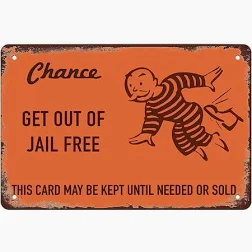
Occasionally, in both civil and criminal cases I have run across the term “statute of limitations”. I’ve never paid a lot of attention to that. I always assumed it was just a get out of jail free card for people who could keep their crimes hidden long enough.
A recent article about a criminal case discussed when to start the clock on the statute of limitations. That got me thinking about exactly what is a statute of limitations and how does it relate to both criminal and civil cases.
Let’s start first with the definition. Miriam Webster defines statute of limitations as: A statute assigning a certain time after which rights cannot be enforced by legal action or offenses cannot be punished.
OK, that sounds a lot like the aforementioned get out of jail free card. Everyone knows about Monopoly and the get out of jail free card. I always thought of it as a way to avoid punishment for a crime you had obviously committed. But after spending some time looking into it, it’s a lot more complicated than that.
A Very Short History
We’ll start with a little bit of the history of the statute of limitations. Recognize, of course, there is no single statute of limitations; it varies from country to country and from local jurisdiction to local jurisdiction and from civil to criminal cases. Some countries have no statute of limitations at all.
Unlike what I initially thought, the statute of limitations is not a creation of the modern legal system. It has been around as long as there have been codes of law.
Hammurabi’s Code (circa 1754 BCE) in Babylon and the Twelve Tablets (449 BCE) in Rome included provisions that established time limits for bringing legal claims. Medieval Europe had statues of limitations that developed as part of customary law to ensure that legal actions were brought while evidence and memories were still fresh. Many of these same issues were incorporated into English common law and were codified in the Statute of Limitations Act of 1623 in England. This established limitations for various types of actions such as indebtedness and trespass. It generally did not cover criminal cases, particularly if it was an offense against the crown. Statutes of limitations in those early times were much shorter than what we have now.
Civil Actions
We will look first at the statute of limitations as it applies to civil actions. There are two main reasons for restricting time limits for civil suits. First, to ensure that legal action is brought while evidence is readily available. Second, to ensure that minor legal grievances are not raised years later as a means of harassing the defendant.
A major provision of most statutes is tolling. Tolling is a suspension or extension of the statute of limitations in exceptional circumstances. These include when the plaintiff was a minor at the time of the offence or has filed a bankruptcy petition. This extends the statute of limitations until that condition has been resolved.
It’s important to recognize that the statute of limitations does not begin when a fraudulent event occurs. It begins when the fraud or injury is discovered. At times it may begin when the plaintiff should have known. This prevents the plaintiff from fraudulently claiming to have been unaware of the injury.
There is an exception to the tolling rule. It does not apply to mass media such as newspapers and the internet. The statute of limitations begins at the date of publication. The general assumption is that the plaintiff knew or should have known on the date of publication that there may have been injury.
A judge may decide that the plaintiff has waited too long to request an extension of the statute of limitations in civil cases. This is intended to prevent never-ending litigation.
Criminal cases
The statute of limitations in criminal cases is far more controversial. These literally may be the get out of jail free card. However, there’s a long-standing precedent of statute of limitations in criminal cases. Even the US military in the Uniform Code of Military Justice states that all charges, except those facing court martial on a capital charge, have a five year statute of limitations. A capital charge being one that carries a death penalty.
It is important to note that in almost every jurisdiction with a statute of limitations on criminal cases there is a specific exclusion. That is when the defendant is in a fugitive state or has actively attempted to cover up their crime. In these cases, the statute of limitations begins when the defendant is apprehended or when the crime is discovered.
There has been much revision of statutes of limitation in criminal cases in recent years. For serious cases such as murder, kidnapping, rape, and child abuse they have either been considerably extended or eliminated altogether. They remain in effect for minor transgressions such as vandalism, trespassing, and marijuana possession.
The main argument for maintaining a statute of limitations for minor criminal cases is that it prevents prosecutors years later going after a person for a relatively minor crime and thus tying up the legal system at a time when witnesses and evidence may no longer be available. Although, some prosecutors argue that they require the ability to pursue relatively minor crimes in order to investigate or prosecute more serious crimes committed by the same person.
Putting it all together
After having done some research, I have a better understanding of the statute of limitations. I think it’s generally useful in civil cases to prevent new suits being filed years after the alleged event. Lawsuits are rampant in our court system today and we need to avoid clogging up the system with frivolous cases.
However, I’m undecided on criminal cases. While I recognize that keeping your crimes secret does not allow the statute of limitations to run, I still have some problem with people being able to defend themselves by saying “Sorry it’s been too long”.
If the statute of limitations is limited to such minor things as jaywalking, shoplifting, vandalism or marijuana possession for personal use, I think that helps to avoid backing up the legal system. Personally, I don’t believe there should be a statute of limitations for serious crimes. Of course, that leads to another discussion of what constitutes a serious crime.
All comments on the statute of limitations are welcome. You may even encourage me to share my grumpy opinions on more controversial aspects of this topic. The Grumpy Doc is just glad that the statute of limitations applies to the stupid things he did in high school.
Objections and Answers respecting the Administration of the Government
Alexander Hamilton 18 August 1792
“The truth unquestionably is, that the only path to a subversion of the republican system of the Country is, by flattering the prejudices of the people, and exciting their jealousies and apprehensions, to throw affairs into confusion, and bring on civil commotion…
When a man unprincipled in private life, desperate in his fortune, bold in his temper, possessed of considerable talents, having the advantage of military habits—despotic in his ordinary demeanour—known to have scoffed in private at the principles of liberty—when such a man is seen to mount the hobby horse of popularity—to join in the cry of danger to liberty—to take every opportunity of embarrassing the General Government & bringing it under suspicion—to flatter and fall in with all the non sense of the zealots of the day—It may justly be suspected that his object is to throw things into confusion that he may “ride the storm and direct the whirlwind.””
Speech to the Young Men’s Lyceum of Springfield
Abraham Lincoln 1838
Is it unreasonable then to expect, that some man possessed of the loftiest genius, coupled with ambition sufficient to push it to its utmost stretch, will at some time, spring up among us? And when such a one does, it will require the people to be united with each other, attached to the government and laws, and generally intelligent, to successfully frustrate his designs….
Distinction will be his paramount object, and although he would as willingly, perhaps more so, acquire it by doing good as harm; yet, that opportunity being past, and nothing left to be done in the way of building up, he would set boldly to the task of pulling down….
I first came across these quotations in an article by Jeffery Rosen published in the Wall Street Journal. The Grumpy Doc does not need to add anything further to them and will leave them for your thought and consideration.
When I started this blog over 2 1/2 years ago, I didn’t expect to reach 50 posts. I thought I would run out of ideas long before this. OK, I know some of you guys are saying I ran out ideas long ago, but I’m going to keep on with it anyway. The ideas all may not be new to you, but they’re new to me and I hope I can present you with a new twist on some of them.
I’ve learned a lot doing this blog. One of the things that I’ve learned is that I continue to have a fascination with trivia. I might be rich now if I weren’t so interested in things that have no monetary value. But that’s the way it is. I’ve always said that I am the master of useless information.
I really enjoy the research and the writing. Recently, I’ve been experimenting with artificial intelligence in the form of ChatGPT. It can certainly produce a lot of results in a short period of time. Unfortunately, it’s not always accurate. I found that names and quotations are frequently a little bit off. Occasionally, it seems that AI has just completely made up something and I find that I can’t verify it. I know there’s a concern that people will stop doing their own work and just produce an AI generated product. But at this time, I don’t feel AI is reliable enough for use as anything but a starting point for your own work.
One of the most significant things I’ve learned is that Margie is an excellent editor. I give her all my posts before I publish them. Her comments are always spot on and significantly improve my articles.
When I first started doing this, Margie and I decided I should avoid politics. With a few exceptions, I have done this. When I have ventured into the realm of politics those are the few times we disagreed about my posts. As usual, she is generally right.
I do this because I enjoy it. I hope you enjoy it as well. If there is anything in particular that you would like me to write about or to comment on, please let me know. Otherwise, my comments will be random as they occur to me. Hopefully, I will last long enough to do another 50 or God forbid, another 100.
The Grumpy Doc thanks everyone who has been reading this blog. When someone tells me they read one of my posts it makes me very happy. Please know that you don’t have to agree with me. Disagreement and discussion can lead to growth on both sides. I hope you will respond on the website with any ideas you may have so that we can continue this journey together.
The other night, about 3:00 AM I was lying in bed wide awake thinking about…. sleep. It’s natural to think about sleep when you’re having trouble doing it. I’ve had intermittent insomnia for my entire adult life. Sometimes I’ll go several days with not much more than two or three hours of sleep a night and then I’ll go several days where I can sleep six, seven or eight hours. I’m not sure what causes insomnia at one time but not another.
I’ve spent a lot of time thinking about sleep. Mostly, I think about why I can’t sleep and what I can do to get to sleep. I’ve read a lot about specific tips and techniques to improve sleep. I’ve tried many of the so-called “sleep hygiene” regimens. I’ve tried herbal preparations and prescription sleep medications. Lately I’ve been using a sleep mask with some positive results. I’m easily awakened, and it has helped with that.
But, with one of those middle of the night revelations, I realized that in all my years of thinking about sleep I’ve never really thought about what sleep is and why we need to do it. So, I’m going to embark on a three-part post about sleep. This is Part 1; it’s a look at what sleep is and why we do it. In Part 2 we’ll look at why we can’t sleep and the various things that cause us to lose sleep. Part 3 will be a survey of the many things available that may or may not help us to get that good night’s sleep.
What Is Sleep?
We will spend anywhere from 25 to 30% of our lives asleep so we really ought to have a better understanding of exactly what it is. Merriam-Webster defines sleep as: The natural, easily reversible periodic state of many living things that is marked by the absence of wakefulness and by the loss of consciousness of one’s surroundings, is accompanied by a typical body posture (such as lying down with the eyes closed), the occurrence of dreaming, and changes in brain activity and physiological functioning….
As with many dictionary definitions my first response is “What?” So, let’s see if I can come up with something that’s a little more than a physical description of someone laying on the couch asleep.
Our bodies crave sleep just like they crave food. The major difference is your body can’t force you to eat but it can force you to sleep.
The reasons why we sleep and what happens during sleep are not completely understood. People used to believe that sleep was a passive activity when the brain and the body were dormant. But, according to sleep specialist and neurologist Dr. Mark Wu, MD “… it turns out that sleep is a period during which the brain is engaged in a number of activities necessary to life which are closely linked to the quality of life.”
Cycle of Sleep
Everyone’s heard of the sleep cycle so I’m just going to briefly touch on it here. There are two basic types of sleep. The first is non-REM sleep which also has three stages of its own and the second is the rapid eye movement (REM) sleep.
The three stages of non-REM are Stage 1 which is the transition into sleep and is relatively light. It is when brain waves begin to slow down. Stage 2 is the period just before you enter into deeper sleep when your heart rate and breathing slow, your muscles relax, your body temperature starts to drop, and eye movements stop. This is the stage where you spend most of your sleeping time. Stage 3 of non-REM sleep is the period of deep sleep that you need to feel refreshed in the morning. It occurs more during the first half of the night. Your heartbeat and breathing are slowed to their lowest level, and you are most relaxed. Brain waves are at their slowest.
REM sleep first occurs about 90 minutes after falling asleep. Your eyes move rapidly even though your eyelids are closed. Your brain waves are closer to those when you are awake. Breathing becomes faster and your heart rate and blood pressure increase. This is when most of your dreaming occurs. Although, some can occur during non-REM sleep periods. During REM sleep your arm and leg muscles may become temporarily paralyzed which prevents you from acting out your dreams. As you age, you spend less time in REM sleep.
What Happens When We Sleep?
If we’re going to spend this much time sleeping there must be some benefit to it, right? Surely it is not just a way to pass the time until we have something better to do.
There have been a lot of theories over the years about why we sleep. Some of the older ones include the adaptive or evolutionary theory that says animals sleep during periods of vulnerability, such as darkness, so that they won’t attract attention. However, this seems to be counterintuitive. During periods of vulnerability, I would certainly want to be most alert. Another theory is that of energy conservation. During periods of sleep the body has less need for energy and will not require food as often. For most of human history, and continually for the rest of the animal world, food is a scarce item and energy conservation is important to survival.
People have always recognized that somehow sleep helped rejuvenate us. Newer research points to this as probably the main reason why we sleep. Sleep helps clear the brain of waste products that accumulate when we are awake allowing it to function more efficiently.
Sleep also helps us consolidate the day’s memories. It facilitates the conversion of short term to long term memories so that they are more readily accessible. Sleep also improves alertness, concentration, and cognitive performance. This may be why some people recommend a good night’s sleep rather than an all-night cramming session prior to finals.
Sleep helps regulate various hormones that are responsible for appetite control, growth, and metabolism. Poor sleep can exacerbate physical problems such as diabetes, hypertension, and obesity. Sleep is essential to our immune function; prolonged periods of sleep deprivation put us at risk for opportunistic infections. Sleep is also important for our emotional well-being and for helping to prevent anxiety and depression.
I will finish this post with two quotes that I particularly like about why we sleep.
Sleep is an investment in the energy you need to be effective tomorrow. -Tom Rath, American author and consultant
Sleep is the golden chain that ties health and our bodies together. -Thomas Dekker, 17th Century English poet and playwright








Concessions to Aging
By John Turley
On January 29, 2024
In Commentary
As I get older, I find myself making more and more adaptations to changing physical and mental abilities. I sometimes deny that I’m making these changes because I’m getting older. I’m just developing new habits as a matter of convenience, or I’m no longer taking part in activities that I have convinced myself I no longer find interesting.
The easiest things to notice are balance changes. I know that this is a result of aging and is easier to accept because it is so common. I find myself using handrails more often and being more careful with steps. I am very particular about foot placement because I tend to drag my feet, making me more susceptible to tripping. This is a common finding among people in their 60s and older. (That’s the reason why your doctor asks you about falls.) Margie continually reminds me not to look at my phone while I’m walking.
I am also careful about how quickly I stand up. When I first get up in the morning I’ll sit on the side of the bed for a few seconds before standing and then stand for a few seconds before walking. Our body is designed so that heart rate and blood pressure change with body position to keep the brain perfused. As we get older, adaptations lag. You must give your body time to catch up to avoid the brief lightheadedness that can accompany postural change, particularly if you take blood pressure medicine. Not allowing time to adapt may cause stumbling or falling, especially during those middle-of-the-night bathroom trips.
Of course, I don’t have to tell anyone that a good night’s sleep now means I only get up twice to go to the bathroom. As long as I can go back to sleep, I’m happy.
I find that my fingers don’t always do what my brain tells them. I sometimes have trouble buttoning the cuffs on my shirt. I don’t know why that should be such a problem, but occasionally it can be difficult. Thankfully I seldom ever wear a tie anymore; collar buttons are a real challenge. Sometimes things work just fine, making it all the more frustrating when they don’t.
I find myself making lists and keeping a more detailed calendar. At first, I told myself this was just a minor concession to being busy. But I’ve always had a good memory and seldom had to write things down. Now, I know if I don’t write it down, I may not remember it. Sometimes I even forget that I’ve written it down.
I occasionally have trouble remembering things people tell me. At first, I chalked this up to hearing. However, I used to be able to recall detailed descriptions and directions almost verbatim. I now take detailed notes to ensure I keep things straight.
Memory was the first problem that concerned me. I could tell something was slipping and I wasn’t sure what to do about it. Fortunately, technology is a help. I put reminders on my phone which sounds an alert when I’m supposed to do something. Unfortunately, that doesn’t make it any less frustrating when I don’t remember having set the alert. The voice recognition app is a great way to take notes quickly and easily and they can be readilyconverted to text. An added benefit is that learning these new technologies helps keep the mind sharp.
I now recognize that the wisdom and understanding that come with many years of experience outweigh a quick memory. Sound judgement is more important than a rapid answer.
On the physical side, I gave up motorcycle riding and skiing about 12 or 15 years ago because of concerns about reaction time and balance. In large part, this was motivated by the fact that in the emergency room, I saw a disproportionate number of older men seriously injured in motorcycle accidents.
I’ve also given up using anything more than a small step ladder. The extension ladder is only a faint memory.
I’ve given up doing any type of heavy lifting such as furniture moving. Two years ago, Margie and I were helping our son move. I went to move the dryer and Margie said, “Don’t try to lift that, you’re going to give yourself a hernia.” Well, I went ahead and moved the dryer. Three weeks later I had hernia surgery. To her credit, Margie never said “I told you so”. She didn’t have to. As my friend Roy told me a while back, “The main reason old men get hurt is thinking they’re still young men.”
The bicycles pictured at the beginning of this post are yet another concession. Margie and I still enjoy riding, but stiff knees and hips make it increasingly difficult to get on and off a bicycle. Also, the normal forward-leaning riding position is hard on backs and necks. Margie’s cousin Mary recommended these bicycles. Now we can still enjoy our rides. The step-through design makes it easy to get on and off and the upright riding position makes it more comfortable. We are very happy with our “geezer cruisers”.
A couple of final comments and then I’ll wrap this up. I have started shopping for slip-on shoes with cushioned soles. As we get older, we lose much of the fat pad on the bottom of our feet, causing our older leather sole dress shoes to be less comfortable. While I am ready for slip-on shoes, I am not, I repeat not, ready for Velcro shoes. And I am certainly not ready to be called elderly. Old is a fact of life; elderly is a state of mind.