Tomorrow, February 15, 2024 is the first West Virginia Critical Thinking Awareness Day. In recognition of this event, I am republishing this post from January of last year. This day was declared by the West Virginia Legislature. I will allow you you apply your own critical thinking to the irony of that statement. This was due largely to the efforts of the West Virginia Skeptics Society. I need to find out more about them.
Recently I have been reading about the significant increase in childhood diseases that previously had been well controlled with vaccines. There are a number of factors at play here. One is the pandemic which has reduced doctor’s visits and with it some routine vaccinations. But the most significant factor is the resistance among the vaccine deniers not just the COVID vaccine, but vaccines in general.
This is especially troubling to me. These are people, many of whom are well educated, who have chosen not to vaccinate their children or themselves. The majority of these decisions are based on misinformation which has resulted in faulty decision making. I’ve addressed this in a previous post entitled Fake News. However, I would like to address some additional issues related to what is commonly called “critical thinking”. The ability to apply critical thinking would most likely have resulted in a far smaller vaccine denial movement and fewer deaths and disabilities.
Just to start, I’m going to repeat the definition of critical thinking I used in that post. “Critical thinking is the intellectually disciplined process of actively and skillfully conceptualizing, applying, analyzing, synthesizing, and/or evaluating information gathered from, or generated by, observation, experience, reflection, reasoning, or communication, as a guide to belief and action.”
That post was principally geared to critical thinking in adults. I wanted to discuss how to gather information, evaluate it and make a rational decision. I’ve come to realize, that by the time we are adults our method of thinking is very close to being set in stone. If we are to make a significant impact on the way our population evaluates data and makes decisions, it must start with the children.
I believe that the two pillars of early education should be reading and critical thinking. Admittedly, I am not an educator, but I believe if you can read you can teach yourself anything. But you also need the ability to decide what you should believe. The framework for being able to make these decisions is critical thinking.
In some ways critical thinking has been taught in the past, often as the Socratic method. Elements of it have been in specific courses such as philosophy, logic, and scientific investigation. These courses are usually designed for older, advanced students who most likely have already developed these skills or have a natural inclination to pursue such inquiry and evaluation.
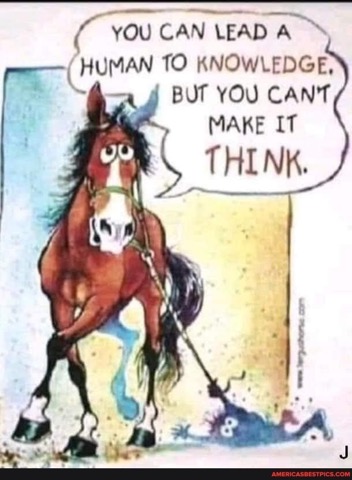
For most students, if they haven’t learned how to gather information, evaluate competing ideas and draw coherent, fact based conclusions by the time they are in high school, it may be difficult for them to do so. Critical thinking must be a substantial part of education from the beginning. It cannot be a separate course. It must be integrated into the way every subject is taught. Students shouldn’t just be given rote information to be memorized. They should be taught how to think and evaluate and then they should be provided with all the information necessary to make their own informed decisions.
What does this mean? It means that all sides of a topic should be covered. There should be no forbidden subjects. There cannot be an effective analysis of competing information if only one side is presented. This needs to begin in the very first years of education. After all, as Americans we want education not indoctrination.
The ability to develop critical thinking and to make informed decisions requires the exposure to all varying ideas without any value judgment being attached by the teacher. The idea of an academic “safe space” where students are insulated from hurt feelings presupposes that they are unable to evaluate competing ideas and must be protected. This is the very essence of indoctrination and should be an anathema to education.
Children need to learn that the world is not a safe place. If they are not exposed to the competing ideas, how can they be expected to evaluate and recognize the harmful ones.? If they are only exposed to one side, they will come to believe that side is the only true side regardless of its value.
I will use myself as an example. There were no efforts to teach critical thinking when I was a student. We were taught that everything presented in class was the right thing, and we were not to question it. Well, this might be true in math and most science classes, it is not true anywhere else. It was not until well into my adult years that I recognized many of the things I had been taught were the result of societal prejudices and in some cases even ignorance. As a result, like many people, I tended to defend my long-held opinions even after I recognized their weakness.
I was very slow to adopt new ideas. Many of the opinions I now hold are far different from those with which I grew up. Critical thinking was not easy for me; challenging your core values never is. We don’t want our children and grandchildren to have to suffer through the same weakness of thought that we did.
How could evaluating competing information that is part of critical thinking have helped prevent the wide scale vaccine denial that we are currently experiencing? Many rumors are being spread about COVID and about the COVID vaccine, just as they have been about other vaccines in the past. There were many rumors that the disease did not exist and that the deaths were faked. These rumors are still on the Internet. They never had any verifiable source and anyone taking the effort to view the data would know that there was a significant death toll early in the pandemic.
The effectiveness of COVID vaccination can easily be checked on the Centers for Disease Control and Prevention website www.COVID.cdc.gov. A study in November 2022 shows unvaccinated Americans had a 16 times (not percent) higher rate of hospitalization compared to the fully vaccinated and a study from January 2022 shows the unvaccinated had a 12.7 times higher COVID related death rate.
There were many reports about side effects of the vaccine. Checking available medical sources, it was easy to discover that while there are some side effects, there are many misstatements or exaggerations about the COVID vaccines. The side effects are similar in frequency to other vaccines and medications in general. Vaccine side effects tend to diminish as the vaccine is improved in subsequent versions. A detailed review of COVID vaccine side effects can be found on www.cdc.gov/coronavirus/2019-ncov/vaccines21.
Social media were quick to jump on every alternative to vaccination. It took very little research to realize that none of these alternatives (think Clorox) had documented medical justification and had never been effectively studied. The supposed studies that were cited were either significantly flawed or could never be duplicated or even be found. Because they had no experiencing in critical thinking, many people accepted the unsupported statements that most satisfied their desires, either politically, socially or medically and adopted them as truth. Unfortunately, this failure in critical thinking resulted in hundreds of unnecessary deaths and severe illnesses.
I have not updated this post because I am currently working on a series of articles that further develop this idea.












The Power of Myth and Legend
By John Turley
On May 30, 2024
In Commentary, History
A brief history of myths and legends
This is the first in a series of posts on myths, legends, lies, and propaganda. Above are illustrated Thor, Paul Bunyon, and Zeus. Instinctively we know Thor and Zeus are myths and Paul Bunyan is a legend. But how do we know that?
Let’s start with the Merriam-Webster definitions.
Myth: “a usually traditional story of ostensibly historical events that serves to unfold part of the world view of a people or explain a practice, belief, or natural phenomenon”. Legend: “a story that comes from the past, especially one that is popularly regarded as historical but not verifiable. Legends are also traditional but unfounded stories that explain the reason for a current custom, belief, or fact of nature.”
As with many dictionary definitions, these are broad and give the general concept without developing any detail. One important element is included in the definition of both; they are based on traditional stories that have evolved through shared historical experiences and understandings. They are generally not created as a single fully developed narrative. Almost all cultures have a tradition of myth and legend. For example, the “creation” myth is surprisingly similar among diverse societies.
So, how do we differentiate between the two?
Myths are primarily religious or spiritual in nature and evolve to help people understand the mysteries of the physical universe. They typically involve supernatural beings represented as “gods”. For example, early people did not understand that the rotation of the earth caused night and day. As a way of dealing with this they created the myth of a god driving a flaming chariot across the sky.
Legends, on the other hand, are usually based on a historical person or are, perhaps, a synthesis of several people into a single legendary figure. They are less about the supernatural or divine but more about human heroes who accomplished extraordinary deeds. Legends evolve over time with the hero frequently accomplishing great feats that reflect the concerns of the population at the time. The legends are intended to inspire and to contribute to societal cohesion. The legend can have variations in many areas over many years. The classic example of this is the King Arthur legend which comes in many forms in different countries spanning several centuries. Daniel Boone and Davy Crockett are examples of historic Americans who have evolved into near legendary status.
As you might expect, myths and legends can overlap and can even melt into one another. They can also be incorporated into propaganda and can be used to support false narratives of history and society. For the rest of this post, I’m going to principally look at myths because of their similarity to legends and because sometimes it may be less clear that the origins of some belief may be steeped in mythology or legend.
More About Myths
Myths serve a variety of purposes. They are used to explain natural events that are not well understood. A variety of “gods” were created to help people feel they had a sense of control in a world that seemed very dangerous to them. They helped people feel there is a purpose to existence.
Myths also help shape cultural and social identities. They give people a sense of shared history and reflect community values and customs. The myths frequently contain ethical and moral lessons. Myths help create unity in times of difficulty and can be a source of inspiration. Myths can also be used as an object lesson about what could happen to those who don’t respect community values.
In preliterate societies, myths performed a service of historical or cultural preservation, particularly as it relates to behavior and beliefs. Myths frequently use symbolic language and narrative to enhance societal cohesion. They reinforce a feeling of belonging within the group.
Myths can have an emotional appeal and are more engaging than a dry listing of facts. They can often provide a simple answer to complex problems. Societies find comfort in the stability that an underlying myth can provide even if there is no empirical evidence to support it. Myths can become so embedded in a society’s religion, art, and literature that some people often have trouble separating the myth from the reality of the world around them.
The belief in myths is not always consistent among groups and cultures. In some societies, myths are taken literally while in others they are taken allegorically. The belief in myths has changed over time as societies have evolved knowledge and scientific understanding. But they all share an attempt to transform the metaphysical to the literal.
While the evolution and perpetuation of myths was of great value to early societies, continued reliance on myths as a source of knowledge often hampered scientific development. Throughout history, there have been persecutions of people who proposed new scientific knowledge or philosophical opinions that varied from society’s foundational myths.
We tend to think of myths as having arisen in the mystic past. We think of them as entertaining stories with little relation to our lives. However, myths continue to evolve, and new myths are continually created. In my next post, New Myths Arise, I’ll talk about two myths particular to the United States that have risen within the last 150 years and still have a continuing impact on our society.