
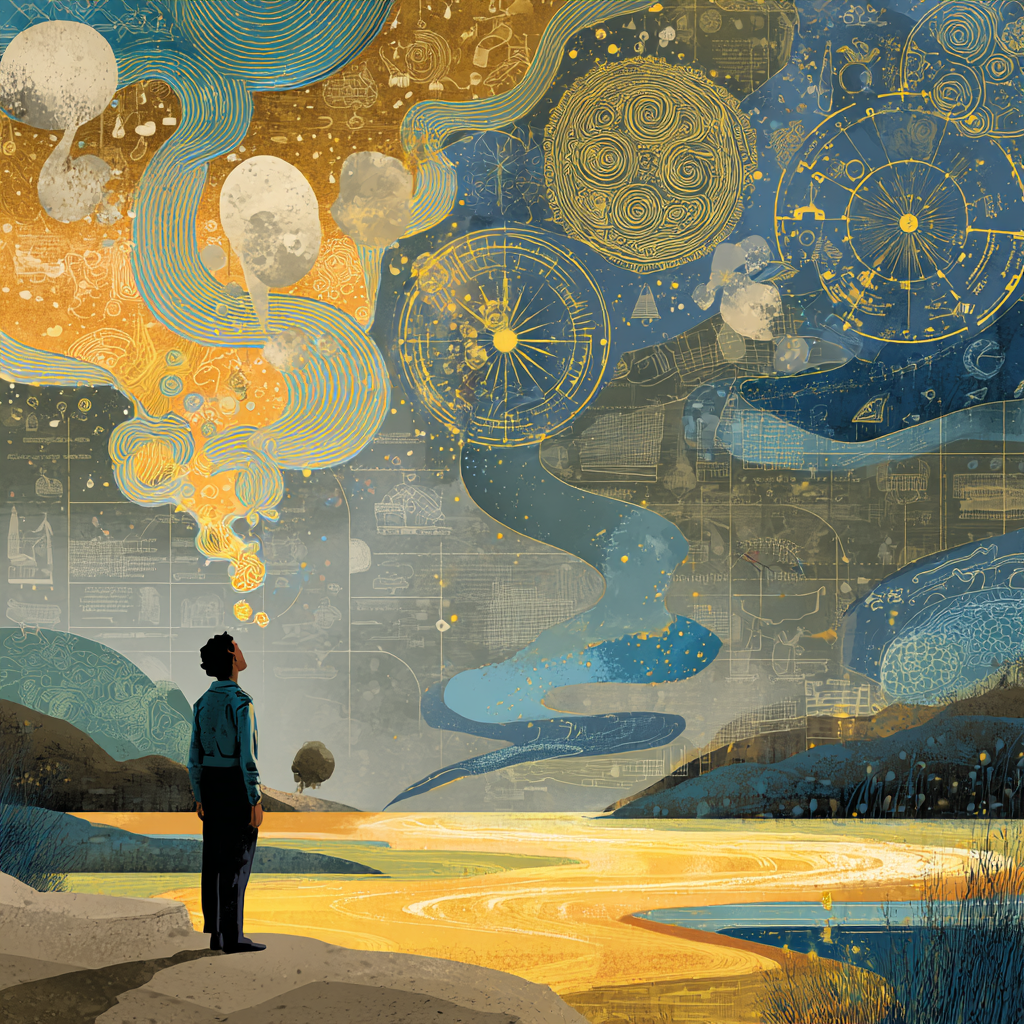
Have you ever been talking to someone when you started to think, “How in the world can they believe that?” They may have been engaging in magical thinking. But don’t feel too superior because most likely you have been guilty of the same thing.
Magical thinking is one of those fascinating quirks of human psychology that shows up everywhere—from your friend who won’t talk about their job interview until it’s over, to major political movements that shape our world. At its core, it’s the belief that our thoughts, words, or actions can influence events in ways that completely ignore standard cause-and-effect logic.
What We’re Really Talking About
Magical thinking isn’t new. Our ancestors practiced animism, believing spirits lived in everything around them. They created rituals to appease these spirits or tap into their power. Fast forward to today, and despite all our scientific advances, these patterns of thinking haven’t gone anywhere—they’ve just evolved.
It’s essentially a cognitive bias where we connect events that aren’t truly linked. This typically happens when we’re facing uncertainty, stress, or situations where we feel powerless. The thinking pattern gives us a psychological safety net—a feeling that we’re in control.
How It Shows Up in Daily Life
Superstitions and Rituals
Knocking on wood to prevent bad luck is a universal example. There’s zero logical connection between rapping your knuckles on a wooden surface and your future, but people do it anyway because it feels like taking action against uncertainty.
Athletes are notorious for this. That “lucky” jersey, the pre-game meal eaten in exactly the same order, the specific warm-up routine—these rituals don’t really affect performance, but they can boost confidence and calm nerves, which indirectly helps.
Lucky Charms and Talismans
Rabbit’s feet, four-leaf clovers, special coins—lots of people carry objects they believe bring good fortune. These beliefs come from cultural traditions and personal experiences. While there’s no scientific backing for their power, the comfort they provide is genuinely real.
The Jinx Effect
Ever avoided talking about something good that might happen because you didn’t want to “jinx” it? I worked in emergency rooms for many years, and no one would ever use the word “quiet” for fear that that would cause a sudden rush of ambulances. That’s magical thinking connecting your words to external outcomes in a totally irrational way.
Health Decisions
This gets more serious when magical thinking influences medical choices. Some people strongly believe in homeopathic remedies or alternative therapies that lack scientific validation. Interestingly, the placebo effect demonstrates how powerful belief can be—people sometimes experience limited health improvements simply because they believe a treatment works, although these effects are most common in relief of mild to moderate pain.
Gambling Behaviors
Casinos thrive on magical thinking. Blowing on dice, wearing lucky clothes, or believing you’re “due” for a win after several losses—these are all examples of the illusion of control. Gamblers think they can influence random outcomes through specific actions, which can fuel persistent gambling even when they’re losing money.
When Magical Thinking Enters Politics
Here’s where things get more complex and consequential. Magical thinking doesn’t just affect personal decisions—it shapes entire political movements and policy debates.
Conspiracy Theories
QAnon represents one of the most striking modern examples. Followers believe a secret group of powerful figures runs a global operation, and that certain political leaders possess almost supernatural abilities to fight against it. Despite zero credible evidence, this belief system has attracted significant followings, demonstrating how magical thinking can create entire alternate realities in the political sphere.
Pandemic Responses
COVID-19 brought magical thinking into sharp relief. Some people blamed 5G technology for causing the virus, leading to actual attacks on cell towers in multiple countries. Others promoted unproven treatments as miracle cures, despite scientific evidence showing they didn’t work and in some cases were harmful. The desire for simple answers to a complicated crisis made people vulnerable to these beliefs.
Vaccine denial—another pandemic related example of magical thinking—is attributing harmful effects to vaccines despite extensive scientific evidence to the contrary, while simultaneously believing that alternative approaches (like “natural immunity” alone) possess special protective powers.
Economic Policies
“Trickle-down economics”—the idea that tax cuts for wealthy individuals automatically generate economic growth and increased government revenue—often functions as magical thinking in policy debates. This theory simplifies incredibly complex economic dynamics and, according to multiple economic analyses, lacks consistent empirical support. Critics point out it ignores the nuances of fiscal policy and income distribution.
Climate Change
Despite overwhelming scientific consensus, some political movements deny climate change reality. This sometimes involves believing that natural cycles alone explain everything, or that technological solutions will magically appear without significant policy intervention. This type of thinking often protects existing economic interests or ideological positions.
Why Our Brains Do This
Pattern Recognition
Humans are pattern-seeking machines. We’re wired to spot connections, even when they don’t exist—a tendency called apophenia. This helped our ancestors survive—better to assume that rustling bush is a tiger than to ignore it—but it also leads us to form superstitions and magical beliefs.
The Comfort Factor
When life feels uncertain or stressful, magical thinking offers psychological comfort. Rituals and lucky charms reduce anxiety and give us a sense of agency, even if that control is illusory.
Cultural Transmission
Many superstitions and magical beliefs get passed down through generations, becoming woven into cultural norms. When we see others engaging in these behaviors, it reinforces them. Social acceptance is powerful.
Political Advantages
In politics specifically, magical thinking persists because it:
- Simplifies complex issues into digestible narratives
- Strengthens group identity and belonging
- Can be exploited by politicians and interest groups to mobilize support
- Provides psychological certainty in a chaotic political landscape
Finding the Balance
Here’s the thing: magical thinking isn’t purely negative. It serves real psychological functions—helping us cope with uncertainty, reducing anxiety, and giving us a sense of control when the world feels chaotic.
The problem comes when we rely on it too heavily. Avoiding medical treatment for unproven remedies can have serious health consequences. Basing policy decisions on magical thinking rather than evidence can affect millions of people. The key is balance.
The Takeaway
Magical thinking connects us to our shared human history, from ancient animistic beliefs to modern political movements. It reveals how our minds constantly work to make sense of an unpredictable world. By understanding these cognitive patterns, we can appreciate their psychological benefits while staying alert to their limitations.
Whether we’re knocking on wood or evaluating political claims, recognizing magical thinking helps us become more critical consumers of information. We can honor the comfort these beliefs provide while still grounding important decisions in evidence and rational analysis.
The enchantment isn’t going anywhere—it’s part of being human. But awareness of it? That’s our best tool for navigating between the rational and the magical in both our personal lives and our shared political reality.

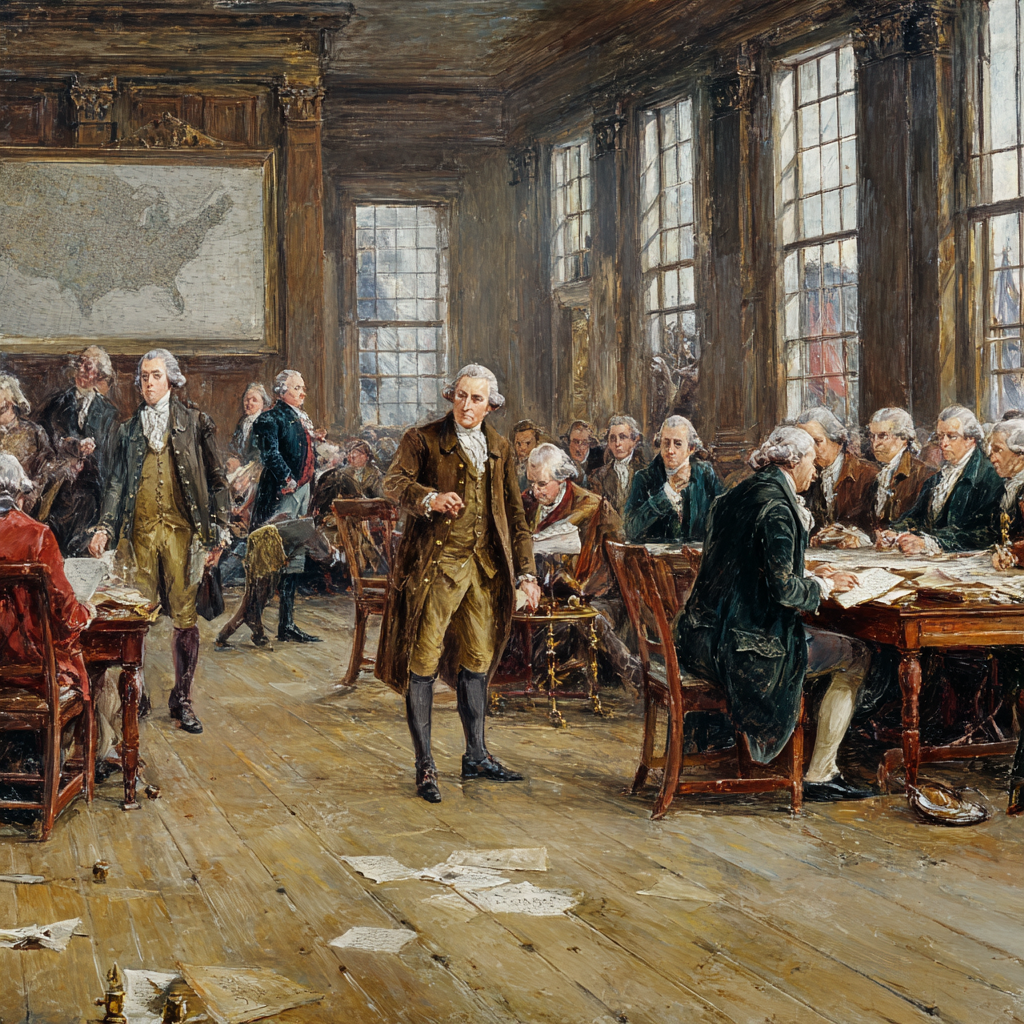
The Freemasons and the Founding Fathers: Secret Society or Just a Really Good Book Club?
By John Turley
On December 14, 2025
In Commentary, History, Politics
You’ve probably heard the whispers—the Freemasons secretly controlled the American Revolution, George Washington wore a special apron, and there’s a hidden pyramid on the dollar bill. It’s the kind of thing that sounds like it came straight from a Nicolas Cage movie. But like most historical legends, the real story is more interesting (and less conspiratorial) than the mythology.
So, what’s the actual deal with Freemasons and America’s founding? Let’s dig in.
What Even Is Freemasonry?
First things first: Freemasonry started out as actual stonemasons’ guilds back in medieval Europe—think guys who built cathedrals sharing trade secrets. But by the early 1700s, it had transformed into something completely different: a philosophical club where educated men gathered to discuss big ideas about morality, reason, and how to be better humans.
The secrecy? That was part of the appeal. Lodges had rituals and passwords, sure, but the core values weren’t exactly hidden. Freemasons were all about Enlightenment thinking—liberty, equality, the pursuit of knowledge. Basically, the kind of stuff that gets you excited if you’re the type who actually enjoys reading philosophy books.
In colonial America, joining a Masonic lodge was a bit like joining an elite networking group today, except instead of swapping business cards, you discussed natural rights and wore fancy aprons. Lawyers, merchants, printers—the educated professional class—flocked to lodges for both the intellectual stimulation and the social connections.
The Founding Fathers: Who Was Actually In?
Let’s separate fact from fiction when it comes to which founders were card-carrying Masons.
Definitely Masons:
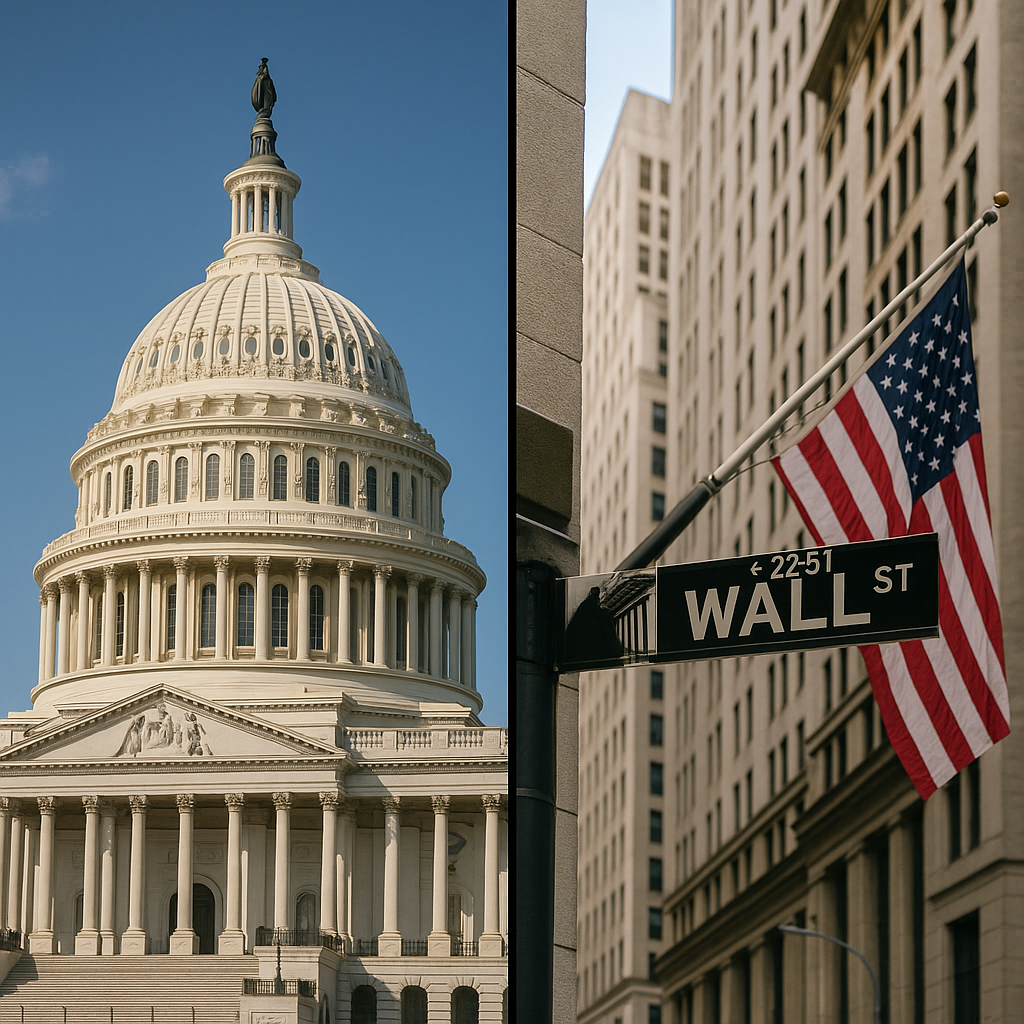
George Washington became a Master Mason at 21 in 1753. He wasn’t the most active member—he didn’t attend meetings constantly—but he took it seriously enough to wear his Masonic apron when he laid the cornerstone of the U.S. Capitol in 1793. That’s a pretty public endorsement.
Benjamin Franklin was perhaps the most dedicated Mason among the founders. Initiated in 1731, he eventually became Grand Master of Pennsylvania’s Grand Lodge and helped establish lodges in France during his diplomatic stint. Franklin was basically the poster child for Enlightenment Masonry.
Paul Revere—yes, that Paul Revere—was Grand Master of Massachusetts. His midnight ride gets all the attention, but his Masonic connections were just as important to his Revolutionary activities.
John Hancock also served as Grand Master of Massachusetts. His oversized signature on the Declaration was matched by his outsized commitment to Masonic ideals.
John Marshall, the Chief Justice who shaped American constitutional law, was a dedicated Mason. So was James Monroe, the fifth president.
Here’s a fun stat: of the 56 signers of the Declaration of Independence, at least nine (about 16%) were Masons. Among the 39 who signed the Constitution, roughly thirteen (33%) belonged to the fraternity.
The Maybes:
Thomas Jefferson? Probably not a Mason, despite endless conspiracy theories. There’s no solid evidence of membership, though his Enlightenment philosophy certainly sounded Masonic. His buddy the Marquis de Lafayette was definitely in, which hasn’t helped dispel the rumors.
Alexander Hamilton? The evidence is murky. Some historians think his writings hint at Masonic sympathies, but there’s no membership record.
Definitely Not:
John Adams wasn’t a Mason and was actually skeptical of secret societies. He still believed in many of the same principles, though—virtue, republican government, that sort of thing.
Did the Masons Really Influence the Revolution?
Here’s where it gets interesting. No, the Freemasons didn’t sit around a lodge plotting revolution like some shadowy cabal. But did their ideas and networks matter? Absolutely.
Think about what Masonic lodges provided: a space where educated colonists could meet, discuss radical ideas about natural rights and self-governance, and build trust across colonial boundaries—all without British officials breathing down their necks. These lodges brought together men from different colonies, different religious backgrounds (Anglicans, Quakers, Deists), and different social classes.
The radical part? Inside a lodge, everyone met “on the level.” It didn’t matter if you were born rich or poor—merit and virtue determined your standing. That’s pretty revolutionary thinking in the 1700s when most of the world still believed some people were just born better than others. Sound familiar? “All men are created equal” has a similar ring to it.
Freemasonry also championed religious tolerance. You had to believe in some kind of Supreme Being, but that was it—no specific creed required. This ecumenical approach directly influenced the founders’ commitment to religious freedom and separation of church and state.
The Masonic motto about moving “from darkness to light” through knowledge wasn’t just ritualistic mumbo-jumbo. It reflected genuine Enlightenment belief in reason and progress—the same intellectual current that powered revolutionary thinking.
What About All That Symbolism?
Okay, let’s address the pyramid and the all-seeing eye on the dollar bill. Are they Masonic? Maybe, maybe not. The Great Seal of the United States definitely uses imagery that Masons also used—but so did lots of 18th-century groups drawing on Enlightenment and classical symbolism. The connection is debated among historians.
What’s undeniable is that Masonic culture emphasized architecture and building as metaphors for constructing a just society. When Washington laid that Capitol cornerstone in his Masonic apron, he was making a statement about building something enduring and meaningful.
The “Conspiracy” Question
Let’s be clear: there was no Masonic conspiracy to create America. The fraternity wasn’t even unified—lodges operated independently, and members included both patriots and loyalists. Officially, Masonic organizations tried to stay neutral during the Revolution, though obviously that didn’t work out perfectly when the war split families and communities.
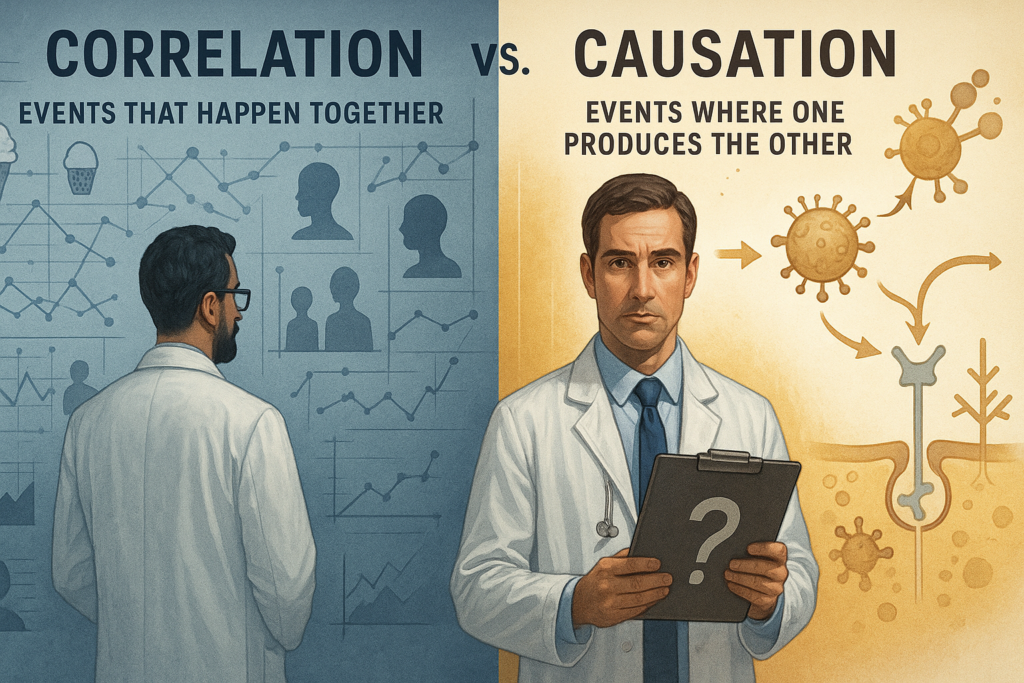
What is true is that many of the Revolution’s most articulate, influential leaders happened to be Masons. And the fraternity’s values—liberty, equality, reason, fraternity—aligned perfectly with revolutionary ideology. Correlation, not conspiracy.
After the Revolution, Freemasonry exploded in popularity. It became associated with the Enlightenment values that had supposedly won the day. Future presidents including Andrew Jackson, James Polk, and Theodore Roosevelt were all Masons. At its 19th-century peak, an estimated one in five American men belonged to a lodge.
What’s the Bottom Line?
The Freemason influence on America’s founding is real, but it’s cultural rather than conspiratorial. The lodges provided a space where Enlightenment ideas could circulate, where colonial leaders could build networks of trust, and where egalitarian principles could be practiced in miniature.
Washington, Franklin, Hancock, and the others weren’t sitting in smoke-filled rooms with secret handshakes planning to overthrow the British crown. They were part of a broader philosophical movement that valued personal improvement, moral virtue, and human rights. The Masonic lodge was one venue—among many—where those ideas took root.
Freemasonry was one tributary feeding into the river of revolutionary thought, along with classical republicanism, British common law, various religious traditions, and plain old grievances about taxes and representation.
The real story is somehow simpler and more fascinating than the conspiracy theories: a bunch of educated colonists joined a fraternity that encouraged them to think big thoughts about human nature and just governance. Those thoughts, debated in lodges and taverns and town halls, eventually sparked a revolution.
Not because of secret symbols or mysterious rituals, but because ideas about liberty and equality—once you start taking them seriously—are genuinely revolutionary.
True confession—The Grumpy Doc is not now, nor has he ever been, a Mason.