
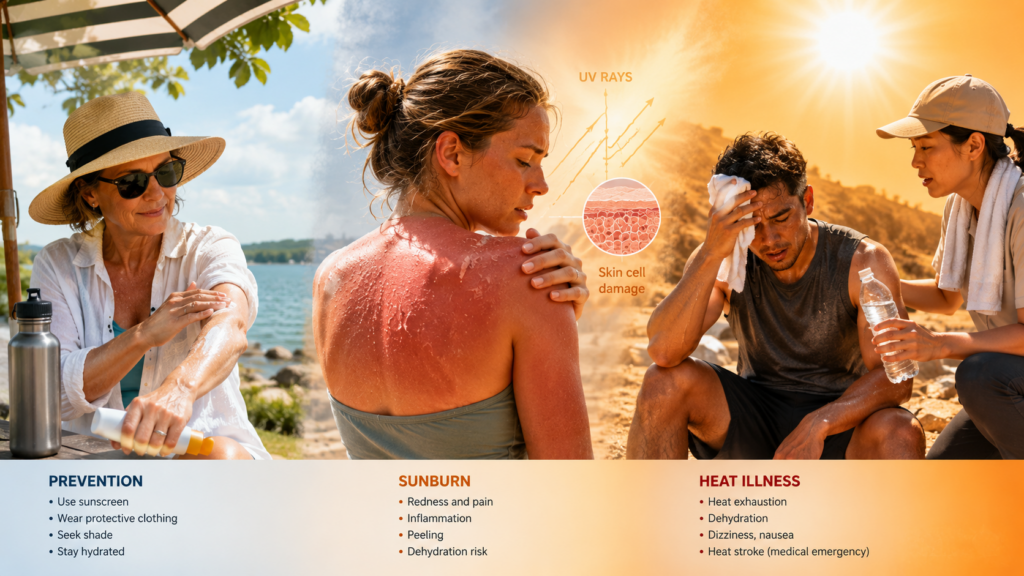
A guide to sun injuries — what they are, how they happen, and how to protect yourself.
This is a long article; I recommend you scan through it and read the sections of most interest to you rather than trying to read through it in a single sitting.
The sun is arguably the most powerful force in our daily lives. It warms the planet, drives our seasons, and has shaped human biology for hundreds of thousands of years. A little sunlight genuinely is good for you — it triggers vitamin D production and helps regulate your sleep cycle. But the same energy that sustains life can also cause real, sometimes lasting harm when you get too much. We’re not just talking about a red nose after a day at the beach. Sun injuries span a wide spectrum, from the minor annoyance of a mild sunburn to life-threatening heat stroke to decades-long processes that end in skin cancer.
Let’s walk through the main categories of sun-related injury: what they are, the biology behind them, who’s most at risk, how to prevent them, and what to do when prevention comes too late.
The Sun’s Invisible Weapons: UV Radiation and Heat
Before we get into specific injuries, it helps to know what we’re dealing with. The sun delivers energy to Earth in three main forms: visible light (what you see), infrared radiation (what you feel as warmth), and ultraviolet (UV) radiation, which you can neither see nor feel. UV is the primary culprit behind most sun injuries to the skin and eyes.
UV radiation comes in three wavelength ranges. UVC is almost completely absorbed by the Earth’s atmosphere and generally doesn’t reach us from the sun. UVA and UVB are the ones that matter for your health. UVA rays make up the lion’s share of what reaches the Earth’s surface. They penetrate deep into the skin, cause aging effects, and suppress the immune system. UVB rays are shorter and more energetic — they’re the primary drivers of sunburn, and also the rays most directly linked to DNA damage and skin cancer. Surprisingly, even on a cloudy day a significant amount of UV radiation still reaches you.
Heat from the sun adds a second, separate threat. While UV damages cells at a molecular level, heat overwhelms the body’s ability to regulate its own temperature — a completely different mechanism leading to a different family of injuries.
The Types of Sun Injury
Sunburn
Sunburn is the most common sun injury, and most people have had at least one, some of us many more than one. It’s an acute inflammatory response triggered when UV radiation, primarily UVB, directly damages the DNA in skin cells. When that damage exceeds the ability of the cell’s repair machinery, the cell initiates a self-destruct process (called apoptosis) to prevent potentially cancerous mutations from propagating. The redness, pain, heat, and swelling of a sunburn are the skin’s inflammatory response to that mass cellular die-off.
Sunburn develops in a spectrum of severity. A mild burn produces redness and tenderness over exposed skin. A moderate burn adds blistering and significant pain. Severe sunburns are equivalent to a second-degree thermal burn and can involve extensive blistering, swelling, fever, chills, and nausea. In rare cases, especially in young children, severe sunburns can require hospitalization.
One thing worth knowing: even though we casually call sunburn a ‘first-degree burn,’ it’s technically not the same as a heat burn of the same grade. UV radiation penetrates to deeper layers of the skin than heat does, causing a different pattern of cellular injury.
Skin Cancer
This is where sunburn’s long tail becomes dangerous. Skin cancer is the most common cancer in the United States, with over 5 million cases diagnosed annually. The connection to UV exposure is not subtle — roughly 90 percent of non-melanoma skin cancers are directly associated with UV radiation from the sun.
There are three main types. Basal cell carcinoma (BCC) is the most common, with an estimated 3.6 million U.S. diagnoses each year. It tends to grow slowly and rarely spreads to other organs, but it can cause significant local destruction if ignored. Squamous cell carcinoma (SCC) is second in frequency, at about 1.8 million cases per year. It carries a somewhat higher risk of spreading than BCC. Melanoma is the least common but by far the most dangerous, accounting for most skin cancer deaths. It arises from the pigment-producing cells (melanocytes) and can spread rapidly to other organs.
The underlying mechanism in all three is UV-induced DNA damage. When UV radiation hits skin cells repeatedly over time, it scrambles the DNA segments that normally suppress tumor growth. Intermittent intense exposure — like a child getting several serious sunburns — appears particularly risky for melanoma. Cumulative lifetime exposure is more associated with BCC and SCC. Either way, the damage is slow and progressive and adds up invisibly for decades before a cancer appears.
Photokeratitis — Sunburn of the Eye
Most people have never heard of photokeratitis, but anyone who’s spent time on the water, in the snow, or at high altitude without sunglasses has been at risk. Photokeratitis is essentially a sunburn of the cornea, the clear front surface of the eye It is caused by intense or prolonged exposure to UVB radiation. It’s sometimes called ‘snow blindness’ in its most severe form, and ‘arc eye’ or ‘welder’s flash’ when caused by industrial UV sources.
At the cellular level, UV radiation interacts with cells in the cornea and conjunctiva (the membrane covering the eye), generating reactive oxygen species — unstable molecules that cause oxidative damage to cell membranes, proteins, and DNA. The inflammatory response that follows is what produces the characteristic symptoms: intense pain, a gritty sensation as though there’s sand in the eye, extreme sensitivity to light, tearing, and redness. These symptoms typically appear several hours after exposure, which is part of what makes photokeratitis so sneaky — you may not notice a problem until you’re back indoors for the evening.
The good news is that photokeratitis is almost always temporary. The cornea has a remarkable ability to regenerate its surface cells, and most cases resolve within 24 to 48 hours without any permanent damage to vision. Snow blindness occurs at high altitude where UV intensity is dramatically increased and fresh snow reflects up to 80 percent of incoming UV and is a more severe version that can temporarily blind a person, though new cells typically restore vision within a few days.
Long-term or repeated UV exposure to the eyes raises a different set of concerns. Cataracts, macular degeneration, and pterygium (a fleshy overgrowth on the eye surface) are all associated with lifetime cumulative UV exposure.
Heat-Related Illnesses
UV radiation isn’t the only player. The sun’s infrared energy — heat — creates a separate family of injuries when it overwhelms your body’s cooling mechanisms. These range from relatively mild to life-threatening.
Heat Cramps
Heat cramps are the mildest heat-related illness and present as painful muscle spasms that occur when you sweat heavily during strenuous activity in the heat. Sweating depletes both fluid and electrolytes (particularly sodium). They most often show up in the legs, arms, or abdomen. Treatment is straightforward: rest, move to a cooler spot, and slowly replace fluids and electrolytes.
Heat Exhaustion
Heat exhaustion is a more serious heat illness. It occurs when the body struggles to cool itself after prolonged heat exposure, often compounded by dehydration. Your core body temperature climbs, typically to between 100°F and 104°F. Symptoms include heavy sweating, headache, dizziness, nausea, rapid but weak pulse, and muscle cramps. The skin usually feels cool and moist. Without treatment, heat exhaustion can escalate into heat stroke.
Heat Stroke
Heat stroke is a medical emergency and the most severe heat illness. It occurs when the body’s temperature regulation fails entirely — the sweating mechanism breaks down, and the core body temperature can rise to 106°F or higher within 10 to 15 minutes. This is organ-threatening territory. Brain cells begin dying at sustained high temperatures, and heat stroke can cause permanent disability or death without rapid emergency treatment.
There are two clinical patterns. Classic heat stroke tends to affect the elderly, very young children, and people with chronic illness and occurs during prolonged heat waves. Exertional heat stroke hits otherwise healthy, physically active people — athletes, soldiers, outdoor workers — during intense physical activity in hot conditions. Both are emergencies, but exertional heat stroke can develop faster and with less warning.
Key warning signs that distinguish heat stroke from heat exhaustion: an extremely high body temperature (above 104°F), confusion or slurred speech, hot and dry skin (though not always), and loss of consciousness or seizures. If you suspect heat stroke, call 911immediately — this is not a wait-and-see situation.
Photosensitivity and Drug Reactions
A less-discussed but fairly common category of sun injury involves the interaction between UV radiation and certain medications or chemicals. Phototoxic reactions happen when a substance in or on the skin absorbs UV radiation and generates a chemical reaction that damages tissue — essentially a chemical sunburn. Photoallergic reactions are immune-mediated: the UV-altered substance triggers an immune response, producing a rash that can spread even to sun-unexposed areas.
Medications commonly associated with photosensitivity include certain antibiotics (especially tetracyclines and fluoroquinolones, cipro being the most common), diuretics, some blood pressure medications, nonsteroidal anti-inflammatory drugs (NSAIDs), and some antidepressants. If you’ve started a new medication and notice unusual sun sensitivity, it’s worth having a conversation with your prescriber.
Who’s Most Vulnerable?
While the sun doesn’t discriminate, some people are more vulnerable to sun injury than others.
Skin tone matters enormously for UV-related injury. People with lighter skin have less melanin — the pigment that absorbs UV and dissipates it as heat, protecting underlying cells. Fair-skinned people sunburn faster and face a higher lifetime risk of skin cancer. That said, darker-skinned individuals are absolutely not immune: skin cancers in Black, Asian, and Hispanic patients tend to be diagnosed at later, more dangerous stages, partly because they’re less expected. Melanoma in particular has a much lower five-year survival rate in Black patients (around 70 percent) compared to white patients (around 95 percent).
Children deserve special attention. Their developing skin and eyes are more sensitive to UV damage, and the evidence is strong that severe sunburns during childhood and adolescence significantly increase the lifetime risk of melanoma. Generally, a disproportionate amount of a person’s lifetime UV exposure is accumulated before age 18.
For heat illness, the calculus shifts. The elderly and very young children are most vulnerable because their thermoregulatory systems are less efficient. People with chronic illnesses such as heart disease, kidney disease, diabetes, obesity, face elevated risk. So do people taking medications that interfere with sweating or fluid balance. Outdoor workers and athletes are at occupational risk, particularly when they haven’t had time to acclimatize to heat.
Prevention: The Real Work Happens Before You Go Outside
Sunscreen — But Use It Right
The evidence that sunscreen prevents skin cancer is solid overall, though the picture is more nuanced than the marketing suggests. High-quality evidence shows that regular daily use of a broad-spectrum SPF 15 sunscreen reduces the risk of developing squamous cell carcinoma by about 40 percent and reduces melanoma risk by roughly 50 percent. The catch is application. Under real-world conditions, people typically apply far less sunscreen than the amount used in lab testing which can cut the effective SPF roughly in half. Sunscreen also needs to be reapplied every two hours and after swimming or heavy sweating; most people don’t do this.
The American Academy of Dermatology recommends a broad-spectrum sunscreen (meaning it covers both UVA and UVB) with an SPF of at least 30 for everyday use, and SPF 50 for extended outdoor activity. ‘Broad spectrum’ is key — pure UVB filters leave you unprotected from UVA, which drives skin aging and contributes to skin cancer.
On the regulatory front, there’s encouraging news. In late 2025, Congress passed the SAFE Sunscreen Standards Act, which allows the FDA to accept safety data from other countries when evaluating new sunscreen ingredients. The U.S. has long lagged behind Europe and Asia in available sunscreen chemistry, so this could eventually broaden consumer options significantly.
Clothing and Shade
Arguably the most underrated sun protection strategy is also the simplest: cover up and get out of direct sun. Tightly-woven, loose-fitting clothing provides a meaningful physical barrier to UV. Clothing with a labeled UPF (ultraviolet protection factor) rating offers quantified protection. A wide-brimmed hat protects the face, ears, and neck — areas that accumulate a lot of UV exposure and are common sites for skin cancer.
Seek shade during peak UV hours, which run from about 10 a.m. to 4 p.m. Keep in mind that trees, umbrellas, and canopies reduce but don’t eliminate UV exposure — surfaces like sand, water, and snow reflect UV back at you from below, partially defeating the shade above you.
Eye Protection
Sunglasses that block 99 to 100 percent of UVA and UVB are very important and are not just a fashion accessory. Wraparound styles provide better coverage than narrow frames, since UV can reach the eye from the sides. For winter sports or high-altitude activities, glacier glasses or goggles with side shields are the appropriate choice — fresh snow can reflect up to 80 percent of UV radiation, and the UV intensity at altitude is substantially higher than at sea level.
Managing Heat Risk
Preventing heat illness comes down to a few fundamentals: stay hydrated before and during outdoor activity and don’t neglect to continue to hydrate after you have finished. Schedule strenuous work or exercise in the early morning or evening, wear lightweight and light-colored clothing, take breaks in shaded or air-conditioned spaces. Be sure to allow your body time to acclimatize when moving to a hotter climate — and that includes vacations.
Hydration specifics matter. The general guidance for outdoor exercise is to drink about 24 ounces of fluid two hours before activity, and about 8 ounces every 20 minutes during exertion — even if you don’t feel thirsty. When I was in the Marines and serving in a tropical environment, we were advised to “drink until you slosh”. In extreme heat, an electrolyte-containing sports drink can be more appropriate than plain water, since heavy sweating depletes sodium and other minerals that plain water doesn’t replace.
Never leave children, the elderly, or pets in a parked car on a warm day. Car interiors can reach dangerous temperatures remarkably quickly, and dark dashboards and seats can hit temperatures above 180°F.
Treatment: When the Sun Has Already Won
Treating Sunburn
There is no treatment that reverses UV damage once it’s occurred, so sunburn management is fundamentally about reducing inflammation and discomfort while the skin heals. Cool (not ice cold) baths or compresses help with pain and inflammation. Over-the-counter NSAIDs like ibuprofen or aspirin reduce inflammation systemically. Aloe vera gel and fragrance-free moisturizers help with the dryness and peeling that follow. Hydration is important, since burned skin loses water faster than intact skin.
Avoid applying petroleum jelly, butter, or any product that traps heat in the skin — these are folk remedies that can worsen the burn. Avoid further sun exposure until the burn has healed. Blistered burns should be left intact; breaking blisters increases infection risk. A severely blistered sunburn, or one accompanied by high fever, severe pain, confusion, or extensive skin involvement, warrants medical attention.
Treating Photokeratitis
Eye sunburn is treated with rest, darkness, and time. Remove contact lenses immediately. Cool compresses over closed eyes can ease the pain. Over-the-counter lubricating eye drops help with the irritation, and oral pain relievers can help with the deeper ache. Avoid rubbing the eyes. Most cases resolve within 24 to 48 hours. If pain or vision disturbance persists beyond 48 hours, or if vision changes occur, see an eye care professional promptly.
Treating Heat Exhaustion
Act quickly. Move the person to a cool or shaded area, loosen or remove excess clothing, and have them lie down with legs slightly elevated to improve circulation. Use any available means to cool the body: wet towels, fans, cool mist. Slowly give cool water or a sports drink. Call for medical assistance, since heat exhaustion can tip into heat stroke without warning.
Treating Heat Stroke
Heat stroke is a 911 emergency. While waiting for emergency services, move the person to a cool environment, remove outer clothing, and cool them by any means available — cool water applied to the skin, fanning, ice packs to the groin and armpits (where large blood vessels run close to the surface). Crucially: do NOT give fluids to someone who may have heat stroke, since confusion or impaired consciousness creates a choking risk. Hospital treatment typically involves intravenous fluids and active cooling measures. Every minute of delay increases the risk of permanent brain damage or death.
Long-Term Management: Skin Cancer
Skin cancer detected early is highly treatable. The American Academy of Dermatology recommends annual skin checks by a dermatologist for adults with significant sun exposure history, a personal or family history of skin cancer, or a large number of moles. Know the ABCDE warning signs: Asymmetry, irregular Border, uneven Color (especially multiple colors in one lesion), Diameter greater than a pencil eraser, and Evolution (any change in size, shape, or color over time). A new growth or a sore that doesn’t heal also warrants prompt evaluation.
A Final Thought
The sun isn’t going anywhere, and we wouldn’t want it to. But the injuries it causes — from the trivial to the fatal — are almost entirely preventable with a combination of awareness and habit. The frustrating reality is that the damage we’re preventing today won’t make itself known for years or decades. Nobody feels their melanoma forming at 35 or while they’re sitting on the beach at 22. That temporal gap is why sun safety behaviors are so psychologically difficult to maintain — the consequences feel abstract right up until they’re not.
The good news is that sunscreen, shade, adequate hydration, and protective clothing are not especially burdensome interventions. The return on that modest investment, measured in avoided skin cancers, avoided heat emergencies, and preserved eyesight, is substantial. Your future self will thank your present self for making it a habit.
Image generated by author using ChatGPT
Sources
Sunburn pathophysiology — PMC / ePlasty (2024) — https://pmc.ncbi.nlm.nih.gov/articles/PMC11374383/
UV radiation and human health — WHO Q&A — https://www.who.int/news-room/questions-and-answers/item/radiation-the-known-health-effects-of-ultraviolet-radiation
UV radiation and health effects — UNDRR — https://www.undrr.org/understanding-disaster-risk/terminology/hips/et0202
UV radiation and sun exposure — U.S. EPA — https://www.epa.gov/radtown/ultraviolet-uv-radiation-and-sun-exposure
Photokeratitis: causes, symptoms, treatment — All About Vision — https://www.allaboutvision.com/conditions/keratitis/photokeratitis/
Heat exhaustion — Cleveland Clinic — https://my.clevelandclinic.org/health/diseases/21480-heat-exhaustion
Heat stroke symptoms and treatment — WebMD — https://www.webmd.com/a-to-z-guides/heat-stroke-symptoms-and-treatment
Heat-related illnesses — CDC/NIOSH — https://www.cdc.gov/niosh/heat-stress/about/illnesses.html
Dehydration and heat stroke — Johns Hopkins Medicine — https://www.hopkinsmedicine.org/health/conditions-and-diseases/dehydration-and-heat-stroke
Heat illness — NOAA — https://www.noaa.gov/stories/heat-exhaustion-or-heat-stroke-know-signs-of-heat-illness
Skin cancer facts and statistics — Skin Cancer Foundation — https://www.skincancer.org/skin-cancer-information/skin-cancer-facts/
Skin cancer statistics — American Academy of Dermatology — https://www.aad.org/media/stats-skin-cancer
Sunscreen efficacy and skin cancer prevention — CMAJ (2020) — https://www.cmaj.ca/content/192/50/E1802
Modernizing U.S. sunscreen regulations — PMC (2025) — https://pmc.ncbi.nlm.nih.gov/articles/PMC12332967/
New sunscreen laws — Health Central (2026) — https://www.healthcentral.com/condition/skin-cancer/new-sunscreen-formulas-are-on-the-way
Sunscreen and melanoma risk — ASCO Journal of Clinical Oncology — https://ascopubs.org/doi/10.1200/JCO.2016.69.5874
Medical Disclaimer
The information provided in this article is intended for general educational and informational purposes only and does not constitute medical advice. It should not be used as a substitute for professional medical advice, diagnosis, or treatment.
Always seek the guidance of a qualified healthcare provider with any questions you may have regarding a medical condition or treatment. Never disregard professional medical advice or delay seeking it because of something you have read here.
If you are experiencing a medical emergency, call 911 or your local emergency number immediately.
The author of this article is a licensed physician, but the views expressed here are solely those of the author and do not represent the official position of any hospital, health system, or medical organization with which the author may be affiliated.



The One True Gospel of Wellness
By John Turley
On April 23, 2026
In Commentary, Medicine
Why Every Guru Thinks They’ve Found the Only Path to Health
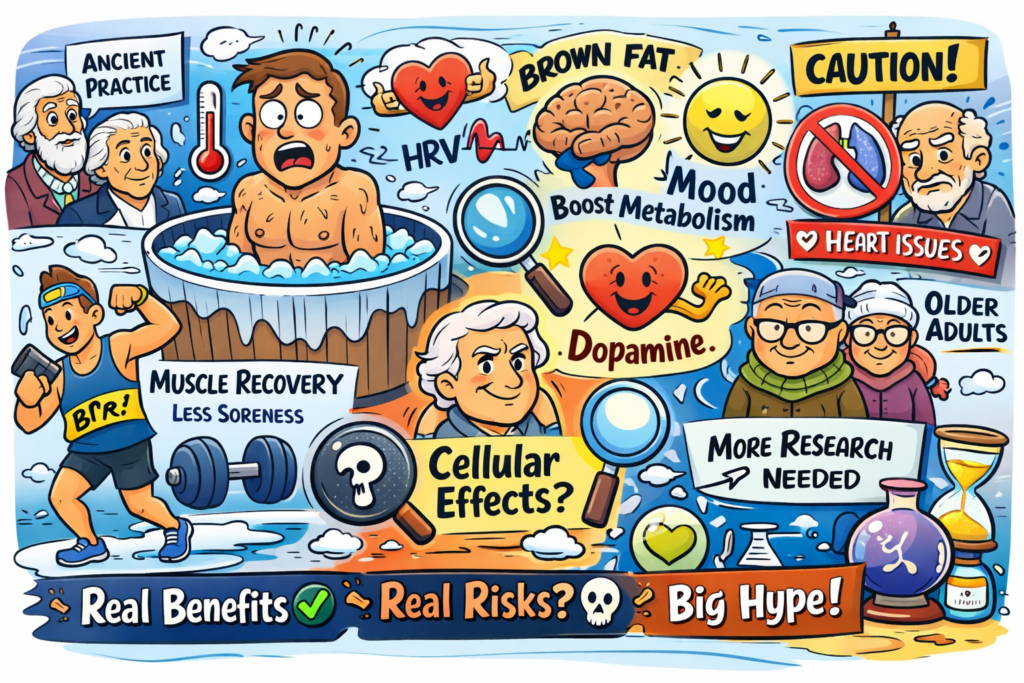
There’s a peculiar affliction that seems to strike fitness influencers, biohackers, homeopathic healers, and wellness gurus with near-universal consistency — the unshakeable conviction that they, and only they, have cracked the code on human health. Whether it’s cold plunges at 4 a.m., microdosing mushrooms, coffee enemas, or whatever supplement stack is trending this week, every one of these prophets arrives at the same conclusion: their method is the path, the others are at best misguided, and mainstream medicine is a corrupt temple worth burning down.
Psychologists have a name for part of what’s happening here. It’s called the Dunning-Kruger effect — the tendency for people with limited knowledge in a domain to overestimate their own competence. But that’s only part of the story. Many of these figures are genuinely smart, sometimes even credentialed. What really drives the zealotry is something closer to what researchers call “belief perseverance” — the tendency to hold tightly to a conclusion even when contradicting evidence rolls in. Once someone has built an identity, a brand, and an income stream around a single idea, the psychological and financial cost of admitting nuance becomes enormous.
Take the biohacking community as a prime example. Some influencers — like the self-proclaimed “father of biohacking” — have built empires on the premise that optimizing the body is a matter of finding the right levers and pulling them correctly. They have championed everything from Bulletproof Coffee to infrared saunas to testosterone replacement, positioning each as a revelation that conventional medicine is too slow or too corrupted to acknowledge. The problem isn’t that all of these interventions lack merit — some have legitimate science behind them. The problem is the rhetorical framework: the idea that skeptics aren’t just wrong, they’re complicit. That’s not science; that’s a revival meeting.
Homeopathy sits at a different extreme but runs on the same engine. Developed in the late 18th century by Samuel Hahnemann, homeopathy is based on the idea that substances that cause symptoms in healthy people can cure those symptoms in the sick — and that extreme dilution actually strengthens a remedy’s potency. The scientific consensus is unambiguous: systematic reviews and meta-analyses have repeatedly found homeopathic remedies perform no better than placebo. And yet its advocates don’t merely disagree with this consensus — they dismiss the entire evidentiary framework, arguing that conventional research methods simply can’t measure what homeopathy does. It’s an airtight position: no evidence can ever count against it.
The fitness world runs its own version of this dogmatism on a perpetual loop. CrossFit devotees insist that anything other than functional high-intensity training is a waste of time. Carnivore diet advocates declare that vegetables are quietly poisoning you with antinutrients. Yoga instructors sometimes slide into the claim that breath control and mindfulness can substitute for actual medical care. Each subculture has its orthodoxy, its apostles, and its convenient explanations for why people who don’t follow the program are sick, lazy, or deceived. The irony is that many of these systems contain genuinely useful elements. Resistance training really does build muscle and bone density. Mindfulness really does reduce cortisol. Dietary quality really does matter enormously. But the insistence on one method to the exclusion of all others transforms useful practices into something closer to religious doctrine.
What’s lost in all the noise is the most important truth in medicine: human bodies are wildly heterogeneous. What works beautifully for one person may be ineffective or even harmful for another. This isn’t a flaw in the science — it is the science. Precision medicine, one of the most promising frontiers in modern healthcare, is built entirely on this recognition. The dream of a single universal protocol for human health isn’t just unrealized — it’s probably unrealizable. Yet that’s precisely what every wellness guru is selling.
There’s also a social dimension worth naming. The wellness industry is, in the most literal sense, an industry. It generated an estimated $5.6 trillion globally in 2022, according to the Global Wellness Institute, and that number continues to climb. When someone’s livelihood depends on their particular system being not just good but uniquely correct, objectivity becomes a luxury they can’t easily afford. Dismissing alternatives isn’t just tribalism — it’s good business.
None of this is to say that skepticism toward mainstream medicine is always misplaced. Conventional healthcare has real blind spots — in chronic disease management, in nutrition research, in the treatment of pain, and in its historical tendency to dismiss patient experience. The gurus often fill genuine gaps that the system has left open. But filling a gap is different from claiming you have the only map to the entire territory. The honest answer in health and fitness, as in most complex domains, is that we know a good deal, we don’t know quite enough, and anyone who tells you they’ve figured it all out probably hasn’t.
The next time someone tells you they’ve discovered the only way — whether it’s a supplement protocol, a spiritual practice, or a morning routine — it might be worth asking the simplest question in science: compared to what? If the answer is a dismissive wave at everything else, you probably have your answer.
Illustration generated by author using ChatGPT.
Sources
Global Wellness Institute — Global Wellness Economy Monitor: https://globalwellnessinstitute.org/industry-research/
Ernst E. — Homeopathy: The Undiluted Facts (Springer, 2016): https://link.springer.com/book/10.1007/978-3-319-43592-3
Dunning D. — The Dunning-Kruger Effect, Advances in Experimental Social Psychology: https://www.sciencedirect.com/science/article/pii/S0065260111440024
National Institutes of Health — Precision Medicine Initiative: https://www.nih.gov/research-training/allofus-research-program
Medical Disclaimer
The information provided in this article is intended for general educational and informational purposes only and does not constitute medical advice. It should not be used as a substitute for professional medical advice, diagnosis, or treatment.
Always seek the guidance of a qualified healthcare provider with any questions you may have regarding a medical condition or treatment. Never disregard professional medical advice or delay seeking it because of something you have read here.
If you are experiencing a medical emergency, call 911 or your local emergency number immediately.
The author of this article is a licensed physician, but the views expressed here are solely those of the author and do not represent the official position of any hospital, health system, or medical organization with which the author may be affiliated.