A Blueprint for Better Government or a Road Map to Authoritarian Rule?
Introduction
During the recently concluded presidential campaign, we heard much about the Heritage Foundation’s Project 2025. It was generally discussed as a plan for a conservative restructuring of the government. Donald Trump has repeatedly stated that he knows nothing about the plan or its contents. Given his general lack of interest in policy details during his previous administration, I believe him.
I didn’t know much about it either. In what I now recognize as magical thinking on my part, I assumed there was no way the American people would return him to office, so I didn’t bother learning about it.
The day after the election, I went online to find a copy of the Project 2025 report. I started with the Heritage Foundation’s website, where they described different elements of the plan, but there was no way to order a copy. I checked other online sources, including Amazon, but still could not find the full report. I did discover that it is nearly 900 pages long, so even if I had obtained a copy, I doubt I would have read more than a small portion of it. Ultimately, I decided to purchase two summaries of the project, both claiming to be bipartisan. I believe they are generally balanced, as they present both positive and negative aspects of the program.
What is Project 2025?
The Heritage Foundation describes Project 2025 as a comprehensive initiative aimed at preparing for a conservative presidential administration beginning in January 2025. It is notable that the plan does not explicitly reference a Trump administration, but rather a generic “conservative” one. My interpretation is that this allows the Heritage Foundation to appear supportive of conservatism without explicitly endorsing Donald Trump, protecting their nonprofit status.
The project is structured around four key pillars:
- Policy Agenda: Developing a detailed conservative policy guide, titled Mandate for Leadership: The Conservative Promise, which outlines strategies for governing major federal agencies.
- Personnel Recruitment: Establishing a database to identify and recommend qualified individuals for presidential appointments, ensuring alignment with conservative principles.
- Training: Launching the Presidential Administration Academy, an online educational platform designed to equip prospective appointees with the necessary skills and knowledge for effective governance.
- 180-Day Playbook: Crafting a strategic plan to guide the initial actions of the administration during its first 180 days, focusing on implementing conservative policies and reforms.
At first glance, this seems straightforward and unalarming. However, delving into the details reveals a much broader scope. The plan includes discussions about eliminating certain government agencies, overhauling civil service, extending presidential control over independent agencies, and substantially revising (though not eliminating) the Affordable Care Act.
I believe that the ultimate intent of the plan is to fully implement the Unitary Executive Theory. Therefore, understanding Project 2025 requires a basic understanding of this theory.
Unitary Executive Theory
The Unitary Executive Theory is a legal and constitutional doctrine asserting that the President of the United States holds absolute control over the executive branch. Proponents argue that Article II of the Constitution, which vests “the executive power” solely in the President, provides a constitutional basis for this authority. Critics contend it undermines checks and balances and concentrates too much power in the executive.
Key Points of the Theory:
- Presidential Control: Advocates claim the President should have direct control over all executive functions, including hiring, firing, and directing agency heads and officials.
- Limits on Congressional Power: The theory asserts that Congress cannot infringe on the President’s control over executive agencies by creating independent regulatory bodies or restricting the President’s ability to remove officials.
- Judicial Interpretation: The Supreme Court has addressed the concept in cases such as Myers v. United States (1926), Humphrey’s Executor v. United States (1935), and Seila Law LLC v. Consumer Financial Protection Bureau (2020). These cases reflect an ongoing debate about the extent of presidential control over the executive branch.
While proponents emphasize the need for a strong, centralized executive, critics warn it could erode the system of checks and balances envisioned by the framers of the Constitution.
Historical Perspective
The roots of the Unitary Executive Theory trace back to debates about the Constitution’s structure of executive power, particularly interpretations of Article II. Key historical examples include:
- Alexander Hamilton’s Federalist No. 70: Hamilton argued for a single, vigorous executive, emphasizing unity as essential for accountability and effective governance.
- Abraham Lincoln: During the Civil War, Lincoln exercised expansive executive power by suspending habeas corpus and issuing the Emancipation Proclamation.
- Franklin D. Roosevelt: FDR used executive orders extensively to implement New Deal programs and manage the war effort during WWII.
The term Unitary Executive Theory gained prominence in the late 20th century, championed by conservative legal scholars and the Federalist Society.
Application to Project 2025
Project 2025 seeks to leverage the Unitary Executive Theory to expand presidential power through the following measures:
- Consolidating Control: Bringing the entire federal bureaucracy, including traditionally independent agencies like the Department of Justice, under direct presidential control.
- Streamlining Decision-Making: Allowing the President to directly implement policies without interference from career officials or Congress.
- Personnel Changes: Proposing the removal of job protections for thousands of federal employees, enabling their replacement with political appointees loyal to the President.
- Agency Overhauls: Restructuring agencies such as the FBI, which the plan criticizes as “bloated” and “lawless.”
- Eliminating Departments: Proposing the elimination of the Department of Education and restructuring others like the Department of Justice and Homeland Security to increase presidential control.
Concerns Raised by Critics:
- Concentration of Power: Critics warn of an unprecedented consolidation of power in the executive branch.
- Politicization of Agencies: Traditionally nonpartisan agencies may become tools for advancing political agendas.
- Erosion of Checks and Balances: The system designed to prevent excessive power in any one branch could be undermined.
- Civil Service Protections: Removing job protections for career civil servants risks creating an unstable and politically driven workforce.
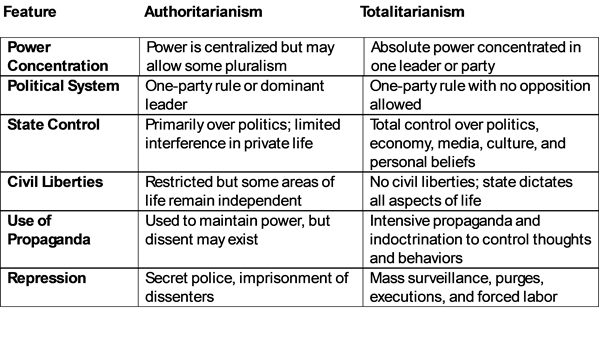
Supporters argue these changes are necessary to combat entrenched bureaucracy and improve efficiency. Critics, however, warn that this could push the U.S. toward authoritarian governance.
Conclusion
I have only touched on a few elements of Project 2025. Other aspects, such as policies on immigration, reproductive rights, and protections for minorities, are also deeply concerning but beyond the scope of this discussion.
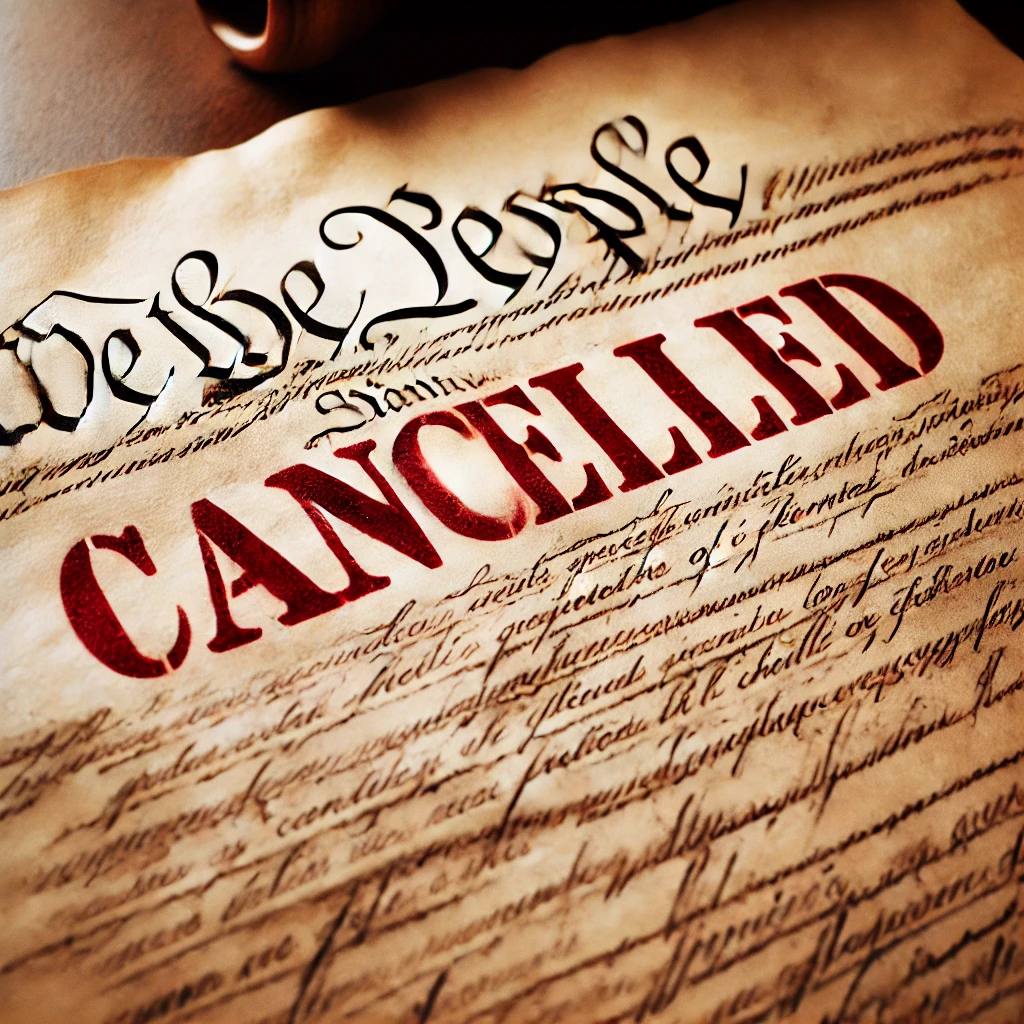
Even just within the framework of the Unitary Executive Theory, I see significant risks. Will this plan lead to better government or pave the way to authoritarianism?
While everyone will reach their own conclusions, I find myself deeply distressed by the implications. I am concerned that the restructuring of DOJ, DHS and the FBI may lead to creation of a “Department of Political Vengeance”.
If you share these concerns, I recommend reading my post from September 8th, which reviews On Tyranny: Twenty Lessons from the Twentieth Century by Timothy Snyder.










Don’t Forget Climate Change
By John Turley
On March 18, 2025
In Commentary, Politics
It Affects Us All
Climate change, one of the most critical challenges facing humanity in the 21st century, seems to be forgotten in all the controversy surrounding DOGE. Regardless of everything else going on, we can’t ignore climate change because it affects global temperatures, weather patterns, ecosystems, and economies. The overwhelming scientific consensus is that human activities—primarily the burning of fossil fuels—are driving climate change.
The existence of climate change and the impact of human activity, like any other field of science, includes areas of disagreement among researchers. One of the principal areas of disagreement is about the sensitivity of the climate to the increase in CO2 production and the rate at which global warming will occur. There’s also discussion about how effective climate models may be with some arguing that the models may either overestimate or underestimate certain effects. A significant area of disagreement is over what is known as the “tipping points”. This is a debate about when or if certain events such as ice sheet collapse, permafrost thaw or ocean circulation changes might occur. Some argue these events could trigger rapid self-reinforcing climate shifts while others believe changes will be more gradual. Even with this disagreement there is broad acceptance that climate change has increased the frequency and intensity of heat waves, heavy rain and extreme weather.
As intense as some of these scientific debates maybe, they pale in significance beside the political debates being generated around climate change.
When the possibility of climate change was first recognized in the 1970s and 1980s there was bipartisan support to address possible remediation of long-term impacts. Republican President Richard Nixon signed landmark environmental laws including the Clean Air Act.
During the 1990s climate change became more polarized. President George H. W. Bush begin to frame climate change policy as an economic threat. George W. Bush rejected the Kyoto Protocol to avoid “economic hindrance”.
By 2008 the partisan divide had significantly increased. Republicans increasingly dismissed climate risks while Democrats amplified the urgency of taking action. By 2023, 78% of Democrats prioritized climate policy, but only 21% of Republicans viewed climate action as urgent despite increasing climate risks in some GOP dominated states such as Florida and Texas.
The partisan gap expanded as conservative science skeptics continued to raise issues about rates of change, economic impacts and potential solutions. These conservatives tend to view climate policies as government overreach, while progressives hold the position that the government led initiatives are essential to combat environmental threats.
As they have in many other issues, the media have lined up into conservative and progressive camps. The conservative leaning media downplays climate risks while the liberal leaning media emphasizes the danger and need for urgent action. As with many other things this leads to a “echo chamber” effect simply reinforcing political beliefs without adding anything new of significance to the debate.
The Trump administration has signaled its desire to undo many of the climate change initiatives put in place by Democratic administrations. On January 20, 2025, President Trump signed Executive Order 14162 directing the immediate withdrawal of the United States from the Paris Climate Agreements and related international climate commitments. He has declared a “National Energy Emergency” to accelerate fossil fuel development and ease restrictions on the construction of new oil and gas projects. As part of this effort, he has weakened environmental reviews. This is expected to significantly increase fossil fuel consumption and associated greenhouse gas emissions. The Trump administration has begun the rollback of environmental regulations. Lobbyists for the oil, gas and chemical industries have been appointed to the Environmental Protection Agency to reverse climate regulations and pollution controls.
The administration is withdrawing funding for clean energy initiatives including those aimed at reducing carbon emissions and promoting renewable energy resources. The administration has initiated a review of the “legality and continued applicability” of the EPA’s endangerment finding which is the basis of most federal regulations on greenhouse gas. The administration rolled back regulations limiting methane emissions from oil and gas operations. The definition of “waters of the United States” under the Clean Water Act was narrowed, potentially allowing increased pollution in streams and wetlands.
We can expect increases in severe weather because of Trump’s environmental policies. These policy decisions collectively hinder efforts to mitigate climate change, potentially leading to increased greenhouse emissions and global warming. Reduction in funding for climate change research and the rollback of environmental regulations will have long term adverse effects on both domestic and global environmental health.
Significant budget cuts and layoffs within agencies like the National Oceanic and Atmospheric Administration (NOAA) could impair the ability to forecast and respond to severe weather events. For instance, the reduction of meteorologists and environmental scientists may hinder critical forecasting services, affecting public safety during events like hurricanes, tornados and floods.
The U.S. withdrawal from international climate initiatives, such as the Loss and Damage Fund, reduces financial support for developing countries dealing with climate-induced disasters. This could lead to inadequate infrastructure and preparedness in vulnerable regions, potentially increasing the severity of weather-related impacts.
While it is challenging to attribute specific future weather events to current policy changes directly, the administration’s environmental policies will likely contribute to conditions that favor more frequent and intense extreme weather events. The combination of increased greenhouse gas emissions together with weakened environmental regulations, reduced climate research capabilities, and diminished global climate cooperation collectively enhance the likelihood and impact of severe weather phenomena. This damage to our environment needs to be prevented! Once it occurs it will be difficult to ever reverse and our children and grandchildren will suffer as a result.