If you’ve heard of hepatitis, you probably know it has something to do with the liver. But there’s a whole family of hepatitis viruses, each with its own personality when it comes to how it spreads, what it does to your body, and how we can prevent or treat it. Let’s walk through the three most common types—hepatitis A, B, and C—and then dive into a controversy that’s making headlines right now: the hepatitis B vaccine.
What Is Hepatitis, Anyway?
At its core, hepatitis just means inflammation of the liver. Your liver is a workhorse organ that filters toxins, produces essential proteins like albumin, processes amino acids, and stores energy. When a hepatitis virus attacks it, the inflammation can range from a minor inconvenience to a life-threatening condition. The three main culprits—hepatitis A, B, and C viruses—are completely different organisms that just happen to target the same organ.
Hepatitis A: The Food and Water Troublemaker
Hepatitis A is often called “traveler’s hepatitis” because it spreads through food and water that are contaminated with fecal matter. Think of it as the virus you might pick up from eating unwashed produce, drinking contaminated water, or consuming raw shellfish from polluted waters. Other risk factors include unprotected sex and IV drug use. According to the CDC, there were an estimated 3,300 acute infections in 2023 in the United States.
The good news about hepatitis A is that it typically heals itself within 2 months. When symptoms appear—which take about 15 to 50 days after infection—they can include jaundice (that yellowing of the skin and eyes), fever, fatigue, nausea, and dark urine. Many young children don’t show any symptoms at all. The virus doesn’t become chronic, and once you’ve had it, your body produces antibodies that protect you for life.
Prevention is straightforward: there’s a safe and effective vaccine, and basic hygiene goes a long way. Wash your hands thoroughly, especially after using the bathroom and before preparing food. When traveling to areas with questionable water quality, stick to bottled or boiled water and avoid washing raw food in local water.
Treatment is mostly supportive—rest, fluids, and time. Your liver does the healing work itself.
Hepatitis B: The Blood and Body Fluid Virus
Hepatitis B is where things get more serious. This virus spreads through blood and other body fluids, which means it can be transmitted through sexual contact, sharing needles, or from mother to baby during childbirth. Healthcare workers are especially at risk from needle sticks and sharps injuries. It’s a highly infectious and tough virus that can live on surfaces for up to a week. Even tiny amounts of dried blood on seemingly innocent things like razors, nail clippers, or toothbrushes can potentially spread the infection.
According to the CDC, there were an estimated 14,400 acute infections in 2023, Approximately 640,000 adults were living with chronic hepatitis B during the 2017-2020 period and that’s what makes it particularly concerning: while the hepatitis B virus often causes short-term illness, it can become chronic.
The incubation period is long—typically 90 days with a range of 60 to 150 days. When symptoms do appear, they mirror hepatitis A: jaundice, fatigue, abdominal pain, nausea, and dark urine. But here’s the frightening part: most young children and many adults show no symptoms at all, meaning they can spread the virus without knowing they’re infected.
The chronic infection risk varies dramatically by age. If you’re infected as a newborn, you have a 90% chance of developing chronic hepatitis B. For adults, the risk drops to under 5%. Those with chronic infection face serious long-term consequences—15% to 25% of people with chronic infection develop serious liver disease, including cirrhosis, liver failure, or liver cancer.
Treatment for acute hepatitis B is supportive, but several antiviral medications are available for people with chronic infection. These don’t completely eradicate the disease but produce a “functional cure” that significantly slows liver damage and reduces complications.
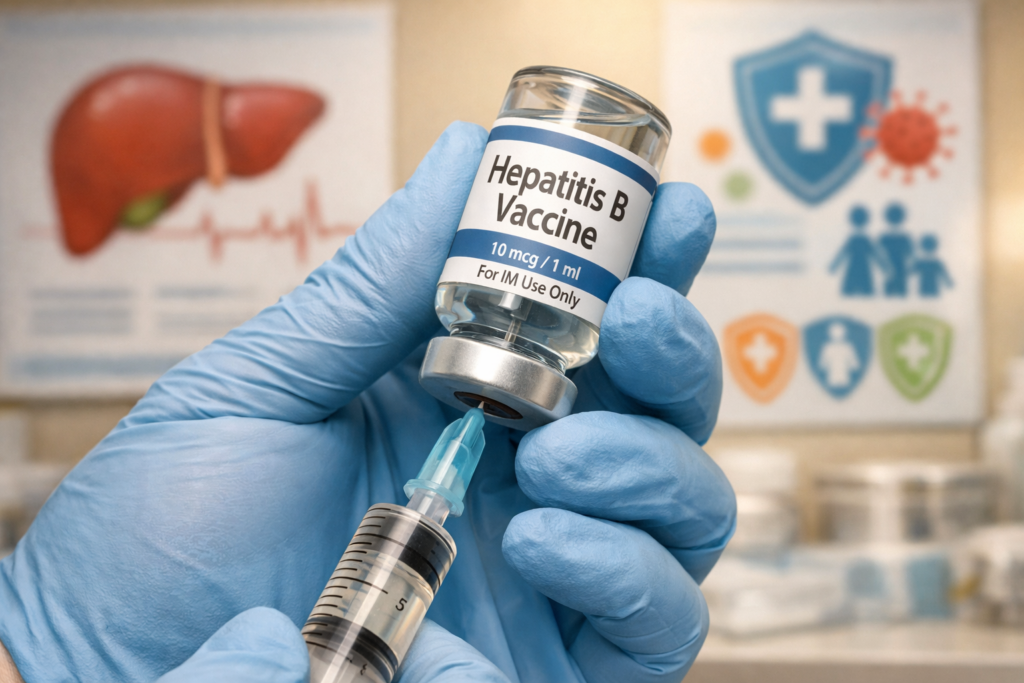
Prevention is critical. There’s a highly effective vaccine—we’ll talk more about the controversy surrounding it in a moment. Avoiding exposure to infected blood and body fluids is essential. This means safe sex practices, never sharing needles or personal care items that might have blood on them, and ensuring proper sterilization of medical and tattooing equipment.
Hepatitis C: The Silent Epidemic
Hepatitis C is transmitted primarily through blood-to-blood contact. The most common route is sharing needles among people who inject drugs, though it can also spread through contaminated medical equipment, and rarely through sexual contact. Mother-to-child transmission during childbirth is possible but uncommon. Screening of blood products has made transfusion related infections rare. About 10% of cases have no identified source.
What makes hepatitis C insidious is its stealthy nature. Many people with hepatitis C don’t have symptoms, and acute hepatitis with jaundice is rare, occurring in only about 10% of infections. The symptoms that do appear—fatigue, mild flu-like feelings—are easily dismissed. Meanwhile, the majority of people (60-70%) develop chronic infection. I recommend a screening blood test at least once for all adults over age 55, as they are the group most likely to have hepatitis C without an identifiable source.
The incubation period ranges widely, from 2 weeks to 6 months, typically 6 to 9 weeks. Without treatment, chronic hepatitis C can lead to cirrhosis and liver cancer over decades. Before modern treatments, it was a leading cause of liver transplants.
Treatment for hepatitis C has undergone a revolution. The old approach—interferon injections combined with ribavirin—had terrible side effects and worked in only about half of patients. Today, we have direct-acting antivirals (DAAs), which can cure more than 95% of cases with just 8-12 weeks of well-tolerated oral medication. These drugs target specific proteins the virus needs to replicate, essentially starving it out of existence. The treatment is so effective that hepatitis C is now considered a curable disease.
Prevention focuses on avoiding blood-to-blood contact. Never share needles, syringes, or any drug equipment. If you’re getting a tattoo or piercing, ensure the facility follows proper sterilization procedures. Healthcare workers should follow standard precautions with blood and body fluids. Unfortunately, there’s no vaccine for hepatitis C yet, though researchers continue working on one.
The Hepatitis B Vaccine Controversy: What’s Really Happening
Now let’s address the elephant in the room—the recent controversy over the hepatitis B vaccine for newborns. This topic exploded in the news in December 2025, and it’s worth understanding what’s currently going on versus what the science says.
The Recent Development
On December 5, 2025, the CDC’s Advisory Committee on Immunization Practices (ACIP) voted 8-3 to recommend hepatitis B vaccination at birth only for infants born to mothers who test positive for the virus or whose status is unknown. This reverses decades of policy that recommended universal hepatitis B vaccination for all newborns within 24 hours of birth.
The Arguments For Changing the Policy
Some ACIP members raised concerns about vaccine safety and parental hesitancy. Committee member Retsef Levi heralded the move as “a fundamental change in the approach to this vaccine,” which would encourage parents to “carefully think about whether they want to take the risk of giving another vaccine to their child”. The controversy includes historical concerns about possible links between the hepatitis B vaccine and conditions like multiple sclerosis, autism, and other autoimmune disorders.
What Science Actually Shows
The evidence on vaccine safety is quite robust. Concerns about multiple sclerosis emerged in France in the 1990s. Since then, a large body of scientific evidence shows that hepatitis B vaccination does not cause or worsen MS. The World Health Organization’s Global Advisory Committee on Vaccine Safety has concluded there is no association between the hepatitis B vaccine and MS. It is one of the safest vaccines studied.
As for other safety concerns, CDC reviewed VAERS reports from 2005-2015 and found no new or unexpected safety concerns. The most common side effects are minor: soreness at the injection site, headache, and fatigue lasting 1-2 days.
Why the Universal Birth Dose Matters
The scientific and medical communities have strongly opposed this policy change. The American Academy of Pediatrics states that from 2011-2019, rates of reported acute hepatitis B remained low among children and adolescents, likely explained in part by the implementation of childhood hepatitis B vaccine recommendations published in 1991.
Here’s why newborns are so vulnerable: infected infants have a 90% chance of developing chronic hepatitis B, and a quarter of those will die prematurely from liver disease when they become adults.
The “just target high-risk babies” approach has a major flaw: the CDC estimates about 640,000 adults have chronic hepatitis B, but about half don’t know they’re infected. Before universal vaccination, about half of infected children under 10 got it from their mothers—the rest contracted it through other exposures not identified by maternal screening.
The Global Context
Claims that the U.S. is an outlier don’t hold up. As of September 2025, 116 of 194 WHO member states recommend universal hepatitis B birth dose vaccination. European countries that do not recommend a universal birth dose have a much lower hepatitis B incidence rate and more robust antenatal maternal screening. The majority still recommend vaccination at two to three months.
The Bottom Line
All three types of hepatitis pose serious health risks, but we have powerful tools to prevent and treat them. Hepatitis A and B have safe, effective vaccines that have dramatically reduced disease rates. Hepatitis C, while lacking a vaccine, is now curable with modern antiviral medications.
The hepatitis B vaccine controversy highlights a broader tension in public health: balancing individual autonomy with community protection. The scientific evidence strongly supports the vaccine’s safety and the effectiveness of universal newborn vaccination in preventing a disease that can be fatal. Multiple studies, decades of safety data, and recommendations from medical organizations worldwide back this up.
For parents making decisions about their newborns, the facts are these: hepatitis B is a serious disease with a high risk of becoming chronic in infants, the vaccine is highly effective at preventing infection, and extensive safety monitoring has found it to be safe with only minor, temporary side effects. As hepatitis research continues, we’re seeing remarkable progress—from the near-eradication of hepatitis A in vaccinated populations to the transformation of hepatitis C from a chronic, often fatal disease to a curable one. These advances remind us how far we’ve come in understanding and combating these liver viruses.
Sources










Critical Ignoring: The Skill You Didn’t Know You Needed
By John Turley
On January 26, 2026
In Commentary
You’ve probably spent years learning how to pay attention—reading closely, analyzing deeply, and thinking critically. But here’s something nobody taught you in school: in today’s digital world, knowing what not to pay attention to might be just as important as knowing what deserves your focus.
That’s the essence of critical ignoring, a concept developed by researchers Anastasia Kozyreva, Sam Wineburg, Stephan Lewandowsky, and Ralph Hertwig . It’s basically the skill of deliberately and strategically choosing what information to ignore so you can invest your limited attention where it truly matters. I first became aware of this concept just a few weeks ago while reading an article by Christopher Mims in the Wall Street Journal.
Why This Matters Now
Think about your typical day online. You’re bombarded with news alerts, social media posts, clickbait headlines, and outrage-inducing content designed specifically to hijack your attention. Traditional advice tells you to carefully evaluate each source, read critically, and fact-check thoroughly. But here’s the problem: if you’re investing serious mental energy evaluating sources that should have been ignored in the first place, your attention has already been stolen.
The researchers make a crucial observation about how the digital world has changed the game. In the past, information was scarce and we had to seek it out. Now we’re drowning in it, and much of it is deliberately designed to be attention-grabbing through tactics like sparking curiosity, outrage, or anger. Our attention has become the scarce resource that advertisers and content providers are constantly trying to seize and exploit.
Critical ignoring is not sticking your head in the sand or refusing to hear anything that challenges you. Apathy is “I don’t care about any of this.” Critical ignoring is “I care enough to be selective, so that I can focus on what truly matters.” Denial is “I refuse to believe or even look at uncomfortable evidence.” Critical ignoring is “I’m not going to invest my time in sources that are clearly unreliable, or in discussions that are going nowhere, so I can better examine serious evidence elsewhere.”
The key distinction is that critical ignoring always serves better judgment, not comfort at any cost.
How To Actually Do It
The researchers outline three practical strategies you can use right away:
Self-Nudging: This is about redesigning your digital environment to remove temptations before they become problems. Think of it as changing your information ecosystem. Instead of relying on willpower alone, you might unsubscribe from inflammatory newsletters, turn off news notifications that stress you out, or use browser extensions to block certain websites during work hours. The idea is to design your environment so you can implement the resolutions you’ve made.
Lateral Reading: This one’s particularly clever. Instead of reading a website from top to bottom like you’ve always done, professional fact-checkers will open another browser tab and quickly research who’s behind the source. That way, you spend sixty seconds searching for information about the source rather than spending twenty minutes carefully reading content from a source that turns out to be backed by a lobbying group or known misinformation peddler. The researchers note this is often faster and more effective than trying to critically evaluate the content itself.
Don’t Feed the Trolls: This strategy advises you not to reward malicious actors with your attention. When you encounter inflammatory comments, deliberately misleading posts, or content clearly designed to provoke anger, the best response is often no response at all. Engaging with trolls or bad-faith content just amplifies it and wastes your mental energy.
I’ll Add Another
Ignore the Influencers: Refuse to click on miracle‑cure headlines or anecdote‑driven threads when you can go directly to professional medical sources, systematic reviews, or guidelines from reliable sources. Ignore influencers’ health claims unless they clearly cite solid evidence and expertise.
The Bigger Picture
What makes critical ignoring different from just being selective is that it’s strategic and informed. To know what to ignore, you need to understand the landscape first. It’s not about burying your head in the sand—it’s about being intentional with your attention budget.
The traditional approach of “pay careful attention to everything” made sense in a world of vetted textbooks and curated libraries. But on the unvetted internet, that approach often ends up being a colossal waste of time and energy. The admonition to “pay careful attention” is exactly what attention thieves exploit.
Making It Work For You
Start by taking inventory of your information landscape —all the apps, websites, notifications, and sources competing for your attention. Which ones consistently deliver value? Which ones leave you feeling manipulated, angry, or stressed? Practice self-nudging by removing or limiting access to the latter category.
When you encounter a new source making bold claims, resist the urge to dive deep into their content immediately. Instead, spend a minute or two doing lateral reading. Search for “who runs [site name]” or “[organization name] funding.” You’ll be amazed how quickly you can identify whether something deserves your time.
And when you see obvious rage-bait or trolling, practice the “scroll on by” technique. Your attention is valuable—don’t give it away for free to people trying to manipulate you.
Critical ignoring isn’t about being less informed. It’s about being better informed by focusing your limited cognitive resources on reliable sources and meaningful content rather than letting the algorithm’s latest outrage-of-the-day consume your mental bandwidth.
Sources:
Kozyreva, A., Wineburg, S., Lewandowsky, S., & Hertwig, R. (2023). Critical Ignoring as a Core Competence for Digital Citizens. Current Directions in Psychological Science, 32(1), 81-88. https://journals.sagepub.com/doi/10.1177/09637214221121570
∙Full text also available at: https://pmc.ncbi.nlm.nih.gov/articles/PMC7615324/
∙Interview with lead researcher: https://www.mpg.de/19554217/new-digital-competencies-critical-ignoring
Mims, Christopher. “Your Key Survival Skill for 2026: Critical Ignoring.” The Wall Street Journal, January 3, 2026.
American Psychological Association. https://www.apa.org/news/podcasts/speaking-of-psychology/attention-spans
Lane, S. & Atchley, P. “Human Capacity in the Attention Economy”, American Psychological Association, 2020.