Grumpy opinions about everything.

Tag: American Politics Page 1 of 2

The Broken Promises: How America Treated Its Revolutionary War Veterans

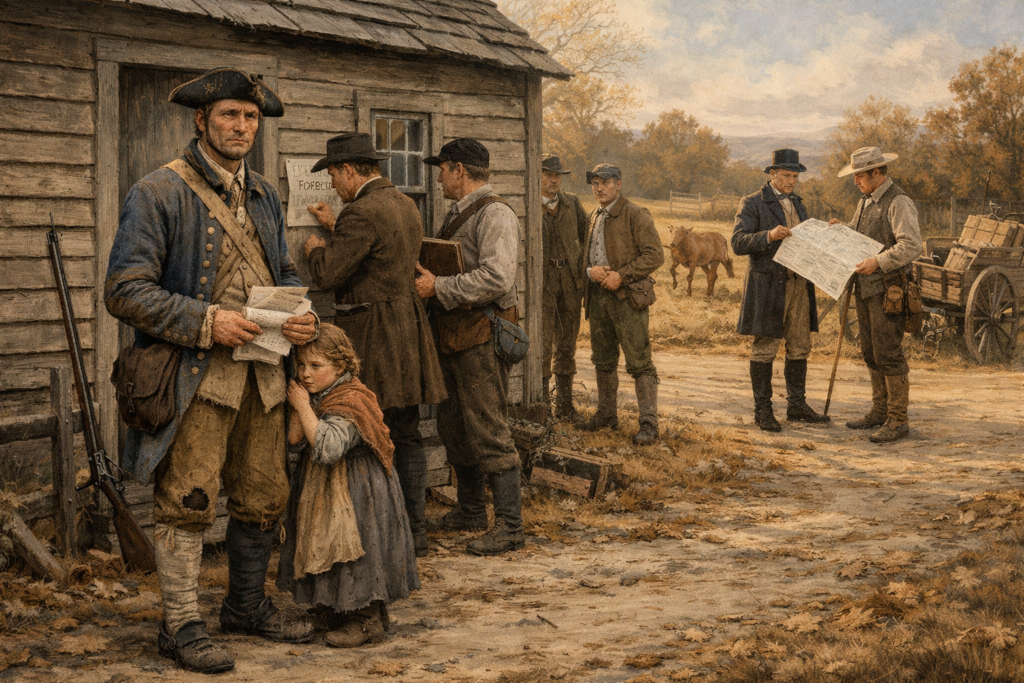
The story of how the Continental Army’s veterans were treated after winning independence reads like a betrayal. These men had endured Valley Forge, fought without pay — — often without food or clothing — risking everything for a revolution that promised liberty and opportunity. What many received instead was financial ruin, confiscated land, and a harsh lesson in how political power and economic class determined who really benefited from their shared sacrifice.

The Pay That Never Came

Let me start with the most basic broken promise — pay. Continental soldiers were supposed to receive regular wages, but the Continental Congress lacked the power to tax and relied on increasingly worthless paper money. By war’s end, many soldiers hadn’t been paid in months or even years. When they finally returned home, they carried IOUs called “certificates of indebtedness” rather than actual money.

The wealthy and well-connected quickly figured out how to profit from this situation. Speculators traveled through rural areas buying up these certificates from desperate veterans at pennies on the dollar. The soldiers, facing immediate debts and no income, often had no choice but to sell. When the federal government eventually redeemed these certificates at full value under Alexander Hamilton’s financial plan in the 1790s, it was the speculators who made fortunes, not the men who’d earned the money, suffered and won the revolution.

Pensions: Promised to Officers, Denied to Enlisted Men

The pension situation revealed the class divisions even more starkly. In 1780, Congress promised officers who served until the war’s end a pension of half-pay for life. Common soldiers received no such promise. When the officers’ pensions proved controversial and expensive, Congress “commuted” them in 1783 to a one-time payment of five years’ full pay — still nothing for the enlisted men who’d done most of the fighting and dying.

It wasn’t until 1818 that Congress finally created a pension for Continental Army privates, and even then, only for those in “reduced circumstances” — meaning you had to prove you were poor to get it. The maximum annual pension was $96, hardly generous compensation for years of service. Soldiers who had served in militia units were generally excluded. By contrast, officers had already received their commutations decades earlier and often held positions of economic and political power.

Land Bounties: Another Empty Promise

Land bounties represented another avenue where common soldiers got shortchanged. Various colonies and Congress promised land grants to encourage enlistment — typically 100 acres for privates, scaling up to 500+ acres for officers and thousands of acres for generals. But there were problems from the start.

First, much of the promised land was in frontier territories like the Ohio Country, which remained dangerous and largely unsurveyed for years after the war. Second, the process of claiming your land required navigating bureaucratic systems, paying surveying fees, and sometimes traveling hundreds of miles. Third, the land often turned out to be of poor quality or in disputed areas. The average veteran with little education, almost no money and absolutely no political influence was seldom ever able to take advantage of the land bounty.

Predictably, speculators moved in. They bought up land bounty warrants from soldiers who lacked the resources or knowledge to claim them directly. One study found that in Virginia, which promised the most generous bounties, speculators ultimately controlled vast tracts while many veterans received little or nothing.

The Tax Collector Cometh

Here’s where the story gets particularly cruel. While veterans struggled with unpaid wages and unredeemed promises, the new state governments faced their own financial crises. They’d accumulated massive war debts and needed revenue. Their solution? Property taxes.

In Massachusetts, the legislature imposed heavy taxes payable in hard currency — gold or silver — which almost nobody in rural areas possessed. The same certificates of indebtedness that soldiers were given by the government weren’t accepted for tax payments, even though the state owed them that money. Veterans who’d sold their certificates for a fraction of their value to pay immediate debts now faced tax bills they couldn’t pay. These policies were not accidental side effects; they reflected the priorities of creditor classes concentrated in coastal towns, who preferred regressive property taxes over inflation or debt relief for veterans.

When farmers and veterans couldn’t pay these taxes, local sheriffs seized and auctioned their property. In many cases, the buyers at these auctions were the same merchant elites and speculators who’d bought up the certificates. This wasn’t accidental — it was a systematic transfer of wealth and property from those who’d fought the war to those who’d financed it, avoided personal risk and now controlled state governments. Elites did not overtly confiscate veterans’ land through direct political targeting; instead, they relied on neutral-looking fiscal policy — strict tax collection, aggressive debt enforcement, and courts unsympathetic to insolvency — to transfer property legally. The effect was unmistakable; veterans who fought for independence lost their farms to satisfy debts incurred during or immediately after their service, while wealthier investors accumulated land and made financial gains.

The Massachusetts situation became particularly egregious. Between 1784 and 1786, thousands of foreclosure proceedings were filed. Veterans who’d survived the war returned to find themselves losing their farms and, in some cases, being thrown into debtors’ prison.
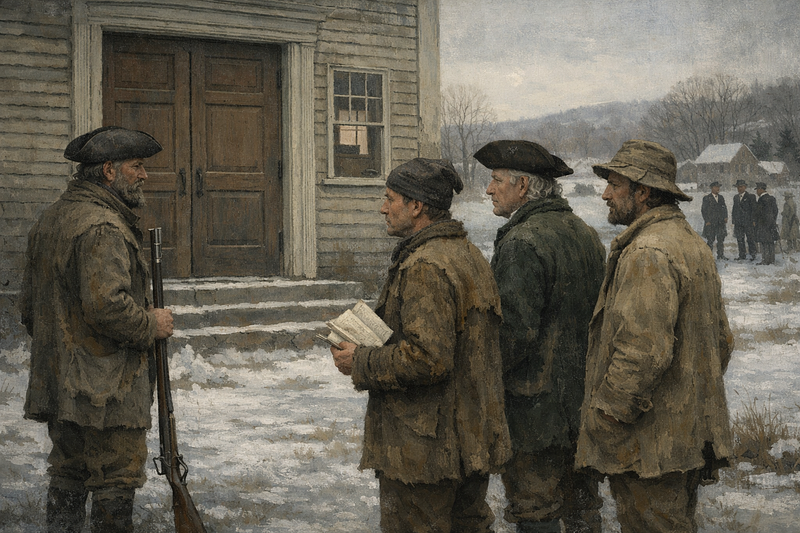
Shays’ Rebellion: When Veterans Fought Back

The breaking point came in 1786 with Shays’ Rebellion in Massachusetts. Daniel Shays, a former Continental Army captain, led hundreds of veterans and farmers in an armed uprising against foreclosures and debt courts. They physically prevented courts from sitting, trying to halt the cascade of farm seizures. They represented the soldiers who’d won independence and felt the new government had betrayed them.

The rebellion was suppressed by a militia funded by wealthy Boston merchants and creditors as the state treasury lacked ready cash to pay troops. This was a clear demonstration of how thoroughly economic power had concentrated among elites and sent shockwaves through the political establishment. To many rural farmers the suppression looked like creditors hiring an army to enforce unjust laws against impoverished veterans.

Interestingly, most of the rebels received pardons, and Massachusetts did eventually reduce some taxes and reform debtor laws. But the damage was done, and the pattern had been established.

The Class Divide in Revolutionary Benefits

The broader pattern is unmistakable. Officers, who were generally drawn from propertied classes, received pensions and larger land bounties, had the education and connections to navigate bureaucratic systems, and often held the political power to protect their interests. Common soldiers, usually farmers or laborers, received certificates they had to sell at a loss, faced tax collectors seizing their property, and had little political voice. They disproportionately bore the costs of the new fiscal order through unpaid or depreciated wages, lack of early pension support, and vulnerability to foreclosure, while many of the tangible financial benefits of their service migrated to wealthier elites.

Some historians argue this wasn’t conspiracy but circumstance — that the new nation genuinely lacked resources and that markets naturally concentrated certificates in wealthier hands. There’s some truth to this. The Continental Congress was genuinely broke, and state governments faced real fiscal crises.

But the specific policy choices — redeeming certificates from speculators at full value while rejecting them for tax payments, creating pensions for officers but not enlisted men, setting tax policies that required hard currency that poor farmers didn’t have — these weren’t inevitable, they were a choice. They reflected the interests of those who held power in state legislatures and the Continental Congress.

The Long Echo

The treatment of Continental Army veterans established patterns that would echo through American history: promises made during wartime, broken during peace; benefits flowing more generously to officers than enlisted men. Economic and political elites using legal mechanisms to transfer wealth from those who fought the revolution to those who financed it.

The first genuinely “service‑based” pension law that broadly covered surviving Continental soldiers — regardless of disability — did not arrive until 1818, three decades after the war, and it initially required proof of indigence, effectively screening out better‑off veterans and stigmatizing poorer ones. Not until the 1832 act did Congress move toward full pay for life for many surviving officers and enlisted men — including militia — based on length of service alone. But large numbers of veterans had already lost their farms, spent years in poverty, or died. The benefits came too late and too meagerly to undo decades of hardship. They were owed better.

Illustrations generated by author using ChatGPT.

Sources:

Mount Vernon Digital Encyclopedia — Veterans of the Revolutionary War https://www.mountvernon.org/library/digitalhistory/digital-encyclopedia/article/veterans-of-the-revolutionary-war/

This George Washington Presidential Library resource provides an overview of how Continental Army veterans were treated, including details on certificate speculation, payment issues, and the general economic struggles veterans faced after the war.

National Archives — Revolutionary War Pension Files https://www.archives.gov/research/military/war-of-1812/pension-files

While this link references War of 1812 pensions, the National Archives maintains extensive documentation on Revolutionary War pensions as well. The site explains the evolution of pension systems and eligibility requirements, including the 1818 act that finally provided pensions to enlisted men who could prove poverty.

Encyclopedia Virginia — Military Bounty Lands https://www.encyclopediavirginia.org/entries/military-bounty-lands/

This scholarly resource details Virginia’s land bounty system, which was among the most extensive. It documents how these bounties were promised, the challenges veterans faced in claiming them, and how speculators ultimately acquired much of the promised land.

American Battlefield Trust — Shays’ Rebellion https://www.battlefields.org/learn/articles/shays-rebellion

This article provides context on the 1786–1787 uprising in Massachusetts, explaining the economic conditions that drove veterans to armed resistance, the foreclosure crisis, and the rebellion’s impact on constitutional debates.

Massachusetts Historical Society — Shays’ Rebellion https://www.masshist.org/features/shays/

Russel Vought and the War on the Environment

Recently, there’s been a a lot of attention given to RFK Jr. and his war on vaccines. More potentially devastating than that is Russel Vought and his war on environmental science.
Russell Vought hasn’t exactly been working in the shadows. As the director of the Office of Management and Budget since February 2025, he’s been methodically implementing what he outlined years earlier in Project 2025—a blueprint that treats climate science not as settled fact, but as what he calls “climate fanaticism.” The result is undeniably the most aggressive dismantling of environmental protections in American history.
The Man Behind the Plan
Vought’s resume tells you everything you need to know about his approach. He served as OMB director during Trump’s first term, wrote a key chapter of Project 2025 focusing on consolidating presidential power, and has openly stated his goal is to make federal bureaucrats feel “traumatized” when they come to work. His philosophy on climate policy specifically? He’s called climate change a side effect of building the modern world—something to manage through deregulation rather than prevention.
Attacking the Foundation: The Endangerment Finding
The centerpiece of Vought’s climate strategy targets what EPA Administrator Lee Zeldin has called “the holy grail of the climate change religion”—the 2009 Endangerment Finding. This Obama-era scientific determination concluded that six greenhouse gases (carbon dioxide, methane, nitrous oxide, hydrofluorocarbons, perfluorocarbons, and sulfur hexafluoride) endanger public health and welfare. It sounds technical, but it’s the legal foundation for virtually every federal climate regulation enacted over the past fifteen years.
 Just last week EPA Administrator Zeldin announced that the Trump administration has repealed this finding. This action strips EPA’s authority to regulate greenhouse gas emissions under the Clean Air Act—meaning no more federal limits on power plant emissions, no vehicle fuel economy standards tied to climate concerns, and no requirement for industries to measure or report their emissions.  White House press secretary Karoline Leavitt said this action “will be the largest deregulatory action in American history.”
More than 1,000 scientists warned Zeldin not to take this step, and the Environmental Protection Network cautioned last year that repealing the finding would cause “tens of thousands of additional premature deaths due to pollution exposure” and would spark “accelerated climate destabilization.”  Abigail Dillen president of the nonprofit law firm Earthjustice said “there is no way to reconcile EPA’s decision with the law, the science and the reality of the disasters that are hitting us harder every year.” She further said they expect to see the Trump administration in court.  Obviously, the science is less important to Trump, Zeldin and Vought than the politics.
The Thirty-One Targets
In March 2025, Zeldin announced what he proudly called “the greatest day of deregulation in American history”—a plan to roll back or reconsider 31 key environmental rules covering everything from clean air to water quality. The list reads like a regulatory hit parade, including vehicle emission standards (designed to encourage electric vehicles), power plant pollution limits, methane regulations for oil and gas operations, and even particulate matter standards that protect against respiratory disease.
The vehicle standards are particularly revealing. The transportation sector is America’s largest source of greenhouse gas emissions, and the Biden-era rules were crafted to nudge automakers toward producing more electric vehicles. At Vought’s direction, the EPA is now reconsidering these, with Zeldin arguing they “regulate out of existence” segments of the economy and cost Americans “a lot of money.”
Gutting the Science Infrastructure
Vought’s agenda extends beyond specific regulations to the institutions that produce climate science itself. In Project 2025, he proposed abolishing the Office of Domestic Climate Policy and suggested the president should refuse to accept federal scientific research like the U.S. National Climate Assessment (NCA). The NCA, published every few years, involves hundreds of scientists examining how climate change is transforming the United States—research that informs everything from building codes to insurance policies.
According to reporting from E&E News in January, Vought wants the White House to exert tighter control over the next NCA, potentially elevating perspectives from climate deniers and industry representatives while excluding contributions made during the Biden administration.  This is a plan that has been in the works for years. Vought reportedly participated in a White House meeting during Trump’s first term where officials discussed firing the scientists working on the assessment.
The National Oceanic and Atmospheric Administration (NOAA) has also been targeted. In February 2025, about 800 NOAA employees—responsible for weather forecasting, climate monitoring, fisheries management, and marine research were fired. Project 2025 had proposed breaking up NOAA entirely, and concerned staff members have already begun a scramble to preserve massive amounts of climate data in case the agency is dismantled.
Budget Cuts as Policy
Vought’s Center for Renewing America has proposed eliminating the Department of Energy’s Office of Energy Efficiency and Renewable Energy, the EPA’s environmental justice fund, and the Low Income Home Energy Assistance Program. During the first Trump administration, Vought oversaw budgets proposing EPA cuts as steep as 31%—reducing the agency to funding levels not seen in decades. In a 2023 speech, he explained the logic bluntly: “We want their funding to be shut down so that the EPA can’t do all of the rules against our energy industry because they have no bandwidth financially to do so.”
This isn’t just about climate, it is also about fairness and the recognition that environmental policies have had a predominately negative effect on low income areas. EPA has cancelled 400 environmental justice grants, closed environmental justice offices at all 10 regional offices, and put the director of the $27 billion Greenhouse Gas Reduction Fund on administrative leave. The fund had been financing local economic development projects aimed at lowering energy prices and reducing emissions.
Eliminating Climate Considerations from Government
Perhaps more insidious than the high-profile rollbacks are the procedural changes that make climate considerations disappear from federal decision-making. In February, Jeffrey Clark—acting administrator of the Office of Information and Regulatory Affairs (OIRA) under Vought’s OMB—directed federal agencies to stop using the “social cost of carbon” in their analyses. This metric calculates the dollar value of damage caused by one ton of carbon pollution, allowing agencies to accurately assess whether regulations produce net benefits or defects for society.
Vought has also directed agencies to establish sunset dates for environmental regulations—essentially automatic expiration dates after which rules stop being enforced unless renewed. For existing regulations, the sunset comes after one year; for new ones, within five years. The stated goal is forcing agencies to continuously justify their rules, but the practical effect is creating a perpetual cycle of regulatory uncertainty.
The Real-World Stakes
The timing of these rollbacks offers a grim irony. As Vought was pushing to weaken the National Climate Assessment in January 2025, the Eaton and Palisades fires were devastating Los Angeles—exactly the type of climate-intensified disaster the assessment is designed to help communities prepare for. The administration’s response? Energy Secretary Chris Wright described climate change as “a side effect of building the modern world” at an industry conference.
An analysis by Energy Innovation, a nonpartisan think tank, found that Project 2025’s proposals to gut federal policies encouraging renewable electricity and electric vehicles would increase U.S. household spending on fuel and utilities by about $240 per year over the next five years. That’s before accounting for the health costs of increased air pollution or the economic damage from unmitigated climate change.
Environmental groups have vowed to challenge these changes in court, and the legal battles will likely stretch on for years. The D.C. Circuit Court of Appeals will hear many cases initially, though the Supreme Court will probably issue final decisions. Legal experts note that while Trump’s EPA moved with unprecedented speed on proposals in 2025, finalizing these rules through the required regulatory process will take much longer. As of December, none of the major climate rule repeals had been submitted to OMB for final review, partly due to what EPA called a 43-day government shutdown (which EPA blamed on Democrats, though the characterization is widely disputed).
What Makes This Different
Previous administrations have certainly rolled back environmental regulations, but Vought’s approach differs in both scope and philosophy. Rather than tweaking specific rules or relaxing enforcement, he’s systematically attacking the scientific and legal foundations that make climate regulation possible. It’s the difference between turning down the thermostat and ripping out the entire heating system.
The Environmental Defense Fund, which rarely comments on political appointees, strongly opposed Vought’s confirmation, with Executive Director Amanda Leland stating: “Russ Vought has made clear his contempt for the people working every day to ensure their fellow Americans have clean air, clean water and a safer climate.”
Looking Forward
Whether Vought’s vision becomes permanent depends largely on how courts rule on these changes. The 2007 Supreme Court decision in Massachusetts v. EPA established that the agency has authority to regulate greenhouse gases as air pollutants under the Clean Air Act—the very authority Vought is now trying to eliminate. Overturning established precedent is difficult, though the current Supreme Court’s composition makes the outcome possible, if not likely.
What we’re witnessing is essentially a test of whether one administration can permanently disable the federal government’s capacity to address climate change, or if these changes represent a temporary setback that future administrations can reverse. The stakes couldn’t be higher: atmospheric CO2 concentrations continue rising, global temperatures are breaking records, and climate-related disasters are becoming more frequent and severe. Nothing less than the future of our way of life is at stake. We must take action now.
 
Full disclosure: my undergraduate degree is in meteorology, but I would never call myself a meteorologist since I have never worked in the field. But I still maintain an interest, from both a meteorological and a medical perspective. The Grump Doc is never lacking in opinions.
 
Illustration generated by author using Midjourney.
 
Sources:
Lisa Friedman and Maxine Joselow, “Trump Allies Near ‘Total Victory’ in Wiping Out U.S. Climate Regulation,” New York Times, Feb. 9, 2026.[nytimes +1]
Lisa Friedman, “The Conservative Activists Behind One of Trump’s Biggest Climate Moves,” New York Times, Feb. 10, 2026.[nytimes +1]
Bob Sussman, “The Anti-Climate Fanaticism of the Second Trump Term (Part 1: The Purge of Climate from All Federal Programs),” Environmental Law Institute, May 7, 2025.[eli]
U.S. Environmental Protection Agency, “Trump EPA Kicks Off Formal Reconsideration of Endangerment Finding,” EPA News Release, Mar. 13, 2025.[epa]
Trump’s Climate and Clean Energy Rollback Tracker, Act On Climate/NRDC coalition, updated Jan. 11, 2026.[actonclimate]
“Trump to Repeal Landmark Climate Finding in Huge Regulatory Rollback,” Wall Street Journal, Feb. 9, 2026.[wsj]
Valerie Volcovici, “Trump Set to Repeal Landmark Climate Finding in Huge Regulatory Rollback,” Reuters, Feb. 9, 2026.[reuters]
Alex Guillén, “Trump EPA to Take Its Biggest Swing Yet Against Climate Change Rules,” Politico, Feb. 10, 2026.[politico]
“EPA Urges White House to Strike Down Landmark Climate Finding,” Washington Post, Feb. 26, 2025.[washingtonpost]
“Trump Allies Near ‘Total Victory’ in Wiping Out U.S. Climate Regulation,” Seattle Times reprint, Feb. 10, 2026.[seattletimes]
“Trump Wants to Dismantle Key Climate Research Hub in Colorado,” Earth.org, Dec. 17, 2025.[earth]
“Vought Says National Science Foundation to Break Up Federal Climate Research Center,” The Hill, Dec. 17, 2025.[thehill]
Rachel Cleetus, “One Year of the Trump Administration’s All-Out Assault on Climate and Clean Energy,” Union of Concerned Scientists, Jan. 13, 2026.[ucs]
Environmental Protection Network, “Environmental Protection Network Speaks Out Against Vought Cabinet Consideration,” Nov. 20, 2024.[environmentalprotectionnetwork]
“From Disavowal to Delivery: The Trump Administration’s Rapid Implementation of Project 2025 on Public Lands,” Center for Western Priorities, Jan. 28, 2026.[westernpriorities]
“Russ Vought Nominated for Office of Management and Budget Director,” Environmental Defense Fund statement, Mar. 6, 2025.[edf]
“Project 2025,” Heritage Foundation/Project 2025 backgrounder (as summarized in the Project 2025 Wikipedia entry).[wikipedia]
“EPA to repeal finding that serves as basis for climate change,” The Associated Press, Matthew Daly
https://vitalsigns.edf.org/story/trump-nominee-and-project-2025-architect-russell-vought-has-drastic-plans-reshape-america
https://en.wikipedia.org/wiki/Russell_Vought
https://www.commondreams.org/news/warnings-of-permanent-damage-to-people-and-planet-as-trump-epa-set-to-repeal-key-climate-rule
https://www.eenews.net/articles/trump-team-takes-aim-at-crown-jewel-of-us-climate-research/
https://www.epa.gov/newsreleases/epa-launches-biggest-deregulatory-action-us-history
https://www.pbs.org/newshour/nation/trump-administration-moves-to-repeal-epa-rule-that-allows-climate-regulation
https://www.scientificamerican.com/article/trump-epa-unveils-aggressive-plans-to-dismantle-climate-regulation/
https://www.bloomberg.com/news/articles/2026-02-10/trump-s-epa-to-scrap-landmark-emissions-policy-in-major-rollback​​​​​​​​​​​​​​​​


When They Knew: How the Fossil Fuel Industry Buried Its Own Climate Science

The story begins not with climate deniers casting doubt on new science, but with something far more troubling: companies conducting rigorous research, understanding exactly what their products would do to the planet, and then spending decades lying to the public. They treated science as an internal planning tool and then deployed public relations, front groups, and “manufactured doubt” to delay regulation and protect profits.

The Oil Industry’s Own Scientists Saw It Coming

In 1977, a scientist named James Black stood before Exxon’s management committee with an uncomfortable message. According to internal documents later uncovered by investigative journalists, Black told executives that burning fossil fuels was increasing atmospheric carbon dioxide, and that continually rising CO2 levels would increase global temperatures by two to three degrees—a projection that is still consistent with today’s scientific consensus. He warned that we had a window of just five to ten years before “hard decisions regarding changes in energy strategies might become critical”.

What happened next is remarkable for its precision. Throughout the late 1970s and 1980s, Exxon assembled what one scientist called “a credible scientific team” to investigate the climate question. They launched ambitious projects, including outfitting a supertanker with custom instruments to measure how oceans absorbed CO2—one of the most pressing scientific questions of the era. A 2023 Harvard study analyzing Exxon’s internal climate projections from 1977 to 2003 found they predicted global warming with what researchers called “shocking skill and accuracy.” Specifically, the company projected 0.20 degrees Centigrade of warming per decade, with a margin of error of just 0.04 degrees—a forecast that has proven largely correct.

Exxon wasn’t alone. Shell produced a confidential 1988 report titled “The Greenhouse Effect” that warned of climate changes “larger than any that have occurred over the last 12,000 years,” including destructive floods and mass migrations. The report revealed Shell had been running an internal climate science program since 1981. In one striking document from 1986, Shell predicted that fossil fuel emissions would cause changes “the greatest in recorded history”.

Even industry groups understood what was coming. In 1980, the American Petroleum Institute (API) invited Stanford scientist John Laurmann to brief oil company representatives at its secret “CO2 and Climate Task Force”. His presentation, now public, warned that continued fossil fuel use would be “barely noticeable” by 2005 but by the 2060s would have “globally catastrophic effects.” That same year, the API called on governments to triple coal production worldwide, publicly insisting there would be no negative consequences.

The Coal Industry Knew Even Earlier

If anything, the coal industry understood the problem first. A 1966 article in the trade publication Mining Congress Journal by James Garvey, president of Bituminous Coal Research Inc., explicitly discussed how continued coal consumption would increase atmospheric temperatures and cause “vast changes in the climates of the earth.” A combustion engineer from Peabody Coal, now the world’s largest coal company, acknowledged in the same publication that the industry was “buying time” before air pollution regulations would force action.

This 1966 evidence is particularly damning because it predates widespread public awareness by decades. The coal industry didn’t stumble into climate denial—they entered it with full knowledge of what they were obscuring.

Major coal interests also had early awareness that carbon emissions posed regulatory and market risks, particularly for coal‑fired electricity, and they participated in joint industry research and strategy discussions about climate change in the 1980s and 1990s. At the same time, coal associations helped create public campaigns such as the Information Council for the Environment (ICE—even then a disturbing acronym), whose internal planning documents explicitly set an objective to “reposition global warming as theory (not fact)” and to target specific demographic groups with tailored doubt‑based messages.

According to a report from the Union of Concerned Scientists, these efforts often relied on “grassroots” fronts, advertising, and even forged constituent letters to legislators to undermine support for climate policy and to counter the conclusions of mainstream climate science, which even the companies’ own experts did not refute.

What They Said Publicly

The contrast between private knowledge and public statements is stark. While Exxon scientists were building sophisticated climate models internally, the company’s public messaging emphasized uncertainty. In a 1997 speech, Exxon CEO Lee Raymond told an audience at the World Petroleum Conference: “Let’s agree there’s a lot we really don’t know about how climate change will change in the 21st century and beyond”.  They spread messaging that emphasized uncertainty, framed global warming as just a “theory,” and highlighted supposed flaws in climate models, even as their own scientists were using those models to make precise projections. The company and allied trade associations supported think tanks and advocacy groups such as Citizens For Sound Science, that questioned if human activity was responsible for warming and opposed binding limits on emissions, producing a stark discrepancy between internal scientific knowledge and external communication.

In 1989, Exxon helped create the Global Climate Coalition—despite its environmental sounding name, the organization worked to cast doubt on climate science and block clean energy legislation throughout the 1990s. Electric utilities and coal‑linked organizations joined this coalition to systematically attack climate scientists and lobby to weaken or stall international agreements like the Kyoto Protocol, despite internal recognition that greenhouse gases were driving warming.

Internal API documents from a 1998 meeting reveal an explicit strategy to “ensure that a majority of the American public… recognizes that significant uncertainties exist in climate science”.

In 1991, Shell produced a film, “Climate of Concern,” which stated that human driven—as opposed to greenhouse gas driven—climate change was happening “at a rate faster than at any time since the end of the ice age” and warned of extreme weather, flooding, famine, and climate refugees.  They understood the science but tried to shift the blame.

According to a 2013 Drexel University study, between 2003 and 2010 alone, approximately $558 million was distributed to about 100 climate change denial organizations. Greenpeace reports that Exxon alone spent more than $30 million on think tanks promoting climate denial.

The Tobacco Playbook

The parallels to Big Tobacco’s strategy are not coincidental—they’re intentional. Research by the Center for International Environmental Law uncovered more than 100 documents from the Tobacco Industry Archives showing that oil and tobacco companies not only used the same PR firms and research institutes, but often the same individual researchers. The connection goes back to at least the 1950s.  A report published in Scientific American suggests the oil and tobacco industries both hired the PR firm Hill & Knowlton Inc. as early as 1956.

A 1969 internal memo from R.J. Reynolds Tobacco Company stated plainly: “Doubt is our product since it is the best means of competing with the ‘body of fact’ that exists in the mind of the general public”. This became the template. Create uncertainty. Emphasize what isn’t known rather than what is. Fund research that casts doubt. Attack the credibility of independent scientists. They formed organizations with scientific-sounding names that existed primarily to muddy the waters.

In one particularly brazen example, a 2015 presentation by Cloud Peak Energy executive Richard Reavey titled “Survival Is Victory: Lessons From the Tobacco Wars,” explicitly coached coal executives on how to apply tobacco industry tactics.

What makes the fossil fuel case particularly egregious is the temporal dimension. These weren’t companies caught off-guard by emerging science. They funded the research. They understood the findings. Their own scientists urged action. A 1978 Exxon memo noted this could be “the kind of opportunity we are looking for to have Exxon technology, management and leadership resources put into the context of a project aimed at benefitting mankind”.

Instead, when oil prices collapsed in the mid-1980s, Exxon pivoted from conducting climate research to funding climate denial. By the late 1980s, according to reporting by InsideClimate News, Exxon “curtailed its carbon dioxide research” and “worked instead at the forefront of climate denial”.

Where We Stand Now

Across the oil, gas, and coal industries, there is not a genuine scientific dispute inside companies but a divergence between what in‑house experts knew and what corporate leaders chose to communicate to the public and policymakers. This divergence mirrors the tobacco industry’s long‑running use of organized doubt. In both arenas, industry actors treated early recognition of harm as a legal and political threat and responded by investing in campaigns to confuse, delay, and reframe the science rather than addressing the risks their own research had identified.

The evidence trail has led to legal action. More than 20 cities, counties, and states have filed lawsuits against fossil fuel companies for damages caused by climate change, arguing the industry knowingly deceived the public. The European Parliament held hearings in 2019 on climate denial by ExxonMobil and other actors. The hashtags #ExxonKnew, #ShellKnew, and #TotalKnew have become rallying cries for accountability.

Senator Sheldon Whitehouse has explicitly compared the fossil fuel industry’s actions to the tobacco racketeering case that ultimately held cigarette makers accountable. As he noted in a Senate speech, the elements of a civil racketeering case are straightforward: defendants conducted an enterprise with a pattern of racketeering activity.

The difference between the tobacco and fossil fuel cases may be one of scale. As researchers Naomi Oreskes and Erik Conway documented in their book Merchants of Doubt, both industries worked to obscure truth for profit. But while tobacco kills individuals, climate change threatens entire ecosystems and future generations.  The time to act is now.

Sources:

Scientific American – “Exxon Knew about Climate Change Almost 40 Years Ago”
https://www.scientificamerican.com/article/exxon-knew-about-climate-change-almost-40-years-ago/
 
Harvard Gazette – Harvard-led analysis finds ExxonMobil internal research accurately predicted climate change
https://news.harvard.edu/gazette/story/2023/01/harvard-led-analysis-finds-exxonmobil-internal-research-accurately-predicted-climate-change/
 
InsideClimate News – Exxon’s Own Research Confirmed Fossil Fuels’ Role in Global Warming Decades Ago
https://insideclimatenews.org/news/02052024/from-the-archive-exxon-research-global-warming/
 
PBS Frontline – Investigation Finds Exxon Ignored Its Own Early Climate Change Warnings
https://www.pbs.org/wgbh/frontline/article/investigation-finds-exxon-ignored-its-own-early-climate-change-warnings/
 
NPR – Exxon climate predictions were accurate decades ago. Still it sowed doubt
https://www.npr.org/2023/01/12/1148376084/exxon-climate-predictions-were-accurate-decades-ago-still-it-sowed-doubt
 
Science (journal) – Assessing ExxonMobil’s global warming projections
https://www.science.org/doi/10.1126/science.abk0063
 
Climate Investigations Center – Shell Climate Documents
https://climateinvestigations.org/shell-oil-climate-documents/
 
The Conversation – What Big Oil knew about climate change, in its own words
https://theconversation.com/what-big-oil-knew-about-climate-change-in-its-own-words-170642
 
ScienceAlert – The Coal Industry Was Well Aware of Climate Change Predictions Over 50 Years Ago
https://www.sciencealert.com/coal-industry-knew-about-climate-change-in-the-60s-damning-revelations-show
 
The Intercept – A Major Coal Company Went Bust. Its Bankruptcy Filing Shows That It Was Funding Climate Change Denialism
https://theintercept.com/2019/05/16/coal-industry-climate-change-denial-cloud-peak-energy/
 
Center for International Environmental Law – Big Oil Denial Playbook Revealed by New Documents
https://www.ciel.org/news/oil-tobacco-denial-playbook/
 
Wikipedia – Tobacco industry playbook
https://en.wikipedia.org/wiki/Tobacco_industry_playbook
 
Scientific American – Tobacco and Oil Industries Used Same Researchers to Sway Public
https://www.scientificamerican.com/article/tobacco-and-oil-industries-used-same-researchers-to-sway-public1/
 
Environmental Health (journal) – The science of spin: targeted strategies to manufacture doubt with detrimental effects on environmental and public health
https://link.springer.com/article/10.1186/s12940-021-00723-0
 
Senator Sheldon Whitehouse – Time to Wake Up: Climate Denial Recalls Tobacco Racketeering
https://www.whitehouse.senate.gov/news/speeches/time-to-wake-up-climate-denial-recalls-tobacco-racketeering/
 
VICE News – Meet the ‘Merchants of Doubt’ Who Sow Confusion about Tobacco Smoke and Climate Change
https://www.vice.com/en/article/meet-the-merchants-of-doubt-who-sow-confusion-about-tobacco-smoke-and-climate-change/
 
Union of Concerned Scientists – The Climate Deception Dossiers
https://www.ucs.org/sites/default/files/attach/2015/07/The-Climate-Deception-Dossiers.pdf
 
 
Illustration generated by author using ChatGPT.


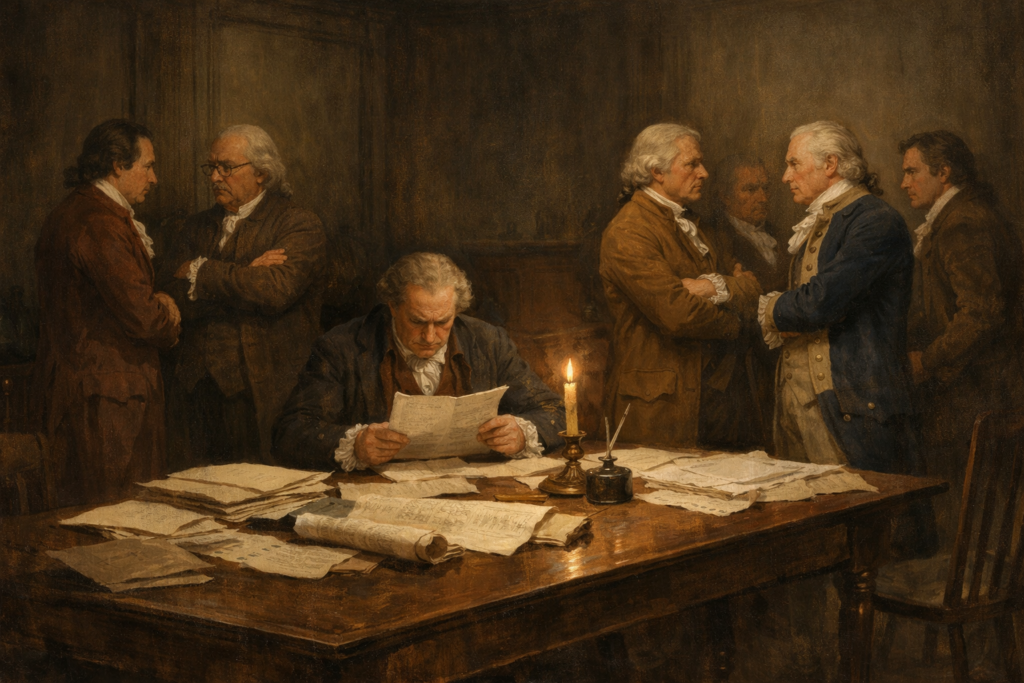
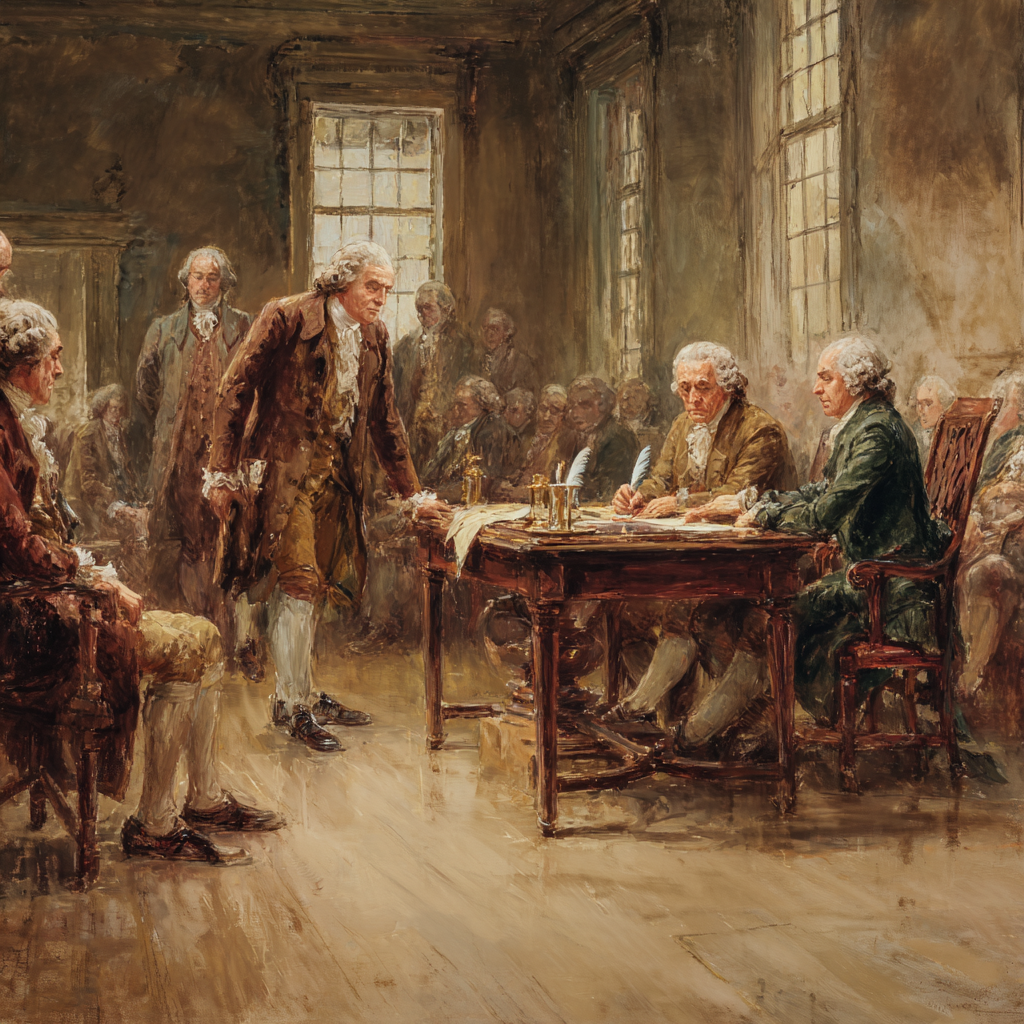
The Founding Feuds: When America’s Heroes Couldn’t Stand Each Other

The mythology of the founding fathers often portrays them as a harmonious band of brothers united in noble purpose. The reality was far messier—these brilliant, ambitious men engaged in bitter personal feuds that sometimes threatened the very republic they were creating.  In some ways, the American revolution was as much of a battle of egos as it was a war between King and colonists.

The Revolutionary War Years: Hancock, Adams, and Washington’s Critics

The tensions began even before independence was declared. John Hancock and Samuel Adams, both Massachusetts firebrands, developed a rivalry that simmered throughout the Revolution. Adams, the older political strategist, had been the dominant figure in Boston’s resistance movement. When Hancock—wealthy, vain, and eager for glory—was elected president of the Continental Congress in 1775, the austere Adams felt his protégé had grown too big for his britches. Hancock’s request for a leave of absence from the presidency of Congress in 1777 coupled with his desire for an honorific military escort home, struck Adams as a relapse into vanity. Adams even opposed a resolution of thanks for Hancock’s service, signaling open estrangement. Their relationship continued to deteriorate to the point where they barely spoke, with Adams privately mocking Hancock’s pretensions and Hancock using his position to undercut Adams politically.

The choice of Washington as commander sparked its own controversies. John Adams had nominated Washington, partly to unite the colonies by giving Virginia the top military role. Washington’s command was anything but universally admired and as the war dragged on with mixed results many critics emerged.

After the victory at Saratoga in 1777, General Horatio Gates became the focal point of what’s known as the Conway Cabal—a loose conspiracy aimed at having Gates replace Washington as commander-in-chief. General Thomas Conway wrote disparaging letters about Washington’s military abilities. Some members of Congress, including Samuel Adams, Thomas Mifflin, and Richard Henry Lee, questioned whether Washington’s defensive strategy was too cautious and if his battlefield performance was lacking. Gates himself played a duplicitous game, publicly supporting Washington while privately positioning himself as an alternative.

When Washington discovered the intrigue, his response was characteristically measured but firm.  Rather than lobbying Congress or forming a counter-faction, Washington leaned heavily on reputation and restraint. He continued to communicate respectfully with Congress, emphasizing the army’s needs rather than defending his own position.  Washington did not respond with denunciations or public accusations. Instead, he handled the situation largely behind the scenes. When he learned that Conway had written a critical letter praising Gates, Washington calmly informed him that he was aware of the letter—quoting it verbatim.

The conspiracy collapsed, in part because Washington’s personal reputation with the rank and file and with key political figures proved more resilient than his critics had anticipated. But the episode exposed deep fractures over strategy, leadership, and regional loyalties within the revolutionary coalition.

The Ideological Split: Hamilton vs. Jefferson and Madison

Perhaps the most consequential feud emerged in the 1790s between Alexander Hamilton and Thomas Jefferson, with James Madison eventually siding with Jefferson. This wasn’t just personal animosity—it represented a fundamental disagreement about America’s future.

Hamilton, Washington’s Treasury Secretary, envisioned an industrialized commercial nation with a strong central government, a national bank, and close ties to Britain. Jefferson, the Secretary of State, championed an agrarian republic of small farmers with minimal federal power and friendship with Revolutionary France. Their cabinet meetings became so contentious that Washington had to mediate. Hamilton accused Jefferson of being a dangerous radical who would destroy public credit. Jefferson called Hamilton a monarchist who wanted to recreate British aristocracy in America.

The conflict got personal. Hamilton leaked damaging information about Jefferson to friendly newspapers. Jefferson secretly funded a journalist, James Callender, to attack Hamilton in print. When Hamilton’s extramarital affair with Maria Reynolds became public in 1797, Jefferson’s allies savored every detail. The feud split the nation into the first political parties: Hamilton’s Federalists and Jefferson’s Democratic-Republicans. Madison, once Hamilton’s ally in promoting the Constitution, switched sides completely, becoming Jefferson’s closest political partner and Hamilton’s implacable foe.

The Adams-Jefferson Friendship, Rivalry, and Reconciliation

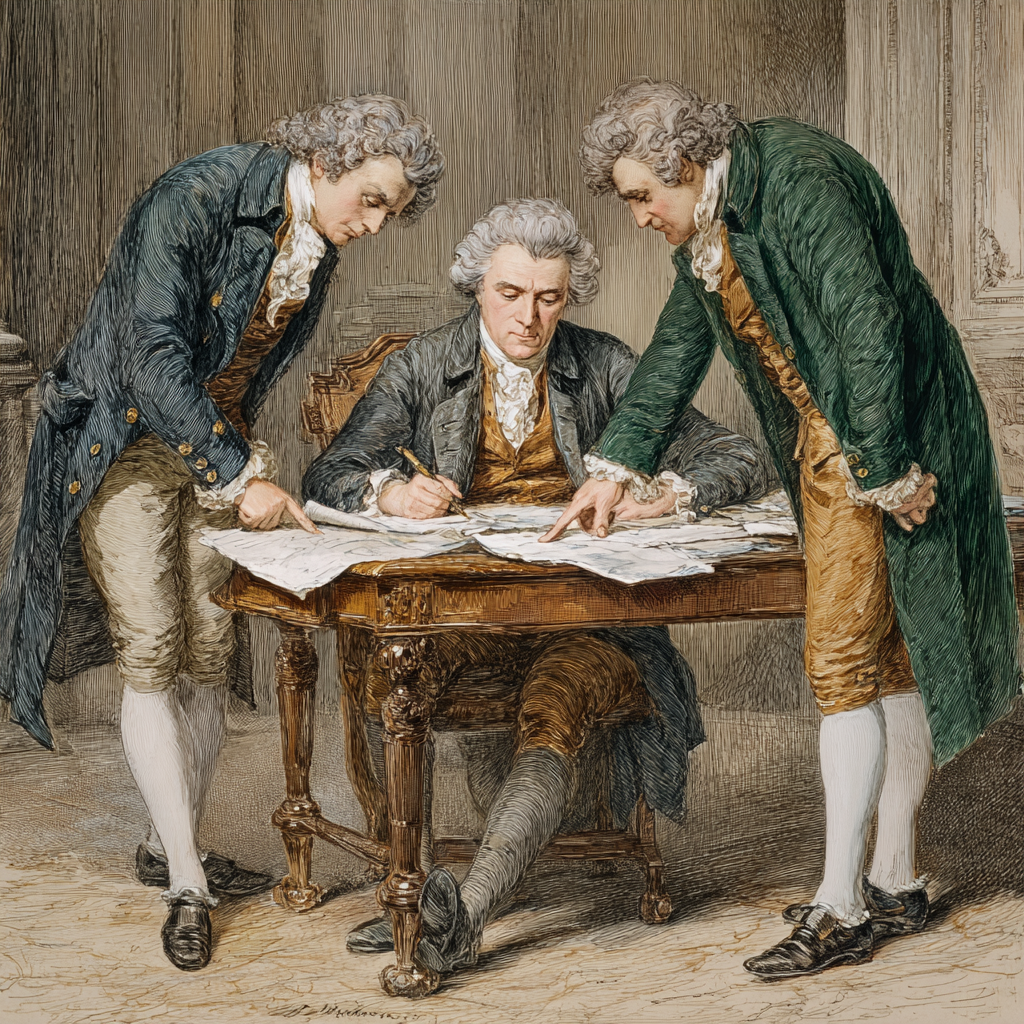
John Adams and Thomas Jefferson experienced one of history’s most remarkable personal relationships. They were close friends during the Revolution, working together in Congress and on the committee to draft the Declaration of Independence (though Jefferson did the actual writing). Both served diplomatic posts in Europe and developed deep mutual respect.

But the election of 1796 turned them into rivals. Adams won the presidency with Jefferson finishing second, making Jefferson vice president under the original constitutional system—imagine your closest competitor becoming your deputy. By the 1800 election, they were bitter enemies. The campaign was vicious, with Jefferson’s supporters calling Adams a “hideous hermaphroditical character” and Adams’s allies claiming Jefferson was an atheist who would destroy Christianity.

Jefferson won in 1800, and the two men didn’t speak for over a decade. Their relationship was so bitter that Adams left Washington early in the morning, before Jefferson’s inauguration. What makes their story extraordinary is the reconciliation. In 1812, mutual friends convinced them to resume correspondence. Their letters over the next fourteen years—158 of them—became one of the great intellectual exchanges in American history, discussing philosophy, politics, and their memories of the Revolution. Both men died on July 4, 1826, the fiftieth anniversary of the Declaration of Independence, with Adams’s last words reportedly being “Thomas Jefferson survives” (though Jefferson had actually died hours earlier).

Franklin vs. Adams: A Clash of Styles

In Paris, the relationship between Benjamin Franklin and John Adams was a tense blend of grudging professional reliance and deep personal irritation, rooted in radically different diplomatic styles and temperaments. Franklin, already a celebrated figure at Versailles, cultivated French support through charm, sociability, and patient maneuvering in salons and at court, a method that infuriated Adams. He equated such “nuances” with evasiveness and preferred direct argument, formal memorandums, and hard‑edged ultimatums. Sharing lodgings outside Paris only intensified Adams’s resentment as he watched Franklin rise late, receive endless visitors, and seemingly mix pleasure with business, leading Adams to complain that nothing would ever get done unless he did it himself, while Franklin privately judged Adams “always an honest man, often a wise one, but sometimes and in some things, absolutely out of his senses.” Their French ally, Foreign Minister Vergennes, reinforced the imbalance by insisting on dealing primarily with Franklin and effectively sidelining Adams in formal diplomacy. This deepened Adams’s sense that Franklin was both overindulged by the French and insufficiently assertive on America’s behalf. Yet despite their mutual loss of respect, the two ultimately cooperated—often uneasily—in the peace negotiations with Britain, and both signatures appear on the 1783 Treaty of Paris, a testament to the way personal feud and shared national purpose coexisted within the American diplomatic mission.

Hamilton and Burr: From Political Rivalry to Fatal Duel

The Hamilton-Burr feud ended in the most dramatic way possible: a duel at Weehawken, New Jersey, on July 11, 1804, where Hamilton was mortally wounded and Burr destroyed his own political career.

Their rivalry had been building for years. Both were New York lawyers and politicians, but Hamilton consistently blocked Burr’s ambitions. When Burr ran for governor of New York in 1804, Hamilton campaigned against him with particular venom, calling Burr dangerous and untrustworthy at a dinner party. When Burr read accounts of Hamilton’s remarks in a newspaper, he demanded an apology. Hamilton refused to apologize or deny the comments, leading to the duel challenge.

What made this especially tragic was that Hamilton’s oldest son, Philip, had been killed in a duel three years earlier defending his father’s honor. Hamilton reportedly planned to withhold his fire, but he either intentionally shot into the air or missed. Burr’s shot struck Hamilton in the abdomen, and he died the next day. Burr was charged with murder in both New York and New Jersey and fled to the South.  Though he later returned to complete his term as vice president, his political career was finished.

Adams vs. Hamilton: The Federalist Crack-Up

One of the most destructive feuds happened within the same party. John Adams and Alexander Hamilton were both Federalists, but their relationship became poisonous during Adams’s presidency (1797-1801).

Hamilton, though not in government, tried to control Adams’s cabinet from behind the scenes. When Adams pursued peace negotiations with France (the “Quasi-War” with France was raging), Hamilton wanted war. Adams discovered that several of his cabinet members were more loyal to Hamilton than to him and fired them. In the 1800 election, Hamilton wrote a fifty-four-page pamphlet attacking Adams’s character and fitness for office—extraordinary since they were in the same party. The pamphlet was meant for limited circulation among Federalist leaders, but Jefferson’s allies got hold of it and published it widely, devastating both Adams’s re-election chances and Hamilton’s reputation. The feud helped Jefferson win and essentially destroyed the Federalist Party.

Washington and Jefferson: The Unacknowledged Tension

While Washington and Jefferson never had an open feud, their relationship cooled significantly during Washington’s presidency. Jefferson, as Secretary of State, increasingly opposed the administration’s policies, particularly Hamilton’s financial program. When Washington supported the Jay Treaty with Britain in 1795—which Jefferson saw as a betrayal of France and Republican principles—Jefferson became convinced Washington had fallen under Hamilton’s spell.

Jefferson resigned from the cabinet in 1793, partly from policy disagreements but also from discomfort with what he saw as Washington’s monarchical tendencies (the formal receptions and the ceremonial aspects of the presidency). Washington, in turn, came to view Jefferson as disloyal, especially when he learned Jefferson had been secretly funding attacks on the administration in opposition newspapers and had even put a leading critic on the federal payroll. By the time Washington delivered his Farewell Address in 1796, warning against political parties and foreign entanglements, many saw it as a rebuke of Jefferson’s philosophy. They maintained outward courtesy, but their warm relationship never recovered.

Why These Feuds Mattered

These weren’t just personal squabbles—they shaped American democracy in profound ways. The Hamilton-Jefferson rivalry created our two-party system (despite Washington’s warnings). The Adams-Hamilton split showed that parties could fracture from within. The Adams-Jefferson reconciliation demonstrated that political enemies could find common ground after leaving power.

The founding fathers were human, with all the ambition, pride, jealousy, and pettiness that entails. They fought over power, principles, and personal slights. What’s remarkable isn’t that they agreed on everything—they clearly didn’t—but that despite their bitter divisions, they created a system robust enough to survive their feuds. The Constitution itself, with its checks and balances, almost seems designed to accommodate such disagreements, ensuring that no single person or faction could dominate.

SOURCES

  1. National Archives – Founders Online

https://founders.archives.gov

2.   Massachusetts Historical Society – Adams-Jefferson Letters

https://www.masshist.org/publications/adams-jefferson

       3.    Founders Online – Hamilton’s Letter Concerning John Adams

https://founders.archives.gov/documents/Hamilton/01-25-02-0110

       4.    Gilder Lehrman Institute – Hamilton and Jefferson

https://www.gilderlehrman.org/history-resources/spotlight-primary-source/alexander-hamilton-and-thomas-jefferson

       5.    National Park Service – The Conway Cabal

https://www.nps.gov/articles/000/the-conway-cabal.htm

       6.    American Battlefield Trust – Hamilton-Burr Duel

https://www.battlefields.org/learn/articles/hamilton-burr-duel

        7.   Mount Vernon – Thomas Jefferson

https://www.mountvernon.org/library/digitalhistory/digital-encyclopedia/article/thomas-jefferson

        8.   Monticello – Thomas Jefferson Encyclopedia

https://www.monticello.org/research-education/thomas-jefferson-encyclopedia

        9.   Library of Congress – John Adams Papers

https://www.loc.gov/collections/john-adams-papers

10. Joseph Ellis – “Founding Brothers: The Revolutionary Generation”

https://www.pulitzer.org/winners/joseph-j-ellis

Illustration generated by author using ChatGPT.

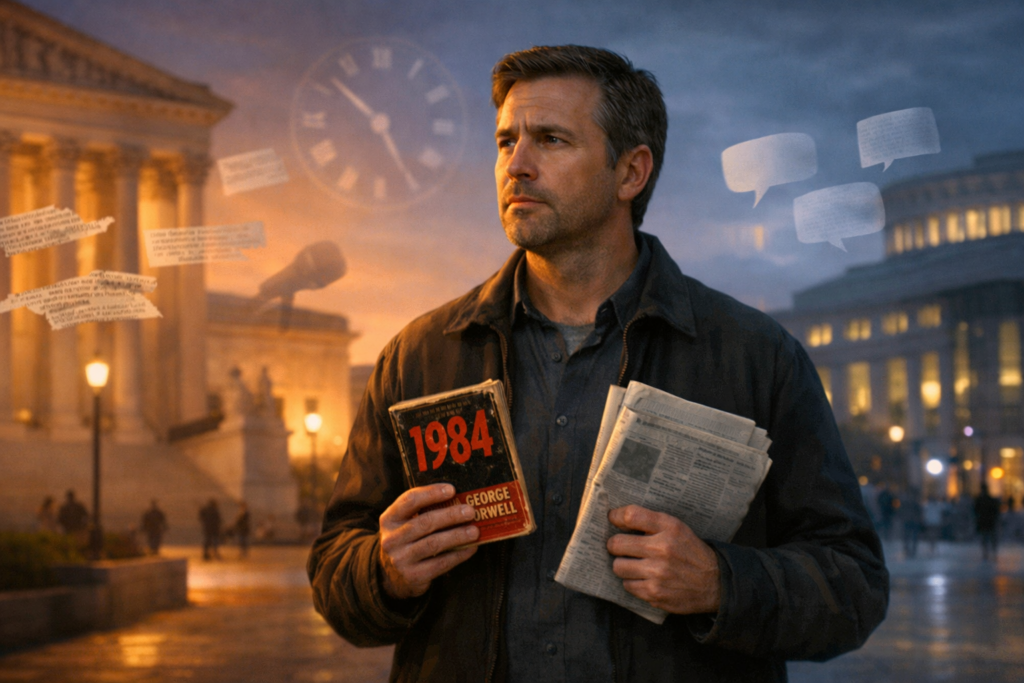
Assessing the Trump-Orwell Comparisons: Warning, Not Prophecy

The comparison between the Trump administration and George Orwell’s dystopian works has recently become one of the most prevalent political metaphors. one I’ve used myself. Following Trump’s second inauguration in January 2025, sales of 1984 surged once again on Amazon’s bestseller lists, just as they did during his first term.

These comparisons are rhetorically powerful, but their accuracy depends on how literally Orwell is read and how carefully distinctions are drawn between authoritarian warning signs and fully realized totalitarian systems. But how accurate are the comparisons? Let me walk you through the key parallels, the evidence supporting them, and the critical questions we should be asking.

Understanding Orwell’s Core Themes

Before diving into the comparisons, it’s worth revisiting what Orwell was actually warning us about. In 1984, published in 1949, Orwell depicted a totalitarian state where the Party manipulates reality through “Newspeak” (language control), “doublethink” (holding contradictory beliefs), the “memory hole” (historical revision), and constant surveillance by Big Brother. The novel’s famous slogans—”War is Peace, Freedom is Slavery, Ignorance is Strength”—exemplify how the Party inverts the very meaning of words.

Animal Farm, written as an allegory of the Soviet Union under Stalin, traces how a revolutionary movement devolves into dictatorship. The pigs, led by Napoleon, gradually corrupt the founding principles of equality, with Squealer serving as the regime’s propaganda minister who constantly rewrites history and justifies Napoleon’s increasingly authoritarian actions.

The Major Parallels

The most famous early comparison emerged during Trump’s first term when adviser Kellyanne Conway defended false crowd size claims with the phrase “alternative facts.” This triggered the first major 1984 sales spike in 2017. According to multiple sources, critics immediately drew connections to Orwell’s concept of manipulating language to control thought.

In the current administration, commentators have identified several Orwellian language patterns. The administration has restricted use of certain words on government websites—including “female,” “Black,” “gender,” and “sexuality”—reminiscent of how Newspeak aimed to “narrow the range of thought” by eliminating words. An executive order on January 29, 2025, titled “Ending Radical Indoctrination in K-12 Schooling” has been criticized as doublespeak, using the language of educational freedom while actually restricting what can be taught.  Doublespeak has evolved as a way of combining the ideas of newspeak and doublethink.

Perhaps the most concrete parallel involves the systematic deletion of historical content from government websites. The Organization of American Historians condemned the administration’s efforts to “reflect a glorified narrative while suppressing the voices of historically excluded groups”. Specific documented deletions include information about Harriet Tubman, the Tuskegee Airmen (later restored after public outcry), the Enola Gay airplane (accidentally caught in a purge of anything containing “gay”), and nearly 400 books removed from the U.S. Naval Academy library relating to diversity topics. The Smithsonian’s National Museum of American History also removed references to Trump’s impeachments from its “Limits of Presidential Power” exhibit, which critics including Senator Adam Schiff called “Orwellian”.

Trump’s repeated characterization of political opponents as the “enemy from within” and the media as the “enemy of the people” parallels 1984’s Emmanuel Goldstein figure and the ritualized Two Minutes Hate sessions. One analysis suggests Trump leads Americans through “a succession of Two Minute Hates—of freeloading Europeans, prevaricating Panamanians, vile Venezuelans, Black South Africans, corrupt humanitarians, illegal immigrants, and lazy Federal workers”.

Multiple sources document that new White House staff must undergo “loyalty tests” and some face polygraph examinations. Trump’s statement “I need loyalty. I expect loyalty” echoes 1984’s declaration that “There will be no loyalty, except loyalty to the Party”. Within weeks of his second inauguration, Trump dismissed dozens of inspectors general—the internal government watchdogs. According to reports from Politico and Reuters, several have filed lawsuits claiming their removal violated federal law. An executive order titled “Ensuring Accountability for All Agencies” placed previously independent agencies like the SEC and FTC under direct White House supervision.

The Animal Farm Connections

While 1984 gets more attention, Stanford literature professor Alex Woloch argues that Animal Farm might be more relevant because “it traces that sense of a ‘slippery slope'” from democracy to totalitarianism, whereas in 1984 the totalitarian system is already fully established.

There are echoes of Animal Farm in the way populist rhetoric has framed liberals, progressive institutions, and the press as enemies of “the people,” while power was being consolidated within Trump’s narrow leadership circle. Orwell’s pigs do not abandon revolutionary language; they repurpose it. The “ordinary” supporters are exhorted to endure sacrifices and to direct anger at opposing groups, while political insiders consolidate authority and wealth—echoing the pigs’ gradual move into the farmhouse and adoption of human privileges. Critics argue that Trump’s sustained use of grievance-based populism, even while wielding executive power, fits this pattern symbolically if not structurally.

Other parallels being drawn to Animal Farm include Napoleon’s propaganda minister Squealer and the administration’s communication strategy of inverting reality and the gradual corruption of founding principles while maintaining revolutionary rhetoric like “drain the swamp”. They also are scapegoating political opponents and immigrants much as Napoleon blamed Snowball for all problems. They also are taking credit for others’ achievements just as Napoleon did with the other animals’ work. In the novel, Napoleon demands full investigations of Snowball even after discovering he had nothing to do with alleged misdeeds, much as Trump demanded investigations of Hillary Clinton, James Comey, Letitia James, and Jerome Powell while avoiding scrutiny of his own conduct.

As in Orwell’s farm, where the constant invoking of enemies keeps the animals fearful and loyal, the politics of permanent crisis and blame are being used to normalize increasingly aggressive behavior by those in power.

Critical Perspectives and Limitations

These comparisons raise several important concerns that deserve serious consideration. Orwell was writing about actual totalitarian regimes—Stalinist Russia and Nazi Germany—where millions died in purges, gulags, and genocides. The United States in 2026, despite concerning trends, still maintains functioning courts, elections, a free press, and a civil society. Some observers are warning against trivializing real authoritarian regimes by making overstated comparisons.

The Trump administration’s frequent attacks on the press, civil servants, and election administrators do resemble early warning signs Orwell would have recognized—not as proof of totalitarianism, but as a stress test on democratic norms.

Conservative commentators argue that these comparisons are exaggerated partisan attacks that misrepresent Trump’s actions. They point out that some court challenges to administration actions have succeeded, media criticism continues unabated, and political opposition remains robust—none of which would be possible in Orwell’s Oceania. The question becomes whether we’re witnessing isolated, though concerning actions or rather a systematic pattern—what Professor Woloch calls the “slippery slope” question.

One opinion piece suggested Trump’s actions resemble the chaotic, rule-breaking fraternity culture of “Animal House” more than the calculated totalitarianism of Orwell’s works—emphasizing bombast and spectacle over systematic control. This view argues that the MAGA movement is more “Blutonian than Orwellian,” driven by emotional appeals and personality rather than systematic thought control.

Where the Comparisons Are Strongest and Weakest

Based on my analysis, the comparisons appear most accurate in several specific areas. The pattern of language manipulation and redefinition—calling restrictions “freedom” and censorship “transparency”—closely mirrors doublespeak. The documented systematic removal of historical content from government sources directly parallels the memory hole concept. The dismissing of senior officials such as the head of the Bureau of Labor Statistics after an unfavorable jobs report, the wholesale firing of agency inspectors general and signaling that neutral experts should conform to political expectations mirrors the Orwellian demand for loyalty.  The assumption of control of previously independent agencies, and pressure on courts to allow the administration’s consolidation of power have parallels in the total party control. Unleashing ICE agents on the general public and excusing the murder of protesters are chillingly similar to the thought police and the “vaporizing” of citizens in Oceana. Perhaps most strikingly, Trump’s 2018 statement “What you’re seeing and what you’re reading is not what’s happening” nearly quotes Orwell’s line: “The party told you to reject the evidence of your eyes and ears”.

The comparisons are most strained when they overstate the current reality by suggesting America has already become Oceania, while democratic institutions that were lacking completely in Oceania are still functioning in America. Unlike 1984’s Winston, Americans retain significant ability to resist and organize. There is no single state monopoly over information. State and local governments, and civil society remain vigorous and are often hostile to Trump. Additionally, some comparisons conflate authoritarian-sounding rhetoric with actual totalitarian control, which aren’t equivalent.

Speculation: The Trajectory Question

The pattern of actions I’ve documented—systematic information control, loyalty purges, attacks on institutional independence, and explicit statements about seeking a third term—suggests a consistent direction rather than random actions. If these trends continue unchecked, particularly combined with further erosion of electoral integrity, increased prosecution of political opponents through mechanisms like the “Weaponization Working Group,” greater control over media and information, and weakening of judicial independence, then the slide toward authoritarianism could accelerate. As I am writing this article, Trump continues to promote what he calls the “Board of Peace,” a proposed international organization that is an attempt to create a U.S.-led alternative to the United Nations. The scholar Alfred McCoy notes that Trump appears to be pursuing what Orwell described: a world divided into three regional blocs under strongman leaders, with weakened international institutions.

However, several factors may counter this trajectory. Strong civil society and activist movements continue organizing opposition movements. Independent state governments push back against federal overreach and robust legal challenges have blocked numerous executive actions. The free press continues investigative reporting despite attacks. Congressional resistance still exists—even Senator Booker’s 25-hour speech on constitutional abuse entered the Congressional Record as a permanent historical marker.

My speculation is that the most likely outcome is neither complete Orwellian dystopia nor a comfortable return to democratic norms, but rather what political scientists call “competitive authoritarianism” or “illiberal democracy”—where democratic forms persist but are increasingly hollowed out, opposition exists but faces systematic disadvantages, and truth becomes increasingly contested. The key question isn’t whether we’ll replicate 1984 exactly, but whether enough democratic safeguards will hold to prevent sliding further into authoritarianism. One observer standing before a giant banner of Trump’s face in Washington noted that “Orwell’s world isn’t just fiction. It’s a mirror—reflecting what happens when power faces no resistance, when truth bends to loyalty, and when silence becomes the safest response”.

The Bottom Line

The Orwell comparisons aren’t perfect historical analogies, but they’re not baseless partisan rhetoric either. They identify genuine patterns of authoritarian behavior that merit serious attention—the manipulation of language to distort reality, the systematic rewriting of historical narratives, the demand for personal loyalty over institutional integrity, and the rejection of shared factual reality. I am concerned about the increasing use of Nazi inspired phrases and themes by members of the Trump administration. Most recently, Kristy Noam’s use of the phrase “one of us-all of you”. While not a formal written Nazi policy, it reflects their practice when dealing with partisan attacks in occupied countries and can only be viewed as a threat of violence against American citizens.

Whether these patterns represent isolated troubling actions or the beginnings of systematic democratic erosion remains the crucial—and still open—question. As Orwell himself noted, he didn’t write to predict the future but to prevent it. The value of these comparisons may ultimately lie not in their precision as historical parallels, but in their power to alert citizens to concerning trends before they become irreversible.

Key Sources

  • Organization of American Historians statements on historical revisionism
  • Politico and Reuters reporting on inspector general firings
  • The Washington Post and Axios on executive order impacts
  • Stanford Professor Alex Woloch’s analysis in The World (https://theworld.org/stories/2017/01/25/people-are-saying-trumps-government-orwellian-what-does-actually-mean)
  • World Press Institute analysis (https://worldpressinstitute.org/the-orwell-effect-how-2025-america-felt-like-198/)
  • Adam Gopnik, “Orwell’s ‘1984’ and Trump’s America,” The New Yorker, Jan. 26, 2017.
  • “Trump’s America: Rethinking 1984 and Brave New World,” Monthly Review, Sept. 7, 2025.
  • “False or misleading statements by Donald Trump,” Wikipedia (overview of documented falsehoods).
  • “Trump’s Efforts to Control Information Echo, an Authoritarian Playbook,” The New York Times, Aug. 3, 2025.
  • “Trump’s 7 most authoritarian moves so far,” CNN Politics, Aug. 13, 2025.
  • “The Orwellian echoes in Trump’s push for ‘Americanism’ at the Smithsonian,” The Conversation, Aug. 20, 2025.
  • “Everything Is Content for the ‘Clicktatorship’,” WIRED, Jan. 13, 2026.
  • “’Animal Farm’ Perfectly Describes Life in the Era of Donald Trump,” Observer, May 8, 2017.
  • “Ditch the ‘Animal Farm’ Mentality in Resisting Trump Policies,” YES! Magazine, May 8, 2017.

Full disclosure: I recently bought a hat that says “Make Orwell Fiction Again”.

What “Woke” Really Means: A Look at a Loaded Word

Why everyone’s fighting over a word nobody agrees on

Okay, so you’ve probably heard “woke” thrown around about a million times, right? It’s in political debates, online arguments, your uncle’s Facebook rants—basically everywhere. And here’s the weird part: depending on who’s saying it, it either means you’re enlightened or you’re insufferable.

So let’s figure out what’s actually going on with this word.

Where It All Started

Here’s something most people don’t know: “woke” wasn’t invented by social media activists or liberal college students. It goes way back to the 1930s in Black communities, and it meant something straightforward—stay alert to racism and injustice.

The earliest solid example comes from blues musician Lead Belly. In his song “Scottsboro Boys” (about nine Black teenagers falsely accused of rape in Alabama in 1931), he told Black Americans to “stay woke”—basically meaning watch your back, because the system isn’t on your side. This wasn’t abstract philosophy; it was survival advice in the Jim Crow South.

The term hung around in Black culture for decades. It got a boost in 2008 when Erykah Badu used “I stay woke” in her song “Master Teacher,” where it meant something like staying self-aware and questioning the status quo.

But the big explosion happened around 2014 during the Ferguson protests after Michael Brown was killed. Black Lives Matter activists started using “stay woke” to talk about police brutality and systemic racism. It spread through Black Twitter, then got picked up by white progressives showing solidarity with social justice movements. By the late 2010s, it had expanded to cover sexism, LGBTQ+ issues, and pretty much any social inequality you can think of.

And that’s when conservatives started using it as an insult.

The Liberal Take: It’s About Giving a Damn

For progressives, “woke” still carries that original vibe of awareness. According to a 2023 Ipsos poll, 56% of Americans (and 78% of Democrats) said “woke” means “to be informed, educated, and aware of social injustices.”

From this angle, being woke just means you’re paying attention to how race, gender, sexuality, and class affect people’s lives—and you think we should try to make things fairer. It’s not about shaming people; it’s about understanding the experiences of others.

Liberals see it as continuing the work of the civil rights movement—expanding who we empathize with and include. That might mean supporting diversity programs, using inclusive language, or rethinking how we teach history. To them, it’s just what thoughtful people do in a diverse society.

Here’s the Progressive Argument in a Nutshell

The term literally started as self-defense. Progressives argue the problems are real. Being “woke” is about recognizing that bias, inequality, and discrimination still exist. The data back some of this up—there are documented disparities in policing, sentencing, healthcare, and economic opportunity across racial lines. From this view, pointing these things out isn’t being oversensitive; it’s just stating facts.

They also point out that conservatives weaponized the term. They took a word from Black communities about awareness and justice and turned it into an all-purpose insult for anything they don’t like about the left. Some activists call this a “racial dog whistle”—a way to attack justice movements without being explicitly racist.

The concept naturally expanded from racial justice to other inequalities—sexism, LGBTQ+ discrimination, other forms of unfairness. Supporters see this as logical: if you care about one group being treated badly, why wouldn’t you care about others?

And here’s their final point: what’s the alternative? When you dismiss “wokeness,” you’re often dismissing the underlying concerns. Denying that racism still affects American life can become just another way to ignore real problems.

Bottom line from the liberal side: being “woke” means you’ve opened your eyes to how society works differently for different people, and you think we can do better.

The Conservative Take: It’s About Going Too Far

Conservatives see it completely differently. To them, “woke” isn’t about awareness—it’s about excess and control.

They see “wokeness” as an ideology that forces moral conformity and punishes anyone who disagrees. What started as social awareness has turned into censorship and moral bullying. When a professor loses their job over an unpopular opinion or comedy shows get edited for “offensive” jokes, conservatives point and say: “See? This is exactly what we’re talking about.”  To them, “woke” is just the new version of “politically correct”—except worse. It’s intolerance dressed up as virtue.

Here’s the conservative argument in a nutshell:

Wokeness has moved way beyond awareness into something harmful. They argue it creates a “victimhood culture” where status and that benefits come from claiming you’re oppressed rather than from merit or hard work. Instead of fixing injustice, they say it perpetuates it by elevating people based on identity rather than achievement.

They see it as “an intolerant and moralizing ideology” that threatens free speech. In their view, woke culture only allows viewpoints that align with progressive ideology and “cancels” dissenters or labels them “white supremacists.”

Many conservatives deny that structural racism or widespread discrimination still exists in modern America. They attribute unequal outcomes to factors other than bias. They believe America is fundamentally a great country and reject the idea that there is systematic racism or that capitalism can sometimes be unjust.

They also see real harm in certain progressive positions—like the idea that gender is principally a social construct or that children should self-determine their gender. They view these as threats to traditional values and biological reality.

Ultimately, conservatives argue that wokeness is about gaining power through moral intimidation rather than correcting injustice. In their view, the people rejecting wokeness are the real critical thinkers.

The Heart of the Clash

Here’s what makes this so messy: both sides genuinely believe they’re defending what’s right.

Liberals think “woke” means justice and empathy. Conservatives think it means judgment and control. The exact same thing—a company ad featuring diverse families, a school curriculum change, a social movement—can look like progress to one person and propaganda to another.

One person’s enlightenment is literally another person’s indoctrination.

The Word Nobody Wants Anymore

Here’s the ironic part: almost nobody calls themselves “woke” anymore. Like “politically correct” before it, the word has gotten so loaded that it’s frequently used as an insult—even by people who agree with the underlying ideas. The term has been stretched to cover everything from racial awareness to climate activism to gender identity debates, and the more it’s used, the less anyone knows what it truly means.

Recently though, some progressives have started reclaiming the term—you’re beginning to see “WOKE” on protest signs now.

So, Who’s Right?

Maybe both. Maybe neither.

If “woke” means staying aware of injustice and treating people fairly, that’s good. If it means acting morally superior and shutting down disagreement, that’s not. The truth is probably somewhere in the messy middle.

This whole debate tells us more about America than about the word itself. We’ve always struggled with how to balance freedom with fairness, justice with tolerance. “Woke” is just the latest word we’re using to have that same old argument.

The Bottom Line

Whether you love it or hate it, “woke” isn’t going anywhere soon. It captures our national struggle to figure out what awareness and fairness should look like today.

And honestly? Maybe we’d all be better off spending less time arguing about the word and more time talking about the actual values behind it—what’s fair, what’s free speech, what kind of society do we want?

Being “woke” originally meant recognizing systemic prejudices—racial injustice, discrimination, and social inequities many still experience daily. But the term’s become a cultural flashpoint.  Here’s the thing: real progress requires acknowledging both perspectives exist and finding common ground. It’s not about who’s “right”—it’s about building bridges.

 If being truly woke means staying alert to injustice while remaining open to dialogue with those who see things differently, seeking solutions that work for everyone, caring for others, being empathetic and charitable, then call me WOKE.

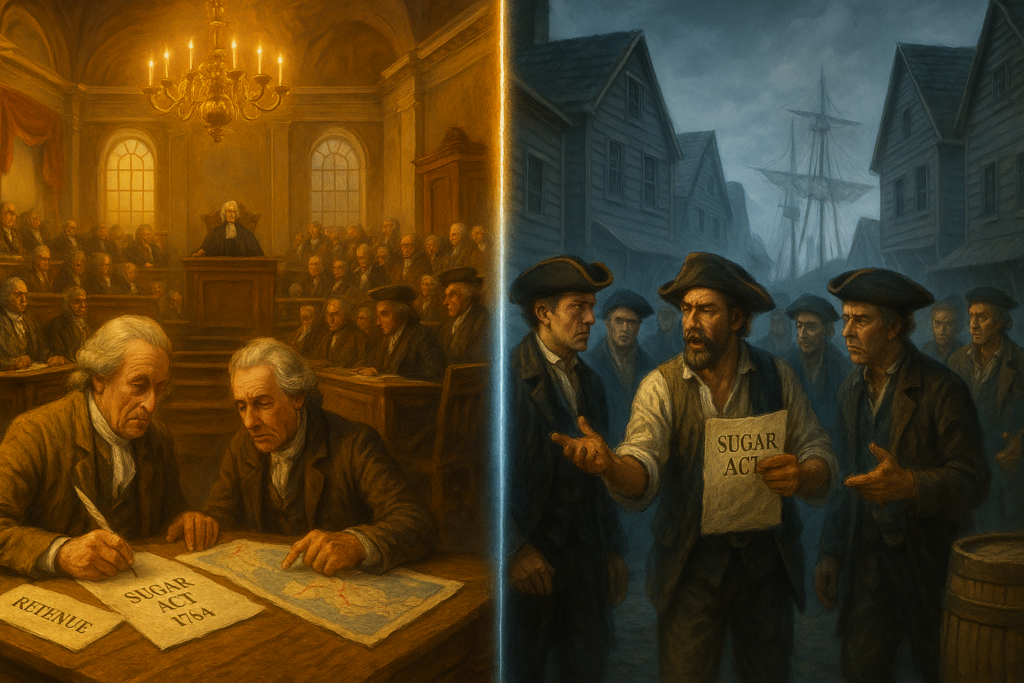
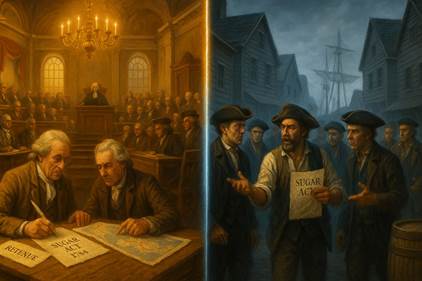
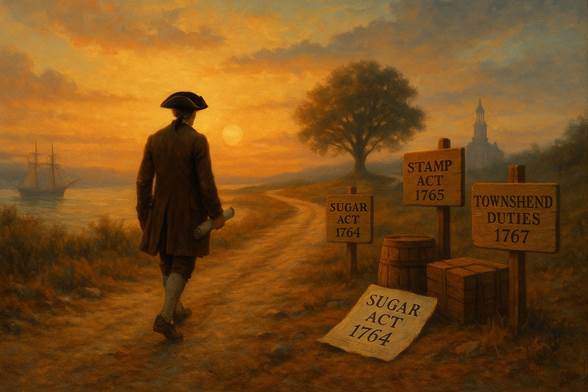
The Sugar Act of 1764: The Tax Cut That Sparked a Revolution

The Sugar Act of 1764: The Tax Cut That Sparked a Revolution

Imagine a time when people rose up in protest of a tax being lowered.  Welcome to the world of the Sugar Act.

The Sugar Act of 1764 stands as one of the most ironic moments in the history of taxation. Here Britain was actually lowering a tax, and yet colonists reacted with a fury that would help spark a revolution. To understanding this paradox, we must understand that this new act represented something far more threatening than any previous attempt by Britain to regulate its American colonies.

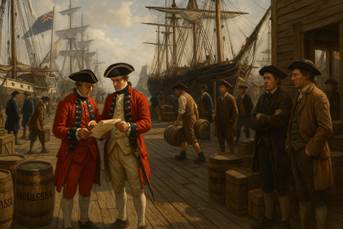
The Old System: Benign Neglect

For decades before 1764, Britain had maintained what historians call “salutary neglect” toward its American colonies. The Molasses Act of 1733 had imposed a steep duty of six pence per gallon on foreign molasses imported into the colonies. On paper, this seemed like a significant burden for the rum-distilling industry, which depended heavily on cheap molasses from French and Spanish Caribbean islands. In practice, though, the tax was rarely collected. Colonial merchants either bribed customs officials or simply smuggled the molasses past them. The British government essentially looked the other way, and everyone profited.

This informal arrangement worked because Britain’s primary interest in the colonies was commercial, not fiscal. The Navigation Acts required colonists to ship certain goods only to Britain and to buy manufactured goods from British merchants, which enriched British traders and manufacturers without requiring aggressive tax collection in America. As long as this system funneled wealth toward London, Parliament didn’t care much about collecting relatively small customs duties across the Atlantic.

Everything Changed in 1763

The Seven Years’ War (which Americans call the French and Indian War) changed this comfortable arrangement entirely. Britain won decisively, driving France out of North America and gaining vast new territories. But victory came with a staggering price tag. Britain’s national debt had nearly doubled to £130 million, and annual interest payments alone consumed half the government’s budget. Meanwhile, Britain now needed to maintain 10,000 troops in North America to defend its expanded empire and manage relations with Native American tribes.

Prime Minister George Grenville faced a political problem. British taxpayers, already heavily burdened, were in no mood for additional taxes. The logic seemed obvious: since the colonies had benefited from the war’s outcome and still required military protection, they should help pay for their own defense. Americans, paid far lower taxes than their counterparts in Britain—by some estimates, British residents paid 26 times more per capita in taxes than colonists did.

What the Act Actually Did

The Sugar Act (officially the American Revenue Act of 1764) approached colonial taxation differently than anything before it. First, it cut the duty on foreign molasses from six pence to three pence per gallon—a 50% reduction. Grenville calculated, reasonably, that merchants might actually pay a three-pence duty rather than risk getting caught smuggling, whereas the six-pence duty had been so high it encouraged universal evasion.

But the Act did far more than adjust molasses duties. It added or increased duties on foreign textiles, coffee, indigo, and wine imported into the colonies. colonialtened regulations around the colonial lumber trade and banned the import of foreign rum entirely. Most significantly, the Act included elaborate provisions designed to strictly enforce these duties for the first time.

The enforcement mechanisms represented the real revolution in British policy. Ship captains now had to post bonds before loading cargo and had to maintain detailed written cargo lists. Naval patrols increased dramatically. Smugglers faced having their ships and cargo seized.

Significantly, the burden of proof was shifted to the accused.  They were required to prove their innocence, a reversal of traditional British justice. Most controversially, accused smugglers would be tried in vice-admiralty courts, which had no juries and whose judges received a cut of any fines levied.

The Paradox of the Lower Tax

So why did colonists react so angrily to a tax cut? The answer reveals the fundamental shift in the British-American relationship that the Sugar Act represented.

First, the issue wasn’t the tax rate. It was the certainty of collection. A six-pence tax that no one paid was infinitely preferable to a three-pence tax rigorously enforced. New England’s rum distilling industry, which employed thousands of distillery workers and sailors, depended on cheap molasses from the French West Indies. Even at three pence per gallon, the tax significantly increased operating costs. Many merchants calculated they couldn’t remain profitable if they had to pay it.

Second, and more importantly, colonists recognized that the Act’s purpose had changed relationships. Previous trade regulations, even if they involved taxes, were ostensibly about regulating commerce within the empire. The Sugar Act openly stated its purpose was raising revenue—the preamble declared it was “just and necessary that a revenue be raised” in America. This might seem like a technical distinction, but to colonists it mattered enormously. British constitutional theory held that subjects could only be taxed by their own elected representatives. Colonists elected representatives to their own assemblies but sent no representatives to Parliament. Trade regulations fell under Parliament’s legitimate authority to govern imperial commerce, but taxation for revenue was something else entirely.

Third, the enforcement mechanisms offended colonial sensibilities about justice and traditional British rights. The vice-admiralty courts denied jury trials, which colonists viewed as a fundamental right of British subjects. Having to prove your innocence rather than being presumed innocent violated another core principle. Customs officials and judges profiting from convictions created obvious incentives for abuse.

Implementation and Colonial Response

The Act took effect in September 1764, and Grenville paired it with an aggressive enforcement campaign. The Royal Navy assigned 27 ships to patrol American waters. Britain appointed new customs officials and gave them instructions to strictly do their jobs rather than accept bribes. Admiralty courts in Halifax, Nova Scotia became particularly notorious.  Colonists had to travel hundreds of miles to defend themselves in a court with no jury and with a judge whose income game from convictions.

Colonists responded immediately. Boston merchants drafted a protest arguing that the act would devastate their trade. They explained that New England’s economy depended on a complex triangular trade: they sold lumber and food to the Caribbean in exchange for molasses, which they distilled into rum, which they sold to Africa for slaves, who were sold to Caribbean plantations for molasses, and the cycle repeated. Taxing molasses would break this chain and impoverish the region.

But the economic arguments quickly evolved into constitutional ones. Lawyer James Otis argued that “taxation without representation is tyranny”—a phrase that would echo through the coming decade. Colonial assemblies began passing resolutions asserting their exclusive right to tax their own constituents. They didn’t deny Parliament’s authority to regulate trade, but they drew a clear line: revenue taxation required representation.

The protests went beyond rhetoric. Colonial merchants organized boycotts of British manufactured goods. Women’s groups pledged to wear homespun cloth rather than buy British textiles. These boycotts caused enough economic pain in Britain that London merchants began lobbying Parliament for relief.

The Road to Revolution

The Sugar Act’s significance extends far beyond its immediate economic impact. It established precedents and patterns that would define the next decade of imperial crisis.

Most fundamentally, it shattered the comfortable arrangement of salutary neglect. Once Britain demonstrated it intended to actively govern and tax the colonies, the relationship could never return to its previous informality. The colonists’ constitutional objections—no taxation without representation, right to jury trials, presumption of innocence—would be repeated with increasing urgency as Parliament passed the Stamp Act (1765), Townshend Acts (1767), and Tea Act (1773).

The Sugar Act also revealed the practical difficulties of governing an empire across 3,000 miles of ocean. The vice-admiralty courts became symbols of distant, unaccountable power. When colonists couldn’t get satisfaction through established legal channels, they increasingly turned to extralegal methods, including committees of correspondence, non-importation agreements, and eventually armed resistance.

Perhaps most importantly, the Sugar Act forced colonists to articulate a political theory that ultimately proved incompatible with continued membership in the British Empire. Once they agreed to the principle that they could only be taxed by their own elected representatives, and that Parliament’s authority over them was limited to trade regulation, the logic led inexorably toward independence. Britain couldn’t accept colonial assemblies as co-equal governing bodies since Parliament claimed supreme authority over all British subjects. The colonists couldn’t accept taxation without representation since they claimed the rights of freeborn Englishmen. These positions couldn’t be reconciled.

The Sugar Act of 1764 represents the point where the British Empire’s century-long success in North America began to unravel. By trying to make the colonies pay a modest share of imperial costs through what seemed like reasonable means, Britain inadvertently set in motion forces that would break the empire apart just twelve years later.

Sources

Mount Vernon Digital Encyclopedia – Sugar Act https://www.mountvernon.org/library/digitalhistory/digital-encyclopedia/article/sugar-act/ Provides overview of the Act’s provisions, economic context, and relationship to British debt from the Seven Years’ War. Includes information on tax burden comparisons between Britain and the colonies.

Britannica – Sugar Act https://www.britannica.com/event/Sugar-Act Covers the specific provisions of the Act, enforcement mechanisms, vice-admiralty courts, and the shift from the Molasses Act of 1733. Useful for technical details of the legislation.

History.com – Sugar Act https://www.history.com/topics/american-revolution/sugar-act Discusses colonial constitutional objections, the “taxation without representation” argument, and the enforcement provisions including burden of proof reversal and jury trial denial.

American Battlefield Trust – Sugar Act https://www.battlefields.org/learn/articles/sugar-act Details colonial response including boycotts, James Otis’s arguments, and the triangular trade system that the Act disrupted.

Additional Recommended Sources

Library of Congress – The Sugar Act https://www.loc.gov/collections/continental-congress-and-constitutional-convention-broadsides/articles-and-essays/continental-congress-broadsides/broadsides-related-to-the-sugar-act/ Primary source collection including contemporary colonial broadsides and protests against the Act.

National Archives – The Sugar Act (Primary Source Text) https://founders.archives.gov/about/Sugar-Act The actual text of the American Revenue Act of 1764, useful for verifying specific provisions and language.

Yale Law School – Avalon Project: Resolutions of the Continental Congress (October 19, 1765) https://avalon.law.yale.edu/18th_century/resolu65.asp Colonial responses to the Sugar and Stamp Acts, showing how the arguments evolved.

Massachusetts Historical Society – James Otis’s Rights of the British Colonies Asserted and Proved (1764) https://www.masshist.org/digitalhistory/revolution/taxation-without-representation Primary source for the “taxation without representation” argument that emerged from Sugar Act opposition.

Colonial Williamsburg Foundation – Sugar Act of 1764 https://www.colonialwilliamsburg.org/learn/deep-dives/sugar-act-1764/ Discusses economic impact on colonial merchants and the rum distilling industry.

Slavery and the Constitutional Convention: The Compromise That Shaped a Nation

When fifty-five delegates gathered in Philadelphia during the sweltering summer of 1787, they faced a challenge that would haunt American politics for the next eight decades. The question wasn’t whether slavery was morally right—many delegates privately acknowledged its evil—but whether a unified nation could exist with slavery as a part of it. That summer, the institution of slavery nearly killed the Constitution before it was born.

The Battle Lines

The convention revealed a stark divide. On one side stood delegates who spoke forcefully against slavery, though they represented a minority voice. Gouverneur Morris of Pennsylvania delivered some of the most scathing condemnations, calling slavery a “nefarious institution” and “the curse of heaven on the states where it prevailed.” According to James Madison’s notes, Morris argued passionately that counting enslaved people for representation would mean that someone “who goes to the Coast of Africa, and in defiance of the most sacred laws of humanity tears away his fellow creatures from their dearest connections & damns them to the most cruel bondages, shall have more votes in a Government instituted for protection of the rights of mankind.”

Luther Martin of Maryland, himself a slaveholder, joined Morris in opposition. He declared the slave trade “inconsistent with the principles of the revolution and dishonorable to the American character.”.  Even George Mason of Virginia, who owned over 200 enslaved people, denounced slavery at the convention, warning that “every master of slaves is born a petty tyrant” and that it would bring “the judgment of heaven on a country.”

The Southern Coalition

Facing these critics stood delegates from the Deep South—primarily South Carolina and Georgia—who made it abundantly clear that protecting slavery was non-negotiable. The South Carolina delegation was particularly unified and aggressive in defending the institution. All four of their delegates—John Rutledge, Charles Pinckney, Charles Cotesworth Pinckney, and Pierce Butler—owned slaves, and they spoke with one voice.

Charles Cotesworth Pinckney stated bluntly: “South Carolina and Georgia cannot do without slaves.” John Rutledge framed it even more starkly: “The true question at present is, whether the Southern States shall or shall not be parties to the Union.” The message was unmistakable—attempt to restrict slavery, and there would be no Constitution and perhaps no United States.

The Southern states didn’t just defend slavery; they threatened to walk out repeatedly. When debates over the slave trade heated up on August 22, delegates from North Carolina, South Carolina, and Georgia stated they would “never be such fools as to give up” their right to import enslaved Africans.  These weren’t idle threats—they were credible enough to force compromise.

The Three-Fifths Compromise

The central flashpoint came over representation in Congress. The new Constitution would base representation on population, but should enslaved people count? Southern states wanted every enslaved person counted fully, which would dramatically increase their congressional power. Northern states argued that enslaved people—who had no rights and couldn’t vote—shouldn’t count at all.

The three-fifths ratio had actually been debated before. Back in 1783, Congress had considered using it to calculate state tax obligations under the Articles of Confederation, though that proposal failed. James Wilson of Pennsylvania resurrected the idea at the Constitutional Convention, suggesting that representation be based on the free population plus three-fifths of “all other persons”—the euphemism they used to avoid writing the word “slave” in the Constitution.

The compromise passed eight states to two. New Jersey and Delaware are generally identified as the states voting against the compromise, New Hampshire is not listed as taking part in the vote. Rhode Island did not send a delegation to the convention and by the time of the vote New York no longer had a functioning delegation.

Though the South ultimately accepted the compromise, it wasn’t what they wanted. Southern delegates had pushed to count enslaved people equally with free persons—but otherwise ignored on all issues of human rights. The three-fifths ratio was a reduction from their demands—a limitation on slave state power, though it still gave them substantial advantage. With about 93% of the nation’s enslaved population concentrated in just five southern states, this compromise increased the South’s congressional delegation by 42%.

James Madison later recognized the compromise’s significance. He wrote after the convention: “It seems now to be pretty well understood that the real difference of interests lies not between the large and small but between the northern and southern states. The institution of slavery and its consequences form the line of discrimination.”

Could the Constitution Have Happened Without It?

Here’s where I need to speculate, but I’m fairly confident in this assessment: no, the Constitution would not have been ratified without the three-fifths compromise and related concessions on slavery.

The evidence is overwhelming. South Carolina and Georgia delegates stated explicitly and repeatedly that they would not join any union that restricted slavery. Alexander Hamilton himself later acknowledged that “no union could possibly have been formed” without the three-fifths compromise. Even delegates who despised slavery, like Roger Sherman of Connecticut, argued it was “better to let the Southern States import slaves than to part with them.”

The convention negotiated three major slavery compromises, all linked. Beyond the three-fifths clause, they agreed Congress couldn’t ban the international slave trade until 1808, and they included the Fugitive Slave Clause requiring the return of escaped enslaved people even from free states. These deals were struck together on August 29, 1787, in what Madison’s notes reveal was a package negotiation between northern and southern delegates.

Without these compromises, the convention would likely have collapsed. The alternative wouldn’t have been a better Constitution—it would have been no Constitution at all, potentially leaving the thirteen states as separate nations or weak confederations. Whether that would have been preferable is a profound counterfactual question that historians still debate.

The Impact on Early American Politics

The three-fifths compromise didn’t just affect one document—it shaped American politics for decades. Its effects were immediate and substantial.

The most famous early example came in the presidential election of 1800. Thomas Jefferson defeated John Adams in what’s often called the “Revolution of 1800″—the first peaceful transfer of power between opposing political parties. But Jefferson’s victory owed directly to the three-fifths compromise. Virginia’s enslaved population gave the state extra electoral votes that proved decisive. Historian Garry Wills has speculated that without these additional slave-state votes, Jefferson would have lost. Pennsylvania had a free population 10% larger than Virginia’s, yet received 20% fewer electoral votes because Virginia’s numbers were inflated by the compromise.

The impact extended far beyond that single election. Research shows the three-fifths clause changed the outcome of over 55% of legislative votes in the Sixth Congress (1799-1801). (The additional southern representatives—about 18 more than their free population warranted—gave the South what became known as the “Slave Power” in Congress.

This power influenced major legislation throughout the antebellum period. The Indian Removal Act of 1830, which forcibly relocated Native Americans to open land for plantation agriculture, passed because of margins provided by these extra southern representatives. The Missouri Compromise, the Kansas-Nebraska Act, and numerous other slavery-related measures bore the fingerprints of this constitutional imbalance.

The compromise also affected Supreme Court appointments and federal patronage. Southern-dominated Congresses ensured pro-slavery justices and policies that protected the institution. The sectional tensions it created led directly to later compromises—the Missouri Compromise of 1820, the Compromise of 1850—each one a temporary bandage on a wound that wouldn’t heal.

By the 1850s, the artificial political power granted to slave states had become intolerable to many northerners. When Abraham Lincoln won the presidency in 1860 without carrying a single southern state, southern political leaders recognized they had lost control of the federal government. Senator Louis Wigfall of Texas complained that non-slaveholding states now controlled Congress and the Electoral College. Ten southern states seceded in large part because they believed the three-fifths compromise no longer protected their interests.

The Bitter Legacy

The framers consciously avoided using the words “slave” or “slavery” in the Constitution, recognizing it would “sully the document.” But the euphemisms fooled no one. They had built slavery into the structure of American government, trading moral principles for political union.

The Civil War finally resolved what the Constitutional Convention had delayed. The Thirteenth Amendment abolished slavery in 1865, but not until 1868 did the Fourteenth Amendment finally strike the three-fifths clause from the Constitution, requiring that representation be based on counting the “whole number of persons” in each state.

Was it worth it? That’s ultimately a question of values. The Constitution created a stronger national government that eventually abolished slavery, but it took 78 years and a war that killed over 600,000 Americans. As Thurgood Marshall noted on the Constitution’s bicentennial, the framers “consented to a document which laid a foundation for the tragic events which were to follow.”

The convention delegates knew what they were doing. They chose union over justice, pragmatism over principle. Whether that choice was necessary, wise, or moral remains one of the most contested questions in American history.

____________________________________________________

Sources

  1. https://www.battlefields.org/learn/articles/slavery-and-constitution
  2. https://en.wikipedia.org/wiki/Luther_Martin
  3. https://schistorynewsletter.substack.com/p/7-october-2024
  4. https://www.americanacorner.com/blog/constitutional-convention-slavery
  5. https://www.nps.gov/articles/000/constitutionalconvention-august22.htm
  6. https://en.wikipedia.org/wiki/Three-fifths_Compromise
  7. https://www.brennancenter.org/our-work/analysis-opinion/electoral-colleges-racist-origins
  8. https://www.gilderlehrman.org/history-resources/teaching-resource/historical-context-constitution-and-slavery
  9. https://www.nps.gov/articles/000/constitutionalconvention-august29.htm
  10. https://www.lwv.org/blog/three-fifths-compromise-and-electoral-college
  11. https://www.aaihs.org/a-compact-for-the-good-of-america-slavery-and-the-three-fifths-compromise-part-ii/

Thomas Jefferson: The Philosopher Who Played Hardball

Here’s the thing about Thomas Jefferson that doesn’t always make it into the history textbooks: the guy who wrote those soaring words about liberty and limited government? He was also one of early America’s most skilled—and sometimes underhanded—political operators.

It’s surprising when you think about it. Jefferson genuinely believed in transparency, virtue in public life, and keeping government small. He wrote beautifully about these ideals. But when it came to actual politics? He played the game as hard as anyone, often using tactics that directly contradicted what he preached.

Jefferson’s public philosophy was straightforward. He thought America should be a nation of independent farmers—regular people who owned their own land and weren’t dependent on anyone else. He worried constantly about concentrated power, whether in government or in the hands of wealthy financiers or merchants. He believed people should be informed and engaged, and that government worked best when it stayed out of people’s lives.

His Declaration of Independence wasn’t just pretty rhetoric—it laid out a genuinely revolutionary idea: governments only have power because people agree to give it to them, and when governments stop serving the people, those people have the right to change things.

The Reality: How Jefferson Actually Operated

Here’s where it gets interesting. While Jefferson was writing about virtue and transparency, he was simultaneously running what today we’d recognize as opposition research, planting stories in the press, and organizing political operations—sometimes against people he was supposed to be working with.

The Freneau Setup: Paying for Attacks

The most blatant example happened in 1791. Jefferson was serving as Secretary of State under George Washington, which meant he was part of the administration. At the same time, he arranged for a guy named Philip Freneau to get a government job—technically as a translator. The real purpose? To give Freneau money to run a newspaper that would relentlessly attack Alexander Hamilton and other Federalists.

Think about that for a second. Jefferson was using his government position to fund media attacks on his own colleagues. When people called him out on it, he basically said, “Who, me? I have nothing to do with what Freneau publishes.” But the evidence shows Jefferson was actively encouraging and directing these attacks.

John Beckley: The Original Campaign Fixer

Jefferson also worked closely with John Beckley, who was essentially America’s first professional political operative. Beckley coordinated messaging, spread information (and sometimes misinformation) about opponents, and helped build the grassroots organization that would eventually become the Democratic-Republican Party.

This wasn’t a gentlemanly debate about ideas. This was organized political warfare—pamphlets, coordinated newspaper campaigns, and opposition research. Jefferson and Jame Madison quietly funded much of this work while maintaining public images as above-the-fray philosophers. We can’t know exactly what Jefferson said in every private conversation with Beckley, but the circumstantial evidence of coordination is convincing.

The Hamilton Rivalry: Ideological War

Jefferson’s conflict with Hamilton was both philosophical and deeply personal. Hamilton wanted a strong federal government, a national bank, and close ties with Britain. Jefferson saw all of this as a betrayal of the Revolution—a step toward creating the same kind of corrupt, elite-dominated system they’d just fought to escape.

But rather than just making his arguments publicly, Jefferson worked behind the scenes to undermine Hamilton’s policies. He encouraged Madison to lead opposition in Congress. He fed stories to friendly newspapers. He coordinated with Republican representatives to block Federalist initiatives.

The philosophical disagreement was real, but Jefferson’s methods were pure political calculation.

Turning on Washington: The Ultimate Betrayal?

Maybe the most damaging thing Jefferson did was secretly working against George Washington while still serving in his cabinet. By Washington’s second term, Jefferson had convinced himself that Washington was being manipulated by Hamilton and moving the country toward monarchy.

 Jefferson stayed in the cabinet, maintaining cordial relations with Washington in person, while privately organizing resistance to administration policies. He encouraged attacks on Washington in the press. He coordinated with opposition leaders. And he did all of this while Washington trusted him as a loyal advisor.

When Washington found out, he was devastated. The betrayal broke their relationship permanently.

The Burr Situation: Using People

Jefferson’s handling of Aaron Burr shows just how pragmatic he could be. Jefferson never really trusted Burr—thought he was too ambitious and unprincipled. But in 1800, when Jefferson needed to win the presidency, Burr was useful for delivering New York’s votes.

After winning, Jefferson kept Burr as vice president but froze him out of any real power. Once Burr’s usefulness ended (especially after he killed Hamilton in that duel), Jefferson completely abandoned him, eventually supporting an unsuccessful prosecution for treason.

Deceiving Congress

Another example of Jefferson’s political manipulation was the Louisiana Purchase. This was a massive land acquisition that doubled the size of the United States. Jefferson knew that under the constitution he had no clear authority to acquire territory for the United States.  He was able to secure the purchase by keeping it secret from both congress and his political opponents until after it was finalized. This allowed him to avoid a debate that could have derailed the deal.  Does this sound familiar?

So, What Do We Make of This?

Here’s the uncomfortable question: Was Jefferson a hypocrite, or was he just being realistic about how politics actually works?  Jefferson’s political manipulation was not always ethical, but it was effective. He was able to use his skills to achieve many of his political goals.

You could argue he was doing what he thought necessary to prevent Hamilton’s vision from taking over—that the ends justified the means. You could also argue that by using underhanded tactics, he corrupted the very democratic processes he claimed to be protecting.

My speculation: I think Jefferson was aware of the contradiction and wrestled with it. His private letters show moments of self-justification and lingering doubt. But ultimately, he kept doing it because he believed his vision for America was too important to lose by playing nice.

The Bottom Line

Thomas Jefferson remains one of our most brilliant political thinkers. But he was also willing to play dirty when he thought the stakes were high enough. That duality—beautiful ideals combined with hardball tactics—might actually make him more relevant today than ever. Because let’s be honest, that tension between principles and pragmatism hasn’t gone away in American politics.

Understanding both sides of Jefferson helps us see that even the founders we most revere weren’t simple heroes. They were complicated people operating in a messy political reality, trying to build something new while fighting over what that something should be.

The evidence for Jefferson’s political maneuvering is extensive and well-established by historians. Some interpretations of his motivations involve educated speculation, but the actions themselves are documented in letters, newspaper archives, and contemporary accounts.​​​​​​​​​​​​​​​​

Reference List

Primary Sources

Founders Online – National Archives https://founders.archives.gov/

  • Digital collection of correspondence and papers from George Washington, Thomas Jefferson, Alexander Hamilton, Benjamin Franklin, John Adams, and James Madison. Essential for Jefferson’s own words and contemporaneous accounts of his political activities.

Library of Congress – Thomas Jefferson Exhibition https://www.loc.gov/exhibits/jefferson/

  • Comprehensive digital exhibition covering Jefferson’s life, philosophy, and political career with original documents and interpretive essays.

Thomas Jefferson Encyclopedia – Monticello https://www.monticello.org/site/research-and-collections/

  • Scholarly resource maintained by the Thomas Jefferson Foundation, covering specific topics including Jefferson’s relationships with Aaron Burr and other political figures.

Secondary Sources – Books

Chernow, Ron. Alexander Hamilton. New York: Penguin Press, 2004.

  • Pulitzer Prize-winning biography that extensively covers the Jefferson-Hamilton rivalry and Jefferson’s behind-the-scenes political maneuvering, including the Freneau affair. Particularly strong on the 1790s conflicts within Washington’s cabinet.

Chernow, Ron. Washington: A Life. New York: Penguin Press, 2010.

  • Provides Washington’s perspective on Jefferson’s activities within his administration and the betrayal Washington felt when learning of Jefferson’s covert opposition.

Ellis, Joseph J. American Sphinx: The Character of Thomas Jefferson. New York: Alfred A. Knopf, 1996.

  • National Book Award winner that explores Jefferson’s contradictions and complexities, particularly the gap between his philosophical writings and political practices.

Ferling, John. Jefferson and Hamilton: The Rivalry That Forged a Nation. New York: Bloomsbury Press, 2013.

  • Detailed examination of the ideological and personal conflict between Jefferson and Hamilton, showing how their struggle shaped early American politics and party formation.

Isenberg, Nancy. Fallen Founder: The Life of Aaron Burr. New York: Penguin Books, 2007.

  • Comprehensive biography of Burr that includes extensive coverage of his complex relationship with Jefferson, from their 1800 alliance through Jefferson’s eventual abandonment of his vice president.

Pasley, Jeffrey L. The Tyranny of Printers: Newspaper Politics in the Early American Republic. Charlottesville: University of Virginia Press, 2001.

  • Scholarly examination of how newspapers and partisan press became political weapons in the 1790s, with detailed coverage of Jefferson’s relationship with Philip Freneau and the National Gazette.

Secondary Sources – Journal Articles and Academic Papers

Sharp, James Roger. “The Journalist as Partisan: The National Gazette and the Origins of the First Party System.” The Virginia Magazine of History and Biography 97, no. 4 (1989): 391-420.

  • Academic analysis of Freneau’s National Gazette and its role in forming political opposition, including Jefferson’s involvement in funding and directing the publication.

Cunningham, Noble E., Jr. “John Beckley: An Early American Party Manager.” The William and Mary Quarterly 13, no. 1 (1956): 40-52.

  • Scholarly examination of Beckley’s role as America’s first professional political operative and his work organizing Jefferson’s political machine.

Historiographical Note

The interpretation of Jefferson’s political behavior has evolved over time. Earlier biographies (pre-1960s) tended to minimize or excuse his behind-the-scenes maneuvering, while more recent scholarship has been willing to examine the contradictions between his philosophy and practice more critically. The works cited above represent current historical consensus based on documentary evidence, though historians continue to debate Jefferson’s motivations and whether his tactics were justified given the political stakes he perceived.

From Reagan Conservative to Social Democrat: A Political Evolution

Political beliefs rarely change overnight. Mine certainly didn’t. My journey from Reagan-era conservatism to social democracy unfolded slowly, shaped less by ideology than by lived experience and an accumulating body of evidence about what actually works.

Morning in America

Like many Americans of my generation, my political awakening came during the Reagan years. The message was optimistic and reassuring: limited government, free markets, individual responsibility, and a strong national defense would restore American greatness. Reagan’s charisma made complex economic ideas feel like common sense. Lower taxes would spur growth. Deregulation would unleash innovation. Markets would reward effort and discipline.

That worldview was personally affirming. Success was earned. Failure reflected poor choices. Government’s role should be narrow—defense, public order, and little else. Social programs, we were told, fostered dependency rather than opportunity. It was a coherent framework, and for a time, it seemed to fit the facts.

Cracks in the Foundation

By the 1990s, inconsistencies began to surface. Economic growth continued, but inequality widened. Entire industrial communities collapsed despite residents working hard and playing by the rules. The benefits of “trickle-down” economics were not trickling very far.

Personal experiences made the abstractions impossible to ignore. Families lost health insurance because of pre-existing conditions. Medical bills pushed insured households into bankruptcy. These outcomes weren’t failures of character; they were failures of systems.

The 2008 financial crisis shattered whatever illusions remained. Financial institutions that preached personal responsibility engaged in reckless speculation, then received massive government bailouts, while homeowners were left to face foreclosure. Like millions of others, I lost nearly half of my retirement savings. The contradiction was glaring: socialism for the wealthy, harsh market discipline for everyone else. Individual responsibility meant little when systemic risk brought down the entire economy.

A Turning Point

Job loss during the Great Recession completed the lesson. Despite qualifications and work history, employment opportunities vanished. Unemployment benefits—once easy to dismiss in theory as handouts—became essential in practice. The bootstrap mythology doesn’t hold up when the floor is pulled away.

This period also exposed the fragility of employer-based healthcare and retirement systems. COBRA coverage was unaffordable. 401(k)s evaporated. The safety net that once seemed excessive suddenly looked inadequate. Meanwhile, countries with stronger social protections weathered the recession better than the United States.

Seeing Other Models

Travel and research broadened my perspective further. Nations like Germany, Denmark, France, and Sweden paired market economies with robust social programs—and consistently outperformed the U.S. on measures of health, social mobility, and life satisfaction.

These were not stagnant, overregulated societies. They were thriving capitalist democracies that simply made different choices about public investment and risk-sharing.

Writers like Joseph Stiglitz and Thomas Piketty documented how concentrated wealth undermines both democracy and long-term growth. Historical evidence showed that America’s most prosperous era—the post-World War II boom—coincided with high marginal tax rates, strong unions, and major public investment.

Healthcare Changed Everything

Healthcare ultimately crystallized my shift. The U.S. spends far more per capita than any other nation yet produces worse outcomes on many basic measures.

As a physician, I watched patients struggle with insurance denials, opaque pricing, and medical debt. Healthcare markets don’t function like normal markets. You can’t comparison shop during a heart attack. When insurers profit by denying care, the system aligns against patients. Medical bankruptcy is virtually unknown in countries with universal coverage—for a reason. We have a system where the major goal of health insurance companies is making a profit for their investors—not providing affordable healthcare to their subscribers. 

Climate and Collective Action

Climate change further exposed the limits of market fundamentalism. Individualism and laissez-faire policies have failed to account for shared environmental costs and long-term consequences. Markets alone cannot price long-term environmental harm or coordinate collective action at the necessary scale. Addressing climate risk requires regulation, public investment, and democratic planning.

What Social Democracy Is—and Isn’t

Social democracy is not the rejection of capitalism. It is regulated capitalism with guardrails—markets where they work well, public systems where markets fail. Healthcare, education, infrastructure, and basic income security perform better with strong public involvement.

This differs from democratic socialism, a distinction I’ve explored elsewhere. Social democracy embraces entrepreneurship and competition while preventing monopoly power, protecting workers, and taxing fairly to fund shared prosperity.

As sociologist Lane Kenworthy notes, the U.S. already has elements of social democracy—Social Security, Medicare, public education—we simply underfund them compared to European nations.

A Pragmatic Conclusion

My evolution wasn’t ideological betrayal; it was pragmatic learning. I adjusted my beliefs based on outcomes, not slogans. Countries with strong social democracies routinely outperform the U.S. on health, mobility, education, and even business competitiveness.

True prosperity requires both entrepreneurial freedom and collective investment. The choice isn’t markets or government—it’s how to balance them intelligently. This lesson took me decades to learn, but the evidence now feels hard to ignore.

References

  1. Federal Reserve History – The Great Recession
    Overview of causes, systemic failures, and economic consequences of the 2007–2009 financial crisis.
    https://www.federalreservehistory.org/essays/great-recession
  2. OECD – Social Protection and Economic Resilience
    Comparative data on how countries with stronger social safety nets performed during economic downturns.
    https://www.oecd.org/economy
  3. World Happiness Report (United Nations / Oxford)
    Cross-national comparisons of well-being, social trust, and economic security.
    https://worldhappiness.report
  4. Joseph Stiglitz – Inequality and Economic Growth (IMF Finance & Development)
    Analysis of how income concentration undermines long-term economic performance and democracy.
    https://www.imf.org/en/Publications/fandd/issues/2019/09/inequality-and-economic-growth-stiglitz
  5. Thomas Piketty – Capital in the Twenty-First Century (Data Companion & Summaries)
    Historical evidence on wealth concentration and taxation in advanced economies.
    https://wid.world
  6. Tax Policy Center – Historical Top Marginal Income Tax Rates
    U.S. tax rate history showing high marginal rates during the post-war economic boom.
    https://www.taxpolicycenter.org/statistics/historical-highest-marginal-income-tax-rates
  7. The Commonwealth Fund – U.S. Health Care from a Global Perspective
    Comparative analysis of health spending, outcomes, and access across developed nations.
    https://www.commonwealthfund.org/publications/issue-briefs/2023/jan/us-health-care-global-perspective-2022
  8. OECD Health Statistics
    International comparisons of healthcare costs, outcomes, and system performance.
    https://www.oecd.org/health/health-data.htm
  9. IPCC Sixth Assessment Report – Synthesis Report
    Scientific consensus on climate change risks and the need for coordinated public action.
    https://www.ipcc.ch/report/ar6/syr
  10. Lane Kenworthy – Social Democratic Capitalism
    Comparative research on social democracy, public investment, and economic performance.
    https://lanekenworthy.net

Page 1 of 2

Powered by WordPress & Theme by Anders Norén