
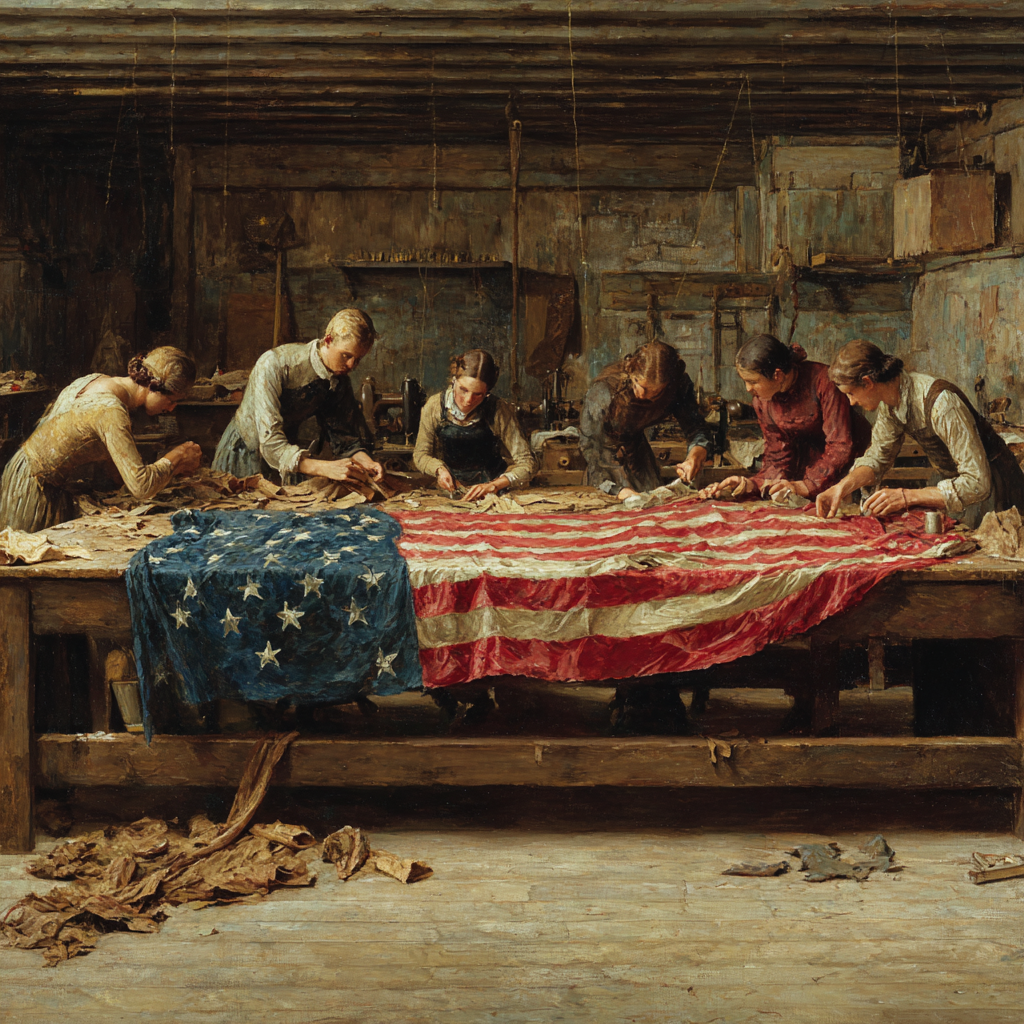
On a steamy June day in 1777, the Continental Congress took a brief break from the monumental task of running a revolution to deal with something that seems surprisingly simple in retrospect: what should the American flag look like? The resolution they passed on June 14th was refreshingly concise, stating that “the flag of the United States be thirteen stripes, alternate red and white; that the union be thirteen stars, white in a blue field, representing a new constellation.”
That poetic phrase about a “new constellation” turned out to be both inspiring and maddeningly vague. Congress didn’t specify how the stars should be arranged, how many points they should have, or even whether the flag should start with a red or white stripe at the top. This ambiguity led to one of the interesting aspects of early American flag history—for decades, no two flags looked exactly alike.
The 1777 resolution came out of Congress’s Marine Committee business, and at least some historians caution that it may have been understood initially as a naval ensign, not a fully standardized “national flag for all uses.”
A Constellation of Designs
The lack of official guidance meant that flag makers exercised considerable artistic freedom. Smithsonian researcher Grace Rogers Cooper found at least 17 different examples of 13-star flags dating from 1779 to around 1796, and flag expert Jeff Bridgman has documented 32 different star arrangements from the era. Some makers arranged the stars in neat rows, others formed them into a single large star, and still others created elaborate patterns that spelled out “U.S.” or formed other symbolic shapes. An official star pattern would not be specified until 1912 and versions of the 13-star flag remained in ceremonial use until the mid-1800s.
The most famous arrangement, of course, is the Betsy Ross design with its circle of 13 stars. What many people don’t realize is that experts date the earliest known example of this circular pattern to 1792—in a painting by John Trumbull, not on an actual flag from 1776.
Did the Continental Army Actually Use This Flag?
Here’s where things get interesting and a bit murky. The short answer is: not much, and not right away. The Continental Army had been fighting for over two years before Congress even adopted the Stars and Stripes, and by that point, individual regiments had already developed their own distinctive colors and banners. These regimental flags served practical military purposes—they helped units identify each other in the chaos of battle and gave soldiers something to rally around. Additionally, the Continental Army frequently used the Grand Union Flag (13 stripes with a British Union in the canton), which predates the 13-star design.
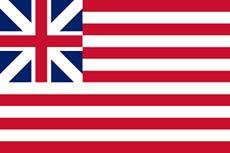
What’s more revealing is a series of letters from 1779—two full years after the Flag Resolution—between George Washington and Richard Peters, Secretary of the Board of War. In these letters, Peters is essentially asking Washington what flag he wants the army to use. This correspondence raises an obvious question: if Congress had settled the flag issue in 1777, why was Washington still trying to figure it out in 1779? The evidence suggests that variations of the 13-star flag were primarily used by the Navy in those early years, while the Army continued to use various regimental standards.
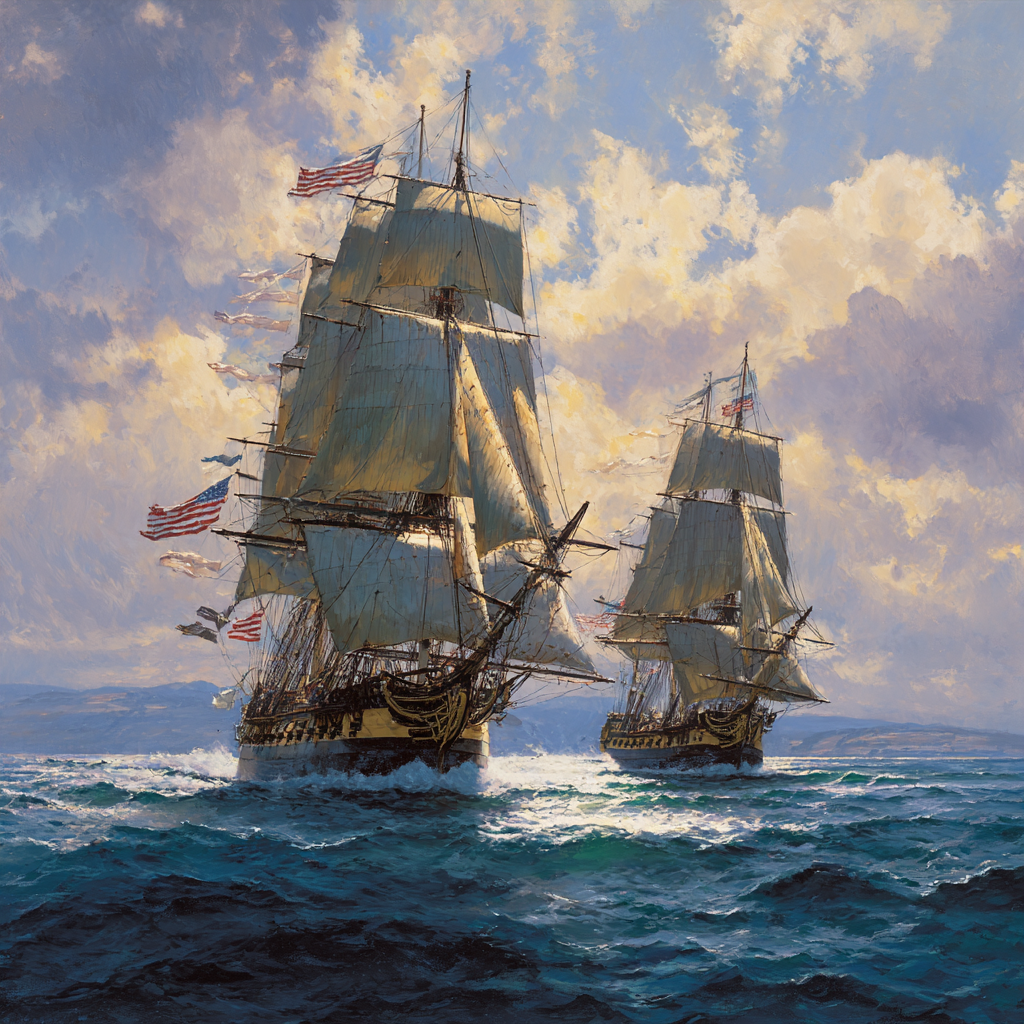
Navy Captain John Manley expressed this confusion perfectly when he wrote in 1779 that the United States “had no national colors” and that each ship simply flew whatever flag the captain preferred. Even as late as 1779, the War Board hadn’t settled on a standard design for the Army. When they finally wrote to Washington for his input, they proposed a flag that included a serpent and numbers representing different states—a design that never caught on.
National “stars and stripes” banners did exist during the late war years and appear in some period art and descriptions, but clear, securely dated 13‑star Army battle flags are rare and often disputed.13‑star flags are better documented in early federal service such as maritime and lighthouse use in the 1790s than they are in Continental Army field service before 1783.
The Betsy Ross Question
Now we come to one of America’s most enduring flag legend. The story is familiar to most Americans: in 1776, George Washington, Robert Morris, and George Ross visited Philadelphia upholsterer Betsy Ross and asked her to sew the first American flag. She suggested changing the six-pointed stars to five-pointed ones, demonstrated her one-snip technique for making a perfect five-pointed star, and she then produced the first Stars and Stripes.
It’s a great story. There’s just one problem: historians have found virtually no documentary evidence to support it. The tale didn’t surface publicly until 1870—nearly a century after the supposed event—when Betsy Ross’s grandson, William Canby, presented it in a speech to the Historical Society of Pennsylvania. Canby relied entirely on family oral history, including affidavits from Ross’s daughter, granddaughter, and other relatives who claimed they had heard Betsy tell the story herself. But Canby himself admitted that his search through official records revealed nothing to corroborate the account.
Historians don’t dispute that Betsy Ross was a real person who did real work. Documentary evidence shows that on May 29, 1777, the Pennsylvania State Navy Board paid her a substantial sum for “making ships colours.” She ran a successful upholstery business and continued making flags for the government for more than 50 years. But as historian Marla Miller puts it, “The flag, like the Revolution it represents, was the work of many hands.” Modern scholars generally view the question not as whether Ross designed the flag—she almost certainly didn’t—but whether she may have been among the many people who produced early flags.
Who Really Designed It?
If not Betsy Ross, then who? The strongest candidate is Francis Hopkinson, the New Jersey delegate to the Continental Congress who also helped design the Great Seal of the United States and early American currency. In 1780, Hopkinson sent Congress a bill requesting payment for his design work, specifically mentioning “the flag of the United States of America.” He likely designed a flag with the stars arranged in rows rather than circles, and his bills for payment submitted to Congress mentioned six-pointed stars rather than the five-pointed ones that became standard.
Unfortunately for Hopkinson, Congress refused to pay him, arguing that he wasn’t the only person on the Navy Committee and therefore shouldn’t receive singular credit or compensation.
The irony is rich: Hopkinson was asking for a quarter cask of wine or £2,700 for designing what would become one of the world’s most recognizable symbols. Congress essentially told him, “Thanks, but we’re not paying.” There’s a lesson about government contracts in there somewhere.
What Survived
Of the hundreds of flags made and carried during the Revolutionary War, only about 30 are known to survive today. These rare artifacts offer fascinating glimpses into how Americans visualized their new nation. The Museum of the American Revolution brought together 17 of these original flags in a 2025 exhibition—the largest gathering of such flags since 1783.
The most significant surviving 13-star flag is probably Washington’s Headquarters Standard, a small blue silk flag measuring about two feet by three feet. It features 13 white, six-pointed stars on a blue field and descended through George Washington’s family with the tradition that it marked the General’s presence on the battlefield throughout the war. Experts consider it the earliest surviving 13-star American flag. Due to light damage, it can only be displayed on special occasions.

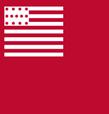
Other surviving flags tell different stories. The Brandywine Flag, used at the September 1777 battle of the same name, is one of the earliest stars and stripes—the flag is red, with a red and white American flag image in the canton.
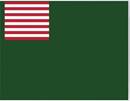
The Dansey Flag, captured from the Delaware militia by a British soldier, was taken to England as a war trophy and remained in his family until 1927. The flag features a green field with 13 alternating red and white stripes in the upper left corner signifying the 13 colonies.
These and other flags weren’t just military equipment—they were powerful symbols that people fought under and, sometimes, died defending.
The Bigger Picture
What makes the story of the 13-star flag so compelling isn’t really about who sewed it or exactly when it first flew. It’s about what the flag represented in an era when the very concept of the United States was still being invented. The June 1777 resolution called for stars forming “a new constellation”—a beautiful metaphor for a new nation finding its place among the powers of the world.
The fact that no two early flags looked exactly alike might seem like a problem from our standardized modern perspective, but it tells us something important about the Revolution itself. Just as the colonies were learning to act as united states while maintaining their individual identities, flag makers across the new nation were interpreting a simple congressional resolution in their own ways, creating variations on a shared theme.
As historian Laurel Thatcher Ulrich points out, there was no “first flag” worth arguing over. The American flag evolved organically, shaped by the practical needs of the Navy, the Army, militias, and civilian flag makers who each contributed to its development. Whether Betsy Ross made one of those early flags or not, her story endures because it captures something Americans want to believe about our origins: that ordinary citizens, working in small shops and homes, helped create the symbols of the new republic.
Sources:
History.com: https://www.history.com/this-day-in-history/june-14/congress-adopts-the-stars-and-stripes
Flags of the World: https://www.crwflags.com/fotw/flags/us-1777.html
Wikipedia Flag of the United States: https://en.wikipedia.org/wiki/Flag_of_the_United_States
Museum of the American Revolution: https://www.amrevmuseum.org/
American Battlefield Trust: https://www.battlefields.org/learn/articles/short-history-united-states-flag
US History (Betsy Ross): https://www.ushistory.org/betsy/
Library of Congress “Today in History”: https://www.loc.gov/item/today-in-history/june-14/
Flag images from Wikimedia Commons
The Freemasons and the Founding Fathers: Secret Society or Just a Really Good Book Club?
By John Turley
On December 14, 2025
In Commentary, History, Politics
You’ve probably heard the whispers—the Freemasons secretly controlled the American Revolution, George Washington wore a special apron, and there’s a hidden pyramid on the dollar bill. It’s the kind of thing that sounds like it came straight from a Nicolas Cage movie. But like most historical legends, the real story is more interesting (and less conspiratorial) than the mythology.
So, what’s the actual deal with Freemasons and America’s founding? Let’s dig in.
What Even Is Freemasonry?
First things first: Freemasonry started out as actual stonemasons’ guilds back in medieval Europe—think guys who built cathedrals sharing trade secrets. But by the early 1700s, it had transformed into something completely different: a philosophical club where educated men gathered to discuss big ideas about morality, reason, and how to be better humans.
The secrecy? That was part of the appeal. Lodges had rituals and passwords, sure, but the core values weren’t exactly hidden. Freemasons were all about Enlightenment thinking—liberty, equality, the pursuit of knowledge. Basically, the kind of stuff that gets you excited if you’re the type who actually enjoys reading philosophy books.
In colonial America, joining a Masonic lodge was a bit like joining an elite networking group today, except instead of swapping business cards, you discussed natural rights and wore fancy aprons. Lawyers, merchants, printers—the educated professional class—flocked to lodges for both the intellectual stimulation and the social connections.
The Founding Fathers: Who Was Actually In?
Let’s separate fact from fiction when it comes to which founders were card-carrying Masons.
Definitely Masons:
George Washington became a Master Mason at 21 in 1753. He wasn’t the most active member—he didn’t attend meetings constantly—but he took it seriously enough to wear his Masonic apron when he laid the cornerstone of the U.S. Capitol in 1793. That’s a pretty public endorsement.
Benjamin Franklin was perhaps the most dedicated Mason among the founders. Initiated in 1731, he eventually became Grand Master of Pennsylvania’s Grand Lodge and helped establish lodges in France during his diplomatic stint. Franklin was basically the poster child for Enlightenment Masonry.
Paul Revere—yes, that Paul Revere—was Grand Master of Massachusetts. His midnight ride gets all the attention, but his Masonic connections were just as important to his Revolutionary activities.
John Hancock also served as Grand Master of Massachusetts. His oversized signature on the Declaration was matched by his outsized commitment to Masonic ideals.
John Marshall, the Chief Justice who shaped American constitutional law, was a dedicated Mason. So was James Monroe, the fifth president.
Here’s a fun stat: of the 56 signers of the Declaration of Independence, at least nine (about 16%) were Masons. Among the 39 who signed the Constitution, roughly thirteen (33%) belonged to the fraternity.
The Maybes:
Thomas Jefferson? Probably not a Mason, despite endless conspiracy theories. There’s no solid evidence of membership, though his Enlightenment philosophy certainly sounded Masonic. His buddy the Marquis de Lafayette was definitely in, which hasn’t helped dispel the rumors.
Alexander Hamilton? The evidence is murky. Some historians think his writings hint at Masonic sympathies, but there’s no membership record.
Definitely Not:
John Adams wasn’t a Mason and was actually skeptical of secret societies. He still believed in many of the same principles, though—virtue, republican government, that sort of thing.
Did the Masons Really Influence the Revolution?
Here’s where it gets interesting. No, the Freemasons didn’t sit around a lodge plotting revolution like some shadowy cabal. But did their ideas and networks matter? Absolutely.
Think about what Masonic lodges provided: a space where educated colonists could meet, discuss radical ideas about natural rights and self-governance, and build trust across colonial boundaries—all without British officials breathing down their necks. These lodges brought together men from different colonies, different religious backgrounds (Anglicans, Quakers, Deists), and different social classes.
The radical part? Inside a lodge, everyone met “on the level.” It didn’t matter if you were born rich or poor—merit and virtue determined your standing. That’s pretty revolutionary thinking in the 1700s when most of the world still believed some people were just born better than others. Sound familiar? “All men are created equal” has a similar ring to it.
Freemasonry also championed religious tolerance. You had to believe in some kind of Supreme Being, but that was it—no specific creed required. This ecumenical approach directly influenced the founders’ commitment to religious freedom and separation of church and state.
The Masonic motto about moving “from darkness to light” through knowledge wasn’t just ritualistic mumbo-jumbo. It reflected genuine Enlightenment belief in reason and progress—the same intellectual current that powered revolutionary thinking.
What About All That Symbolism?
Okay, let’s address the pyramid and the all-seeing eye on the dollar bill. Are they Masonic? Maybe, maybe not. The Great Seal of the United States definitely uses imagery that Masons also used—but so did lots of 18th-century groups drawing on Enlightenment and classical symbolism. The connection is debated among historians.
What’s undeniable is that Masonic culture emphasized architecture and building as metaphors for constructing a just society. When Washington laid that Capitol cornerstone in his Masonic apron, he was making a statement about building something enduring and meaningful.
The “Conspiracy” Question
Let’s be clear: there was no Masonic conspiracy to create America. The fraternity wasn’t even unified—lodges operated independently, and members included both patriots and loyalists. Officially, Masonic organizations tried to stay neutral during the Revolution, though obviously that didn’t work out perfectly when the war split families and communities.
What is true is that many of the Revolution’s most articulate, influential leaders happened to be Masons. And the fraternity’s values—liberty, equality, reason, fraternity—aligned perfectly with revolutionary ideology. Correlation, not conspiracy.
After the Revolution, Freemasonry exploded in popularity. It became associated with the Enlightenment values that had supposedly won the day. Future presidents including Andrew Jackson, James Polk, and Theodore Roosevelt were all Masons. At its 19th-century peak, an estimated one in five American men belonged to a lodge.
What’s the Bottom Line?
The Freemason influence on America’s founding is real, but it’s cultural rather than conspiratorial. The lodges provided a space where Enlightenment ideas could circulate, where colonial leaders could build networks of trust, and where egalitarian principles could be practiced in miniature.
Washington, Franklin, Hancock, and the others weren’t sitting in smoke-filled rooms with secret handshakes planning to overthrow the British crown. They were part of a broader philosophical movement that valued personal improvement, moral virtue, and human rights. The Masonic lodge was one venue—among many—where those ideas took root.
Freemasonry was one tributary feeding into the river of revolutionary thought, along with classical republicanism, British common law, various religious traditions, and plain old grievances about taxes and representation.
The real story is somehow simpler and more fascinating than the conspiracy theories: a bunch of educated colonists joined a fraternity that encouraged them to think big thoughts about human nature and just governance. Those thoughts, debated in lodges and taverns and town halls, eventually sparked a revolution.
Not because of secret symbols or mysterious rituals, but because ideas about liberty and equality—once you start taking them seriously—are genuinely revolutionary.
True confession—The Grumpy Doc is not now, nor has he ever been, a Mason.