
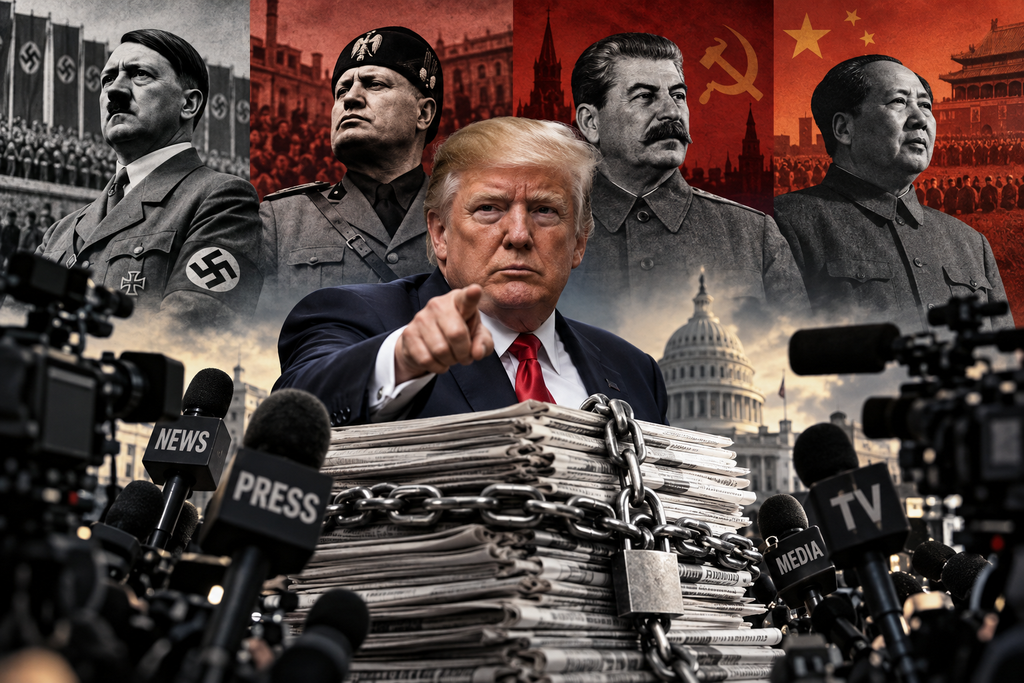
Donald Trump’s recent battle with CNN, MS NOW, and Politico is just the latest in a long list of conflicts with the press over what he views as unfavorable or inaccurate coverage. Many people believe his actions are becoming increasingly authoritarian. Some are quick to reach for the term Nazi or fascist when describing his actions. I know this can be tempting because I’ve done it myself.
While his actions are becoming increasingly authoritarian-like, have they really reached the level of previous totalitarian dictatorships? Let’s look at a few totalitarian regimes from the last 100 years and see how the Trump administration’s approach to the press stacks up against theirs. While there are many examples to choose from, I’m going to look at two familiar and one not so familiar example — Nazi Germany, Communist China, and Viktor Orbán’s Hungary.
Nazi Germany
Prior to Hitler’s rise to power, Germany had a free and diverse press. In 1933 there were more than 4,700 newspapers in Germany covering almost every political, social and religious segment of society. Less than three percent of newspapers were controlled or heavily influenced by the Nazis.
Hitler rapidly seized control of the German press through a series of emergency decrees and laws he justified through a series of trumped-up events such as the infamous Reichstag fire. Hitler blamed the fire on the communists despite any clear evidence that they were involved.
Hitler also used it to justify mass arrests of political opponents and to issue emergency decrees suspending basic civil liberties and he made it illegal to criticize the government. Within just a few months, communist and social democratic newspapers had been shut down and their printing presses confiscated. Independent newspapers faced increasing pressure to comply “voluntarily” with government restrictions on their reporting.
In March 1933, the Nazis created the Reich Ministry of Public Enlightenment and Propaganda under Joseph Goebbels. He quickly took control of film, radio, theater, and newspapers. The Editor’s Law of October 1933 required every editor and journalist to register with the government. It excluded Jews and anyone married to a Jew, or anyone considered politically or racially unacceptable from taking part in either newspaper writing or publishing.
Editors were given specific instructions about what they would be allowed to report and how stories should be prepared. They were ordered to omit anything “calculated to weaken the strength of the Reich abroad or at home.” Acceptable content was provided through weekly press conferences in Berlin and was relayed to local newspapers. Those who didn’t comply could lose their jobs or even face the concentration camps. By the middle of 1941, the Nazis controlled approximately 80% of German newspapers. By the beginning of 1942, independent newspapers had virtually ceased to exist.
Communist China
China is an important example of media control in the digital age. They have found an effective way of controlling information in a society where almost everyone has a smartphone and almost anyone can post content.
China is not new to the game of media control. The Chinese Communist Party first established the Central Propaganda Department in 1921 and has been in total control of the country’s media since 1949. It found a way to effectively control a commercial media market by allowing some private ownership of closely controlled media companies.
What China has created is an effective system of self-censorship where media outlets employ their own in-house content managers who review all published items based on censorship guidelines from the Central Propaganda Department that are updated on a weekly basis. Publication rights can be granted, revoked, or restricted at the discretion of the party. There is no appeal of decisions.
The party has the “Great Firewall” that blocks foreign platforms and scrubs all sensitive topics from the Chinese internet. Websites can be blocked, social media posts removed, and accounts deleted. In 2016 Xiao Jinping stated, “all the work by the party’s media must reflect the party’s will, safeguard the party’s authority, and safeguard the party’s unity.”
According to nonprofit democracy watchdog groups, Freedom House, and The Committee to Protect Journalists, China has the world’s most restrictive media environment, and it is the world’s most aggressive jailer of journalists, holding at least 50 in prisons.
Hungary
Hungary is important to consider because it is a 21st century example of a state attempting to establish authoritative style control over national media. It’s equally important because it’s an example of an authoritative style government being voted out of office and actually leaving office.
Viktor Orbán used a strategy in Hungary this been referred to as “media capture”. He used organizations meant to provide oversight and protection for journalists and society at large and turned them into instruments of political influence; it’s the way he built and maintained his political power.
He cultivated friendly relationships with wealthy media owners, he made targeted advertising expenditures, and he exerted pressure on independent journalists. He assisted wealthy supporters in acquiring media organizations and provided them with favorable regulatory decisions. Without ever formally banning the opposition press, he wound up with indirect but nonetheless effective control of about 75% of the Hungarian media.
Orbán also worked tirelessly spreading propaganda through news outlets. His government regularly portrayed the opposition media as spreading false information and working for foreign governments. He seems to have a particular fascination with the Hungarian-born American businessman and philanthropist George Soros, something he shares with many American Republicans.
Media outlets that were favorable to Orbán enjoyed institutional and financial support. Critical organizations operated with greater difficulty. The combination of friendly ownership, public spending, and reduced regulatory authority gave an advantage to Orbán’s supporters. While Orbán made sure the competition was unequal, Hungary still retained some independent journalism as is evidenced by his recent election defeat.
How Trump Fits The Pattern
To be fair, I cannot say that Trump is completely replicating the authoritarian management of the press seen in countries such as Nazi Germany, fascist Italy, the Soviet Union, or modern authoritarian states. The legal, regulatory, and social environment in the United States makes that kind of overt government control of the press extremely difficult. But within the constraints of the American legal and political system, I believe Trump is applying some of the same principles wherever possible.
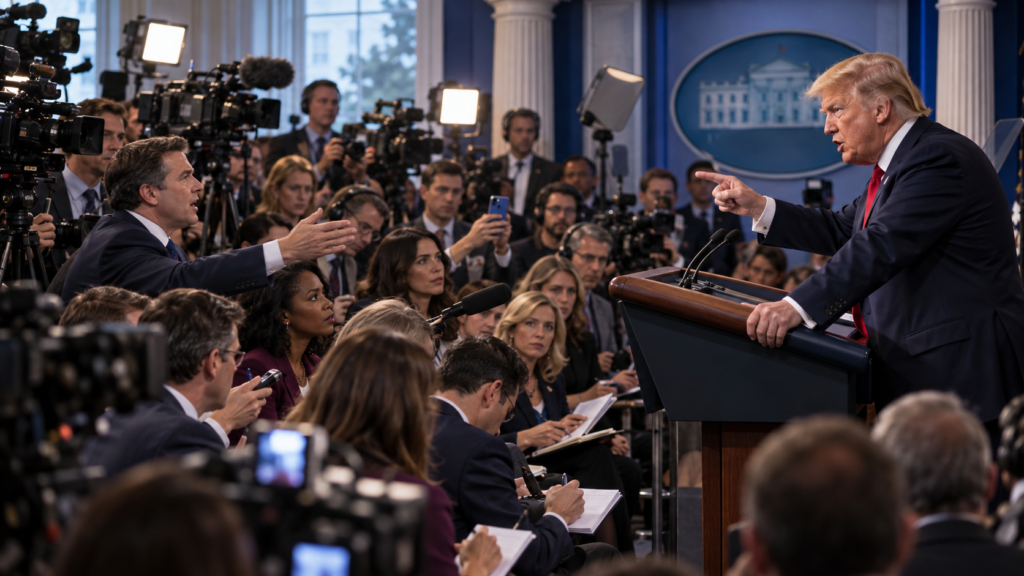
One example is his effort to control access to news events. The White House does not control reporters or what they write, but it has considerable control over who gets access to the president and his administration. It can influence who attends certain press events, who travels aboard Air Force One, and who receives interviews with the president, cabinet members, and other high-ranking officials. Privileged access is a powerful tool for rewarding friendly coverage and discouraging hostile reporting.
Trump has also benefited from the growing importance of friendly media ownership. Wealthy individuals and corporations increasingly control major news organizations, and their political and business interests can potentially influence editorial decisions. Jeff Bezos’s ownership of The Washington Post and the Ellison family’s influence over CBS and its corporate parent have raised questions about how ownership may affect coverage. An even more direct example is Truth Social, Trump’s preferred social-media platform, in whose parent company he holds a substantial financial interest.
Trump is also skilled at using delegitimizing language, a favorite tactic of authoritarian governments. Repeated attacks on journalists and news organizations can weaken the public’s willingness to defend an independent press. Trump’s frequent use of terms such as “fake news” and “the enemy of the American people” does not, by itself, facilitate the creation of an authoritarian program and rhetoric alone does not create a dictatorship. Historically, however, authoritarian movements have often attacked the credibility and legitimacy of the independent press before attempting to restrict its influence or bring it under greater control.
Perhaps the strongest parallel is the use—or threatened use—of government licensing, regulation, investigations, and litigation as instruments of pressure. Even when direct government action does not follow, repeated threats of lawsuits, license challenges, investigations, or adverse regulatory decisions can influence the behavior of media executives. Companies with billions of dollars at stake in mergers, licenses, acquisitions, and other government decisions may become more cautious about pursuing stories or commentary likely to antagonize the administration.
No single action constitutes government control of the press, and many individual actions may fall within existing law. But when media companies make concessions to the government while seeking favorable regulatory decisions, settling lawsuits, or protecting other corporate interests, the cumulative effect can be significant. Control of the press does not necessarily arrive through censorship laws or government seizure of newspapers and television stations. It can develop gradually, as economic pressure, political intimidation, restricted access, and regulatory uncertainty encourage media organizations to become increasingly cautious and compliant.
How He Doesn’t Fit
The most significant way Trump does not fit the traditional authoritarian pattern is legal. Authoritarian governments typically move quickly to suppress or abolish a free press, either by law or decree. In the United States, however, the First Amendment remains intact, and—for now—the courts continue to serve as an important check on presidential power. Numerous actions by the Trump administration have been challenged in court, and the administration does not have the legal authority simply to abolish freedom of the press. This is an essential distinction that cannot be ignored, even by those who are highly critical of Trump’s attempts to influence the news media.
There is also no equivalent in the United States to the systematic physical coercion employed by many authoritarian governments. Totalitarian regimes have imprisoned journalists, closed newspapers and broadcasting facilities, seized printing presses, and, in some cases, tolerated or encouraged violence against journalists. Whatever the seriousness of Trump’s attacks on the press, the United States has not reached that point.
Most authoritarian governments also attempt to establish centralized control over propaganda, censorship, and the distribution of information. The fragmented nature of the American media makes that extraordinarily difficult. Competing newspapers, television networks, radio stations, internet publications, podcasts, social media, and independent journalists provide Americans with an enormous variety of information. The ready availability of foreign news sources provides another safeguard against any government effort to monopolize information.
There is also an important difference in the speed and effectiveness of government action. Authoritarian regimes often move rapidly against an independent press. The Bolsheviks began closing opposition newspapers within days of taking power, while the Nazis largely brought the German press under their control within the first few years of Hitler’s rule. By contrast, Trump’s efforts to exert greater influence over the American media have encountered resistance from the courts, journalists, media organizations, political opponents, and civil society. The historical pattern of a rapid conquest of the press has not occurred in the United States, and it remains more of an ongoing contest.
Most importantly, Americans keep the ability to change their government through elections. Trump continues to have a substantial political base, but opposition parties and candidates remain free to organize, campaign, criticize the president, and compete for political power. As long as genuinely competitive elections, an independent judiciary, and constitutional protections for speech and the press remain intact, there are substantial barriers to comprehensive media control.
Where Do We Go From Here?
The more relevant comparison for the future may be not Nazi Germany or China, but Viktor Orbán’s Hungary, creating an American version of “media capture.”
The Trump administration may continue moving in that direction. It could place pressure on media owners through regulatory decisions, licensing disputes, government investigations, or the threat of litigation. Lawsuits and threatened lawsuits may also make media organizations more cautious about particularly aggressive coverage. Efforts to reduce or eliminate federal support for public broadcasting could further alter the media landscape.
Several potential developments deserve particularly close attention. Will the administration comply with adverse court rulings, or will it attempt to circumvent or delay them through prolonged litigation? Will the FCC use licensing or regulatory authority in ways that appear connected to the political content of news coverage? Will the Justice Department investigate or prosecute journalists for legitimate news gathering activities rather than for conduct involving clearly established violations of law? And will government power increasingly be used to reward friendly media organizations while imposing economic or regulatory costs on hostile ones?
These questions matter because authoritarian control of the press does not necessarily arrive in a single dramatic act. It can develop gradually as political leaders weaken independent institutions, intimidate critics, reward friendly owners, and make journalists increasingly cautious about challenging those in power.
For that reason, the most useful approach is neither to declare that the United States has already become an authoritarian state nor to assume that its constitutional protections make such a development impossible. It is better to watch what happens to the institutions that stand between political power and control of information: the courts, independent media organizations, regulatory agencies, opposition parties, and ultimately the electorate.
Trump’s relationship with the press clearly does not duplicate Hitler, Mussolini, Stalin, Mao, or Orbán. The question is whether the safeguards that distinguish the American system from those regimes remain strong enough to resist political pressure.
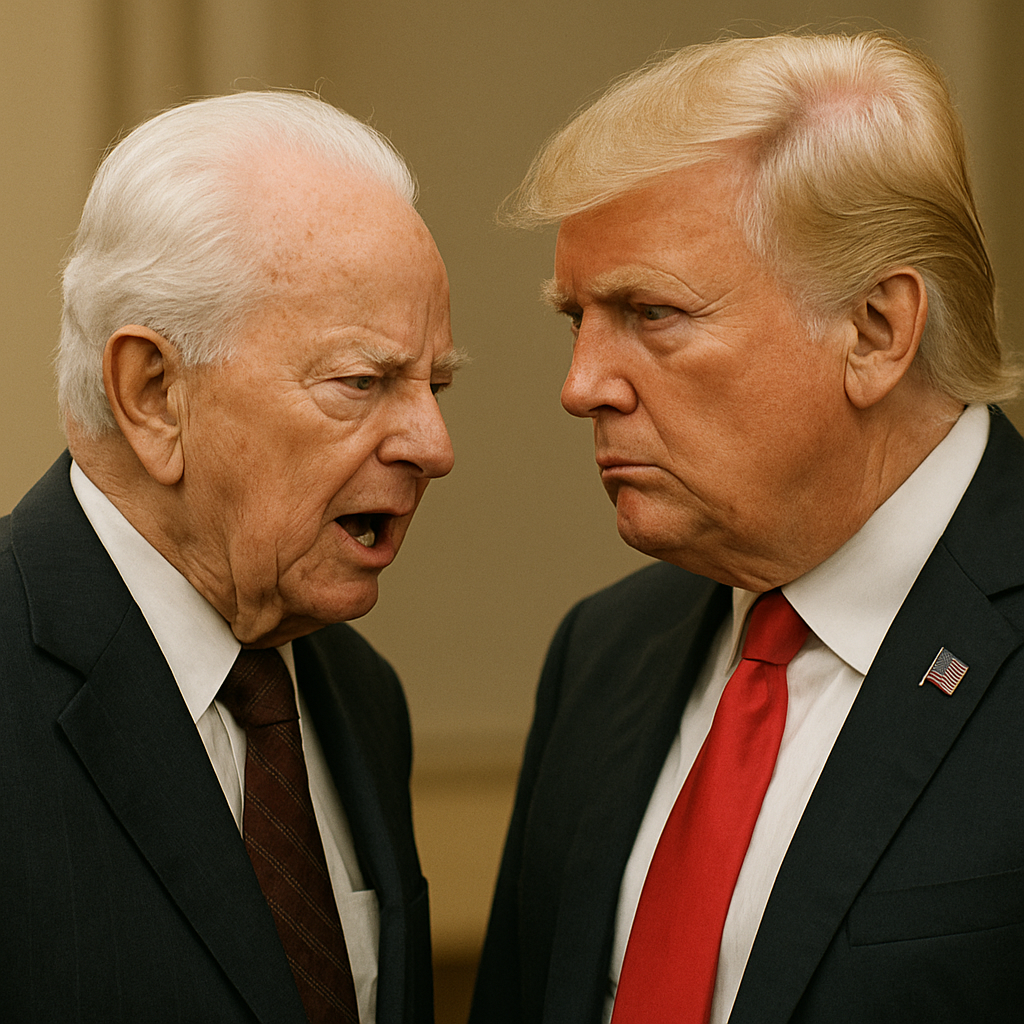
Illustration generated by author using ChatGPT
Sources
- Committee to Protect Journalists. “Alarm Bells: Trump’s First 100 Days Ramp Up Fear for the Press, Democracy.” May 12, 2025.
- Associated Press. “Paramount Settles with Trump for $16 Million over ’60 Minutes’ Interview.” July 2, 2025.
- Reuters. “Democratic FCC Commissioner Blasts Paramount Settlement with Trump as ‘Desperate’ Move.” July 2, 2025.
- Reuters. “CNN, MS NOW and Politico Sue Trump, Challenging White House Ban.” September 21, 2026.
- Reuters. “White House Media Ban Faces Long Odds in Court, Legal Experts Say.” September 22, 2026.
- Associated Press. “A White House Press Ban Was Lifted This Week. But the …” September 25, 2026.
- American Civil Liberties Union. “Trump’s Attacks on Press Freedom Escalate: NPR, PBS Funding Cuts Explained.” August 5, 2025.
- United States Holocaust Memorial Museum. “The Press in the Third Reich.” Holocaust Encyclopedia.
- United States Holocaust Memorial Museum. “Nazi Propaganda and Censorship.” Holocaust Encyclopedia.
- United States Holocaust Memorial Museum. “Editors Law.” Holocaust Encyclopedia.
- United States Holocaust Memorial Museum. “What Was Nazi Propaganda?”
- Council on Foreign Relations. “Media Censorship in China.”
- Freedom House. “China: Freedom in the World 2025 Country Report.”
- Freedom House. “China: Freedom on the Net 2025 Country Report.”
- U.S.-China Economic and Security Review Commission. Censorship Practices of the People’s Republic of China. Prepared by Exovera’s Center for Intelligence Research and Analysis. February 20, 2024.
- Committee to Protect Journalists. “2025 Journalist Jailings Remain Stubbornly High; Harsh Prison Conditions Pervasive.”


The President’s Private Prosecutor
By John Turley
On June 10, 2026
In Commentary, Politics
How Trump Turned the Department of Justice into a Tool of Personal Revenge
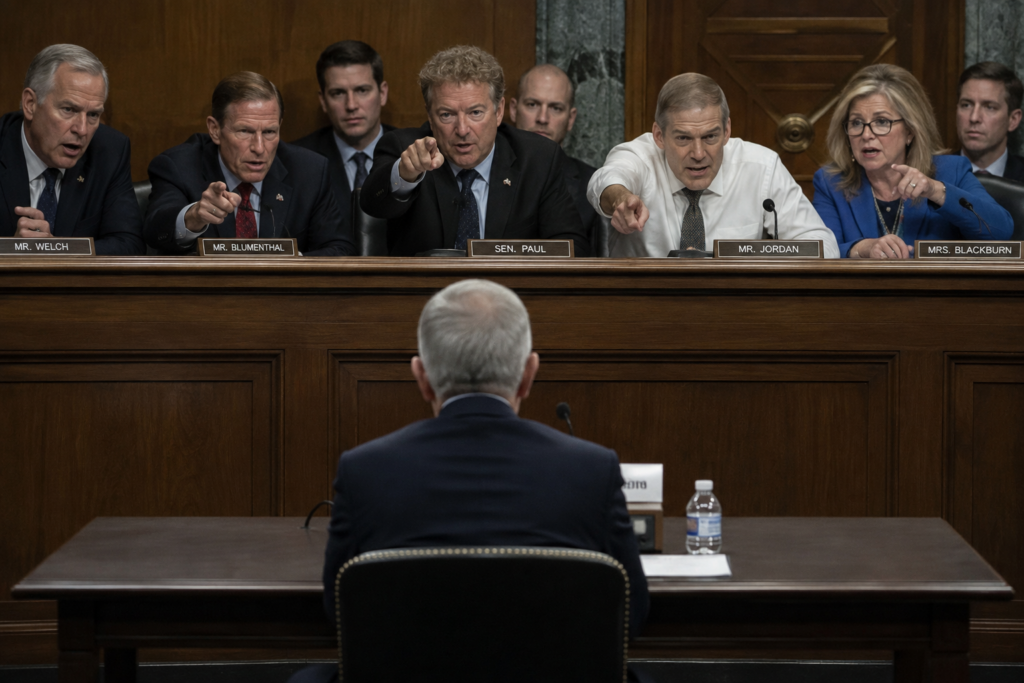
There is an old maxim in law: fiat justitia ruat caelum — let justice be done though the heavens fall. It reflects the principle that the law belongs to everyone equally and is not meant to serve personal grudges. Critics argue that Donald Trump’s second administration has embraced a very different view: that the Department of Justice can be used to pursue those who have challenged, investigated, or defeated him.
This is not simply a partisan accusation. It is based on a pattern in which Trump publicly identifies enemies and calls for action against them, followed by Justice Department investigations or prosecutions. The targets have included former administration officials, prosecutors, election experts, and individuals who prevailed against Trump in court.
The Guardrails Come Off
Trump’s first term provided occasional glimpses of this tendency, but institutional resistance often limited its reach. His second term began with far fewer constraints.
The selection of Pam Bondi as attorney general was widely viewed as a signal that loyalty would take precedence over the traditional independence of the Justice Department. During her confirmation hearing, Bondi declined to assure senators that the White House would remain separate from prosecutorial decision-making. That exchange foreshadowed what followed.
Within months, Trump directed investigations into former administration officials Miles Taylor and Christopher Krebs. Taylor had authored the anonymous 2018 op-ed describing internal resistance within the administration. Krebs, Trump’s former cybersecurity chief, had publicly stated that the 2020 election was secure. Trump accused Taylor of “treason” while signing an executive memorandum ordering an investigation.
Whether or not either man had committed any wrongdoing, the sequence was striking: public presidential condemnation followed by federal scrutiny.
More consequential were the cases involving figures directly connected to Trump’s legal battles.
The Letitia James Case
Perhaps no public official has drawn Trump’s anger more consistently than Letitia James, the New York attorney general whose civil fraud case resulted in a massive judgment against Trump and his business organization.
In October 2025, James was indicted on bank fraud charges shortly after Trump publicly urged Bondi to move against his political opponents. The circumstances surrounding the case raised immediate questions.
According to reports, the original prosecutor assigned to the matter concluded that evidence was insufficient to support criminal charges and declined to proceed. He was replaced by Lindsey Halligan, a former member of Trump’s personal legal team who had no prosecutorial experience. Within weeks, Halligan secured an indictment.
The legal process that followed was unusual. The indictment was later dismissed. Subsequent efforts to obtain new indictments reportedly failed before grand juries, an outcome that is relatively rare given the traditionally high success rate prosecutors enjoy in grand jury proceedings.
Yet the investigation continued.
Critics saw the episode as evidence that prosecutorial decisions were being driven not by evidence but by determination to target a political adversary. Supporters countered that investigations should continue if legitimate questions remained unresolved.
Regardless of one’s interpretation, the case illustrates a recurring theme: Trump publicly demands action against an opponent, and federal law enforcement soon responds.
The Comey Prosecution
James Comey has been a target of Trump’s anger since his dismissal as FBI director in 2017. That conflict entered a new phase in September 2025 when Comey was indicted on charges of making false statements and obstruction.
The indictment arrived only days after Trump publicly called for prosecution on social media. Trump later suggested that he hoped there would be “others.”
Comey pleaded not guilty and moved to dismiss the case, arguing that he was the victim of selective and vindictive prosecution. Civil liberties advocates condemned the prosecution as an abuse of presidential power.
Whether the charges ultimately survive judicial scrutiny remains to be seen. But the timing reinforced the perception that DOJ actions increasingly followed Trump’s personal grievances. The ongoing “86 47” prosecution further emphasizes the appearance of political vengeance.
E. Jean Carroll: From Plaintiff to Target
No case better illustrates the concerns surrounding Trump’s Justice Department than that of E. Jean Carroll.
Carroll sued Trump for defamation after he denied her allegations that he sexually assaulted her in a Manhattan department store decades earlier. Two juries ruled in her favor, awarding her a combined $88.3 million in damages.
In May 2026, the Justice Department opened a criminal investigation into Carroll herself.
The investigation centers on statements Carroll made during civil litigation regarding funding for her legal expenses. Prosecutors are examining whether financial assistance connected to a nonprofit associated with LinkedIn co-founder Reid Hoffman was disclosed accurately and whether any false statements were made under oath.
Carroll is now 82 years old. She successfully sued Trump and won two jury verdicts. The federal government headed by the man she defeated in court is investigating whether to charge her with federal crimes.
The optics are difficult to ignore.
Carroll’s attorneys argue that the investigation lacks substantive merit and represents retaliation against a successful plaintiff. Legal observers note that if charges are eventually filed, Carroll would likely argue that the case constitutes vindictive prosecution — the use of prosecutorial power to punish someone for exercising a legal right.
Whatever the ultimate outcome, the sequence is extraordinary: a citizen sues a powerful public figure, wins twice before juries, and then becomes the subject of a federal criminal investigation under that same figure’s administration.
A Larger Pattern
Individually, each case can be debated on its merits. Together, they form a pattern that has become increasingly difficult for critics to dismiss as coincidence.
Many of the administration’s highest-profile investigations involve people who share one characteristic: they challenged Trump politically, legally, or personally. Former election officials. Former administration insiders. Prosecutors. Investigators. Civil plaintiffs.
The pattern is often the same. Trump publicly attacks an individual. He demands action. An investigation follows. Organizations tracking retaliatory government actions have documented numerous examples of this sequence. Legal scholars frequently identify such timing as one of the warning signs associated with selective prosecution.
The concern is not merely whether individual targets are guilty or innocent. The larger issue is whether prosecutorial decisions are being made independently or whether they are increasingly shaped by presidential preferences.
That distinction matters because the Department of Justice possesses powers unlike those of any other federal agency. It can investigate, indict, and imprison citizens. Its legitimacy depends heavily on public confidence that those powers are exercised fairly and consistently.
The Cost of the Process
Defenders of the administration argue that investigations should not be immune from scrutiny simply because targets claim political persecution. That is true. Public officials, former officials, and private citizens alike should be subject to the law.
But critics respond that the problem is not accountability. It is selectivity.
Even unsuccessful investigations impose significant costs. Legal defense can consume hundreds of thousands of dollars. Grand jury investigations create stress, uncertainty, and reputational damage. Years of litigation can disrupt careers and lives regardless of whether convictions are ultimately obtained.
The process itself becomes a punishment.
Courts and grand juries have occasionally pushed back. Several high-profile cases have encountered significant legal obstacles. But judicial intervention often occurs only after substantial personal and financial costs have already been imposed.
The Weaponization Paradox
Perhaps the greatest irony is that Trump’s political rise was fueled in part by his claim that the justice system had been weaponized against him.
For years, he argued that prosecutors, investigators, and political opponents used government institutions to pursue personal or partisan objectives. That argument resonated with many Americans because the principle involved is important. The justice system should not be used as a political weapon.
The challenge for Trump’s administration is that the same characteristics he identified as evidence of weaponization now appear in cases initiated by his own Justice Department.
He argued that prosecutors were motivated by personal animus rather than evidence. Critics now make the same allegation about prosecutions involving Letitia James, James Comey, and E. Jean Carroll.
He argued that the process itself was punishment. His opponents now make the same claim.
He argued that political pressure shaped prosecutorial decisions. Critics point to repeated examples in which Trump’s public demands appear to precede DOJ action.
Whether one accepts those comparisons or rejects them, the contradiction is difficult to ignore.
A Democracy’s Stress Test
The Justice Department was designed to serve the public interest rather than the interests of any single president. That principle became especially important after Watergate, when both parties embraced reforms intended to insulate law enforcement from political interference.
The durability of those norms is now being tested.
The central question is not whether every investigation discussed here will ultimately succeed or fail. Courts will decide that. The more important question is whether Americans will continue to believe that justice is being administered independently.
If citizens come to believe that criminal investigations are triggered by personal loyalty or presidential anger, confidence in the rule of law inevitably suffers.
The power to prosecute is among the most formidable powers government possesses. In a constitutional democracy, that power must belong to institutions, not individuals.
Whether that principle remains intact may prove to be one of the defining questions of Trump’s second term.
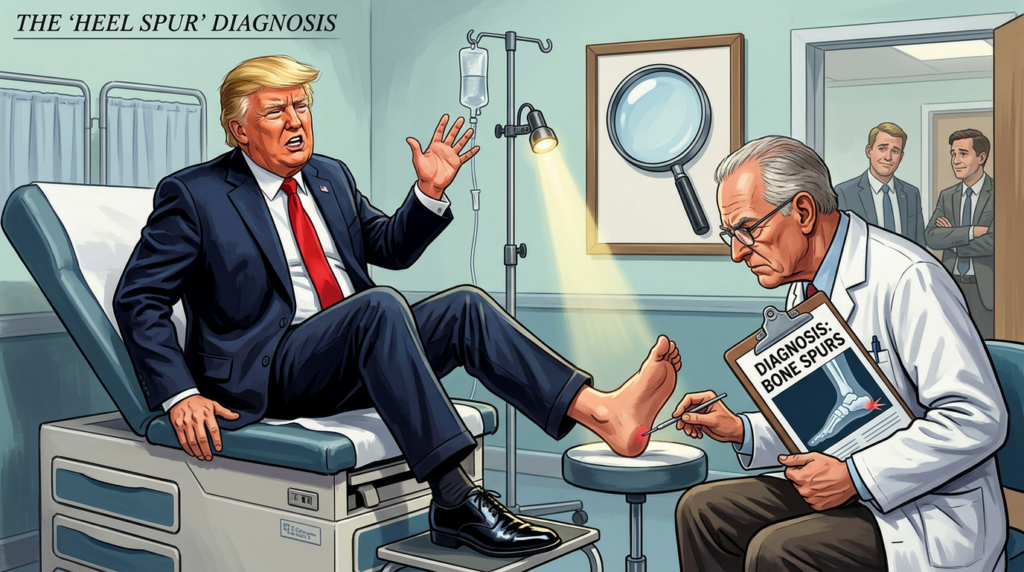
Image generated by author using ChatGPT
Sources
• Just Security — Chronology of Trump/DOJ Targeting (Oct. 2024)
• PBS NewsHour — Comey Indictment & Trump Vows More Prosecutions (Sept. 2025)
• Slate — Trump’s Vengeance Tour (May 2026)
• Time — Trump Vows to Prosecute Political Enemies (March 2026)
• Protect Democracy — Retaliatory Action Tracker (ongoing)
• Yahoo/AP — Trump Directs DOJ to Investigate Taylor & Krebs (2025)
• Time — DOJ Launches Criminal Investigation into E. Jean Carroll (May 28, 2026)
• Axios — DOJ Probes Reid Hoffman Nonprofit Over Carroll Funds (May 28, 2026)
• CNN — Carroll and the Pattern of Trump Retribution (May 28, 2026)
• MS NOW — Vindictive Prosecution Analysis (May 28, 2026)
• Newsweek — Timeline of Carroll’s Legal Battles with Trump
• CNBC — Trump DOJ Intervenes in Carroll Case (Oct. 2020)
• CNBC — DOJ Fails Second Time to Indict Letitia James (Dec. 2025)
• ABC News — Letitia James Indicted (Oct. 2025)
• PBS — Full Indictment of Letitia James
• House Judiciary Democrats — Investigation into DOJ Retaliation Against Letitia James (March 2026)
• 19th News — From Letitia James to Comey, Trump’s DOJ as Instrument of Revenge
• Sen. Whitehouse Letter to Barr re Carroll (Sept. 2020)