Be There!


What West Virginia’s new child labor law tells us about a growing trend and a forgotten history.
📜 Introduction
In April 2025, West Virginia passed a law eliminating work permit requirements for 14- and 15-year-olds and opening hazardous occupations to older teens. It’s a policy shift that echoes a much darker chapter of American history—one most of us thought was long behind us.
As I read the news, I couldn’t help but recall Lewis Hine’s haunting photos of the “Breaker Boys”—children as young as eight sorting coal in dangerous conditions. Their faces were the face of American industry at its most exploitative. Their plight helped spark the labor reforms we now take for granted.
But are those reforms at risk of unraveling?
🕰 A Brief History of Child Labor in America
At the turn of the 20th century, over two million American children worked long hours in factories, coal mines, and fields. Some were as young as five. The wages were low, the conditions dangerous, and the toll—educational, emotional, and physical—immeasurable.
Most of these children came from poor or immigrant families. Factory and mine owners favored child labor because it was cheap, compliant, and expendable.
⚖️ Early Reforms and Legal Battles
The reform movement gained traction in the early 1900s thanks to activists, labor unions, and journalists. The National Child Labor Committee, founded in 1904, worked with photographers like Lewis Hine to expose the brutality of child labor to the American public.
Attempts to legislate federally met fierce resistance. The Keating-Owen Act (1916) was struck down by the Supreme Court in Hammer v. Dagenhart (1918), and a second effort was defeated in 1923. It wasn’t until the Fair Labor Standards Act (FLSA) of 1938 that the federal government established real guardrails:
The FLSA marked the beginning of consistent national protections for working children.
🎓 Child Labor and Education: A Damaging Tradeoff
There’s a well-documented tradeoff between child labor and education:
Even today, agricultural labor laws allow children as young as 12 to work long hours, especially among migrant families. These children have some of the country’s highest school dropout rates.
📉 Modern Rollbacks: A Disturbing Trend
Since 2021, over a dozen U.S. states have proposed or passed laws rolling back child labor protections, often citing labor shortages or “career readiness”:
Critics warn that these laws open the door to exploitation, especially in lower-income communities.
🧠 Why It Matters
The repeal of child labor protections isn’t just a policy dispute—it’s a moral referendum. If child labor laws are weakened, the most vulnerable children will bear the cost, just as they did a century ago.
The lesson from history is simple: when economic hardship or political expediency trumps child welfare, it’s children who are put at risk.
📣 Final Thoughts
Public memory is short. But the bodies of exhausted child laborers buried in unknown graves and the broken educational paths of working teens are silent witnesses to the past—and a warning for the future.
If we claim to value children’s futures, our policies must reflect that—not just in schools, but in the workplace.
🔗 Sources and Suggested Further Reading
A Clash of Constitutional Visions
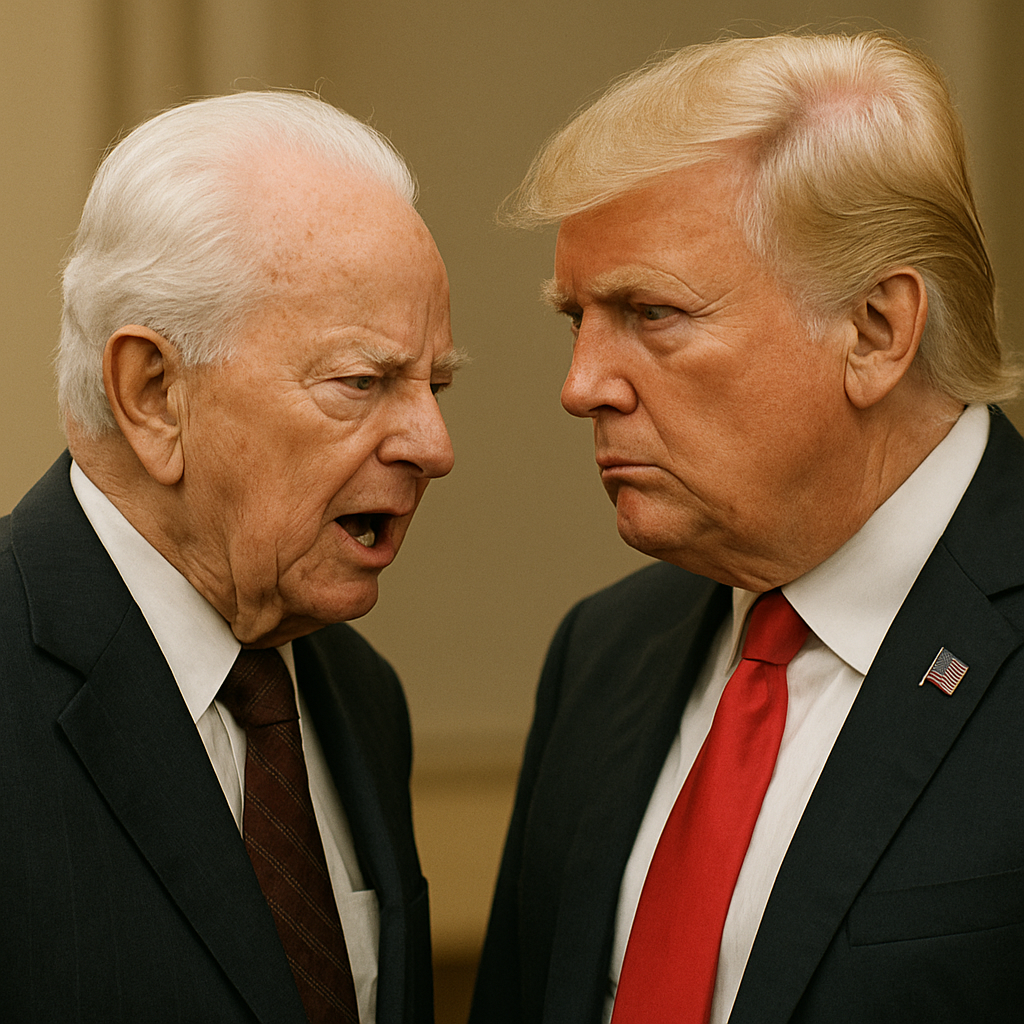
Senator Robert C. Byrd was a West Virginia icon and it’s always risky to speculate on what a historic figure may have thought. However, many of Senator Byrd’s beliefs are well documented and I believe I can make reasonable assumptions about what he may have thought about our current political situation. Having served in the U.S. Senate over 51 years, from 1959 until his death in 2010— he would likely have viewed Donald Trump with deep concern, particularly in light of Byrd’s reverence for constitutional process, institutional norms, and congressional authority. He was known for his deep knowledge of Senate rules, fierce defense of the institution, and commitment to constitutional processes.
Here is my reasoned assessment of what Robert Byrd might have thought of Donald Trump, based on his record, writings, and public statements.
Byrd was a passionate constitutionalist and institutionalist. He always carried a pocket Constitution, lectured on its principles, and wrote extensively about the importance of maintaining the Senate’s independence as a check on executive power. He frequently warned against presidential overreach, even when it came from presidents in his own party.
I believe Byrd would probably have seen Trump’s frequent challenges to the separation of powers—such as ignoring congressional subpoenas, attempting to overturn the 2020 election, and asserting sweeping executive privilege—as a threat to the constitutional order.
Byrd idealized Senate decorum and was known for his formal oratory. He disliked crassness, impulsiveness, and public vulgarity. He once rebuked his colleagues for casual dress on the Senate floor.
Trump’s coarse rhetoric, personal insults, and use of Twitter to attack opponents would likely have appalled Byrd. He believed public office carried with it a solemn responsibility to elevate public discourse. In 1999, Byrd criticized President Clinton not just for the Monica Lewinsky scandal, but for diminishing the dignity of the office.
Though Byrd was a master of local politics and brought billions in federal dollars to West Virginia, he also warned against demagoguery. He valued political rhetoric grounded in principle, not spectacle. While Byrd might have appreciated Trump’s appeal to working-class Americans, he would likely have distrusted his populism as it comes at the expense of facts, reason, or institutional integrity.
Byrd’s own history on race is complicated. A former member of the KKK in the 1940s, he spent the latter decades of his career renouncing that association and supporting civil rights legislation. He called his early beliefs a great shame. Byrd’s political journey included dramatic personal change: from early segregationist and KKK member to a vocal supporter of civil rights and of the first Black presidential nominee, Barack Obama. Byrd likely would have been disturbed by Trump’s equivocations after Charlottesville and by rhetoric seen as racially divisive. Byrd worked hard to overcome his past and likely would have seen such behavior as regression rather than progress.
Byrd was one of the Senate’s strongest voices against the Iraq War, citing constitutional concerns over unchecked executive power in foreign affairs. He believed Congress must assert itself in matters of war and peace. Trump’s erratic foreign policy decisions—such as wavering defense commitments, transactional diplomacy, and overtures to authoritarian leaders—would likely have seemed reckless and unilateral to Byrd.
Senator Robert Byrd, though an institutional conservative in many ways, would likely have seen Donald Trump as a figure undermining the very traditions, checks, and civic virtues Byrd spent his career defending. His critique wouldn’t have been partisan—it would have been constitutional.
“The Constitution is not a pliable instrument to be molded and twisted at the whim of the President. It is our compass. It is our anchor.” — Robert C. Byrd

What Is It, How It Does It Work, and Who’s Using It?
I’ve never really understood cryptocurrency and as a result I haven’t paid much attention to it. Recently Donald Trump signed his Executive Order “Strengthening American Leadership in Digital Financial Technology. The Executive Order established the “Presidential Working Group On Digital Asset Markets”, to explore the creation of a national digital asset (cryptocurrency) stockpile.
That’s when I decided it was time to find out more about it. And, being a guy, my first thought was to just go and buy some. It turned out to be a little more complicated than walking into your local bank and asking to buy a Bitcoin.
To begin with, the current value of a Bitcoin is in excess of $83,000. Most cryptocurrency exchanges allow fractional purchases, some as low as $10. The transaction fee will run about 20% of a small purchase, so it may not be a particularly good investment at that level. The fee is a lower percentage for larger purchases.
You can purchase cryptocurrency such as Bitcoin through cryptocurrency exchanges. There are at least three reputable platforms available in the United States. Bitcoin can also be purchased in small amounts through PayPal and Venmo.
Once you’ve made your purchase, you’ll have to have a Bitcoin wallet, where you will store your Bitcoins. A digital wallet is like a bank account for Bitcoins but with highly sophisticated security. There are two primary types. The custodial wallet is managed by a third-party service and is easy to use, but you don’t control the privacy keys—a serious consideration if you are making a large purchase. There are the non-custodial wallets where you have full control over your privacy key. The most common of these is the Bitcoin.com wallet. It’s user friendly and mobile according to its website.
One thing to consider. Bitcoin purchases for the most part require full identification including Social Security number. This is based on money laundering regulations. The only exception to this is the Bitcoin ATMs (vending machines) that usually only require a driver’s license number and a cell phone number. However, only very small purchases are available through these ATM’s.
Cryptocurrency may seem like a recent invention, but the ideas behind it go back several years. Today, it’s more than a buzzword, it’s a financial tool, an investment asset, and for some, even a national currency. In this post, we’ll explore where crypto came from, how it gets its value, how it’s used in the real world, and which governments (if any) treat it like real money.
Where It All Began: The Origin of Cryptocurrency
Cryptocurrency’s origin begins with a previously unknown person—or possibly a group—known only as Satoshi Nakamoto. In 2008, Nakamoto published a white paper titled “Bitcoin: A Peer-to-Peer Electronic Cash System.” A few months later, in January 2009, the Bitcoin network was officially launched with the mining of the first block, called the Genesis Block. This marked the birth of the world’s first viable cryptocurrency, Bitcoin.
The purpose was to create a form of money that could operate without the control of governments or financial institutions. Bitcoin was designed to be decentralized, transparent, and secure—made possible by blockchain technology. The blockchain is a digital ledger, distributed across thousands of computers, that records every transaction made in the network. Once data is entered, it’s nearly impossible to change—giving it an edge over traditional banking records when it comes to fraud prevention. Earlier attempts to develop a digital currency like eCash and b-money failed because they couldn’t solve the problem of security: protecting their crypto from unauthorized duplication.
By 2011 Nakamoto vanished, leaving a final message that they had moved on to other things. Nakamoto is believed to have mined about 1,000,000 bitcoins which are still sitting untouched in a known wallet address. At today’s prices Nakamoto’s Bitcoins are worth billions. Why did Nakamoto do it? No one knows.
What Gives Crypto Its Value?
One of the most common questions about cryptocurrency is: “What gives it value?”
Unlike the U.S. dollar, which is backed by the full faith and credit of the government (called a fiat currency in modern financial jargon), most cryptocurrencies are not backed by a either a physical commodity or government guarantee. Instead, their value comes from a mix of:
Cryptos like Bitcoin and its major competitor Ethereum gain and lose billions in value in a single day, driven by news, regulation, and even tweets.
Bitcoins are generated through dedicated blockchain technology which ensures their safety and prevents them from being duplicated. As a result, many people view them as a store of value (digital gold). They can also be used as a medium of exchange although that is less common due to volatility and high transaction fees.
There’s another type of cryptocurrency called the meme coin. They often start as jokes or are done by some people as a source of revenue. They have little or no real-world use. They rely on community hype and social media to generate popularity and value. They don’t have their own blockchain, instead they’re built on top of existing platforms. They’re usually created quickly with minimal technical barriers and their security and functionality vary widely.
The best-known meme coin is the $TRUMP coin. It was released just before Donald Trump’s inauguration. A $TRUMP coin reached a high of $75.35 on January 19th, 2025, but it quickly lost almost all value. A $TRUMP coin is currently worth about 27 cents. The Trump family and their associates made millions on transaction fees while investors lost massively in the market. I would not consider meme coins as a real invetment. If you purchase one, consider it as a hobby.
A new advancement in the cryptocurrency scene is the Stablecoin. This type of cryptocurrency is designed to maintain a stable value. It is usually pegged to a traditional asset like the US dollar, the Euro or perhaps gold. The goal is to offer the benefits of cryptocurrency, like fast digital transactions and decentralized access, without the wild price swings seen with other coins like Bitcoin.
Most Stablecoins are backed in one of three ways:
Stablecoins are designed to a hedge against volatility in the standard crypto markets. They provide the same fast cheap international payments as other cryptocurrency and can provide dollar like stability in countries with unstable currencies. Fiat based coins are generally seen as more reliable because they are frequently audited and are regulated more closely. Others, especially algorithmic ones, have greater risk.
How Is Cryptocurrency Used?
People use cryptocurrency in several different ways, and the list is growing:
1. Digital Payments
Crypto was originally created to be a medium of exchange. Some online and brick-and-mortar retailers accept Bitcoin, Ethereum, or other coins. Services like PayPal and Cash App also allow crypto transactions. However, due to high transaction fees and slow processing times (especially for Bitcoin), it’s not exactly the most convenient way to buy your morning coffee.
2. Investment and Speculation
Most people today use crypto as an investment. Others trade coins daily to make quick profits, a practice known as day trading. Like with the stock market, day trading is a risky business—crypto prices can swing wildly based on rumors or regulatory changes.
3. DeFi (Decentralized Finance)
DeFi is a rapidly growing branch of the crypto world. It allows people to borrow, lend, and earn interest on crypto without going through banks. Platforms like Uniswap and Aave are examples of DeFi services that operate on Ethereum’s blockchain.
4. NFTs and Digital Ownership
A non-fungible token (NFT) is a unique digital asset that represents ownership or proof of authenticity of a specific virtual item, such as artwork, music, video clips, virtual real estate, or even tweets, that is stored on a blockchain—a decentralized digital ledger. Its uniqueness is encoded in metadata and tracked on the blockchain, allowing anyone to verify who owns a particular NFT and ensuring that it can’t be duplicated or counterfeited. (It is beyond me why anyone would spend real money for virtual ownership.)
5. Remittances
Crypto can be a low fee way to send money across borders, especially to countries where banking systems are weak or expensive. Some developing nations have embraced this use enthusiastically.
Is Any Government Using It as Legal Tender?
Yes—but just one (so far): El Salvador.
In September 2021, El Salvador became the first country in the world to adopt Bitcoin as legal tender. That means businesses must accept it alongside the U.S. dollar (which is also legal tender there). The country launched a national crypto wallet called “Chivo,” gave citizens a $30 bonus in Bitcoin to download it, and is even planning “Bitcoin City,” powered by geothermal energy from a volcano.
The move has been controversial. Critics argue Bitcoin’s volatility makes it a poor substitute for cash. Citizens have complained about wallet bugs and transaction errors. On the other hand, the government sees it as a way to attract foreign investment and reduce dependence on traditional banks.
Despite rumors to the contrary, there is no evidence that the US is using Bitcoin to pay El Salvadore to imprison US deportees.
More recently, the Central African Republic is in the process of declaring Bitcoin legal tender, but with far less fanfare and infrastructure than El Salvador. Other countries, like Ukraine, have legalized the use of crypto for payments but stop short of declaring it legal tender. Most other nations take a cautious or skeptical approach.
Is It Real Money?
That depends on how you define money.
Cryptocurrency satisfies some of the classic definitions: it’s a medium ofexchange, a store of value, and (sometimes) a unit of account. But most governments still don’t recognize it as “money” in the legal sense. In the U.S., the IRS treats crypto as property for tax purposes, not as currency. That means every time you buy a coffee with Bitcoin, you technically owe capital gains tax if it’s gone up in value since you bought it.
The Federal Reserve and other central banks are exploring Central Bank Digital Currencies (CBDCs) as an official alternative. These would be government-backed digital dollars, unlike Bitcoin, which is decentralized. Think of it as crypto with guardrails.
Final Thoughts
Cryptocurrency is still in its Wild West phase. It’s a fascinating mix of finance, technology, and ideology. While it’s unlikely to replace national currencies anytime soon, it’s already reshaping how people think about money, investing, and even trust in future assets.
Will more countries follow El Salvador’s lead? Will governments roll out their own digital currencies? Or will crypto remain a fringe asset class for techies and risk-takers? That’s still up in the air—but one thing’s for sure: crypto is no longer just a financial experiment. But I must wonder how good an investment it is if you can buy crypto from a vending machine in a convenience store.
Am I ready to jump into the crypto market? I don’t think so — at least not yet. Well, maybe a few dollars just for fun.

Fascist! The very word conjures up images of totalitarianism, militarism, suppression of dissent and brutality. Unfortunately, it’s become a ubiquitous portion of our political discourse. Each side, at one time or another, has accused the other of being fascist. But what do they really mean by fascist? Do they understand the definition and the reality of fascism? Or do they simply mean: “I disagree with you, and I really want to make you sound evil.”
I decided I needed to know more about fascism, so I’ve done some research, and I’d like to share the results with you. As I frequently do, I’ll start with the dictionary definition. According to Merriam-Webster fascism is a political philosophy, movement, or regime that exalts nation and often race above the individual and that stands for a centralized autocratic government headed by a dictatorial leader, severe economic and social regimentation, and forcible suppression of opposition.
As with many dictionary definitions, it gives us the 50,000-foot view without any real detail. What I’d like to do is cover the origins of fascism, its basic principles and how it rose to prominence in the middle of the 20th century. I also want to compare fascism to communism—another ideology that shaped much of the 20th century—and to provide insights into the differences and similarities between these two systems.
The Origins of Fascism
Fascism emerged in the early 20th century, primarily in Italy, as a reaction to the perceived failures of liberal democracy and socialism. The term itself comes from the Italian word “fascio,” meaning a bundle or group, symbolizing unity and collective strength. It also references fasces, a bundle of rods tied around an ax symbolizing authority in the Roman Republic. It was appropriated as a symbol by Italian fascists in an attempt to identify with Roman history, much as American patriotic symbols are being appropriated by the radical right in the U.S. today.
Benito Mussolini, an Italian political leader, is often credited as the founder of fascism. He established the groundwork for first fascist regime in Italy beginning in 1922 after he was appointed Prime Minister. Fascism arose in a period of social and economic turmoil following the First World War. Many people in Europe were disillusioned with the existing political systems, which they believed had failed to prevent the war and its devastating consequences. The post-war economic instability, along with fears of communist revolutions like the one in Russia, provided fertile ground for the rise of fascist movements.
Moussolini, together with Italian philosopher Giovanni Gentile, published “The Doctrine of Fascism” (La Dottrina del Fascismo) in 1932, after he had consolidated political power in his hands. It lays out the guiding principles and theoretical foundations of fascism, stressing nationalism, anti-communism, the glorification of the state, the belief in a strong centralized leadership, and the rejection of liberal democracy.
The Philosophical Basis of Fascism
Fascism is rooted in several key philosophical ideas:
Implementation and Practice of Fascism
Fascism has been implemented in various forms, with Italy under Mussolini and Nazi Germany under Adolf Hitler being the most prominent examples. In practice, fascist regimes are characterized by:
Comparing Fascism and Communism
While both fascism and communism reject liberal democracy, they differ significantly in their goals and methods.
Comparative Examples
Conclusion
Fascism and communism, despite their profound differences, share certain similarities in practice, particularly in their authoritarianism and intolerance of dissent. However, their philosophical foundations and goals are fundamentally different: fascism seeks to elevate the nation above all else, while communism theoretically aims to create a classless society. Understanding these ideologies and their historical manifestations is crucial for anyone interested in the political history of the 20th century and its lasting impact on the world today.
We can use our understanding of fascism and its comparison to democracy to ask important questions. What kind of government do we want? Are there any possible crossovers or compromises between the two? And, importantly, should there be?
Postscript
Many of the ideas in this post were inspired by two excellent books on the subject, “The Origins of Totalitarianism” by Hannah Arendt and “Fascism: A Warning” by Madeleine Albright.
Powered by WordPress & Theme by Anders Norén

Silencing the Gavel: How the ‘One Big Beautiful Bill’ Will Undermine Judicial Review
By John Turley
On June 8, 2025
In Commentary, Politics
In late May 2025, the U.S. House of Representatives narrowly passed a massive legislative package called the “One Big Beautiful Bill Act.” Touted by President Donald Trump and Republican leaders as a sweeping reform of tax policy, federal spending, and government regulation, the bill is now at the center of heated debate—not just over its fiscal and policy impacts, but also over its implications for the balance of power among the branches of government.
What the Bill Does—and Doesn’t Do
The “Big Beautiful Bill” is a reconciliation bill, meaning it can bypass the Senate’s usual 60-vote threshold and be passed with a simple majority. This process is designed to fast-track budgetary and tax legislation, but it also means the bill can only address certain policy areas directly related to the federal budget. At its core, the bill delivers major tax cuts, extends the Trump-era tax reductions, and makes permanent changes, principally reductions, to mandatory spending programs. It also includes provisions on agriculture, immigration, Medicaid, and technology, among other areas. The bill is viewed by critics as favoring the wealthy to the detriment of the poor.
Despite claims on social media, the bill does not give the president the power to delay or cancel elections. Multiple fact-checkers and legal experts have confirmed that such authority would violate the Constitution, which assigns election timing to Congress and state legislatures. The bill’s focus is on fiscal and regulatory reforms, not election administration.
While the bill ostensibly comes from Congress, it actually weakens Congress’s own institutional role in the separation of powers by removing one of the key mechanisms used by the judicial branch to enforce constitutional limits on executive power. If passed, this will be an unmitigated disaster for the Constitution and the country.
Democratic Representative Jamie Raskin called it an unprecedented power grab: “Instead of providing support for the judicial branch, this Judiciary Committee bill seeks to strip the courts of their power to hold the administration in contempt when the President violates court orders”.
The Hidden Provision: Section 70302
Buried within the bill’s 1,000-plus pages is a provision—Section 70302—that has drawn sharp criticism from legal scholars, civil rights groups, and even some lawmakers. The bill is not available for public examination, but it has been reported by the international news service Reuters that this section states that no federal court may use appropriated funds to enforce a contempt citation for failure to comply with an injunction or temporary restraining order unless the plaintiff posted a security bond when the order was issued.
Surety bonds are intended to protect the defendant in civil suits from incurring financial loss associated with legal expenses occurring from defending against frivolous or wrongful lawsuits. If the ruling is in favor of the defendant, the plaintiff must surrender the bond to cover the expenses of the defendant. For example, if I sue you for slander, I may have to post a cash bond and if the judge rules against me, the bond will be forfeited to cover your legal fees. If I win, the bond will be returned to me.
Historically, courts have often waived the bond requirement, especially when plaintiffs challenge government actions as unconstitutional. The rationale is that requiring a bond would make it prohibitively expensive for individuals or groups to seek judicial relief against unlawful government conduct. Section 70302 would change this, making it much harder for courts to enforce their rulings against the executive branch or other government actors unless the plaintiff can afford to post a bond. If this passes, it is conceivable that the administration may attempt to impose bonds of $1 million or more—effectively eliminating the ability of citizens to challenge government actions.
Why is It Important?
The federal judiciary is one of the three pillars of our constitutional government, and it plays a vital role in the balance of powers. It serves as an independent check on the executive and legislative branches, interpreting laws, resolving disputes, and safeguarding constitutional rights. Since Marbury v. Madison (1803), the judiciary has claimed the authority to strike down laws or executive actions that violate the Constitution. This power of judicial review is foundational to the principle of checks and balances. The proposed legislation seeks to shift that balance. Among its most concerning provisions are efforts to limit judicial oversight of executive actions.
How This Shifts Power to the Executive
The practical effect of Section 70302 is to limit the judiciary’s ability to hold the executive branch accountable for violating court orders. If a judge issues an injunction to stop an unconstitutional or illegal government action, but no bond was posted when the injunction was granted, the court would be barred from using its contempt power to enforce compliance.
This provision applies retroactively, meaning it would render thousands of existing court orders unenforceable overnight. Critics argue that this creates a “catch me if you can” system, where the government can violate constitutional rights faster than courts can stop them. Legal experts warn that this undermines the rule of law and the separation of powers, which depend on the ability of courts to check executive overreach.
While the bill does not explicitly allow the executive branch to completely bypass legal challenges, it makes it much harder for courts to compel the executive to comply with their rulings. This functionally increases the executive’s authority to resist or delay judicial oversight.
Current Status of the Bill
As of early June 2025, the “One Big Beautiful Bill” has passed the House by a razor-thin margin (215-214) and is now before the Senate where Majority Leader John Thune has expressed hope that the bill could reach President Trump’s desk by the July 4 holiday, but the path forward is far from certain.
The Senate is expected to make significant modifications to the House version, and some provisions—including Section 70302—could be stripped out or revised. The reconciliation process limits what can be included in the final bill, and the Senate Parliamentarian may rule that certain provisions are not eligible for inclusion.
Why This Matters
The “One Big Beautiful Bill” is not just about taxes and spending. It represents a bold attempt to reshape the relationship between the executive and judicial branches. By limiting courts’ ability to enforce their rulings, the bill tilts the balance of power toward the executive, making it easier for the president and his administration to ignore or delay compliance with court orders.
Critics argue that this threatens the rule of law and the constitutional system of checks and balances. Supporters, however, see it as a way to prevent frivolous lawsuits and give the executive more flexibility to implement its agenda and to move closer to the unitary executive theory.
Looking Ahead
As the Senate debates the bill, watch for the fate of Section 70302. The outcome will have lasting implications for the balance of power in Washington and for the ability of courts to hold the government accountable.
For now, the “One Big Beautiful Bill” remains a work in progress. Its final form—and its impact on American governance—will depend on the compromises and changes made in the Senate over the coming weeks.