
When most people think of the American Revolution, they picture Continental soldiers marching across snowy battlefields or patriot militias defending their homes. But there’s another group that played a crucial role in securing American independence: the Continental Marines. These amphibious warriors served in America’s nascent naval force and proved their worth on both land and sea during the eight-year struggle for independence.
The Continental Marines, established in 1775, served as America’s first organized marine force during the Revolutionary War before being disbanded in 1783, laying the foundation for what would eventually become the modern U.S. Marine Corps. Though short-lived, the original Marine Corps played a significant role in America’s fight for independence, setting precedents that the modern Marine Corps still honors today.
The Legislative Foundation
By the fall of 1775, the American colonies were no longer engaged in mere protest—they were in open rebellion against the British Empire. Battles had already been fought at Lexington, Concord, and Bunker Hill. The Continental Congress, led by figures like John Adams, had begun to organize a Continental Army under George Washington’s command. But many in the Congress, especially Adams, believed a navy was also essential to challenge British power at sea and disrupt its supply lines.
With a navy, it was reasoned, must come Marines—soldiers trained to serve aboard ships, conduct landings, enforce discipline, and fight in close quarters during boarding actions. This model was based on the British Royal Marines, a corps with a long and respected tradition.
The Continental Marines came into existence through a resolution passed by the Second Continental Congress on November 10, 1775. This date, which Marines still celebrate today as their birthday, marked a pivotal moment in American military history.
The Continental Marine Act of 1775 decreed: “That two battalions of Marines be raised consisting of one Colonel, two lieutenant-colonels, two majors and other officers, as usual in other regiments; that they consist of an equal number of privates as with other battalions, that particular care be taken that no persons be appointed to offices, or enlisted into said battalions, but such as are good seamen, or so acquainted with maritime affairs as to be able to serve for and during the present war with Great Britain and the Colonies.”
The legislation was part of Congress’s broader effort to create a Continental Navy capable of challenging British naval supremacy. The resolution was drafted by future U.S. president John Adams and adopted in Philadelphia. This wasn’t just about creating another military unit—Congress recognized that naval warfare required specialized troops who could fight effectively both on ships and on shore. The concept wasn’t entirely new—European navies had long employed marines for similar purposes—but the Continental Marines represented America’s first organized attempt to create a professional amphibious force, though the term amphibious didn’t come into use in a military setting until the 1930s—they would likely have been informally referred to as a naval landing force.
Recruitment: From Taverns to the Fleet
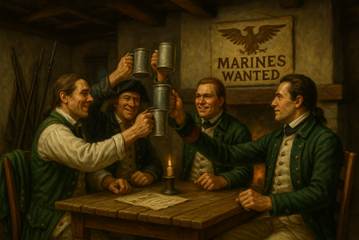
The recruitment of the Continental Marines has become the stuff of legend, particularly the story of their traditional birthplace at Tun Tavern in Philadelphia. Though legend places its first recruiting post at Tun Tavern, historian Edwin Simmons surmises that it may as likely have been the Conestoga Waggon [sic], a tavern owned by the Nicholas family. Regardless of which tavern served as the primary recruiting station, the Marines can claim the unique distinction of being the only military branch “born in a bar”.
The first Commandant of the Marine Corps was Captain Samuel Nicholas, and his first Captain and recruiter was Robert Mullan, the owner of Tun Tavern. Samuel Nicholas, a Quaker-born Philadelphia native and experience mariner, was commissioned on November 28, 1775, becoming the Continental Marines’ senior officer and only commandant throughout their existence. While his background as a Philadelphia tavern keeper may seem unusual for a military leader, his connections in the maritime community proved invaluable for recruiting. The requirement for maritime experience shaped the character of the force from its inception.
The Marines faced immediate recruitment challenges. Originally, Congress envisioned using the Marines for a planned invasion of Nova Scotia. They expected the Marines to draw personnel from George Washington’s Continental Army. However, Washington was reluctant to part with his soldiers, forcing the Marines to recruit independently, primarily from the maritime communities of Philadelphia and New York.
By December 1775, Nicholas had raised a battalion of approximately 300 men, organized into five companies, though this fell short of the original plan for two full battalions. Robert Mullan, helped to assemble the fledgling fighting force. Plans to form the second battalion were suspended indefinitely after several British regiments-of-foot and cavalry landed in Nova Scotia, making the planned naval assault impossible.
Organization for Dual Service
The Continental Marines were organized as a flexible force capable of serving both aboard ships and on land. For shipboard service, Marines were organized into small detachments that could be distributed across the Continental Navy’s vessels. Their organization reflected their multi-purpose mission: they served as security forces protecting ship officers, repelling boarders and joining boarding parties during naval engagements, and as assault troops for amphibious operations. Marksmanship received particular emphasis—a tradition that continues to this day—as Marines often served as sharpshooters in naval engagements, targeting enemy officers and sailors from the rigging and fighting tops of ships.
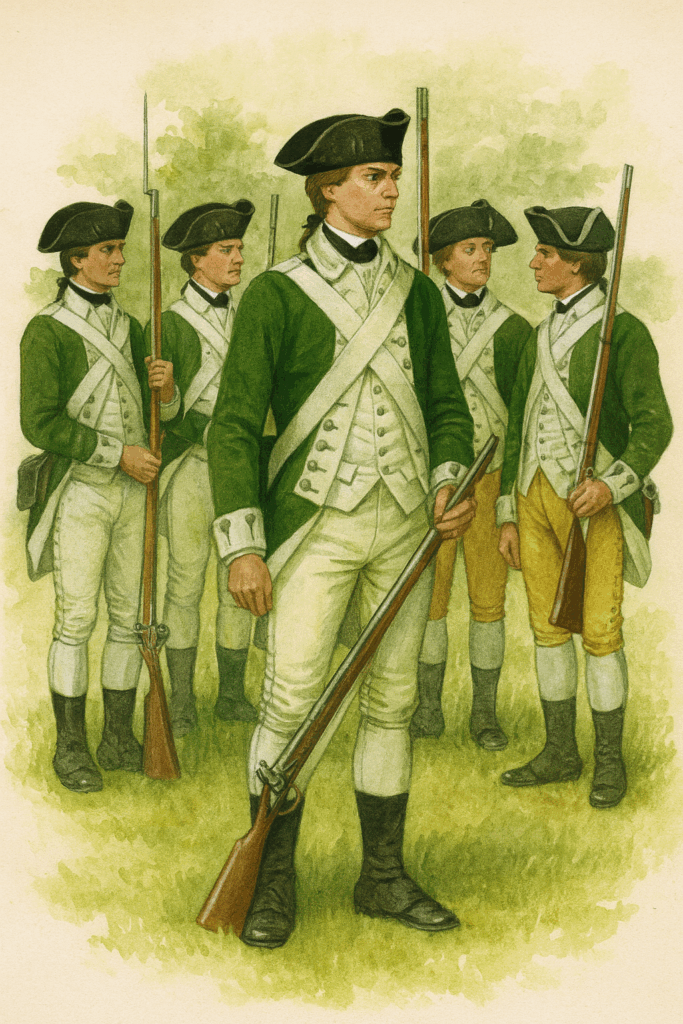
During the Revolutionary War, the Continental Marines uniform directives specified a green jacket with white facings and cuffs. However, when the first sets of uniforms were actually ordered and delivered, red facings were substituted for white. The likely reason was supply availability: red cloth was easier to obtain from Continental or captured British stores. The most authoritative description comes from Captain Samuel Nicholas, who wrote from Philadelphia in 1776 that Marines were outfitted in “green coats faced with red, and lined with white”
The uniform also included a high leather collar, or stock, to ostensibly protect the neck against sword slashes, although there is some evidence that may actually have been intended to improve posture. This distinctive uniform item helped establish their identity as an elite force and eventually lead to their treasured nickname “leathernecks”.
Shipboard Service and Naval Operations
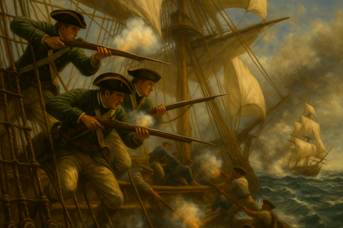
The Continental Marines’ role aboard ship was multifaceted and crucial to naval operations. Their most important duty was to serve as onboard security forces, protecting the captain of a ship and his officers. During naval engagements, in addition to manning the cannons along with the crew of the ship, Marine sharp shooters were stationed in the fighting tops of a ship’s masts specifically to shoot the opponent’s officers and crew. These duties reflected centuries of naval tradition and drew on the example of the British Marines.
The Marines’ first major naval operation came in early 1776 when five companies joined Commodore Esek Hopkins’ Continental Navy squadron, on its first cruise in the Caribbean. This deployment demonstrated their value as both shipboard security and assault troops, setting the pattern for their service throughout the war.
Major Land-Based Actions
Despite their naval origins, the Continental Marines proved equally effective in land combat. Their most famous early action was the landing at Nassau on the Island of New Providence in the Bahamas in March 1776. The landing was the first by Marines on a hostile shore. It was led by Captain Nicholas and consisted of 250 marines and sailors. After 13 Days the Marines had captured two forts, the Government House, occupied Nassau and captured cannons and large stores of supplies. While they missed capturing the gunpowder stores (which had been evacuated before their arrival), the raid demonstrated American capability to strike British positions anywhere.
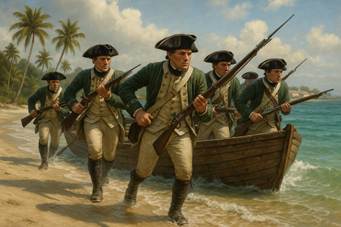
Though modest in scale, this operation had a major symbolic weight and established the Marines as America’s premier amphibious force. The operation did not decisively alter the balance of the war, but it foreshadowed the Marines’ enduring identity as a seafaring, expeditionary force. Today, the Battle of Nassau is remembered less for the supplies seized than for what it represented: the moment the Continental Marines stepped onto the world stage.
Other notable operations included raids on British soil itself. In April of 1778, Marines under the command of John Paul Jones made two daring raids, one at the port of Whitehaven, in northwest England, and the second later that day at St. Mary’s Isle. These operations brought the war directly to British territory, demonstrating American reach and resolve. While the battles had no strategic impact on the outcome of the war, they were a great moral booster when reports, though largely exaggerated, reached the rebellious colonies
Official Marine Corps history also acknowledges Marine participation in the Battle of Princeton, though it wasn’t a major Marine engagement. Marines from Captain William Shippen’s company, who had been serving aboard Continental Navy ships, participated in this battle as a part of Cadwalader’s Brigade on Washington’s flank. Some Marines were detached to augment the artillery, with a few eventually transferring to the army. However, the Marines’ role was relatively minor compared to their more significant naval actions during this period.
The Gradual Decline
As the Revolutionary War progressed, the Continental Marines faced increasing challenges. Financial constraints plagued the Continental forces throughout the war, and the Marines were no exception. The Continental Congress struggled to fund and supply all military branches, and the relatively small Marine force often found itself at a disadvantage competing for resources with the larger Continental Army and Navy.
Recruitment became increasingly difficult as the war dragged on. After the early campaigns, Nicholas’s four-company battalion discontinued independent service, and remaining Marines were reassigned to shipboard detachments. Their number had been reduced by transfers, desertion, and the loss of eighty Marines through disease.
The Continental Navy also faced severe challenges that directly impacted the Marines. Many ships were captured, destroyed, or sold, leaving Marines without their primary operational platform. As the naval war shifted toward privateering and smaller-scale operations, the need for organized Marine units diminished.
Beginning in February 1777 two companies of Marines either transferred to Morristown to assume the roles in the Continental artillery batteries or left the service altogether. This transfer of Marines to army artillery units reflected the practical reality that their specialized skills were needed elsewhere as the Continental forces adapted to changing circumstances.
Disbanded at War’s End
The end of the Revolutionary War marked the end of the Continental Marines as an organized force. Both the Continental Navy and Marines were disbanded in April 1783. Although a few individual Marines briefly stayed on to provide security for the remaining U.S. Navy vessels, the last Continental Marine was discharged in September 1783.
The last official act of the Continental Marines was escorting a stash of French Silver Crowns (coins) from Boston to Philadelphia—a loan from Louis XVI to establish of the Bank of North America. This final mission, conducted in 1781, symbolically linked the Marines to the new nation’s financial foundations even as their military role ended.
The disbanding reflected broader American attitudes toward standing military forces. Having won their independence, Americans were skeptical of maintaining large military establishments that might threaten republican government. The Continental Congress, facing financial pressures and political opposition to permanent military forces, chose to disband both the Navy and Marines.
Legacy
The Continental Marines’ contribution to American independence was significant despite their small numbers. In all, over the course of 7 years of battle, the Continental Marines had only 49 men killed and just 70 more wounded, out of a total force of roughly 130 Marine Officers and 2,000 enlisted. These relatively low casualty figures reflected both their effectiveness and the limited size of the force.
Rising tensions with Revolutionary France in the late 1790s led to the Quasi-War, prompting Congress to reestablish the Navy in 1798. On July 11 of that year, President John Adams signed legislation formally creating the United States Marine Corps as a permanent branch of the military, under the jurisdiction of the Department of the Navy. This new Marine Corps inherited the traditions, mission, and esprit de corps of its Revolutionary War predecessors. Despite the gap between the disbanding of the Continental Marines and the establishment of the new United States Marine Corps, Marines honor November 10, 1775, as the official founding date of their Corps.
The Continental Marines established precedents that would shape American military doctrine for more than two centuries. The Revolutionary War not only led to the founding of the United States (Continental) Marine Corps but also highlighted for the first time the versatility for which Marines have come to be known. They fought on land, they fought at sea on ships, and they performed amphibious assaults.
The Continental Marines represented a crucial innovation in American military organization. Born from congressional resolution and tavern recruitment, these maritime warriors proved their worth in battles from the Caribbean to the British Isles. Though disbanded with the war’s end, their legacy lives on in the traditions and spirit of the modern Marine Corps. While their numbers were small and their existence brief, their impact on American military tradition proved lasting and significant.

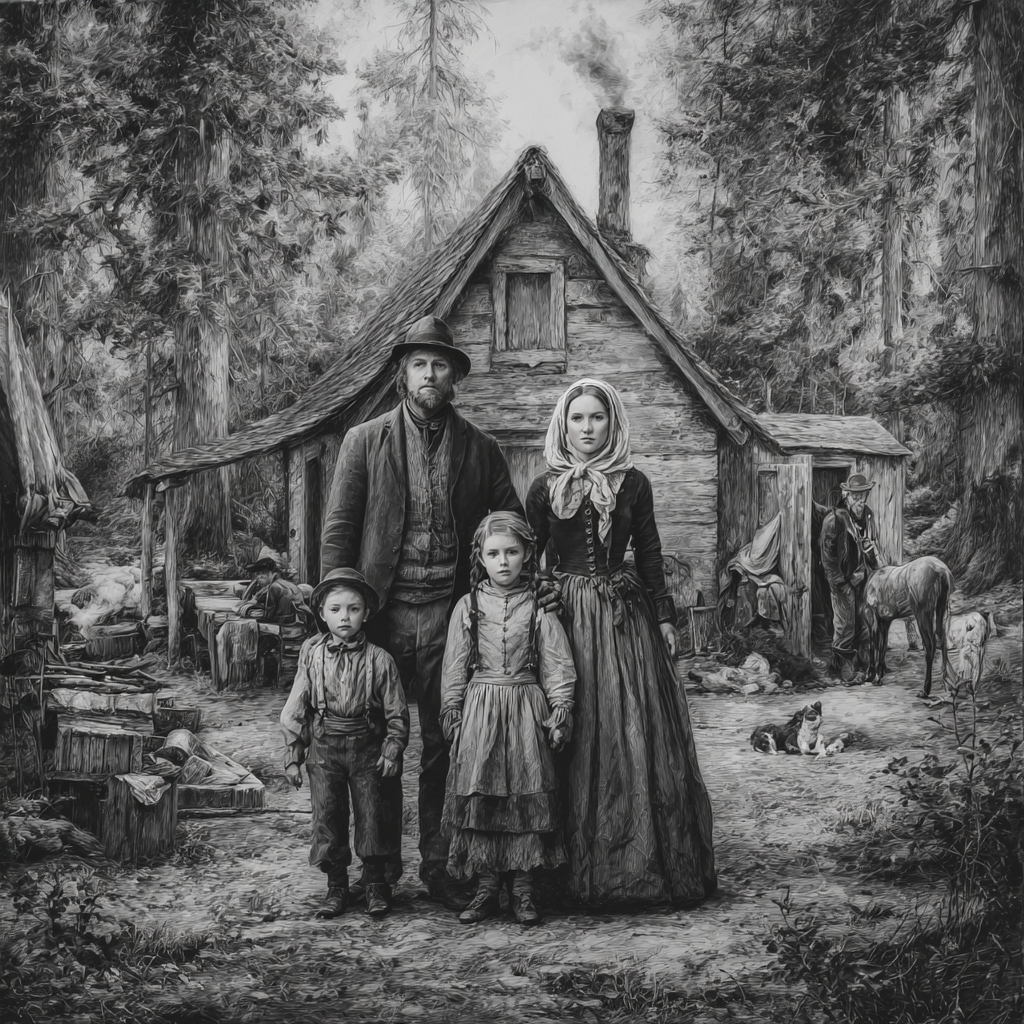
Did you know that there once an independent republic in the farthest reaches of northern New Hampshire, where the dense forests blend into the Canadian wilderness? Neither did I until I came across it in a fascinating book titled A Brief History of the World in 47 Boarders by John Elledge.
It was a short-lived but remarkable experiment in self-government. For three years in the 1830s, the settlers of a disputed border region declared themselves citizens of an independent republic—complete with their own constitution, legislature, and militia. They called it the Republic of Indian Stream, a name that today sounds almost mythical, yet it was a genuine, functioning democracy. Their story blends frontier improvisation, international diplomacy, and Yankee self-reliance—and it leaves us with a curious artifact: a constitution written not by statesmen in Philadelphia, but by farmers, loggers, and merchants caught between two competing nations.
A Territory in Limbo
The roots of the Indian Stream story go back to the Treaty of Paris (1783), which ended the American Revolution. The treaty defined the U.S.–Canada border but used vague geographic language—particularly the phrase “the northwesternmost head of the Connecticut River.” No one could agree which of several small tributaries the treaty meant.
The ambiguity created a slice of wilderness—about 200 square miles—claimed by both the United States and British Lower Canada (now Quebec). For decades, the region existed in a gray zone. Both countries sent tax collectors and law officers, both demanded military service, and neither provided clear legal protection. Residents couldn’t vote, hold secure property titles, or rely on either government’s courts. To make matters worse, they were sometimes forced to pay taxes twice—once to New Hampshire and once to Canada.
Origins of the Republic
By the late 1820s, frustration had reached a boiling point. Attempts to resolve the border dispute were unsuccessful—including arbitration by the King of the Netherlands in 1827 that failed when the United States rejected his decision that favored Great Britain.
With both sides still pressing their claims, the settlers decided they’d had enough of outside interference. On July 9, 1832, they convened a local meeting and declared independence, forming the Republic of Indian Stream. Their constitution—modeled on American state constitutions—began with a simple premise: authority rested with “the citizens inhabiting the territory.”
This wasn’t an act of rebellion but one of survival. The settlers wanted peace, order, and local control. Their goal was to withdrawal from ambiguous regulation and to create a government that could function until the border question was finally settled.
The Constitution of Indian Stream
The constitution of the Republic, adopted the same day they declared sovereignty, was an impressively crafted document for a community of barely 300 people. It reflected the settlers’ familiarity with republican ideals and their determination to govern themselves fairly.
Key features included:
- Democratic foundation: All authority stemmed from the citizens.
- Annual elections: A single House of Representatives made the laws, and a magistrate acted as both executive and judge.
- Judicial simplicity: Local justices of the peace handled disputes—there were no elaborate court hierarchies.
- Individual rights: Residents enjoyed protections derived from U.S. constitutions—trial by jury, due process, and freedom from arbitrary arrest.
- Defense and civic duty: Citizens pledged to defend their independence and assist one another in emergencies.
Despite its modest scale, the system worked. The republic passed laws, issued warrants, collected taxes, and even mustered a small militia to maintain order.
Life on the Frontier
Life in Indian Stream resembled that of many frontier communities: logging, farming, hunting, and trading. The land was rough, winters long, and access to distant markets limited. Yet the people thrived through cooperation and self-reliance. Trade with both Canadian and New Hampshire merchants continued—proof that practicality often trumped politics on the frontier.
The republic’s remote location provided a degree of safety from interference, but not immunity. Both British and American agents continued to assert claims, and occasional arrests or skirmishes kept tensions high.
The End of the Republic
The experiment in independence lasted only three years. In 1835, a dispute between an Indian Stream constable and a Canadian deputy sheriff triggered a diplomatic crisis. Canada sent troops to assert control, prompting New Hampshire’s governor to respond in kind.
Realizing they were caught between two competing governments, the citizens voted in April 1836 to accept New Hampshire’s jurisdiction. Indian Stream became part of the town of Pittsburg, and peace was restored.
The larger boundary issue wasn’t fully settled until the Webster–Ashburton Treaty of 1842, which formally placed Indian Stream within the United States.
Legacy of a Lost Republic
Today, little remains of the Republic of Indian Stream except New Hampshire Historical Marker #1 and a scattering of homesteads near the Connecticut Lakes.
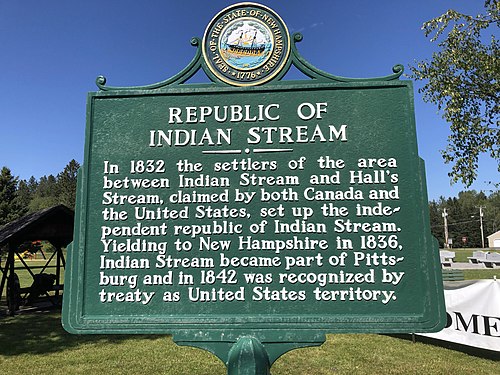
Yet its legacy is profound. It may have lasted only three years, but its story reflects the broader American frontier experience: independence, inventive, and determination to live free from arbitrary rule. In an era defined by rigid borders and powerful states, the memory of Indian Stream reminds us that freedom once depended, not on lines on a map, but on the courage of people willing to draw their own lines.
The story also illustrates the complexities of nation-building in the early American period when borders remained fluid and communities sometimes had to forge their own path toward self-governance. While the republic was short lived, it stands as a testament to the ingenuity and determination of America’s frontier settlers, who refused to accept statelessness and instead chose to create their own nation in the wilderness.
The Indian Stream constitution reminds us that political order is not always imposed from above; sometimes, out of necessity, it is created from below. The settlers were neither revolutionaries nor idealists—they simply wanted clear rules, fair courts, and predictable taxes. Ordinary citizens, faced with legal chaos and neglect, designed a functioning democracy grounded in fairness and mutual responsibility.
That such a tiny community would craft its own constitution speaks to the enduring appeal of constitutional government in the early 19th century. Even on the edge of two empires, far from capitals and legislatures, these settlers turned to a familiar American solution: write it down, elect your leaders, and hold them accountable every year. Hopefully we will be able to keep their spirit and live up to the example of Indian Stream.
How the Marine Corps Found Its Symbol
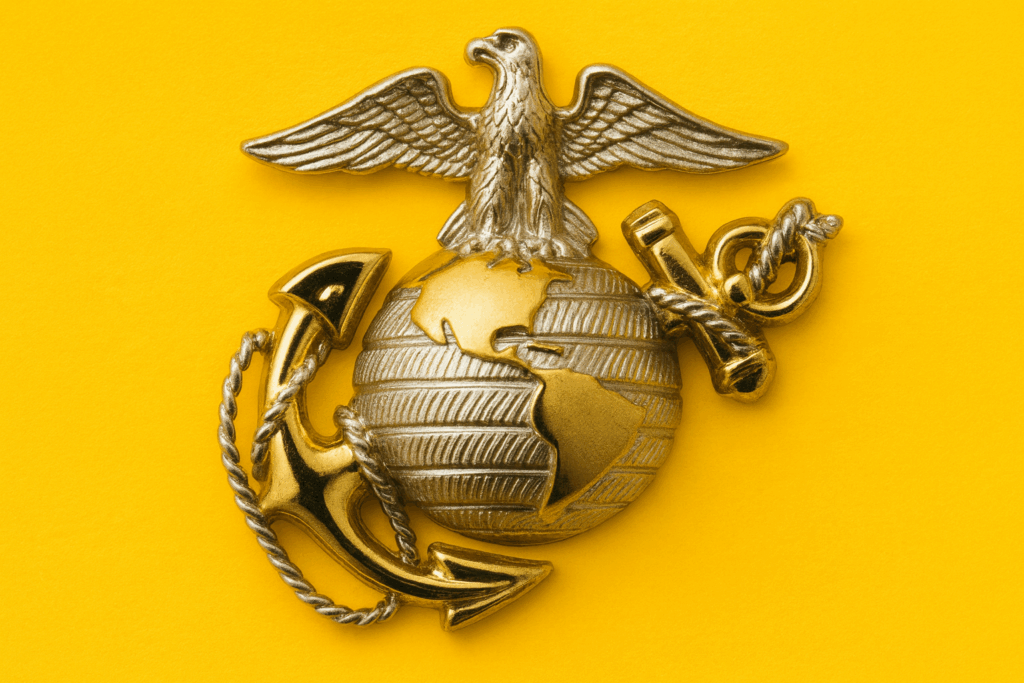
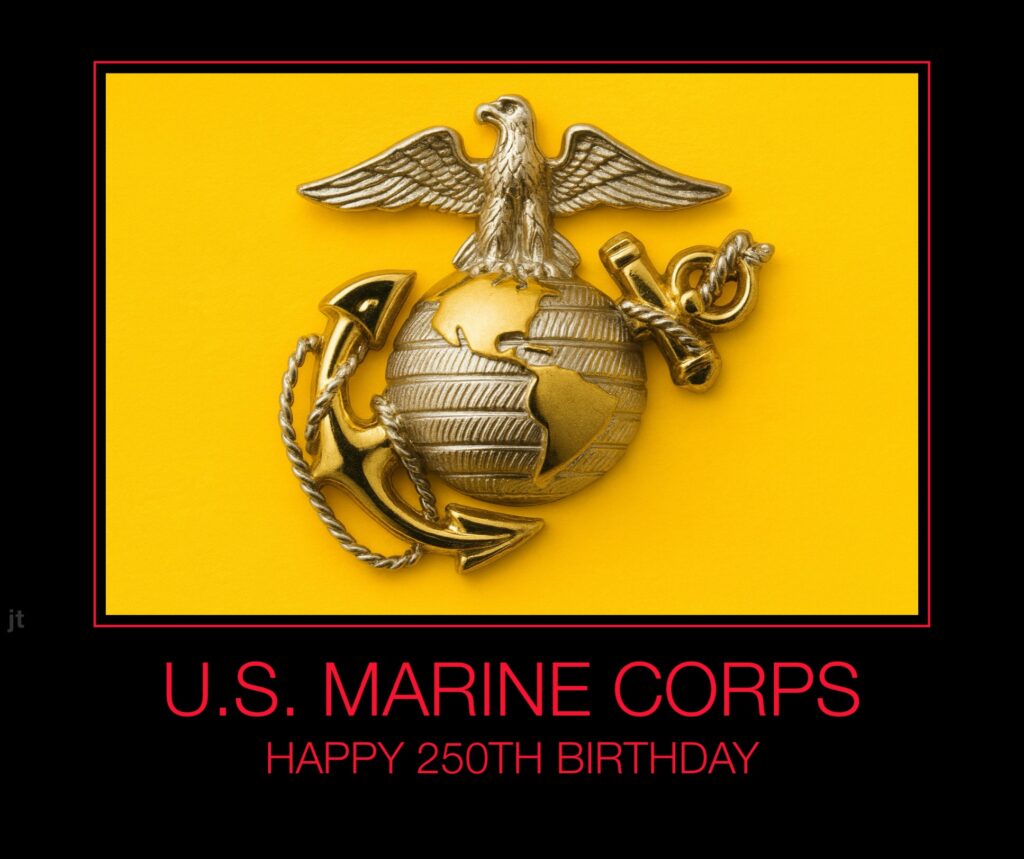
Few military emblems carry as much history and pride as the Marine Corps’ Eagle, Globe, and Anchor, better known as the EGA or simply as the emblem. New recruits and officer candidates work intensely to earn the right to wear this symbol. It is a source of immense pride for every Marine who achieves that distinction.
When entering the Corps, I encountered World War II veterans who affectionately called the EGA the “Birdie on the Ball.” But only Marines can take such liberties—outsiders risk offense if they use the term.
The emblem is instantly recognizable, yet few realize its deep historical roots or appreciate the transformations it has undergone to become the symbol every Marine wears today.
From Anchors to Eagles: The Early Years (1776–1868)
At its inception in 1776, the Continental Marines lacked any formal insignia. Some Marines, predominantly officers, adopted maritime icons such as the fouled anchor—an anchor entwined with rope—often emblazoned on buttons or hat plates. This design echoed the British Royal Navy and underscored their naval identity, but it was never standardized.
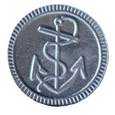
Uniform innovations began in the early 1800s. By 1804, Marines were using brass eagles mounted on square plates. During the War of 1812, octagonal plates appeared, embossed with eagles, anchors, drums, shields, and flags. Later designs were simplified to feature metal letters “U.S.M.” (United States Marines), reflecting the shift towards a national identity.
The example below is an officer’s coat button circa 1805-1820.
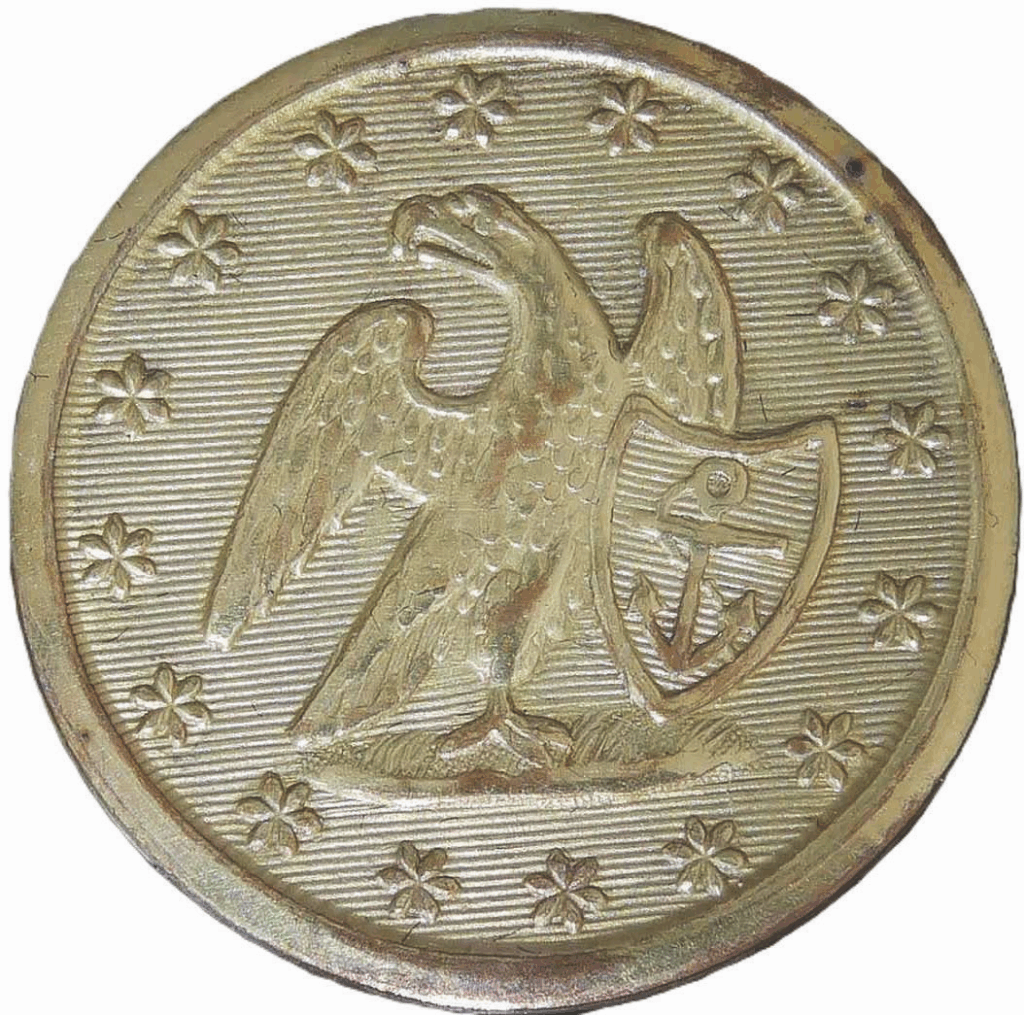
A more distinctive step came in 1821: the Corps adopted an eagle perched on a fouled anchor encircled by 13 stars, a motif featured on buttons for nearly four decades. However, similar symbols were also used by the Army and Navy, making it less than unique.
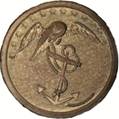
Following the Civil War, Marine Corps leadership under Brigadier General Jacob Zeilin, the seventh Commandant, sought a truly unique insignia for the service.
The Zeilin Board and the Birth of the Modern EGA (1868)
On November 12, 1868, Zeilin established a board of officers “To decide and report upon the various devices of cap ornaments of the Marine Corps.” They wasted no time: by November 19, the Secretary of the Navy, Gideon Welles, had approved the new emblem.
The board drew inspiration from the British Royal Marines’ “Globe and Laurel” emblem.
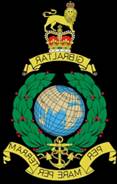
The American version added a few important touches:
- Globe showing the Western Hemisphere: Representing the Corps’ defense of the Americas and a global presence.
- Fouled anchor: Honoring the Corps’ naval origins.
- Eagle: Symbolizing national service and pride.
Zeilin described the new emblem as representing the Corps’ “readiness to serve anywhere, by sea or land.”
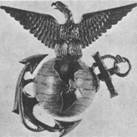
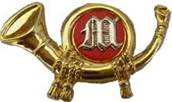
At the same time, a distinct emblem was also created for Marine Corps musicians, still seen today on the formal red and gold uniforms of the U.S. Marine Band—“The President’s Own”.
The Motto and Later Refinements
The Latin motto, Semper Fidelis (“Always Faithful”), was introduced in 1883 under Commandant Charles McCawley, replacing previous mottoes such as Fortitudine (“With Fortitude”). Semper Fidelis became central to the Marine Corps’ ethos.
The emblem saw many variations over the decades. Initial designs featured a crested eagle—borrowed from European heraldry. Semper Fidelis appeared on a scroll held in the eagle’s beak on some versions of the emblem.
Only in 1954, with President Dwight D. Eisenhower’s Executive Order 10538, did the American bald eagle with a scroll officially become part of the emblem. This finalized the design used today.

Officer and Enlisted Differences
Since 1868, design distinctions have marked officer and enlisted EGA emblems. Officers’ original emblems were elaborate—frosted silver hemispheres with gold-plated Americas, crowned by a solid silver eagle. Enlisted emblems were brass, emphasizing practicality.
Modern officers wear a multi-piece, high-relief insignia with fine rope detailing, while enlisted Marines use a one-piece emblem. Notably, officers’ globes omit Cuba to strengthen the emblem structurally. A running joke among enlisted personnel is that officers couldn’t find Cuba on a map.
Before WWII, officers often purchased insignia from jewelers like Bailey, Banks & Biddle, resulting in stylistic inconsistency. One museum curator quipped, “World War I eagles looked like fat turkeys.” Eventually, standardization brought the crisp, clean look seen today.
A Legacy That Endures
From 18th-century anchors to the refined Eagle, Globe, and Anchor of today, the emblem tracks the Corps’ evolution from shipboard security to a global expeditionary force. Over centuries, its form has varied—engraved by jewelers, stamped for wartime, and cast in silver for dress blues—but its meaning remains constant.
Every Marine who earns the EGA joins a tradition stretching back 250 years, defined by courage, loyalty, and the enduring promise to remain Always Faithful.
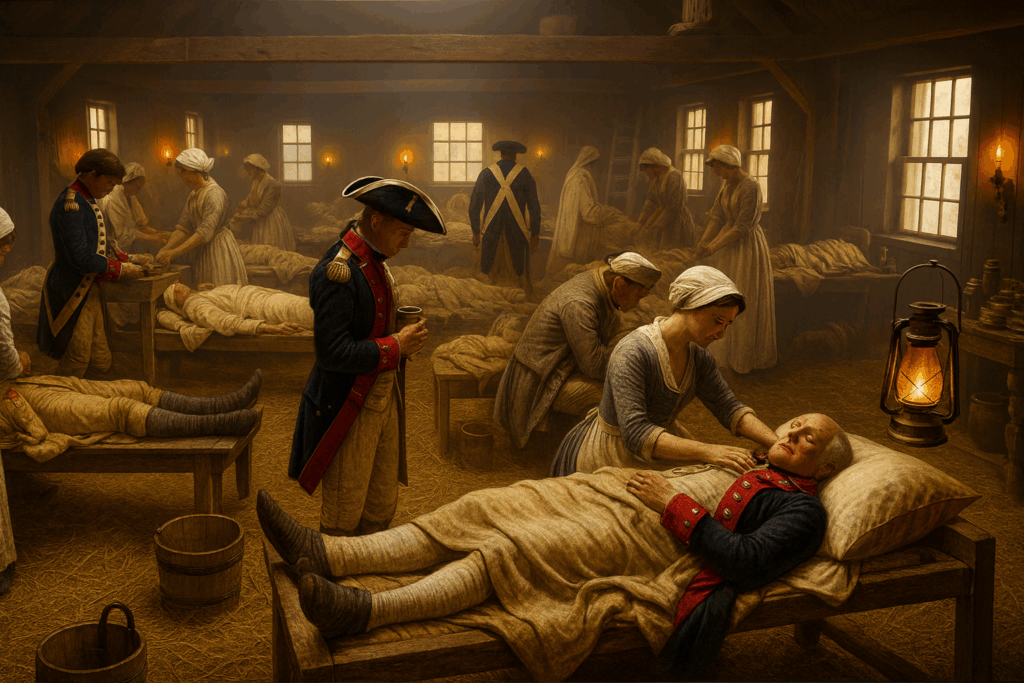
When you think about the American Revolution, you probably picture dramatic battles like Bunker Hill or the crossing of the Delaware. But here’s something that might surprise you: the biggest killer during the war wasn’t British muskets—it was disease. And it’s not even close.
The Numbers Tell a Grim Story
Let’s talk numbers for a second. On the American side, about 6,800 soldiers died from battlefield wounds. Sounds terrible, right? Well, disease killed an estimated 17,000 to 20,000. That’s roughly three times as many. The British and their Hessian allies faced similar odds: around 7,000 combat deaths versus 15,000 to 25,000 disease deaths.
Think about that for a moment. You were actually safer charging into battle than hanging around camp. In some regiments, disease wiped out more than a third of the troops before they even saw their first fight.
Why Was Disease So Deadly?
Picture yourself in a Revolutionary War military camp. Hundreds of men crammed together in makeshift shelters, no running water, primitive latrines dug too close to where everyone lives, and basically zero understanding of what we’d call “germ theory” today. It’s a perfect storm for infectious disease.
The big killers were:
Smallpox was the heavyweight champion of camp diseases. This virus killed about 30% of people it infected and spread like wildfire through packed military camps. Soldiers tried to protect themselves through a risky practice called inoculation—basically giving themselves a mild case of smallpox on purpose by rubbing infected pus into cuts on their skin. Without proper quarantine procedures, though, this sometimes made outbreaks worse instead of better.
Typhus (called “camp fever” back then) spread through lice and fleas. If you’ve ever been to a prolonged camping trip and felt gross after a few days, imagine that times a hundred. Soldiers lived in the same clothes for weeks, rarely bathed, and the parasites just had a field day. The fever, headaches, and diarrhea that came with typhus made it one of the most dreaded camp diseases.
Dysentery (charmingly nicknamed “bloody flux”) came from contaminated water and poor sanitation. When your latrine is 20 feet from your water source and you don’t understand how disease spreads, this becomes pretty much inevitable. The severe diarrhea weakened soldiers to the point where many couldn’t fight even if they wanted to and it made them even more susceptible to other diseases.
Malaria was especially important in the South, where mosquitoes thrived in the humid climate. This one actually played a fascinating role in how the war ended—but more on that in a bit.
When Disease Changed Everything
The 1776 invasion of Canada was a disaster largely because of smallpox. Out of 3,200 American soldiers in the Quebec campaign, 1,200 fell sick. You can’t mount much of an offensive when more than a third of your army is flat on their backs with fever. Similarly, during the siege of Boston, Washington couldn’t effectively engage the British because so many of his troops were sick with smallpox. These weren’t just setbacks—they were strategic catastrophes.
This is what pushed George Washington to make one of his boldest decisions in 1777: he ordered a mass inoculation of the Continental Army. This was controversial and dangerous at the time, but it worked. Washington had survived smallpox himself as a young man, so he understood both the risks and the benefits. The inoculation program probably saved the army from complete collapse.
Medical “Treatment” Was Often Worse Than Nothing
Here’s where things get really grim. Eighteenth-century medicine was basically medieval. Doctors believed in “balancing the humors” through bloodletting—literally draining blood from already weakened soldiers. They also gave powerful laxatives to people who were already suffering from diarrhea. Yeah, let that sink in.
Pain relief meant opium-based drinks or just straight alcohol. Some doctors used herbal remedies, but results were inconsistent at best. Quinine helped with malaria, though nobody really understood why. Mostly, if you got seriously sick, your survival came down to luck and a strong constitution.
Valley Forge: The Turning Point
Valley Forge is famous for being a brutal winter encampment, and disease was a huge part of why it was so terrible. Scabies left nearly half the troops unable to serve. Dysentery and camp fever killed somewhere between 1,700 and 2,000 soldiers during that single winter—and remember, these weren’t battle casualties. These men died from preventable diseases in what was supposed to be a safe encampment.
But Valley Forge taught the Continental Army a crucial lesson. After that nightmare winter, military leaders started taking sanitation seriously. They began focusing on camp hygiene, protecting water supplies, placing latrines away from living areas, and making sure soldiers could bathe and wash their clothes and bedding.
Baron von Steuben is famous for teaching the Continental Army how to march and drill, but he also deserves credit for implementing serious sanitation reforms. These changes helped prevent future disease outbreaks and kept the army functional for the rest of the war.
The Secret Weapon at Yorktown
Here’s one of my favorite historical details: mosquitoes may have helped win American independence. At Yorktown, roughly 30% of Cornwallis’s British army was knocked out by malaria and other diseases during the siege. The British commander was trying to hold off the American and French forces while also dealing with the fact that almost a third of his troops were too sick to fight.
Many American soldiers from the southern colonies had grown up with malaria and had some partial immunity. The British? Not so much. Some historians even think Cornwallis himself might have been suffering from malaria, which could have affected his decision-making. His second-in-command, Brigadier General Charles O’Hara, was definitely seriously ill during the siege. Fighting a war while you can barely stand is a pretty significant handicap.
The Bigger Picture
The American Revolution shows us something important: wars aren’t just won on battlefields. They’re won by the side that can keep its soldiers alive and healthy. Disease shaped strategic decisions, determined the outcomes of campaigns, and killed far more men than any British regiment ever did.
Washington’s decision to inoculate the army was genuinely revolutionary (pun intended). It showed a willingness to embrace controversial medical practices for the greater good. The sanitation reforms that came out of Valley Forge laid groundwork for modern military medicine and influenced public health policies in the new United States.
So next time someone mentions the American Revolution, remember: while we celebrate the military victories, one of the most important battles was fought against an enemy you couldn’t see—and for most of the war, nobody really knew how to fight it.
The casualty figures and major disease outbreaks are well-documented in historical records. The specific percentages and numbers are estimates based on historical research, as precise record-keeping was limited during this period. The overall narrative about disease being the primary cause of death is strongly supported by multiple historical sources.

Creating a safe home environment becomes increasingly important as we age. Here’s a comprehensive checklist organized by key areas to help seniors and their families identify potential hazards and make practical improvements.
Fall Prevention (General)
Falls are the leading cause of injury among older adults, accounting for over 3 million emergency department visits annually. Here’s what to address:
- Remove or secure loose rugs and runners throughout the home
- Eliminate clutter from walkways and stairs
- Ensure all stairways have sturdy handrails on both sides
- Improve lighting in all areas, especially hallways and stairways
- Keep frequently used items within easy reach to avoid overreaching
- Repair loose floorboards or uneven flooring
- Use non-slip mats under area rugs
- Arrange furniture to create clear walking paths
- Keep electrical and phone cords away from walking areas
- Use chairs with arms for easier standing
- Wear sturdy, non-slip footwear indoors
Bathroom Safety
The bathroom presents unique challenges due to wet surfaces and the need to transition between sitting and standing positions.
- Install grab bars near the toilet and inside the shower or tub
- Ensure grab bars are mounted directly into wall studs not drywall anchors
- Use suction cup bars only for balance—they will not support your weight
- Use a non-slip bath mat both inside and outside the tub or shower
- Consider a shower chair or tub transfer bench for bathing
- Install a raised toilet seat if needed
- Ensure the bathroom has bright, even lighting
- Keep a nightlight on for nighttime bathroom visits
- Store toiletries within easy reach to avoid stretching
- Set water heater to 120°F or below to prevent scalding
- Consider replacing traditional tub with a walk-in shower
Kitchen Safety
The kitchen involves both fall risks and burn hazards that need attention.
- Store heavy items at waist level to avoid bending or reaching
- Use a sturdy step stool with handrails if reaching is necessary—never use chairs
- Keep a fire extinguisher accessible and ensure it’s up to date
- Wear short or close-fitting sleeves while cooking
- Turn pot handles inward to prevent knocking them over
- Clean up spills immediately to prevent slips
- Ensure adequate lighting over work areas
- Mark “on” and “off” positions clearly on appliance controls
- Consider replacing gas stoves with electric if memory issues are present
Bedroom Safety
Since we spend significant time in the bedroom, it should be optimized for safe movement, especially at night.
- Position the bed at an appropriate height for easy getting in and out
- Keep a lamp or light switch within reach of the bed
- Install nightlights along the path from bedroom to bathroom
- Keep a phone or medical alert device within reach
- Ensure smoke and carbon monoxide detectors are installed and functional
- Avoid placing electrical cords near the bed where they could cause tripping
- Use a firm mattress that provides adequate support
- Keep a flashlight on the nightstand in case of power outages
- Position cane or walker within easy reach if needed
Lighting Throughout the Home
Poor lighting significantly increases fall risk, yet it’s one of the easiest issues to address.
- Increase wattage in existing fixtures (within safe limits)
- Add lighting to dark hallways, stairways, and entrances
- Install motion-sensor lights for convenience
- Use nightlights in bathrooms, hallways, and bedrooms
- Ensure light switches are accessible at room entrances
- Replace burnt-out bulbs promptly
- Consider adding illuminated light switches
- Ensure outdoor entrances are well-lit
Stairway Safety
Stairs are high-risk areas that deserve special attention and modifications.
- Ensure handrails extend the full length of stairs
- Mark the edge of each step with bright, contrasting tape if not carpeted
- Repair any loose steps or carpeting immediately
- Ensure adequate lighting with switches at both top and bottom
- Avoid storing items on stairs
- Consider installing a stair lift if mobility is significantly impaired
- Keep exterior stairs clear of ice and snow in winter
Fire and Emergency Safety
Quick response to emergencies can be lifesaving, so preparation is essential.
- Install smoke detectors on every level and in each bedroom
- Test smoke and carbon monoxide detectors monthly
- Replace detector batteries at least annually
- Keep fire extinguishers accessible in kitchen and garage
- Create and practice an emergency exit plan
- Post emergency numbers near all phones
- Ensure house numbers are visible from the street for emergency responders
- Consider a medical alert system, especially for those living alone
- Keep a phone accessible at all times
Medication Safety
Medication management becomes more complex with age, and organization is key.
- Use a pill organizer to track daily medications
- Keep medications in original containers with clear labels
- Store medications in a cool, dry place (not the bathroom)
- Maintain an updated list of all medications and dosages
- Discard expired medications properly
- Ensure adequate lighting in areas where medications are taken
- Set reminders for medication times
- Consider a medication app for your smart phone
- Keep a medication list in your wallet for emergencies
Technology and Communication
Staying connected improves both safety and quality of life.
- Keep a charged cell phone accessible at all times
- Consider a medical alert system with fall detection
- Program emergency contacts into phones
- Ensure phones have large buttons and clear displays if vision is impaired
- Keep a list of emergency contacts posted in visible locations
- Consider smart home devices that can control lights and temperature by voice
Outdoor Safety
The area outside the home also requires attention to prevent falls and injuries.
- Repair cracked or uneven walkways and driveways
- Ensure outdoor steps have sturdy handrails
- Keep walkways clear of leaves, ice, and snow
- Trim overgrown bushes and trees that obstruct paths
- Ensure outdoor lighting is adequate for evening and early morning
- Use non-slip materials on outdoor steps
- Consider replacing steps with ramps if mobility is significantly limited
- Place nonslip mats outside entry doors to reduce tracking in moisture or mud
This checklist is based on well-established safety guidelines from organizations like the CDC and National Fire Protection Association. The specific recommendations reflect current best practices in senior home safety. However, individual needs vary significantly based on specific mobility issues, health conditions, and home layouts, so some modifications may be more relevant than others for different situations.
Note: While these recommendations are widely applicable, it’s beneficial to have an occupational therapist or home safety specialist conduct a personalized assessment, as they can identify specific risks based on individual circumstances and home characteristics.
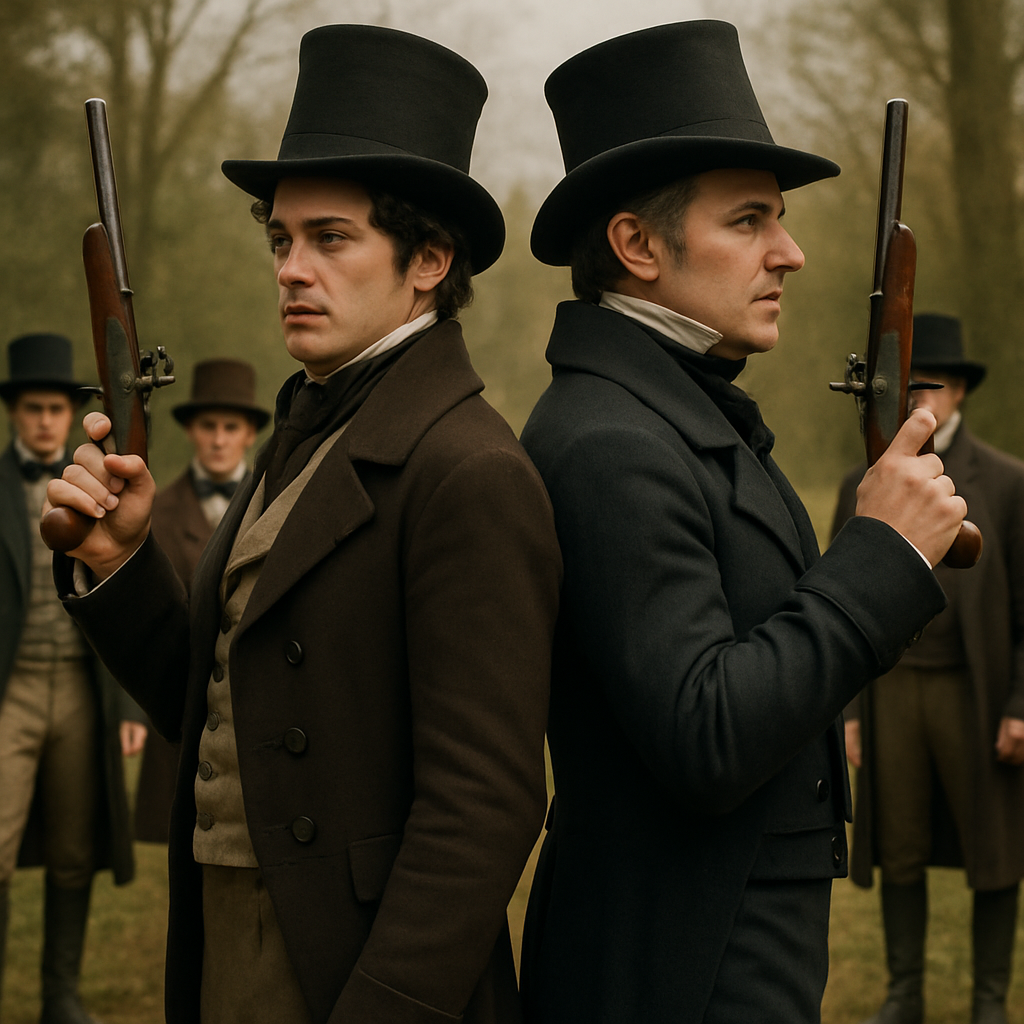
Not long ago I was watching a news show and one of the panelists started talking about “a duel of words” that went on in a congressional hearing. I was intrigued by the use of the word duel and I thought I’d look into the history of this strange custom.
In the age before Twitter feuds, internet trolling, and legal settlements, honor was defended with pistols at dawn. The Code Duello, a set of rules governing dueling, offers a fascinating glimpse into how ideas of masculinity, reputation, and justice shaped public and private life in the Anglo-American world from the mid-18th century through the antebellum era.
The Code Duello emerged as one of the most distinctive and controversial aspects of genteel culture in the American colonies in the early United States. This elaborate system of honor-based combat, imported from European aristocratic traditions, would profoundly shape American society between 1750 and 1860, creating a culture where personal honor often trumped legal authority and where violence became a sanctioned means of dispute resolution among the elite.
European Origins
The Code Duello originated in Renaissance Italy and spread throughout European aristocratic circles as a means of settling disputes while maintaining social hierarchy. The practice reached the American colonies through British and Continental European settlers who brought with them deeply ingrained notions of honor, reputation, and gentlemanly conduct. Unlike random violence or brawling, dueling operated under strict protocols that emphasized courage, skill, and adherence to prescribed rituals.
The most influential codification was the Irish Code Duello of 1777, written by gentlemen of Tipperary and Galway. This twenty-six-rule system established procedures for issuing challenges, selecting weapons, determining conditions of combat, and defining acceptable outcomes. The code emphasized that dueling was a privilege of gentlemen, requiring both participants to be of equal social standing and ensuring that honor could only be satisfied through formal, regulated combat.
Colonial Implementation and Adaptation
The first recorded American duel occurred in 1621 in Plymouth, Massachusetts, between two servants, but the practice soon became the exclusive domain of elites as only “gentlemen” were considered to possess honor worth defending in this way.
The Irish Code Duello was widely adopted in America, though often with local variations. In 1838, South Carolina Governor John Lyde Wilson published an “Americanized” version, known as the Wilson Code, which further codified the practice for the southern states and attempted to increase negotiated settlements. These codes served as the de facto law of honor, even as formal legal systems struggled to suppress dueling.
The practice gained prominence among the southern plantation society’s hierarchy as dueling fit well with its emphasis on personal honor. The ritual was highly formal: challenges were issued in writing, seconds (assistants to the duelists) attempted to mediate, the weapons chosen, and terms were carefully negotiated.
Colonial dueling adapted European practices to American circumstances. While European duels often involved swords, reflecting centuries of aristocratic martial tradition, American duelists increasingly favored pistols, which were more readily available and required less specialized training. This shift democratized dueling to some extent, as pistol proficiency was more easily acquired than swordsmanship, though the practice remained largely restricted to the upper classes.
The Revolutionary War significantly expanded dueling’s influence. Military service brought together men from different regions and social backgrounds, spreading dueling customs beyond their original geographic and social boundaries. Officers who had learned European military traditions during the conflict carried these practices into civilian life, establishing dueling as a marker of martial virtue and gentlemanly status.
The Early Republic
Following independence, dueling became increasingly institutionalized in American society. The young republic’s political culture, characterized by intense partisan conflict and personal attacks in newspapers, created numerous opportunities for perceived slights to honor that demanded satisfaction through combat.
The most famous American duel occurred in 1804 when Aaron Burr killed Alexander Hamilton at Weehawken, New Jersey. This encounter exemplified both the power and the contradictions of dueling culture. Hamilton, despite philosophical opposition to dueling, felt compelled to accept Burr’s challenge to maintain his political viability. The duel’s outcome effectively ended Burr’s political career and demonstrated how adherence to the code could destroy the very honor it purported to defend.
Prior to becoming president, Andrew Jackson took part in at least three duels, although he is rumored to have been in many more. In his most famous duel, Jackson shot and killed a man who had insulted his wife. Jackson was also wounded in the duel and carried the bullet in his chest for the rest of his life.
Political dueling reached epidemic proportions in the antebellum period. Congressional representatives, senators, and other public figures regularly challenged opponents to combat over policy disagreements or personal insults. The practice became so common that some politicians deliberately provoked duels to enhance their reputation for courage, while others saw dueling as essential to maintaining credibility in public life.
Regional Variations and Social Dynamics
Dueling culture varied significantly across regions. The South developed the most elaborate and persistent dueling traditions, where the practice became intimately connected with concepts of honor, masculinity, and social hierarchy that would later influence Confederate military culture. Southern dueling codes often emphasized elaborate rituals and multiple exchanges of fire, reflecting a culture that viewed honor as more important than life itself.
Northern attitudes toward dueling were more ambivalent. While many Northern elites participated in dueling, the practice faced stronger opposition from religious groups, legal authorities, and emerging middle-class values that emphasized commerce over honor. Anti-dueling societies formed in several Northern cities, and some states enacted specific anti-dueling legislation, though enforcement remained inconsistent. Laws against it were passed in several colonies as early as the mid-18th century, with harsh penalties including denial of Christian burial for duelists killed in combat. Clergy denounced it as un-Christian, and reformers sought to eradicate it, but the practice persisted, especially in regions where courts were weak or social hierarchies unstable. The South, with its less institutionalized markets and governance, saw dueling as a quicker, more reliable way to settle disputes.
Western frontier regions adapted dueling to their own circumstances, often emphasizing practical marksmanship over elaborate ceremony. Frontier dueling tended to be less formal than Eastern practices, but it served similar functions in establishing social hierarchies and resolving disputes in areas where legal institutions remained weak.
Decline and Legacy
By the 1850s, dueling faced increasing opposition from legal, religious, and social reform movements. The rise of professional journalism, which could destroy reputations without resort to violence, provided alternative means of defending honor. Changing economic conditions that emphasized commercial success over martial virtue gradually undermined dueling’s social foundations.
The Civil War marked dueling’s effective end as a significant social institution. The massive scale of organized violence made individual combat seem anachronistic, while post-war society increasingly emphasized industrial progress over aristocratic honor. Though isolated duels continued into the 1870s, the practice lost its central role in American elite culture.
The Code Duello’s legacy extended far beyond its formal practice. It established patterns of violence, honor, and masculine identity that would influence American culture for generations, contributing to regional differences in attitudes toward violence and honor that persist today. The code’s emphasis on individual resolution of disputes also reflected broader American skepticism toward institutional authority, helping shape a culture that often preferred private justice to public law.
How the Code Duello Shaped Western Gunfighting Culture
The Code Duello was a script for settling personal disputes through controlled violence. Its influence waned in the East by the mid-1800s, but many of its ideas persisted, especially among military veterans, Southern transplants, and frontiersmen. As the American frontier expanded, the ethic of “settling scores” through personal combat found fertile ground in the west. What changed was the style and setting.
From Pistols at Dawn to High Noon
In the Code Duello, challenges were typically issued in writing, often with formal language and designated seconds. A duel was planned, often days in advance, and fought with flintlock pistols or swords. By contrast, gunfights in the Old West were more spontaneous, often provoked by insults, cheating, or long-standing feuds. Still, both forms were ultimately about defending personal honor in public view.
Gunfighters like Wild Bill Hickok and Wyatt Earp became mythologized partly because they embodied an honor-based culture in an environment where the law was weak or slow. In many ways, the Western gunfight was an informal, democratized version of the Code Duello, stripped of its aristocratic pretenses but keeping its emotional and symbolic core.
Myth vs. Reality
Ironically, formal duels were relatively rare in the actual Old West, and many “gunfights” were closer to ambushes or drunken brawls than ritualized combat. But dime novels, Wild West shows, and later Hollywood films reimagined them using a Code Duello-like template: two men meet face to face, in broad daylight, to resolve a conflict through a test of nerve and skill. The image of the high-noon shootout—with a silent crowd, an agreed time and place, and an implied code of fairness—is the Code Duello in cowboy boots, but it likely never existed.
The Duel That Never Was
I will end the discussion of Code Duello with what may be one of the most unusual of all American dueling stories.
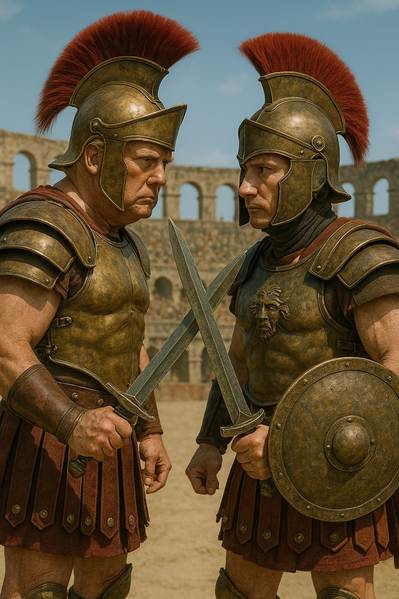
In 1842, Abraham Lincoln became embroiled in a public dispute with James Shields, the auditor of Illinois, largely over Illinois State banking policy and some satirical letters that mocked Shields. Shields took great offense to these attacks—particularly the ones written by Lincoln under the pseudonym “Rebecca”—and formally challenged Lincoln to a duel. According to the rules of dueling, Lincoln, as the one challenged, had the right to choose the weapons. He selected cavalry broadswords of the largest size to take advantage of his own height and reach over Shields.
The Duel’s Outcome
The duel was scheduled for September 22, 1842, on Bloody Island, a sandbar in the Mississippi River near Alton, Missouri—chosen because dueling was still legal there. On the day of the duel, before any blood was shed, Lincoln dramatically demonstrated his advantage by slicing off a high tree branch with his broadsword, showcasing his reach and physical prowess. After witnessing this and following subsequent negotiations by their seconds, Shields and Lincoln decided to call off the duel, resolving their differences without violence.
Legacy
Although the duel never resulted in violence, it became a notorious episode in Lincoln’s life, one he rarely spoke of later, even when asked about it. The event is commonly cited as a reflection of Lincoln’s quick wit, physical presence, and preference for peaceful resolution when possible. While Abraham Lincoln never actually fought a duel, he was briefly a participant in one of the more colorful near-duels of American political history.
A Final Thought
Perhaps the world would be a better place if we reinstitute some elements of Code Duello and instead of sending armies off to fight bloody battles, the national leaders settle disputes by individual combat. I suspect there would be many more negotiated settlements.
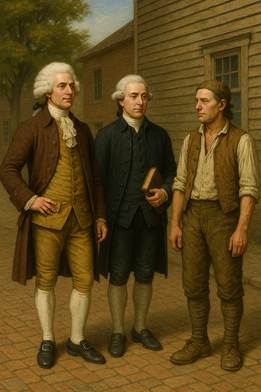
I’ve been spending a lot of time recently researching and writing about the 250th Anniversary of the American Revolution and I keep asking myself, “What’s up with the wigs?” Have you ever wondered why the Founding Fathers look so impossibly fancy in their portraits? Well, you can thank a French king and a syphilis epidemic. The elaborate wigs worn by early American leaders weren’t just fashion statements—they were complex social symbols that said everything about who you were, what you could afford, and how seriously you wanted to be taken.
Where It All Started
The wig craze didn’t begin in America. It started across the Atlantic when France’s King Louis XIII went bald prematurely in the 1600s and decided to cover it up with a wig. But it was his son, Louis XIV, who really kicked things into high gear. When the Sun King started losing his hair, he commissioned elaborate wigs that became the epitome of aristocratic style. European nobility, desperate to emulate French sophistication, quickly followed suit.
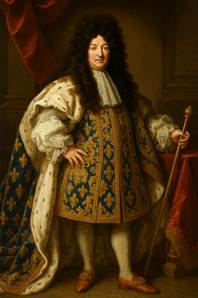
The practice also had a less glamorous origin story. Syphilis was rampant in 17th-century Europe, and one of its unfortunate side effects was hair loss. Wigs conveniently covered up this telltale symptom while also hiding the sores and blemishes that came with the disease.
Europe in the 1600s and 1700s also had frequent outbreaks of lice and other parasites. Shaving one’s natural hair short and wearing a wig—which could be cleaned, boiled, or deloused more easily—became a practical solution. Powdering helped keep wigs fresh and masked odors.
By the time the fashion crossed the ocean to colonial America in the early 1700s, wigs had become standard attire for anyone with social pretensions.
Status on Your Head
In colonial America, your wig announced your place in society before you even opened your mouth. The most expensive and elaborate wigs featured long, flowing curls that cascaded past the shoulders—these full-bottomed wigs could cost the equivalent of several months’ wages for an average worker. Wealthy merchants, successful plantation owners, and colonial officials wore these statement pieces to project authority and refinement.
Professional men like doctors, lawyers, and clergy typically wore more modest styles. The “tie wig” gathered hair at the back with a ribbon, while the “bob wig” featured shorter hair that ended around the neck. These styles were practical enough for men who actually had to work, but still formal enough to command respect. Even the style of curl mattered—tight curls suggested conservatism and tradition, while looser waves indicated a more progressive outlook.
Working-class men generally couldn’t afford real wigs. Some wore simple caps or went bareheaded, while others might invest in a cheap wig made from horsehair or goat hair for special occasions. The quality difference was obvious—human hair wigs, especially those made from blonde or white hair, were luxury items that only the wealthy could obtain.
Many men who did not wear wigs but still wanted the fashionable look would grow their own hair long, pull it into a queue (pony tail), and powder it. George Washington is a good example — portraits show his natural hair powdered white, not a wig.
The Daily Reality of Wig Life
Maintaining these hairpieces was no joke. Owners had to powder their wigs regularly with starch powder, often scented with lavender or orange, to achieve that distinctive white or gray color that signaled refinement. The powder got everywhere, which is why men often wore special dressing gowns during the powdering process.
Wigs required regular cleaning and restyling by professionals called peruke makers or wigmakers. These craftsmen commanded good money in colonial cities, advertising their services alongside other luxury trades. The hot, humid summers in places like Virginia and South Carolina made wig-wearing particularly miserable, but fashion demanded sacrifice.
The Revolutionary Shift
By the time of the American Revolution, attitudes toward wigs were already changing. The shift happened for several interconnected reasons, and it reflected broader transformations in American society.
First, the Revolutionary War itself promoted practical thinking. Military officers found elaborate wigs impractical in the field, and the democratic ideals of the Revolution made aristocratic European fashions seem pretentious. Many younger revolutionaries, including Thomas Jefferson, stopped wearing wigs as a political statement against Old World affectation.

A young Jefferson with a wig
Second, France—the original source of wig fashion—underwent its own revolution in 1789. As French revolutionaries literally beheaded the aristocracy, powdered wigs became associated with the despised nobility. What had once symbolized sophistication now suggested tyranny and excess.
In Great Britain, Parliament introduced a tax on hair powder as part of Prime Minister William Pitt the Younger’s revenue-raising measures. The law required anyone who used hair powder to purchase an annual certificate costing one guinea (a little over $200 in today’s money). This contributed to the growing sense that wigs were an unnecessary extravagance. Meanwhile, changing ideals of masculinity emphasized natural simplicity over artificial ornamentation.
By the early 1800s, the wig had largely disappeared from everyday American life. A new generation of leaders, including Andrew Jackson, proudly displayed their natural hair. The transition happened remarkably quickly—within a single generation, wigs went from essential to absurd. By the 1820s, anyone still wearing a powdered wig looked hopelessly outdated, clinging to a world that no longer existed.
The Legacy
Today, elaborate wigs survive primarily in British courtrooms, where some judges still wear them in formal proceedings—a deliberate echo of legal tradition. The powdered wigs of the Founding Fathers remain iconic, instantly recognizable symbols of early American history, even though the men who wore them were already abandoning the fashion by the time they built the new nation.
How A Nobel Laureate Thinks We Can Save The American Economy…But It Won’t Be Easy
By John Turley
On October 19, 2025
In Commentary, Politics
I just finished People, Power, and Profits by Joseph Stiglitz — the Nobel Prize winning economist. He wrote this near the end of Trump’s first term, but honestly, the world he describes feels even more relevant now.
Stiglitz doesn’t sugarcoat it: capitalism, as we’re practicing it today, is broken. Monopolies dominate markets, inequality has gone wild, and trust in democracy is running on fumes. His proposed fix? Something he calls progressive capitalism — capitalism with guardrails, conscience, and a sense of fairness.
Stiglitz makes the case that our economic system is rigged — not by accident, but by design. Here are his most compelling arguments and what he thinks we should do about them.
1. Taxation and Rent-Seeking: The Rigged Game
Stiglitz draws a sharp distinction between making money through productive work and extracting it through what economists call “rent-seeking” – essentially, using power to skim wealth without creating value. Think of a pharmaceutical company that buys a drug patent and jacks up prices 5,000%, or telecom monopolies that divide up markets to avoid competing.
His argument is straightforward: our tax system rewards the wrong behavior. Capital gains are taxed at lower rates than wages, which means someone living off investments pays less than someone working a regular job. Meanwhile, the wealthy can afford armies of accountants to exploit loopholes that most people don’t even know exist.
What Stiglitz recommends: Tax wealth more aggressively, especially inherited wealth. Close the capital gains loophole. Tax rent-seeking activities heavily while reducing taxes on productive work and innovation. The goal isn’t just revenue – it’s changing incentives so that the path to riches runs through creating value, not extracting it.
2. Green Energy and the True Cost of Pollution
Here’s where Stiglitz gets into what economists call “externalities” – costs that businesses impose on society without paying for them. When a coal plant spews carbon into the atmosphere, we all pay through climate change and increased healthcare costs, but the plant’s balance sheet looks great.
Stiglitz argues this is fundamentally dishonest accounting. If we properly priced pollution and carbon emissions, green energy wouldn’t need subsidies to compete – fossil fuels would suddenly look much more expensive once you factor in their real costs to society.
His recommendation: Implement carbon pricing – either through a carbon tax or cap-and-trade system. Make polluters pay for the damage they cause. This isn’t about punishing business; it’s about honest accounting. Once prices reflect reality, the market will naturally shift toward cleaner energy because it’s actually cheaper when you account for all the costs.
3. Big Business and Big Banks: Concentration of Power
Stiglitz has been particularly vocal about how corporate consolidation hurts everyone except shareholders and executives. His critique of “too big to fail” is sharp. He argues that concentrated economic power — in tech, finance, and even agriculture — undermines both democracy and efficiency. When a few firms dominate markets, they can suppress wages, block innovation, and bend regulations in their favor—they gain power over prices, wages, and even politics.
The banking sector especially concerns him. After the 2008 financial crisis, which was caused largely by reckless behavior from major banks, these same institutions emerged even larger through government-facilitated mergers. We allowed them to spread their losses among their depositors but let them keep their gains as internal profits.
His recommendations: Reinstate and strengthen regulations that were stripped away, including bringing back something like the Glass-Steagall Act that separated commercial and investment banking. Break up banks that are “too big to fail.” Strengthen antitrust enforcement across all industries. Use the government’s regulatory power to promote competition rather than letting industry consolidate.
4. Money in Politics: The Feedback Loop
This is where everything connects for Stiglitz. Concentrated economic power translates directly into political power. Wealthy interests fund campaigns, lobby relentlessly, and effectively write regulations for the agencies that are supposed to oversee them. This creates a vicious cycle: economic inequality begets political inequality, which creates policies that worsen economic inequality.
Stiglitz argues that the Supreme Court’s Citizens United decision, which allowed unlimited corporate spending in elections, turbocharged this problem by treating money as speech and corporations as people.
His recommendations: Limit campaign spending and institute public financing of campaigns to reduce candidates’ dependence on wealthy donors. Place strict limits on lobbying and implement a robust “revolving door” policy that prevents government officials from immediately cashing in with the industries they regulated. Mandate transparency requirements so voters know who’s funding what. Pass Constitutional amendments if necessary to overturn Citizens United.
The Big Picture
What makes Stiglitz’s argument powerful is how these pieces fit together. You can’t fix inequality just through taxation if big corporations control the political process. You can’t address climate change if fossil fuel companies can buy enough influence to block action. Everything is connected.
His recommendations aren’t radical in historical terms – they’re actually trying to restore a balance that existed during the post-war economic boom of the 1950s. Stiglitz’s “progressive capitalism” isn’t socialism. It’s capitalism with a conscience — one that remembers who it’s supposed to serve.
Whether you see that as a rescue plan or a recipe for red tape depends entirely on where you put your faith: in public institutions or private markets. The question is do we have the political will to implement his recommendation despite entrenched opposition from those benefiting from the current system?
Either way, this debate isn’t going away — it’s the one shaping the 21st-century economy.