

For decades, most doctors, me included, focused on the usual suspects when assessing heart disease risk: LDL cholesterol, HDL cholesterol, triglycerides, blood pressure, and lifestyle factors like smoking, activity, and diet. But lurking in the background was another player that most of us didn’t routinely check and most patients had never heard of—lipoprotein(a), abbreviated as Lp(a) and pronounced “L-P-little-A.”
Here’s the sobering reality: about one in five people worldwide have elevated Lp(a) levels, and if you’re among them, your risk of heart attack or stroke roughly doubles or triples. Yet until recently, most clinical guidelines didn’t even recommend testing for it. Why? Because there wasn’t much doctors could do about it even if we found it. That’s changing now, and the story of Lp(a) offers a window into how medicine sometimes waits for treatment options before fully embracing a diagnostic test.
What Exactly Is Lipoprotein(a)?
Lp(a) is structurally similar to LDL cholesterol—both are cholesterol-carrying particles—but Lp(a) has an extra protein component called apolipoprotein(a), or apo(a), that makes it particularly troublesome. The structure of this protein varies dramatically between individuals due to differences in genetic sequences, and the specific variant you inherit from your parents determines your Lp(a) level for life.
Unlike LDL cholesterol, which rises with age and responds to diet and exercise, your Lp(a) level remains largely constant throughout your lifetime. Eating better, exercising more, losing weight—none of the lifestyle interventions that work wonders for other cardiovascular risk factors will budge your Lp(a). It’s entirely genetic. There’s also significant variation across populations, with individuals of African descent tending to have higher average Lp(a) levels compared to people of White or Asian backgrounds, though the clinical implications of these differences are still not well understood.
Getting Tested: Who Should Do It and How Does It Works
The blood test for Lp(a) isn’t part of a routine cholesterol panel—your doctor has to specifically order it. So, who should be tested? Current recommendations focus on people with a family history of high Lp(a), those with a personal or family history of premature heart disease (cardiovascular events before age 55 in men or 65 in women), and anyone diagnosed with familial hypercholesterolemia, a genetic condition where the body poorly recycles LDL cholesterol. About a third of people with familial hypercholesterolemia also have high Lp(a), compounding their cardiovascular risk significantly.
Because Lp(a) levels don’t change over time, a single test is all you need. Results can be reported in two different units—milligrams per deciliter (mg/dL) or nanomoles per liter (nmol/L)—and there’s no universal agreement on what constitutes a risky level. Most American guidelines use a threshold of ≥50 mg/dL or ≥125 nmol/L as indicating increased cardiovascular risk, with levels below 30 mg/dL generally considered normal.
What High Lp(a) Means for Your Health
The evidence linking elevated Lp(a) to cardiovascular disease has become increasingly compelling over the past two decades. People with high Lp(a) face a two to threefold increased risk of heart attack and aortic valve disease. For those with extremely elevated levels above 180 mg/dL, the cardiovascular risk approaches that of people with untreated familial hypercholesterolemia (genetic extremely high cholesterol), which is notoriously dangerous.
Beyond heart attacks and valve problems, elevated Lp(a) has been linked to peripheral arterial disease (clogged arteries) and aortic aneurysms. What makes it particularly insidious is that it contributes to what researchers call “residual cardiovascular risk”—meaning it raises your chances of a cardiovascular event even when your LDL cholesterol is well controlled. You could be doing everything right by traditional measures and still be at elevated risk if your Lp(a) is high.
A large multi-ethnic study following nearly 28,000 people for an average of 21 years found that higher Lp(a) levels were consistently associated with greater cardiovascular disease risk across different ethnic groups and in both men and women. The mechanism involves both promoting arterial plaque buildup and increasing blood clot formation—a double threat to cardiovascular health.
Current Management Options: Limited but Important
This is where the story gets frustrating. For years, the honest answer to “what can I do about my high Lp(a)?” has been: not much directly, but a few things indirectly.
While lifestyle changes won’t affect your Lp(a) numbers, people with high levels should still follow all standard heart-healthy practices—physical activity, good nutrition, adequate sleep, avoiding smoking, and maintaining a healthy weight. The logic is straightforward: if you can’t eliminate one major risk factor, be more diligent about controlling all the others.
People with high Lp(a) may also benefit from more aggressive LDL cholesterol treatment, even if their LDL is already in a normal range. Some injectable cholesterol medications can lower Lp(a) by about 20% in some patients in addition to their primary effect on LDL. This helps overall cardiovascular risk even if it doesn’t fully address the Lp(a) problem.
For the most severe cases, the only FDA-approved treatment specifically targeting Lp(a) lipoprotein is apheresis which filters apolipoprotein-containing particles from the blood, achieving over 50% reduction. But the reductions are temporary, the procedure is similar to dialysis in its time demands, and it’s expensive and reserved for only the most extreme situations. It’s not a practical solution for the millions of people with moderately elevated levels.
The Treatment Revolution: New Therapies on the Horizon
Here’s where things get genuinely exciting. After decades of essentially no targeted treatment, five promising new therapies are now in advanced clinical development.
Four are RNA-based therapies that work by silencing the gene responsible for producing apolipoprotein(a) in the liver thereby preventing Lp(a) formation at its source. All are engineered to be taken up specifically by liver cells, where Lp(a) is made to minimize side effects elsewhere.
Early trial results have been remarkable. One drug, given as a monthly injection under the skin, has reduced Lp(a) levels by about 80%, with 98% of participants achieving levels below the risk threshold of 50 mg/dL. A phase 3 trial enrolling over 8,300 patients is expected to report results sometime in 2026, potentially leading to regulatory approval shortly after.
Other drugs have shown even more dramatic results, with one achieving a 93.9% reduction in Lp(a) with a single dose, with the effect persisting above 90% even at 360 days after just one injection.
There’s also an oral medication in development which works by preventing the apo(a) protein from assembling into Lp(a) particles in the first place. Taken daily as a pill, it has shown reductions of 63-65%—less dramatic than the RNA-based therapies, but potentially preferable for patients who want to avoid injections entirely.
The Critical Caveat
While these medications dramatically lower Lp(a) levels, we don’t yet have definitive proof that lowering Lp(a) will prevent heart attacks and strokes. That sounds counterintuitive—if high Lp(a) causes cardiovascular disease, then lowering it should help—but medicine requires rigorous evidence from randomized controlled trials. The FDA won’t approve these drugs based solely on their ability to improve a lab value; they need to demonstrate actual clinical benefit. Large outcome trials are underway and we should have answers within the next few years.
Where Things Stand Now
The story of Lp(a) reflects a broader tension in medicine: when should we test for something we can’t yet treat? For decades, many argued against routine screening precisely because no targeted therapies existed. That calculus has shifted. Recent reviews have concluded that the benefits of early detection now outweigh the risks, even though specific Lp(a)-lowering drugs are not yet approved, because early knowledge allows for more aggressive management of other risk factors.
For the roughly 20-25% of people with elevated Lp(a), the next few years could bring transformative options. If you fall into one of the higher-risk groups and have never been tested, it’s worth asking your doctor whether screening makes sense. The treatment landscape for Lp(a) is changing faster than it has in decades, and knowing your number today puts you in a much better position to act when those new options arrive.
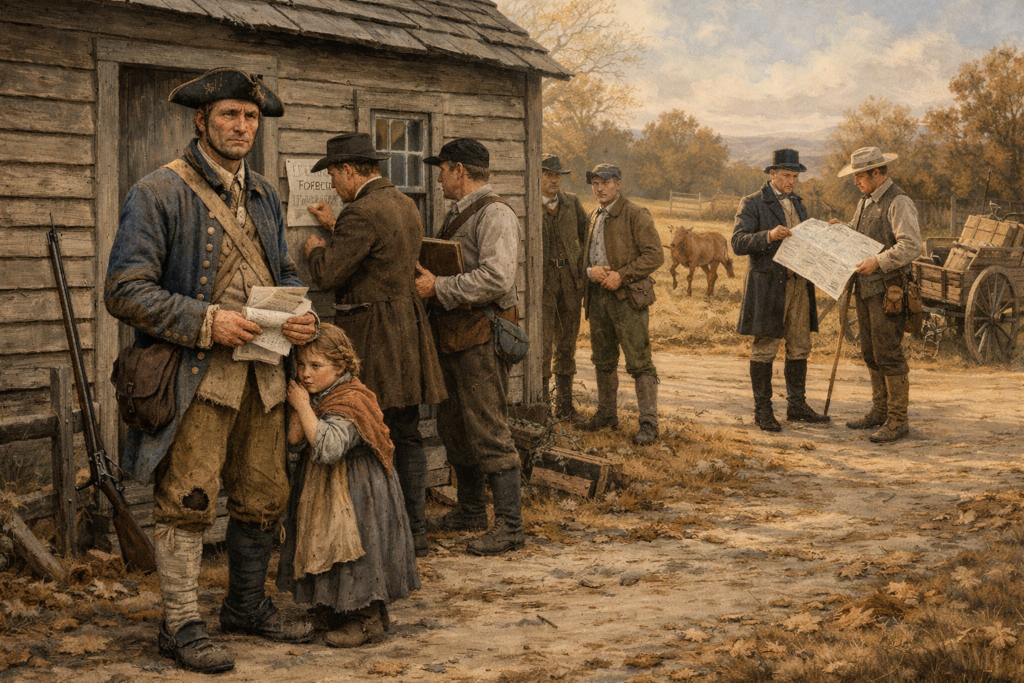
Illustration generated by the author using ChatGPT.
Sources
American Heart Association. (n.d.). Lipoprotein (a). https://www.heart.org/en/health-topics/cholesterol/genetic-conditions/lipoprotein-a
American Heart Association. (n.d.). Lipoprotein (a) meaning and how does it impact my heart health? https://www.heart.org/en/health-topics/cholesterol/genetic-conditions/lipoprotein-a-risks
Beck, D. L. (2025). Lipoprotein(a): An independent risk factor for CV disease. American College of Cardiology. https://www.acc.org/latest-in-cardiology/articles/2025/12/01/01/feature-lipoprotein-a
Centers for Disease Control and Prevention. (2025). About lipoprotein (a). https://www.cdc.gov/heart-disease-family-history/about/about-lipoprotein-a.html
Cleveland Clinic. (2025). Novel siRNA reduces lipoprotein(a) by more than 90% for 48 weeks. https://consultqd.clevelandclinic.org/novel-sirna-reduces-lipoproteina-by-more-than-90-for-48-weeks
Corliss, J. (2025). Lipoprotein(a): An update on testing and treatment. Harvard Health Publishing. https://www.health.harvard.edu/heart-health/lipoproteina-an-update-on-testing-and-treatment
Grundy, S. M., & Stone, N. J. (2022). Lipoprotein(a): A genetically determined, causal, and prevalent risk factor for atherosclerotic cardiovascular disease: A scientific statement from the American Heart Association. Arteriosclerosis, Thrombosis, and Vascular Biology, 42(1), e48-e60. https://www.ahajournals.org/doi/10.1161/ATV.0000000000000147
Katsiki, N., et al. (2023). An update on lipoprotein(a): The latest on testing, treatment, and guideline recommendations. American College of Cardiology. https://www.acc.org/Latest-in-Cardiology/Articles/2023/09/19/10/54/An-Update-on-Lipoprotein-a
Lombardi, A., et al. (2024). Lipoprotein (a): Underrecognized risk with a promising future. PMC. https://pmc.ncbi.nlm.nih.gov/articles/PMC11607505/
Lombardo, C., et al. (2025). Lp(a)-lowering agents in development: A new era in tackling the burden of cardiovascular risk? PMC. https://pmc.ncbi.nlm.nih.gov/articles/PMC12115060/
Managed Healthcare Executive. (2025). New therapies on the way to lower Lp(a), a cardiovascular risk factor. https://www.managedhealthcareexecutive.com/view/new-therapies-on-the-way-to-lower-lp-a-a-cardiovascular-risk-factor
Papathanasiou, M., et al. (2025). Current clinical trials for treating elevated lipoprotein(a). PMC. https://pmc.ncbi.nlm.nih.gov/articles/PMC12282488/
Sabatine, M. S., et al. (2025). Lipoprotein(a) as a pharmacological target: Premises, promises, and prospects. Circulation. https://www.ahajournals.org/doi/10.1161/CIRCULATIONAHA.124.069210
StatPearls. (2024). Lipoprotein A. National Center for Biotechnology Information. https://www.ncbi.nlm.nih.gov/books/NBK570621/
Tsimikas, S., et al. (2025). Pelacarsen: Mechanism of action and Lp(a)-lowering effect. ScienceDirect. https://www.sciencedirect.com/science/article/pii/S1933287425003228
Tsimikas, S., et al. (2025). Rethinking cardiovascular risk: The emerging role of lipoprotein(a) screening. ScienceDirect. https://www.sciencedirect.com/science/article/pii/S2666667725000182
Wong, N. D., et al. (2024). Lipoprotein(a) and long-term cardiovascular risk in a multi-ethnic pooled prospective cohort. Journal of the American College of Cardiology. https://www.jacc.org/doi/10.1016/j.jacc.2024.02.031
Zambon, A., et al. (2023). Lipoprotein(a) as a risk factor for cardiovascular diseases: Pathophysiology and treatment perspectives. PMC. https://pmc.ncbi.nlm.nih.gov/articles/PMC10531345/







The Marble Statue Problem: Why Half the Story Is No Story at All
By John Turley
On March 12, 2026
In Commentary, History, Politics
A Commentary on Selective American History
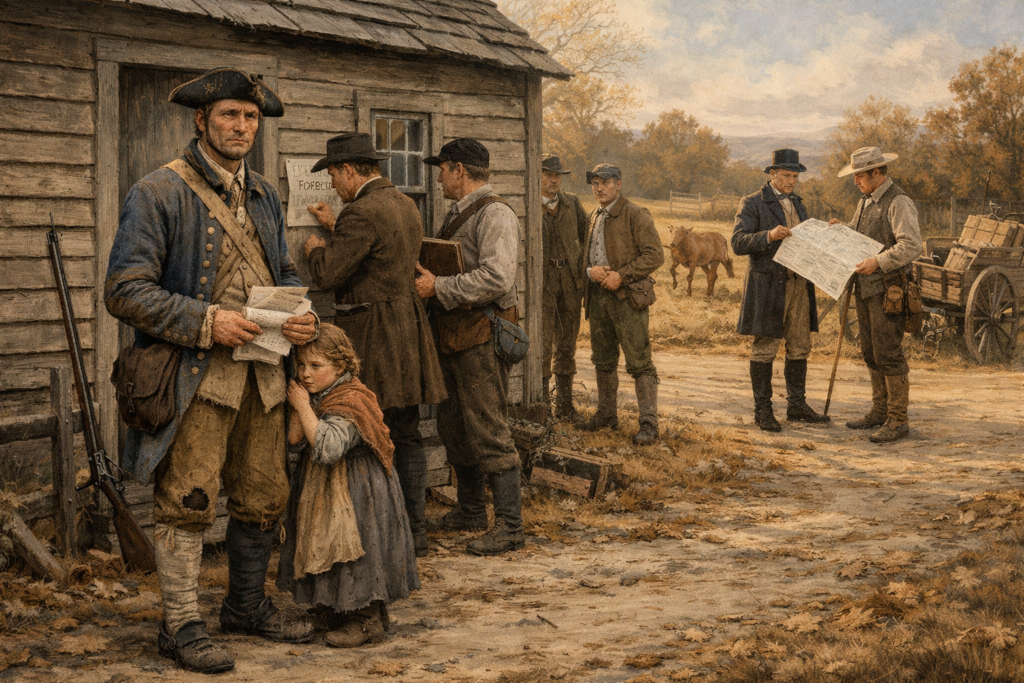
There is a version of American history that looks spectacular. Founding Fathers on horseback, industrialists building steel empires from nothing, pioneers pushing west into open lands. It is the kind of history that gets carved into marble, hoisted onto pedestals, and taught as national mythology. Clean. Inspiring. Incomplete. And right now, there is a visible push by some politicians, curriculum reformers, and commentators to make that marble-statue version the only version — to scrub away what one American Historical Association report called the “inconvenient” truths that complicate the picture. What we lose in that scrubbing is not just accuracy. We lose the full human story of this country, and with it, the lessons that might be useful today.
The selective telling is not new, but its current form has new energy. In recent years, legislation has been introduced across multiple states to restrict how teachers discuss slavery, Indigenous displacement, immigration history, and the treatment of women and the poor. The argument is usually dressed up as national unity and pride. But the practical effect is something else: a history curriculum where triumph and innovation are permissible but suffering and exploitation are edited out.
Historians surveying American teachers in 2024 found this impulse reflected in the classroom as well — students arriving with what teachers described as a “marble statues” version of history absorbed from earlier grades, one that freezes the Founders and other heroes in idealized civic memory, stripped of contradiction. The pitch is usually framed as morale: kids need pride and self esteem, not “division.” But the practical effect is a kind of historical editing that turns real people—enslaved Americans, Native communities, women, immigrants, and the poor—into background scenery rather than participants with agency, suffering, and claims on the national memory.
You can see the argument playing out in education policy and curriculum fights. The “patriotic education” push associated with the federal 1776 Commission is a clear example: it cast some approaches to teaching slavery and racism as inherently “anti-American,” and it encouraged a narrative that stresses national ideals while softening the lived realities that contradicted those ideals.
Historians’ organizations have answered back that this kind of narrowing doesn’t create unity so much as it creates amnesia. At the state level, controversies over how to describe or contextualize slavery—down to euphemisms and selective framing—keep resurfacing, because controlling the vocabulary controls the moral takeaway. Florida’s education standards went so far as to compare slavery with job training.
The tension between celebratory and critical history also appears in how we interpret national symbols. The Statue of Liberty, now widely read as a welcoming beacon for immigrants, was originally conceived in significant part as a commemoration of the end of slavery in the United States and of the nation’s centennial. Over time, its antislavery meaning was overshadowed by a more comfortable story about voluntary immigration and opportunity as official imagery and public campaigns recast the statue to fit new national needs. This shift did not merely “add” an interpretation; it obscured the connection between American liberty and Black emancipation, pushing aside the reality that millions arrived in chains rather than by choice.
The deeper problem isn’t that Americans disagree about the past—healthy societies argue about meaning all the time. The problem is when disagreement becomes a one-way ratchet: complexity gets labeled “bias,” and only a feel-good storyline qualifies as “neutral.” That’s not neutral. That’s a choice to privilege certain experiences as representative and treat others as “inconvenient.”
Nowhere does this distortion show up more clearly than in how Americans tend to celebrate the industrialists of the late 19th and early 20th centuries — the Gilded Age titans who built railroads, steel mills, and oil empires. Andrew Carnegie, John D. Rockefeller, J.P. Morgan, Cornelius Vanderbilt: these men are frequently held up as models of American ambition and ingenuity, visionaries who transformed a post-Civil War nation into the world’s dominant industrial power. And they did do that. But the marble-statue version stops there, and stopping there is where the dishonesty begins.
Look at what powered that industrial machine: coal. And look at who powered coal. The men — and children — who went underground every day to dig it out of the earth under conditions that were, by any modern standard, a form of institutionalized violence. Between 1880 and 1923, more than 70,000 coal miners died on the job in the United States. That is not a rounding error; it is a small city’s worth of human lives, consumed by an industry that knew the dangers and chose profits over protection. Cave-ins, gas explosions, machinery accidents, and the slow suffocation of black lung took miners in ones and twos on ordinary days, and in mass casualties during what miners grimly called “explosion season” — when dry winter air made methane and coal dust especially volatile. Three major mine disasters in the first decade of the 1900s killed 201, 362, and 239 miners respectively, the latter two occurring within two weeks of each other.
And those were the adults. In the anthracite coal fields of Pennsylvania alone, an estimated 20,000 boys were working as “breaker boys” in 1880 — children as young as eight years old, perched above chutes and conveyor belts for ten hours a day, six days a week, picking slate and impurities out of rushing coal with bare hands. The coal dust was so thick at times it obscured their view. Photographer Lewis Hine documented these children in the early 1900s specifically because he understood that seeing them — their coal-blackened faces, their missing fingers, their flat eyes — was the only way to make comfortable Americans confront the total cost of the industrial miracle. Pennsylvania passed a law in 1885 banning children under twelve from working in coal breakers. The law was routinely ignored; employers forged age documents and desperate families went along with it because the wages, however meager, kept families from starving.
Coal mining is a representative case study because the work was both essential and punishing, and because the labor conflicts were not metaphorical—they were sometimes literally armed. In the coalfields, many miners lived in company towns where the company controlled the housing and the local economy. Some workers were paid in “scrip” redeemable only at the company store, a system that locked families into dependency and debt. When union organizing surged, the backlash could be violent. West Virginia’s Mine Wars culminated in the Battle of Blair Mountain in 1921—widely described as the largest labor uprising in U.S. history—where thousands of miners confronted company-aligned forces and state power. The mine owners deployed heavy machine guns and hired private pilots to drop arial bombs on the miners.
If you zoom out, this pattern wasn’t limited to coal. The Triangle Shirtwaist Factory fire in 1911 became infamous partly because locked doors and poor safety practices trapped workers—mostly young immigrant women—leading to 146 deaths in minutes.
When workers tried to organize for better pay and safer conditions, the response from the industrialists and their allies was not negotiation. It was force. Henry Clay Frick, chairman at Carnegie Steel, cut worker wages in half while increasing shifts to twelve hours, then hired the Pinkerton Detective Agency — effectively a private army — to break the strike that followed at Homestead, PA in 1892. During the Great Railroad Strike of 1877, when workers walked off the job across the country, state militias were called in. In Maryland, militia fired into a crowd of strikers, killing eleven. In Pittsburgh, twenty more were killed with bayonets and rifle fire. A railroad executive of the era, asked about hungry striking workers, reportedly suggested they be given “a rifle diet for a few days” to see how they liked it. Throughout this period the federal government largely sided with capital against labor.
This is the part of the story that the marble-statue version leaves out — and not because it is marginal. The labor movement that emerged from these battles shaped virtually every protection American workers have today: the eight-hour workday, child labor laws, workplace safety regulations, the right to organize. These were not gifts handed down by generous industrialists. They were won through strikes, suffering, and in some cases, death. Ignoring that history does not honor the industrialists. It dishonors the workers.
The same pattern runs through every thread of American history that is currently under pressure. The story of westward expansion is incomplete without the story of Native displacement and the deliberate destruction of Indigenous cultures. The story of American agriculture is incomplete without the story of enslaved labor and the systems of racial control that followed emancipation. The story of American prosperity is incomplete without the story of immigrant communities channeled into the most dangerous, lowest-paid work and then told to be grateful for the opportunity. Women’s history, for most of American history, was not considered history at all. In each case, leaving out the difficult chapter does not produce a cleaner story. It produces a false one.
The argument for the marble-statue version is usually that complexity is demoralizing — that children need heroes, that citizens need pride, that a nation cannot function if it is constantly relitigating its worst moments. There is something in that concern worth taking seriously. History taught purely as a catalog of grievances is not good history either. But the answer to that problem is not to swap one distortion for another. Good history holds both: the genuine achievement and the genuine cost. Mark Twain understood this when he coined “The Gilded Age” — a title that means literally covered in a thin layer of gold over something much cheaper underneath. That phrase has been in the American vocabulary for 150 years because it captures something true about how surfaces can deceive.
A country that cannot look honestly at its own history is a country that will keep repeating the parts it refuses to examine. The enslaved deserve to be in the story. Indigenous people deserve to be in the story. Women deserve to be in the story. The breaker boys deserve to be in the story. The miners killed by the thousands deserve to be in the story. The workers shot by militias while asking for a living wage deserve to be in the story. Not because the story should only be about suffering, but because they were there — and because understanding what they faced, and what they fought for, and what they eventually changed, is how the story makes sense.
Illustration generated by author using ChatGPT.
Sources
American Historical Association. “American Lesson Plan: Curricular Content.” 2024.
https://www.historians.org/teaching-learning/k-12-education/american-lesson-plan/curricular-content/
Brewminate. “Replaceable Lives and Labor Abuse in the Gilded Age: Labor Exploitation and the Human Cost in America’s Gilded Age.” 2026.
https://brewminate.com/replaceable-lives-and-labor-abuse-in-the-gilded-age/
Bureau of Labor Statistics. “History of Child Labor in the United States, Part 1.” 2017.
https://www.bls.gov/opub/mlr/2017/article/history-of-child-labor-in-the-united-states-part-1.htm
Energy History Project, Yale University. “Coal Mining and Labor Conflict.”
https://energyhistory.yale.edu/coal-mining-and-labor-conflict/
Hannah-Jones, Nikole, et al. “A Brief History of Slavery That You Didn’t Learn in School.” New York Times Magazine. 2019.
https://www.nytimes.com/interactive/2019/08/14/magazine/slavery-capitalism.html
Investopedia. “The Gilded Age Explained: An Era of Wealth and Inequality.” 2025.
https://www.investopedia.com/terms/g/gilded-age.asp
MLPP Pressbooks. “Gilded Age Labor Conflict.”
https://mlpp.pressbooks.pub/ushistory2/chapter/chapter-1/
Princeton School of Public and International Affairs. “Princeton SPIA Faculty Reflect on America’s Past as 250th Anniversary Approaches.” 2026.
https://spia.princeton.edu/
USA Today. “Millions of Native People Were Enslaved in the Americas. Their Story Is Rarely Told.” 2025.
https://www.usatoday.com/
Wikipedia. “Breaker Boy.”
https://en.wikipedia.org/wiki/Breaker_boy
Wikipedia. “Robber Baron (Industrialist).”
https://en.wikipedia.org/wiki/Robber_baron_(industrialist)
America250 (U.S. Semiquincentennial Commission). “America250: The United States Semiquincentennial.”
https://www.america250.org/
Bunk History (citing Washington Post reporting). “The Statue of Liberty Was Created to Celebrate Freed Slaves, Not Immigrants.”
https://www.bunkhistory.org/
Upworthy. “The Statue of Liberty Is a Symbol of Welcoming Immigrants. That’s Not What She Was Originally Meant to Be.” 2026.
https://www.upworthy.com/