Grumpy opinions about everything.

Tag: American History

Powdered Wigs and Politics: The Rise and Fall of America’s Most Distinguished Hair Trend

I’ve been spending a lot of time recently researching and writing about the 250th Anniversary of the American Revolution and I keep asking myself, “What’s up with the wigs?”   Have you ever wondered why the Founding Fathers look so impossibly fancy in their portraits?  Well, you can thank a French king and a syphilis epidemic. The elaborate wigs worn by early American leaders weren’t just fashion statements—they were complex social symbols that said everything about who you were, what you could afford, and how seriously you wanted to be taken.

Where It All Started

The wig craze didn’t begin in America. It started across the Atlantic when France’s King Louis XIII went bald prematurely in the 1600s and decided to cover it up with a wig. But it was his son, Louis XIV, who really kicked things into high gear. When the Sun King started losing his hair, he commissioned elaborate wigs that became the epitome of aristocratic style. European nobility, desperate to emulate French sophistication, quickly followed suit.

The practice also had a less glamorous origin story. Syphilis was rampant in 17th-century Europe, and one of its unfortunate side effects was hair loss. Wigs conveniently covered up this telltale symptom while also hiding the sores and blemishes that came with the disease.

Europe in the 1600s and 1700s also had frequent outbreaks of lice and other parasites. Shaving one’s natural hair short and wearing a wig—which could be cleaned, boiled, or deloused more easily—became a practical solution. Powdering helped keep wigs fresh and masked odors.

By the time the fashion crossed the ocean to colonial America in the early 1700s, wigs had become standard attire for anyone with social pretensions.

Status on Your Head

In colonial America, your wig announced your place in society before you even opened your mouth. The most expensive and elaborate wigs featured long, flowing curls that cascaded past the shoulders—these full-bottomed wigs could cost the equivalent of several months’ wages for an average worker. Wealthy merchants, successful plantation owners, and colonial officials wore these statement pieces to project authority and refinement.

Professional men like doctors, lawyers, and clergy typically wore more modest styles. The “tie wig” gathered hair at the back with a ribbon, while the “bob wig” featured shorter hair that ended around the neck. These styles were practical enough for men who actually had to work, but still formal enough to command respect. Even the style of curl mattered—tight curls suggested conservatism and tradition, while looser waves indicated a more progressive outlook.

Working-class men generally couldn’t afford real wigs. Some wore simple caps or went bareheaded, while others might invest in a cheap wig made from horsehair or goat hair for special occasions. The quality difference was obvious—human hair wigs, especially those made from blonde or white hair, were luxury items that only the wealthy could obtain.

Many men who did not wear wigs but still wanted the fashionable look would grow their own hair long, pull it into a queue (pony tail), and powder it. George Washington is a good example — portraits show his natural hair powdered white, not a wig.

The Daily Reality of Wig Life

Maintaining these hairpieces was no joke. Owners had to powder their wigs regularly with starch powder, often scented with lavender or orange, to achieve that distinctive white or gray color that signaled refinement. The powder got everywhere, which is why men often wore special dressing gowns during the powdering process.

Wigs required regular cleaning and restyling by professionals called peruke makers or wigmakers. These craftsmen commanded good money in colonial cities, advertising their services alongside other luxury trades. The hot, humid summers in places like Virginia and South Carolina made wig-wearing particularly miserable, but fashion demanded sacrifice.

The Revolutionary Shift

By the time of the American Revolution, attitudes toward wigs were already changing. The shift happened for several interconnected reasons, and it reflected broader transformations in American society.

First, the Revolutionary War itself promoted practical thinking. Military officers found elaborate wigs impractical in the field, and the democratic ideals of the Revolution made aristocratic European fashions seem pretentious. Many younger revolutionaries, including Thomas Jefferson, stopped wearing wigs as a political statement against Old World affectation.

A young Jefferson with a wig

Second, France—the original source of wig fashion—underwent its own revolution in 1789. As French revolutionaries literally beheaded the aristocracy, powdered wigs became associated with the despised nobility. What had once symbolized sophistication now suggested tyranny and excess.

In Great Britain, Parliament introduced a tax on hair powder as part of Prime Minister William Pitt the Younger’s revenue-raising measures.  The law required anyone who used hair powder to purchase an annual certificate costing one guinea (a little over $200 in today’s money).  This contributed to the growing sense that wigs were an unnecessary extravagance. Meanwhile, changing ideals of masculinity emphasized natural simplicity over artificial ornamentation.

By the early 1800s, the wig had largely disappeared from everyday American life. A new generation of leaders, including Andrew Jackson, proudly displayed their natural hair. The transition happened remarkably quickly—within a single generation, wigs went from essential to absurd. By the 1820s, anyone still wearing a powdered wig looked hopelessly outdated, clinging to a world that no longer existed.

The Legacy

Today, elaborate wigs survive primarily in British courtrooms, where some judges still wear them in formal proceedings—a deliberate echo of legal tradition. The powdered wigs of the Founding Fathers remain iconic, instantly recognizable symbols of early American history, even though the men who wore them were already abandoning the fashion by the time they built the new nation.

Divine Providence and Patriotism

Religion in the Ranks of the Continental Army

The Continental Army that fought for American independence from 1775 to 1783 represented a cross-section of colonial religious life, bringing together men from diverse faith traditions under a common cause. The religious faith of both enlisted soldiers and officers reflected the broader religious landscape of colonial America, and their regional differences contributed to a complex tapestry of faith within the ranks.

The Continental Army drew from a population where religious diversity was already well-established, particularly when compared to European armies of the same period. Protestant denominations were the majority within the ranks, reflecting the colonial religious demographics.

The American Revolution was not only a political and military struggle but also a deeply religious experience for many Continental Army soldiers. Their faith shaped how they interpreted the war, coped with its hardships, and interacted with comrades from diverse backgrounds.

Enlisted soldiers often relied on providentialism, the belief that God directly intervened in daily life, to make sense of battlefield chaos and suffering. Diaries and letters reveal troops attributing survival in skirmishes, unexpected weather shifts, and even mundane events to divine will. For example, many saw the Continental Army’s unlikely battlefield victories as evidence of God’s favor toward their cause.

Diversity in the Ranks

Congregationalists from New England formed a significant portion of the army, bringing with them the Puritan theological tradition that emphasized divine providence and moral responsibility.  Ministers in New England frequently preached that resistance to tyranny was a Christian duty and many soldiers viewed themselves as fighting against tyranny, much as their ancestors had fled religious persecution.

Presbyterian soldiers, many of Scots-Irish descent, comprised a substantial group. Concentrated heavily in the Middle Colonies and frontier areas, they tended toward evangelical and Presbyterian influences, regardless of their home colony . The challenging conditions of frontier life had already created a more individualistic and emotionally intense form of Christianity that adapted well to military service. These soldiers often brought a fatalistic acceptance of divine will combined with fierce determination.

Baptist and Methodist soldiers, though fewer in number, represented growing evangelical movements that would later transform American Christianity. German Reformed and Lutheran soldiers from Pennsylvania added to the religious diversity, while smaller numbers of Catholics, particularly from Maryland and Pennsylvania, served despite facing legal restrictions in many colonies. Even a few Jewish soldiers joined the cause, though their numbers were minimal given the tiny Jewish population in colonial America. The religious pluralism in regiments from the Middle Colonies created a more tolerant atmosphere that foreshadowed the religious diversity of the new nation.  

Quakers were generally pacifists and avoided military service, however some “Free Quakers” broke from their tradition and joined the Patriot cause. Other pacifist religious groups, such as Mennonites, abstained from combat but occasionally provided non-combatant support.

Anglicans, ironically fighting against their own church’s mother country, served in significant numbers, particularly from the Southern colonies where the Church of England frequently had been established as a state supported church. 

While religious diversity was generally a unifying force in the Continental Army, there were some instances of religious tension and while they were relatively limited, they were not entirely absent. One significant example occurred early in the war in November 1775, when some American troops planned to burn an effigy of the Pope on Guy Fawkes Day (also known as Pope’s Day in New England).  General Washington strongly condemned this anti-Catholic action, denouncing it as indecent and lacking common sense.

Washington actively tried to prevent sectarianism from undermining unity in the ranks, whether between Protestants and Catholics or among different Protestant denominations. The overall trend was towards religious tolerance and unity, with religious diversity ultimately contributing positively to the army’s cohesion and morale.

Officer Corps and Religious Leadership

The officer corps of the Continental Army reflected a somewhat different religious profile than the enlisted ranks. Many officers came from the colonial elite and were often Anglican or belonged to more established denominations. However, the Revolution’s anti-episcopal sentiment led many Anglican officers to distance themselves from their church’s political connections while maintaining their basic Christian beliefs.  The relationship between the soldiers and the established Church of England became increasingly strained as the Revolution progressed.

George Washington himself exemplified this complex relationship with religion. Though nominally Anglican, Washington never wrote about his personal faith.  He was likely influenced by Deist philosophy, then popular among Enlightenment thinkers including Jefferson and possibly Franklin. Deism holds that reason and observation of the natural world are sufficient to determine the existence of a Creator, but that this Creator does not intervene in the universe after its creation.

Washington regularly invoked divine providence in his correspondence and orders, understanding the importance of religious sentiment in maintaining morale, even while his personal beliefs remained ambiguous. His famous directive that “the blessing and protection of Heaven are at all times necessary but especially so in times of public distress and danger” reflected his understanding of religion’s role in military leadership.

Other prominent officers brought their own religious convictions to their leadership. Nathanael Greene, the Southern theater commander, was raised as a Quaker but was expelled from the Society of Friends for his military service. Rev. Peter Muhlenberg, a Lutheran minister, left the pulpit and joined the Continental Army, rising to the rank of Major General.  The Marquis de Lafayette, though Catholic, adapted to the predominantly Protestant environment of the American officer corps.

Officers, including Washington, viewed religion as a tool for discipline and unity. Washington mandated Sunday worship. He also appointed chaplains to every brigade, insisting they foster “obedience and subordination”.

 Continental Army Chaplain Service

Recognizing the importance of religion to morale and discipline, the Continental Congress authorized the appointment of chaplains to serve with the army. The chaplain system evolved throughout the war, beginning with regimental chaplains and eventually expanding to include brigade and division chaplains for larger organizational units.

Continental Army chaplains faced unique challenges. Unlike European armies with established state churches, American chaplains served religiously diverse units. They needed to provide spiritual comfort to soldiers from different denominational backgrounds while avoiding sectarian conflicts that could undermine unit cohesion. Most chaplains were Protestant ministers, reflecting the army’s composition, but they were expected to serve all soldiers regardless of specific denominational affiliation.

The duties of Continental Army chaplains extended beyond conducting religious services. They often served as informal counselors, helped soldiers write letters home, provided basic education to illiterate soldiers, and sometimes even served as medical assistants. Their moral authority made them valuable in maintaining discipline, and many commanders relied on chaplains to address problems of desertion, drunkenness, and other behavioral issues.

Chaplains also played important roles in significant military events. They conducted prayers before major battles and led thanksgiving services after victories. They provided comfort to the dying and services for the dead.

The British recognized the importance of chaplains to the Continental Army and in some cases offered rewards for their capture.

The famous painting of “The Prayer at Valley Forge” with its image of Washington praying alone in the snow, whether historically accurate or not, represents the type of spiritual leadership chaplains were expected to provide during the army’s darkest moments.

Conclusion Religion in the Continental Army reflected both the differing and the common aspects of colonial American faith. While denominational variations existed, most soldiers shared basic Christian beliefs that provided comfort during hardship and meaning to their sacrifice. The army’s religious diversity foreshadowed the religious pluralism that would characterize the new American nation, while the chaplain service established precedents for military religious support that continue today. The Revolution’s success owed much to the spiritual resources that sustained these soldiers through eight years of difficult warfare, demonstrating religion’s crucial role in the founding of the American republic.

Always Faithful: A Brief History of the Marine Corps Motto

When I started training as a Marine more than 50 years ago one of the first things we were taught was the call and response “Semper Fi” followed quickly by “Do or Die”.  But to Marines, Semper Fi, Semper Fidelis—Always Faithful—is more than just a motto. It becomes a personal belief system, a statement of individual integrity and a way of life.  Faithful to country, faithful to the Corps, faithful to fellow Marines, faithful to duty.  It reflects your faith in the Marine Corps and your fellow Marines.

How did Marines come to adopt this distinctly non martial motto?  Other more military sounding mottos and nicknames come to mind: “Devil Dogs”, “First to Fight”, and “Leathernecks”.  But Semper Fidelis has become the way Marines see themselves, so much so that their greeting to one another is “Semper Fi”.  The same ethos is embodied in an unofficial Marine Corps motto, “No Man Left Behind”.

But what is the origin of this motto that seems to sum up the entire philosophy of the Marine Corps?

The United States Marine Corps is known for its discipline, dedication, and fierce loyalty, qualities that are symbolized by Semper Fidelis. Translated from Latin, the phrase means “Always Faithful.” But like many traditions within the military, the motto is rooted in a rich history that stretches back hundreds of years.

The Marine Corps was established in 1775 as the Continental Marines, but the famous motto did not appear until more than a century later. By the early 19th century, several mottos had been associated with the Marines, including “Fortitudine” (With Fortitude) and “By Sea and by Land.” While these phrases captured elements of the Marines’ mission, they lacked the enduring emotional impact that would ultimately come with Semper Fidelis.

It was in 1883 that the motto was formally adopted under the leadership of the 8th Commandant, Colonel Charles McCawley. Colonel McCawley likely chose that motto because it embodies the values of loyalty, faithfulness and dedication that he believed should define every Marine.  Unfortunately, we will never know his exact reason for choosing this specific motto because he did not leave any documentation about his thought process.  Regardless, from that point on, the motto became inseparable from the identity of the Corps.

The phrase “Semper Fidelis” has much older origins than its Marine Corps adoption. It’s believed to have originated from phrases used by senators in ancient Rome, with the earliest recorded use as a motto dating back to the French town of Abbeville in 1369. The phrase has been used by various European families since the 16th century, and possibly as early as the 13th century.

The earliest recorded military use was by the Duke of Beaufort’s Regiment of Foot, raised in southwestern England in 1685. The motto also has connections to Irish, Scottish, and English nobility, as well as 17th-century European military units, some of whose members may have emigrated to American colonies in the 1690s

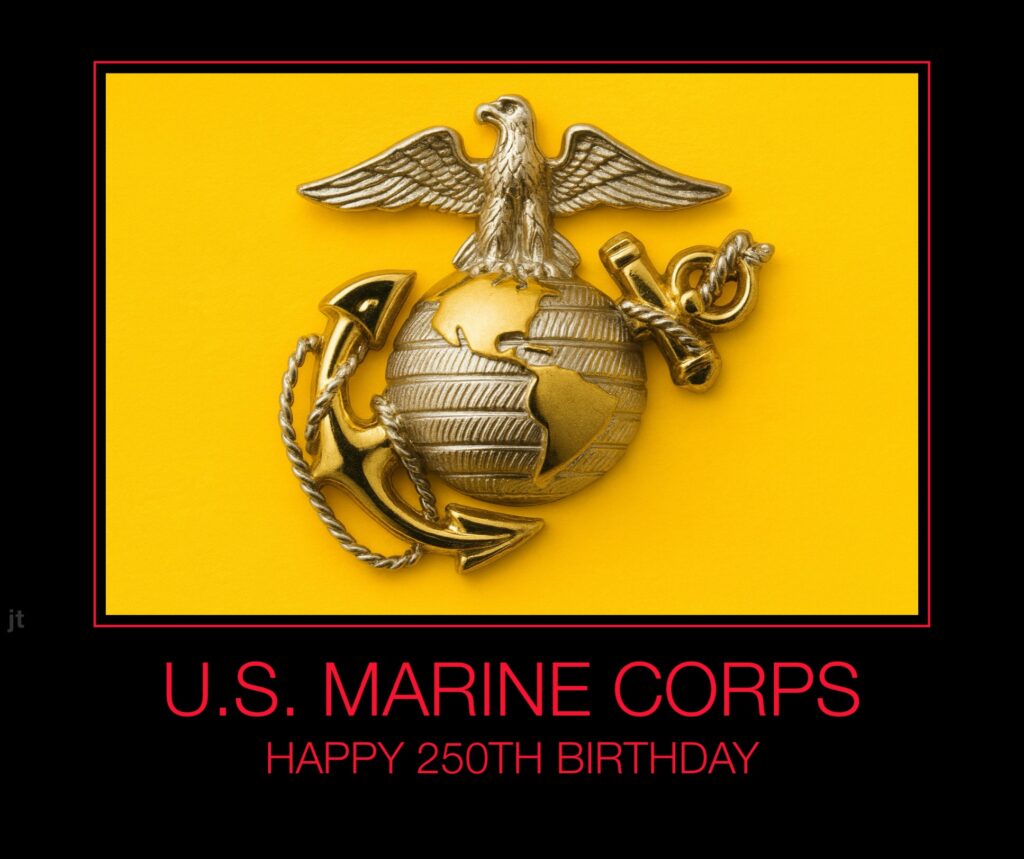
The choice of the Latin phrase by Colonel McCawley was likely deliberate. Latin carries with it a sense of permanence and tradition, and its concise wording communicated volumes in only two words. “Always Faithful” perfectly captured the bond that must exist between Marines and the responsibilities they shoulder. Marines are expected to remain faithful to the mission, to their comrades in arms, and to the United States, regardless of the personal cost. It is this idea of unshakable fidelity that has come to define what it means to wear the Eagle, Globe, and Anchor.

Since its adoption, Semper Fidelis has carried Marines through every conflict the United States has faced. From the battlefields of World War I, where Marines earned the name “Devil Dogs,” to the grueling island campaigns of the Pacific in World War II, to the frozen battle fields of Korea, to the steaming jungles of Vietnam, Marines have demonstrated again and again what it means to be “Always Faithful.” In modern times, whether in Iraq, Afghanistan, or in humanitarian missions across the globe, this motto continues to serve as a reminder of the Corps’ unwavering commitment.

The phrase has also influenced the broader culture of the Marines, inspiring the title of the official Marine Corps march, “Semper Fidelis,” composed by John Philip Sousa in 1888, which remains a powerful symbol of pride and esprit de corps.

The motto’s meaning extends beyond active service. Marines pride themselves on being “once a Marine, always a Marine,” and Semper Fidelis reflects that lifelong bond. Even after leaving the uniform behind, Marines carry that sense of loyalty into civilian life, honoring the values and traditions of their service. For many, it becomes a central guiding principle throughout their lives.  Marine veterans always say “I was a Marine”.

In the end, the motto “Semper Fidelis” is far more than a catchy phrase. It is both a promise and a challenge—a pledge of unwavering loyalty and a challenge to live up to the highest standards of duty, honor, and fidelity. When Marines declare “Semper Fi,” they acknowledge not only their devotion to the Marine Corps, but also the unbreakable loyalty that binds them together as brothers and sisters in arms.

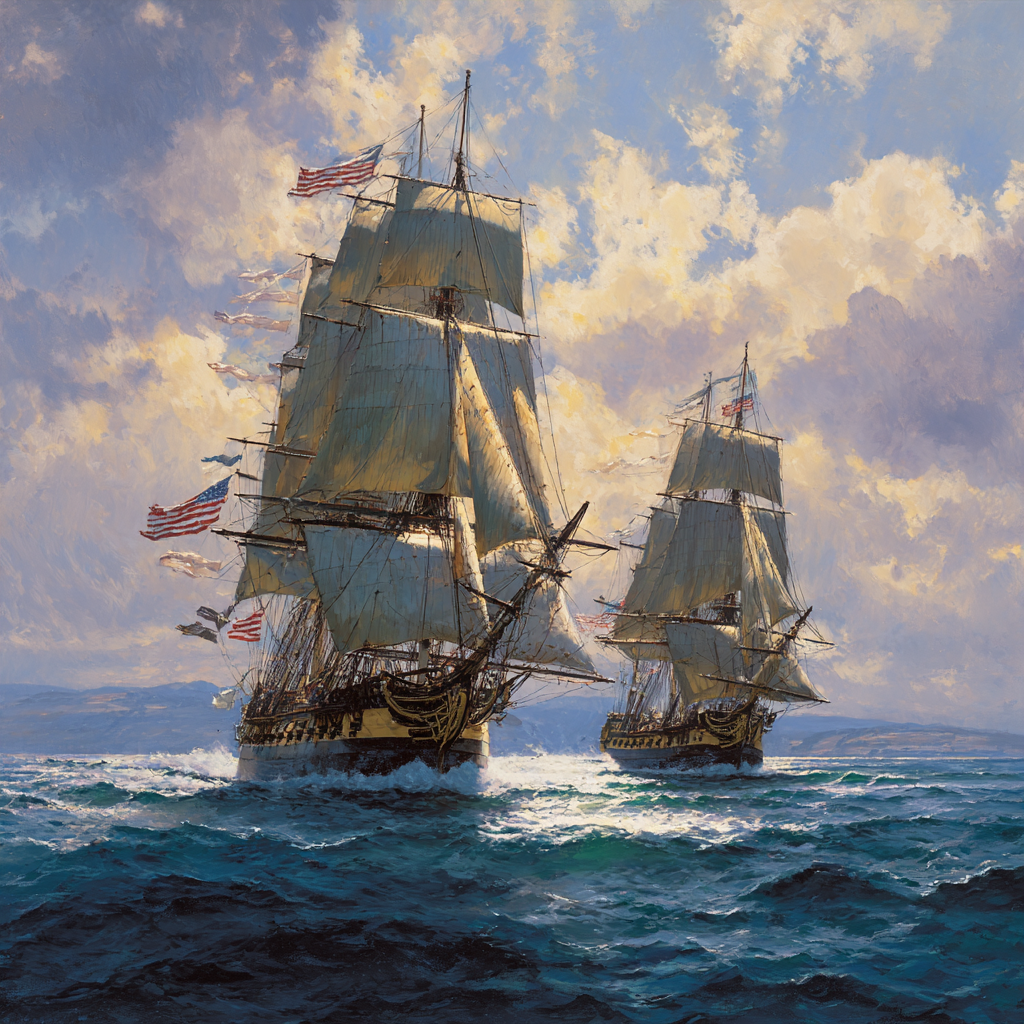
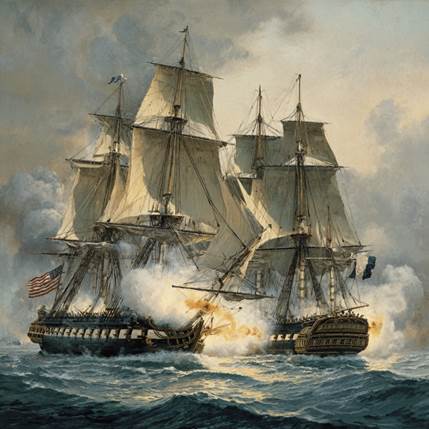
The celebration of the 250th anniversary of the signing of the Declaration of Independence is coming up next year on July 4th. But what about the events leading up to this? What about the men and women who helped make this happen? There are events coming up to commemorate the 250th anniversary of the founding of the Continental Navy and the Continental Marines in 1775. We will be holding commemorative celebrations here in West Virginia and there will be a national event in Philadelphia in October of this year.

Why History Still Matters: Lessons for Today’s World

Recently I was reading an article about the poor state of historical knowledge in the United States, and I decided to repost my first article from when I started blogging almost five years ago.  It seems very little has changed.

“Study the past if you would define the future,”—Confucius. I particularly like this quotation. It is similar to the more modern version: Those who don’t learn from the past are doomed to repeat it. However, I much prefer the former because it seems to be more in the form of advice or instruction. The latter seems to be more of a dire warning. Though I suspect, given the current state of the world, a dire warning is in order.

But regardless of whether it comes in the form of advice or warning, people today do not seem to heed the importance of studying the past.  The knowledge of history in our country is woeful. The lack of emphasis on the teaching of history in general and specifically American history, is shameful. While it is tempting to blame it on the lack of interest on the part of the younger generation, I find people my own age also have very little appreciation of the events that shaped our nation, the world, and their lives. Without this understanding, how can we evaluate what is currently happening and understand what we must do to come together as a nation and as a world.

I have always found history to be a fascinating subject. Biographies and nonfiction historical books remain among my favorite reading. In college I always added one or two history courses every semester to raise my grade point average. Even in college I found it strange that many of my friends hated history courses and took only the minimum. At the time, I didn’t realize just how serious this lack of historical perspective was to become.

Several years ago, I became aware of just how little historical knowledge most people possess. At the time, Jay Leno was still doing his late-night show, and he had a segment called jaywalking. During that segment he would ask people in the street questions that were somewhat obscure and to which he could expect to get unusual and generally humorous answers. On one show, on the 4th of July, he asked people “From what country did the United States declare independence on the 4th of July?” and of course no one knew the answer.  

My first response was he must have gone through dozens of people to find the four or five people who did not know the answer to his question. The next day at work, the 5th of July, I decided to ask several people, all of whom were college graduates, the same question. I got not one single correct answer. Although, one person at least realized “I think I should know this”. When I told my wife, a retired teacher, she wasn’t surprised.  For a long time, she had been concerned about the lack of emphasis on social studies and the arts in school curriculums.  I too was now becoming seriously concerned about the direction of education in our country.

A lot of people are probably thinking “So what, who really cares what a bunch of dead people did 250 years ago?” If we don’t know what they did and why they did it how can we understand its relevance today?  We have no way to judge what actions may support the best interests of society and what will ultimately be detrimental.

Failure to learn from and understand the past results in a me-centric view of everything. If you fail to understand how and why things have developed, then you certainly cannot understand what the best course forward will be. Attempting to judge all people and events of the past through your own personal prejudices leads only to continued and worsening conflict.

If you study the past, you will see that there has never general agreement on anything. There were many disagreements, debates and even a civil war over differences of opinion.  It helps us to understand that there are no perfect people who always do everything the right way and at the right time. It helps us to appreciate the good that people do while understanding the human weaknesses that led to the things that we consider faults today. In other words, we cannot expect anyone to be a 100% perfect person. They may have accomplished many good and meaningful things, and those good and meaningful things should not be discarded because the person was also a human being with human flaws.

Understanding the past does not mean approving of everything that occurred but it also means not condemning everything that does not fit into twenty-first century mores.  Only by recognizing this and seeing what led to the disasters of the past can we hope to avoid repetition of the worst aspects of our history. History teaches lessons in compromise, involvement and understanding. Failure to recognize that leads to strident argument and an unwillingness to cooperate with those who may differ in even the slightest way. Rather than creating the hoped-for perfect society, it simply leads to a new set of problems and a new group of grievances.

In sum, failure to study history is failure to prepare for the future. We owe it to ourselves and future generations to understand where we came from and how we can best prepare our country and the world we leave for them. They deserve nothing less than a full understanding of the past and a rational way forward. 

I’m going to close with a quote I recently came across:

  “Indifference to history isn’t just ignorant, it’s rude.”

                        —David McCollum

Deborah Sampson: A Revolutionary Soldier

In the story of the American Revolution, the names most often remembered are those of the Founding Fathers and battlefield generals. Yet woven through the familiar narrative are lesser known but extraordinary individuals whose actions defied the norms of their time. One of the most remarkable among them was Deborah Sampson, a Massachusetts woman who disguised herself as a man and served for nearly two years in the Continental Army. Her life reflects not only courage and patriotism, but also the complexity of gender roles in Revolutionary America

A Difficult Early Life

Deborah Sampson was born in Plympton, Massachusetts, in 1760 as the eldest of seven children in a family with deep Pilgrim roots, tracing lineage to Myles Standish and Governor William Bradford. Despite this heritage, her family struggled financially, and she grew up with poverty and abandonment. Her father deserted the family when she was young, leaving her mother with limited resources to care for their children. It was initially thought that he had died at sea, but they later discovered he had actually moved to Maine where he married and raised a second family.

Deborah was still young when her mother died and she was sent to live with a widow, Mary Price Thatcher, then in her 80s. Deborah likely learned to read while living with her.  After Widow Thatcher died, Deborah was bound out as an indentured servant to the Thomas family in Middleborough, Massachusetts, where she worked until she turned 18. This experience exposed her to hard physical labor and taught her skills typically associated with men’s work, including farming and carpentry. During this time, she educated herself and developed a keen intellect that would prove invaluable throughout her life. 

When her term of indenture ended in 1782, Sampson found herself in a precarious position as a young, unmarried woman with few economic opportunities. She intermittently supported herself as a teacher in the summers and a weaver in the winters.

Enlisting in the Army

The Revolutionary War was still raging, and the Continental Army desperately needed recruits. Motivated by both patriotic fervor and economic necessity, Sampson made the audacious decision to enlist in the army disguised as a man. She initially enlisted in 1782 under the name Timothy Taylor and collected a cash enlistment bounty but she failed to report for duty with her company.   She was later recognized as being Taylor and was required to repay what she had not already spent from her enlistment bounty.  No further punishment was made by the civil authorities; however, the Baptist Church withdrew its fellowship until she apologized and asked for forgiveness.

She later made a second enlistment, adopting the name Robert Shurtleff (sometimes spelled Shurtlieff or Shirtliff). This time she followed through and reported for duty.

She bound her chest, cut her hair, and donned men’s clothing to complete her transformation.  Sampson’s physical appearance aided her deception. She was tall for a woman of her era, standing nearly six feet, with a lean build and strong constitution developed through years of manual labor. Her lack of facial hair was not unusual among young male recruits, and she successfully passed the initial examination to join the 4th Massachusetts Regiment in May 1782.

The challenge of maintaining her disguise while living in close quarters with other soldiers required constant vigilance. Sampson developed strategies to protect her secret, including volunteering for guard duty to avoid sleeping arrangements that might expose her, and finding private moments to tend to personal needs. She also had to manage the physical demands of military life while dealing with the unique challenges of being a woman in a male-dominated environment.

Sampson’s military career nearly ended when she was wounded during a skirmish. She received a sword cut to her head and was shot in the thigh. Fearing that medical treatment would reveal her true identity, she initially treated her wounds herself, even digging a musket ball out of her own leg with a knife. Some of the shot remained too deep to remove, leaving her with a lifelong disability.

During her military service, Sampson demonstrated exceptional courage and skill as a soldier. She participated in several skirmishes and battles, including engagements near New York City and in Westchester County. Her fellow soldiers respected her for her dedication, marksmanship, and willingness to volunteer for dangerous scouting missions. She proved herself particularly adept at reconnaissance work, using her intelligence and observational skills to gather valuable information about enemy positions and movements.

Discovery and Discharge

During an epidemic in Philadelphia, she fell seriously ill with a fever and was taken to a hospital, where a physician discovered her secret while treating her. Fortunately, the doctor, Barnabas Binney, chose to protect Sampson rather than expose her. He treated her quietly and helped facilitate her honorable discharge from the army in October 1783. Her commanding officer, General John Paterson, reportedly handled the situation with discretion and respect, recognizing her valuable service to the cause of independence.  Eventually she was discharged by General Henry Knox on October 25, 1783, and was given funds to return home and a Note of Advice, similar to modern discharge papers.

Life After the War

After the war, Sampson returned to Massachusetts, where she married Benjamin Gannet in 1785 and had three children. But like many veterans, she struggled financially and had difficulty obtaining the military pay and benefits she had earned. In 1792, with the help of prominent supporters—including Paul Revere—she successfully petitioned the Massachusetts legislature for back pay and a modest state pension and she later received a pension from the federal government.

Her story didn’t end with domestic life. She became one of the first women in America to go on a speaking tour, traveling throughout New England and New York to share her experiences. Wearing her military uniform, she delivered a combination of storytelling, dramatic performance of military drills, and patriotic appeal.  These lectures, which began in 1802, were groundbreaking for their time, as respectable women rarely spoke publicly before mixed audiences.

A Lasting Legacy

Deborah Sampson’s legacy extends far beyond her military service. She challenged rigid gender roles and demonstrated that women could serve their country with the same valor and effectiveness as men. Her story inspired future generations of women who sought to break barriers and serve in traditionally male-dominated fields.

After she died in 1827, her story continued to gain recognition. In 1838, her husband was awarded a widow’s pension, possibly the first instance in U.S. history that the benefit was granted to a man based on his wife’s military service.

She left behind a legacy of courage, determination, and pioneering spirit that continues to resonate today. In 1983, she was declared the Official Heroine of the Commonwealth of Massachusetts, and in 2020, the U.S. House of Representatives passed the Deborah Sampson Act, expanding healthcare and benefits for female veterans. Statues and memorials, including her gravesite in Sharon, Massachusetts, commemorate her contributions.  Her wartime exploits have been the subject of books, plays, and scholarly research and her story continues to inspire generations as a symbol of courage and the ongoing struggle for gender equality in military service. 

While she was not the only woman to disguise herself and enlist—others like Margaret Corbin and Anna Maria Lane also took up arms—Sampson is among the best documented and celebrated.

Her life represents a crucial chapter in both military history and women’s history, illustrating the complex ways in which the American Revolution created opportunities for individuals to transcend social conventions in service of the greater cause of independence.  Deborah’s journey from indentured servant to Continental Army soldier and national lecturer is a testament to her extraordinary courage and determination. By stepping into a role forbidden to women and excelling under the harshest conditions, she challenged the boundaries of her time and set a precedent for future generations.

Though it is possible that her wartime activities may have been exaggerated—a common practice in biographies of the time—her life remains a powerful reminder of the contributions women have made, often unrecognized, in the shaping of American history.

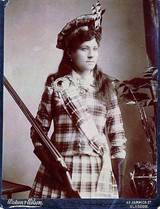
The illustration at the beginning of this post is from The Female Review: Life of Deborah Sampson, the Female Soldier in the War of Revolution (1916), a reprint of the 1797 biography by Herman Mann.  

Declaring Independence: The Origin of America’s Founding Document

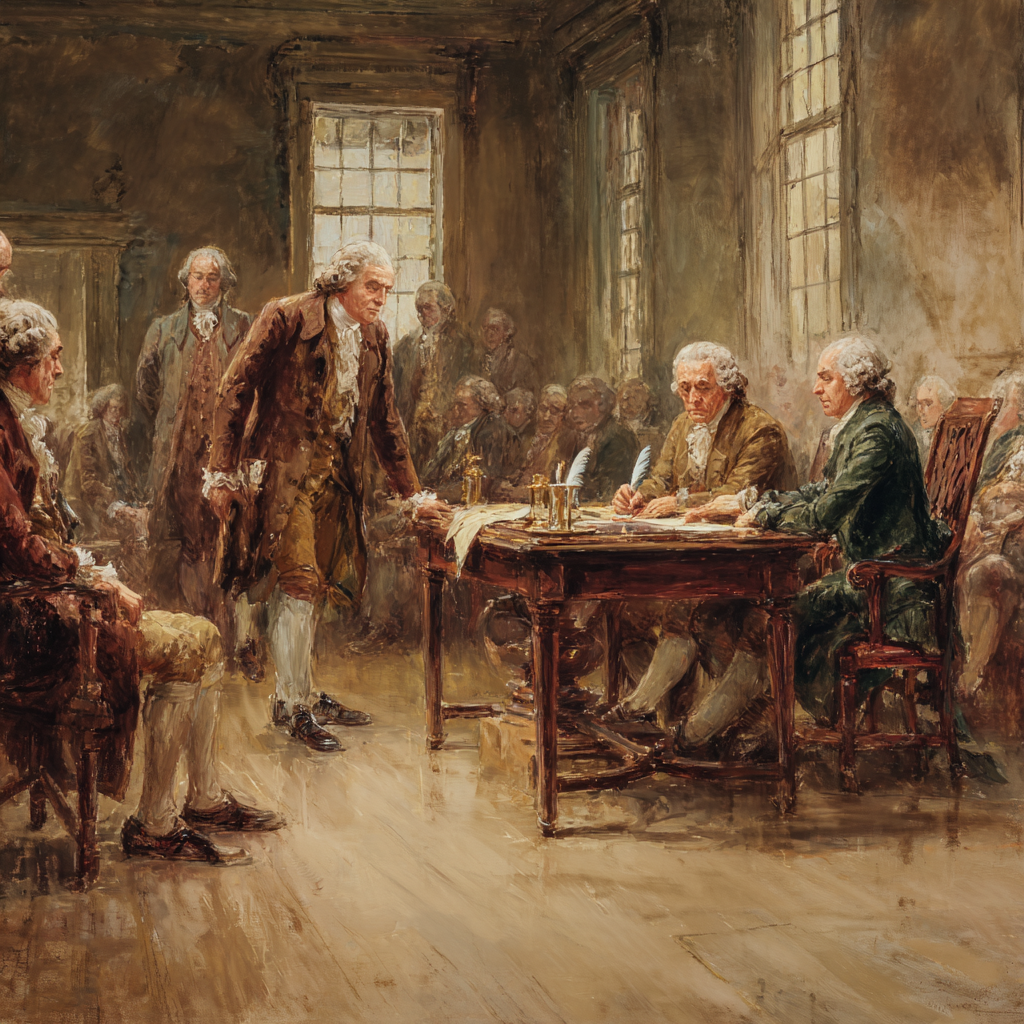
When Americans celebrate the Fourth of July, we imagine fireworks, flags, and a dramatic reading of the Declaration of Independence. We think we know the story—The Continental Congress selected Thomas Jefferson to write the declaration. He labored alone to produce this famous document. Congress then approved it unanimously and it was signed on the 4th of July.

 But the truth is far different and more complex. The story behind this iconic document—the how, who, and why of its creation—is just as explosive and illuminating as the day it represents. Far from a spontaneous outburst of rebellion, the Declaration was the product of political strategy, collaborative writing, and a shared sense of urgency among men who knew their words would change the course of history.

Setting the Stage: Why a Declaration?

By the spring of 1776, the American colonies were deep in conflict with Great Britain. Battles at Lexington and Concord had already been fought. George Washington was attempting to transform the Continental Army into a professional fighting force. Thomas Paine’s Common Sense had ignited widespread public support for full separation from the British Crown. The Continental Congress had been meeting in Philadelphia, debating how far they were willing to go. By June, the mood had shifted from reconciliation to revolution.

On June 7, 1776, Richard Henry Lee of Virginia introduced a resolution to the Continental Congress declaring “that these United Colonies are, and of right ought to be, free and independent States.” The motion was controversial—some delegates wanted more time to consult their colonies. But most in Congress knew that if independence was going to happen, it needed to be explained and justified to the world, so they created a committee to draft a formal declaration.

The Committee of Five

On June 11, 1776, the Continental Congress appointed a “Committee of Five” to write the declaration. The members were:

  • Thomas Jefferson of Virginia
  • John Adams of Massachusetts
  • Benjamin Franklin of Pennsylvania
  • Roger Sherman of Connecticut
  • Robert R. Livingston of New York

This was not a random selection. Each man represented a different region of the colonies and had earned the trust of fellow delegates. Jefferson was relatively young but already known for his eloquence. Adams was an outspoken advocate of independence. Franklin brought wisdom, wit, diplomatic experience, and international prestige. Sherman brought New England theological perspectives and legislative experience, while Livingston represented the more moderate New York delegation and brought keen legal insight.

Jefferson Takes the Pen

Although it was a group project on paper, the heavy lifting fell to Thomas Jefferson. The committee chose him to draft the initial version. Why Jefferson? According to John Adams, Jefferson was chosen for three reasons: he was from Virginia (the most influential colony), he was popular, and, Adams admitted, “you can write ten times better than I can.”

Jefferson wrote the draft in a rented room at 700 Market Street in Philadelphia. He leaned heavily on Enlightenment ideas, especially those of John Locke, emphasizing natural rights and the notion that government derives its power from the consent of the governed. He also borrowed phrasing from earlier colonial declarations, including his own A Summary View of the Rights of British America and borrowed extensively from George Mason’s Virginia Declaration of Rights.

The Editing Process: Group Work Gets Messy

After Jefferson completed the initial draft (likely by June 28), he shared it with Adams and Franklin. Both men suggested revisions. Franklin, ever the editor, softened some of Jefferson’s sharpest attacks and corrected language for flow and diplomacy. His most famous contribution was changing Jefferson’s phrase “We hold these truths to be sacred and undeniable” to the more secular and philosophically precise “We hold these truths to be self-evident.”  

Adams contributed to structural suggestions and to tone. He also contributed to the strategic presentation of grievances against King George III, understanding that the declaration needed to justify revolution in terms that would be acceptable to both colonial readers and potential European allies.

Sherman and Livingston played more limited but still meaningful roles. Sherman, with his theological background, helped ensure the document’s religious references would appeal to Puritan New England, while Livingston’s legal expertise helped refine the constitutional arguments against British rule.  Otherwise, their involvement in the actual content of the declaration was likely minimal.

The revised draft was presented to the full Continental Congress on June 28, 1776. What followed was a few days of intense debate and revision by the entire body.

Congress Takes the Red Pen

From July 1 to July 4, the Continental Congress debated the resolution for independence and edited the Declaration. Jefferson watched as more than two dozen changes were made to his prose. The Congress cut about a quarter of the original text, including a lengthy passage condemning King George III for perpetuating the transatlantic slave trade that would have sparked deep division among the delegates, especially those from Southern colonies.

Other modifications included strengthening the religious language, toning down some of the more inflammatory rhetoric, and making the grievances more specific and legally grounded.  Congress made 86 edits, removing about a quarter of Jefferson’s original content. Jefferson was reportedly frustrated by the changes, calling them “mutilations,” but he recognized that compromise was the cost of consensus

Approval and Promulgation

Despite the extensive revisions, the core of Jefferson’s vision remained intact and on July 2, 1776, the Continental Congress voted in favor of Lee’s resolution for independence. That’s the actual date the colonies officially broke from Britain. John Adams even predicted in a letter to his wife that July 2 would be celebrated forever as America’s Independence Day. He was close—but the official adoption of the Declaration came two days later.

On July 4, 1776, Congress formally approved the final version of the Declaration of Independence. Contrary to popular belief, most of the signers did not sign it on that day. Only John Hancock, as president of Congress, and Charles Thomson, as secretary, signed then.   The famous handwritten version, now in the National Archives, wasn’t signed until August 2. But the document approved on July 4 was immediately printed by John Dunlap, the official printer to Congress.

These first copies, known as Dunlap Broadsides, were distributed throughout the colonies and sent to military leaders, state assemblies, and even King George III. George Washington had it read aloud to the Continental Army.  This rapid dissemination was crucial to its impact, as it was needed to rally public support for the revolutionary cause and explain the colonies’ actions to the world.

Legacy and Impact

The Declaration wasn’t just a break-up letter to the British Crown—it was a manifesto for a new kind of political order. Its assertion that “all men are created equal” would echo through centuries of American history, invoked by abolitionists, suffragists, civil rights leaders, and more.

The creation of the Declaration of Independence demonstrates that even the most iconic documents in American history emerged from collaborative processes involving compromise, revision, and collective wisdom. While Jefferson deserves primary credit for the document’s eloquent expression of revolutionary ideals, the contributions of his committee colleagues and the broader Continental Congress were essential to creating a text that could unite thirteen diverse colonies in common cause.

This collaborative origin reflects the democratic principles the declaration itself proclaimed, showing that American independence was achieved not through the vision of a single individual, but through the collective efforts of representatives working together to articulate their shared commitment to liberty, equality, and self-governance. The process that created the Declaration of Independence thus embodied the very democratic ideals it proclaimed to the world.

Today, the Declaration of Independence is enshrined as one of the foundational texts of American democracy. But it’s worth remembering that it was created under immense pressure, forged by committee, and edited by compromise. Its authors knew they were taking a dangerous step. As Franklin quipped at the signing, “We must all hang together, or most assuredly we shall all hang separately.”

“America at 250: A Revolution Remembered… or Forgotten?”

I’m old enough to remember the 200th anniversary of the American Revolution. Bicentennial symbols were everywhere. Liberty Bells, eagles, and the ubiquitous Bicentennial logo of the red, white and blue stylized five-point star. They could be found on hats, T-shirts, socks, soft drink cups, beer cans, and even a special “Spirit of ‘76” edition of the Ford Mustang II. Commemorative events and celebrations were being planned everywhere and people had “bicentennial fever”.

But the 250th anniversary is not attracting that same kind of attention or interest. I wonder why that is. Perhaps it’s that the name for a 250th anniversary, Semiquincentennial, doesn’t seem to roll off the tongue the way Bicentennial does. But I suspect it’s far more than just a tongue twisting name.

The Bicentennial came after a decade of national trauma.  The Vietnam War, Watergate, and the civil rights struggles had all roiled the country.  By 1976, most Americans wanted to feel good about the country again. It became a giant, colorful celebration of “American resilience.”

While the 250th anniversary of the American Revolution is being marked by numerous events, commemorations, and official proclamations, most are local, and it has not yet captured widespread public attention or generated the scale of national excitement seen during previous milestone anniversaries.

The anniversary arrives at a time of deep political polarization, which has complicated celebration plans.  There is an ongoing debate within the group tasked with planning the celebration, the U.S. Semiquincentennial Commission, about how to present American history. Some members advocate for a traditional, celebratory approach focusing on the Founding Fathers and patriotic themes. Others push for a more inclusive narrative that acknowledges the complexities of American history, including the experiences of women, enslaved people, Indigenous communities, and other marginalized groups

Beyond the commission itself, some historians note that the “history wars”—ongoing disputes throughout society over how U.S. history should be taught and remembered—have made it harder to generate broad, enthusiastic buy-in for the anniversary among the general public. 

Commemorations in places like Lexington and Concord have seen anti-Trump protesters carrying signs such as “Resist Like It’s 1775” and “No Kings,” explicitly drawing parallels between opposition to King George III and contemporary resistance to what they perceive as autocratic tendencies in current leadership. At the reenactment of Patrick Henry’s “Give Me Liberty or Give Me Death” speech, Virginia Governor Glenn Youngkin was met with boos and protest chants, highlighting how the Revolution’s legacy is being invoked in current political struggles.

While some organizers and historians hope the anniversary can serve as a unifying moment—emphasizing that “patriotism should not be a partisan issue”—the reality is that commemorations have often become forums for expressing contemporary political grievances and anxieties. The presence of both celebratory and dissenting voices at these events reflects the enduring debate over what it means to be American and who gets to define that identity.  The complexity and messiness of American history, combined with current societal tensions, may dampen the celebratory mood and make it harder for people to connect emotionally with the anniversary.

Even the 250th logo has become a source of dispute, although it is one of the few areas of disagreement that is nonpartisan and tends to be about stylistic and artistic merits of the logo. Proponents of the new logo appreciate its modern and inclusive design emphasizing that the flowing ribbon represents “unity, cooperation, and harmony,” and reflects the nation’s aspirations as it commemorates this milestone.  Detractors are concerned about the legibility of the “250” and the lack of traditional American symbols, such as stars, which could have reinforced its patriotic theme.

Surveys by history related organizations suggest that most Americans are not yet thinking about the 250th anniversary.  The run-up to 2026 may see increased attention, but as of now, the anniversary has not broken through as a major topic of national conversation.  If the anniversary continues to be viewed as a contentious partisan undertaking, it may never gain widespread popularity, and the general public may choose to stay away.

A friend who is a member of the West Virginia 250th committee told me that they had an initial meeting at which nothing was accomplished, and they have had no meeting since. It seems to me, this is up to us, the citizens, to ensure that the 250th anniversary of the American Revolution is appropriately remembered. We don’t have to live in an area where a Revolutionary War event occurred for us to recognize its events. Here in West Virginia, in October of 2024 we commemorated the 250th anniversary of the battle of Point Pleasant which many consider a precursor to the American Revolution.  This event was not organized by any state or national group. It was the result of efforts on the part of the City of Point Pleasant and the West Virginia Sons of the American Revolution.

We do not need to depend on the government; we the people can hold local commemorations of revolutionary events that occurred in other areas. We can hold commemorations of the Battle of Bunker Hill, the signing of the Declaration of Independence, the Battle of Saratoga and many other events. It will take the initiative of local people to organize these events.

It will be our great shame if we allow this the commemoration of an event so significant in both American and world history to be turned into something that divides us rather unites us and strengthens our common bond.

Presidential Trvia

Who Am I?

Two of my favorite subjects are American history and trivia. When Margie and I first got married one of our favorite ways to spend time with friends was to play the then popular game Trivial Pursuit. That’s when I discovered that I am the master of useless information, the repository of all things that will never earn me any money. But it’s still fun and when I can combine my love of trivia with my love of American history, so much the better. This is the first of what I hope will be a series of posts about American history trivia. We’ll start with the presidents. A subject that most of us know a fair amount about but maybe not as much as we think.

Before I go into the questions, we’ll start with the mystery man above. That’s James Buchanan, the 15th president of the United States. Now The Grumpy Doc must admit that he did recognized this fellow. If you did, bonus points for you. However, no prize for beating The Grumpy Doc beyond a sense of satisfaction that comes from besting the master. Did I mention that not only am I grumpy, but I’m also cheap?

The first question should be an easy one.

  1. Who was the first president to have a full beard while in office?
  2. Who was the last president to have a full beard while in office?
  3. What president had the first telephone installed in the White House?
  4. What two presidents had only a letter for a middle name?
  5. What president established the first National Park?
  6. Who was the first president to serve in the Navy?
  7. Who was the first president to write a best seller?
  8. Who was the only president to remain a bachelor throughout his life?
  9. Who was the first divorced president? (Should be another easy one.)
  10. What president had the most children?
  11. Who was the first president to ascend to the presidency from the vice presidency upon the death of the president?
  12. Who was the first president to have impeachment charges filed against him?
  13. Who was the only president to commit treason against the United States?
  14. And now, a question of great national significance. What president installed the first bathtub in the White House?
  15. Who was the first president born in a hospital?
  16. What presidents attended military academies?
  17. Who was the last president not to have a college degree?
  18. A final question with significance to current events. Who was the only president to have completely paid off the national debt during a period of his administration. I don’t mean balance the budget; I mean zero national debt.

ANSWERS

  1. Abraham Lincoln was the first president to have a full beard while in office.
  2. Benjamin Harrison was the last president to have a full beard throughout his term of office. However, there is a slight trick to this question. Harry Truman, during a vacation in 1948, briefly sported a goatee. However, it was gone by the time he returned to Washington.
  3. Rutherford B. Hayes had the first telephone installed in the White House. Not only did he have it installed, he was so fascinated by it he frequently answered it himself.
  4. Both Ulysses S. Grant and Harry S. Truman had S for a middle name. However, the story behind the S is significantly different. Grant was born Hiram Ulysses Grant. The congressman who signed his recommendation for West Point mistakenly listed his name as Ulysses S. Grant. Grant never disputed it and retained the S throughout his life. Biographers have reported that this was because he did not like the initials that spelled HUG. The rumor spread that the S stood for Simpson, his mother’s maiden name, but it never really stood for anything. Harry Truman’s middle name at birth was S. Both his maternal and paternal grandfathers had names that began with S and a significant family conflict arose about who he would be named after. The compromise was the initial.
  5. Although it is widely believed that Teddy Roosevelt established the first National Park, it was Ulysses S. Grant who signed the legislation creating Yellowstone. The National Park Service was created by legislation signed by Woodrow Wilson.
  6. The first US president to serve in the Navy was John F. Kennedy. Interestingly, the next four presidents also served in the Navy, three of them in World War Two.
  7. Teddy Roosevelt was a best-selling author before he became president. He wrote histories, biographies, essays, and memoirs. His books were widely distributed and very popular. And this was in the era before presidents “wrote” their memoirs as a way of supplementing their post presidential income.
  8. This was our mystery man, James Buchanan who never married.
  9. The first man elected president who had previously been divorced was Ronald Reagan.
  10. John Tyler had 15 children with two wives.
  11. Once again, John Tyler. He was elected as vice president with William Henry Harrison. He became president when Harrison died shortly after assuming office. At the time, no one was sure if the vice president would become president or simply assume the duties. Tyler solved the problem by quickly having himself administered the oath of office. Tyler was never popular with his party and was referred to as “His Accidency”. He was not nominated for an independent term of office and left after his first term.
  12. This is one The Grumpy Doc missed. I thought it would be Andrew Johnson. But, once again it was John Tyler. The charges were not successful, although surprisingly they were brought by his own party, and he completed the term.
  13. You may have noticed a trend here; this was our old friend John Tyler. He was elected to the Confederate House of Representatives but died before actually taking office.
  14. The first permanently installed bathtub was during the administration of Millard Fillmore. This may be the most significant thing that happened during the administration of this otherwise undistinguished president.
  15. Jimmy Carter, born in 1924, was the first president born in a hospital.
  16. Both President Grant and President Eisenhower graduated from the U. S. Military Academy at West Point and President Carter graduated from the U. S. Naval Academy at Annapolis.
  17. President Truman was the last president without a college degree. He attended business school and law school but did not graduate from either. At that time, it was possible to attend law school without an undergraduate degree.
  18. Andrew Jackson achieved his campaign promise of completely paying off the national debt on January 8th, 1835. However, this proved not to be a good thing. The practices he implemented to pay off the debt led directly to the panic of 1837, one of the worst recessions in U.S. history and a significant increase in national debt.

There is a lot more presidential trivia, but this is enough for our first go around. Please send me comments about your success in answering these questions. My score was right around 70%. Hopefully some of you can do better. But of course, if you do, The Grumpy Doc will never admit to having been beaten.

Page 4 of 4

Powered by WordPress & Theme by Anders Norén